Two courts, sixty years of war, and the most dramatic silhouettes in the sword’s history: broad blades, extended points, true ōdachi later cut down into the majestic katana collectors prize. The Sōshū manner was the style of the age.
 NihontoWatchNihontoWatch
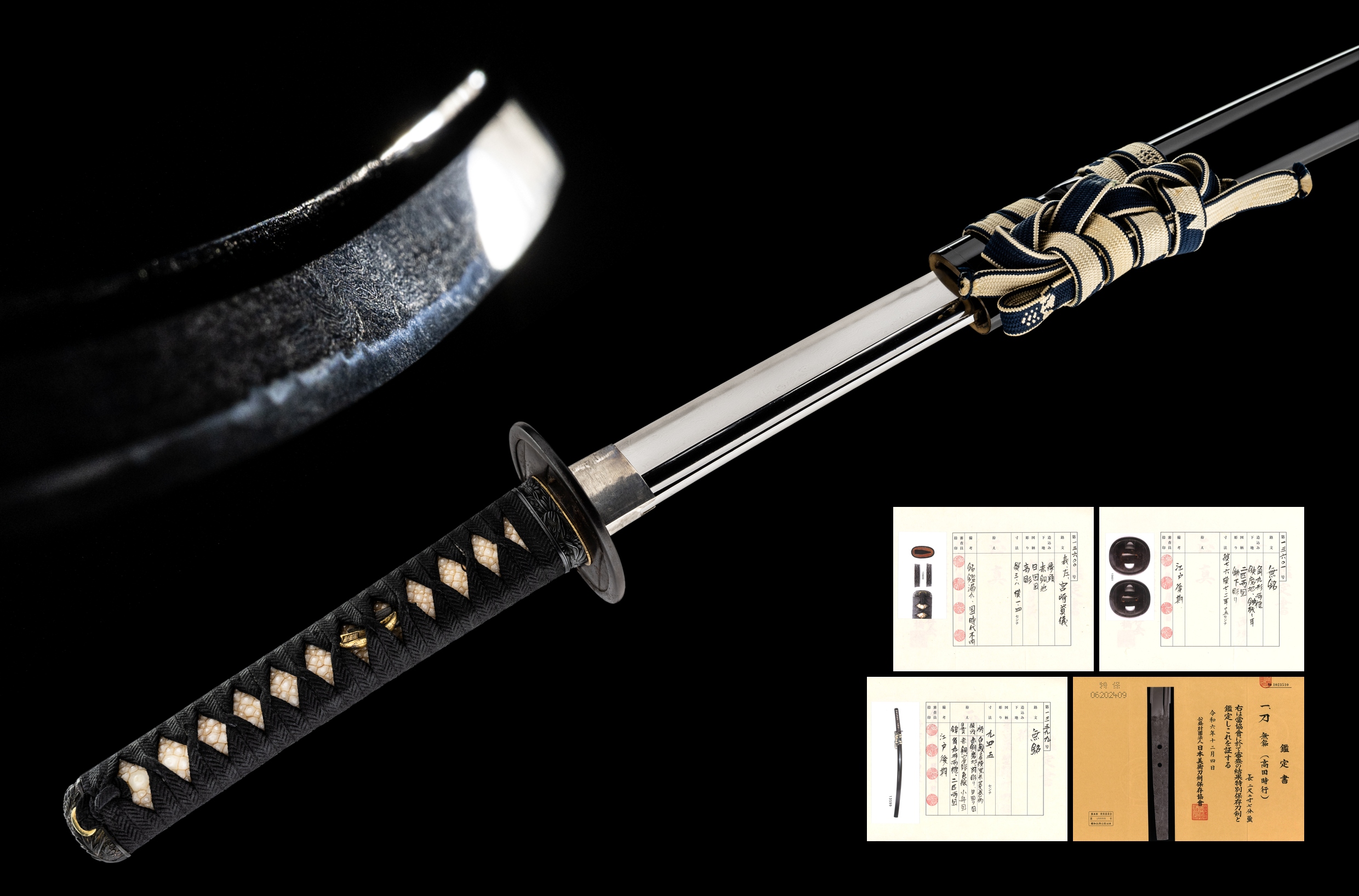
Takada Tokiyuki (高田時行) was active in Bungo province from the Jôwa era (1345–1350) through to the Ôan era (1368–1375), a period when Kyûshû was a theatre of open war and the demand for exceptional blades was a matter of survival rather than ceremony. Said to be the son of Tomoyuki, founder of the Bungo-Takada school, and rumoured to have studied under the legendary Samonji of Chikuzen, Tokiyuki is recognised as one of the master smiths of ancient Kyûshû and a defining figure of the Ko-Takada tradition. His school represents the earliest and finest generation of Takada work, distinct from everything that followed. This blade belongs to that first and rarest chapter. What immediately distinguishes it from the grand, powerful forms typical of the Nanbokuchô period is its composure. The elongated chû-kissaki retains the full dignity and martial spirit of the era, yet the overall presence is one of quiet authority rather than aggression. It is a blade that has nothing left to prove. A kirikomi on the mune tells you it was once tested in the only way that truly counts. The jihada is an absolute pleasure to examine. A vivid nagare-hada flows with real purpose, mixed with mokume throughout, alive with ji-nie, carrying a faint misty shirake utsuri and a soft nioiguchi that are signatures of Ko-Takada never quite replicated by later generations. The hamon is a shallowly undulating ko-gunome mixed with suguha, ashi reaching toward the cutting edge with precision and life. A koshirae that truly understands the blade it protects. The deep glossy black of the kuro-ronuri saya, the handsome Nishigaki iron tsuba bearing the two-bar crest of the Hosokawa clan, the ayagata tsuka wrap that rewards a closer look, everything here has been chosen with quiet certainty. The shakudô fuchi-kashira attributed to Miyazaki Sukenori is the one moment of drama, sunflowers carved in bold relief against the dark ground, yet even this feels composed rather than decorative. The toma-bune menuki still carry their original gold, a last warm note beneath the silk. Serious, handsome, and completely coherent. All told, this is a katana of rare and balanced character, a dark horse that you’ll treasure in your collection.
Offered by Unique Japan
This piece has sold
Get an email when a new Tokiyuki piece hits the market.
Bungo · around 1368-1375
Tōken Taikan top 23%
1 piece on the market now
The Nanbokuchō period (1333 to 1392)
Two courts, sixty years of war, and the most dramatic silhouettes in the sword’s history: broad blades, extended points, true ōdachi later cut down into the majestic katana collectors prize. The Sōshū manner was the style of the age.
A Hozon-certified blade judged to show notably superior workmanship and a better state of preservation. The bar is higher: re-tempered blades and most unsigned Muromachi/Edo works are excluded.
The NBTHK (Nihon Bijutsu Tōken Hozon Kyōkai, the Society for the Preservation of Japanese Art Swords) is a public-interest incorporated foundation founded in 1948 and supervised by Japan’s Agency for Cultural Affairs (Bunkachō); it is based at the Japanese Sword Museum in Tokyo. Its expert panels physically examine each submitted work (shinsa) and issue a certificate (kanteishō) ranking it by artistic and historical merit. NBTHK papers are the most widely recognized standard of authentication for Japanese swords and fittings.
NBTHK official siteAll swords come with a three-day inspection period beginning from the date of delivery. If not satisfied, the sword may be returned within this period for a full refund of the purchase price. Outside of this period, all sales are final. Swords purchased on a layaway payment plan are not eligible for the three-day inspection period.