Two courts, sixty years of war, and the most dramatic silhouettes in the sword’s history: broad blades, extended points, true ōdachi later cut down into the majestic katana collectors prize. The Sōshū manner was the style of the age.
 NihontoWatchNihontoWatch
An o-suriage mumei katana attributed as the work of Takada Tokiyuki of Bungo Province. Tokiyuki was a tosotsu who was active around the Oan era in the middle of the Nanbokucho period; he is said to be the son of Tomoyuki, the founder of the Bungo Takada smiths, and is also traditionally said to be of the Sa Monji lineage; he is one of the representative smiths of old Kyushu works, with one tachi designated as a National Treasure and one tanto designated as an Important Cultural Property. This katana has a shallow sori and a grand sugata with an extended kissaki; the jigane is itame with a flowing tendency mixed with moku and is hadatachi, with jinie and chikei, and shirake-utsuri appears; the hamon is a suguha-style hadori mixed with notare and ko-gunome, with ko-midare and ko-ashi, and sunagashi can be seen; yubashiri can also be observed on the habuchi; the boshi is suguha-style, with both the omote and ura having a slight notare-komi and a maru kaeri; it is a powerful work truly characteristic of a Nanbokucho period katana. Although there is no hindrance to appreciation in its current condition, as it is in an old togi, I believe those with the means should apply a kesho-naoshi or similar treatment to fully enjoy the exquisite charms of the ji and ha.
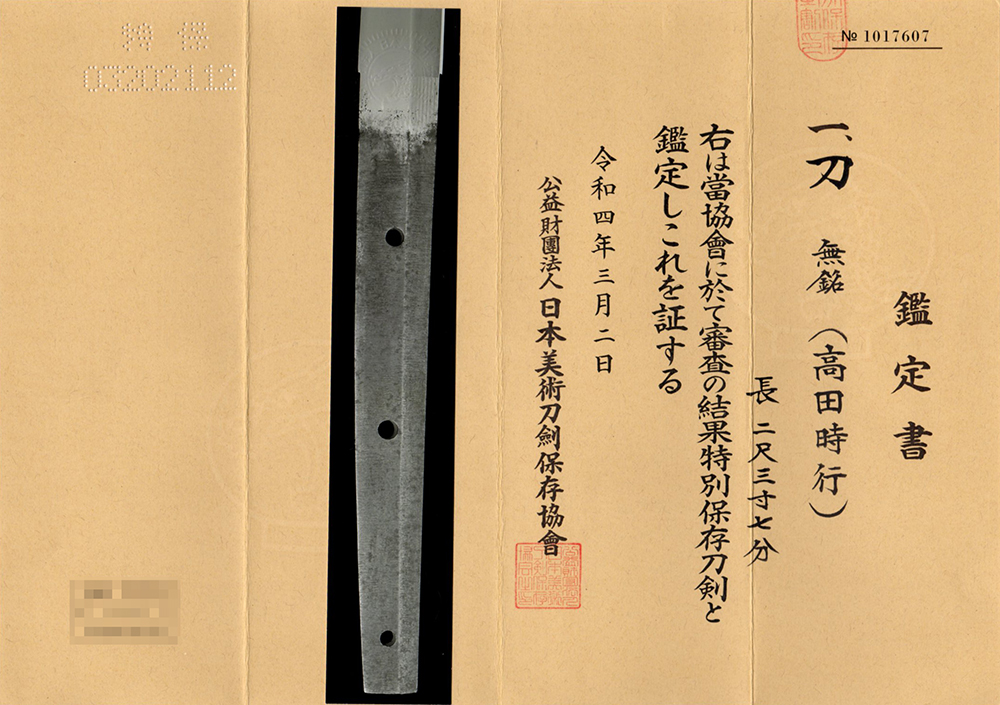
Certificate reading — 無銘(高田時行)
NihontoWatchOffered by Toushin

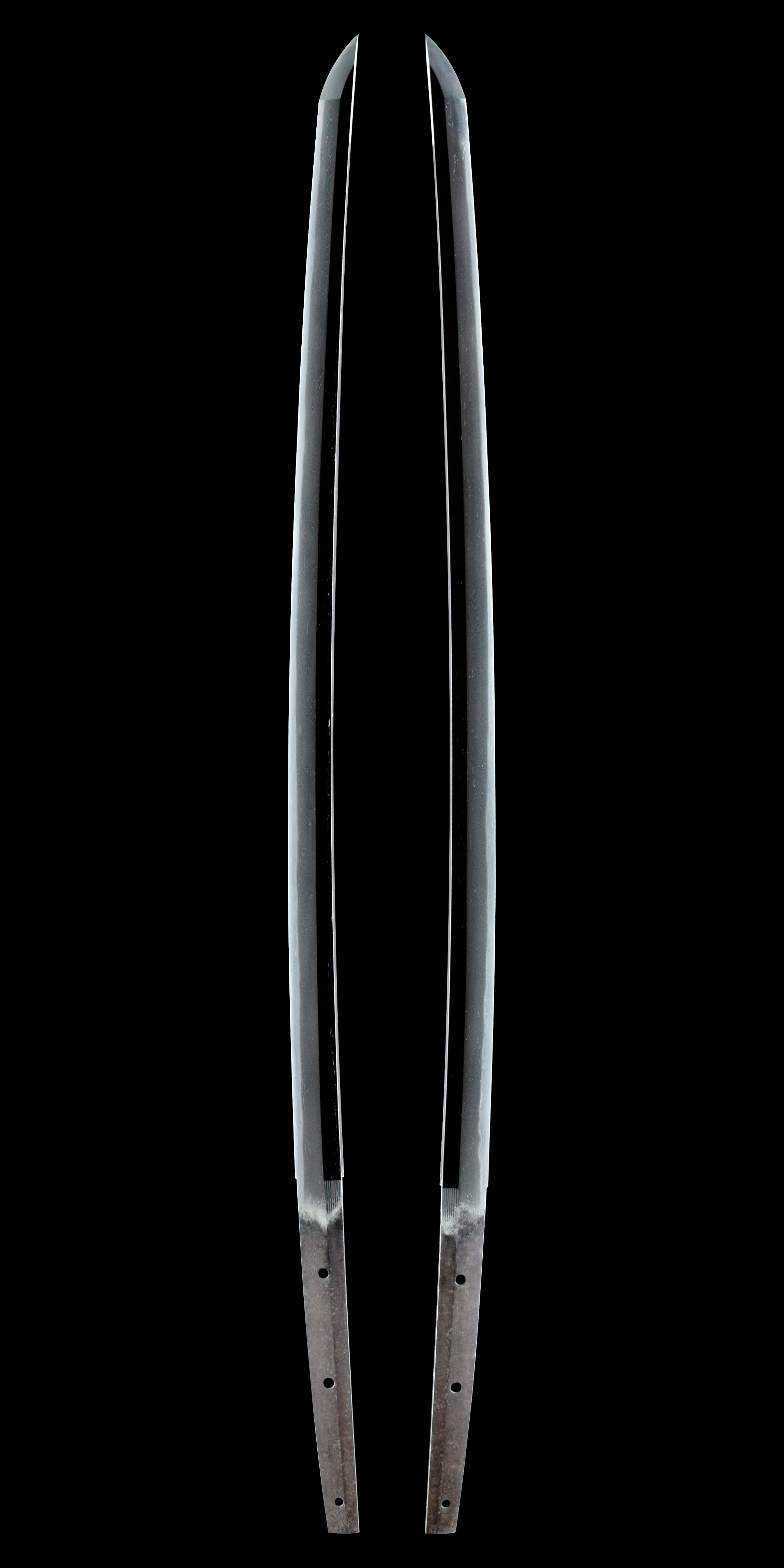
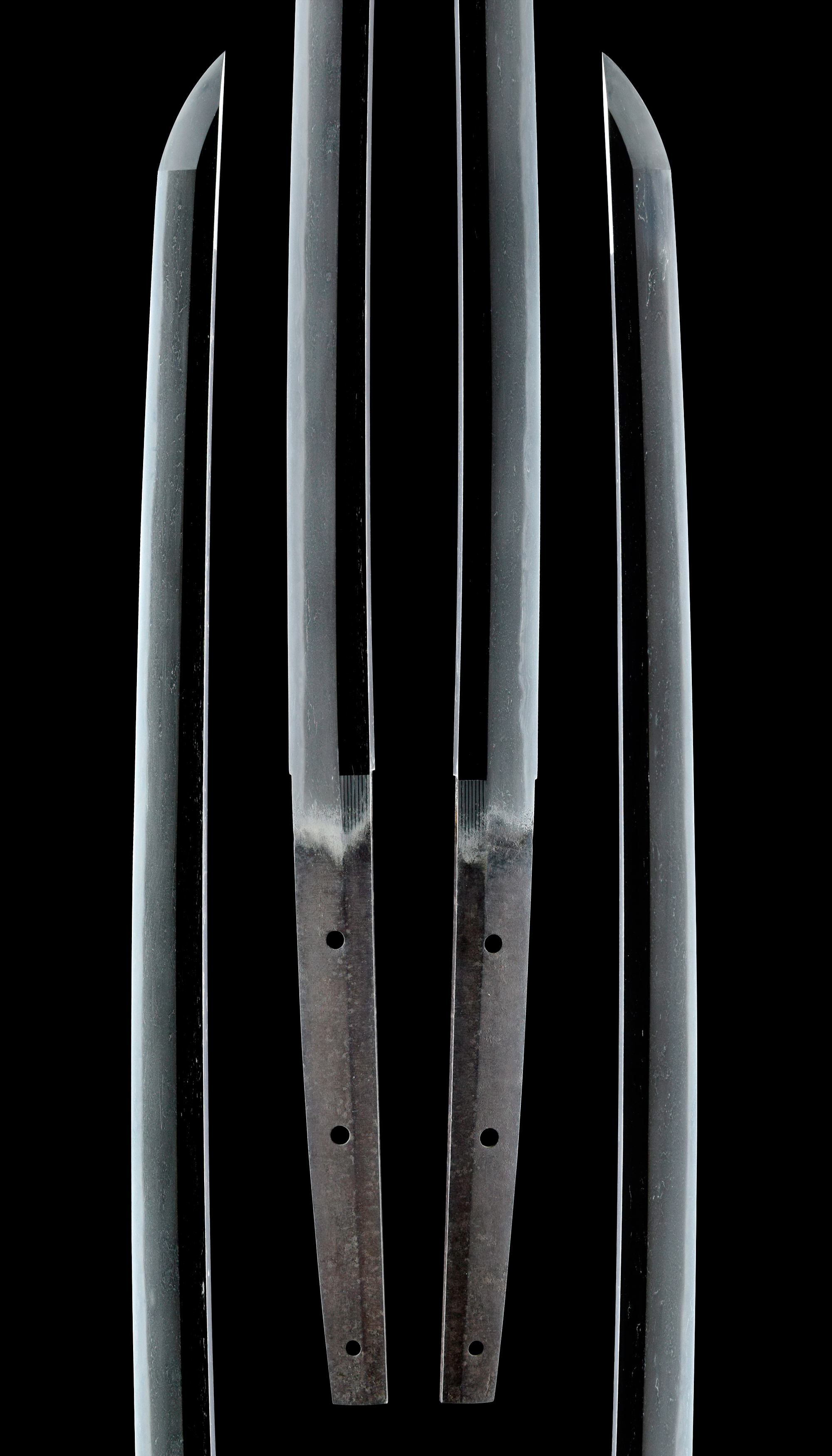
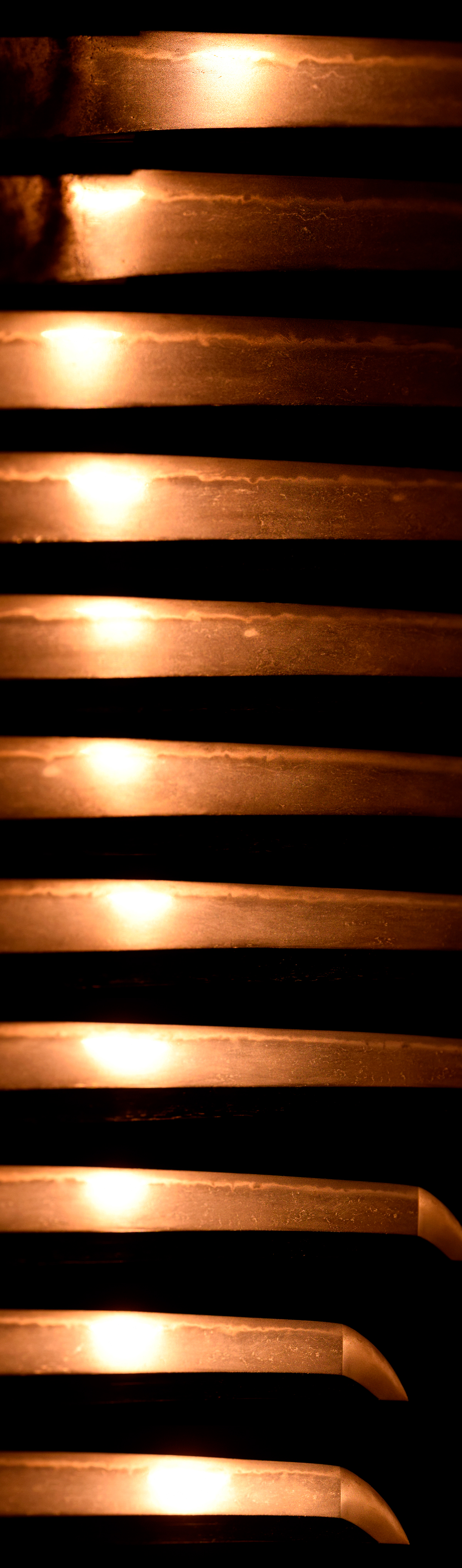
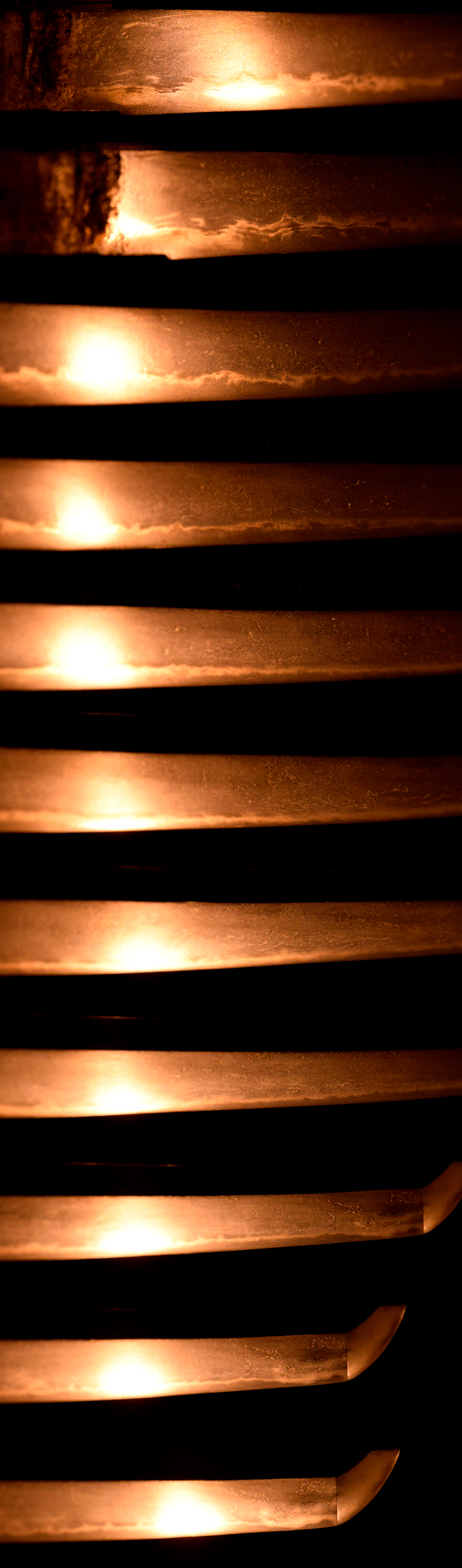
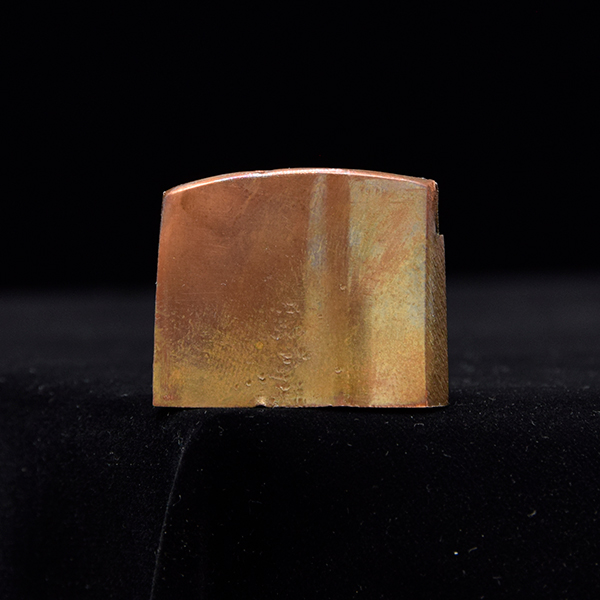
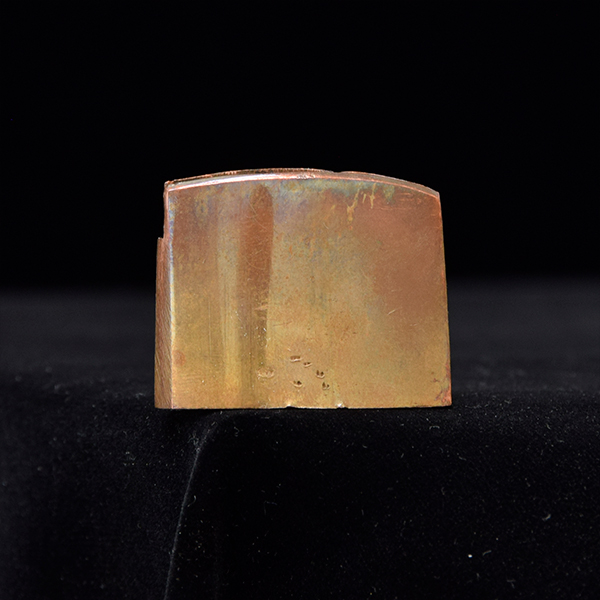
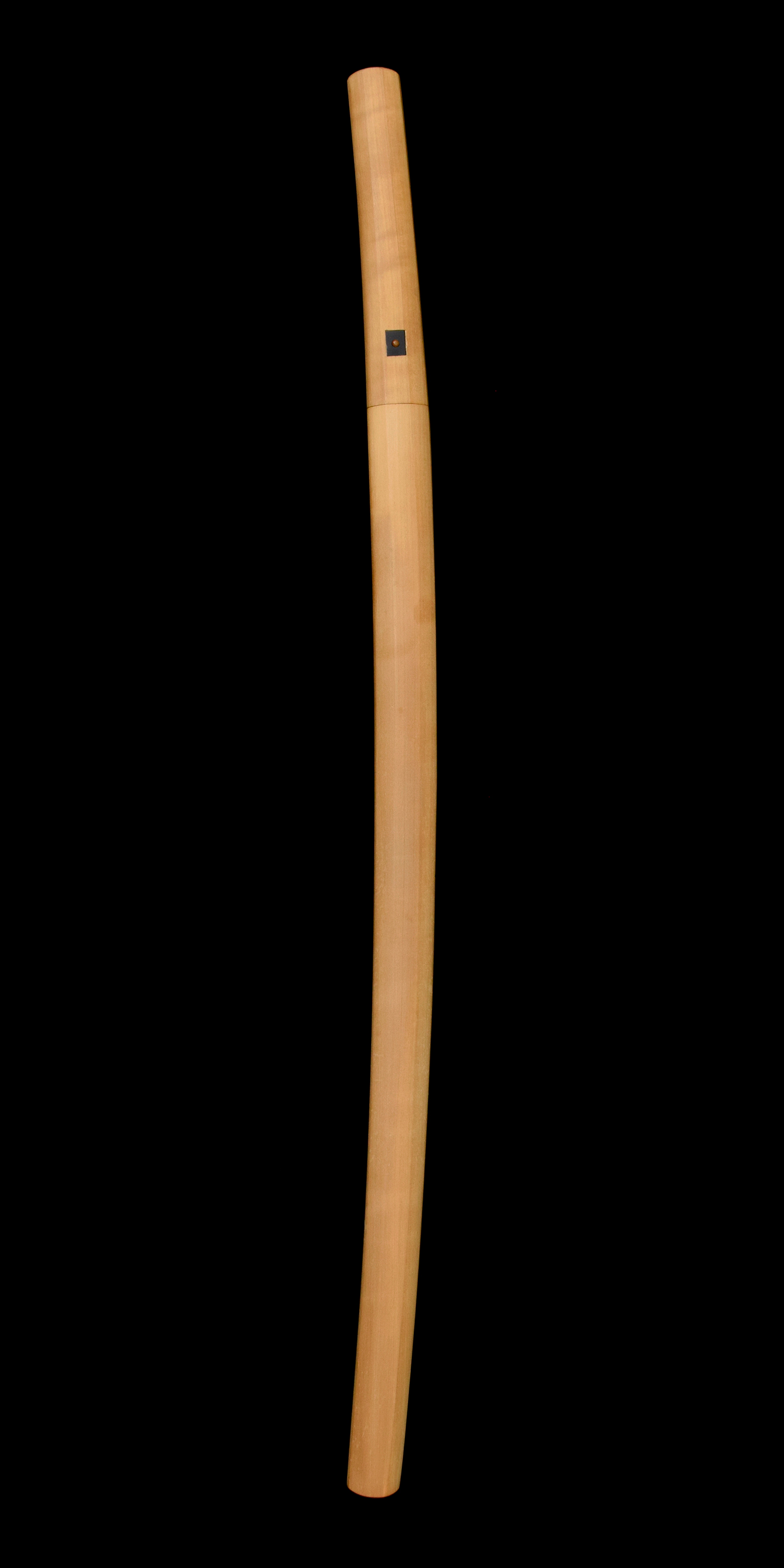
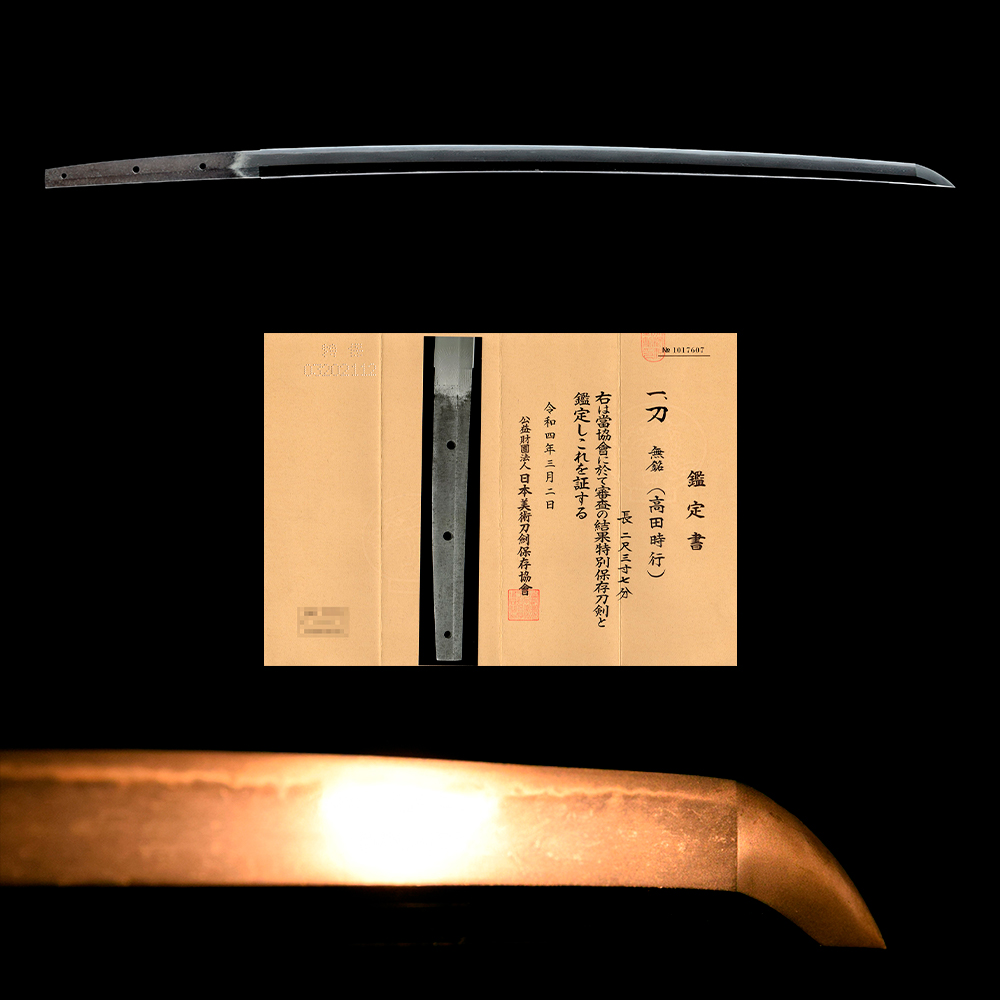
As written by the shop
Machine translation from the shop's Japanese · may contain errors ·
Bungo · around 1368-1375
Tōken Taikan top 23%
1 piece on the market now
The Nanbokuchō period (1333 to 1392)
Two courts, sixty years of war, and the most dramatic silhouettes in the sword’s history: broad blades, extended points, true ōdachi later cut down into the majestic katana collectors prize. The Sōshū manner was the style of the age.
A Hozon-certified blade judged to show notably superior workmanship and a better state of preservation. The bar is higher: re-tempered blades and most unsigned Muromachi/Edo works are excluded.
The NBTHK (Nihon Bijutsu Tōken Hozon Kyōkai, the Society for the Preservation of Japanese Art Swords) is a public-interest incorporated foundation founded in 1948 and supervised by Japan’s Agency for Cultural Affairs (Bunkachō); it is based at the Japanese Sword Museum in Tokyo. Its expert panels physically examine each submitted work (shinsa) and issue a certificate (kanteishō) ranking it by artistic and historical merit. NBTHK papers are the most widely recognized standard of authentication for Japanese swords and fittings.
NBTHK official siteAs a rule we do not accept returns, except when we have sent a different item from the one ordered or when there is a significant discrepancy between the description and the item. If you wish to return an item, please contact us within 3 days of its arrival and then send it back.
¥698,500