 NihontoWatchNihontoWatch
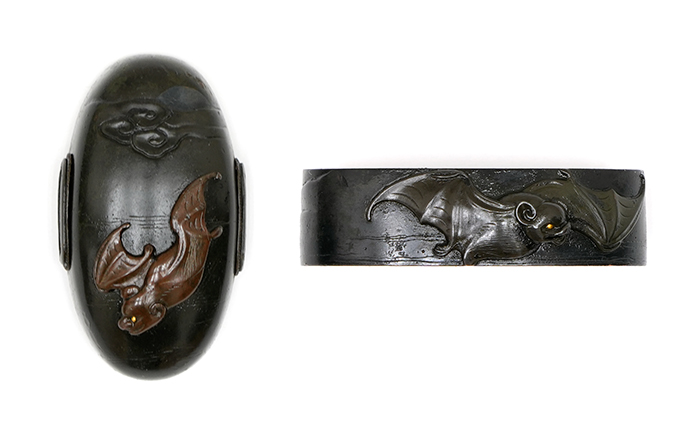
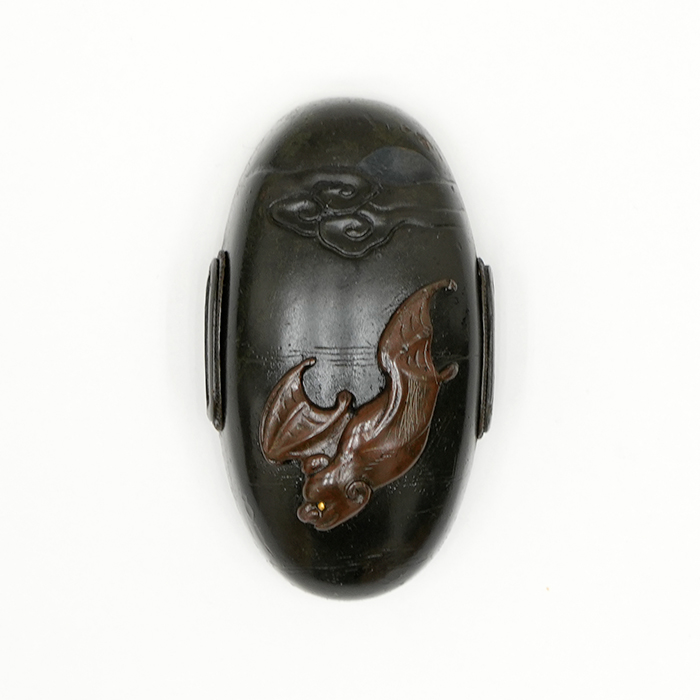
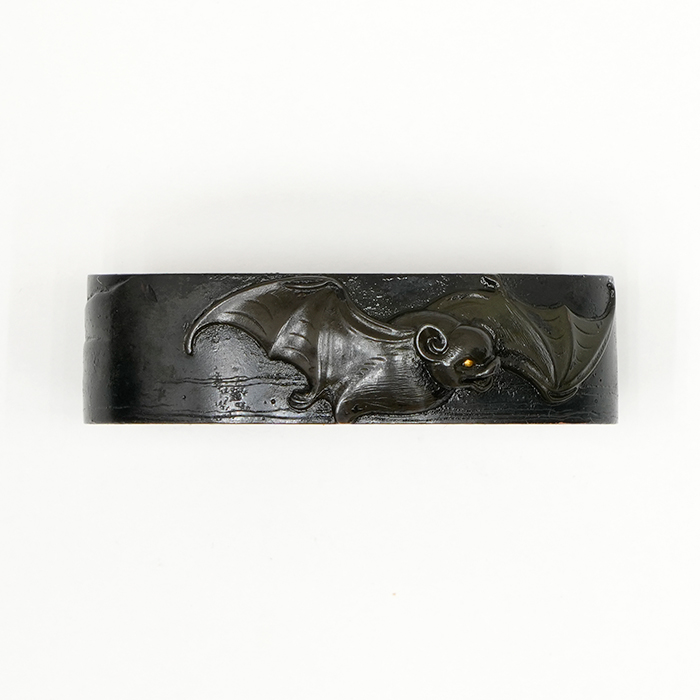
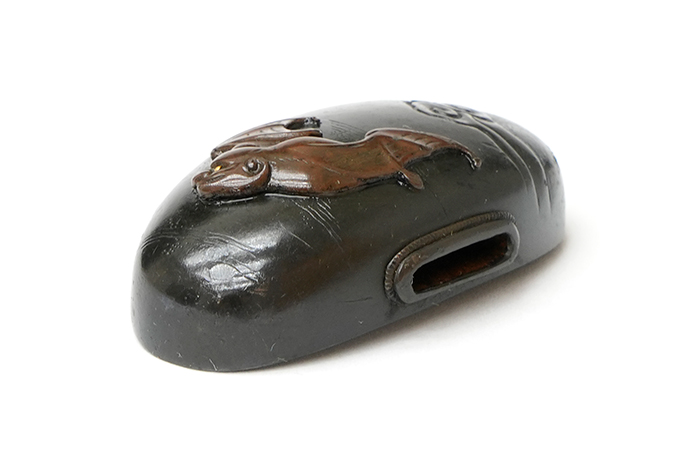
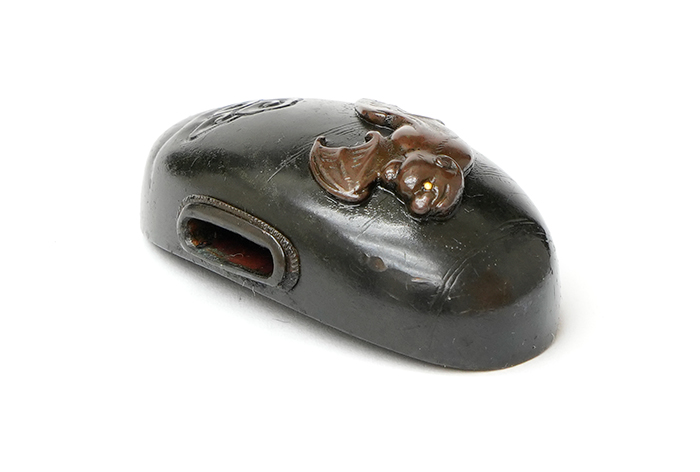
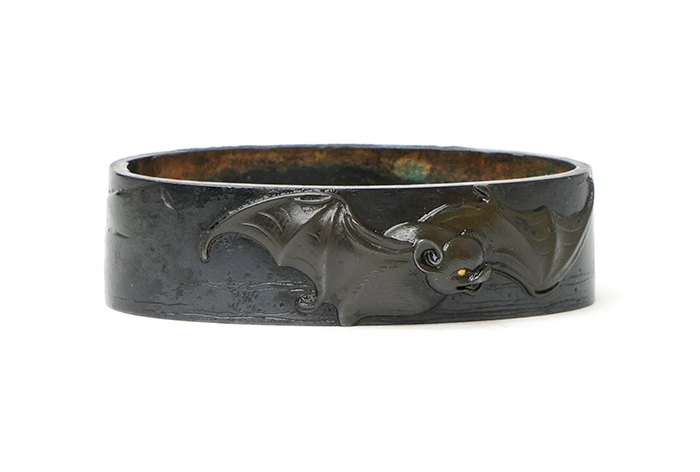
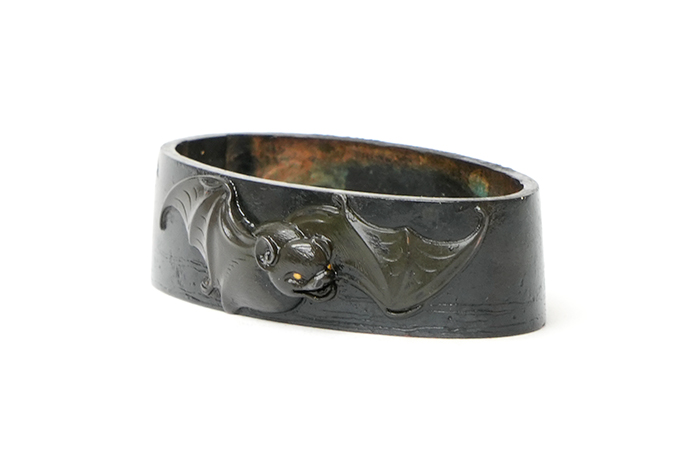
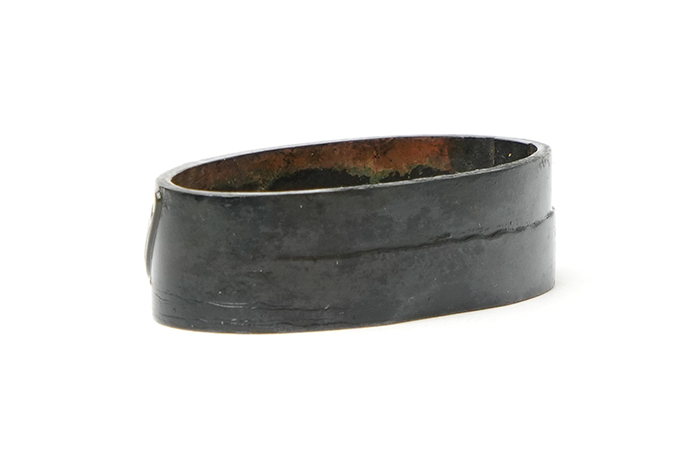
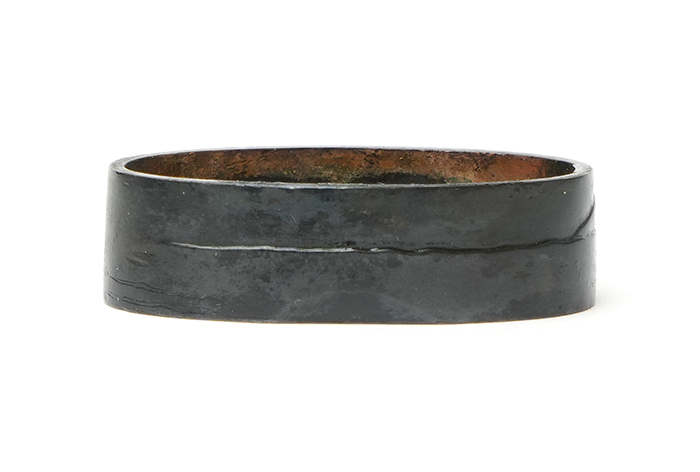
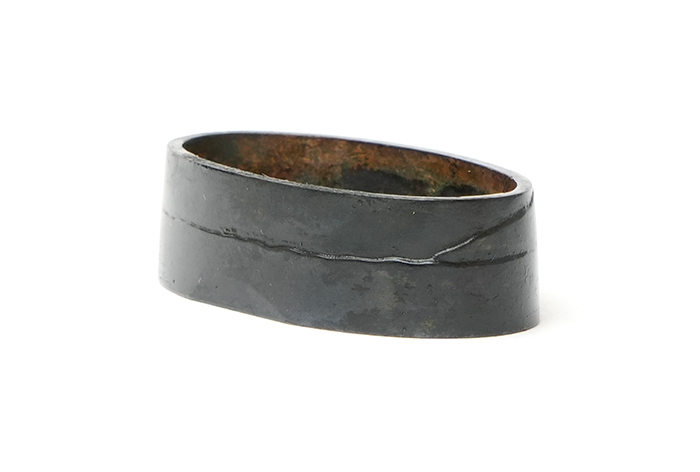
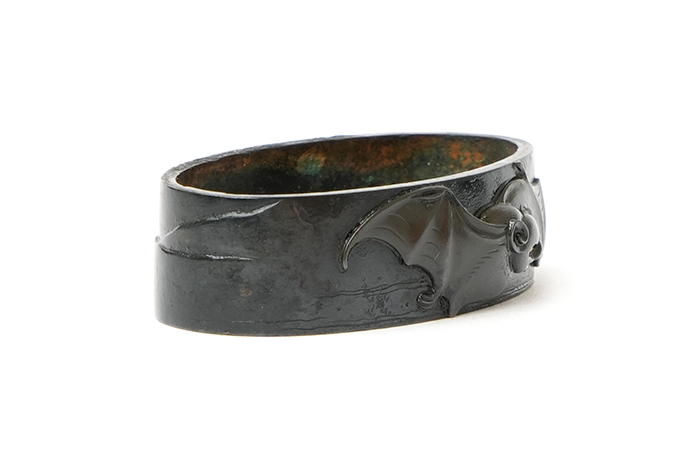
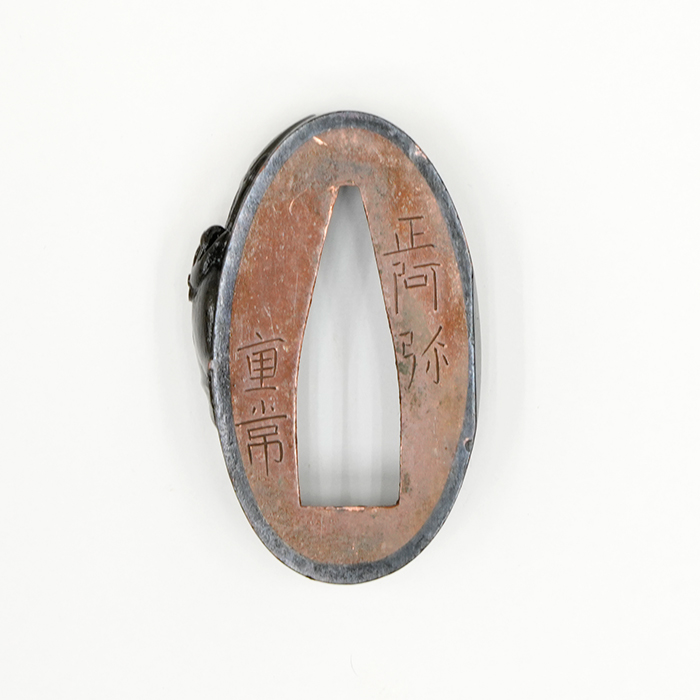
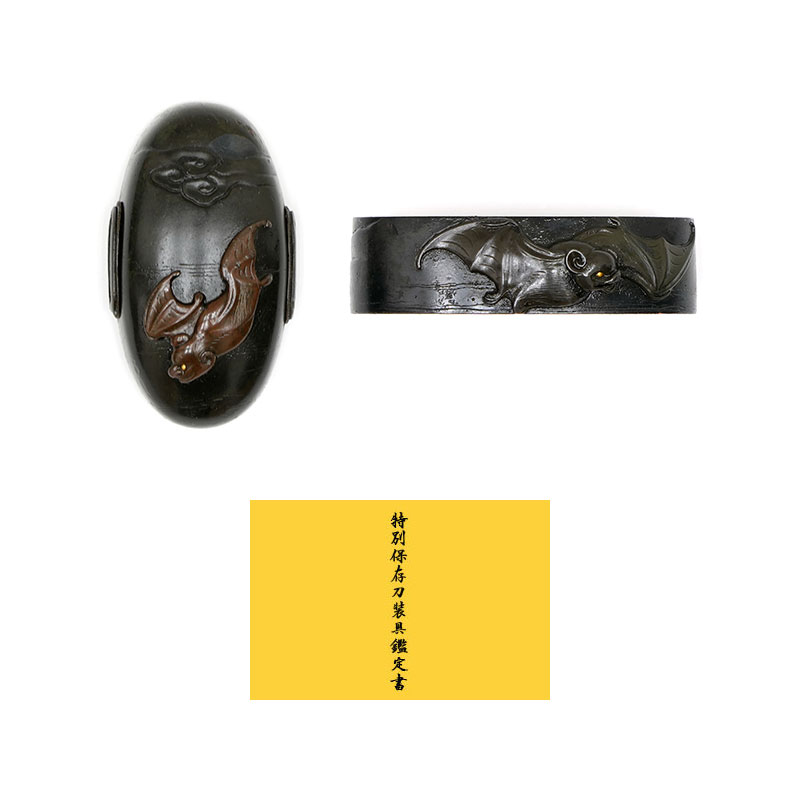
Komori-zu Fuchi-kashira Edo chuki The middle period of Edo era Shoami Shigetsune is one of the metalworkers representing the Akita Shoami. Belonging to the distinguished Akita Shoami lineage that continued from Shigeyoshi (Denbei) to Shigetaka (Dennai) to Shigetsune, it is said that he went to Edo and studied under Tsuchiya Yasuchika, and after his training, returned to Akita to serve the Satake family alongside his master, later succeeding to the family headship and taking the name Denshichi. In the "Satake-han Tsubashi Shoami-shi Yuishogaki" handed down in the Akita Domain, the genealogy continuing from Shigeyoshi, Shigetaka, Shigetsune, to Shigehisa is also recorded. The Akita Shoami developed under the Satake family throughout the Edo period, producing not only iron ji tsuba but also many sophisticated tosogu using irokane such as shakudo, shibuichi, and suaka. Shigetsune's works were known overseas from an early stage, and with examples confirmed as being recorded as the work of "Shoami Shigetsune of Akita" in tosogu collections formed at the end of the 19th century, his skill has been evaluated both domestically and internationally. This work is a fuchi-kashira with a komori theme on shakudo migaki-ji, a large-sized ichigu with the fuchi measuring 41.2 mm. In the fuchi-kanagu, the deep black shakudo migaki-ji itself is likened to the night sky, with a single komori flapping its wings widely carved three-dimensionally in suaka, and by arranging a full moon peeking from between clouds and a komori dancing in the night sky on the kashira-kanagu, it is designed so that a single scene of a komori flying through the moonlit sky is completed when the fuchi and kashira are brought together. For the komori, takaniku-bori and sukidashi-bori are skillfully used to express the tension of the wing membranes and the roundness of the body as soft undulations, while small kin zogan is applied to the eyes to add a sharp light within the dark night sky. The color composition, contrasting the jet black of the shakudo migaki-ji with the warm tones of the suaka and adding a slight effect with the gold of the eyes, has a restrained beauty, and Shigetsune's excellent chogi and design sense can be seen in the relaxed composition that makes use of the large-sized kanagu and the lively modeling of the komori. The komori is also a subject that has been used as a kissho design because the sound of "kori" (fuku) connects to "fuku" (fortune), and this is a high-quality work for appreciation by the master smith Shigetsune of the Akita Shoami, for which a Tokubetsu Hozon Tosogu Kanteisho was issued in Reiwa 7.
NihontoWatchOffered by Toushin

Shōami
Edo
Akita
Hozon
As written by the shop
Machine translation from the shop's Japanese · may contain errors ·
Dewa
1 piece on the market now
Certifies a genuine fitting worth preserving: a correct signature, or, if unsigned, an identifiable era and school, with recognized artistic and craft value.
The NBTHK (Nihon Bijutsu Tōken Hozon Kyōkai, the Society for the Preservation of Japanese Art Swords) is a public-interest incorporated foundation founded in 1948 and supervised by Japan’s Agency for Cultural Affairs (Bunkachō); it is based at the Japanese Sword Museum in Tokyo. Its expert panels physically examine each submitted work (shinsa) and issue a certificate (kanteishō) ranking it by artistic and historical merit. NBTHK papers are the most widely recognized standard of authentication for Japanese swords and fittings.
NBTHK official siteAs a rule we do not accept returns, except when we have sent a different item from the one ordered or when there is a significant discrepancy between the description and the item. If you wish to return an item, please contact us within 3 days of its arrival and then send it back.
¥660,000