After the Ōnin War broke the Ashikaga order, a century of Sengoku warfare armed nearly every province in Japan. The era rewards a discriminating eye: routine work exists in quantity, and beside it stand custom blades of the first rank.
 NihontoWatchNihontoWatch
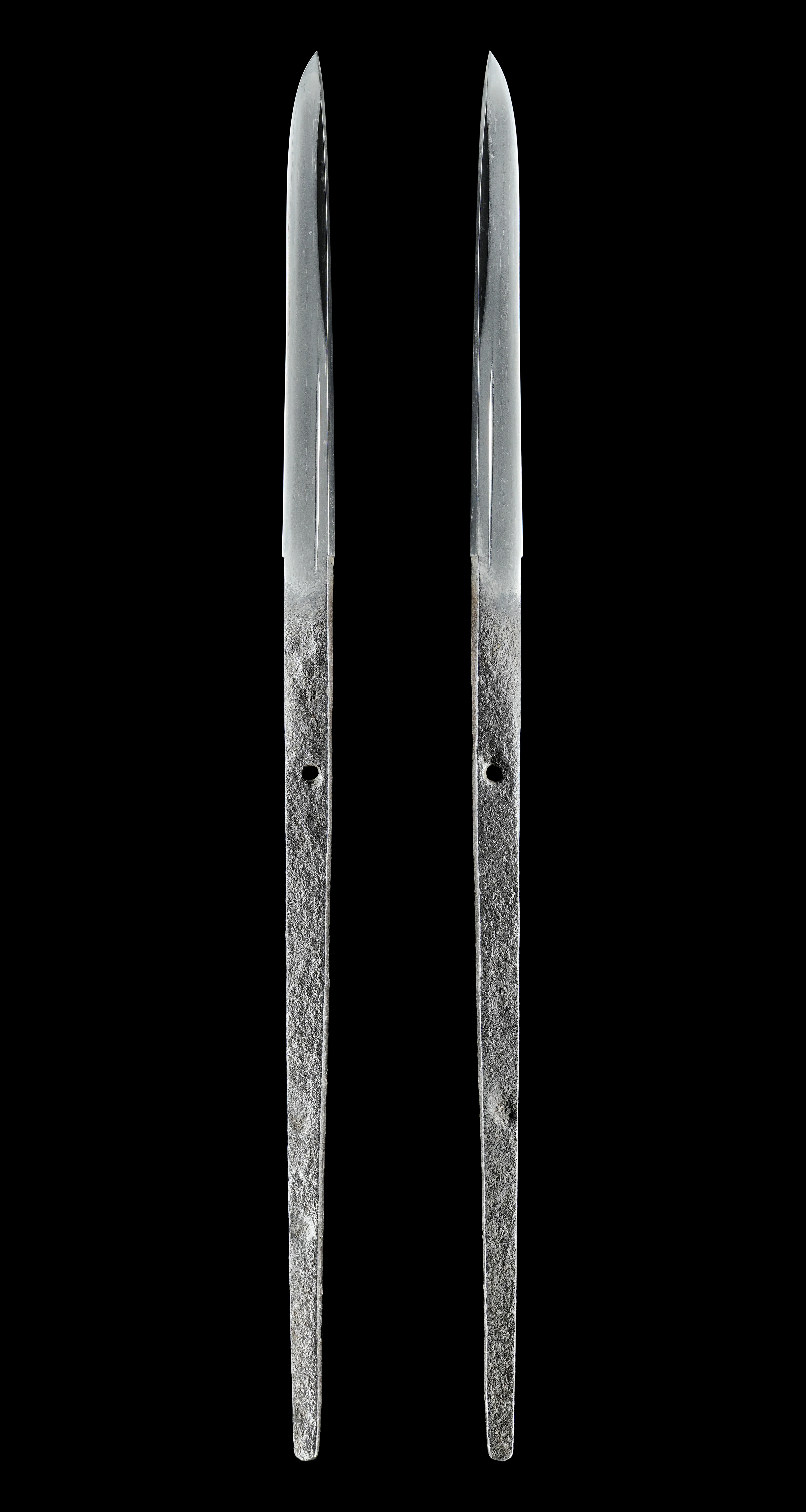
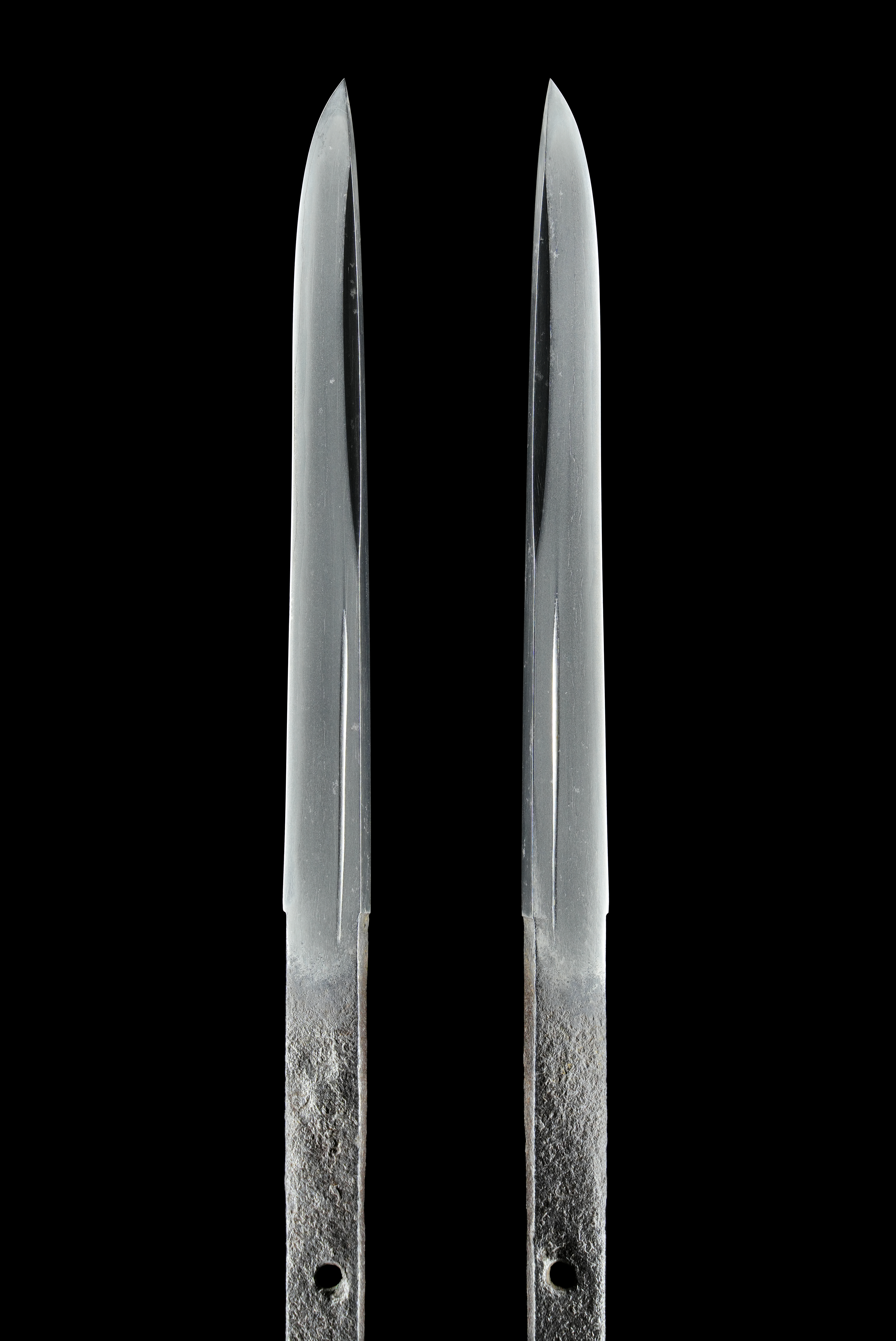
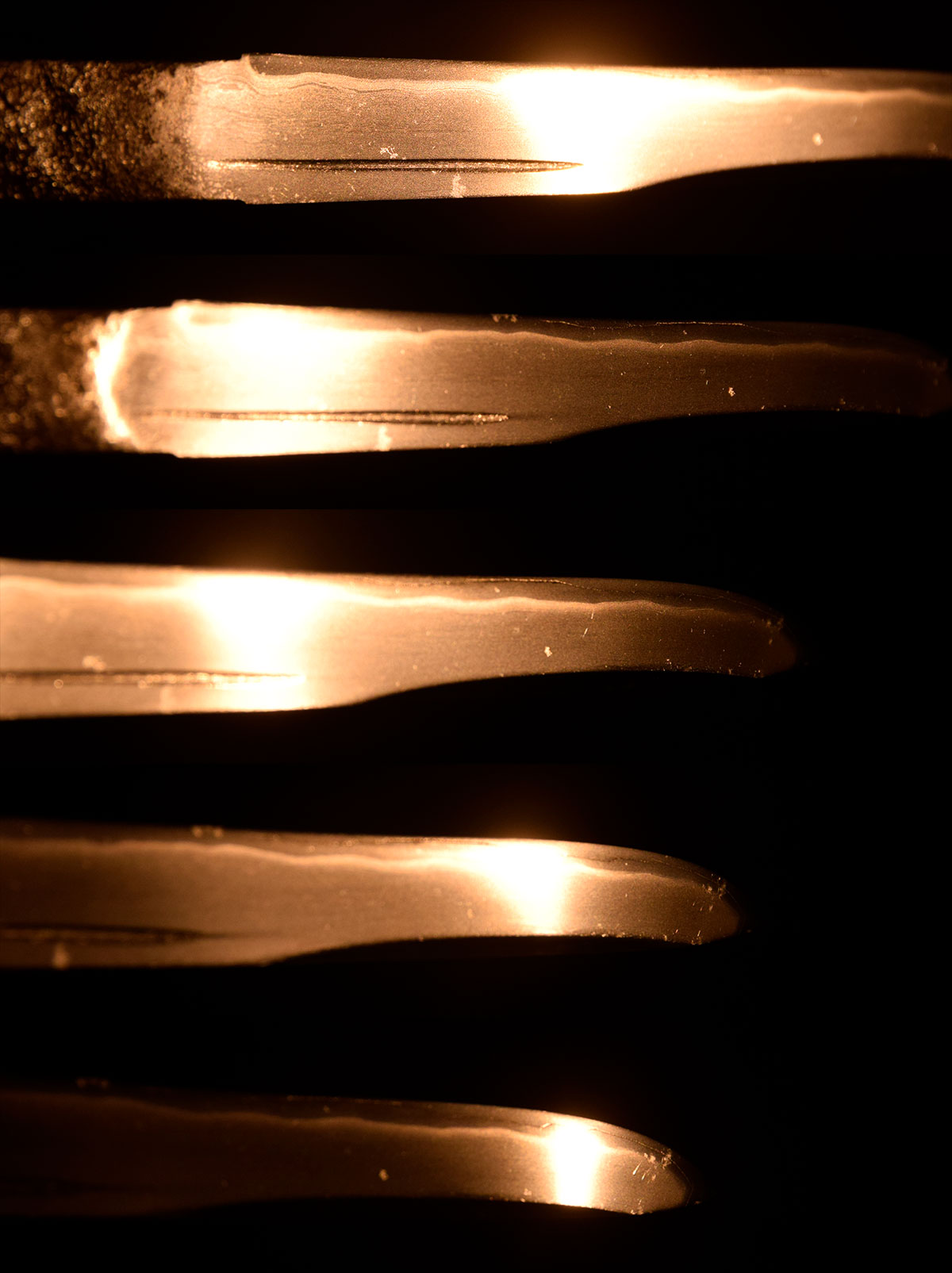
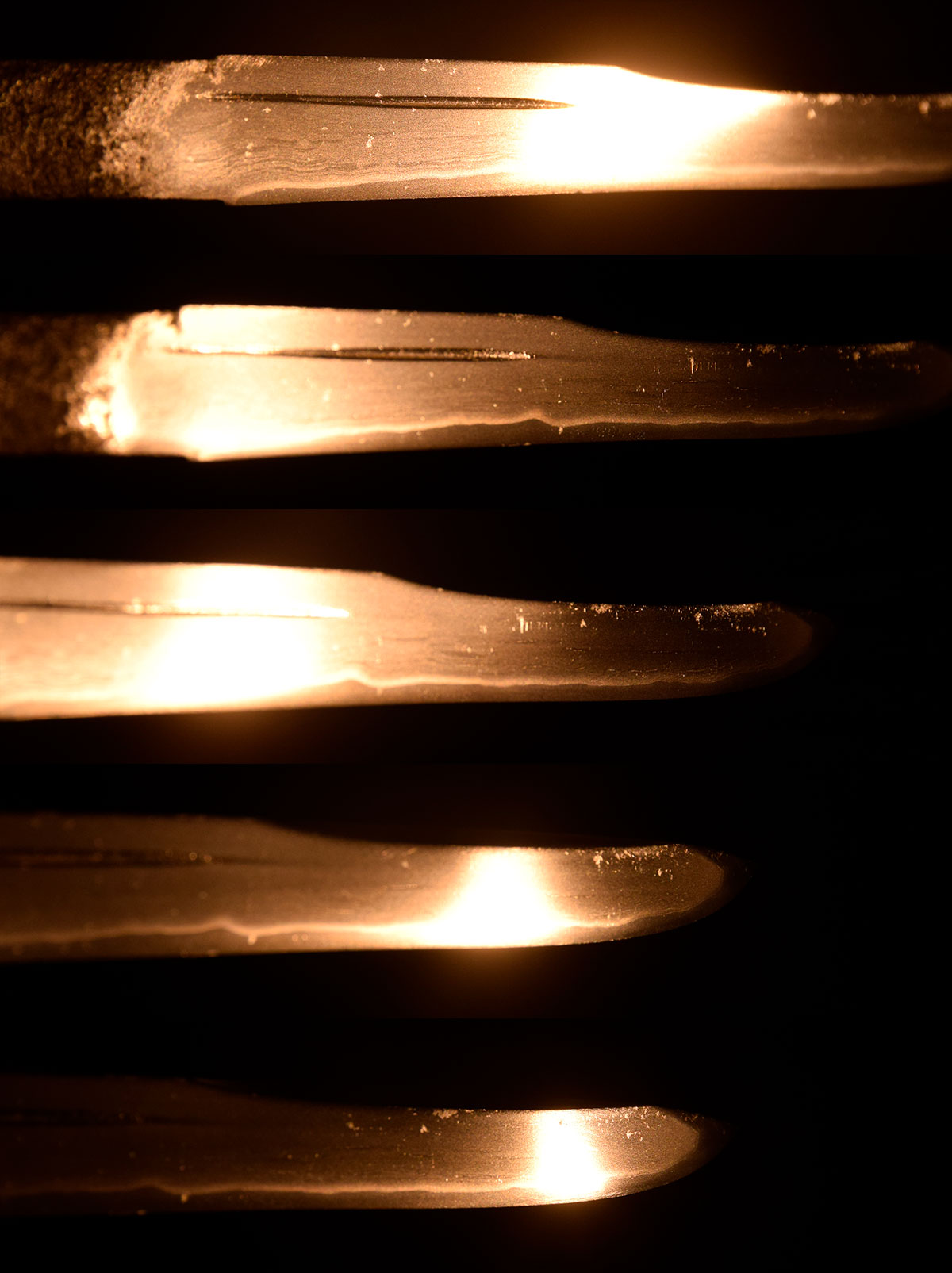
Kikuchi-yari is a specialized yari associated with the Kikuchi clan, a military family based in Higo no Kuni (present-day Kumamoto Prefecture) during Japan's medieval period, and it is an existence that influenced the history of Japanese tactics beyond its role as a mere weapon. In Kenmu 2 (1335), at the Battle of Hakone-Takenoshita, Kikuchi Takeshige fought against 3,000 soldiers led by Ashikaga Naoyoshi. At this time, the 1,000 Kikuchi troops were pressed by the Ashikaga forces, lost most of their weapons, and fell into a situation on the verge of a rout, but he devised a yari made by cutting bamboo from a bamboo grove and tying the tanto that each person wore at their waist. This is the commonly called "Kikuchi Senbon-yari," and as a result, the Kikuchi forces escaped the predicament and put the enemy to flight. This is said to be the origin of the Kikuchi-yari. The greatest characteristic of the Kikuchi-yari lies in its structure; unlike general yari, it is made in a form where a tanto or a short blade is attached to the yari handle, and it is capable of not only thrusting but also striking. Due to this, it functioned as a yari of course, and could also be utilized as a weapon for close-quarters combat, allowing for flexible operation on the battlefield. The nagasa of the blade is somewhat short for a medium-length handle, making it suitable for carrying and for improvised defense or counterattacks, and it played an important role in supporting the group tactics of the Kikuchi clan. Furthermore, it is attributed that the Enju school, a group of master smiths active in Higo no Kuni, was involved in the production of Kikuchi-yari, and a deep connection with the regional armor culture can be felt. Historically, extant Kikuchi-yari are extremely rare, and many were subsequently modified into tanto by cutting the nakago, with almost none retaining their original form. However, anecdotes remaining in literature and tradition such as "Yari-fusuma" and "Senbon-yari" show that the Kikuchi-yari was not merely a weapon, but a symbol of tactical innovation. The Kikuchi-yari is an existence with special significance in weapon and military history as a weapon symbolizing the transition from combat dependent on individual bravery to controlled tactics by a group, and its rarity and unique structure stand out even within Japanese sword and yari culture, making one feel the historical value where the tactical wisdom of a military family and regional forging technology bore fruit. This yari is a precious single blade that retains its appearance from the time of production to the present day, featuring a u-no-kubi-zukuri with thin koshi-hi carved on the omote and ura, a jigane mainly of masame with thick jinie, and a tempered gentle notare in suguha style with a bright and clear nioiguchi, where a distinct boundary appears on the inner side of the habuchi, with nie smoking toward the habuchi, and the boshi is sugu with a maru kaeri. Precisely because it is an item forged as a weapon during a period of chaotic war, some slightly coarse areas such as kitae-suji can be seen, but the fact that it retains its ubu form is precious above all else, and from the condition of the nakago, it is a single blade of old work with a production date that goes back.
Offered by Toushin

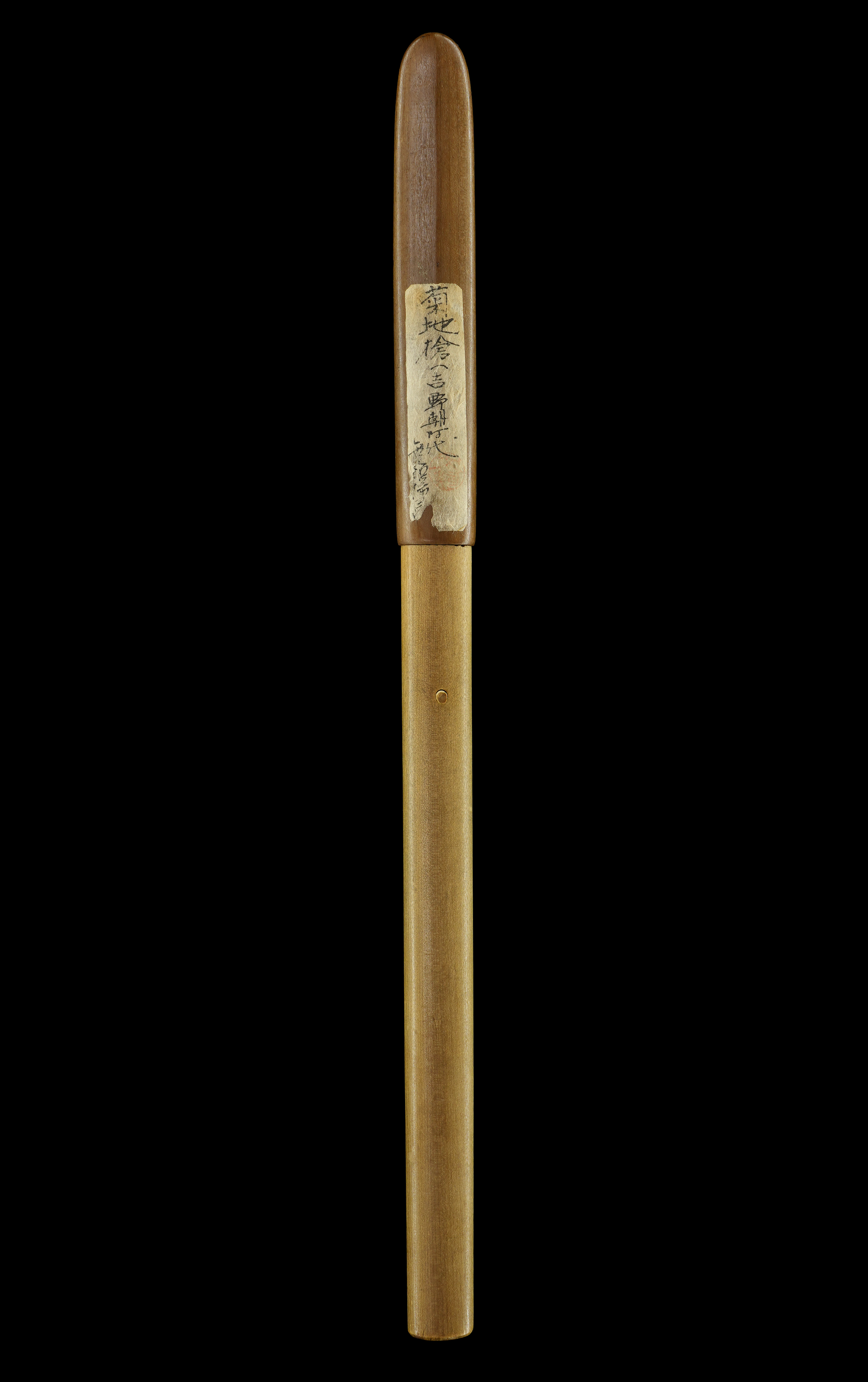
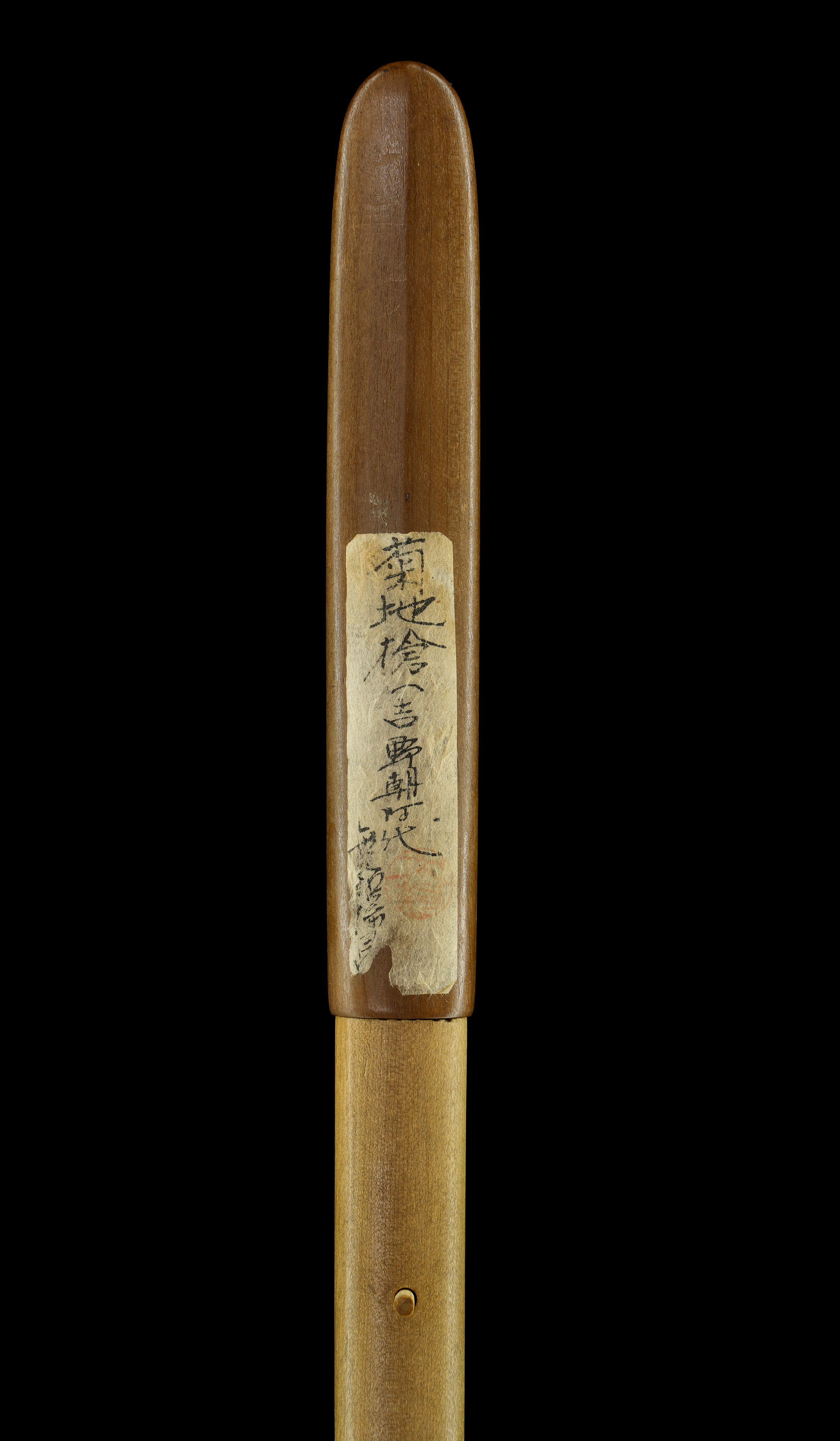
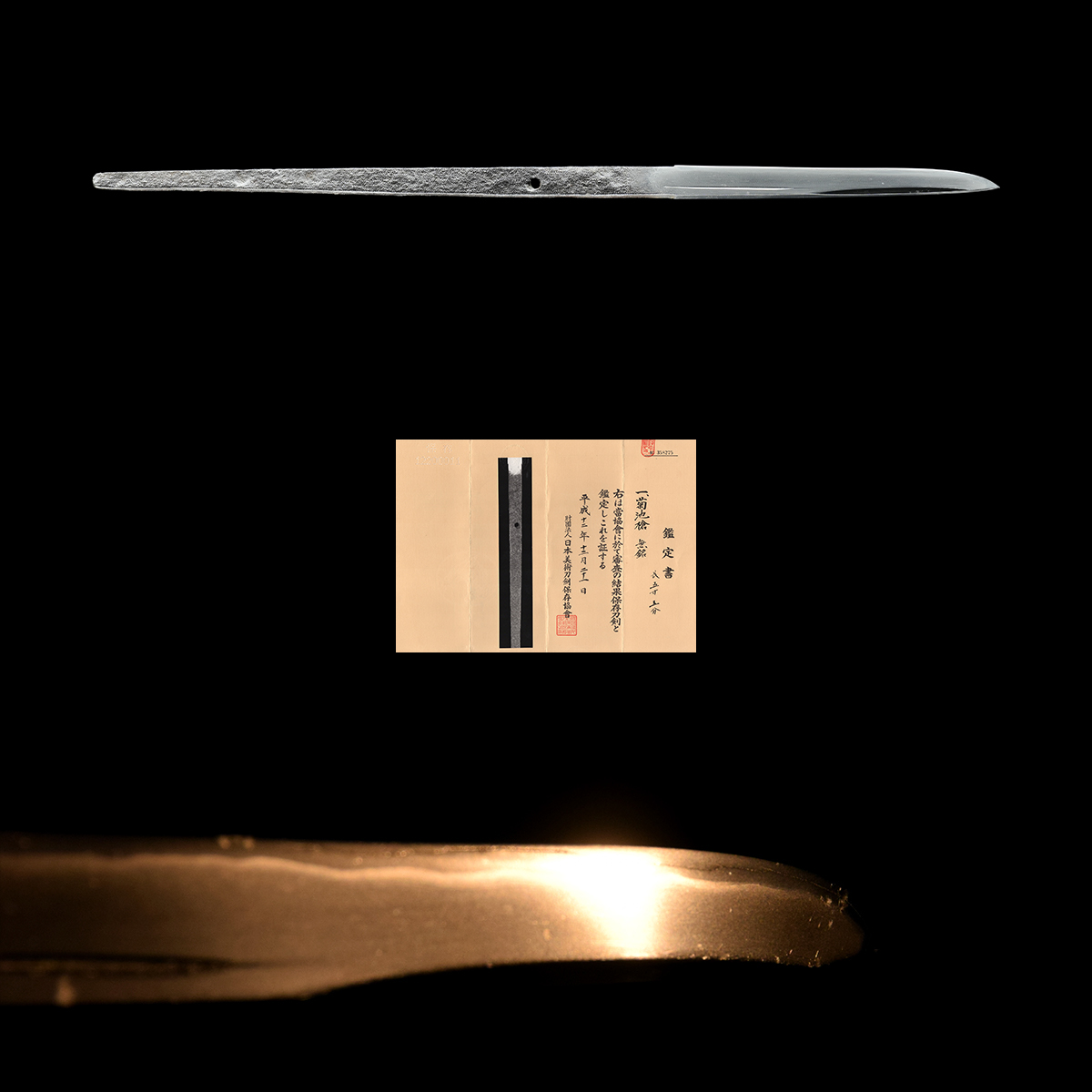
As written by the shop
Machine translation from the shop's Japanese · may contain errors ·
The Muromachi period (1392 to 1573)
After the Ōnin War broke the Ashikaga order, a century of Sengoku warfare armed nearly every province in Japan. The era rewards a discriminating eye: routine work exists in quantity, and beside it stand custom blades of the first rank.
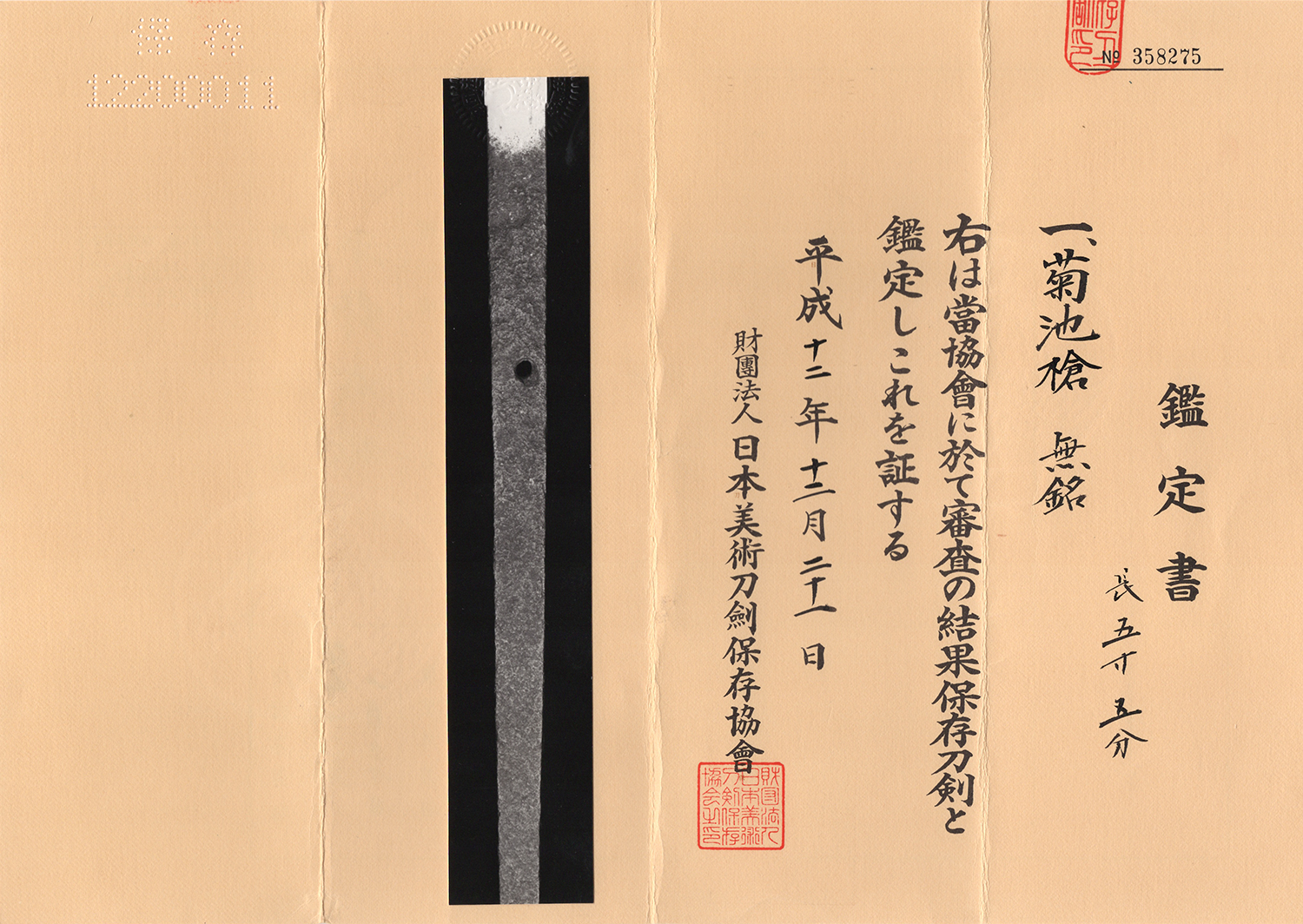
Certifies a genuine blade worth preserving: a signature confirmed correct, or, if unsigned, an era, province, and school that the NBTHK can reliably identify.
The NBTHK (Nihon Bijutsu Tōken Hozon Kyōkai, the Society for the Preservation of Japanese Art Swords) is a public-interest incorporated foundation founded in 1948 and supervised by Japan’s Agency for Cultural Affairs (Bunkachō); it is based at the Japanese Sword Museum in Tokyo. Its expert panels physically examine each submitted work (shinsa) and issue a certificate (kanteishō) ranking it by artistic and historical merit. NBTHK papers are the most widely recognized standard of authentication for Japanese swords and fittings.
NBTHK official siteAs a rule we do not accept returns, except when we have sent a different item from the one ordered or when there is a significant discrepancy between the description and the item. If you wish to return an item, please contact us within 3 days of its arrival and then send it back.
¥385,000
Certificate reading — 銘 無銘