NihontoWatch Mon

NihontoWatch

Market
Encyclopedia
Kantei
NihontoWatch Mon

NihontoWatch

Market
Encyclopedia
Kantei

Description

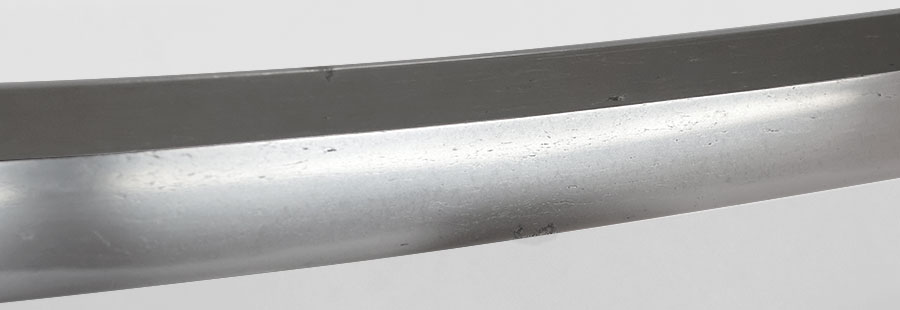
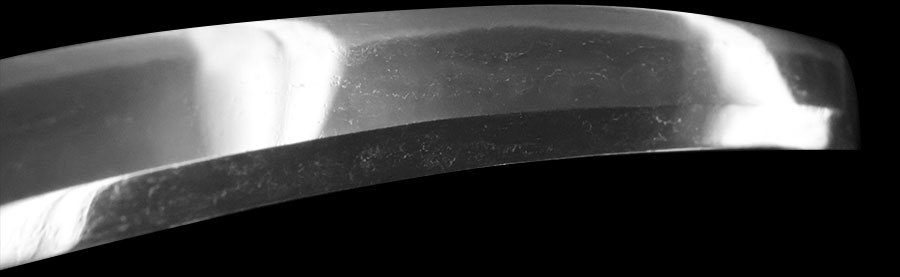
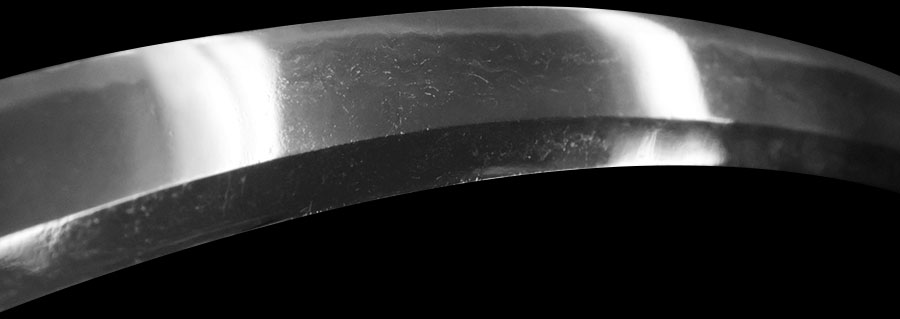
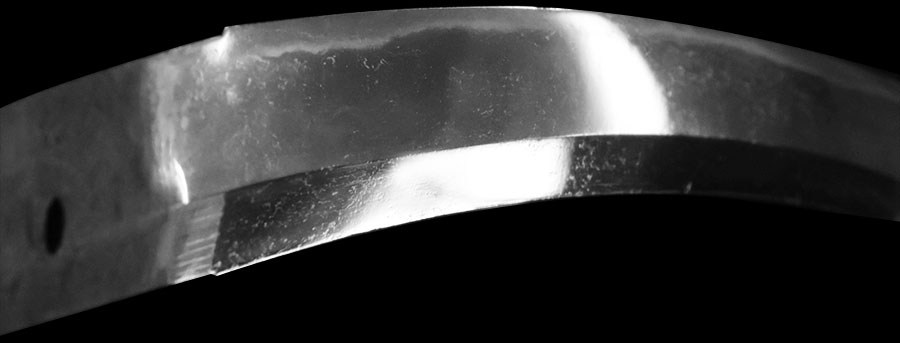
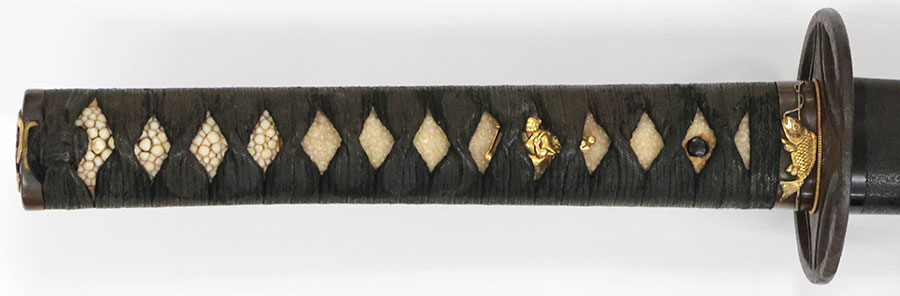
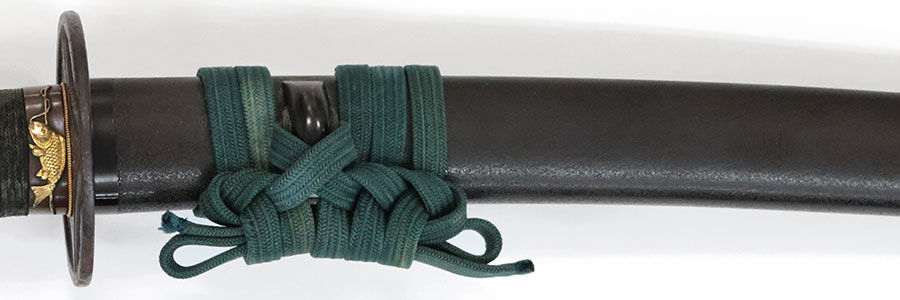
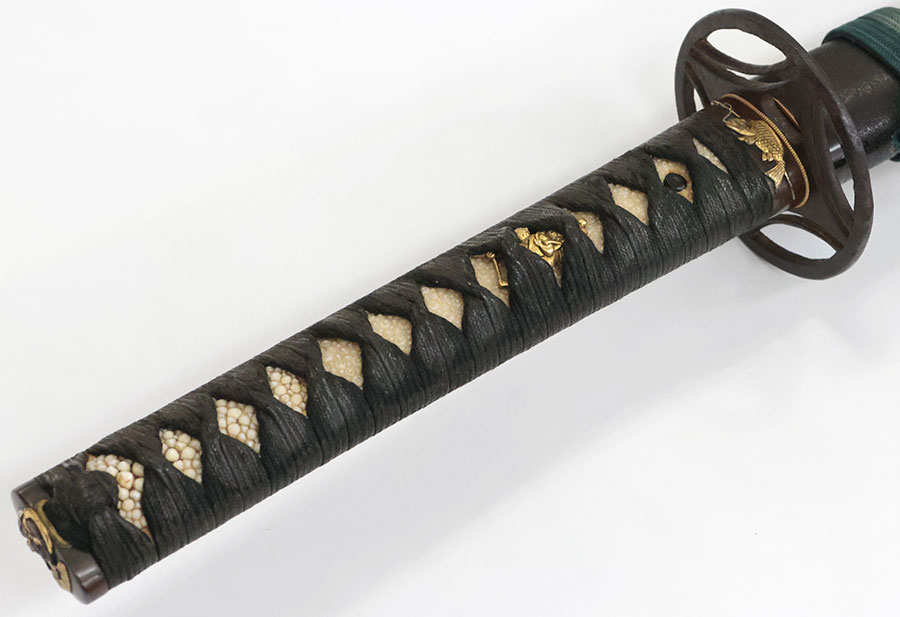
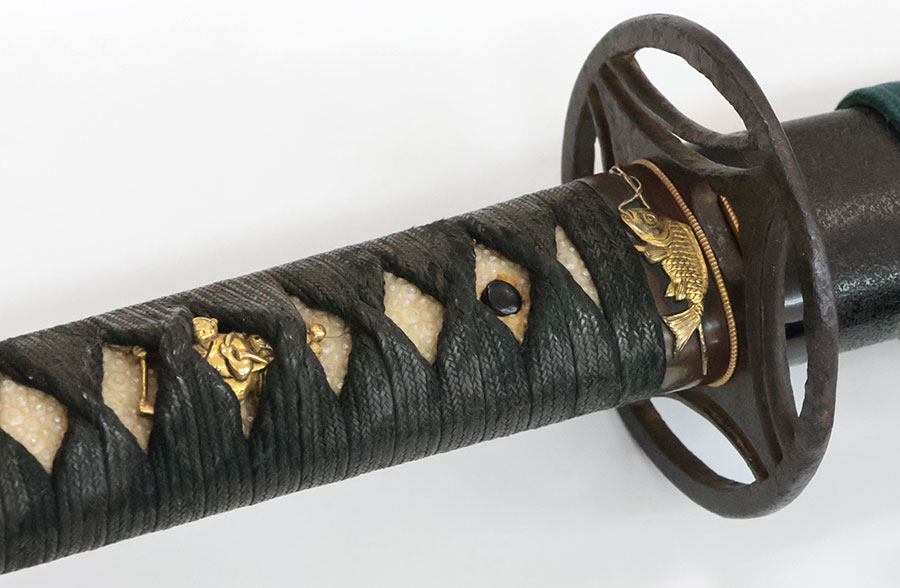
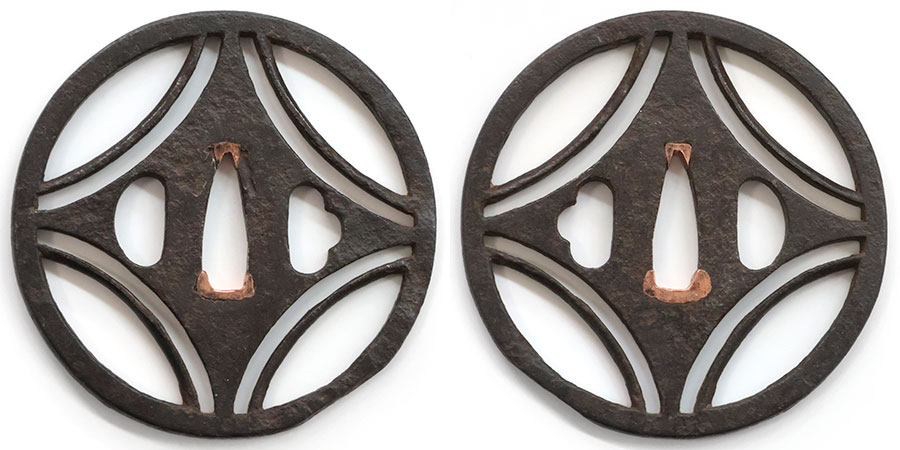
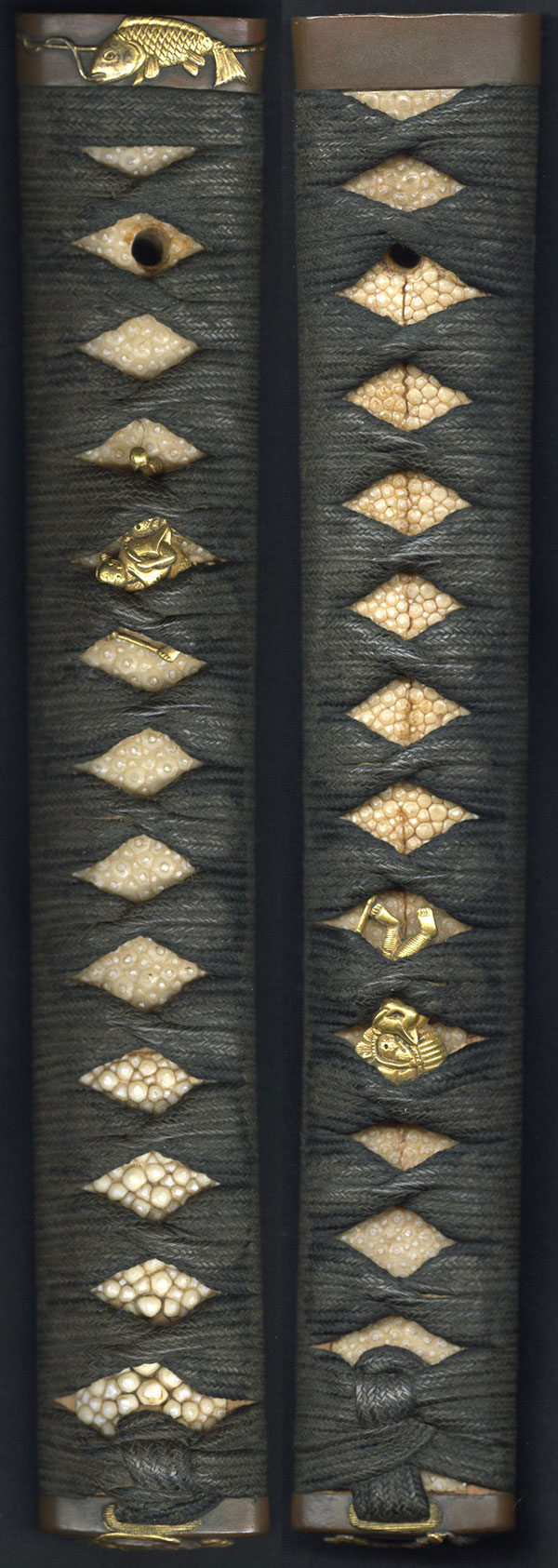
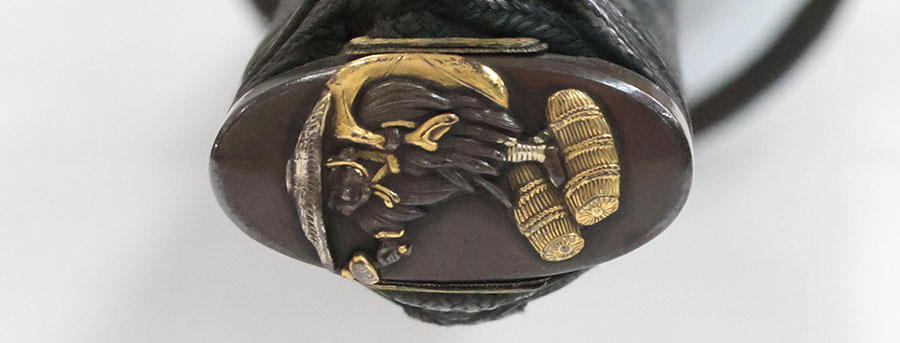
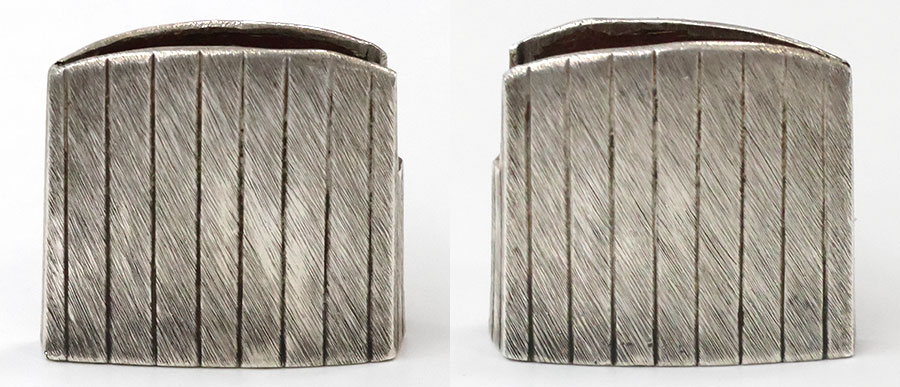
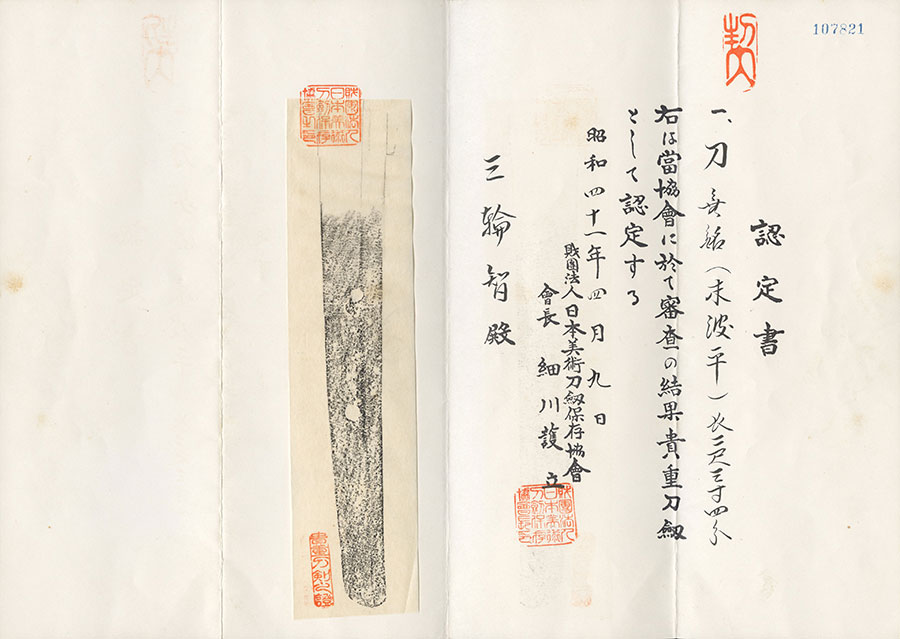
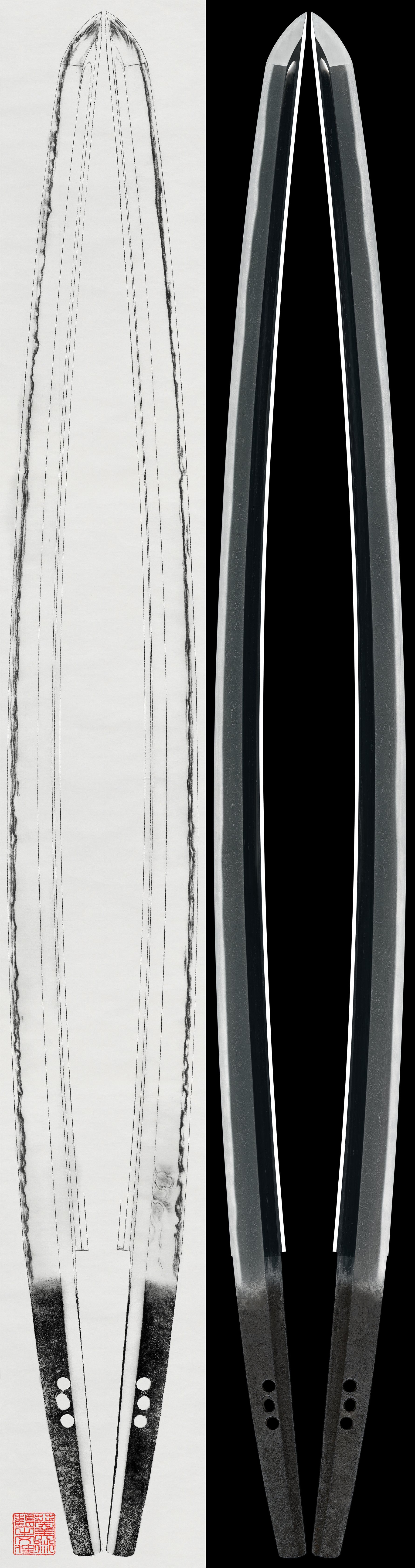
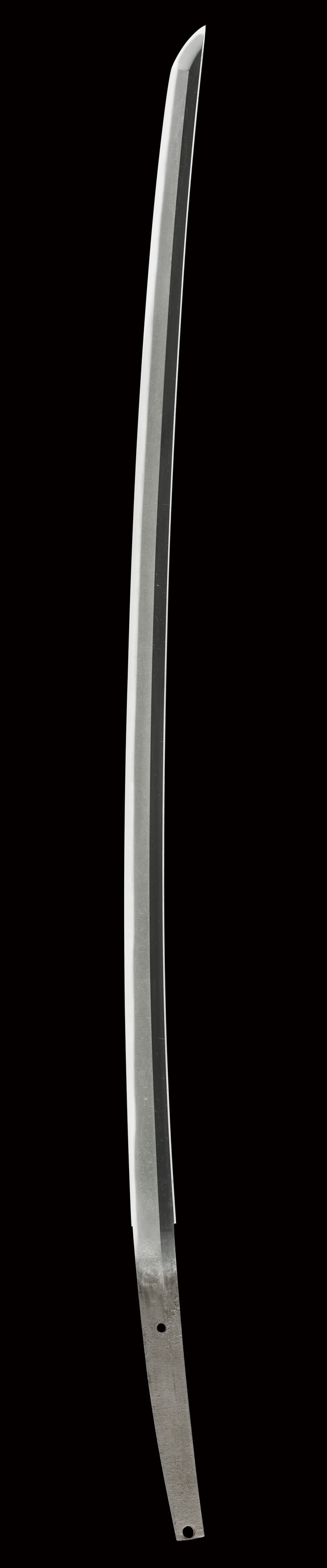
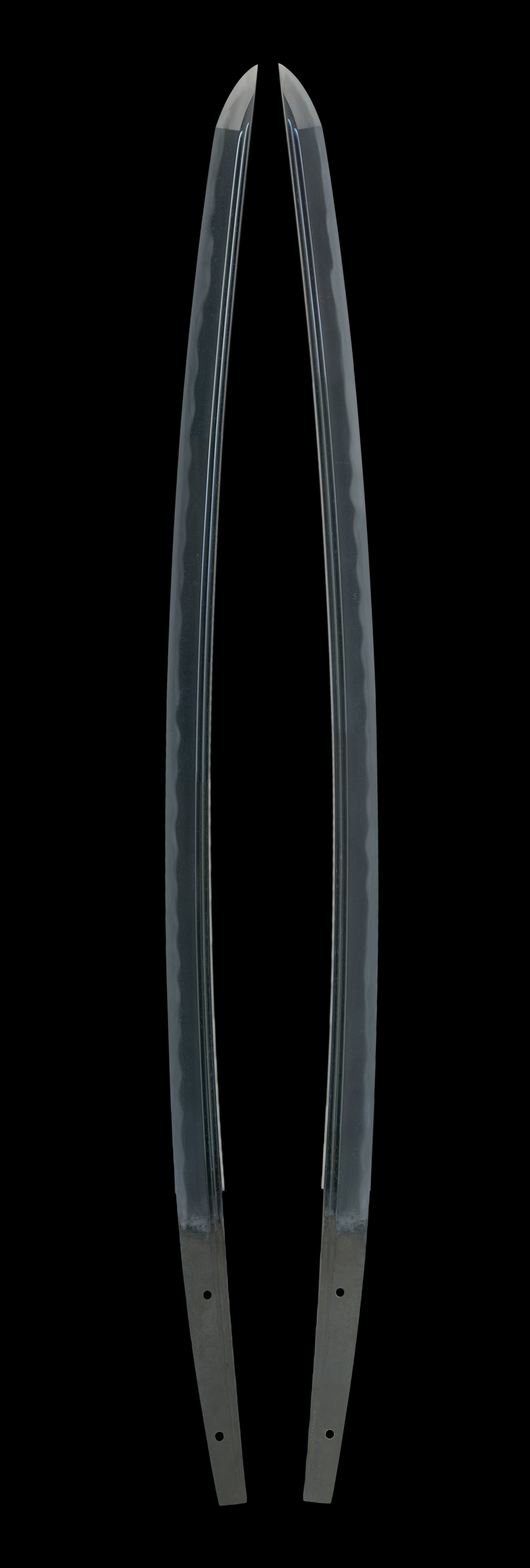
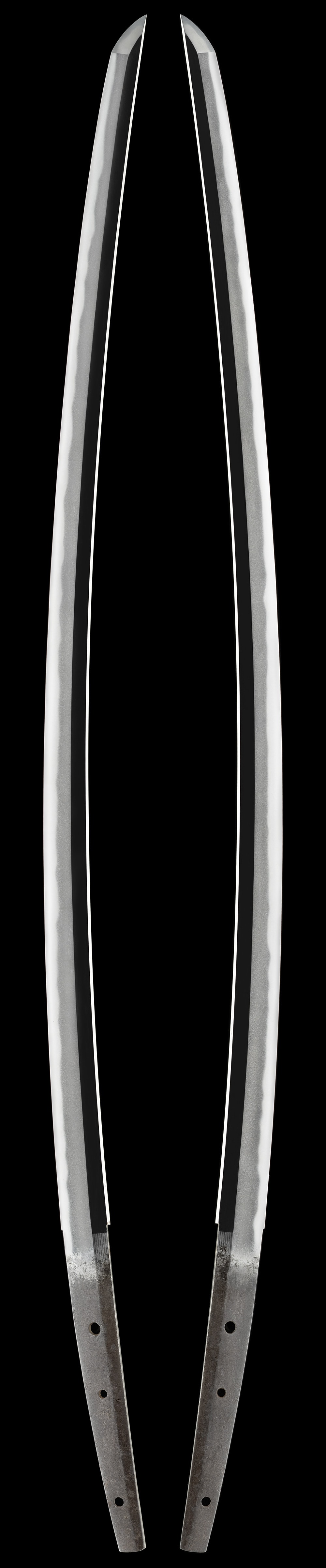
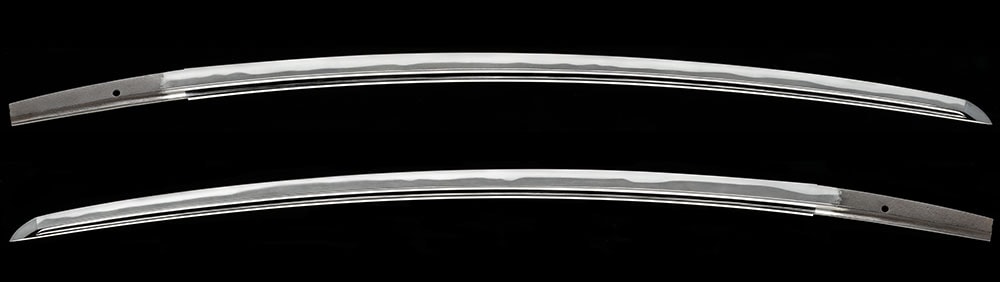
Weight (excluding saya): 789g It has arrived, it has arrived—a wonderfully precious piece. Alongside the Shimazu family of Satsuma, Kyushu, the Naminohira smiths are a lineage of swordsmiths that continued uninterrupted from the Heian period until the end of the Edo period. They are an ancient school of smiths ranking alongside Yasutsuna of Hoki and Tomonari of Ko-Bizen, the birthplaces of the nihonto. The designation of "Sue-Naminohira" begins from the middle of the Muromachi period. This Sue-Naminohira sword is an ubu mumei blade from around the Taie era (1521) at the end of the Muromachi period (505 years ago). The sugata displays an elegant form with a high sori, a distinct difference between the moto-mihaba and saki-mihaba, and a slightly small kissaki. The jigane is a ko-mokume-hada flowing into masame with fine ji-nie, presenting a refined and tasteful steel. The hamon is a slender suguha-cho with ko-nie and a deep nioi-guchi, showing excellent workmanship. Because Naminohira swords saw active service in the many battles of the Shimazu family, their consumption was extreme; the battle of Shimazu Yoshihiro at the Battle of Sekigahara is particularly famous. Isolated on the Sekigahara battlefield, the forces of Shimazu Yoshihiro had to choose between fighting the massive Eastern Army to the death, retreating backward toward Omi (Shiga Prefecture), or breaking through forward toward Ogaki (Gifu Prefecture). Shimazu Yoshihiro chose to lead the Shimazu army in a unified charge directly toward Tokugawa Ieyasu’s main headquarters. They employed the tactic known to the world as "Sutegamari" as they pushed forward. "Sutegamari" involves leaving small squads behind to fight to the death while the main body retreats. In other words, it is a delaying tactic using sacrificial pawns. When one squad was annihilated, another squad would fight to the death. By repeating this stalling of the enemy army over and over, it was a fierce struggle to allow the General to escape safely. After the Battle of Sekigahara, while the Mori family had their kokudaka greatly reduced, Tokugawa Ieyasu, having witnessed the terrifying fighting spirit of Shimazu Yoshihiro, was unable to reduce the kokudaka of the Shimazu family. Among the representative works of Sue-Naminohira, the work of Naminohira Kiyosuke is particularly famous for the "Yaetatami," the beloved meibutsu sword of the Higo Kumamoto Daimyo Hosokawa Yusai; along with the Izumi no Kami Kanesada in its Kasen Koshirae, it is famous as one of the two crown jewels of Hosokawa Yusai's collection. Many Naminohira swords have been designated as Juyo Bunkazai and Juyo Bijutsuhin since ancient times, yet due to the fierce combat of the Shimazu army, extant works are remarkably few. Although this Sue-Naminohira is mumei, it is precious. The Edo-period koshirae further adds splendor to this Sue-Naminohira sword. On this occasion, an old family mentioned, "We have grown old, so please pass this on at a low price to someone who will cherish it." Because we have received it under these circumstances, and because this sword from over 500 years ago has some slight surface rust, we are offering it at a special bargain price. Please enjoy it.

NihontoWatch MonNihontoWatch
MarketEncyclopediaKantei
Swords›薩摩›Japanese Sword Mumei Sue Naminohira with Kicho Touken Certificate
katanaKicho
無銘 末波平 Sue Naminohira

Japanese Sword Mumei Sue Naminohira with Kicho Touken Certificate

mumei · Heian · nagasa 70.7cm · sori 1.5cm

SOLD
無銘 末波平 Sue Naminohira — 1 of 30
無銘 末波平 Sue Naminohira — 2 of 30
無銘 末波平 Sue Naminohira — 3 of 30
無銘 末波平 Sue Naminohira — 4 of 30
無銘 末波平 Sue Naminohira — 5 of 30
無銘 末波平 Sue Naminohira — 6 of 30
無銘 末波平 Sue Naminohira — 7 of 30
無銘 末波平 Sue Naminohira — 8 of 30
無銘 末波平 Sue Naminohira — 9 of 30
無銘 末波平 Sue Naminohira — 10 of 30
無銘 末波平 Sue Naminohira — 11 of 30
無銘 末波平 Sue Naminohira — 12 of 30
無銘 末波平 Sue Naminohira — 13 of 30
無銘 末波平 Sue Naminohira — 14 of 30
無銘 末波平 Sue Naminohira — 15 of 30
無銘 末波平 Sue Naminohira — 16 of 30
無銘 末波平 Sue Naminohira — 17 of 30
無銘 末波平 Sue Naminohira — 18 of 30
無銘 末波平 Sue Naminohira — 19 of 30
無銘 末波平 Sue Naminohira — 20 of 30
無銘 末波平 Sue Naminohira — 21 of 30
無銘 末波平 Sue Naminohira — 22 of 30
無銘 末波平 Sue Naminohira — 23 of 30
無銘 末波平 Sue Naminohira — 24 of 30
無銘 末波平 Sue Naminohira — 25 of 30
無銘 末波平 Sue Naminohira — 26 of 30
無銘 末波平 Sue Naminohira — 27 of 30
無銘 末波平 Sue Naminohira — 28 of 30
無銘 末波平 Sue Naminohira — 29 of 30
無銘 末波平 Sue Naminohira — 30 of 30
1 / 30
1 / 30
無銘 末波平 Sue Naminohira — 1 of 30無銘 末波平 Sue Naminohira — 2 of 30無銘 末波平 Sue Naminohira — 3 of 30無銘 末波平 Sue Naminohira — 4 of 30無銘 末波平 Sue Naminohira — 5 of 30無銘 末波平 Sue Naminohira — 6 of 30無銘 末波平 Sue Naminohira — 7 of 30無銘 末波平 Sue Naminohira — 8 of 30無銘 末波平 Sue Naminohira — 9 of 30無銘 末波平 Sue Naminohira — 10 of 30無銘 末波平 Sue Naminohira — 11 of 30無銘 末波平 Sue Naminohira — 12 of 30無銘 末波平 Sue Naminohira — 13 of 30無銘 末波平 Sue Naminohira — 14 of 30無銘 末波平 Sue Naminohira — 15 of 30無銘 末波平 Sue Naminohira — 16 of 30無銘 末波平 Sue Naminohira — 17 of 30無銘 末波平 Sue Naminohira — 18 of 30無銘 末波平 Sue Naminohira — 19 of 30無銘 末波平 Sue Naminohira — 20 of 30無銘 末波平 Sue Naminohira — 21 of 30無銘 末波平 Sue Naminohira — 22 of 30無銘 末波平 Sue Naminohira — 23 of 30無銘 末波平 Sue Naminohira — 24 of 30無銘 末波平 Sue Naminohira — 25 of 30無銘 末波平 Sue Naminohira — 26 of 30無銘 末波平 Sue Naminohira — 27 of 30無銘 末波平 Sue Naminohira — 28 of 30無銘 末波平 Sue Naminohira — 29 of 30無銘 末波平 Sue Naminohira — 30 of 30
Measurements & details
Smith
無銘 末波平 Sue Naminohira
Type
Katana
Period
Heian
Province
薩摩
Signature
Unsigned
Measurements
Nagasa 70.7cmSori 1.5cmMotohaba 2.74cmSakihaba 1.57cmKasane 0.63cm
Description

Weight (excluding saya): 789g It has arrived, it has arrived—a wonderfully precious piece. Alongside the Shimazu family of Satsuma, Kyushu, the Naminohira smiths are a lineage of swordsmiths that continued uninterrupted from the Heian period until the end of the Edo period. They are an ancient school of smiths ranking alongside Yasutsuna of Hoki and Tomonari of Ko-Bizen, the birthplaces of the nihonto. The designation of "Sue-Naminohira" begins from the middle of the Muromachi period. This Sue-Naminohira sword is an ubu mumei blade from around the Taie era (1521) at the end of the Muromachi period (505 years ago). The sugata displays an elegant form with a high sori, a distinct difference between the moto-mihaba and saki-mihaba, and a slightly small kissaki. The jigane is a ko-mokume-hada flowing into masame with fine ji-nie, presenting a refined and tasteful steel. The hamon is a slender suguha-cho with ko-nie and a deep nioi-guchi, showing excellent workmanship. Because Naminohira swords saw active service in the many battles of the Shimazu family, their consumption was extreme; the battle of Shimazu Yoshihiro at the Battle of Sekigahara is particularly famous. Isolated on the Sekigahara battlefield, the forces of Shimazu Yoshihiro had to choose between fighting the massive Eastern Army to the death, retreating backward toward Omi (Shiga Prefecture), or breaking through forward toward Ogaki (Gifu Prefecture). Shimazu Yoshihiro chose to lead the Shimazu army in a unified charge directly toward Tokugawa Ieyasu’s main headquarters. They employed the tactic known to the world as "Sutegamari" as they pushed forward. "Sutegamari" involves leaving small squads behind to fight to the death while the main body retreats. In other words, it is a delaying tactic using sacrificial pawns. When one squad was annihilated, another squad would fight to the death. By repeating this stalling of the enemy army over and over, it was a fierce struggle to allow the General to escape safely. After the Battle of Sekigahara, while the Mori family had their kokudaka greatly reduced, Tokugawa Ieyasu, having witnessed the terrifying fighting spirit of Shimazu Yoshihiro, was unable to reduce the kokudaka of the Shimazu family. Among the representative works of Sue-Naminohira, the work of Naminohira Kiyosuke is particularly famous for the "Yaetatami," the beloved meibutsu sword of the Higo Kumamoto Daimyo Hosokawa Yusai; along with the Izumi no Kami Kanesada in its Kasen Koshirae, it is famous as one of the two crown jewels of Hosokawa Yusai's collection. Many Naminohira swords have been designated as Juyo Bunkazai and Juyo Bijutsuhin since ancient times, yet due to the fierce combat of the Shimazu army, extant works are remarkably few. Although this Sue-Naminohira is mumei, it is precious. The Edo-period koshirae further adds splendor to this Sue-Naminohira sword. On this occasion, an old family mentioned, "We have grown old, so please pass this on at a low price to someone who will cherish it." Because we have received it under these circumstances, and because this sword from over 500 years ago has some slight surface rust, we are offering it at a special bargain price. Please enjoy it.

Historical context

The curved, ridged tachi took its classic form in the Heian provinces while the court refined its culture in the capital. Its patrons were the military nobility whose feuds ended in the Genpei War, and whose blades became heirlooms almost at once.

The Heian period (794 to 1185) →

Authenticity not guaranteed

This work carries older NBTHK “Kichō”-era papers, which the NBTHK no longer issues and now regards as unreliable. To confirm the attribution, submission to an official Japanese examination body (such as the NBTHK or NTHK) for modern certification could be considered.

Seller
N
Nipponto
Established 1953 · 73 yrs on the market
🇯🇵Ships from Japan
›
✓Verified dealernipponto.co.jp
✓Ships worldwide✓English supportPayPalCredit card
Return policy

For returns due to customer circumstances, the cost is the customer's responsibility. For returns due to our mis-shipment or a defective item, we bear the cost.

View all of Nipponto’s listings→View this item on the dealer’s site→

Swords

  • Katana
  • Wakizashi
  • Tantō
  • Tachi
  • Naginata
  • Yari

Fittings

  • Tsuba
  • Fuchi-Kashira
  • Kozuka
  • Menuki

Armor

  • Kabuto
  • Samurai Armor

By Certification

  • Tokujū
  • Jūyō
  • Tokuho
  • Hozon

Resources

  • Dealer Directory
  • Artist Directory
  • The Daily Kantei
  • Glossary
  • Browse All
Nihontowatch© 2026
TermsPrivacyCookiesAbout

Description

Weight (excluding saya): 789g It has arrived, it has arrived—a wonderfully precious piece. Alongside the Shimazu family of Satsuma, Kyushu, the Naminohira smiths are a lineage of swordsmiths that continued uninterrupted from the Heian period until the end of the Edo period. They are an ancient school of smiths ranking alongside Yasutsuna of Hoki and Tomonari of Ko-Bizen, the birthplaces of the nihonto. The designation of "Sue-Naminohira" begins from the middle of the Muromachi period. This Sue-Naminohira sword is an ubu mumei blade from around the Taie era (1521) at the end of the Muromachi period (505 years ago). The sugata displays an elegant form with a high sori, a distinct difference between the moto-mihaba and saki-mihaba, and a slightly small kissaki. The jigane is a ko-mokume-hada flowing into masame with fine ji-nie, presenting a refined and tasteful steel. The hamon is a slender suguha-cho with ko-nie and a deep nioi-guchi, showing excellent workmanship. Because Naminohira swords saw active service in the many battles of the Shimazu family, their consumption was extreme; the battle of Shimazu Yoshihiro at the Battle of Sekigahara is particularly famous. Isolated on the Sekigahara battlefield, the forces of Shimazu Yoshihiro had to choose between fighting the massive Eastern Army to the death, retreating backward toward Omi (Shiga Prefecture), or breaking through forward toward Ogaki (Gifu Prefecture). Shimazu Yoshihiro chose to lead the Shimazu army in a unified charge directly toward Tokugawa Ieyasu’s main headquarters. They employed the tactic known to the world as "Sutegamari" as they pushed forward. "Sutegamari" involves leaving small squads behind to fight to the death while the main body retreats. In other words, it is a delaying tactic using sacrificial pawns. When one squad was annihilated, another squad would fight to the death. By repeating this stalling of the enemy army over and over, it was a fierce struggle to allow the General to escape safely. After the Battle of Sekigahara, while the Mori family had their kokudaka greatly reduced, Tokugawa Ieyasu, having witnessed the terrifying fighting spirit of Shimazu Yoshihiro, was unable to reduce the kokudaka of the Shimazu family. Among the representative works of Sue-Naminohira, the work of Naminohira Kiyosuke is particularly famous for the "Yaetatami," the beloved meibutsu sword of the Higo Kumamoto Daimyo Hosokawa Yusai; along with the Izumi no Kami Kanesada in its Kasen Koshirae, it is famous as one of the two crown jewels of Hosokawa Yusai's collection. Many Naminohira swords have been designated as Juyo Bunkazai and Juyo Bijutsuhin since ancient times, yet due to the fierce combat of the Shimazu army, extant works are remarkably few. Although this Sue-Naminohira is mumei, it is precious. The Edo-period koshirae further adds splendor to this Sue-Naminohira sword. On this occasion, an old family mentioned, "We have grown old, so please pass this on at a low price to someone who will cherish it." Because we have received it under these circumstances, and because this sword from over 500 years ago has some slight surface rust, we are offering it at a special bargain price. Please enjoy it.

NihontoWatch MonNihontoWatch
MarketEncyclopediaKantei
Swords›薩摩›Japanese Sword Mumei Sue Naminohira with Kicho Touken Certificate
katanaKicho
無銘 末波平 Sue Naminohira

Japanese Sword Mumei Sue Naminohira with Kicho Touken Certificate

mumei · Heian · nagasa 70.7cm · sori 1.5cm

SOLD
無銘 末波平 Sue Naminohira — 1 of 30
無銘 末波平 Sue Naminohira — 2 of 30
無銘 末波平 Sue Naminohira — 3 of 30
無銘 末波平 Sue Naminohira — 4 of 30
無銘 末波平 Sue Naminohira — 5 of 30
無銘 末波平 Sue Naminohira — 6 of 30
無銘 末波平 Sue Naminohira — 7 of 30
無銘 末波平 Sue Naminohira — 8 of 30
無銘 末波平 Sue Naminohira — 9 of 30
無銘 末波平 Sue Naminohira — 10 of 30
無銘 末波平 Sue Naminohira — 11 of 30
無銘 末波平 Sue Naminohira — 12 of 30
無銘 末波平 Sue Naminohira — 13 of 30
無銘 末波平 Sue Naminohira — 14 of 30
無銘 末波平 Sue Naminohira — 15 of 30
無銘 末波平 Sue Naminohira — 16 of 30
無銘 末波平 Sue Naminohira — 17 of 30
無銘 末波平 Sue Naminohira — 18 of 30
無銘 末波平 Sue Naminohira — 19 of 30
無銘 末波平 Sue Naminohira — 20 of 30
無銘 末波平 Sue Naminohira — 21 of 30
無銘 末波平 Sue Naminohira — 22 of 30
無銘 末波平 Sue Naminohira — 23 of 30
無銘 末波平 Sue Naminohira — 24 of 30
無銘 末波平 Sue Naminohira — 25 of 30
無銘 末波平 Sue Naminohira — 26 of 30
無銘 末波平 Sue Naminohira — 27 of 30
無銘 末波平 Sue Naminohira — 28 of 30
無銘 末波平 Sue Naminohira — 29 of 30
無銘 末波平 Sue Naminohira — 30 of 30
1 / 30
1 / 30
無銘 末波平 Sue Naminohira — 1 of 30無銘 末波平 Sue Naminohira — 2 of 30無銘 末波平 Sue Naminohira — 3 of 30無銘 末波平 Sue Naminohira — 4 of 30無銘 末波平 Sue Naminohira — 5 of 30無銘 末波平 Sue Naminohira — 6 of 30無銘 末波平 Sue Naminohira — 7 of 30無銘 末波平 Sue Naminohira — 8 of 30無銘 末波平 Sue Naminohira — 9 of 30無銘 末波平 Sue Naminohira — 10 of 30無銘 末波平 Sue Naminohira — 11 of 30無銘 末波平 Sue Naminohira — 12 of 30無銘 末波平 Sue Naminohira — 13 of 30無銘 末波平 Sue Naminohira — 14 of 30無銘 末波平 Sue Naminohira — 15 of 30無銘 末波平 Sue Naminohira — 16 of 30無銘 末波平 Sue Naminohira — 17 of 30無銘 末波平 Sue Naminohira — 18 of 30無銘 末波平 Sue Naminohira — 19 of 30無銘 末波平 Sue Naminohira — 20 of 30無銘 末波平 Sue Naminohira — 21 of 30無銘 末波平 Sue Naminohira — 22 of 30無銘 末波平 Sue Naminohira — 23 of 30無銘 末波平 Sue Naminohira — 24 of 30無銘 末波平 Sue Naminohira — 25 of 30無銘 末波平 Sue Naminohira — 26 of 30無銘 末波平 Sue Naminohira — 27 of 30無銘 末波平 Sue Naminohira — 28 of 30無銘 末波平 Sue Naminohira — 29 of 30無銘 末波平 Sue Naminohira — 30 of 30
Measurements & details
Smith
無銘 末波平 Sue Naminohira
Type
Katana
Period
Heian
Province
薩摩
Signature
Unsigned
Measurements
Nagasa 70.7cmSori 1.5cmMotohaba 2.74cmSakihaba 1.57cmKasane 0.63cm
Description

Weight (excluding saya): 789g It has arrived, it has arrived—a wonderfully precious piece. Alongside the Shimazu family of Satsuma, Kyushu, the Naminohira smiths are a lineage of swordsmiths that continued uninterrupted from the Heian period until the end of the Edo period. They are an ancient school of smiths ranking alongside Yasutsuna of Hoki and Tomonari of Ko-Bizen, the birthplaces of the nihonto. The designation of "Sue-Naminohira" begins from the middle of the Muromachi period. This Sue-Naminohira sword is an ubu mumei blade from around the Taie era (1521) at the end of the Muromachi period (505 years ago). The sugata displays an elegant form with a high sori, a distinct difference between the moto-mihaba and saki-mihaba, and a slightly small kissaki. The jigane is a ko-mokume-hada flowing into masame with fine ji-nie, presenting a refined and tasteful steel. The hamon is a slender suguha-cho with ko-nie and a deep nioi-guchi, showing excellent workmanship. Because Naminohira swords saw active service in the many battles of the Shimazu family, their consumption was extreme; the battle of Shimazu Yoshihiro at the Battle of Sekigahara is particularly famous. Isolated on the Sekigahara battlefield, the forces of Shimazu Yoshihiro had to choose between fighting the massive Eastern Army to the death, retreating backward toward Omi (Shiga Prefecture), or breaking through forward toward Ogaki (Gifu Prefecture). Shimazu Yoshihiro chose to lead the Shimazu army in a unified charge directly toward Tokugawa Ieyasu’s main headquarters. They employed the tactic known to the world as "Sutegamari" as they pushed forward. "Sutegamari" involves leaving small squads behind to fight to the death while the main body retreats. In other words, it is a delaying tactic using sacrificial pawns. When one squad was annihilated, another squad would fight to the death. By repeating this stalling of the enemy army over and over, it was a fierce struggle to allow the General to escape safely. After the Battle of Sekigahara, while the Mori family had their kokudaka greatly reduced, Tokugawa Ieyasu, having witnessed the terrifying fighting spirit of Shimazu Yoshihiro, was unable to reduce the kokudaka of the Shimazu family. Among the representative works of Sue-Naminohira, the work of Naminohira Kiyosuke is particularly famous for the "Yaetatami," the beloved meibutsu sword of the Higo Kumamoto Daimyo Hosokawa Yusai; along with the Izumi no Kami Kanesada in its Kasen Koshirae, it is famous as one of the two crown jewels of Hosokawa Yusai's collection. Many Naminohira swords have been designated as Juyo Bunkazai and Juyo Bijutsuhin since ancient times, yet due to the fierce combat of the Shimazu army, extant works are remarkably few. Although this Sue-Naminohira is mumei, it is precious. The Edo-period koshirae further adds splendor to this Sue-Naminohira sword. On this occasion, an old family mentioned, "We have grown old, so please pass this on at a low price to someone who will cherish it." Because we have received it under these circumstances, and because this sword from over 500 years ago has some slight surface rust, we are offering it at a special bargain price. Please enjoy it.

Historical context

The curved, ridged tachi took its classic form in the Heian provinces while the court refined its culture in the capital. Its patrons were the military nobility whose feuds ended in the Genpei War, and whose blades became heirlooms almost at once.

The Heian period (794 to 1185) →

Authenticity not guaranteed

This work carries older NBTHK “Kichō”-era papers, which the NBTHK no longer issues and now regards as unreliable. To confirm the attribution, submission to an official Japanese examination body (such as the NBTHK or NTHK) for modern certification could be considered.

Seller
N
Nipponto
Established 1953 · 73 yrs on the market
🇯🇵Ships from Japan
›
✓Verified dealernipponto.co.jp
✓Ships worldwide✓English supportPayPalCredit card
Return policy

For returns due to customer circumstances, the cost is the customer's responsibility. For returns due to our mis-shipment or a defective item, we bear the cost.
View all of Nipponto’s listings→View this item on the dealer’s site→

Swords

  • Katana
  • Wakizashi
  • Tantō
  • Tachi
  • Naginata
  • Yari

Fittings

  • Tsuba
  • Fuchi-Kashira
  • Kozuka
  • Menuki

Armor

  • Kabuto
  • Samurai Armor

By Certification

  • Tokujū
  • Jūyō
  • Tokuho
  • Hozon

Resources

  • Dealer Directory
  • Artist Directory
  • The Daily Kantei
  • Glossary
  • Browse All
Nihontowatch© 2026
TermsPrivacyCookiesAbout
NihontoWatch Mon

NihontoWatch

Market
Encyclopedia
Kantei
NihontoWatch Mon

NihontoWatch

Market
Encyclopedia
Kantei