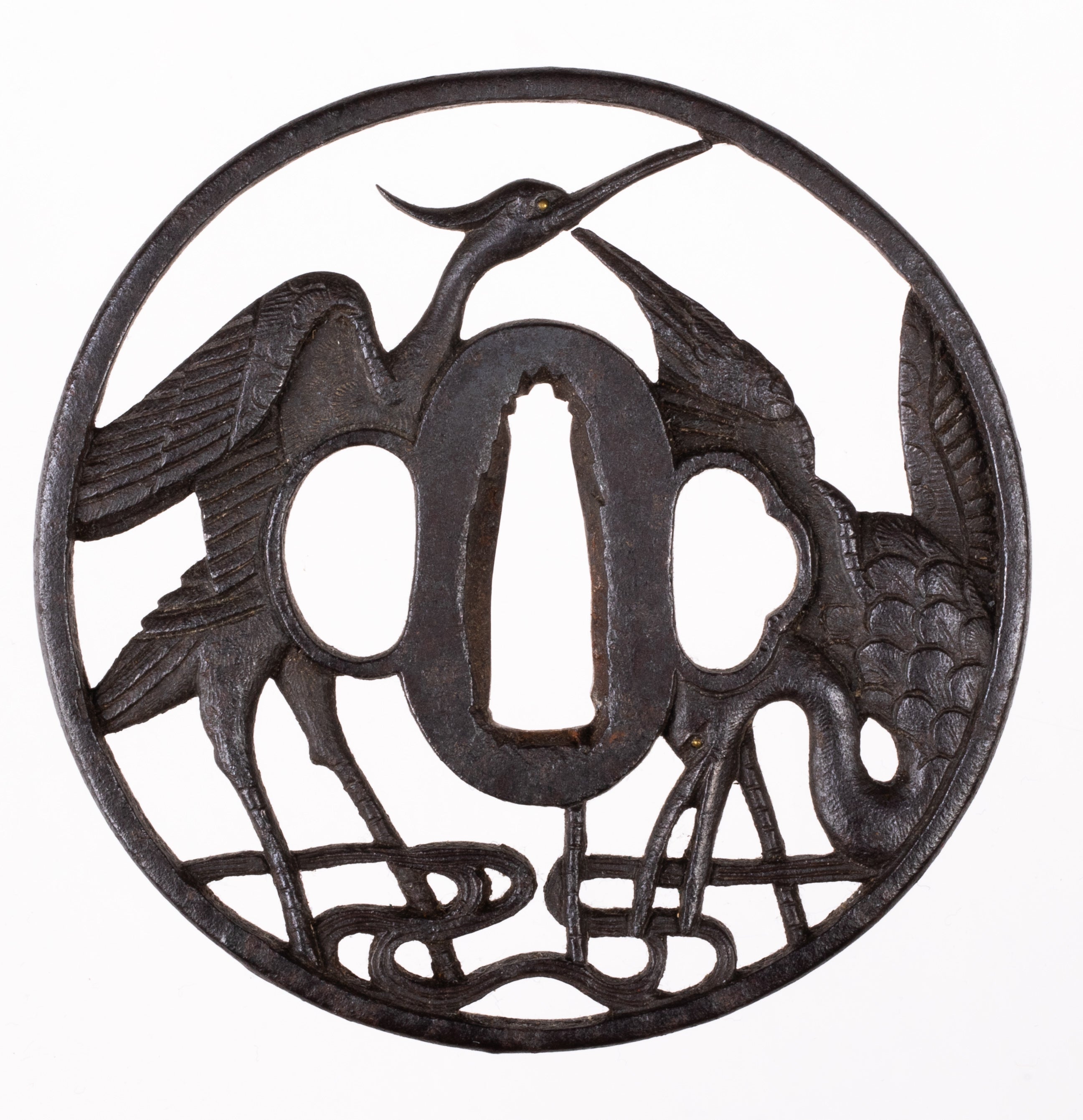
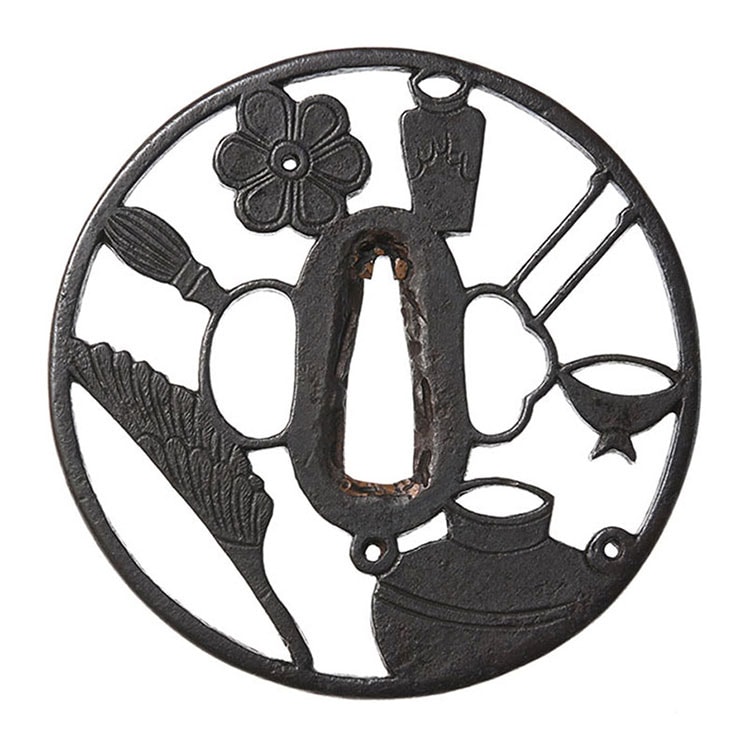
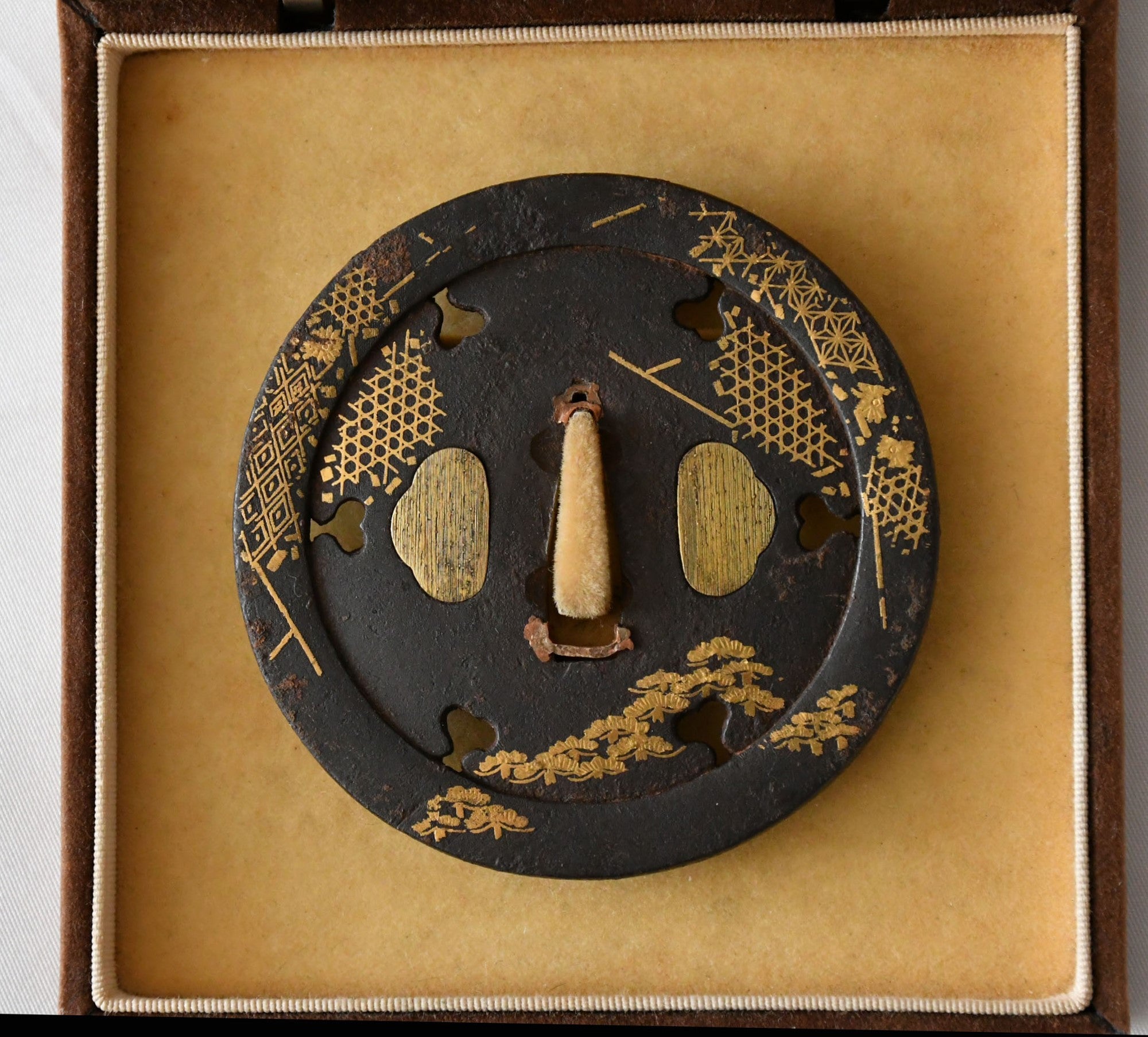
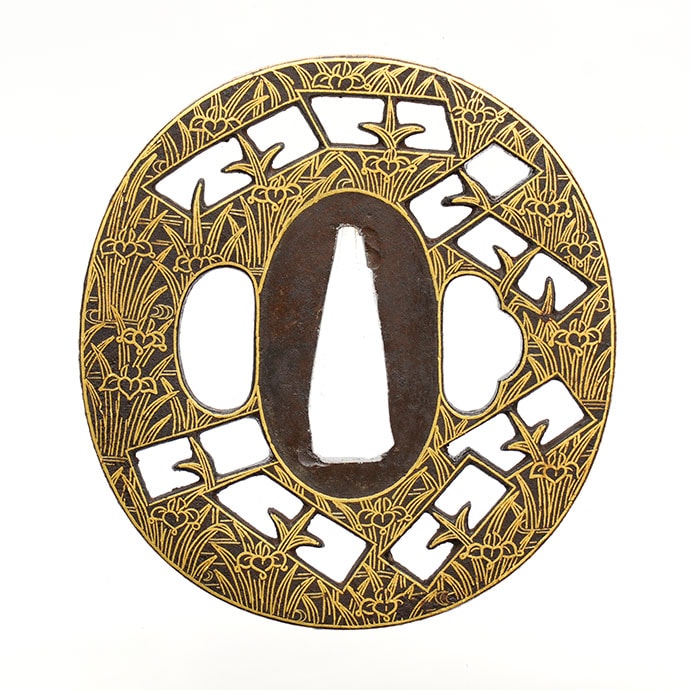
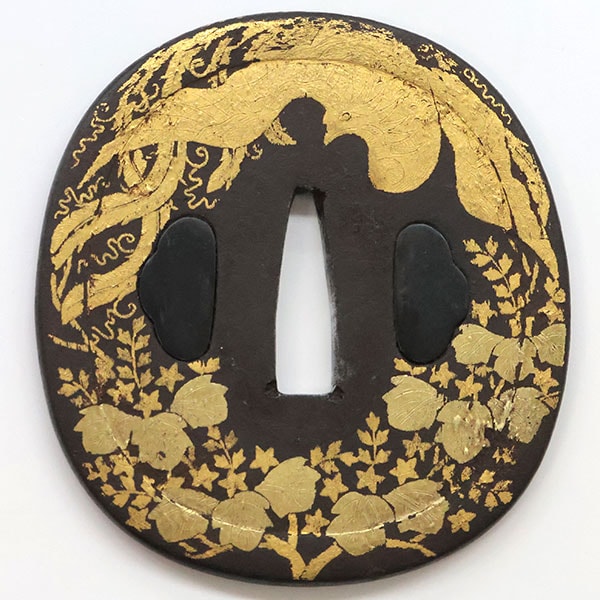
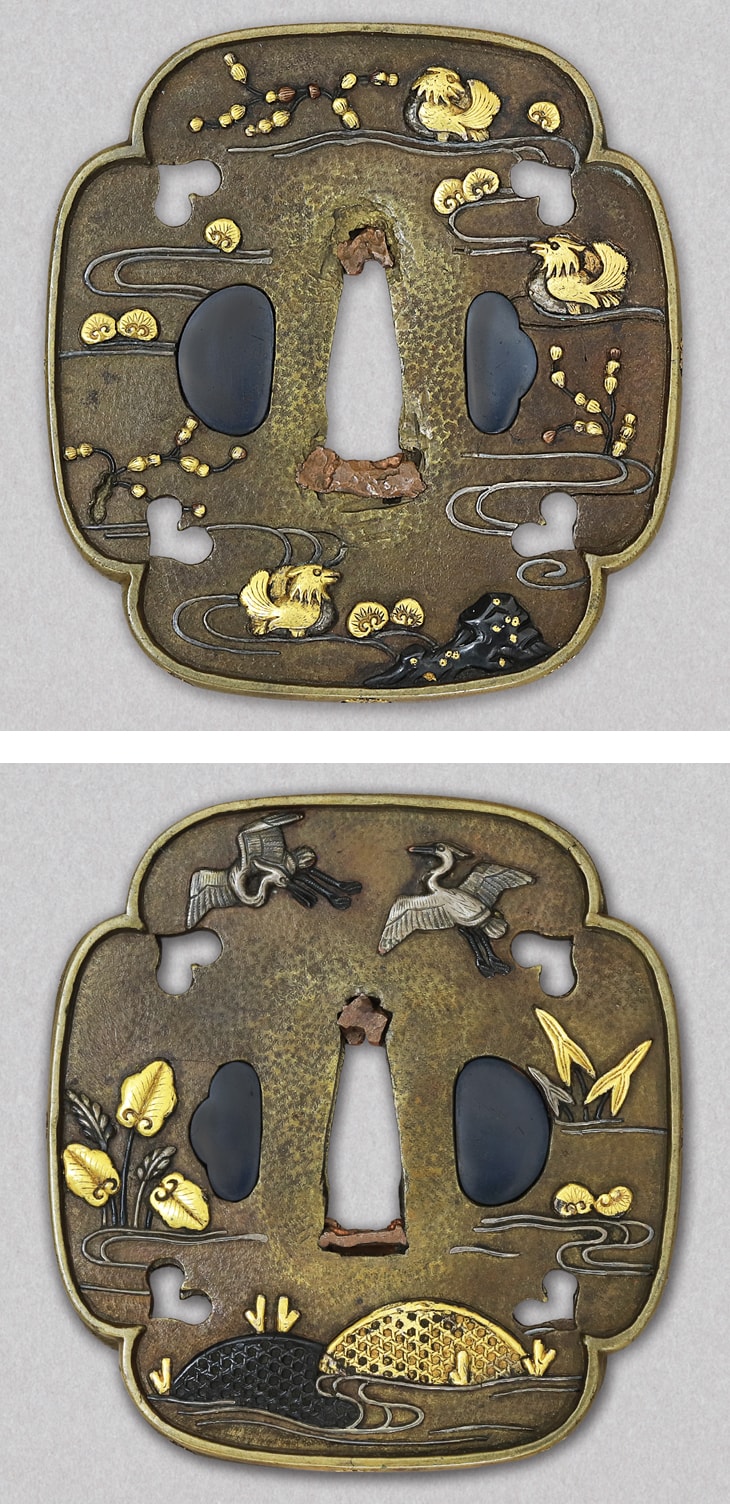
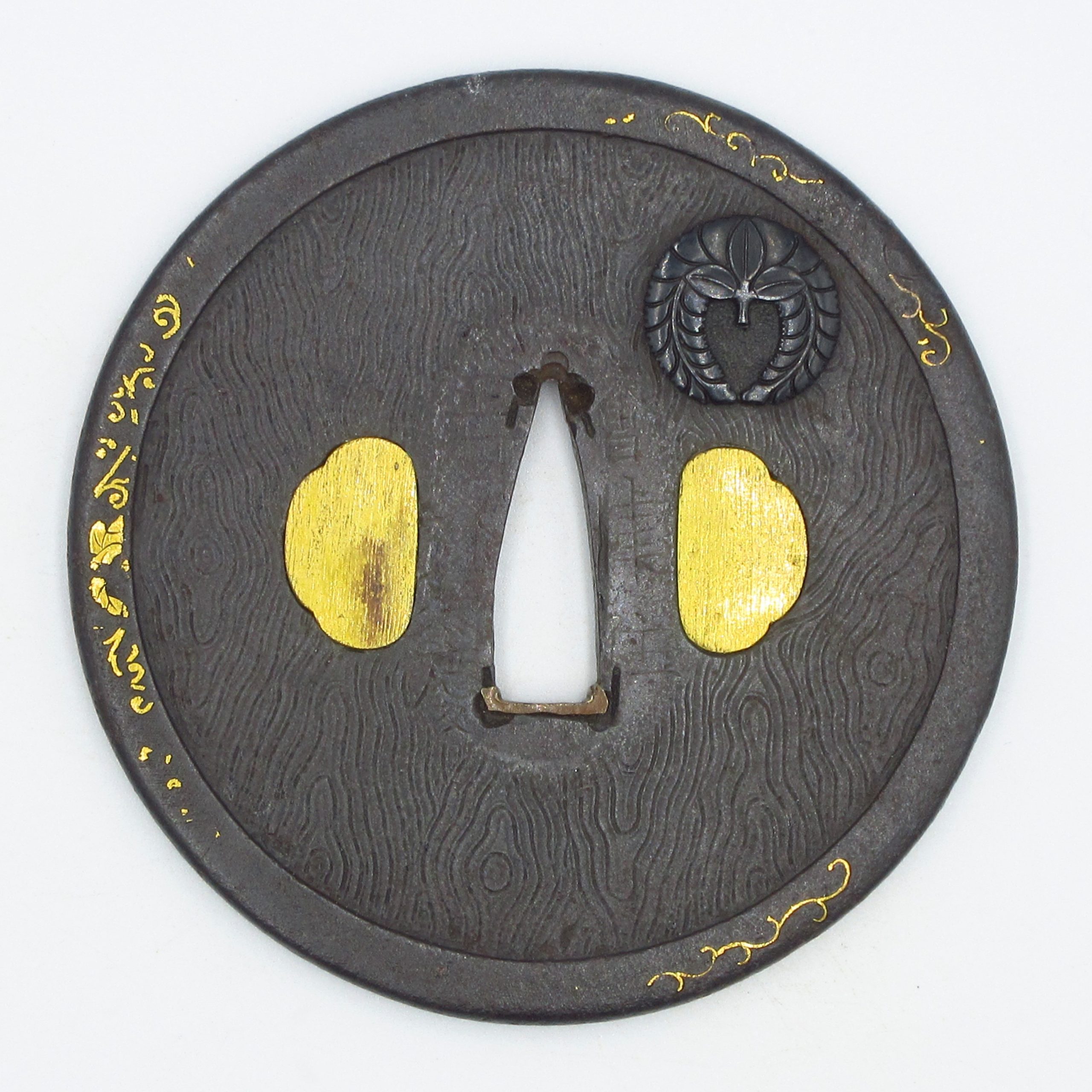
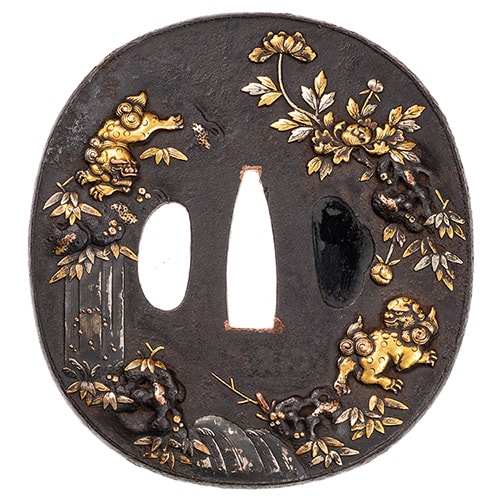
This is a Kyoshoami tsuba, made of well-forged iron in a tatemarugata shape. It features a design-like openwork and textured gold inlay (kin nunomezogan). The Shoami school, active from the Muromachi to late Edo period, is known for its widespread influence, with Kyoshoami referring to pieces from the Momoyama and Edo periods, centered in Kyoto.
 NihontoWatch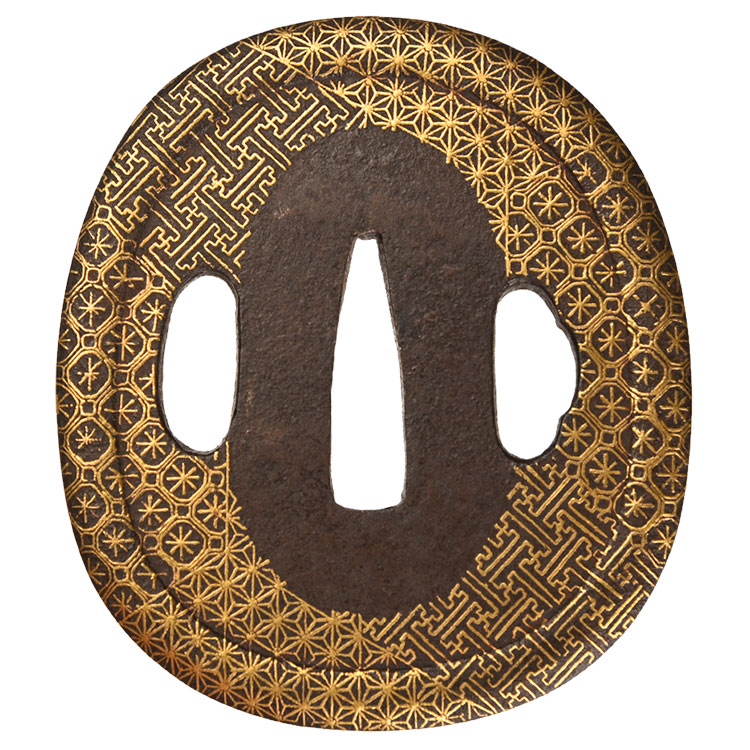
Iron-tsuba · Yamashiro
14 pieces on the market now
We could not find an authenticity certificate on the seller’s listing. Japanese swords and fittings are normally papered by the NBTHK (or the NTHK). Without one, the attribution is the seller’s own assessment and has not been independently verified — treat it with caution and ask the dealer about certification before buying.
Returns/exchanges/cancellations not accepted after shipment except for significant defects; if defective, return/exchange possible within 3 days of arrival (return shipping paid by customer).
This is a Kyoshoami tsuba, made of well-forged iron in a tatemarugata shape. It features a design-like openwork and textured gold inlay (kin nunomezogan). The Shoami school, active from the Muromachi to late Edo period, is known for its widespread influence, with Kyoshoami referring to pieces from the Momoyama and Edo periods, centered in Kyoto.
NihontoWatchIron-tsuba · Yamashiro
14 pieces on the market now
We could not find an authenticity certificate on the seller’s listing. Japanese swords and fittings are normally papered by the NBTHK (or the NTHK). Without one, the attribution is the seller’s own assessment and has not been independently verified — treat it with caution and ask the dealer about certification before buying.
Returns/exchanges/cancellations not accepted after shipment except for significant defects; if defective, return/exchange possible within 3 days of arrival (return shipping paid by customer).