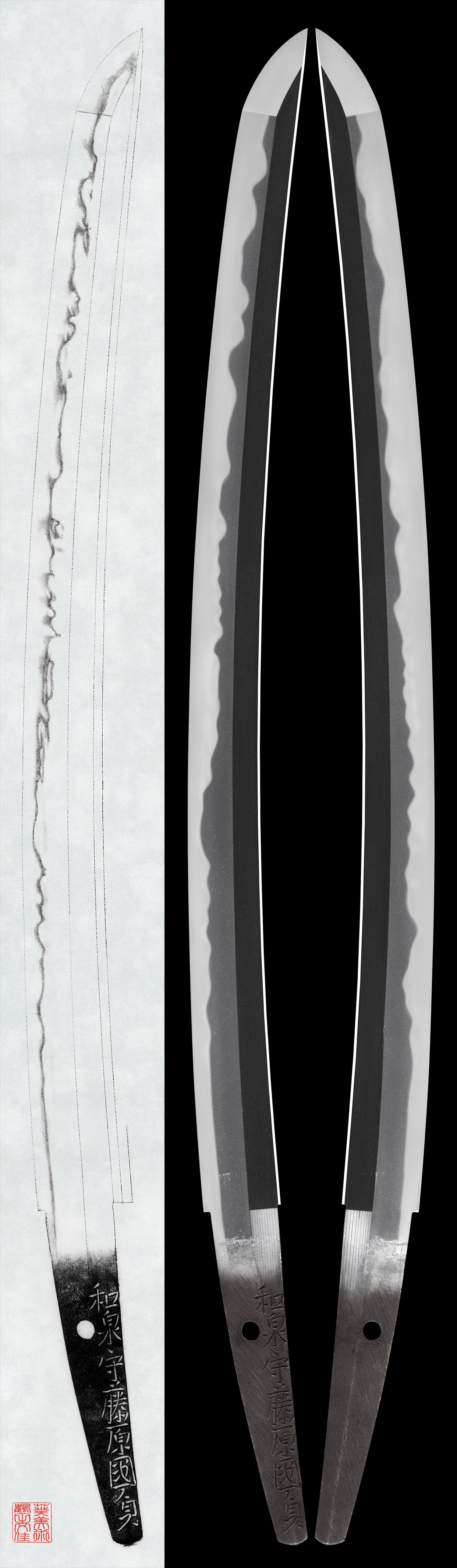
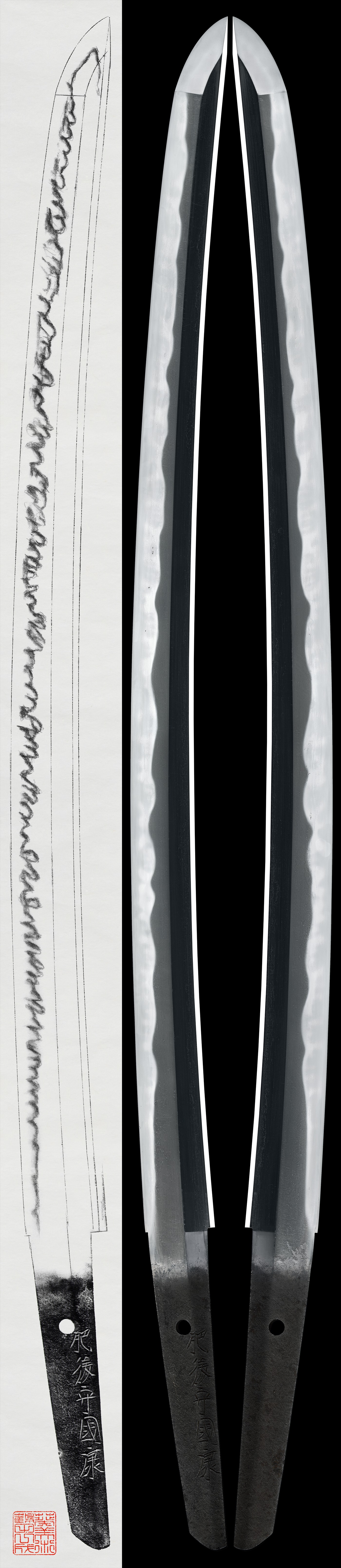
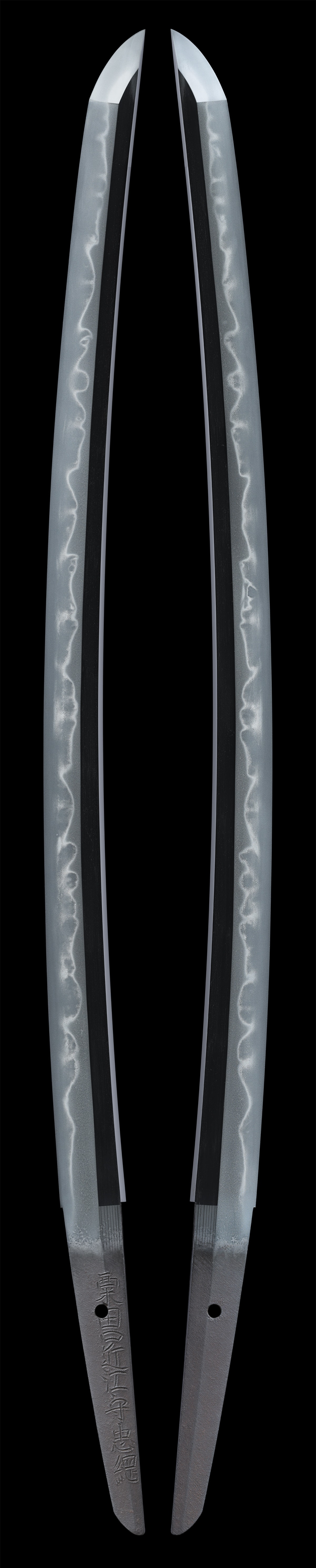
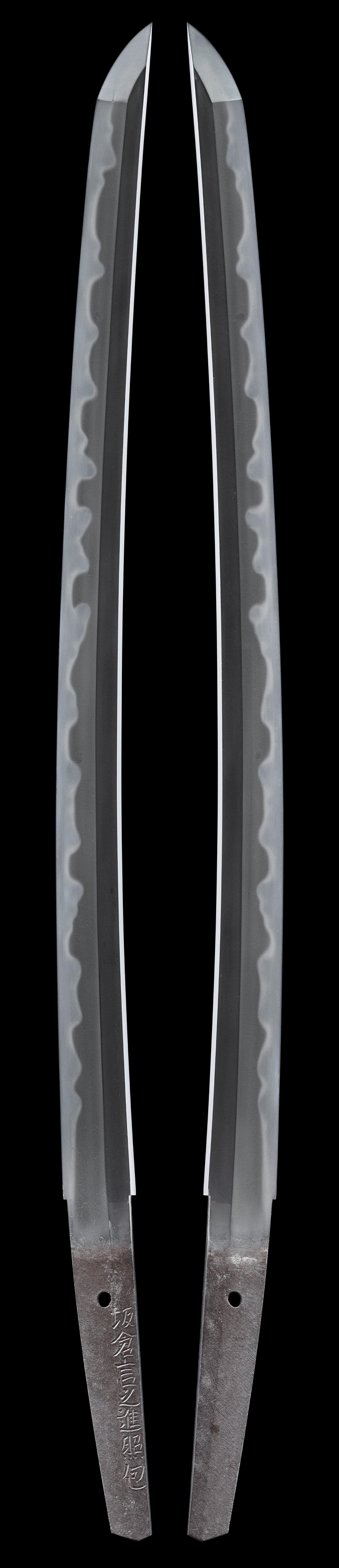
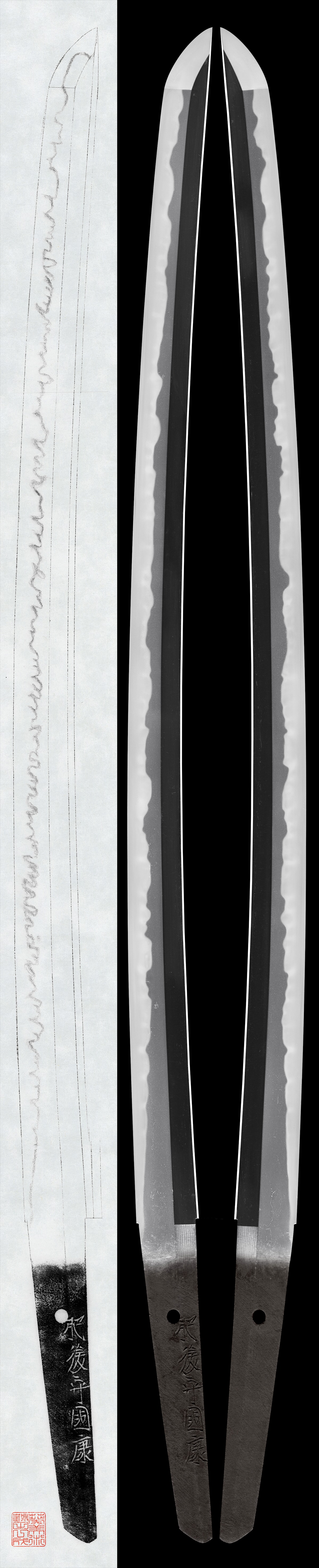
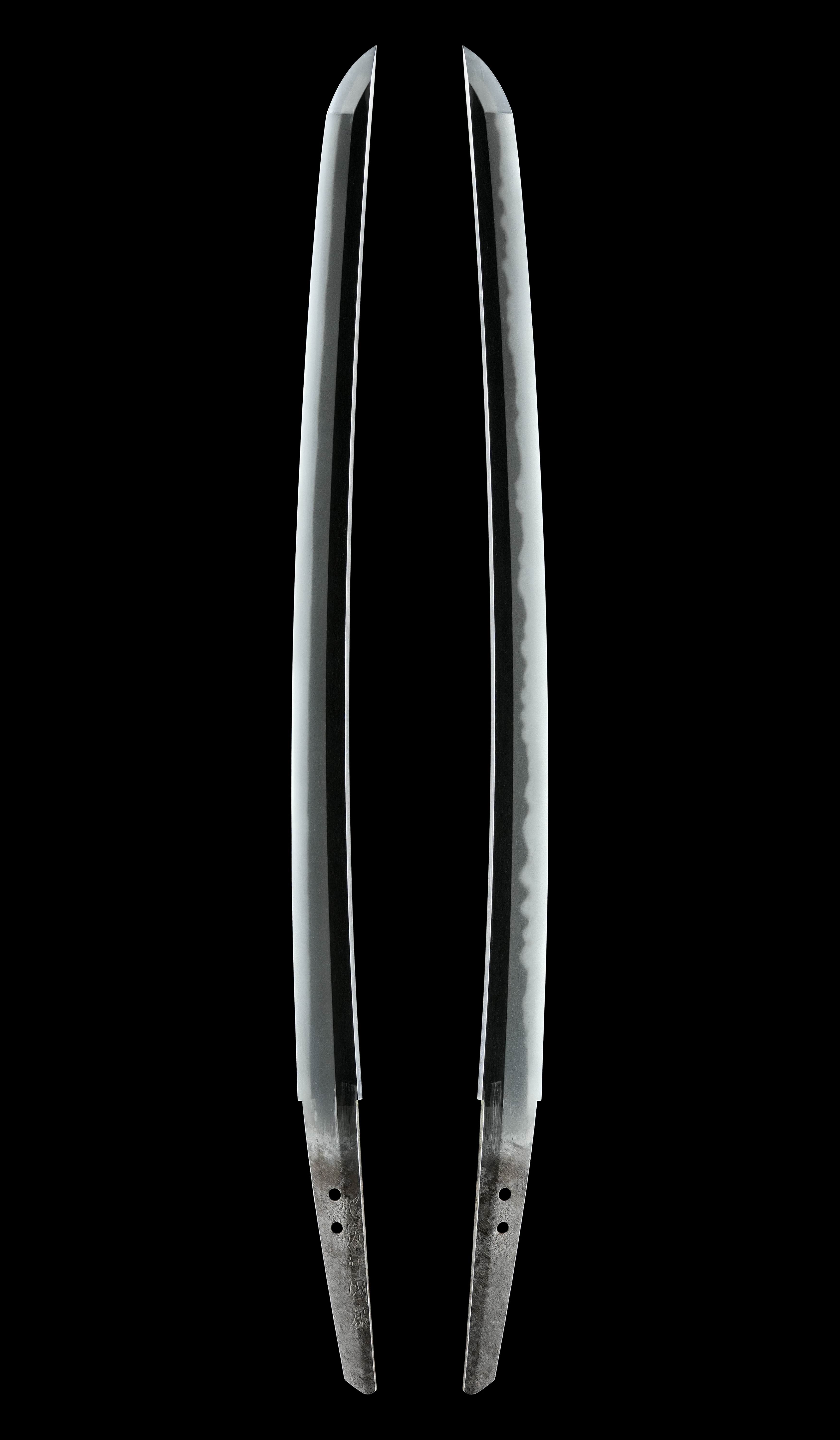
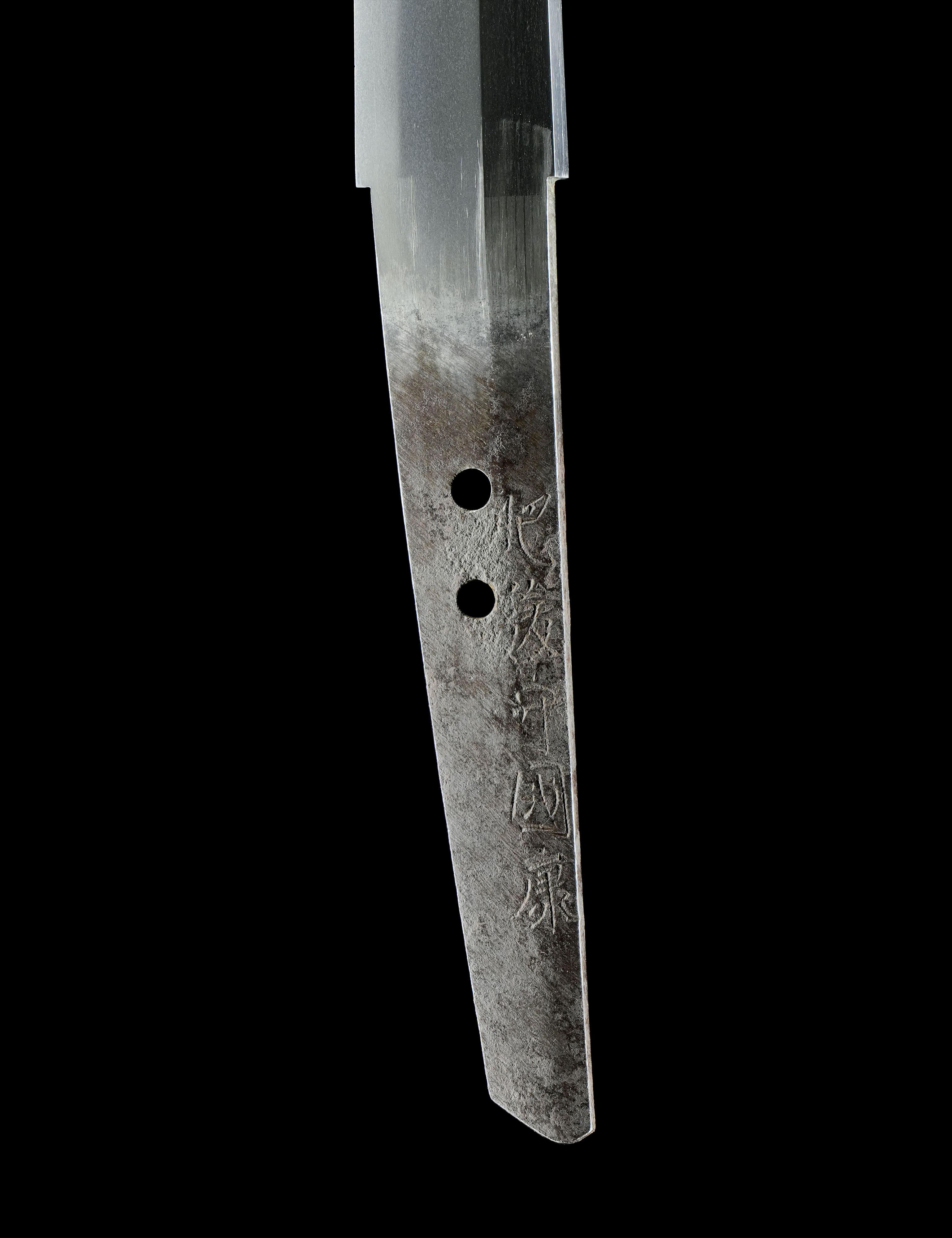
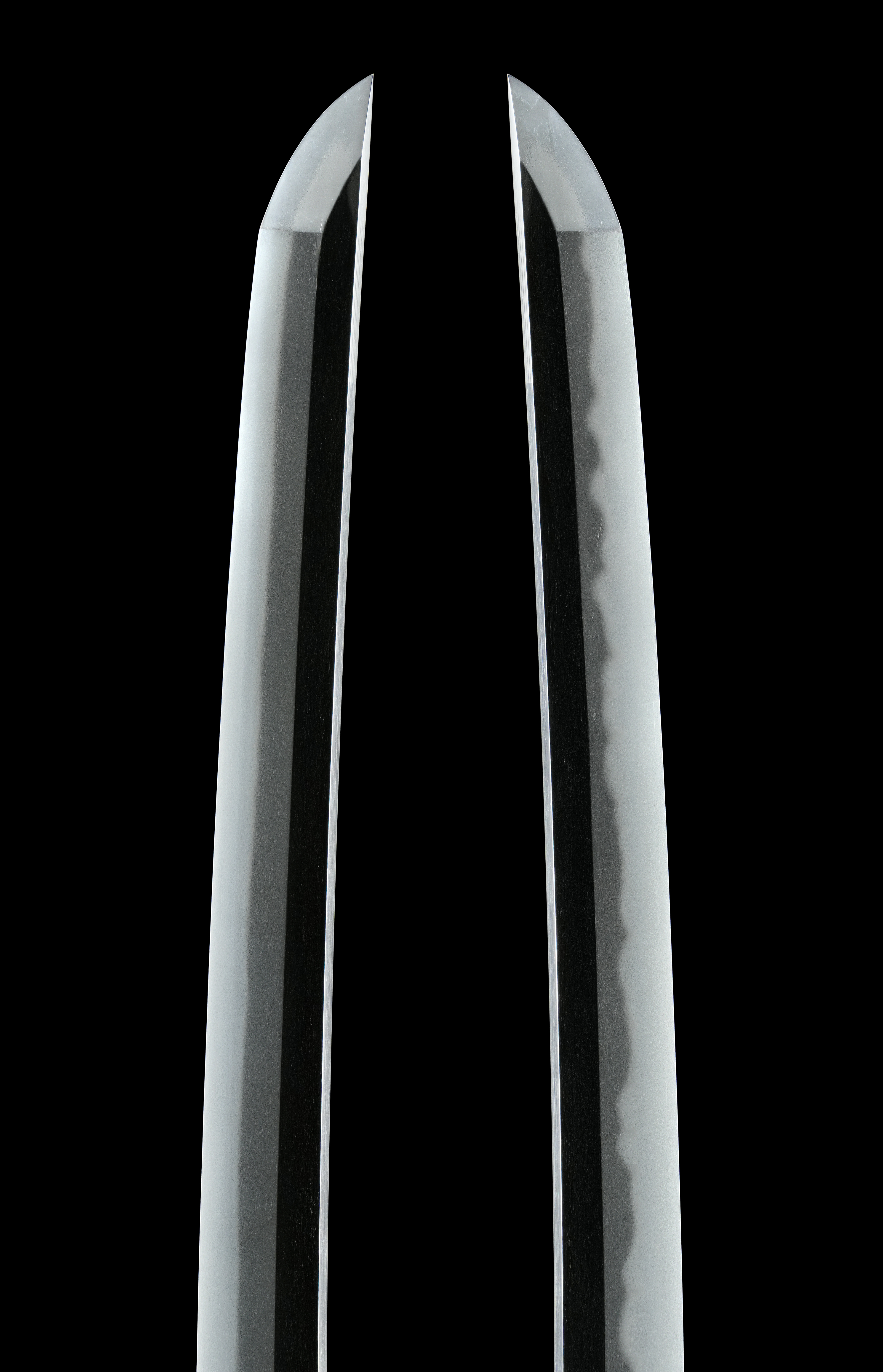
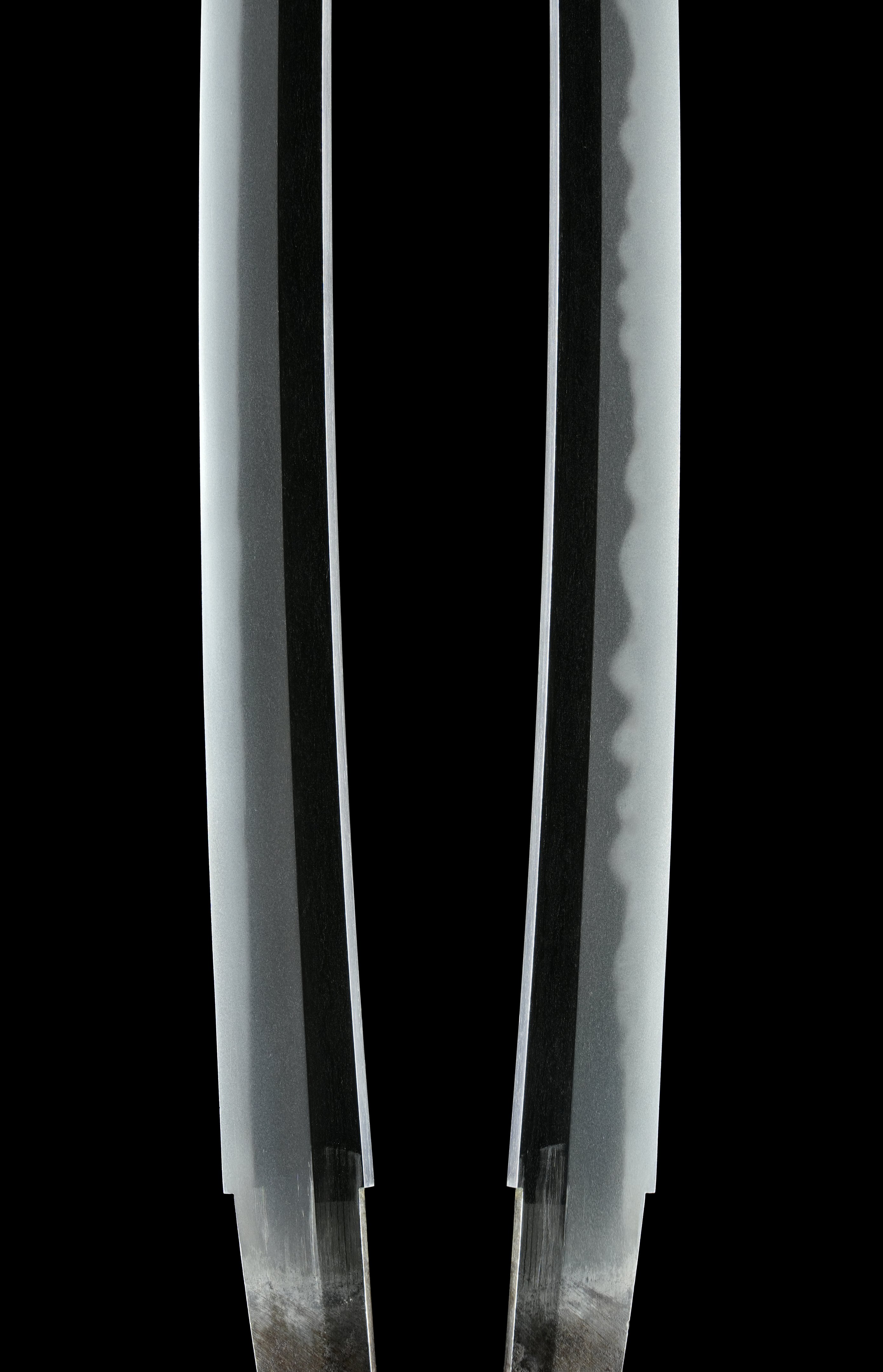
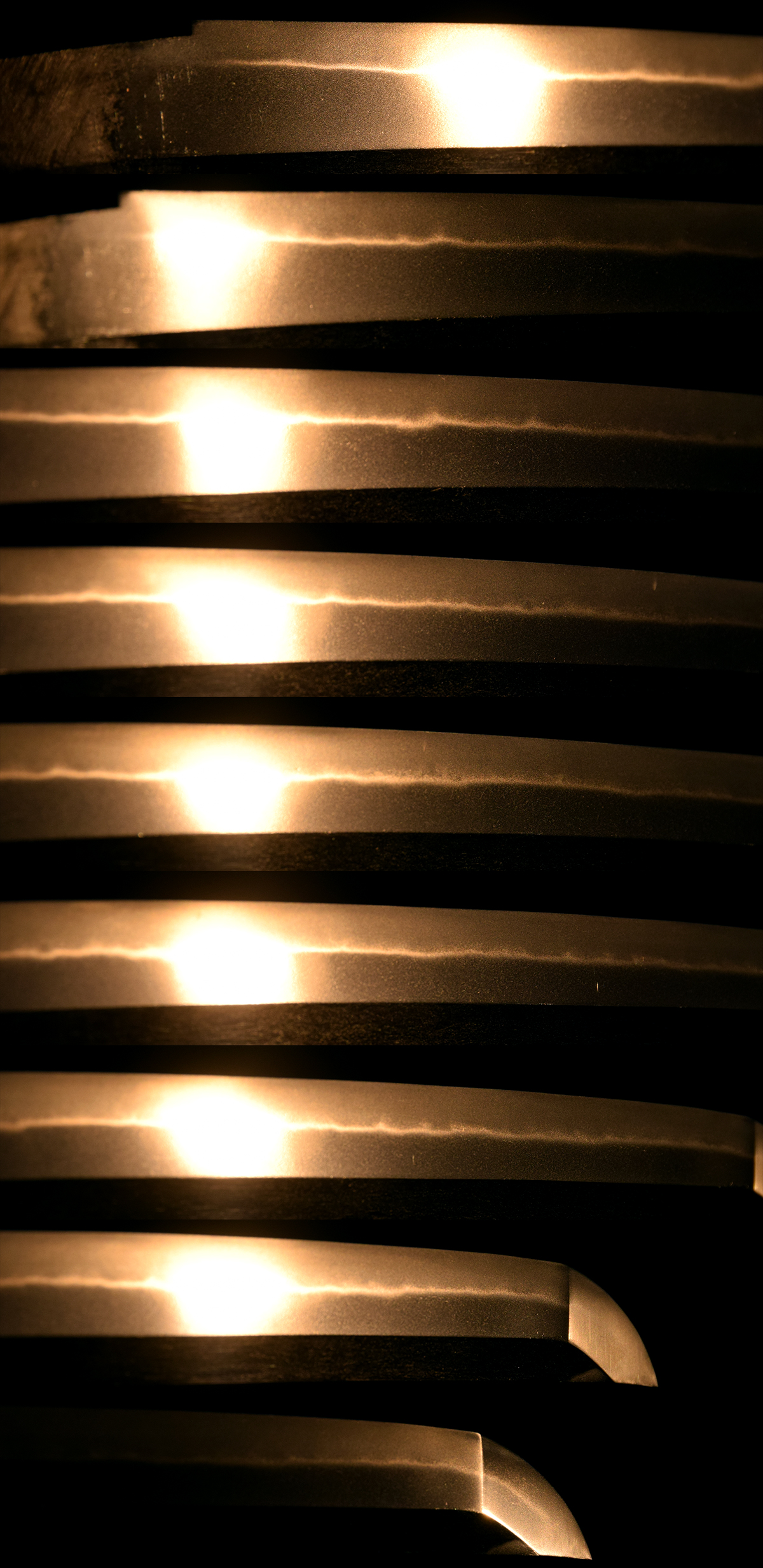
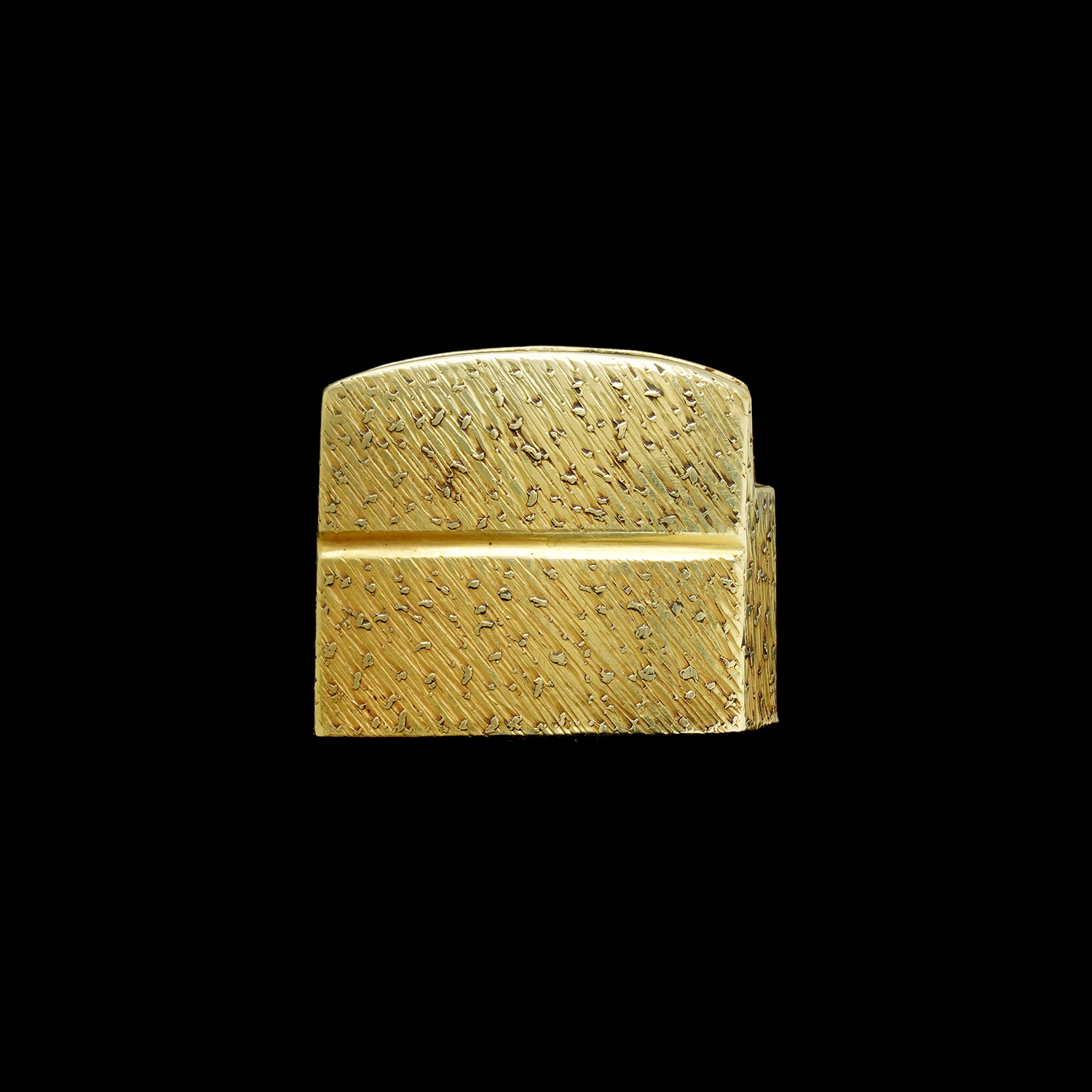
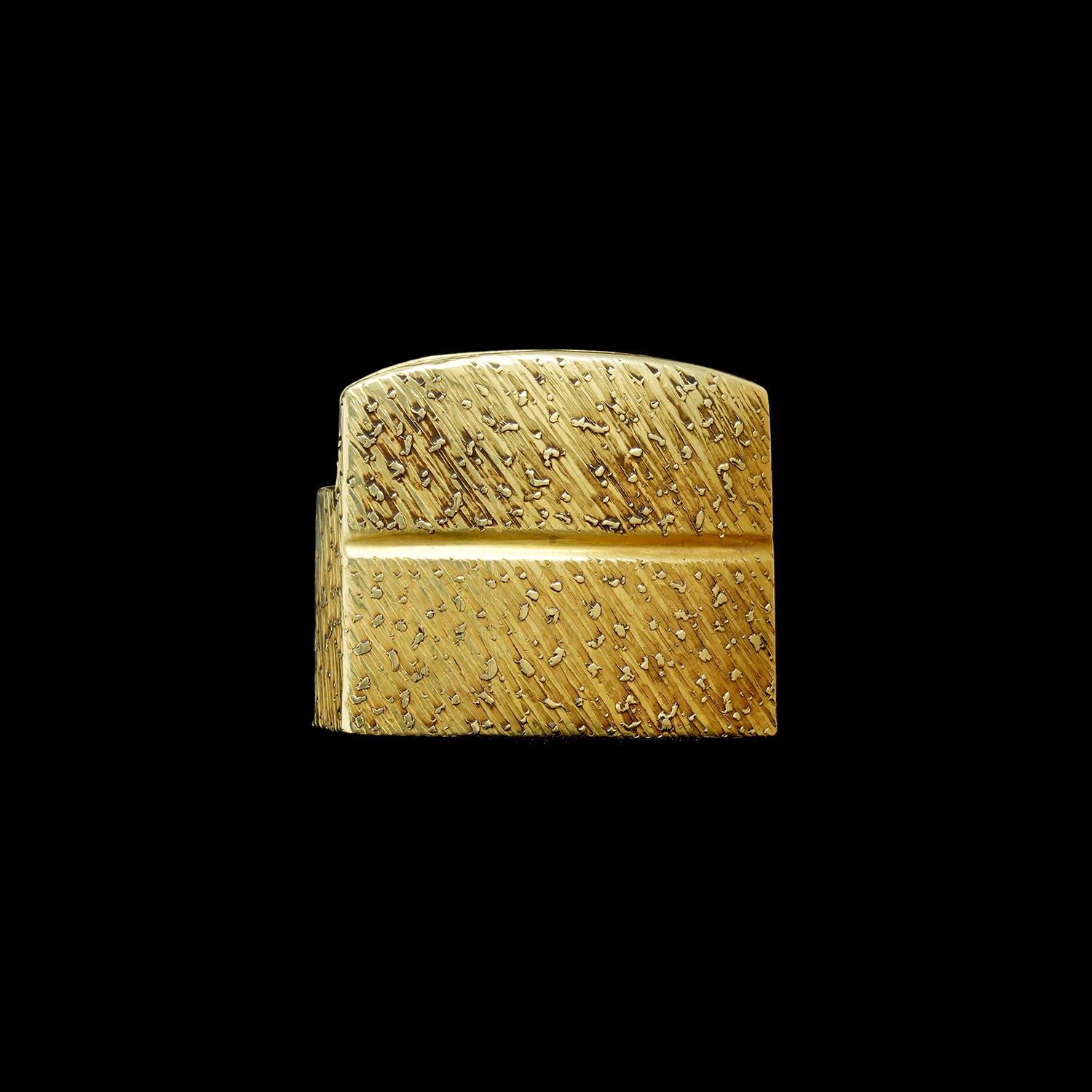
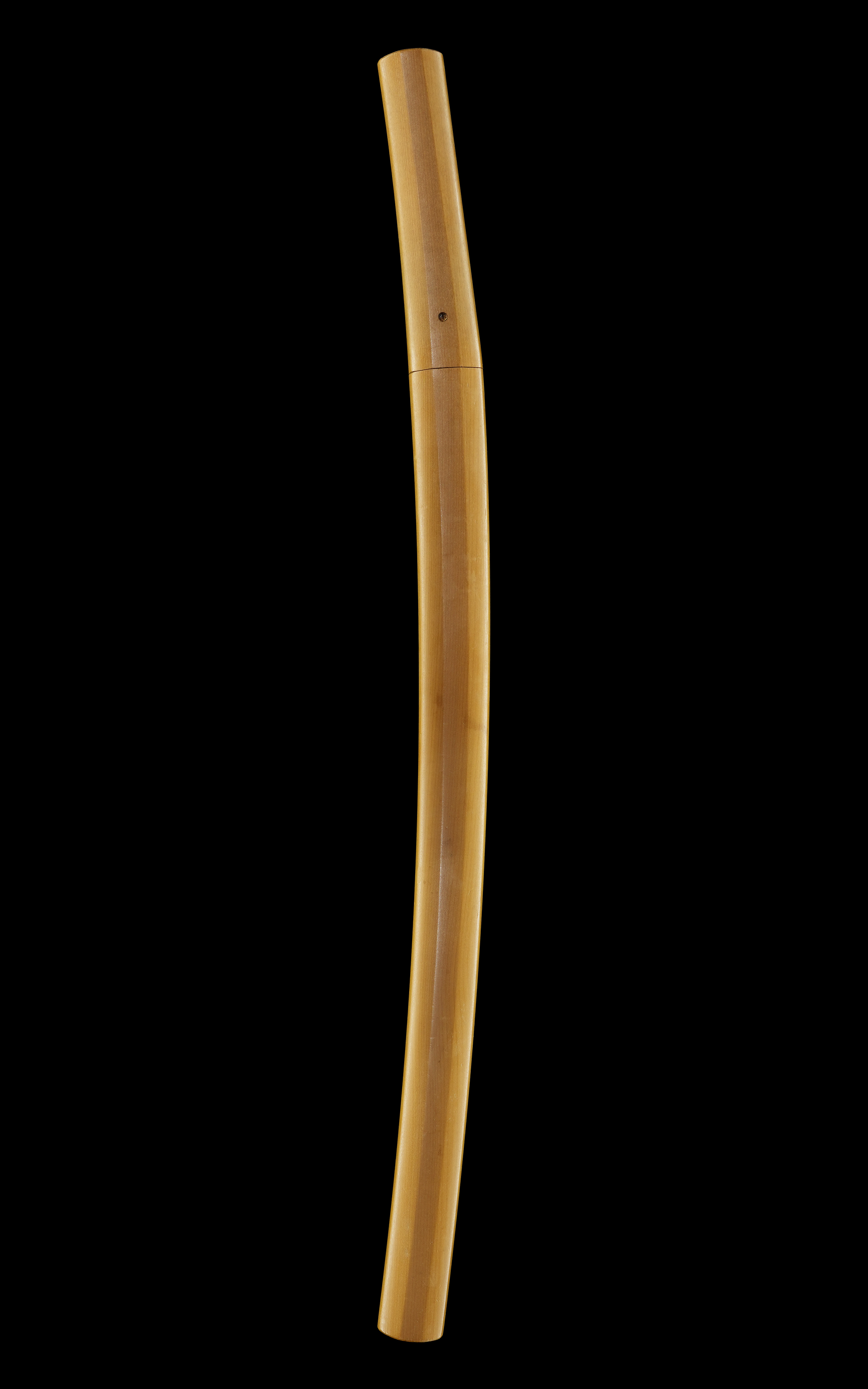
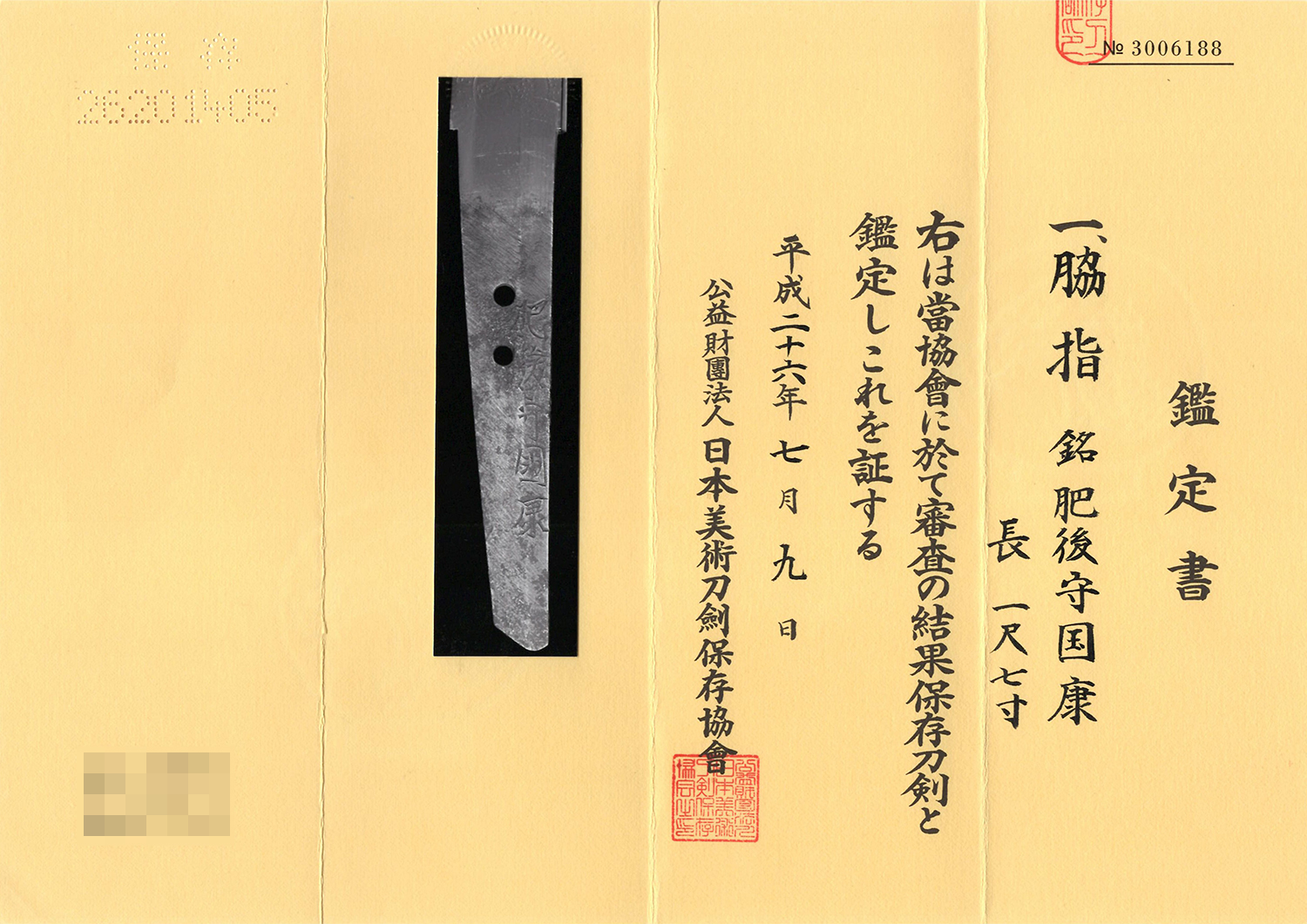
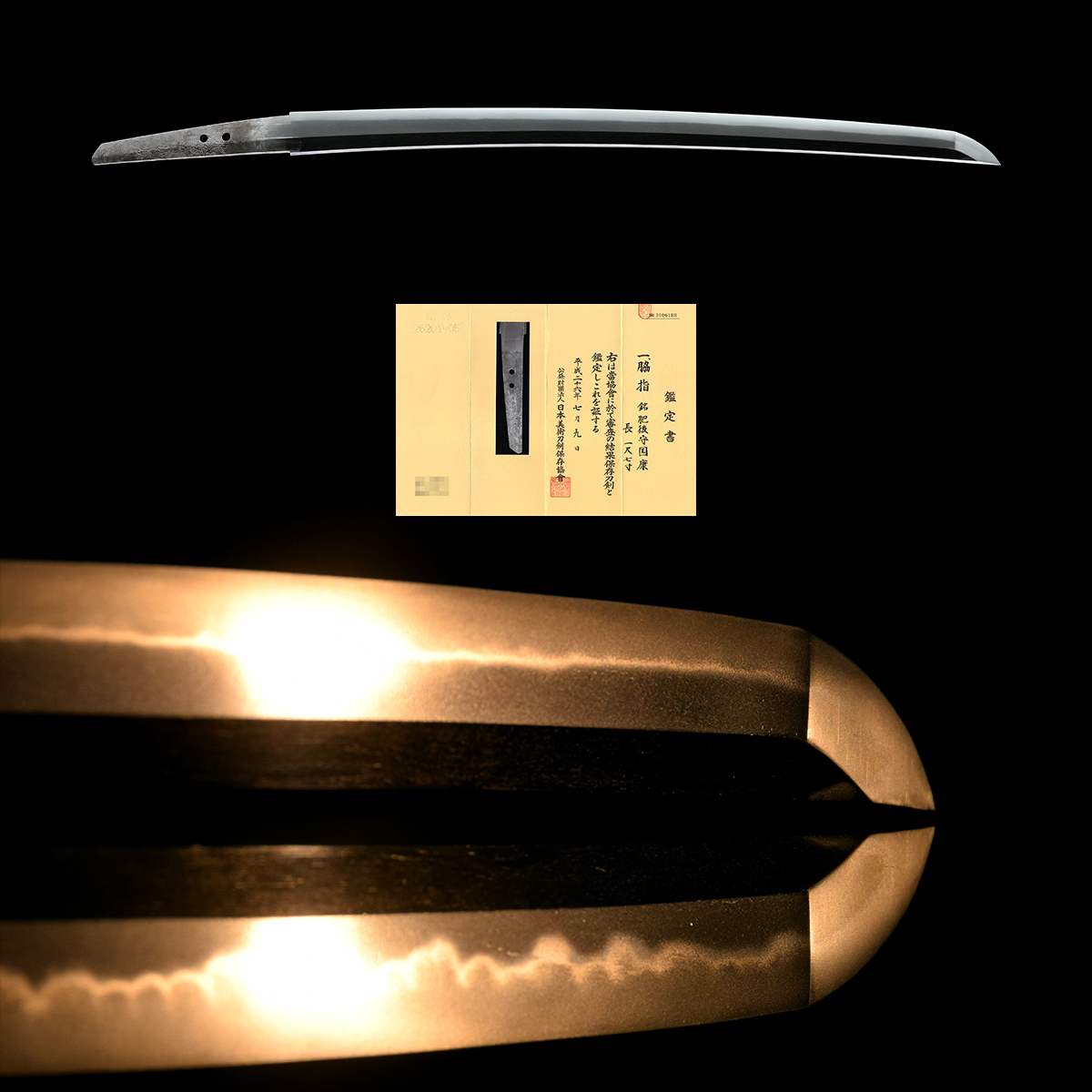
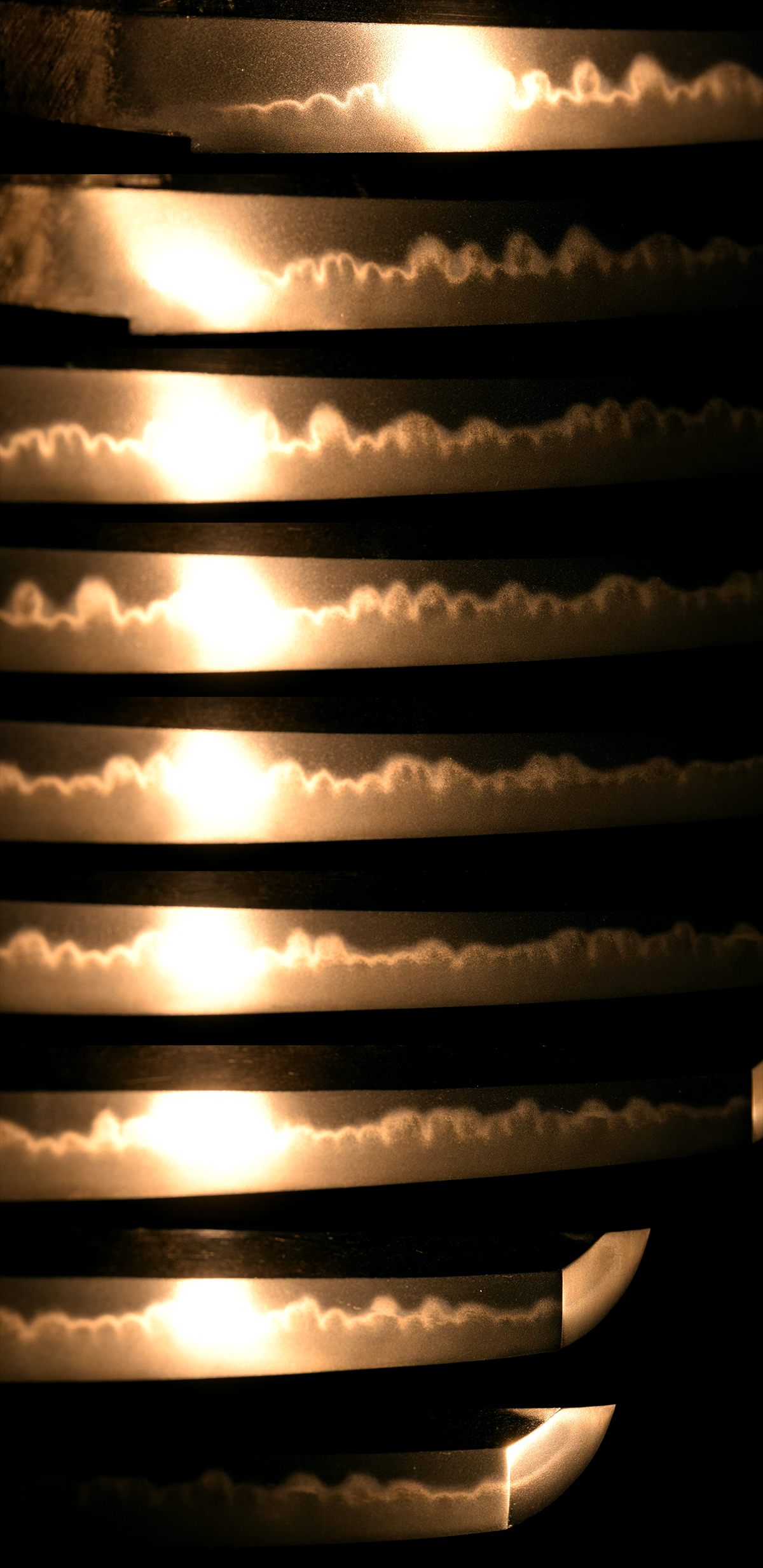
This is a wakizashi by Higo no Kami Kuniyasu, the third son of the first-generation Kawachi no Kami Kunisuke. It features a well-forged ko-itame hada and a unique yakiba with a straight hamon on one side and a flamboyant choji hamon on the other, a technique known as 'Chigo Kashiwa'. The blade comes with an NBTHK Hozon Token certificate and is considered a masterpiece with potential for Tokubetsu Hozon.
 NihontoWatchBETA
mei · Shinto · nagasa 51.6cm · sori 1cm
Shinto · Settsu
73 pieces on the market now
Osaka in the early-to-mid Edo period was a merchant capital, a city of commerce and capital rather than a castle town tied to a single daimyo house, and the swordsmiths who gathered there worked for a wealthy townsman clientele as much as for warriors. The grouping known as Osaka Shinto (大坂新刀) took shape in Settsu from two feeder currents. Learn more →
| Smith | Era | Designated |
|---|---|---|
| Shinkai真改 | 1649-1682 | 79 |
| Tadatsuna忠綱 | 1673-1717 | 53 |
| Kanesada包貞 | 1673-1682 | 78 |
| Kanesada包貞 | 1648-1652 | 10 |
| Kunisuke國助 | 1658-1663 | 10 |
Certifies a genuine blade worth preserving: a signature confirmed correct, or, if unsigned, an era, province, and school that the NBTHK can reliably identify.
The NBTHK (Nihon Bijutsu Tōken Hozon Kyōkai, the Society for the Preservation of Japanese Art Swords) is a public-interest incorporated foundation founded in 1948 and supervised by Japan’s Agency for Cultural Affairs (Bunkachō); it is based at the Japanese Sword Museum in Tokyo. Its expert panels physically examine each submitted work (shinsa) and issue a certificate (kanteishō) ranking it by artistic and historical merit. NBTHK papers are the most widely recognized standard of authentication for Japanese swords and fittings.
NBTHK official siteReturns accepted within 3 days of delivery for defective items or significant discrepancies; customer bears return shipping and bank fees.
This is a wakizashi by Higo no Kami Kuniyasu, the third son of the first-generation Kawachi no Kami Kunisuke. It features a well-forged ko-itame hada and a unique yakiba with a straight hamon on one side and a flamboyant choji hamon on the other, a technique known as 'Chigo Kashiwa'. The blade comes with an NBTHK Hozon Token certificate and is considered a masterpiece with potential for Tokubetsu Hozon.
NihontoWatchBETAmei · Shinto · nagasa 51.6cm · sori 1cm
Shinto · Settsu
73 pieces on the market now
Osaka in the early-to-mid Edo period was a merchant capital, a city of commerce and capital rather than a castle town tied to a single daimyo house, and the swordsmiths who gathered there worked for a wealthy townsman clientele as much as for warriors. The grouping known as Osaka Shinto (大坂新刀) took shape in Settsu from two feeder currents. Learn more →
| Smith | Era | Designated |
|---|---|---|
| Shinkai真改 | 1649-1682 | 79 |
| Tadatsuna忠綱 | 1673-1717 | 53 |
| Kanesada包貞 | 1673-1682 | 78 |
| Kanesada包貞 | 1648-1652 | 10 |
| Kunisuke國助 | 1658-1663 | 10 |
Certifies a genuine blade worth preserving: a signature confirmed correct, or, if unsigned, an era, province, and school that the NBTHK can reliably identify.
The NBTHK (Nihon Bijutsu Tōken Hozon Kyōkai, the Society for the Preservation of Japanese Art Swords) is a public-interest incorporated foundation founded in 1948 and supervised by Japan’s Agency for Cultural Affairs (Bunkachō); it is based at the Japanese Sword Museum in Tokyo. Its expert panels physically examine each submitted work (shinsa) and issue a certificate (kanteishō) ranking it by artistic and historical merit. NBTHK papers are the most widely recognized standard of authentication for Japanese swords and fittings.
NBTHK official siteReturns accepted within 3 days of delivery for defective items or significant discrepancies; customer bears return shipping and bank fees.