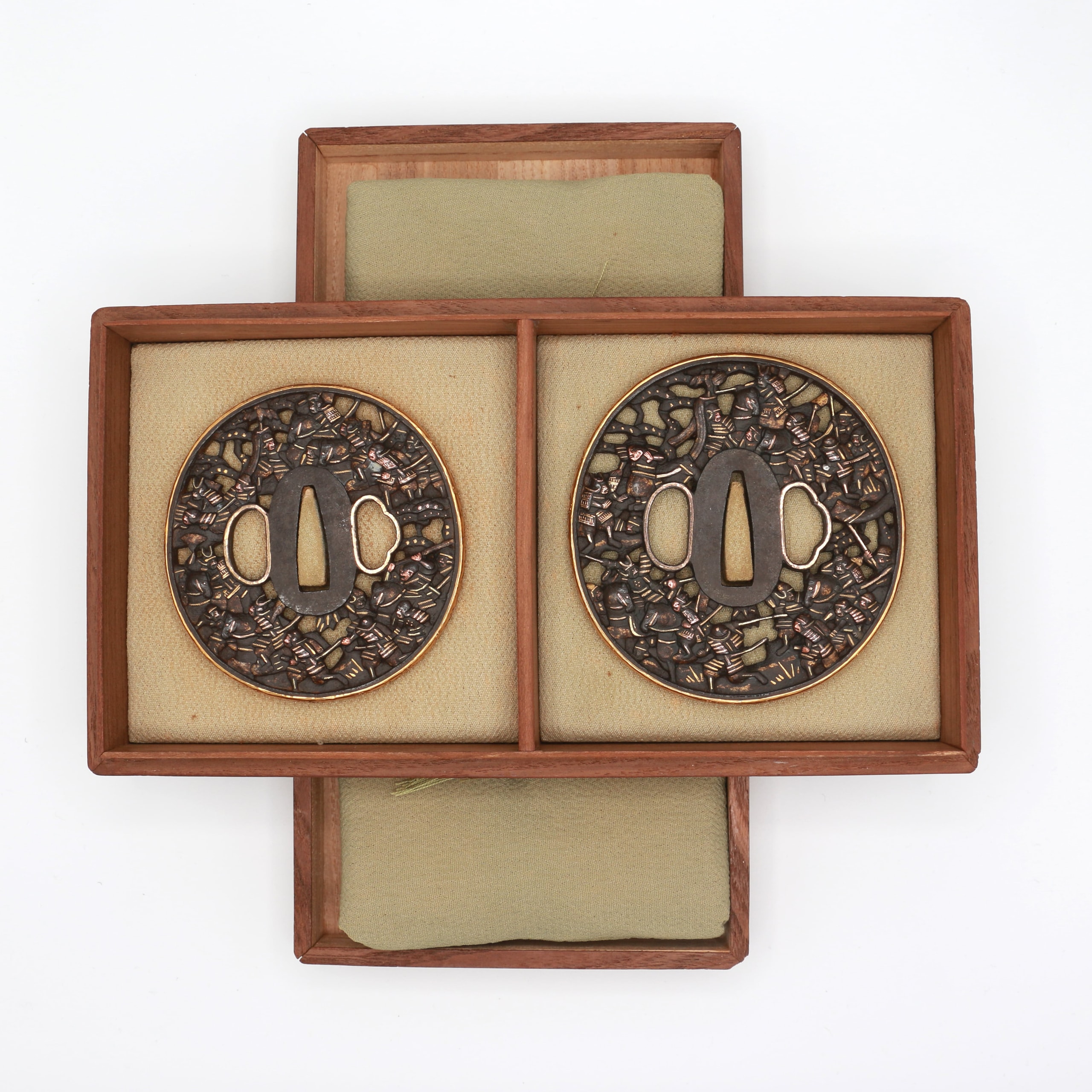
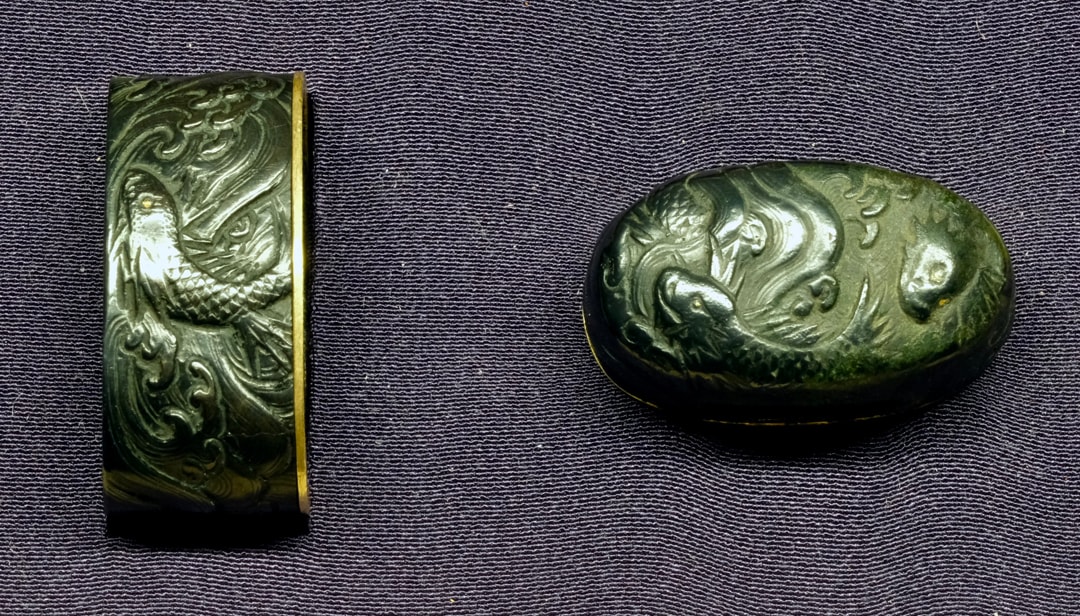
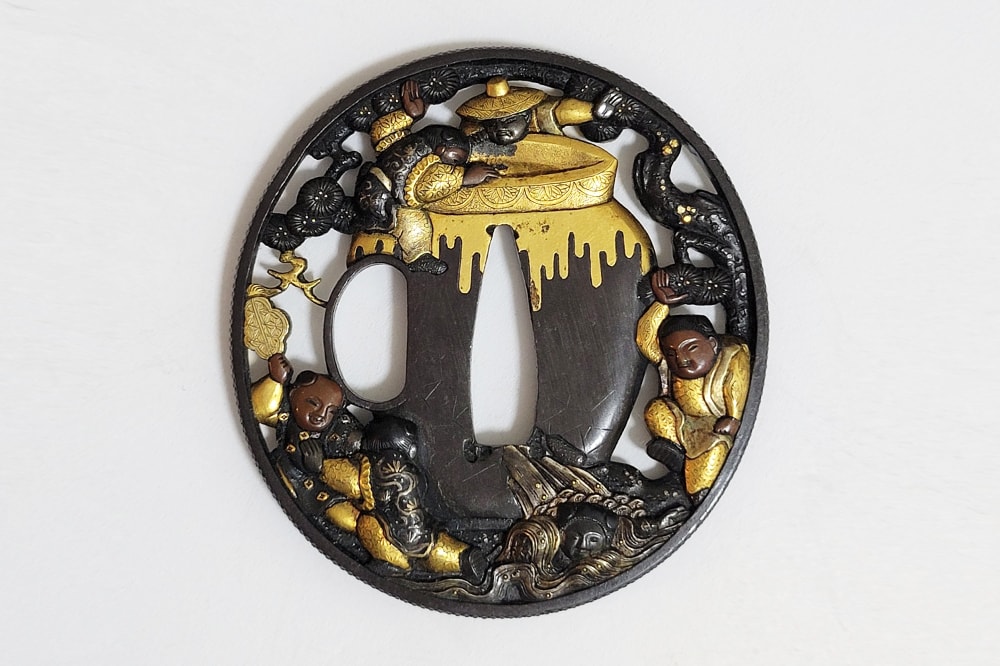
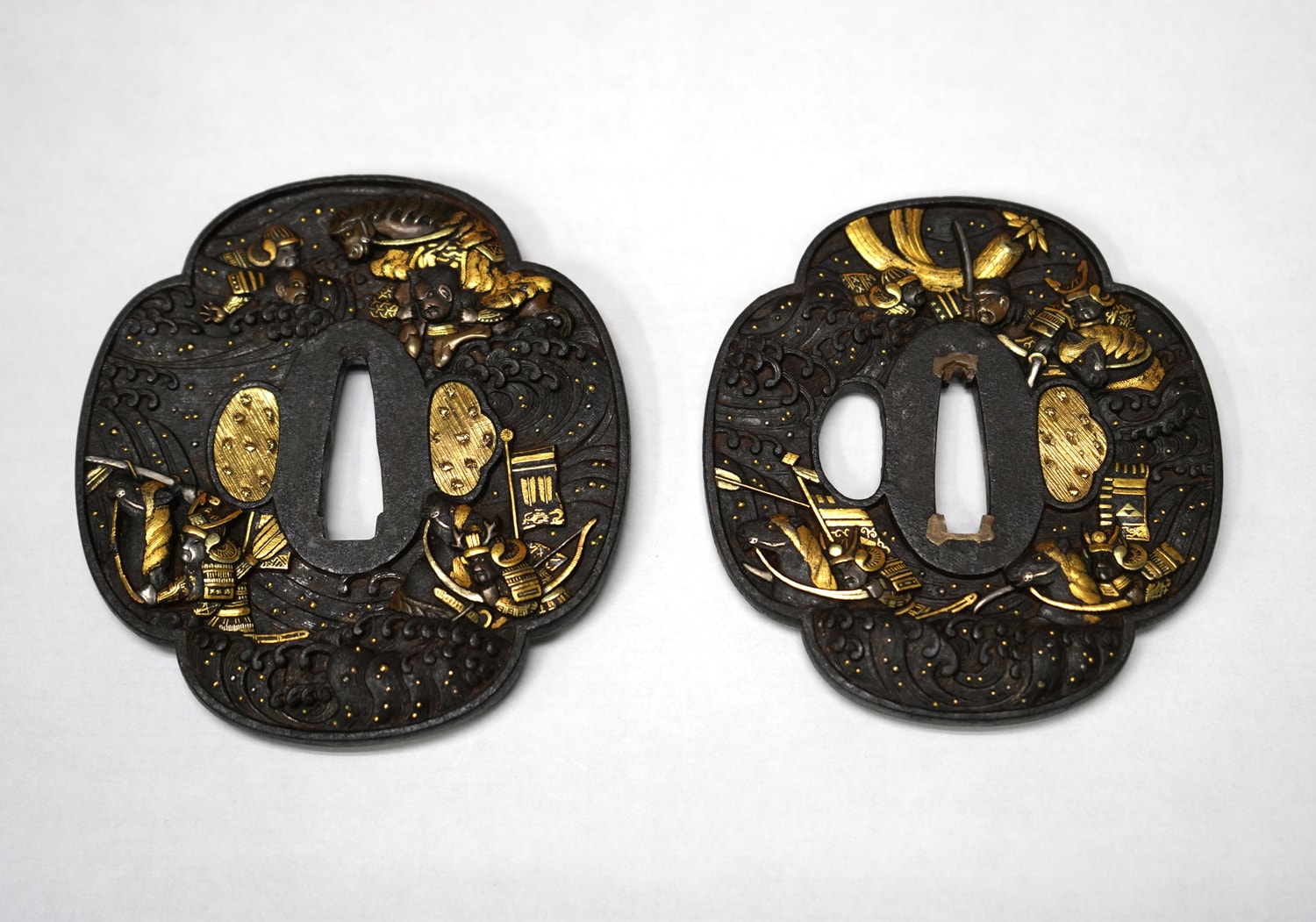
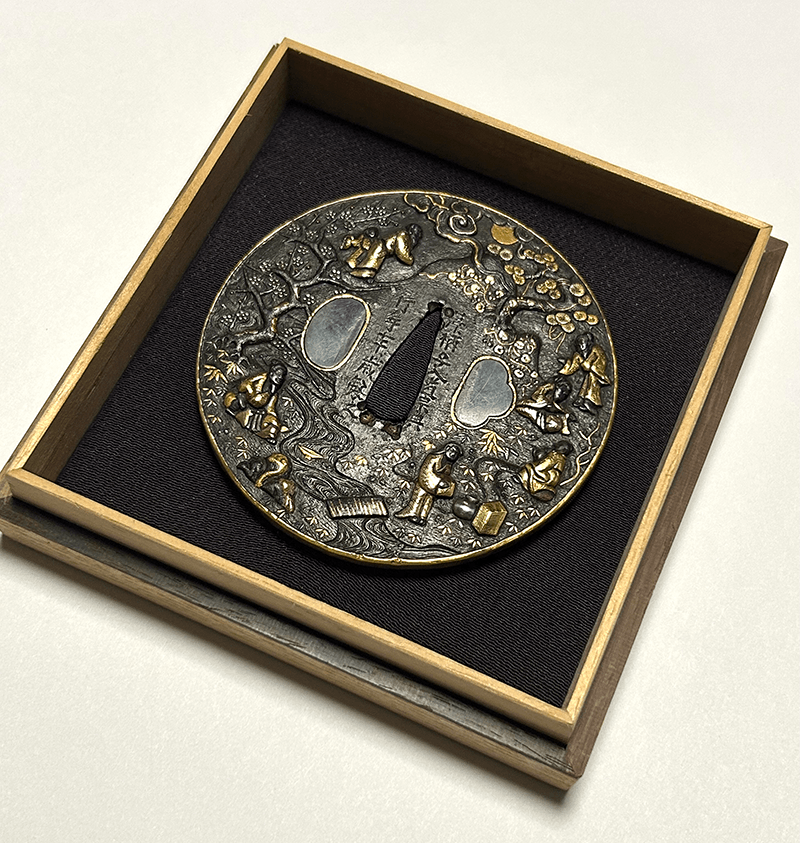
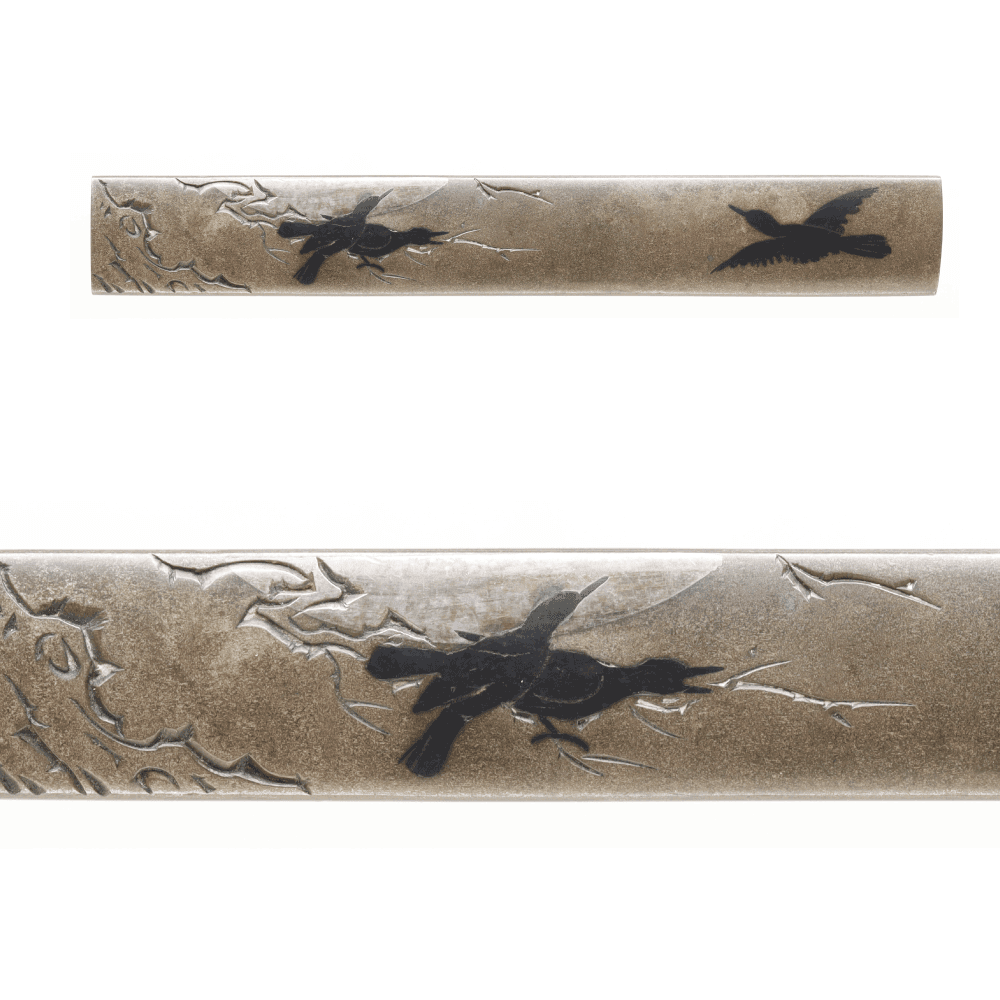
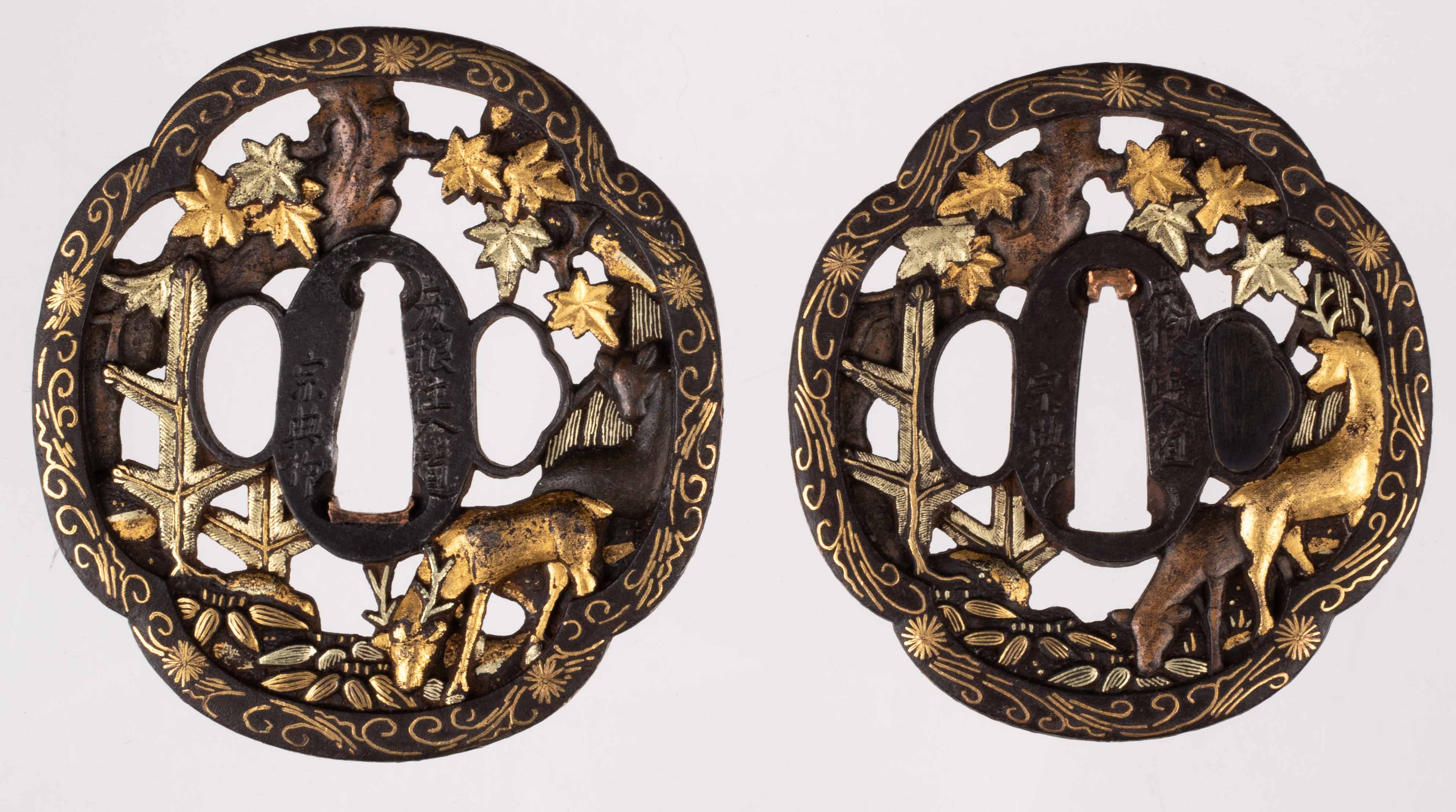
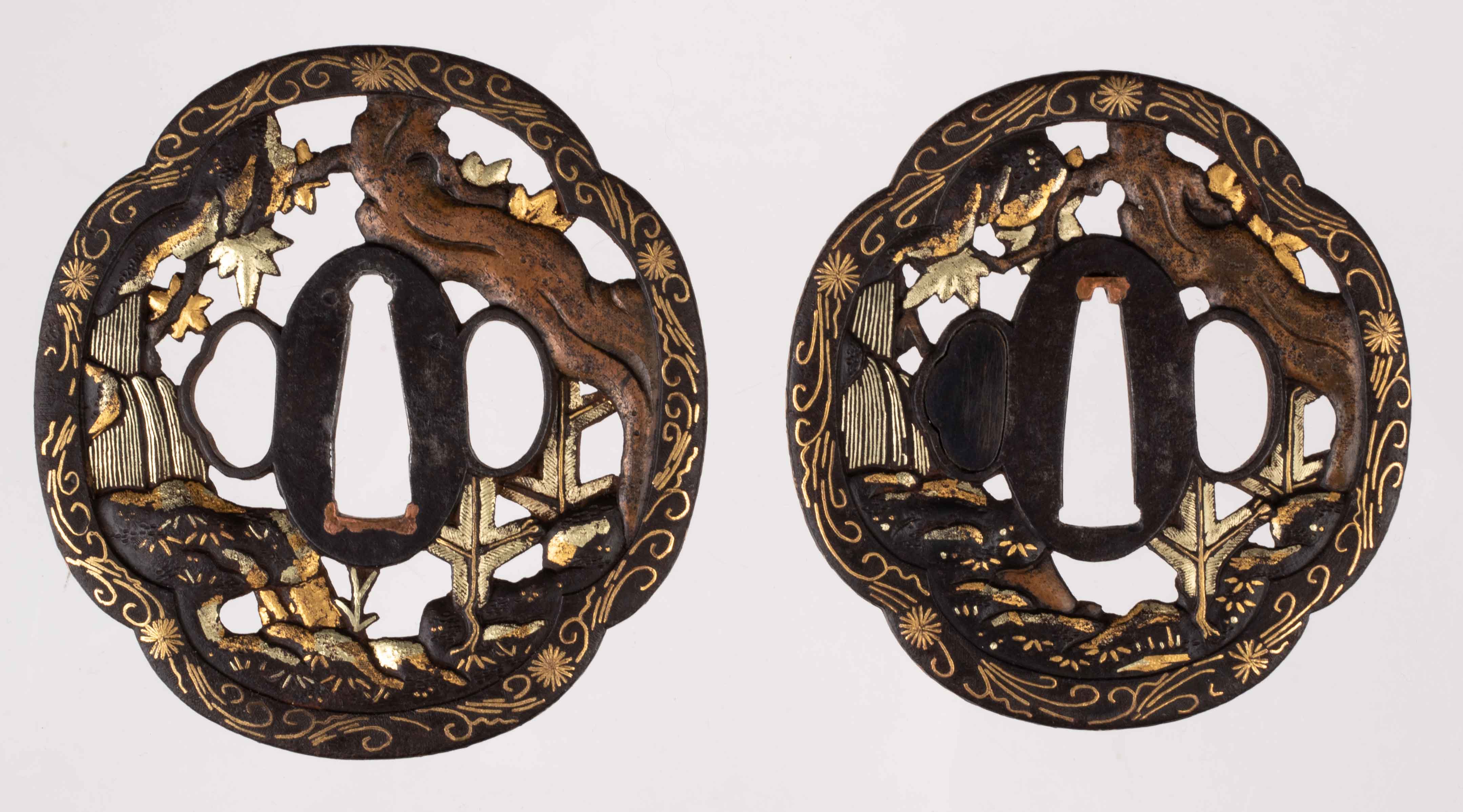
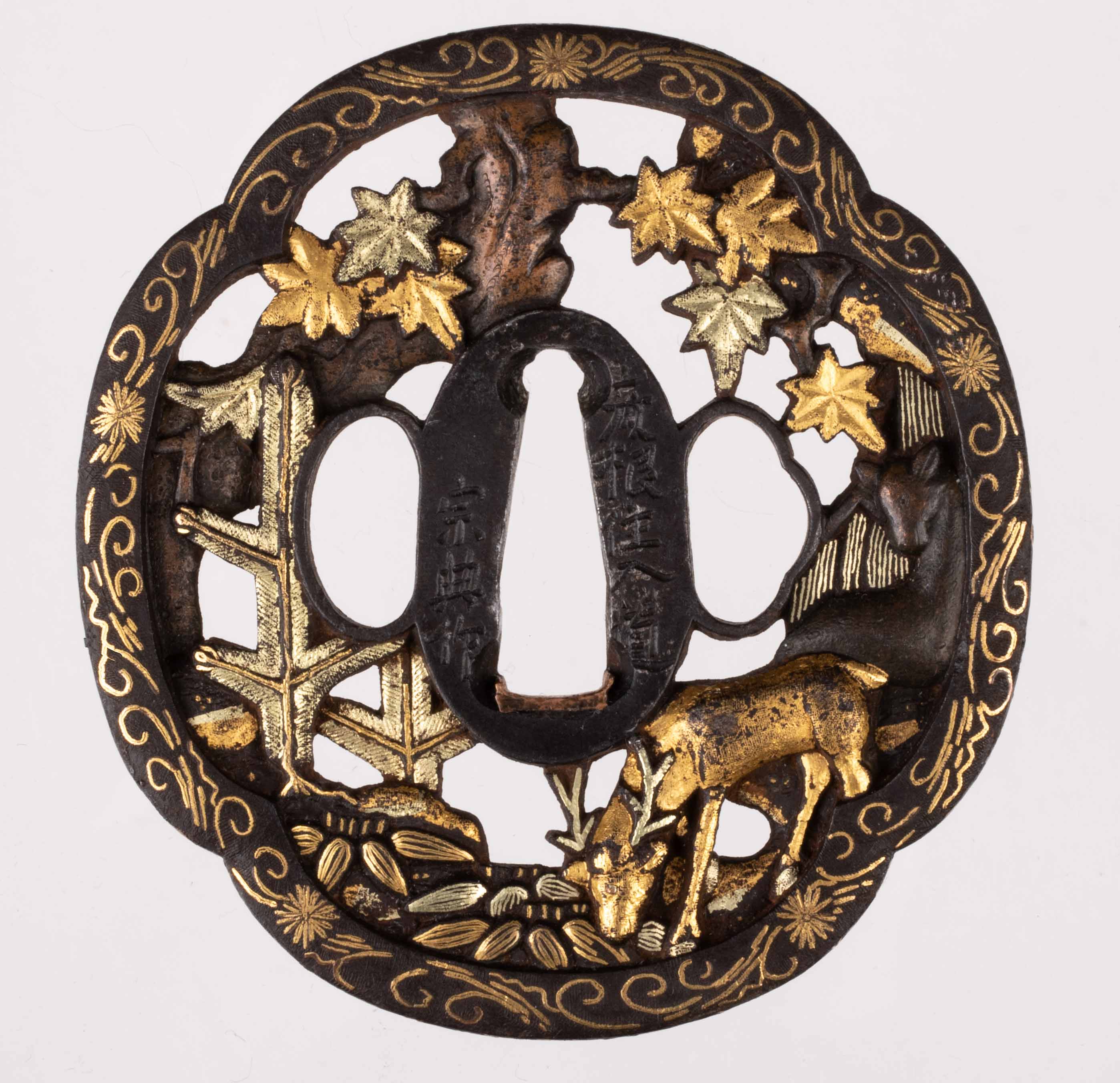
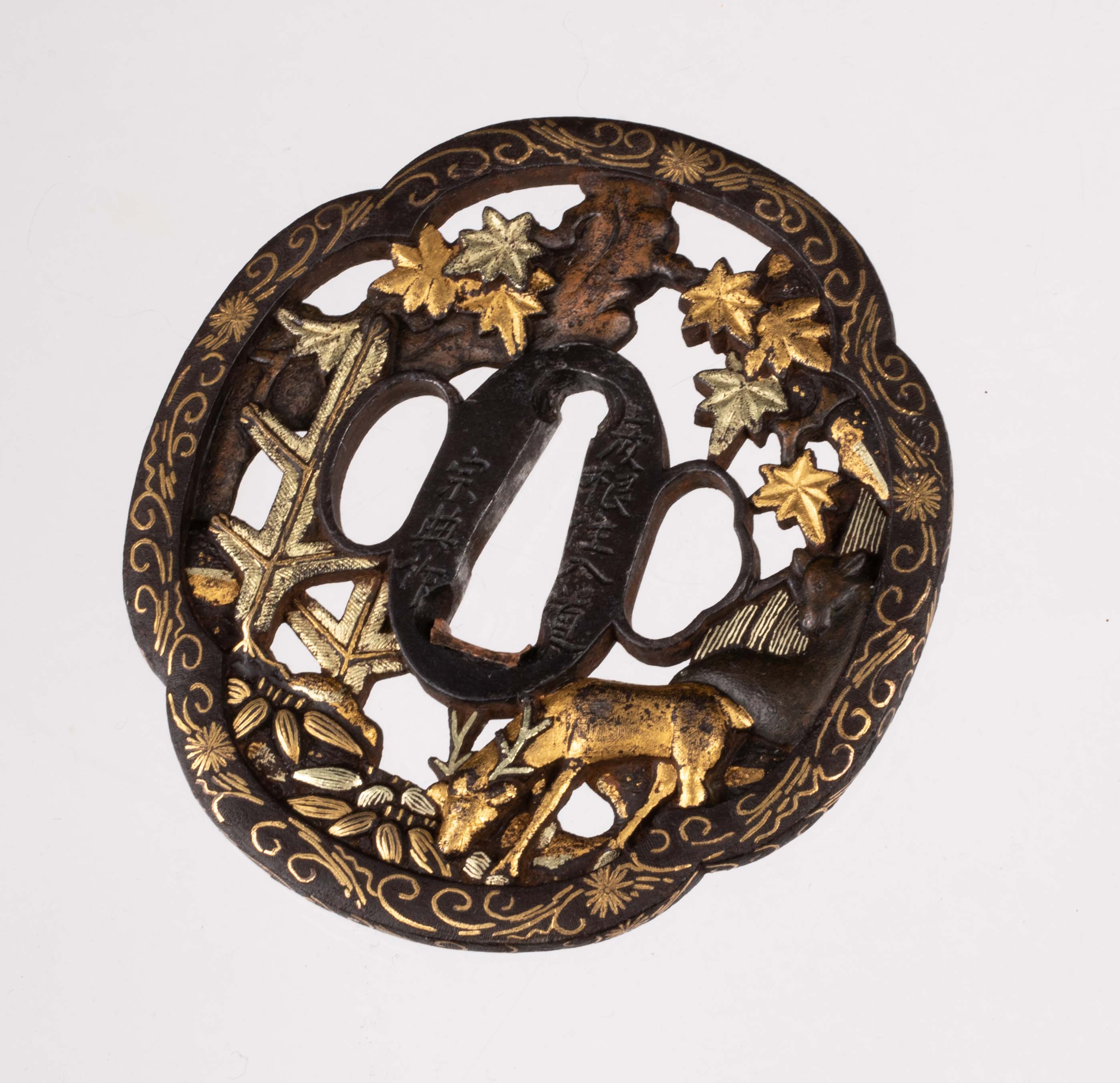
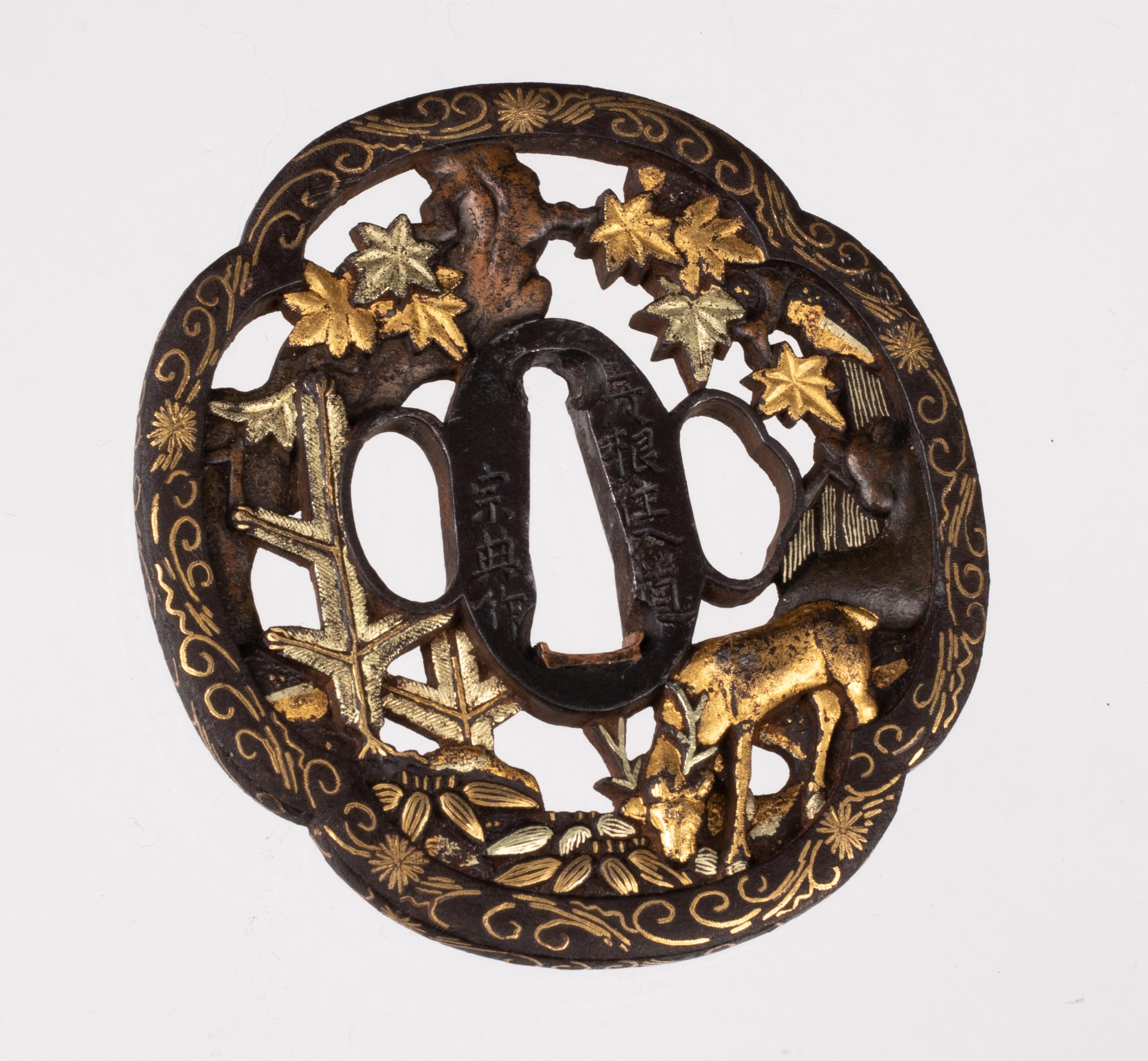
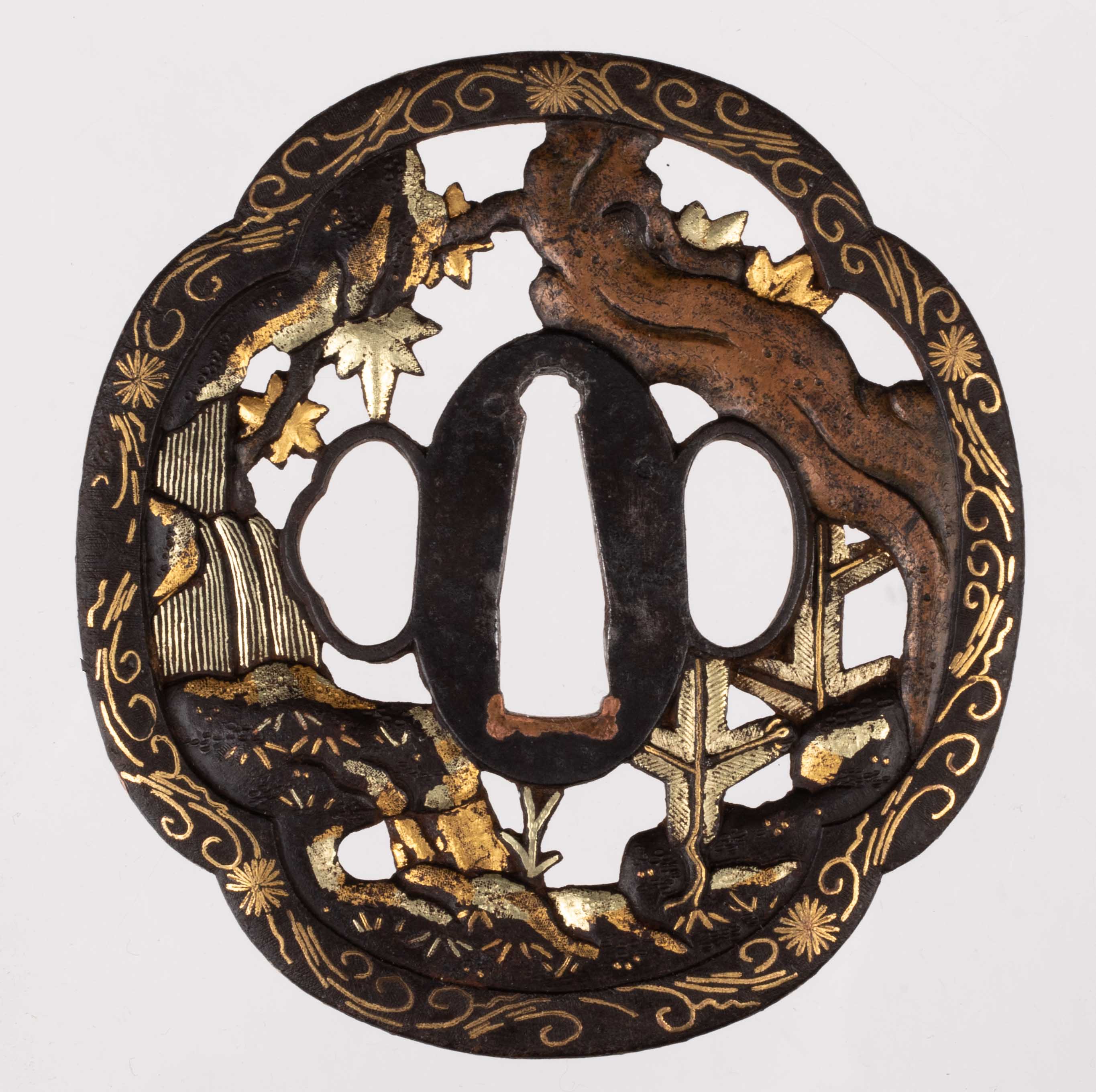
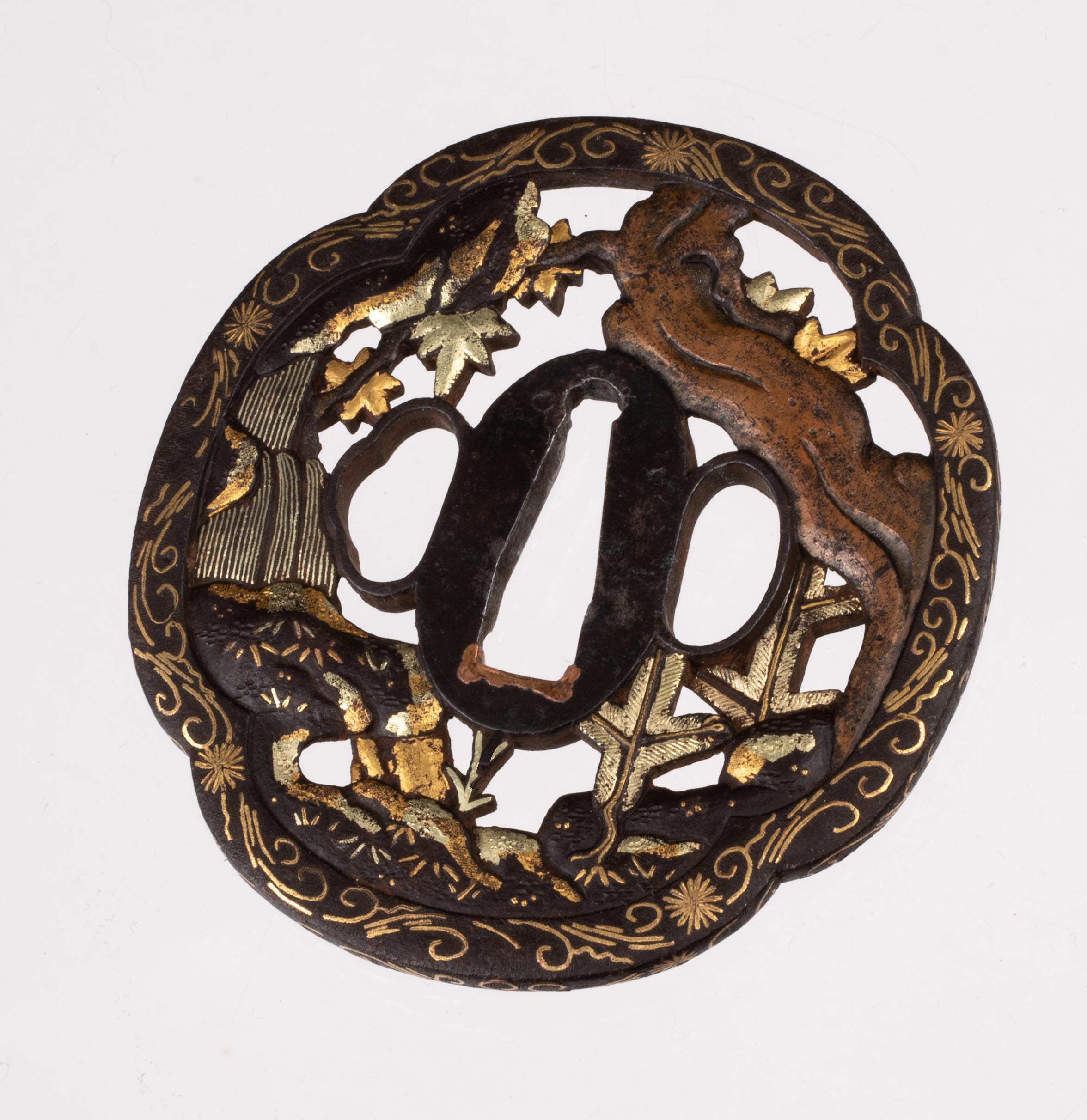
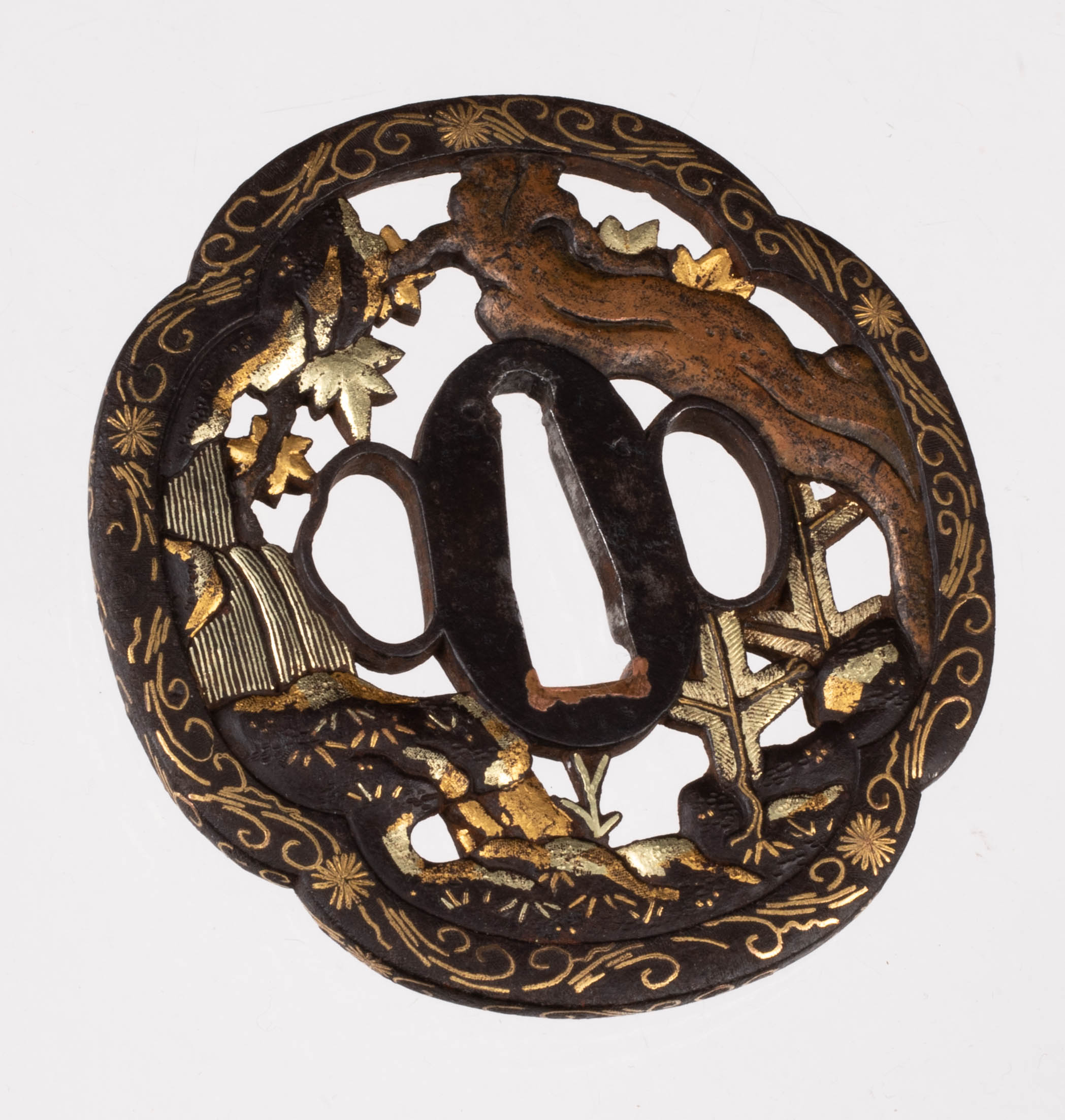
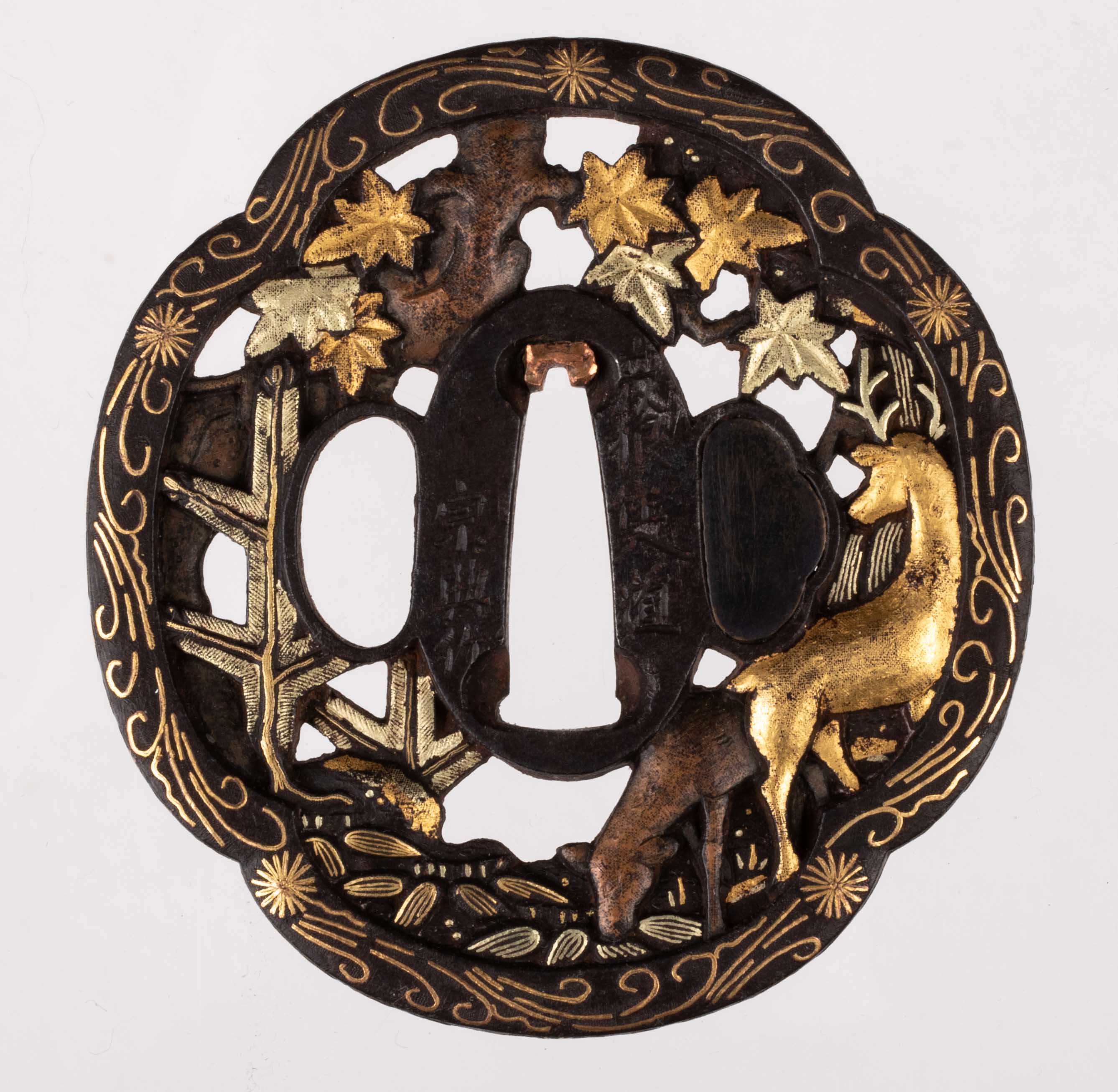
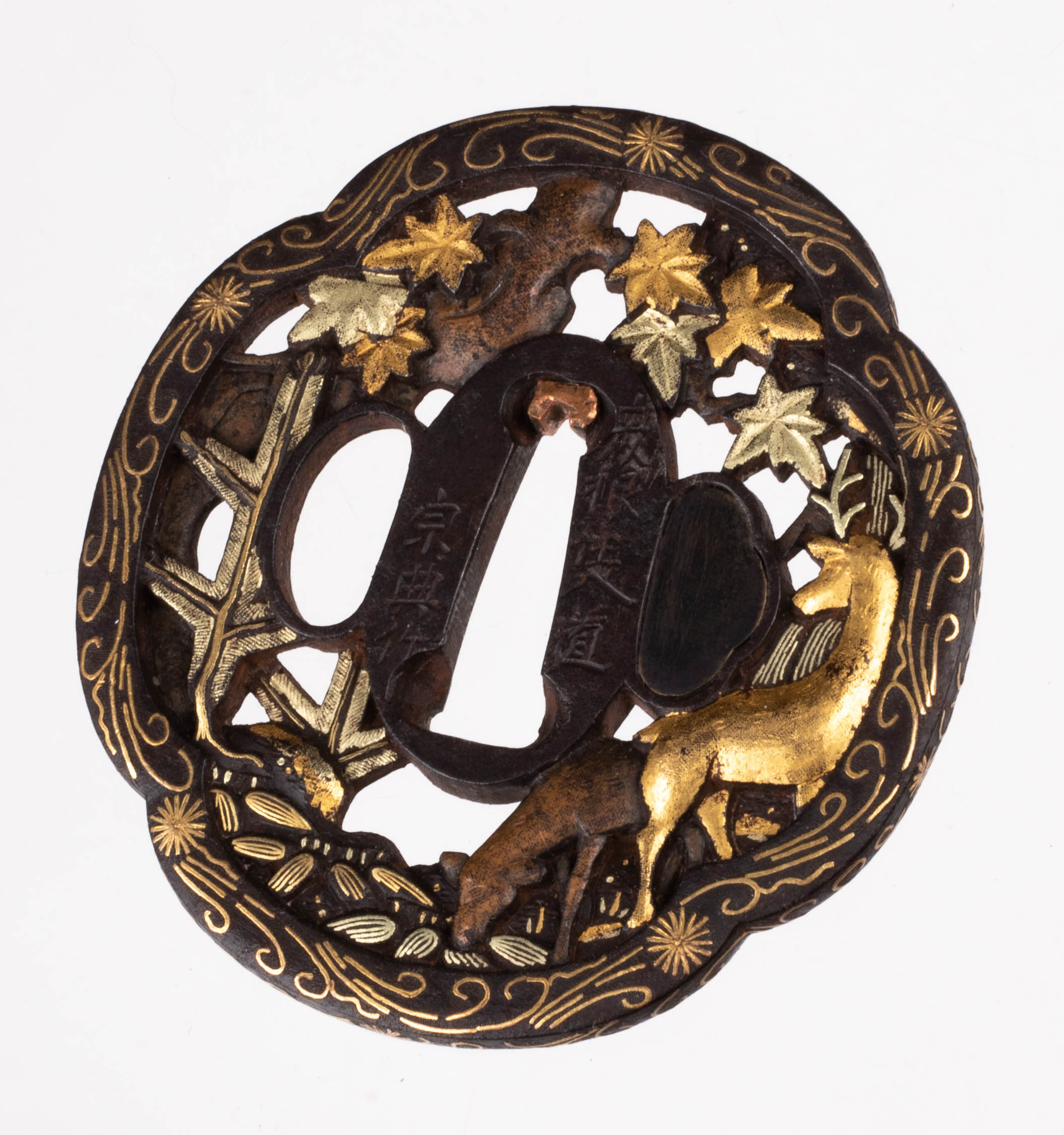
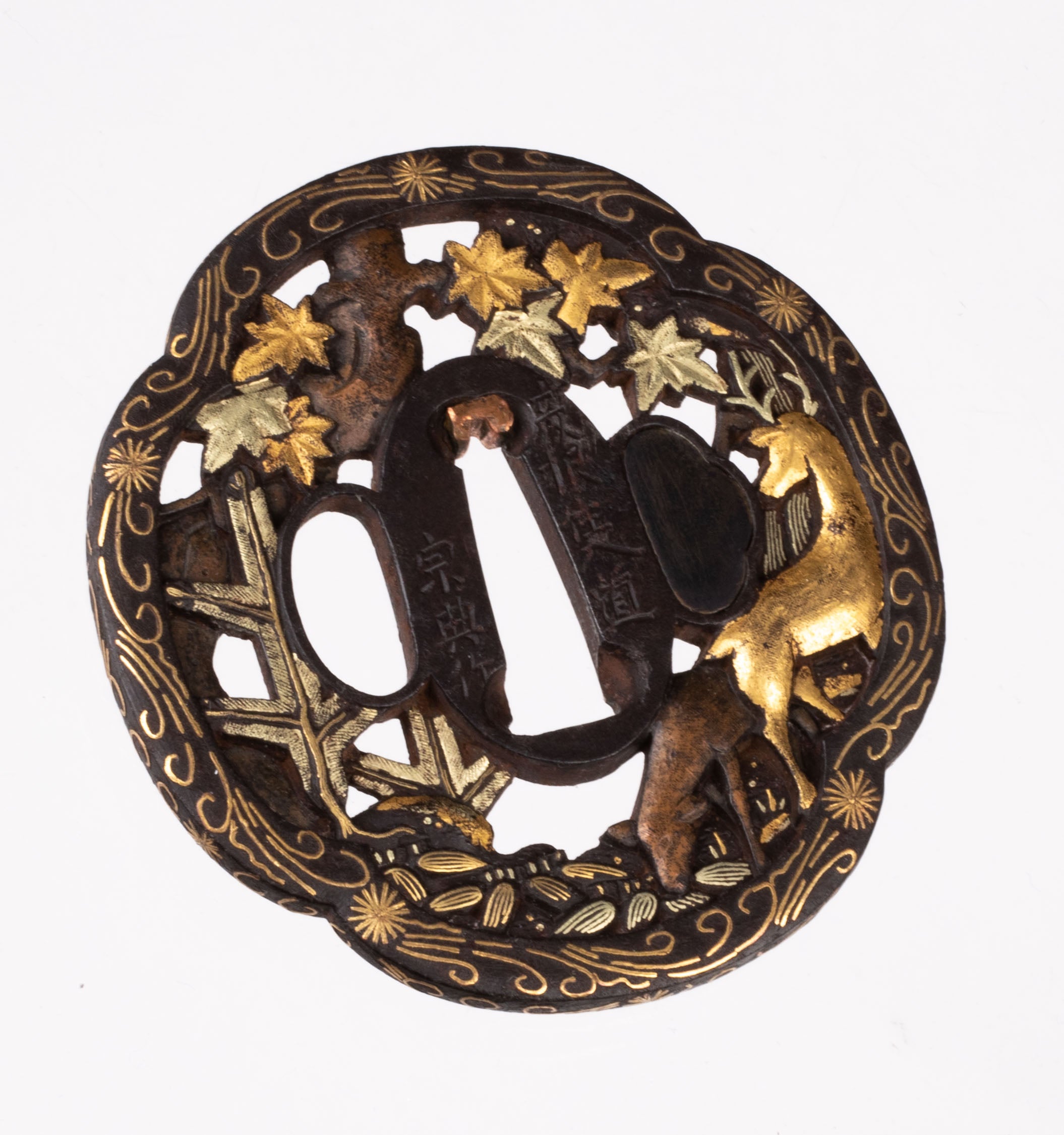
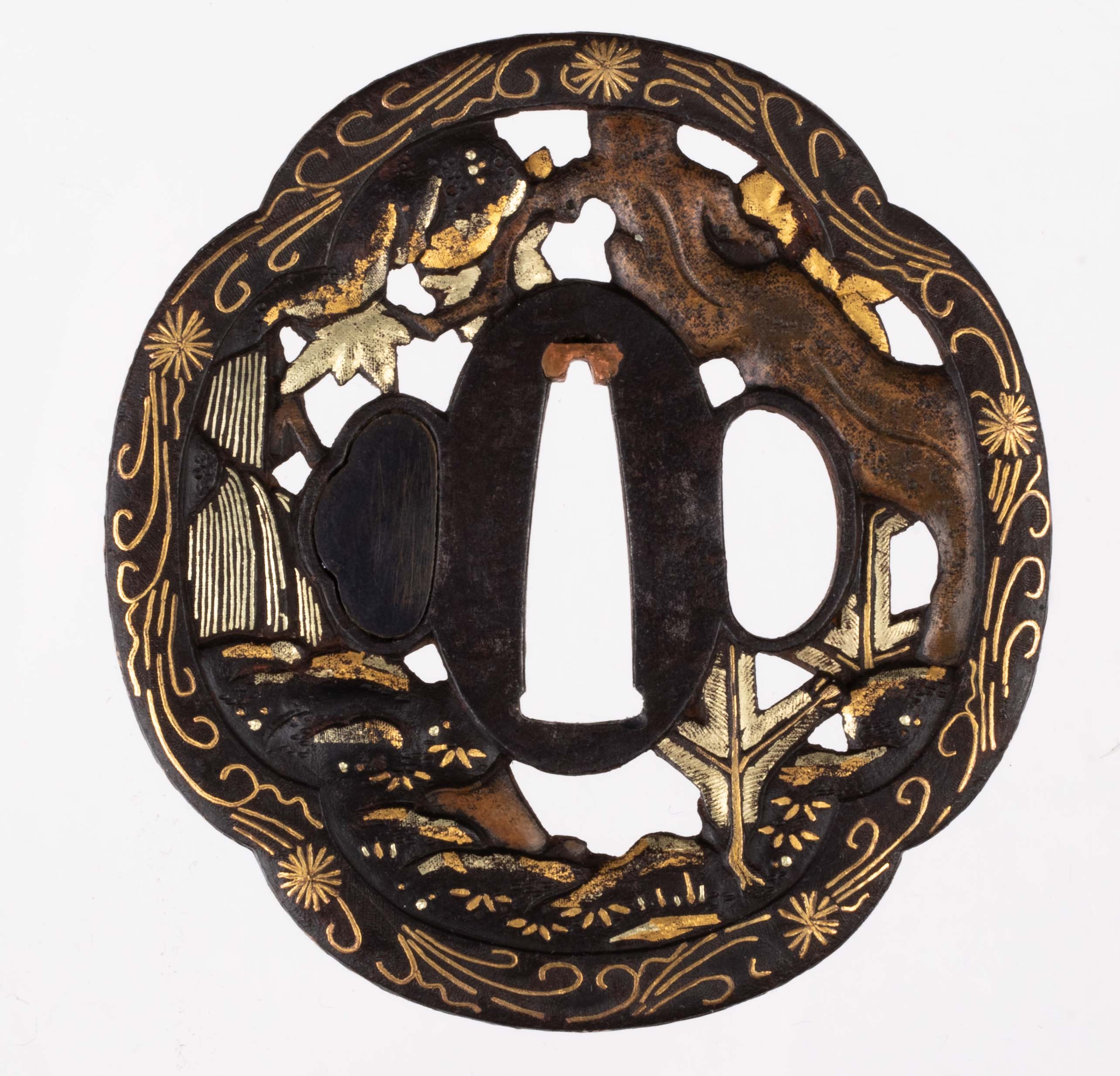
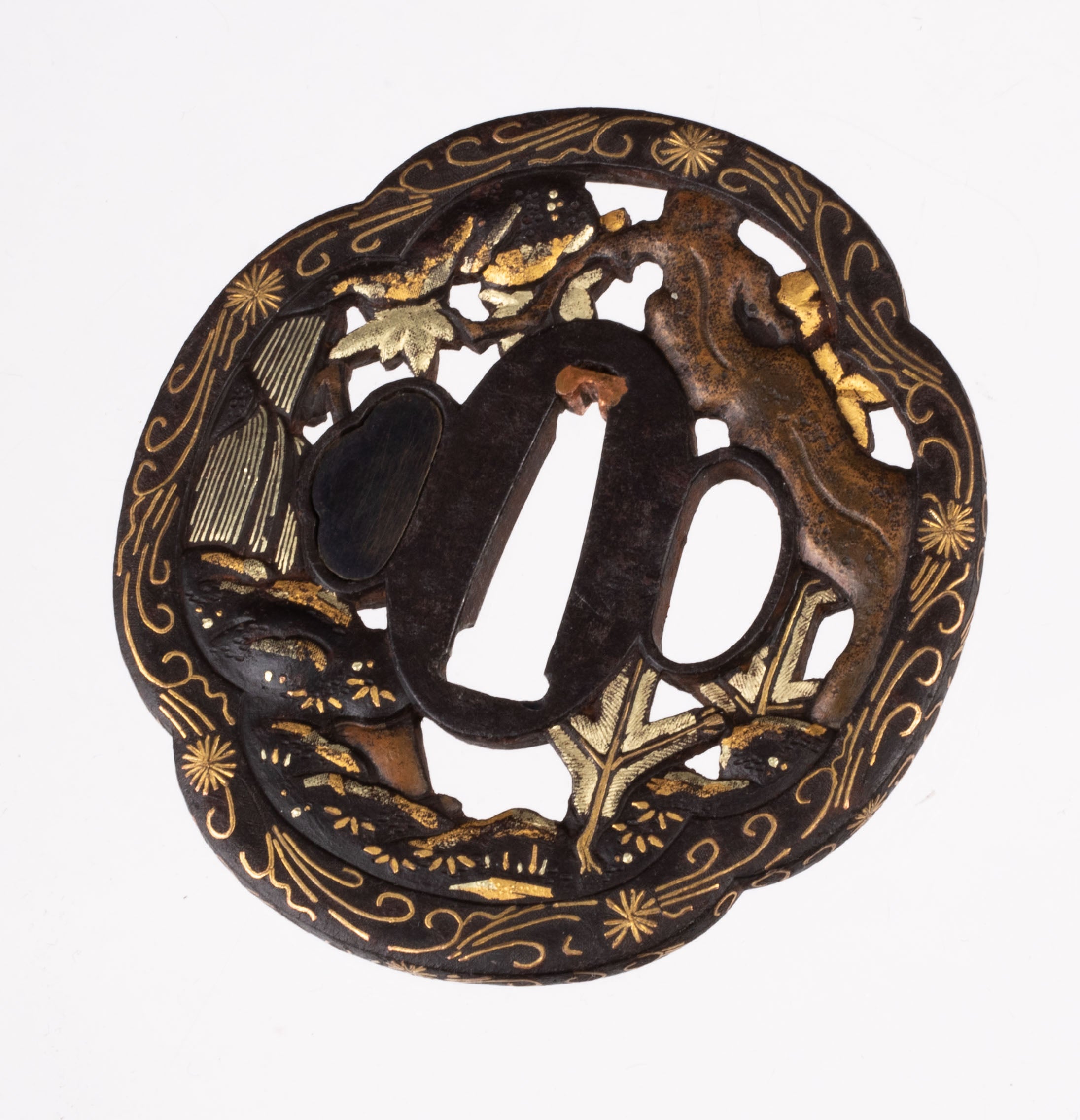
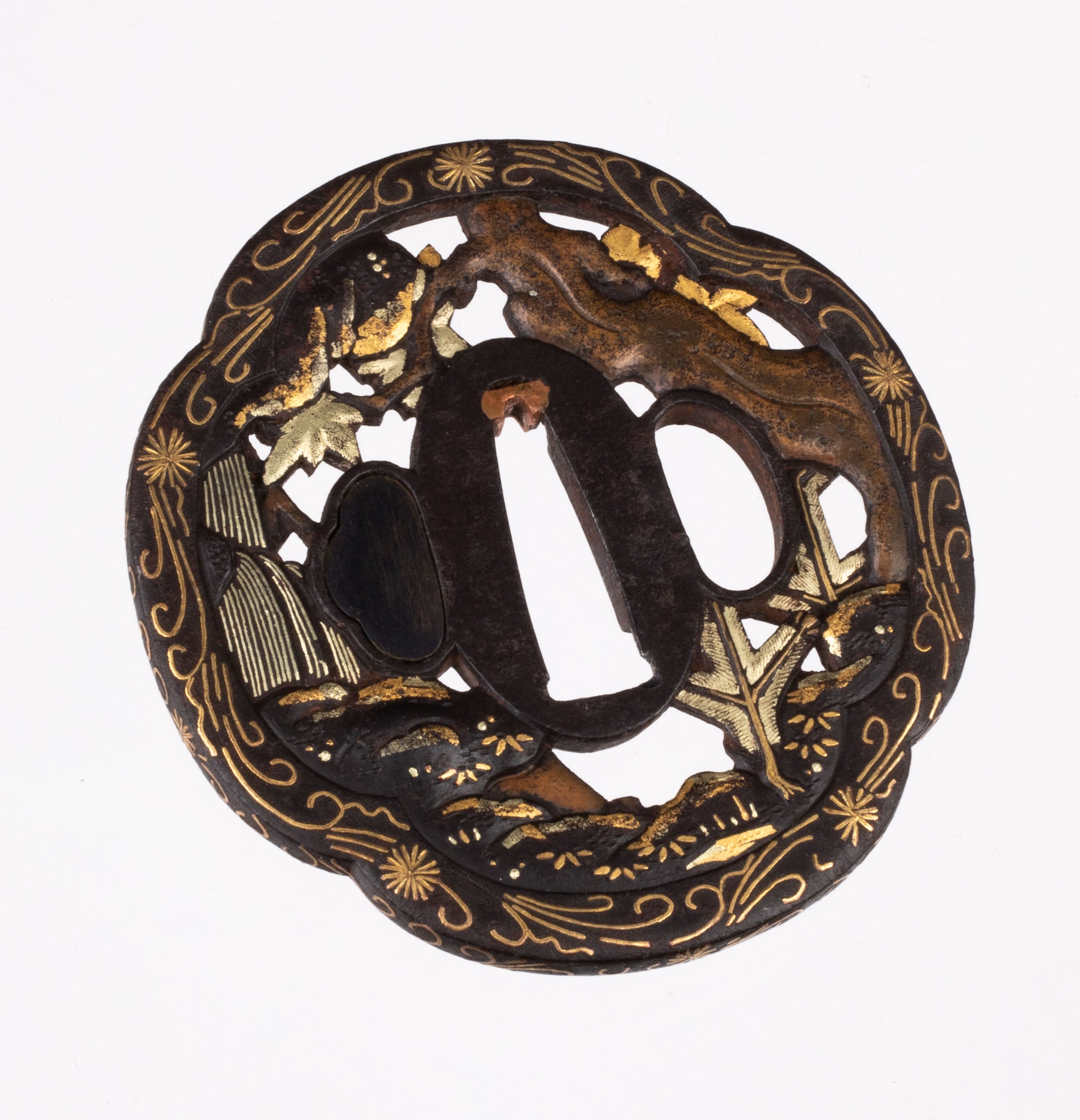
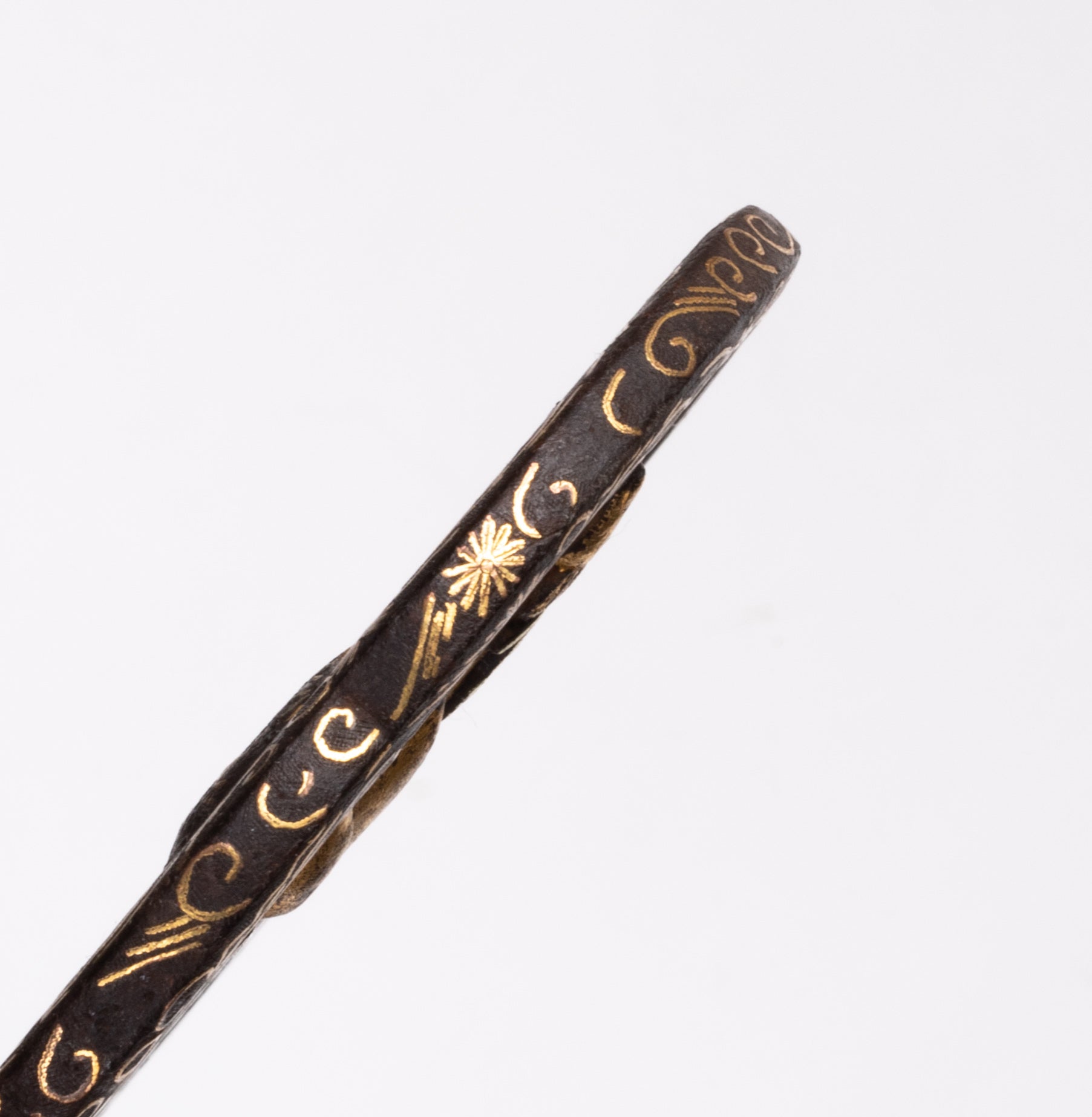
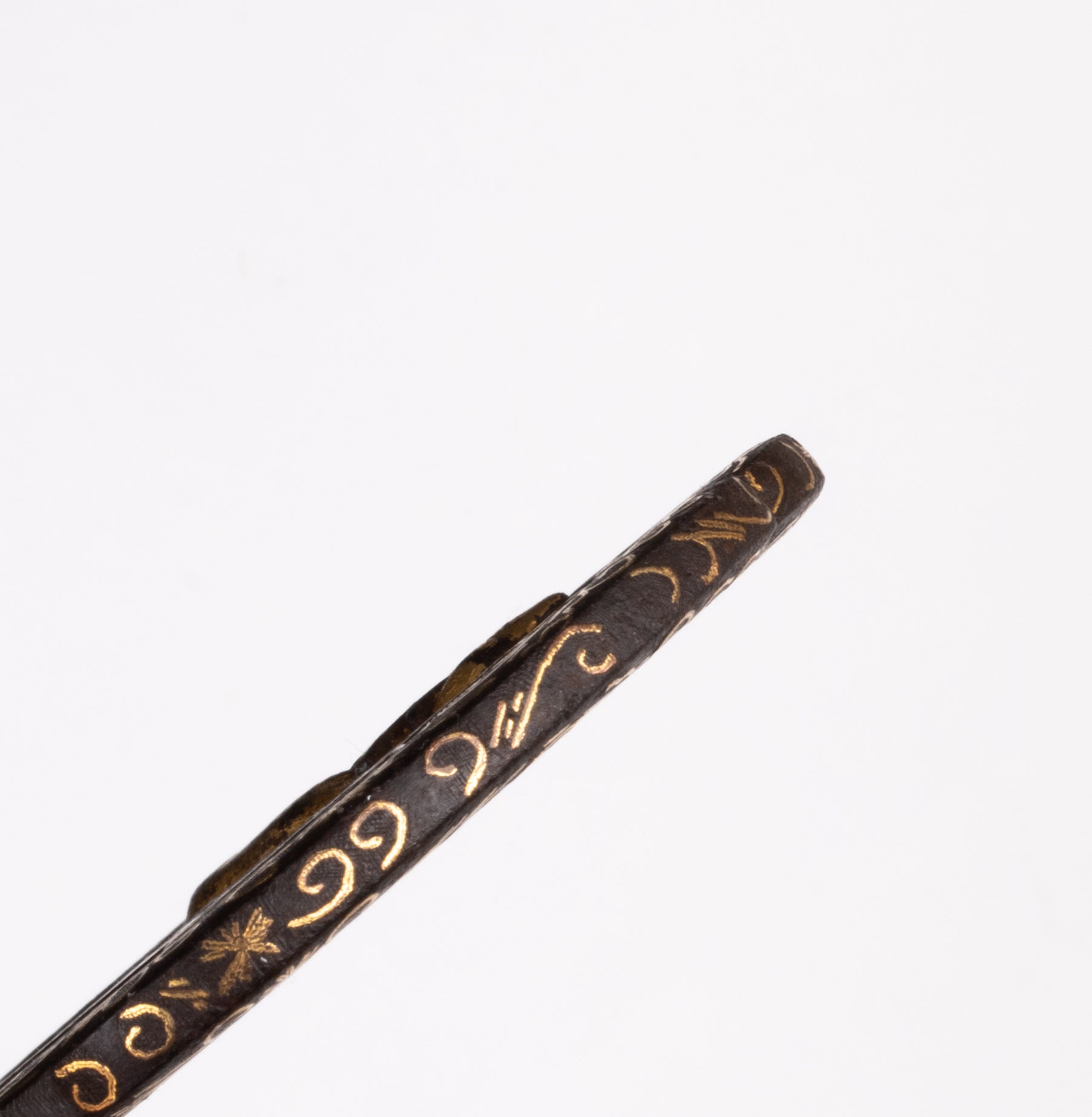
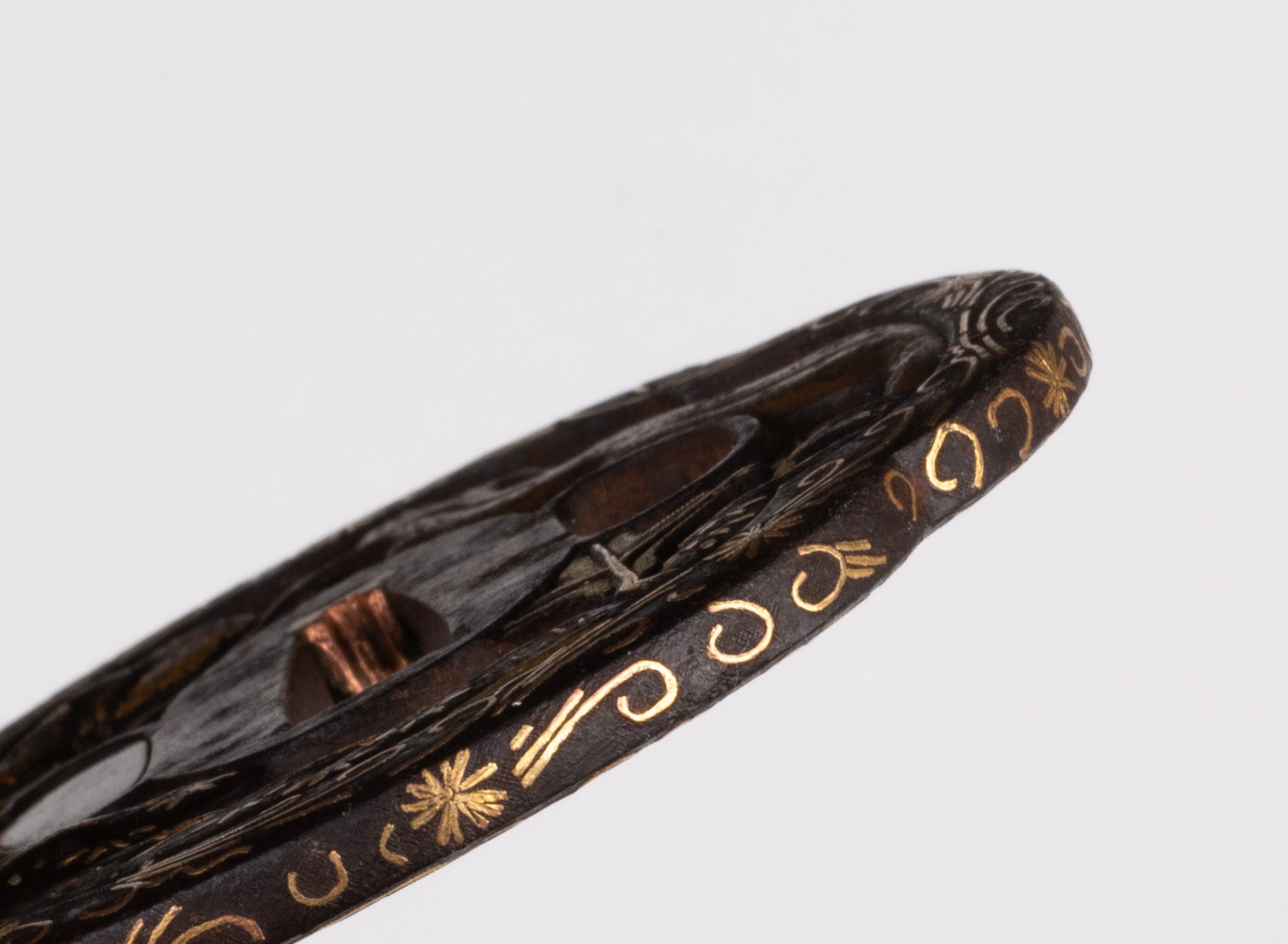
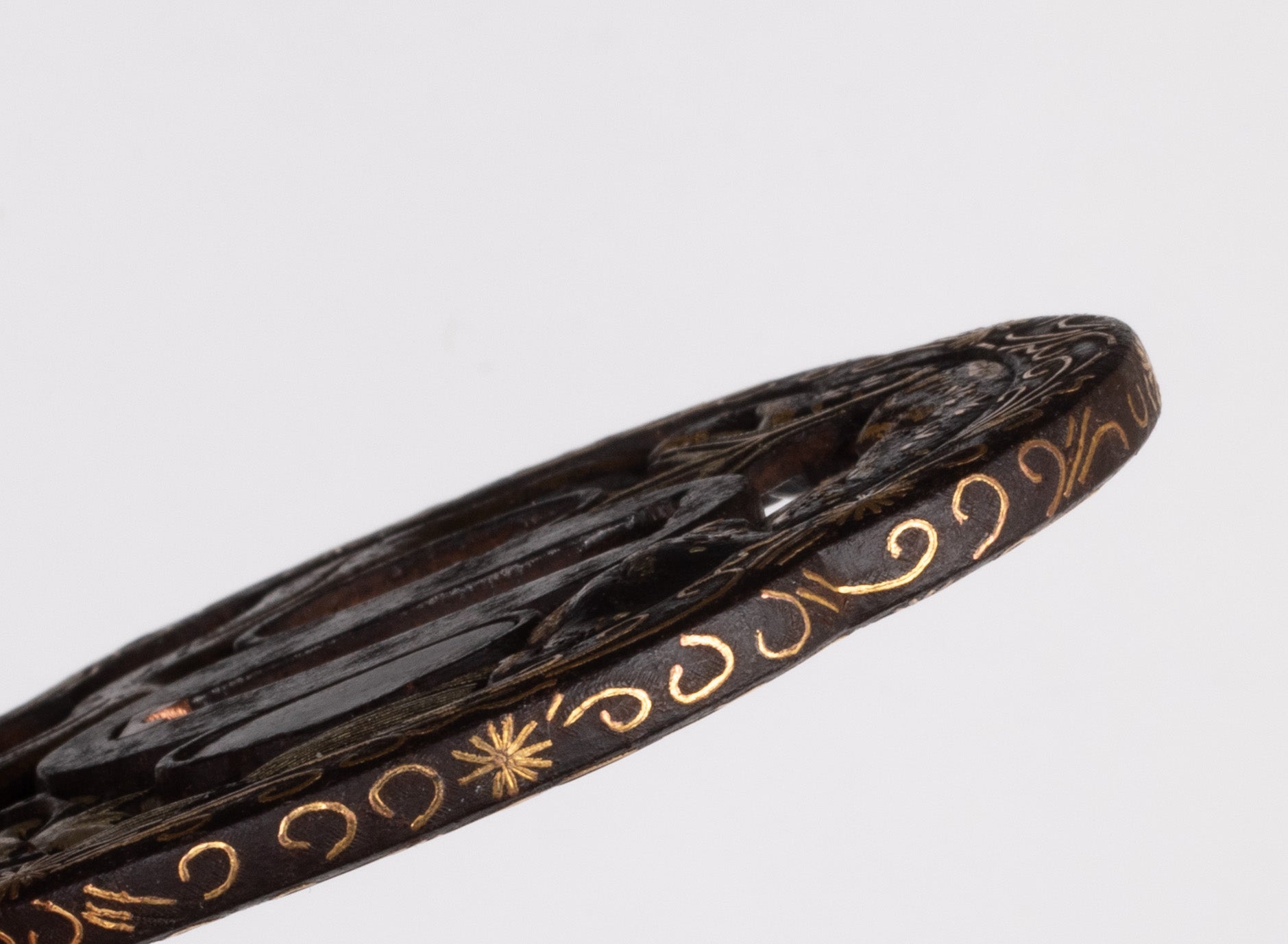
Iron daisho tsuba set decorated with deers, maple tree, waterfall and pine. The set is signed "Hikone Ju Nyudo Soten Sei" but not in the Soten style. The tsuba set was made in the Edo period and features nunome zogan inlay with two alloys of gold and copper.
 NihontoWatch
mei · Soten · Edo
Kinko · Omi
33 pieces on the market now
The Hikone school of sword fittings -- known as Hikone-bori -- was established at Nakayabu in Hikone, Omi Province, by Mogarashi Nyudo Soten, who settled there after leaving Kyoto and entered the service of the Kawakita family, hereditary vassals of the Hikone domain. One source records that Soten initially trained under the Goto family, citing the Kinko Soran for the existence of works signed "made by Kitagawa Hidenori, a disciple of the Goto," before developing the distinctive carving manner that would define his lineage. The school's connection to the broader Mino-bori tradition is also recognized. There were reportedly two generations working under Soten's name, with the first born in Joo 1 (1652) and active from the early through mid-Edo period. From his workshop emerged a circle of accomplished students, chief among them Nomura Kanenori and Munenori, who carried the Hikone-bori manner forward and established it as one of the most distinctive regional styles in the kinko tradition. The technical hallmark of Hikone-bori is sukidashi takabori -- richly modeled high-relief carving executed on generously proportioned iron plates, further enlivened through zogan iroe employing gold, silver, shakudo, and suaka. The NBTHK notes that even among the gold applications, "multiple types of gold are used," producing expansive pictorial fields of considerable chromatic variety.
Subjects encompass warriors, Daoist immortals, elder sages at elegant gatherings, and flowers-and-birds compositions, rendered across the entirety of both surfaces of the guard. The school's masters also demonstrated facility in shakudo work, including nanako-ji plates with high-relief compositions displaying a pronounced Goto-like flavor, as well as nikubori ji-sukashi and polychrome mitokoromono sets. What unifies the school's output is the synthesis of imposing compositional scale with refined polychrome technique. " Munenori's contribution is recognized for its assured command of shakudo nanako-ji ground preparation and boldly modeled takabori, enriched with polychrome iroe employing multiple varieties of gold across both faces -- a sumptuous, animated effect characteristic of the mature Hikone style. The Hikone school's significance within the broader kinko tradition rests on its creation of a distinctively pictorial approach to sword-fitting decoration that stands apart from both the restrained elegance of the Goto mainline and the narrative density of the Yokoya school. The NBTHK's evaluative language converges on a single defining quality: the school's ability to fill expansive iron and shakudo surfaces with ambitious narrative compositions while maintaining compositional coherence and chromatic refinement. " That Soten's overwhelming fame led later makers to adopt his signature on subsequent Hikone-carved works testifies to the enduring authority of the school's founding aesthetic, while the surviving origami documentation -- including one dated Kanbun 5 (1665) from Goto Mitsutomo -- provides valuable evidence for understanding workshop practices and the collaborative production that sustained the Hikone tradition across the early and mid-Edo period. Learn more →
| Smith | Era | Designated |
|---|---|---|
| Soten宗典 | Edo | 10 |
| Kanenori包教 | Edo | 3 |
| Masatsugu政次 | Edo | 0 |
| Mitsuyoshi光義 | Edo | 0 |
| Munekata宗賢 | Edo | 0 |
We could not find an authenticity certificate on the seller’s listing. Japanese swords and fittings are normally papered by the NBTHK (or the NTHK). Without one, the attribution is the seller’s own assessment and has not been independently verified — treat it with caution and ask the dealer about certification before buying.
30-day refund policy. Items must be returned in original condition and packaging; customized products are non-returnable. 2-week inspection window with full item refund (shipping costs non-refundable). Customer pays return shipping.
Iron daisho tsuba set decorated with deers, maple tree, waterfall and pine. The set is signed "Hikone Ju Nyudo Soten Sei" but not in the Soten style. The tsuba set was made in the Edo period and features nunome zogan inlay with two alloys of gold and copper.
NihontoWatchmei · Soten · Edo
Kinko · Omi
33 pieces on the market now
The Hikone school of sword fittings -- known as Hikone-bori -- was established at Nakayabu in Hikone, Omi Province, by Mogarashi Nyudo Soten, who settled there after leaving Kyoto and entered the service of the Kawakita family, hereditary vassals of the Hikone domain. One source records that Soten initially trained under the Goto family, citing the Kinko Soran for the existence of works signed "made by Kitagawa Hidenori, a disciple of the Goto," before developing the distinctive carving manner that would define his lineage. The school's connection to the broader Mino-bori tradition is also recognized. There were reportedly two generations working under Soten's name, with the first born in Joo 1 (1652) and active from the early through mid-Edo period. From his workshop emerged a circle of accomplished students, chief among them Nomura Kanenori and Munenori, who carried the Hikone-bori manner forward and established it as one of the most distinctive regional styles in the kinko tradition. The technical hallmark of Hikone-bori is sukidashi takabori -- richly modeled high-relief carving executed on generously proportioned iron plates, further enlivened through zogan iroe employing gold, silver, shakudo, and suaka. The NBTHK notes that even among the gold applications, "multiple types of gold are used," producing expansive pictorial fields of considerable chromatic variety.
Subjects encompass warriors, Daoist immortals, elder sages at elegant gatherings, and flowers-and-birds compositions, rendered across the entirety of both surfaces of the guard. The school's masters also demonstrated facility in shakudo work, including nanako-ji plates with high-relief compositions displaying a pronounced Goto-like flavor, as well as nikubori ji-sukashi and polychrome mitokoromono sets. What unifies the school's output is the synthesis of imposing compositional scale with refined polychrome technique. " Munenori's contribution is recognized for its assured command of shakudo nanako-ji ground preparation and boldly modeled takabori, enriched with polychrome iroe employing multiple varieties of gold across both faces -- a sumptuous, animated effect characteristic of the mature Hikone style. The Hikone school's significance within the broader kinko tradition rests on its creation of a distinctively pictorial approach to sword-fitting decoration that stands apart from both the restrained elegance of the Goto mainline and the narrative density of the Yokoya school. The NBTHK's evaluative language converges on a single defining quality: the school's ability to fill expansive iron and shakudo surfaces with ambitious narrative compositions while maintaining compositional coherence and chromatic refinement. " That Soten's overwhelming fame led later makers to adopt his signature on subsequent Hikone-carved works testifies to the enduring authority of the school's founding aesthetic, while the surviving origami documentation -- including one dated Kanbun 5 (1665) from Goto Mitsutomo -- provides valuable evidence for understanding workshop practices and the collaborative production that sustained the Hikone tradition across the early and mid-Edo period. Learn more →
| Smith | Era | Designated |
|---|---|---|
| Soten宗典 | Edo | 10 |
| Kanenori包教 | Edo | 3 |
| Masatsugu政次 | Edo | 0 |
| Mitsuyoshi光義 | Edo | 0 |
| Munekata宗賢 | Edo | 0 |
We could not find an authenticity certificate on the seller’s listing. Japanese swords and fittings are normally papered by the NBTHK (or the NTHK). Without one, the attribution is the seller’s own assessment and has not been independently verified — treat it with caution and ask the dealer about certification before buying.
30-day refund policy. Items must be returned in original condition and packaging; customized products are non-returnable. 2-week inspection window with full item refund (shipping costs non-refundable). Customer pays return shipping.