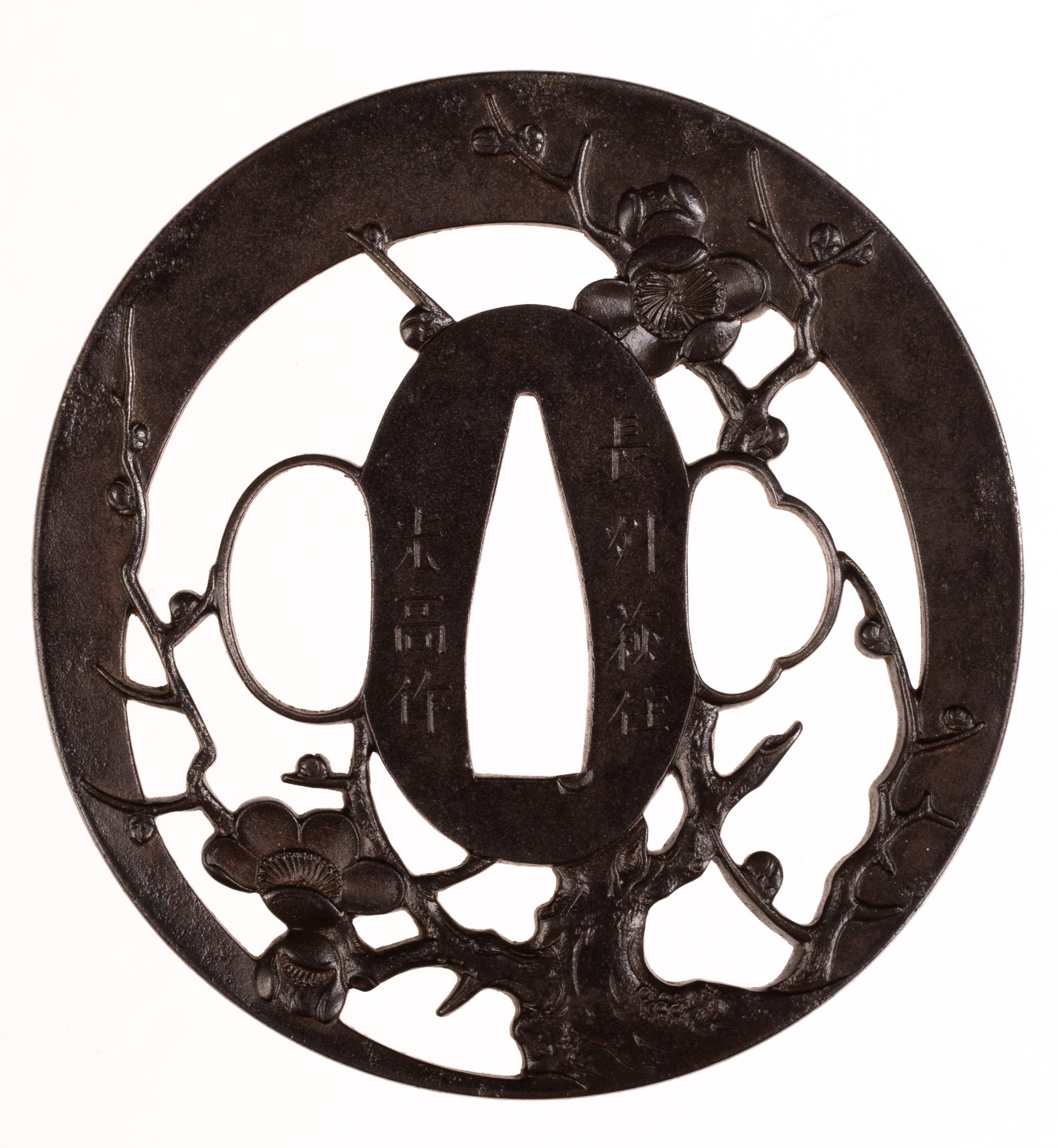
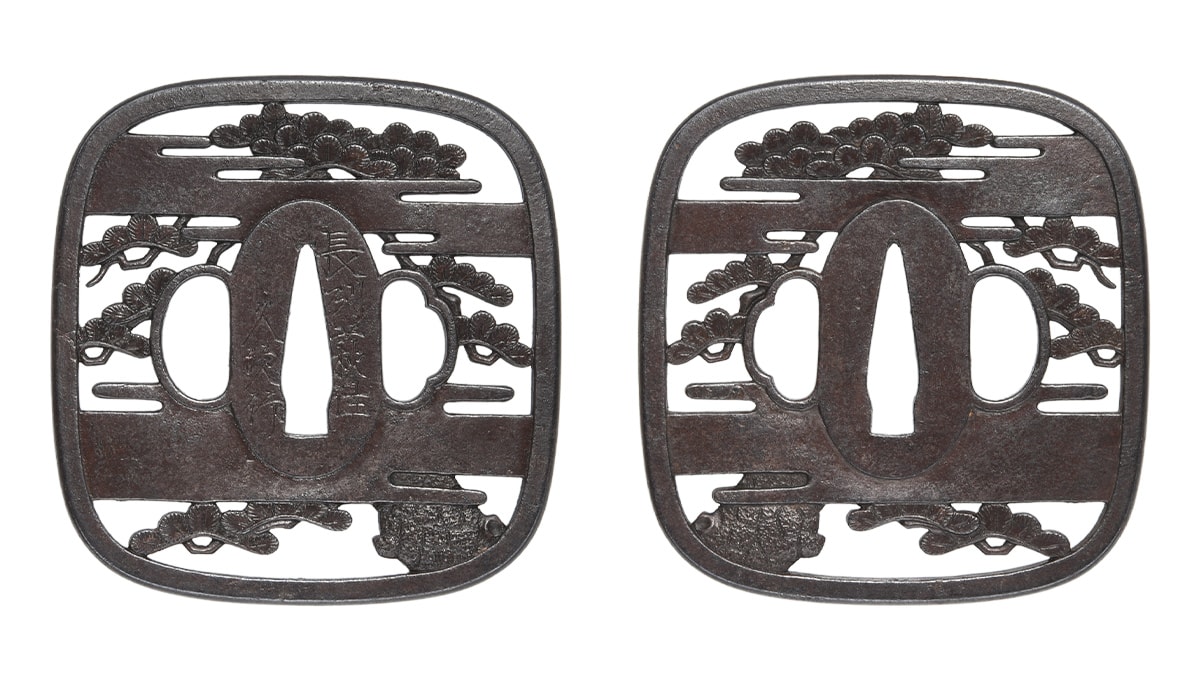
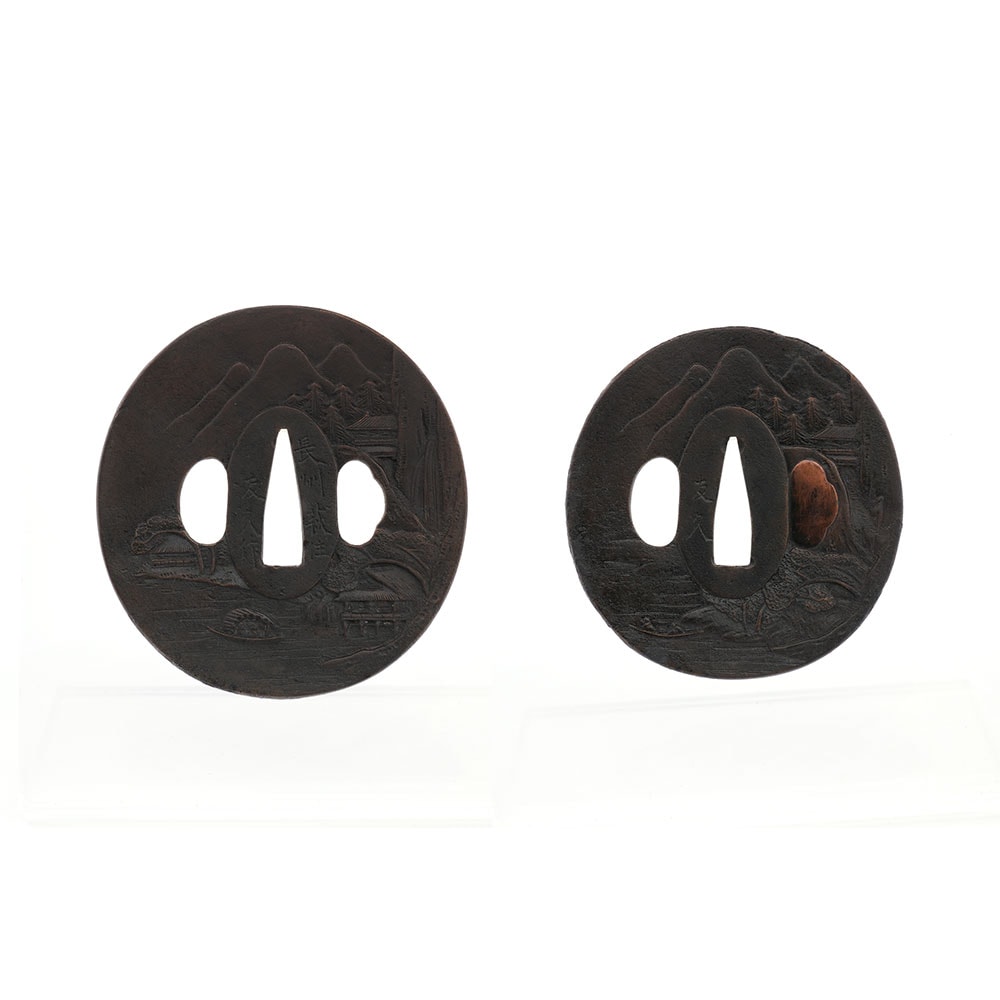
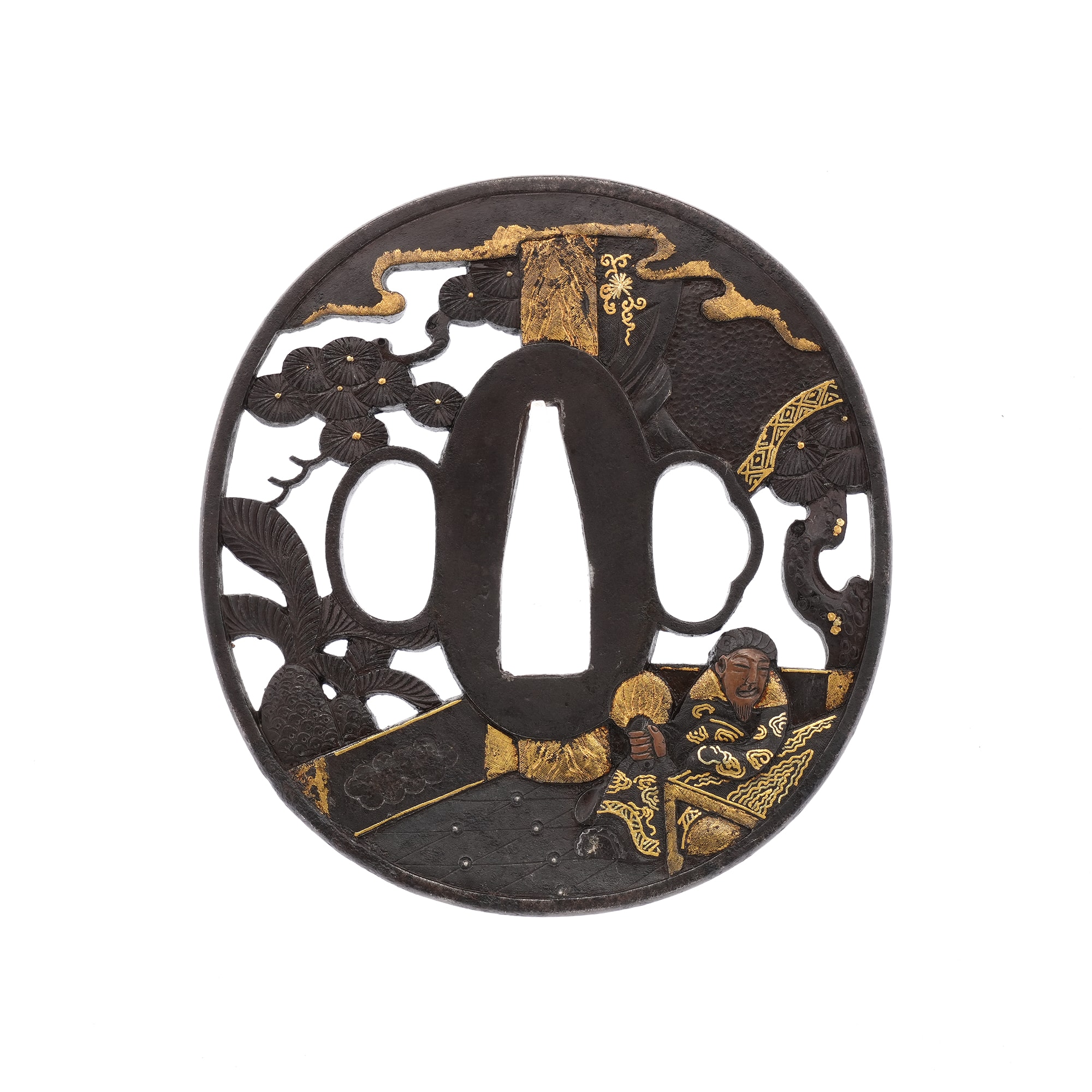
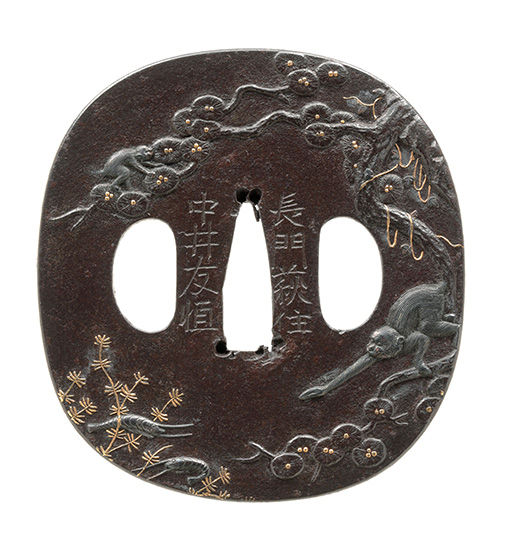
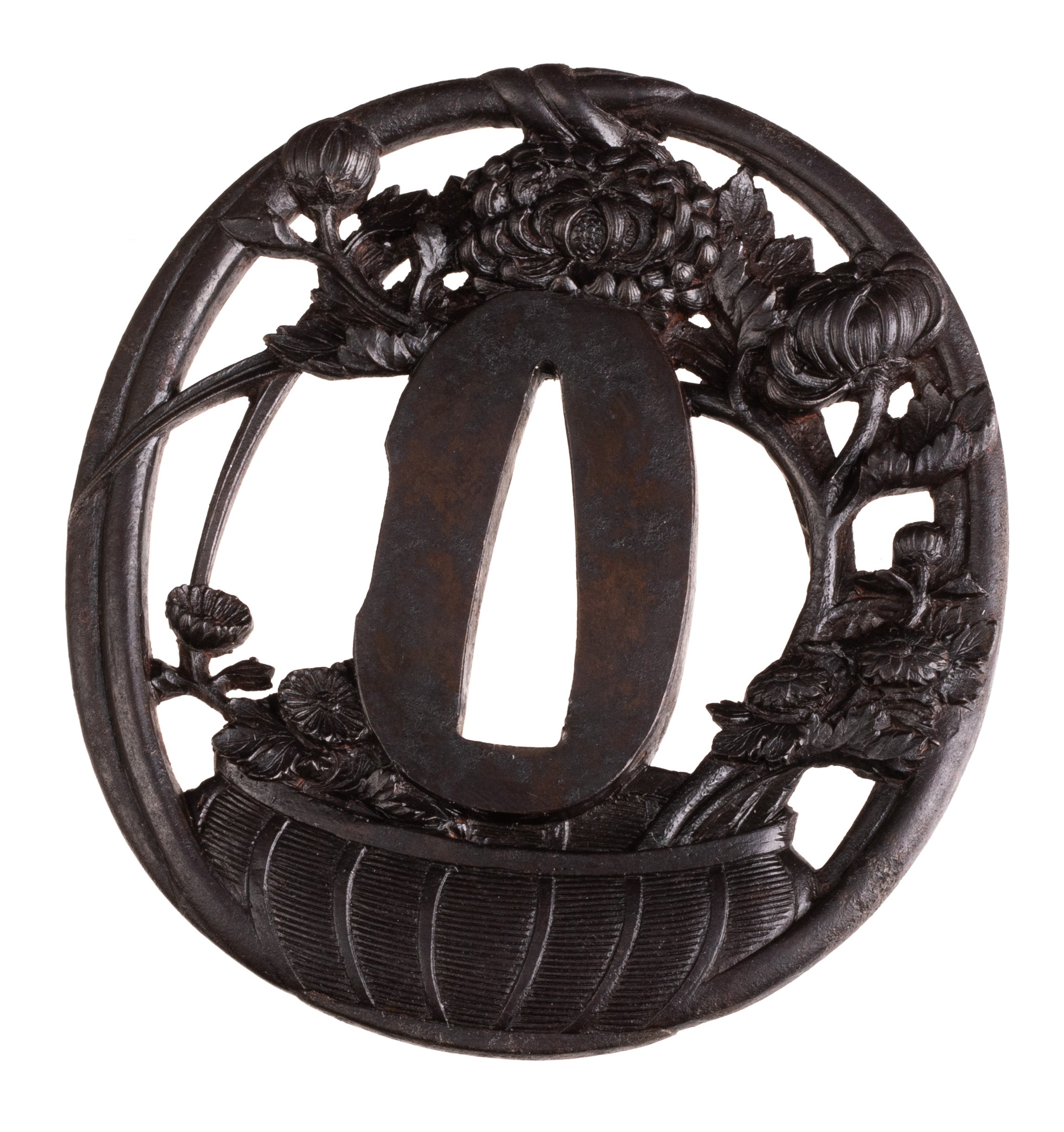
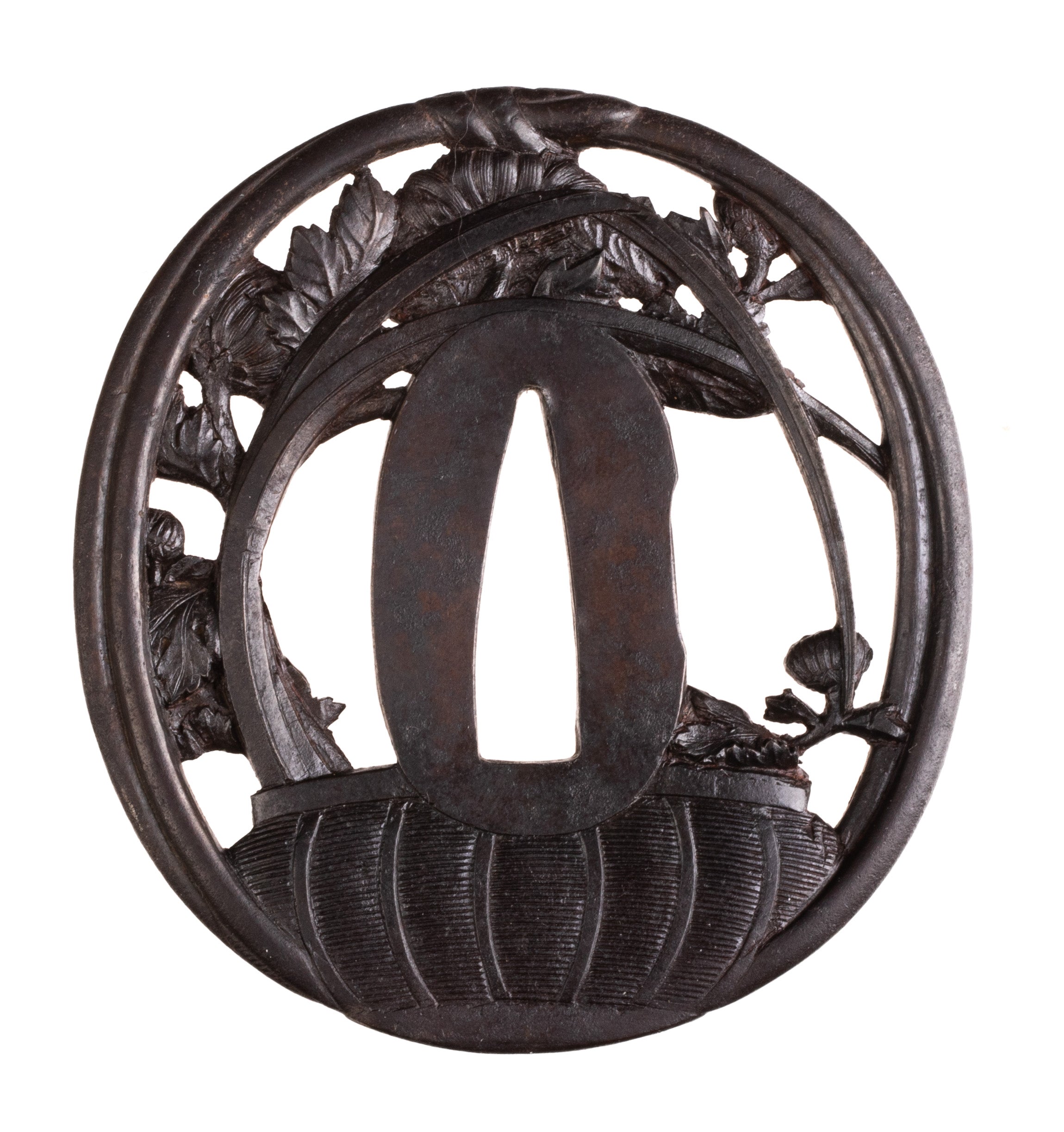
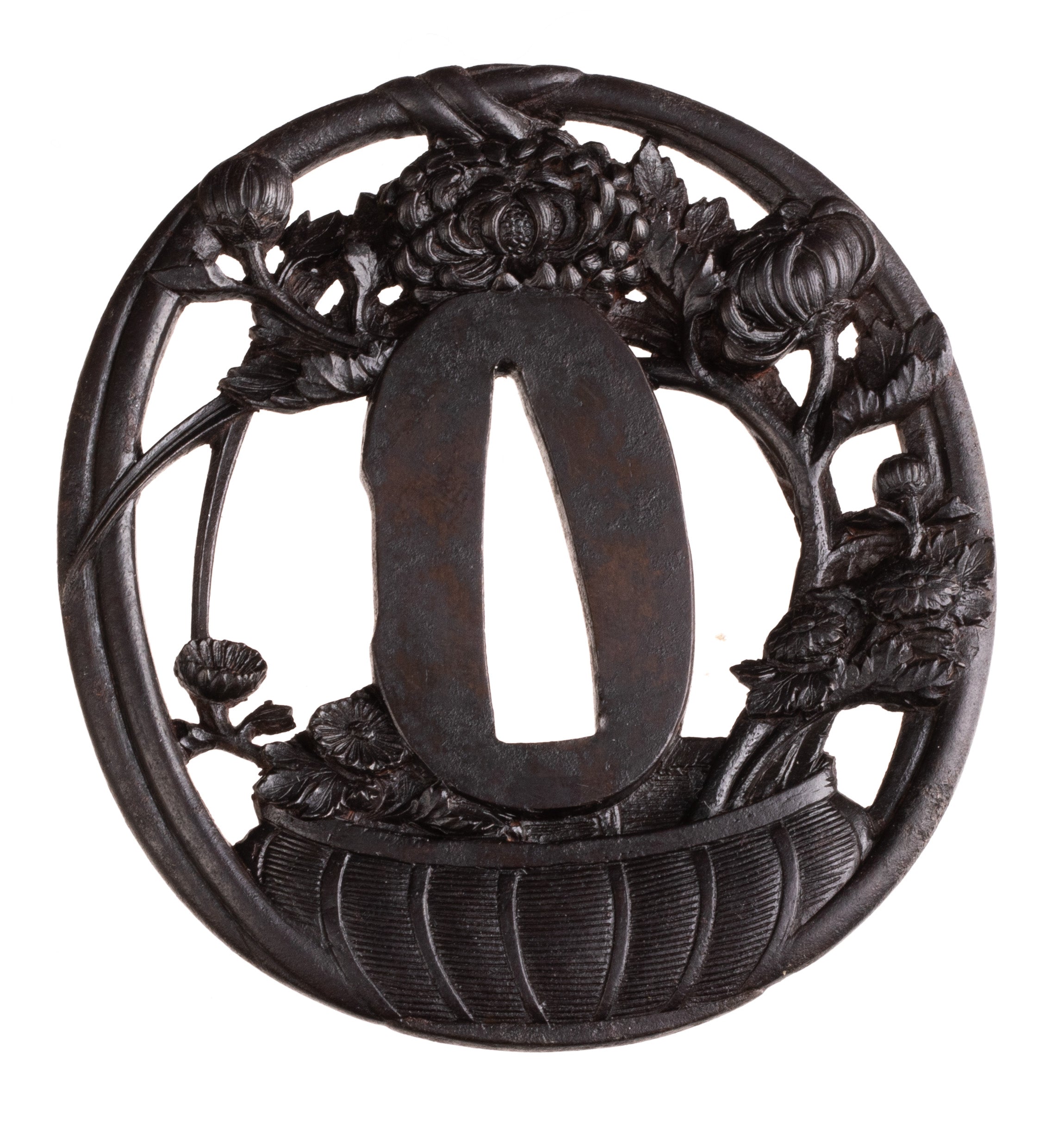
Iron sukashi tsuba from the Choshu School, decorated with a flower arrangement design. Made during the late Edo period. The tsuba measures 71 mm x 66 mm x 4 mm.
 NihontoWatch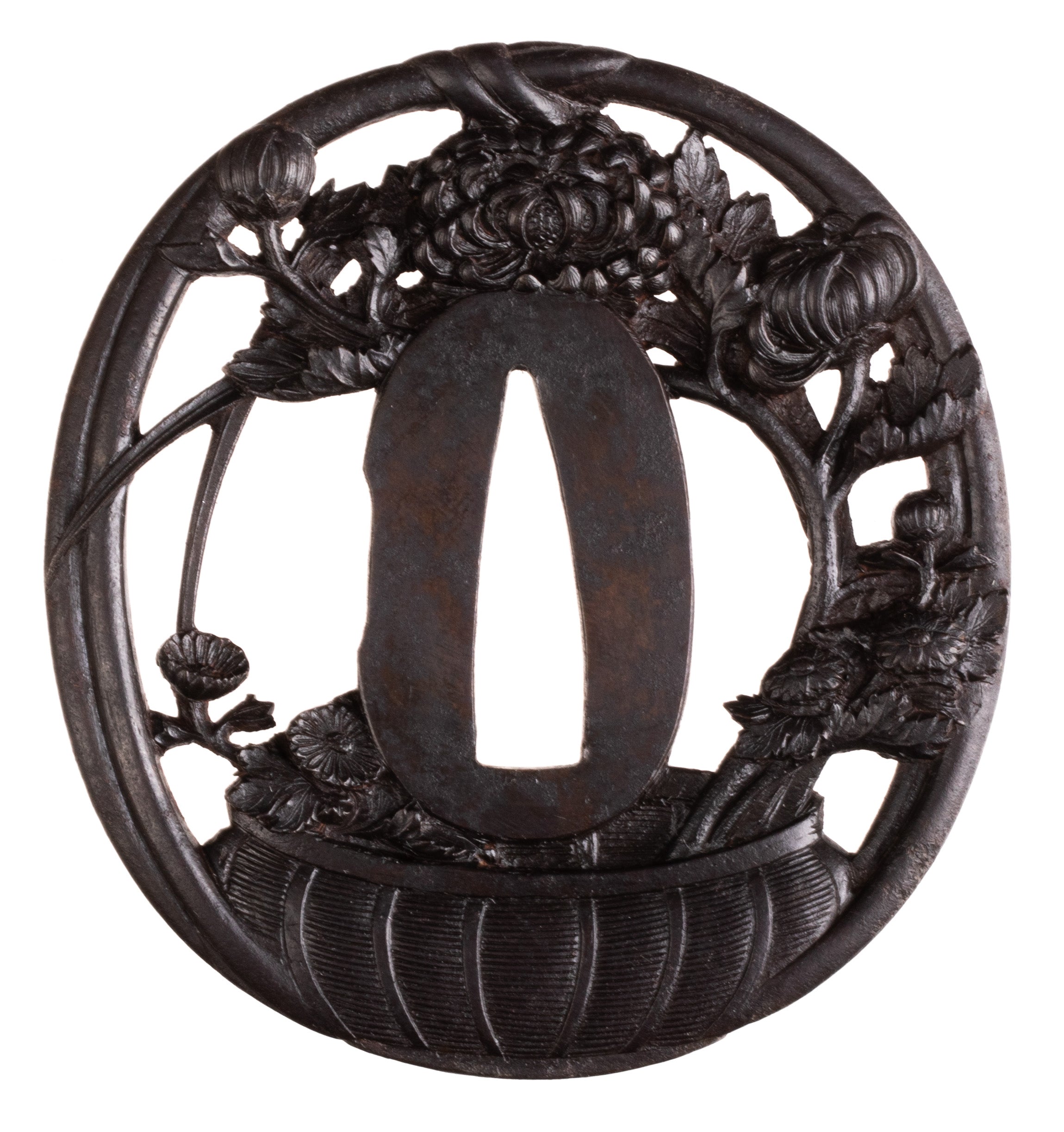
Iron-tsuba · Nagato
24 pieces on the market now
The tsuba-making traditions of Choshu domain (Nagato Province) trace their origins to the migration of Heianjo-sukashi openwork craftsmen from Kyoto, invited by the Ouchi family of Suo and Nagato during the Muromachi period. This transplanted lineage gave rise to the Ko-Hagi group, which flourished from the late Muromachi into the early Edo period and established a distinctive regional idiom in iron openwork. Under the subsequent patronage of the Mori clan, Choshu developed into one of Japan's foremost centres of tsuba production, earning the epithet that placed it alongside Aizu as the two great guard-making provinces: notable both for the number of artisans and the volume of work. Multiple lineages emerged — among them the Kawaji, Nakahara, Hatto, Okada, Okamoto, Kaneko, and Nakai — with Nakai Tomotsune (also known as Zensuke) achieving particular renown as a kakae-ko (retainer craftsman) of the Mori household, receiving a stipend from Horeki 8 (1758). The collective vocabulary of the Choshu tradition is grounded in iron: thin, carefully forged plates with rich surface character, including tsuchime-ji (hammered ground).
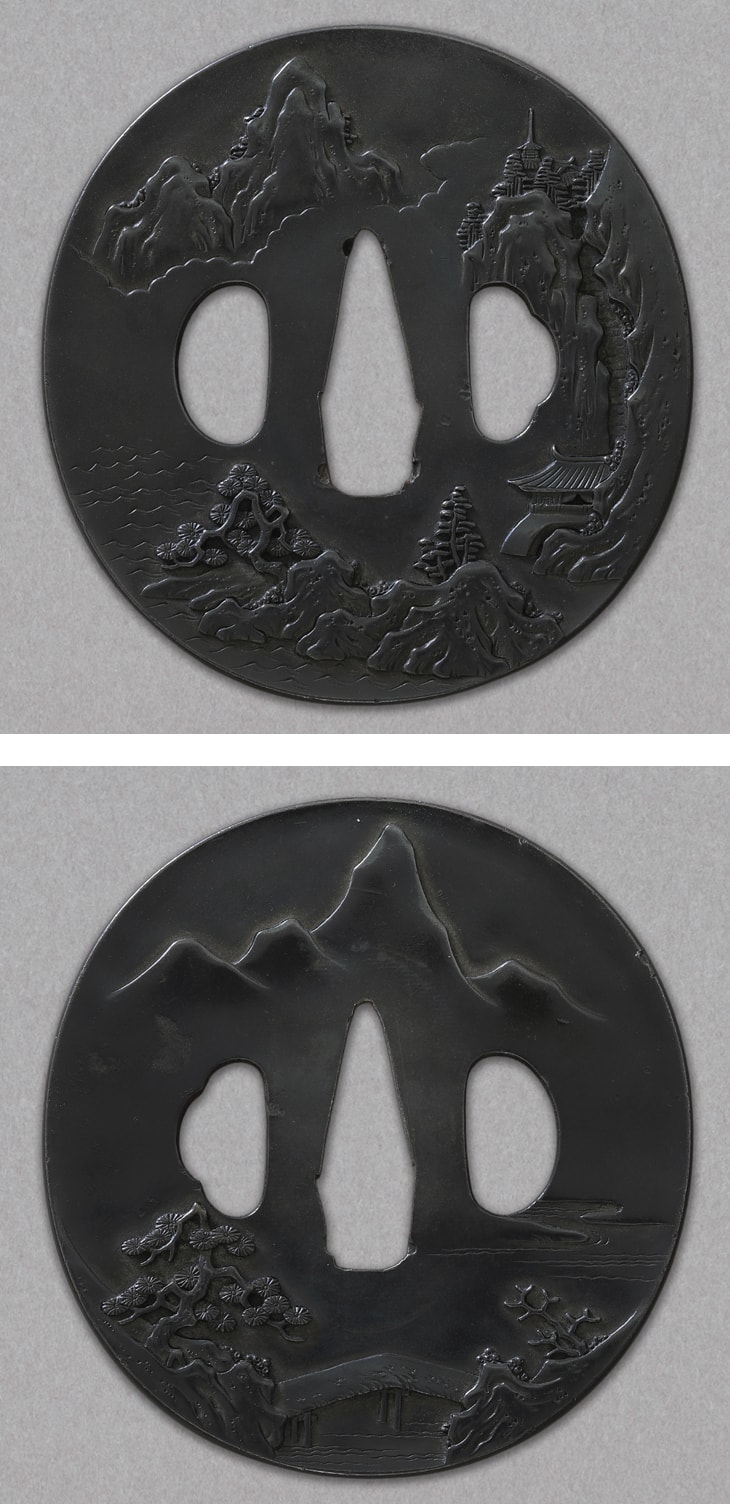
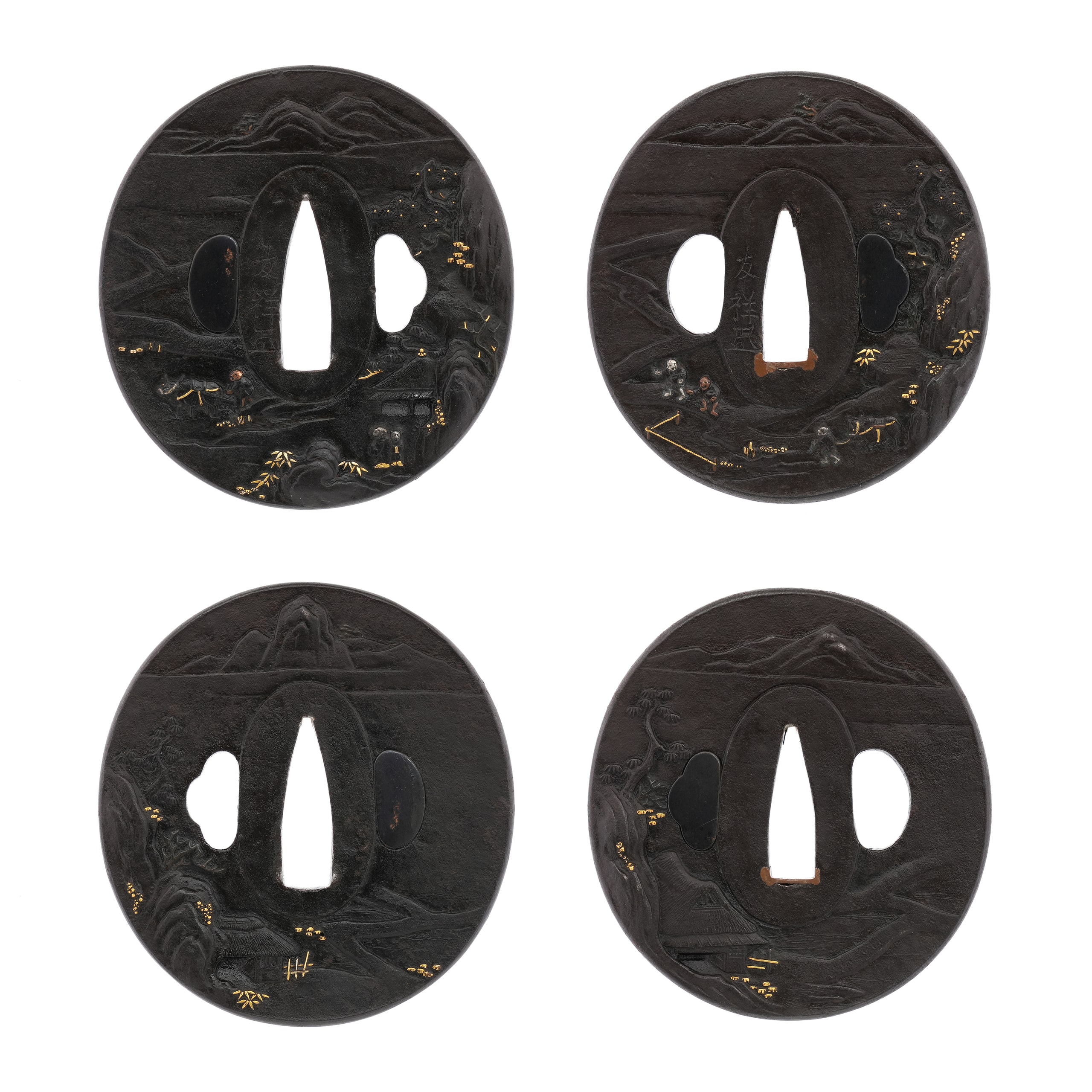
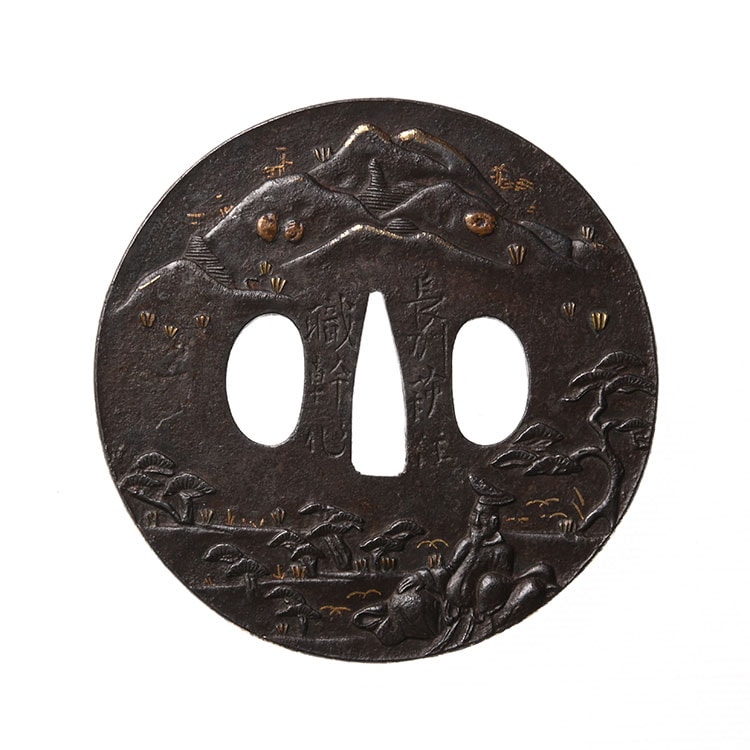
" The later Nakai school extended this foundation into a broader technical range, deploying sukidashi takabori high relief, kinzogan iroe (gold inlay with polychrome accents), shibuichi, and gold nunome-zogan in compositions of considerable ambition — naturalistic subjects such as frolicking tenaga-zaru monkeys and theatrical Shiki Samban scenes rendered with "taut, controlled modeling" and effective distribution of irogane colour metals. The Choshu tradition occupies a singular position within the tosogu canon as a regional milieu whose finest productions transcend mere provincial category. The NBTHK has recognised that the best works by Nakai Tomotsune surpass "what is ordinarily encompassed by the category of so-called Hagi tsuba,"[[c:1]] distinguished in composition, carving technique, and the character of the iron (tetsumi) alike[[c:2]]. At the same time, the Ko-Hagi group preserves an older and quieter aesthetic — rooted in the Kyoto openwork heritage yet transformed into something "not seen in other makers' work" — that testifies to the depth and continuity of metalworking practice in Nagato Province across several centuries. Learn more →
| Smith | Era | Designated |
|---|---|---|
| Tomonori友矩 | 1770-1800 | 0 |
| Tomohiro友広 | — | 0 |
| Tomotsune友恒 | 1670 | 1 |
| Nakai仲井 | 1670 | 1 |
| Nobushige信重 | 1781-1867 | 0 |
We could not find an authenticity certificate on the seller’s listing. Japanese swords and fittings are normally papered by the NBTHK (or the NTHK). Without one, the attribution is the seller’s own assessment and has not been independently verified — treat it with caution and ask the dealer about certification before buying.
30-day refund policy. Items must be returned in original condition and packaging; customized products are non-returnable. 2-week inspection window with full item refund (shipping costs non-refundable). Customer pays return shipping.
Iron sukashi tsuba from the Choshu School, decorated with a flower arrangement design. Made during the late Edo period. The tsuba measures 71 mm x 66 mm x 4 mm.
NihontoWatchIron-tsuba · Nagato
24 pieces on the market now
The tsuba-making traditions of Choshu domain (Nagato Province) trace their origins to the migration of Heianjo-sukashi openwork craftsmen from Kyoto, invited by the Ouchi family of Suo and Nagato during the Muromachi period. This transplanted lineage gave rise to the Ko-Hagi group, which flourished from the late Muromachi into the early Edo period and established a distinctive regional idiom in iron openwork. Under the subsequent patronage of the Mori clan, Choshu developed into one of Japan's foremost centres of tsuba production, earning the epithet that placed it alongside Aizu as the two great guard-making provinces: notable both for the number of artisans and the volume of work. Multiple lineages emerged — among them the Kawaji, Nakahara, Hatto, Okada, Okamoto, Kaneko, and Nakai — with Nakai Tomotsune (also known as Zensuke) achieving particular renown as a kakae-ko (retainer craftsman) of the Mori household, receiving a stipend from Horeki 8 (1758). The collective vocabulary of the Choshu tradition is grounded in iron: thin, carefully forged plates with rich surface character, including tsuchime-ji (hammered ground).
" The later Nakai school extended this foundation into a broader technical range, deploying sukidashi takabori high relief, kinzogan iroe (gold inlay with polychrome accents), shibuichi, and gold nunome-zogan in compositions of considerable ambition — naturalistic subjects such as frolicking tenaga-zaru monkeys and theatrical Shiki Samban scenes rendered with "taut, controlled modeling" and effective distribution of irogane colour metals. The Choshu tradition occupies a singular position within the tosogu canon as a regional milieu whose finest productions transcend mere provincial category. The NBTHK has recognised that the best works by Nakai Tomotsune surpass "what is ordinarily encompassed by the category of so-called Hagi tsuba,"[[c:1]] distinguished in composition, carving technique, and the character of the iron (tetsumi) alike[[c:2]]. At the same time, the Ko-Hagi group preserves an older and quieter aesthetic — rooted in the Kyoto openwork heritage yet transformed into something "not seen in other makers' work" — that testifies to the depth and continuity of metalworking practice in Nagato Province across several centuries. Learn more →
| Smith | Era | Designated |
|---|---|---|
| Tomonori友矩 | 1770-1800 | 0 |
| Tomohiro友広 | — | 0 |
| Tomotsune友恒 | 1670 | 1 |
| Nakai仲井 | 1670 | 1 |
| Nobushige信重 | 1781-1867 | 0 |
We could not find an authenticity certificate on the seller’s listing. Japanese swords and fittings are normally papered by the NBTHK (or the NTHK). Without one, the attribution is the seller’s own assessment and has not been independently verified — treat it with caution and ask the dealer about certification before buying.
30-day refund policy. Items must be returned in original condition and packaging; customized products are non-returnable. 2-week inspection window with full item refund (shipping costs non-refundable). Customer pays return shipping.