 NihontoWatchNihontoWatch
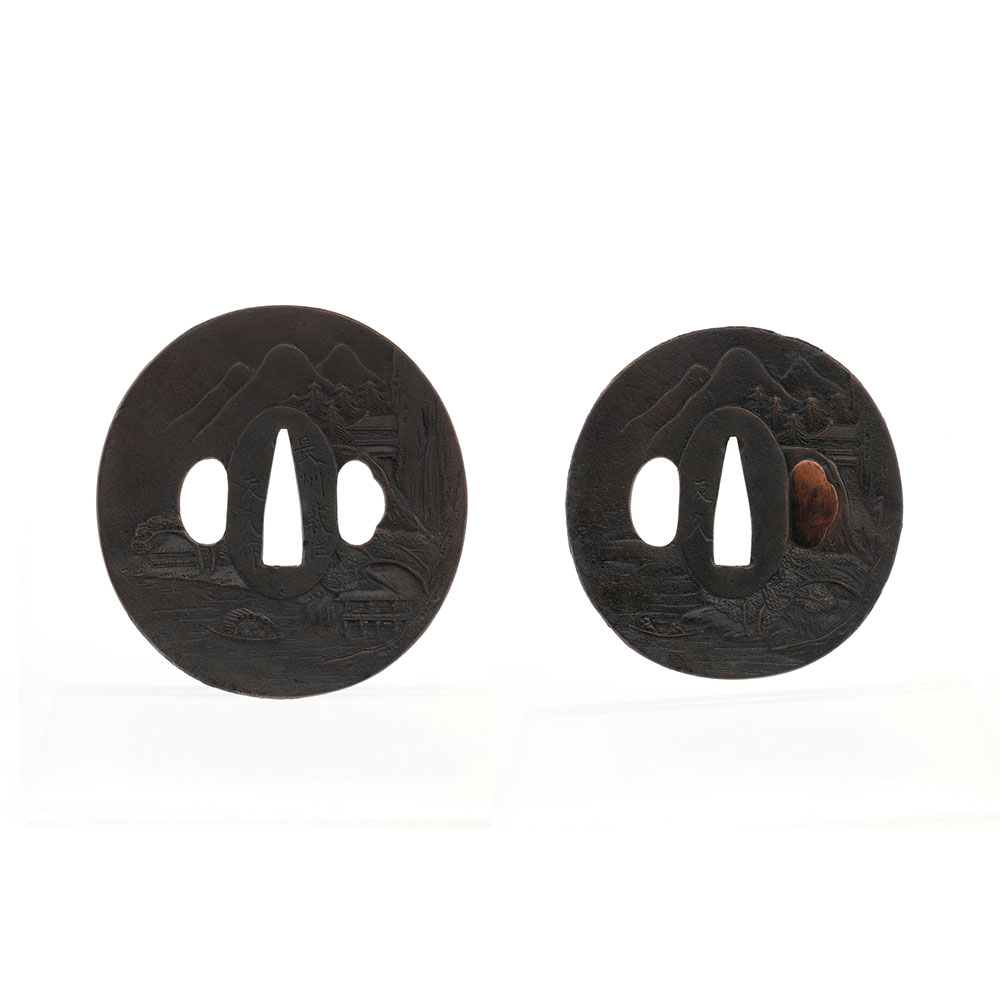
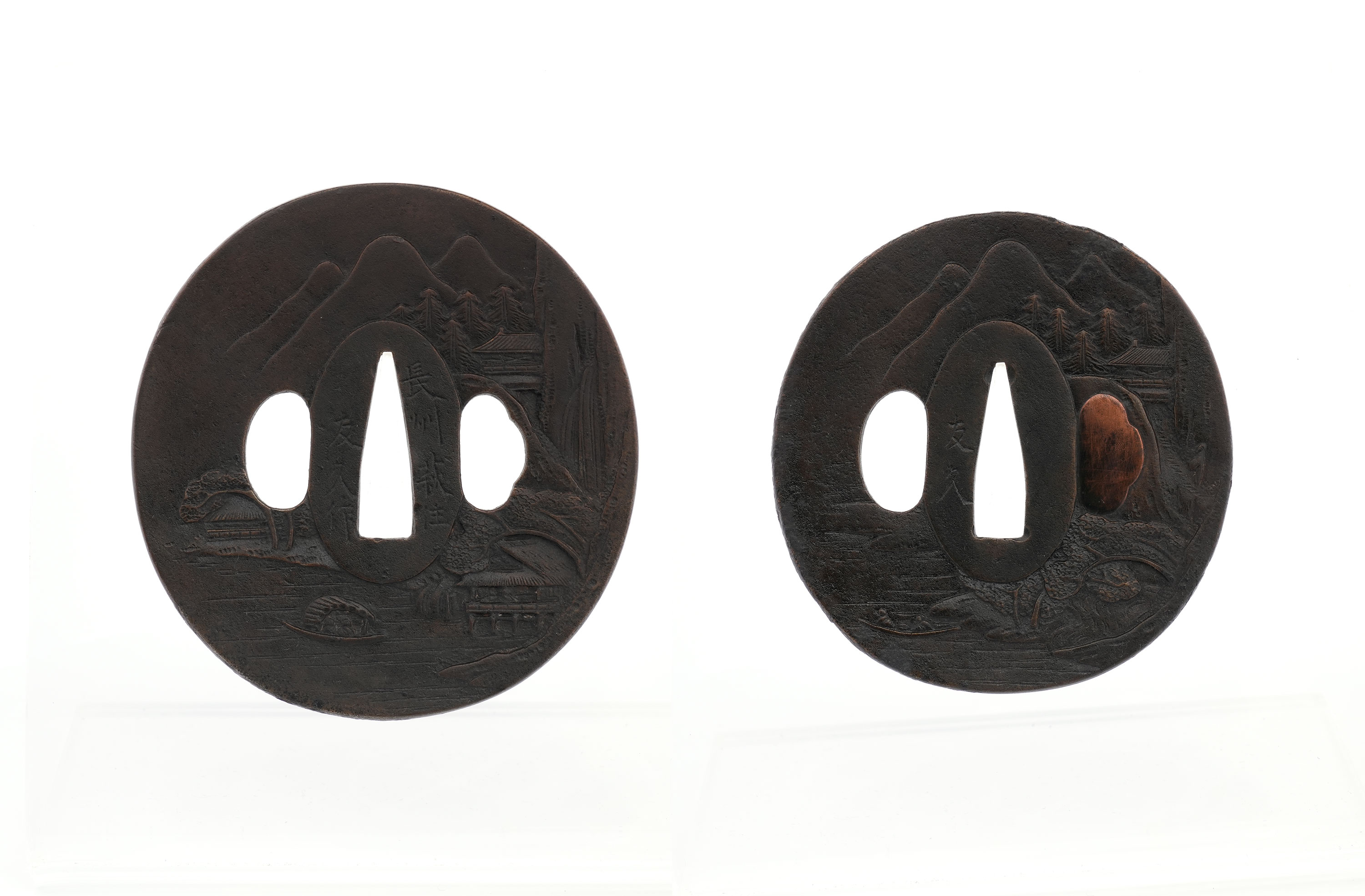
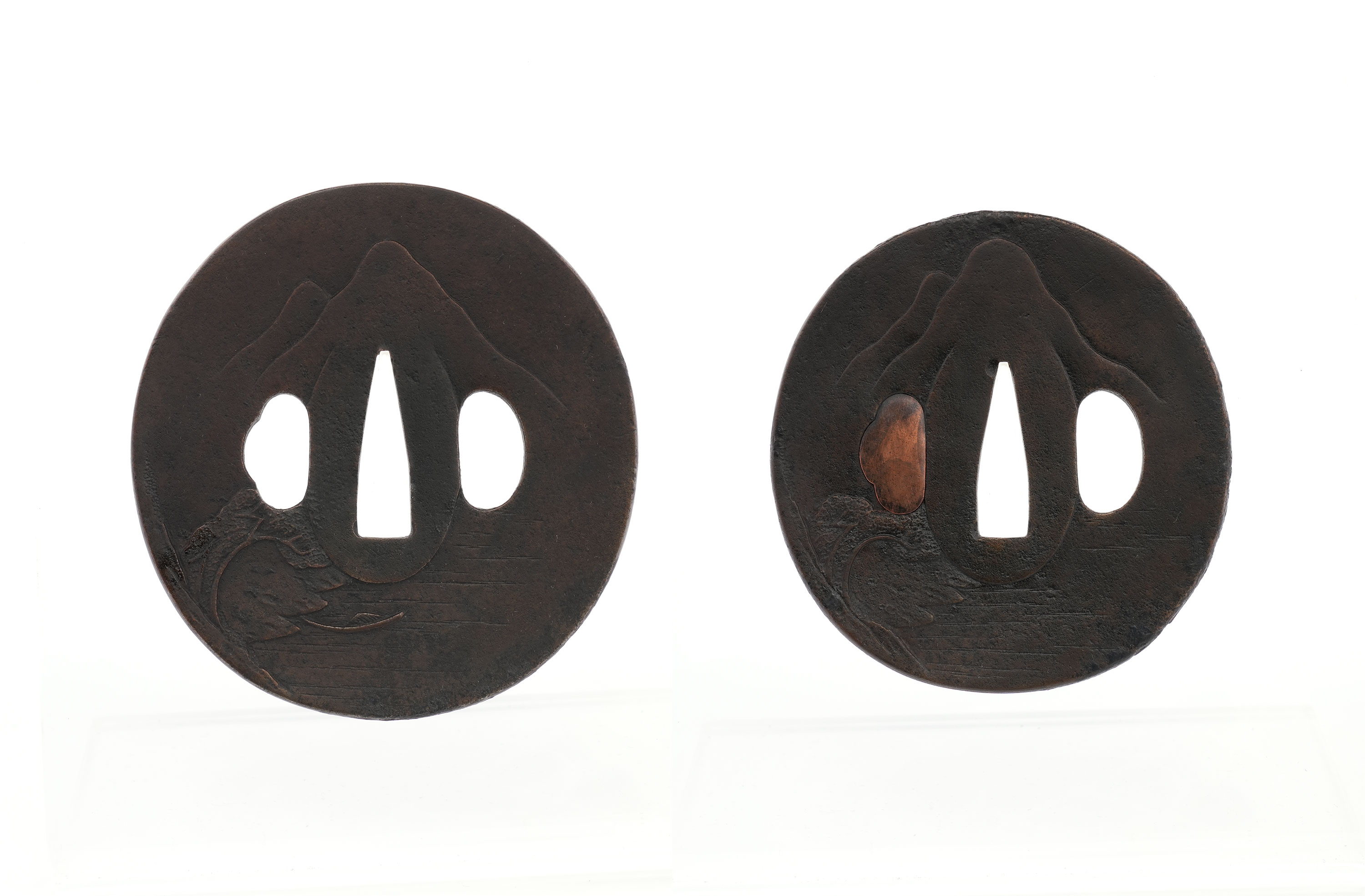
長州藩は、他藩へ輸出して藩の財源とするために、積極的に鐔造りを奨励し、その結果、長州は、東の会津に対して西の長州と言われるほど、鐔工とその作品の数が多いところとなりました。 長州鐔の作風は一概に言えないほど多岐に渡っており、特徴的な作風を有する流派はあまりなく、河治・中井・岡本・岡田・金子・中原・藤井・井上・八道といった各家が比較的著名です。 また、長州鐔には山水図が多く経眼されますが、その源は室町時代の画聖雪舟にあり、周防、長門、筑前、豊前、肥前を領有した守護大名大内氏の庇護により明国で水墨画を学んだ雪舟は、帰国後は山口天花の雲谷庵に落ち着き「山水長巻」をはじめとする傑作を描きました。 その画風は、西国随一の大名毛利輝元から雪舟流の復興を命じられた原治兵衛直治(後の雲谷等顔)に継承され雲谷派として幕末まで続きました。 本大小鐔も、長州鐔が得意とした山水図を主題に据えた秀作で、遠景には丸みを帯びた山々が連なり、近景には切り立った崖と流麗な瀧、更に楼閣や水に浮かぶ舟までもが巧みな鏨使いによって表現され、一枚の鉄鐔に広大な景観を凝縮しています。 長州鐔特有の鋭くも繊細な鏨捌きにより、自然と人の営みが巧みに融合した景趣は、まるで山水画を手に取るかのような趣きを醸し出しています。大小揃いで伝来する点も貴重であり、保存状態も良好です。 静謐さと雄大さを兼ね備えた景観美を味わえる本作は、長州鐔の真価を示す逸品であり、コレクションにお迎え頂くに相応しい一組です。
NihontoWatchOffered by Toushin
We couldn’t find current papers for this piece. Ask the dealer whether it has been, or can be, submitted to shinsa. — Hoshi
18 on the market

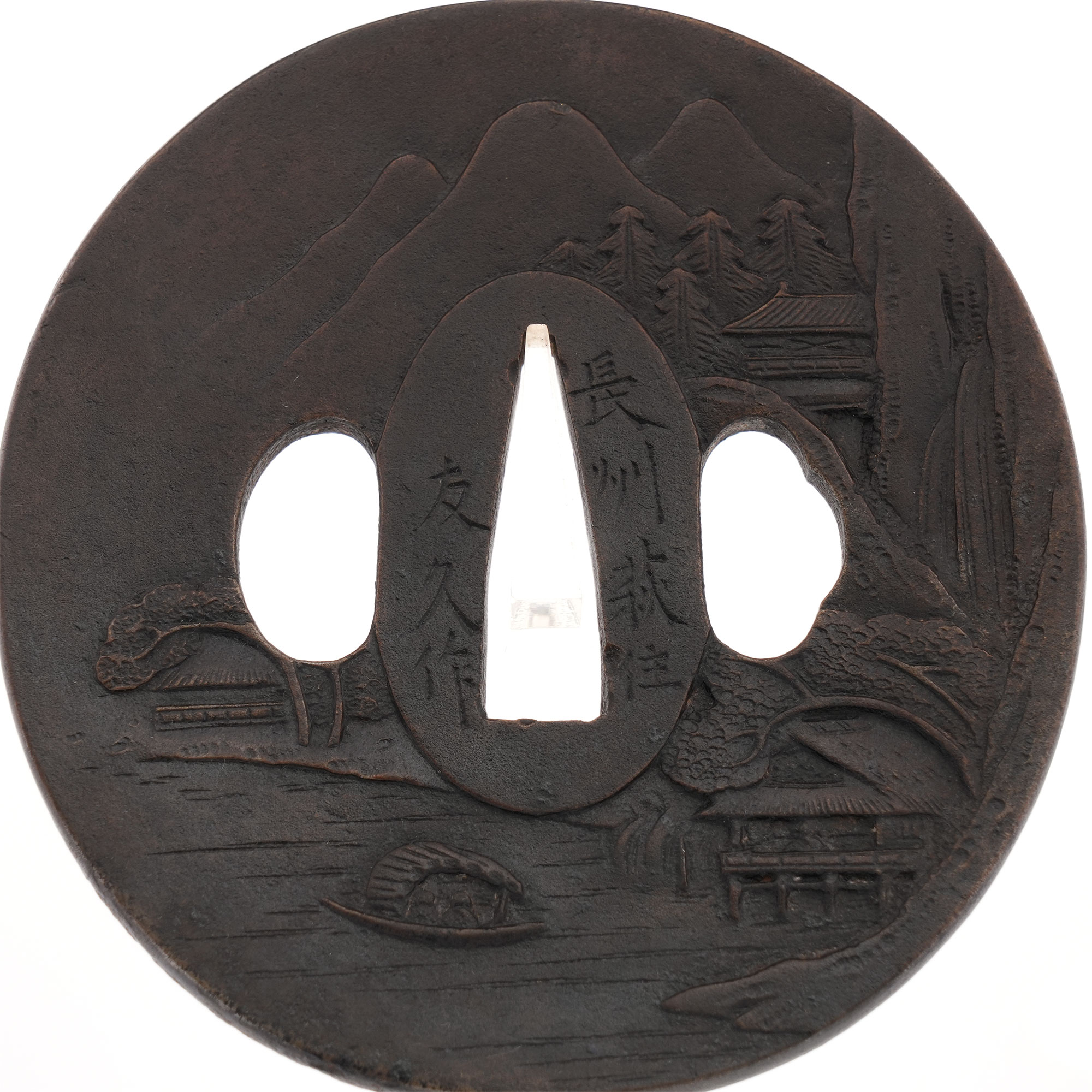
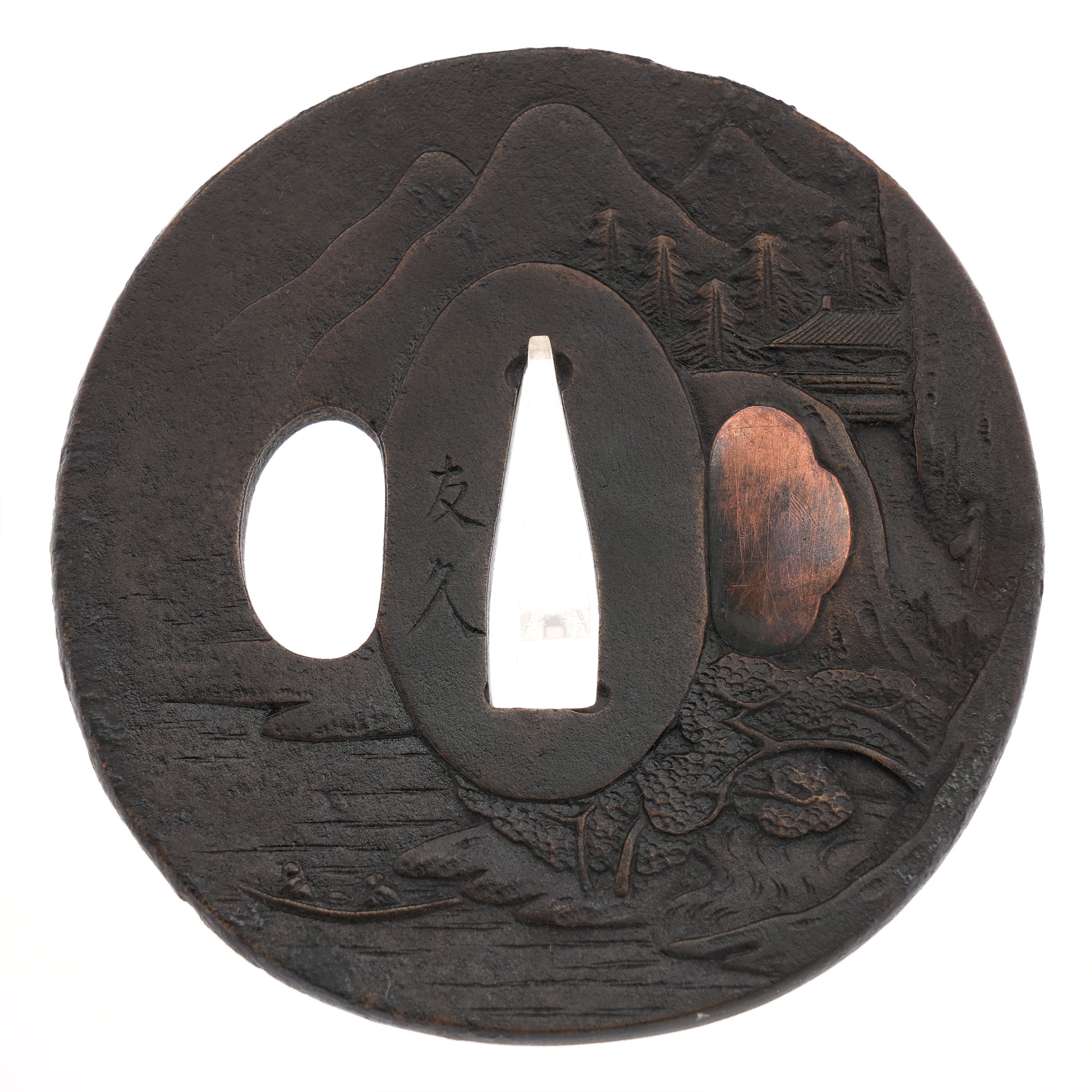
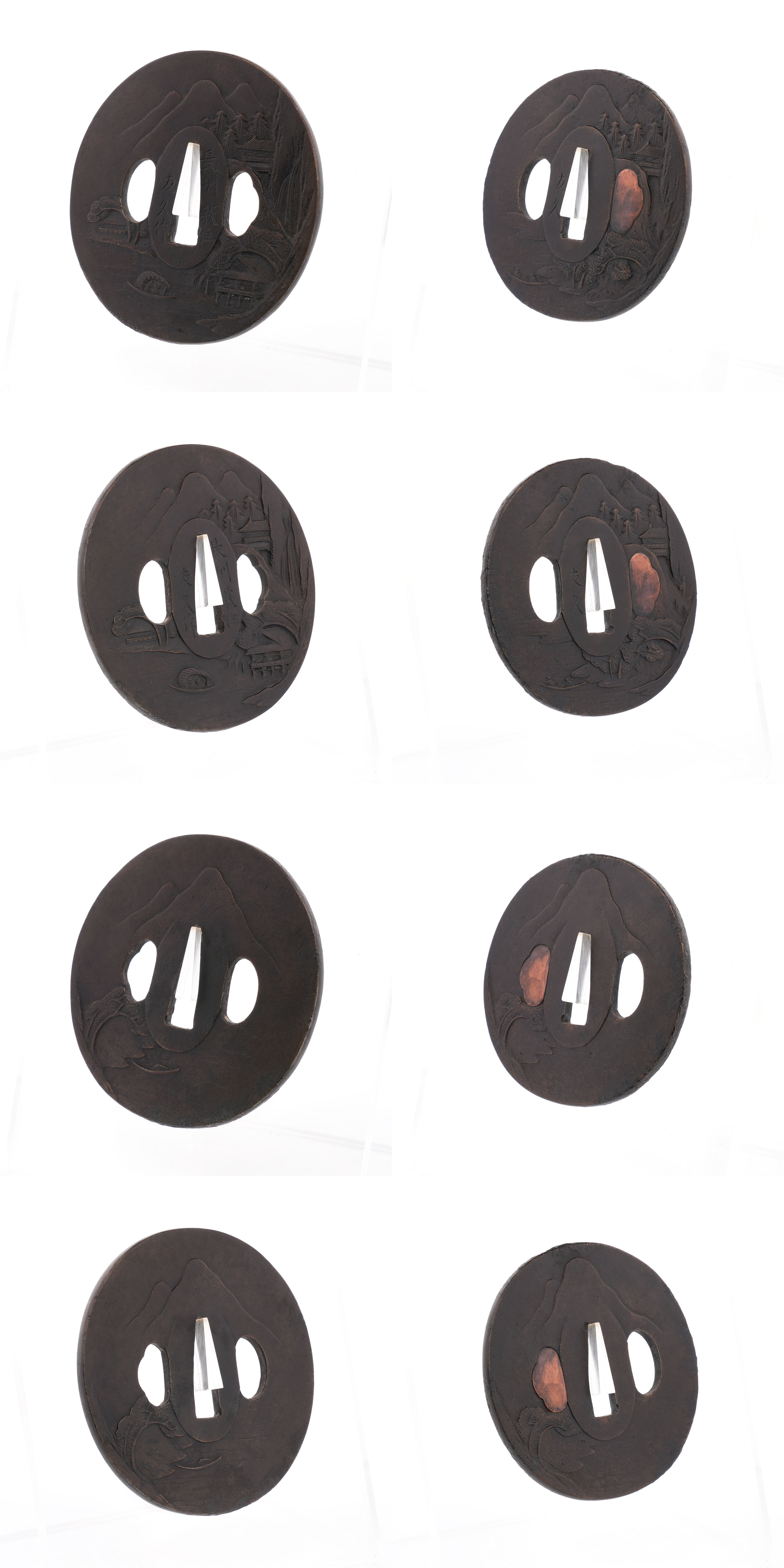
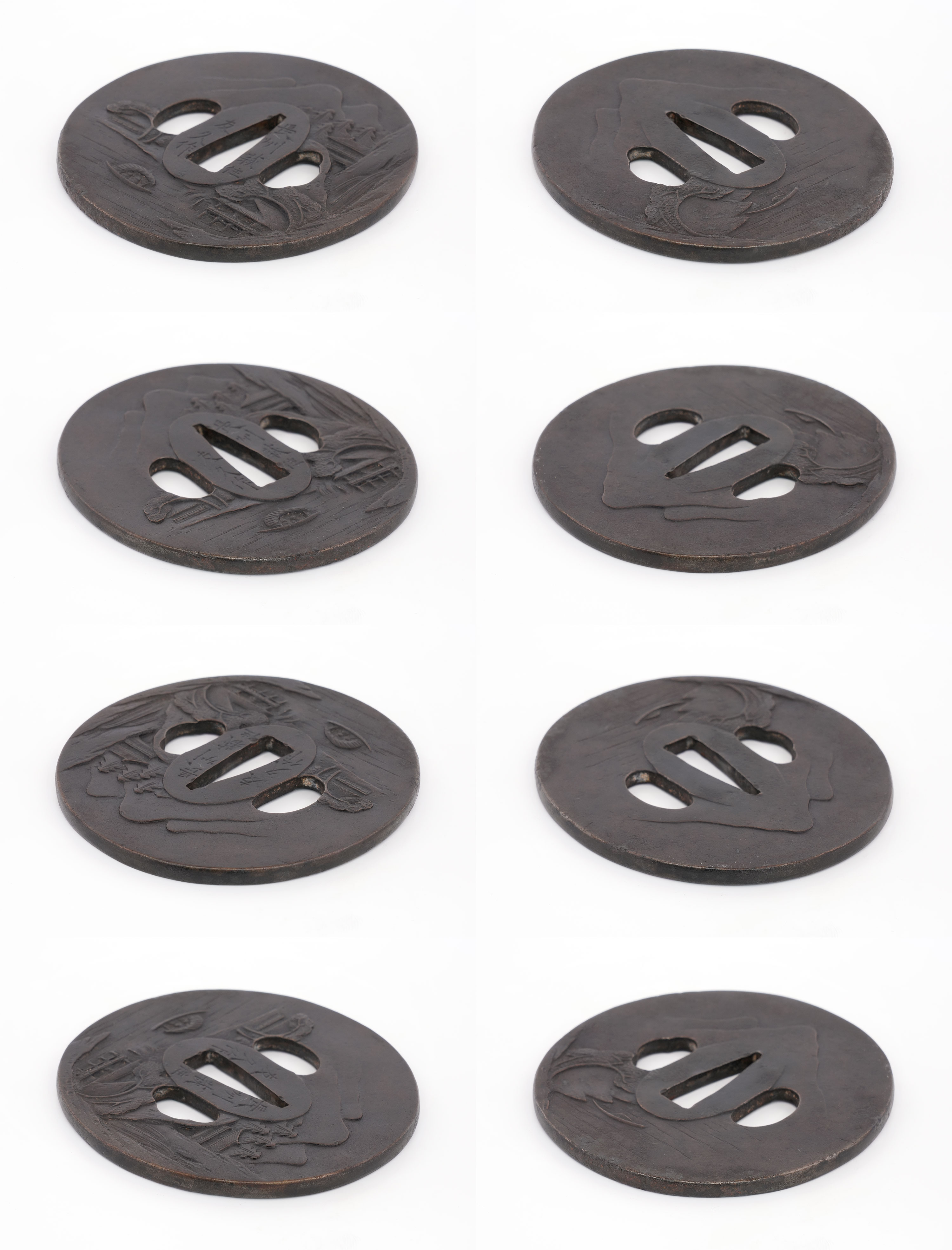
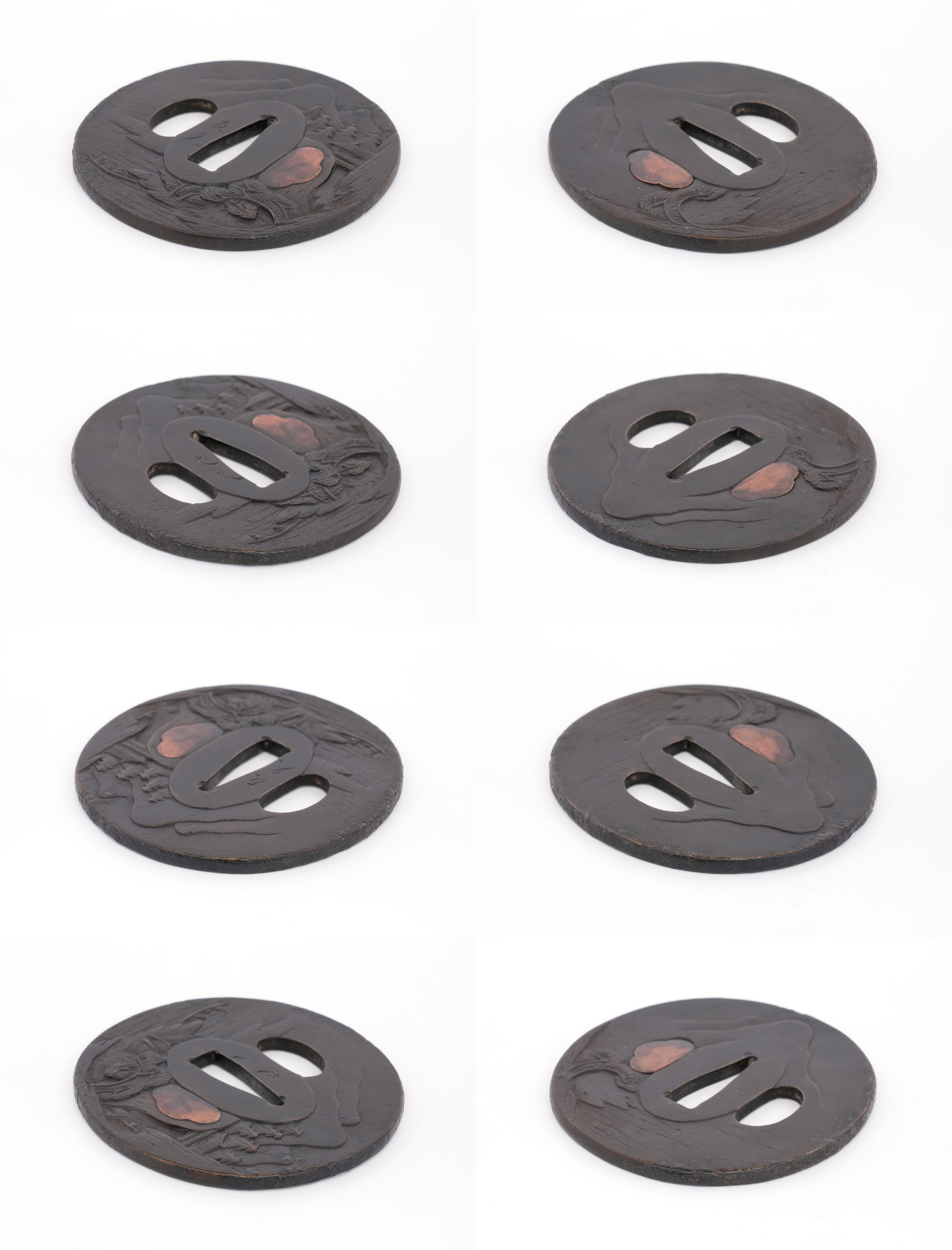
As written by the shop
(Translation unavailable)
Iron-tsuba · Nagato
18 pieces on the market now
The tsuba-making traditions of Choshu domain (Nagato Province) trace their origins to the migration of Heianjo-sukashi openwork craftsmen from Kyoto, invited by the Ouchi family of Suo and Nagato during the Muromachi period. This transplanted lineage gave rise to the Ko-Hagi group, which flourished from the late Muromachi into the early Edo period and established a distinctive regional idiom in iron openwork. Under the subsequent patronage of the Mori clan, Choshu developed into one of Japan's foremost centres of tsuba production, earning the epithet that placed it alongside Aizu as the two great guard-making provinces: notable both for the number of artisans and the volume of work. Multiple lineages emerged — among them the Kawaji, Nakahara, Hatto, Okada, Okamoto, Kaneko, and Nakai — with Nakai Tomotsune (also known as Zensuke) achieving particular renown as a kakae-ko (retainer craftsman) of the Mori household, receiving a stipend from Horeki 8 (1758). The collective vocabulary of the Choshu tradition is grounded in iron: thin, carefully forged plates with rich surface character, including tsuchime-ji (hammered ground).
" The later Nakai school extended this foundation into a broader technical range, deploying sukidashi takabori high relief, kinzogan iroe (gold inlay with polychrome accents), shibuichi, and gold nunome-zogan in compositions of considerable ambition — naturalistic subjects such as frolicking tenaga-zaru monkeys and theatrical Shiki Samban scenes rendered with "taut, controlled modeling" and effective distribution of irogane colour metals. The Choshu tradition occupies a singular position within the tosogu canon as a regional milieu whose finest productions transcend mere provincial category. The NBTHK has recognised that the best works by Nakai Tomotsune surpass "what is ordinarily encompassed by the category of so-called Hagi tsuba,"[[c:1]] distinguished in composition, carving technique, and the character of the iron (tetsumi) alike[[c:2]]. At the same time, the Ko-Hagi group preserves an older and quieter aesthetic — rooted in the Kyoto openwork heritage yet transformed into something "not seen in other makers' work" — that testifies to the depth and continuity of metalworking practice in Nagato Province across several centuries. Learn more →
| Smith | Era | Designated |
|---|---|---|
| Tomonori友矩 | 1770-1800 | 0 |
| Tomohiro友広 | — | 0 |
| Tomotsune友恒 | 1670 | 2 |
| Nobushige信重 | 1781-1867 | 0 |
We could not find an authenticity certificate on the seller’s listing. Japanese swords and fittings are normally papered by the NBTHK (or the NTHK). Without one, the attribution is the seller’s own assessment and has not been independently verified — treat it with caution and ask the dealer about certification before buying.
As a rule we do not accept returns, except when we have sent a different item from the one ordered or when there is a significant discrepancy between the description and the item. If you wish to return an item, please contact us within 3 days of its arrival and then send it back.
¥165,000