 NihontoWatchNihontoWatch
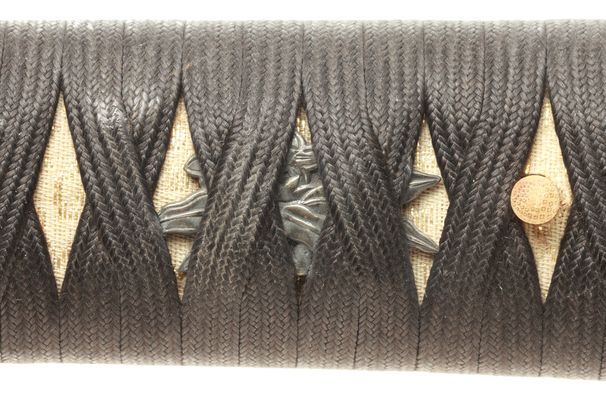
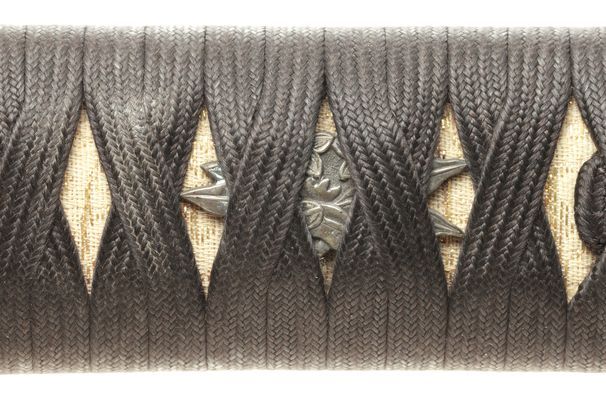
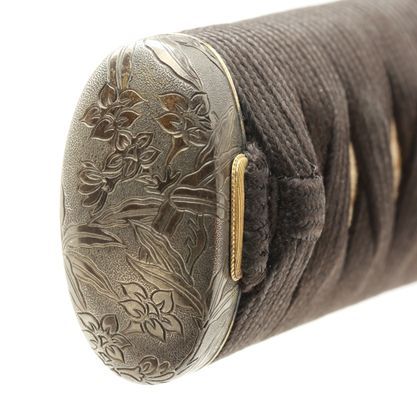
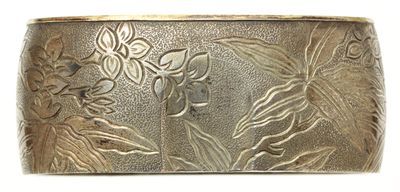
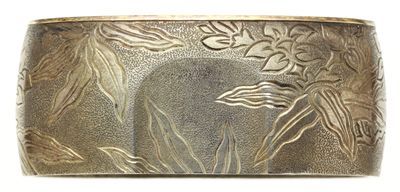
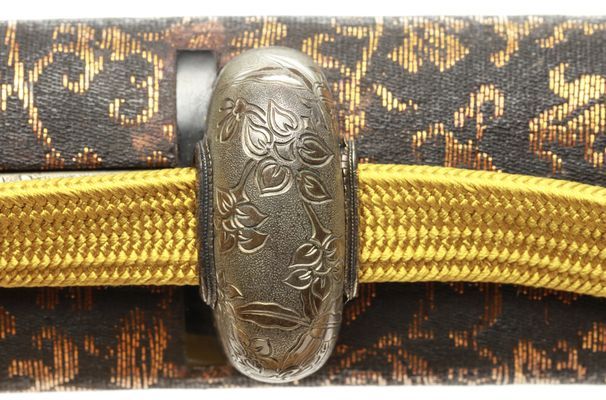
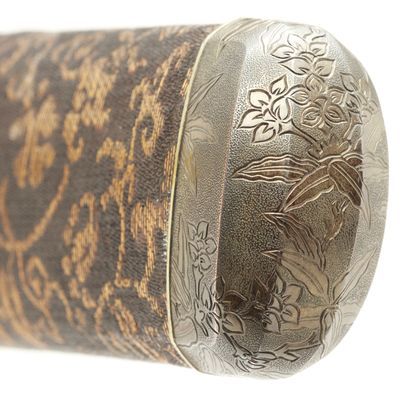
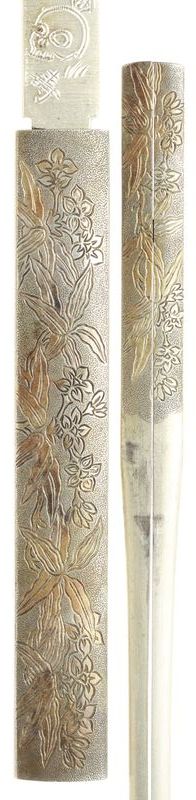
With a hira-zukuri shape featuring saki-zori, a thin kasane, and a funazoko-nakago tsunagi, this stylish koshirae likely housed a Soshu sword from the Nanbokucho period; the entire saya is wrapped in nishiki featuring a karabana-karakusa pattern, and the tsuka-shitaji is also wrapped in nishiki of a different hue, all adorned with shibuichi-ji soganagu featuring a karabana-style design of perhaps imaginary plants. As an example of a koshirae with a saya wrapped in nishiki, the aikuchi-tanto koshirae housing the Taiko Samonji with its woven aoi-mon is well known. This koshirae uses high-quality shibuichi-ji with an ishime-ji finish, boldly carving karakusa-style floral patterns using katakiribori with varied strength, and the fuchi-kashira, kuchigane, uragawara, and kojiri are provided with kin-ko-beri to enhance the aesthetic beauty. The menuki are shibuichi-ji katachi-bori with the same flowering plant design, also in a unified motif. The tsuka is finished in hira-maki with black thread. The kozuka-hosaki is decorated with a nozarashi-zu engraving.
NihontoWatchOffered by Choshuya
We couldn’t find current papers for this piece. Ask the dealer whether it has been, or can be, submitted to shinsa. — Hoshi



Nanbokuchō
Machine translation from the shop's Japanese · may contain errors ·
We could not find an authenticity certificate on the seller’s listing. Japanese swords and fittings are normally papered by the NBTHK (or the NTHK). Without one, the attribution is the seller’s own assessment and has not been independently verified — treat it with caution and ask the dealer about certification before buying.
If, due to our fault, the item differs significantly from its proper condition, the item may be returned. Cooling-off is within one week of the item's arrival.
¥450,000