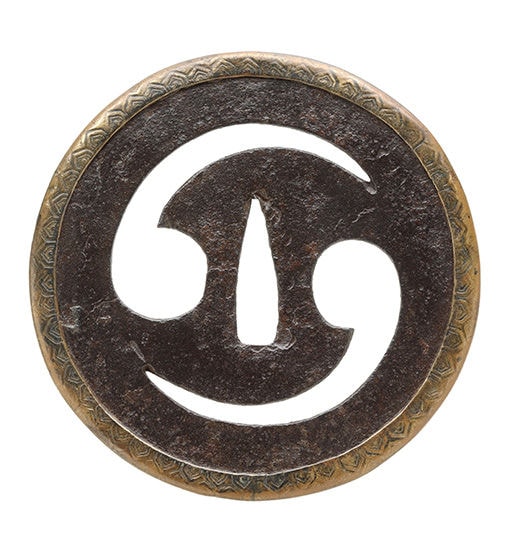
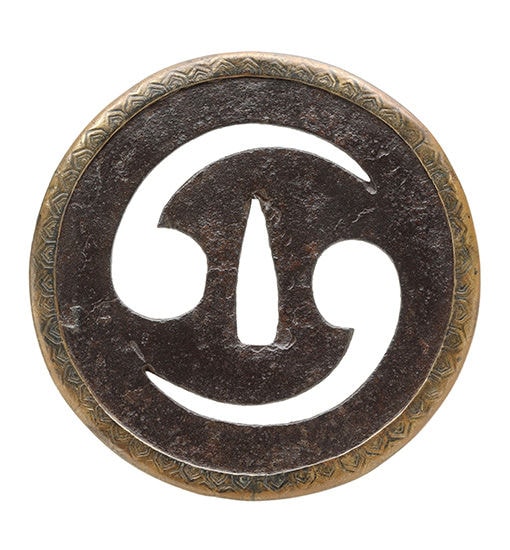
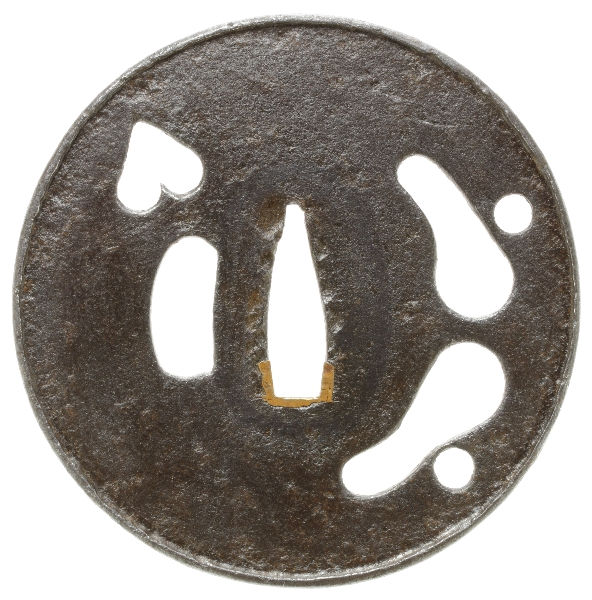
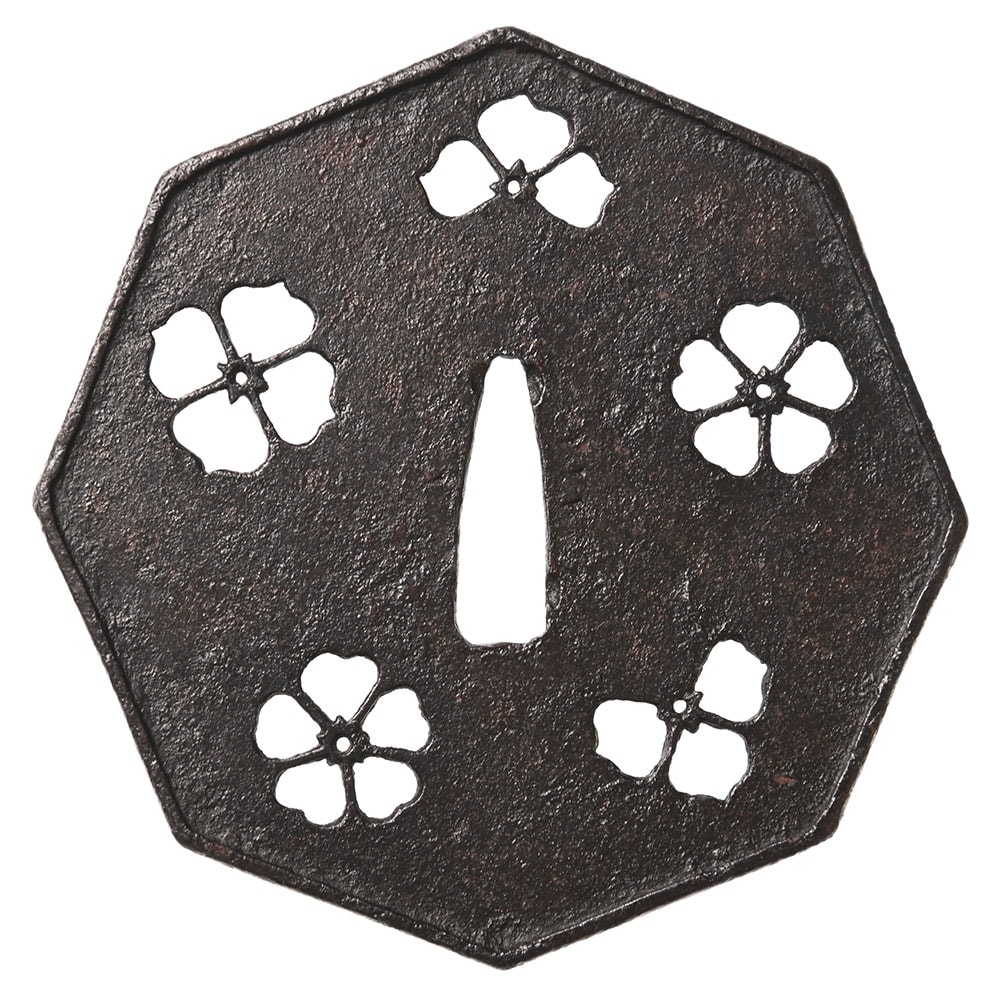
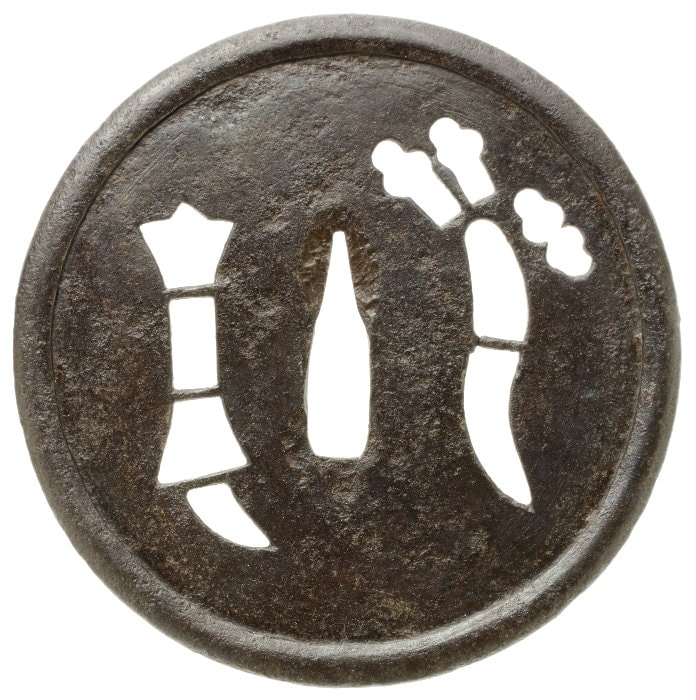
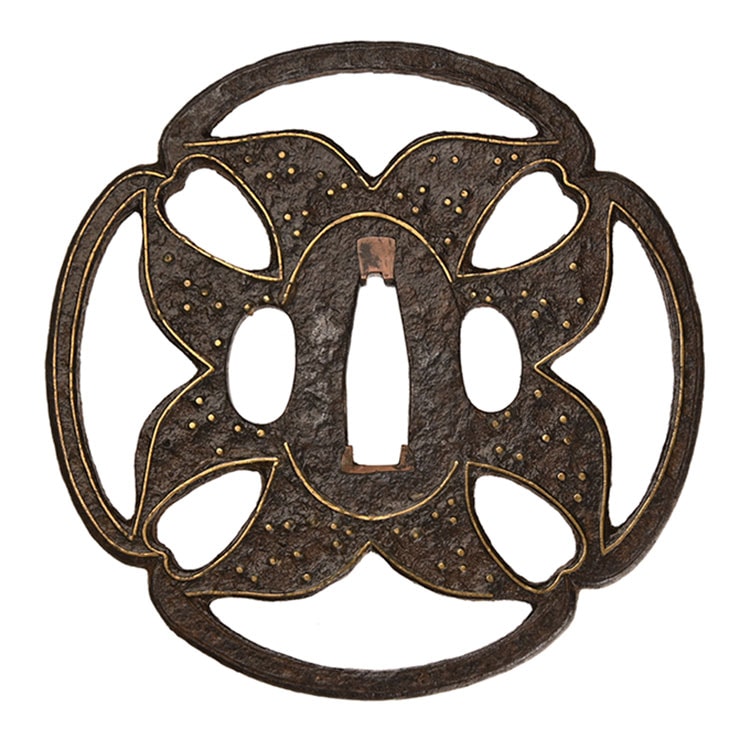
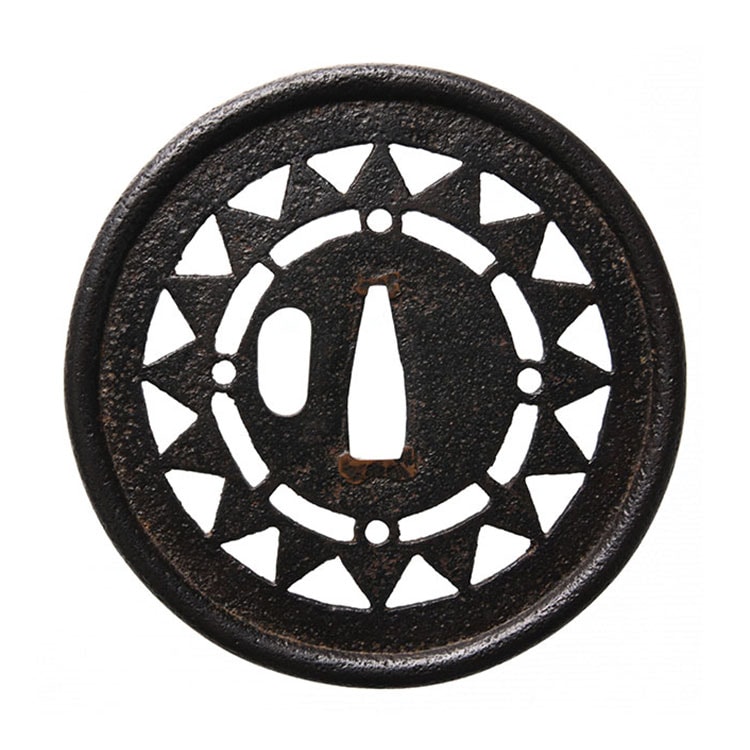
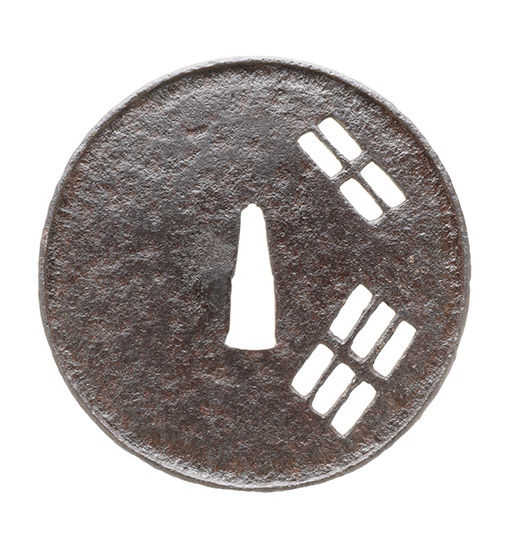
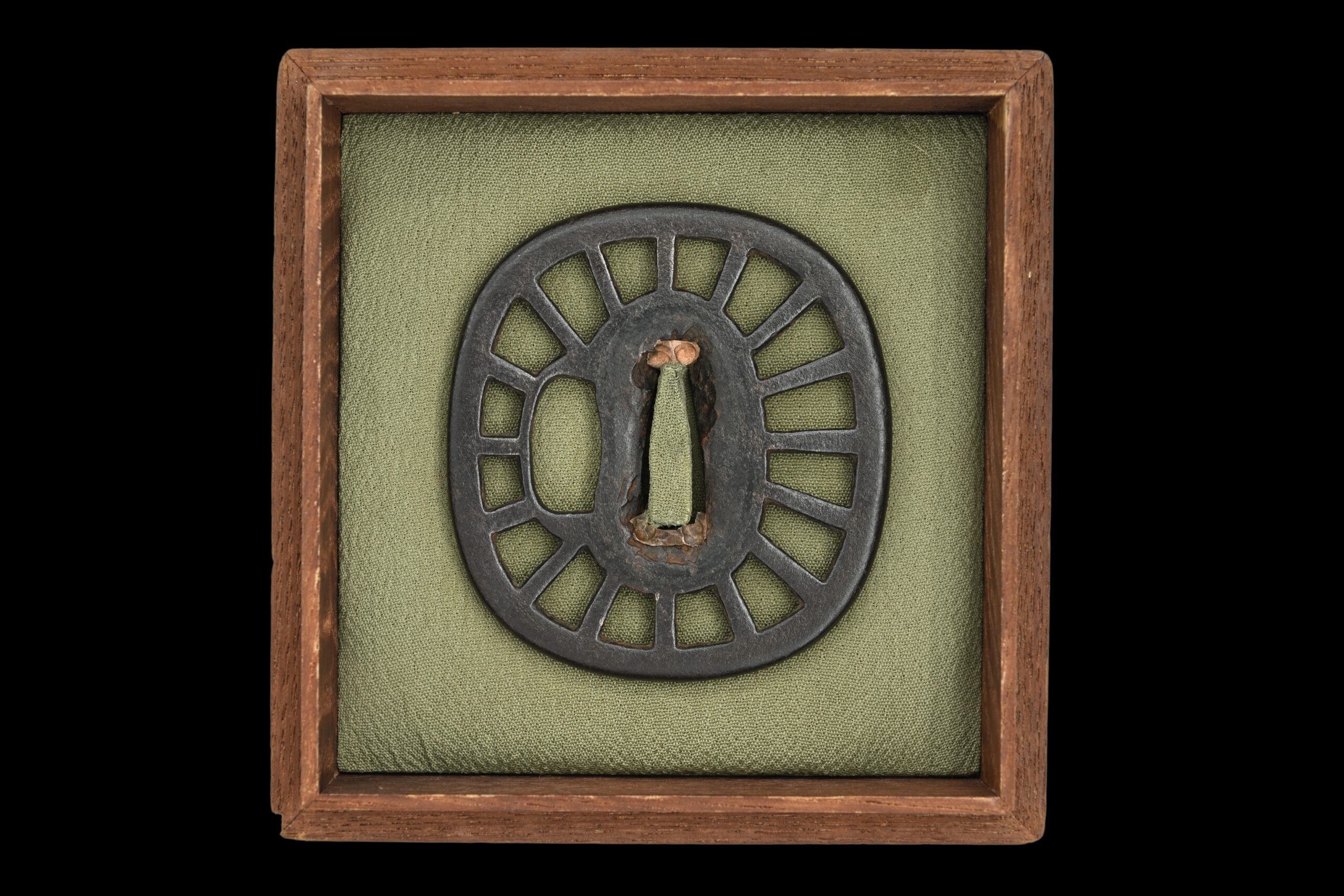
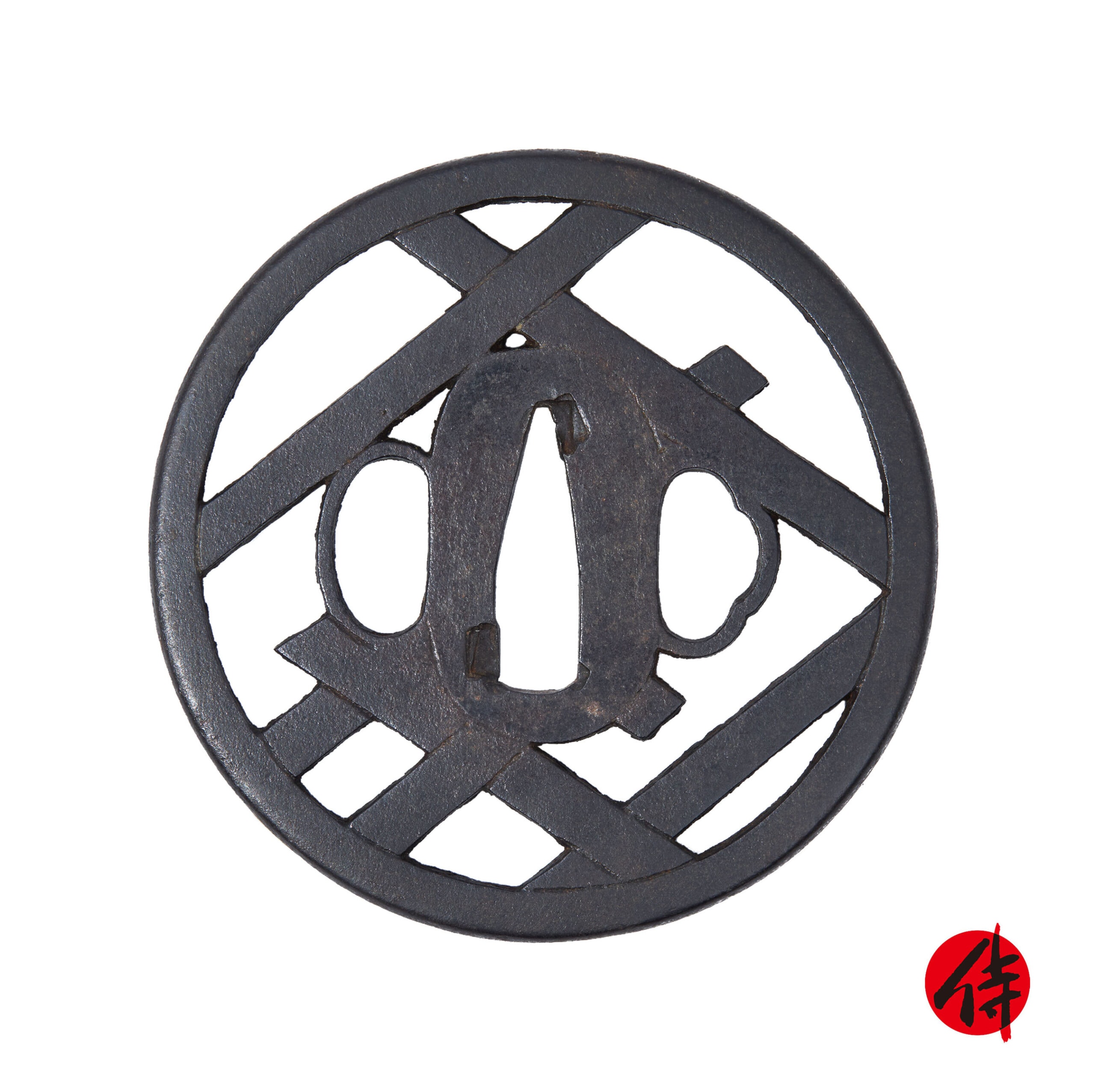
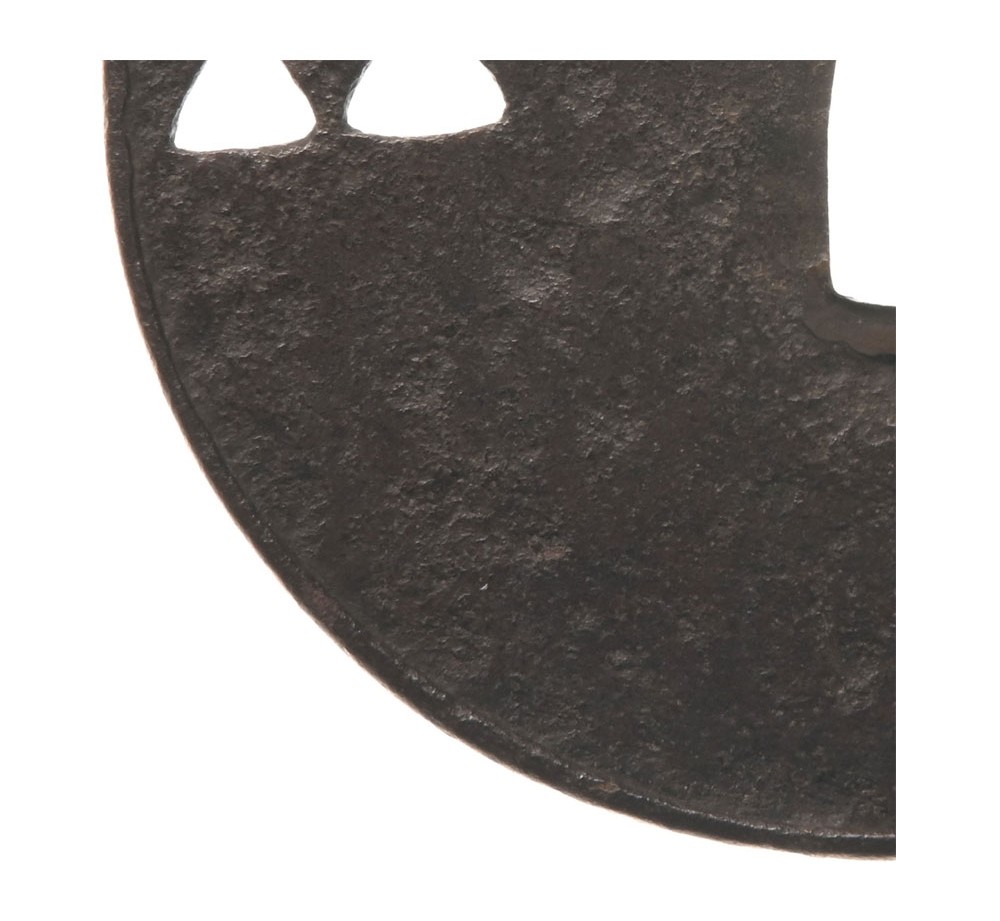
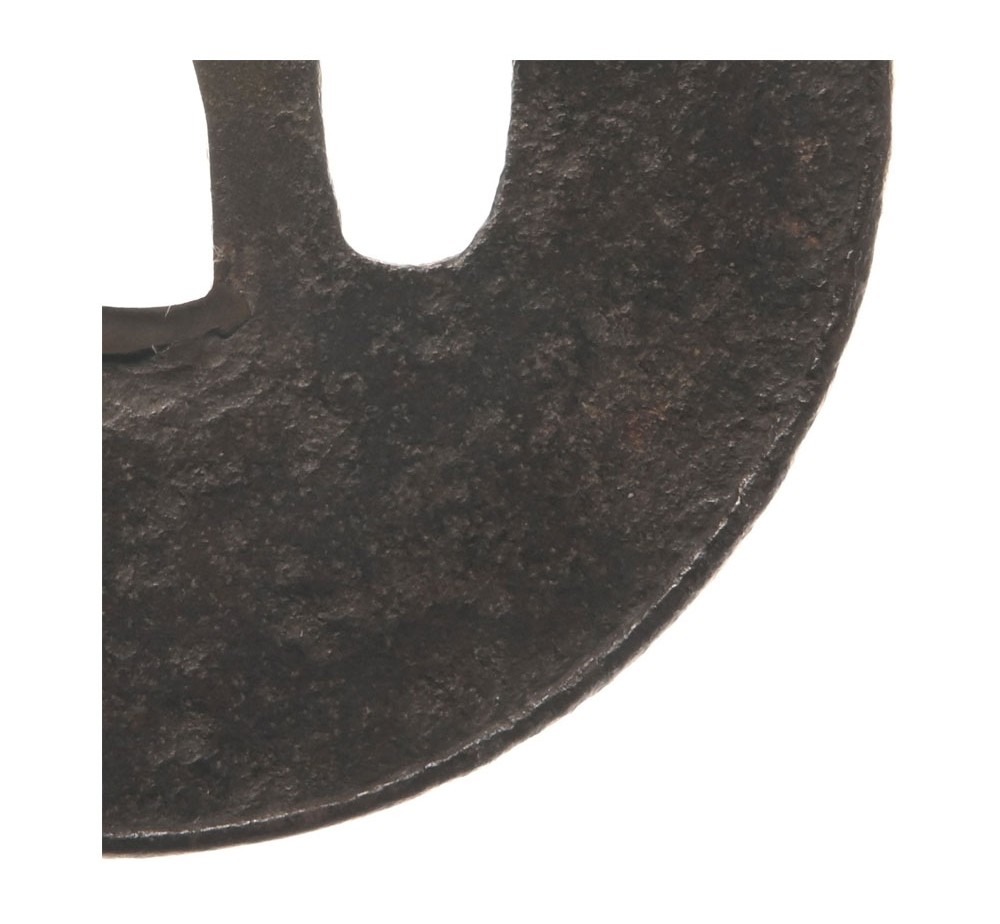
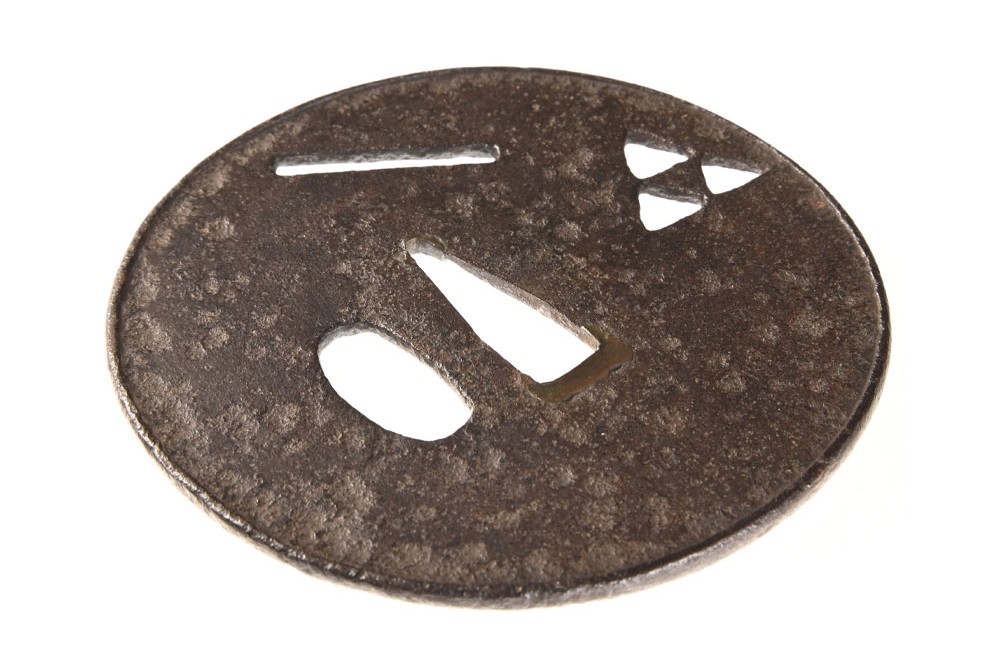
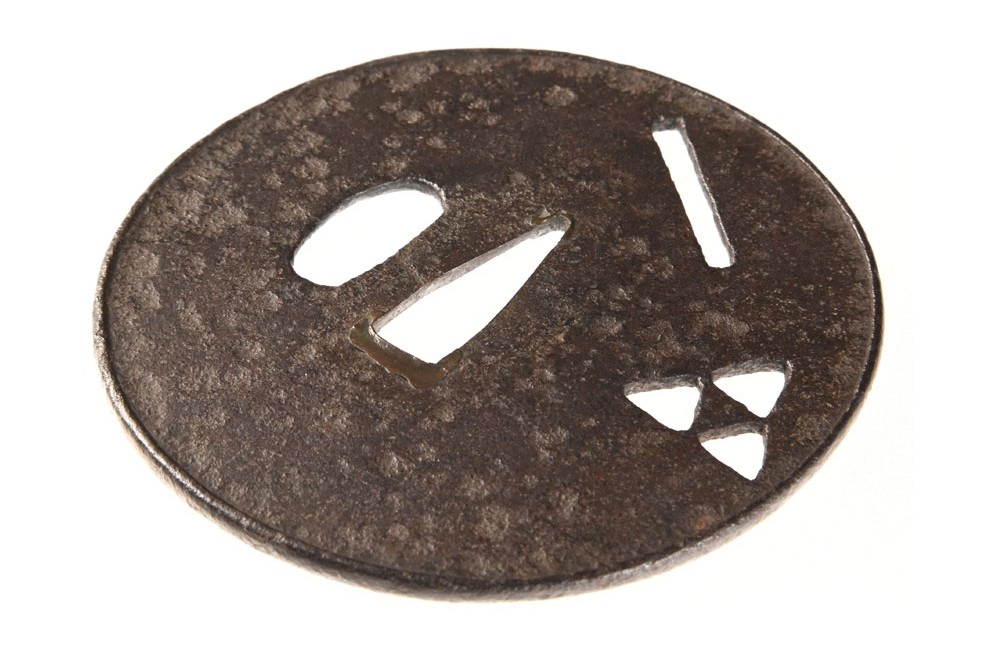
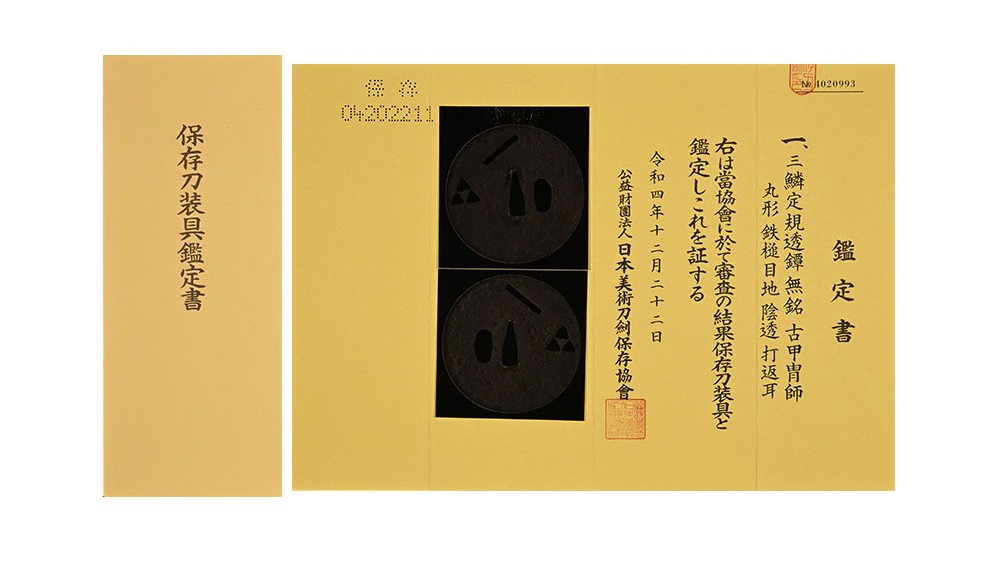
This is a Kacchushi tsuba featuring a MitsuUroko (three scales) gouge sukashi design. It is made of iron with a tsuchimeji (hammered surface) and uchikaeshimimi (turned-back rim). The tsuba is certified as Hozon Tosogu by the NBTHK.
Certificate reading — 無銘(古甲冑師)
 NihontoWatch
Kacchushi · Edo
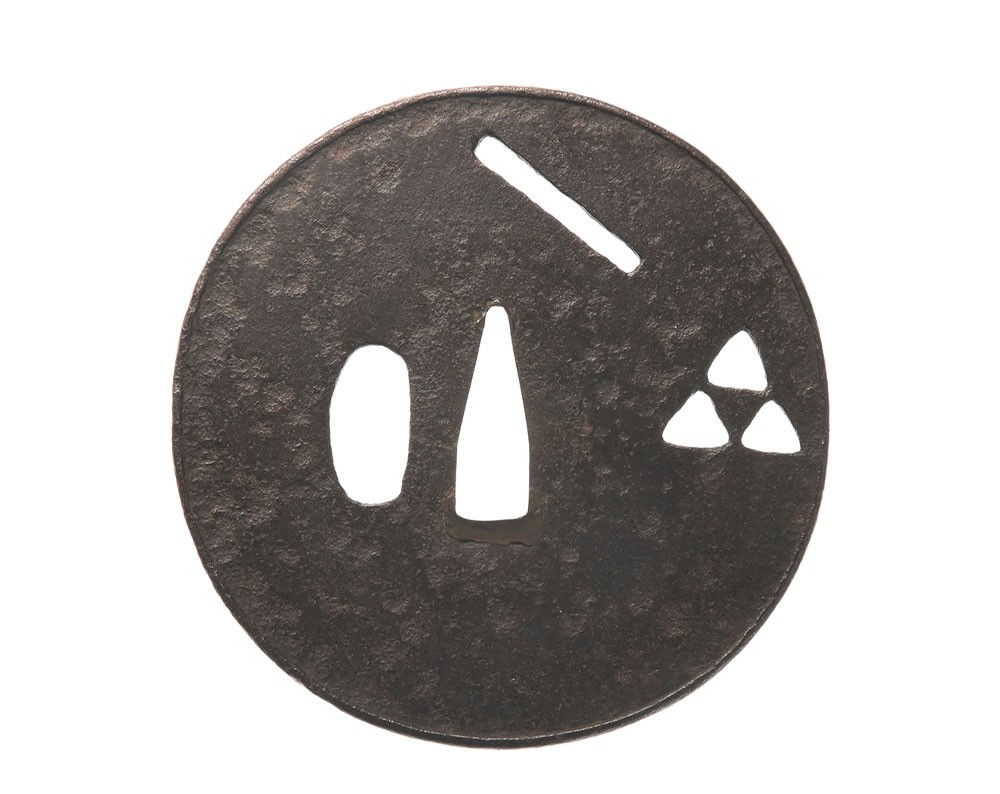
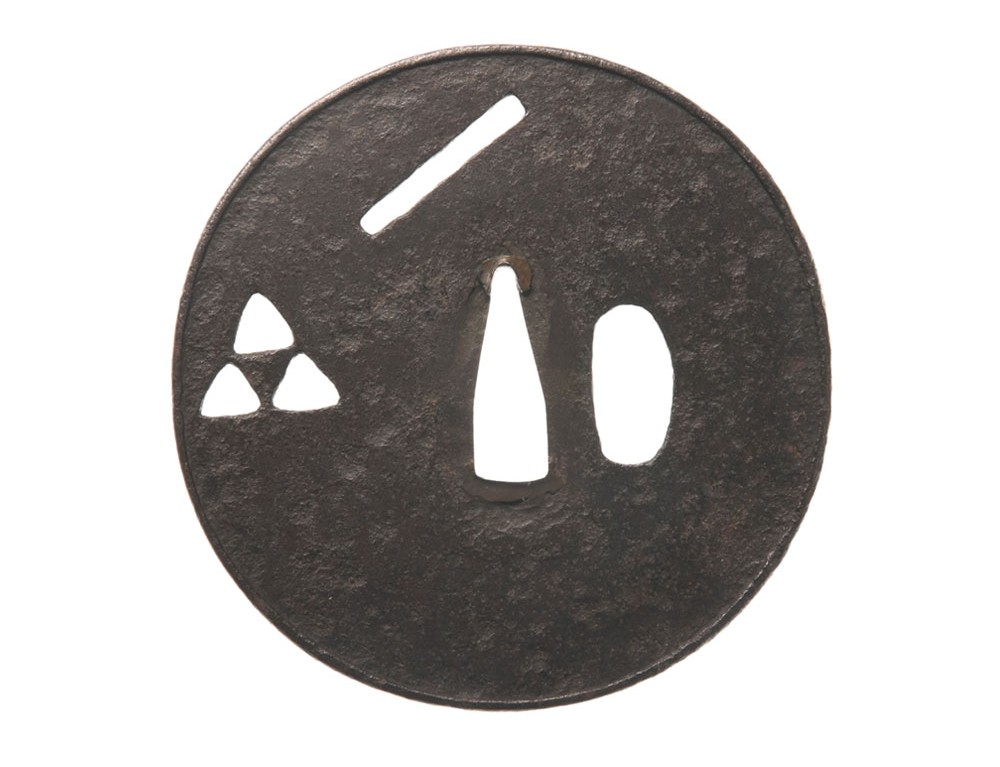
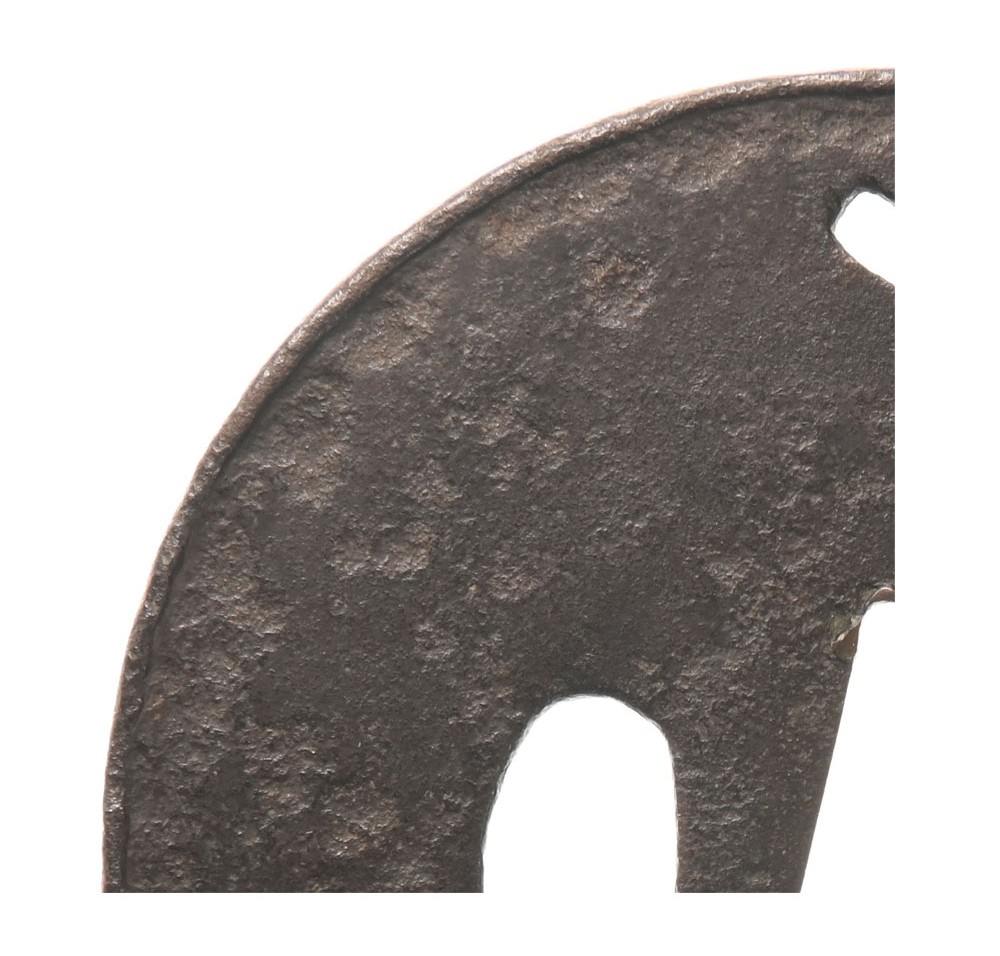
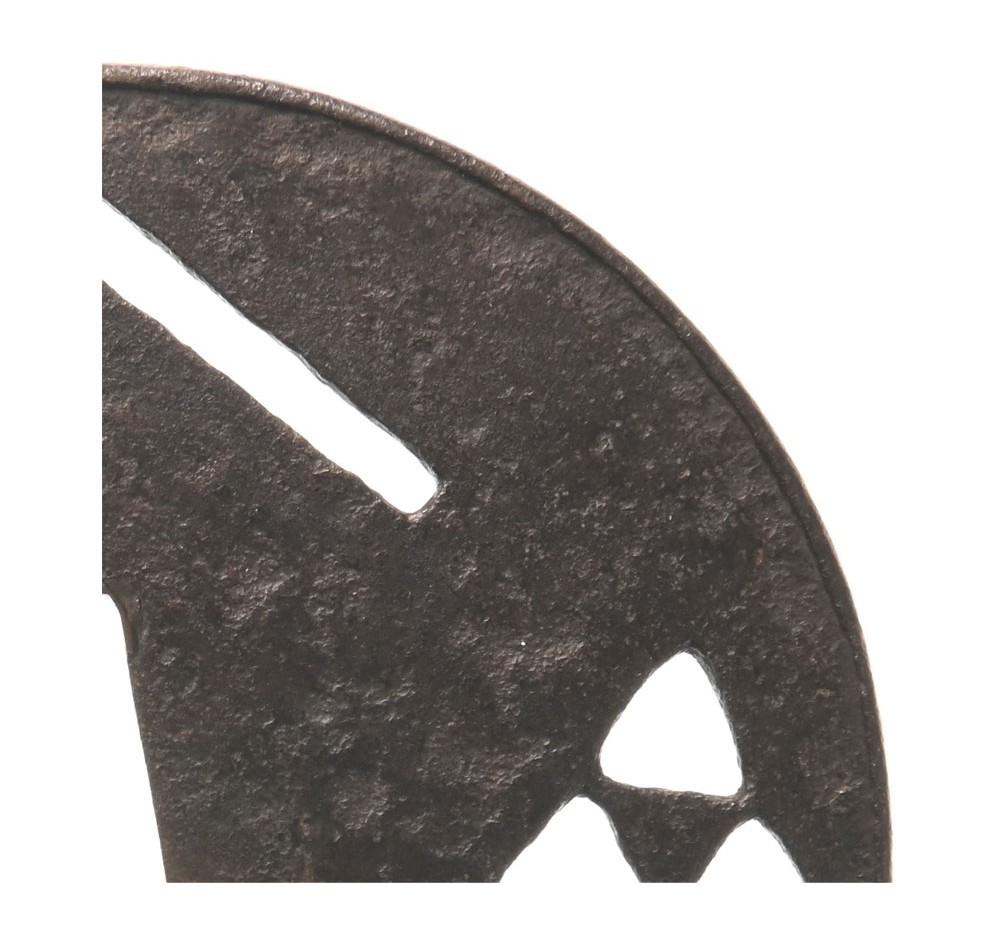
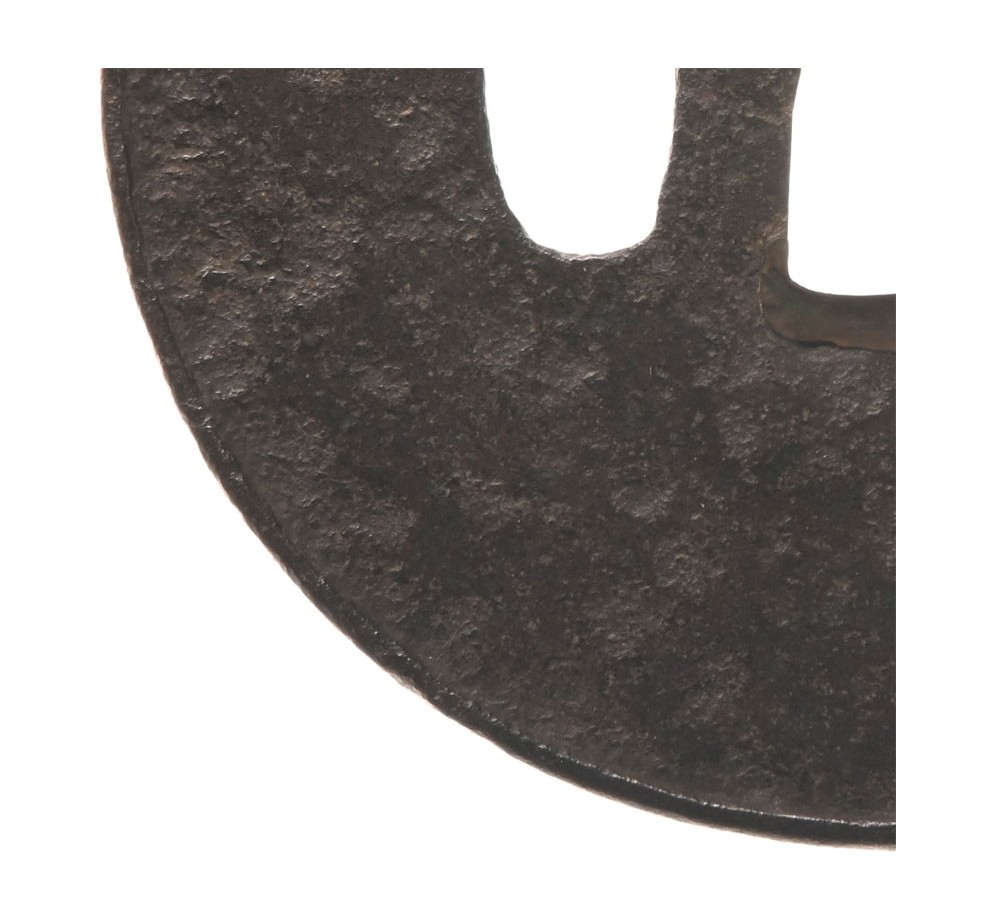
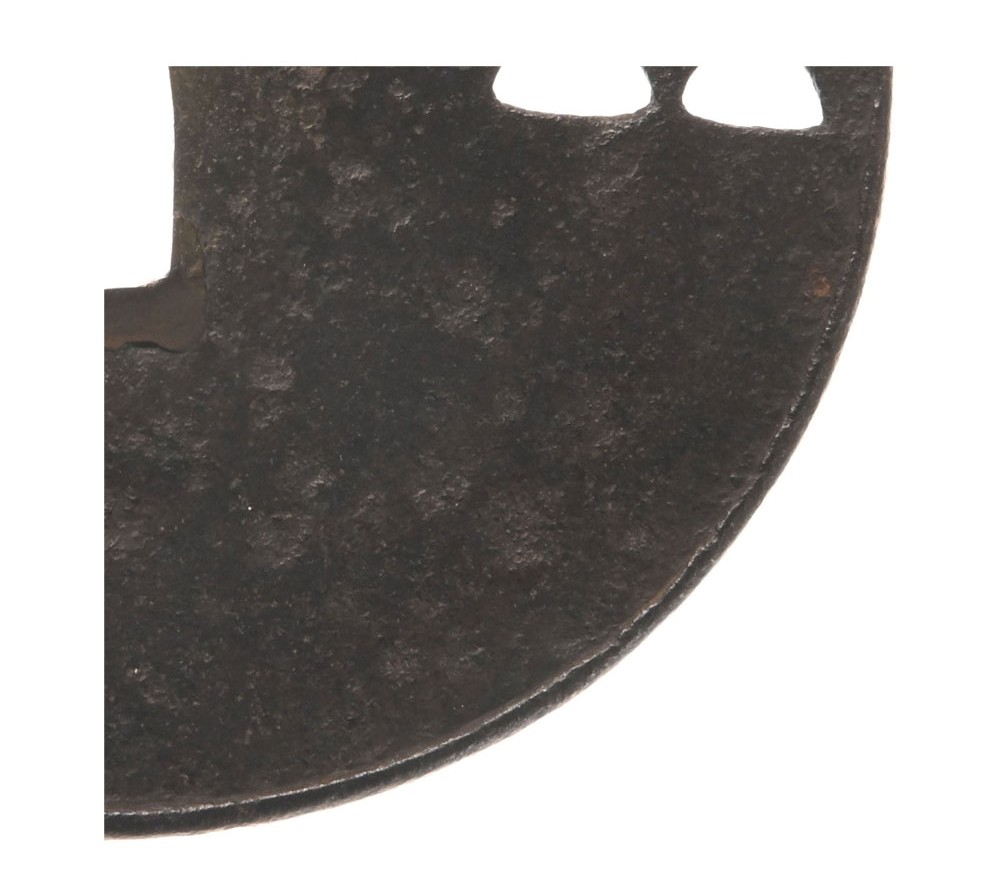
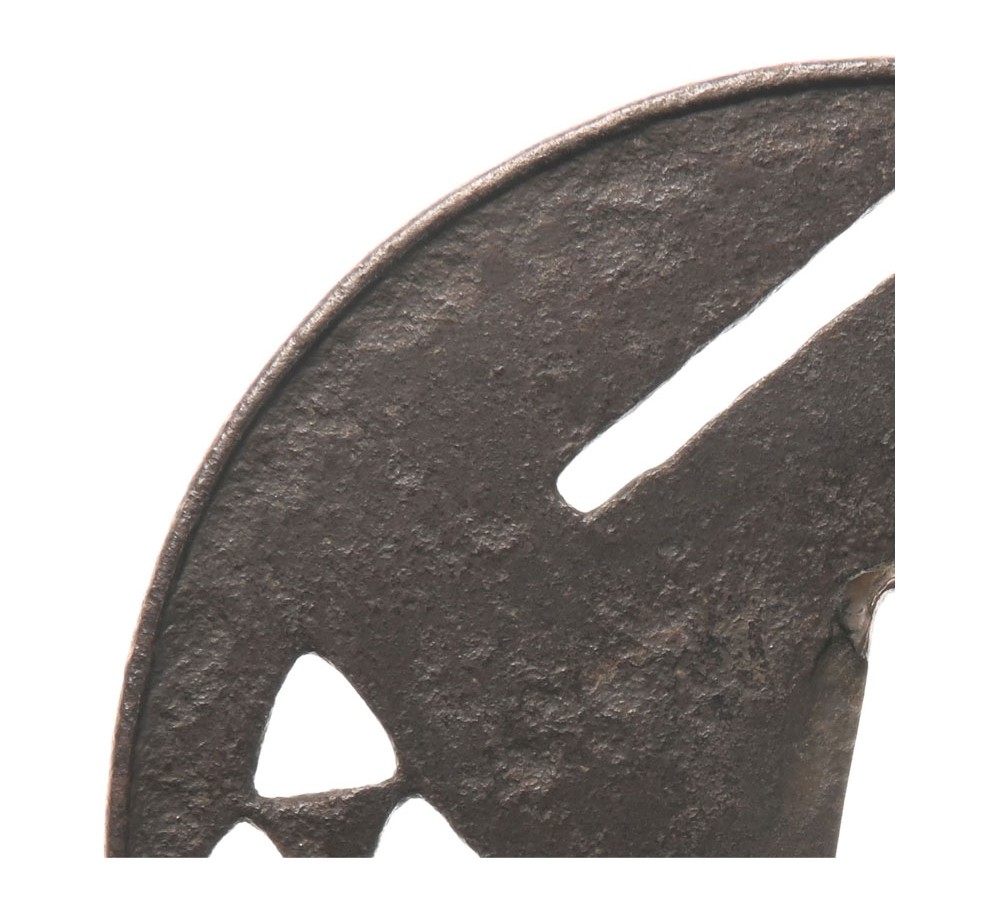
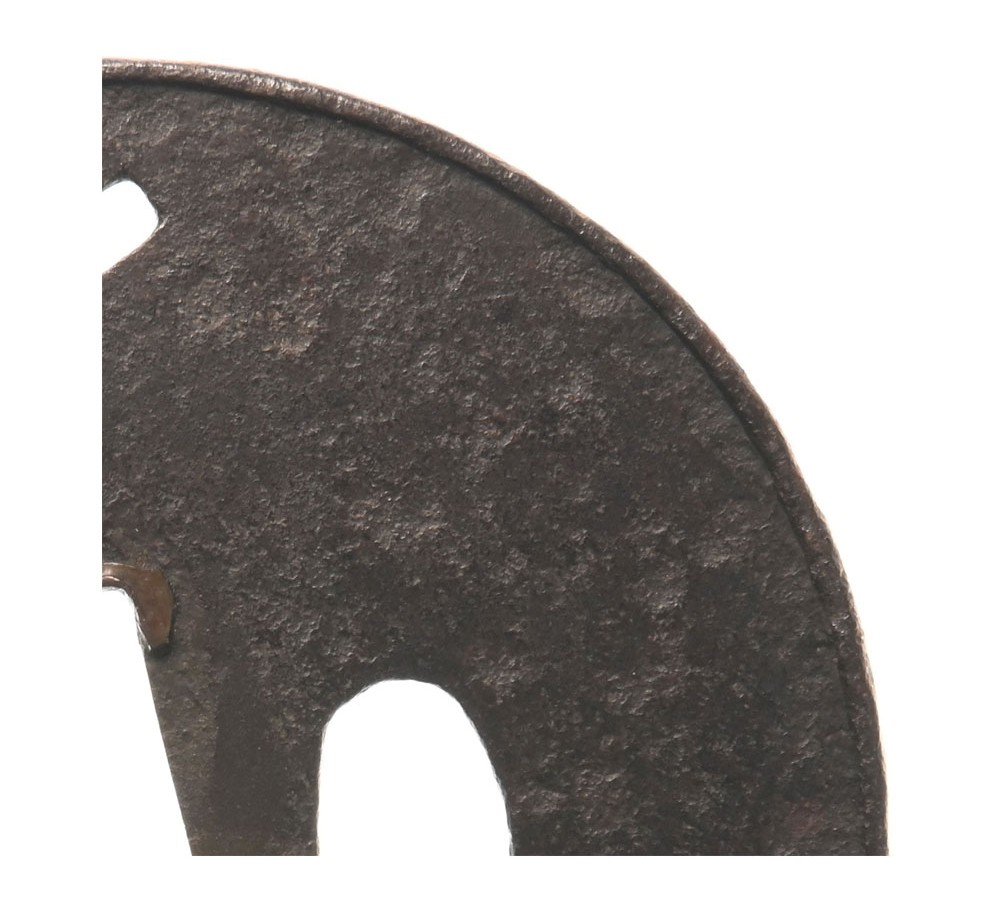
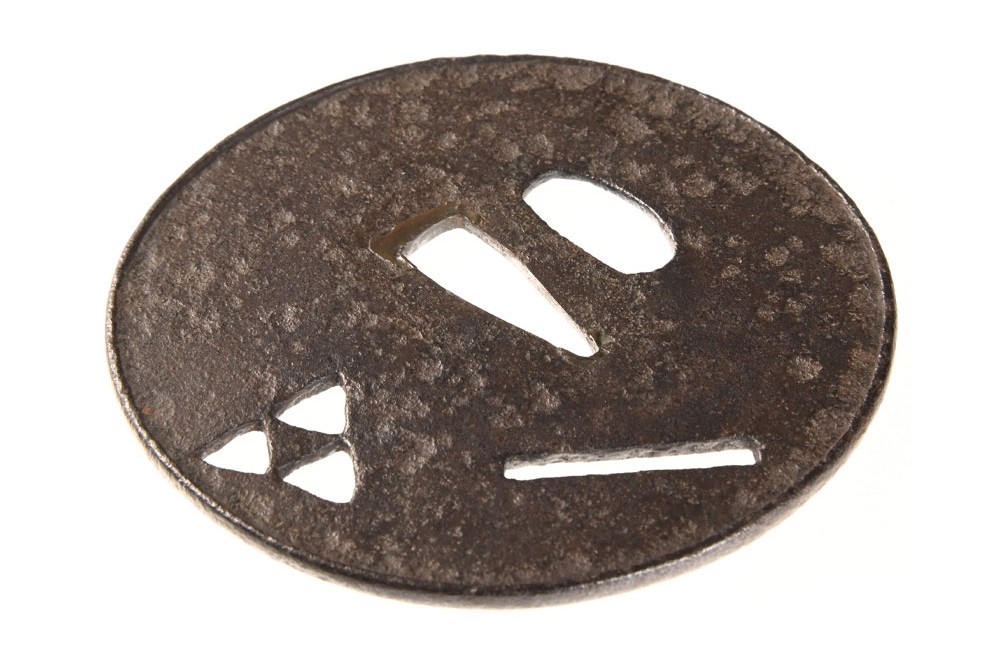
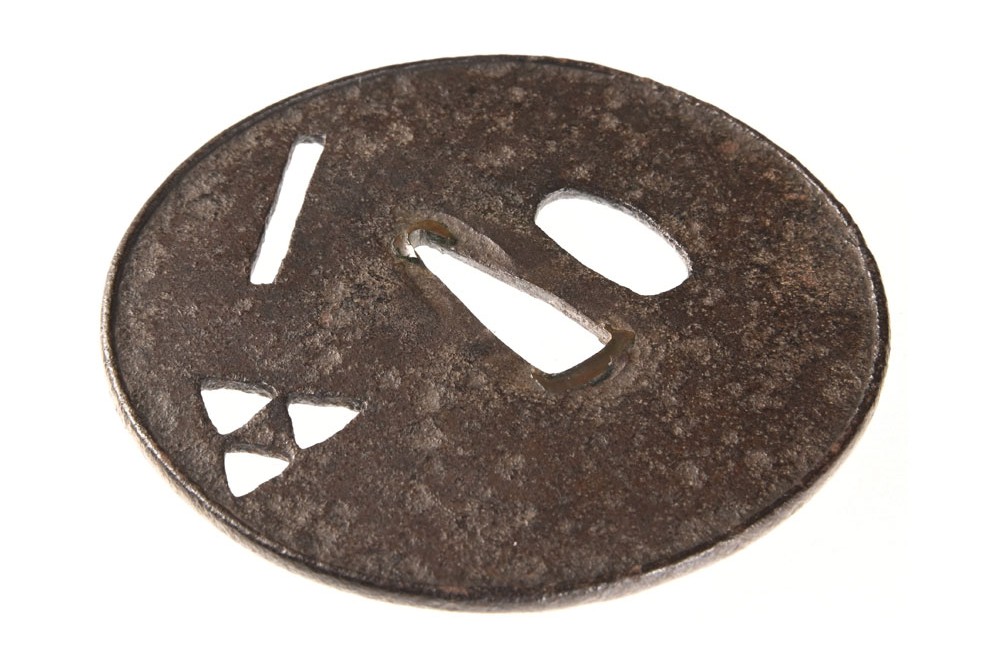
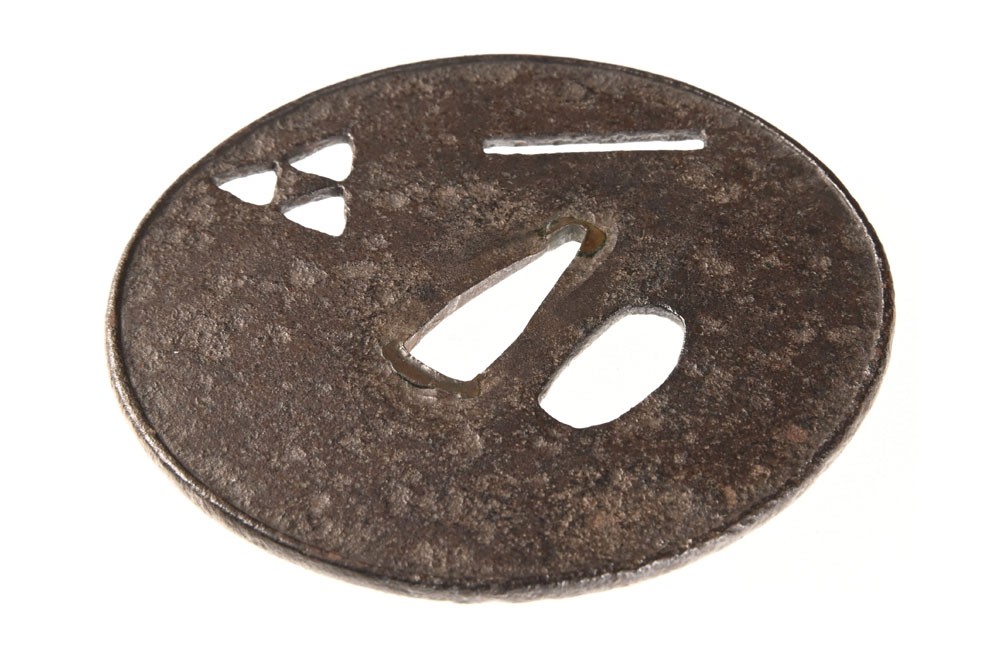
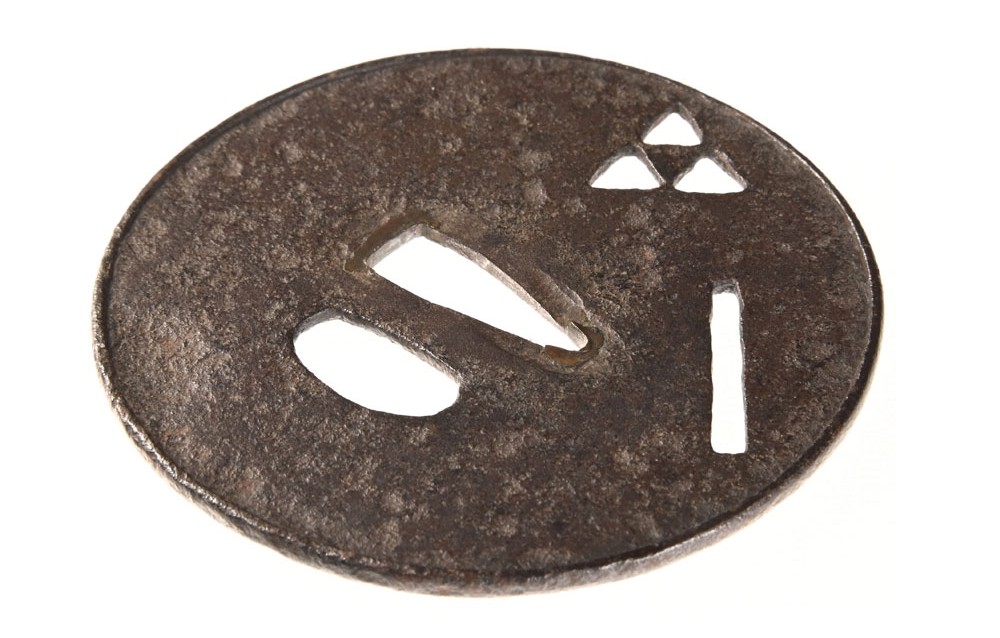
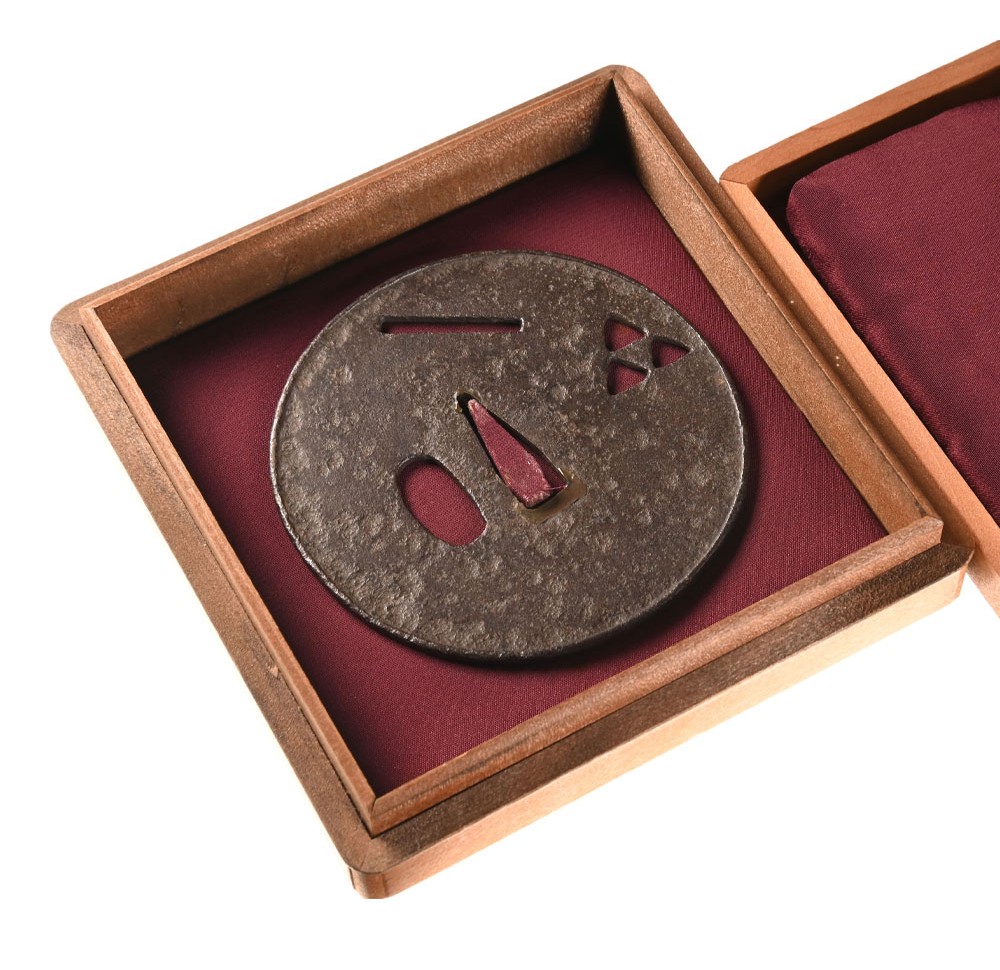
Tosho-Katchushi
35 pieces on the market now
The Ko-Katchūshi tradition emerged during the Nanbokuchō and Muromachi periods as armorers (katchūshi) began producing sword guards as an auxiliary craft alongside their primary occupation of armor fabrication. As the uchigatana evolved from a purely utilitarian weapon into an object of aesthetic appreciation, craftsmen who had honed their metalworking skills in forging helmet plates, the small scales (kozane) of armor, and face defenses (menpō) applied this expertise to tsuba production. These guards served not merely as practical implements but as expressions of the religious devotion and cultivated sensibilities of Sengoku-period warriors, who lived amid the uncertainties of constant warfare. Ko-Katchūshi works exhibit a distinctive technical and aesthetic vocabulary characterized by large, round forms executed in well-forged iron with relatively thin plates and deliberately thickened edges. The signature dote-mimi (raised "embankment" rim) or okesoko-mimi ("bucket-bottom" rim) provides structural strength while framing designs rendered in kage-sukashi (shadow openwork) against hammered (tsuchime-ji) or stone-textured (ishime-ji) grounds. The openwork motifs range from Buddhist invocations such as the six-character Namu Amida Butsu to auspicious symbols including chrysanthemums, the omodaka ("victory plant"), and sacred implements like the gorintō stupa, reflecting the spiritual concerns of their warrior patrons.
The iron surfaces, unadorned by inlay (zōgan), develop deep patinas that harmonize with remnants of black lacquer finish, creating an austere yet refined elegance. The Ko-Katchūshi aesthetic represents a foundational moment in tsuba history, establishing the principle that functional metalwork could embody both martial strength and contemplative beauty. These guards convey a paradoxical quality—rustic simplicity coexisting with cultivated taste, robust construction balanced by delicate openwork that lends lightness to imposing scale. The deeply settled iron oxidation and vigorous expression of forms powerfully evoke the resolute spirit and religious faith of medieval warriors while demonstrating the ineffable refined charm distinctive to early armor-makers' work. This tradition provided essential groundwork for later schools that would further develop the tsuba as an independent art form. Learn more →
Certifies a genuine fitting worth preserving: a correct signature, or, if unsigned, an identifiable era and school, with recognized artistic and craft value.
The NBTHK (Nihon Bijutsu Tōken Hozon Kyōkai, the Society for the Preservation of Japanese Art Swords) is a public-interest incorporated foundation founded in 1948 and supervised by Japan’s Agency for Cultural Affairs (Bunkachō); it is based at the Japanese Sword Museum in Tokyo. Its expert panels physically examine each submitted work (shinsa) and issue a certificate (kanteishō) ranking it by artistic and historical merit. NBTHK papers are the most widely recognized standard of authentication for Japanese swords and fittings.
NBTHK official siteReturns/exchanges/cancellations not accepted after shipment except for significant defects; if defective, return/exchange possible within 3 days of arrival (return shipping paid by customer).
¥240,000