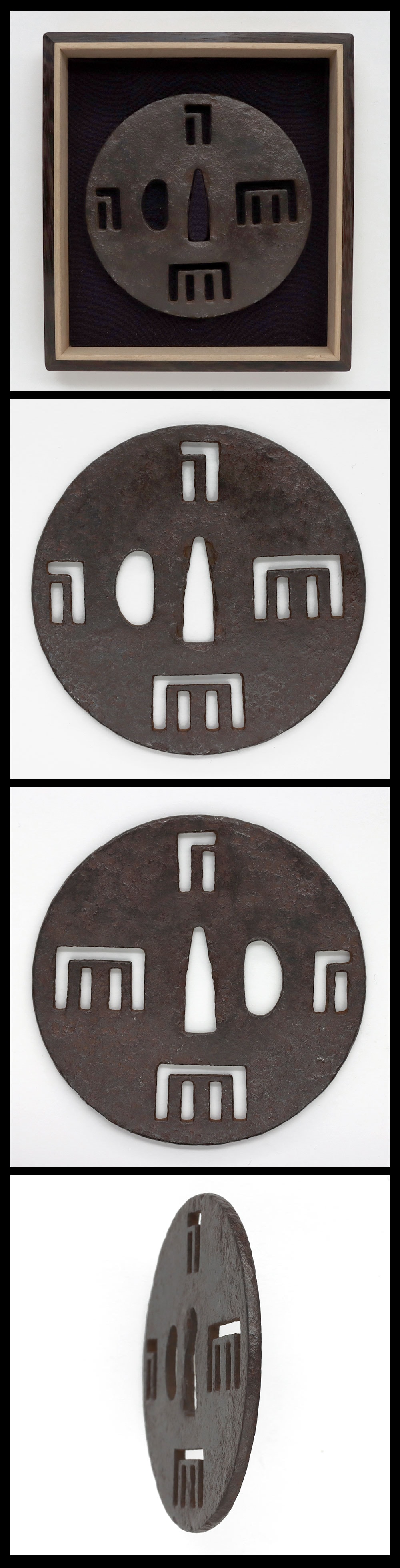
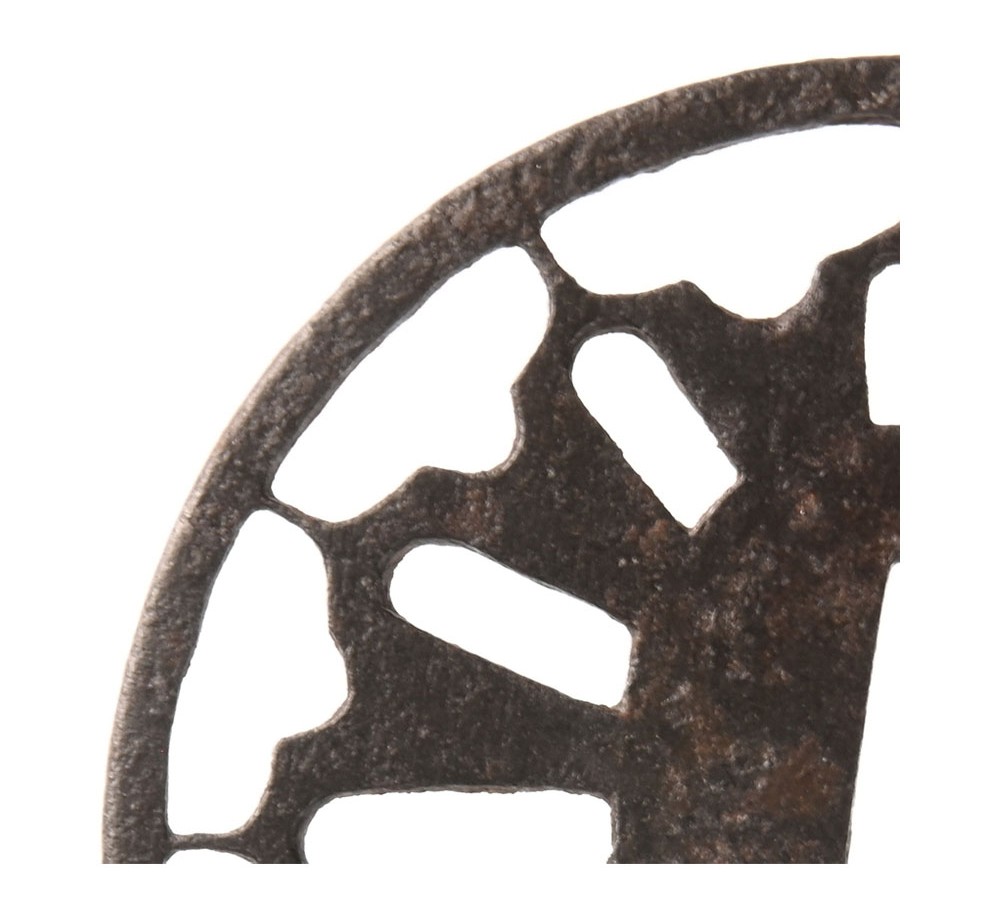
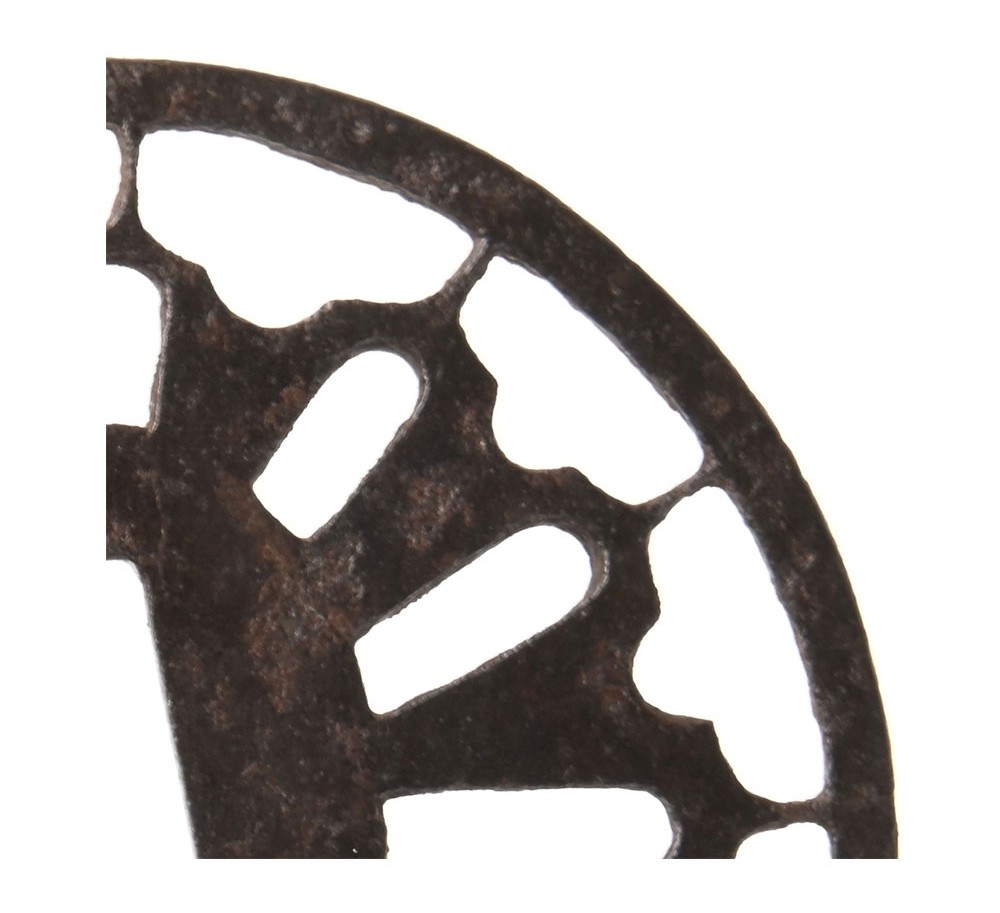
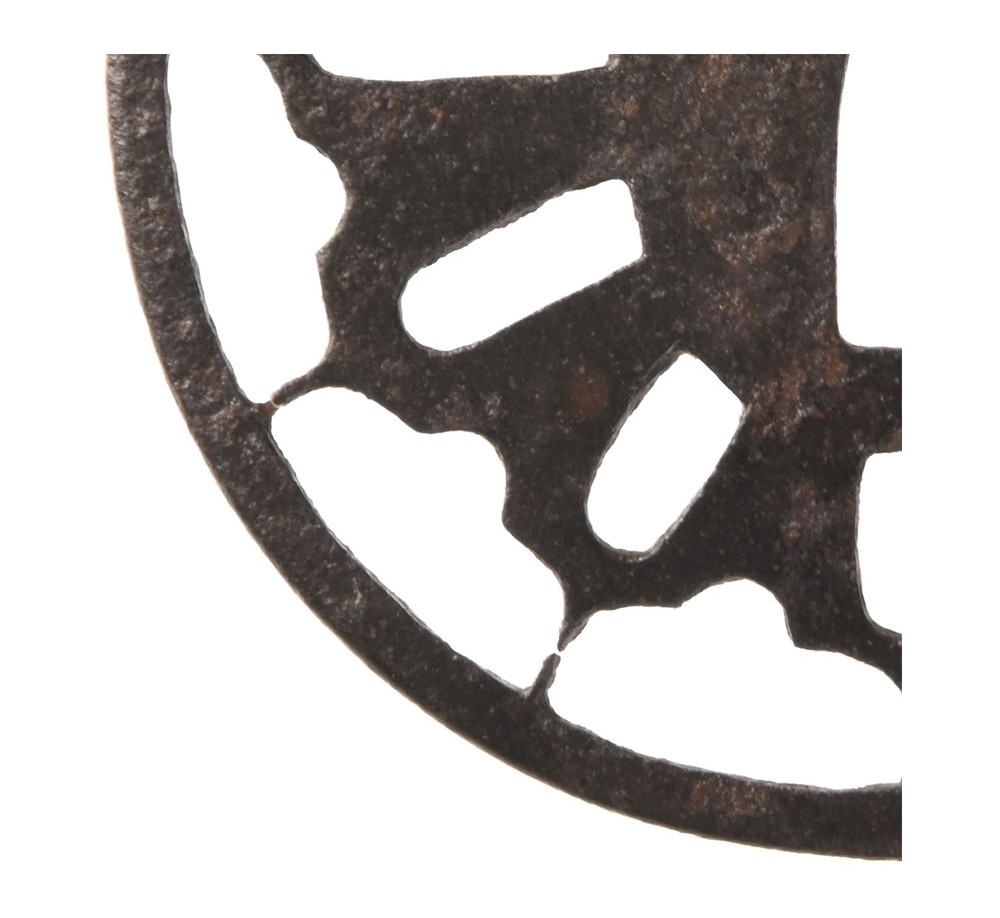
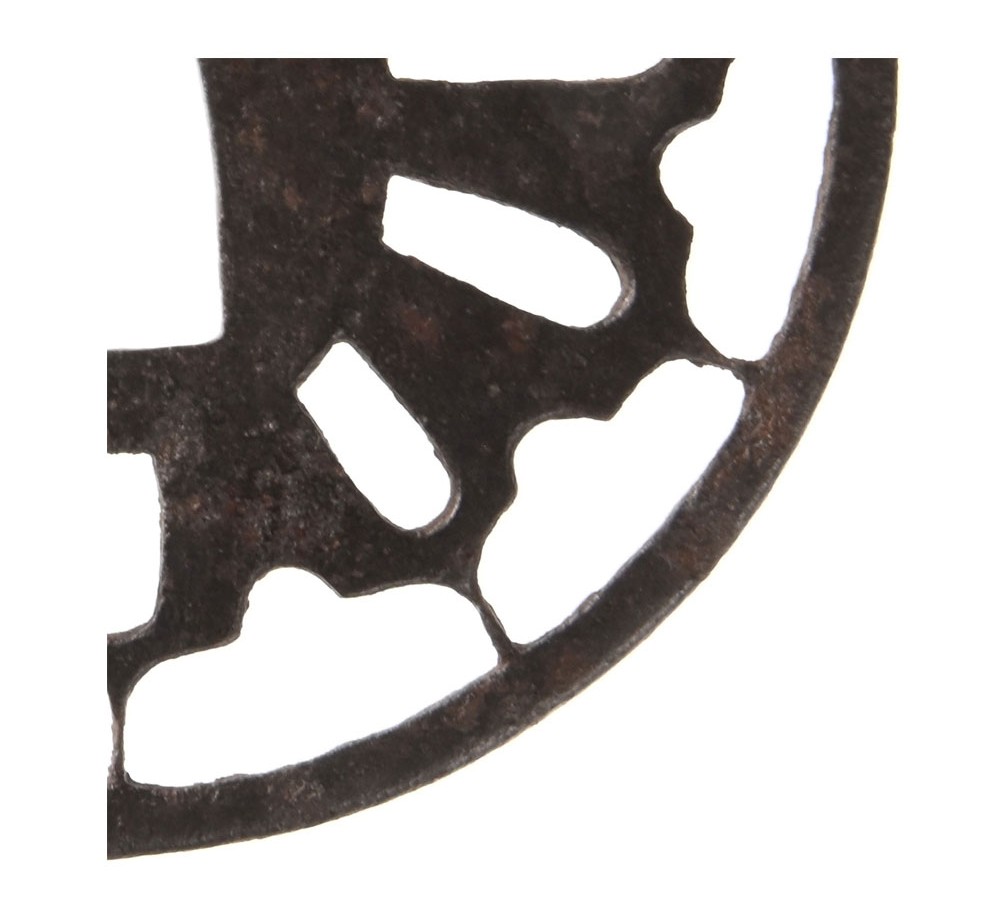
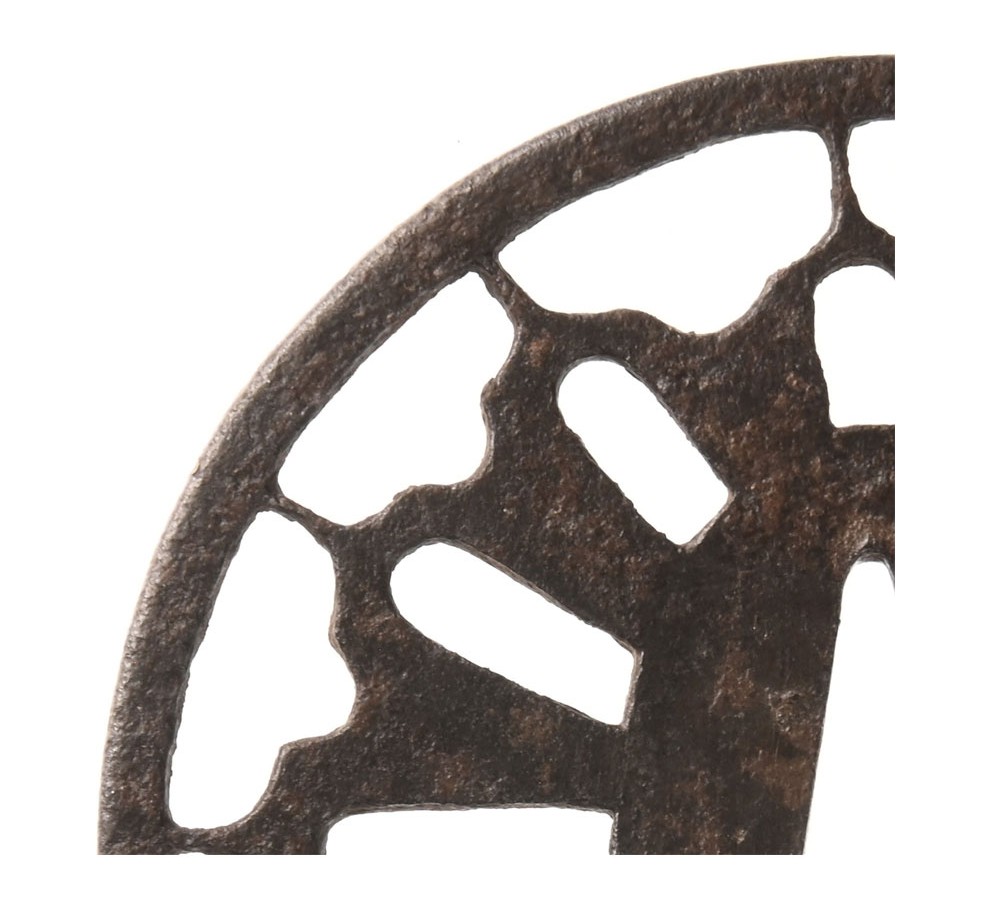
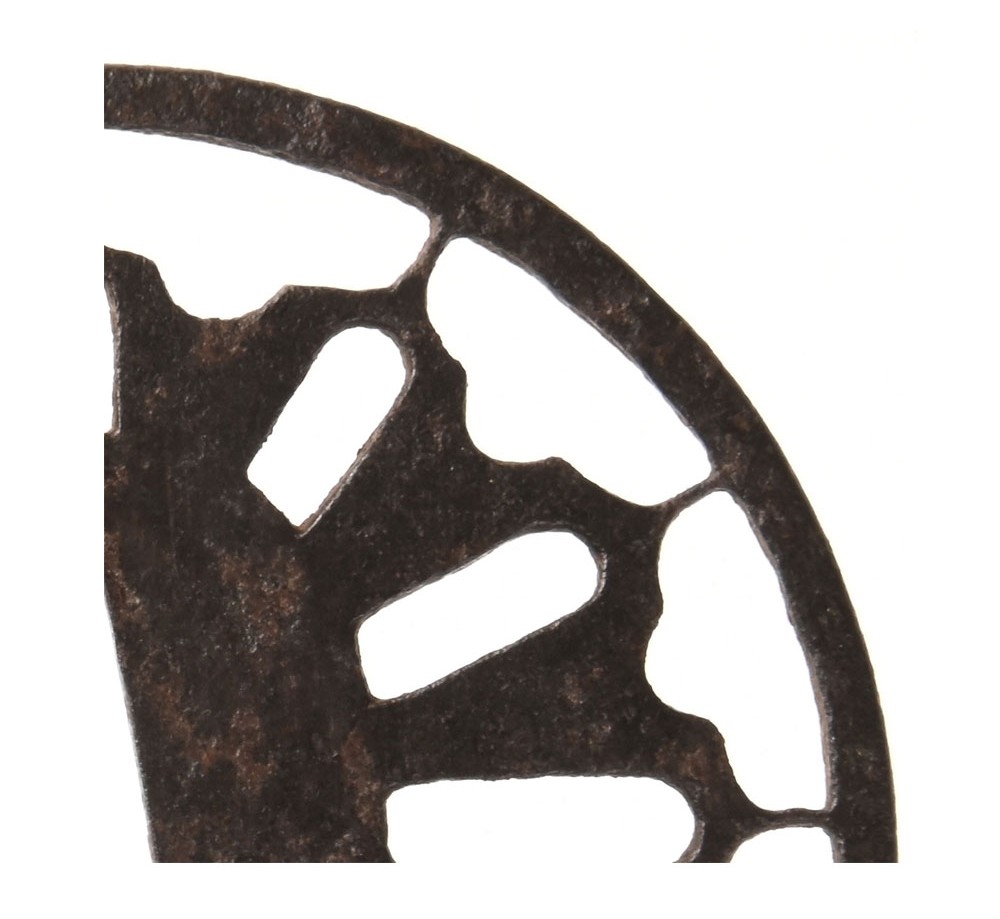
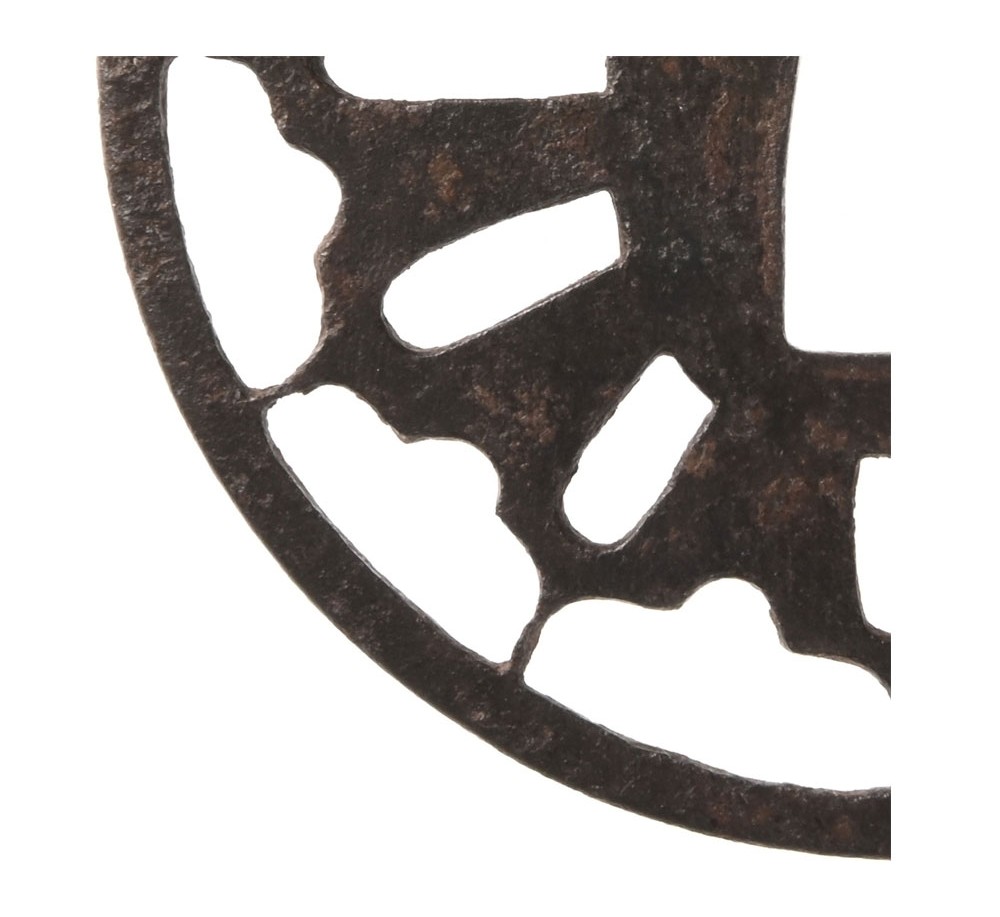
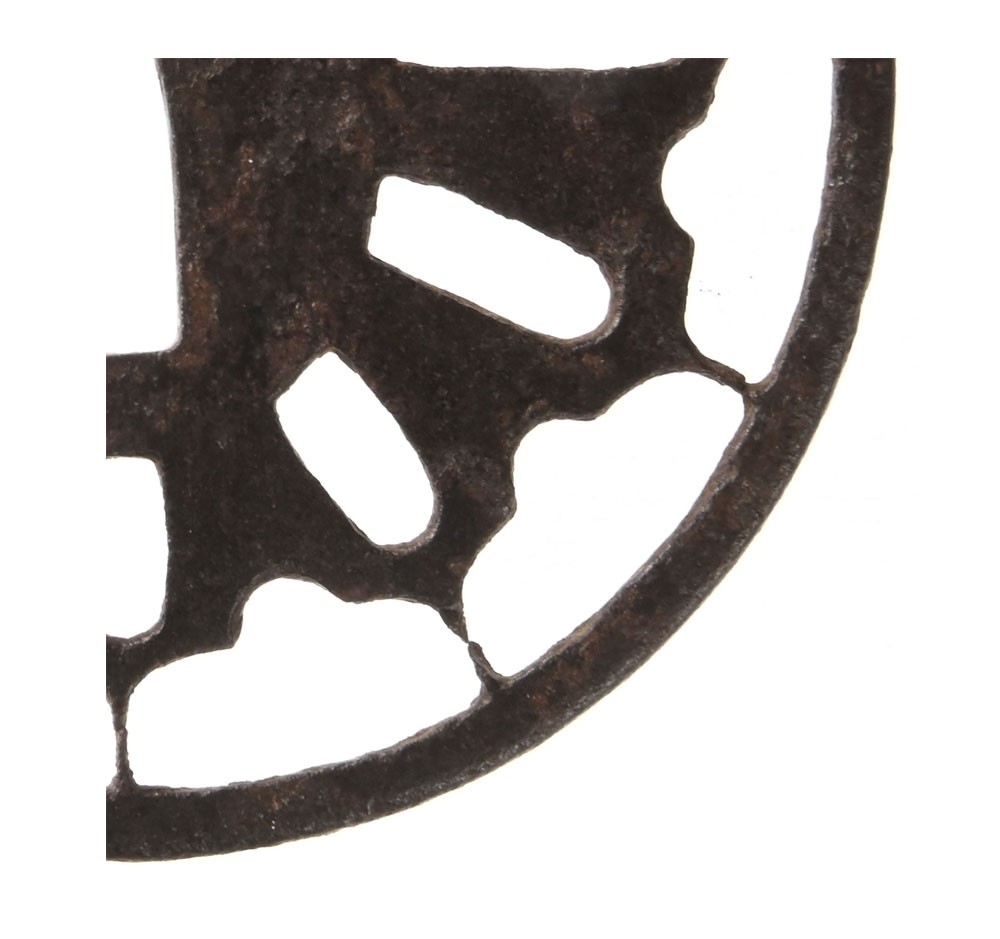
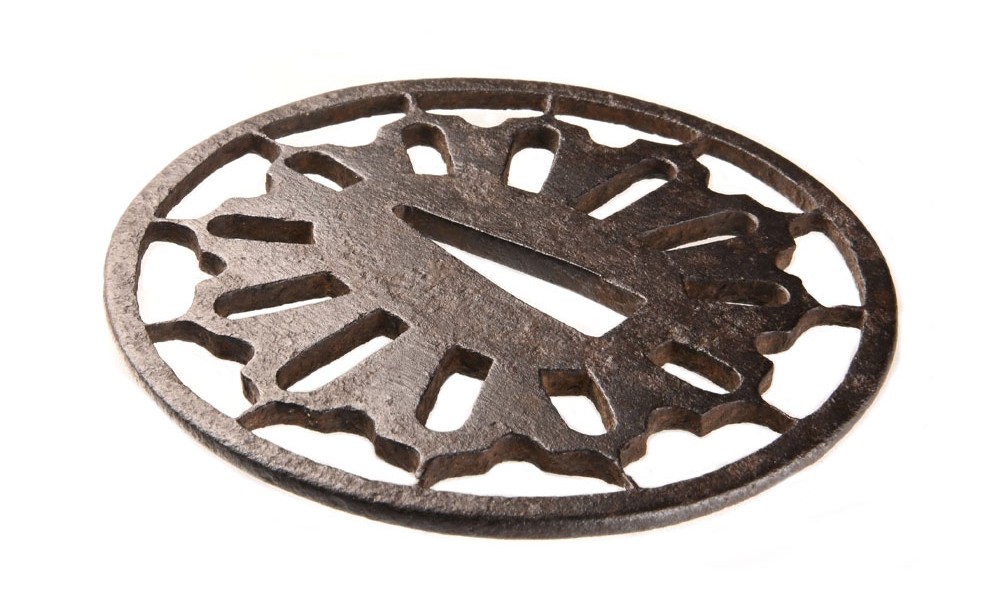
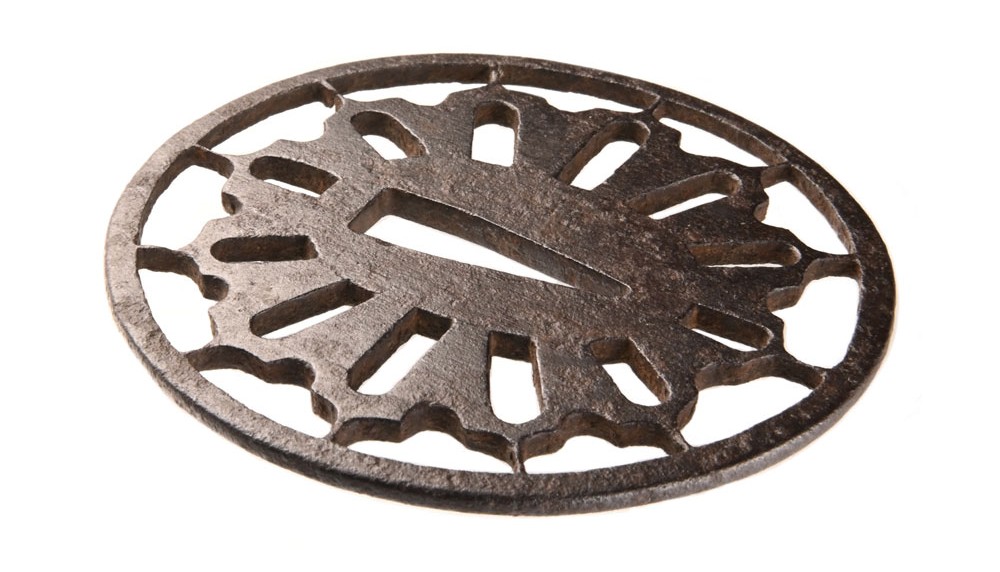
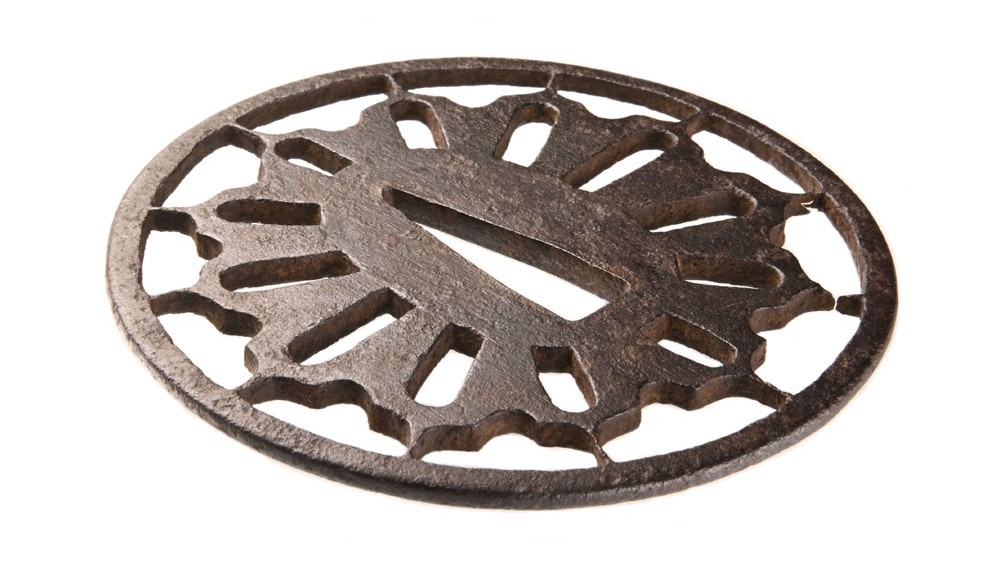
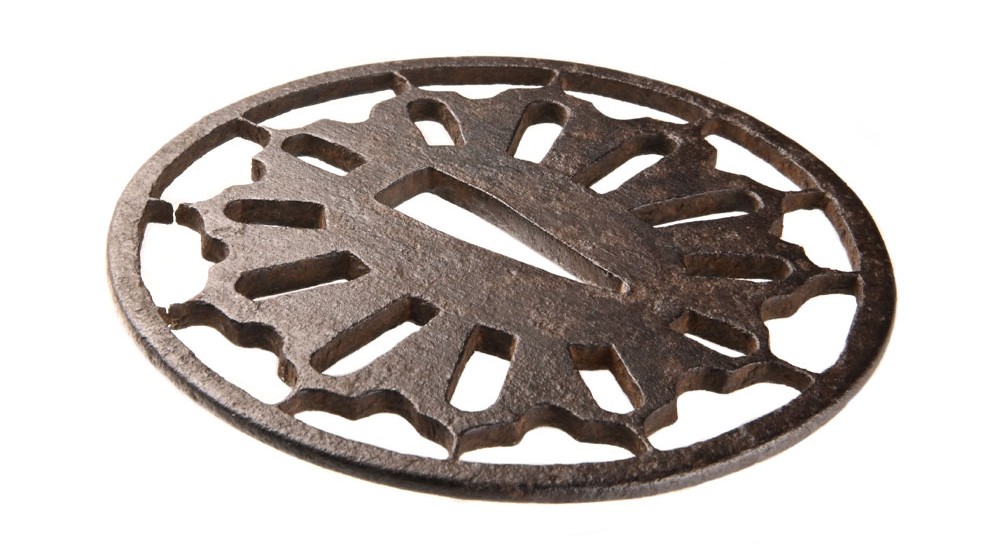
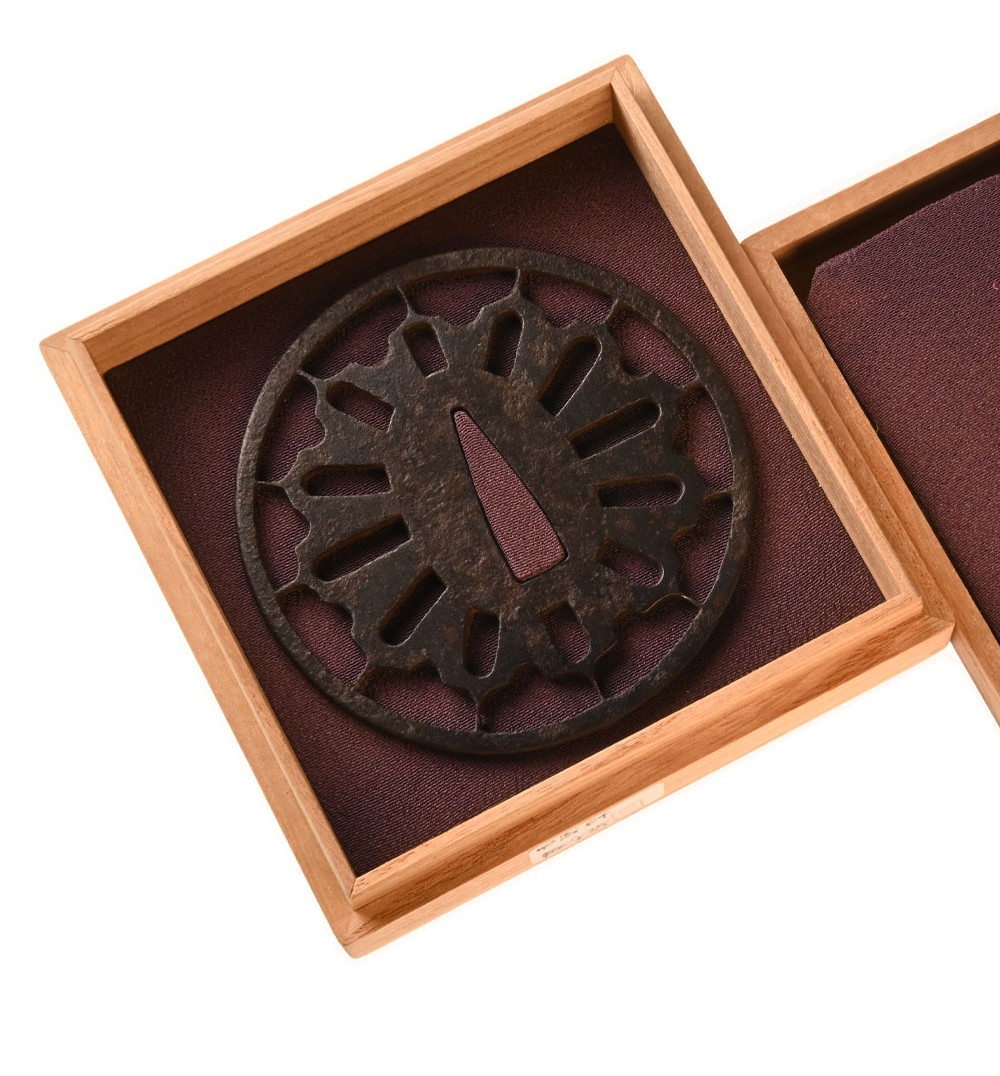
This is a Kacchushi Rinpou Sukashi Tsuba, an iron tsuba featuring a subtle openwork technique. Kacchushi tsuba are older pieces, often attributed to armor makers as a side business. It comes with NBTHK Hozon Tosogu certification.
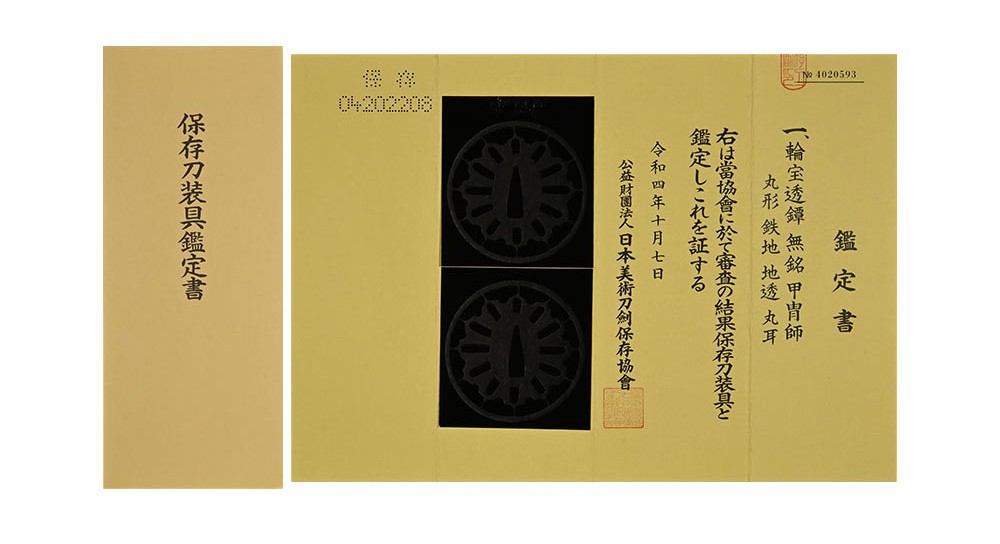
Certificate reading — 無銘(甲冑師)
 NihontoWatch
Edo
Tosho-Katchushi
69 pieces on the market now
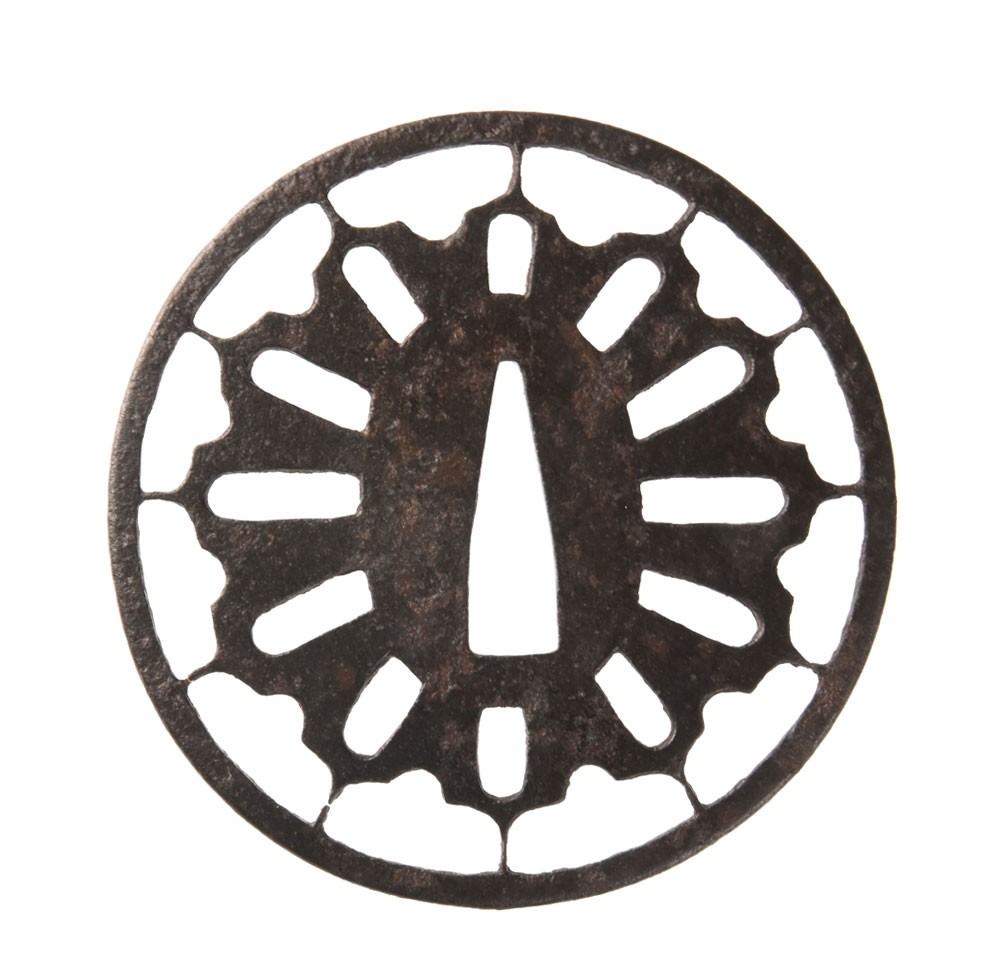
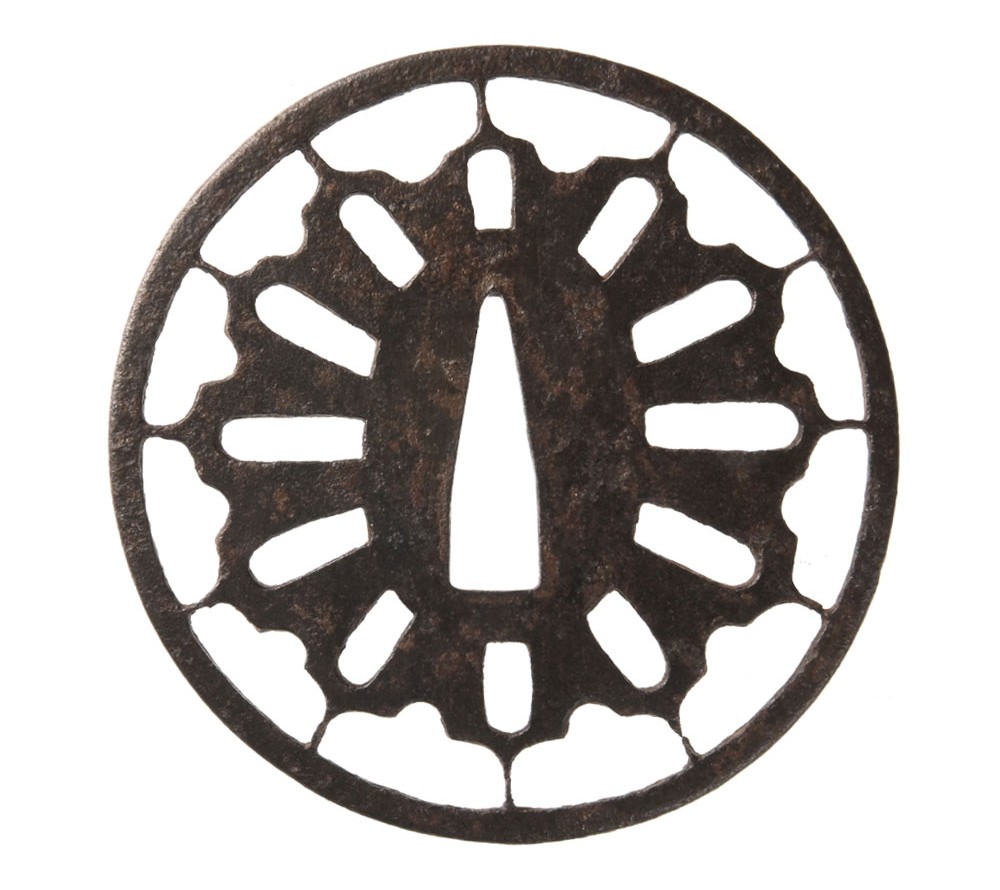
The katchūshi (甲冑師, armorers) are understood to have produced sword guards as a sideline to their primary craft of forging armor components—helmet plates, small scales (kozane), and facial defenses (menpō). Before the emergence of specialist tsuba makers in the late Muromachi period, warriors relied upon swordsmiths and allied craftsmen to furnish practical yet meaningful guards. The techniques of armor-forging—disciplined hammering, controlled tempering, and structural reinforcement—were directly applied to the making of guards, resulting in works that embodied both martial utility and the religious convictions of Sengoku-period warriors. The collective style of katchūshi tsuba is characterized by large, perfectly round (shin-maru) iron plates, well-forged yet notably thin, encircled by powerful raised rims (dote-mimi or okosoko-mimi) that increase toughness. The surface is typically hammered (tsuchime) to a dark, patinated finish, while designs are executed in restrained kage-sukashi (shadow openwork) or sukashi-bori (openwork carving).
Motifs reflect the warrior's dual cultivation of martial discipline and aesthetic refinement: tomoe, cherry blossoms (sakura), snow-crystals (sekka), chrysanthemum flowers, and the characters "Namu Amida Butsu" or "Hachiman Daibosatsu" express both devotion and resolve to uphold moral duty (shisetsu, 士節). The forging is consistently strong, and the openwork—though rustic—is carefully executed, conveying what the records describe as a "quiet elegance" (gashu). Katchūshi work represents the transitional moment when the sword guard began to be appreciated not merely as a functional implement but as a bearer of meaning and cultivated taste. These guards, unsigned and attributed by their structural and decorative conventions rather than by maker's hand, stand as enduring evidence of the armorer's contribution to the aesthetic evolution of Japanese sword fittings during the Muromachi and Momoyama periods. Learn more →
Certifies a genuine fitting worth preserving: a correct signature, or, if unsigned, an identifiable era and school, with recognized artistic and craft value.
The NBTHK (Nihon Bijutsu Tōken Hozon Kyōkai, the Society for the Preservation of Japanese Art Swords) is a public-interest incorporated foundation founded in 1948 and supervised by Japan’s Agency for Cultural Affairs (Bunkachō); it is based at the Japanese Sword Museum in Tokyo. Its expert panels physically examine each submitted work (shinsa) and issue a certificate (kanteishō) ranking it by artistic and historical merit. NBTHK papers are the most widely recognized standard of authentication for Japanese swords and fittings.
NBTHK official siteReturns/exchanges/cancellations not accepted after shipment except for significant defects; if defective, return/exchange possible within 3 days of arrival (return shipping paid by customer).
¥300,000
This is a Kacchushi Rinpou Sukashi Tsuba, an iron tsuba featuring a subtle openwork technique. Kacchushi tsuba are older pieces, often attributed to armor makers as a side business. It comes with NBTHK Hozon Tosogu certification.
Certificate reading — 無銘(甲冑師)
NihontoWatchEdo
Tosho-Katchushi
69 pieces on the market now
The katchūshi (甲冑師, armorers) are understood to have produced sword guards as a sideline to their primary craft of forging armor components—helmet plates, small scales (kozane), and facial defenses (menpō). Before the emergence of specialist tsuba makers in the late Muromachi period, warriors relied upon swordsmiths and allied craftsmen to furnish practical yet meaningful guards. The techniques of armor-forging—disciplined hammering, controlled tempering, and structural reinforcement—were directly applied to the making of guards, resulting in works that embodied both martial utility and the religious convictions of Sengoku-period warriors. The collective style of katchūshi tsuba is characterized by large, perfectly round (shin-maru) iron plates, well-forged yet notably thin, encircled by powerful raised rims (dote-mimi or okosoko-mimi) that increase toughness. The surface is typically hammered (tsuchime) to a dark, patinated finish, while designs are executed in restrained kage-sukashi (shadow openwork) or sukashi-bori (openwork carving).
Motifs reflect the warrior's dual cultivation of martial discipline and aesthetic refinement: tomoe, cherry blossoms (sakura), snow-crystals (sekka), chrysanthemum flowers, and the characters "Namu Amida Butsu" or "Hachiman Daibosatsu" express both devotion and resolve to uphold moral duty (shisetsu, 士節). The forging is consistently strong, and the openwork—though rustic—is carefully executed, conveying what the records describe as a "quiet elegance" (gashu). Katchūshi work represents the transitional moment when the sword guard began to be appreciated not merely as a functional implement but as a bearer of meaning and cultivated taste. These guards, unsigned and attributed by their structural and decorative conventions rather than by maker's hand, stand as enduring evidence of the armorer's contribution to the aesthetic evolution of Japanese sword fittings during the Muromachi and Momoyama periods. Learn more →
Certifies a genuine fitting worth preserving: a correct signature, or, if unsigned, an identifiable era and school, with recognized artistic and craft value.
The NBTHK (Nihon Bijutsu Tōken Hozon Kyōkai, the Society for the Preservation of Japanese Art Swords) is a public-interest incorporated foundation founded in 1948 and supervised by Japan’s Agency for Cultural Affairs (Bunkachō); it is based at the Japanese Sword Museum in Tokyo. Its expert panels physically examine each submitted work (shinsa) and issue a certificate (kanteishō) ranking it by artistic and historical merit. NBTHK papers are the most widely recognized standard of authentication for Japanese swords and fittings.
NBTHK official siteReturns/exchanges/cancellations not accepted after shipment except for significant defects; if defective, return/exchange possible within 3 days of arrival (return shipping paid by customer).
¥300,000