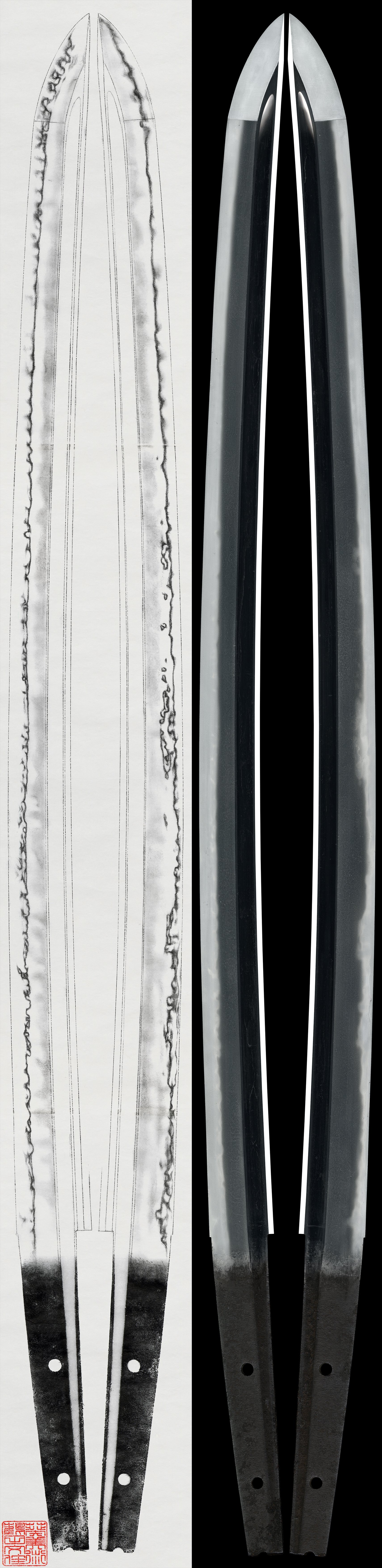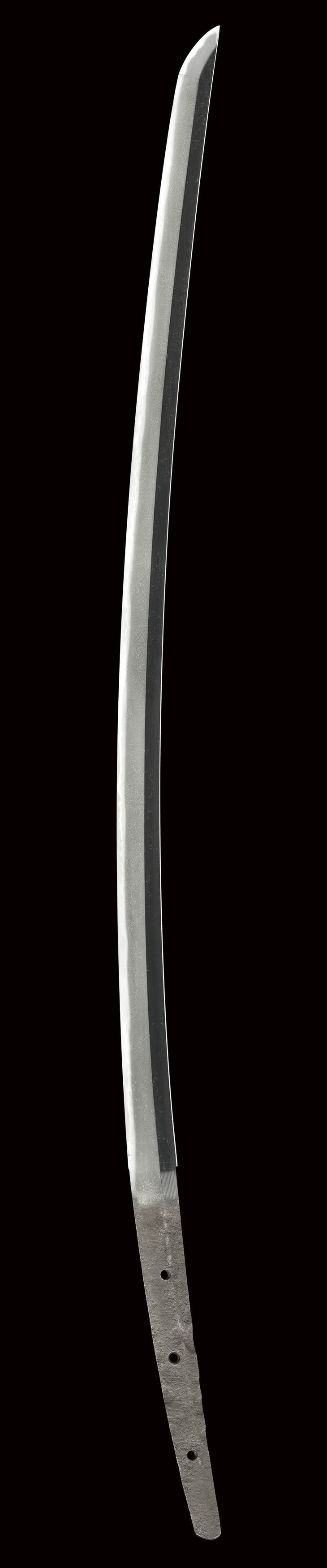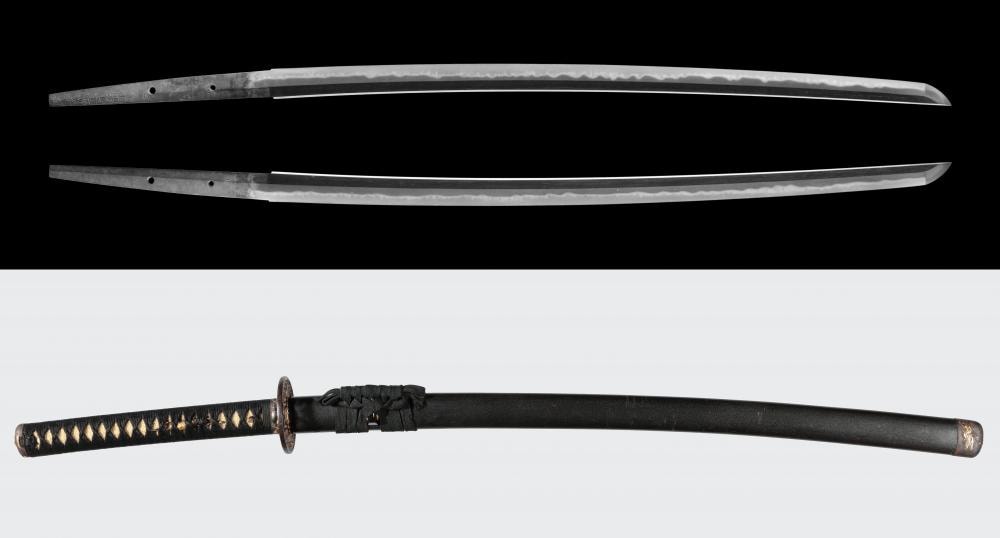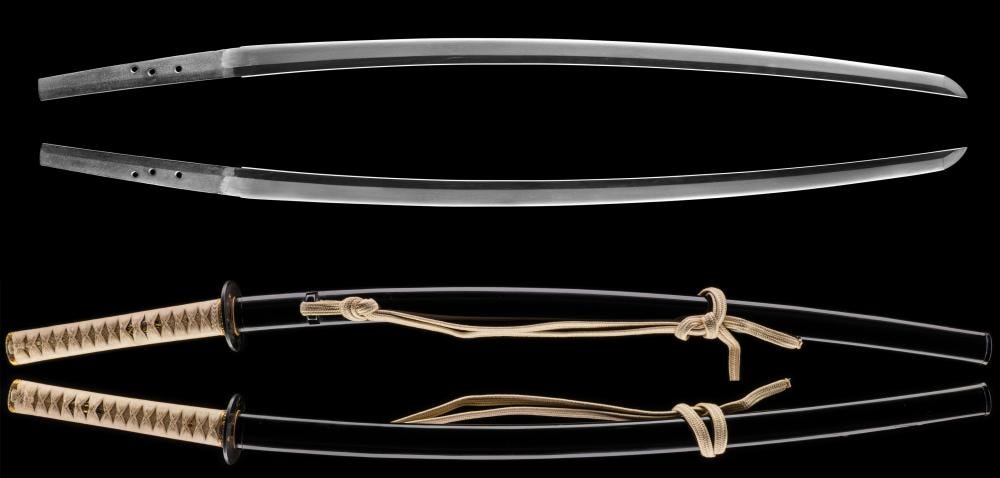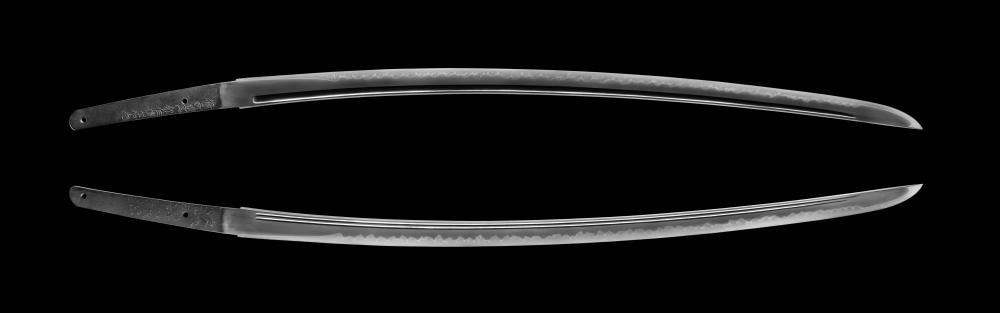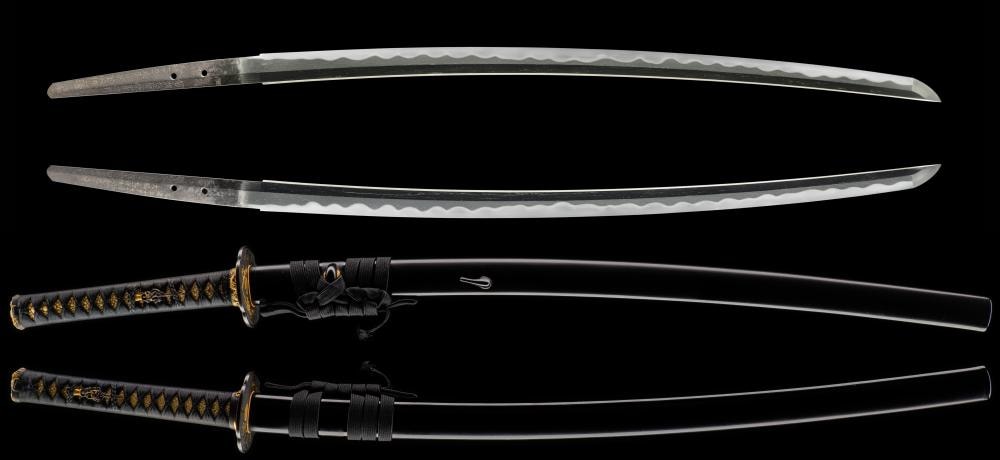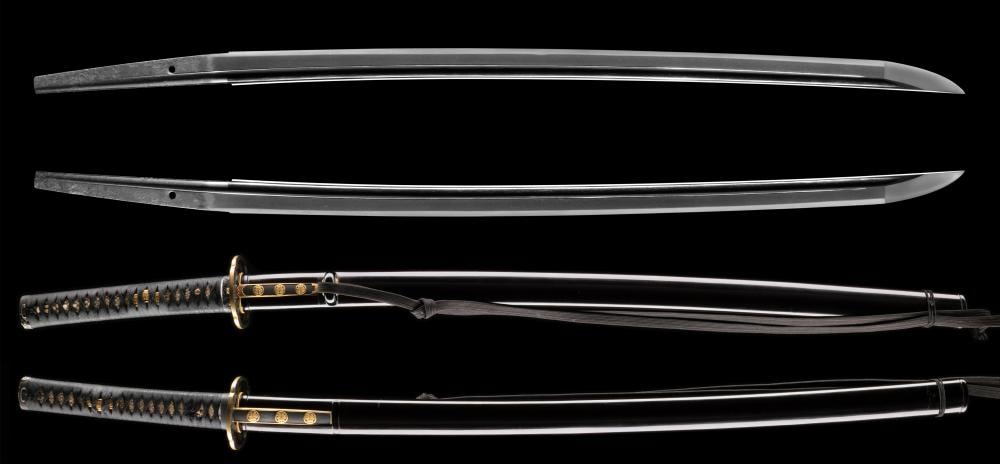
刀 無銘(青江) / Katana Mumei(Aoe)
SOLD
Tracked across 76 dealers worldwide · price history · sold archive
Kamakura
Specifications
68.5 cm
0.9 cm
3.17 cm
About the school
Aoe School青江派
The Aoe school arose in Bitchu Province, a region celebrated for iron production since antiquity. The early eleventh-century miscellany *Shin Sarugaku-ki* already lists "the swords of Bitchu" among the noted products of the provinces, and roughly two centuries later the Aoe swordsmiths emerged as heirs to that high reputation, flourishing chiefly in the lower basin of the Takahashi River in such locales as Koji and Manju. The school is traditionally said to have begun with Yasutsugu around the Shoan era, and thereafter it prospered greatly down to the later part of the Nanbokucho period. Within this lineage, works produced up through approximately the mid-Kamakura period are distinguished as Ko-Aoe, while those from the late Kamakura period onward through the Nanbokucho era are broadly termed Aoe. Representative smiths of the Nanbokucho phase include Tsugunao, Tsuguyoshi, Moritsugu, and Naotsugu, yet a great many surviving blades are *mumei* and attributed to the school collectively rather than to individual hands, reflecting the depth and continuity of the tradition as a whole. The NBTHK identifies two principal modes of Aoe workmanship. The first is a *suguha*-based temper in which the *nioiguchi* tends toward tightness, producing a bright and clear effect; the second is the distinctive *saka-choji-midare* that reached full maturity around the Enbun era (1356-1361), during the height of the Nanbokucho period. Ko-Aoe works are generally *ko-nie-deki*, with a somewhat *shizumi* (subdued) nioiguchi in suguha mixed with small undulations; by the late Kamakura period the *nie* becomes calmer, and in Nanbokucho pieces the nioiguchi tightens and the construction shifts to *nioi-deki*. It is specifically noted that whereas smiths of other provinces in this period display nie-deki under the influence of the Soshu tradition, Aoe works remain nioi-deki -- a hallmark distinction. The forging characteristically shows *ko-itame* mixed with *mokume*, with finely standing grain producing the so-called *chirimen-hada* (crepe-like texture); *jifu* (patchy, mottled surface features) and *sumihada* (sooty-toned areas) are frequently intermingled. The *jihada* regularly exhibits *midare-utsuri*, and toward the cutting edge a layered, streak-like utsuri known as *dan-utsuri* is a major highlight of the school. Fine *ji-nie* adheres thickly, with *chikei* entering well. Overall, when compared with Bizen works of the same era, Aoe blades present a somewhat restrained and austere taste. Across the tradition's long arc from the late Heian period to the close of the Nanbokucho era, the NBTHK consistently praises Aoe works for the brightness and clarity of both *ji* and *ha*, frequently employing the term *saeru* (clear, brilliant) to describe the nioiguchi. Blades are commended for being *kenzen* (sound and well-preserved), for retaining ample *nikuoki* (blade "flesh"), and for conveying an atmosphere of sincerity and quiet elegance. The recurring evaluative language -- "the salient points of Aoe are conspicuously displayed," "an especially fine example even among works attributed to this school" -- underscores the NBTHK's regard for the tradition as one producing consistently high-caliber work whose collective identity is immediately recognizable. The school's Nanbokucho-period output, with its wide *mihaba*, imposing *o-kissaki*, and bold *boshi* that rises and returns with a pointed tendency, conveys the powerful period character of that age, while earlier Ko-Aoe pieces are valued for their thoroughly archaic feeling and deep flavor. Taken together, the Aoe school represents one of the major traditions of western Japan, distinguished by its refined forging, luminous suguha, and the singular visual drama of its utsuri effects.
![刀 無銘 (青江)第 51 回重要刀剣 Katana No signature Aoe [ NBTHK : Juyo ]](/_next/image?url=https%3A%2F%2Fitbhfhyptogxcjbjfzwx.supabase.co%2Fstorage%2Fv1%2Fobject%2Fpublic%2Flisting-images%2Ftoyuukai%2FL398660%2F00.jpg&w=2560&q=90)