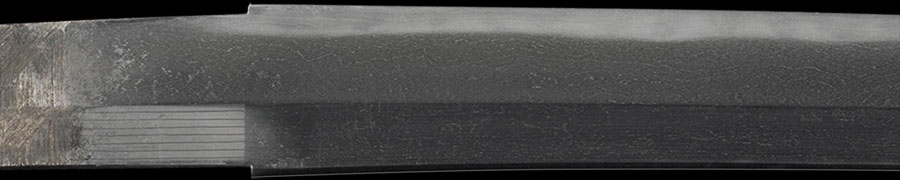
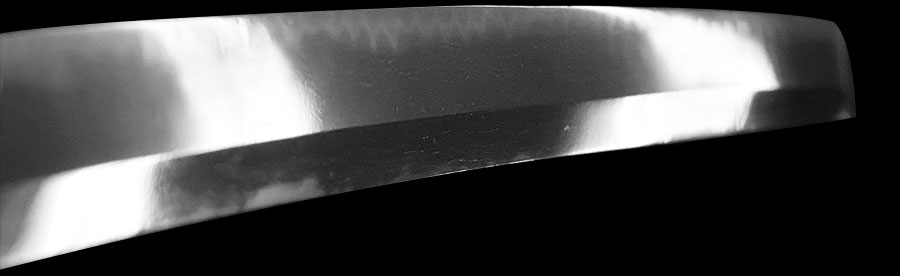
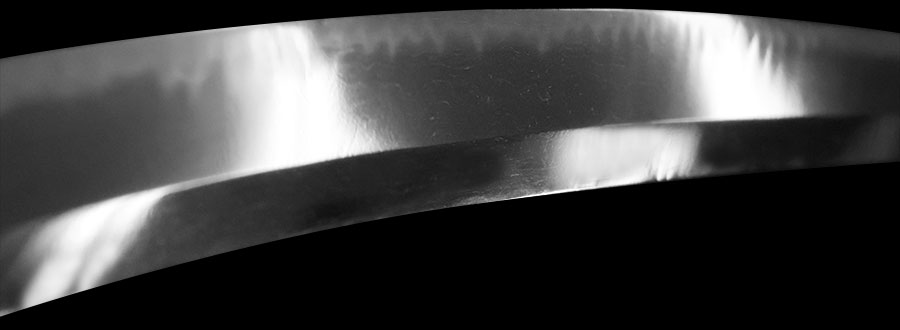
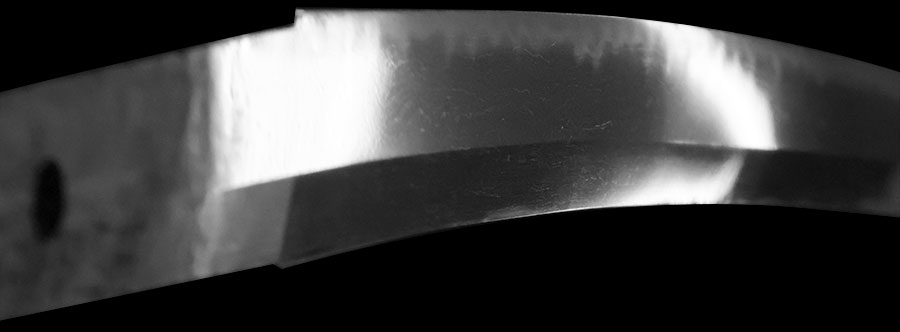
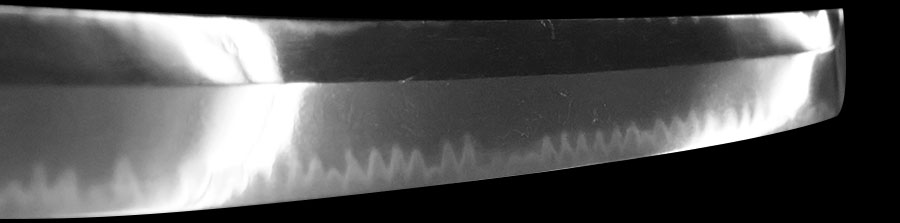
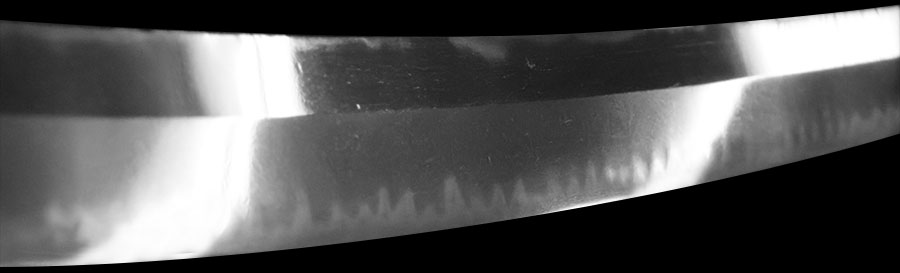
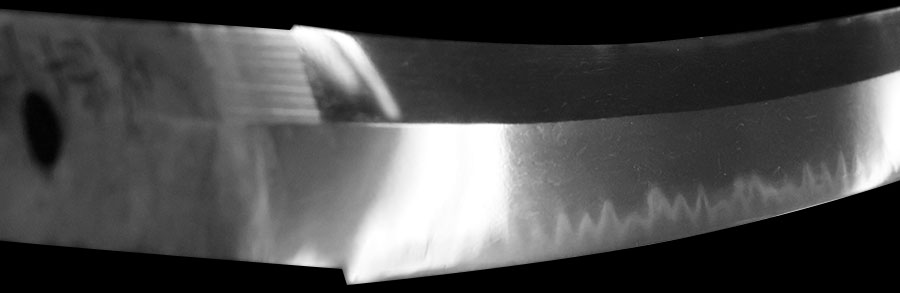
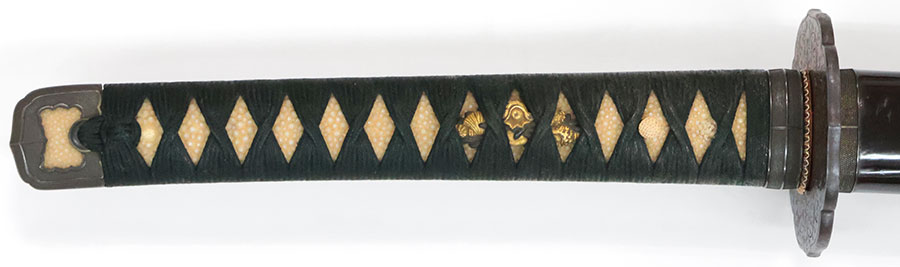
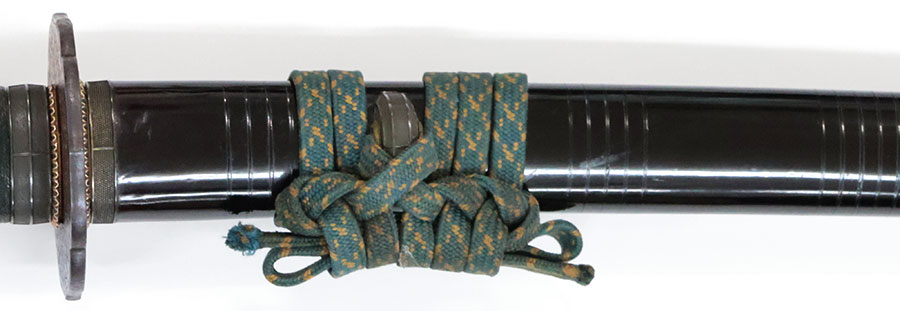
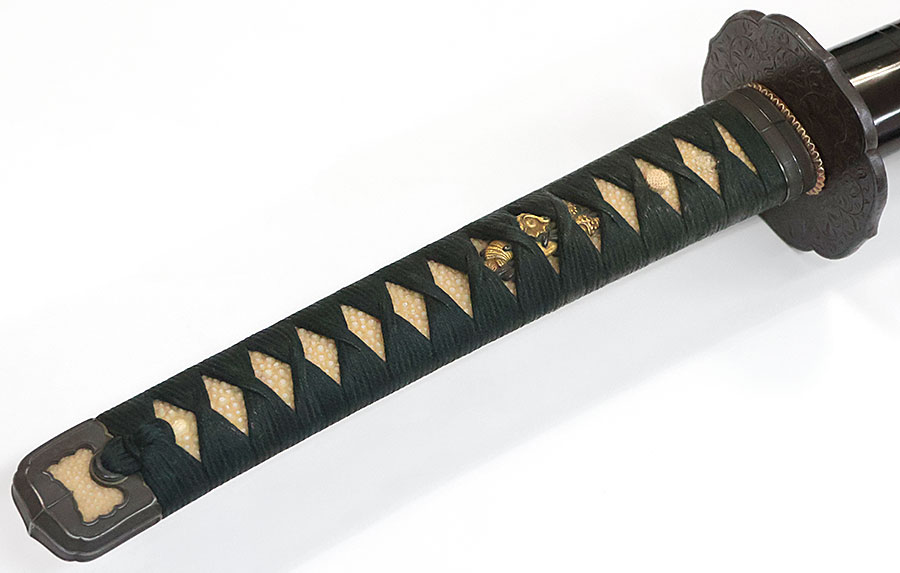
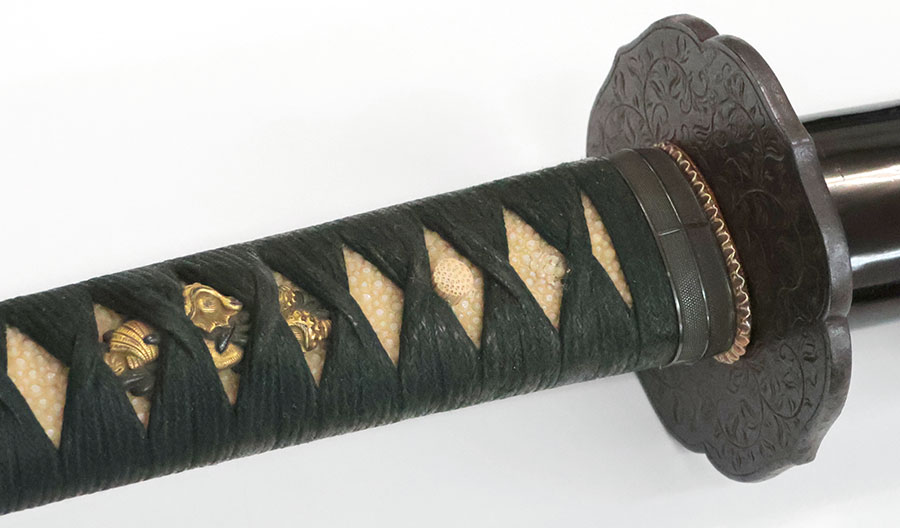
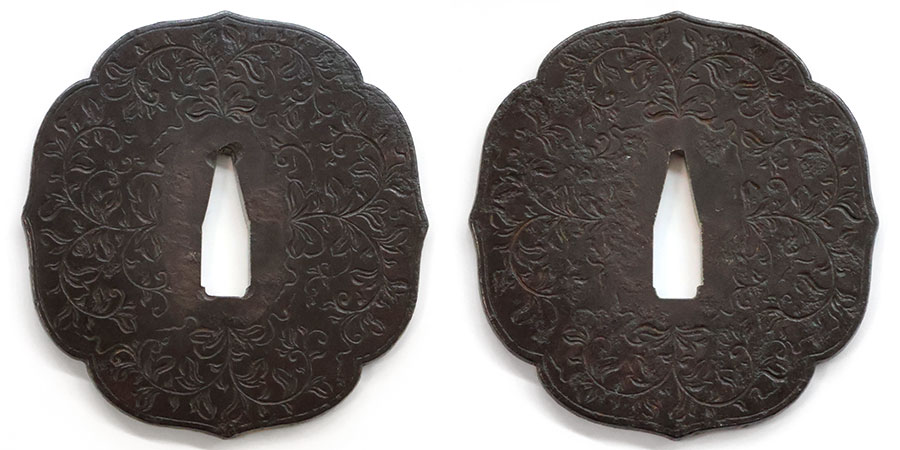
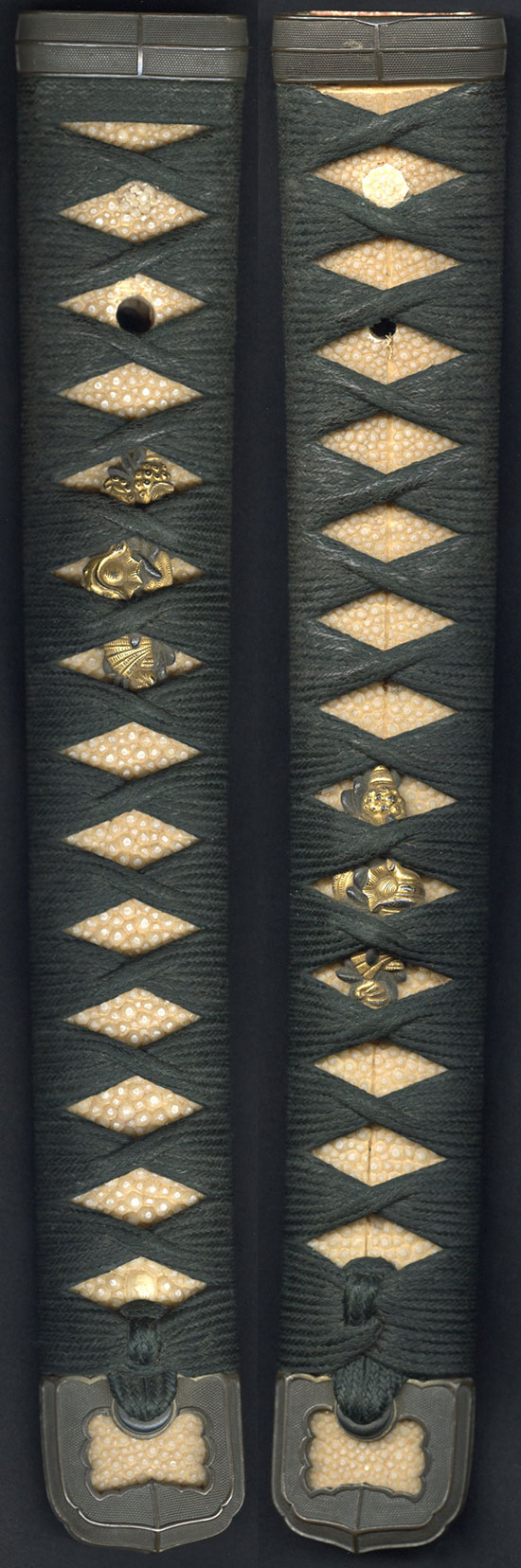
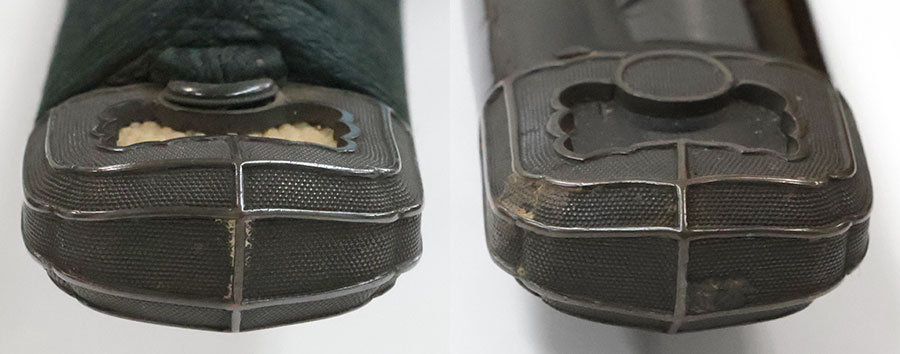
It has appeared, it has appeared, a wonderfully precious katana by the swordsmith Tachibanaen Ryuko Kunihide has appeared. This katana is the work of Tachibanaen Ryuko Kunihide, a hanko of the 30,000 koku Itakura family of the Joshu Annaka domain, who was invited to and exerted great effort in the construction of the Nirayama Hansharo (ironworks) built by the Izu daikan Egawa Tarozaemon, which was registered as a UNESCO World Cultural Heritage site in 2015. Tenpo 12 (1841) (185 years ago), when this katana was produced, was exactly when the Tenpo Reforms aimed at political and economic reform of the Bakufu led by the roju Mizuno Tadakuni began; it is a work from a time when the defense consciousness of the Japanese people was rising ever higher as England, America, and Russia cruised the waters near Japan seeking trade. The swordsmith Kunihide's master, Nakayama Ikkansai Yoshihiro, learned the Norishige-den of hada-kitae from Noritoshi, a descendant of Etchu Norishige, and his disciple, this swordsmith Kunihide, claimed to be a descendant of Soshu Masamune, who was the master of that Norishige, and this katana reproduces Soshu Masamune. The sugata of this katana shows a thick kasane with a difference between the moto-mihaba and saki-mihaba and shallow sori, presenting a heavy, powerful sugata in the hand; the jigane is itame-hada mixed with mokume-hada showing chikei, forged into a powerful jitetsu, and the hamon is nioi-deki with konie, firing a gunome-togari-ba with many kinsuji mixed within the ha, and the interior of the ha works well. The koshirae is a han-dachi koshirae with a kuro-ro-saya carved in lacquer with the auspicious 7-5-3 motifs of the time, and the kanagu are luxurious shakudo nanako-ji han-dachi matching kanagu, which clearly shows that the person who ordered this katana from the swordsmith Kunihide was a high-ranking samurai of high stipend who made a special order. This time, as we received this katana from an old family who had cherished it for generations with the request to "please pass it on cheaply to someone who will cherish it, as we ourselves have grown old," we are offering it at a specially low price. Please by all means enjoy with a sense of respect this historically precious katana by the swordsmith Tachibanaen Ryuko Kunihide, who devoted himself to the construction of the Nirayama Hansharo, which was registered as a historical UNESCO World Heritage site.
Details from the shop
Nagasa
67.7cm
(2 shaku 2 sun 3 bu)
Mei
Soshu Masamune matsuyo Tachibana Enryushi Kunihide
February day, Tenpo 12, Shin-Ushi year
Soshu Masamune matsuyo Tachibana Enryushi Kunihide
February day, Tenpo 12, Shin-Ushi year
Type
Katana
Saki-kasane
0.59cm
Registration
Osaka, January 31, Heisei 2
Accessories
Shirasaya, Koshirae
Machine translation of the shop's Japanese ·
Description from Nipponto
Machine translation from the shop's Japanese · may contain errors ·
It has appeared, it has appeared, a wonderfully precious katana by the swordsmith Tachibanaen Ryuko Kunihide has appeared. This katana is the work of Tachibanaen Ryuko Kunihide, a hanko of the 30,000 koku Itakura family of the Joshu Annaka domain, who was invited to and exerted great effort in the construction of the Nirayama Hansharo (ironworks) built by the Izu daikan Egawa Tarozaemon, which was registered as a UNESCO World Cultural Heritage site in 2015. Tenpo 12 (1841) (185 years ago), when this katana was produced, was exactly when the Tenpo Reforms aimed at political and economic reform of the Bakufu led by the roju Mizuno Tadakuni began; it is a work from a time when the defense consciousness of the Japanese people was rising ever higher as England, America, and Russia cruised the waters near Japan seeking trade. The swordsmith Kunihide's master, Nakayama Ikkansai Yoshihiro, learned the Norishige-den of hada-kitae from Noritoshi, a descendant of Etchu Norishige, and his disciple, this swordsmith Kunihide, claimed to be a descendant of Soshu Masamune, who was the master of that Norishige, and this katana reproduces Soshu Masamune. The sugata of this katana shows a thick kasane with a difference between the moto-mihaba and saki-mihaba and shallow sori, presenting a heavy, powerful sugata in the hand; the jigane is itame-hada mixed with mokume-hada showing chikei, forged into a powerful jitetsu, and the hamon is nioi-deki with konie, firing a gunome-togari-ba with many kinsuji mixed within the ha, and the interior of the ha works well. The koshirae is a han-dachi koshirae with a kuro-ro-saya carved in lacquer with the auspicious 7-5-3 motifs of the time, and the kanagu are luxurious shakudo nanako-ji han-dachi matching kanagu, which clearly shows that the person who ordered this katana from the swordsmith Kunihide was a high-ranking samurai of high stipend who made a special order. This time, as we received this katana from an old family who had cherished it for generations with the request to "please pass it on cheaply to someone who will cherish it, as we ourselves have grown old," we are offering it at a specially low price. Please by all means enjoy with a sense of respect this historically precious katana by the swordsmith Tachibanaen Ryuko Kunihide, who devoted himself to the construction of the Nirayama Hansharo, which was registered as a historical UNESCO World Heritage site.
For two and a half centuries of peace the sword was the warrior’s legal badge rather than his weapon. Each great city developed its own manner, Edo’s tested strength against Ōsaka’s polished brilliance, until demand thinned in the era’s last decades.
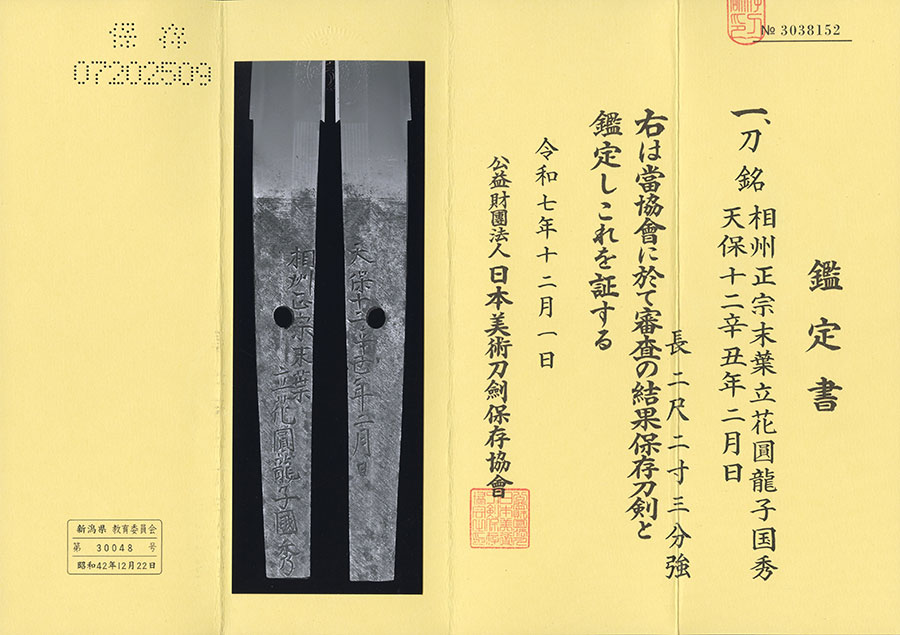
Certifies a genuine blade worth preserving: a signature confirmed correct, or, if unsigned, an era, province, and school that the NBTHK can reliably identify.
Signed: 相州正宗末葉立花圓龍子國秀 天保十二辛丑年二月日 (Kunihide)
As written on the certificate
About the NBTHK›
The NBTHK (Nihon Bijutsu Tōken Hozon Kyōkai, the Society for the Preservation of Japanese Art Swords) is a public-interest incorporated foundation founded in 1948 and supervised by Japan’s Agency for Cultural Affairs (Bunkachō); it is based at the Japanese Sword Museum in Tokyo. Its expert panels physically examine each submitted work (shinsa) and issue a certificate (kanteishō) ranking it by artistic and historical merit. NBTHK papers are the most widely recognized standard of authentication for Japanese swords and fittings.
For returns due to customer circumstances, the cost is the customer's responsibility. For returns due to our mis-shipment or a defective item, we bear the cost.

















 NihontoWatch