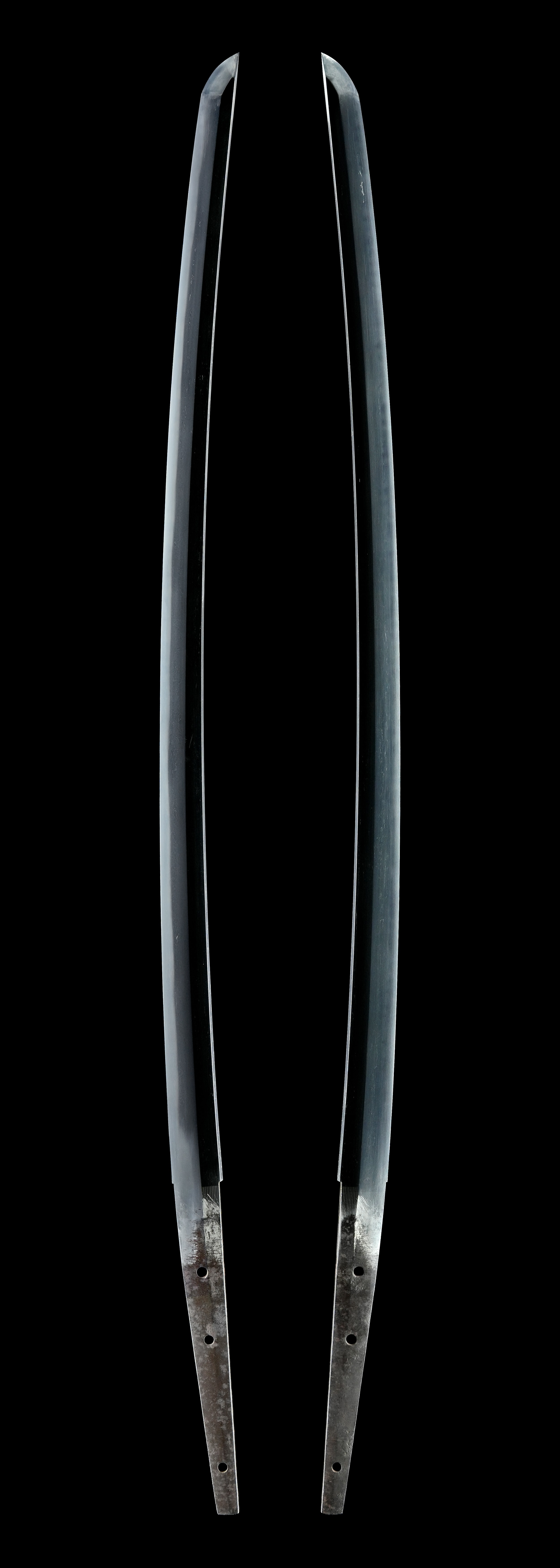
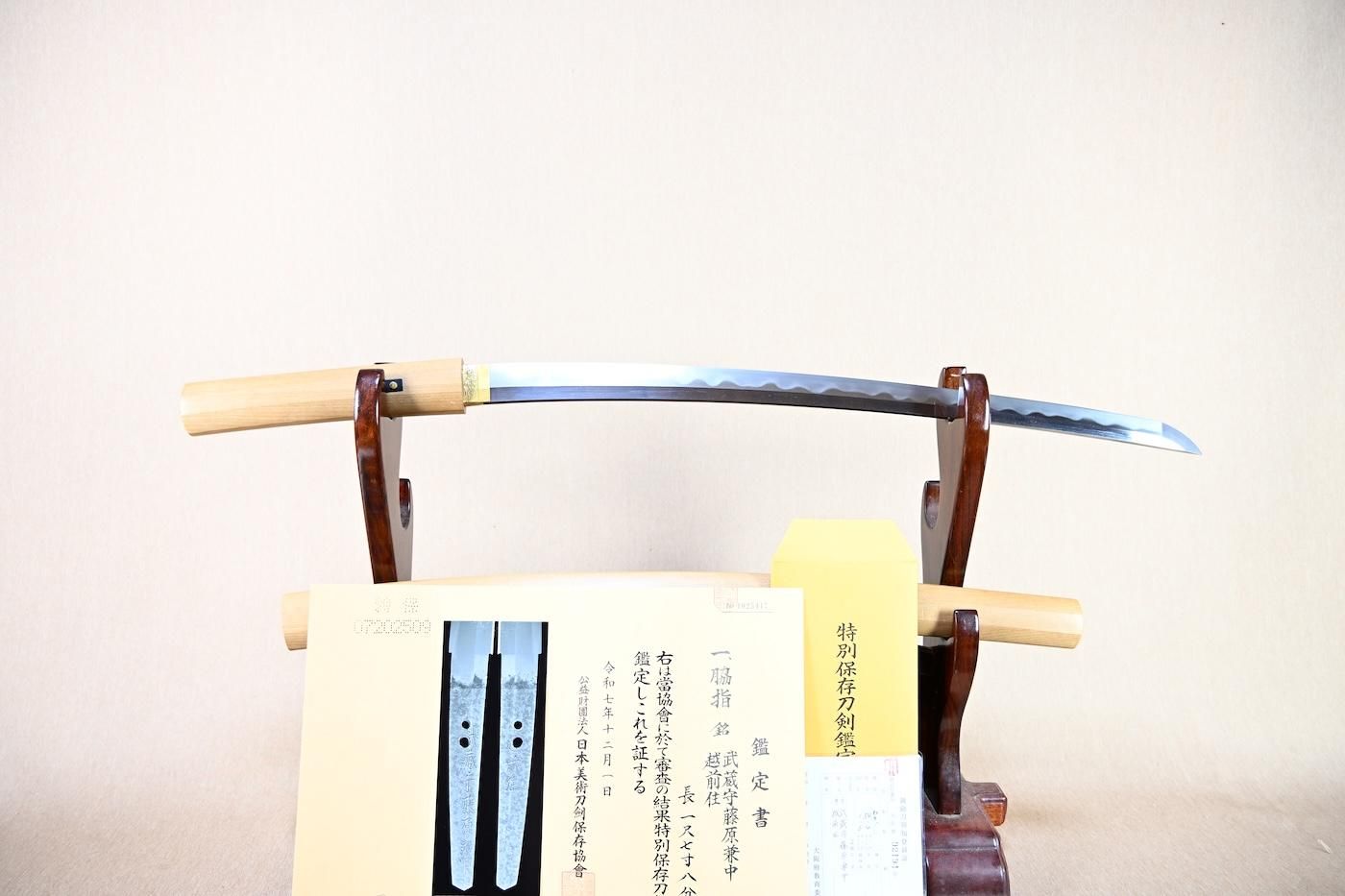
This compact wakizashi, attributed to Musashi no Kami Kanenaka of Echizen province, bears a kirikomi notch on its mune, indicating genuine battle history. The blade features a vibrant gunome kurikaishi hamon with kinsuji and sunagashi activity, reflecting its Wazamono cutting ability. It is presented in charming Edo-period koshirae, complete with golden dragon menuki, arabesque tsuba and fuchi-kashira, and a kozuka depicting birds in flight.
mumei · Echizen Kanenaka · Tenna (1681-1684) · nagasa 49cm · sori 1cm

Echizen · around 1681-1684
Tōken Taikan top 76%
3 pieces on the market now
The NTHK’s principal certificate, issued for a blade of considerable quality. It confirms a genuine signature, or, for an unsigned (mumei) work, records the judges’ attribution to a smith or school. The paper carries a detailed worksheet with a numerical point score.
The NTHK (Nihon Tōken Hozon Kai, the Society for the Preservation of the Japanese Sword) is the oldest of Japan’s sword-appraisal bodies, founded in 1910, decades before the NBTHK. After the death of its long-serving head it divided into two successor societies, the NTHK and the NTHK-NPO, both of which continue to hold shinsa. NTHK certificates are known for a detailed worksheet that records a numerical point score alongside the judges’ written opinion, and the society is especially respected for its attribution of unsigned (mumei) work.
All swords come with a three-day inspection period beginning from the date of delivery. If not satisfied, the sword may be returned within this period for a full refund of the purchase price. Outside of this period, all sales are final. Swords purchased on a layaway payment plan are not eligible for the three-day inspection period.
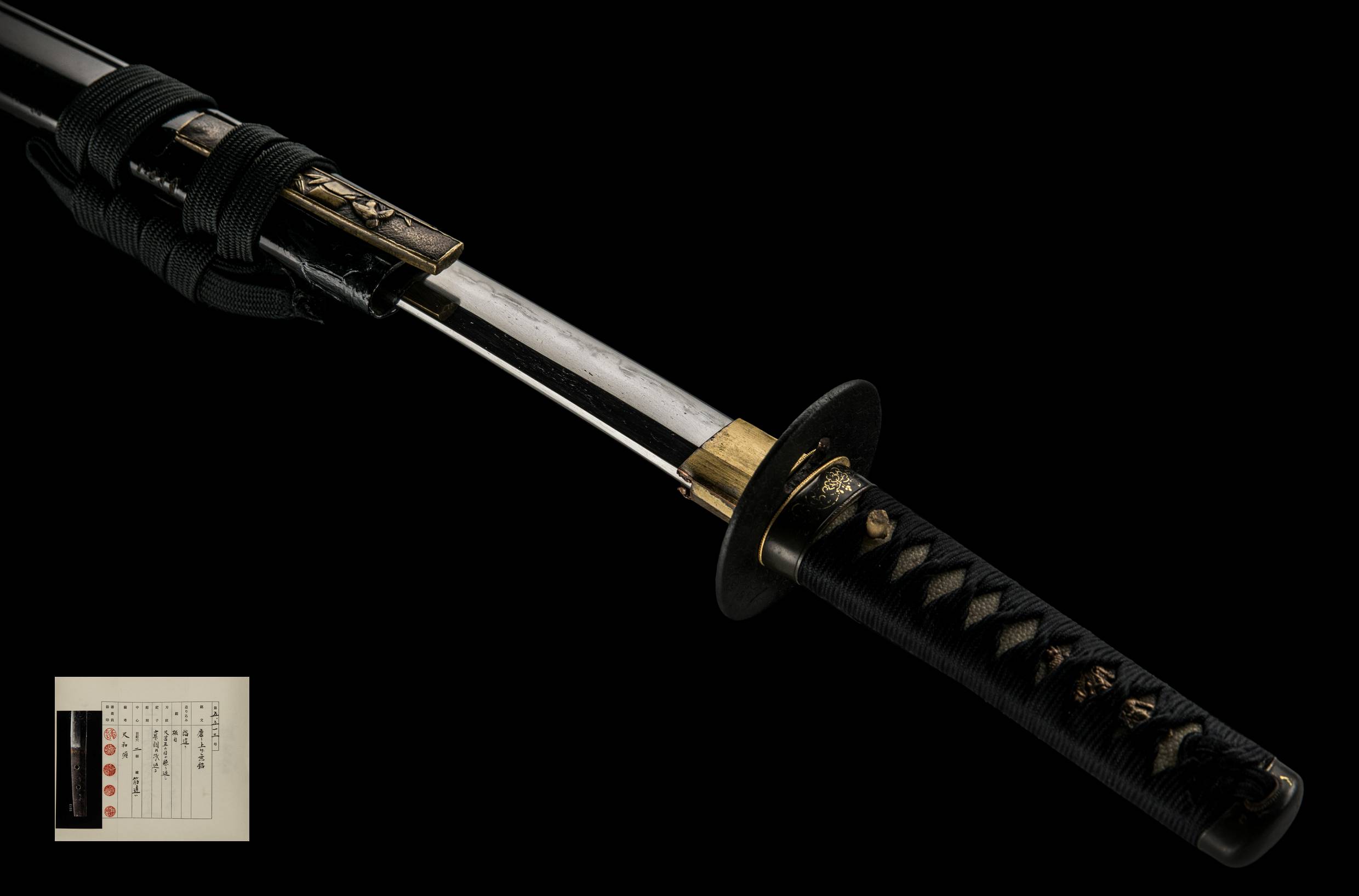
This compact wakizashi, attributed to Musashi no Kami Kanenaka of Echizen province, bears a kirikomi notch on its mune, indicating genuine battle history. The blade features a vibrant gunome kurikaishi hamon with kinsuji and sunagashi activity, reflecting its Wazamono cutting ability. It is presented in charming Edo-period koshirae, complete with golden dragon menuki, arabesque tsuba and fuchi-kashira, and a kozuka depicting birds in flight.
mumei · Echizen Kanenaka · Tenna (1681-1684) · nagasa 49cm · sori 1cm

Echizen · around 1681-1684
Tōken Taikan top 76%
3 pieces on the market now
The NTHK’s principal certificate, issued for a blade of considerable quality. It confirms a genuine signature, or, for an unsigned (mumei) work, records the judges’ attribution to a smith or school. The paper carries a detailed worksheet with a numerical point score.
The NTHK (Nihon Tōken Hozon Kai, the Society for the Preservation of the Japanese Sword) is the oldest of Japan’s sword-appraisal bodies, founded in 1910, decades before the NBTHK. After the death of its long-serving head it divided into two successor societies, the NTHK and the NTHK-NPO, both of which continue to hold shinsa. NTHK certificates are known for a detailed worksheet that records a numerical point score alongside the judges’ written opinion, and the society is especially respected for its attribution of unsigned (mumei) work.
All swords come with a three-day inspection period beginning from the date of delivery. If not satisfied, the sword may be returned within this period for a full refund of the purchase price. Outside of this period, all sales are final. Swords purchased on a layaway payment plan are not eligible for the three-day inspection period.