 NihontoWatchNihontoWatch
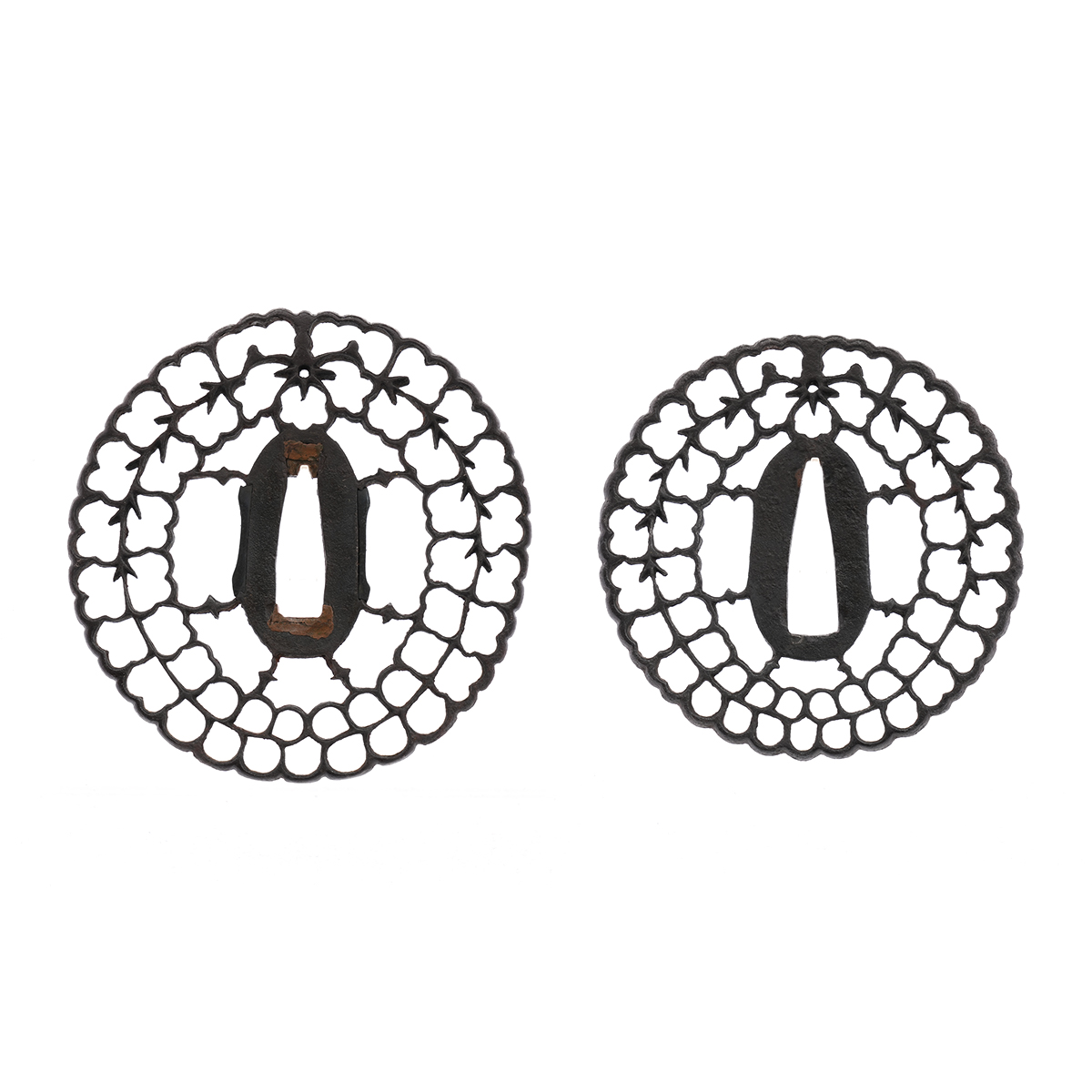
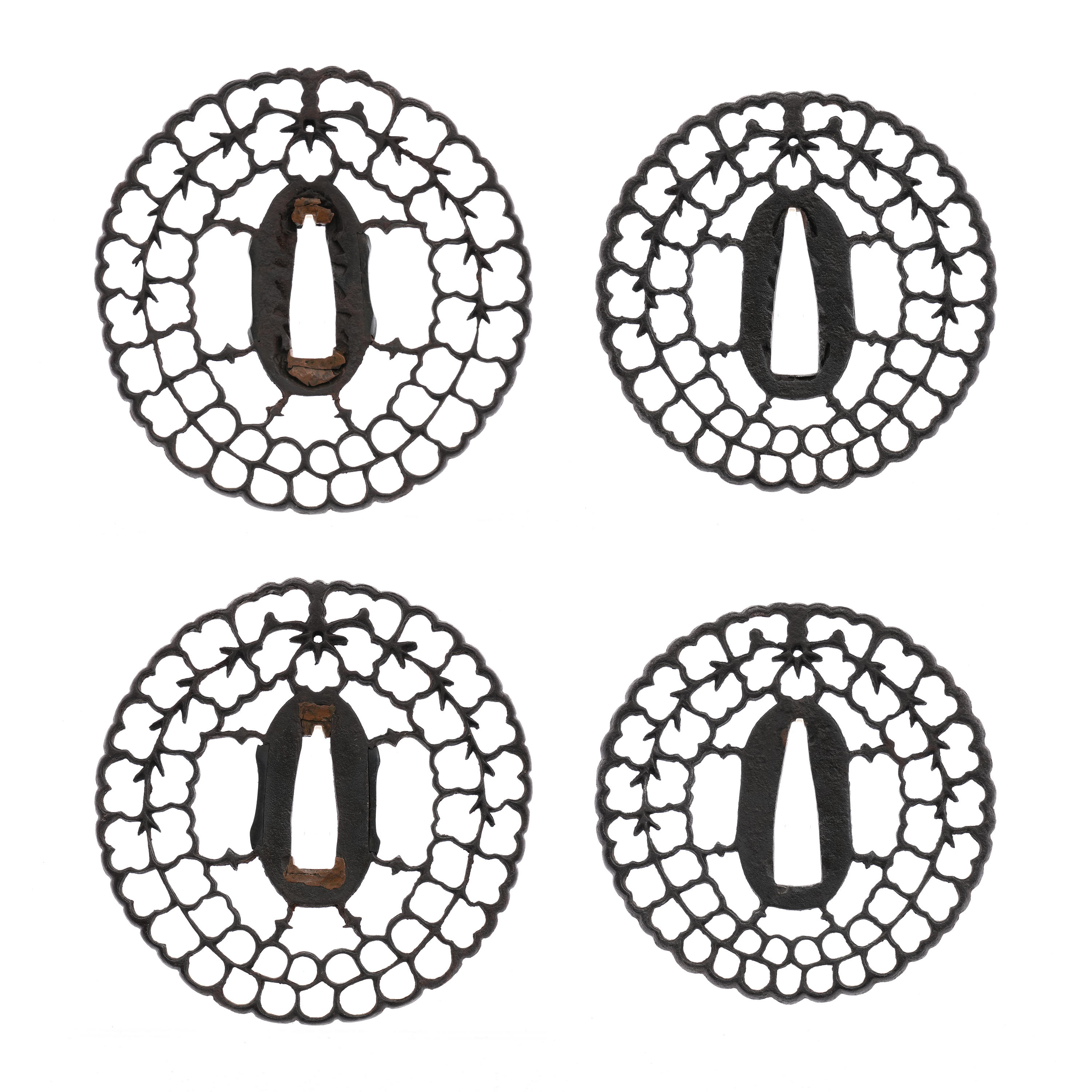
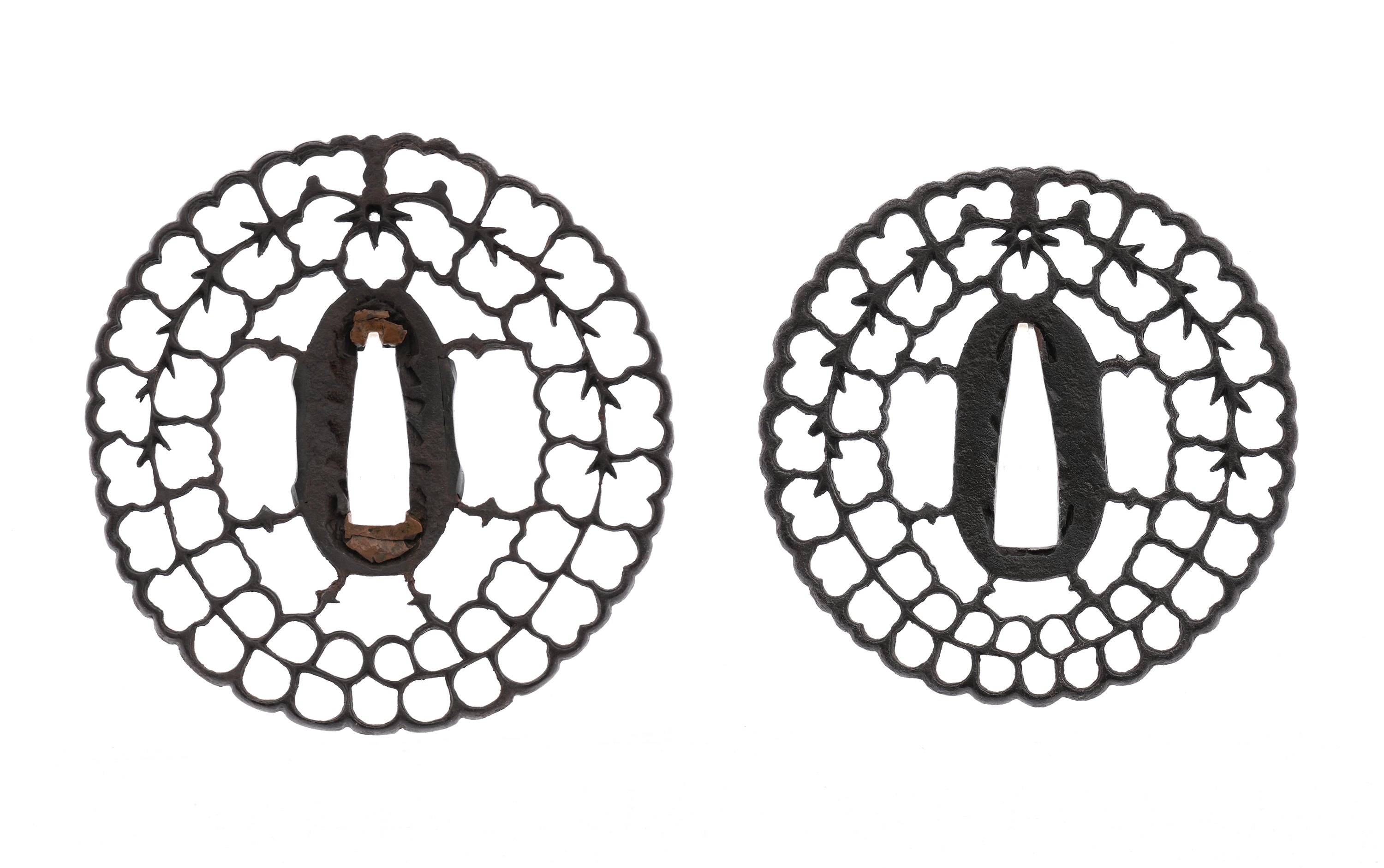
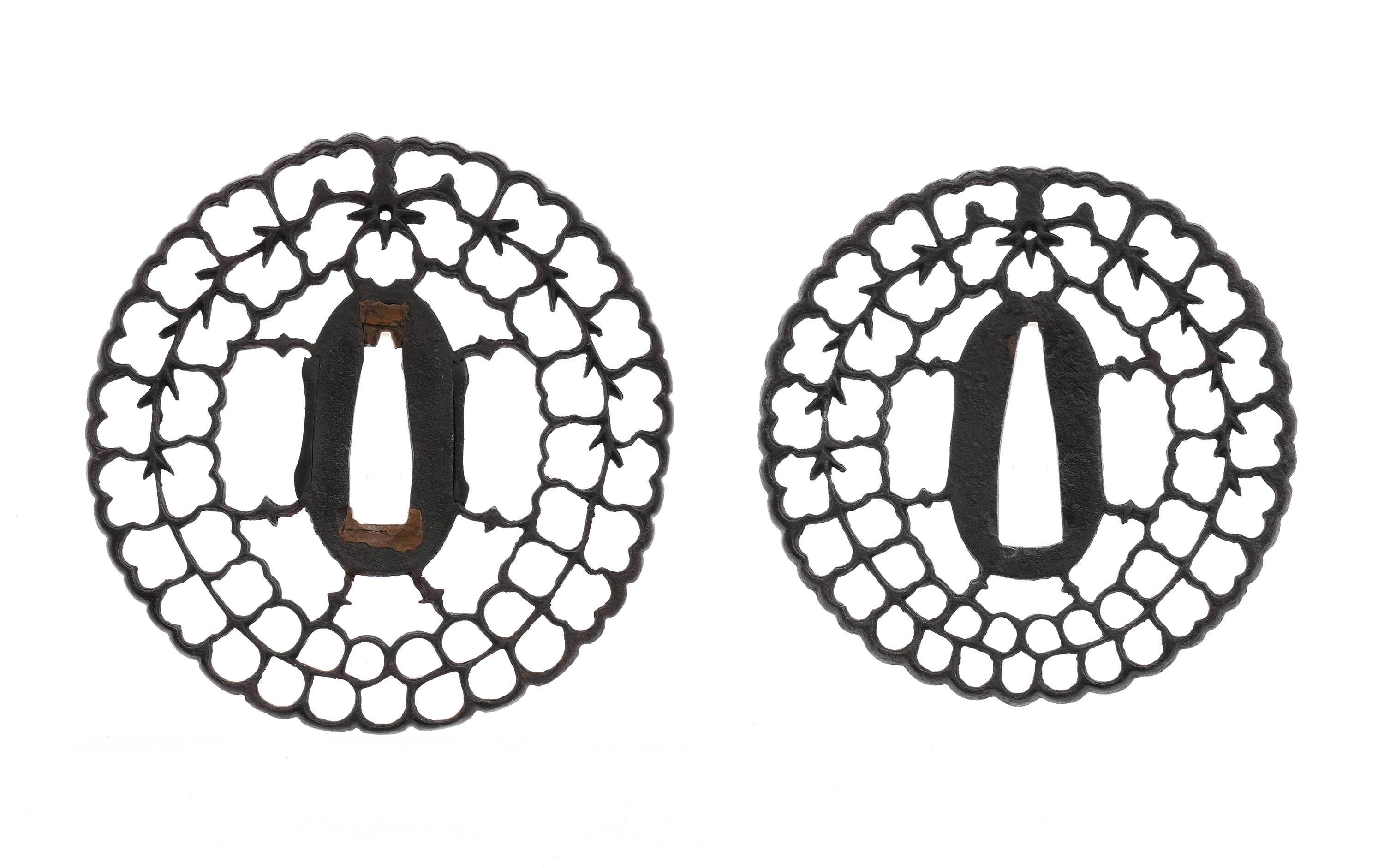
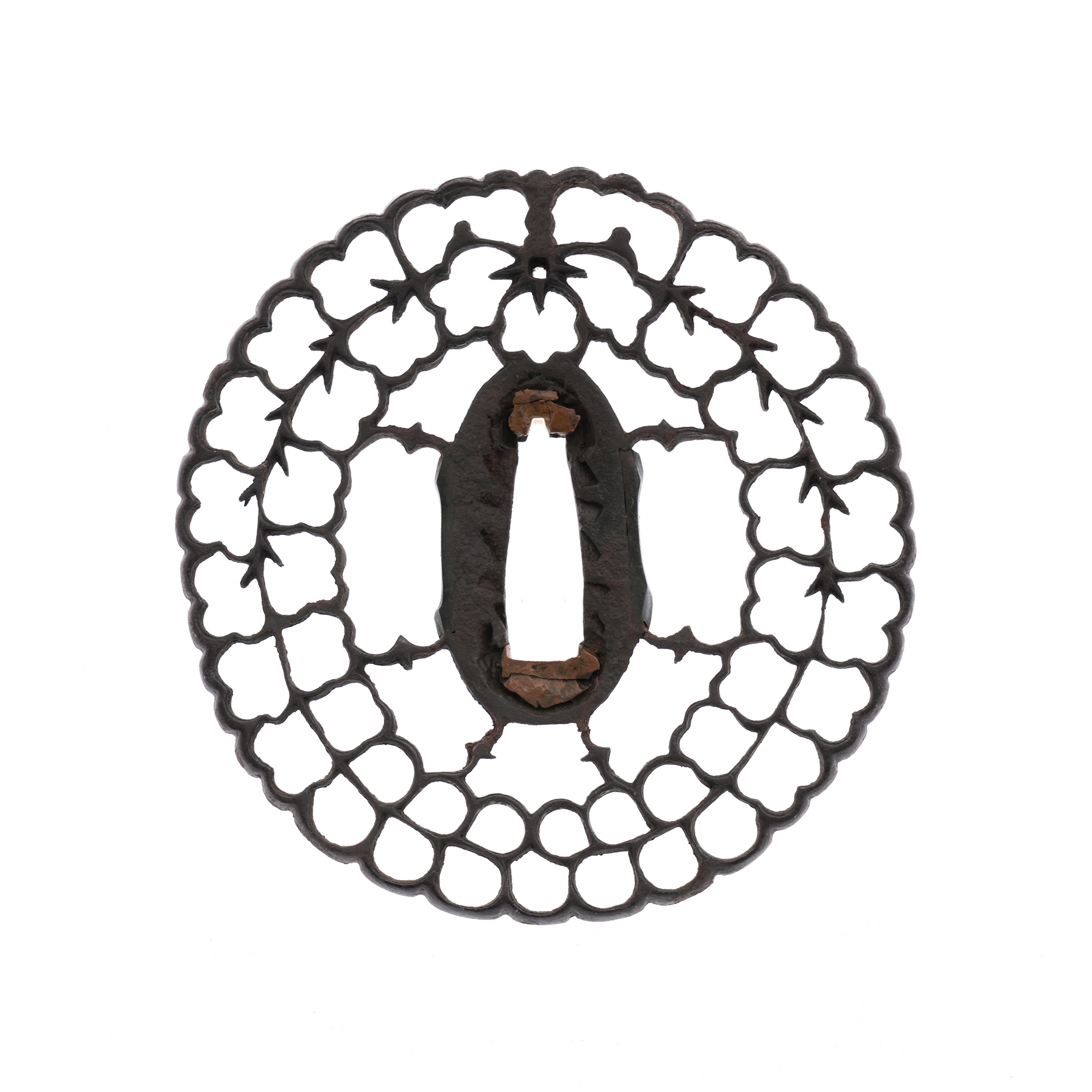
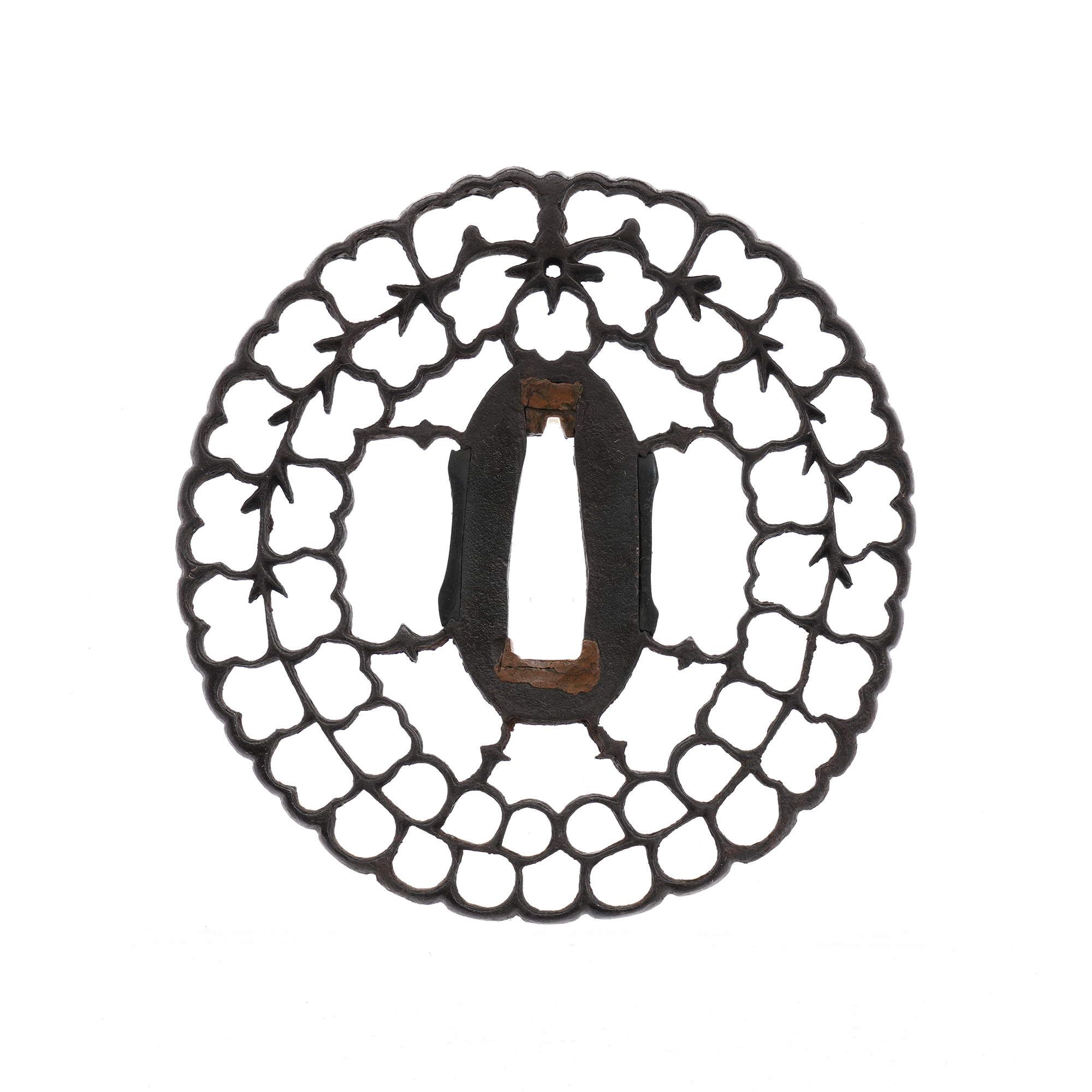
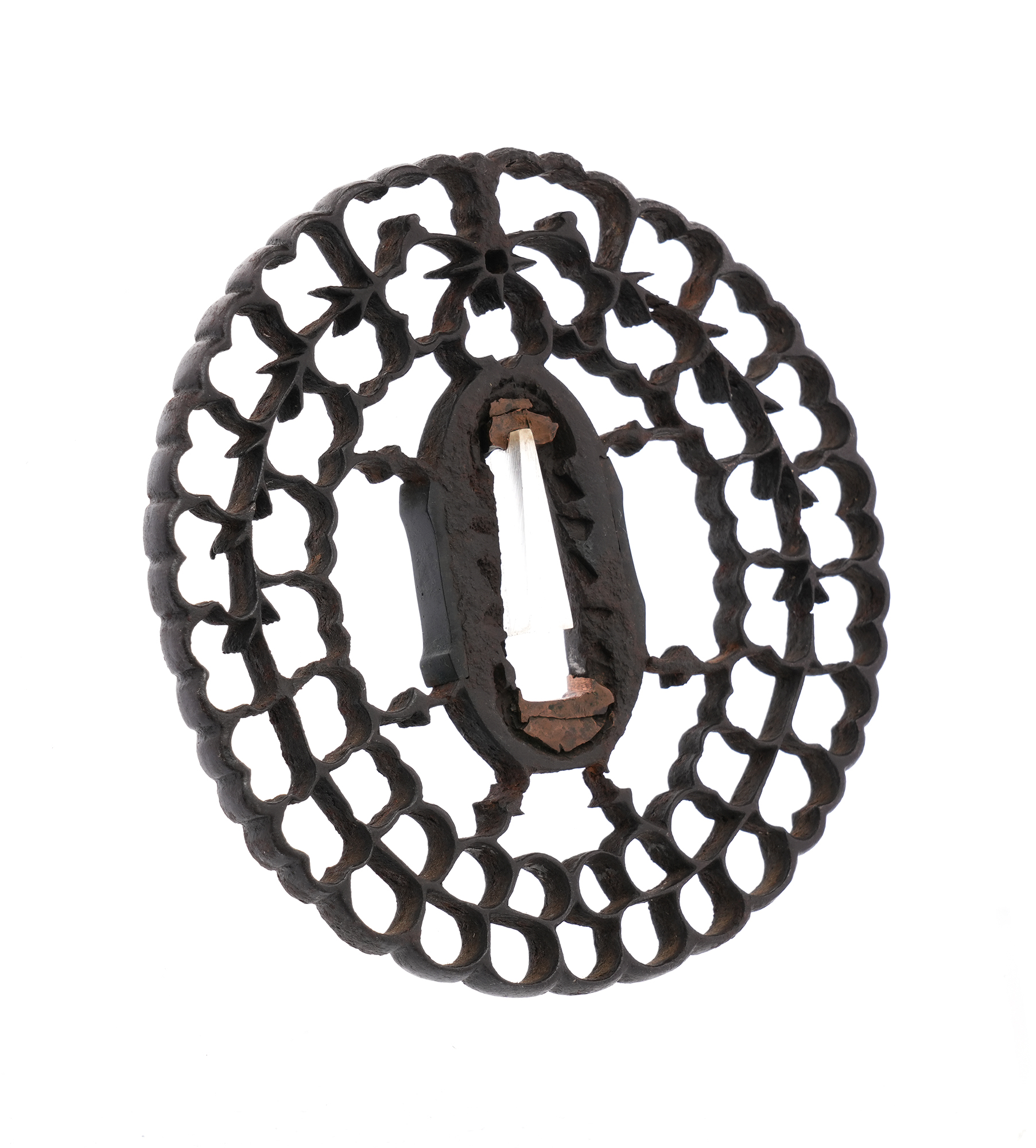
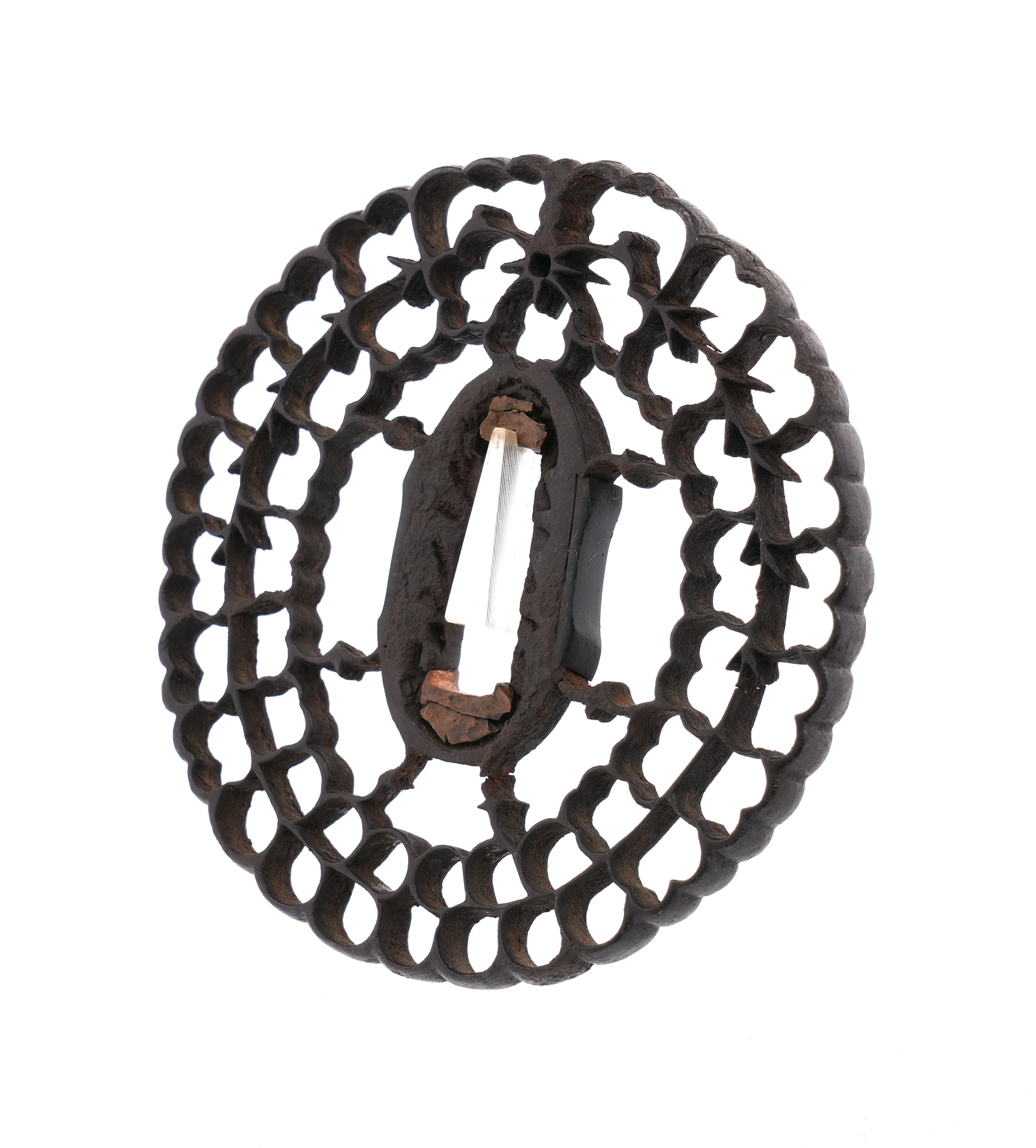
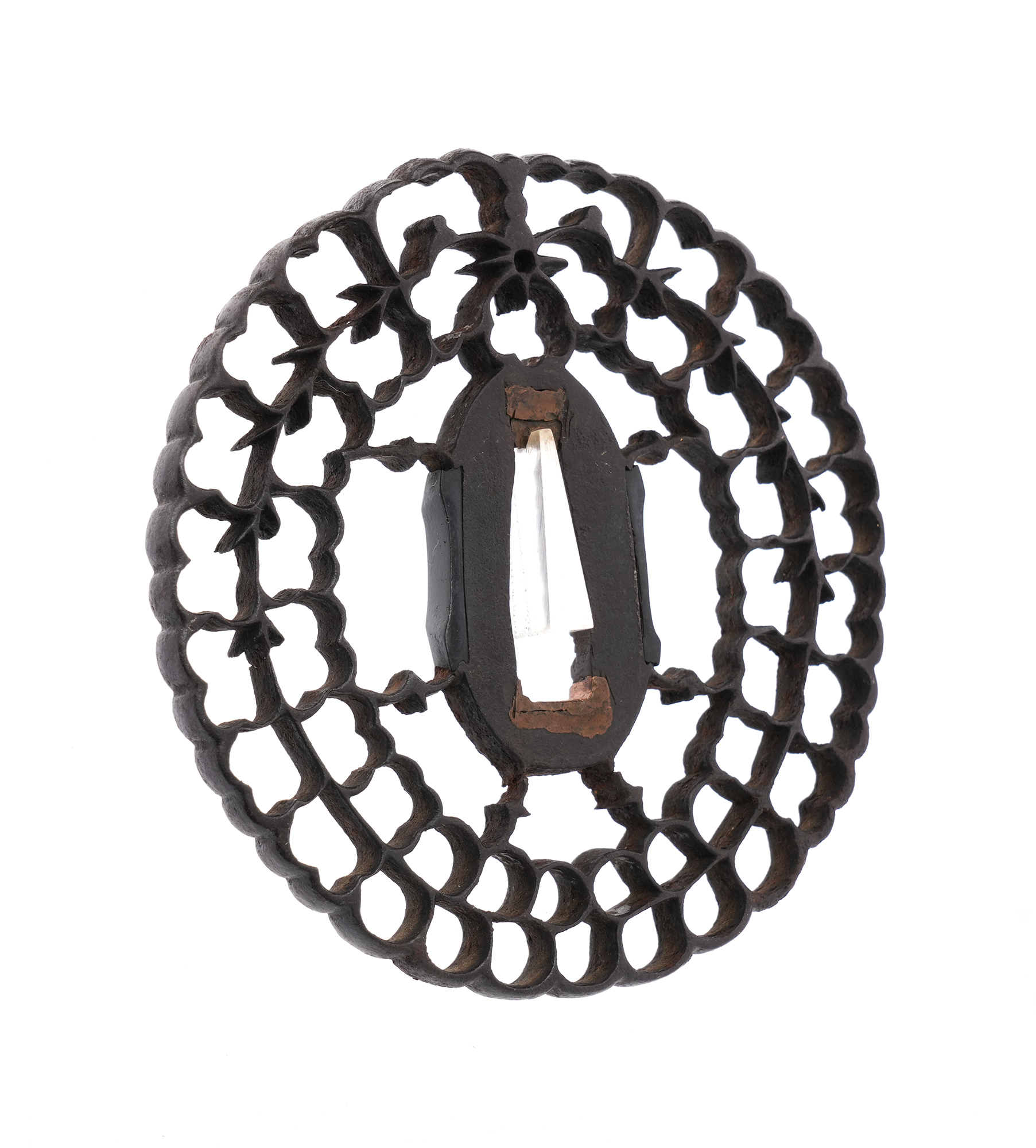
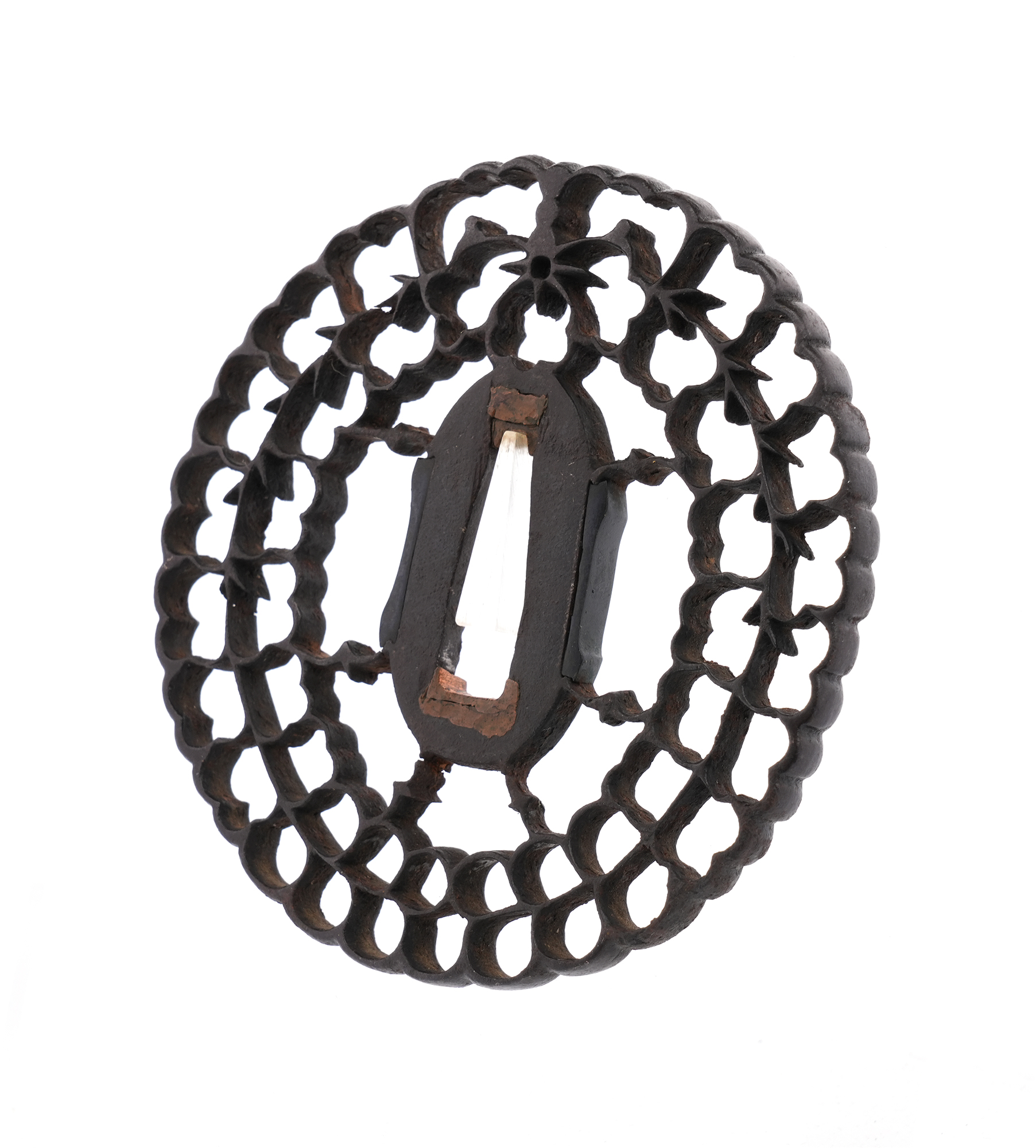
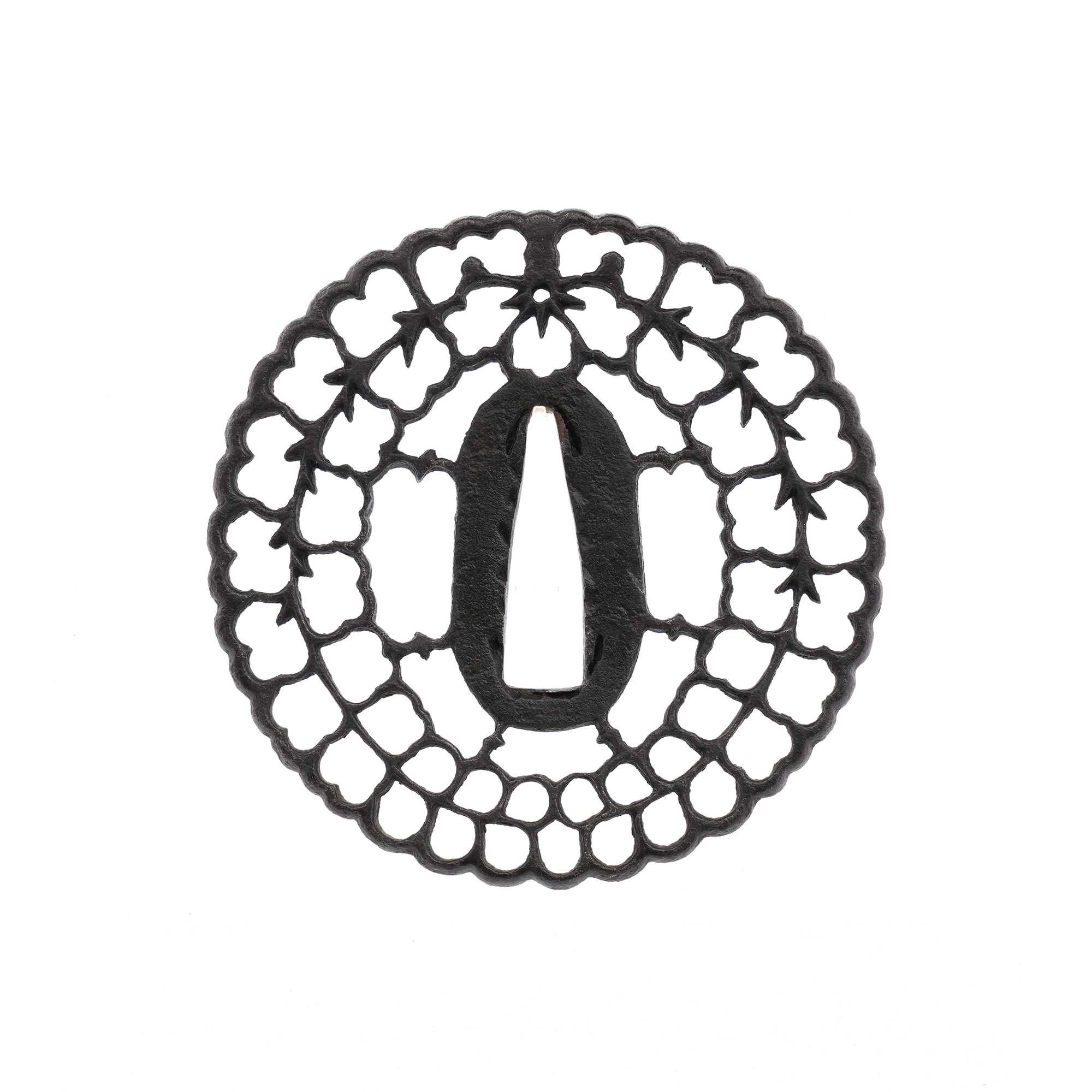
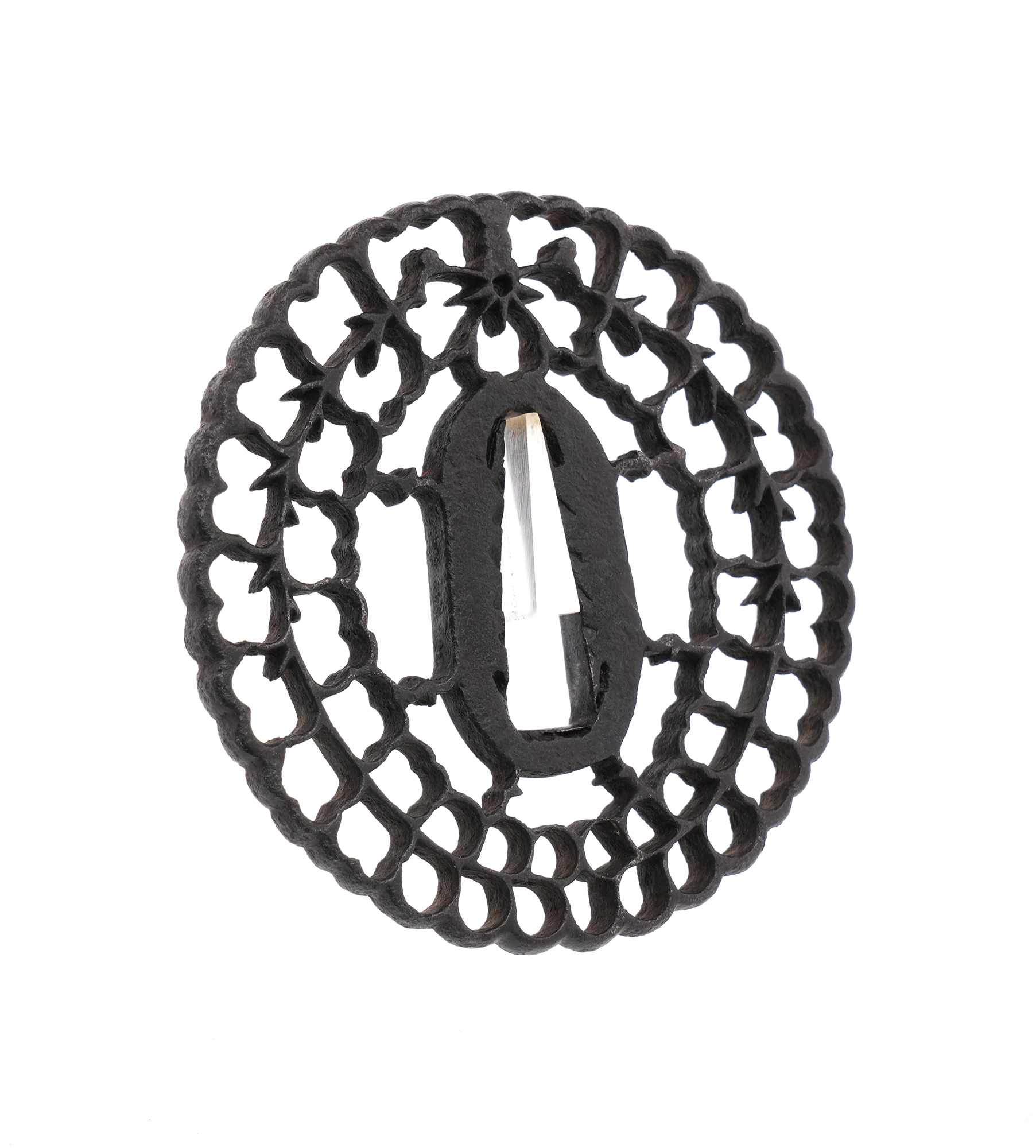
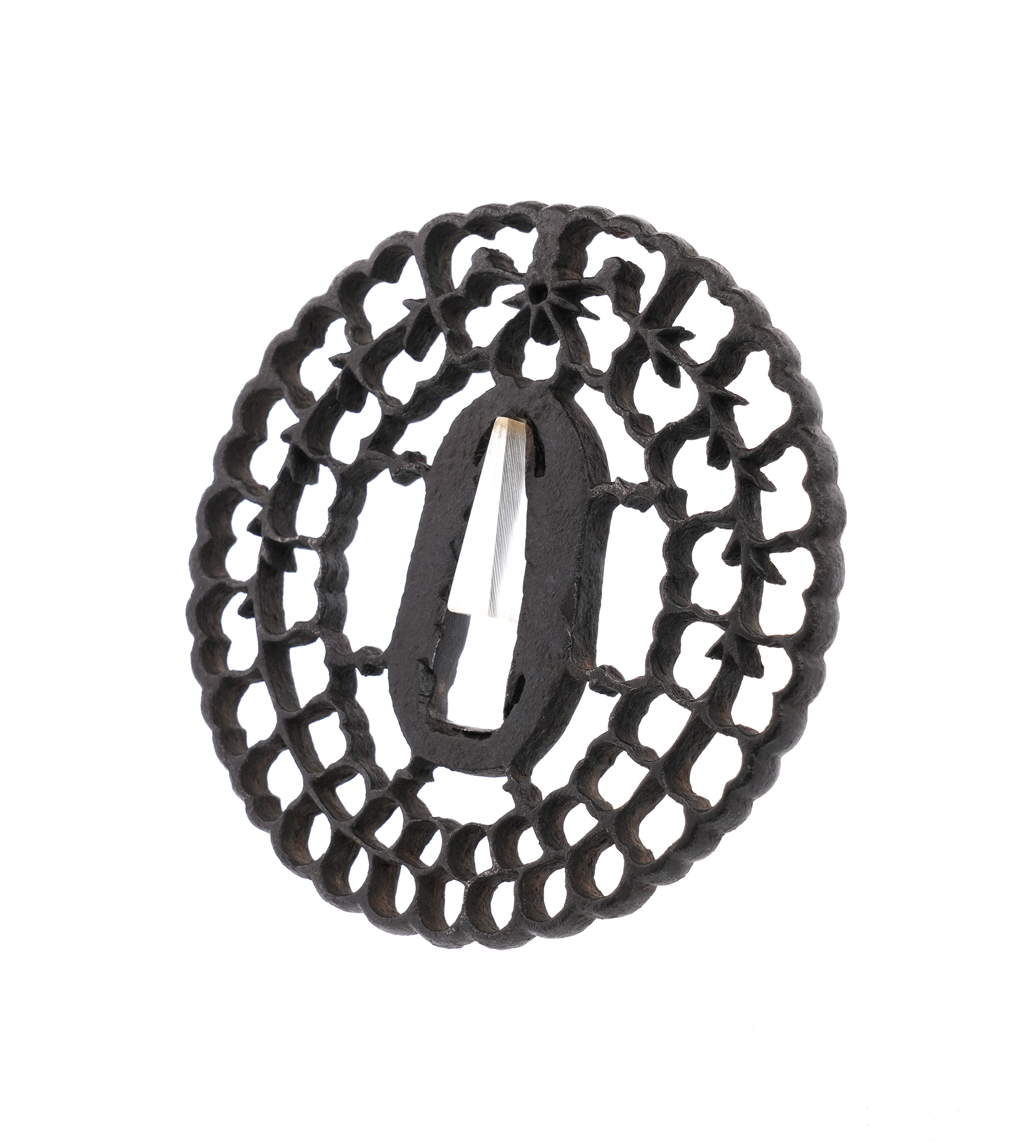
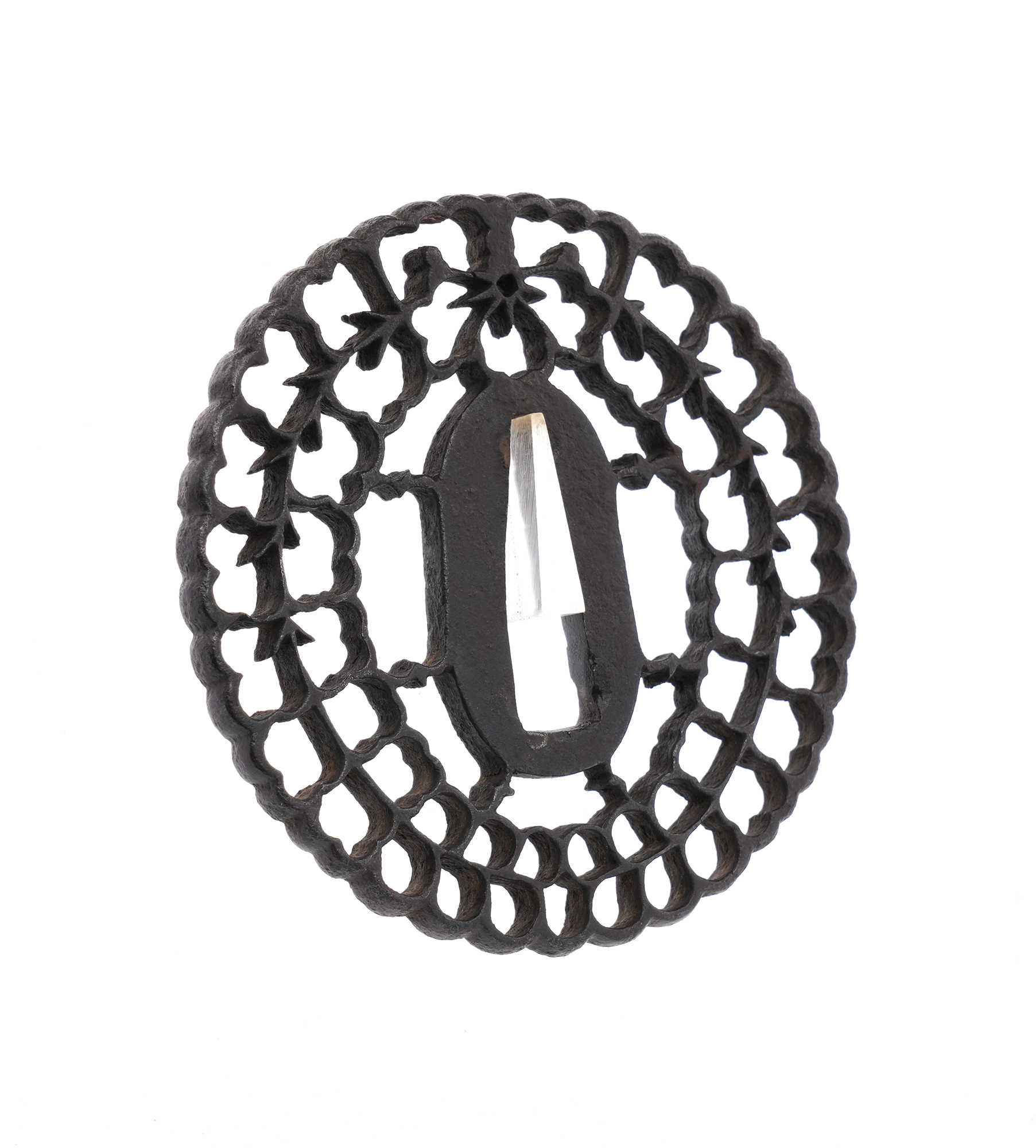
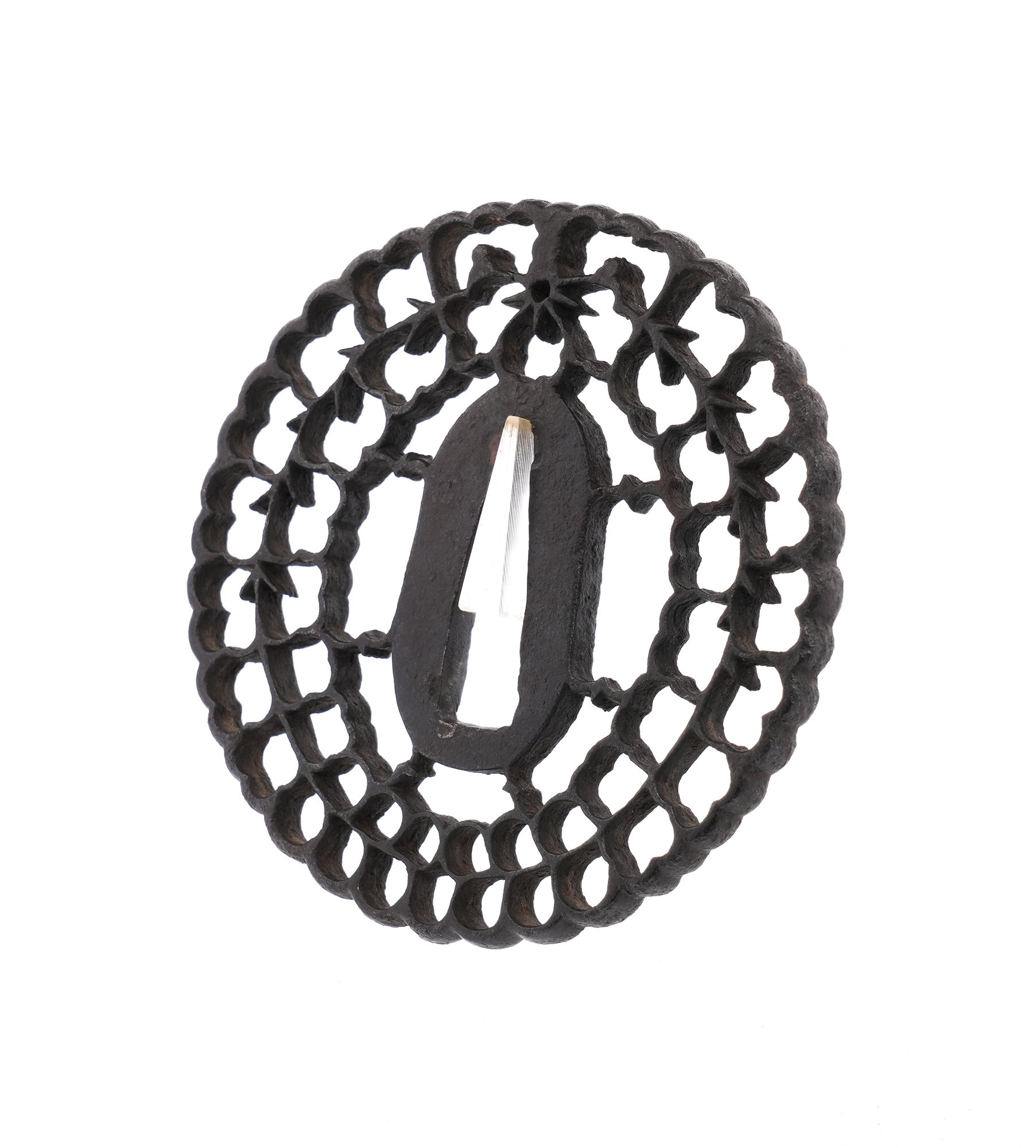
Kyo-sukashi tsuba are a representative school of sukashi tsuba that developed primarily in Kyoto, and they are highly regarded for their refined designs and light, nimble sukashi techniques. Their style, which reached completion from the Momoyama period to the early Edo period, was widely favored for combining the practicality of the warrior class with the elegance of the capital. This work is a daisho set with iron ji fashioned into a circular shape, featuring a kiri-mon at the top center and wisteria flowers arranged continuously across the entire surface; the sukashi of wisteria flowers running along the outer circumference are linked in a regular pattern, and the thin ji-tetsu connecting them creates a light and graceful composition. It does not stop at mere decoration, as the sukashi itself forms the silhouette of the tsuba, revealing the sophisticated design sense unique to Kyo-sukashi. The ji-tetsu shows a well-forged iron quality and has taken on a calm, blackish-brown patina through many years of use; despite the thin and delicate sukashi, the overall balance is maintained without collapse, giving the sense that it is the work of a craftsman with certain skill. The fact that both the dai and sho are matched in the same design is also a highlight, and shakudo is fitted into the kozuka and kogai hitsu-ana, demonstrating a high level of perfection as a daisho tsuba set. Since ancient times, wisteria has been cherished as an auspicious plant symbolizing prosperity and longevity, and it was favored as a prestigious design even within warrior society. The continuous wisteria flower sukashi seen in this work possesses nobility within its grace, skillfully expressing the refined aesthetic sense of the capital style. This is an excellent daisho set where the light modeling through delicate sukashi and the antique iron quality harmonize beautifully, making it a masterpiece through which one can fully appreciate the charm of Kyo-sukashi tsuba.
NihontoWatchOffered by Toushin

We couldn’t find current papers for this piece. Ask the dealer whether it has been, or can be, submitted to shinsa. — Hoshi


Machine translation of the shop's Japanese ·
Machine translation from the shop's Japanese · may contain errors ·
We could not find an authenticity certificate on the seller’s listing. Japanese swords and fittings are normally papered by the NBTHK (or the NTHK). Without one, the attribution is the seller’s own assessment and has not been independently verified — treat it with caution and ask the dealer about certification before buying.
As a rule we do not accept returns, except when we have sent a different item from the one ordered or when there is a significant discrepancy between the description and the item. If you wish to return an item, please contact us within 3 days of its arrival and then send it back.
¥297,000