 NihontoWatchNihontoWatch
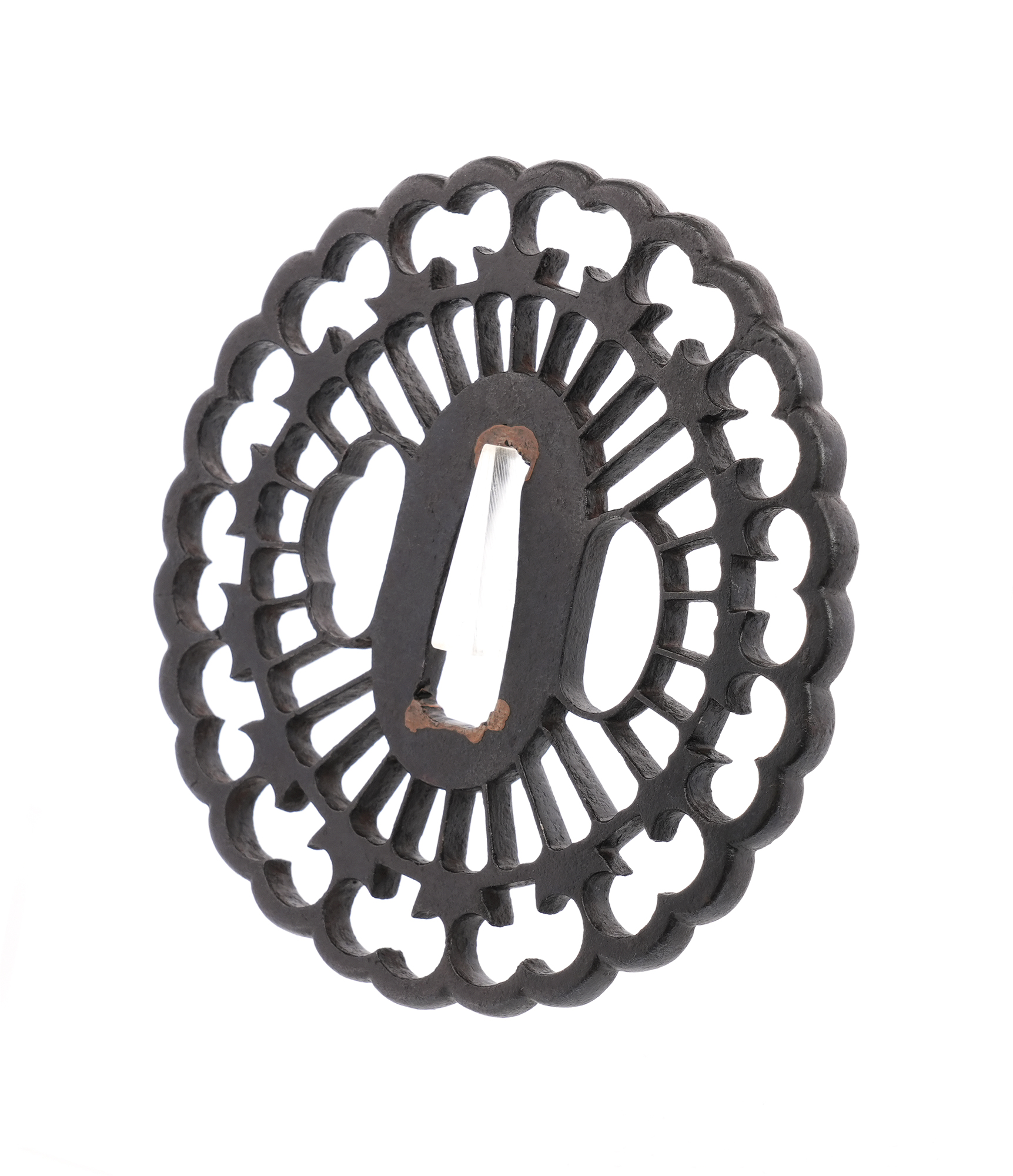
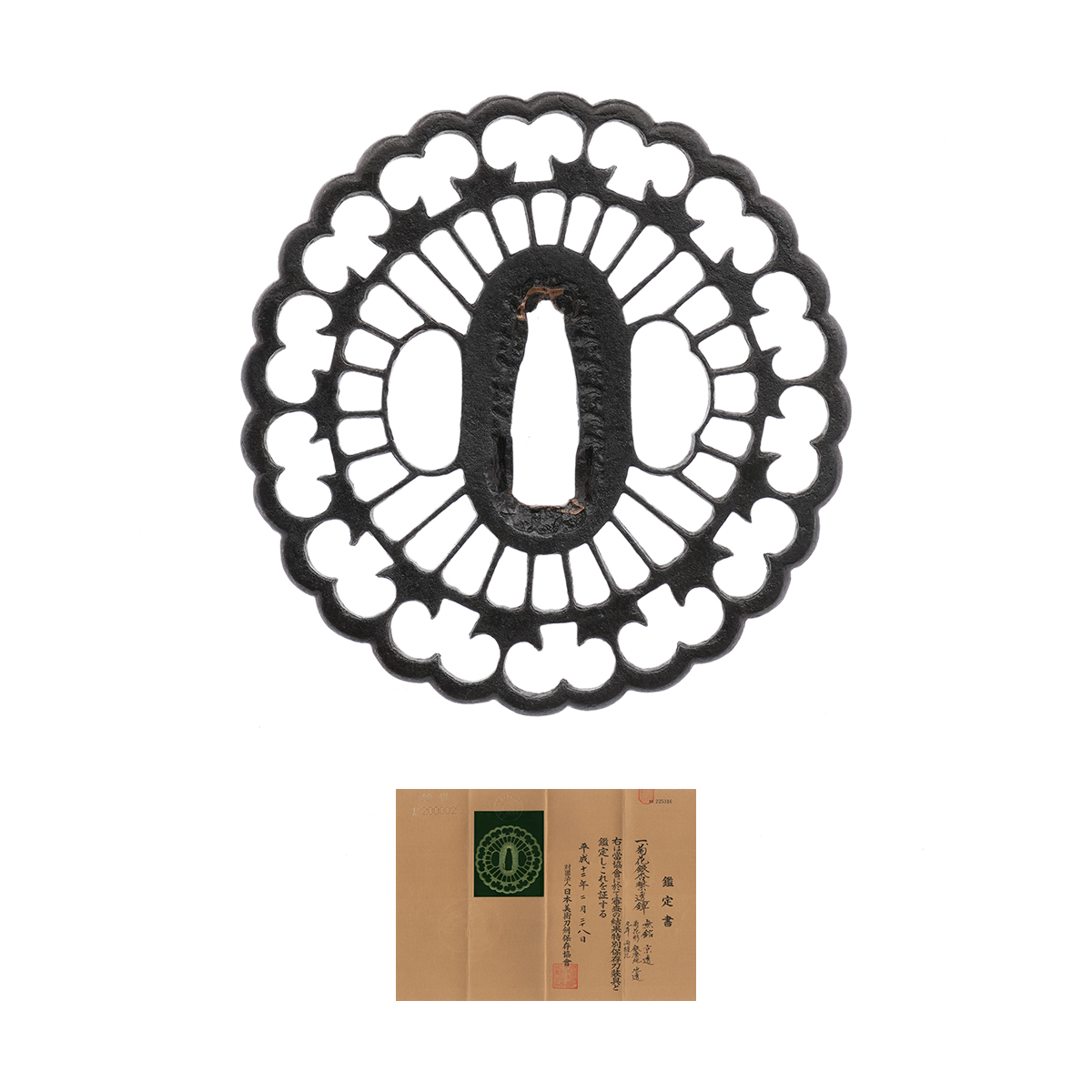
Kyo-sukashi is a style of sukashi tsuba that developed primarily in Kyoto, Yamashiro Province, with many old works seen from the end of the Muromachi period through the Momoyama period, characterized by slender and elegant sukashibori, dignified compositions, and a light iron taste. In contrast to the power of Owari-sukashi or Kanayama tsuba, the appeal of Kyo-sukashi lies in a style that emphasizes refined taste and symmetry. Old works are sometimes called Heianjo-sukashi. While restraining decorativeness, it pursued a symmetrical compositional beauty, and its elegant forms had a great influence on sukashi tsuba of later generations. This work is a tetsu migaki-ji kikkagata ji-sukashi tsuba, with the outer perimeter shaped into a chrysanthemum form, the interior featuring a continuous sukashi of connected ginkgo leaves, and thin radial sukashi arranged toward the center to compose an orderly geometric beauty. Despite the extremely slender sukashi, the balance of each part remains unbroken, showing a form that combines lightness and robustness; the polished tetsu-ji overflows with the moist texture of old iron, and the soft contours of the maru-mimi lend a calm dignity to the whole. It is a superior work in which the high design capability and outstanding sukashibori techniques unique to Kyo-sukashi are condensed within a concise design. The state of preservation is extremely good, and the antique iron taste, precise sukashibori, and well-balanced composition are all excellent, making this a piece of high value both as a reference material and for appreciation, allowing one to fully enjoy the original beauty of Kyo-sukashi.
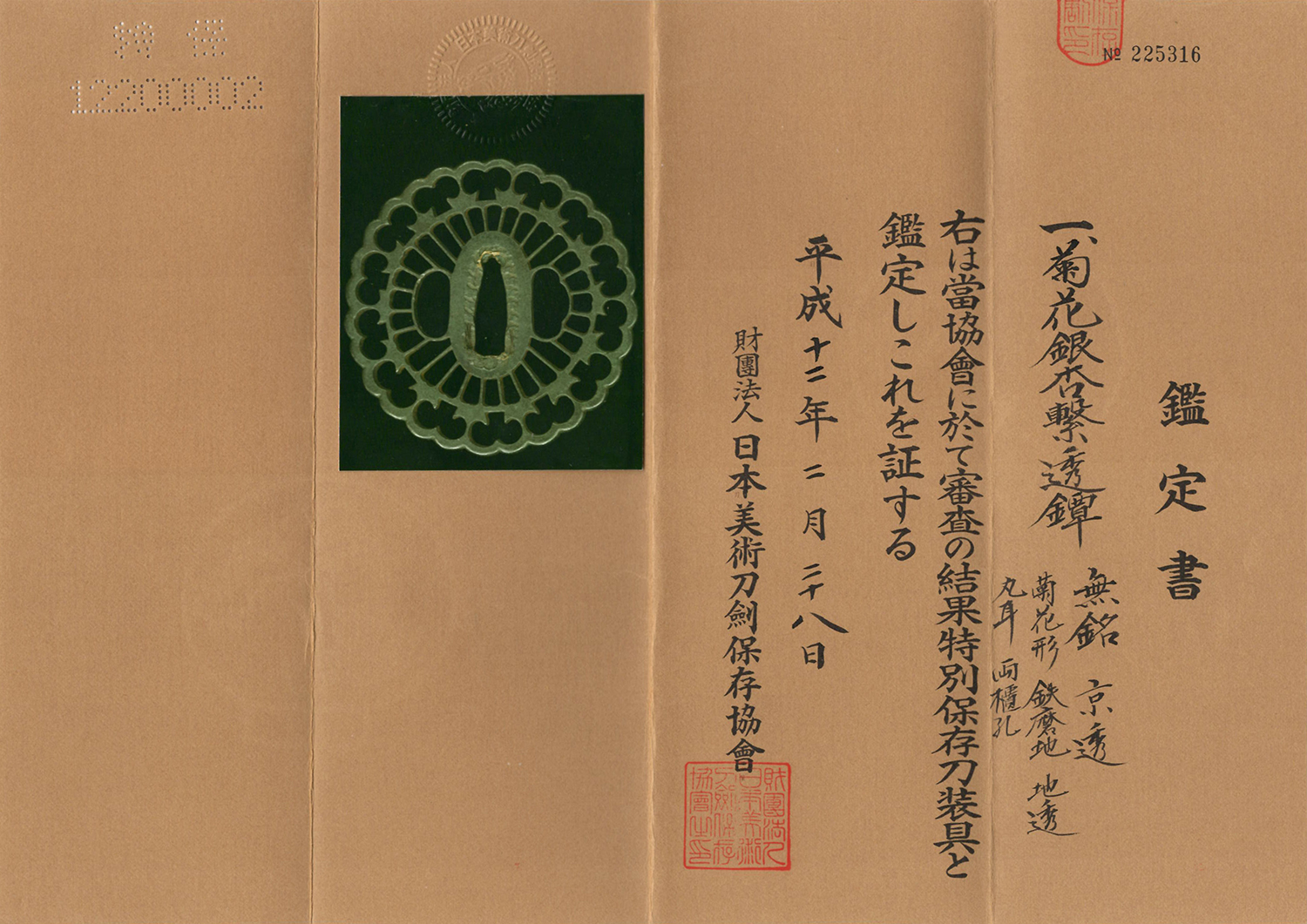
Certificate reading — 無銘(京透)
NihontoWatchOffered by Toushin

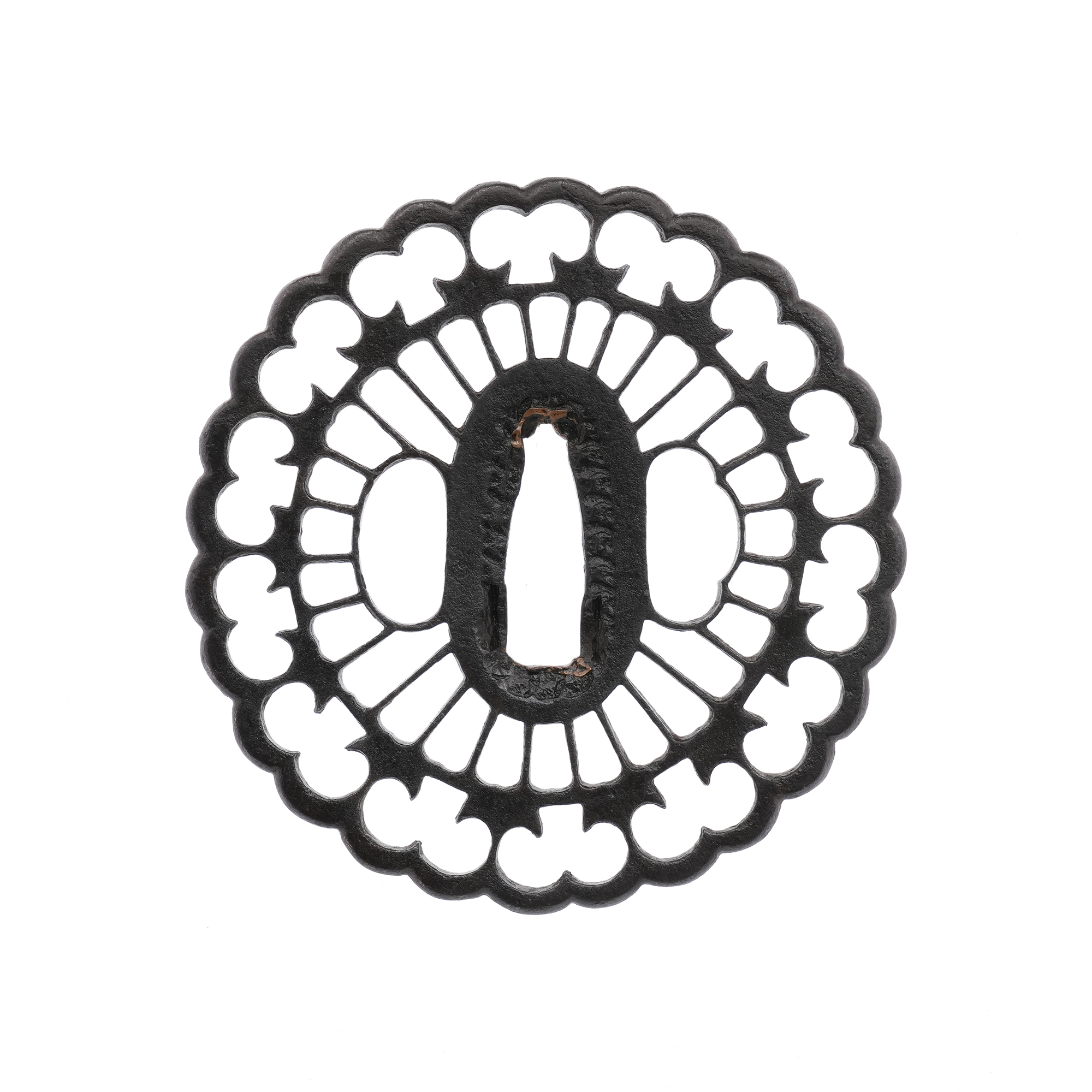

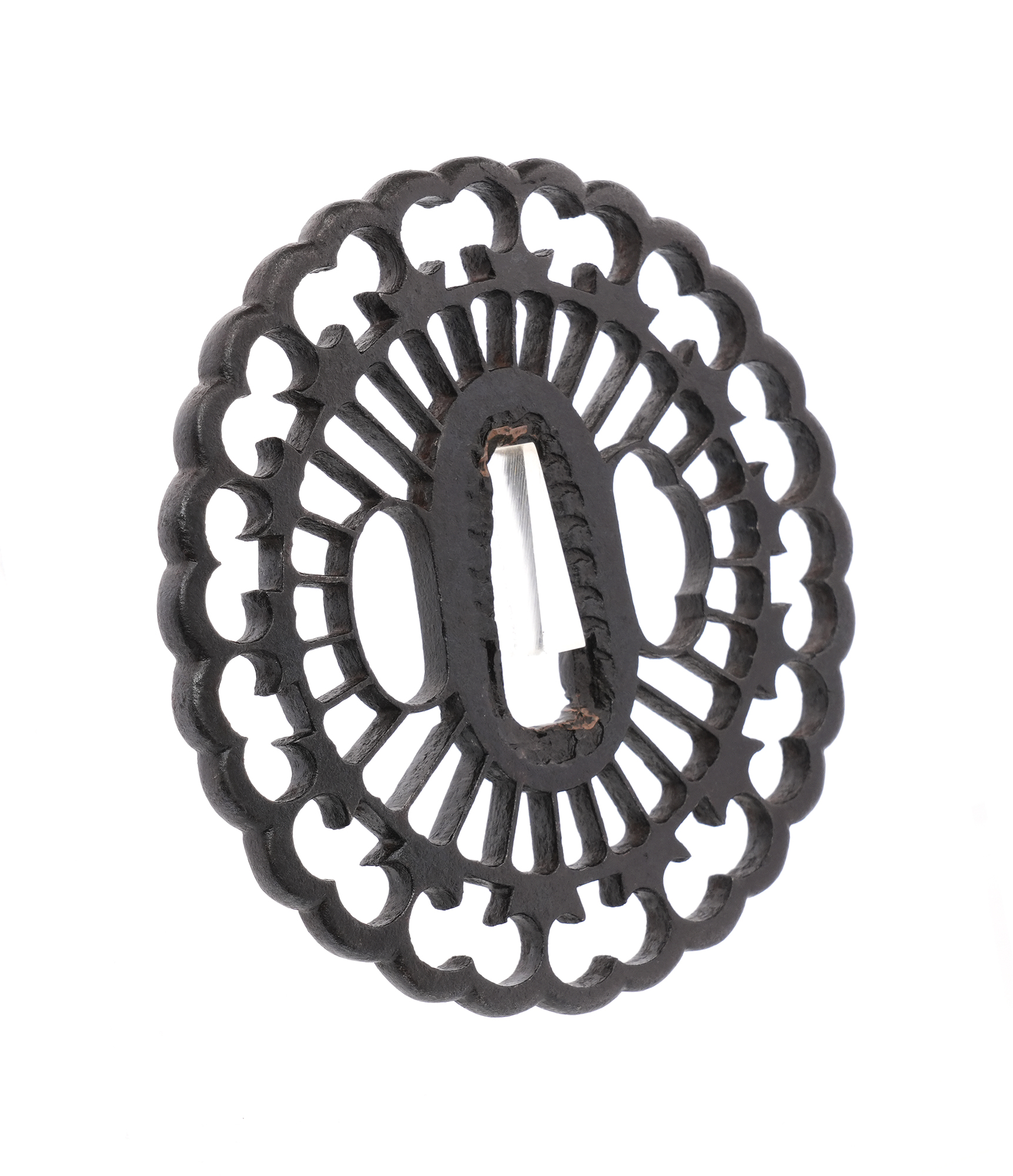
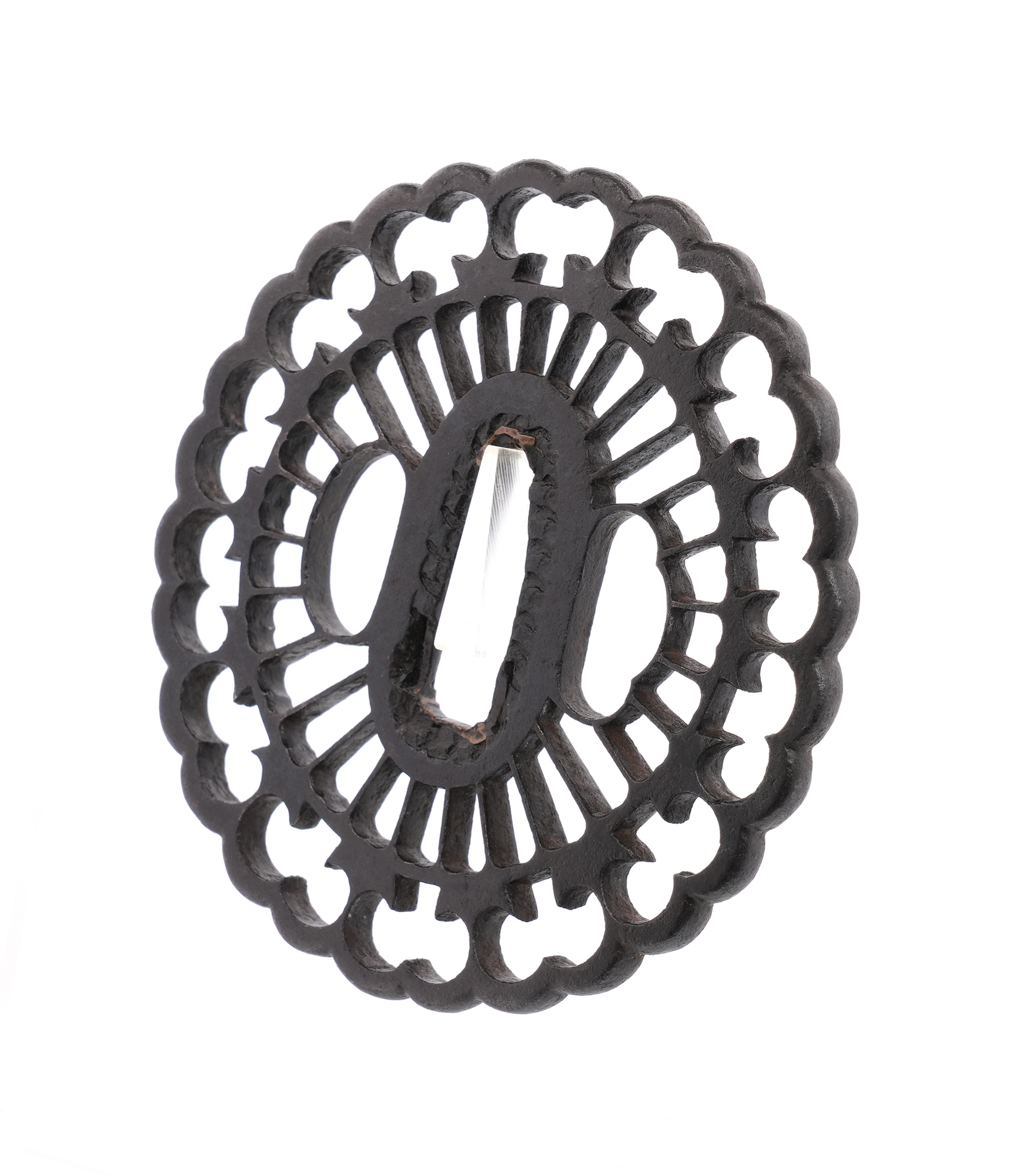
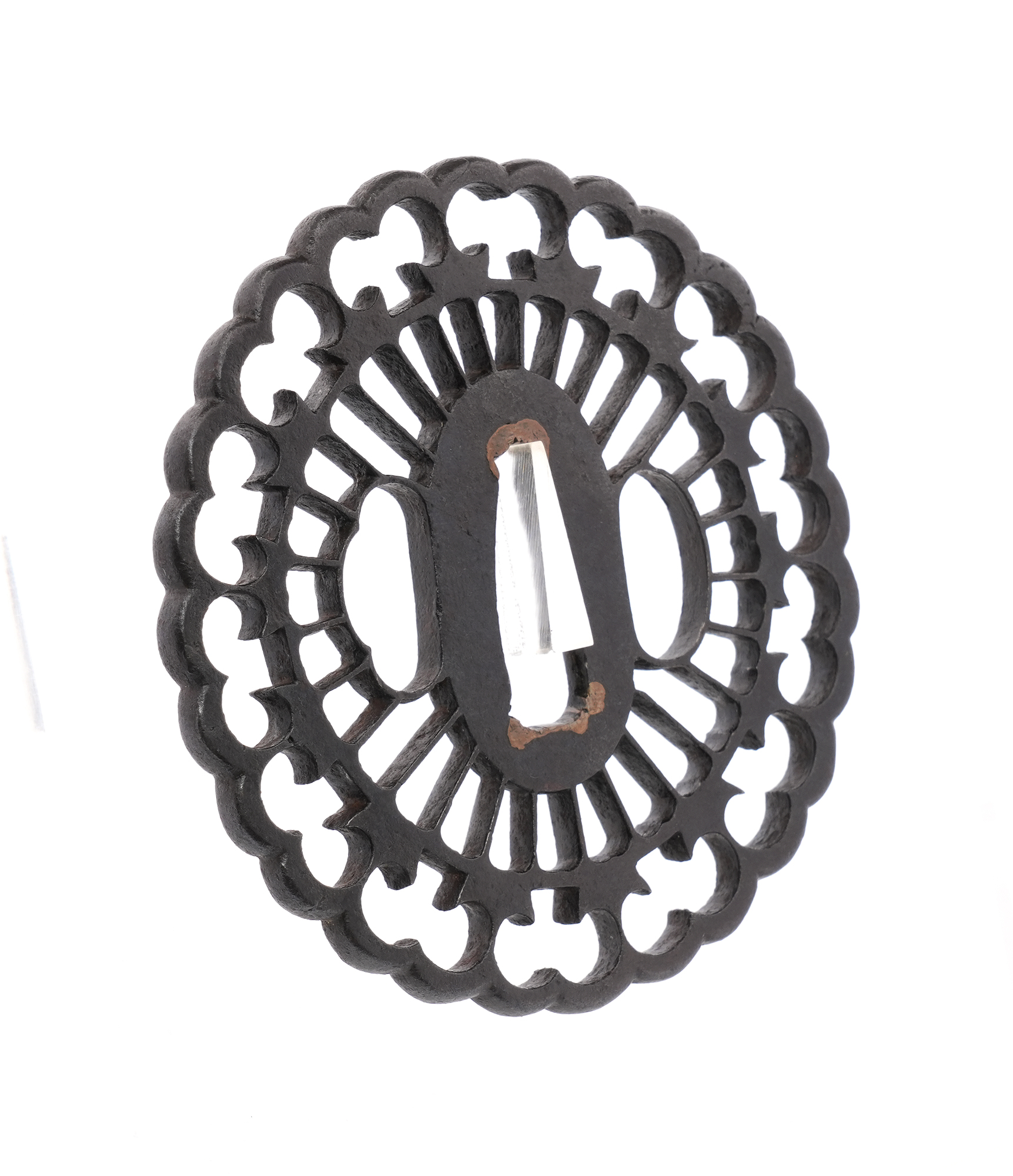
Kyo-sukashi School
early Muromachi (c. 1390-1430)
Yamashiro
Unsigned
Tokuho (NBTHK)
Machine translation of the shop's Japanese ·
Machine translation from the shop's Japanese · may contain errors ·
Iron-tsuba · Yamashiro
A Hozon-certified fitting of notably superior craftsmanship and condition, often with signature or workmanship of high reference value.
The NBTHK (Nihon Bijutsu Tōken Hozon Kyōkai, the Society for the Preservation of Japanese Art Swords) is a public-interest incorporated foundation founded in 1948 and supervised by Japan’s Agency for Cultural Affairs (Bunkachō); it is based at the Japanese Sword Museum in Tokyo. Its expert panels physically examine each submitted work (shinsa) and issue a certificate (kanteishō) ranking it by artistic and historical merit. NBTHK papers are the most widely recognized standard of authentication for Japanese swords and fittings.
NBTHK official siteAs a rule we do not accept returns, except when we have sent a different item from the one ordered or when there is a significant discrepancy between the description and the item. If you wish to return an item, please contact us within 3 days of its arrival and then send it back.
¥275,000