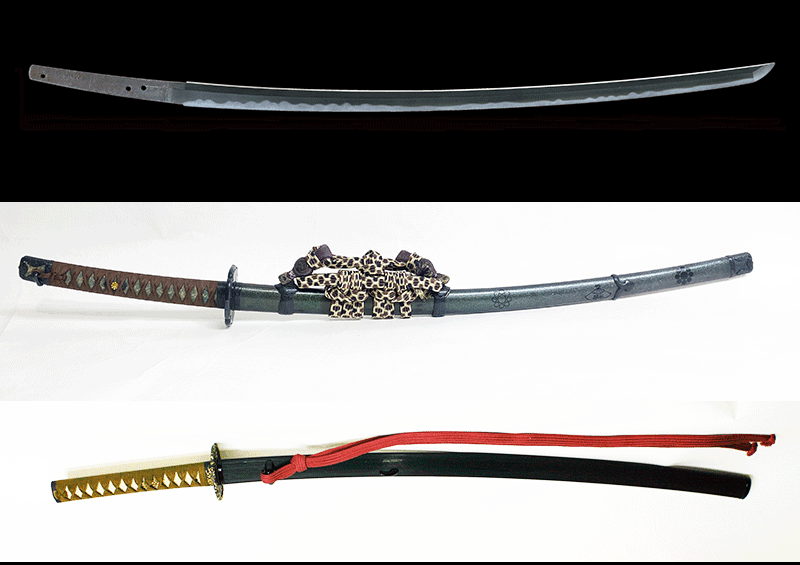
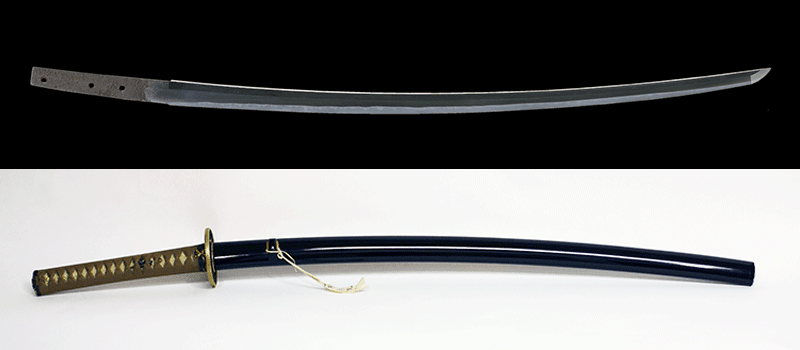
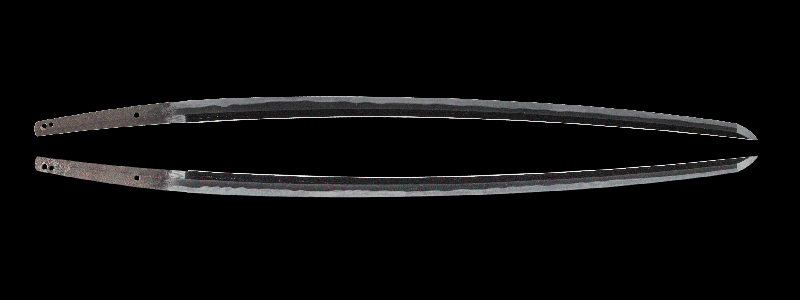
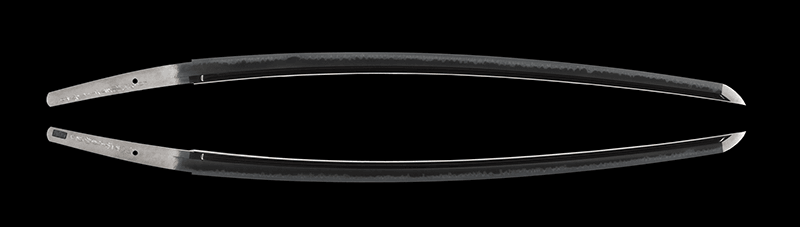
古刀 備州長船祐定 明応九年八月日
SOLD
Tracked across 81 dealers worldwide · price history · sold archive
Specifications
66.6 cm
1.3 cm
3.2 cm
2.3 cm
About the maker
Sukesada祐定
Hikobei-no-jo Sukesada is one of three smiths the published sources lift out of the crowded body of Sue-Bizen Osafune masters who signed Sukesada in the late Muromachi, his five designated works all signed katana dated between Meio 7 (1498) and Eisho 14 (1517). Among the many smiths who used the name Sukesada in late-Muromachi Osafune, the NBTHK's commentary repeats that those bearing the common-name titles Yosozaemon-no-jo, Genbei-no-jo, and this Hikobei-no-jo are 「とりわけ技術が高い」, the most accomplished of the line even within the same period and school. The published sources transmit a further fact that fixes his place in the family: he was the elder, 「与三左衛門尉祐定の父と伝え」, the father of Yosozaemon-no-jo Sukesada, the most celebrated of all the Sue-Bizen Sukesada. He sits, then, at the head of the most distinguished branch of the last great phase of the Osafune line, the generation that worked the long uchigatana as the tachi fell out of use. His declared specialty is a calm one. The published sources read his manner as broadly suguha, the register in which his fine pieces are found, his hand summarised as 「作風は概ね直刃で、この手のものに佳作を見る」. The Eisho 10 katana of 1513 shows that quiet domain at its best. The yakiba is taken deliberately broad on a suguha base, into which gunome and ko-gunome enter, the ashi present and the yo conspicuous, ko-nie clinging along a habuchi that here and there drifts into faint hotsure and a little yubashiri, fine sunagashi running through and long kinsuji striking across the temper. The boshi is tempered deep, shallow and notare-leaning into a pointed cast on the omote, straight to a large maru on the ura, the kaeri brushed down long on both sides. It is a restrained blade carrying a great deal of incident within the line, the kind of finely controlled suguha the published sources name his own. The other pole of his range is fully native Bizen, and the NBTHK is explicit that he is no less skilled in it: 「本作のような備前本来の乱れ刃もまた上手である」. Here the keynote is choji mixed with gunome, the valleys of the midare opening at the base into a waist-spread koshi-biraki form, ko-choji and ko-gunome and pointed togariba folded in, the pattern in places building into a double-flower juka and a compound fukushiki midare. The jigane beneath is a tight ko-itame to itame, closely packed and clear, ji-nie attaching, fine chikei entering, and across it a midare-utsuri that runs from faint to fully risen, the speckled reflection the old Bizen steel throws back. On his most exuberant work the nie thickens, kinsuji and sunagashi play through the ha, small bead-like tobiyaki drop into the ji, and the nioiguchi stays bright and clear over the whole. The Meio 7 katana of 1498, the earliest dated of the five, is the apex of this manner, a tall flamboyant midare in which the published sources read the full play of multiple kinds of teeth, juka and fukushiki forms together, and judge it a piece in which 「彦兵衛尉祐定の本領が遺憾無く発揮された」. The two manners are not separate periods but one working range, and the designated blades favour the flamboyant pole while the commentary keeps naming the suguha as his proper domain. The signature register is consistent and is where a collector reads him first. All five are katana on ubu nakago, a long signature cut on the omote and a date on the ura, several of them in fine chisel run over two columns. The most explicit, the Meio 7 and the Eisho 6 katana, carry the full common name, Bizen no Kuni Osafune Hikobei-no-jo Sukesada saku; the pieces that sign only Osafune Sukesada without the title are appraised as Hikobei-no-jo from the manner of the mei, as the Eisho 14 and Eisho 10 commentaries say outright. One of the Eisho-dated blades drops the jo character to read simply Hikobei Sukesada, a form the published sources note is unusual but occasionally seen. The carvings deepen the picture and recur across the group: paired bo-hi with a companion tsure-hi or soe-hi, run through or stopped in maru-dome, and at the base a religious motif, on different blades a Sanskrit bonji, a Kurikara dragon, or the carved invocation Namu Hachiman Daibosatsu cut in intaglio. What sets him apart within the Sukesada body is read by his own affirmed traits rather than by contrast. His is the high-quality end of Sue-Bizen production, the ji and ha both bright and clear on his best pieces, the suguha finely grained and the midare disciplined even at its most lively, and the NBTHK calls one Eisho 6 katana, with its Kurikara and Namu Hachiman Daibosatsu carving, a work in which the Sue-Bizen character is well displayed. His relationship to the wider name is genealogical and direct: father of Yosozaemon-no-jo, set by the published sources beside Genbei-no-jo as one of the three masters whose technique stands above the rest of the line. He is distinguished from his more famous son and from the many ordinary Sukesada not by a single eccentric tell but by the evenness of his quality, the breadth of his range from quiet suguha to compound midare, and the care of his carving and signature. Five of his works have passed Juyo, and all five sit in that one register, none raised to a higher designation, so they form the body of his designated work that can in principle change hands. Fujishiro rates him Jo-jo saku, an upper-grade ranking, and his Toko Taikan valuation places him among the substantial Sue-Bizen names without reaching the top of the school. None of the five carries a recorded line of provenance or a named former owner in the published record, which is in keeping with a working uchigatana smith whose blades were made to be used rather than handed down through a daimyo house. For a private collector he is among the more attainable of the distinguished Osafune masters, a dated and signed Hikobei-no-jo Sukesada coming to market from time to time and offering, in a single blade, both his finely controlled suguha and the bright Bizen midare the published record places at the height of late Osafune work.