Around 1800 Suishinshi Masahide argued in his writings that the craft must return to the old masters’ methods: the fukkotō revival. His greatest successor Naotane worked convincingly in Bizen and Sōshū manners that had been dead for centuries.
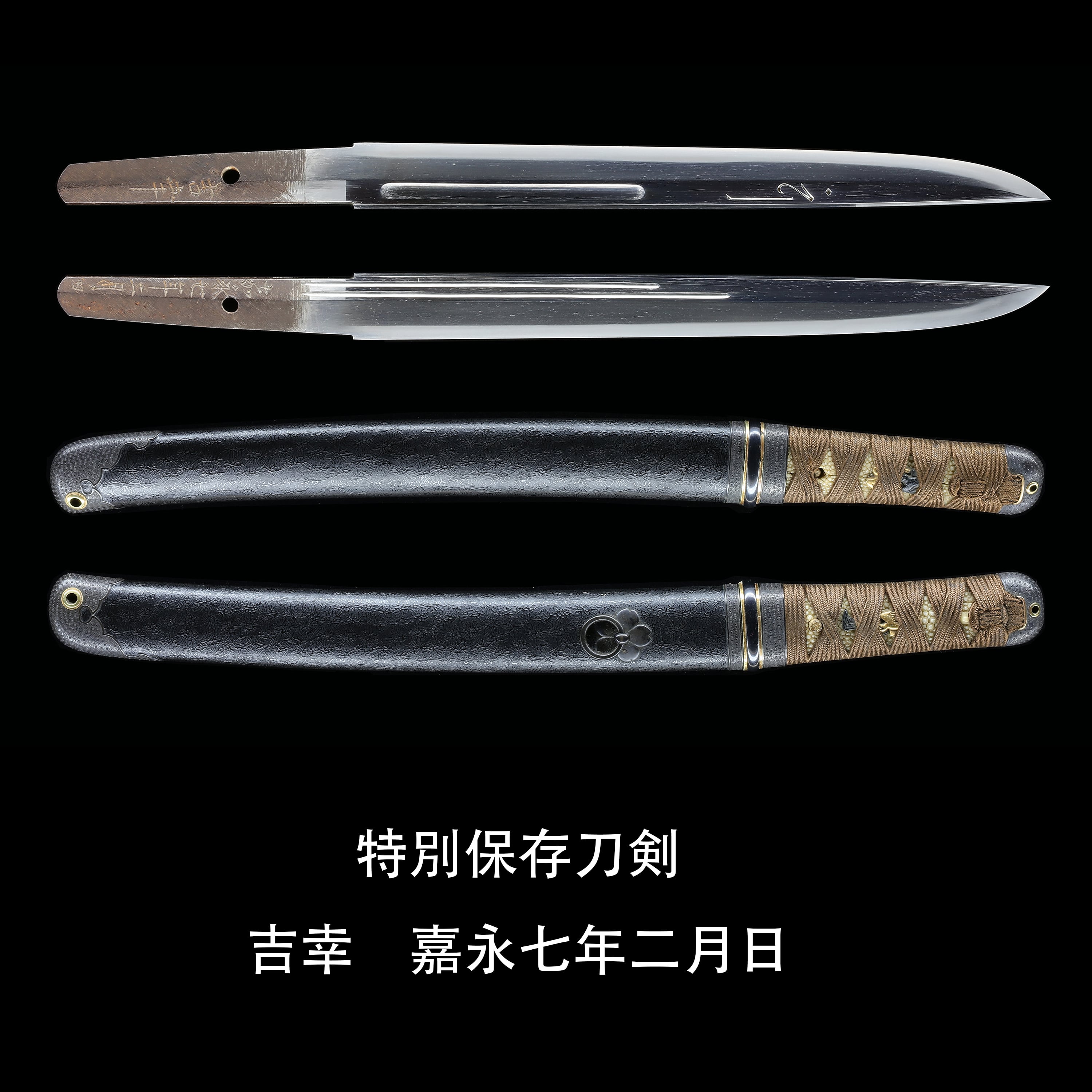
名工吉幸は出雲藩のお抱え刀工。短刀や姿の良い刀を得意とする。 本作の短刀は、菖蒲造りの美しい姿に、棒樋に梵字、そして護摩樋が彫られております。 新々刀らしい、緻密な地肌は板目に柾目が流れ、匂出来の直刃には働きが盛んに現れる。 拵も当時の石目塗り合口拵であり、桜の意匠を取り入れたここにしかない作りが秀逸である。 四分一地の金具がまた格式が高い。 1854年に造られ、170年が経とうとしている貴重な作品を、ぜひ大事になさってください。
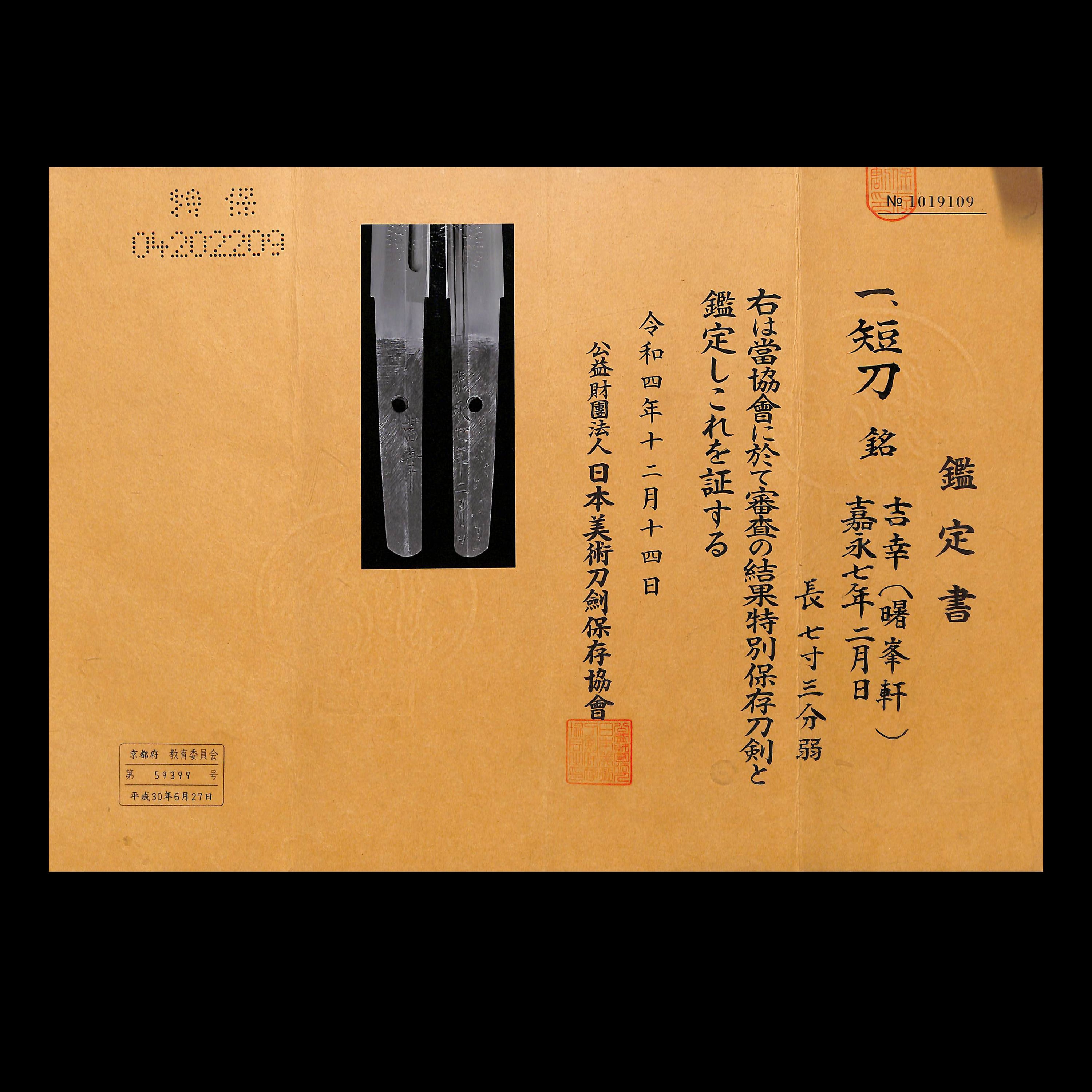
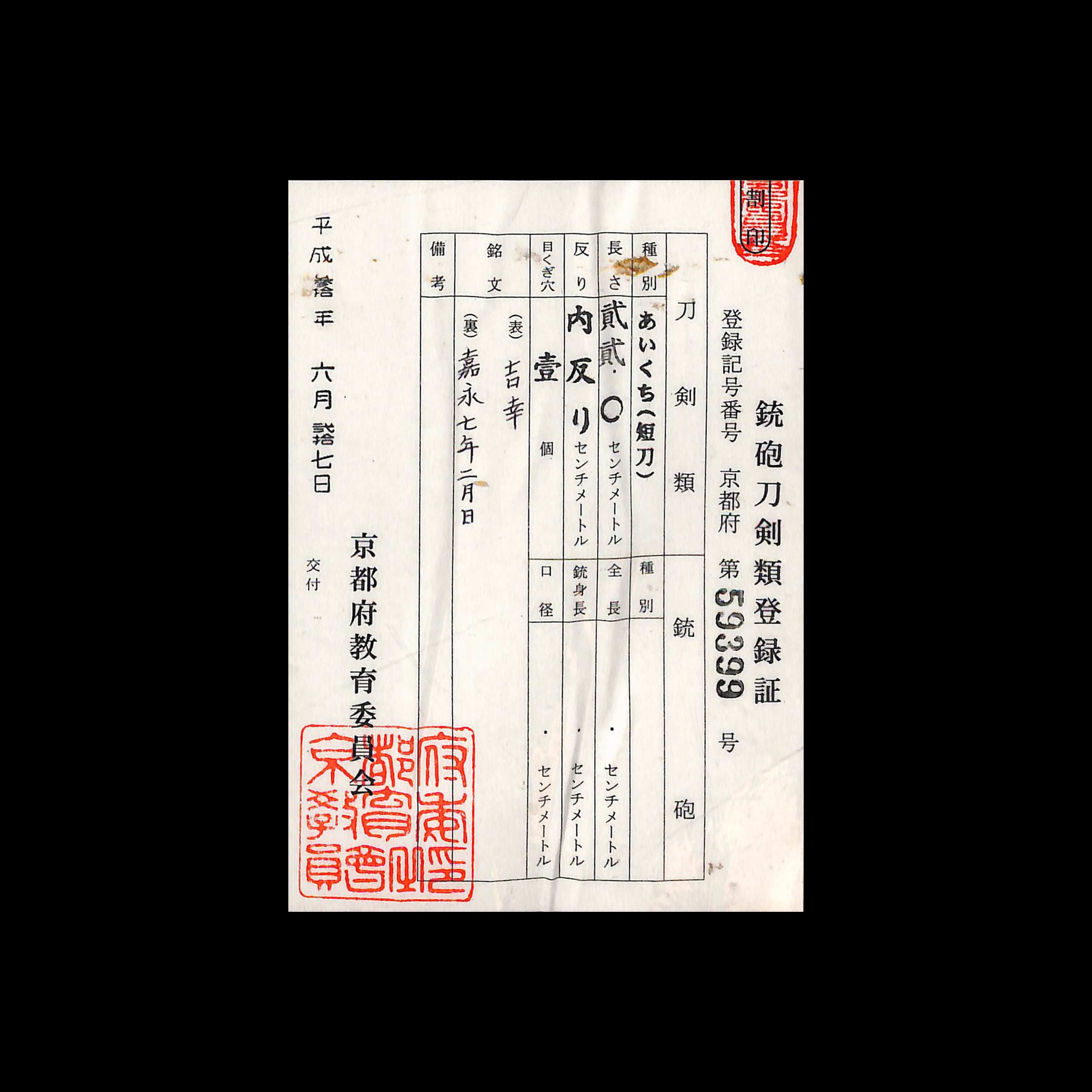
Certificate reading — 銘 吉幸(曙峯軒) 嘉永七年二月日
Offered by Ayakashi


As written by the shop
(Translation unavailable)
Hoki · around 1848-1854
Fujishiro Chu saku · Tōken Taikan top 95%
1 piece on the market now
The Shinshintō revival
Around 1800 Suishinshi Masahide argued in his writings that the craft must return to the old masters’ methods: the fukkotō revival. His greatest successor Naotane worked convincingly in Bizen and Sōshū manners that had been dead for centuries.
A Hozon-certified blade judged to show notably superior workmanship and a better state of preservation. The bar is higher: re-tempered blades and most unsigned Muromachi/Edo works are excluded.
The NBTHK (Nihon Bijutsu Tōken Hozon Kyōkai, the Society for the Preservation of Japanese Art Swords) is a public-interest incorporated foundation founded in 1948 and supervised by Japan’s Agency for Cultural Affairs (Bunkachō); it is based at the Japanese Sword Museum in Tokyo. Its expert panels physically examine each submitted work (shinsa) and issue a certificate (kanteishō) ranking it by artistic and historical merit. NBTHK papers are the most widely recognized standard of authentication for Japanese swords and fittings.
NBTHK official siteExcept where the item is defective, we do not accept returns as a rule. In the case of an error on our part, please contact us by email within 3 days of the item's arrival.
¥650,000