 NihontoWatchNihontoWatch
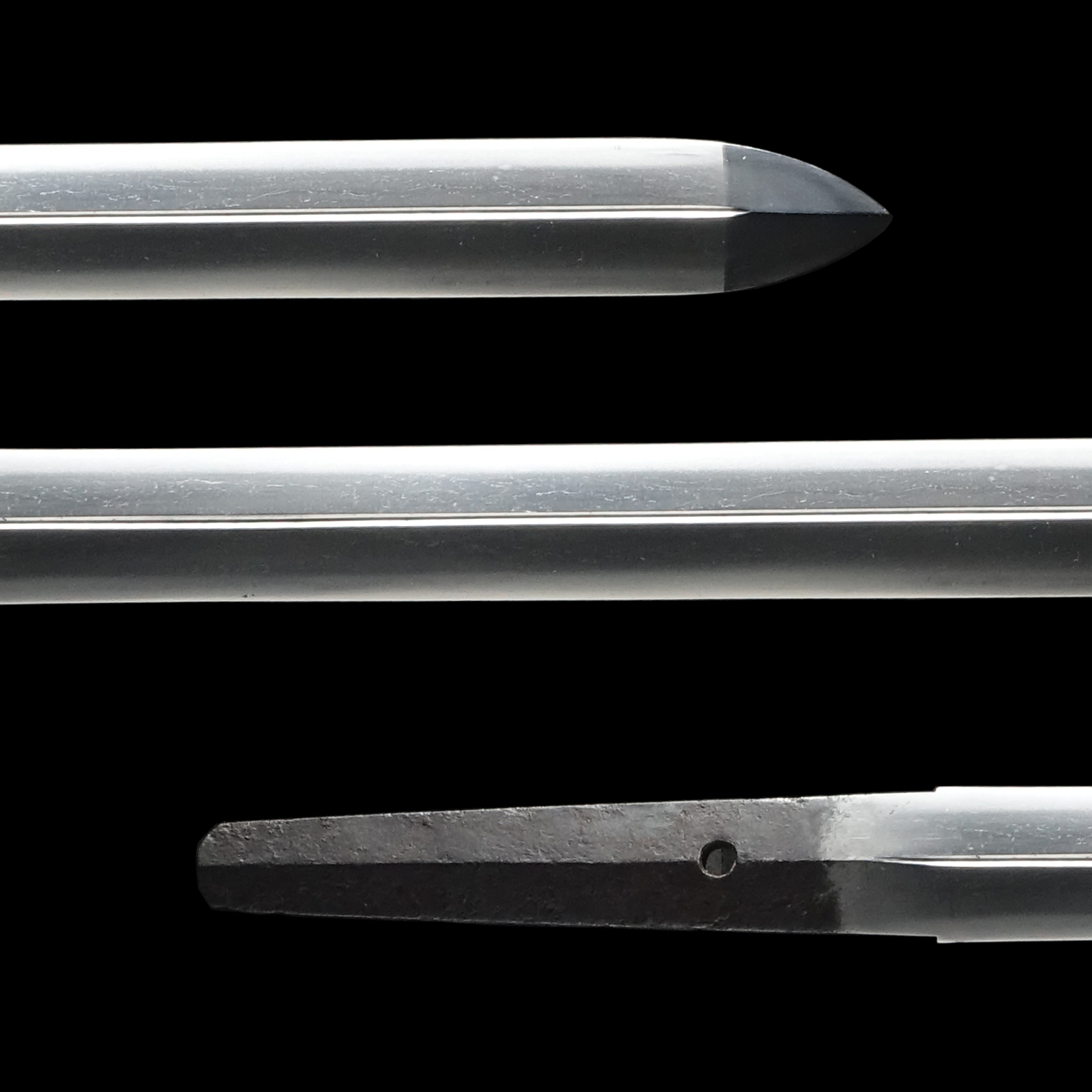
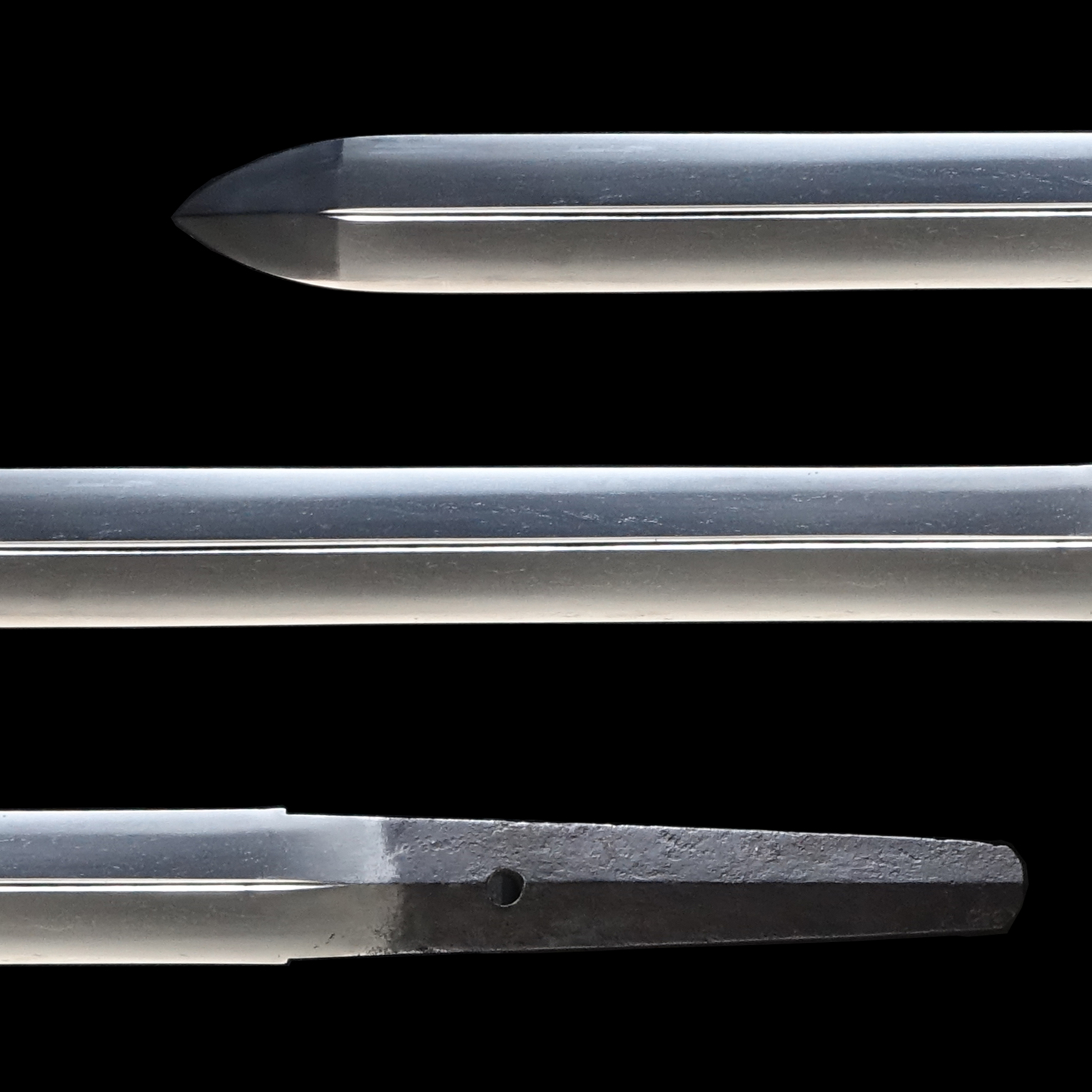
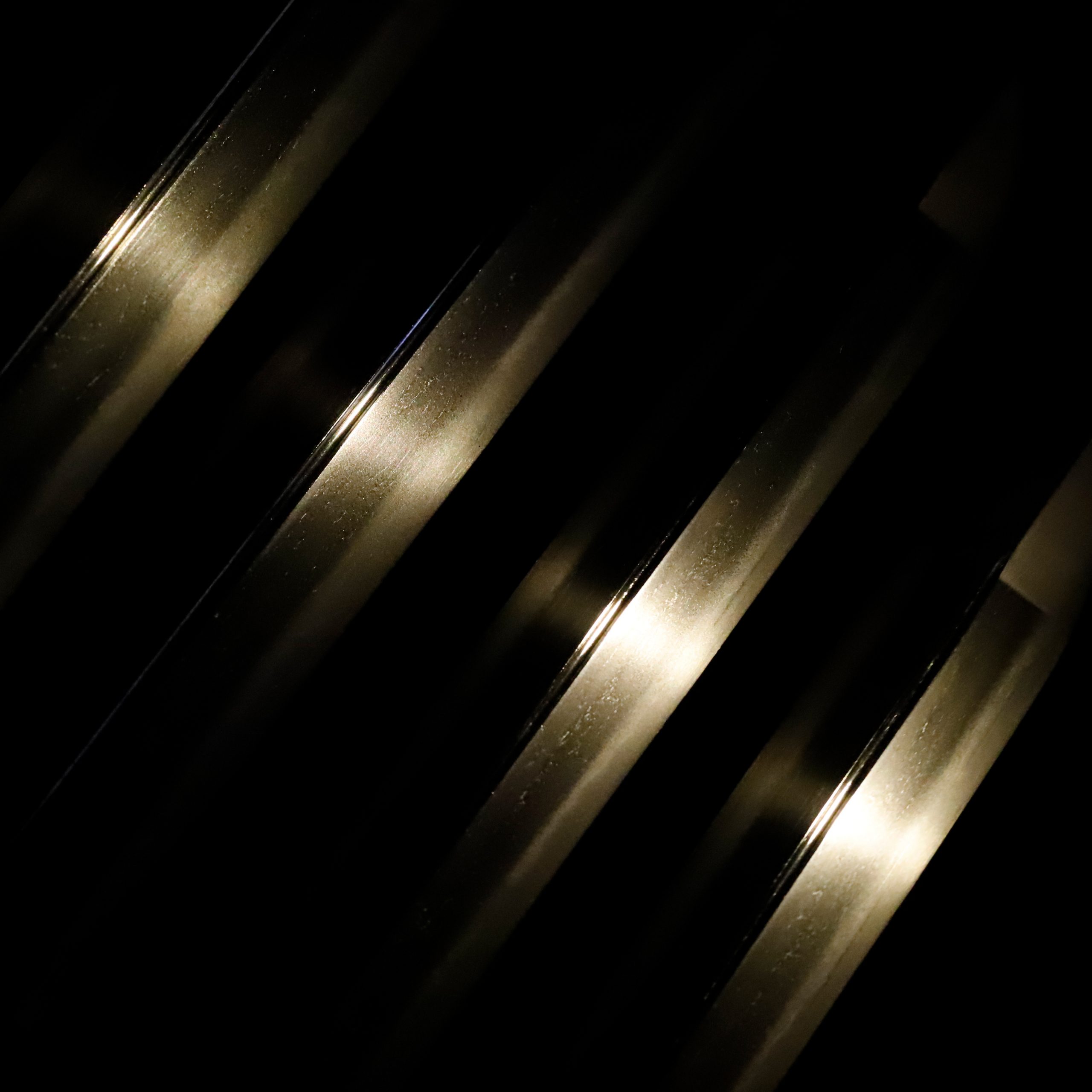
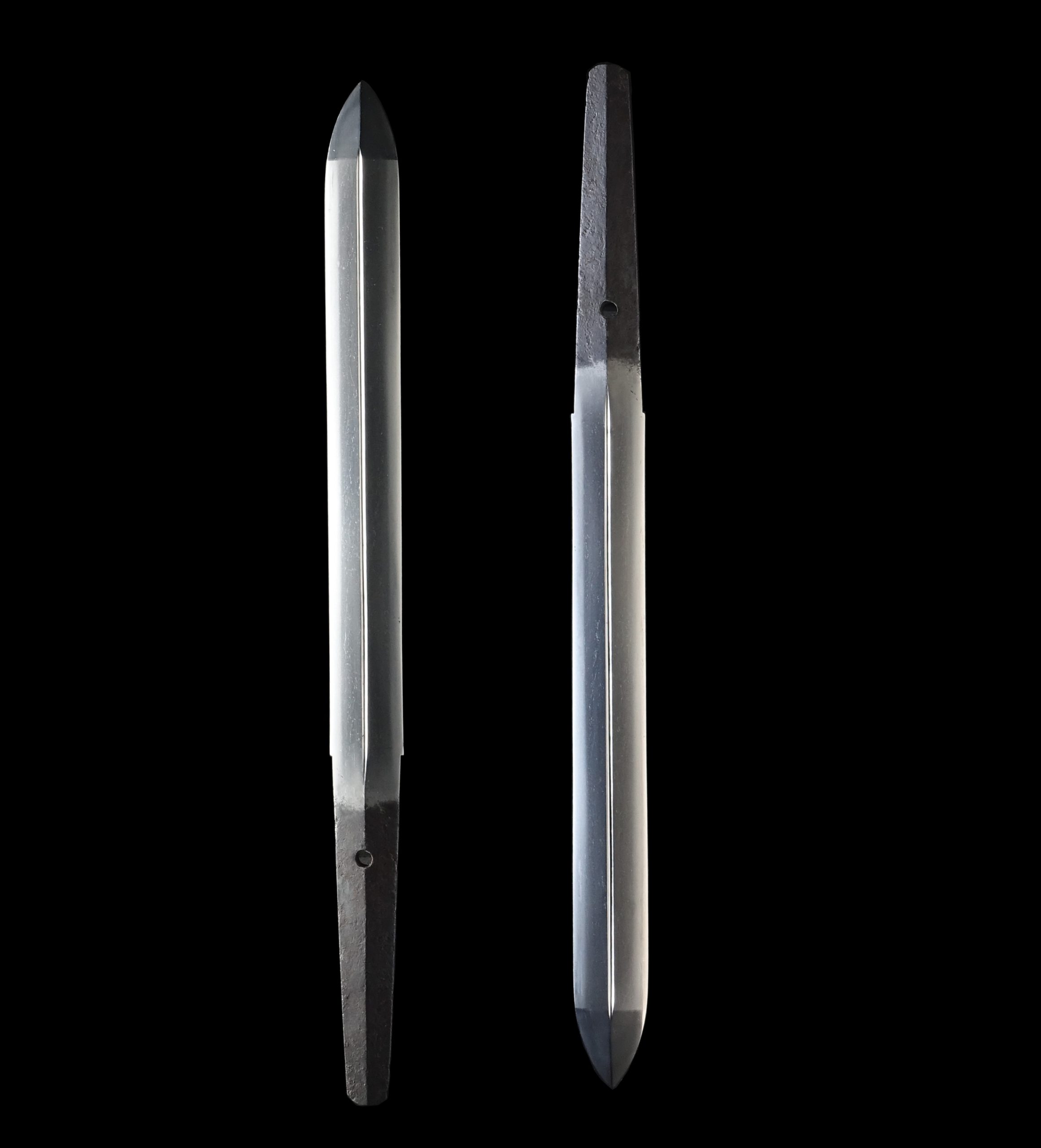
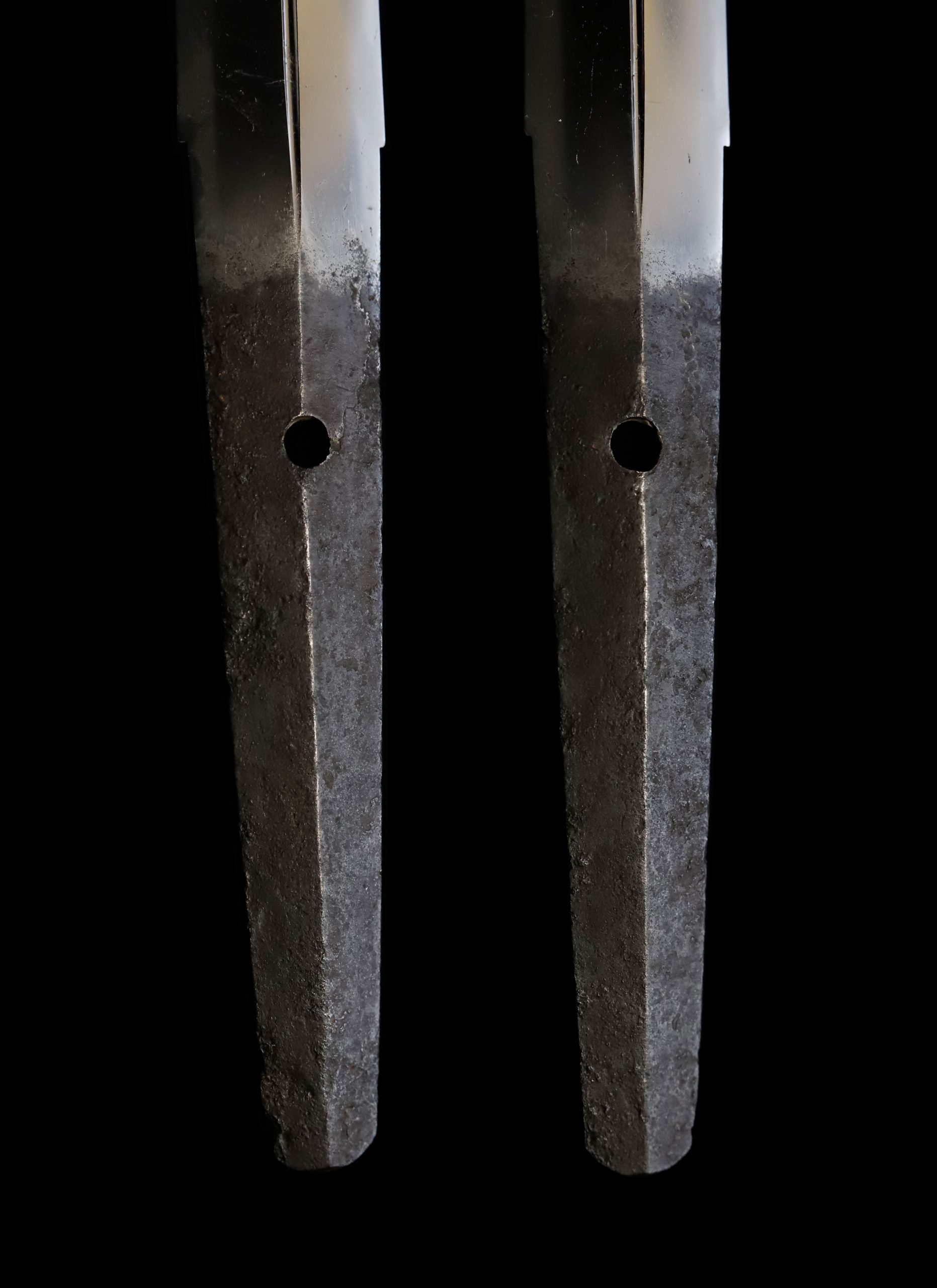
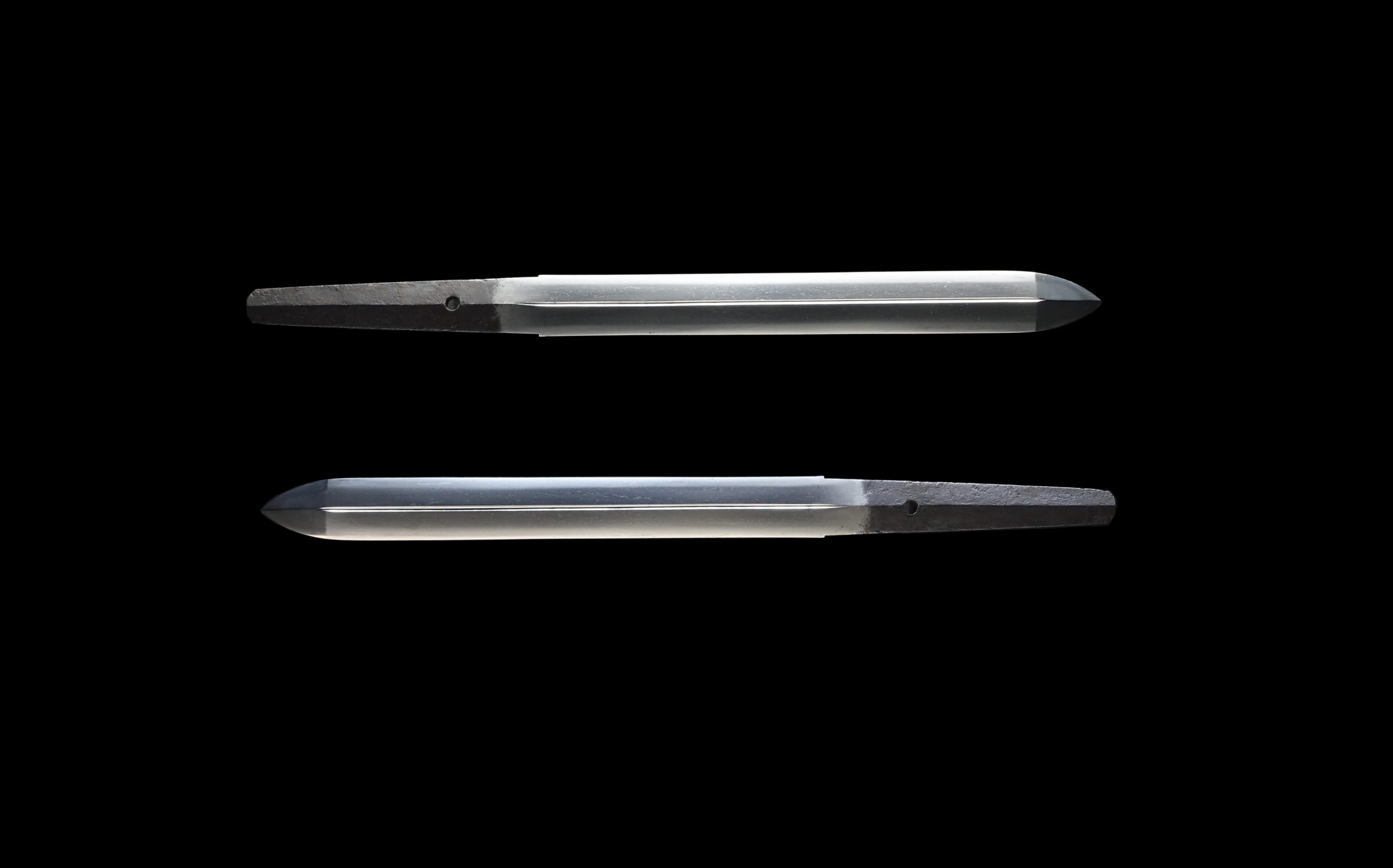
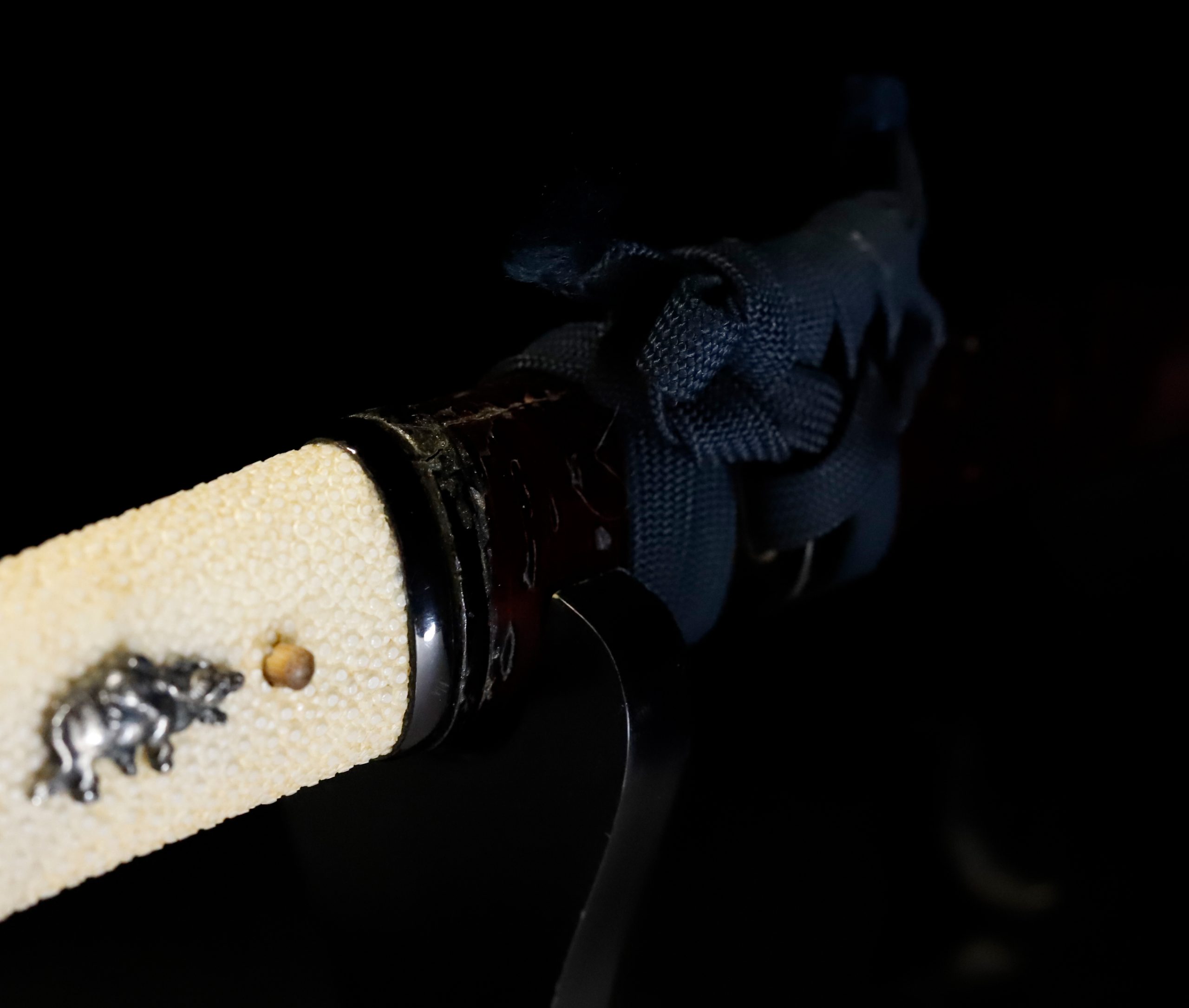
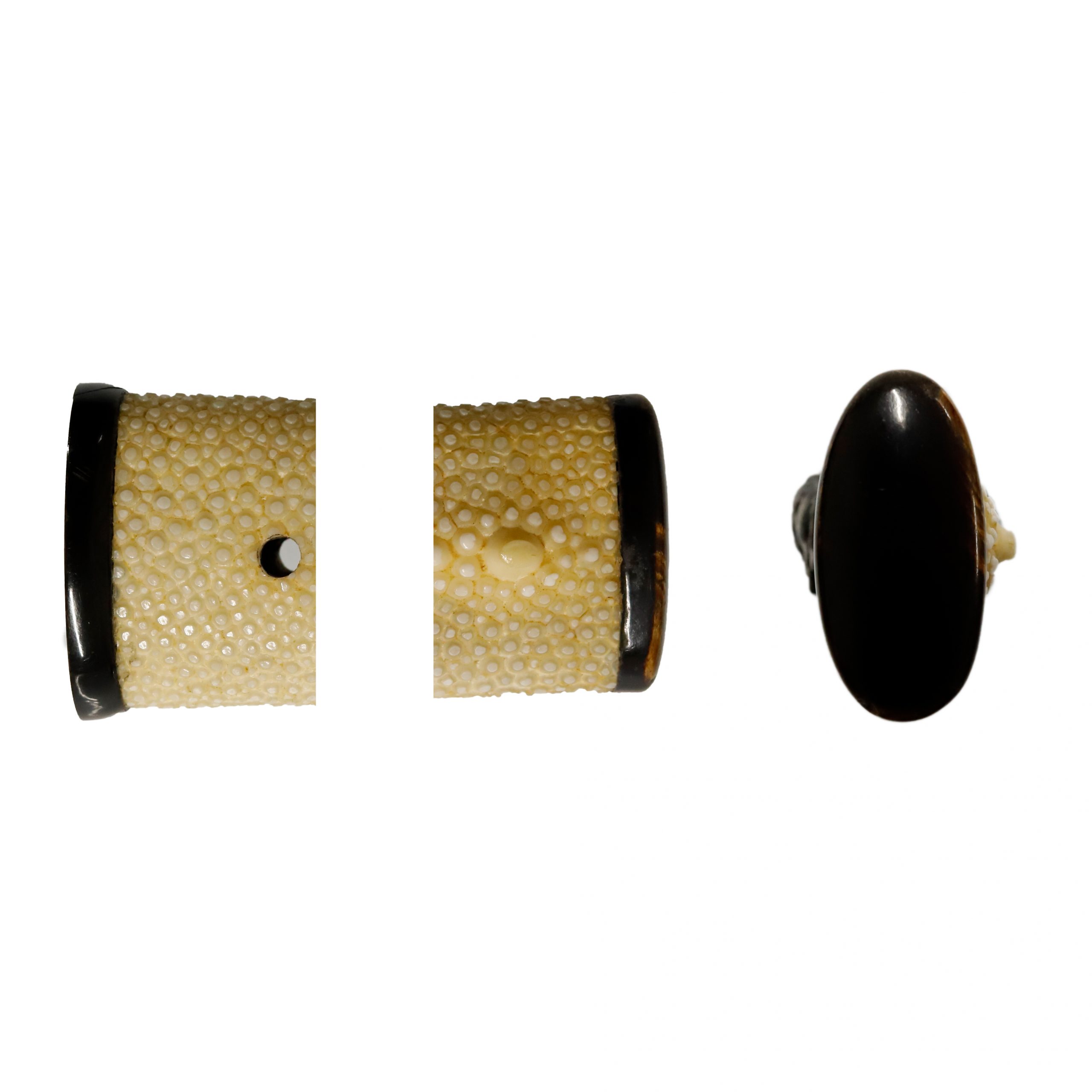
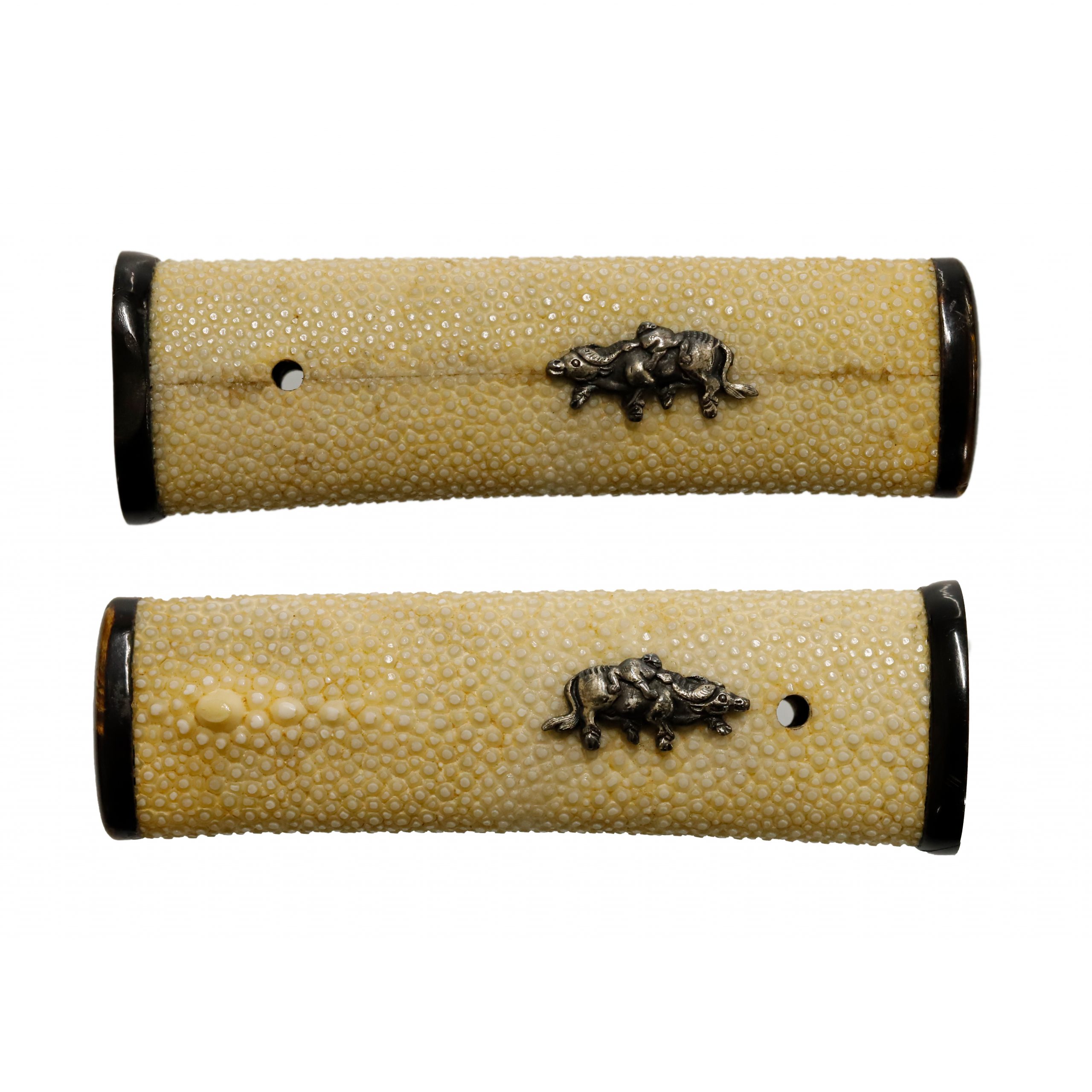
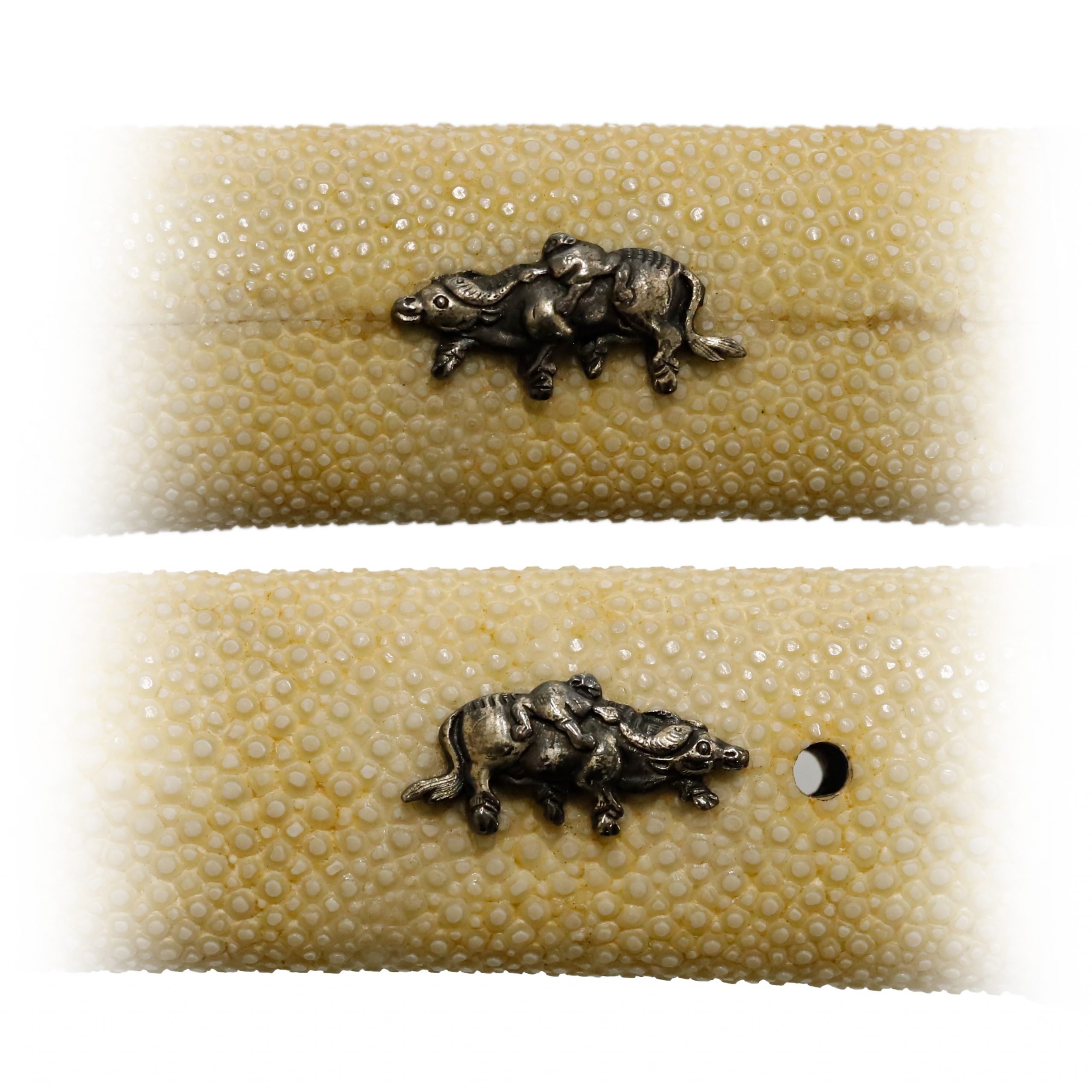
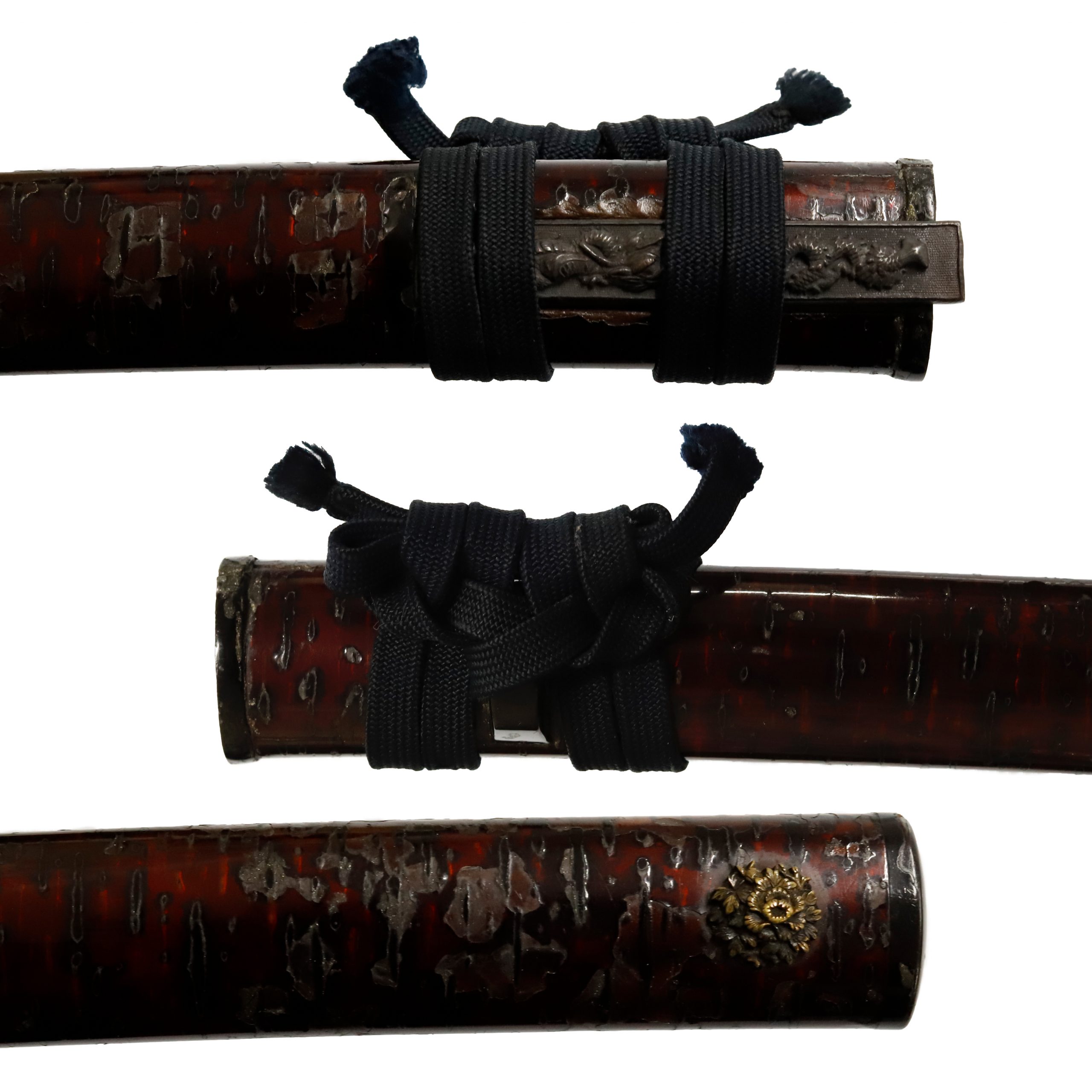
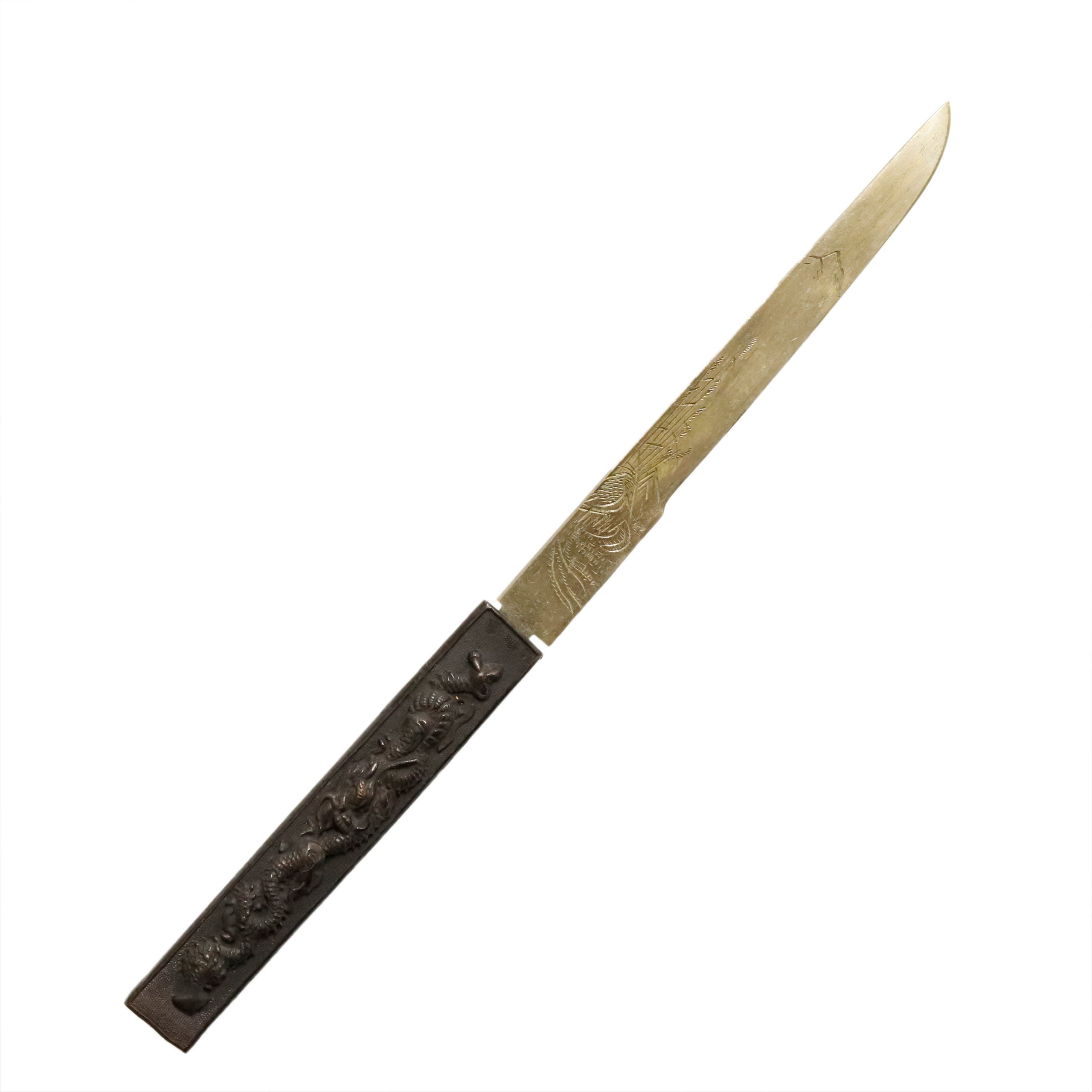
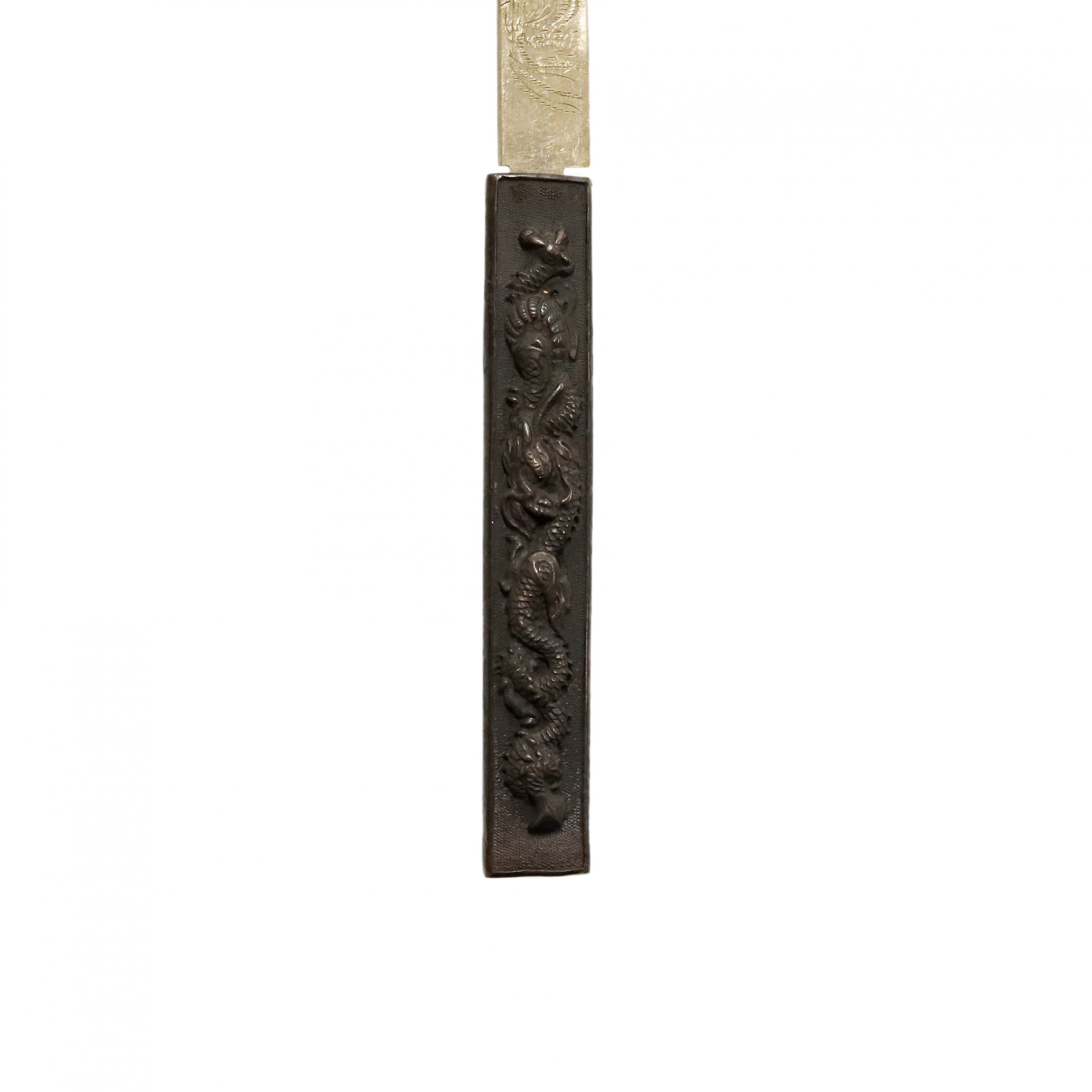
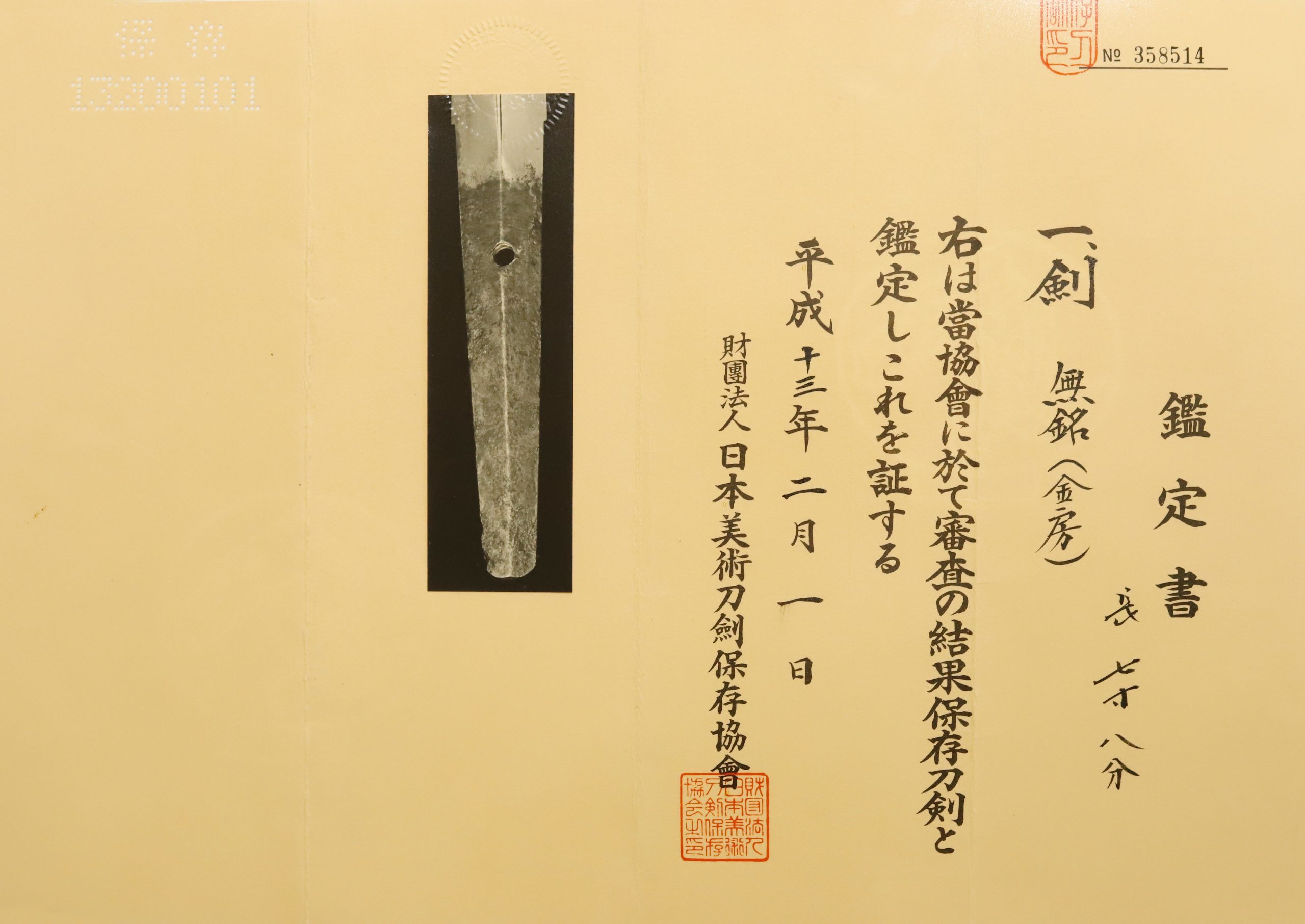
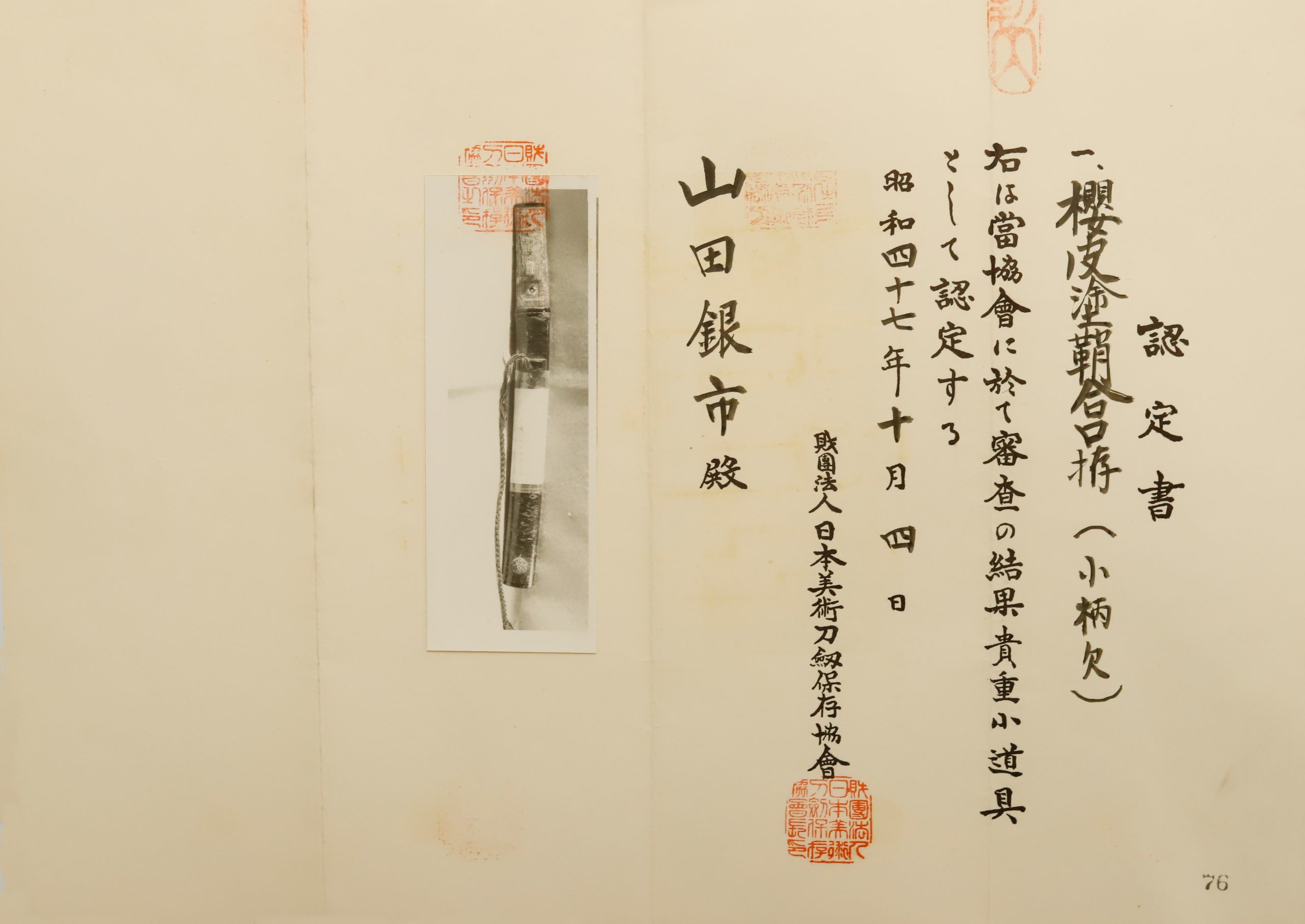
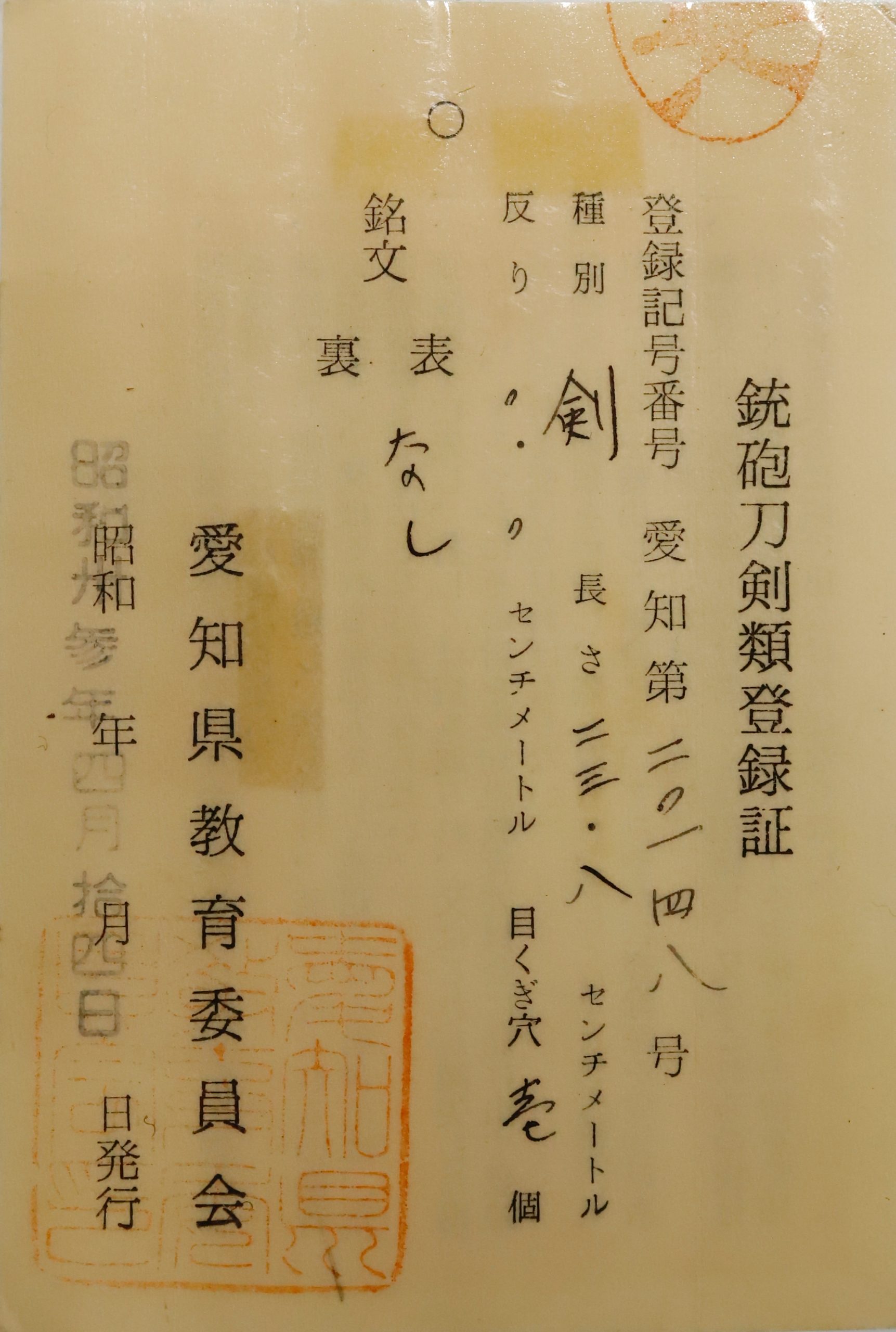
Summary This Tsurugi blade is attributed to a work of Kinbo (金房) school, according to the NBTHK’s appraisal. Tsurugi means a double-edged blade, and since ancient times, Tsurugi was treated as a religious symbol in Japan. Kinbo(金房) school flourished in the late Muromachi Period. We believe this blade was made in the late Muromachi period (1570’s), judging from the active period of this school. It is said that the founder of Kinbo school was an offspring of a member of Tegai school in Yamato region(today’s Nara prefecture). The swordsmiths who belonged to Kinbo school made blades for Sohei, Buddist warrior monks, and Samurai in the area during the warring state period called SENGOKU JIDAI. About Tegai school There were five prestigious schools, including Tegai school, during the Kamakura-Nanbokucho period. They are called Yamato Goha(大和五派); Senjyuin(千手院), Tegai(手掻)・Taima(当麻)・Hosho(保昌) and Shikkake school. They served politically powerful monks and temples in Nara, such as Todaiji temples. They were initially forging swords for military monks who became powerful due to the government’s policy back then. Monks needed many weapons as there were many political rivalries between influential temples, and they needed strong weapons like swords to protect themselves. During this time, Tegai school or other Yamato sword schools met the requests from monks. They also forged blades for Samurai during their heyday. Tegai school belonged to YAMATO DEN, which has the longest history among GOKADEN and five Japanese sword forging techniques. The blades forged by swordsmiths residing in Yamato region are generally called Yamato Mono. This blade is appraised as a Hozon Token(保存刀剣) issued by NBTHK(Nihon Bijutsu Touken Hozon Kyokai:日本美術刀剣保存協会). Fuchi-Kashira This Fuchi Kashira has a simple design, so please enjoy its elegant color and the texture of the material. It matches well when it is put into the handle. According to the certificate, the Koshirae of this Tsurugi is categorized as the Aikuchi Koshirae (合口拵). This type of Koshirae does not have the Tsuba, and the Koikuchi (鯉口) fits directly with the handle. Tsuka and Menuki The motif of this Menuki is probably the cow and mouse. This combination reminds us of the Juunishi (十二支, the twelve signs of the Chinese and Japanese zodiac). There are various theories in the details of this legend, but the rough outline is that the twelfth animals that arrived early at the feast that God held on New Year’s Day were nominated the representative for the year. In this story, it is said the mouse moved to the destination riding on the back of the cow. Finally, the mouse arrived at the venue first, and the cow followed it. There is also an idea that the animals of the Juunishi were given meanings and characteristics to each. And some people have thought that these characteristics were reflected in the character of the people born each year. For example, the mouse represents the financial power, prosperity of descendants, and its character is said that it can act promptly. The character of the cow is said it is honest, has the power of perseverance, and works hard. This Menuki’s maker might have quoted this Menuki’s design from this story. Kozuka The Kogatana (小刀, small knife) is stored in the Kozuka. The motif of this Kozuka is the dragon which twists its slender body to fit in this elongated space. Initially, the dragon is an imaginary creature found in ancient traditions or myths. Furthermore, it is regarded as a symbol of auspicious signs. People have thought that the dragon would reign at the top of all animals due to its odd-looking appearance. If you focus on this dragon’s hand, you will find that it brings a ball-shaped object. It is probably the Nyoi Houju (如意宝珠, Cintāmaṇi). It is a fantasy jewel that fulfills any desire, gives out treasure, clothes, food, and drink. Moreover, it heals illness and suffering, removes evils, purifies muddy water, and prevents disasters. It is said this magical item is taken from the brain of the king of the dragon. Saya The bark of a cherry tree is used for this scabbard. It is a beautiful work with a distinctive texture created by nature. A flower design made of metal is applied to the part near the tip of the scabbard. This plant might be a peony. Please keep in mind that there is trace of restoration on the Koikuchi area( The tip of the scabbard). Authentication Paper They authenticated the blade on Feb 1st in the 13th year of Heisei (2001). They appraised it as Hozon Touken, the blade worth preserving for Japanese society. Its sword mounting(Koshirae) was also appraised as a Kicho Tosogu, an old form of the certificate on October 4th in the 47th year of Showa(1972).
Offered by Samurai Museum
This piece has sold
9 on the market
Get an email when new Kanabo School work hits the market.
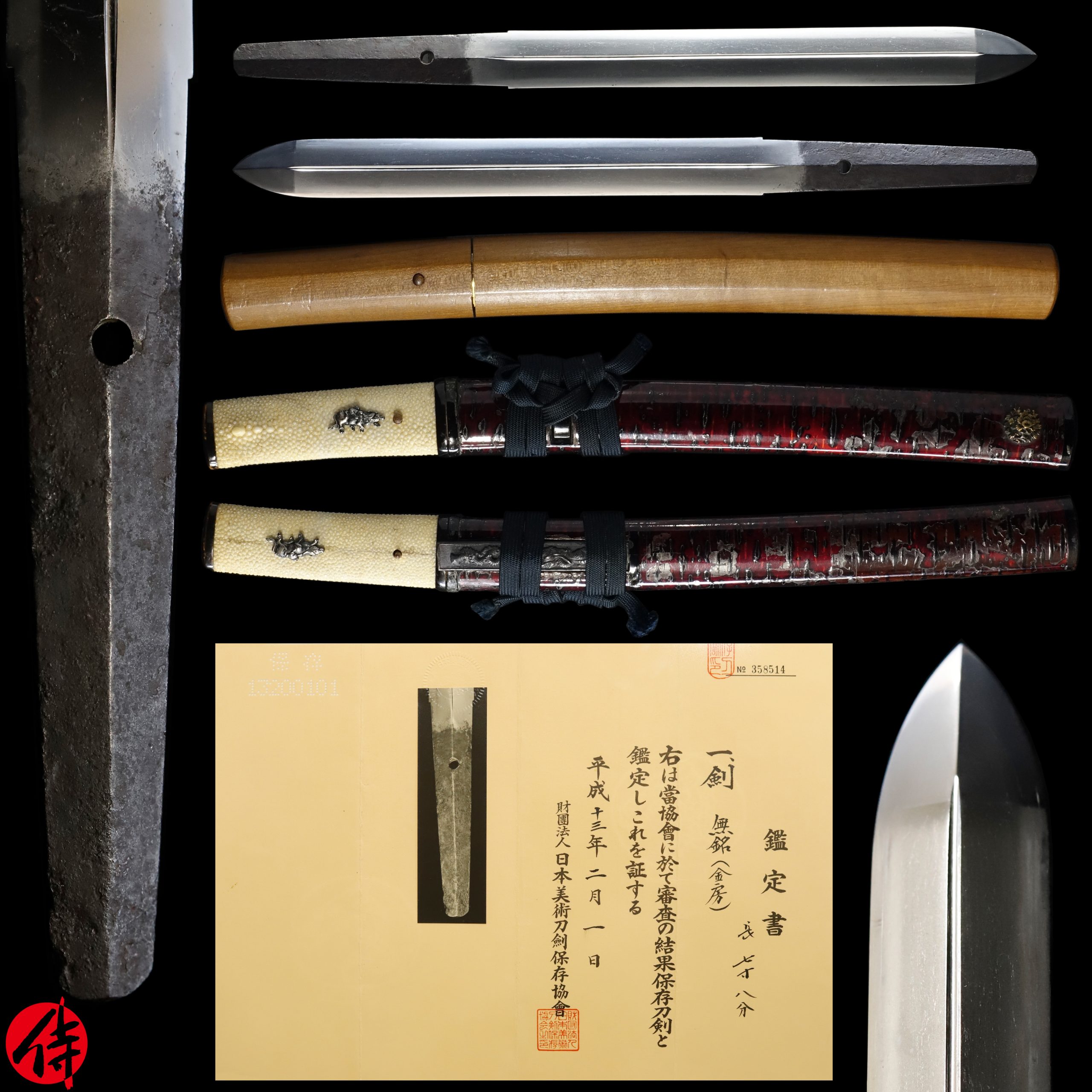
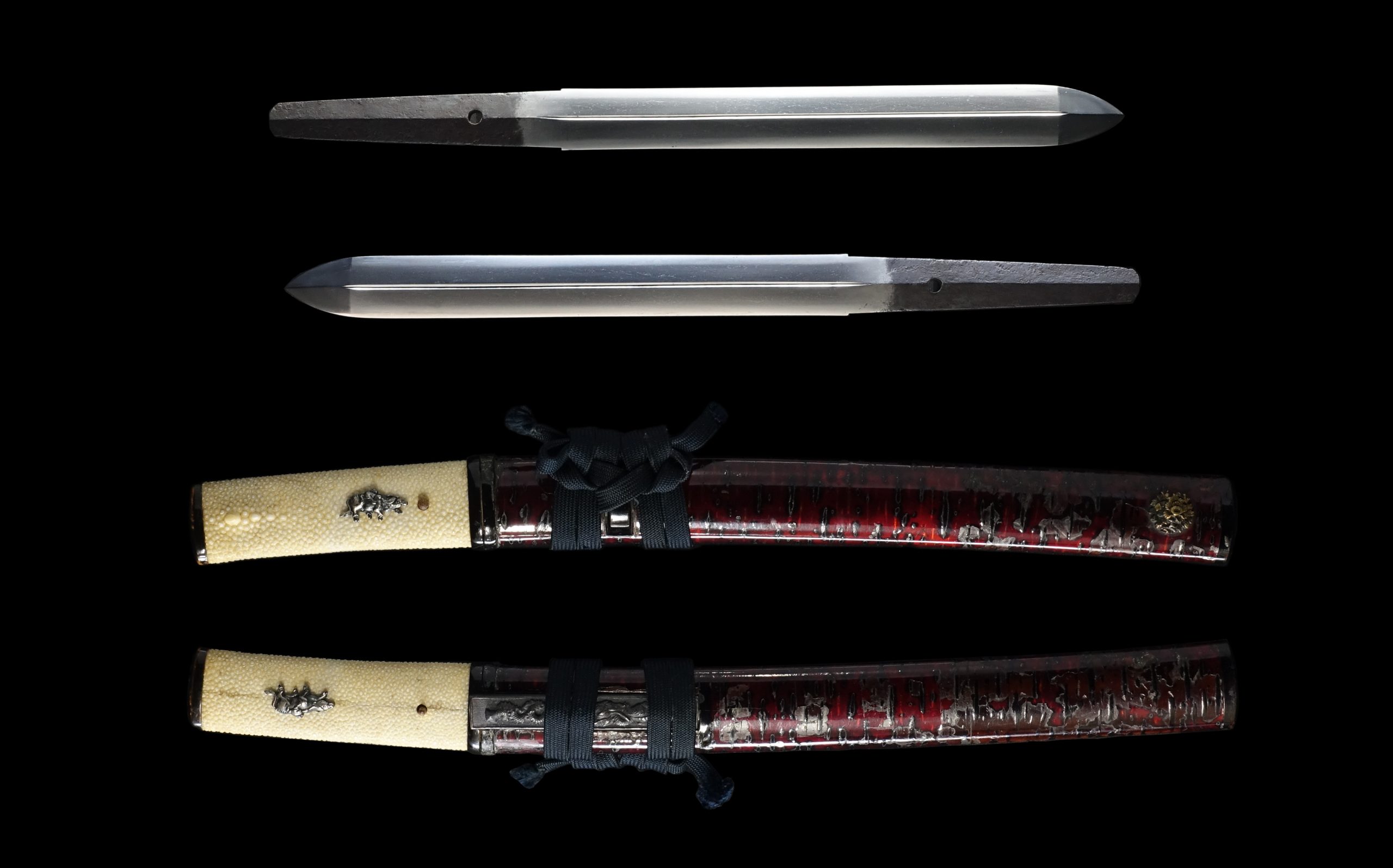
Kinbo
Muromachi
Yamato
Unsigned
Hozon (NBTHK)
Wakimono · Yamato
9 pieces on the market now
The Kanabō (金房) smiths worked in Nanto, the old name for Nara in Yamato province, from the end of the Muromachi period into the early Shintō era. Their relationship to any of the five established Yamato schools is not clearly fixed in the record, and the NBTHK setsumei treat the group as one that rose and flourished in Nara during the late Muromachi decades, with dated examples encountered from the Eishō era onward. The blades here name several hands. Masatsugu (政次), who signed as Kanabō Hyōe no Jō Masatsugu and as Kanefusa Hyōe no Jō Masatsugu, is described as the representative and best-known smith of the line. Masasada (政定), signing Kanefusa Saemon-no-jō Masasada, left an uchigatana dated Eiroku 2 (1559). " Rather than the classical Yamato-den manner of the earlier five schools, the Kanabō hand reads as a Muromachi uchigatana idiom that shares points with the Sue-Bizen and Sue-Seki spheres. The kitae is itame that flows into nagare and tends toward masame, with the grain often standing and growing large, and a whitish utsuri appearing in places. The hamon divides between two registers the setsumei repeatedly cite: a large gunome-based midare, the "hips" of the gunome opening out and mixed at times with togari-ba, chōji, or ko-notare; and a suguha carried on a tight nioiguchi.
Across both, ashi and yō enter well and stand out, ko-nie and ji-nie adhere, and sunagashi with kinsuji run through; the nioiguchi frequently takes a shizumi, subdued cast. The bōshi runs midare-komi, often with hakikake and a pointed or ko-maru return. The build tends to broad mihaba with sakizori on the swords, while naginata are conspicuously common, a production read as answering the demands of the warrior monks (sōhei) of Kōfukuji and the great Nanto temples. For kantei, the line is held by the flowing masame-tending itame, the broad gunome-midare with prominent ashi and yō over a tight or subdued nioiguchi, and the marked presence of naginata and long polearm blades among extant work. The setsumei single out Masatsugu's polearms as typical of his hand, several preserved with their vermilion-lacquer nagamaki mounts (shunuri nagamaki koshirae) and one black-lacquer naginata mounting, the fittings inferred to have been made together with the blade. The records grant that true masterworks within the group are rare, yet they describe individual blades by Masatsugu and Masasada with fine jigane, skillfully cut horimono, and workmanship judged excellent and dignified. Within the wider Yamato sphere the Kanabō stand as a late, utilitarian offshoot whose polearms and serviceable swords carry the group's name into the NBTHK register. Learn more →
| Smith | Era | Designated |
|---|---|---|
| Masatsugu政次 | 1492-1570 | 4 |
| Masazane正眞 | 1532-1555 | 0 |
| Masasada政定 | 1521-1559 | 1 |
Certifies a genuine blade worth preserving: a signature confirmed correct, or, if unsigned, an era, province, and school that the NBTHK can reliably identify.
The NBTHK (Nihon Bijutsu Tōken Hozon Kyōkai, the Society for the Preservation of Japanese Art Swords) is a public-interest incorporated foundation founded in 1948 and supervised by Japan’s Agency for Cultural Affairs (Bunkachō); it is based at the Japanese Sword Museum in Tokyo. Its expert panels physically examine each submitted work (shinsa) and issue a certificate (kanteishō) ranking it by artistic and historical merit. NBTHK papers are the most widely recognized standard of authentication for Japanese swords and fittings.
NBTHK official siteReturns/exchanges limited to defects caused by shipping (except willful misconduct or gross negligence by the company); customers must contact within 72 hours of receiving the product.