NihontoWatch MonNihontoWatch
Market
Encyclopedia
Kantei
NihontoWatch MonNihontoWatch
Market
Encyclopedia
Kantei

Description

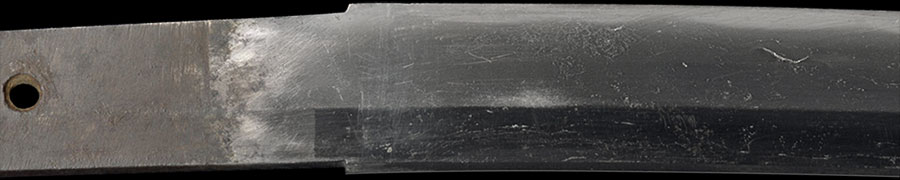
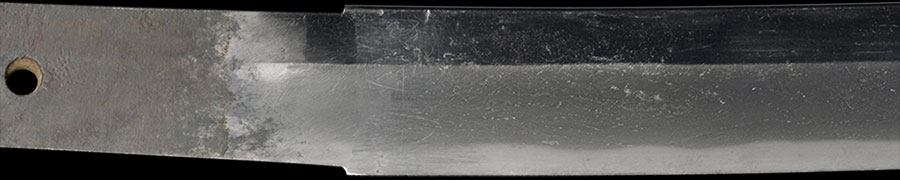
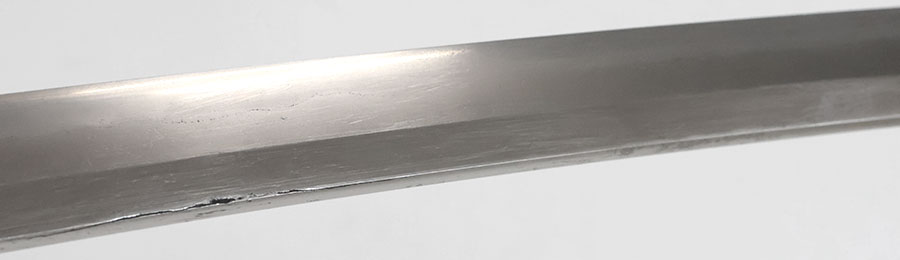
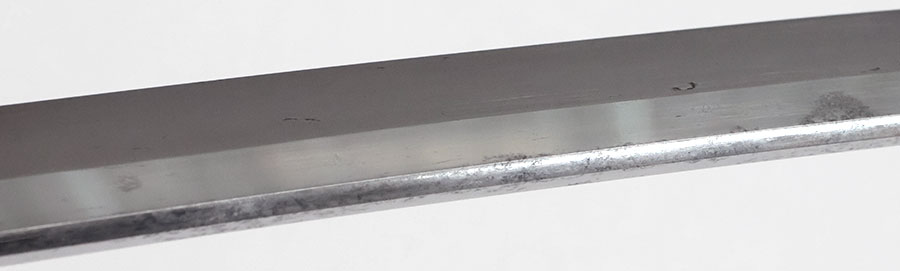
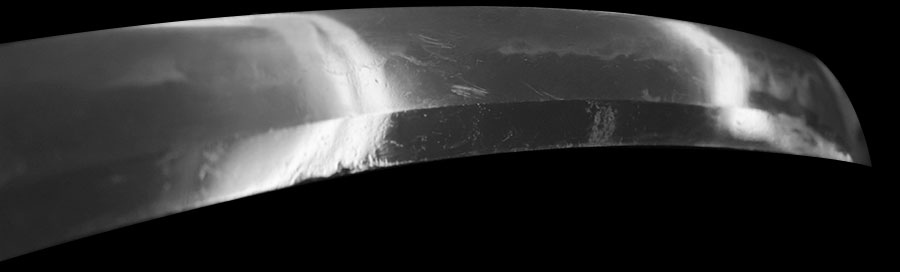
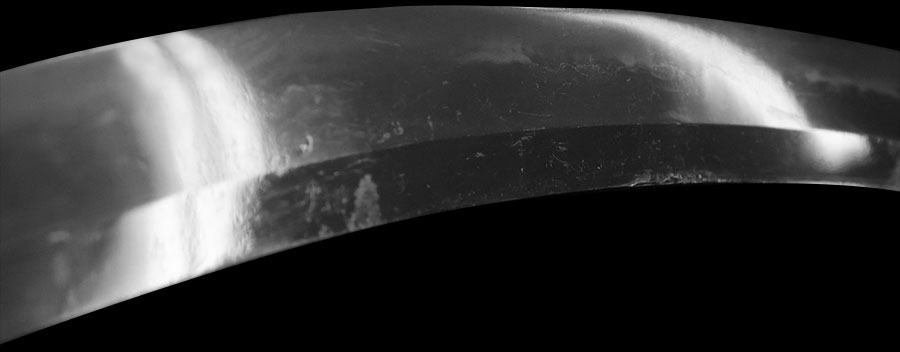
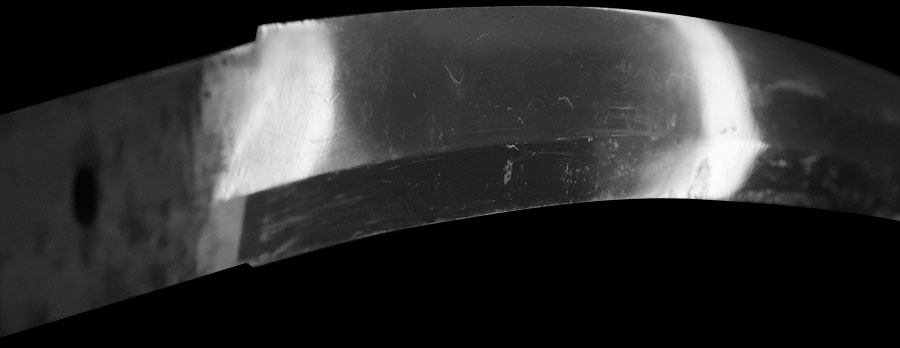
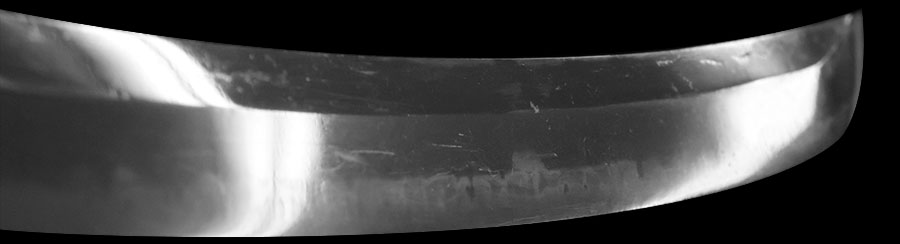
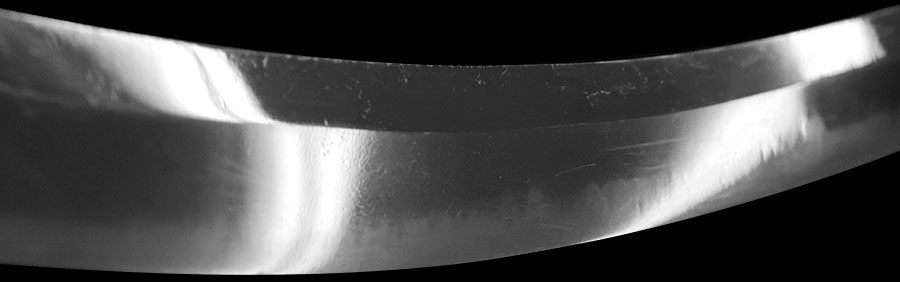
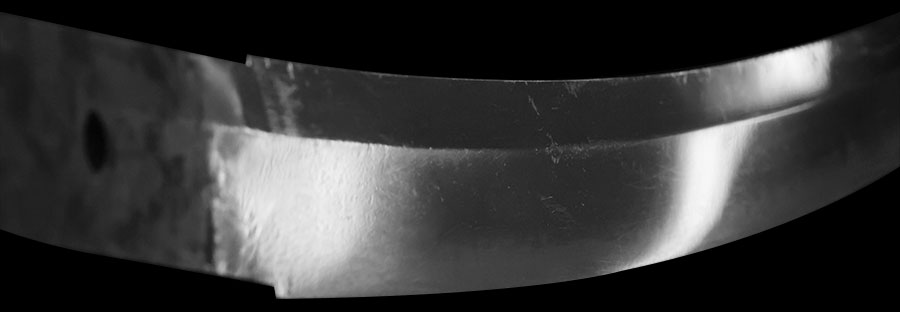
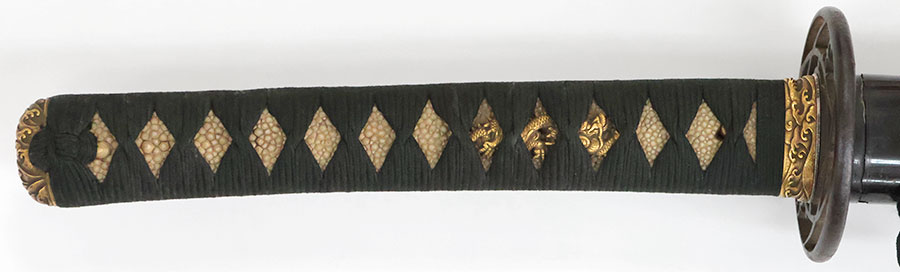
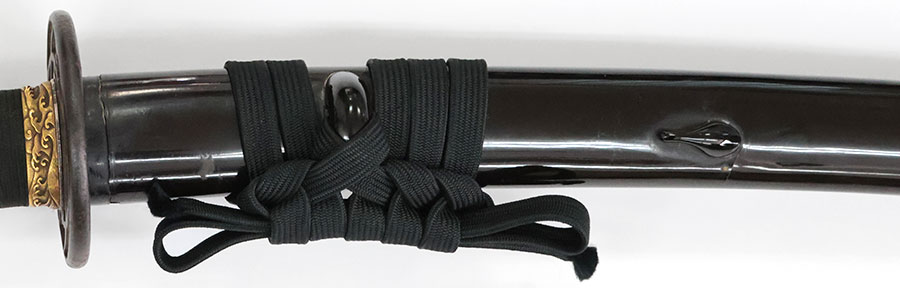
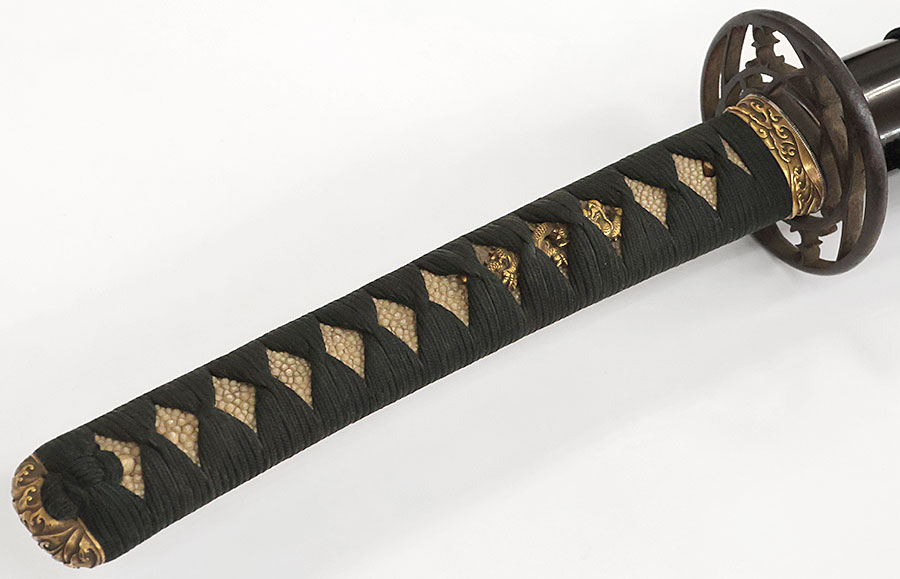
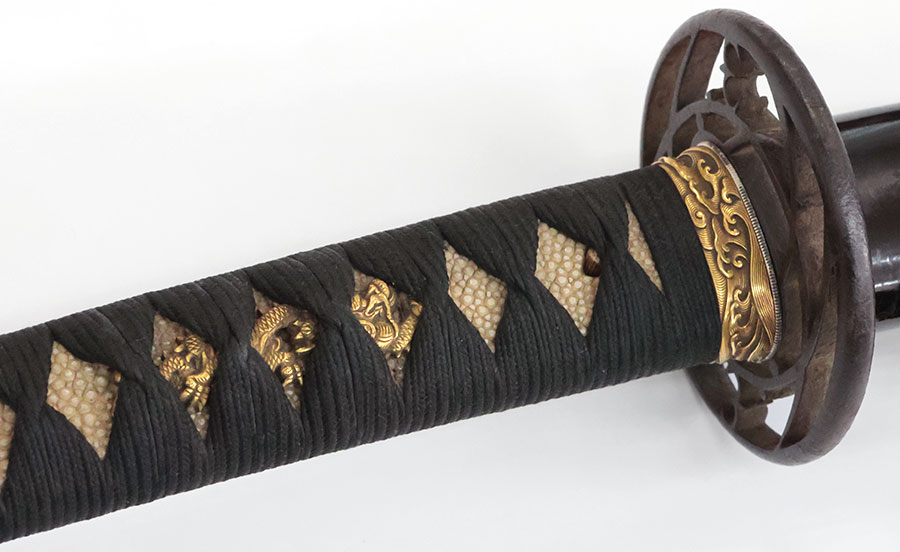
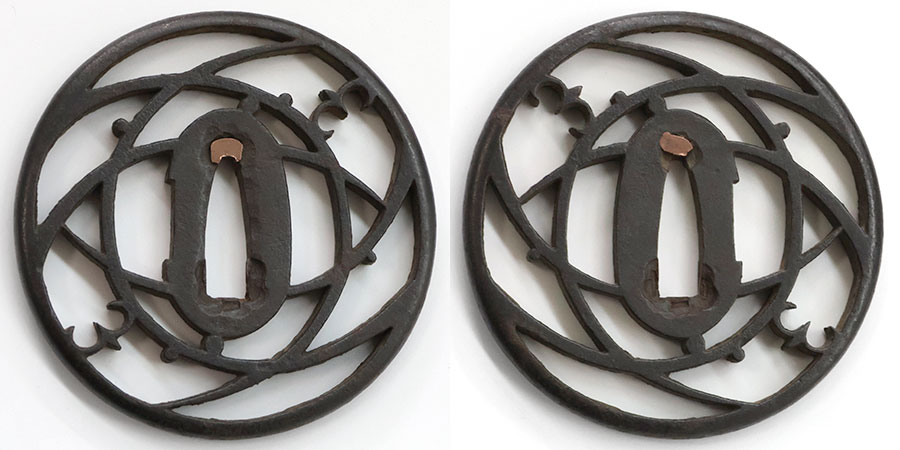
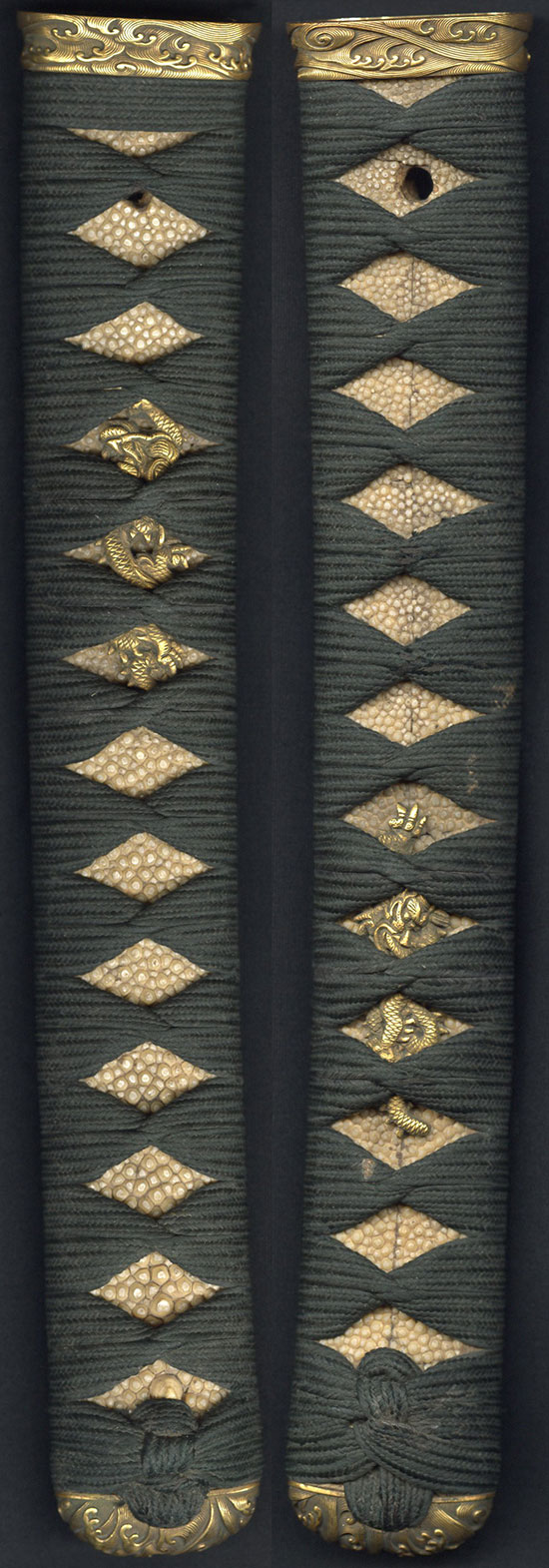
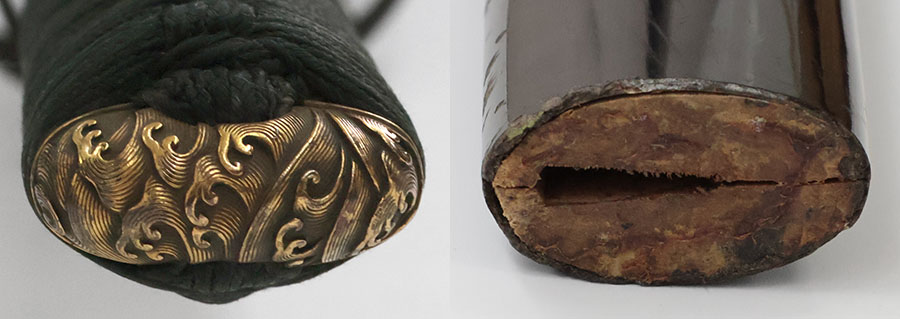
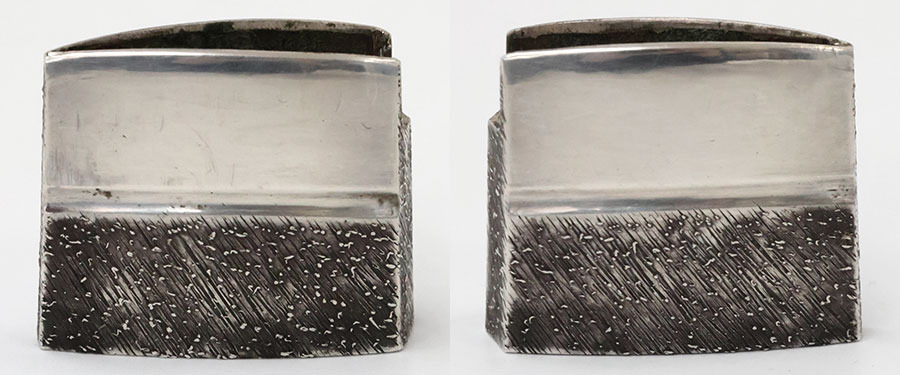
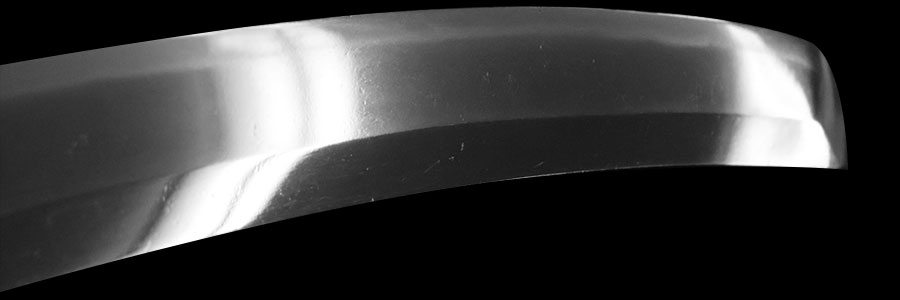
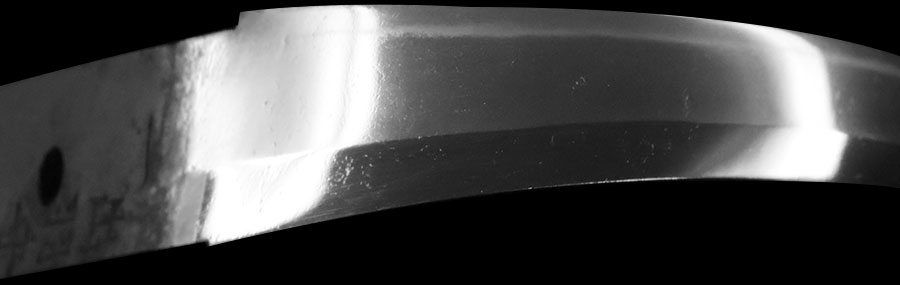
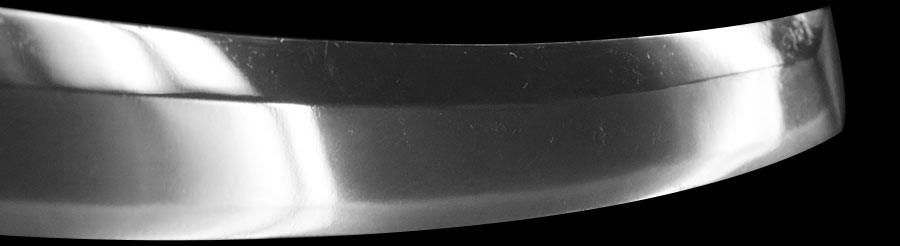
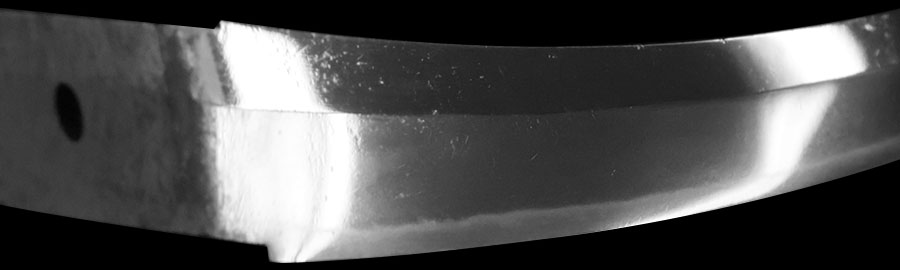
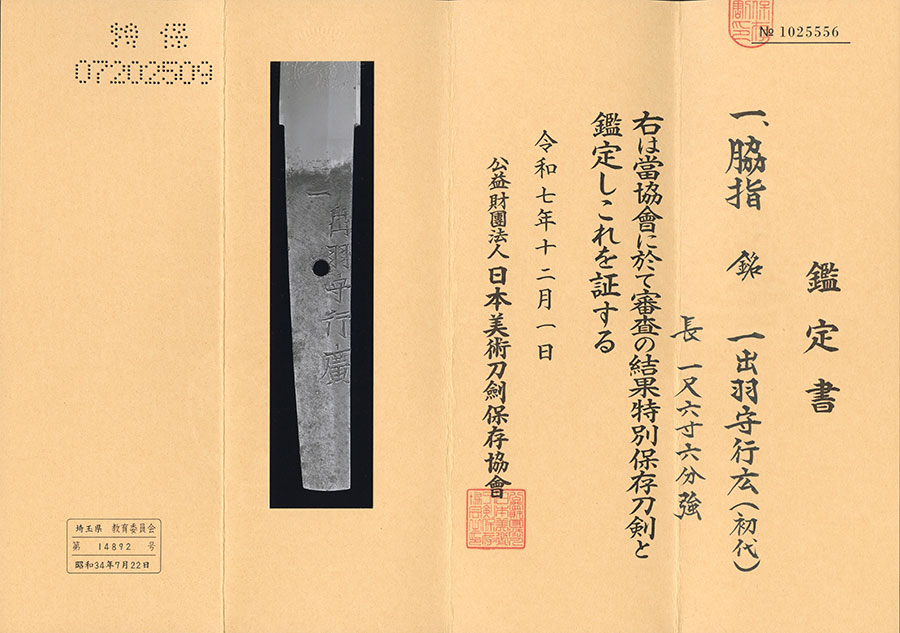
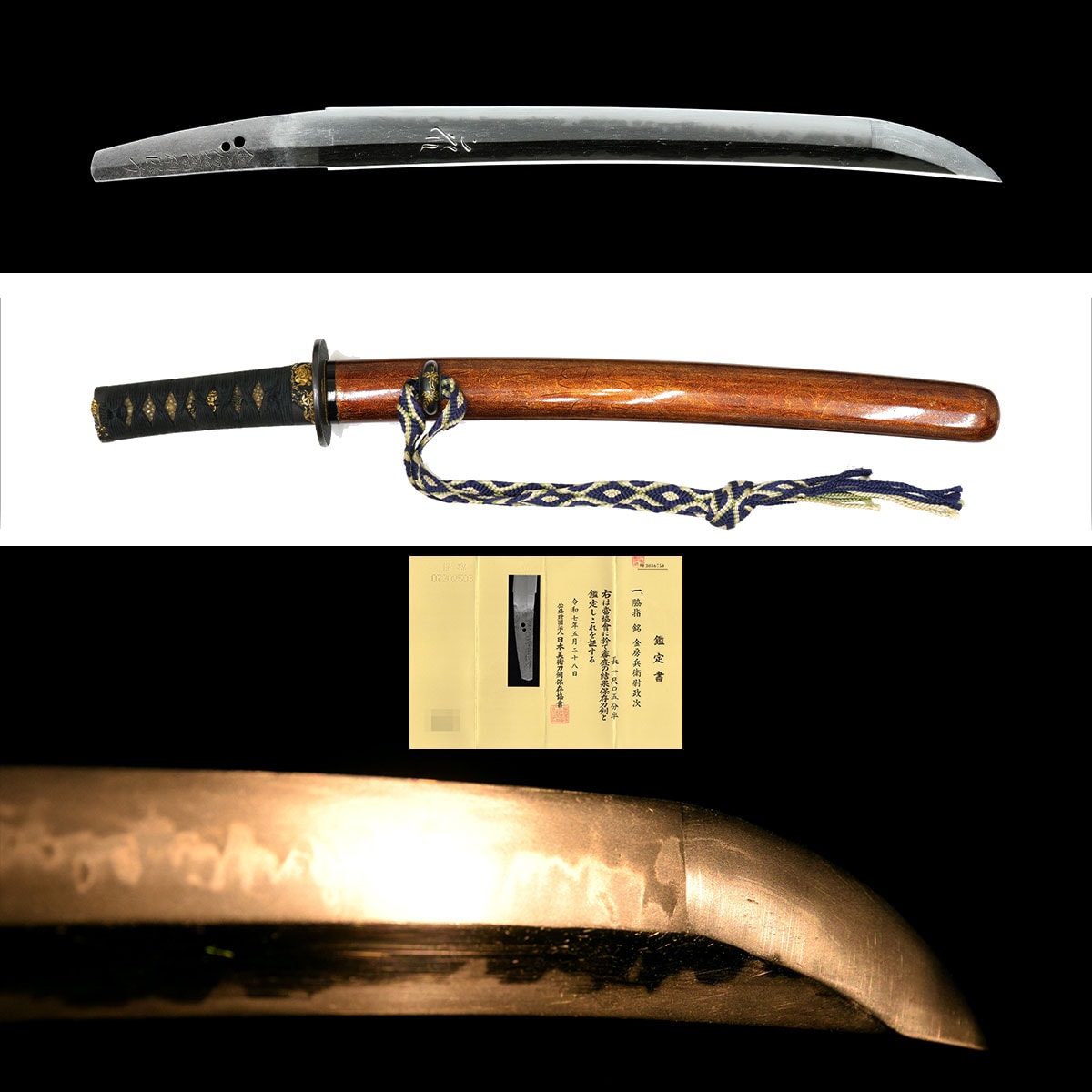
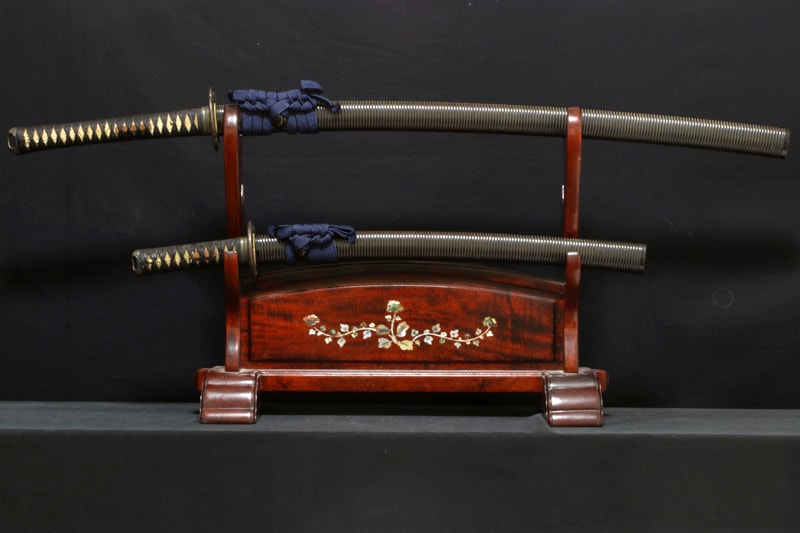
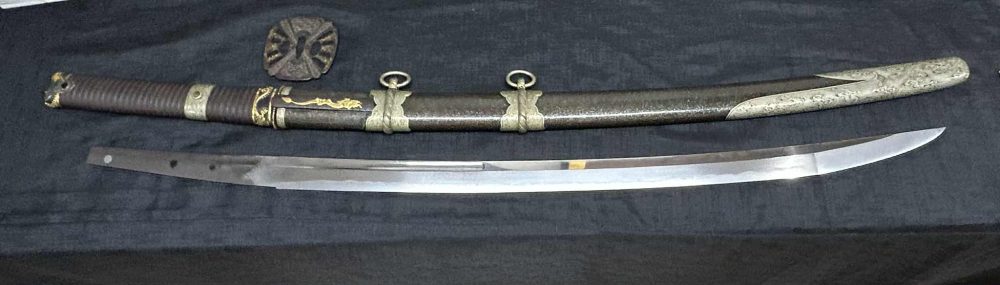
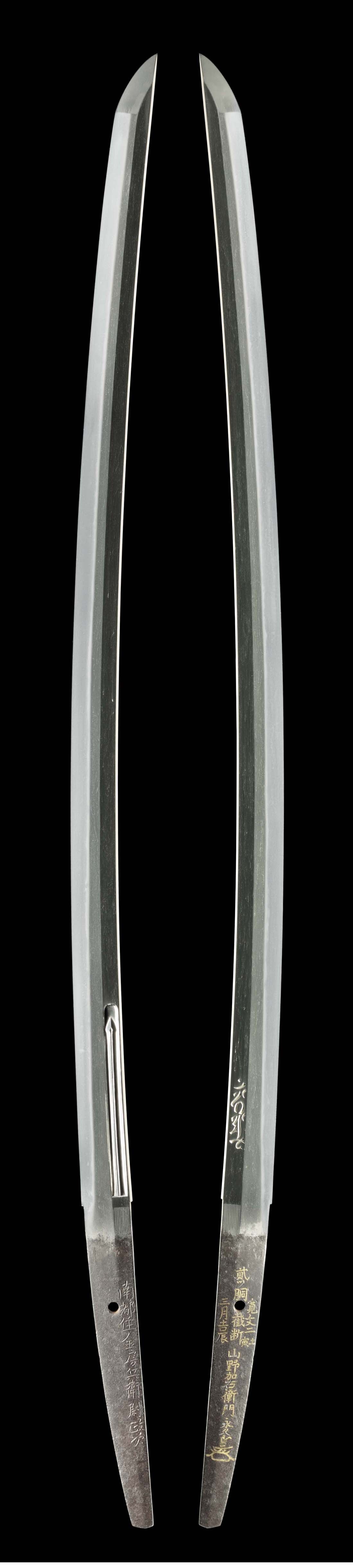
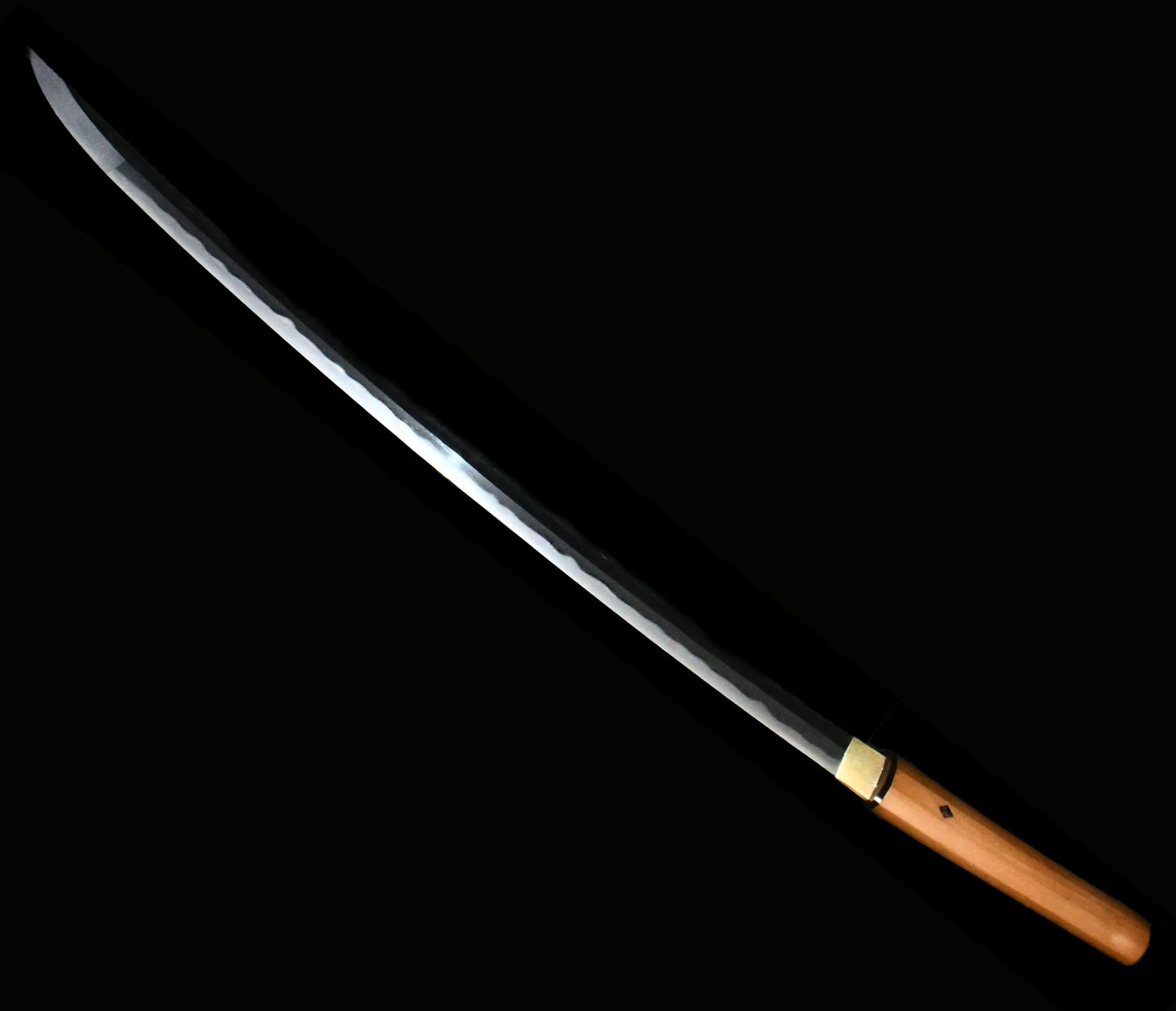
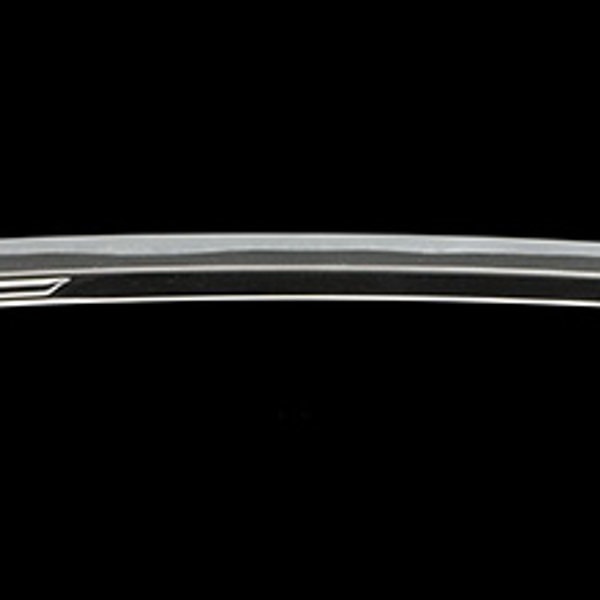
It has arrived, it has arrived—a precious work from an old family, carefully passed down through generations, featuring a set of *daisho* with their original *koshirae* from the Edo period, approximately 200 years ago. This is the long-awaited work for those who wish to display a *daisho* set in their home. The maker of the *daito* is *mumei*, but it has been handed down as a sword of the level of Nanto-ju Kanabo Hyoe-no-jo Masatsugu. It was made around the Koji era of the Muromachi period (1555) (471 years ago), exactly the time when Uesugi Kenshin and Takeda Shingen fought fiercely at Kawanakajima. This blade was shortened by a later samurai who desperately wanted it as his own *sashiryo*, adjusting it to suit his swordsmanship; it displays a fine *sugata* with a difference between the *moto-mihaba* and *saki-mihaba*, a graceful *sori*, and a large *kissaki*. While the *jigane* is not clearly visible as you can see, it appears to be a powerful *jigane* with *itame-hada* mixed with *mokume-hada* and fine *ji-nie*. The *hamon* is also not clearly visible, but it is a *gunome-midare* in *nioi-deki* with *ko-nie*, featuring frequent *ko-ashi* and *yo*. The *wakizashi* maker, the first generation Hishu Dewa no Kami Yukihiro, was the grandson of the first generation Hizen no Kuni Tadayoshi, a master of Keicho *shinto*. He received the title of *Dewa no Kami* in Kanbun 3 of the Edo period (1663) (363 years ago). Furthermore, Yukihiro was a swordsmith with a wonderful and vigorous desire for learning; the reason he carved "Ichi" (One) or "Ichimonji" on this *wakizashi* is because he later learned the Bizen-den forging methods from the Ishido school smiths. Carving the "Ichi" strongly represents the Bizen Ichimonji tradition. He became a retained smith for the Nabeshima family of the Saga Takeo Domain (21,600 *koku*). The *sugata* of this *wakizashi* is a magnificent, powerful one with a wide *moto-mihaba* and *saki-mihaba*. The *jigane* is a well-packed *ko-itame* with fine *ji-nie*, and the *hamon* is a splendid *suguha* style in *nioi-deki* with *ko-nie*, which was his family tradition. The *koshirae* also features Edo period Akasaka *tetsu-ji* *daisho* *tsuba*, *fuchi-kashira* with a wave design on *shakudo-ji* for both, and *menuki* with a gold *iroe* dragon design for both; although there is wear from age, these luxurious *koshirae* add further splendor to this *daisho*. This *daisho* set has been cherished by an old family for generations, but as they have grown old, we have been entrusted to pass it on at a low price to someone who will treasure it. Because the *daito* blade has some large *hada*, we are offering this precious, original *daisho* at a special bargain price. Please enjoy it.

Certificate Reading

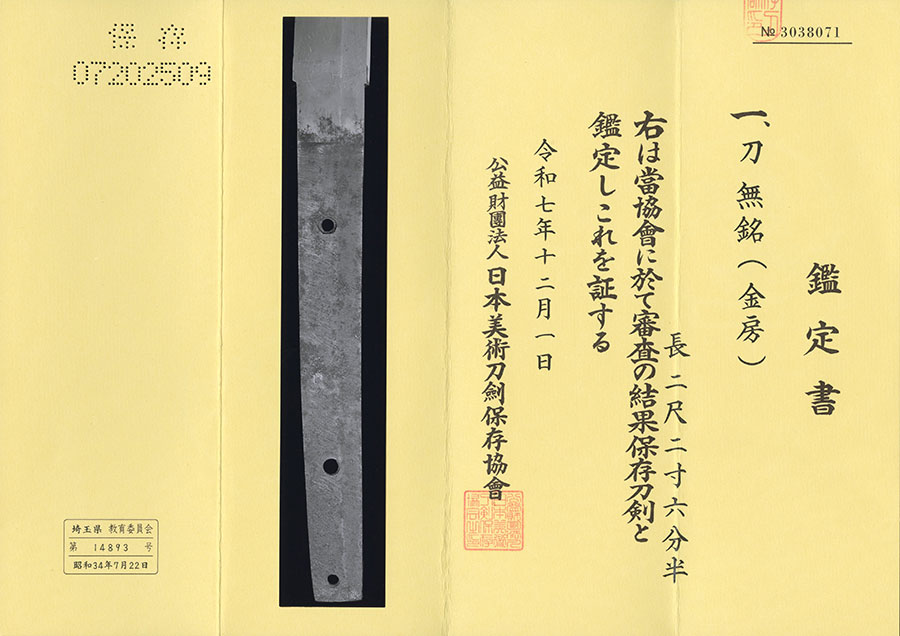
Certificate reading — 無銘(金房)

NihontoWatch MonNihontoWatch
MarketEncyclopediaKantei
Swords›Kanabo›肥前›Katana by Kinbo (Koto) & Wakizashi by Dewanokami Yukihiro with Koshirae
katanaHozon
Kanabo School

Katana by Kinbo (Koto) & Wakizashi by Dewanokami Yukihiro with Koshirae

mumei · Muromachi · nagasa 68.6cm · sori 2.2cm

¥950,000
Visit seller website →
KatanaHozon
Could you name the smith from the blade alone? Today’s kantei →
Kanabo School — 1 of 50
Kanabo School — 2 of 50
Kanabo School — 3 of 50
Kanabo School — 4 of 50
Kanabo School — 5 of 50
Kanabo School — 6 of 50
Kanabo School — 7 of 50
Kanabo School — 8 of 50
Kanabo School — 9 of 50
Kanabo School — 10 of 50
Kanabo School — 11 of 50
Kanabo School — 12 of 50
Kanabo School — 13 of 50
Kanabo School — 14 of 50
Kanabo School — 15 of 50
Kanabo School — 16 of 50
Kanabo School — 17 of 50
Kanabo School — 18 of 50
Kanabo School — 19 of 50
Kanabo School — 20 of 50
Kanabo School — 21 of 50
Kanabo School — 22 of 50
Kanabo School — 23 of 50
Kanabo School — 24 of 50
Kanabo School — 25 of 50
Kanabo School — 26 of 50
Kanabo School — 27 of 50
Kanabo School — 28 of 50
Kanabo School — 29 of 50
Kanabo School — 30 of 50
Kanabo School — 31 of 50
Kanabo School — 32 of 50
Kanabo School — 33 of 50
Kanabo School — 34 of 50
Kanabo School — 35 of 50
Kanabo School — 36 of 50
Kanabo School — 37 of 50
Kanabo School — 38 of 50
Kanabo School — 39 of 50
Kanabo School — 40 of 50
Kanabo School — 41 of 50
Kanabo School — 42 of 50
Kanabo School — 43 of 50
Kanabo School — 44 of 50
Kanabo School — 45 of 50
Kanabo School — 46 of 50
Kanabo School — 47 of 50
Kanabo School — 48 of 50
Kanabo School — 49 of 50
Kanabo School — 50 of 50
1 / 50
1 / 50
Kanabo School — 1 of 50Kanabo School — 2 of 50Kanabo School — 3 of 50Kanabo School — 4 of 50Kanabo School — 5 of 50Kanabo School — 6 of 50Kanabo School — 7 of 50Kanabo School — 8 of 50Kanabo School — 9 of 50Kanabo School — 10 of 50Kanabo School — 11 of 50Kanabo School — 12 of 50Kanabo School — 13 of 50Kanabo School — 14 of 50Kanabo School — 15 of 50Kanabo School — 16 of 50Kanabo School — 17 of 50Kanabo School — 18 of 50Kanabo School — 19 of 50Kanabo School — 20 of 50Kanabo School — 21 of 50Kanabo School — 22 of 50Kanabo School — 23 of 50Kanabo School — 24 of 50Kanabo School — 25 of 50Kanabo School — 26 of 50Kanabo School — 27 of 50Kanabo School — 28 of 50Kanabo School — 29 of 50Kanabo School — 30 of 50Kanabo School — 31 of 50Kanabo School — 32 of 50Kanabo School — 33 of 50Kanabo School — 34 of 50Kanabo School — 35 of 50Kanabo School — 36 of 50Kanabo School — 37 of 50Kanabo School — 38 of 50Kanabo School — 39 of 50Kanabo School — 40 of 50Kanabo School — 41 of 50Kanabo School — 42 of 50Kanabo School — 43 of 50Kanabo School — 44 of 50Kanabo School — 45 of 50Kanabo School — 46 of 50Kanabo School — 47 of 50Kanabo School — 48 of 50Kanabo School — 49 of 50Kanabo School — 50 of 50
KatanaHozon
Could you name the smith from the blade alone? Today’s kantei →
Measurements & details
Smith
Kanabo School
Type
Katana
School
Kanabo
Period
Muromachi
Province
肥前
Signature
Unsigned
Measurements
Nagasa 68.6cmSori 2.2cmMotohaba 2.95cmSakihaba 2.21cmKasane 0.66cm
Description

It has arrived, it has arrived—a precious work from an old family, carefully passed down through generations, featuring a set of daisho with their original koshirae from the Edo period, approximately 200 years ago. This is the long-awaited work for those who wish to display a daisho set in their home. The maker of the daito is mumei, but it has been handed down as a sword of the level of Nanto-ju Kanabo Hyoe-no-jo Masatsugu. It was made around the Koji era of the Muromachi period (1555) (471 years ago), exactly the time when Uesugi Kenshin and Takeda Shingen fought fiercely at Kawanakajima. This blade was shortened by a later samurai who desperately wanted it as his own sashiryo, adjusting it to suit his swordsmanship; it displays a fine sugata with a difference between the moto-mihaba and saki-mihaba, a graceful sori, and a large kissaki. While the jigane is not clearly visible as you can see, it appears to be a powerful jigane with itame-hada mixed with mokume-hada and fine ji-nie. The hamon is also not clearly visible, but it is a gunome-midare in nioi-deki with ko-nie, featuring frequent ko-ashi and yo. The wakizashi maker, the first generation Hishu Dewa no Kami Yukihiro, was the grandson of the first generation Hizen no Kuni Tadayoshi, a master of Keicho shinto. He received the title of Dewa no Kami in Kanbun 3 of the Edo period (1663) (363 years ago). Furthermore, Yukihiro was a swordsmith with a wonderful and vigorous desire for learning; the reason he carved "Ichi" (One) or "Ichimonji" on this wakizashi is because he later learned the Bizen-den forging methods from the Ishido school smiths. Carving the "Ichi" strongly represents the Bizen Ichimonji tradition. He became a retained smith for the Nabeshima family of the Saga Takeo Domain (21,600 koku). The sugata of this wakizashi is a magnificent, powerful one with a wide moto-mihaba and saki-mihaba. The jigane is a well-packed ko-itame with fine ji-nie, and the hamon is a splendid suguha style in nioi-deki with ko-nie, which was his family tradition. The koshirae also features Edo period Akasaka tetsu-ji daisho tsuba, fuchi-kashira with a wave design on shakudo-ji for both, and menuki with a gold iroe dragon design for both; although there is wear from age, these luxurious koshirae add further splendor to this daisho. This daisho set has been cherished by an old family for generations, but as they have grown old, we have been entrusted to pass it on at a low price to someone who will treasure it. Because the daito blade has some large hada, we are offering this precious, original daisho at a special bargain price. Please enjoy it.

About the school

Kanabo

金房

Wakimono · Yamato

8 pieces on the market now

›

The Kanabō (金房) smiths worked in Nanto, the old name for Nara in Yamato province, from the end of the Muromachi period into the early Shintō era. Their relationship to any of the five established Yamato schools is not clearly fixed in the record, and the NBTHK setsumei treat the group as one that rose and flourished in Nara during the late Muromachi decades, with dated examples encountered from the Eishō era onward. The blades here name several hands. Masatsugu (政次), who signed as Kanabō Hyōe no Jō Masatsugu and as Kanefusa Hyōe no Jō Masatsugu, is described as the representative and best-known smith of the line. Masasada (政定), signing Kanefusa Saemon-no-jō Masasada, left an uchigatana dated Eiroku 2 (1559). " Rather than the classical Yamato-den manner of the earlier five schools, the Kanabō hand reads as a Muromachi uchigatana idiom that shares points with the Sue-Bizen and Sue-Seki spheres. The kitae is itame that flows into nagare and tends toward masame, with the grain often standing and growing large, and a whitish utsuri appearing in places. The hamon divides between two registers the setsumei repeatedly cite: a large gunome-based midare, the "hips" of the gunome opening out and mixed at times with togari-ba, chōji, or ko-notare; and a suguha carried on a tight nioiguchi.

Across both, ashi and yō enter well and stand out, ko-nie and ji-nie adhere, and sunagashi with kinsuji run through; the nioiguchi frequently takes a shizumi, subdued cast. The bōshi runs midare-komi, often with hakikake and a pointed or ko-maru return. The build tends to broad mihaba with sakizori on the swords, while naginata are conspicuously common, a production read as answering the demands of the warrior monks (sōhei) of Kōfukuji and the great Nanto temples. For kantei, the line is held by the flowing masame-tending itame, the broad gunome-midare with prominent ashi and yō over a tight or subdued nioiguchi, and the marked presence of naginata and long polearm blades among extant work. The setsumei single out Masatsugu's polearms as typical of his hand, several preserved with their vermilion-lacquer nagamaki mounts (shunuri nagamaki koshirae) and one black-lacquer naginata mounting, the fittings inferred to have been made together with the blade. The records grant that true masterworks within the group are rare, yet they describe individual blades by Masatsugu and Masasada with fine jigane, skillfully cut horimono, and workmanship judged excellent and dignified. Within the wider Yamato sphere the Kanabō stand as a late, utilitarian offshoot whose polearms and serviceable swords carry the group's name into the NBTHK register. Learn more →

2 recorded smiths5 designated works
Leading smiths
SmithEraDesignated
Masatsugu政次1492-15704
Masazane正眞1532-15550
Masasada政定1521-15591
Explore the Kanabo school →

Historical context

The Muromachi period (1392 to 1573)

›

After the Ōnin War broke the Ashikaga order, a century of Sengoku warfare armed nearly every province in Japan. The era rewards a discriminating eye: routine work exists in quantity, and beside it stand custom blades of the first rank.

The Muromachi period (1392 to 1573) →

NBTHK Certificate
Hozon Tōken保存刀剣
Sword Worthy of Preservation
›

Certifies a genuine blade worth preserving: a signature confirmed correct, or, if unsigned, an era, province, and school that the NBTHK can reliably identify.

Unsigned (attr. Kanabo School)
As written on the certificate
About the NBTHK›

The NBTHK (Nihon Bijutsu Tōken Hozon Kyōkai, the Society for the Preservation of Japanese Art Swords) is a public-interest incorporated foundation founded in 1948 and supervised by Japan’s Agency for Cultural Affairs (Bunkachō); it is based at the Japanese Sword Museum in Tokyo. Its expert panels physically examine each submitted work (shinsa) and issue a certificate (kanteishō) ranking it by artistic and historical merit. NBTHK papers are the most widely recognized standard of authentication for Japanese swords and fittings.

NBTHK official site→
Seller
N
Nipponto
Established 1953 · 73 yrs on the market
🇯🇵Ships from Japan
›
✓Verified dealernipponto.co.jp
Settles in JPY
✓Ships worldwide✓English supportPayPalCredit card
Return policy

For returns due to customer circumstances, the cost is the customer's responsibility. For returns due to our mis-shipment or a defective item, we bear the cost.

View all of Nipponto’s listings→View this item on the dealer’s site→

Previously sold — Kanabo School

View all →
Aoi Art
Yari - by Kanabo School - Jumonji Yari: Kanabo Hyoe Jo MasasadaYari - by Kanabo School - Jumonji Yari: Kanabo Hyoe Jo Masasada
Sold

Yari

ByKanabo School
SOLD
Choshuya
Tanto - by Kanabo School - Japanese Sword for Sale | Ginza Choshuya | Signed Kanabo Hyoejo Masatsugu, 1166Tanto - by Kanabo School - Japanese Sword for Sale | Ginza Choshuya | Signed Kanabo Hyoejo Masatsugu, 1166
Sold

Tantō

ByKanabo School
SOLD
Toushin
Hozon
Wakizashi - Hozon - by Kanabo School - Kanabo Hyoe no jo MasatsuguWakizashi - Hozon - by Kanabo School - Kanabo Hyoe no jo Masatsugu
Sold

Wakizashi

ByKanabo School
SOLD
Giheiya
Tokuho
Daisho - Tokuho - by Kanabo School - Daisho: Mumei Kanabo with koshirae and shirasaya, Tokubetsu Hozon Token Hizen no Kami Fujiwara Shigetada with koshirae and shirasayaDaisho - Tokuho - by Kanabo School - Daisho: Mumei Kanabo with koshirae and shirasaya, Tokubetsu Hozon Token Hizen no Kami Fujiwara Shigetada with koshirae and shirasaya
Sold

Daishō

ByKanabo School
SOLD
Nihonto Australia
Katana - by Kanabo School - Koto Kanabo Katana with late Edo Koshirae NBTHK CertificatesKatana - by Kanabo School - Koto Kanabo Katana with late Edo Koshirae NBTHK Certificates
Sold

Katana

ByKanabo School
SOLD
Tokka Biz
Hozon
Wakizashi - Hozon - by Kanabo School - Kanabo Hayato no Jo MasazaneWakizashi - Hozon - by Kanabo School - Kanabo Hayato no Jo Masazane
Sold

Wakizashi

ByKanabo School
SOLD
Eirakudo
Tokuho
Wakizashi - Tokuho - by Kanabo School - Masazane - Tokubetsu Hozon TokenWakizashi - Tokuho - by Kanabo School - Masazane - Tokubetsu Hozon Token
Sold

Wakizashi

ByKanabo School
SOLD
Kusanagi
Hozon
Katana - Hozon - by Kanabo School - Hozon Token Kiritsuke-mei Ichimonji "Kanebo" - Masterpiece Sword with Stunning HatarakiKatana - Hozon - by Kanabo School - Hozon Token Kiritsuke-mei Ichimonji "Kanebo" - Masterpiece Sword with Stunning Hataraki
Sold

Katana

ByKanabo School
SOLD

More from the Kanabo school

View all →
Ayakashi
Hozon
Yari - Hozon - by Kanabo School - Jumonji Yari: Mumei KanaboYari - Hozon - by Kanabo School - Jumonji Yari: Mumei Kanabo

Yari

ByKanabo School
¥350,000
Yamasiroya
Tokuho
Katana - Tokuho - by Kanabo Masatsugu - Nanto jyu Kinbo Hyoejo Masatsugu / Futatsu-do Saidan Yamano Kaemon Nagahisa Kanbun 2 Mizunoe-tora 3 Gatsu KichijitsuKatana - Tokuho - by Kanabo Masatsugu - Nanto jyu Kinbo Hyoejo Masatsugu / Futatsu-do Saidan Yamano Kaemon Nagahisa Kanbun 2 Mizunoe-tora 3 Gatsu Kichijitsu

Katana

ByKanabo Masatsugu
¥3,300,000
Ayakashi
Hozon
Yari - Hozon - by Kanabo School - Hozon Yari by KanaboYari - Hozon - by Kanabo School - Hozon Yari by Kanabo

Yari

ByKanabo School
¥550,000
Toyuukai
Hozon
Katana - Hozon - by Kanabo School - Mumei Kanafusa - NBTHK HozonKatana - Hozon - by Kanabo School - Mumei Kanafusa - NBTHK Hozon

Katana

ByKanabo School
¥700,000
Touken Hataya
Hozon
Katana - Hozon - by Kanabo School - Hozon Katana by Nobukiyo of Nanto (Kanabo)Katana - Hozon - by Kanabo School - Hozon Katana by Nobukiyo of Nanto (Kanabo)

Katana

ByKanabo School
¥440,000
Choshuya
Katana - by Kanabo Masatsugu - Mei: Nanto-ju Kanesabo Hyoejo MasatsuguKatana - by Kanabo Masatsugu - Mei: Nanto-ju Kanesabo Hyoejo Masatsugu

Katana

ByKanabo Masatsugu
Ask
Choshuya
Hozon
Yari - Hozon - by Kanabo Masatsugu - Omi-yari: Nanto ju Kanabo Hyoe no jo MasatsuguYari - Hozon - by Kanabo Masatsugu - Omi-yari: Nanto ju Kanabo Hyoe no jo Masatsugu

Yari

ByKanabo Masatsugu
Ask

Swords

  • Katana
  • Wakizashi
  • Tantō
  • Tachi
  • Naginata
  • Yari
  • Japanese Swords
  • Samurai Swords

Fittings

  • Tsuba
  • Fuchi-Kashira
  • Kozuka
  • Menuki
  • Sword Guards (Tsuba)

Armor

  • Kabuto
  • Samurai Armor
  • All Samurai Armor

By Certification

  • Tokujū
  • Jūyō
  • Tokuho
  • Hozon

Resources

  • Dealer Directory
  • Artist Directory
  • The Daily Kantei
  • Glossary
  • Browse All
Nihontowatch© 2026
TermsPrivacyCookiesAbout

¥950,000

View on Nipponto

Description

It has arrived, it has arrived—a precious work from an old family, carefully passed down through generations, featuring a set of *daisho* with their original *koshirae* from the Edo period, approximately 200 years ago. This is the long-awaited work for those who wish to display a *daisho* set in their home. The maker of the *daito* is *mumei*, but it has been handed down as a sword of the level of Nanto-ju Kanabo Hyoe-no-jo Masatsugu. It was made around the Koji era of the Muromachi period (1555) (471 years ago), exactly the time when Uesugi Kenshin and Takeda Shingen fought fiercely at Kawanakajima. This blade was shortened by a later samurai who desperately wanted it as his own *sashiryo*, adjusting it to suit his swordsmanship; it displays a fine *sugata* with a difference between the *moto-mihaba* and *saki-mihaba*, a graceful *sori*, and a large *kissaki*. While the *jigane* is not clearly visible as you can see, it appears to be a powerful *jigane* with *itame-hada* mixed with *mokume-hada* and fine *ji-nie*. The *hamon* is also not clearly visible, but it is a *gunome-midare* in *nioi-deki* with *ko-nie*, featuring frequent *ko-ashi* and *yo*. The *wakizashi* maker, the first generation Hishu Dewa no Kami Yukihiro, was the grandson of the first generation Hizen no Kuni Tadayoshi, a master of Keicho *shinto*. He received the title of *Dewa no Kami* in Kanbun 3 of the Edo period (1663) (363 years ago). Furthermore, Yukihiro was a swordsmith with a wonderful and vigorous desire for learning; the reason he carved "Ichi" (One) or "Ichimonji" on this *wakizashi* is because he later learned the Bizen-den forging methods from the Ishido school smiths. Carving the "Ichi" strongly represents the Bizen Ichimonji tradition. He became a retained smith for the Nabeshima family of the Saga Takeo Domain (21,600 *koku*). The *sugata* of this *wakizashi* is a magnificent, powerful one with a wide *moto-mihaba* and *saki-mihaba*. The *jigane* is a well-packed *ko-itame* with fine *ji-nie*, and the *hamon* is a splendid *suguha* style in *nioi-deki* with *ko-nie*, which was his family tradition. The *koshirae* also features Edo period Akasaka *tetsu-ji* *daisho* *tsuba*, *fuchi-kashira* with a wave design on *shakudo-ji* for both, and *menuki* with a gold *iroe* dragon design for both; although there is wear from age, these luxurious *koshirae* add further splendor to this *daisho*. This *daisho* set has been cherished by an old family for generations, but as they have grown old, we have been entrusted to pass it on at a low price to someone who will treasure it. Because the *daito* blade has some large *hada*, we are offering this precious, original *daisho* at a special bargain price. Please enjoy it.

Certificate Reading

Certificate reading — 無銘(金房)

NihontoWatch MonNihontoWatch
MarketEncyclopediaKantei
Swords›Kanabo›肥前›Katana by Kinbo (Koto) & Wakizashi by Dewanokami Yukihiro with Koshirae
katanaHozon
Kanabo School

Katana by Kinbo (Koto) & Wakizashi by Dewanokami Yukihiro with Koshirae

mumei · Muromachi · nagasa 68.6cm · sori 2.2cm

¥950,000
Visit seller website →
KatanaHozon
Could you name the smith from the blade alone? Today’s kantei →
Kanabo School — 1 of 50
Kanabo School — 2 of 50
Kanabo School — 3 of 50
Kanabo School — 4 of 50
Kanabo School — 5 of 50
Kanabo School — 6 of 50
Kanabo School — 7 of 50
Kanabo School — 8 of 50
Kanabo School — 9 of 50
Kanabo School — 10 of 50
Kanabo School — 11 of 50
Kanabo School — 12 of 50
Kanabo School — 13 of 50
Kanabo School — 14 of 50
Kanabo School — 15 of 50
Kanabo School — 16 of 50
Kanabo School — 17 of 50
Kanabo School — 18 of 50
Kanabo School — 19 of 50
Kanabo School — 20 of 50
Kanabo School — 21 of 50
Kanabo School — 22 of 50
Kanabo School — 23 of 50
Kanabo School — 24 of 50
Kanabo School — 25 of 50
Kanabo School — 26 of 50
Kanabo School — 27 of 50
Kanabo School — 28 of 50
Kanabo School — 29 of 50
Kanabo School — 30 of 50
Kanabo School — 31 of 50
Kanabo School — 32 of 50
Kanabo School — 33 of 50
Kanabo School — 34 of 50
Kanabo School — 35 of 50
Kanabo School — 36 of 50
Kanabo School — 37 of 50
Kanabo School — 38 of 50
Kanabo School — 39 of 50
Kanabo School — 40 of 50
Kanabo School — 41 of 50
Kanabo School — 42 of 50
Kanabo School — 43 of 50
Kanabo School — 44 of 50
Kanabo School — 45 of 50
Kanabo School — 46 of 50
Kanabo School — 47 of 50
Kanabo School — 48 of 50
Kanabo School — 49 of 50
Kanabo School — 50 of 50
1 / 50
1 / 50
Kanabo School — 1 of 50Kanabo School — 2 of 50Kanabo School — 3 of 50Kanabo School — 4 of 50Kanabo School — 5 of 50Kanabo School — 6 of 50Kanabo School — 7 of 50Kanabo School — 8 of 50Kanabo School — 9 of 50Kanabo School — 10 of 50Kanabo School — 11 of 50Kanabo School — 12 of 50Kanabo School — 13 of 50Kanabo School — 14 of 50Kanabo School — 15 of 50Kanabo School — 16 of 50Kanabo School — 17 of 50Kanabo School — 18 of 50Kanabo School — 19 of 50Kanabo School — 20 of 50Kanabo School — 21 of 50Kanabo School — 22 of 50Kanabo School — 23 of 50Kanabo School — 24 of 50Kanabo School — 25 of 50Kanabo School — 26 of 50Kanabo School — 27 of 50Kanabo School — 28 of 50Kanabo School — 29 of 50Kanabo School — 30 of 50Kanabo School — 31 of 50Kanabo School — 32 of 50Kanabo School — 33 of 50Kanabo School — 34 of 50Kanabo School — 35 of 50Kanabo School — 36 of 50Kanabo School — 37 of 50Kanabo School — 38 of 50Kanabo School — 39 of 50Kanabo School — 40 of 50Kanabo School — 41 of 50Kanabo School — 42 of 50Kanabo School — 43 of 50Kanabo School — 44 of 50Kanabo School — 45 of 50Kanabo School — 46 of 50Kanabo School — 47 of 50Kanabo School — 48 of 50Kanabo School — 49 of 50Kanabo School — 50 of 50
KatanaHozon
Could you name the smith from the blade alone? Today’s kantei →
Measurements & details
Smith
Kanabo School
Type
Katana
School
Kanabo
Period
Muromachi
Province
肥前
Signature
Unsigned
Measurements
Nagasa 68.6cmSori 2.2cmMotohaba 2.95cmSakihaba 2.21cmKasane 0.66cm

Description

It has arrived, it has arrived—a precious work from an old family, carefully passed down through generations, featuring a set of daisho with their original koshirae from the Edo period, approximately 200 years ago. This is the long-awaited work for those who wish to display a daisho set in their home. The maker of the daito is mumei, but it has been handed down as a sword of the level of Nanto-ju Kanabo Hyoe-no-jo Masatsugu. It was made around the Koji era of the Muromachi period (1555) (471 years ago), exactly the time when Uesugi Kenshin and Takeda Shingen fought fiercely at Kawanakajima. This blade was shortened by a later samurai who desperately wanted it as his own sashiryo, adjusting it to suit his swordsmanship; it displays a fine sugata with a difference between the moto-mihaba and saki-mihaba, a graceful sori, and a large kissaki. While the jigane is not clearly visible as you can see, it appears to be a powerful jigane with itame-hada mixed with mokume-hada and fine ji-nie. The hamon is also not clearly visible, but it is a gunome-midare in nioi-deki with ko-nie, featuring frequent ko-ashi and yo. The wakizashi maker, the first generation Hishu Dewa no Kami Yukihiro, was the grandson of the first generation Hizen no Kuni Tadayoshi, a master of Keicho shinto. He received the title of Dewa no Kami in Kanbun 3 of the Edo period (1663) (363 years ago). Furthermore, Yukihiro was a swordsmith with a wonderful and vigorous desire for learning; the reason he carved "Ichi" (One) or "Ichimonji" on this wakizashi is because he later learned the Bizen-den forging methods from the Ishido school smiths. Carving the "Ichi" strongly represents the Bizen Ichimonji tradition. He became a retained smith for the Nabeshima family of the Saga Takeo Domain (21,600 koku). The sugata of this wakizashi is a magnificent, powerful one with a wide moto-mihaba and saki-mihaba. The jigane is a well-packed ko-itame with fine ji-nie, and the hamon is a splendid suguha style in nioi-deki with ko-nie, which was his family tradition. The koshirae also features Edo period Akasaka tetsu-ji daisho tsuba, fuchi-kashira with a wave design on shakudo-ji for both, and menuki with a gold iroe dragon design for both; although there is wear from age, these luxurious koshirae add further splendor to this daisho. This daisho set has been cherished by an old family for generations, but as they have grown old, we have been entrusted to pass it on at a low price to someone who will treasure it. Because the daito blade has some large hada, we are offering this precious, original daisho at a special bargain price. Please enjoy it.

About the school

Kanabo

金房

Wakimono · Yamato

8 pieces on the market now

›

The Kanabō (金房) smiths worked in Nanto, the old name for Nara in Yamato province, from the end of the Muromachi period into the early Shintō era. Their relationship to any of the five established Yamato schools is not clearly fixed in the record, and the NBTHK setsumei treat the group as one that rose and flourished in Nara during the late Muromachi decades, with dated examples encountered from the Eishō era onward. The blades here name several hands. Masatsugu (政次), who signed as Kanabō Hyōe no Jō Masatsugu and as Kanefusa Hyōe no Jō Masatsugu, is described as the representative and best-known smith of the line. Masasada (政定), signing Kanefusa Saemon-no-jō Masasada, left an uchigatana dated Eiroku 2 (1559). " Rather than the classical Yamato-den manner of the earlier five schools, the Kanabō hand reads as a Muromachi uchigatana idiom that shares points with the Sue-Bizen and Sue-Seki spheres. The kitae is itame that flows into nagare and tends toward masame, with the grain often standing and growing large, and a whitish utsuri appearing in places. The hamon divides between two registers the setsumei repeatedly cite: a large gunome-based midare, the "hips" of the gunome opening out and mixed at times with togari-ba, chōji, or ko-notare; and a suguha carried on a tight nioiguchi.

Across both, ashi and yō enter well and stand out, ko-nie and ji-nie adhere, and sunagashi with kinsuji run through; the nioiguchi frequently takes a shizumi, subdued cast. The bōshi runs midare-komi, often with hakikake and a pointed or ko-maru return. The build tends to broad mihaba with sakizori on the swords, while naginata are conspicuously common, a production read as answering the demands of the warrior monks (sōhei) of Kōfukuji and the great Nanto temples. For kantei, the line is held by the flowing masame-tending itame, the broad gunome-midare with prominent ashi and yō over a tight or subdued nioiguchi, and the marked presence of naginata and long polearm blades among extant work. The setsumei single out Masatsugu's polearms as typical of his hand, several preserved with their vermilion-lacquer nagamaki mounts (shunuri nagamaki koshirae) and one black-lacquer naginata mounting, the fittings inferred to have been made together with the blade. The records grant that true masterworks within the group are rare, yet they describe individual blades by Masatsugu and Masasada with fine jigane, skillfully cut horimono, and workmanship judged excellent and dignified. Within the wider Yamato sphere the Kanabō stand as a late, utilitarian offshoot whose polearms and serviceable swords carry the group's name into the NBTHK register. Learn more →

2 recorded smiths5 designated works
Leading smiths
SmithEraDesignated
Masatsugu政次1492-15704
Masazane正眞1532-15550
Masasada政定1521-15591
Explore the Kanabo school →

Historical context

The Muromachi period (1392 to 1573)

›

After the Ōnin War broke the Ashikaga order, a century of Sengoku warfare armed nearly every province in Japan. The era rewards a discriminating eye: routine work exists in quantity, and beside it stand custom blades of the first rank.

The Muromachi period (1392 to 1573) →

NBTHK Certificate
Hozon Tōken保存刀剣
Sword Worthy of Preservation
›

Certifies a genuine blade worth preserving: a signature confirmed correct, or, if unsigned, an era, province, and school that the NBTHK can reliably identify.

Unsigned (attr. Kanabo School)
As written on the certificate
About the NBTHK›

The NBTHK (Nihon Bijutsu Tōken Hozon Kyōkai, the Society for the Preservation of Japanese Art Swords) is a public-interest incorporated foundation founded in 1948 and supervised by Japan’s Agency for Cultural Affairs (Bunkachō); it is based at the Japanese Sword Museum in Tokyo. Its expert panels physically examine each submitted work (shinsa) and issue a certificate (kanteishō) ranking it by artistic and historical merit. NBTHK papers are the most widely recognized standard of authentication for Japanese swords and fittings.

NBTHK official site→
Seller
N
Nipponto
Established 1953 · 73 yrs on the market
🇯🇵Ships from Japan
›
✓Verified dealernipponto.co.jp
Settles in JPY
✓Ships worldwide✓English supportPayPalCredit card
Return policy

For returns due to customer circumstances, the cost is the customer's responsibility. For returns due to our mis-shipment or a defective item, we bear the cost.

View all of Nipponto’s listings→View this item on the dealer’s site→

Previously sold — Kanabo School

View all →
Aoi Art
Yari - by Kanabo School - Jumonji Yari: Kanabo Hyoe Jo MasasadaYari - by Kanabo School - Jumonji Yari: Kanabo Hyoe Jo Masasada
Sold

Yari

ByKanabo School
SOLD
Choshuya
Tanto - by Kanabo School - Japanese Sword for Sale | Ginza Choshuya | Signed Kanabo Hyoejo Masatsugu, 1166Tanto - by Kanabo School - Japanese Sword for Sale | Ginza Choshuya | Signed Kanabo Hyoejo Masatsugu, 1166
Sold

Tantō

ByKanabo School
SOLD
Toushin
Hozon
Wakizashi - Hozon - by Kanabo School - Kanabo Hyoe no jo MasatsuguWakizashi - Hozon - by Kanabo School - Kanabo Hyoe no jo Masatsugu
Sold

Wakizashi

ByKanabo School
SOLD
Giheiya
Tokuho
Daisho - Tokuho - by Kanabo School - Daisho: Mumei Kanabo with koshirae and shirasaya, Tokubetsu Hozon Token Hizen no Kami Fujiwara Shigetada with koshirae and shirasayaDaisho - Tokuho - by Kanabo School - Daisho: Mumei Kanabo with koshirae and shirasaya, Tokubetsu Hozon Token Hizen no Kami Fujiwara Shigetada with koshirae and shirasaya
Sold

Daishō

ByKanabo School
SOLD
Nihonto Australia
Katana - by Kanabo School - Koto Kanabo Katana with late Edo Koshirae NBTHK CertificatesKatana - by Kanabo School - Koto Kanabo Katana with late Edo Koshirae NBTHK Certificates
Sold

Katana

ByKanabo School
SOLD
Tokka Biz
Hozon
Wakizashi - Hozon - by Kanabo School - Kanabo Hayato no Jo MasazaneWakizashi - Hozon - by Kanabo School - Kanabo Hayato no Jo Masazane
Sold

Wakizashi

ByKanabo School
SOLD
Eirakudo
Tokuho
Wakizashi - Tokuho - by Kanabo School - Masazane - Tokubetsu Hozon TokenWakizashi - Tokuho - by Kanabo School - Masazane - Tokubetsu Hozon Token
Sold

Wakizashi

ByKanabo School
SOLD
Kusanagi
Hozon
Katana - Hozon - by Kanabo School - Hozon Token Kiritsuke-mei Ichimonji "Kanebo" - Masterpiece Sword with Stunning HatarakiKatana - Hozon - by Kanabo School - Hozon Token Kiritsuke-mei Ichimonji "Kanebo" - Masterpiece Sword with Stunning Hataraki
Sold

Katana

ByKanabo School
SOLD

More from the Kanabo school

View all →
Ayakashi
Hozon
Yari - Hozon - by Kanabo School - Jumonji Yari: Mumei KanaboYari - Hozon - by Kanabo School - Jumonji Yari: Mumei Kanabo

Yari

ByKanabo School
¥350,000
Yamasiroya
Tokuho
Katana - Tokuho - by Kanabo Masatsugu - Nanto jyu Kinbo Hyoejo Masatsugu / Futatsu-do Saidan Yamano Kaemon Nagahisa Kanbun 2 Mizunoe-tora 3 Gatsu KichijitsuKatana - Tokuho - by Kanabo Masatsugu - Nanto jyu Kinbo Hyoejo Masatsugu / Futatsu-do Saidan Yamano Kaemon Nagahisa Kanbun 2 Mizunoe-tora 3 Gatsu Kichijitsu

Katana

ByKanabo Masatsugu
¥3,300,000
Ayakashi
Hozon
Yari - Hozon - by Kanabo School - Hozon Yari by KanaboYari - Hozon - by Kanabo School - Hozon Yari by Kanabo

Yari

ByKanabo School
¥550,000
Toyuukai
Hozon
Katana - Hozon - by Kanabo School - Mumei Kanafusa - NBTHK HozonKatana - Hozon - by Kanabo School - Mumei Kanafusa - NBTHK Hozon

Katana

ByKanabo School
¥700,000
Touken Hataya
Hozon
Katana - Hozon - by Kanabo School - Hozon Katana by Nobukiyo of Nanto (Kanabo)Katana - Hozon - by Kanabo School - Hozon Katana by Nobukiyo of Nanto (Kanabo)

Katana

ByKanabo School
¥440,000
Choshuya
Katana - by Kanabo Masatsugu - Mei: Nanto-ju Kanesabo Hyoejo MasatsuguKatana - by Kanabo Masatsugu - Mei: Nanto-ju Kanesabo Hyoejo Masatsugu

Katana

ByKanabo Masatsugu
Ask
Choshuya
Hozon
Yari - Hozon - by Kanabo Masatsugu - Omi-yari: Nanto ju Kanabo Hyoe no jo MasatsuguYari - Hozon - by Kanabo Masatsugu - Omi-yari: Nanto ju Kanabo Hyoe no jo Masatsugu

Yari

ByKanabo Masatsugu
Ask

Swords

  • Katana
  • Wakizashi
  • Tantō
  • Tachi
  • Naginata
  • Yari
  • Japanese Swords
  • Samurai Swords

Fittings

  • Tsuba
  • Fuchi-Kashira
  • Kozuka
  • Menuki
  • Sword Guards (Tsuba)

Armor

  • Kabuto
  • Samurai Armor
  • All Samurai Armor

By Certification

  • Tokujū
  • Jūyō
  • Tokuho
  • Hozon

Resources

  • Dealer Directory
  • Artist Directory
  • The Daily Kantei
  • Glossary
  • Browse All
Nihontowatch© 2026
TermsPrivacyCookiesAbout

¥950,000

View on Nipponto
NihontoWatch MonNihontoWatch
Market
Encyclopedia
Kantei
NihontoWatch MonNihontoWatch
Market
Encyclopedia
Kantei