Edo was the sword’s age of connoisseurship: the Hon’ami appraisers, the shogunal register of famous blades of 1719, and a thriving literature turned the sword into an object of study even as it ceased to be drawn in war.
 NihontoWatchNihontoWatch
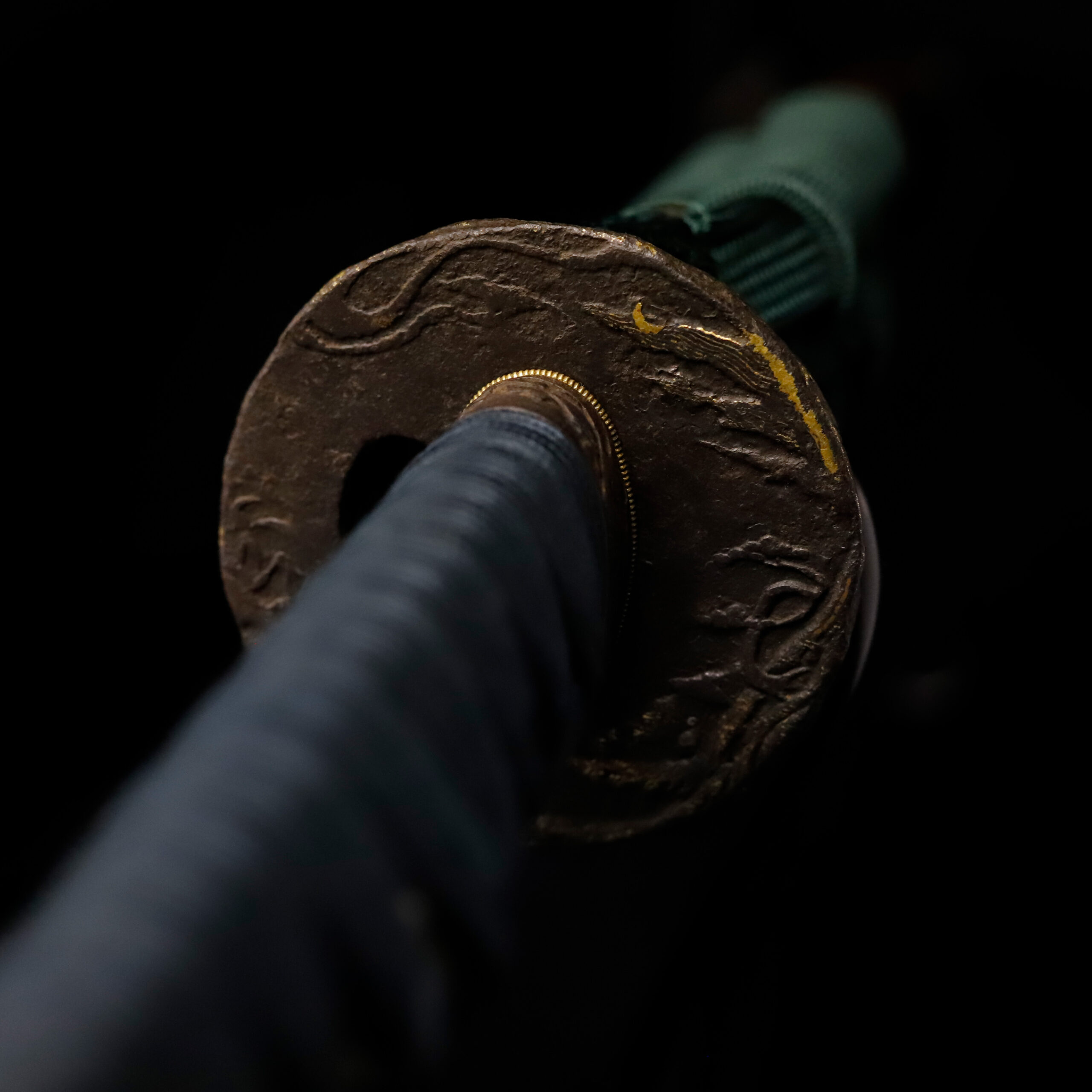
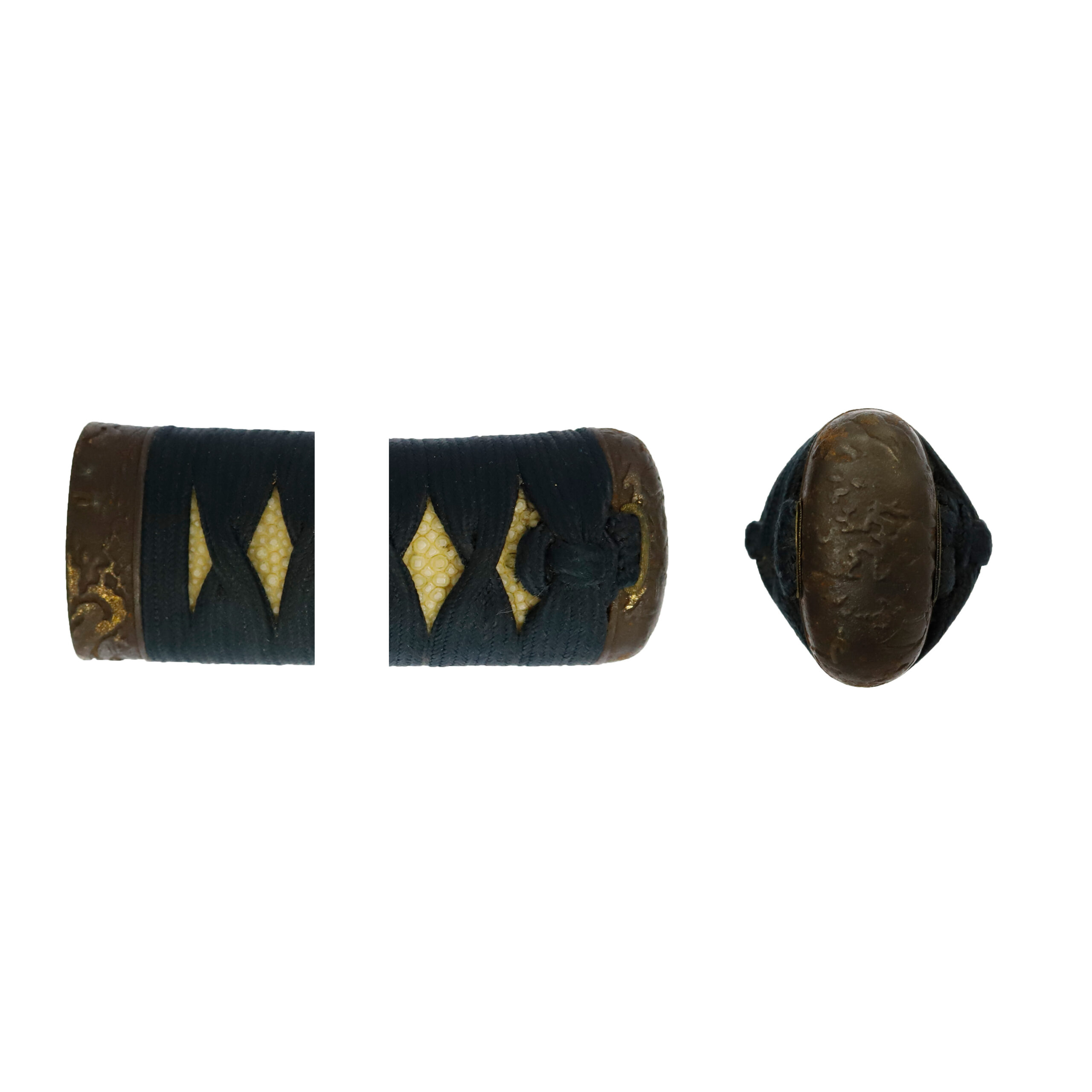
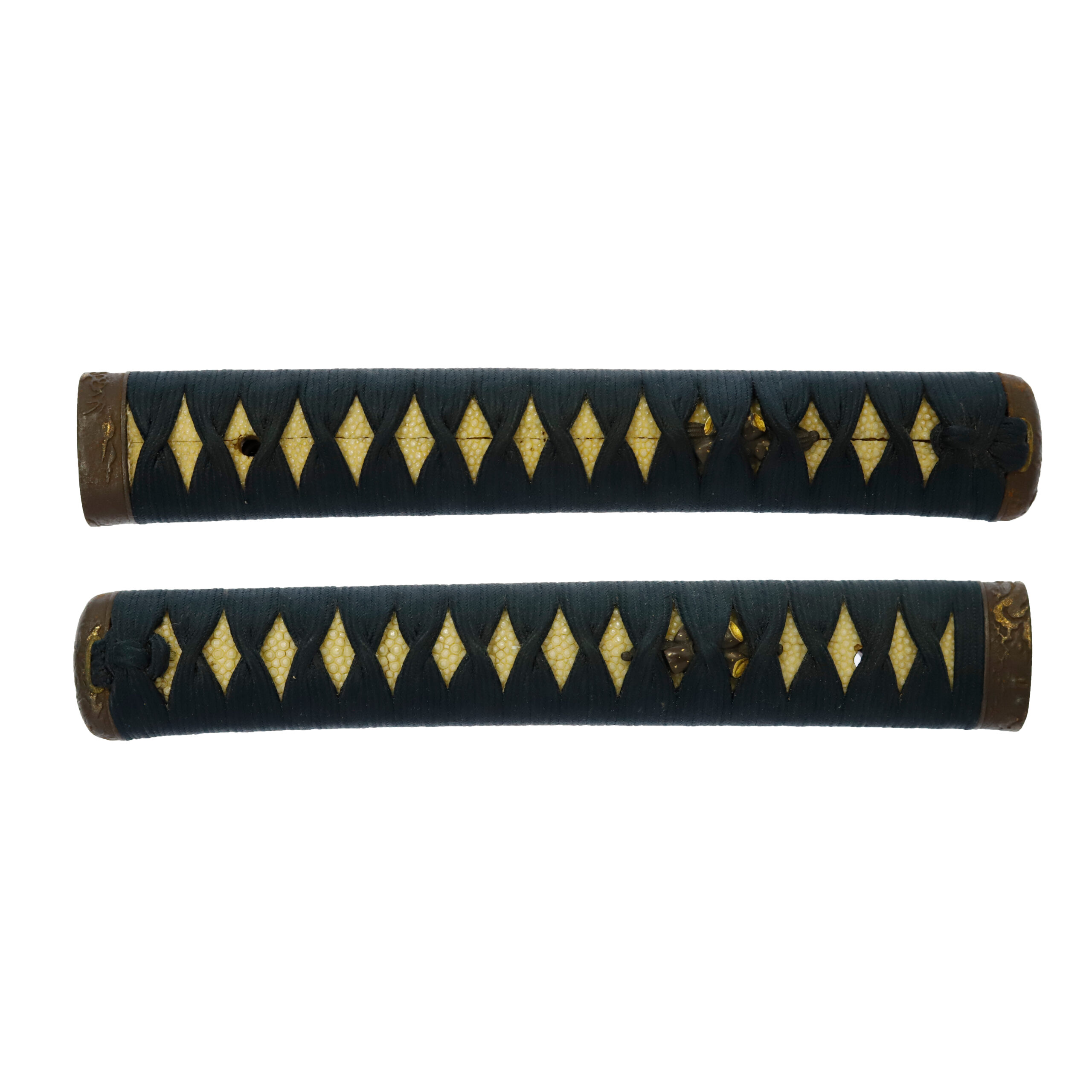
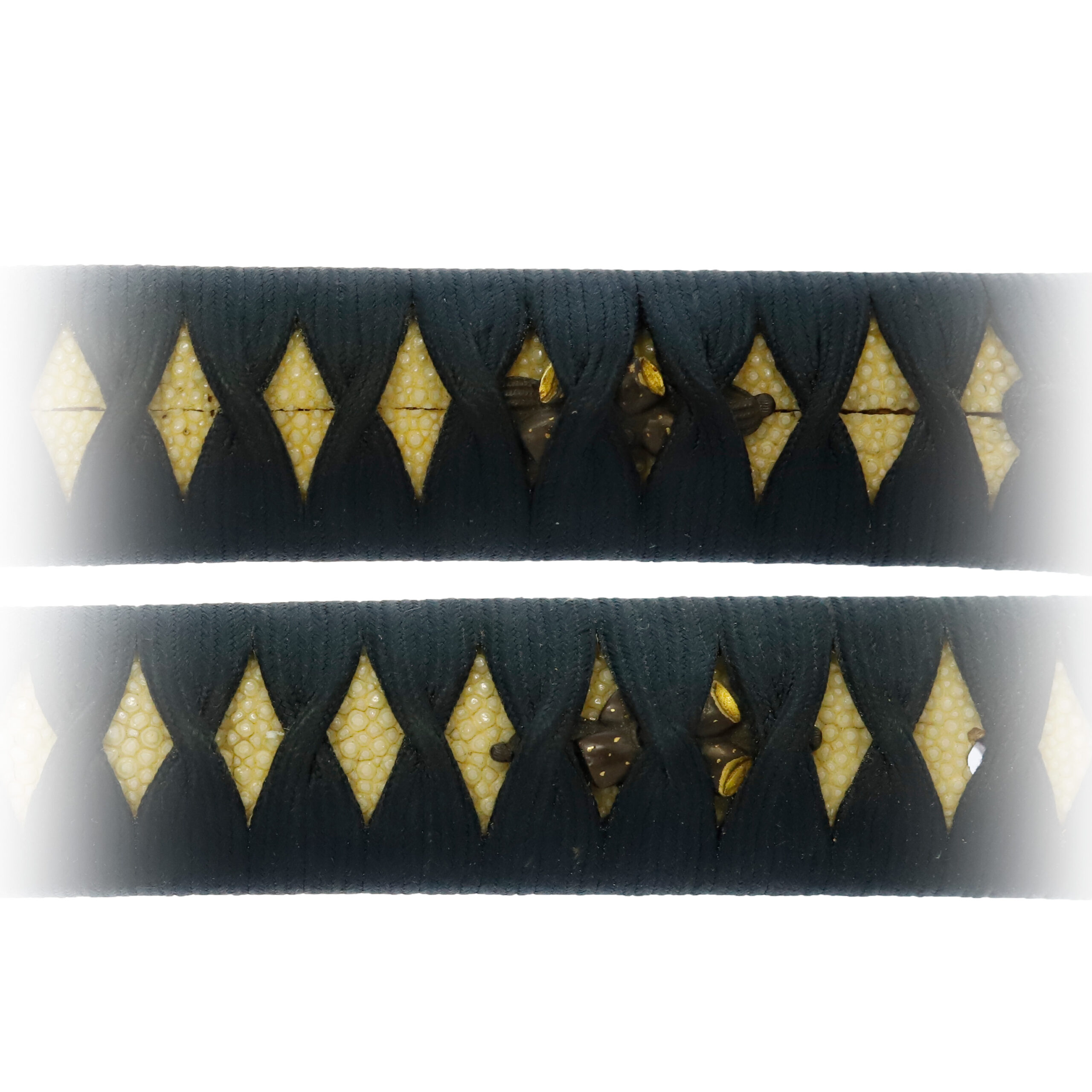
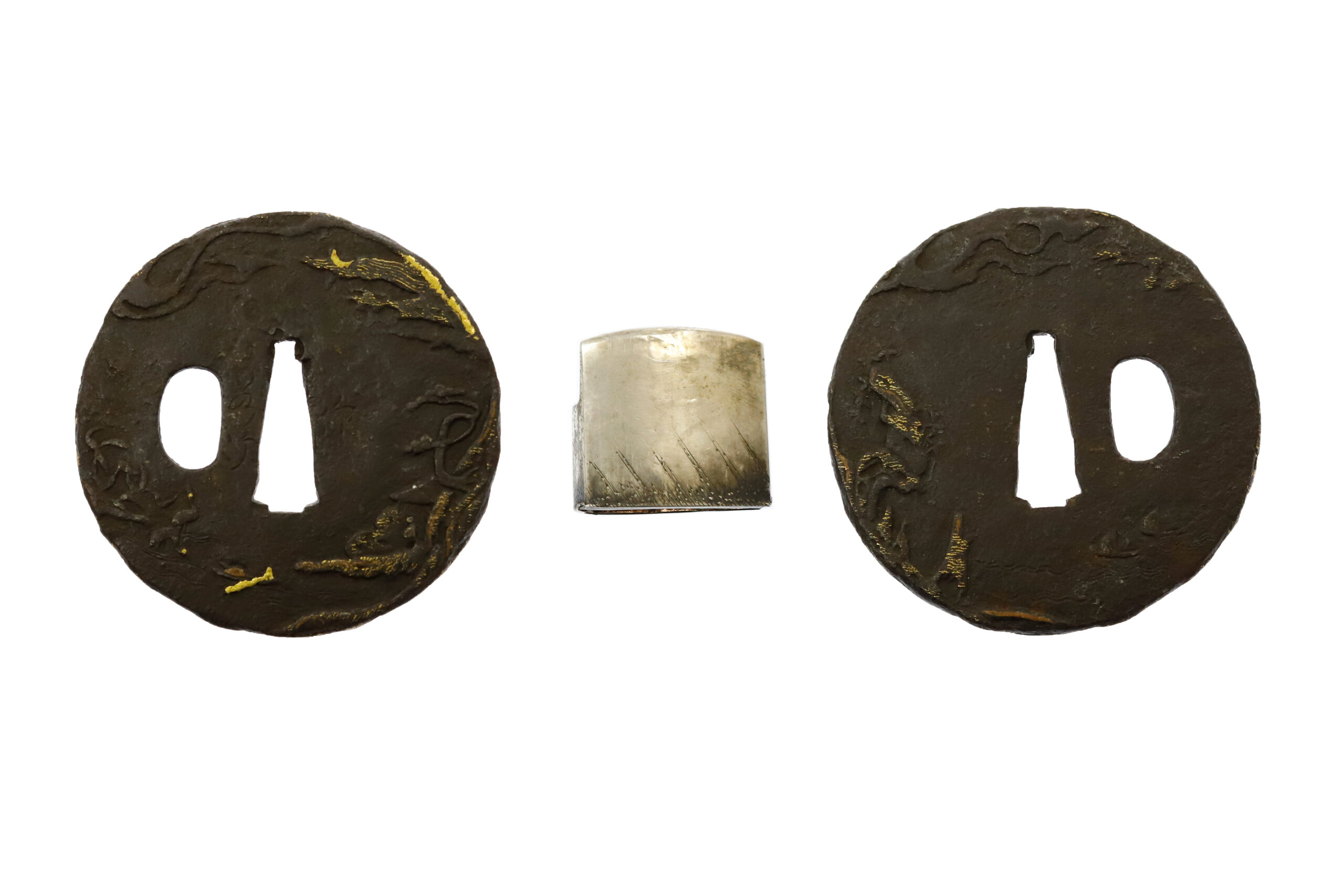
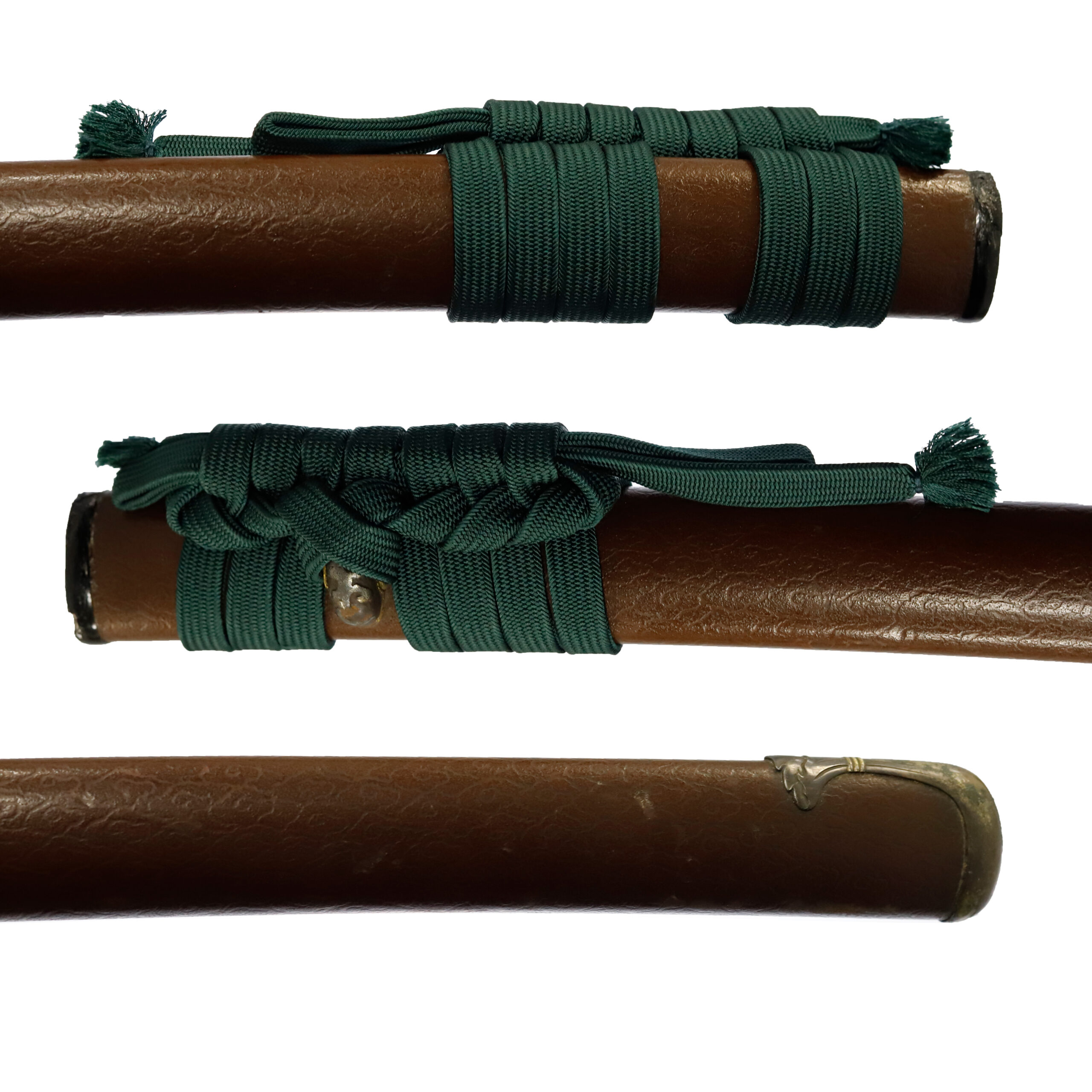
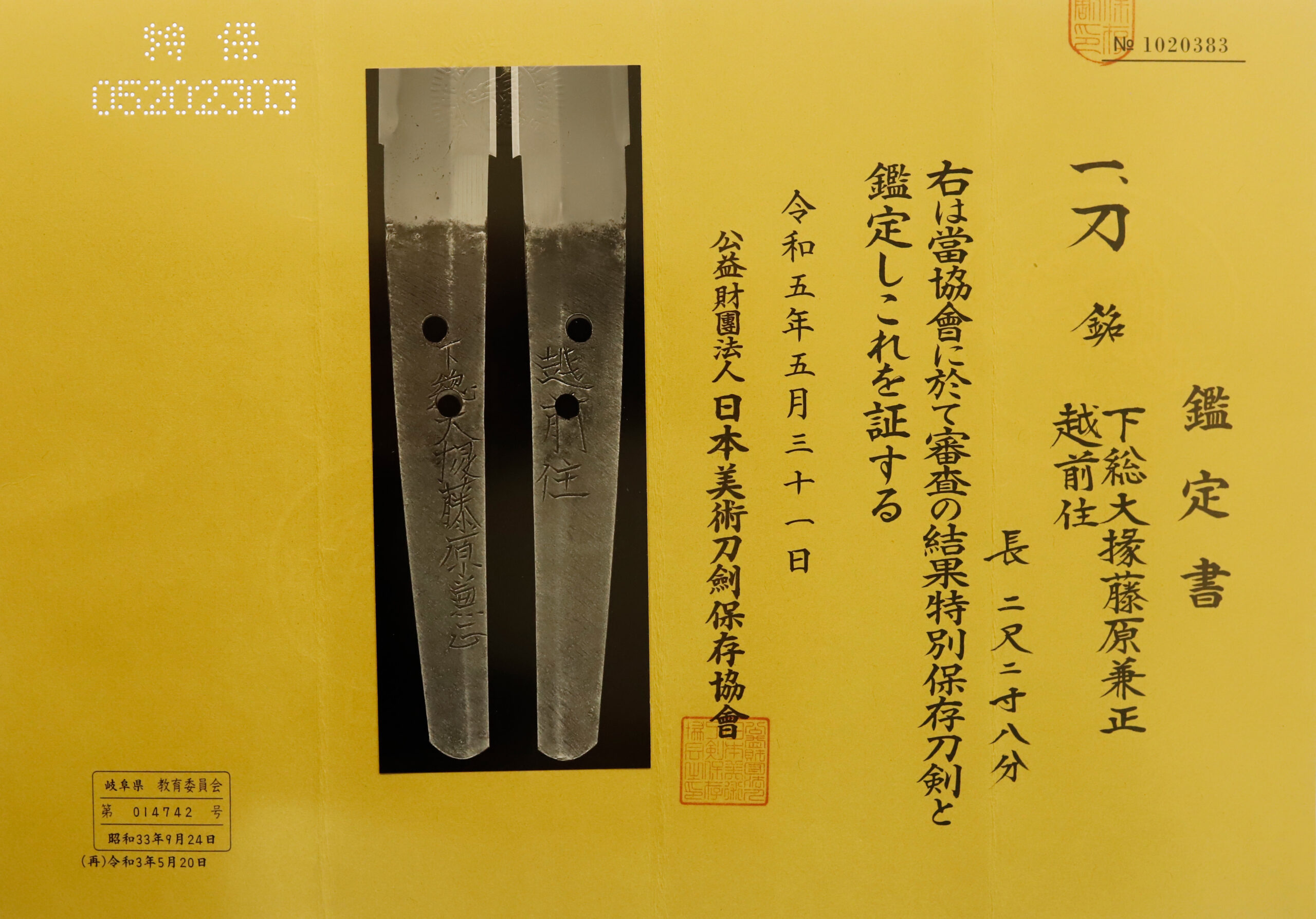
This blade was signed by Shimousa Daijo Fujiwara Kanemasa (下総大掾藤原兼正), who was active during the early Edo period (Kanbun-Enpo era:1661-1681). The back of the tang says Echizen Jyu (越前住), which means that Kanemasa lived in Echizen province (today’s Fukui prefecture) when he forged this blade. Shimousa Daijo is an honorable official title given by the imperial court for his excellent craftsmanship. His birth name was Hattori Kichiheibei. He lived in Echizen, Edo, and Hikone during his career. Kanemasa is said to have been the grandson of the 5th-gen Kanenori (五代兼法). The first-gen Kanenori was originally from Mino province (today’s Gifu prefecture) and belonged to Nara school, whose headquarters was Akasaka Senjuin school. Akasaka Senjuin school was located in Akasaka village near Sekigahara, an essential hub for transportation and military bases from ancient times. It is said that the Akasaka Senjuin school was founded by Sensui (泉水), the son of Yamato Koku Senjuin Shigehiro. Yamato region was one of the most famous sites for sword-forging during the late Heian-Kamakura period. Sensui moved from Yamato (today’s Nara prefecture) to Akasaka village in Mino province during the Nanbokucho period (early 14th century). The earliest work of the first-gen Kanenori is from the 8th year of the Meio era (1500). The 4th-gen Kanenori moved from Mino province to Echizen province during the Tensho era (1573-1592) by being invited by Yuki (結城) clan. And, Kanenori founded his school and trained many apprentices. Echizen province was prosperous during the Edo period, being ruled by the Echizen Matsudaira clan, a direct retainer of the Tokugawa clan who ruled the Edo government. Many skilled swordsmiths moved to Echizen from different regions because of the high demand among Samurai. Many renowned swordsmiths were originally from the Mino province (Gifu prefecture). They are called Echizen Seki swordsmiths. Kanemasa was a descendant of Echizen Kanenori, and we assume he must have mastered a superb level of craftsmanship, which was heavily influenced by Mino den, a particular sword-forging tradition created in Mino province (Gifu prefecture). It is appraised as a Tokubetsu Hozon Token(特別保存刀剣) issued by NBTHK(Nihon Bijutsu Touken Hozon Kyokai:日本美術刀剣保存協会). Fuchi-Kashira Although the surface has worn away due to aging, it depicts a landscape. This condition shows that this Fuchi Kashira has passed many years. On the Kashira part, its theme is a landscape of the waterside. We could see the back of a man, probably rowing a boat. Trees (probably pine trees) are engraved on the Fuchi part. It seems golden paint was initially applied to this part. Tsuka and Menuki Seeing from the gaps of the Tsukamaki thread, it is challenging to judge the motif of this Menuki from what we could see. It seems each Menuki is composed of multiple objects of the same shape, such as plants. Golden paint is applied to several parts. The same as other sword mountings of this Koshirae, such colorings add decorativeness to metal fittings. Tsuba and Habaki There is an engraved inscription around the Nakago hole (center hole). Please note that there is no proof of this signature. The design of this Tsuba seems to be related to the Fuchi Kashira we saw above. The gold and copper coloring still remains in some parts, suggesting that it originally had a more highly decorative appearance. Authentication Paper They authenticated the blade on May 31th in the 5th year of Reiwa (2023). They appraised it as Tokubetsu Hozon Touken, the blade especially worth preserving for Japanese society.
Kanemasa兼正
Offered by Samurai Museum

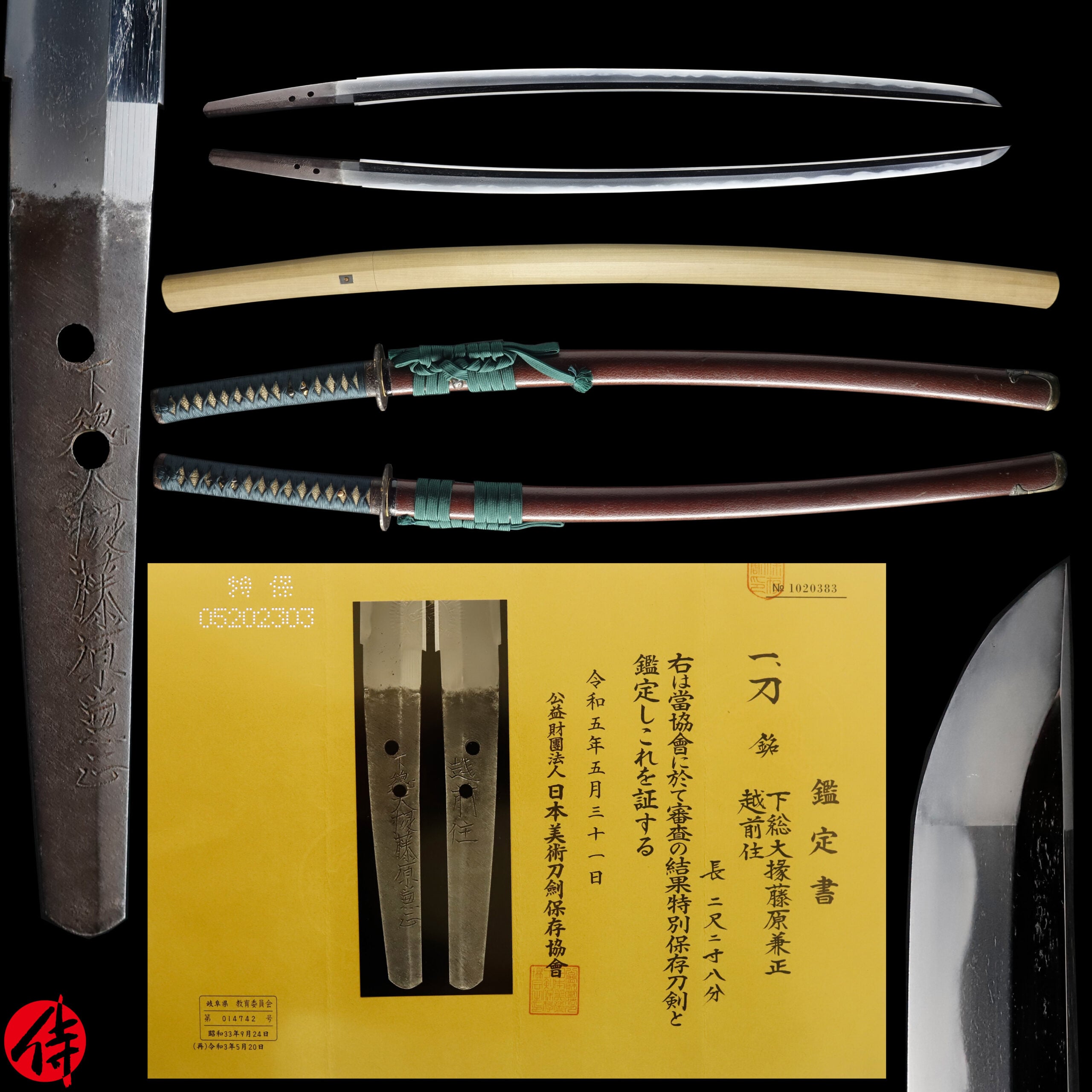
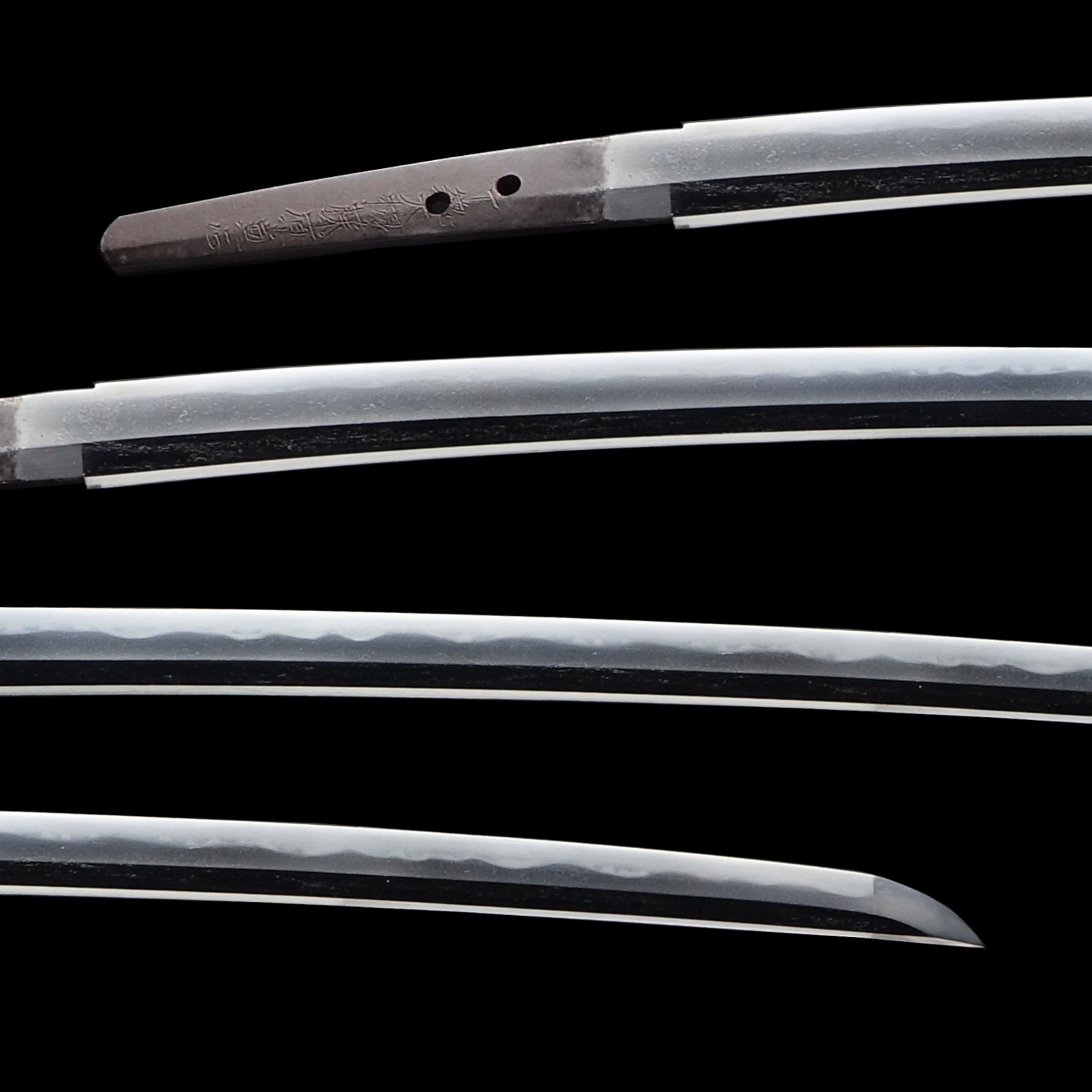
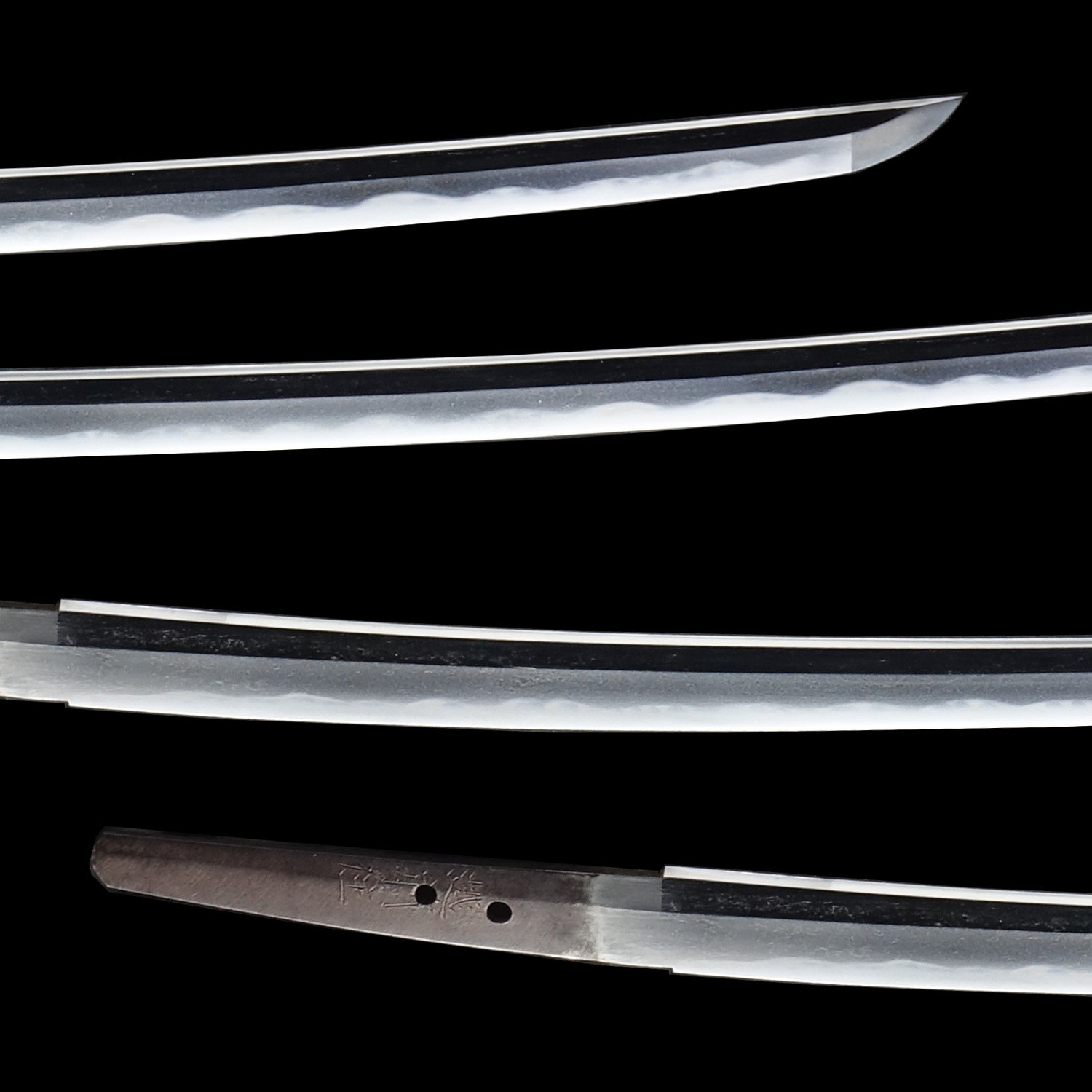
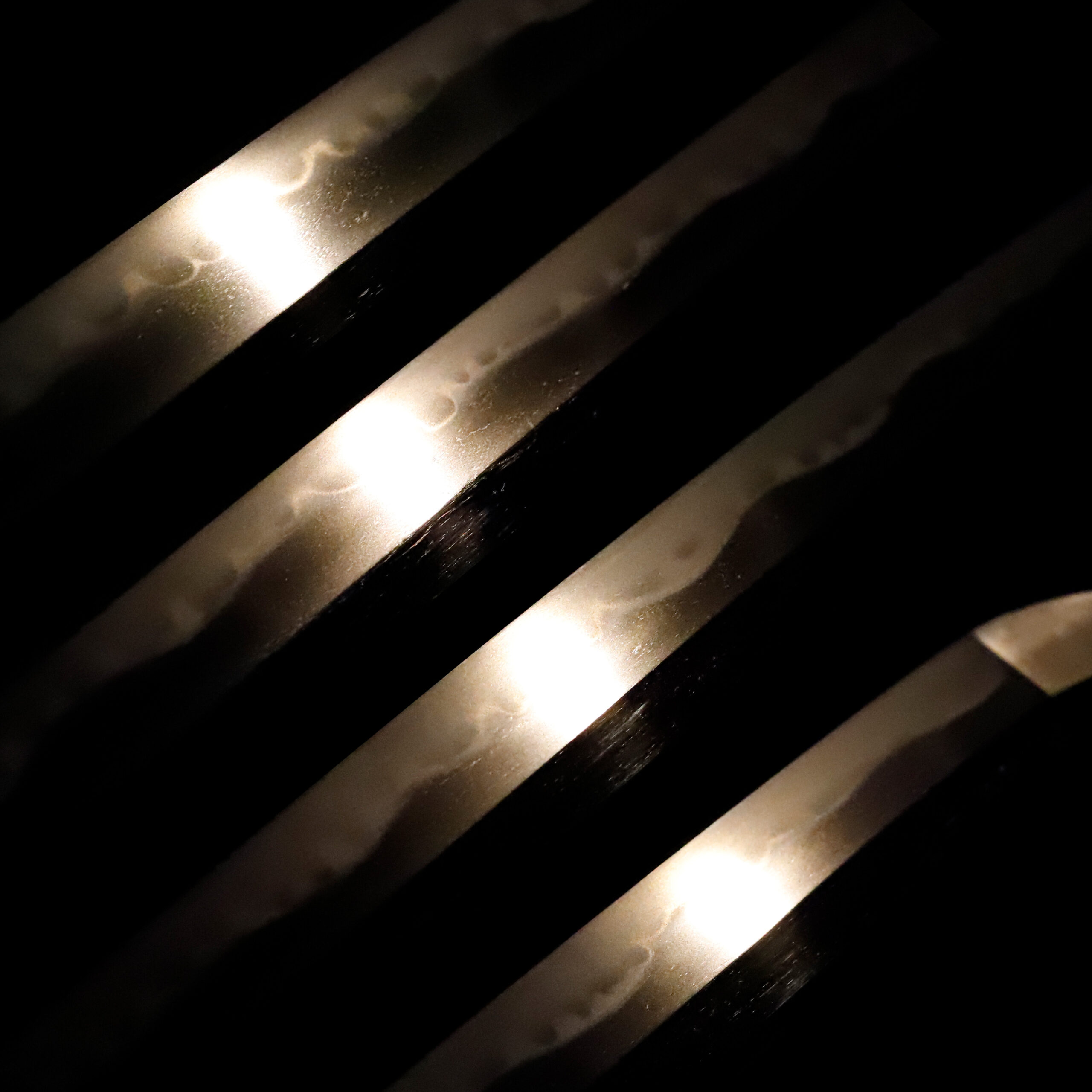
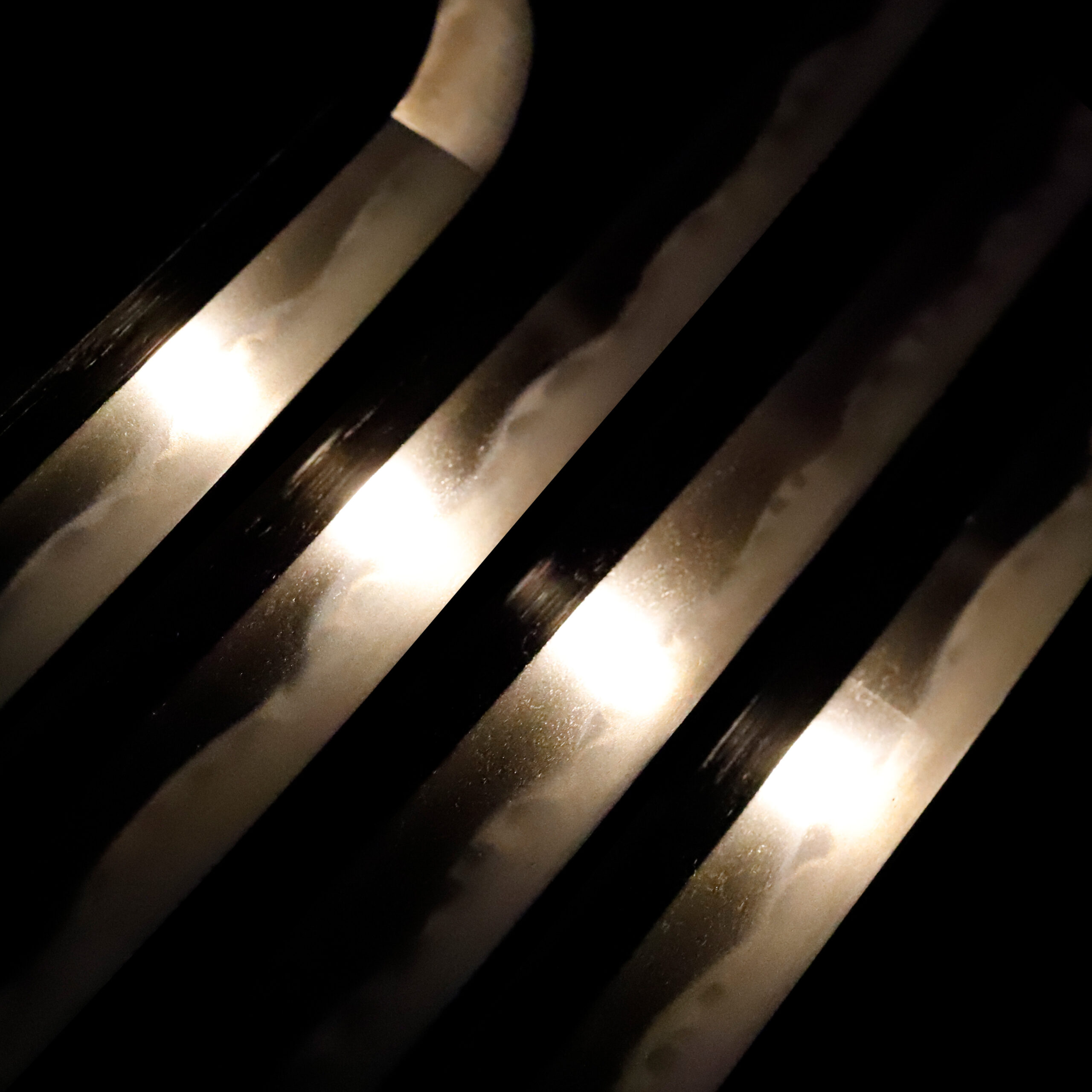
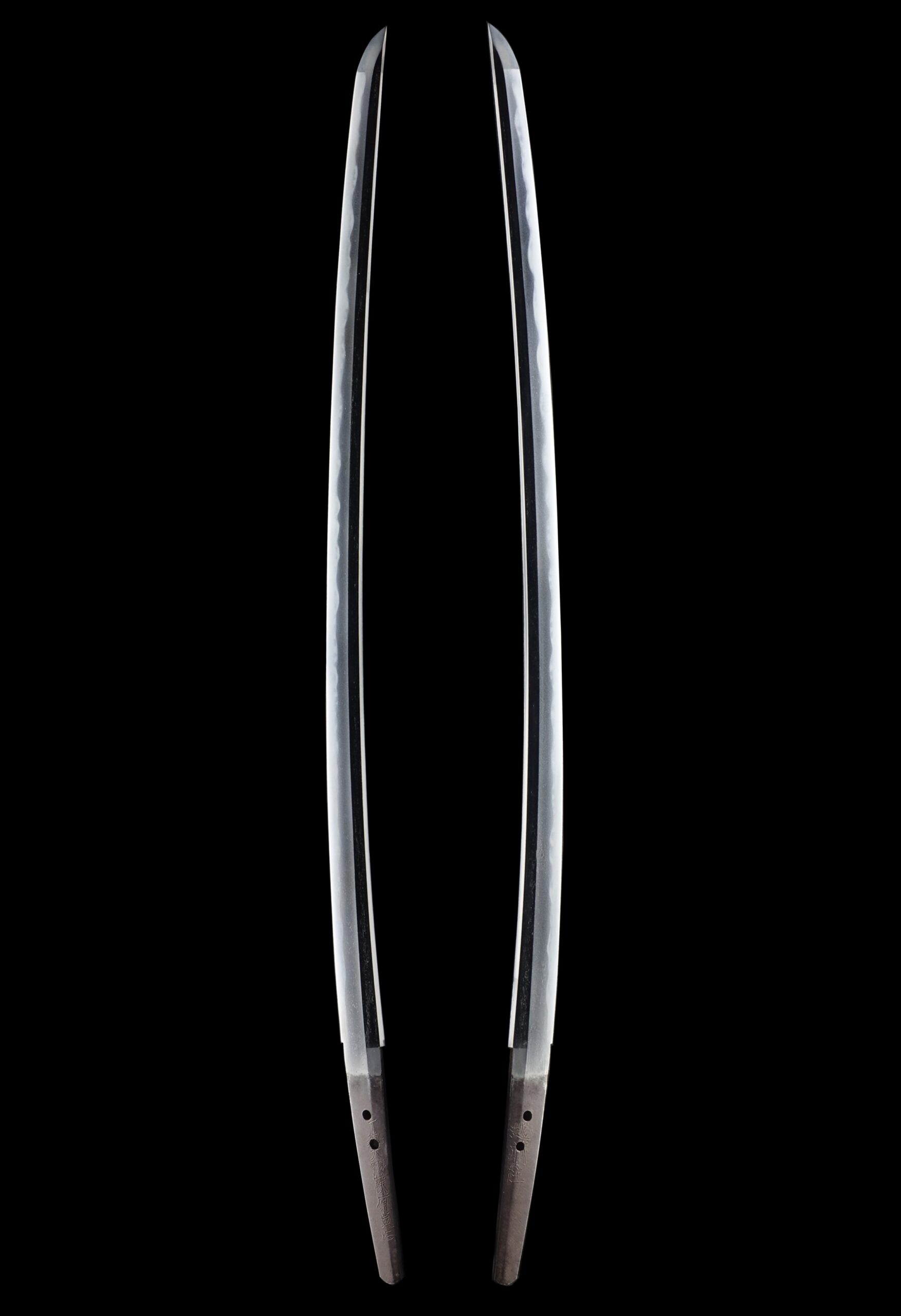
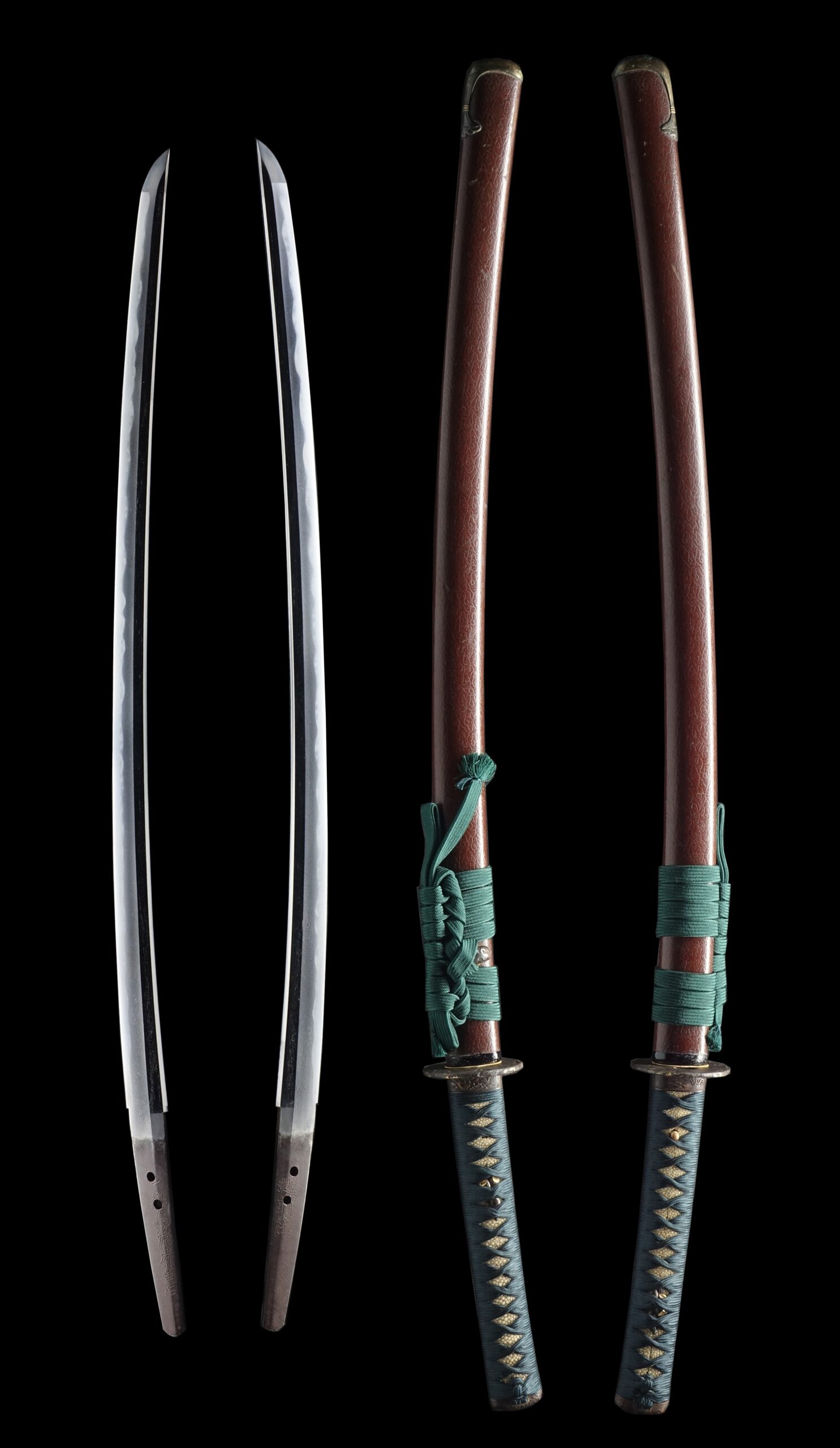
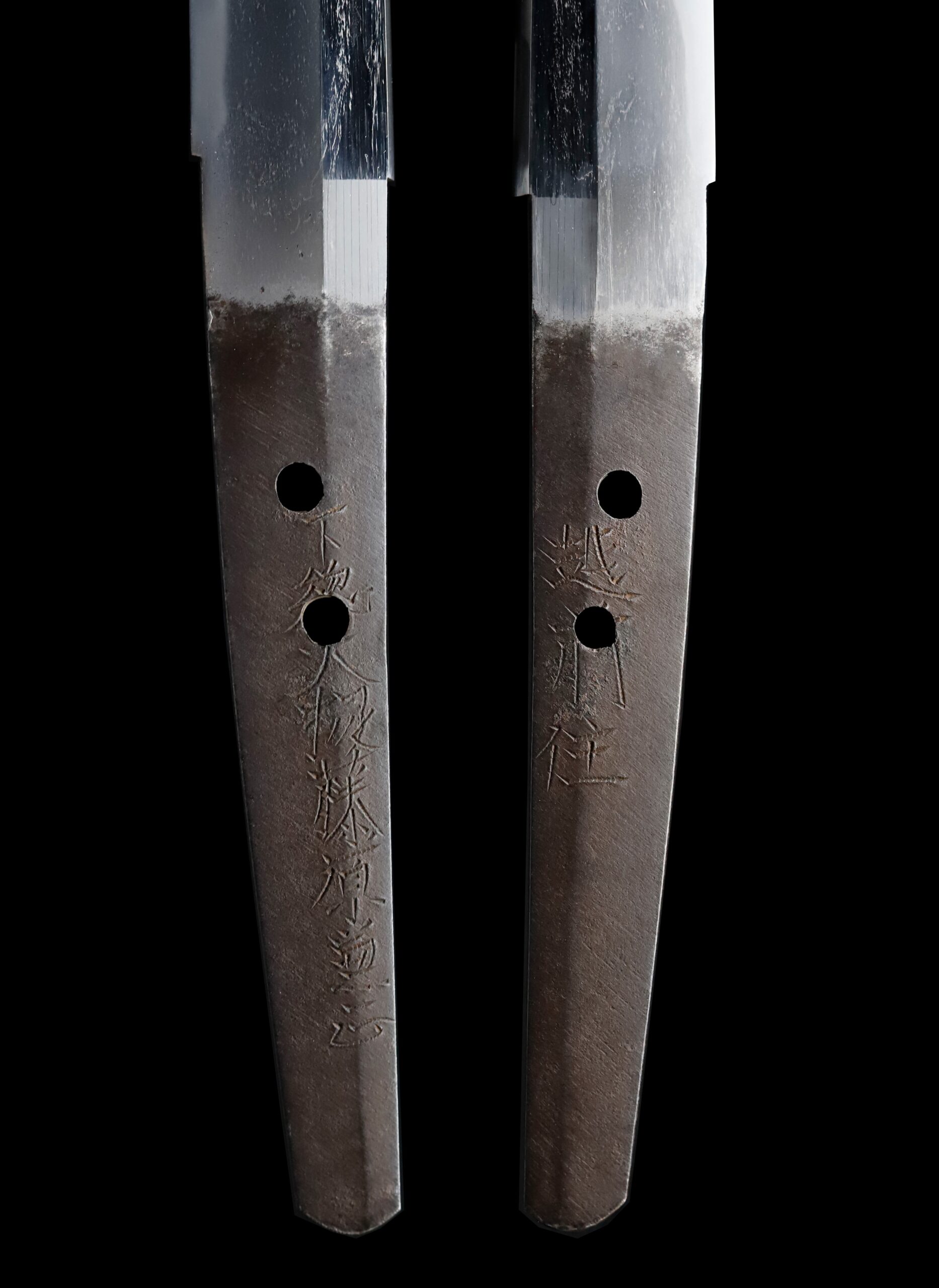
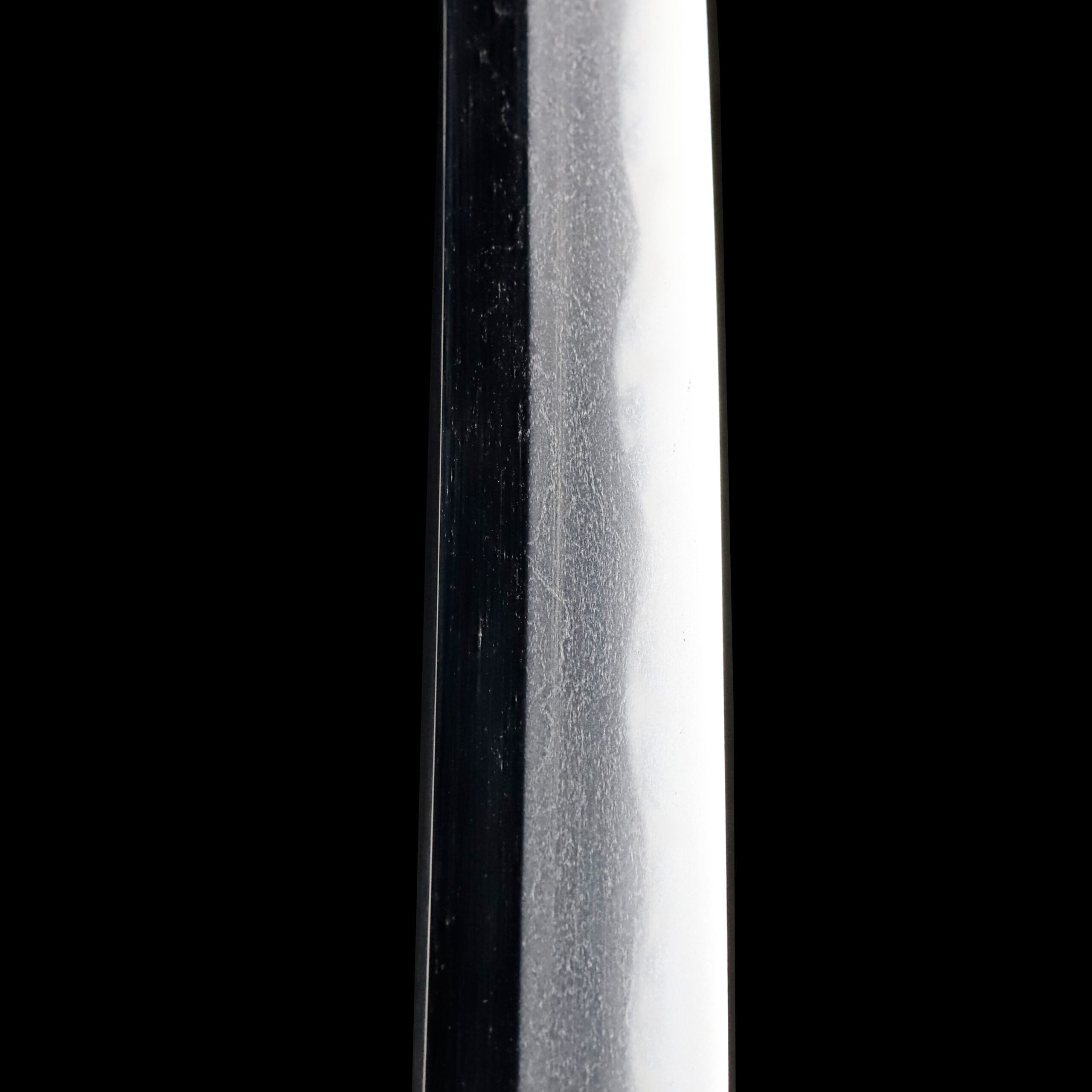
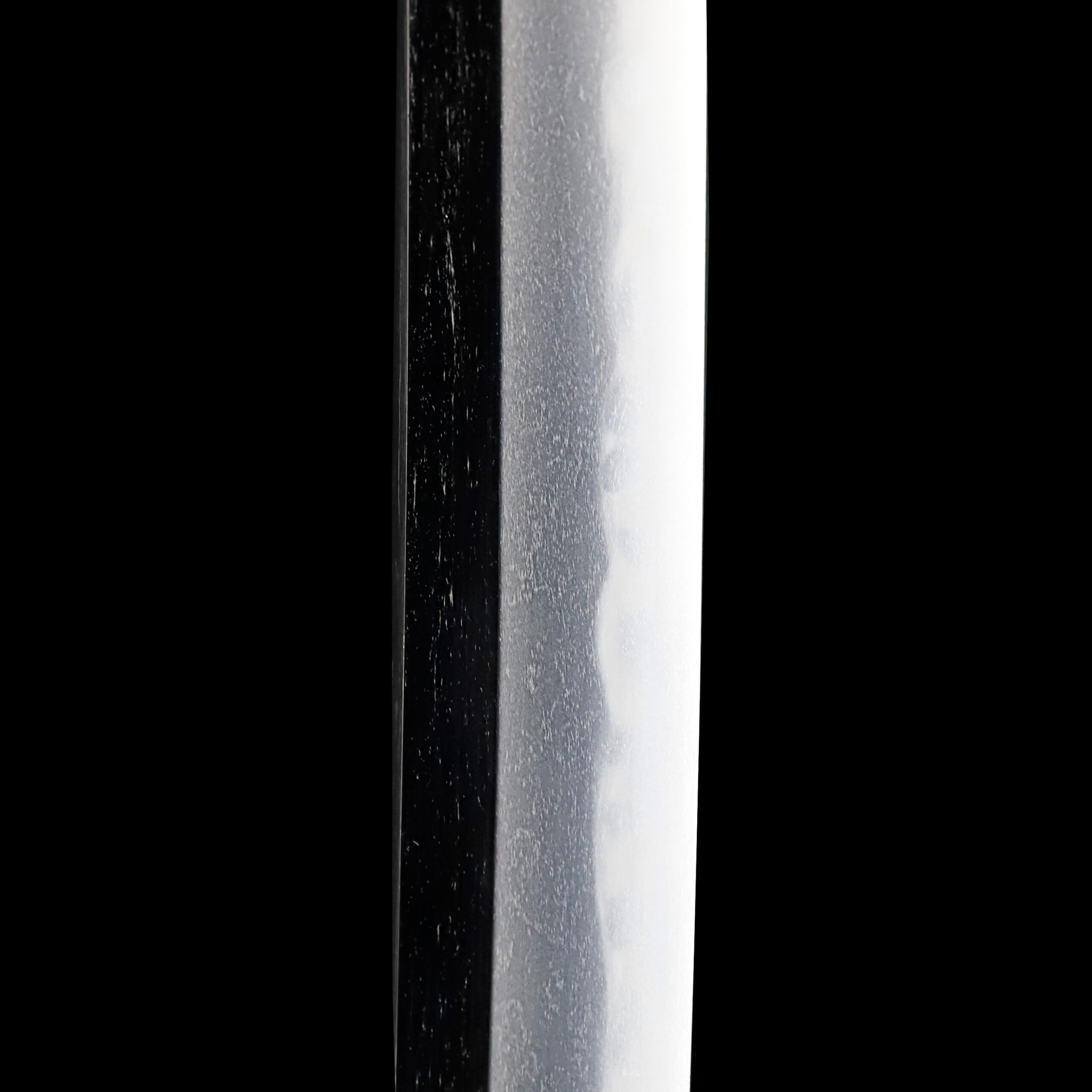
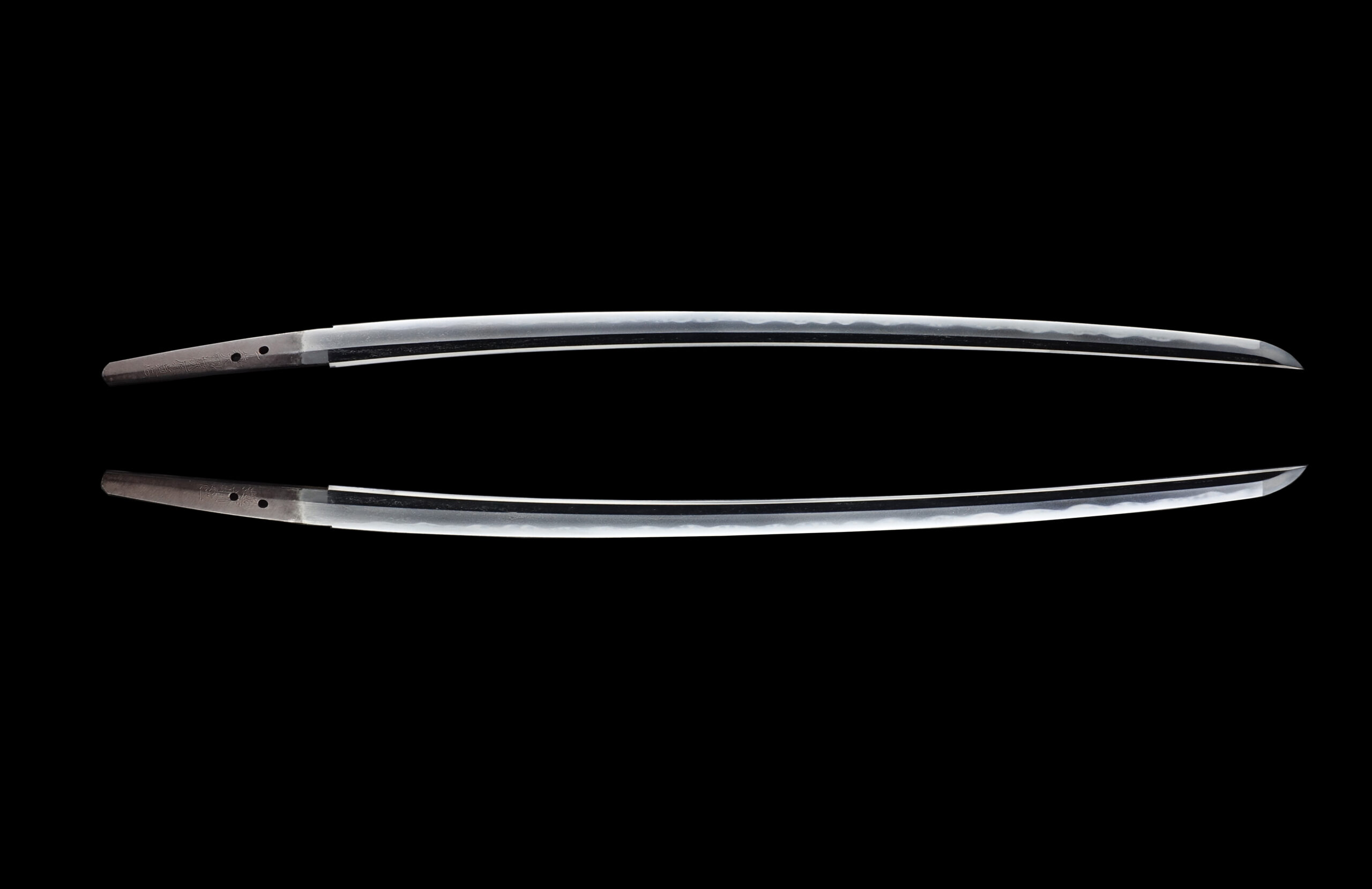
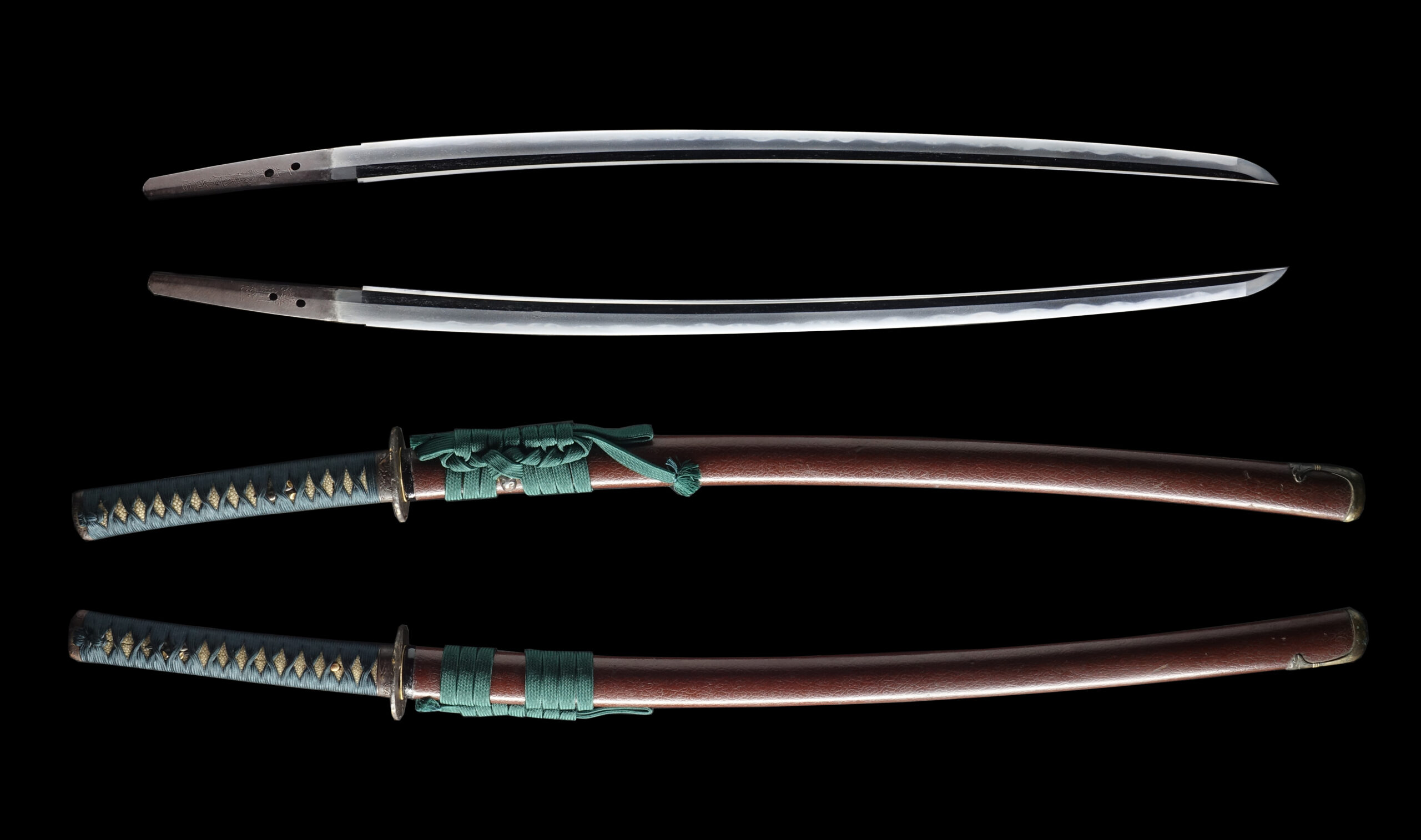
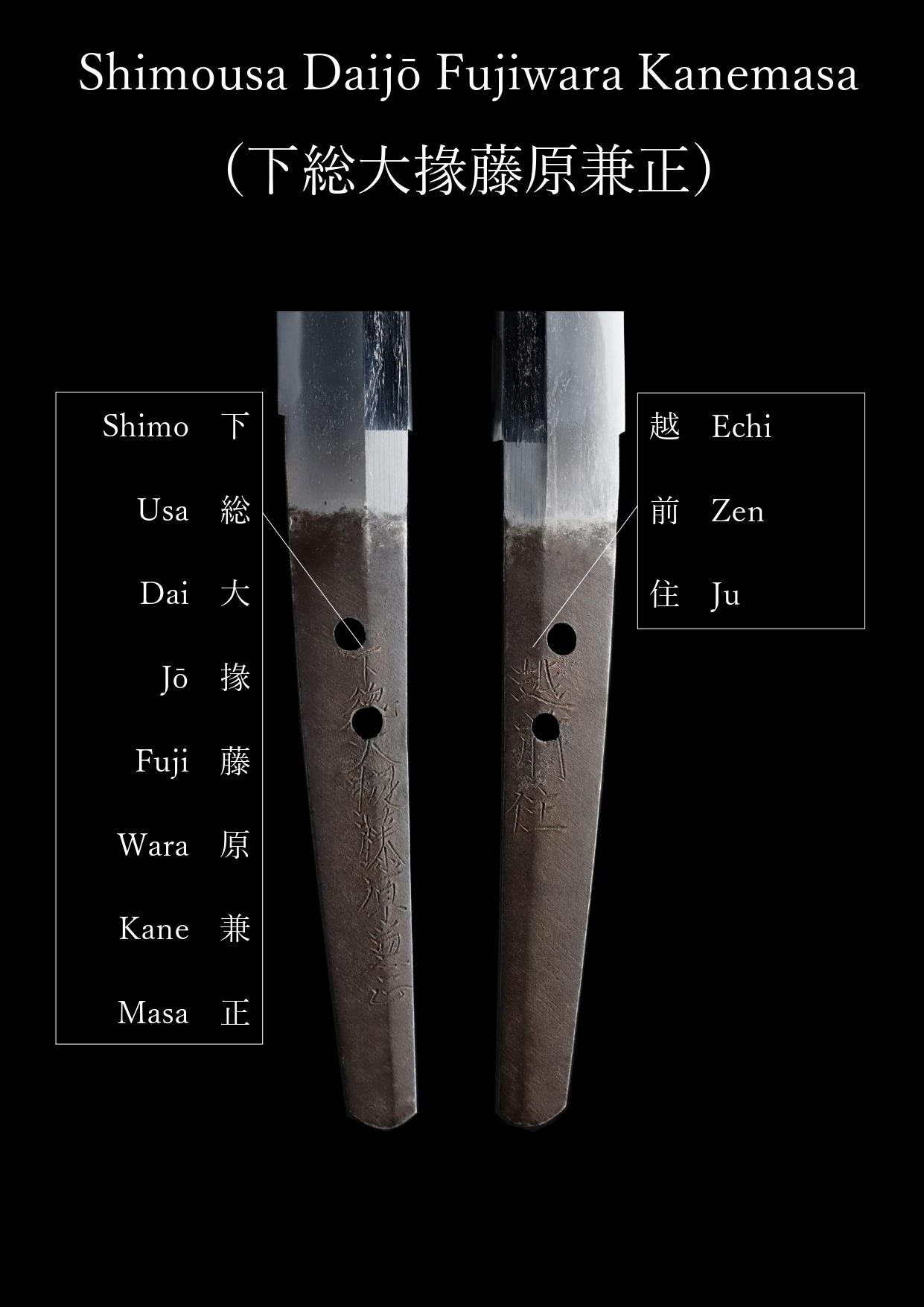
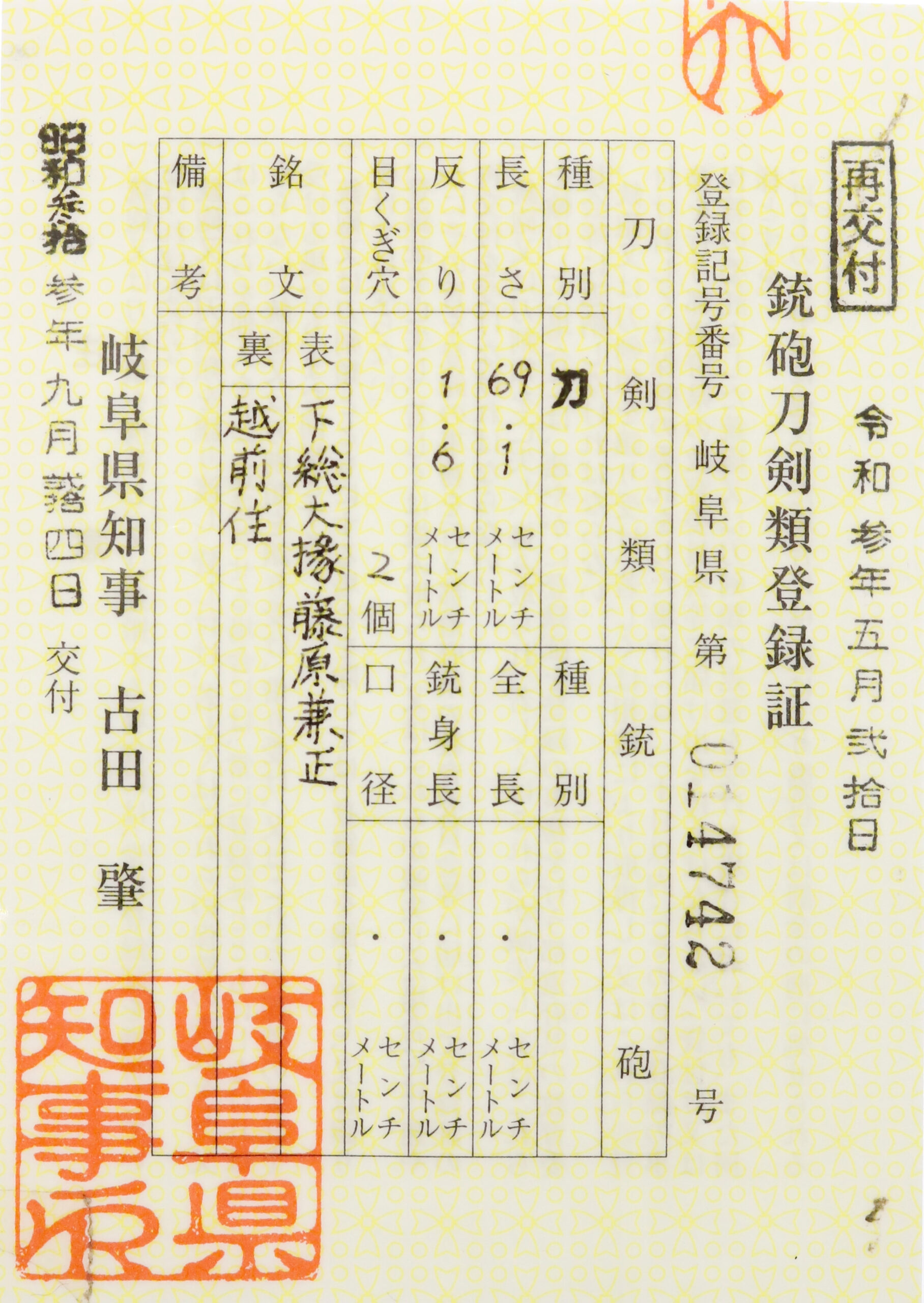
Echizen · around 1661-1673
Fujishiro Chu-jo saku · Tōken Taikan top 76%
4 pieces on the market now
The Edo period (1615 to 1868)
Edo was the sword’s age of connoisseurship: the Hon’ami appraisers, the shogunal register of famous blades of 1719, and a thriving literature turned the sword into an object of study even as it ceased to be drawn in war.
A Hozon-certified blade judged to show notably superior workmanship and a better state of preservation. The bar is higher: re-tempered blades and most unsigned Muromachi/Edo works are excluded.
The NBTHK (Nihon Bijutsu Tōken Hozon Kyōkai, the Society for the Preservation of Japanese Art Swords) is a public-interest incorporated foundation founded in 1948 and supervised by Japan’s Agency for Cultural Affairs (Bunkachō); it is based at the Japanese Sword Museum in Tokyo. Its expert panels physically examine each submitted work (shinsa) and issue a certificate (kanteishō) ranking it by artistic and historical merit. NBTHK papers are the most widely recognized standard of authentication for Japanese swords and fittings.
NBTHK official siteReturns/exchanges limited to defects caused by shipping (except willful misconduct or gross negligence by the company); customers must contact within 72 hours of receiving the product.