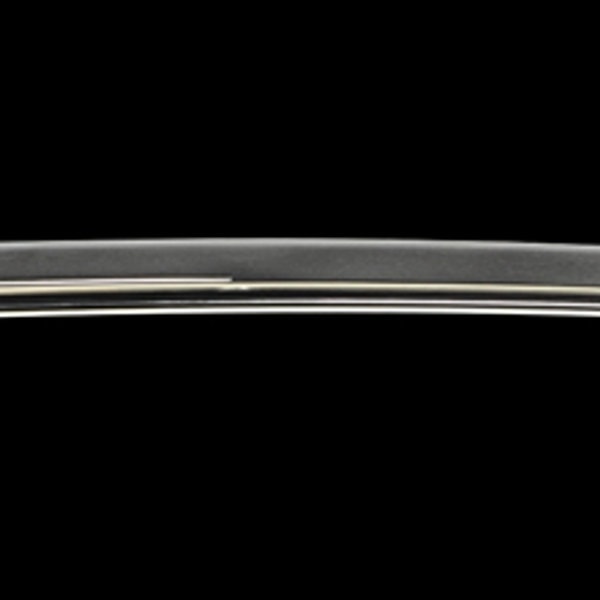
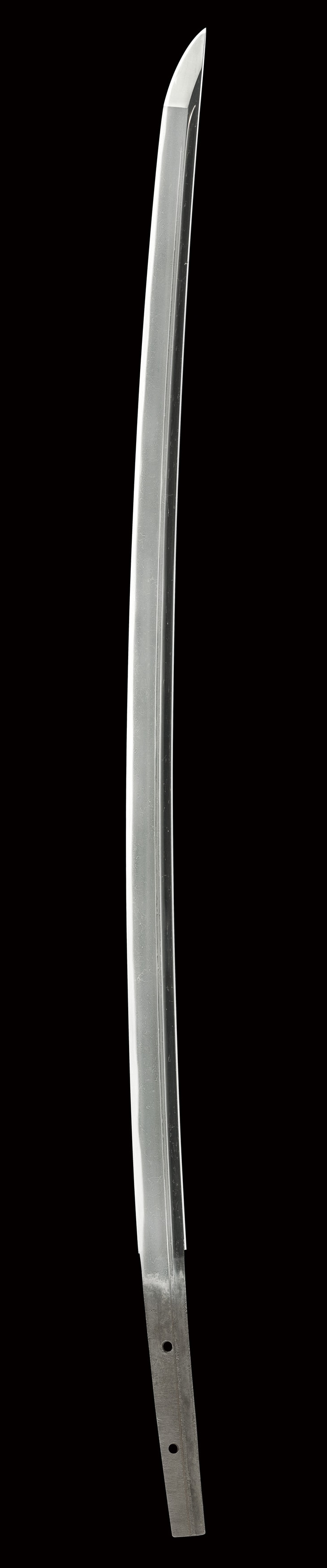
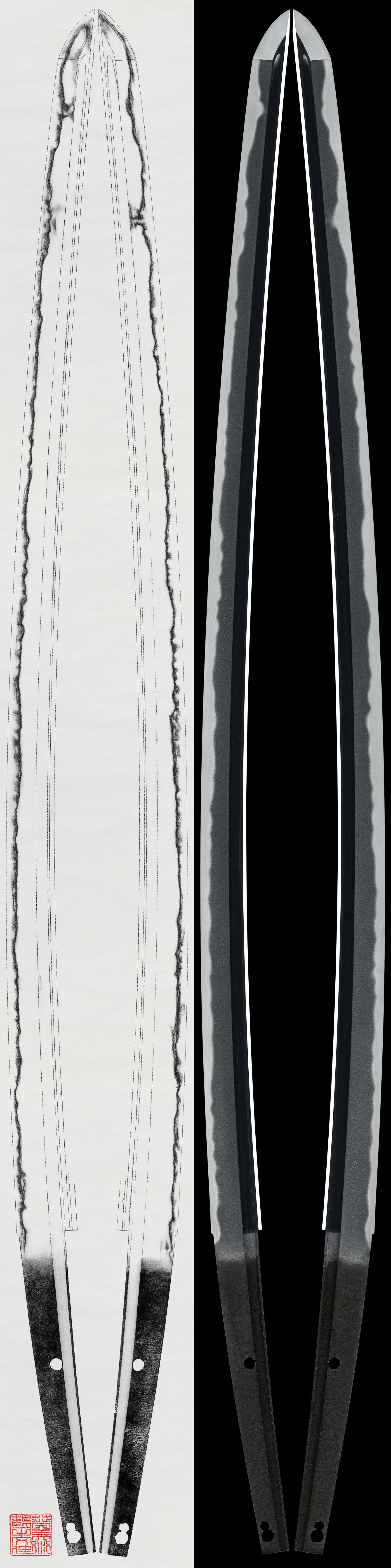
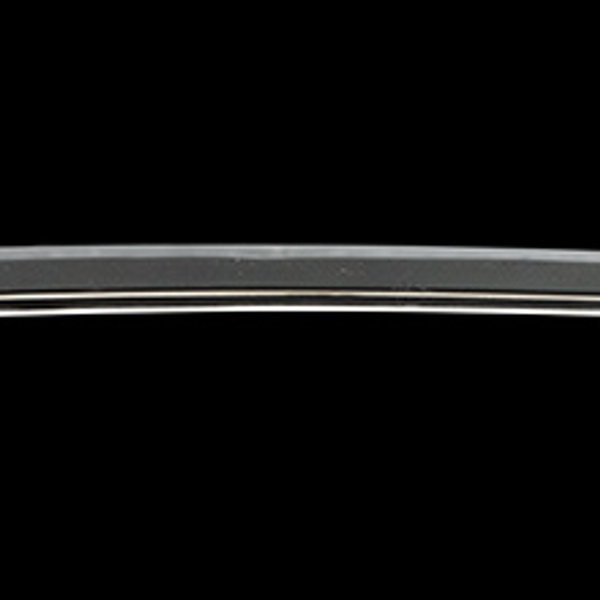
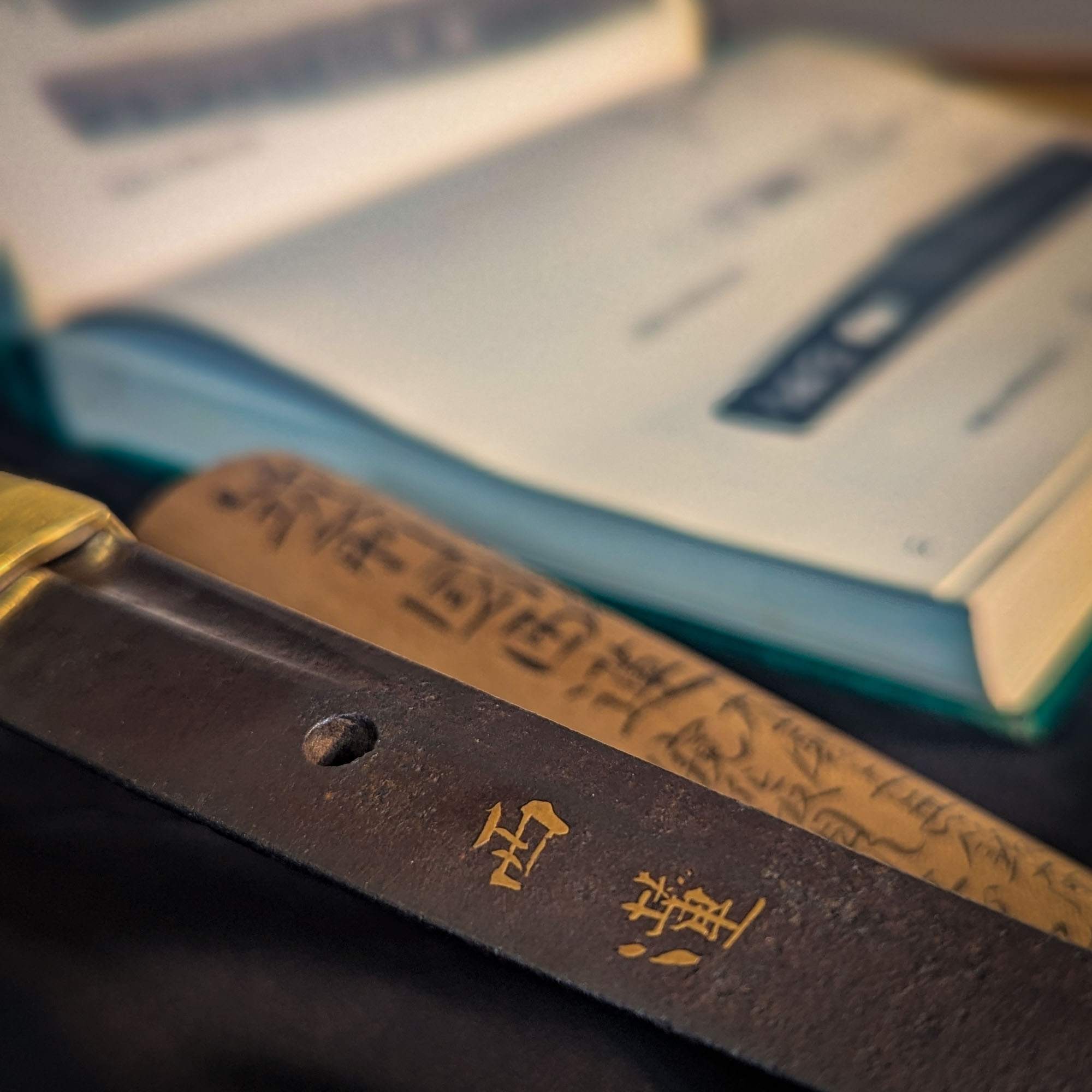
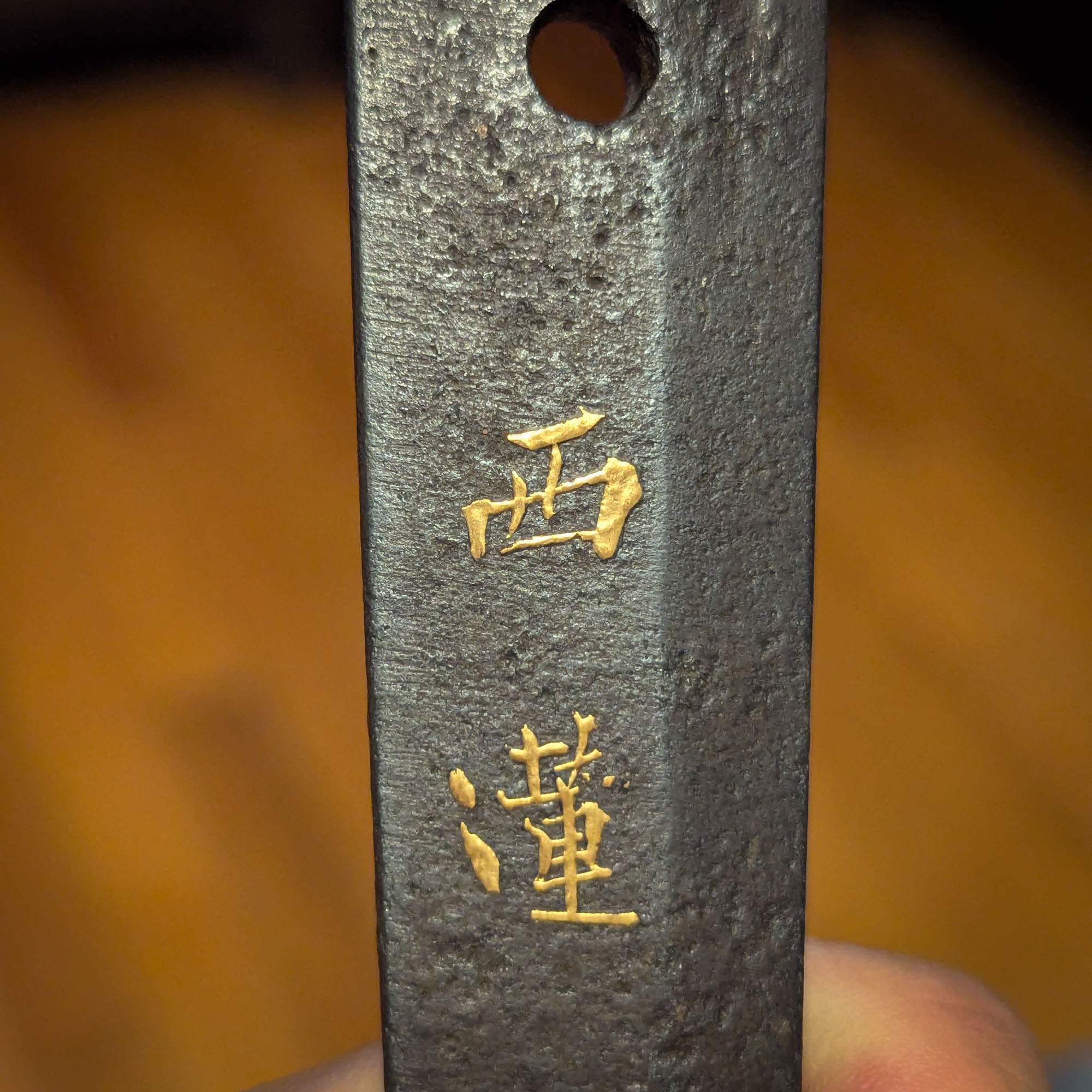
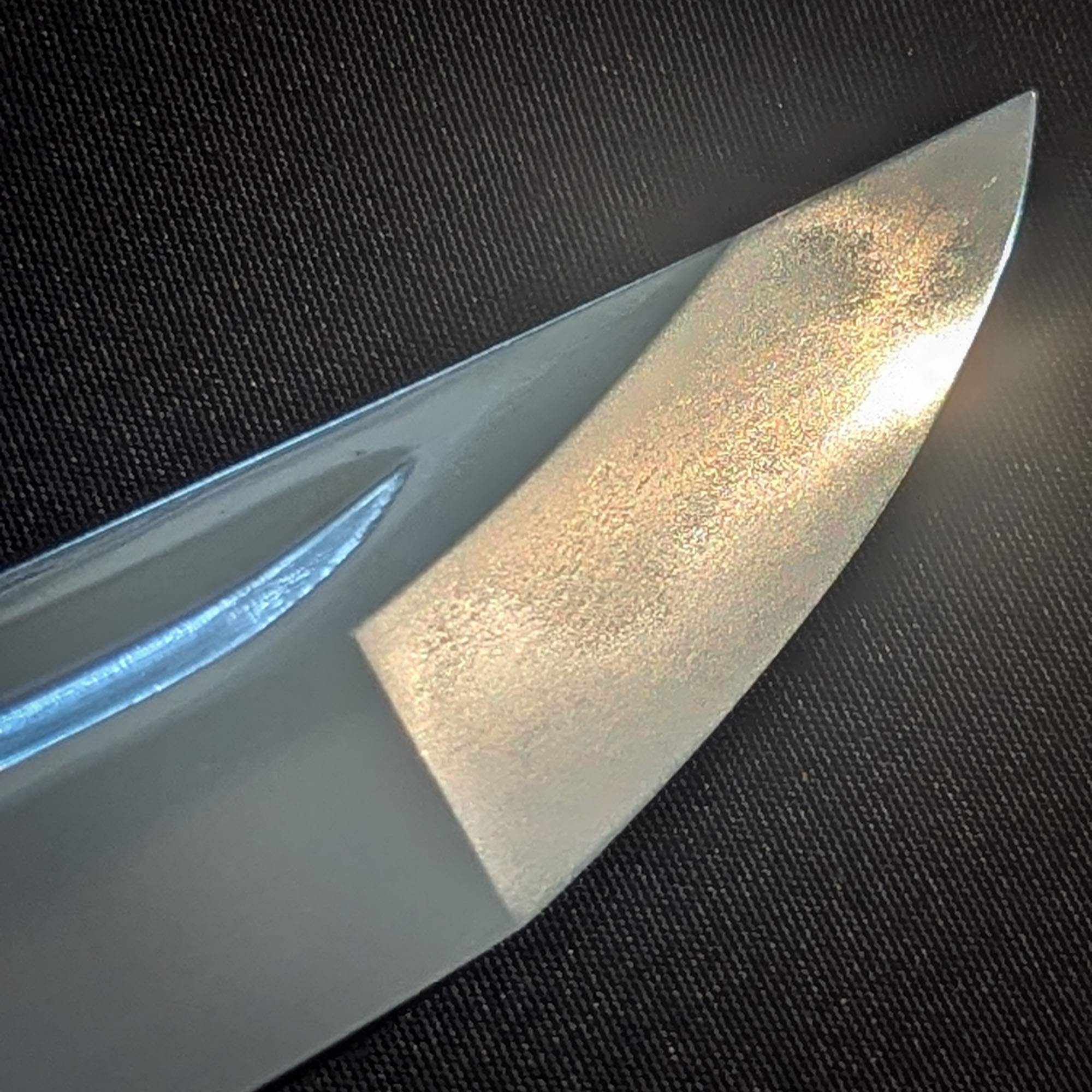
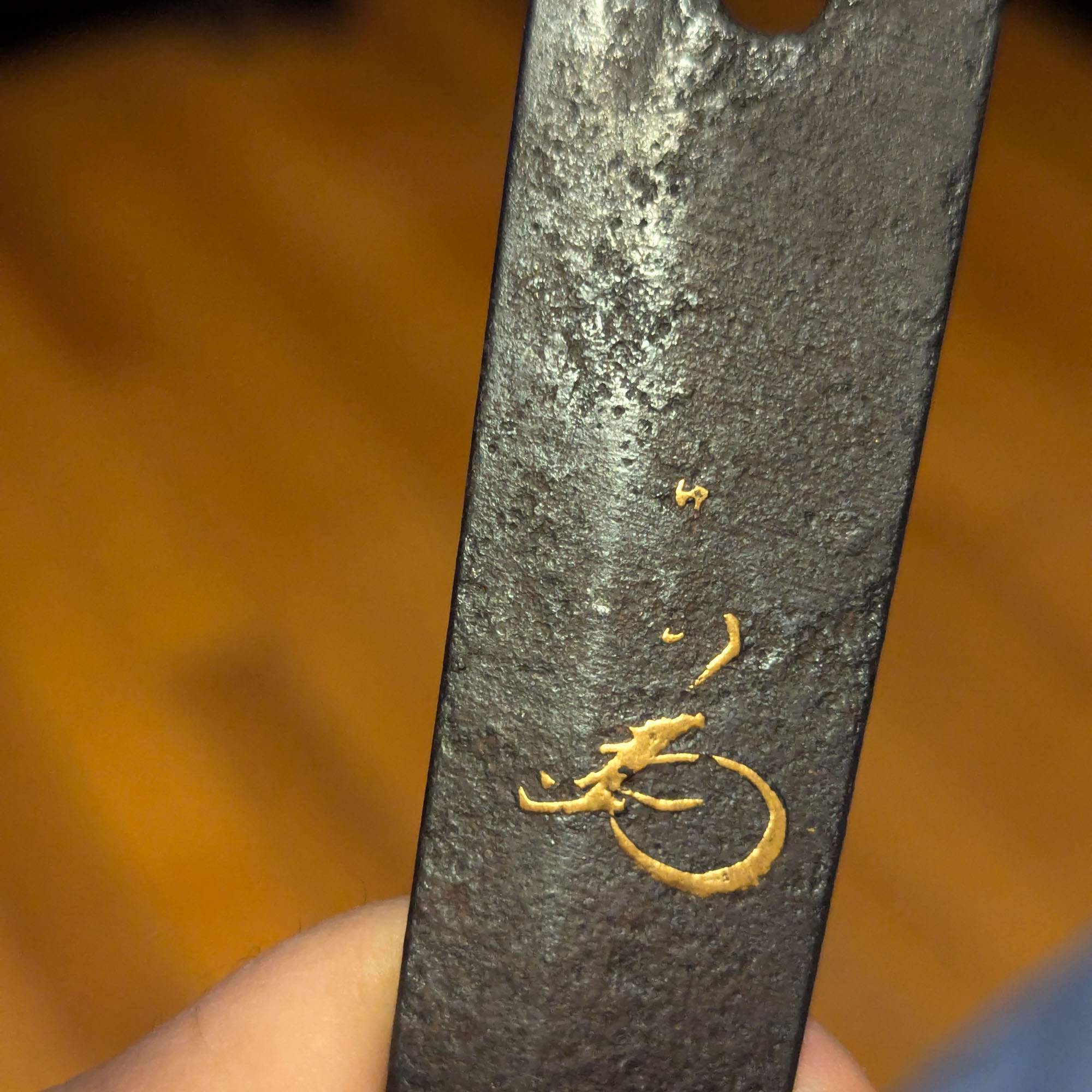
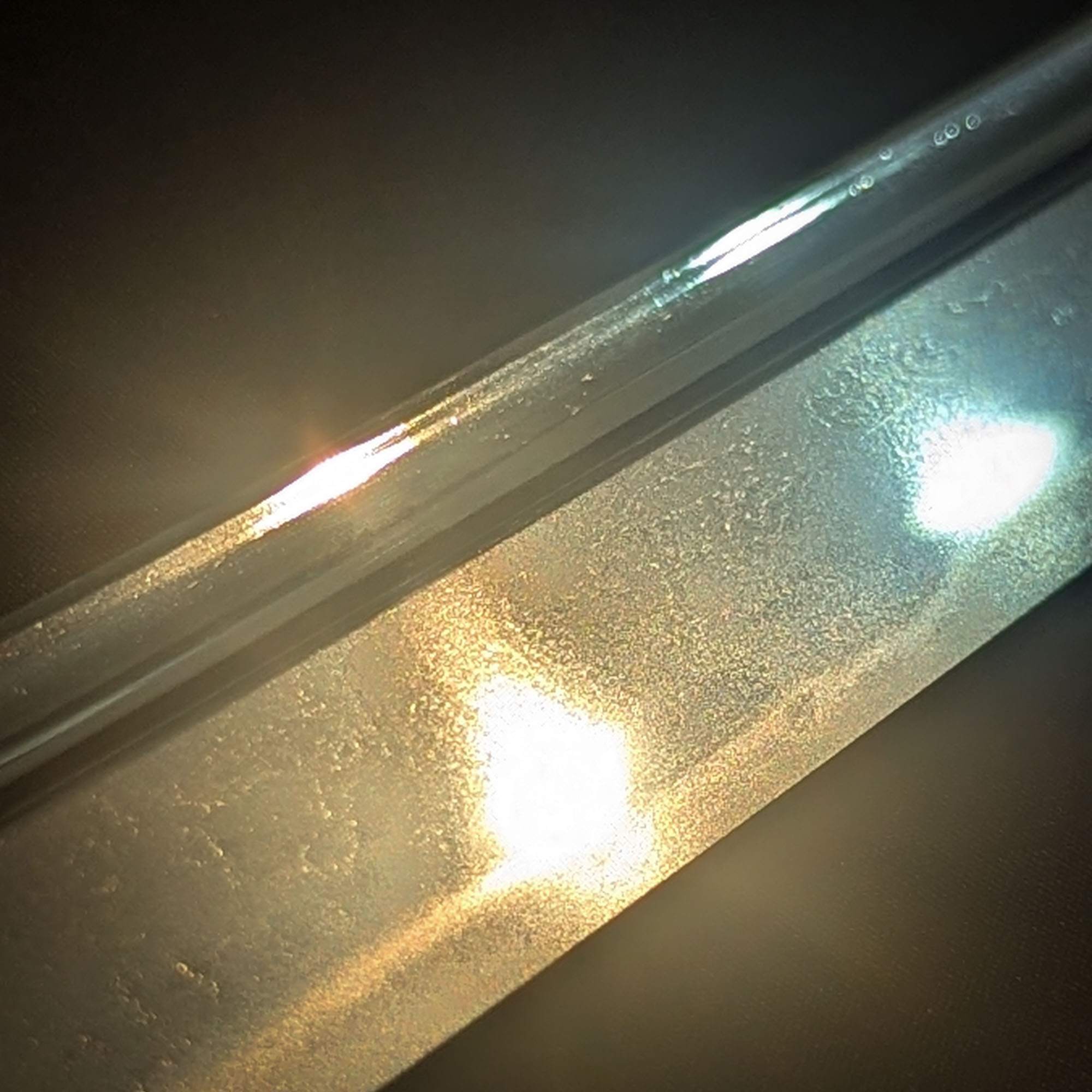
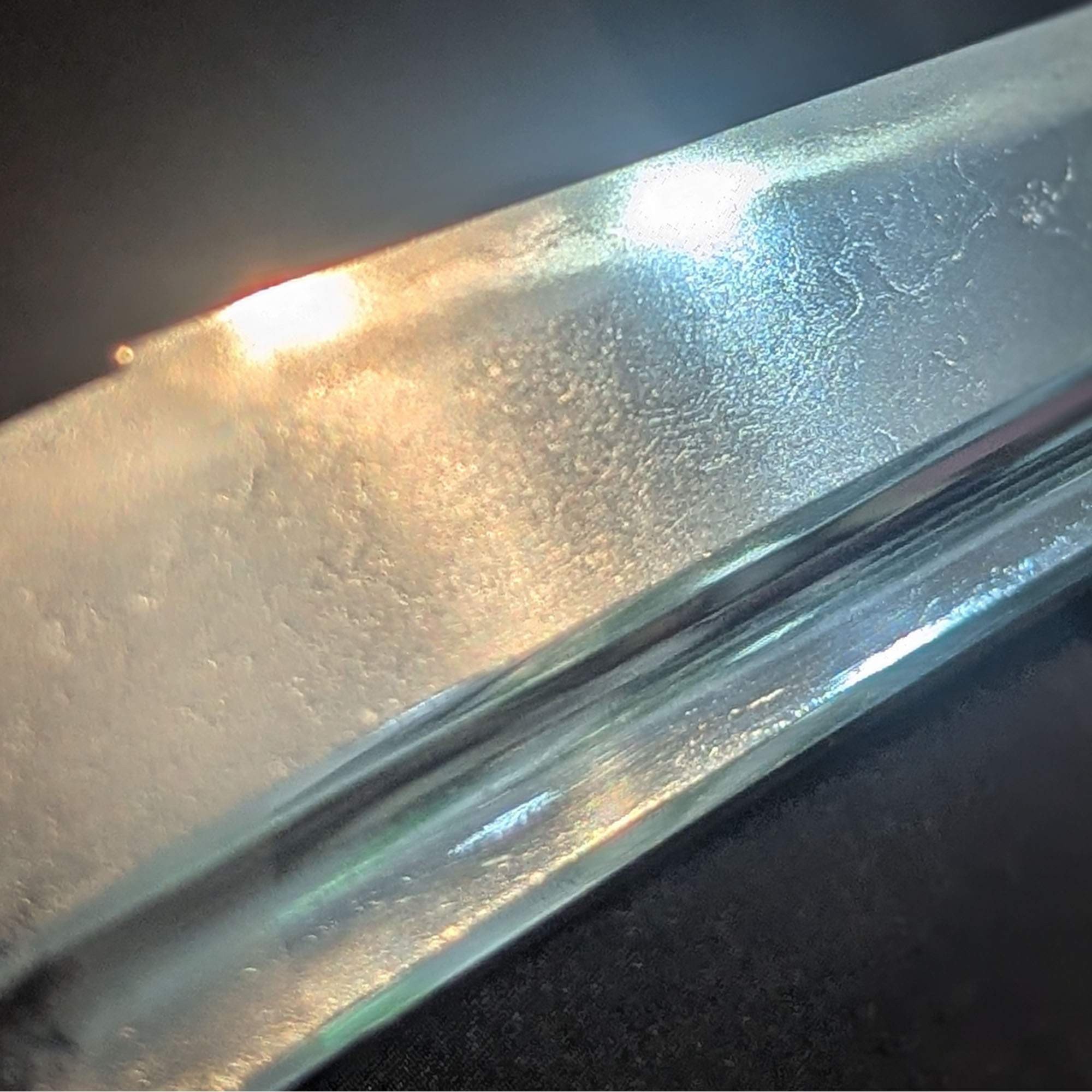
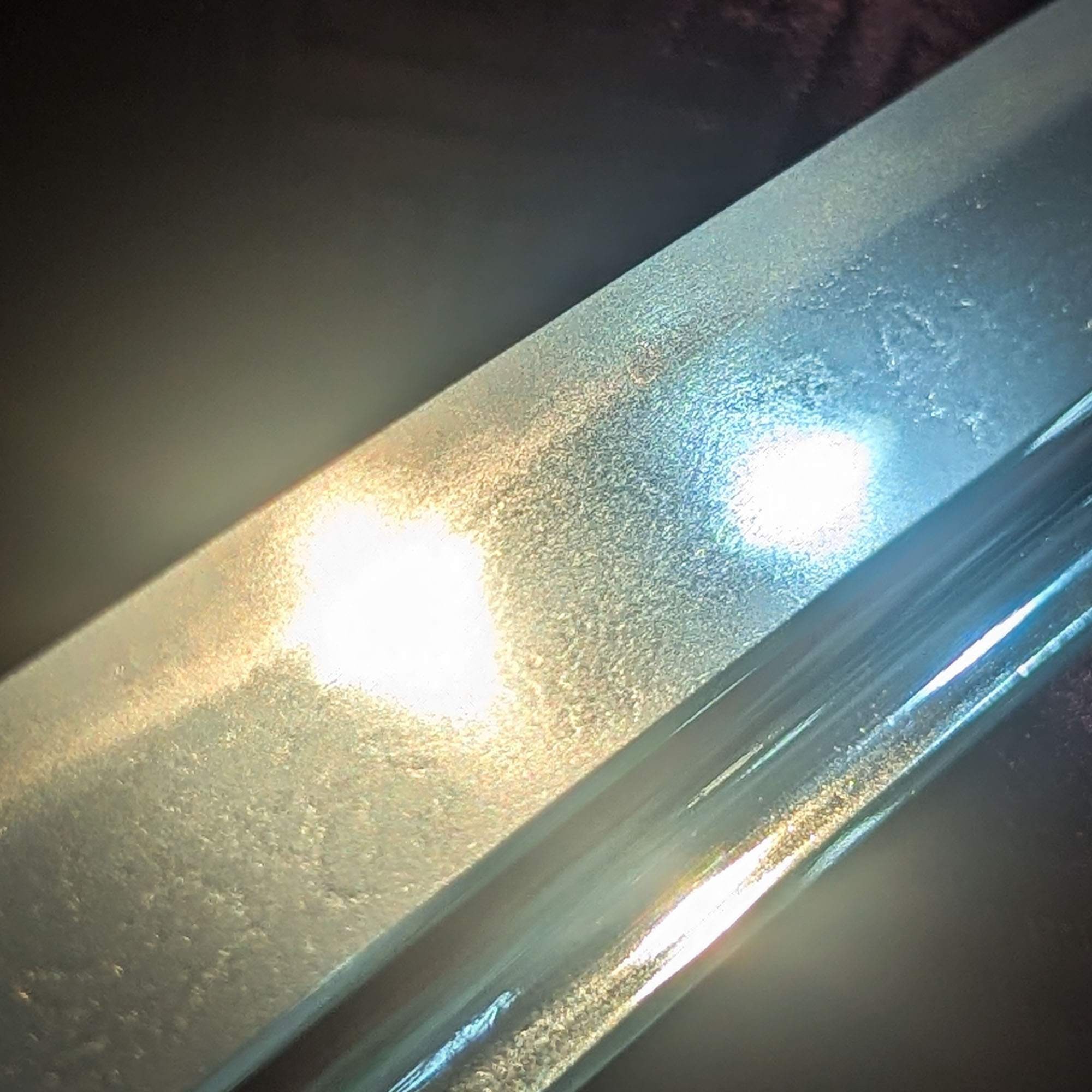
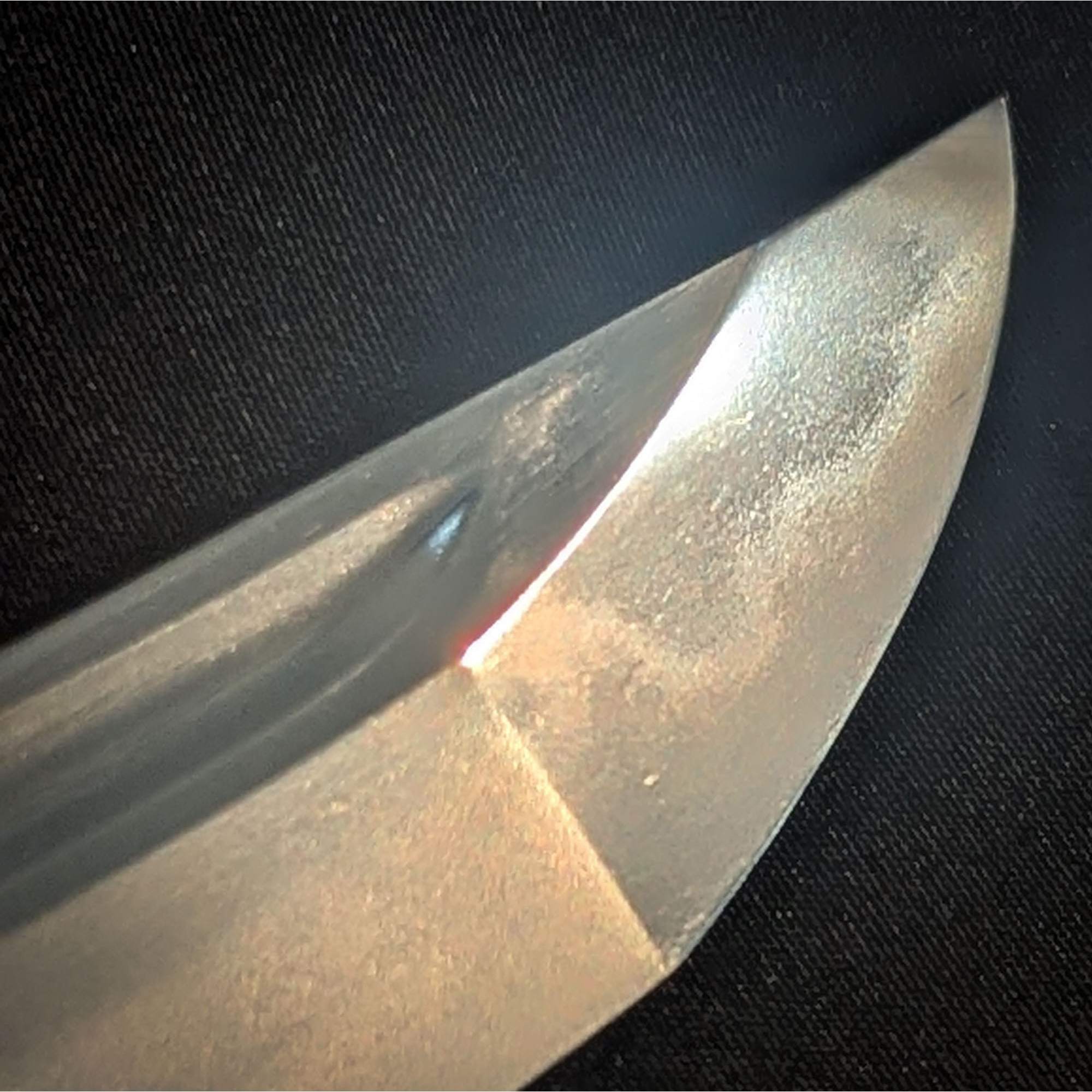
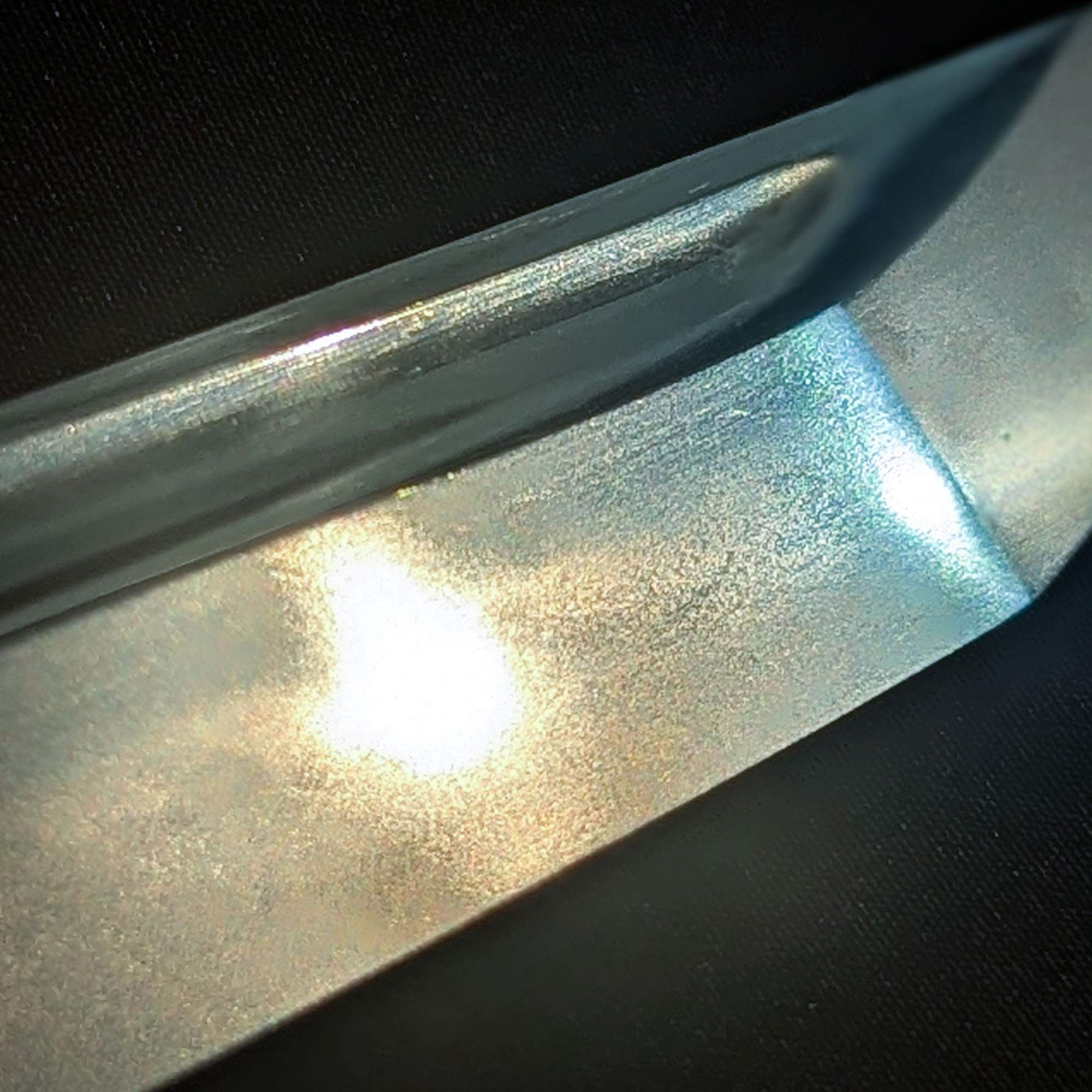
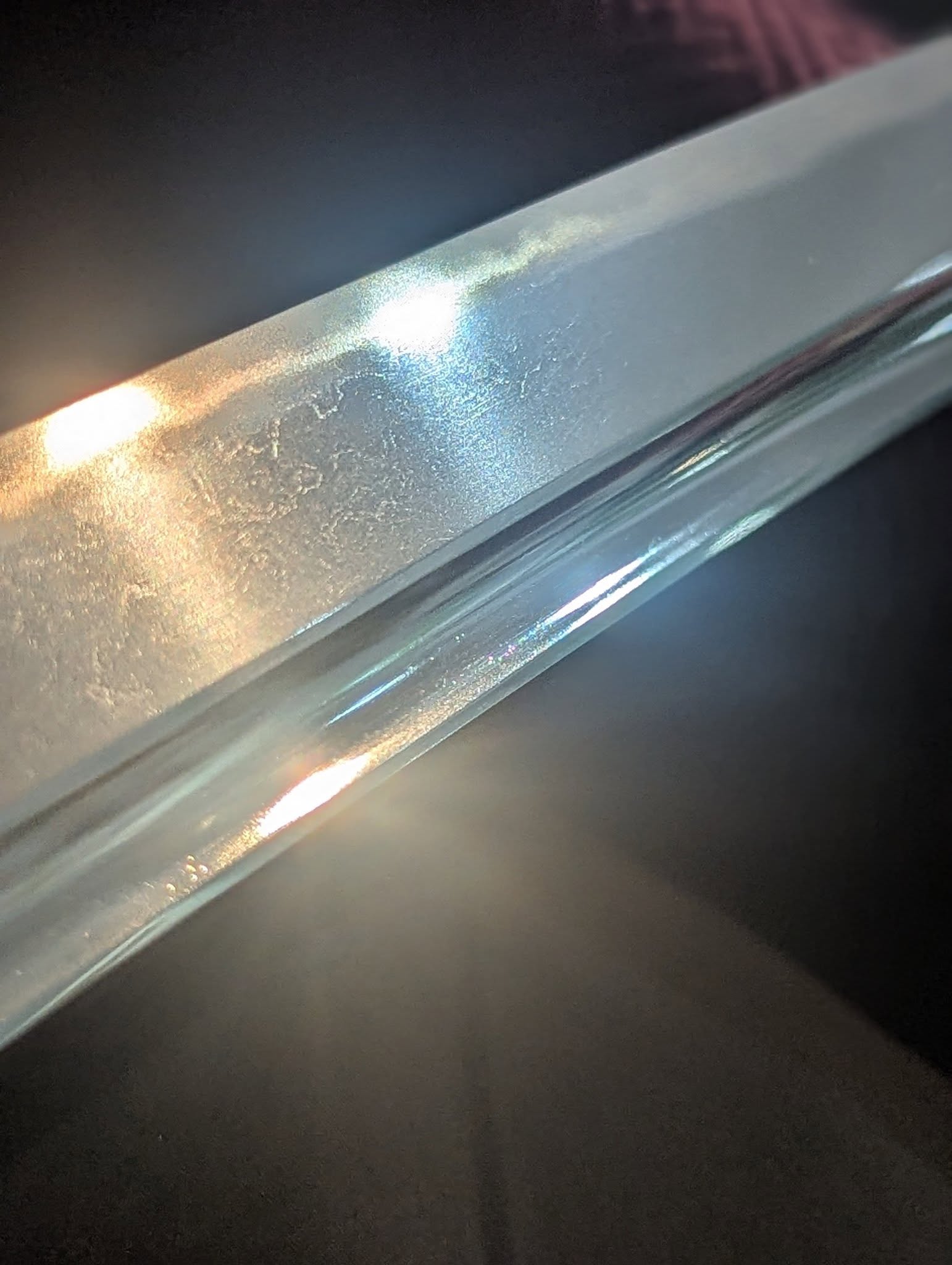
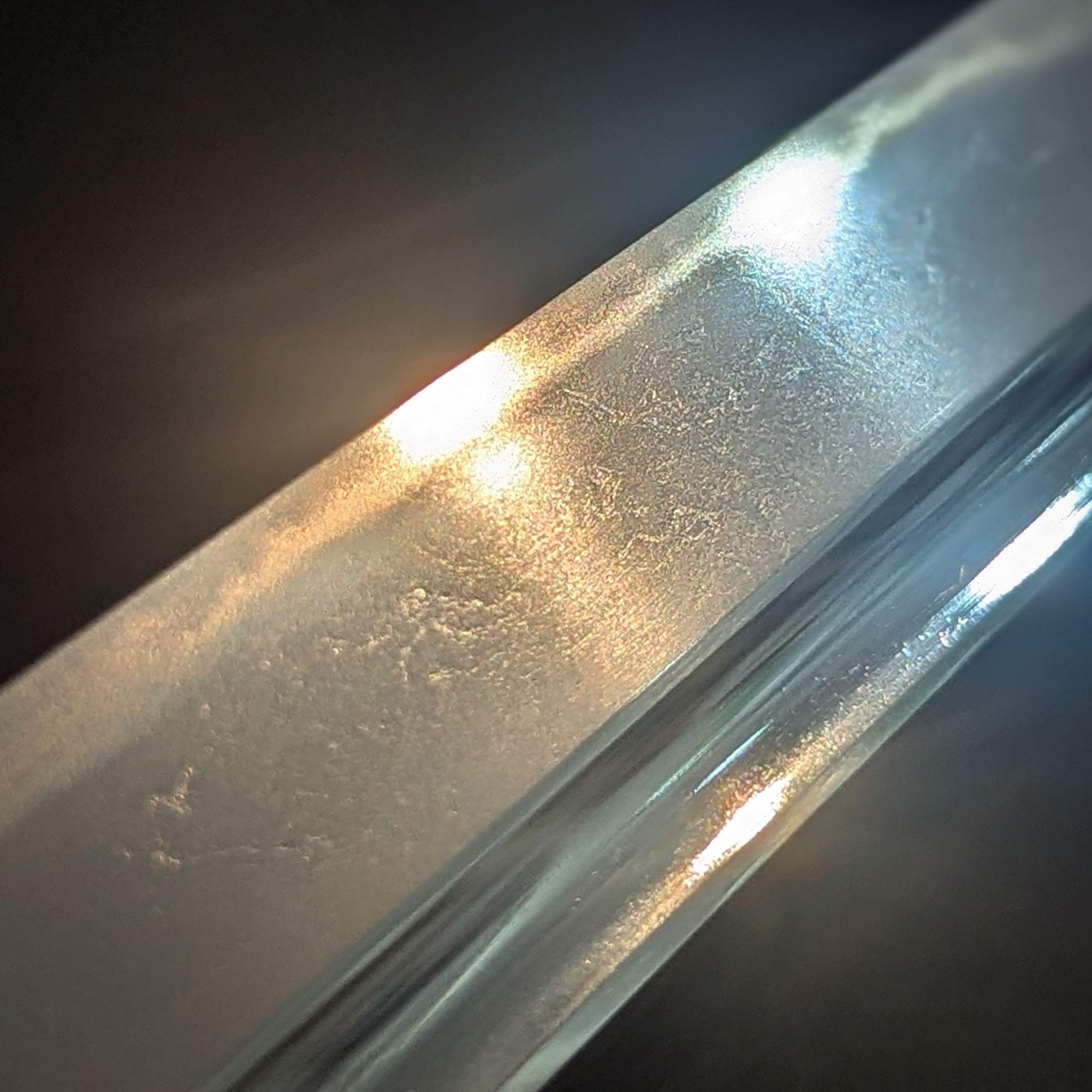
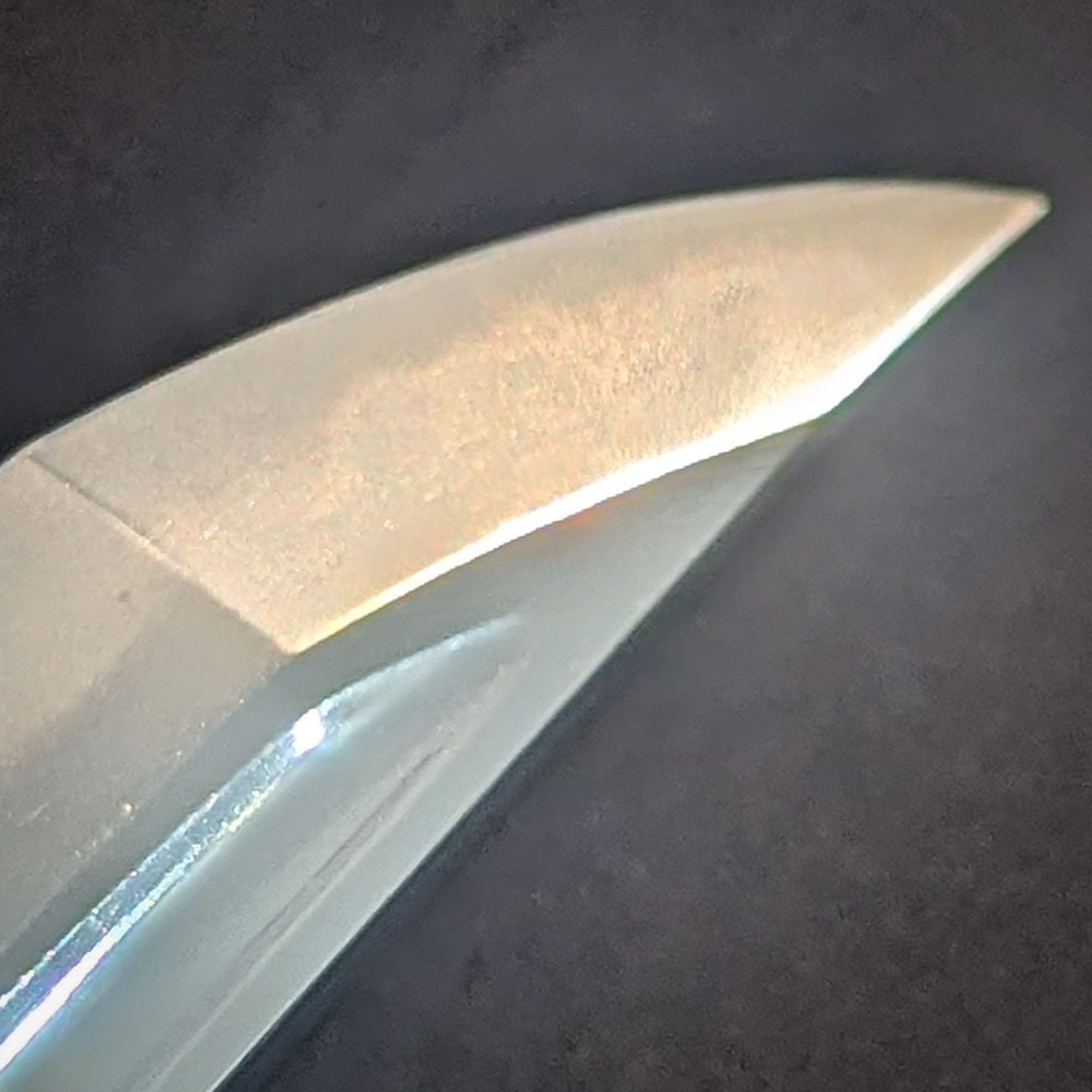
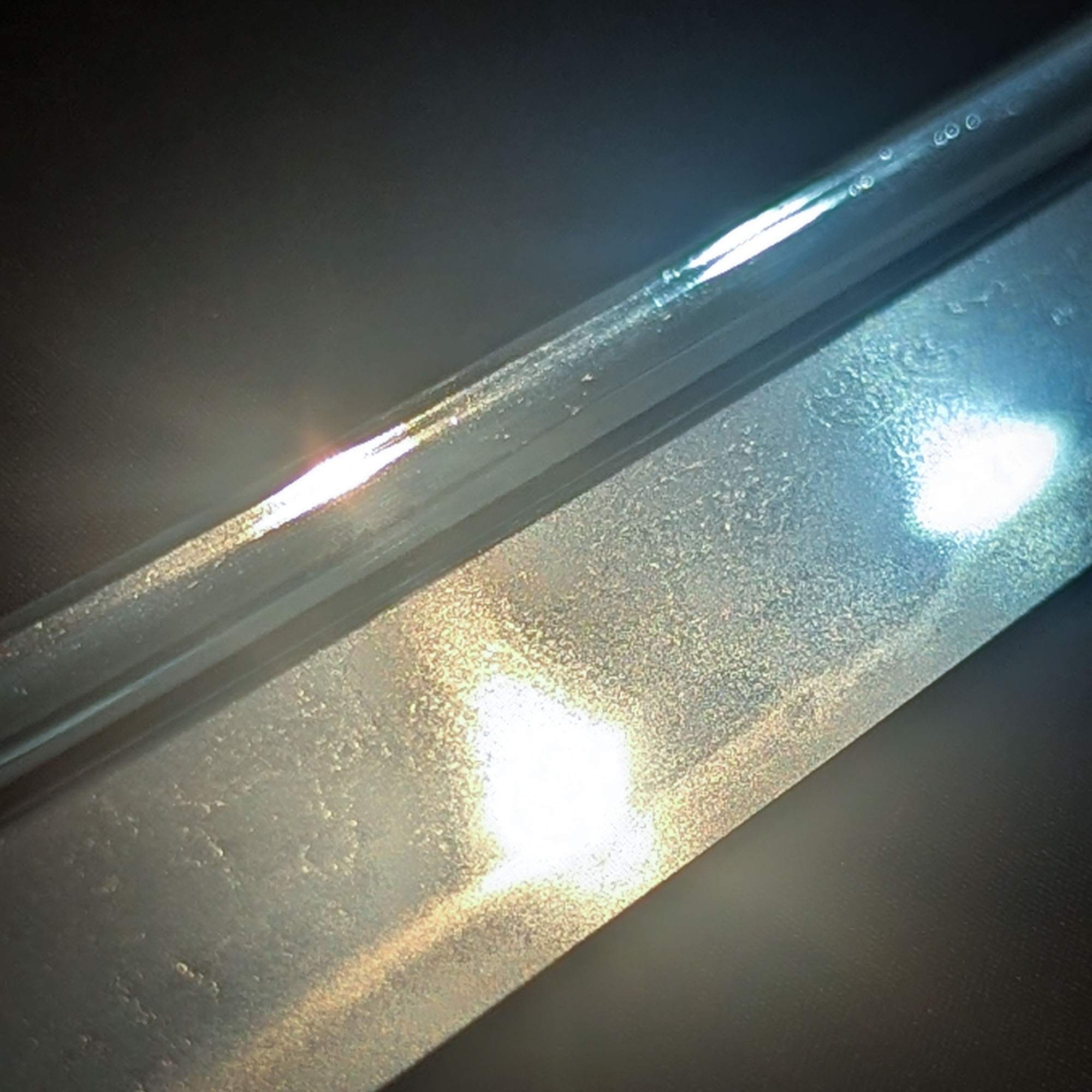
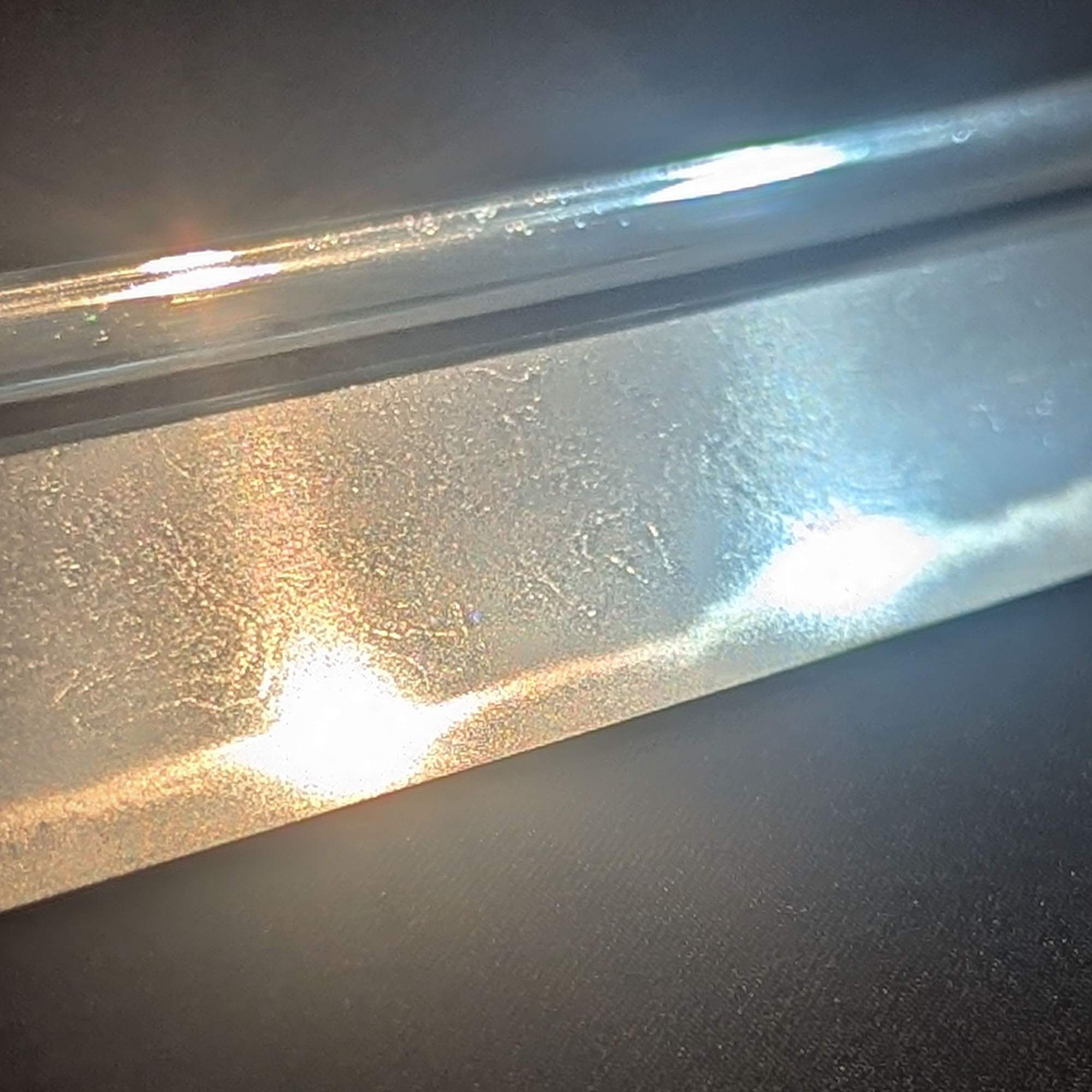
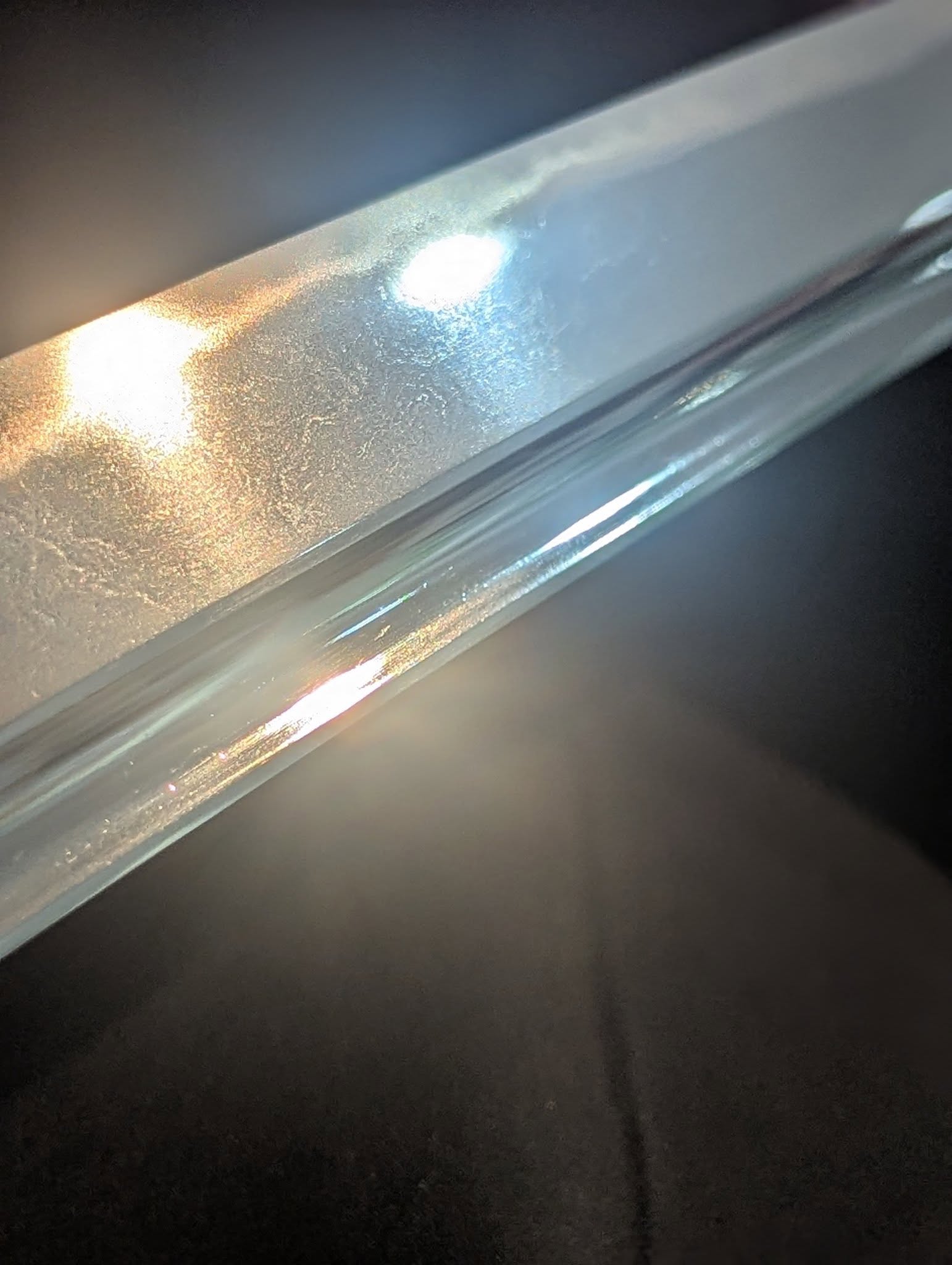
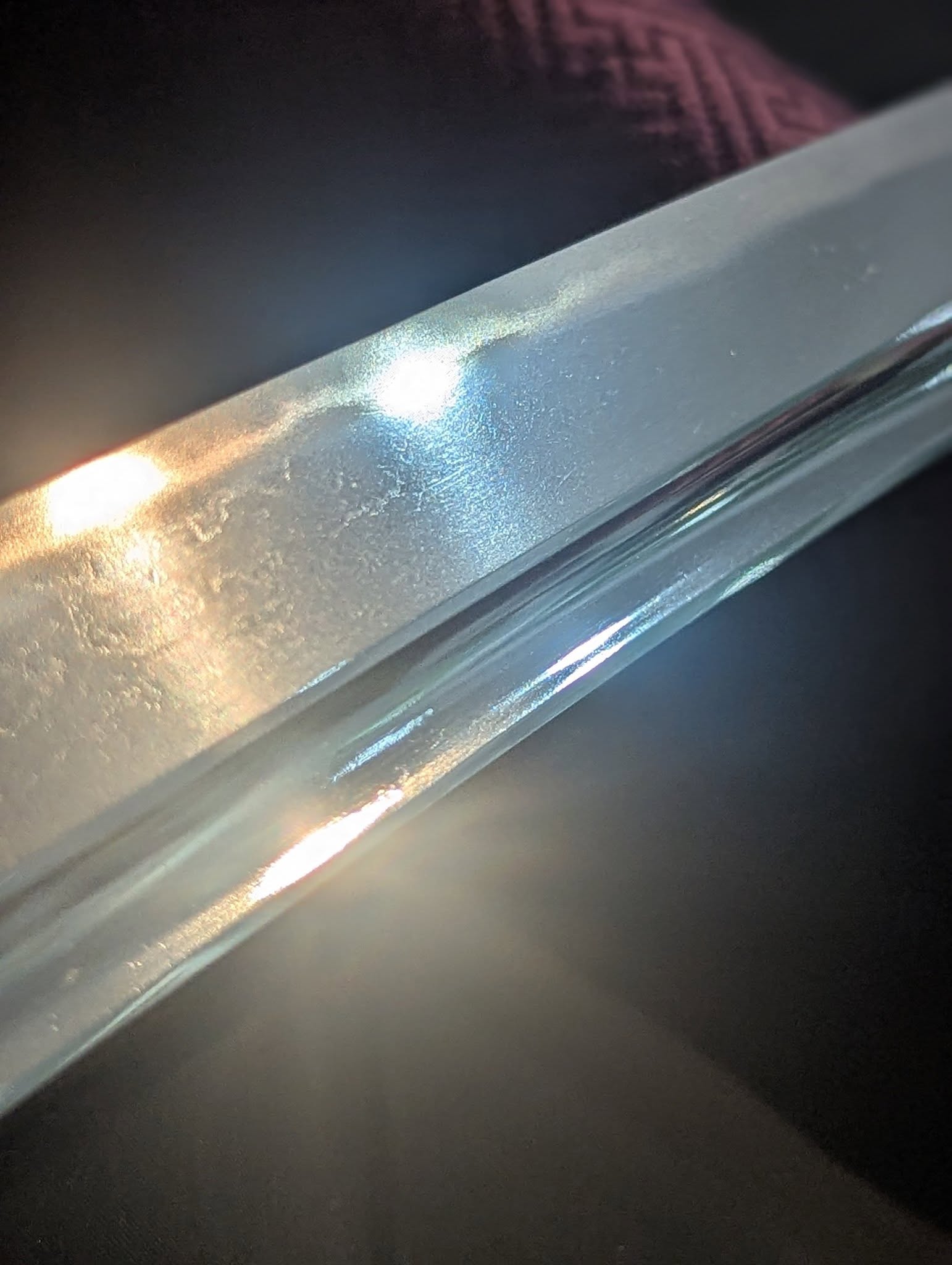
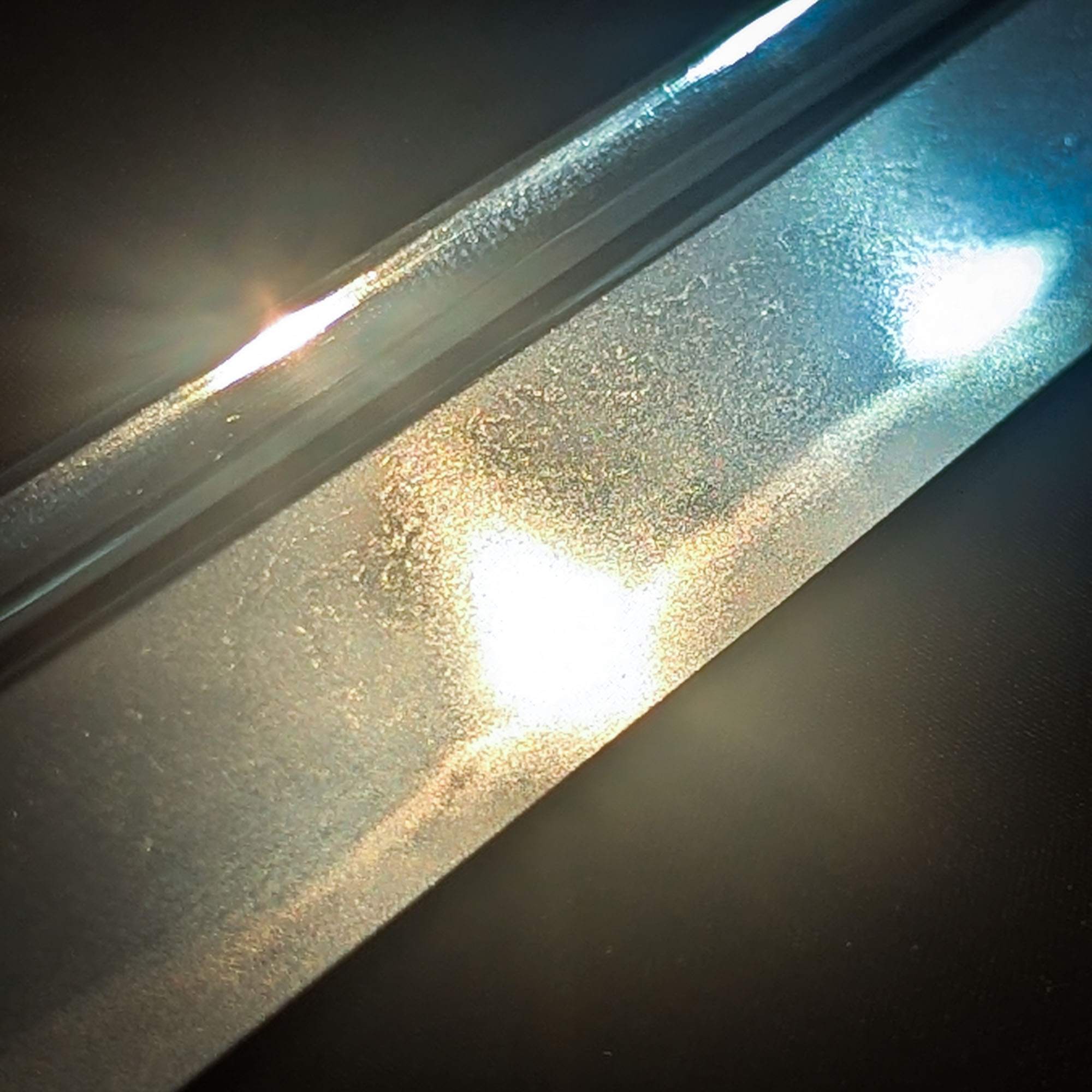
This is a Juyo Token katana made by Sairen from Chikuzen Province. The blade is o-suriage mumei but has a kinpun-mei by Hon'ami Koson attributing it to Sairen. The blade features itame hada, ji-nie, chikei, and a hamon of notare-cho mixed with gunome and ashi, with sunagashi and kinsuji.
西蓮は筑前国談議所に仕えた刀工で、光山押形に「筑前博多談議所国吉法師西蓮」と長銘を切り、文保元年紀を切っ 太刀があり、国吉と西蓮は同一人で、西蓮とは入道銘であることがわかる。同工は大左の祖父にあたるが、その作風は 九州物の伝統的なもので、地は柾がかって流れ、白けがたち、刃は直刃調でうるみごころがある。 この刀は本阿弥光遜の極めによるもので、地刃ともに健全であり、同工の一作風がうかがわれ、出来がよい。
 NihontoWatch
kinzogan-mei · Sa · Koto · nagasa 71.8cm · sori 2cm
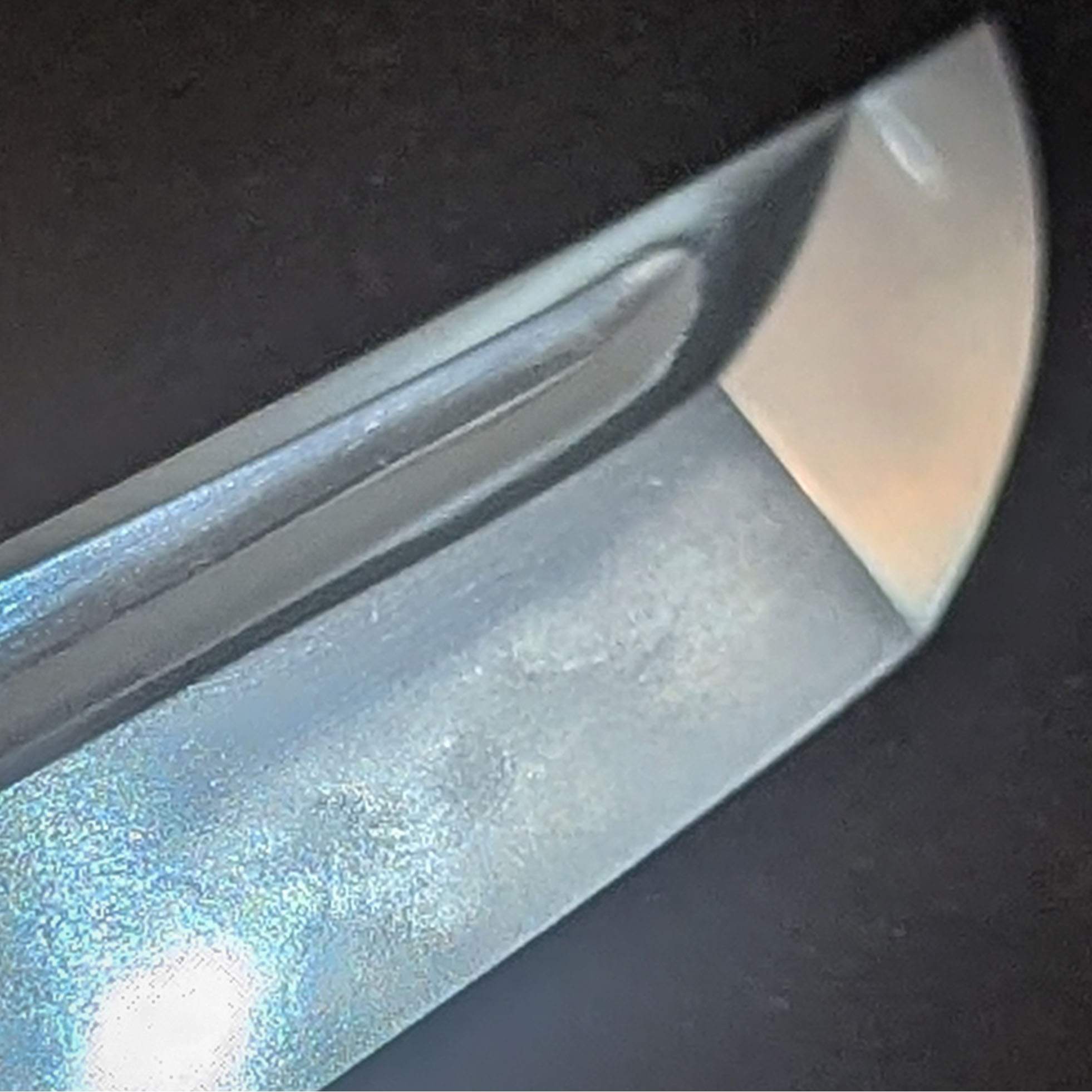
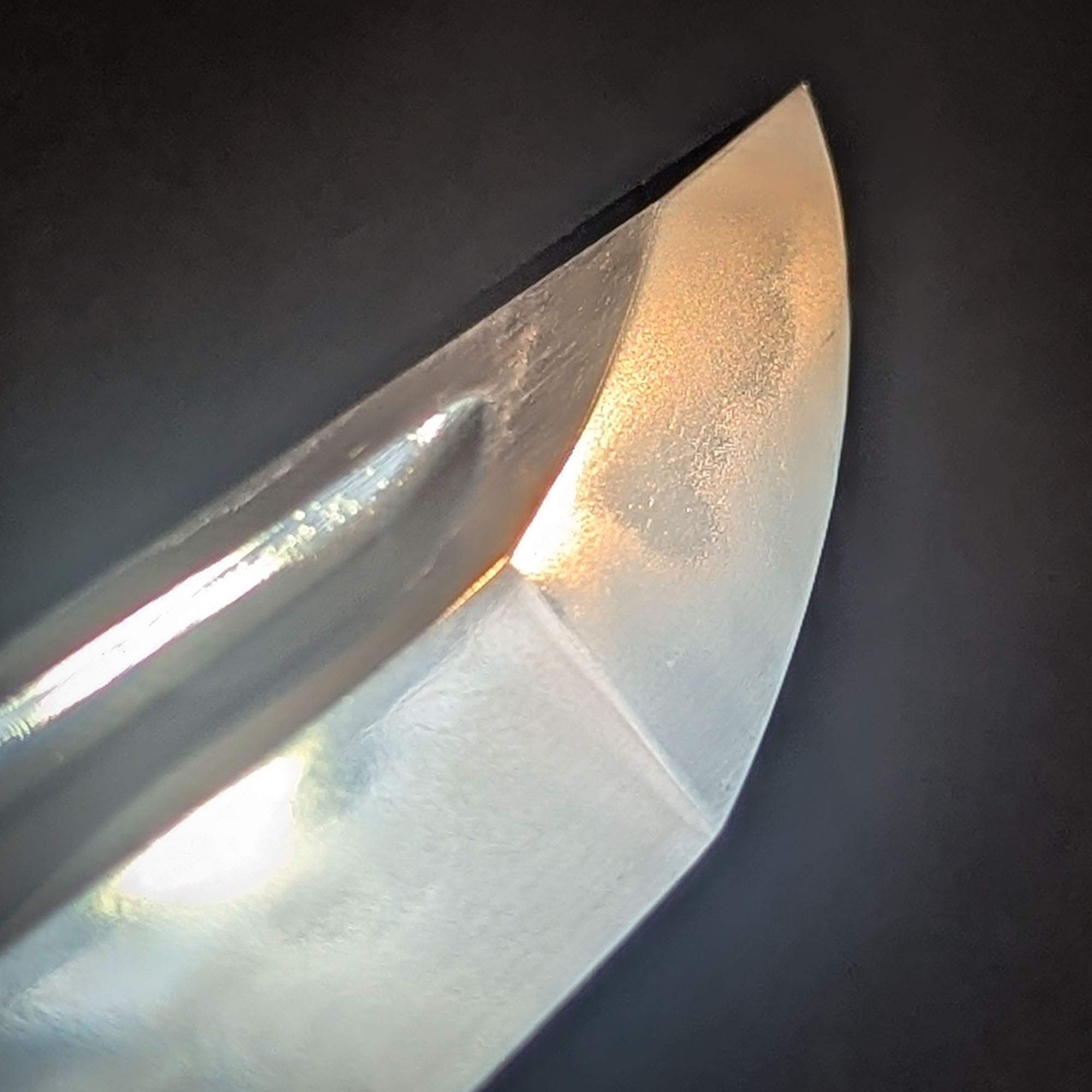
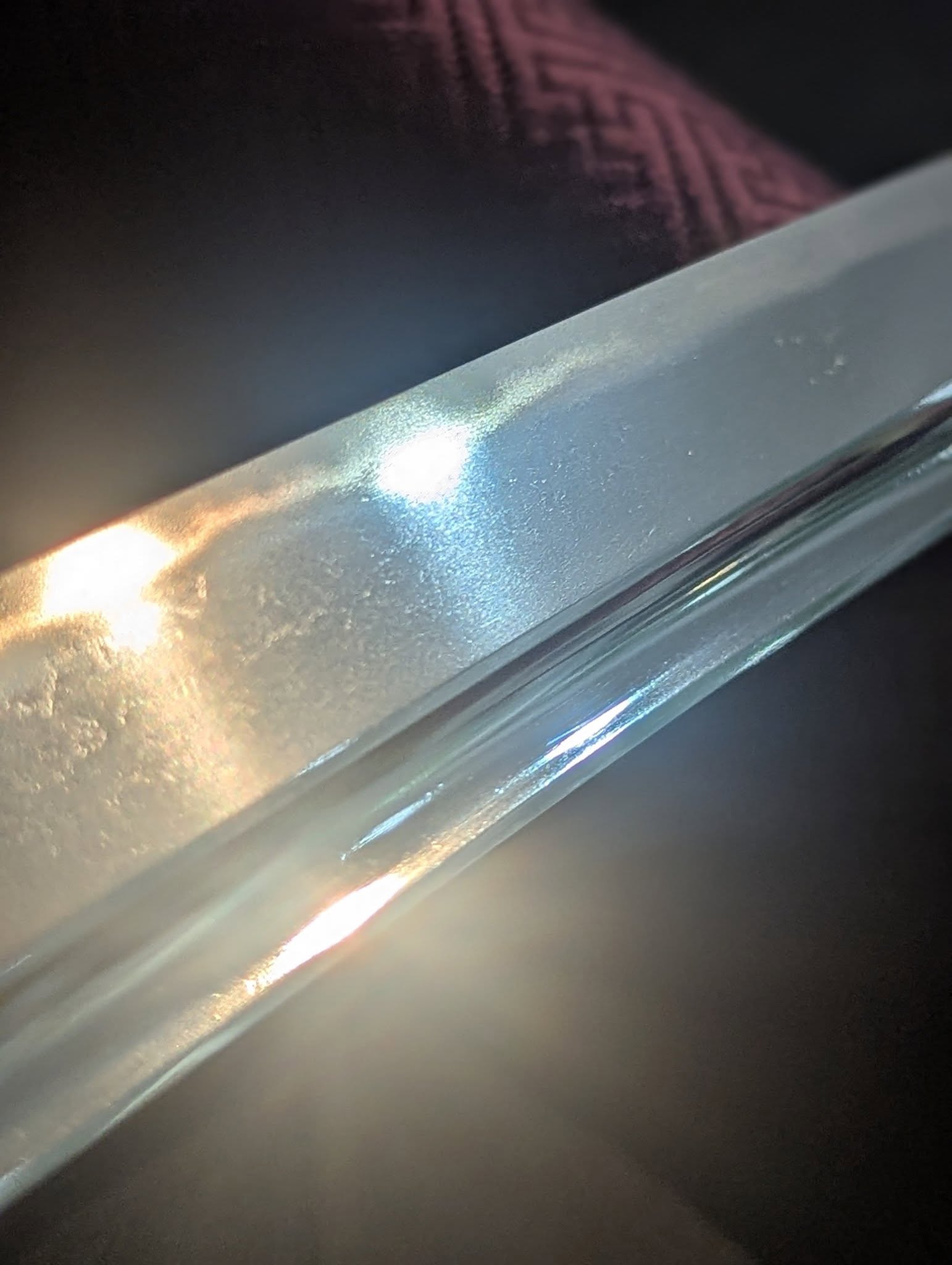
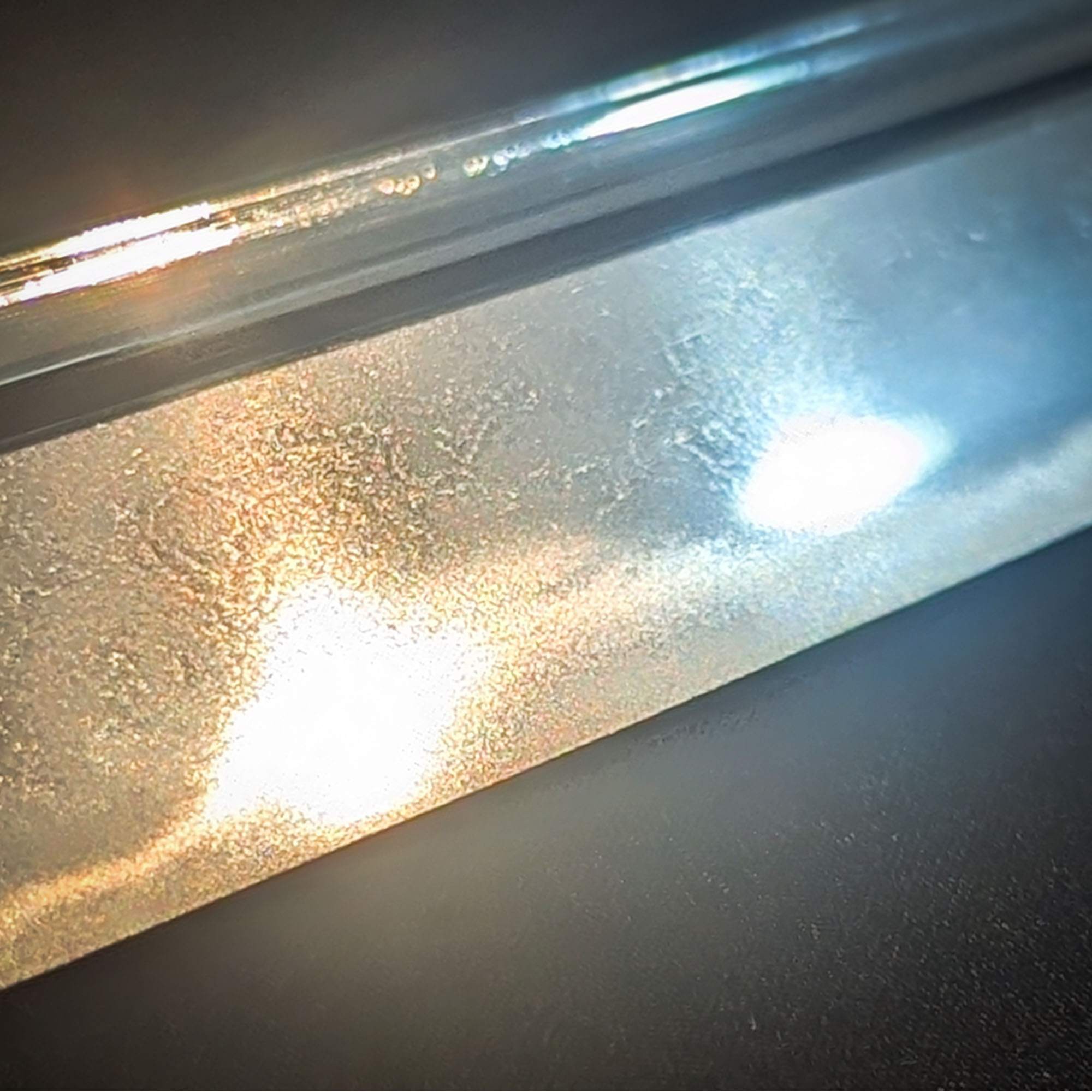
Chikuzen (Kyushu classical group; Dangisho) · Chikuzen · around 1260-1261
Fujishiro Jo-jo saku · Tōken Taikan top 8%
Sairen is the late-Kamakura Chikuzen smith behind the long signature recorded in the Kōzan Oshigata, a Bunpō 1 (1317) tachi cut “Chikuzen no Kuni, Hakata Dangisho, Kuniyoshi Hōshi Sairen.” That single inscription resolves the man: Kuniyoshi was his lay name, Sairen the religious name he took on tonsure, and the Dangisho the Hakata administrative seat, thought to be the Chinzei Dangisho, established against the Mongol threat. The published sources transmit him as the son of Ryōsai and the father of Jitsua, and as the grandfather of Ō-Sa, so that he stands at the head of the line that would produce Samonji. His surviving signatures come in several forms, “Kuniyoshi,” “Dangisho Kuniyoshi,” “Sairen” and “Dangisho Sairen,” the record of a smith in the service of that office.
His hand is the classical Kyūshū manner, and it is consistent enough that the judges name it plainly. The forging is an itame mixed with ō-itame and mokume that stands out and flows into nagare, at times leaning to masame, a large-pattern standing jigane rather than the tight ko-itame of Yamashiro work. Over it lie thick, fine ji-nie and chikei, and the steel takes on a blackish, iron tone, what the sources call kana-iro ni kuromi. On many blades a faint whitish utsuri rises, the muted shirake reflection of this dark steel rather than the bright midare-utsuri of Bizen. The temper is the second half of the tell: a low suguha or fine suguha, the habuchi fraying into hotsure, with kuichigai-ba, uchinoke and a nijūba tendency in the upper half, ko-nie adhering and sunagashi and kinsuji running through. The nioiguchi does not shine; it takes on an urumi, a moist and sometimes sinking quality. The published sources gather the whole into one formula, that his work “strictly preserves the manner of the Kyūshū classical group”[[c:1]].
The jigane is the constant from which everything else is read. Itame stands out and flows, ji-nie scatters densely, chikei enters, and the dark steel carries its faint shirake. That jigane is the manner he shares with Ryōsai and Jitsua, and on the broad o-suriage pieces a mizukage sometimes rises at the machi. Against it the suguha stays low and quiet, the edge fraying so that, as one entry puts it, “the hardened edge is a suguha that frays and the nioiguchi takes on an urumi quality”[[c:2]]. One Jūyō katana reads the temper directly as a suguha in the manner of Yamato work, the urumi nioiguchi the trait shared with Kyūshū, and the bōshi runs straight or shallowly notare with hakikake to a ko-maru, or finishes as yakizume; on the long blades a bō-hi, at times with soe-hi, is carved through.
Within that single hand the sources draw a second register. Beside the pieces whose nioiguchi is subdued and sparse stands a manner in which the temper becomes more nie-laden, ko-nie adhering well and the nioi deep, with sunagashi, kinsuji and at times tobiyaki, the nioiguchi turning bright. This is the manner the judges say most strongly suggests a connection with Samonji; of the signed Seikadō tantō they note that this latter type “strongly suggests the relationship with Sa”[[c:3]]. The same thought is put more famously on a Jūyō katana, where the commentary remarks that “one feels the very groundwork from which the prodigy Samonji would emerge is present in works such as Sairen’s”[[c:4]]. Most of his record, however, is mumei: of the blades on the official record roughly eight are signed and the great majority are o-suriage and given to him from era and school, several carrying Hon’ami appraisals in gold inlay, gold powder and red lacquer.
What sets the Chikuzen Sairen apart is exactly what the sources name as his own. He is not a Bizen smith and shows none of the bright midare-utsuri of that province; his jigane is the dark, standing, flowing Kyūshū itame with its muted shirake, and his edge the urumi suguha, not a clear bright line. He is held apart from the later, brighter Sōshū-influenced Sa by the quietness of that suguha and the absence of flamboyance, even as the nie-laden register points forward to it. Where the broad o-suriage katana with extended kissaki invite a Nanbokuchō reading, one earlier Jūyō entry preferring that date on the wide body and large point, later commentary observes that extended-kissaki examples do occur even in late Kamakura, and so endorses Hon’ami Kōtoku’s Sairen appraisal as appropriate. He is, in the end, the quiet Chikuzen root that the line to Samonji grew from.
For the collector he is a rare early Kyūshū name. Fujishiro grades him Jō-jō saku. He has no National Treasures; his record runs instead through one Important Cultural Property, the Tokubetsu Jūyō and Jūyō tiers, and the prewar Jūyō Bijutsuhin, some forty-five designated works on record, of which only a handful are ubu and signed. The published commentary stresses how few those are, calling one signed ubu tachi a piece whose documentary value is exceptionally high, and naming a fine Tokubetsu Jūyō katana “an outstanding example among those attributed to Sairen”[[c:5]]. His blades are preserved in long-held collections and institutions grounded in their own provenance: the Seikadō Bunko holds the signed Seikadō tantō from the Wakasugi collection, and his work descends through daimyō houses, the Shimazu of Satsuma, including the Shigetomi Shimazu branch and a blade of Shimazu Yoshihiro, the Tokugawa shogunal house, and the Maeda. Only a small number fall in the Tokubetsu Jūyō and Jūyō tiers, and most of those are held rather than traded, so a signed Sairen comes to light only seldom and a privately held example is a notable thing for a collector to encounter, a document of how the great Chikuzen line that culminated in Samonji began.
Where Sairen stands among comparable artisans: across all of nihontō, and within tradition, era, and period. The tiers (Foremost · Leading · Major · Notable) weigh official designations from the NBTHK and Japan's Agency for Cultural Affairs, together with historical honors of lasting repute such as the Sansaku and Meibutsu-chō.
Select a lens to see how it's measured.
Wakimono · Chikuzen
The blades gathered here belong to the classical line of Chikuzen province seated at Hakata, whose smiths the NBTHK setsumei consistently place within what they call the Kyūshū classical group (Kyūshū koten-ha). The sampled works carry the signatures and attributions of three men of one descent: Ryōsai (良西), named in the setsumei as founder of the line; Sairen (西蓮), the tonsured name of Kuniyoshi, recorded as Ryōsai's son; and Jitsua (実阿), given as Sairen's son. Learn more →
| Smith | Era | Designated |
|---|---|---|
| Sairen西蓮 | 1260-1261 | 43 |
| Jitsua實阿 | 1303-1335 | 27 |
| Sanea實阿 | 1293-1299 | 0 |
| Sanea實阿 | 1326-1329 | 0 |
| Nyusai入西 | 1293-1299 | 1 |
A blade of top-grade workmanship and condition, formally judged to rank with a nationally recognized Important Art Object (Jūyō Bijutsuhin). Awarded only at the NBTHK’s competitive annual examination.
Of Japan’s roughly 2.5 million registered swords, only 12,307 (about 1 in 203) have ever attained Jūyō.
The NBTHK (Nihon Bijutsu Tōken Hozon Kyōkai, the Society for the Preservation of Japanese Art Swords) is a public-interest incorporated foundation founded in 1948 and supervised by Japan’s Agency for Cultural Affairs (Bunkachō); it is based at the Japanese Sword Museum in Tokyo. Its expert panels physically examine each submitted work (shinsa) and issue a certificate (kanteishō) ranking it by artistic and historical merit. NBTHK papers are the most widely recognized standard of authentication for Japanese swords and fittings.
NBTHK official siteThis is a Juyo Token katana made by Sairen from Chikuzen Province. The blade is o-suriage mumei but has a kinpun-mei by Hon'ami Koson attributing it to Sairen. The blade features itame hada, ji-nie, chikei, and a hamon of notare-cho mixed with gunome and ashi, with sunagashi and kinsuji.
西蓮は筑前国談議所に仕えた刀工で、光山押形に「筑前博多談議所国吉法師西蓮」と長銘を切り、文保元年紀を切っ 太刀があり、国吉と西蓮は同一人で、西蓮とは入道銘であることがわかる。同工は大左の祖父にあたるが、その作風は 九州物の伝統的なもので、地は柾がかって流れ、白けがたち、刃は直刃調でうるみごころがある。 この刀は本阿弥光遜の極めによるもので、地刃ともに健全であり、同工の一作風がうかがわれ、出来がよい。
NihontoWatchkinzogan-mei · Sa · Koto · nagasa 71.8cm · sori 2cm
Chikuzen (Kyushu classical group; Dangisho) · Chikuzen · around 1260-1261
Fujishiro Jo-jo saku · Tōken Taikan top 8%
Sairen is the late-Kamakura Chikuzen smith behind the long signature recorded in the Kōzan Oshigata, a Bunpō 1 (1317) tachi cut “Chikuzen no Kuni, Hakata Dangisho, Kuniyoshi Hōshi Sairen.” That single inscription resolves the man: Kuniyoshi was his lay name, Sairen the religious name he took on tonsure, and the Dangisho the Hakata administrative seat, thought to be the Chinzei Dangisho, established against the Mongol threat. The published sources transmit him as the son of Ryōsai and the father of Jitsua, and as the grandfather of Ō-Sa, so that he stands at the head of the line that would produce Samonji. His surviving signatures come in several forms, “Kuniyoshi,” “Dangisho Kuniyoshi,” “Sairen” and “Dangisho Sairen,” the record of a smith in the service of that office.
His hand is the classical Kyūshū manner, and it is consistent enough that the judges name it plainly. The forging is an itame mixed with ō-itame and mokume that stands out and flows into nagare, at times leaning to masame, a large-pattern standing jigane rather than the tight ko-itame of Yamashiro work. Over it lie thick, fine ji-nie and chikei, and the steel takes on a blackish, iron tone, what the sources call kana-iro ni kuromi. On many blades a faint whitish utsuri rises, the muted shirake reflection of this dark steel rather than the bright midare-utsuri of Bizen. The temper is the second half of the tell: a low suguha or fine suguha, the habuchi fraying into hotsure, with kuichigai-ba, uchinoke and a nijūba tendency in the upper half, ko-nie adhering and sunagashi and kinsuji running through. The nioiguchi does not shine; it takes on an urumi, a moist and sometimes sinking quality. The published sources gather the whole into one formula, that his work “strictly preserves the manner of the Kyūshū classical group”[[c:1]].
The jigane is the constant from which everything else is read. Itame stands out and flows, ji-nie scatters densely, chikei enters, and the dark steel carries its faint shirake. That jigane is the manner he shares with Ryōsai and Jitsua, and on the broad o-suriage pieces a mizukage sometimes rises at the machi. Against it the suguha stays low and quiet, the edge fraying so that, as one entry puts it, “the hardened edge is a suguha that frays and the nioiguchi takes on an urumi quality”[[c:2]]. One Jūyō katana reads the temper directly as a suguha in the manner of Yamato work, the urumi nioiguchi the trait shared with Kyūshū, and the bōshi runs straight or shallowly notare with hakikake to a ko-maru, or finishes as yakizume; on the long blades a bō-hi, at times with soe-hi, is carved through.
Within that single hand the sources draw a second register. Beside the pieces whose nioiguchi is subdued and sparse stands a manner in which the temper becomes more nie-laden, ko-nie adhering well and the nioi deep, with sunagashi, kinsuji and at times tobiyaki, the nioiguchi turning bright. This is the manner the judges say most strongly suggests a connection with Samonji; of the signed Seikadō tantō they note that this latter type “strongly suggests the relationship with Sa”[[c:3]]. The same thought is put more famously on a Jūyō katana, where the commentary remarks that “one feels the very groundwork from which the prodigy Samonji would emerge is present in works such as Sairen’s”[[c:4]]. Most of his record, however, is mumei: of the blades on the official record roughly eight are signed and the great majority are o-suriage and given to him from era and school, several carrying Hon’ami appraisals in gold inlay, gold powder and red lacquer.
What sets the Chikuzen Sairen apart is exactly what the sources name as his own. He is not a Bizen smith and shows none of the bright midare-utsuri of that province; his jigane is the dark, standing, flowing Kyūshū itame with its muted shirake, and his edge the urumi suguha, not a clear bright line. He is held apart from the later, brighter Sōshū-influenced Sa by the quietness of that suguha and the absence of flamboyance, even as the nie-laden register points forward to it. Where the broad o-suriage katana with extended kissaki invite a Nanbokuchō reading, one earlier Jūyō entry preferring that date on the wide body and large point, later commentary observes that extended-kissaki examples do occur even in late Kamakura, and so endorses Hon’ami Kōtoku’s Sairen appraisal as appropriate. He is, in the end, the quiet Chikuzen root that the line to Samonji grew from.
For the collector he is a rare early Kyūshū name. Fujishiro grades him Jō-jō saku. He has no National Treasures; his record runs instead through one Important Cultural Property, the Tokubetsu Jūyō and Jūyō tiers, and the prewar Jūyō Bijutsuhin, some forty-five designated works on record, of which only a handful are ubu and signed. The published commentary stresses how few those are, calling one signed ubu tachi a piece whose documentary value is exceptionally high, and naming a fine Tokubetsu Jūyō katana “an outstanding example among those attributed to Sairen”[[c:5]]. His blades are preserved in long-held collections and institutions grounded in their own provenance: the Seikadō Bunko holds the signed Seikadō tantō from the Wakasugi collection, and his work descends through daimyō houses, the Shimazu of Satsuma, including the Shigetomi Shimazu branch and a blade of Shimazu Yoshihiro, the Tokugawa shogunal house, and the Maeda. Only a small number fall in the Tokubetsu Jūyō and Jūyō tiers, and most of those are held rather than traded, so a signed Sairen comes to light only seldom and a privately held example is a notable thing for a collector to encounter, a document of how the great Chikuzen line that culminated in Samonji began.
Where Sairen stands among comparable artisans: across all of nihontō, and within tradition, era, and period. The tiers (Foremost · Leading · Major · Notable) weigh official designations from the NBTHK and Japan's Agency for Cultural Affairs, together with historical honors of lasting repute such as the Sansaku and Meibutsu-chō.
Select a lens to see how it's measured.
Wakimono · Chikuzen
The blades gathered here belong to the classical line of Chikuzen province seated at Hakata, whose smiths the NBTHK setsumei consistently place within what they call the Kyūshū classical group (Kyūshū koten-ha). The sampled works carry the signatures and attributions of three men of one descent: Ryōsai (良西), named in the setsumei as founder of the line; Sairen (西蓮), the tonsured name of Kuniyoshi, recorded as Ryōsai's son; and Jitsua (実阿), given as Sairen's son. Learn more →
| Smith | Era | Designated |
|---|---|---|
| Sairen西蓮 | 1260-1261 | 43 |
| Jitsua實阿 | 1303-1335 | 27 |
| Sanea實阿 | 1293-1299 | 0 |
| Sanea實阿 | 1326-1329 | 0 |
| Nyusai入西 | 1293-1299 | 1 |
A blade of top-grade workmanship and condition, formally judged to rank with a nationally recognized Important Art Object (Jūyō Bijutsuhin). Awarded only at the NBTHK’s competitive annual examination.
Of Japan’s roughly 2.5 million registered swords, only 12,307 (about 1 in 203) have ever attained Jūyō.
The NBTHK (Nihon Bijutsu Tōken Hozon Kyōkai, the Society for the Preservation of Japanese Art Swords) is a public-interest incorporated foundation founded in 1948 and supervised by Japan’s Agency for Cultural Affairs (Bunkachō); it is based at the Japanese Sword Museum in Tokyo. Its expert panels physically examine each submitted work (shinsa) and issue a certificate (kanteishō) ranking it by artistic and historical merit. NBTHK papers are the most widely recognized standard of authentication for Japanese swords and fittings.
NBTHK official site