Edo was the sword’s age of connoisseurship: the Hon’ami appraisers, the shogunal register of famous blades of 1719, and a thriving literature turned the sword into an object of study even as it ceased to be drawn in war.
 NihontoWatchNihontoWatch
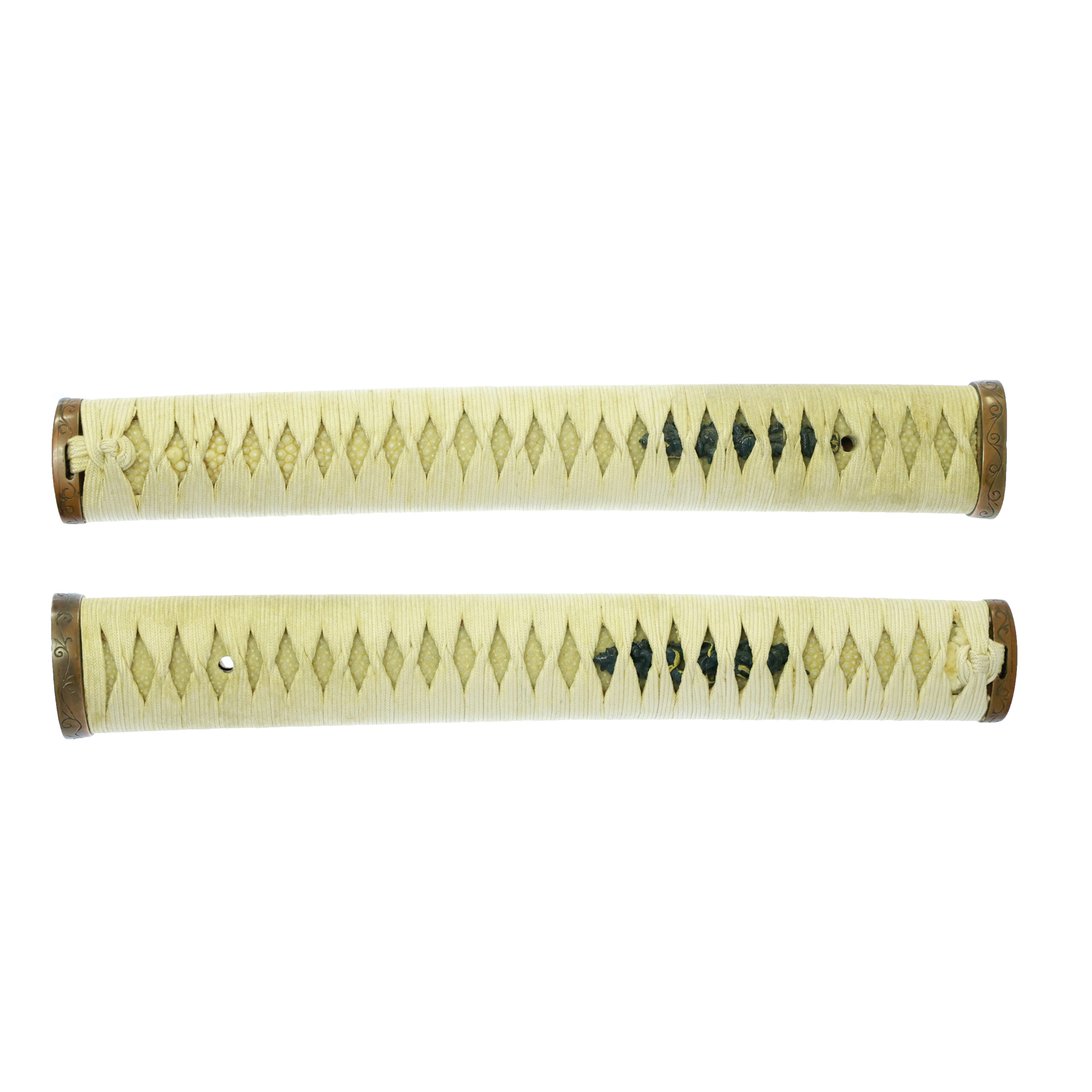
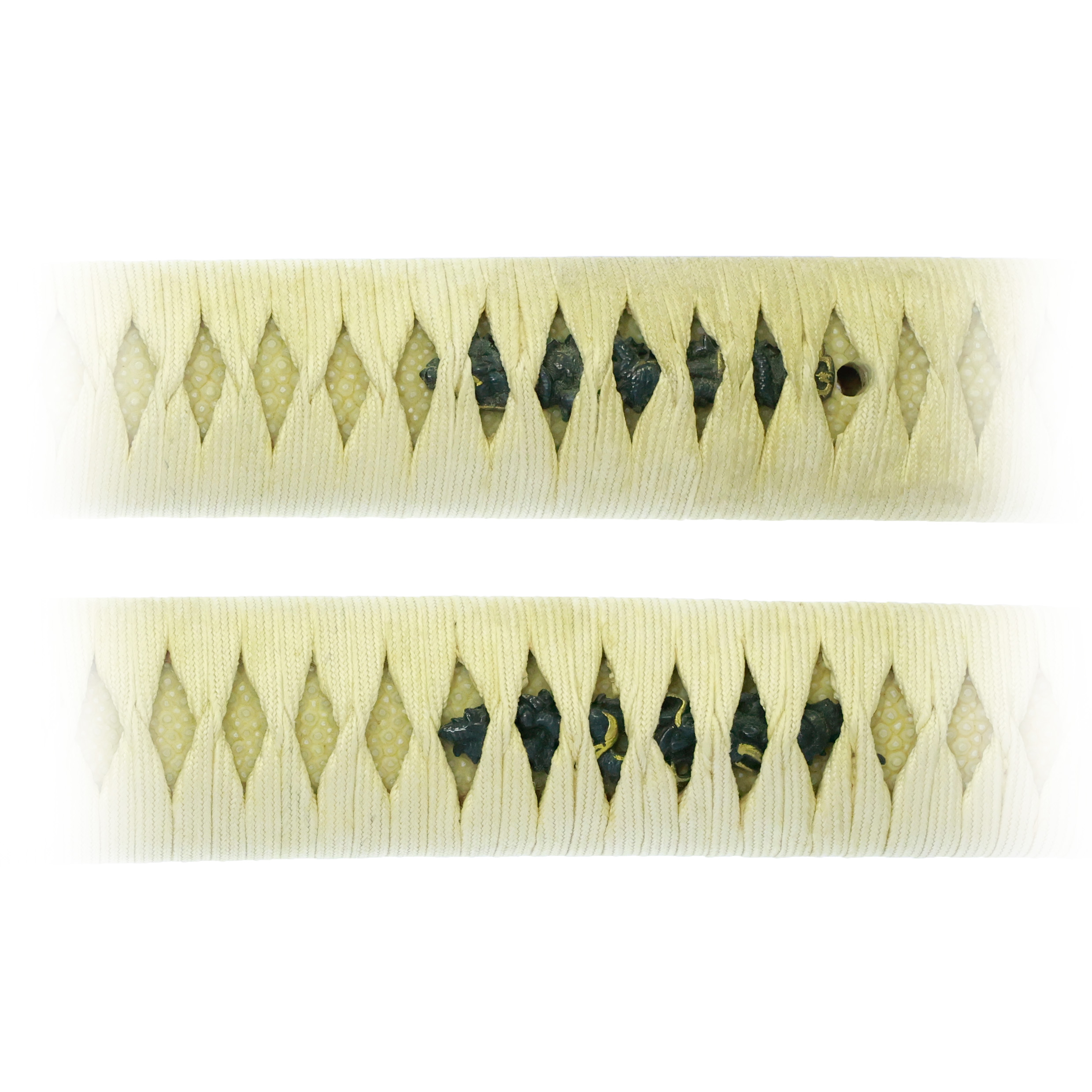
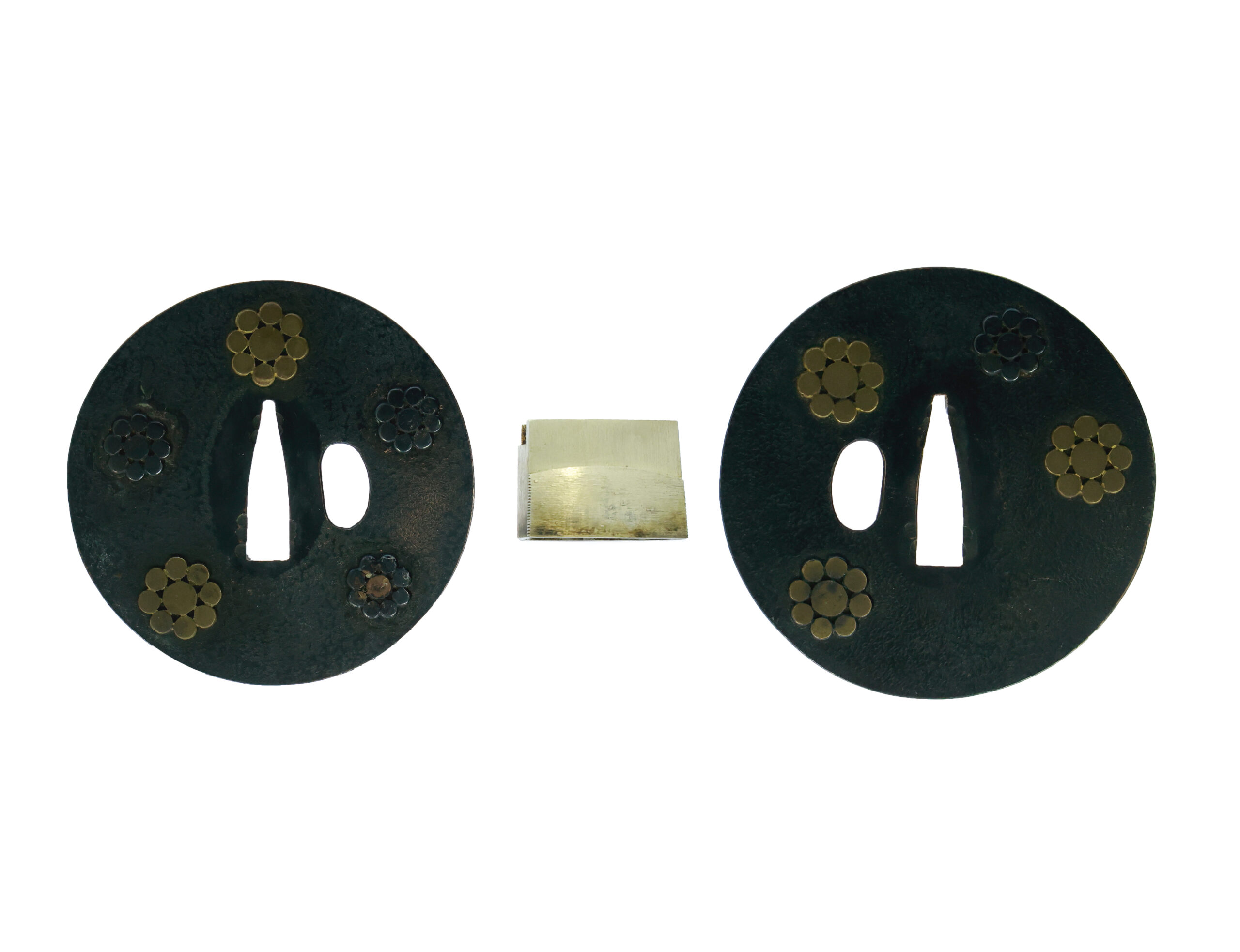
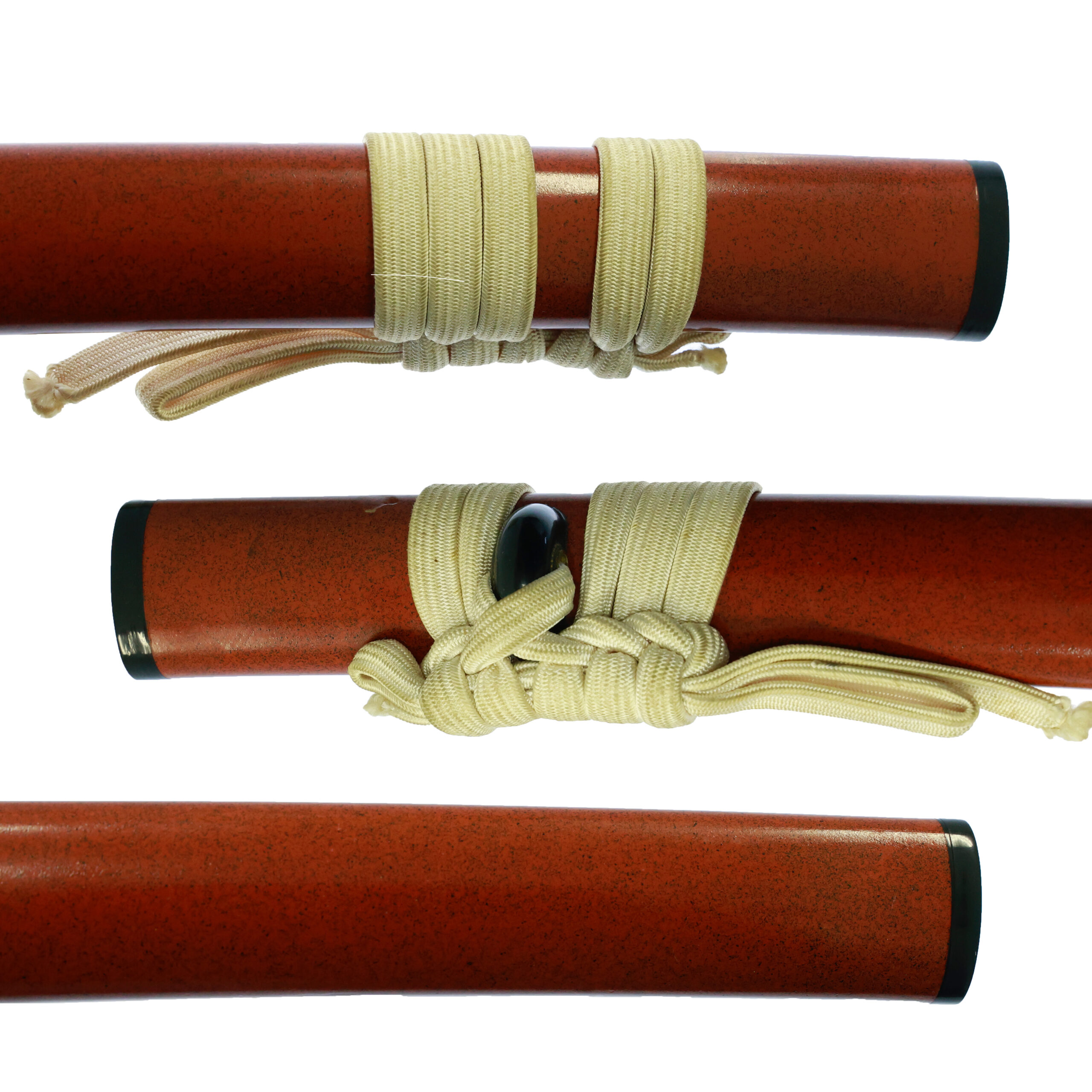
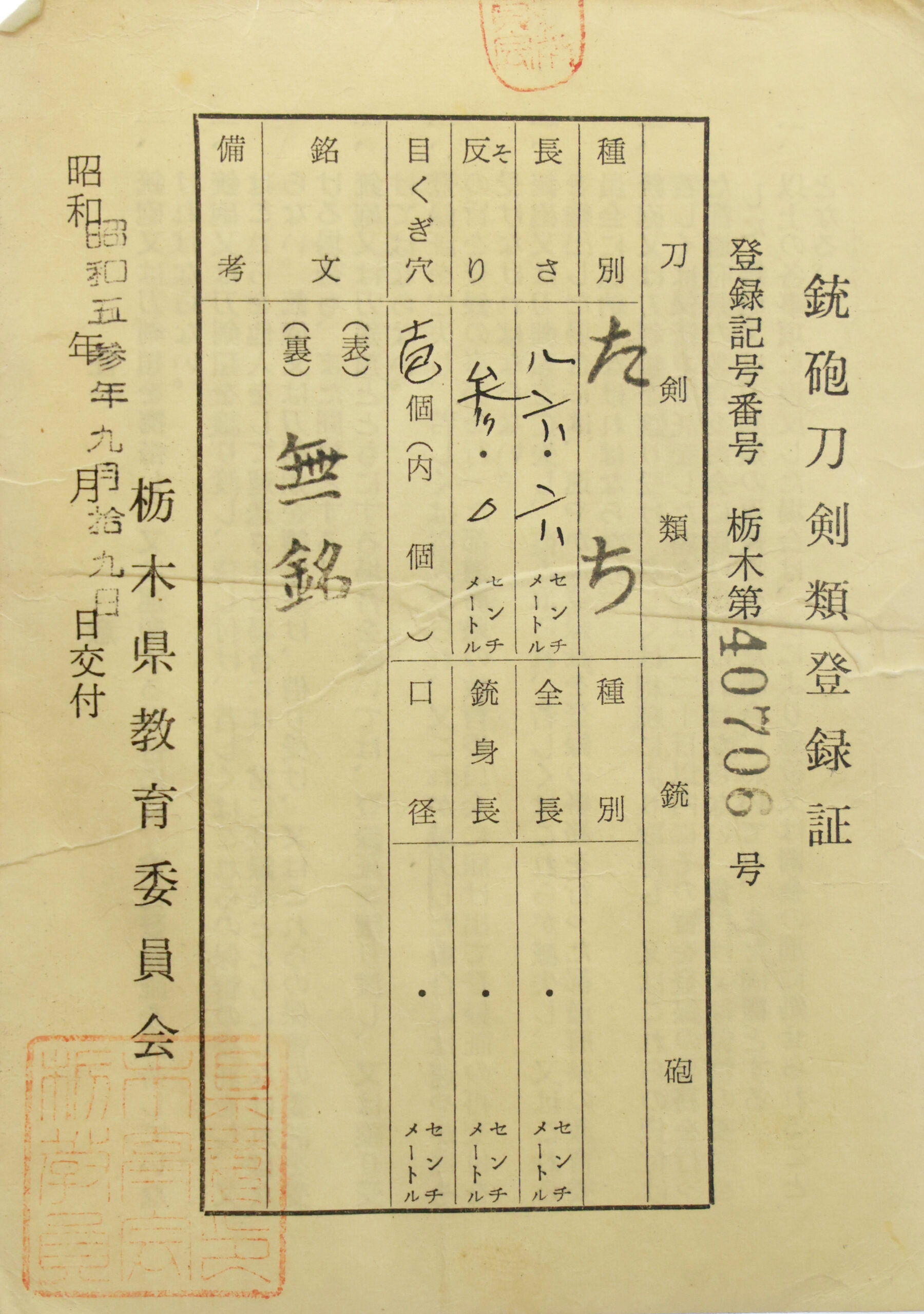
Summary This blade is attribute to Enryushi Kunihide (園龍子国秀), who was active during the Tenpo era (1831-1845: Late Edo period). He was an apprentice of Nakayama Ikkansai Yoshihiro (中山一貫斎義弘). Kunihide served Itakura clan who was the head of Annaka domain in Kozuke province (Today’s Gunma prefecture) as an Okakae Kaji, who exclusively forged swords for a specific domain or clan. One needed to be very skilled and acknowledged to gain this position. Enryushi is the title Kunide used in his career. He moved to Kamakura in Kanawa prefecture in his late career. He trained Tachibana Enryuji Yoshihide (立花円竜氏義秀), who was a grandson of Yoshihiro, his master. This indicates that Kunihide’s craftsmanship was highly regarded and trusted. According to available records, Ryoma Sakamoto, a famous figure at the end of the Edo period, ordered a sword from Kunihide. Background Japan enjoyed a relatively peaceful time from the early Edo period to the mid-Edo period(the 1600s-1760s) because of the stable economy and the powerful government run by Tokugawa Shogun. Samurai didn’t have many opportunities to utilize his Katana sword in public or on battlefields during this time. Thus, they carried their swords more as a symbol of their social status. The demand for weapons decreased accordingly compared to the previous Warring state period called Sengoku Jidai (1467-1600). However, toward the end of the Edo period(1764-1876), the Japanese sword’s role changed dramatically. With the poverty spreading in Japan, there were so many riots initiated by the civilians. Japanese sword started to play an essential role in maintaining public safety. Pressure from foreign countries to open Japanese borders also forced Samurai to order strong-looking swords to survive this tumultuous time. We believe many swordsmiths, including Kunihide, made great efforts to forged high-quality, practical blades for their masters to prepare for battles. There was a civil war between Tokugawa’s military government and the new Meiji government at the end of the Edo period. That means the original owner of this Katana might have seen the moment when Samurai’s life changed forever. This blade is appraised as a Hozon Touken (保存刀剣) issued by NBTHK (Nihon Bijutsu Touken Hozon Kyokai: 日本美術刀剣保存協会). *Please keep in mind that there are a couple of Kitae Kizu on the blade. Fuchi-Kashira The motif of this Fuchi-Kashira is Karakusa (唐草, Arabesque). It is a pattern in which stems and leaves of vines are twined and make curves. Since ivy has a strong vitality and grows up without interruption, people regarded this design as a symbol of prosperity and longevity. Vine is called Tsuru (蔓) in Japanese, and it has another pronunciation; “Man.” There is a word 万 (it is also read Man), which means ten thousand. In the Karakusa pattern, leaves and vines are connected like Obi (帯, belt). The word “帯” can also be read “Tai.” Due to its pronunciation, the term “代 (Tai)” is associated. From this word-association game, an idiom 万代 is associated, and it means a thousand generations. In other words, we could imagine that people used this design wishing prosperity and longevity for their clans for a long time. Tsuka and Menuki The Menuki features a dragon, a powerful and revered symbol in Japanese culture. In Japan, dragons are often associated with water and rainfall, signifying their role as guardians of rivers, seas, and skies. They are seen as benevolent creatures that bring prosperity, good fortune, and protection. Additionally, the dragon is a symbol of strength, wisdom, and authority, embodying a mystical power that transcends human limitations. As a mythical creature deeply rooted in Japanese folklore and traditions, the dragon is often considered an auspicious emblem that wards off evil and ensures harmony. Tsuba and Habaki The motif of this Tsuba is the Hachiyō (八曜, Eight Luminaries) family crest. This design represents seven stars revolving around a central star, symbolizing devotion to Myōken Bosatsu (妙見菩薩, one of the dieties of Buddhism). It was the family crest of the Maita clan (蒔田氏), a branch of the Fujiwara clan(藤原氏). Originally aristocrats, the Maita clan later became Samurai and, after the Meiji era, were elevated to the status of Kazoku (華族, nobility), receiving the title of viscount from the emperor. The side of this Tsuba also features Tsuschime (槌目, Hammered pattern). This pattern is created by striking the metal with a hammer, forming small indentations that reduce light reflection and give the surface a unique texture, different from the natural shine of the metal. When this technique is applied to weapons, as seen in this Tsuba, it may have also served the purpose of improving grip and making it less slippery. Saya While its overall condition of this Saya is great, there are a couple of tiny area where lacquer comes off, which is natural for lacquered items of this age. Authentication Paper They authenticated the blade on Feb 21th in the 6th year of Reiwa (2024). They appraised it as Hozon Touken, the blade worth preserving for Japanese society.
Kunihide國秀
Offered by Samurai Museum

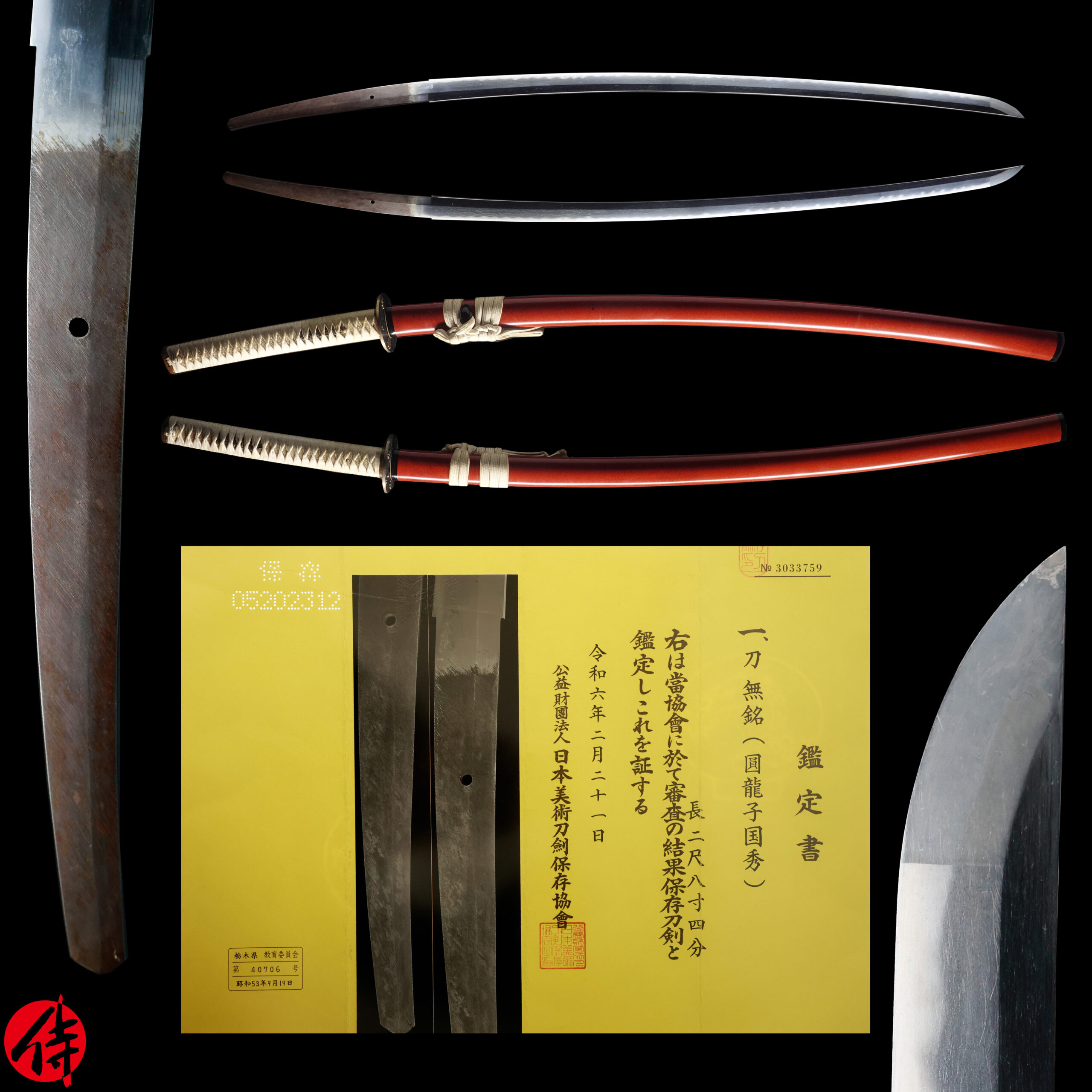
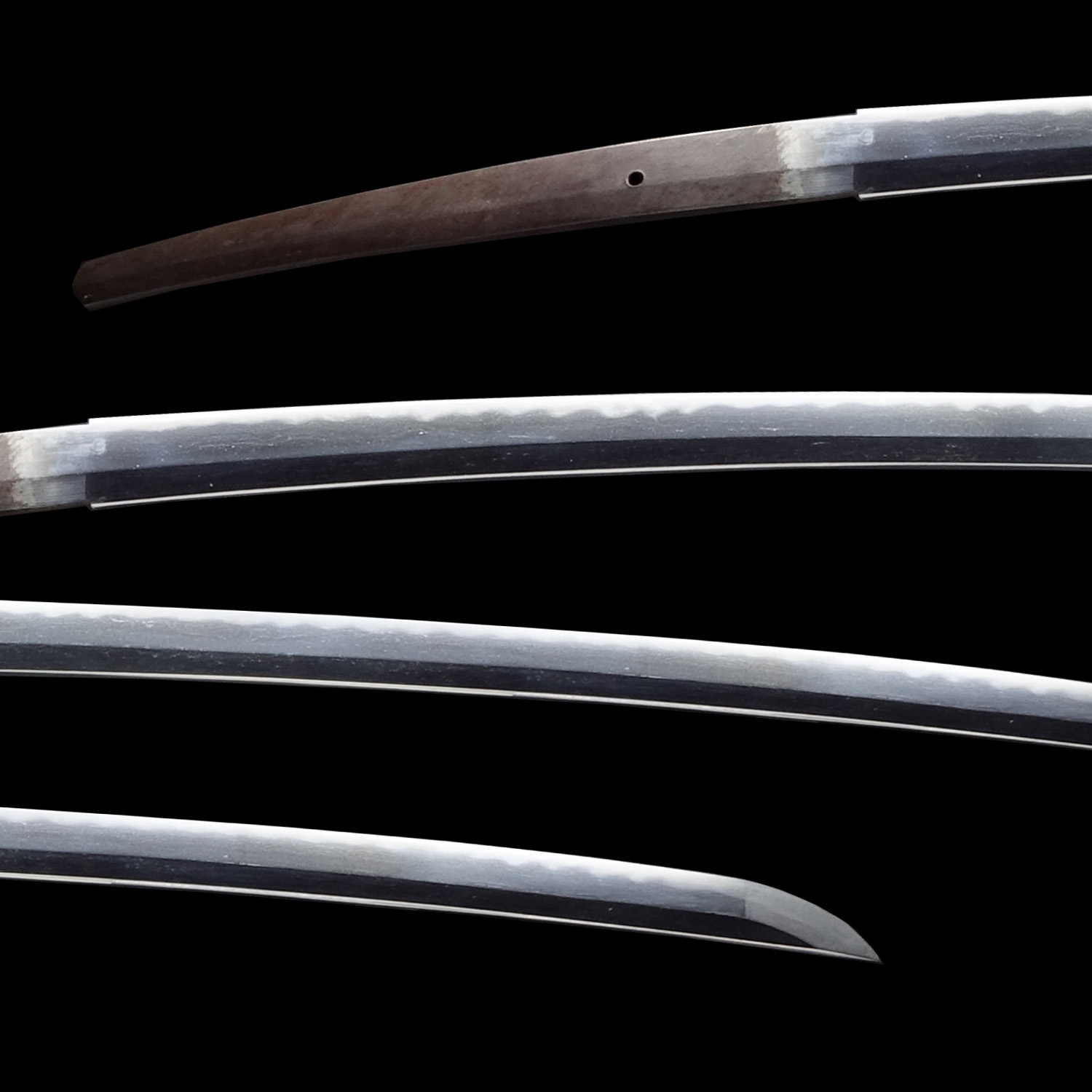
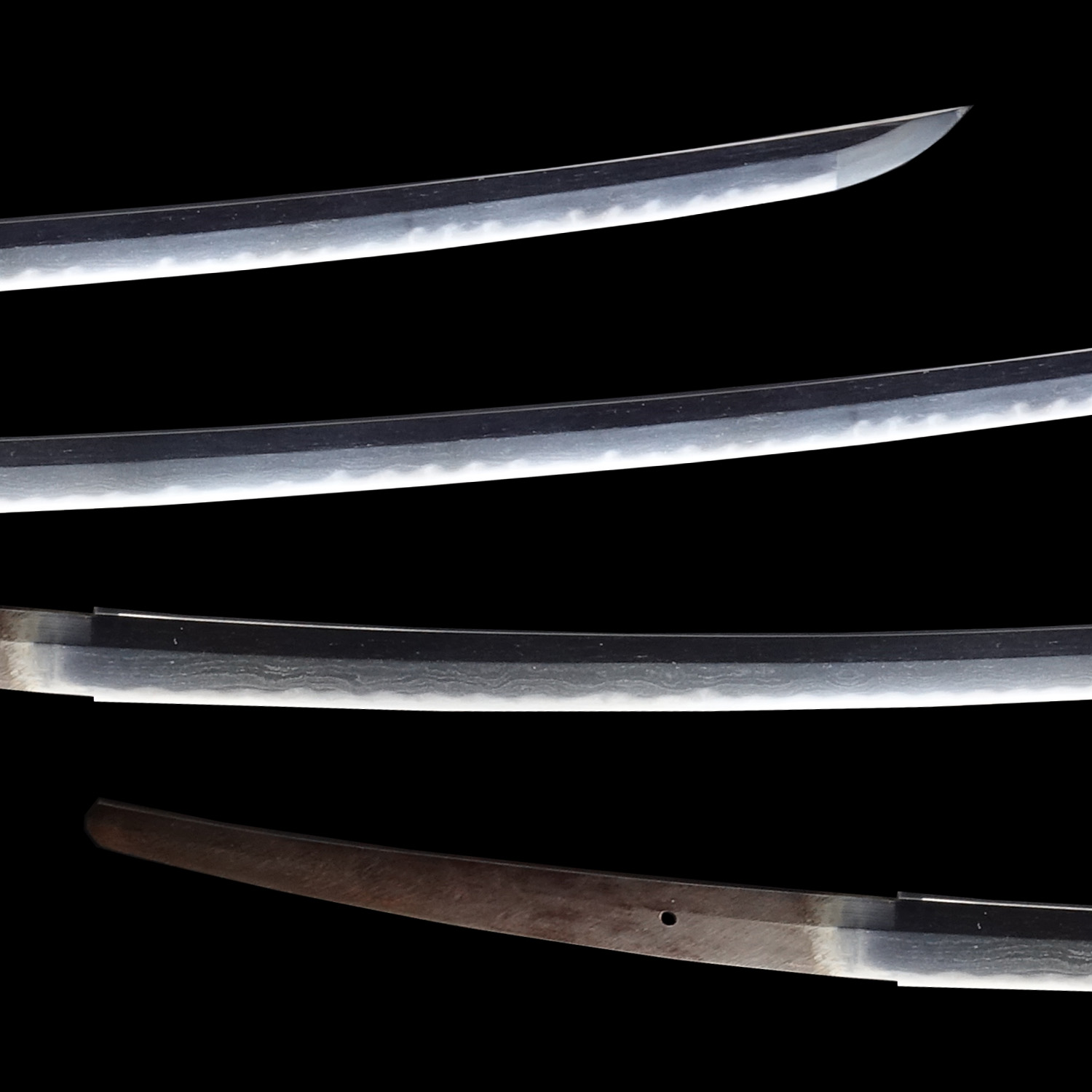
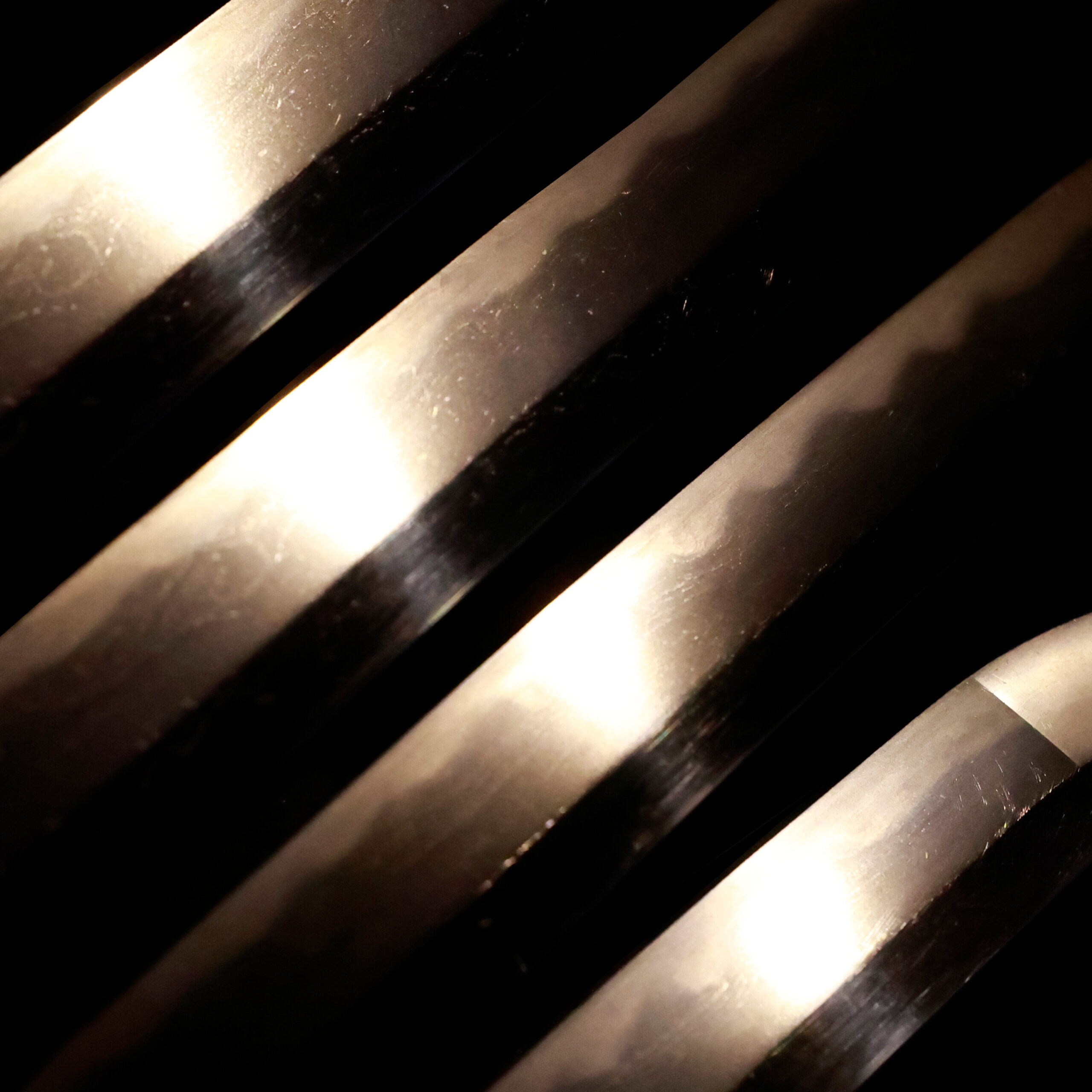
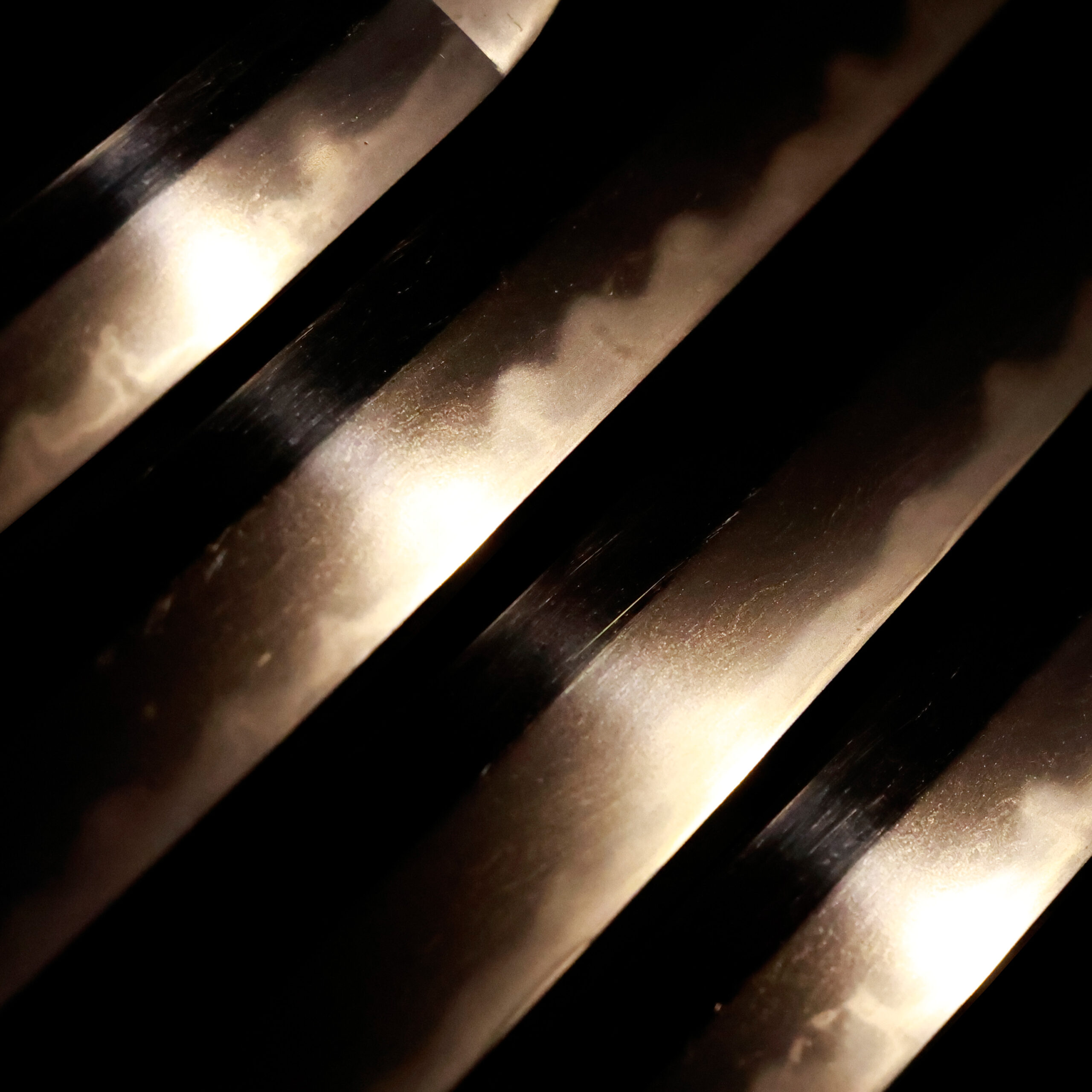
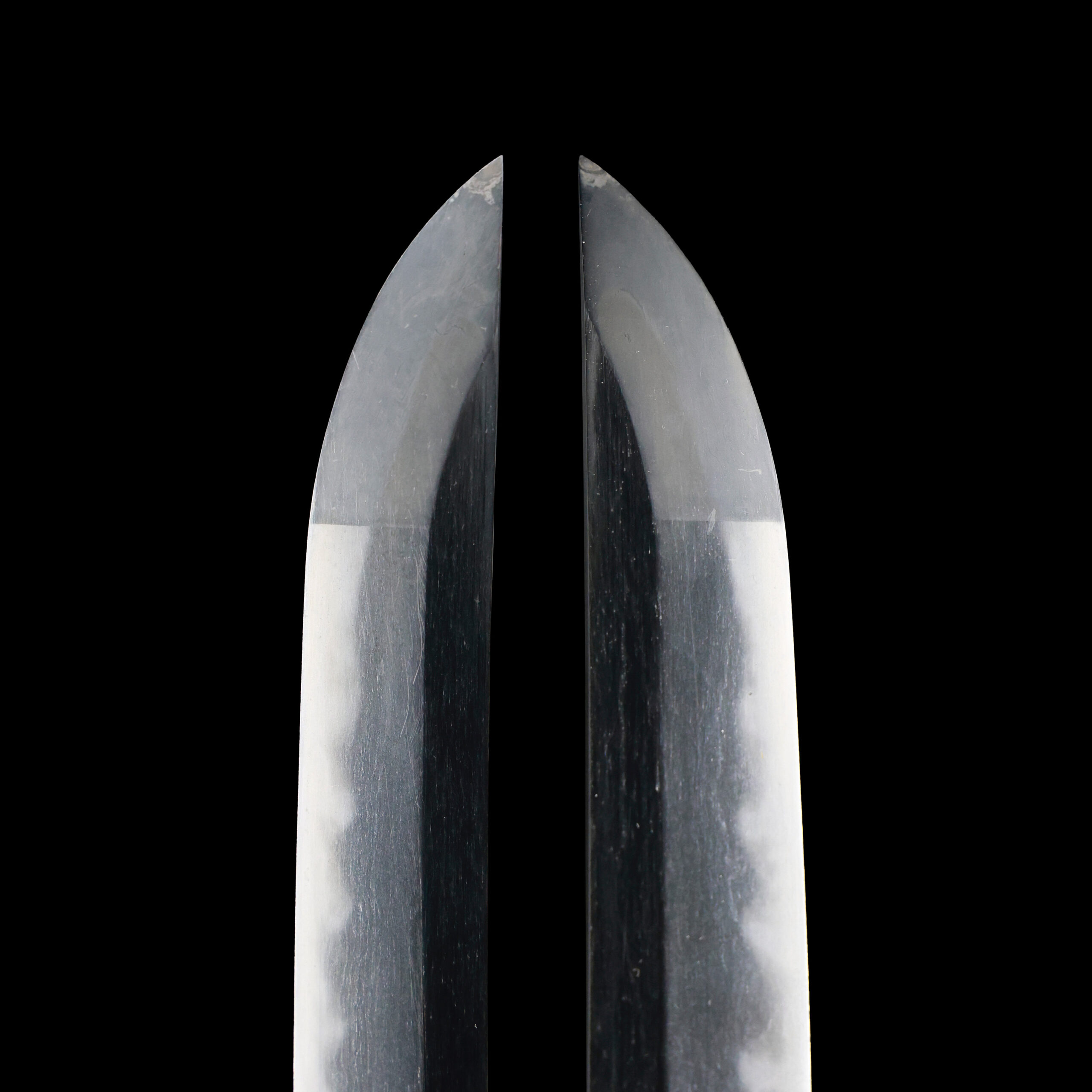
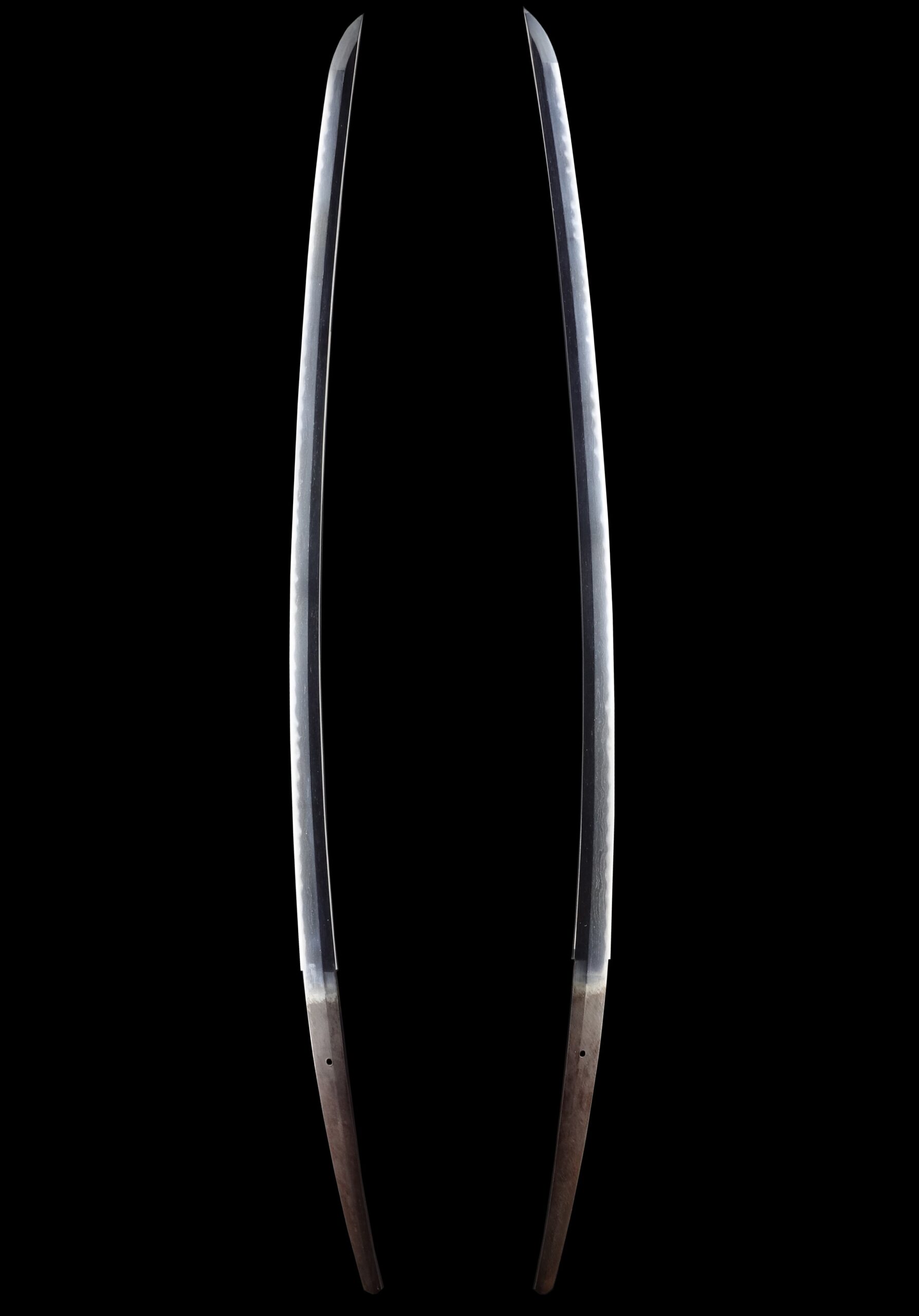
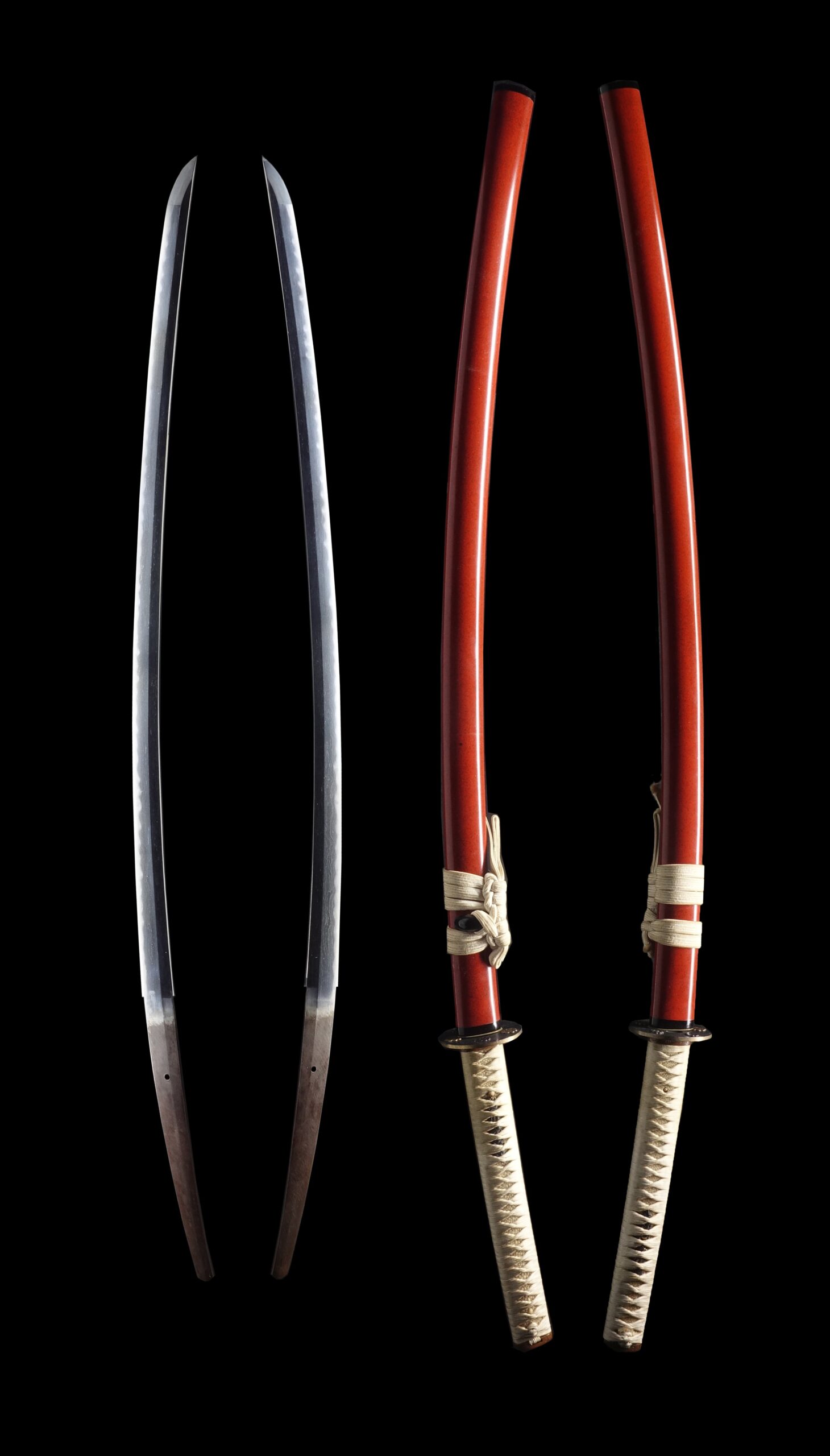
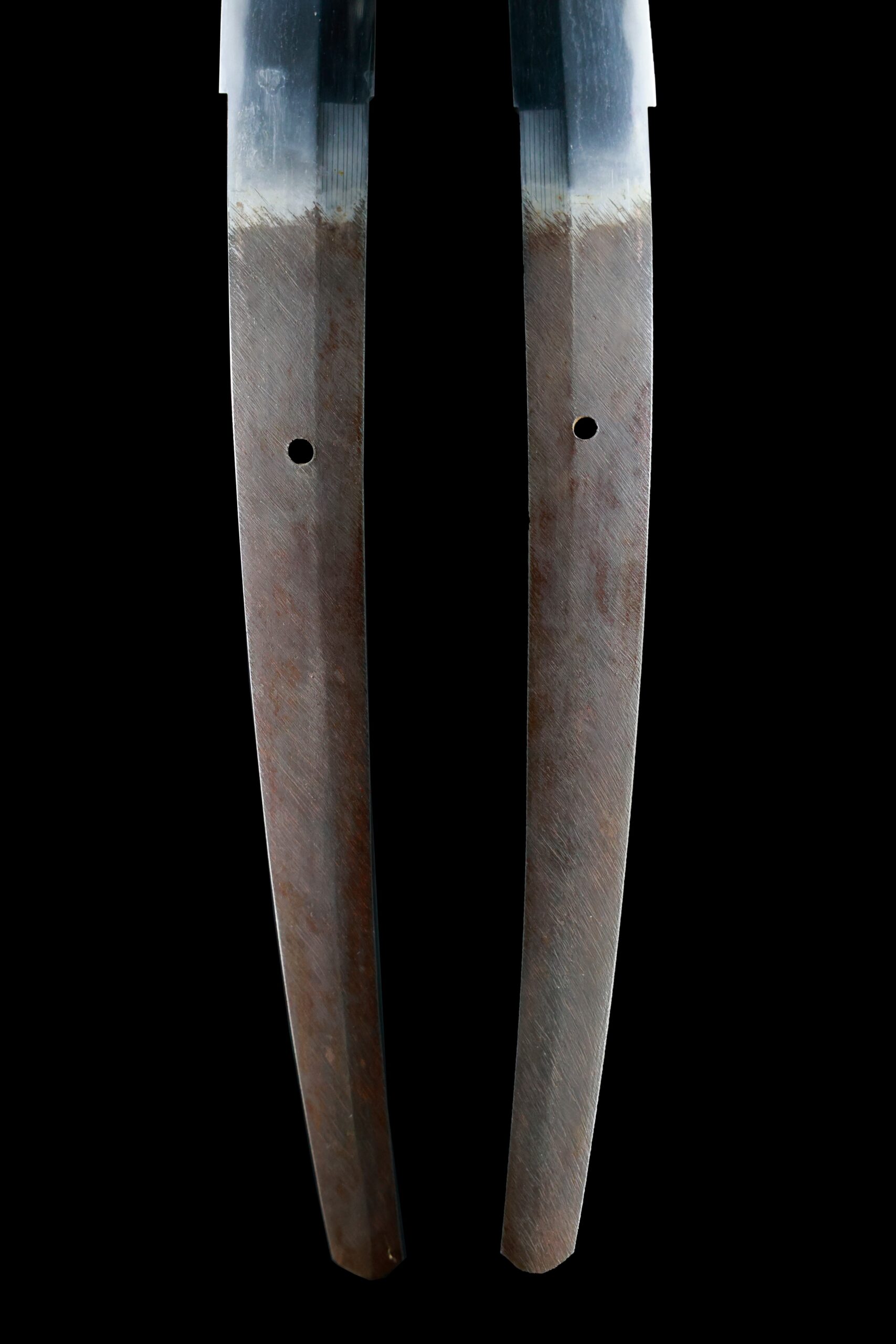
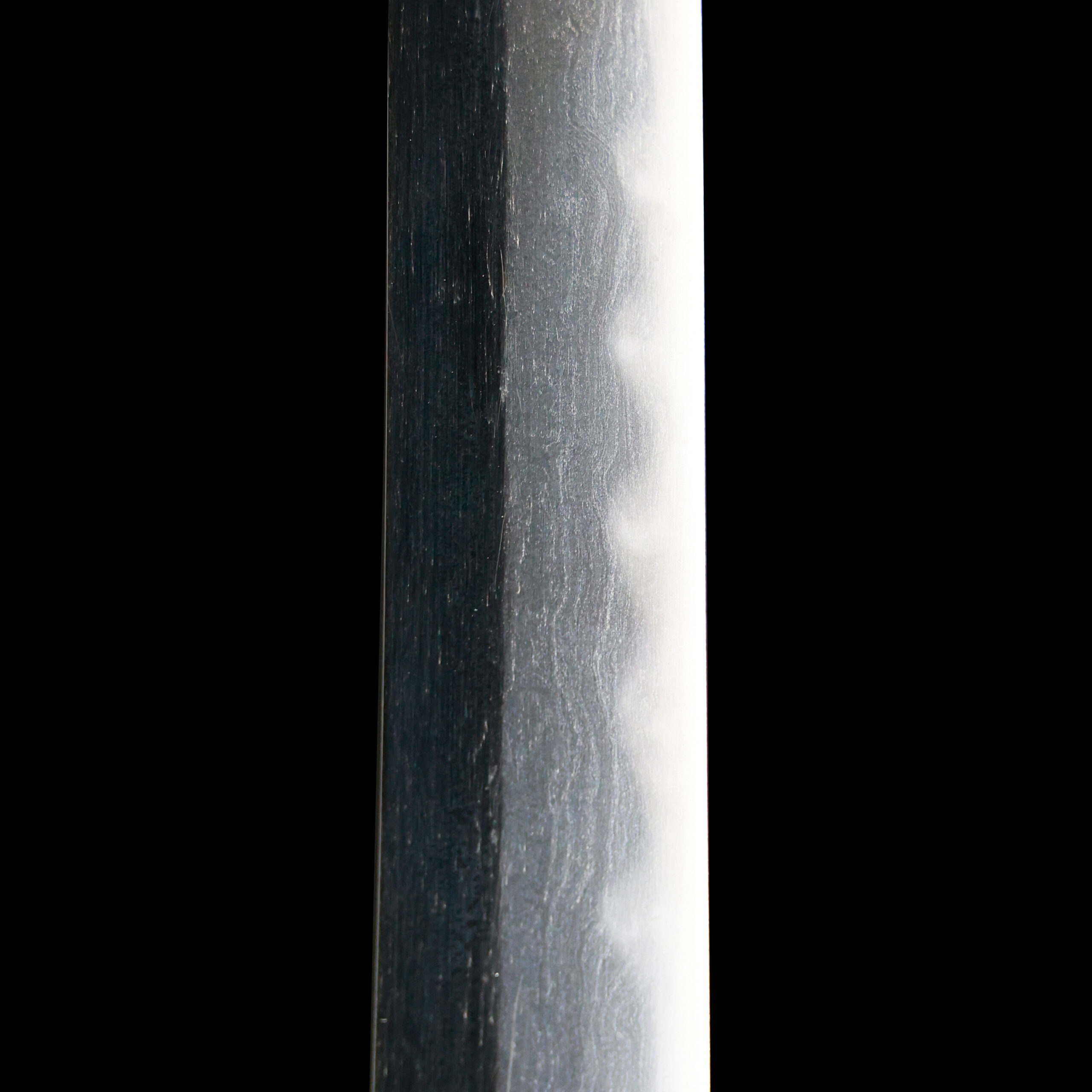
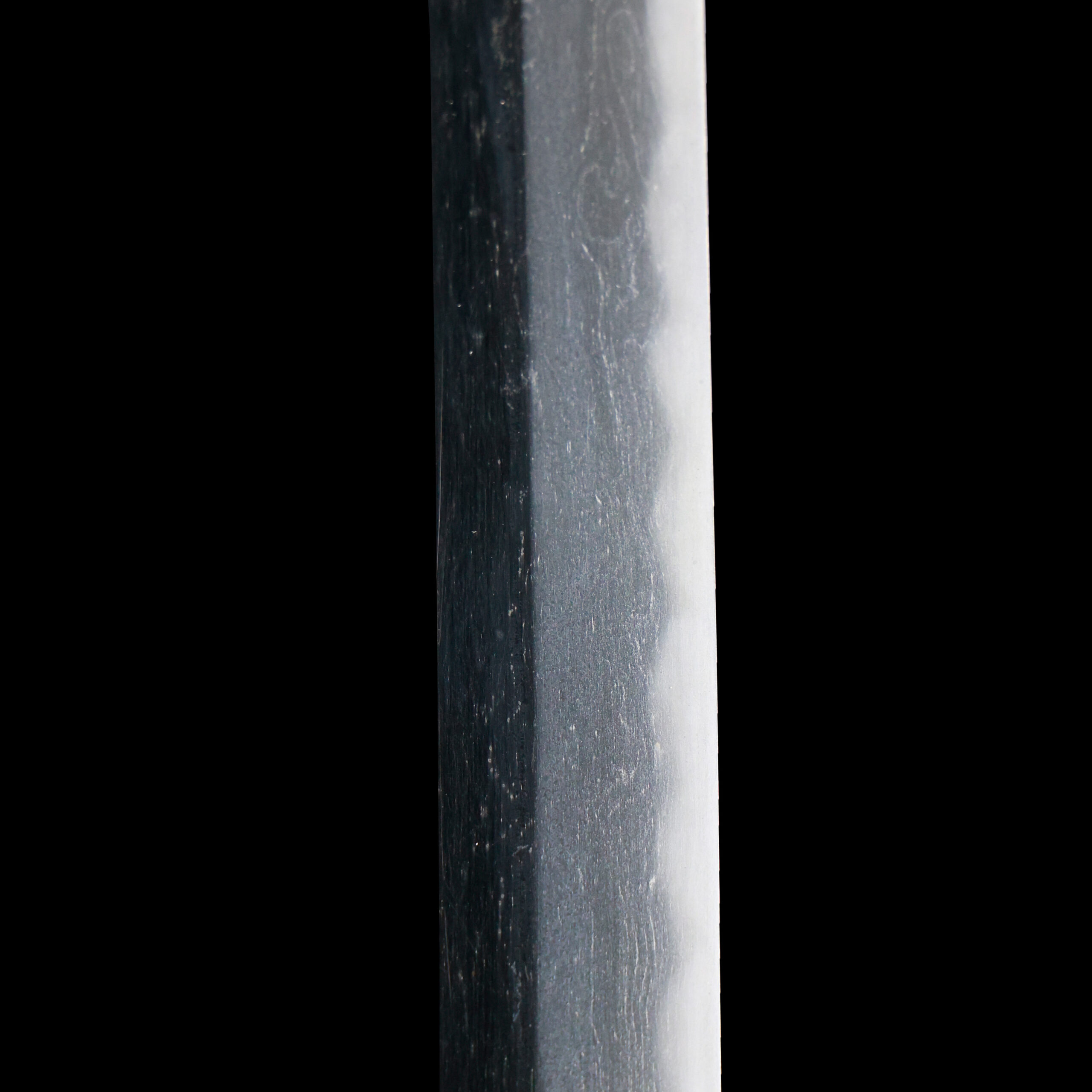
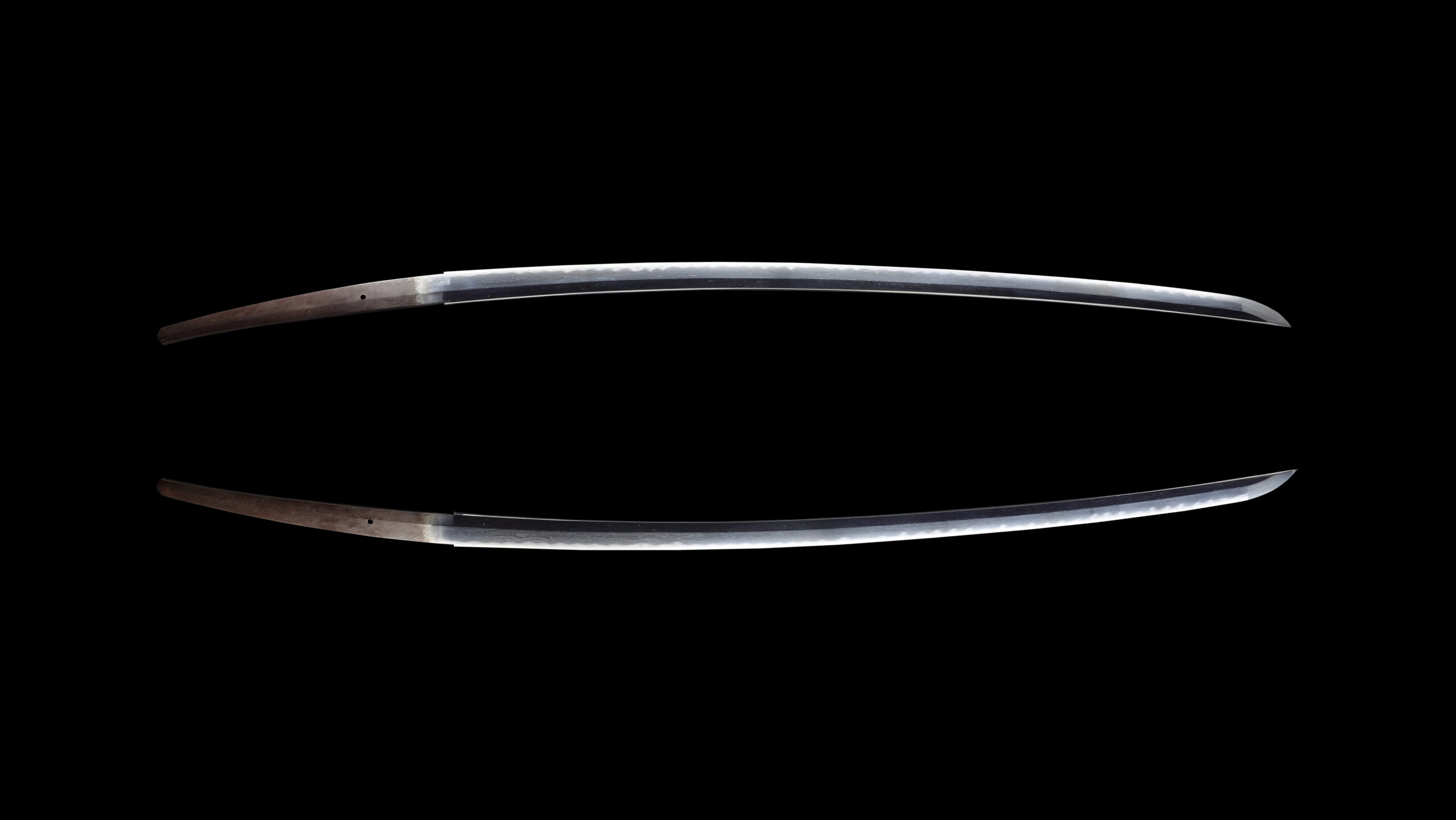
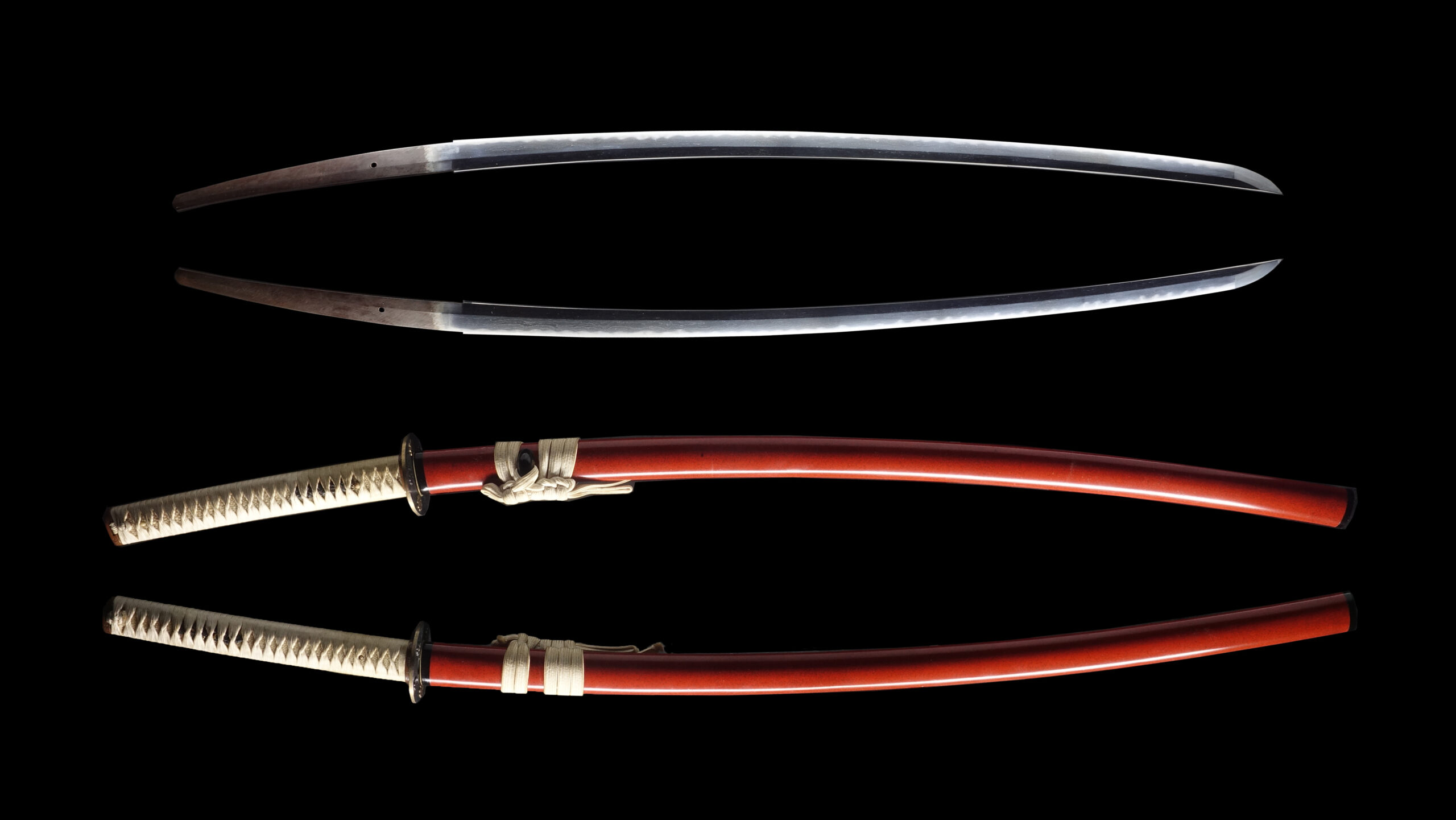
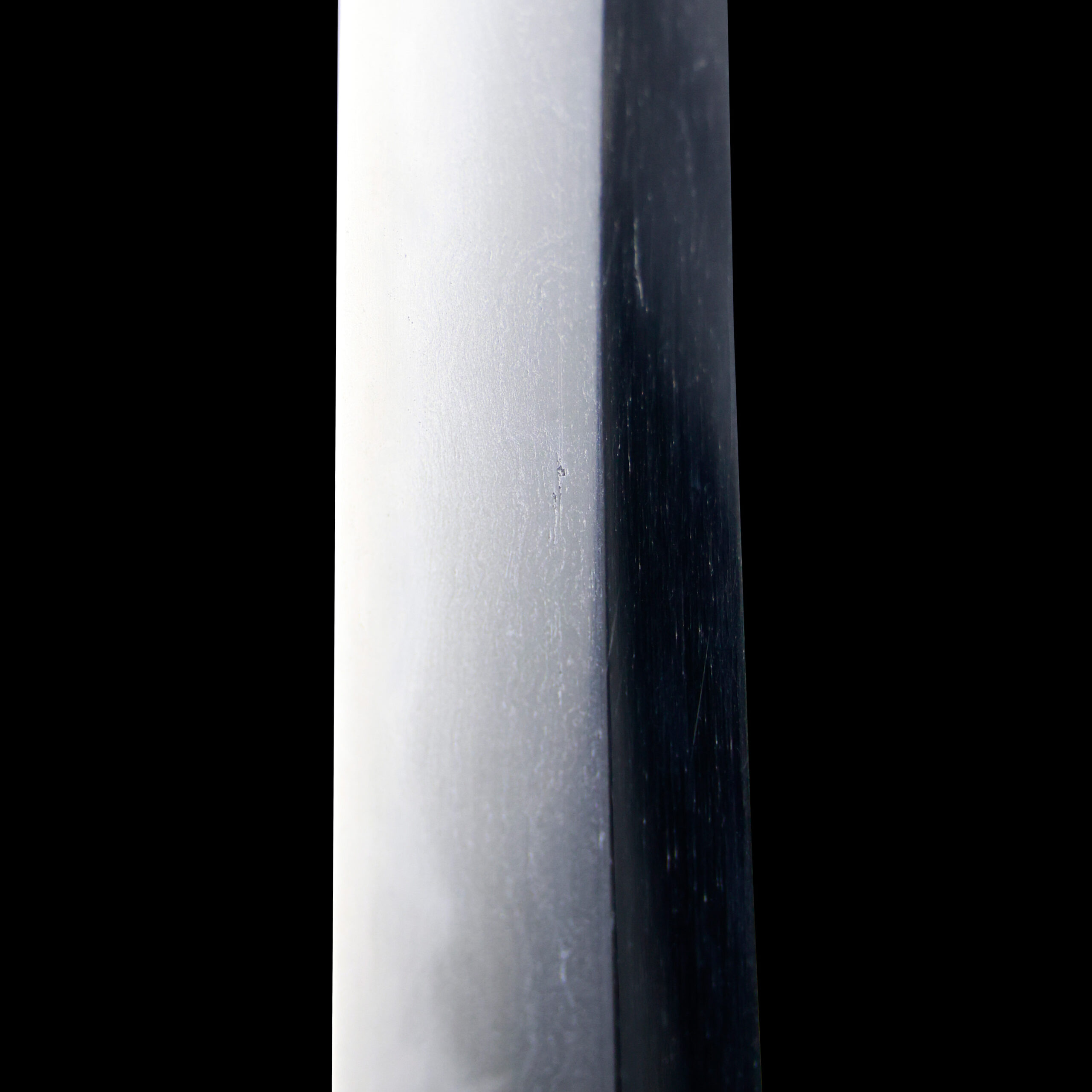
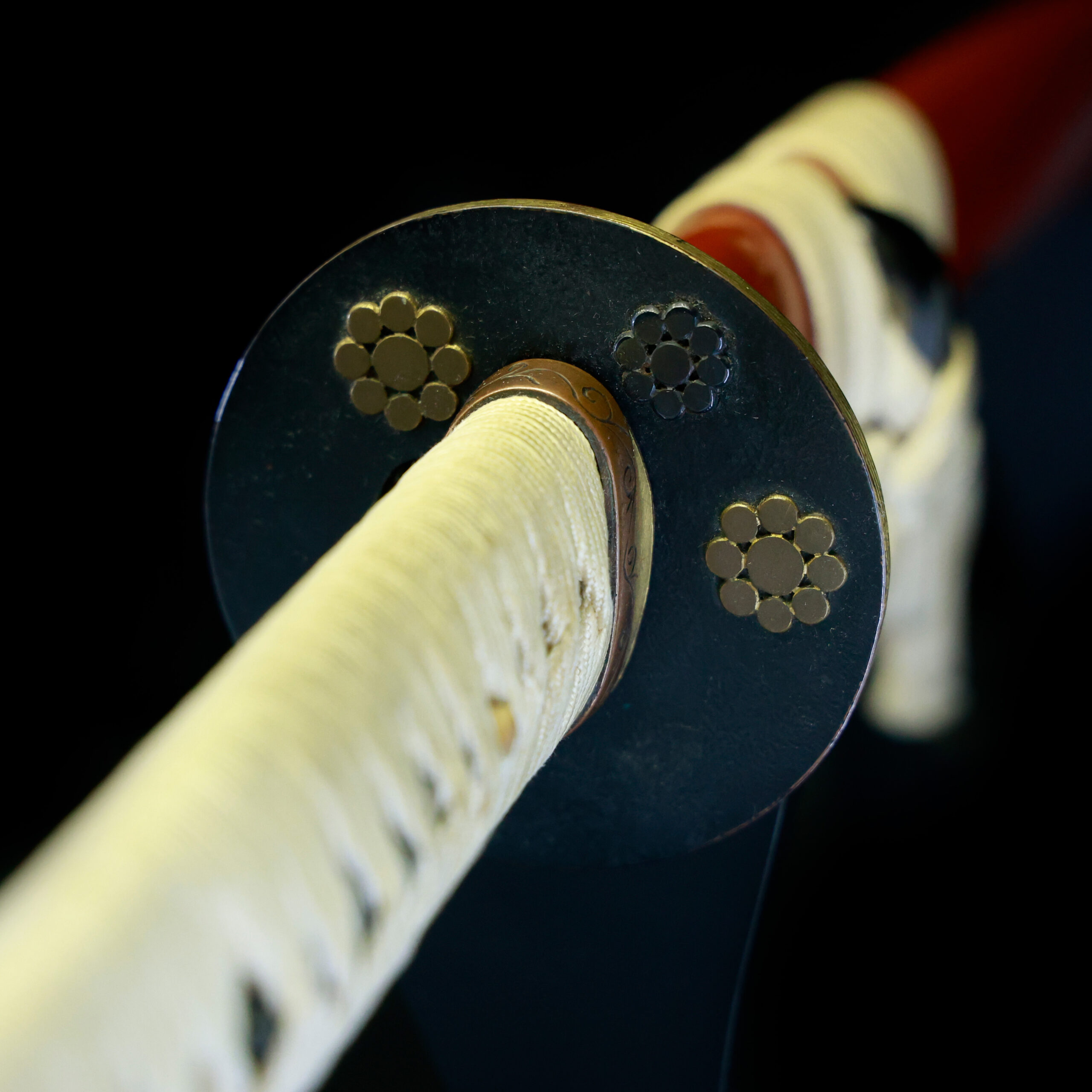
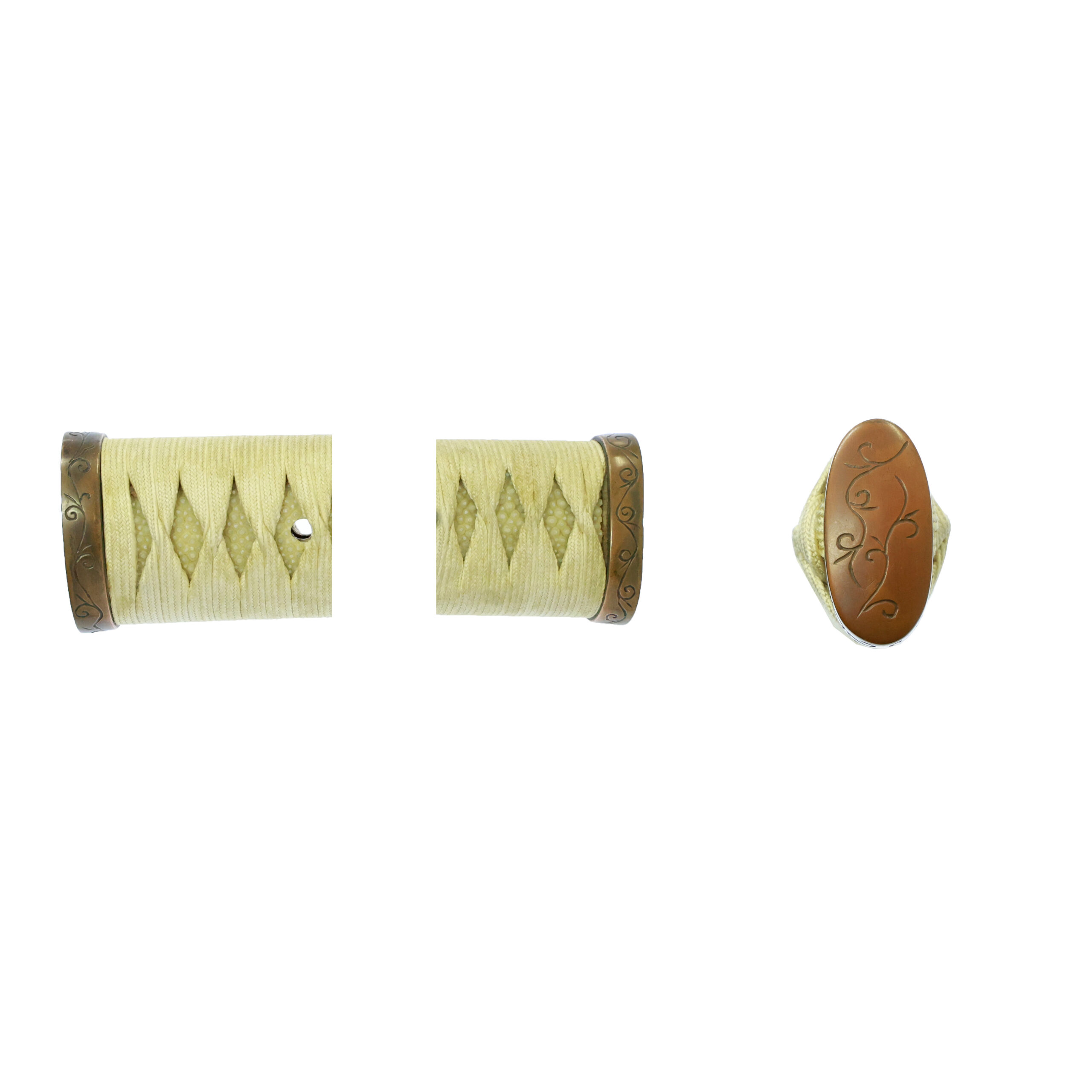
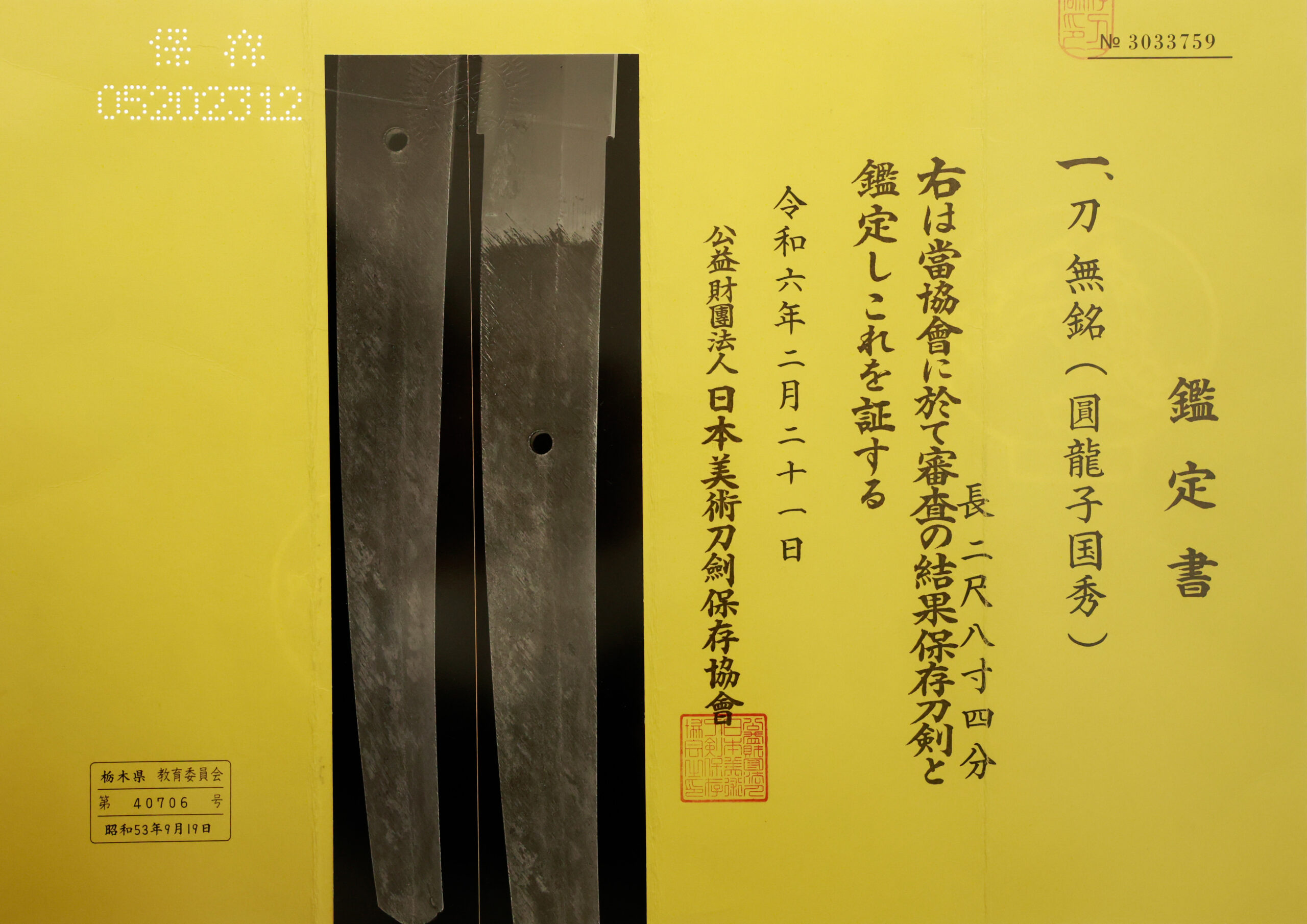
Kozuke · around 1830-1844
Tōken Taikan top 91%
5 pieces on the market now
The Edo period (1615 to 1868)
Edo was the sword’s age of connoisseurship: the Hon’ami appraisers, the shogunal register of famous blades of 1719, and a thriving literature turned the sword into an object of study even as it ceased to be drawn in war.
Certifies a genuine blade worth preserving: a signature confirmed correct, or, if unsigned, an era, province, and school that the NBTHK can reliably identify.
The NBTHK (Nihon Bijutsu Tōken Hozon Kyōkai, the Society for the Preservation of Japanese Art Swords) is a public-interest incorporated foundation founded in 1948 and supervised by Japan’s Agency for Cultural Affairs (Bunkachō); it is based at the Japanese Sword Museum in Tokyo. Its expert panels physically examine each submitted work (shinsa) and issue a certificate (kanteishō) ranking it by artistic and historical merit. NBTHK papers are the most widely recognized standard of authentication for Japanese swords and fittings.
NBTHK official siteReturns/exchanges limited to defects caused by shipping (except willful misconduct or gross negligence by the company); customers must contact within 72 hours of receiving the product.