Around 1800 Suishinshi Masahide argued in his writings that the craft must return to the old masters’ methods: the fukkotō revival. His greatest successor Naotane worked convincingly in Bizen and Sōshū manners that had been dead for centuries.
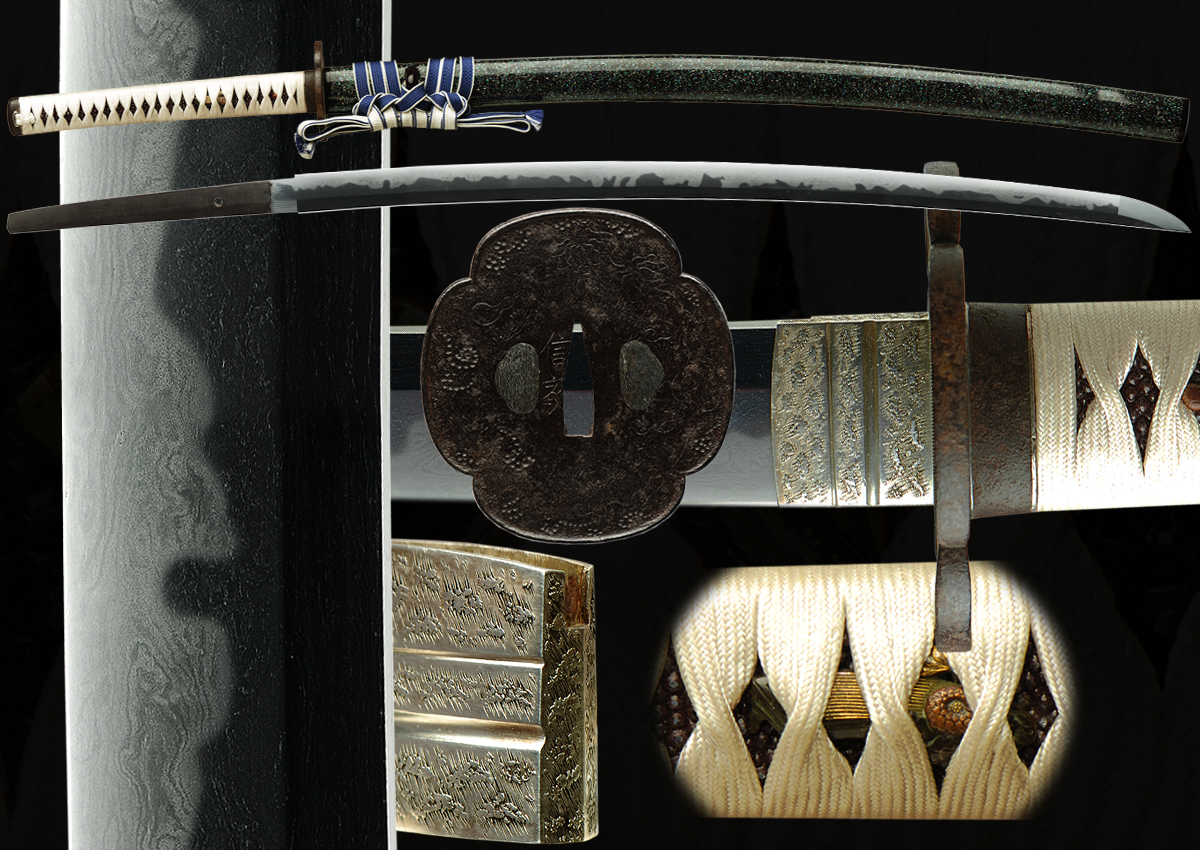
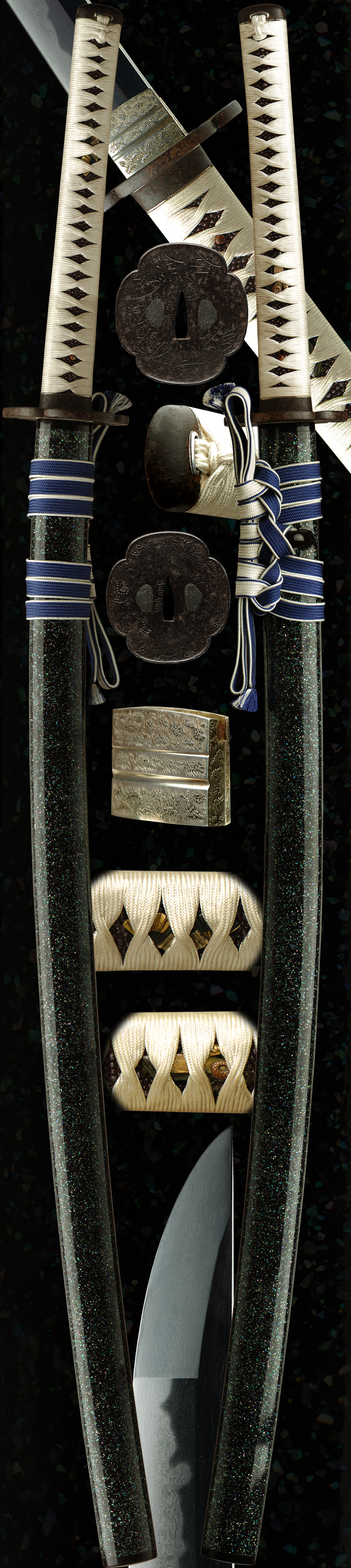
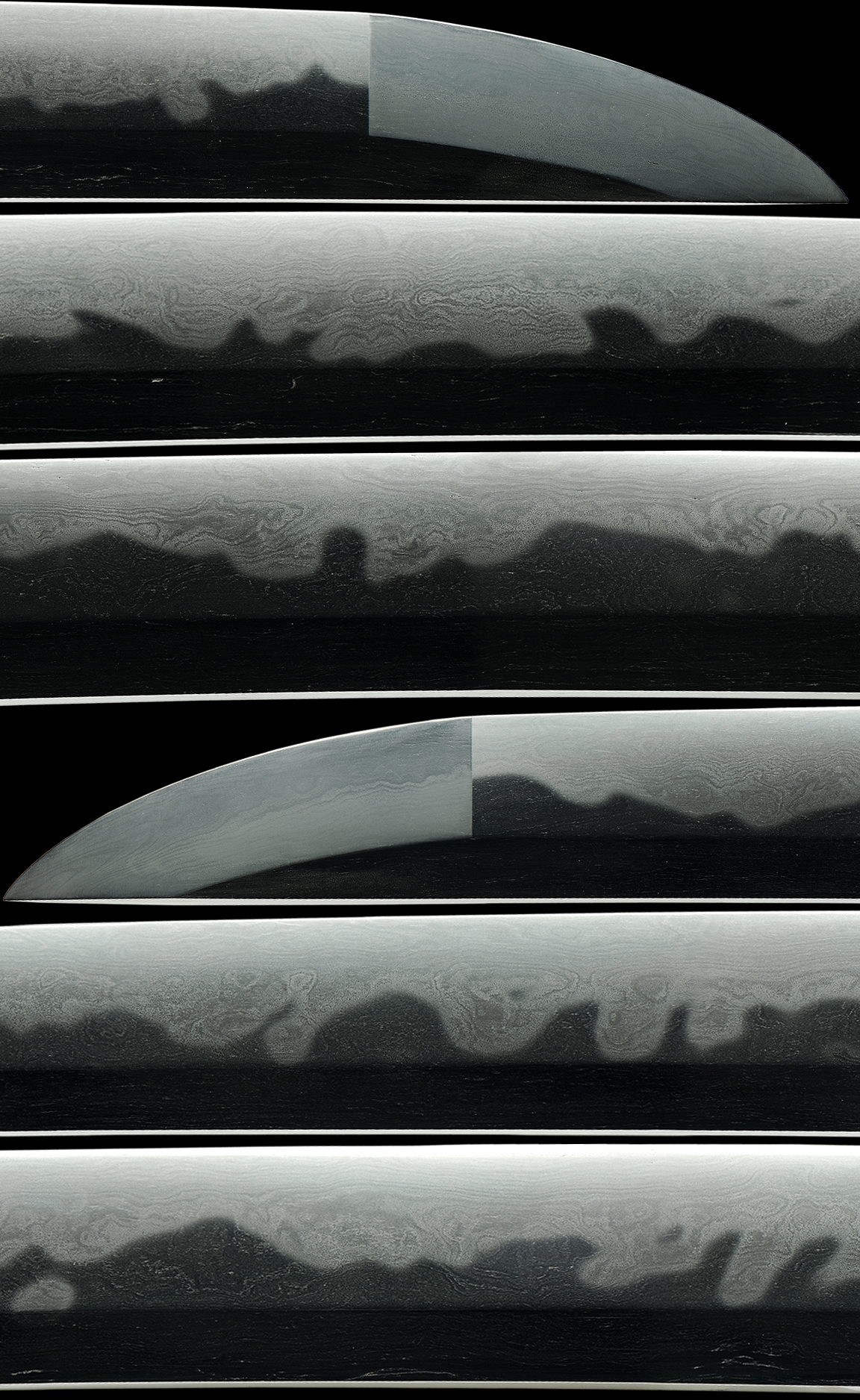
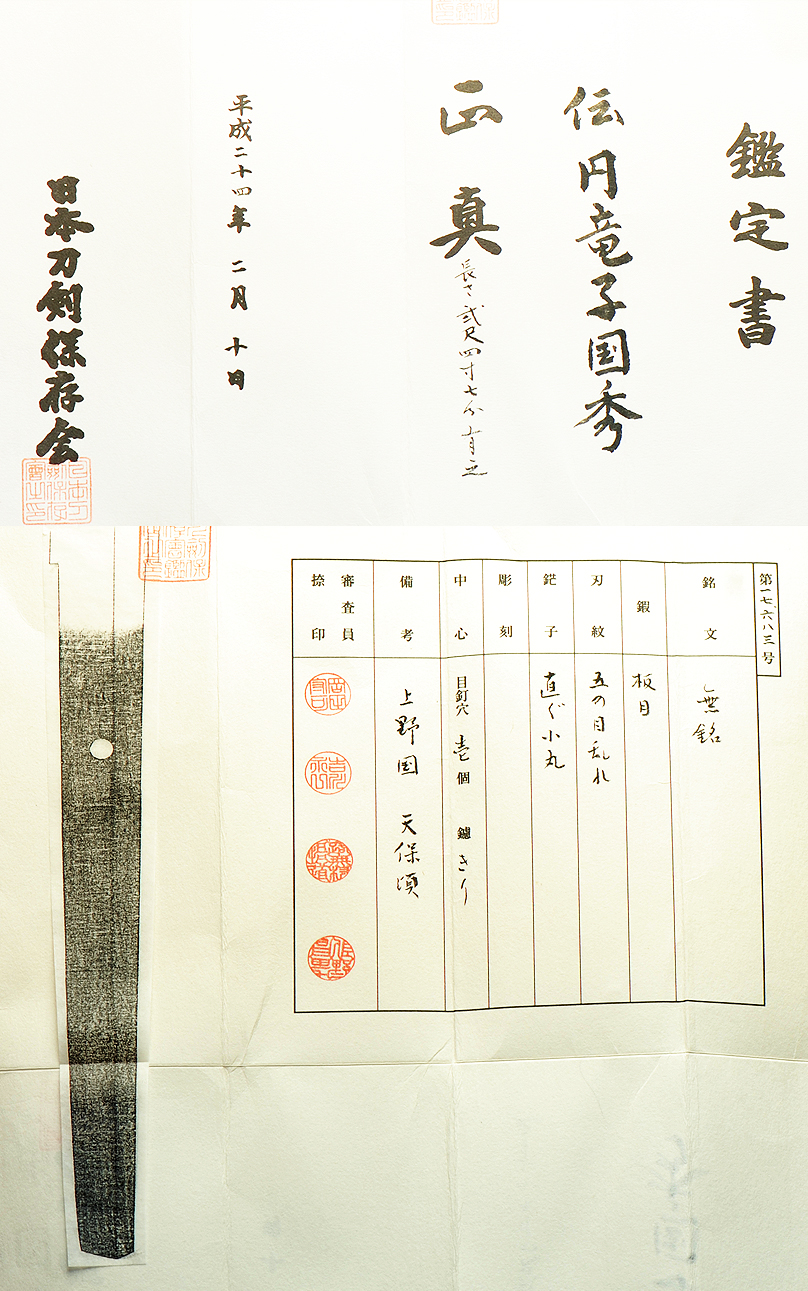
A beautiful Shinshinto Katana, this sword is reminiscent of much earlier Soshu style work. At first glance this blade reminds one of the majestic blades of the finest Soshu Den smiths. A long, wide sword attributed to Kunihide with a extremely active and swirling hamon. Even the hamon shows hamon hada or a grain pattern within the yakiba. At 29-1/2 ” this blade is an incredible one of a kind piece. The hada is incredibly clear and visible and appears to be a Masame with itame, there is masame nagare . There is a longish wavy kissaki and very active. There is ji nie all over. The hamon is a large notare gunome and truly spectacular which is in a pristine polish. A fantastic sword with much to enjoy and appreciate. The hamon has a 3d like appearance with almost every activity that is imaginable. You can find kinsugi, sunagashi, ashi, yo and chikei can be found in the hada. The kissaki is a long O-kissaki with a very active boshi filled with sunagashi. About the smith: KUNIHIDE (国秀), Tenpō (天保, 1830-1844), Kōzuke – “Jōshū Annaka-jū Enryūshi Tachibana Kunihide” (上州安中住円龍子橘国秀), “Tachibana Enryūshi Kunihide saku” (立花円龍子国秀作), “Sōshū Kamakura-jū Tachibana Kunihide” (相州鎌倉住橘国秀), “Enryūshi Kunihide saku” (円龍子国秀作), real name Tachibana Hayato (橘隼人), student of Ikkansai Yoshihiro (一貫斎義弘), he worked for the Annaka fief (安中藩) of Kōzuke province, during the Tenpō he worked temporarily also in Echigo, between Kaei (嘉永, 1848-1854) and Bunkyū (文久, 1861-1864) he moved eventually to Kamakura, most of his blades have a magnificent sugata with a wide mihaba and an elongated kissaki, the jigane is an ō-itame or masame, the hamon is a notare mixed with gunome and sunagashi, the bōshi is midare-komi, he signed his family name Tachibana with (橘) and (立花), the character “En” (円) of his gō Enryūshi is chiselled in the old style (圓) About the mounts: These are original to the blade, the saya and tsuka have been professionally restored adding to the overall feel and elegance to this Katana. The original abalone saya has been restored to its original beauty. The fittings are in solid iron and not meant to be fancy. Instead they have a more real swordsmen feel to them. The fuchi/kashira are tried with silver that matches the Habaki. The tsuba is signed “Nobuie” a famous signature as this line of tsuba makers was well known. The tsuba would have to be researched more to be sure but it is a strong well designed tsuba. The menuki are of koto and fans that are associated to Geisha and relaxing moments for a samurai. The habaki is finished in silver with a rain cloud motif that has great depth. This is more than just a good sword but a fine work of art that even a novice can appreciate and truly cherish for years to come. This sword is on consignment. kantei-sho (鑑定書) – Appraisal Den, Enryûshi Kunihide (伝円竜子国秀) shôshin (正真) – Authentic nagasa 2 shaku 4 sun 7 bu kore ari (長さ弐尺四寸七分有之) – Blade length ~ 74.8 cm Heisei 27 nen 5 gatsu 17 nichi (平成二十四年二月十日) – February 2nd 2012 Nihon Tôken Hozon Kai (日本刀剣保存会) – NTHK No 17,683 meibun (銘文) – Signature: mumei kitae (鍛) – Forging: itame hamon (刃紋) – Hardening: gunome-midare bôshi (鋩子) – Hardening in tip: sugu with a ko-maru-kaeri chôkoku (彫刻) – Engravings: nakago (中心) – Tang: mekugi-ana (目釘穴) 1, yasurime (鑢): kiri bikô (備考) – Remarks: Kôzuke povince, around Tenpô (天保, 1830-1844) shinsa’in natsu’in (審査員捺印) – Seals of Judges: 4 seals [et_bloom_inline optin_id=”optin_1″]
Offered by Nihonto Antiques


Kozuke · around 1830-1844
Tōken Taikan top 91%
5 pieces on the market now
The Shinshintō revival
Around 1800 Suishinshi Masahide argued in his writings that the craft must return to the old masters’ methods: the fukkotō revival. His greatest successor Naotane worked convincingly in Bizen and Sōshū manners that had been dead for centuries.
The NTHK’s principal certificate, issued for a blade of considerable quality. It confirms a genuine signature, or, for an unsigned (mumei) work, records the judges’ attribution to a smith or school. The paper carries a detailed worksheet with a numerical point score.
The NTHK (Nihon Tōken Hozon Kai, the Society for the Preservation of the Japanese Sword) is the oldest of Japan’s sword-appraisal bodies, founded in 1910, decades before the NBTHK. After the death of its long-serving head it divided into two successor societies, the NTHK and the NTHK-NPO, both of which continue to hold shinsa. NTHK blade certificates are known for a detailed worksheet that records a numerical point score alongside the judges’ written opinion (fitting papers carry the judges’ opinion without a point score), and the society is especially respected for its attribution of unsigned (mumei) work.
We offer a 48 hour inspection period for all Antique items shipped within the United States only. If the item is not to your satisfaction, we will gladly refund your money less any shipping and handling fees. All sales are final after the 48 hour inspection period. Please note that all discounted items are a final sale and not returnable.