 NihontoWatchNihontoWatch
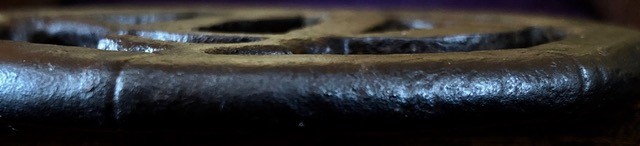
A Sukashi Tsuba of Bamboo Stems design, ( Oratake). Unsigned Owari. (Very similar to a Hayashi Matashichi Tsuba off the same design kept at the Kurokawa Institute of Ancient Culture, Hyogo Prefecture in the Kansai region of Japan’s main Island Honshu. A brief History of the Hayashi School: The first master of the Hayashi School ( Matashichi ) was born on the eighteenth year of Keicho(1613) and died in the twelfth year of Genroku at the age of 87. Matashichi’s works differ greatly depending on wether or not they have Zogan ( Inlaid work of Gold or Silver). His Sukashi Tsuba in general has quality Iron, carefully finished with sophisticated designs. His work is considered outstanding. Setsumei: ( Explanation) Sukashi Iron Tsuba of great quality Iron and showing Tekkotsu on the rim. Seppa Dai Thickness: 5mm The condition of this Tsuba is beautiful and has a rich dark granular texture and Tekkotsu on the rim and is in exceptional condition. The age of the Tsuba is early Edo period. This is a rare Tsuba and also has a Hakogaki (箱書き) (Box inscription) by Kanzan Sato. Highly recommended for the advanced Iron Tsuba collector and scholar. For centuries many characteristics of the OWARI school have been appreciated and held in high esteem by the Samurai, expressing their aesthetic standards. The Owari Tsuba started being made in the Oei era (1394-1427) and lasted until the Sword abolition law was enacted in the ninth year of Meiji 1876. It comes with NBTHK Tokubetsu Hozon Certificate attesting to it’s rarity and authenticity.
NihontoWatchOffered by Connoisseur Arms
This piece has sold

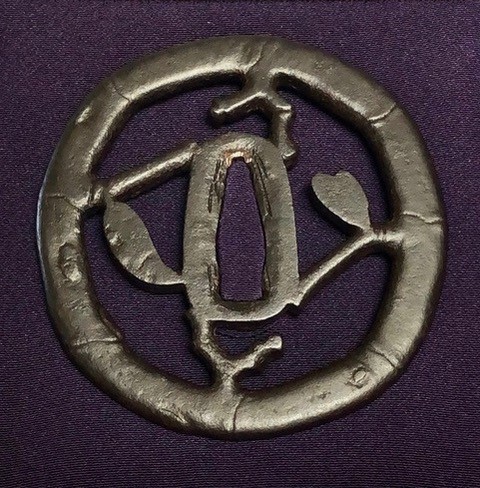
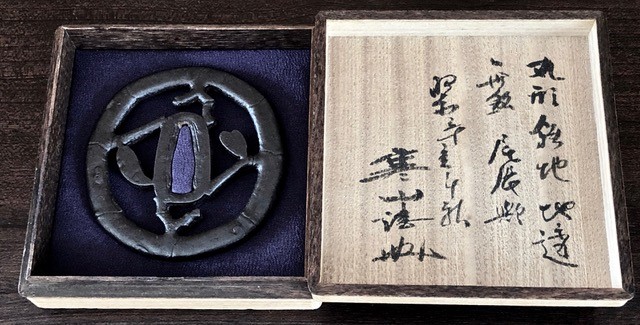
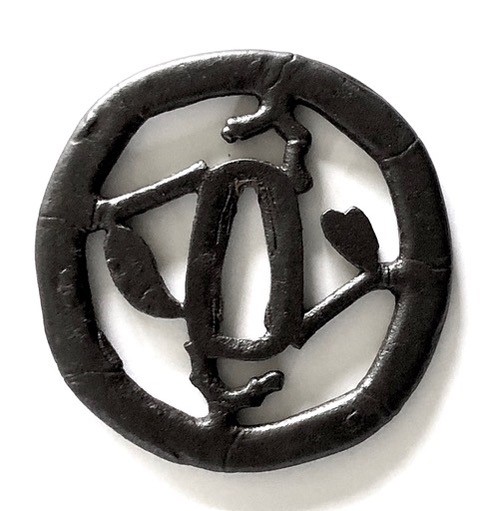
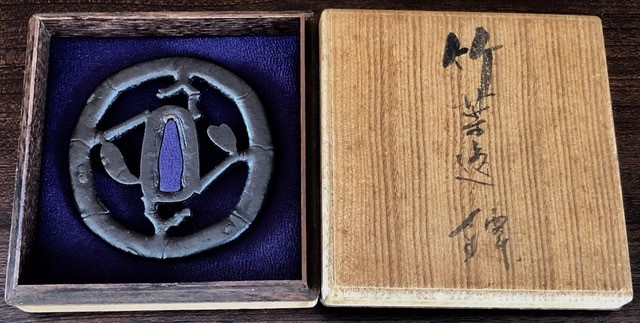
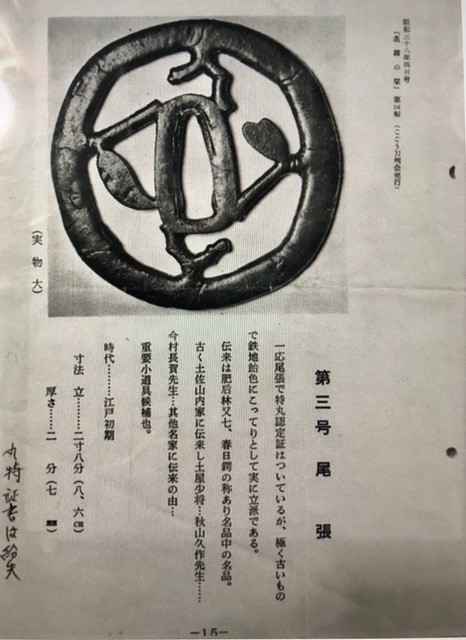
A Hozon-certified fitting of notably superior craftsmanship and condition, often with signature or workmanship of high reference value.
The NBTHK (Nihon Bijutsu Tōken Hozon Kyōkai, the Society for the Preservation of Japanese Art Swords) is a public-interest incorporated foundation founded in 1948 and supervised by Japan’s Agency for Cultural Affairs (Bunkachō); it is based at the Japanese Sword Museum in Tokyo. Its expert panels physically examine each submitted work (shinsa) and issue a certificate (kanteishō) ranking it by artistic and historical merit. NBTHK papers are the most widely recognized standard of authentication for Japanese swords and fittings.
NBTHK official sitePurchases are final and items cannot be returned unless otherwise stated.