 NihontoWatchNihontoWatch
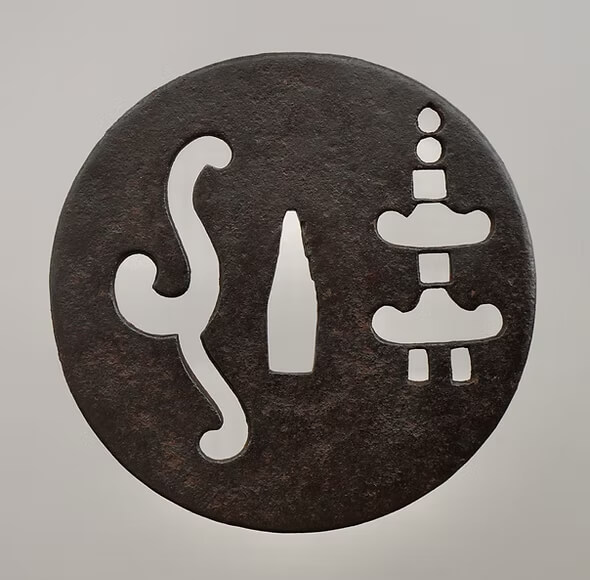
Tosho tsuba are said to have originated from those provided by swordsmiths when they forged a single sword in ancient times, which is how they acquired this name. In the past, Akiyama Kyusaku stated that some had endured six hundred years of time, and in recent years they were considered to date to around the middle of the Muromachi period. However, Sasano Masayuki, in "Tosogu no Kigen," estimated their origin to be from the end of the Heian period, identifying them as the tsuba attached to the uchigatana worn at the waist by the servant appearing in the "Ban Chunagon Emaki." This tsuba features a sukashi of young leaves on the right side and a gorinto on the left side. Because the young leaves signify the birth of new life and the gorinto is a grave marker signifying death, it expresses rinne tensho, the Buddhist view of life and death. It is a theme truly appropriate for the waist of a bushi. The sukashi is not only bold, but the shape is elegant and possesses a sense of tension. Furthermore, the rust color of the iron has moisture and luster, and while it is somewhat thick, it conveys a sense of age, with a period feel that dates no later than the early Muromachi period. The fact that it is muhitsu is also desirable, making it a rare meisaku. Regarding the terms "Ko-Tosho tsuba" and "Tosho tsuba," Sasano Masayuki originally used these names to distinguish between the ancient "Tosho tsuba" that were the origin of sukashi tsuba and the Nobuie-utsushi tsuba by swordsmiths such as Naotane and Jirotaro Naokatsu that were popular at the end of the Edo period; however, the Token Hozon Kyokai seems to issue kantei using the name "Tosho" for "Ko-Tosho" that are somewhat thick or in a good state of hozon.
NihontoWatchOffered by Gallery Youyou

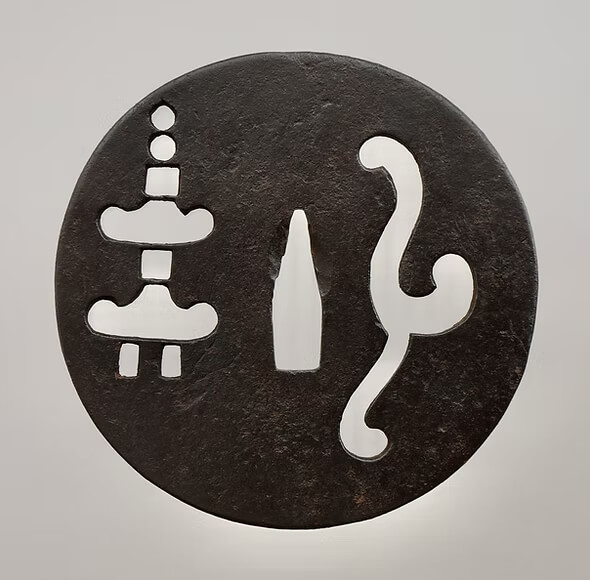
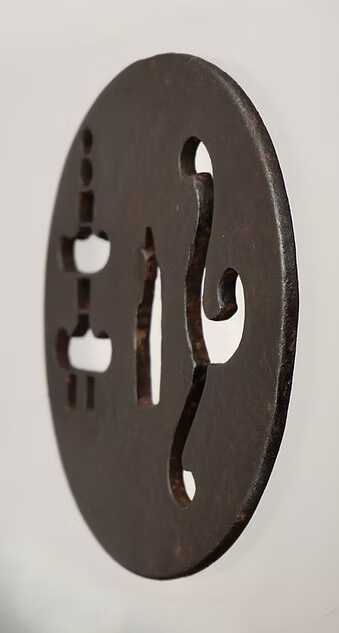
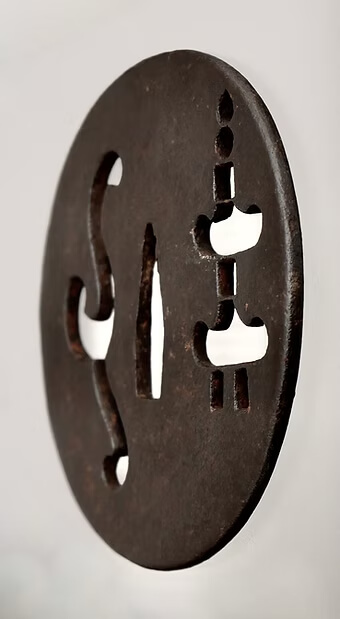
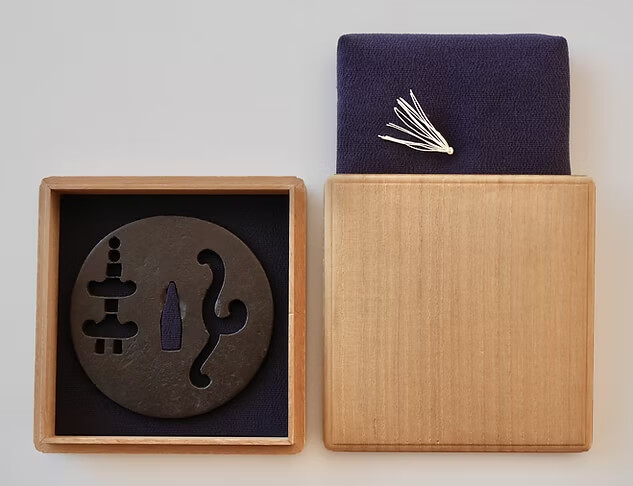
Pre-Edo
Unsigned
Hozon (NBTHK)
As written by the shop
Machine translation from the shop's Japanese · may contain errors ·
Certifies a genuine fitting worth preserving: a correct signature, or, if unsigned, an identifiable era and school, with recognized artistic and craft value.
The NBTHK (Nihon Bijutsu Tōken Hozon Kyōkai, the Society for the Preservation of Japanese Art Swords) is a public-interest incorporated foundation founded in 1948 and supervised by Japan’s Agency for Cultural Affairs (Bunkachō); it is based at the Japanese Sword Museum in Tokyo. Its expert panels physically examine each submitted work (shinsa) and issue a certificate (kanteishō) ranking it by artistic and historical merit. NBTHK papers are the most widely recognized standard of authentication for Japanese swords and fittings.
NBTHK official siteIf the item is not to your liking, we accept returns. As each item is one of a kind, please contact us within 7 days, counting the day of arrival, and send it back securely packed within a day or two of contacting us. Return shipping is at the customer's expense. Items delivered overseas cannot be returned.
¥550,000