
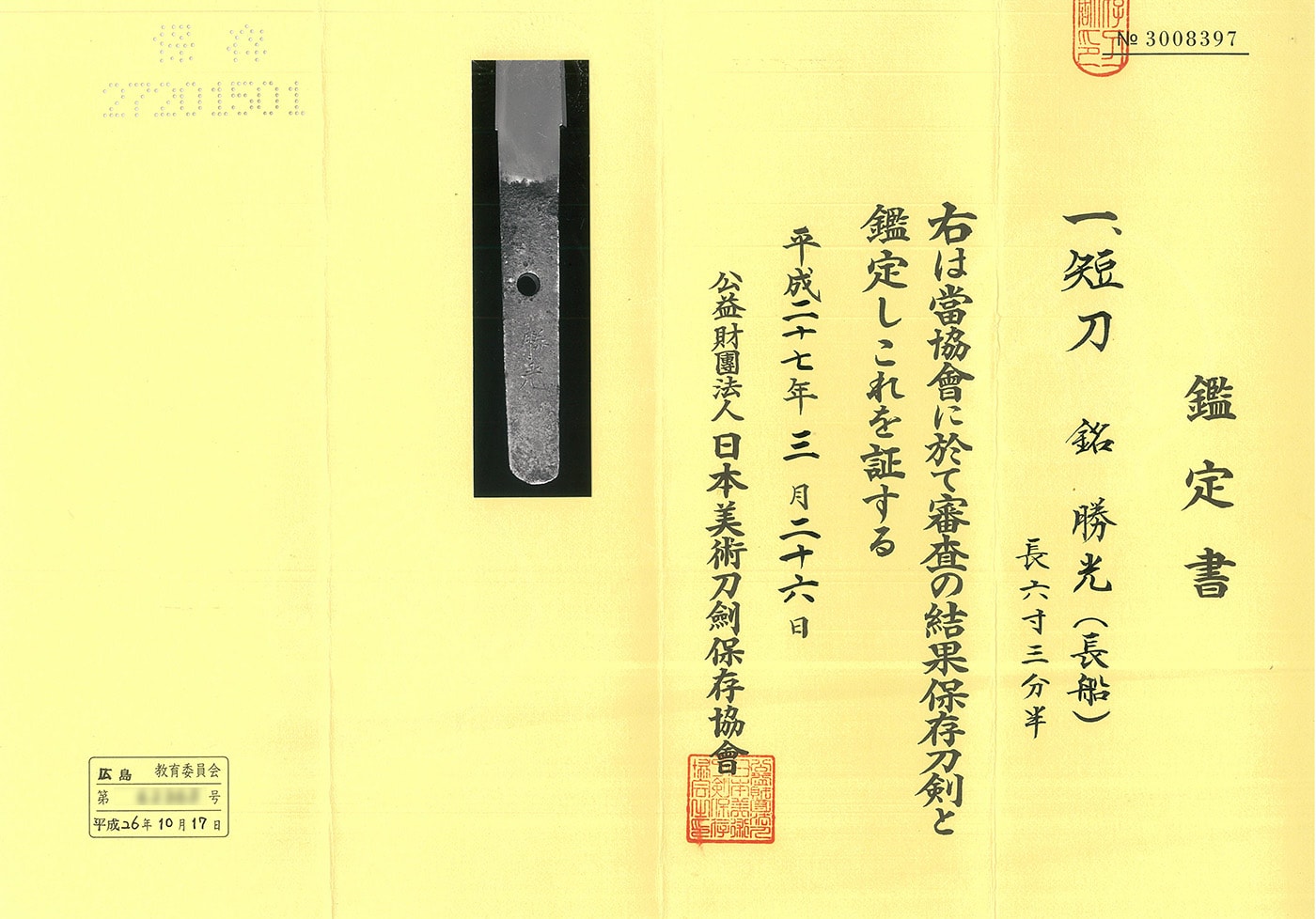
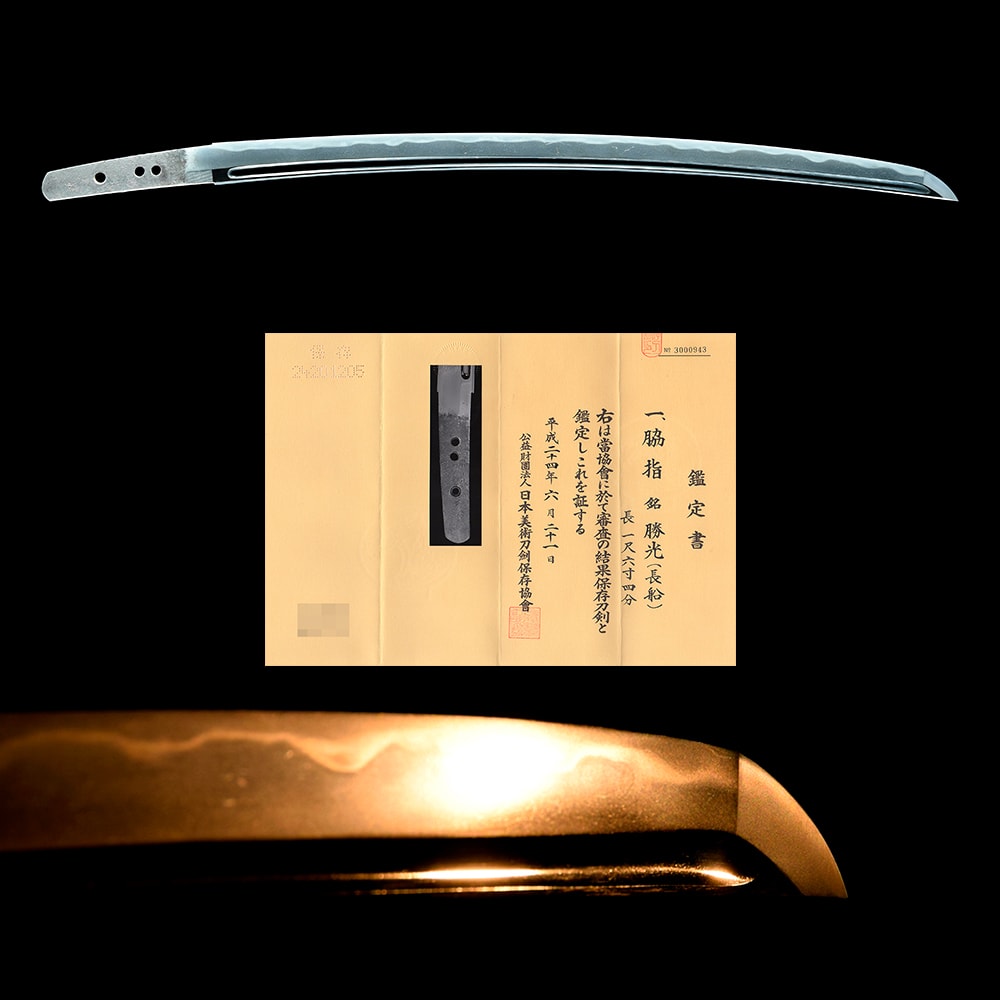
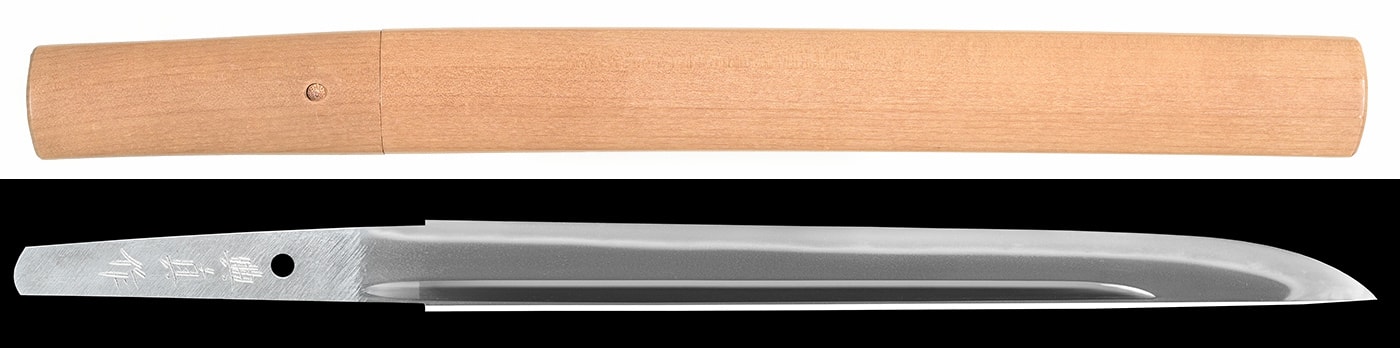
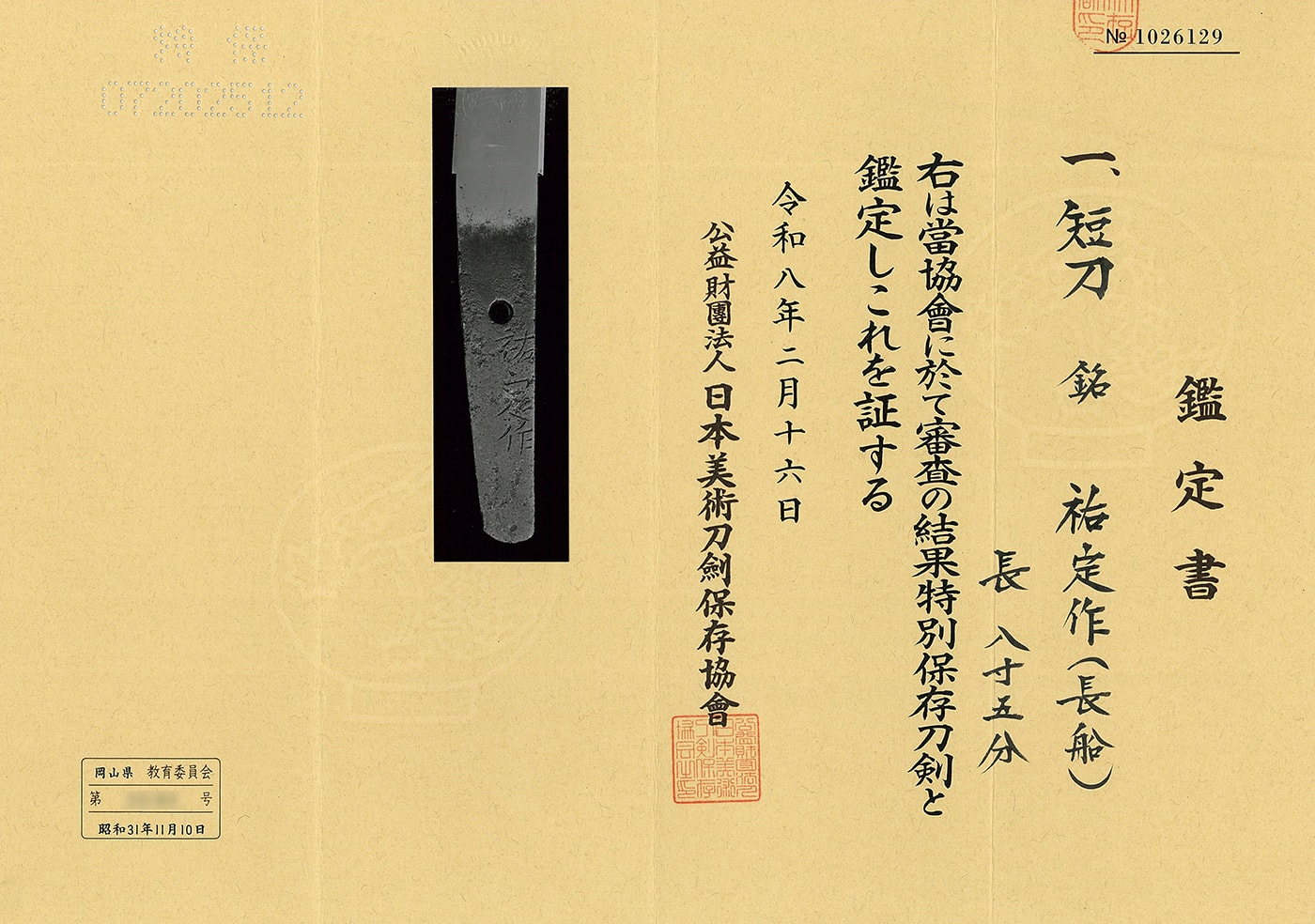
短刀 勝光(長船)
¥300,000
Tracked across 76 dealers worldwide · price history · sold archive
Specifications
19.3 cm
1.95 cm
About the school
Katsumitsu School勝光派
The Katsumitsu school (勝光) grew within the Osafune workshops of Bizen province during their late-Muromachi phase, the period that the trade calls Sue-Bizen, when the smiths of the village worked in a shared idiom and signed their blades with the day and month of their making. The name Katsumitsu was carried by more than a dozen smiths from the middle of the Muromachi period onward, and the published sources single out those who cut a personal title above the *mei*: Ukyo-no-suke Katsumitsu, the senior of the line, and his son Jirozaemon-no-jo Katsumitsu, both counted among the most skilled of the Sue-Bizen makers and ranked beside Yosozaemon-no-jo Sukesada and Gorozaemon-no-jo Kiyomitsu as representative smiths of the late Bizen tradition. The line is inseparable from the Munemitsu branch, for Sakyo-no-shin Munemitsu was Ukyo-no-suke's younger brother, and the two hands together produced the joint blades long prized under the name *Munekatsu gassaku*. The genealogy continues into Jirobei-no-jo Harumitsu, son of Jirozaemon-no-jo Katsumitsu, whose own dated work survives across the Eisho, Daiei and Kyoroku eras of the early sixteenth century. The collective hand of the school is built on the open-waisted, double-structured *gunome*, the *koshi-no-hiraita* and *fukushiki-gunome* line that is the diagnostic late-Bizen signature, set over a well-packed *ko-itame* carrying *ji-nie* and fine *chikei*, in places a little standing or flowing. On the older and finer pieces a *midare-utsuri* rises over this steel, while on the latest blades the classical reflection has largely gone, the *jigane* itself looking powerful where the *ji-nie* lies fine as dust. The work is *nioi*-prevailing with *ko-nie*, *ashi* and *yo* entering richly, the *nioiguchi* clear and tightening, with small *tobiyaki* interspersed; the *boshi* answers the *hamon*, running *midare-komi* to a *ko-maru* or a pointed tendency with a turnback, and across both faces lie the devotional carvings of Sue-Bizen, a *kurikara*, *bonji* with *suken*, and shrine names such as Hachiman Daibosatsu and Amaterasu Kotaijin, which the sources are careful to ascribe to collaborating *horimonoshi* rather than to the smiths' own hands. Within this shared *Bizen-den* idiom the masters diverge by degree. The Katsumitsu hands mix *choji* into the *gunome* most freely, the published record placing the conspicuous *choji* first in Katsumitsu and next in Munemitsu, for a more flamboyant effect than the plainer compound *gunome* general to the group; Munemitsu, by contrast, holds an established reputation as a superior maker of *suguha*, working a bright, smaller-scaled straight temper over an archaic-flavoured steel with standing *utsuri*. Harumitsu carries a quieter, more legible version of the same opened *gunome*, occasionally reaching back toward the older Oei-Bizen manner. To *kantei* a Katsumitsu blade is to weigh the high-grade *chumon-uchi* of the named masters against the bulk output of the Sukesada-era forges. The signed and dated pieces of the senior hands, with their bright *choji*-mixed *gunome*, their command of a clear *suguha*, and their fine devotional *horimono*, mark the upper edge of late-Bizen workmanship; Fujishiro grades both Katsumitsu hands Jo-jo saku and Harumitsu at the Jo-saku level. The school's signed and dated work survives in fair number, and its standing rests on documented joint blades and special-order commissions: the joint *naginata-zukuri* with Yosozaemon-no-jo Sukesada, dated Eisho 18 and incised Hagun-no-ken and Sanshin-soku-ittai, commissioned by Ukita Yoshie and treasured as an heirloom of the Sendai Date family; the *Munekatsu* katana and wakizashi, several forged on campaign at Kojima in Bitchu and valued for the light they throw on the smiths' movements; and the joint Katsumitsu-Harumitsu tanto and katana, prized as documentary material for the late Osafune genealogy. The patrimony runs through the Imperial collection, where blades signed Bishu Osafune Katsumitsu are kept as Gyobutsu, through the joint katana inscribed Ichigo-ikkoshi held at Nogi Shrine, and through the old daimyo houses, each grounded in its own provenance. A signed Jirozaemon-no-jo or Ukyo-no-suke Katsumitsu, a dated Munemitsu, or a stout Harumitsu *naginata* comes to market only from time to time, and a dated, devotionally carved example, the kind on which one smith once wrote that nothing could surpass it, is a rewarding thing for a collector of late Bizen to encounter.

![日本刀 刀剣販売 サムライ商会[samurai shokai]](/_next/image?url=https%3A%2F%2Fitbhfhyptogxcjbjfzwx.supabase.co%2Fstorage%2Fv1%2Fobject%2Fpublic%2Flisting-images%2Fsamurai-shokai%2FL277449%2F00.jpg&w=2560&q=90)