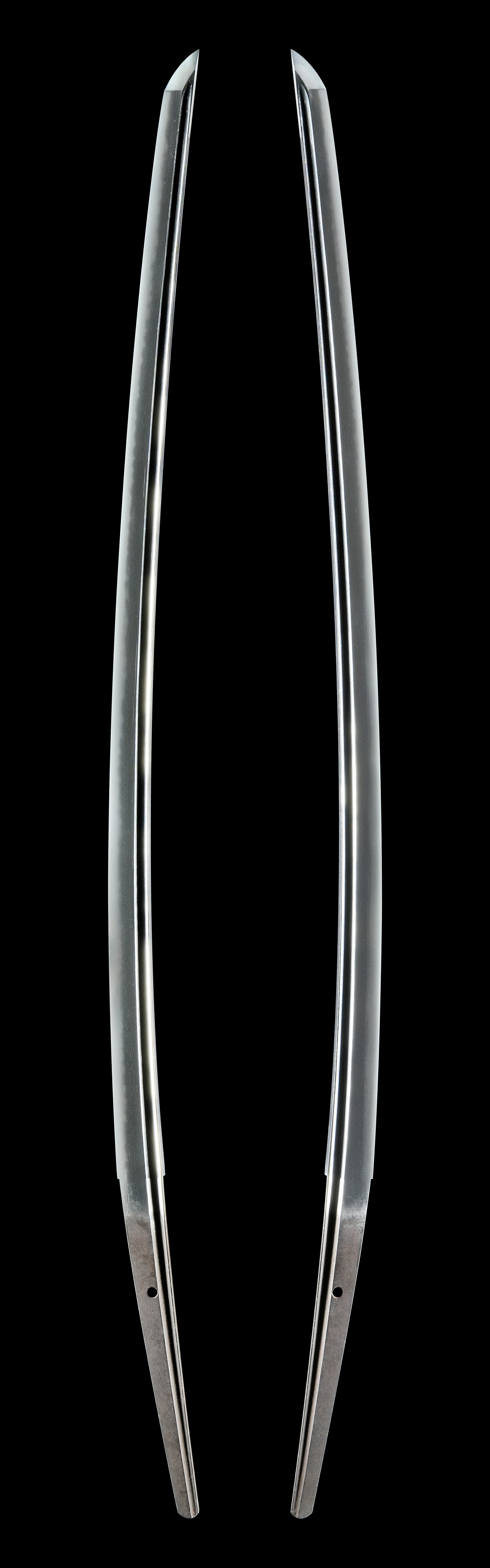
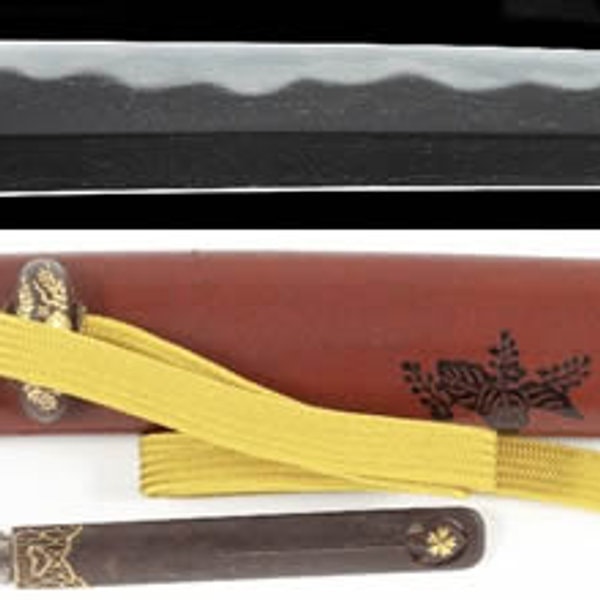
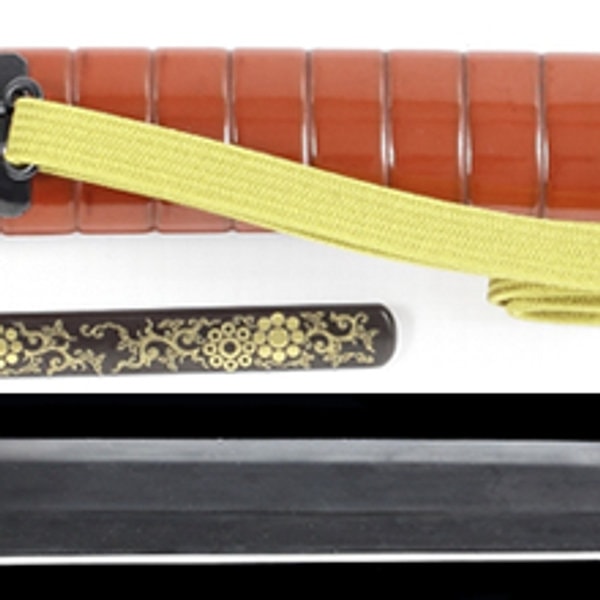
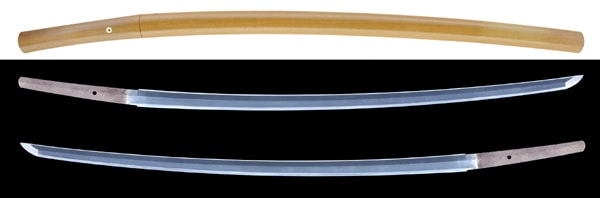
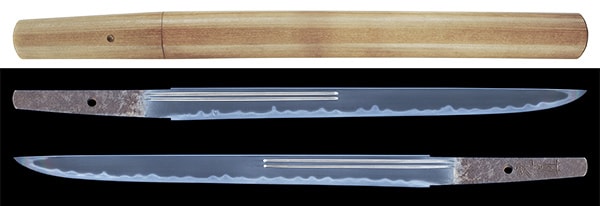
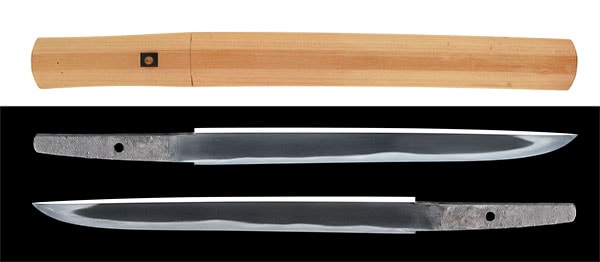
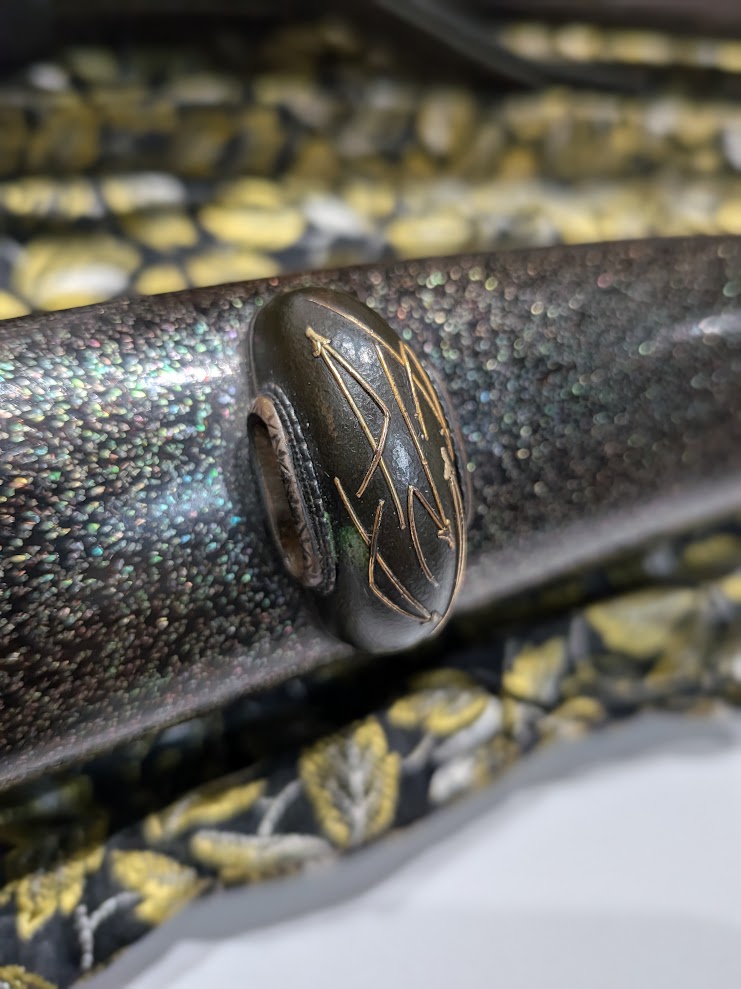
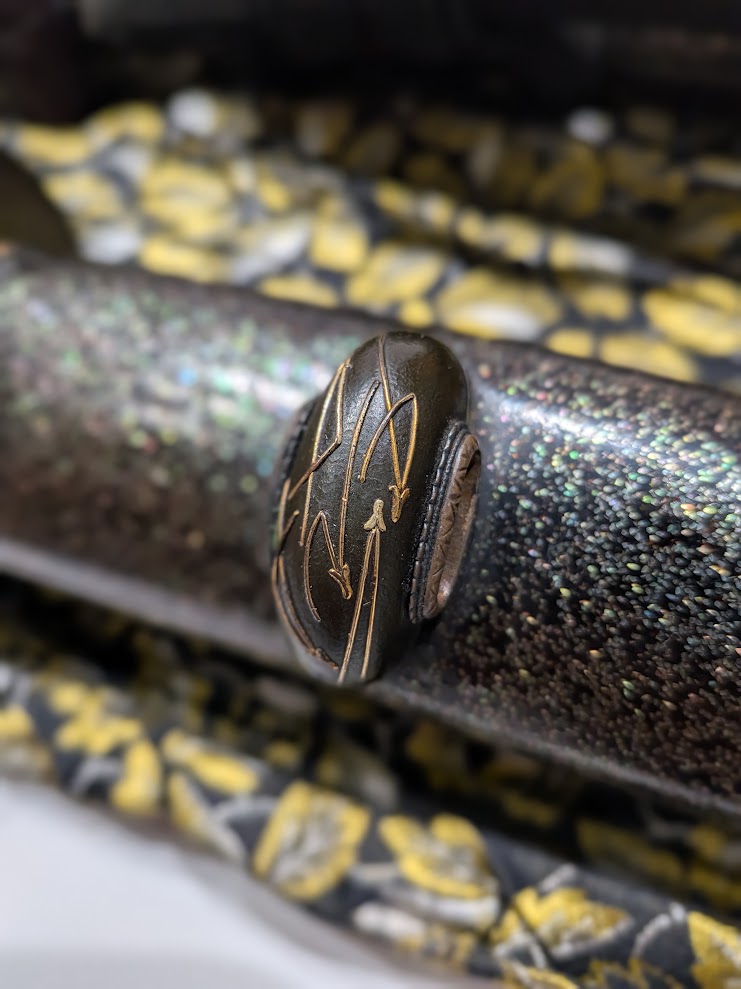
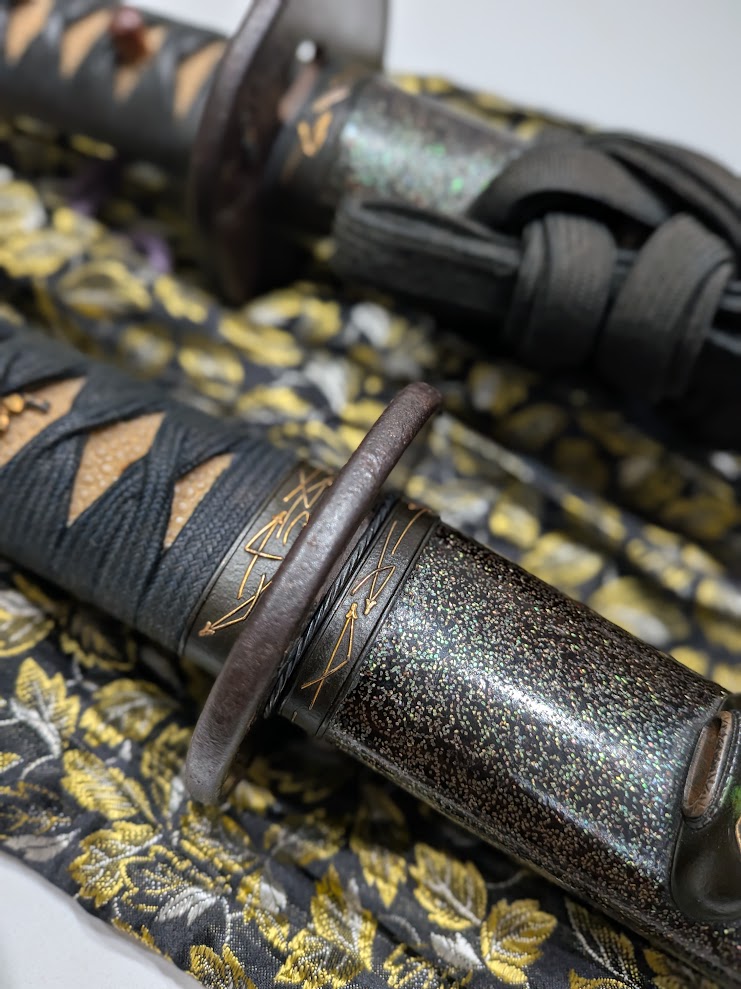
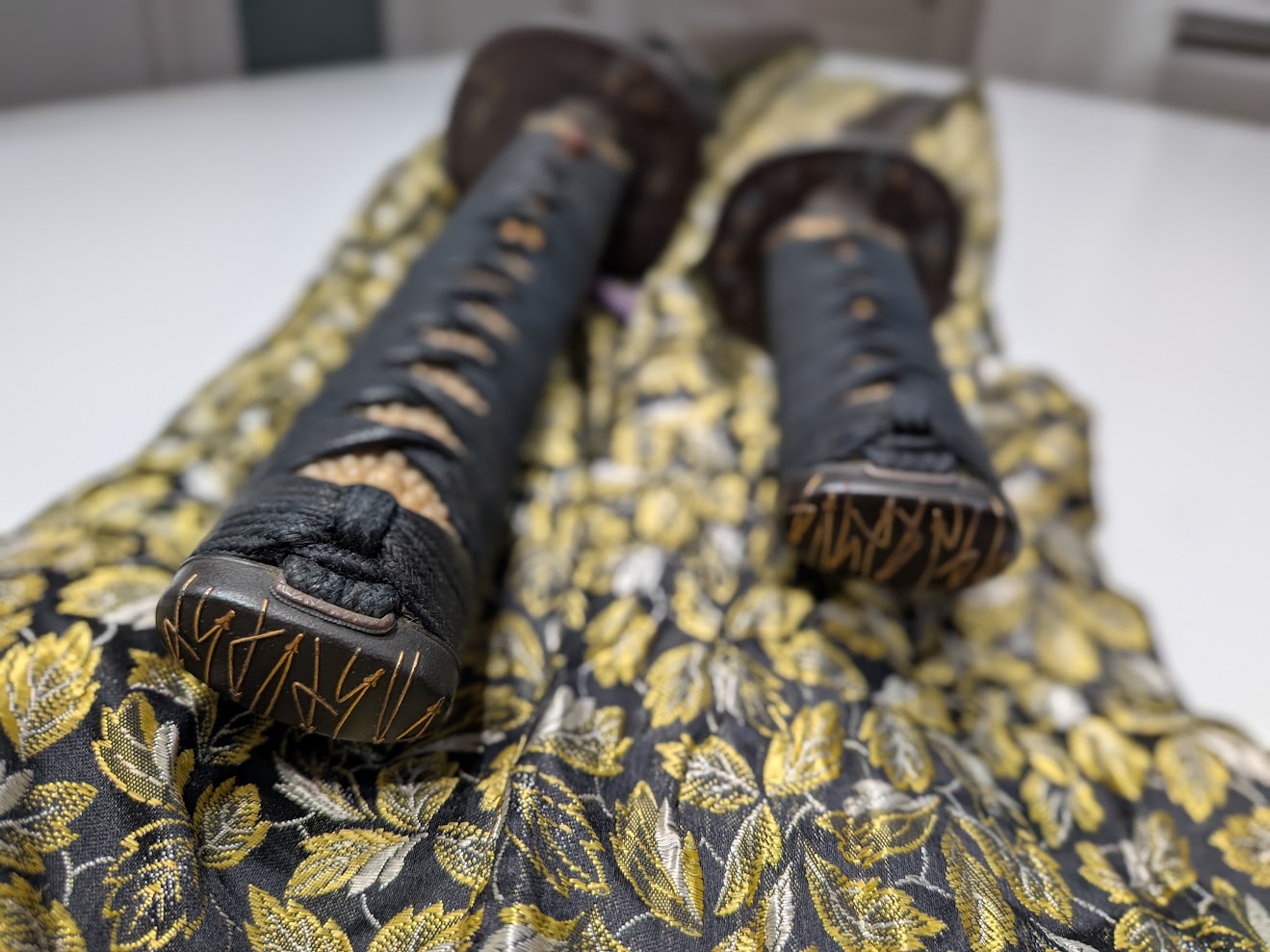
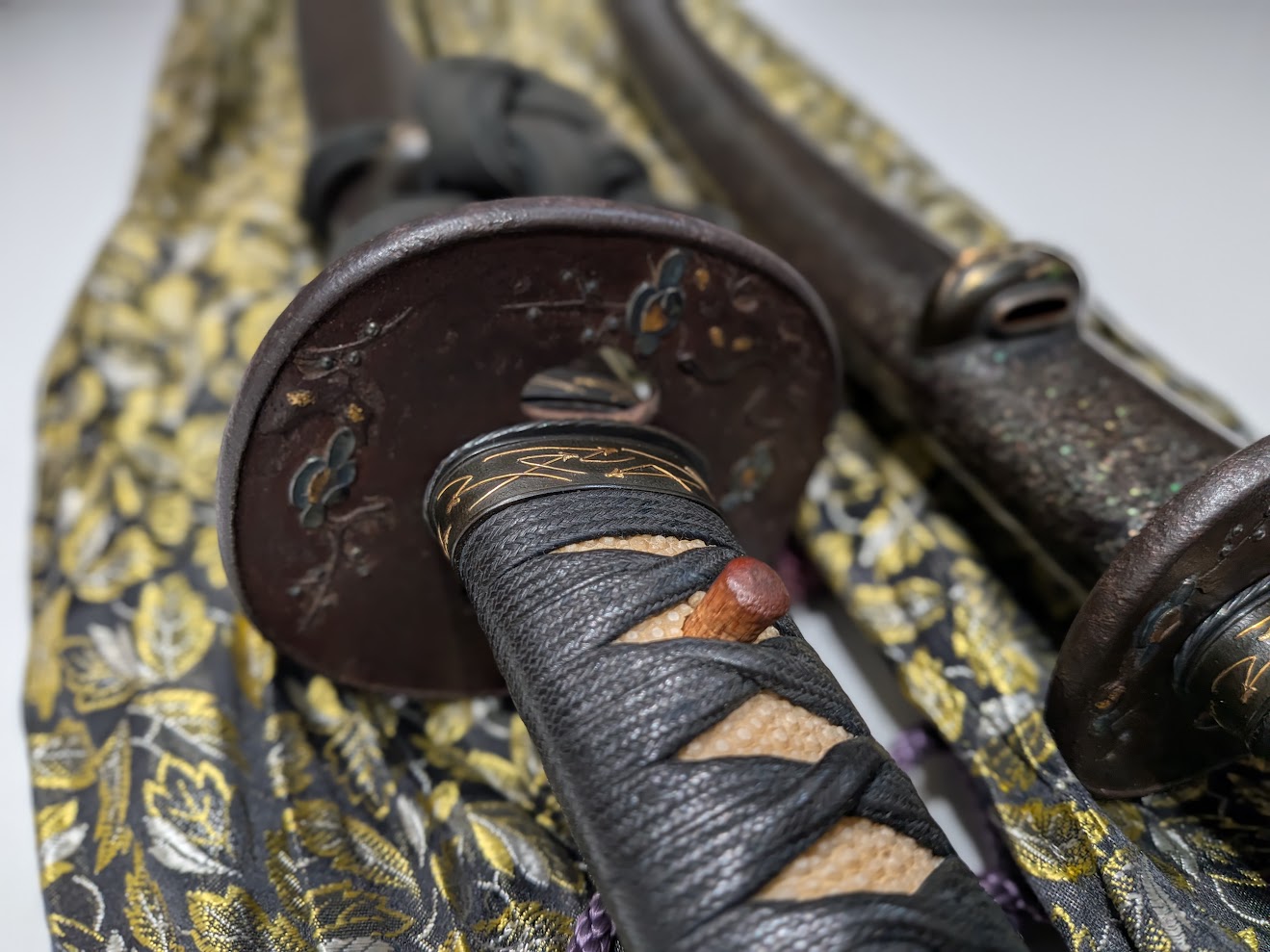
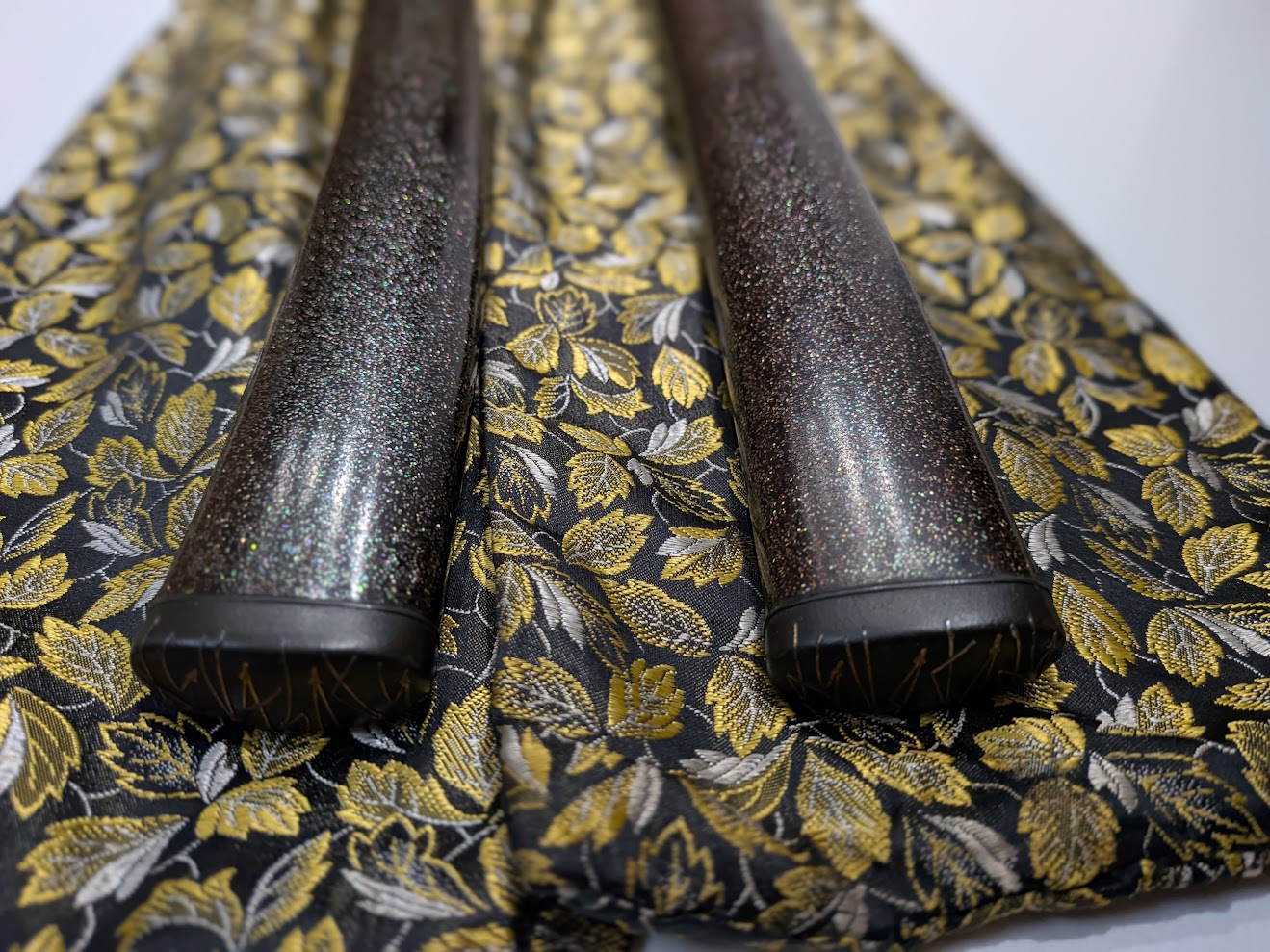
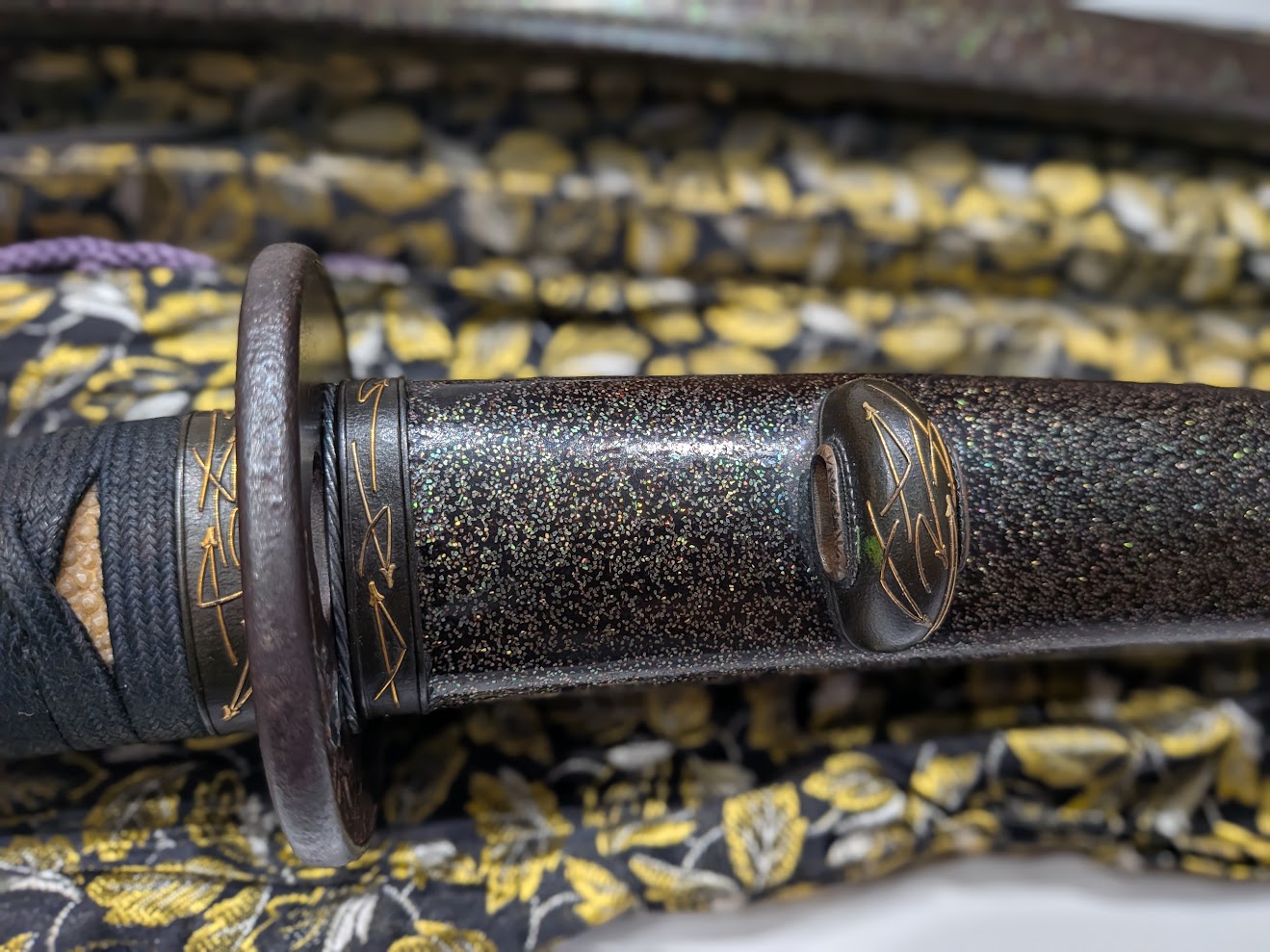
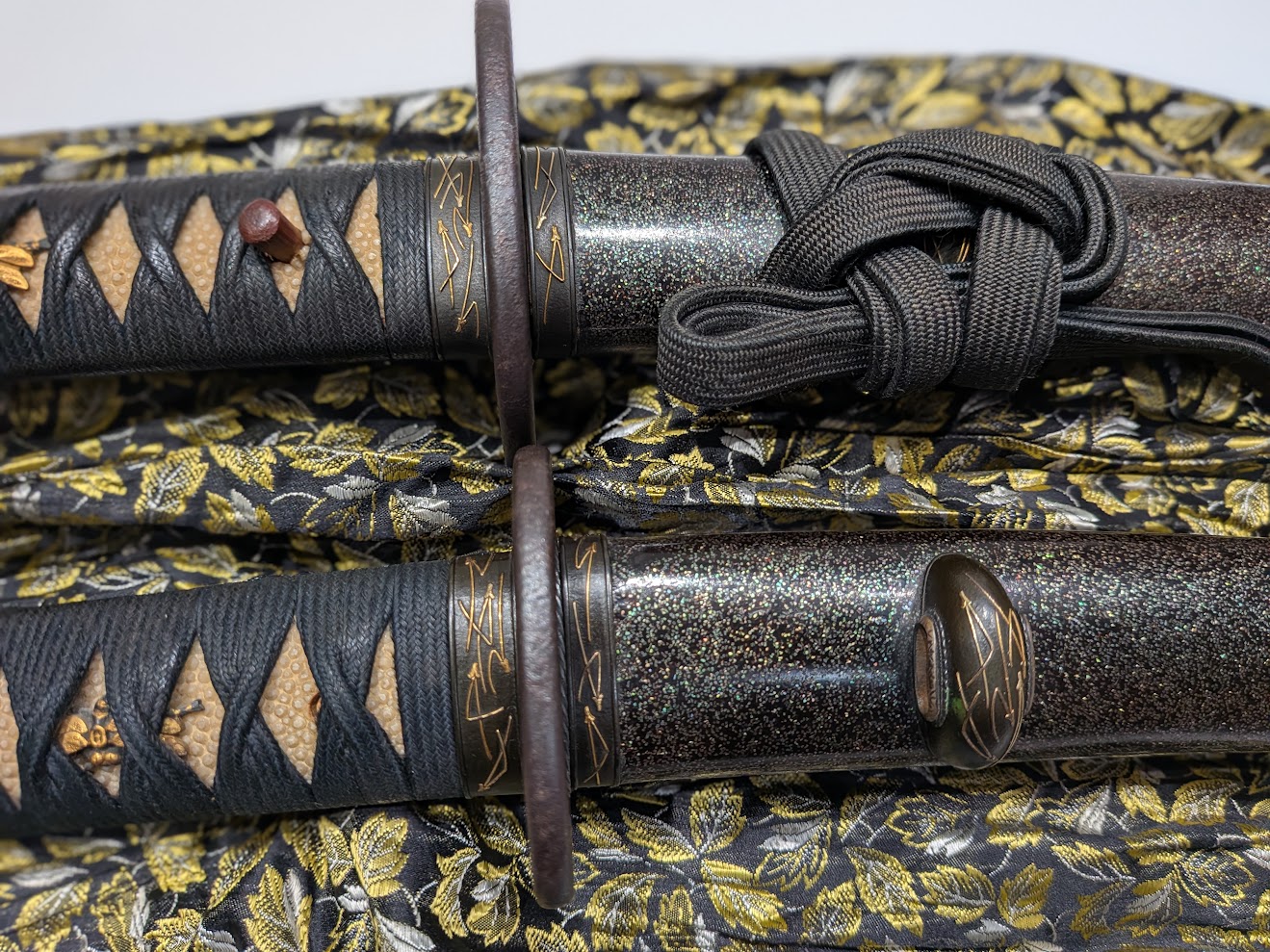
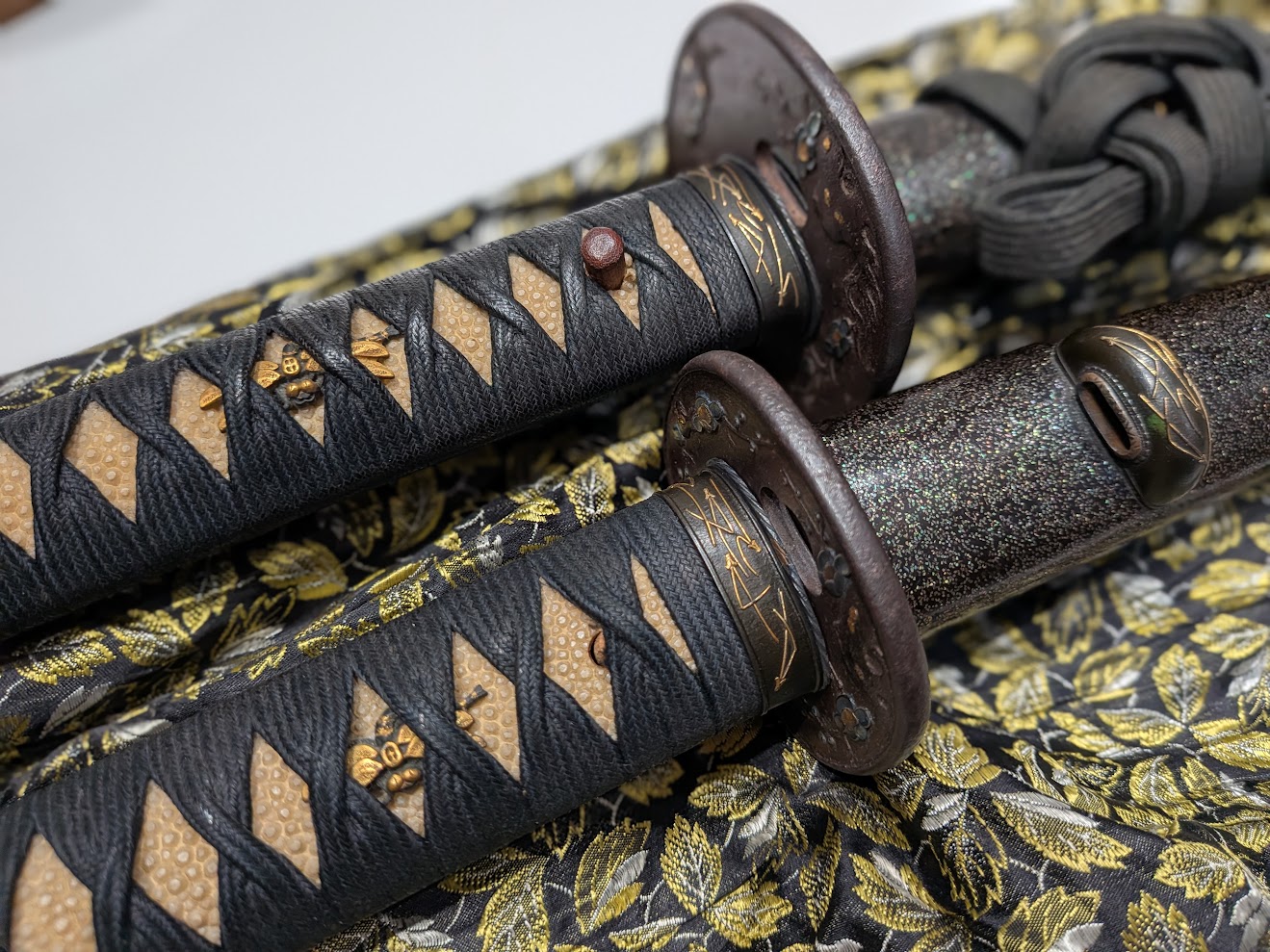
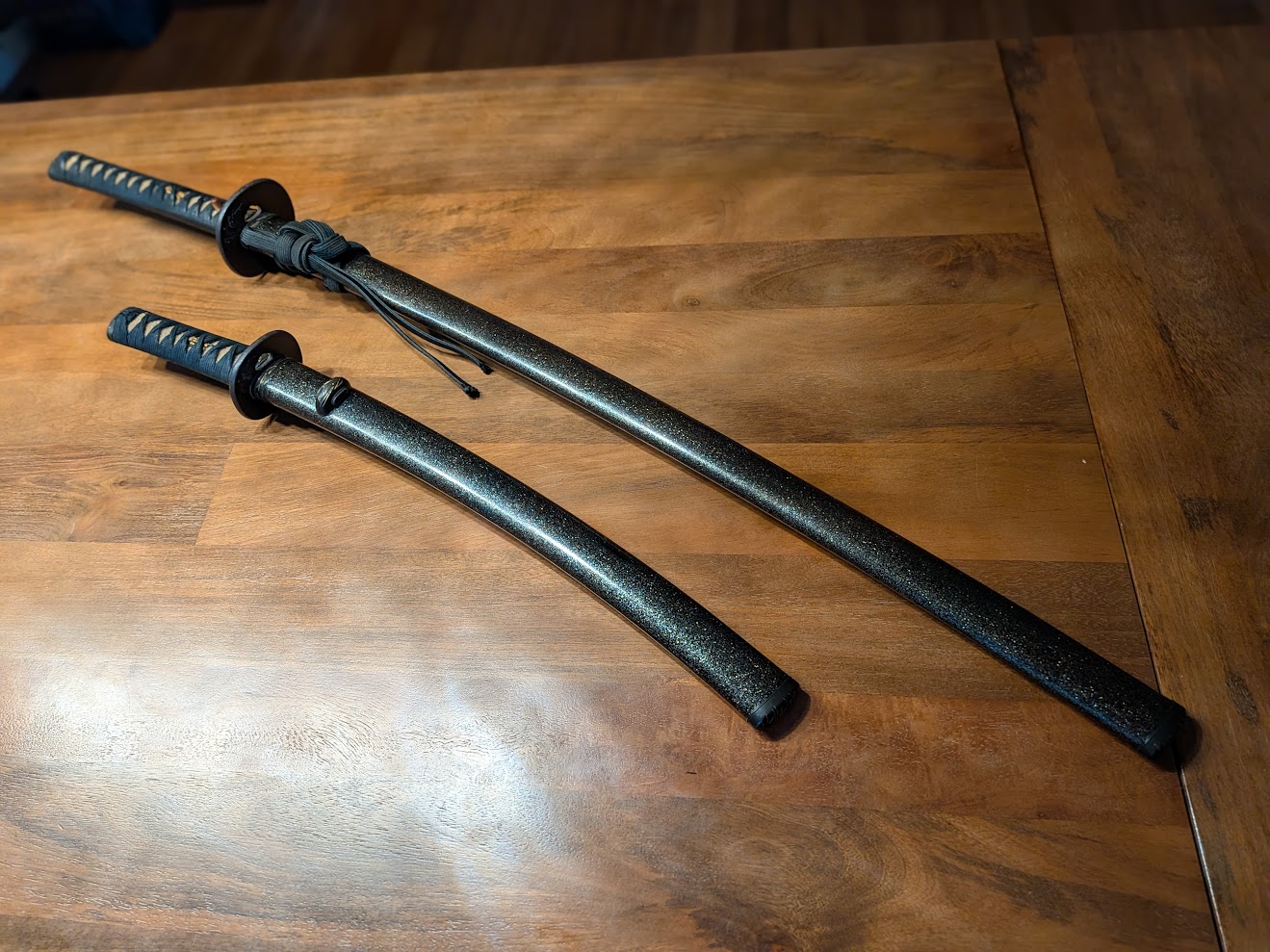
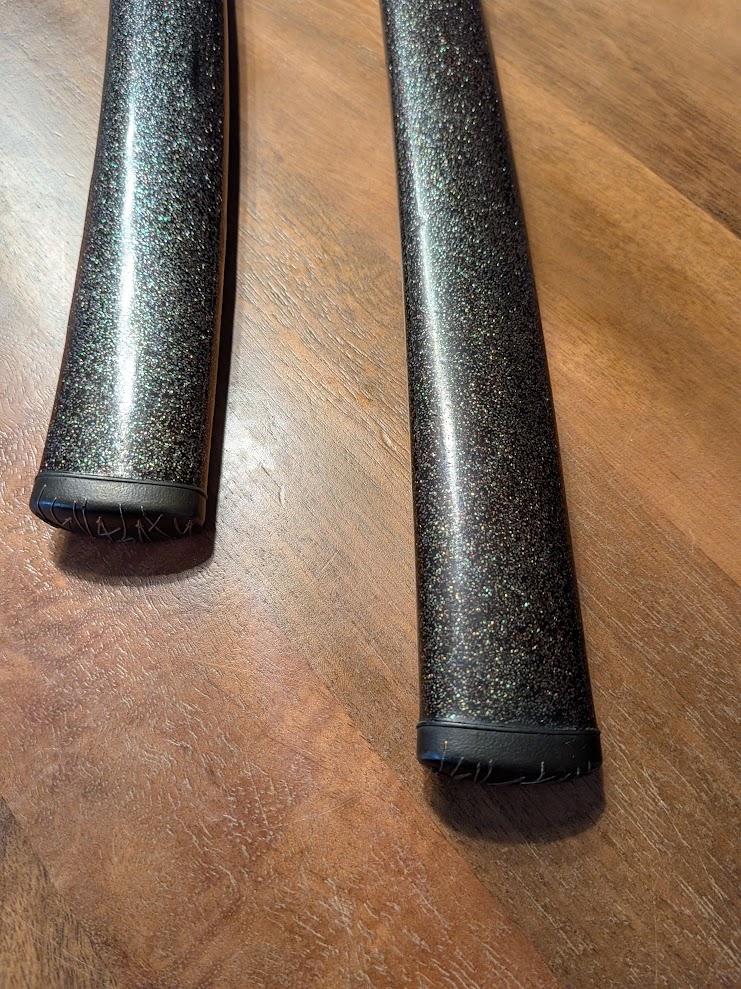
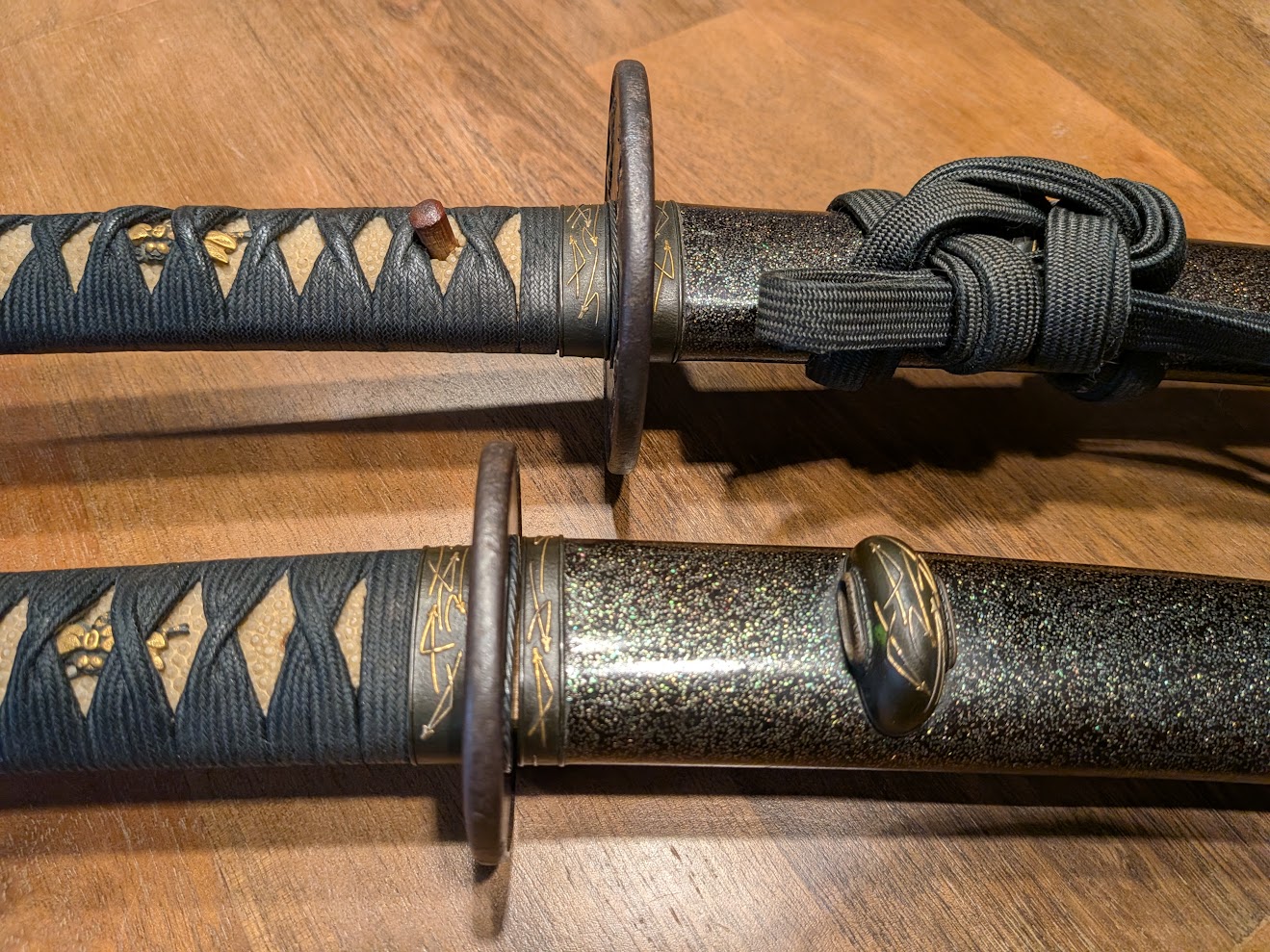
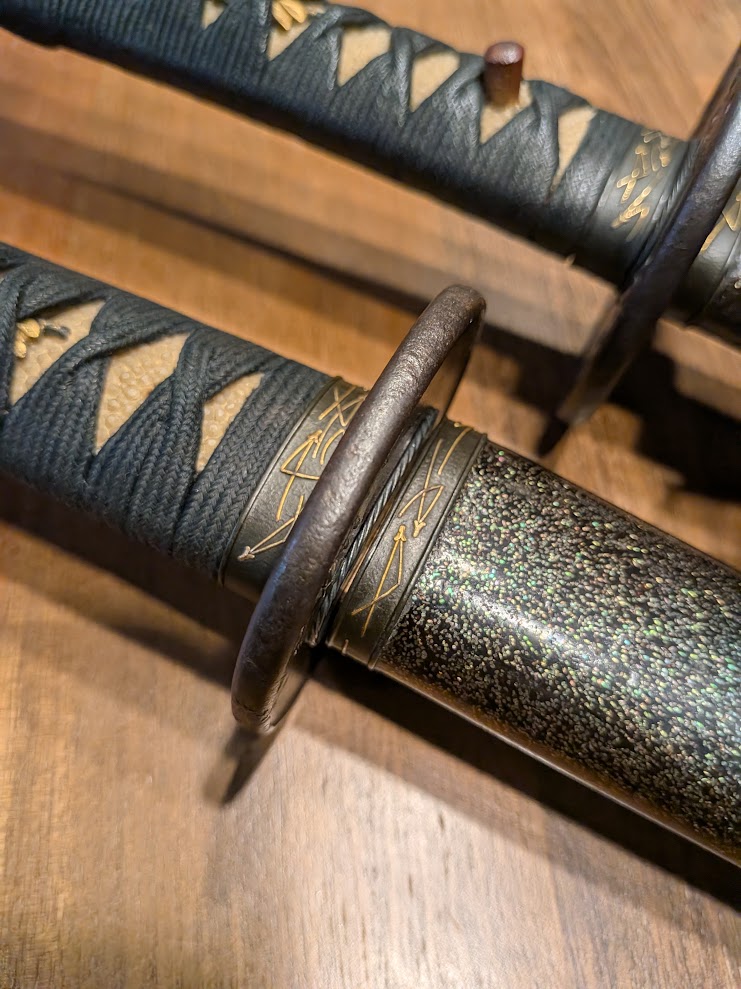
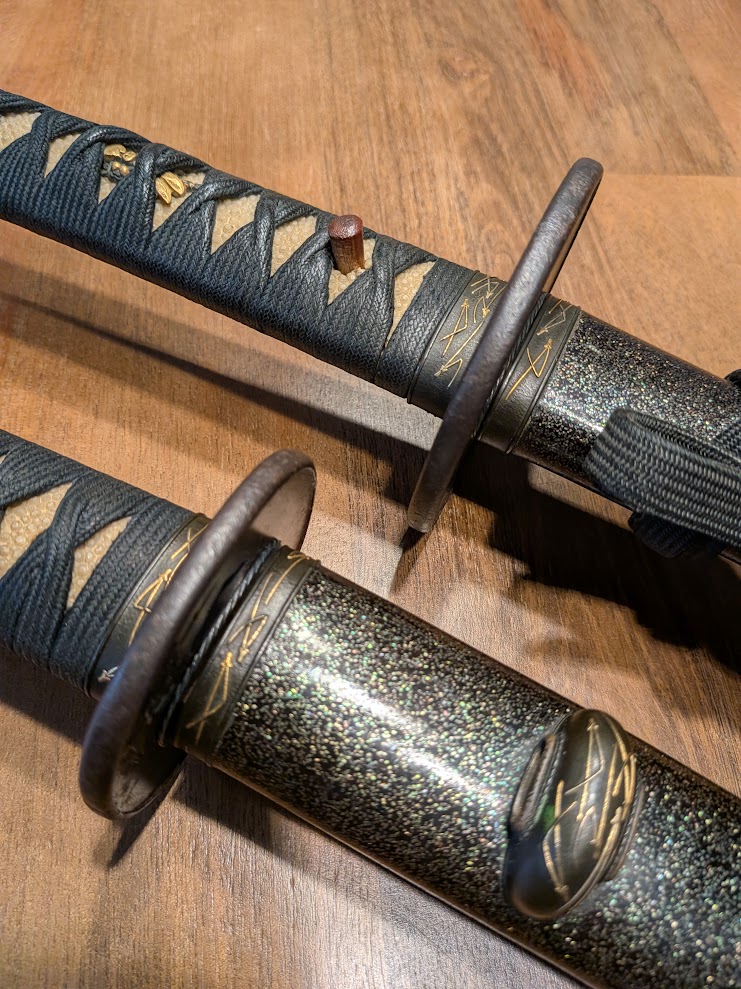
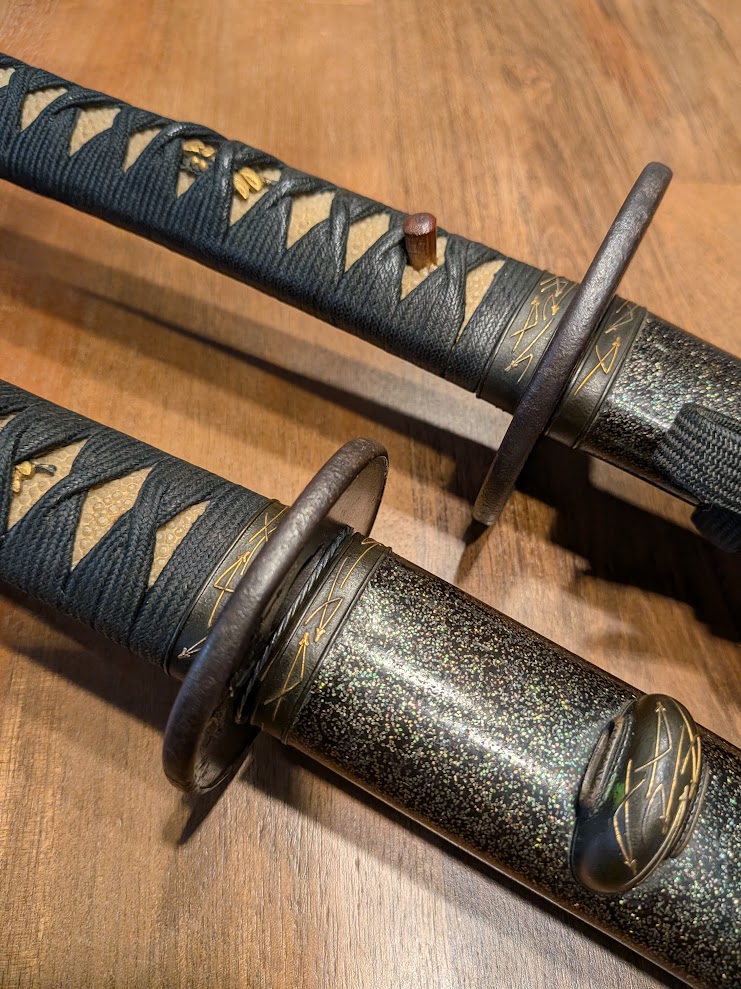
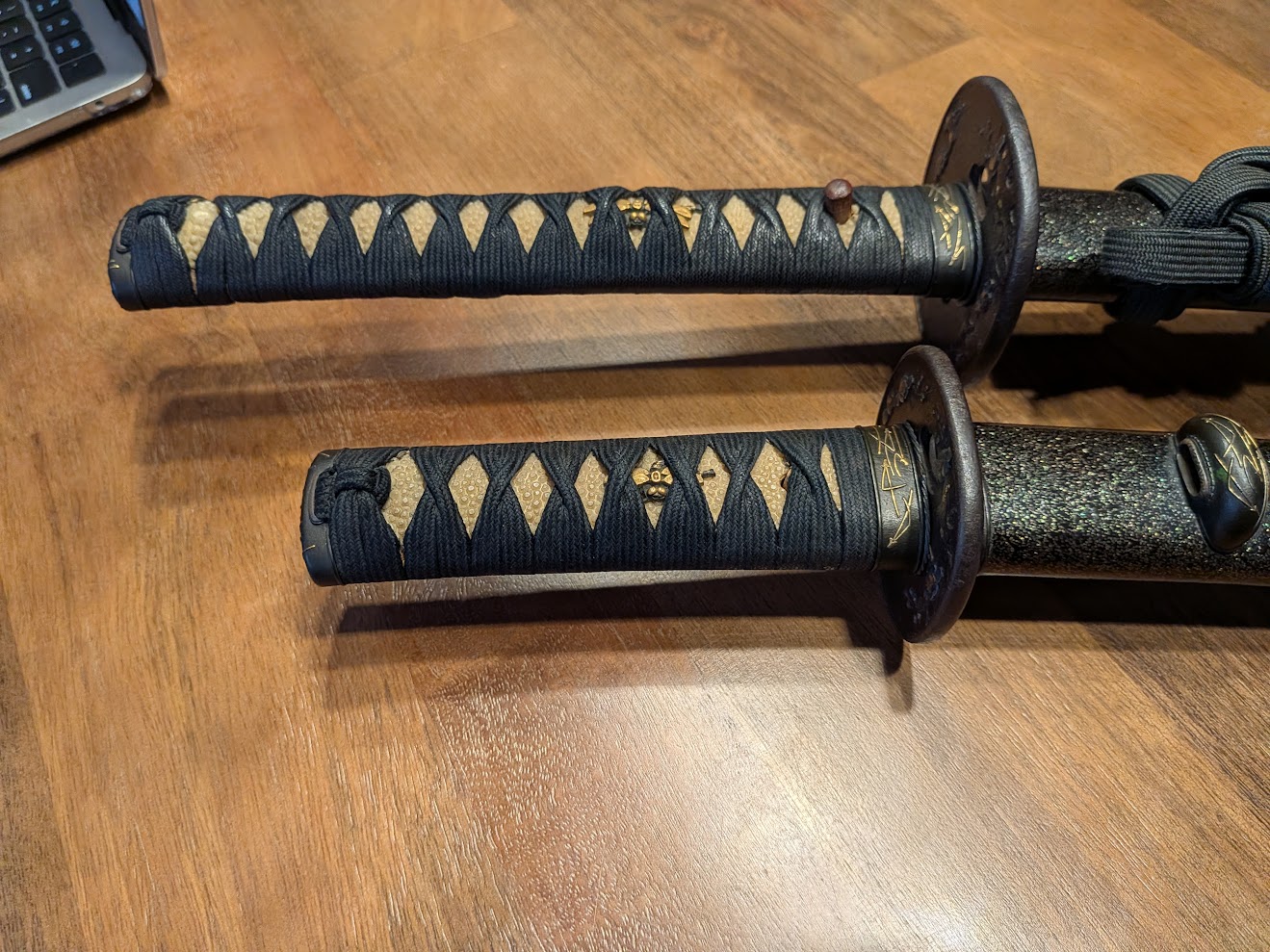
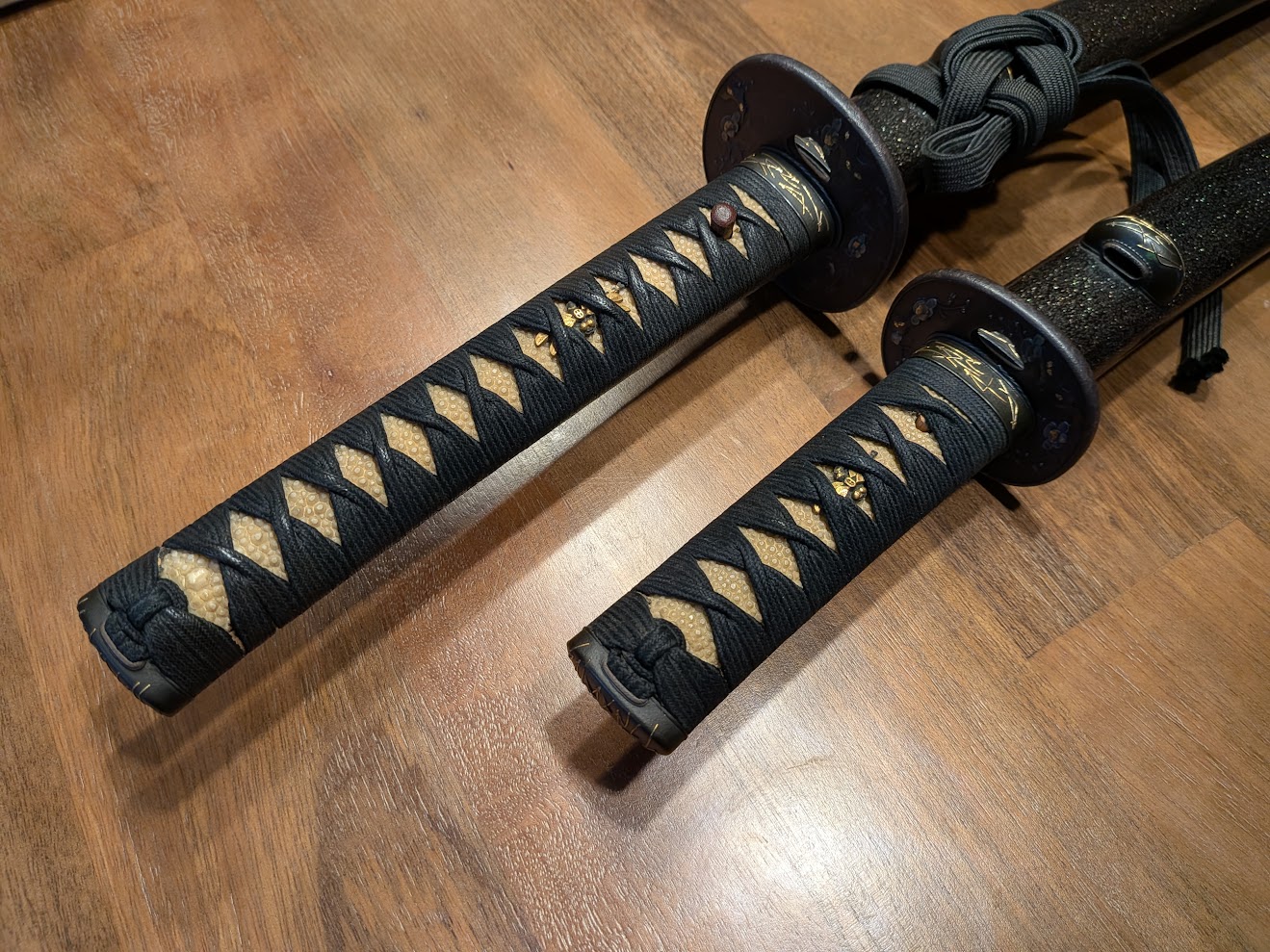
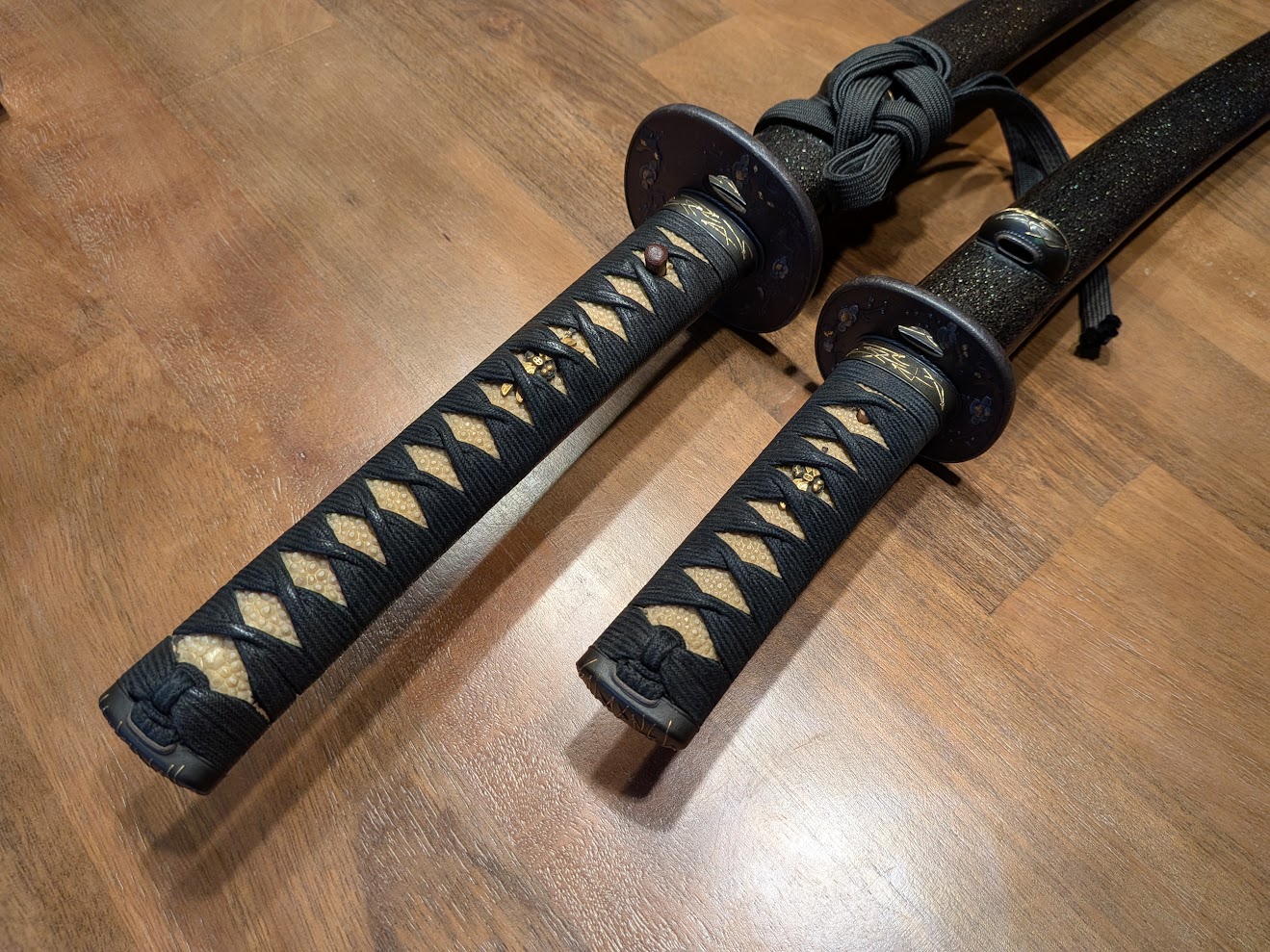
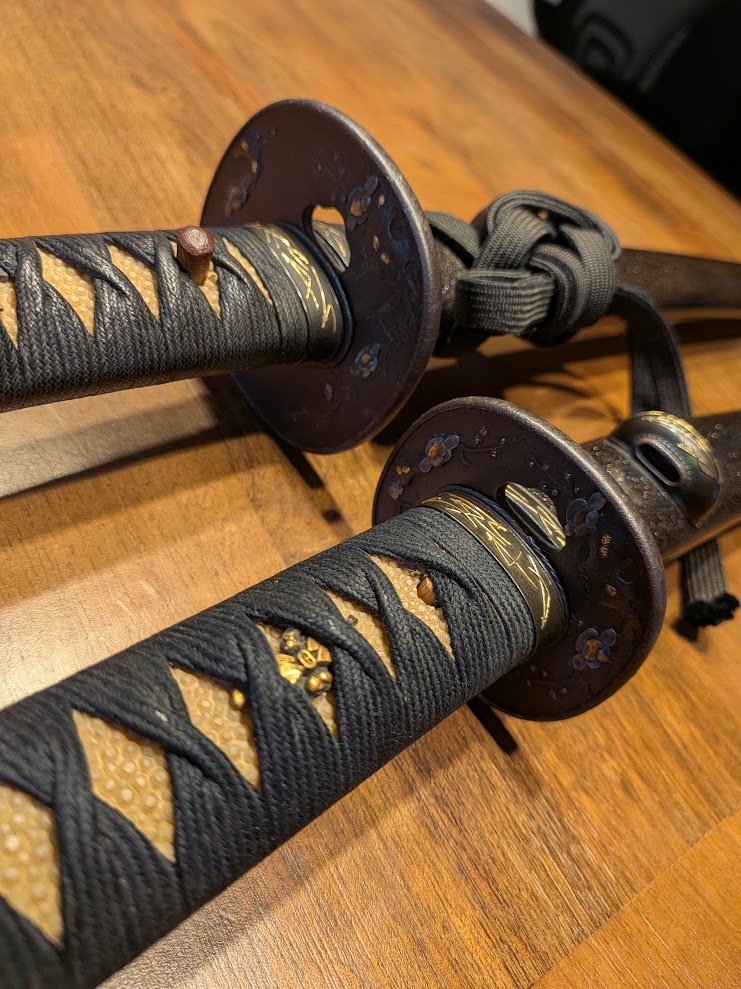
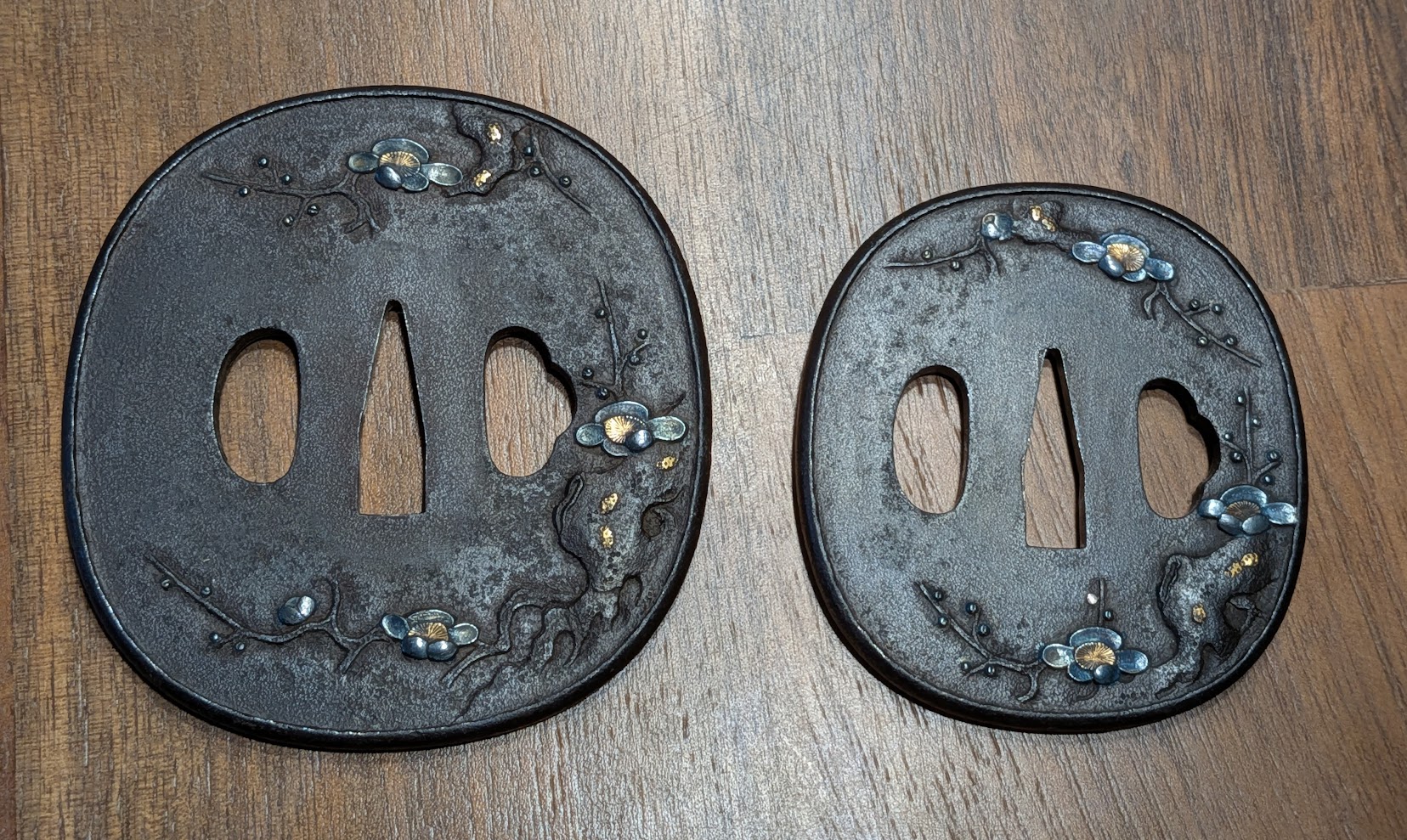
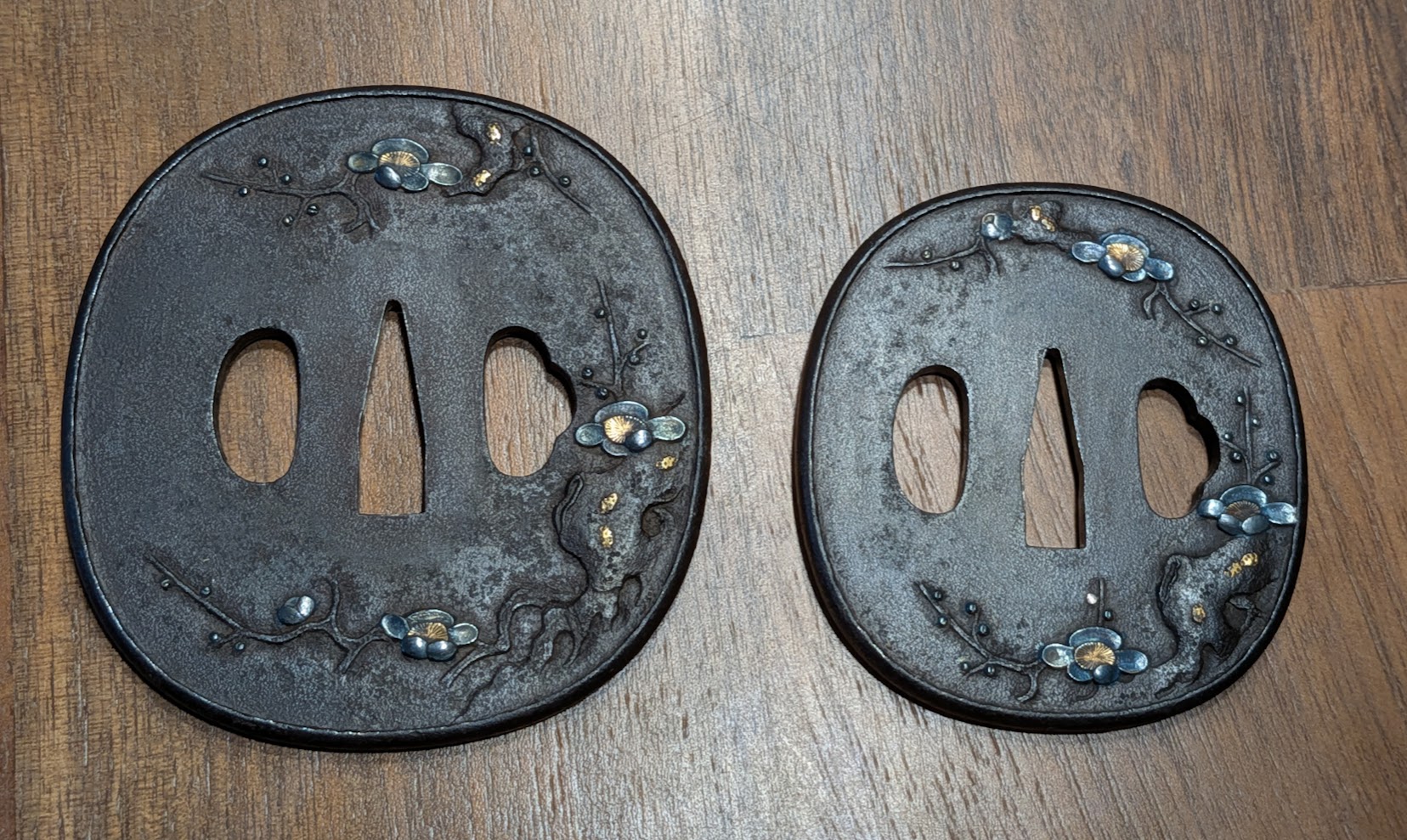
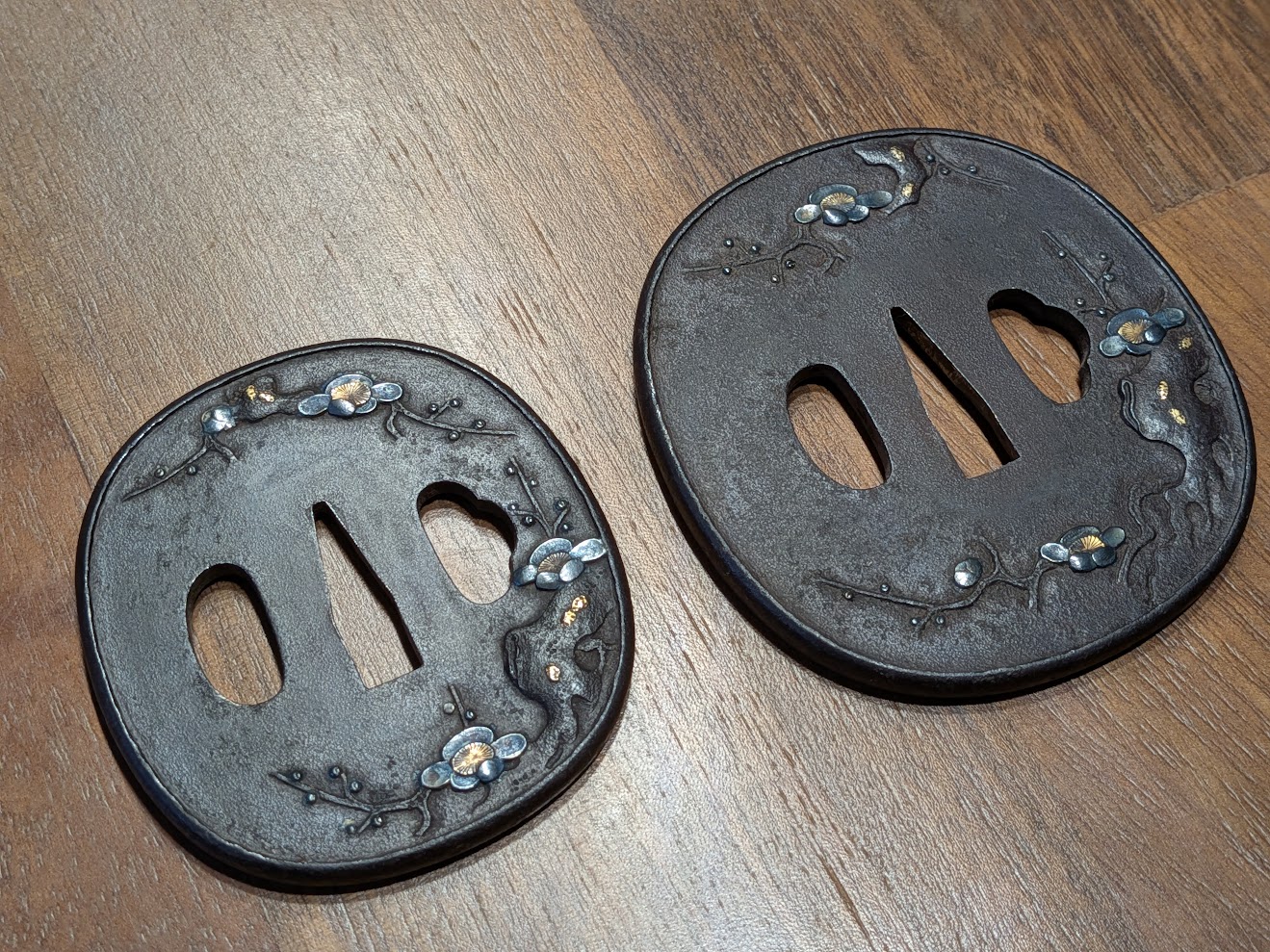
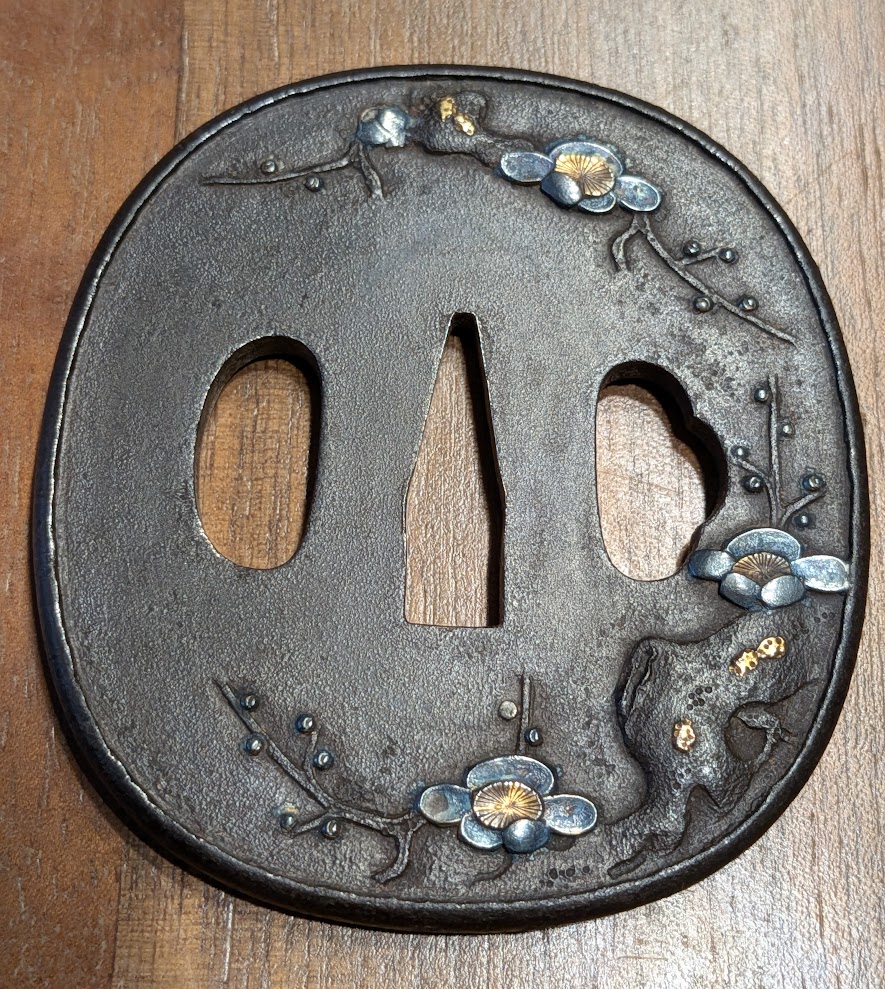
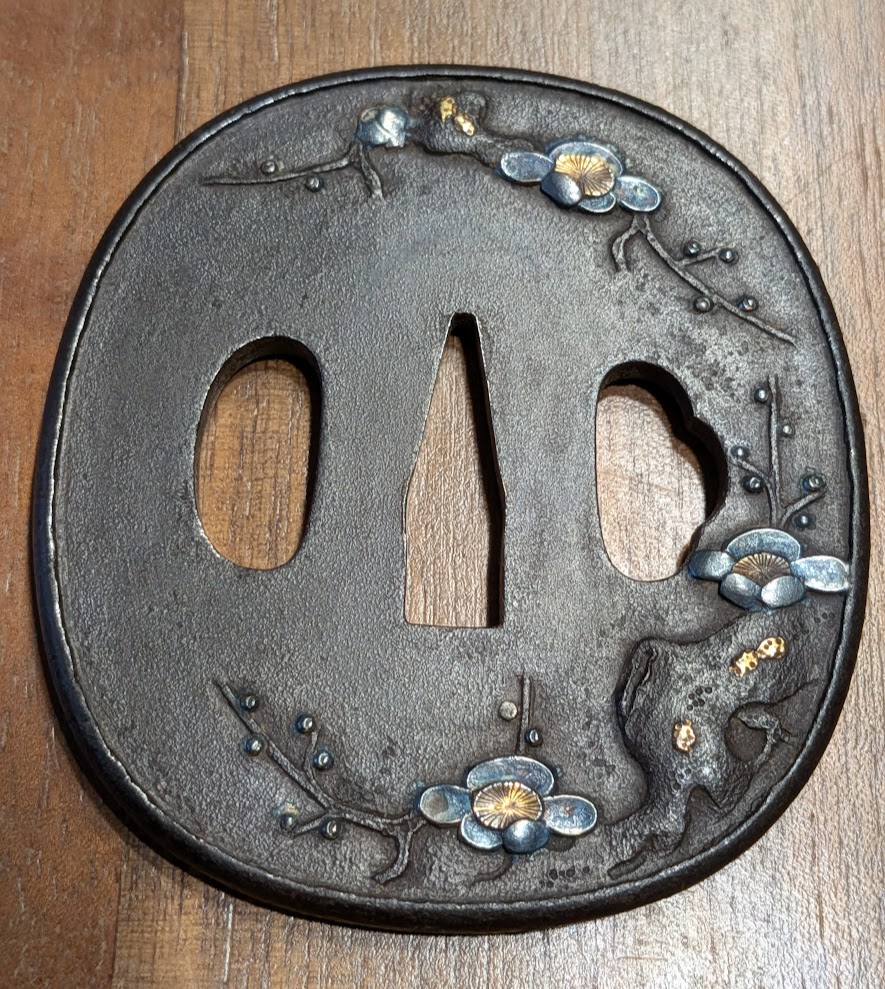
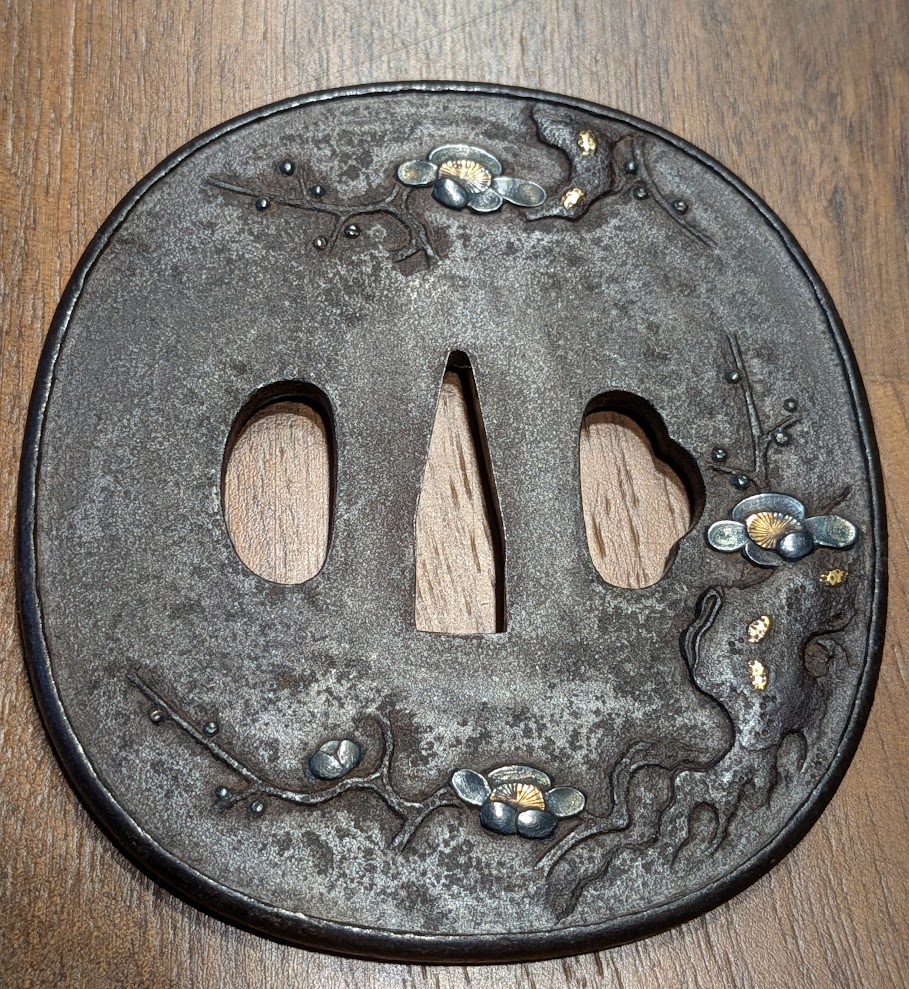
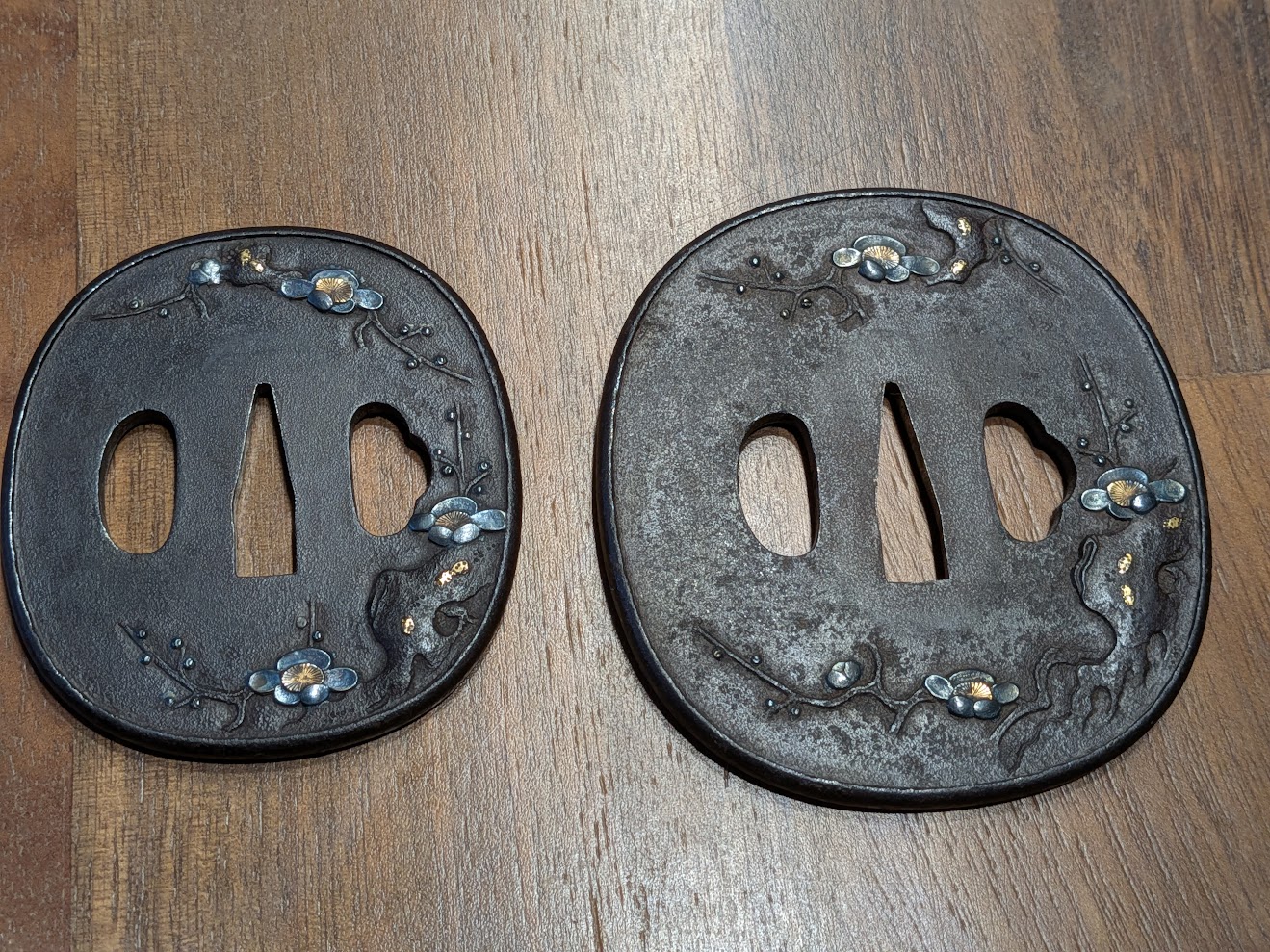
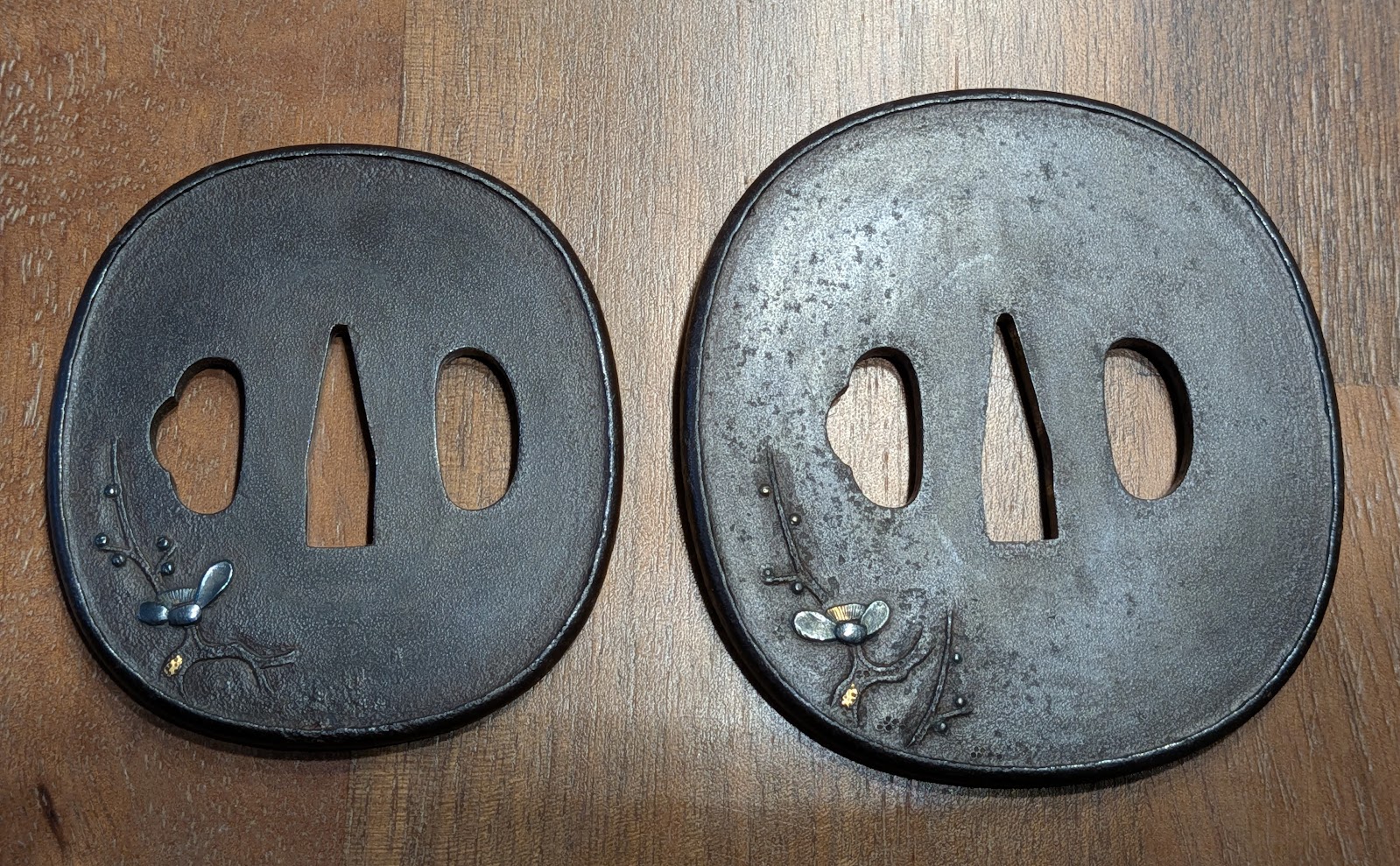
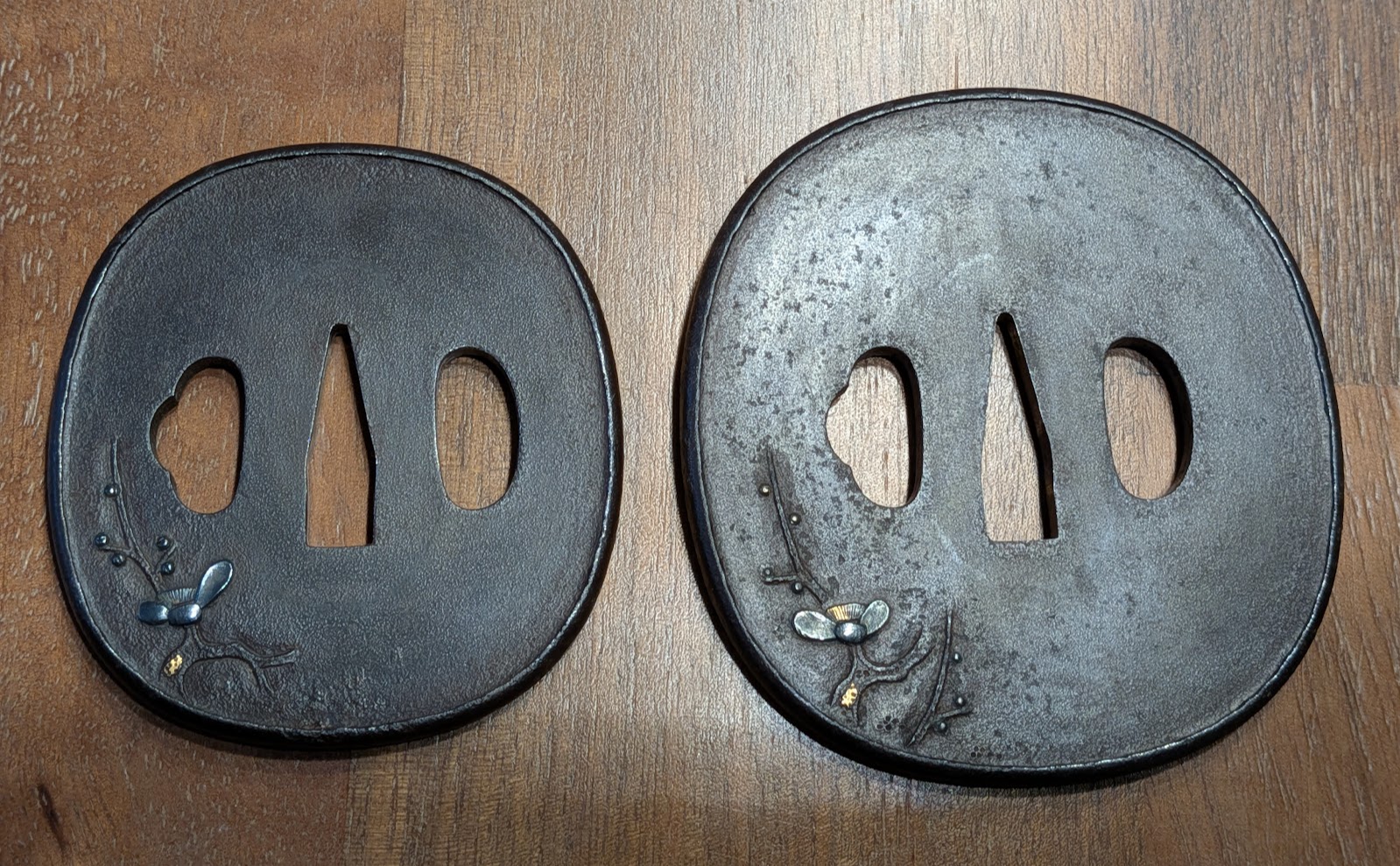
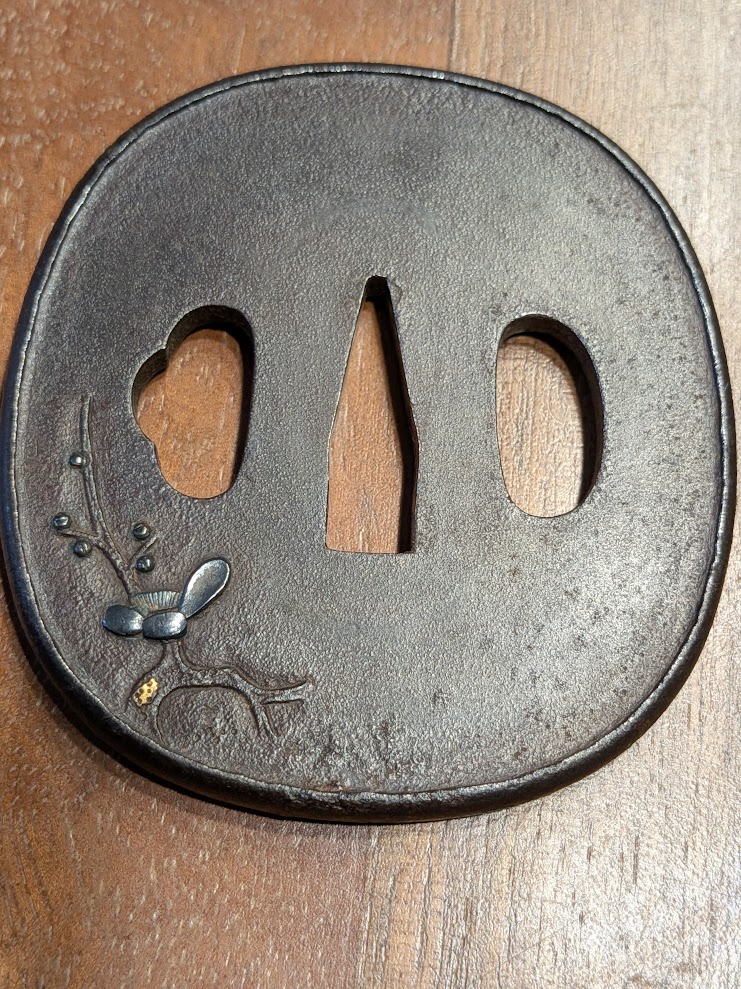
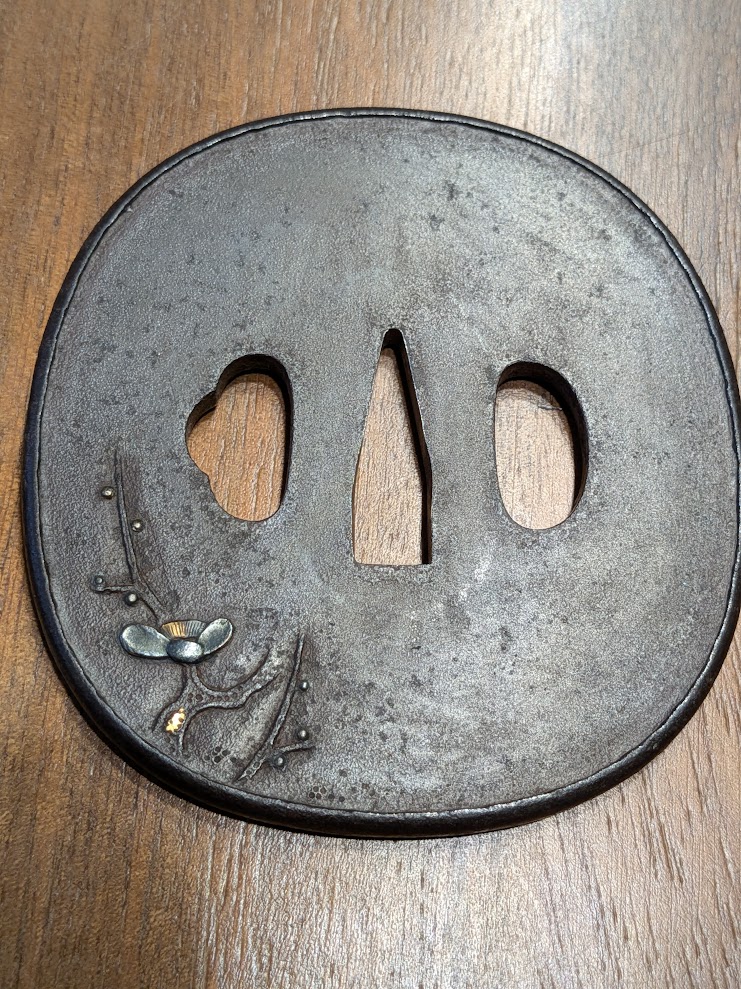
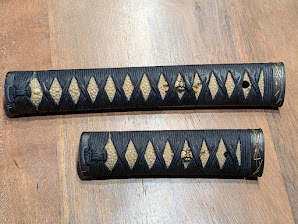
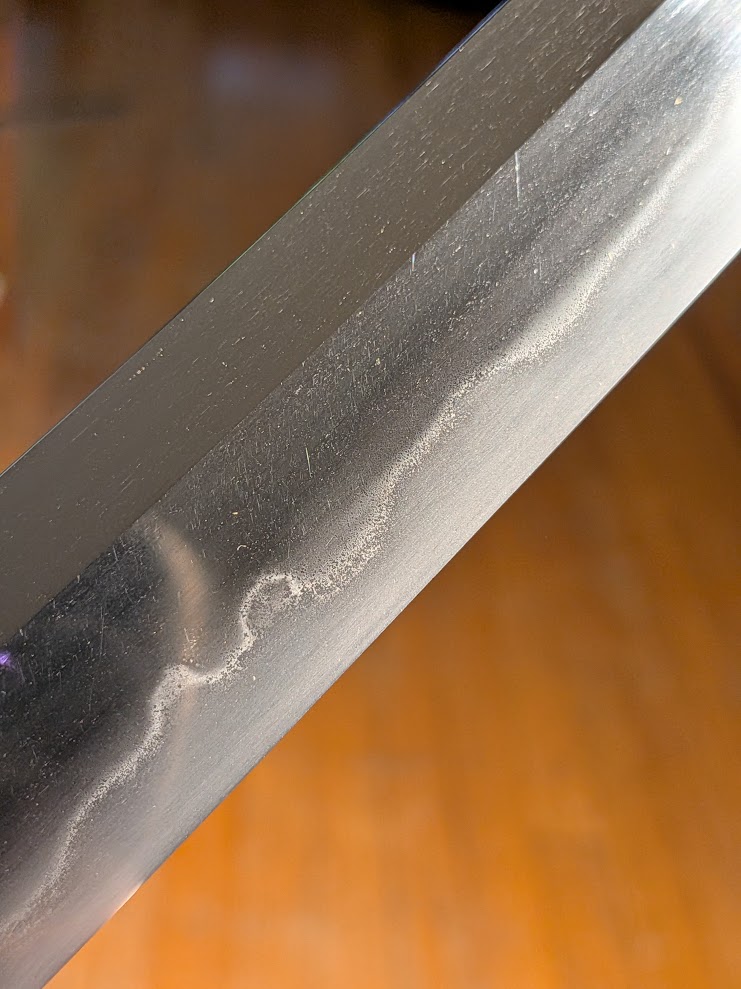
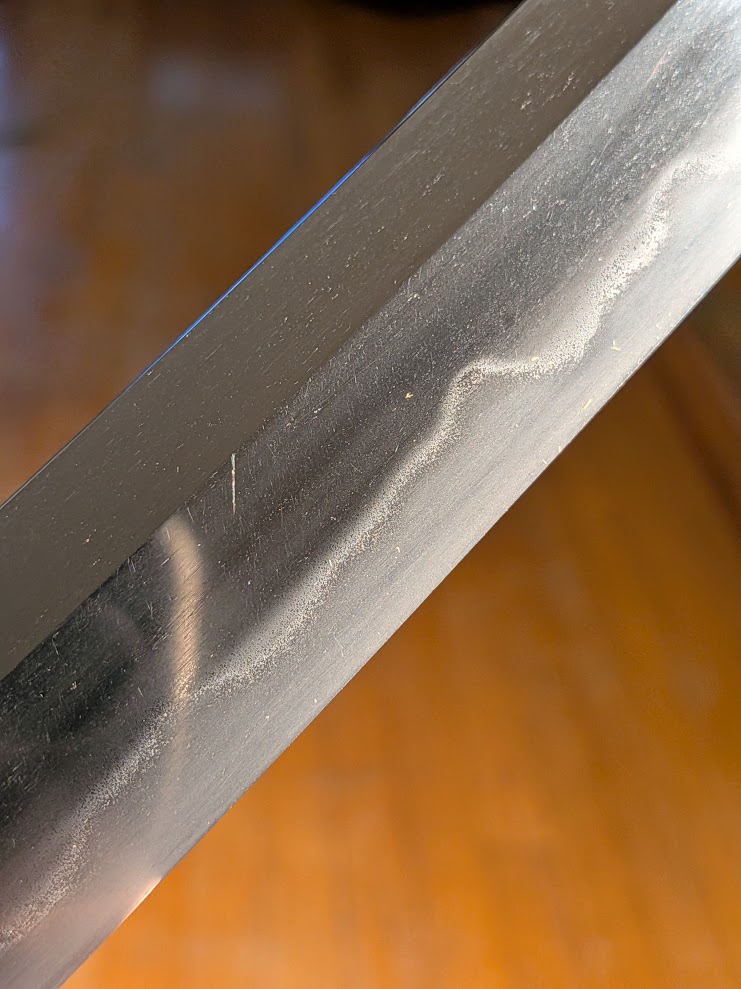
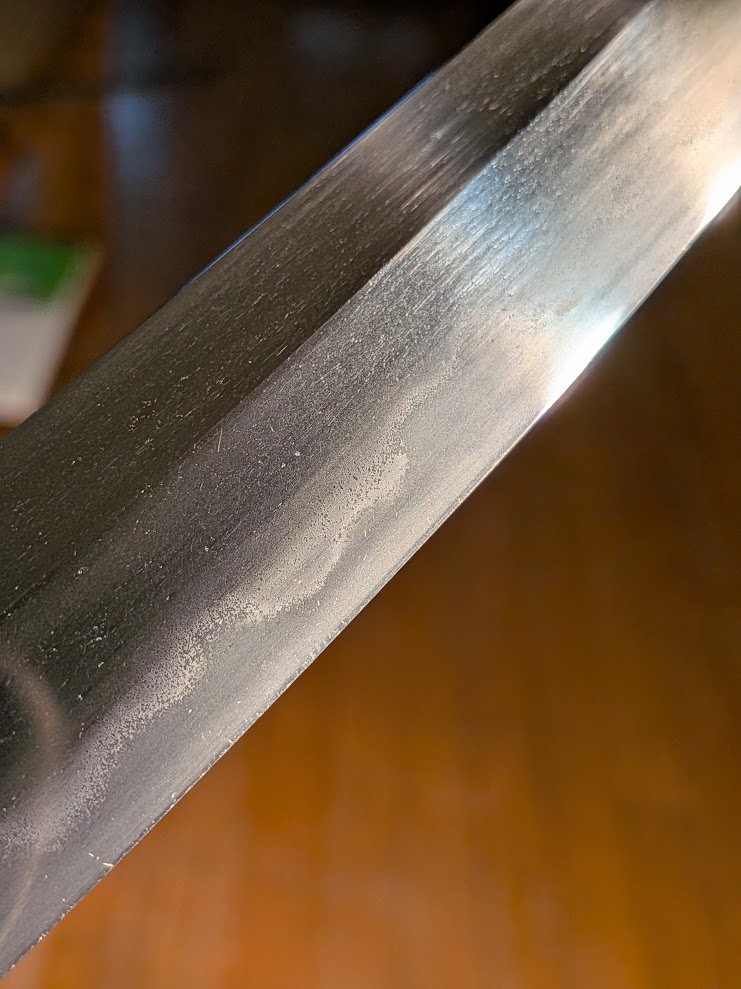
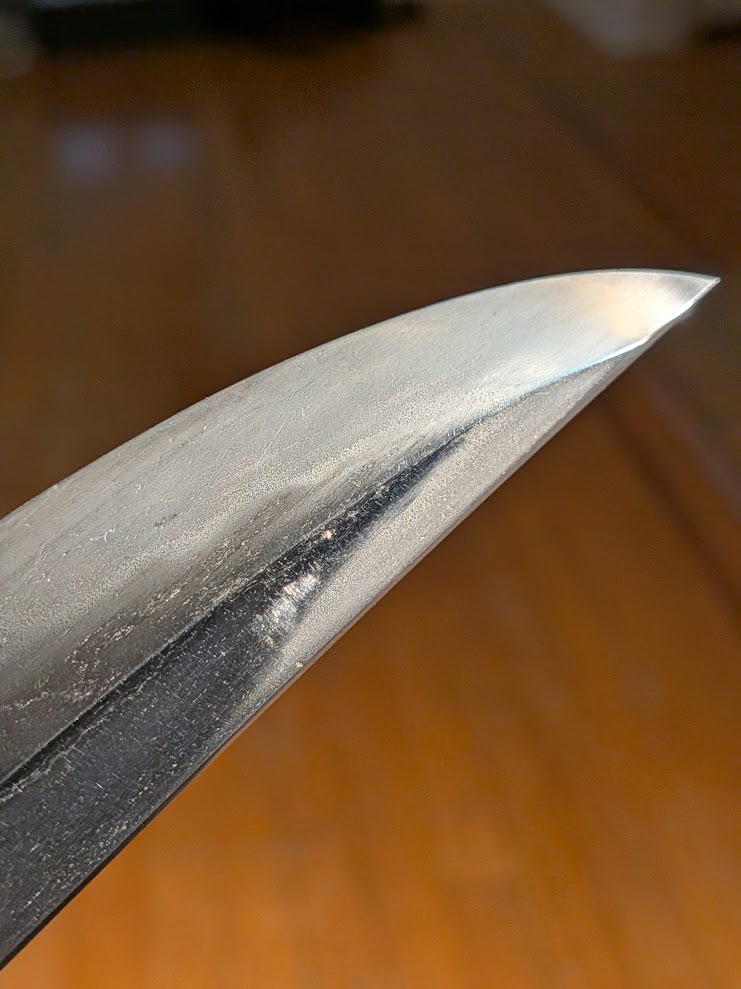
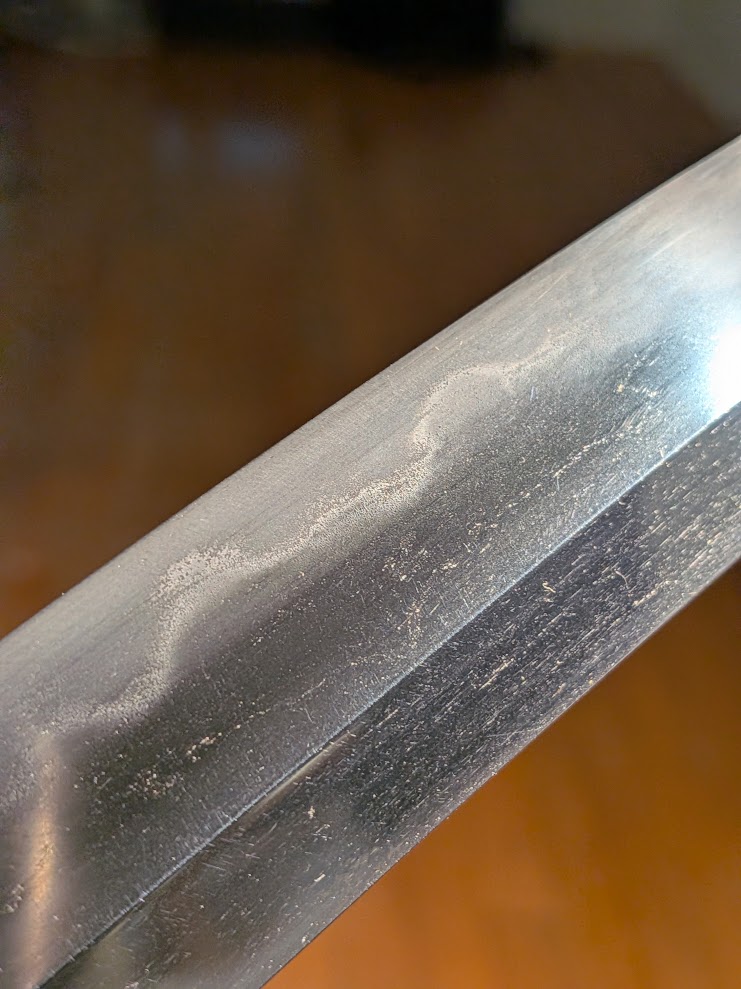
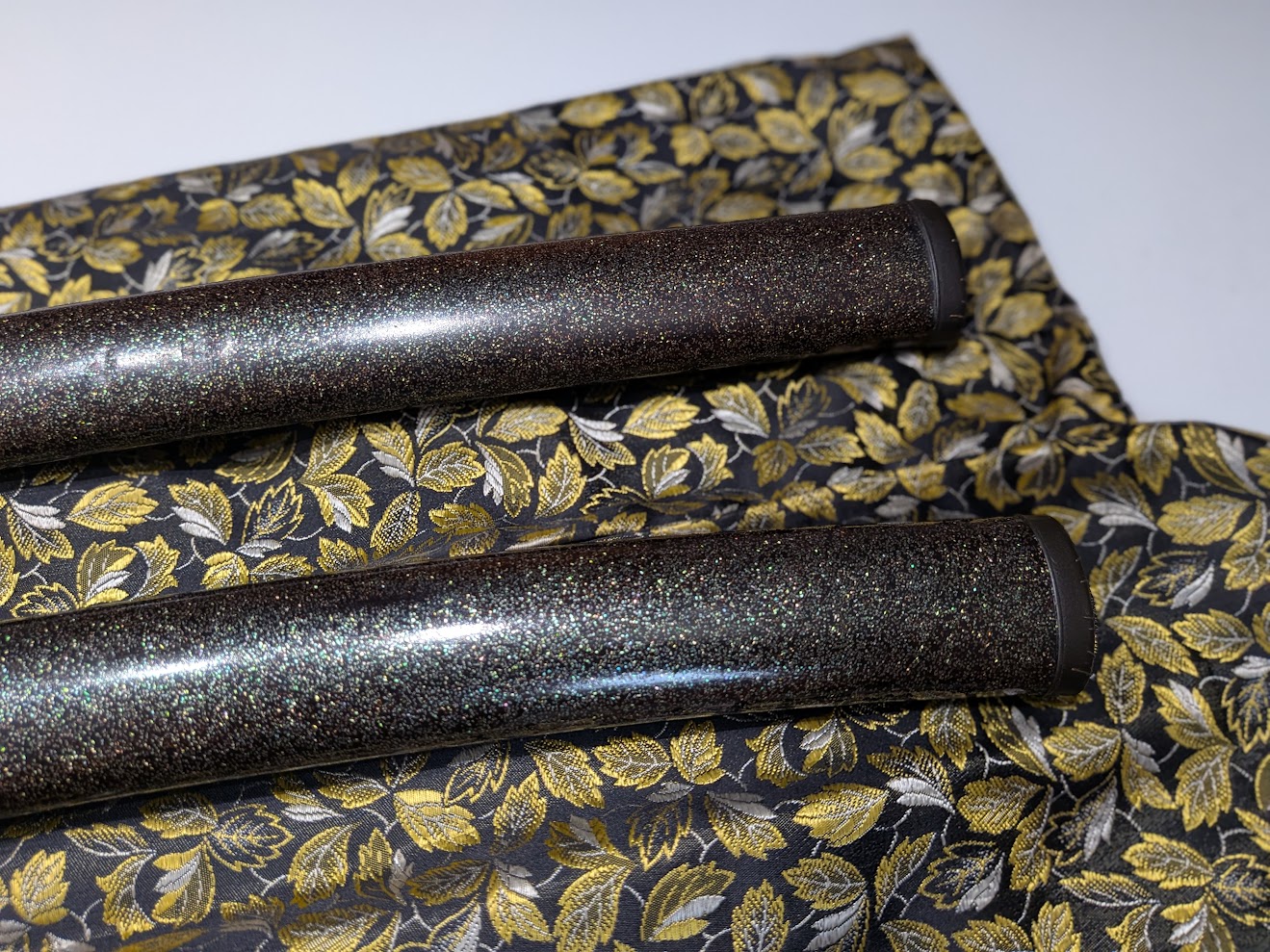
This listing features a daisho (matching pair of swords) by the smith Motooki, active during the Shin-Shinto period. The swords are housed in a fine issaku daisho koshirae, indicating a complete and matching set of mountings. Motooki, also known as Sumi Motooki, was a prominent smith from Aizu who studied under Suishinshi Masahide and Yamato no Kami Motohira.
 NihontoWatchBETA
mei · Shin-Shinto
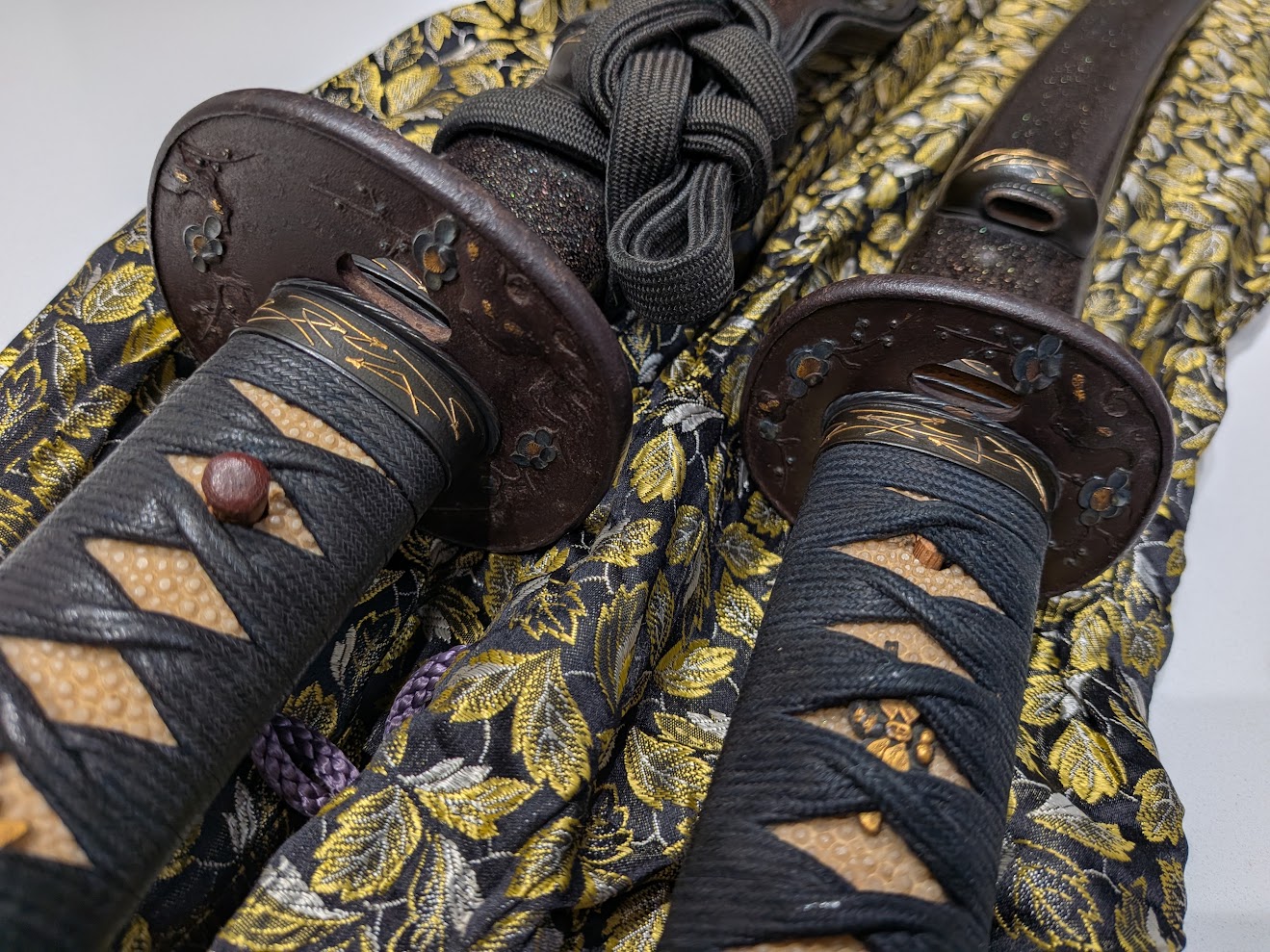
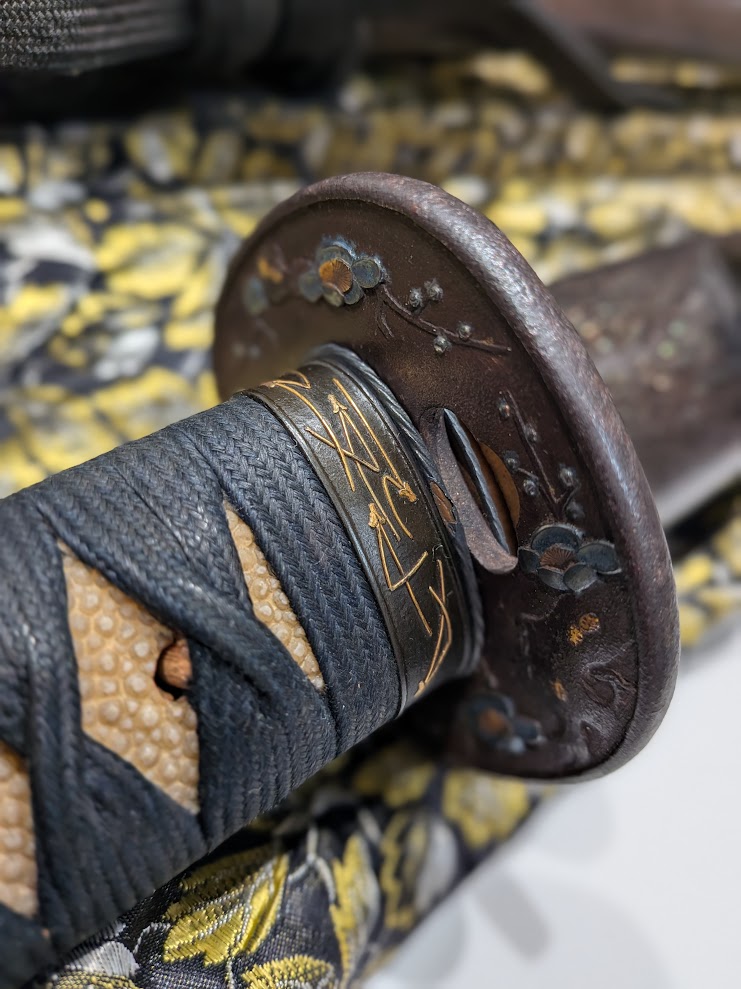
Iwashiro · around 1818-1830
Fujishiro Jo saku · Tōken Taikan top 39%
2 pieces on the market now
We could not find an authenticity certificate on the seller’s listing. Japanese swords and fittings are normally papered by the NBTHK (or the NTHK). Without one, the attribution is the seller’s own assessment and has not been independently verified — treat it with caution and ask the dealer about certification before buying.
This listing features a daisho (matching pair of swords) by the smith Motooki, active during the Shin-Shinto period. The swords are housed in a fine issaku daisho koshirae, indicating a complete and matching set of mountings. Motooki, also known as Sumi Motooki, was a prominent smith from Aizu who studied under Suishinshi Masahide and Yamato no Kami Motohira.
NihontoWatchBETAmei · Shin-Shinto
Iwashiro · around 1818-1830
Fujishiro Jo saku · Tōken Taikan top 39%
2 pieces on the market now
We could not find an authenticity certificate on the seller’s listing. Japanese swords and fittings are normally papered by the NBTHK (or the NTHK). Without one, the attribution is the seller’s own assessment and has not been independently verified — treat it with caution and ask the dealer about certification before buying.