The twentieth century nearly killed the craft twice: wartime distortion, then the occupation ban. The NBTHK’s founding in 1948 and licensed forging from 1953 rebuilt the sword as an art, crowned by Living National Treasures and the mukansa rank.
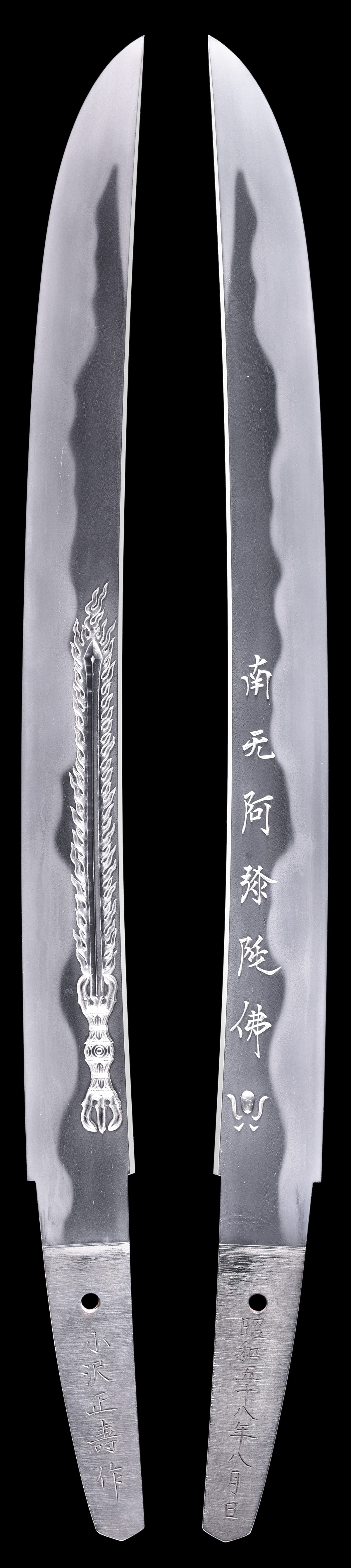
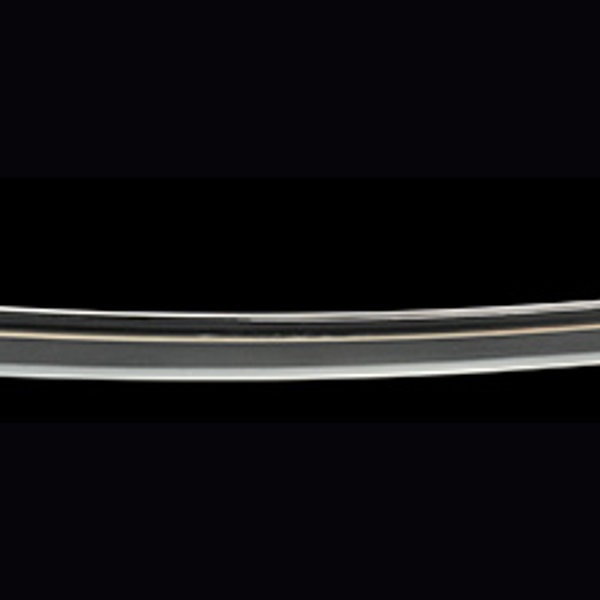
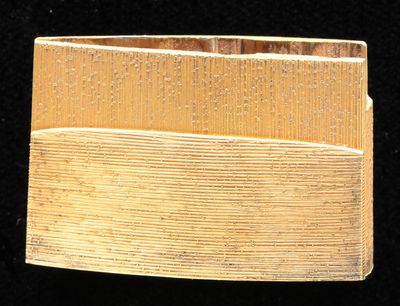
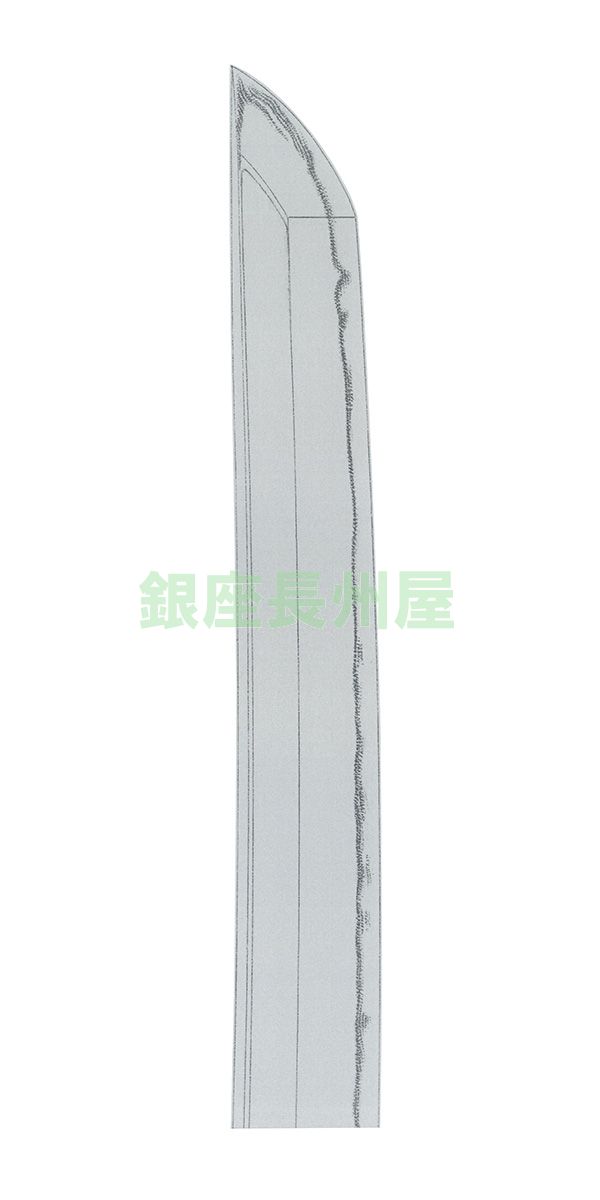
This is a tachi by swordsmith Ozawa Masatoshi, modeled after the famous Otenta Mitsuyo (National Treasure) passed down in the Maeda family of Kaga. This piece won an award at the New Swords Exhibition. The blade features a wide body, thick bo-hi, and an exaggerated ikubi-kissaki, resembling the original Otenta Mitsuyo.
 NihontoWatch
mei · Showa (1926-1989) · nagasa 66.3cm · sori 2.48cm








Musashi · around 1926-1989
6 pieces on the market now
The twentieth century nearly killed the craft twice: wartime distortion, then the occupation ban. The NBTHK’s founding in 1948 and licensed forging from 1953 rebuilt the sword as an art, crowned by Living National Treasures and the mukansa rank.
We could not find an authenticity certificate on the seller’s listing. Japanese swords and fittings are normally papered by the NBTHK (or the NTHK). Without one, the attribution is the seller’s own assessment and has not been independently verified — treat it with caution and ask the dealer about certification before buying.
If, due to our fault, the item differs significantly from its proper condition, the item may be returned. Cooling-off is within one week of the item's arrival.
This is a tachi by swordsmith Ozawa Masatoshi, modeled after the famous Otenta Mitsuyo (National Treasure) passed down in the Maeda family of Kaga. This piece won an award at the New Swords Exhibition. The blade features a wide body, thick bo-hi, and an exaggerated ikubi-kissaki, resembling the original Otenta Mitsuyo.
NihontoWatchmei · Showa (1926-1989) · nagasa 66.3cm · sori 2.48cm
Musashi · around 1926-1989
6 pieces on the market now
The twentieth century nearly killed the craft twice: wartime distortion, then the occupation ban. The NBTHK’s founding in 1948 and licensed forging from 1953 rebuilt the sword as an art, crowned by Living National Treasures and the mukansa rank.
We could not find an authenticity certificate on the seller’s listing. Japanese swords and fittings are normally papered by the NBTHK (or the NTHK). Without one, the attribution is the seller’s own assessment and has not been independently verified — treat it with caution and ask the dealer about certification before buying.
If, due to our fault, the item differs significantly from its proper condition, the item may be returned. Cooling-off is within one week of the item's arrival.