 NihontoWatchNihontoWatch
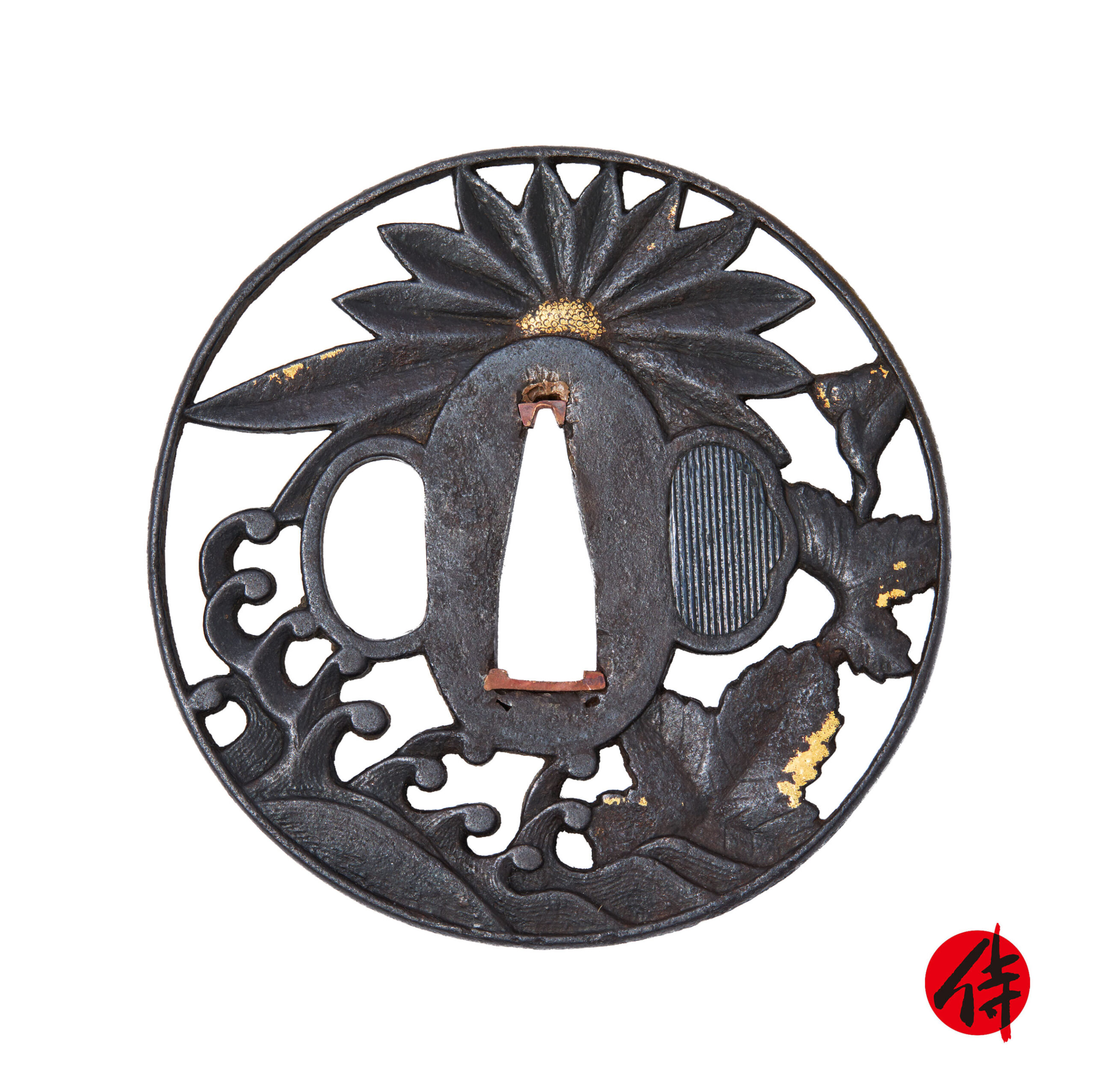
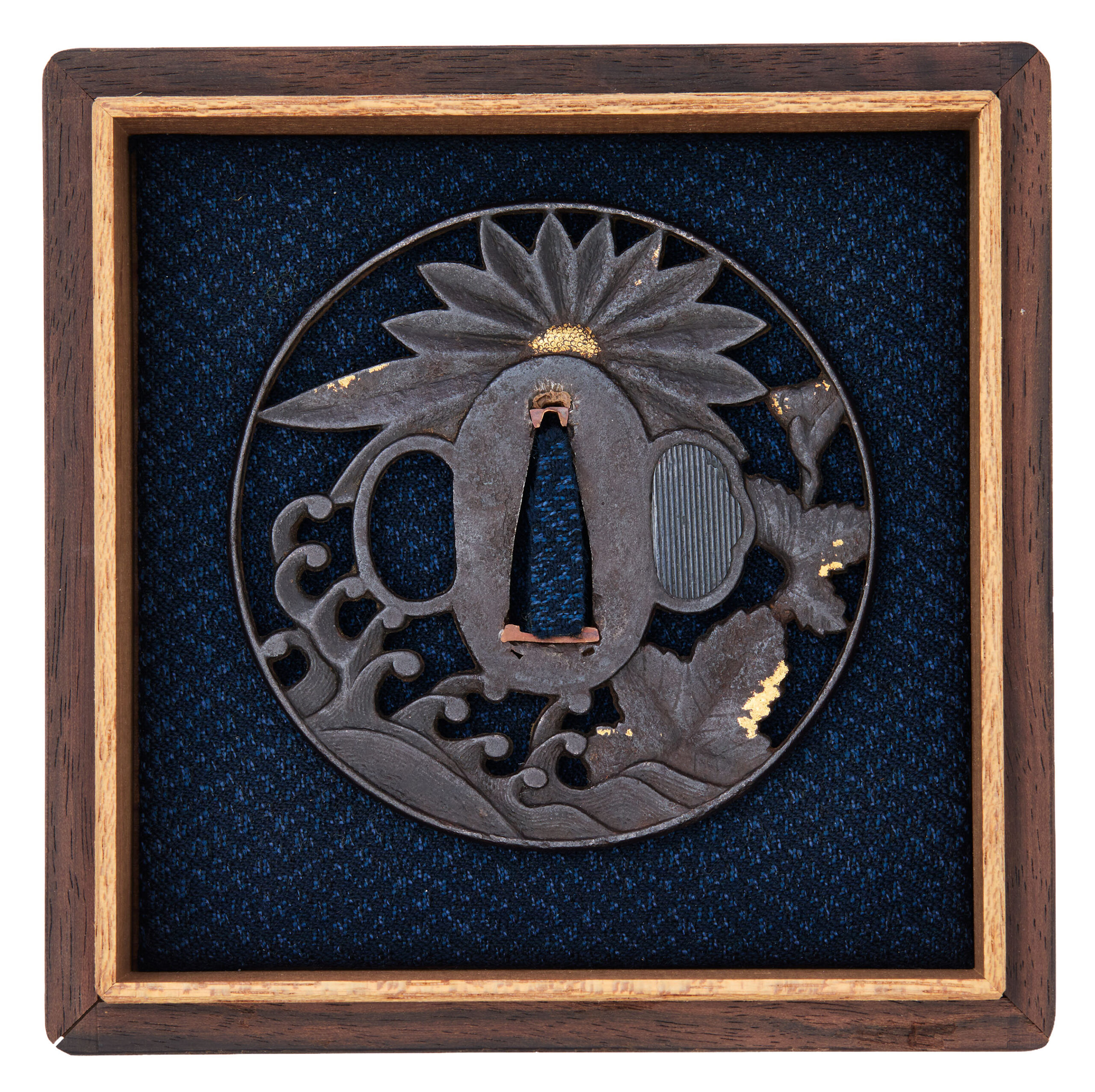
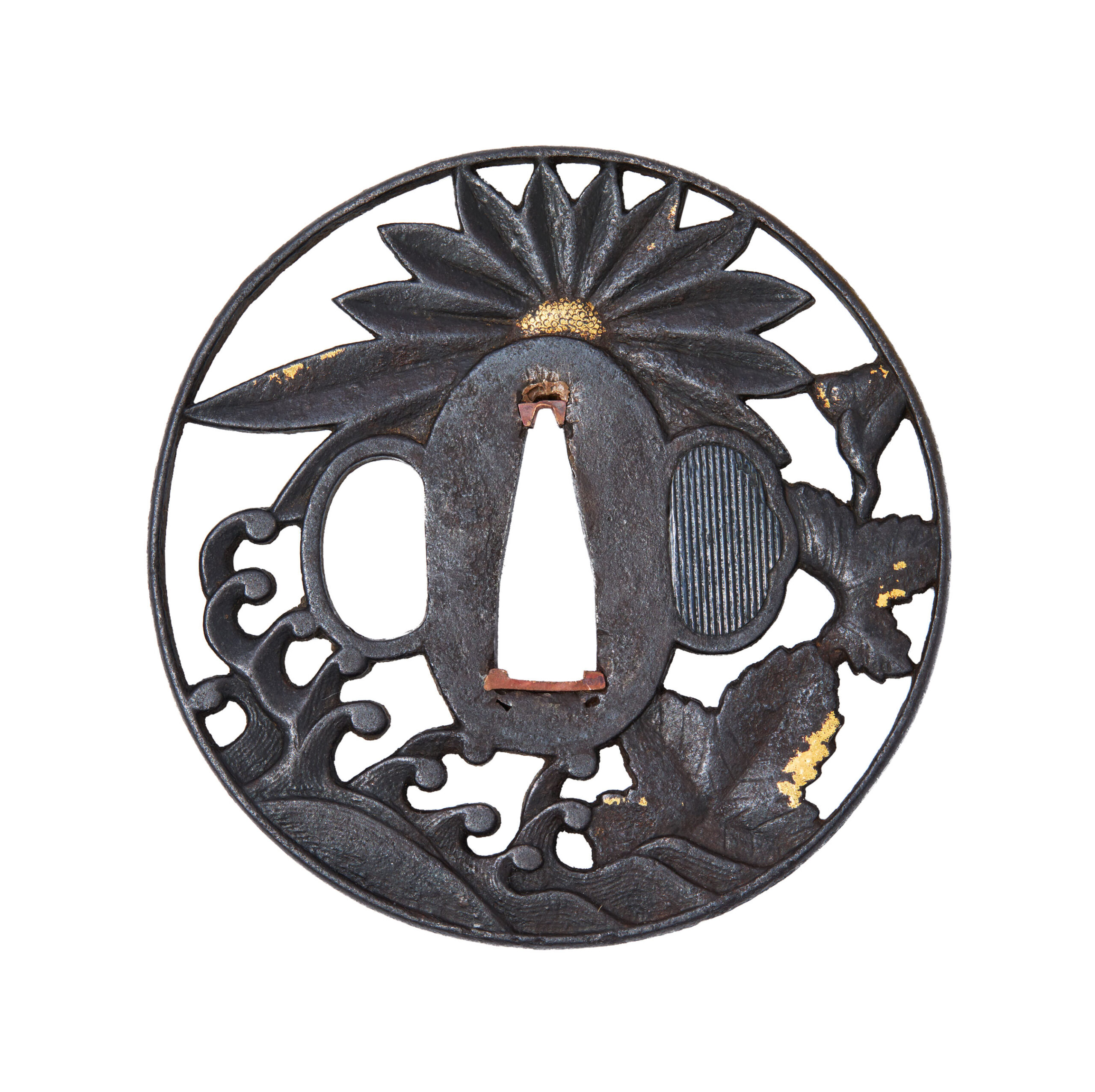
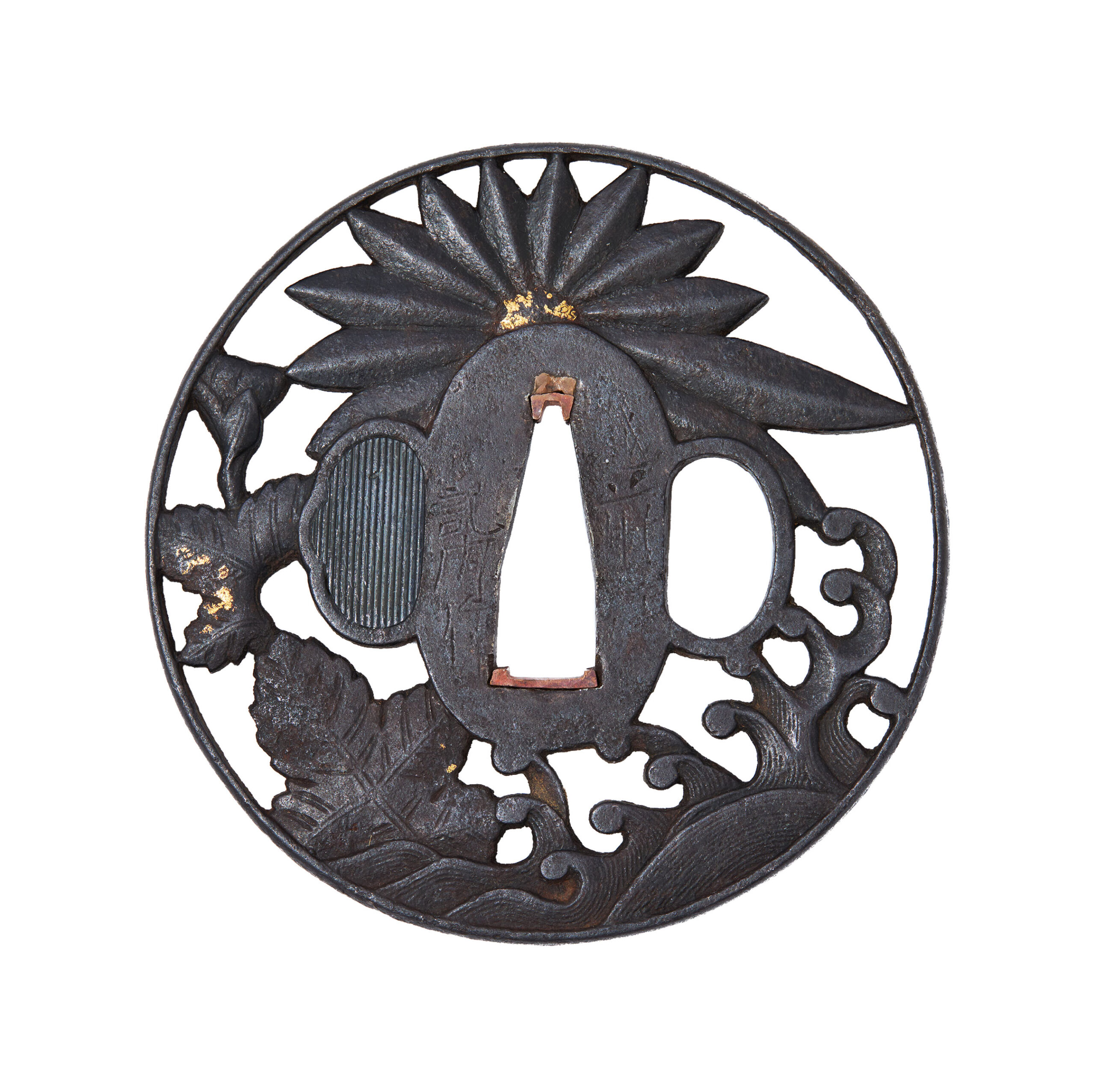
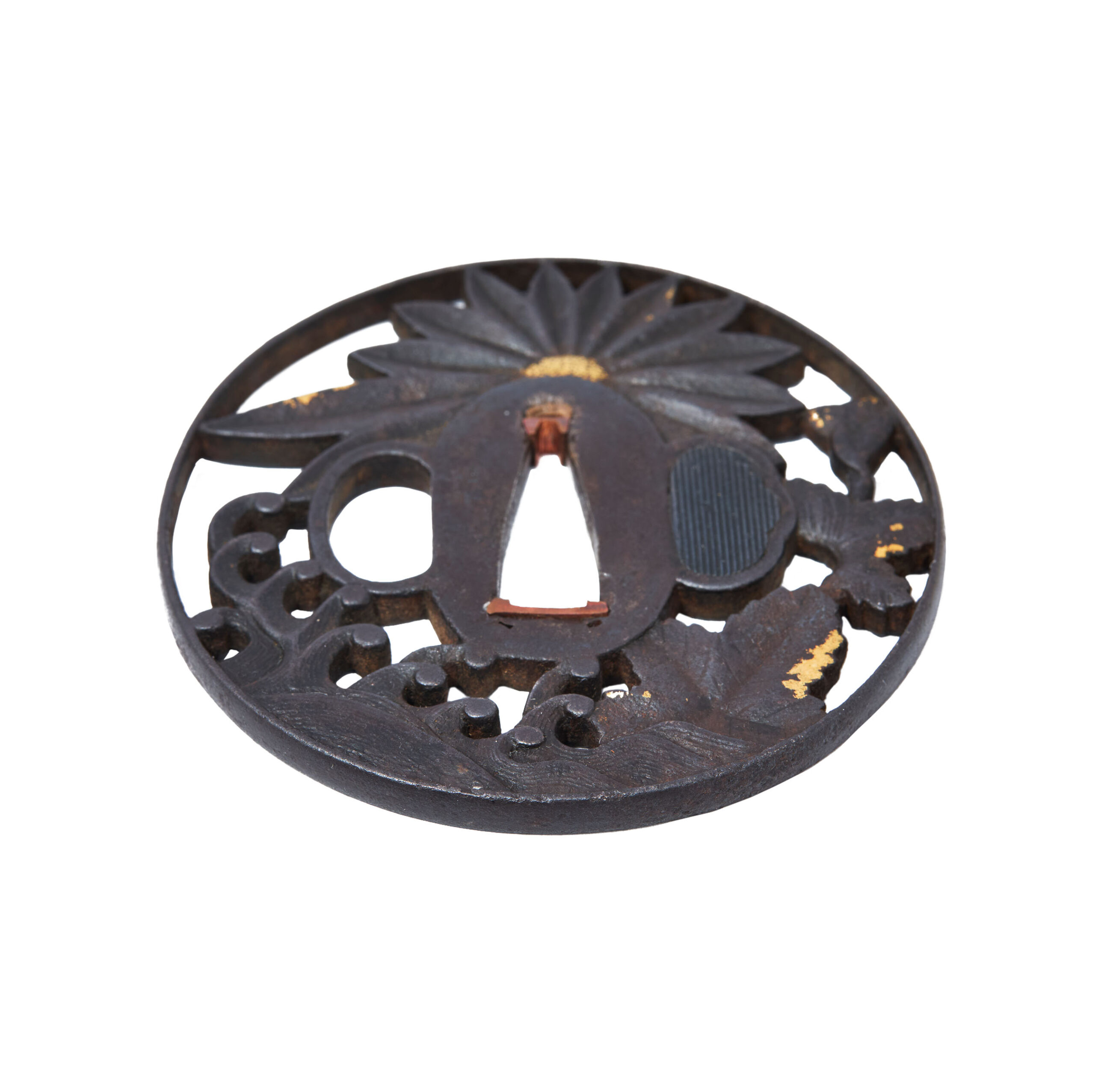
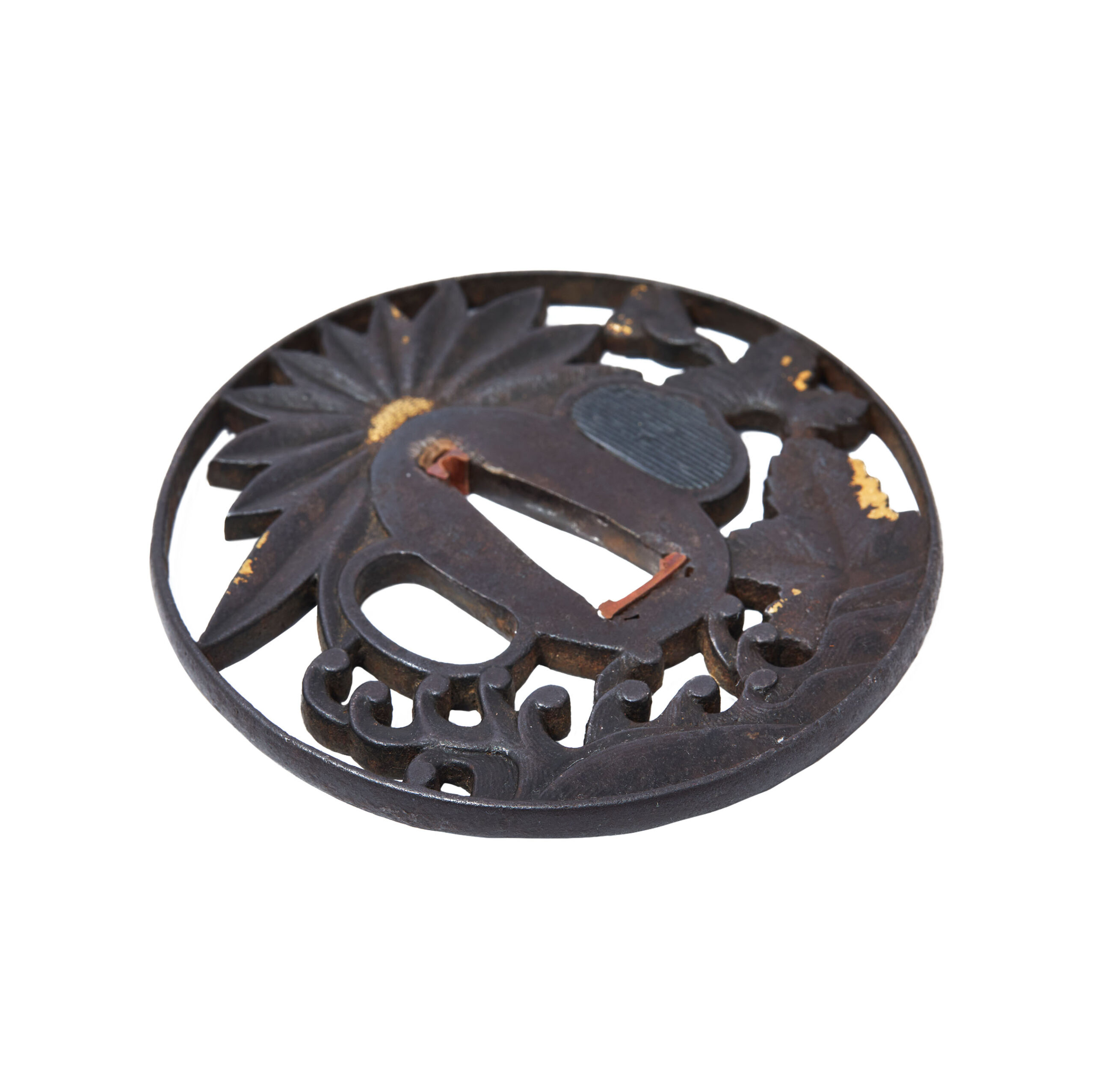
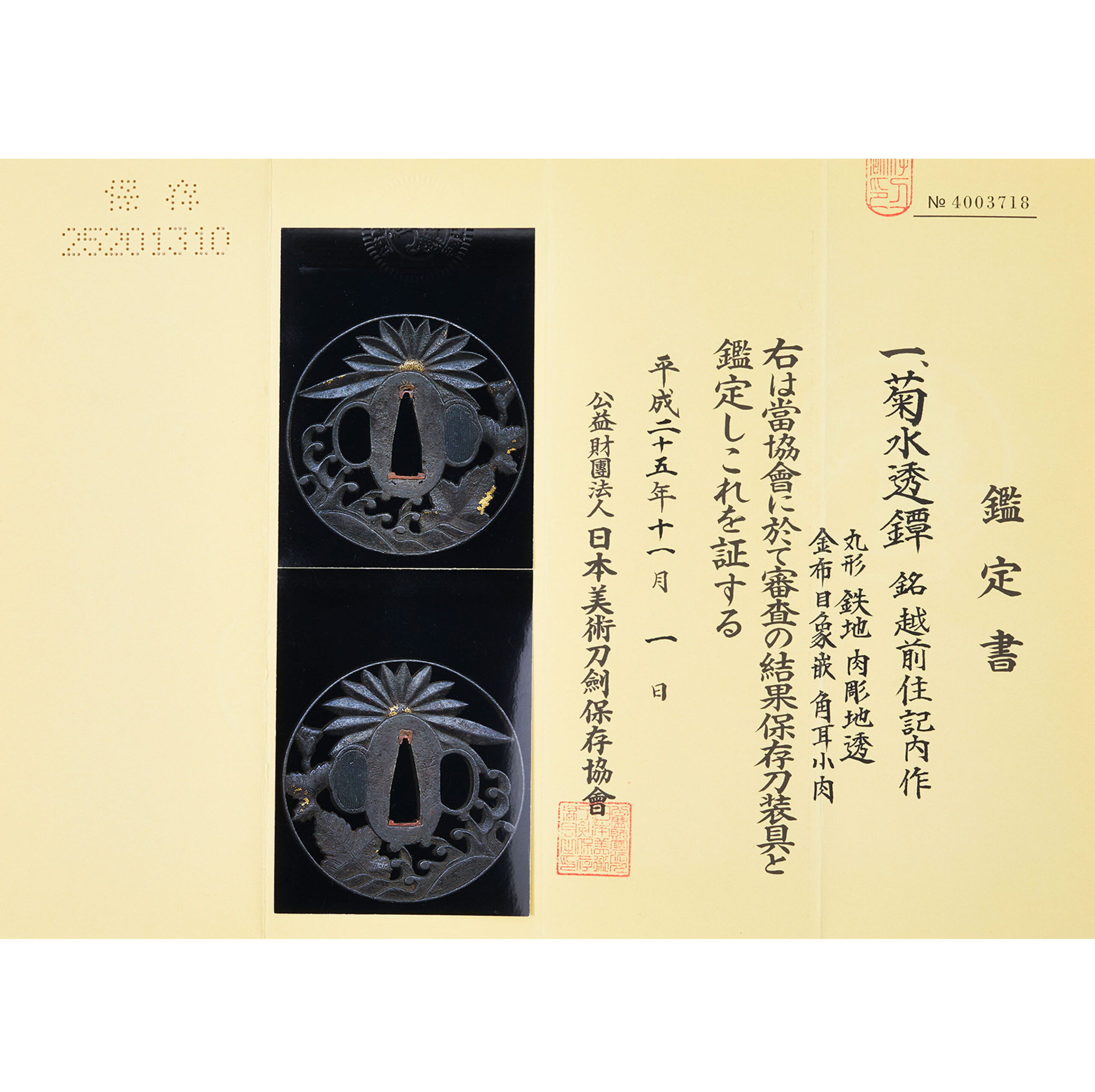
This circular tsuba is made of iron. The surface is executed in nikubori-jisukashi (肉彫地透), a technique in which the iron plate is deeply carved and pierced to create bold openwork designs with sculptural depth and dynamic form. In addition, delicate gold nunome-zōgan (金布目象嵌) has been applied, whereby fine crosshatched textures are incised into the iron surface and overlaid with thin sheets of gold, producing subtle yet elegant highlights. According to the authentication papers issued by the NBTHK (Nihon Bijutsu Token Hozon Kyokai), this tsuba has been attributed to Kinai (記内), a celebrated lineage of tsuba makers active in Echizen Province (today’s Fukui Prefecture) from the Edo through the Meiji period. The Kinai school served the Echizen Matsudaira clan and became particularly renowned for its masterful use of nikubori-jisukashi carving, through which they produced many distinguished sword guards admired for both technical precision and bold decorative design. The design features an openwork depiction of the Kikusui-mon (菊水紋), or “Chrysanthemum and Flowing Water” motif. This auspicious design combines chrysanthemums floating upon or accompanied by flowing water, creating an elegant composition long associated with longevity, purity, and refinement in Japanese art and culture. The chrysanthemum (kiku, 菊) has been revered in Japan as a noble flower symbolizing immortality, rejuvenation, and dignity. Closely associated with the Imperial family, it also represents authority, elegance, and auspicious fortune. Flowing water, meanwhile, signifies purification, continuity, and the perpetual flow of life. The combination of chrysanthemum and water derives in part from Chinese classical traditions in which chrysanthemum petals drifting upon streams were believed to bestow longevity and ward off misfortune. Authentication Paper They authenticated the Tsuba on November 1st in the 25th year of Heisei (2013). They appraised it as Hozon Tousougu, the Tsuba worth preserving for Japanese society.
Certificate reading — 銘 越前住記内作
NihontoWatchOffered by Samurai Museum

Echizen
28 pieces on the market now
Certifies a genuine fitting worth preserving: a correct signature, or, if unsigned, an identifiable era and school, with recognized artistic and craft value.
The NBTHK (Nihon Bijutsu Tōken Hozon Kyōkai, the Society for the Preservation of Japanese Art Swords) is a public-interest incorporated foundation founded in 1948 and supervised by Japan’s Agency for Cultural Affairs (Bunkachō); it is based at the Japanese Sword Museum in Tokyo. Its expert panels physically examine each submitted work (shinsa) and issue a certificate (kanteishō) ranking it by artistic and historical merit. NBTHK papers are the most widely recognized standard of authentication for Japanese swords and fittings.
NBTHK official siteReturns/exchanges limited to defects caused by shipping (except willful misconduct or gross negligence by the company); customers must contact within 72 hours of receiving the product.