 NihontoWatchNihontoWatch
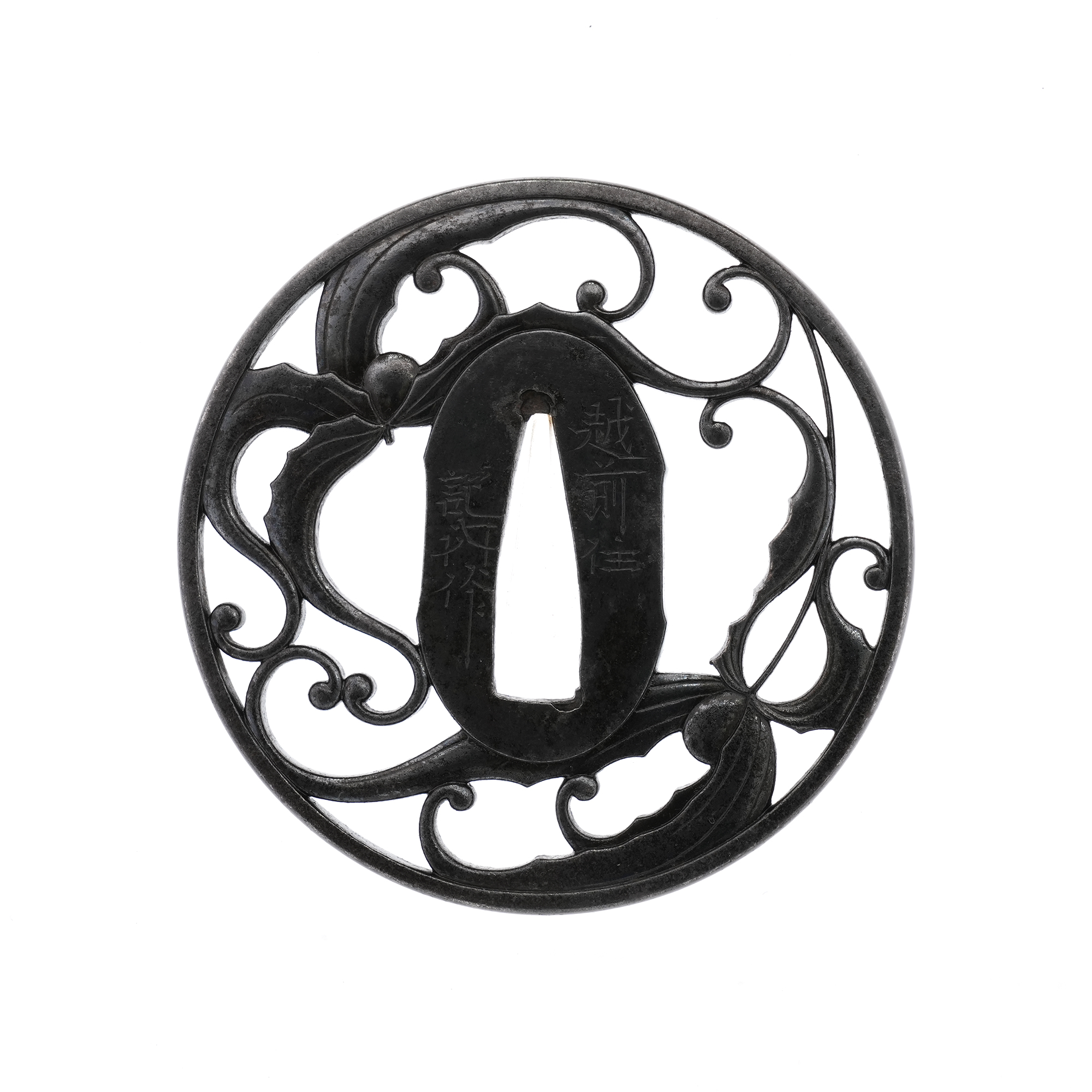
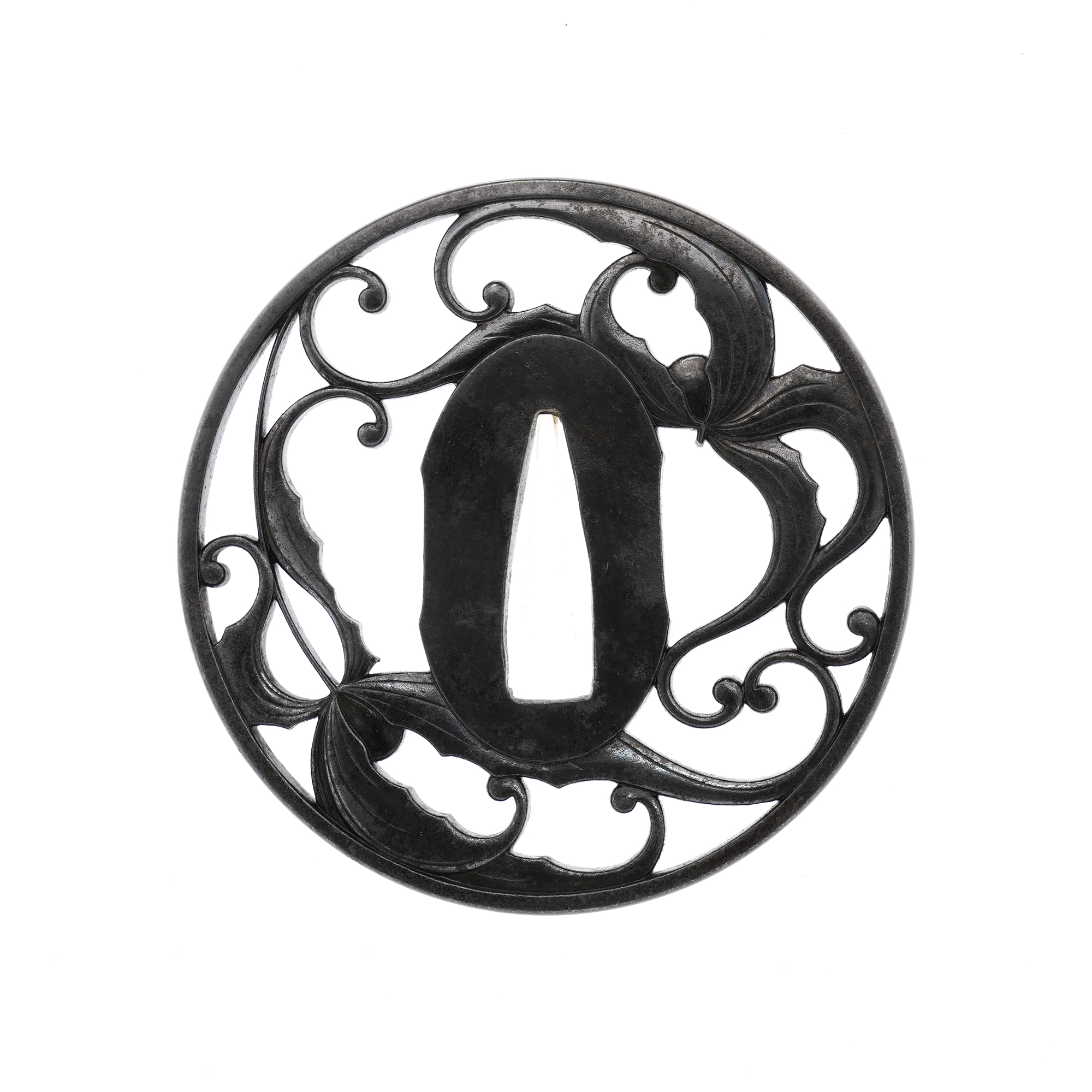
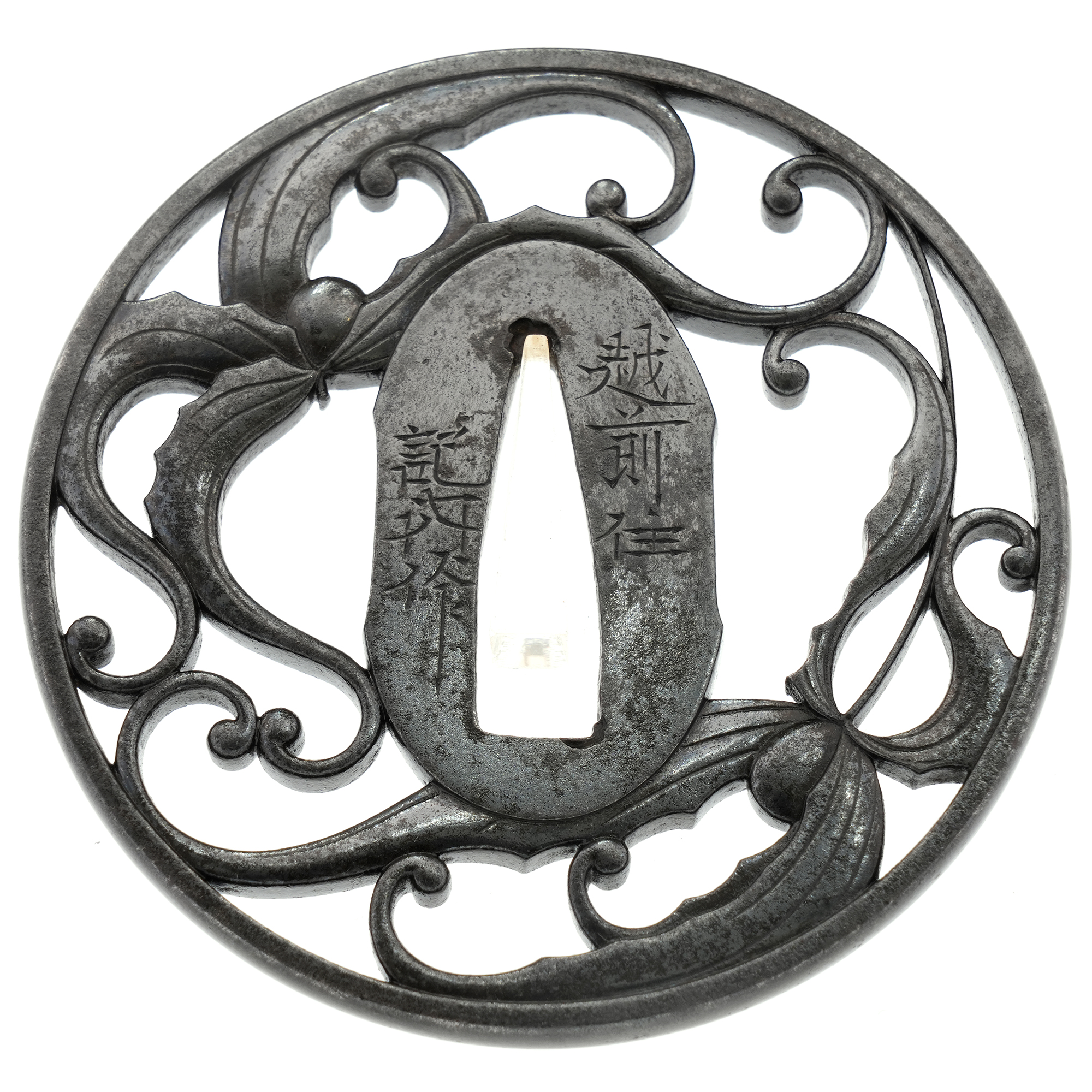
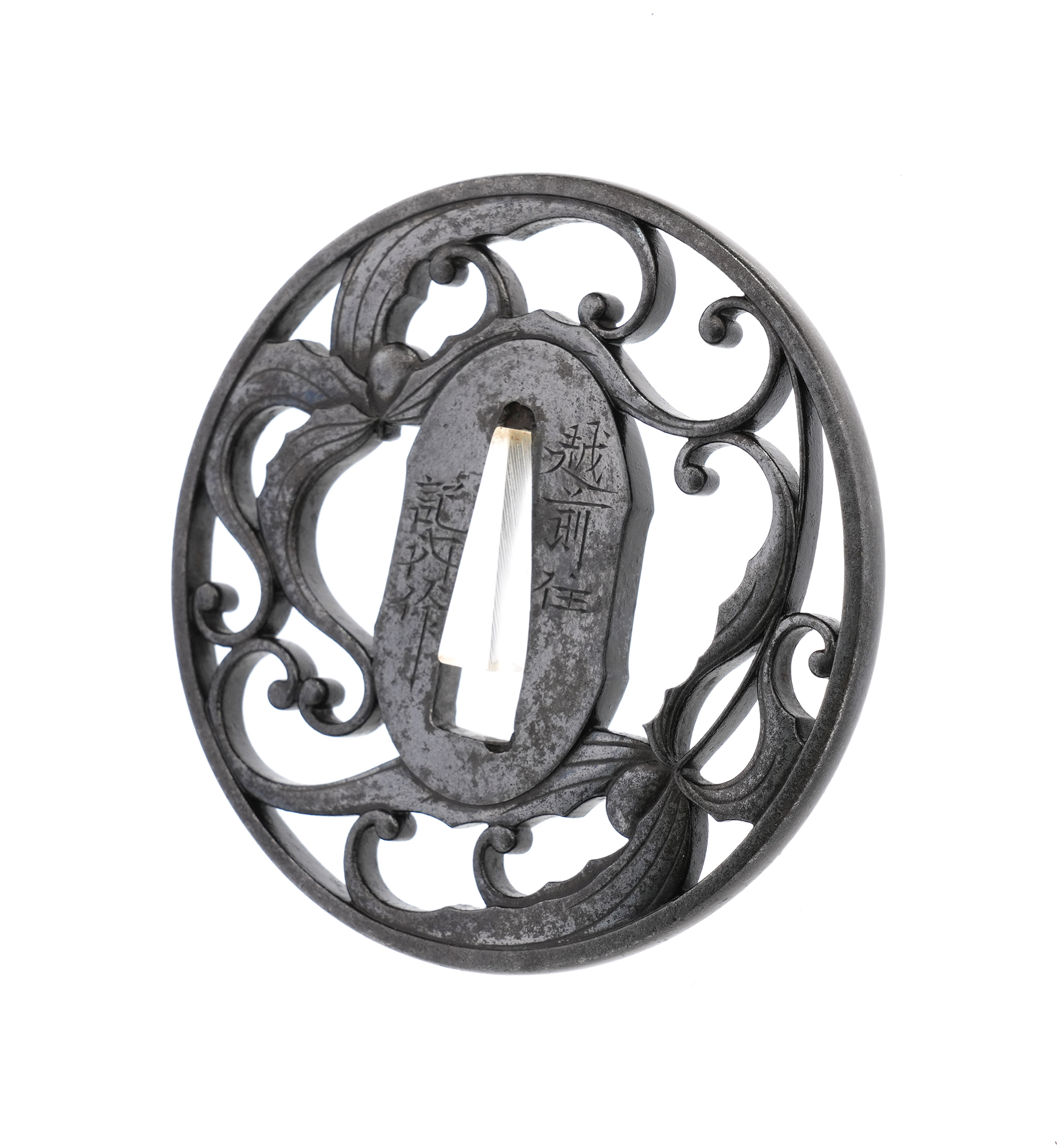
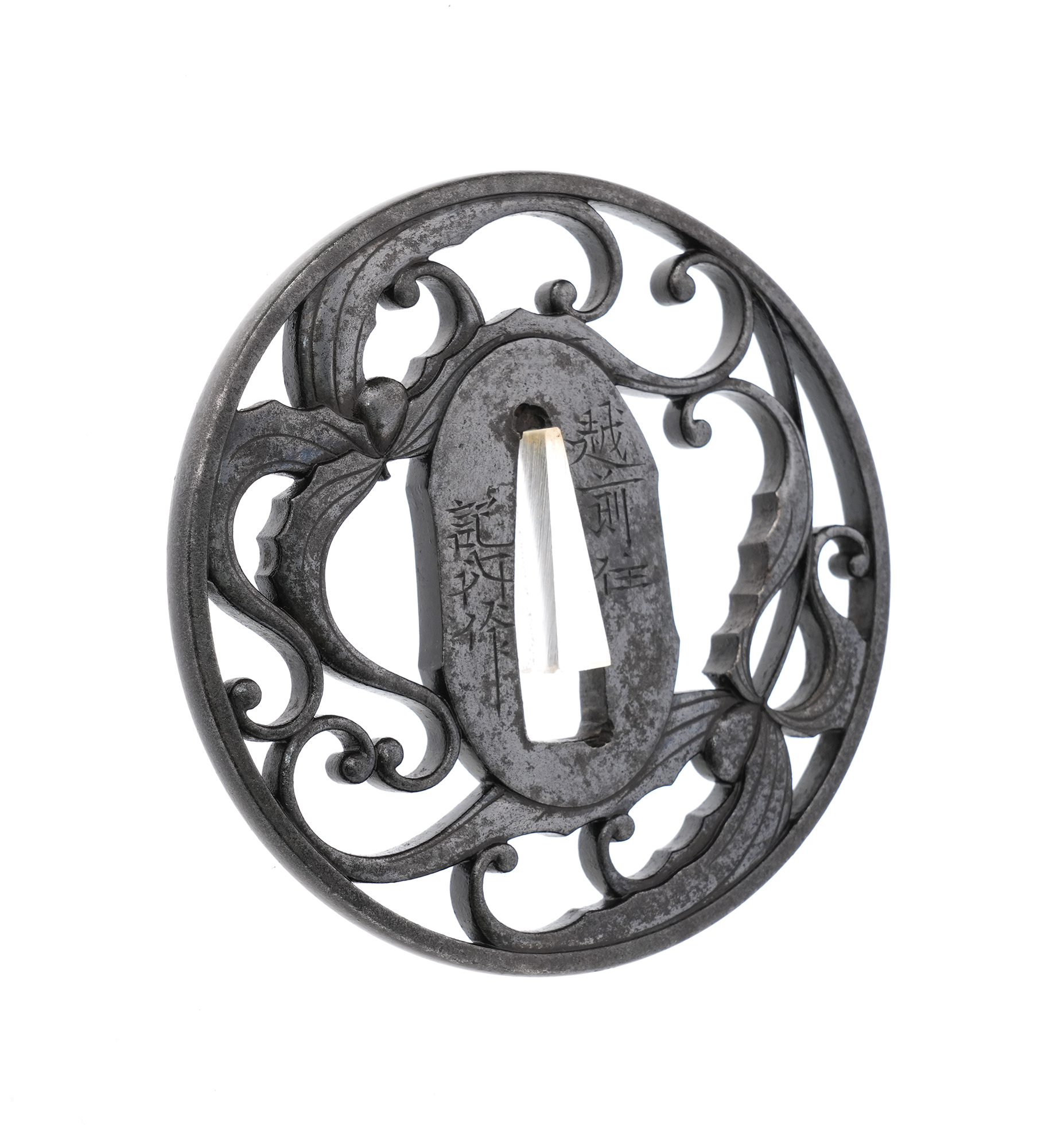
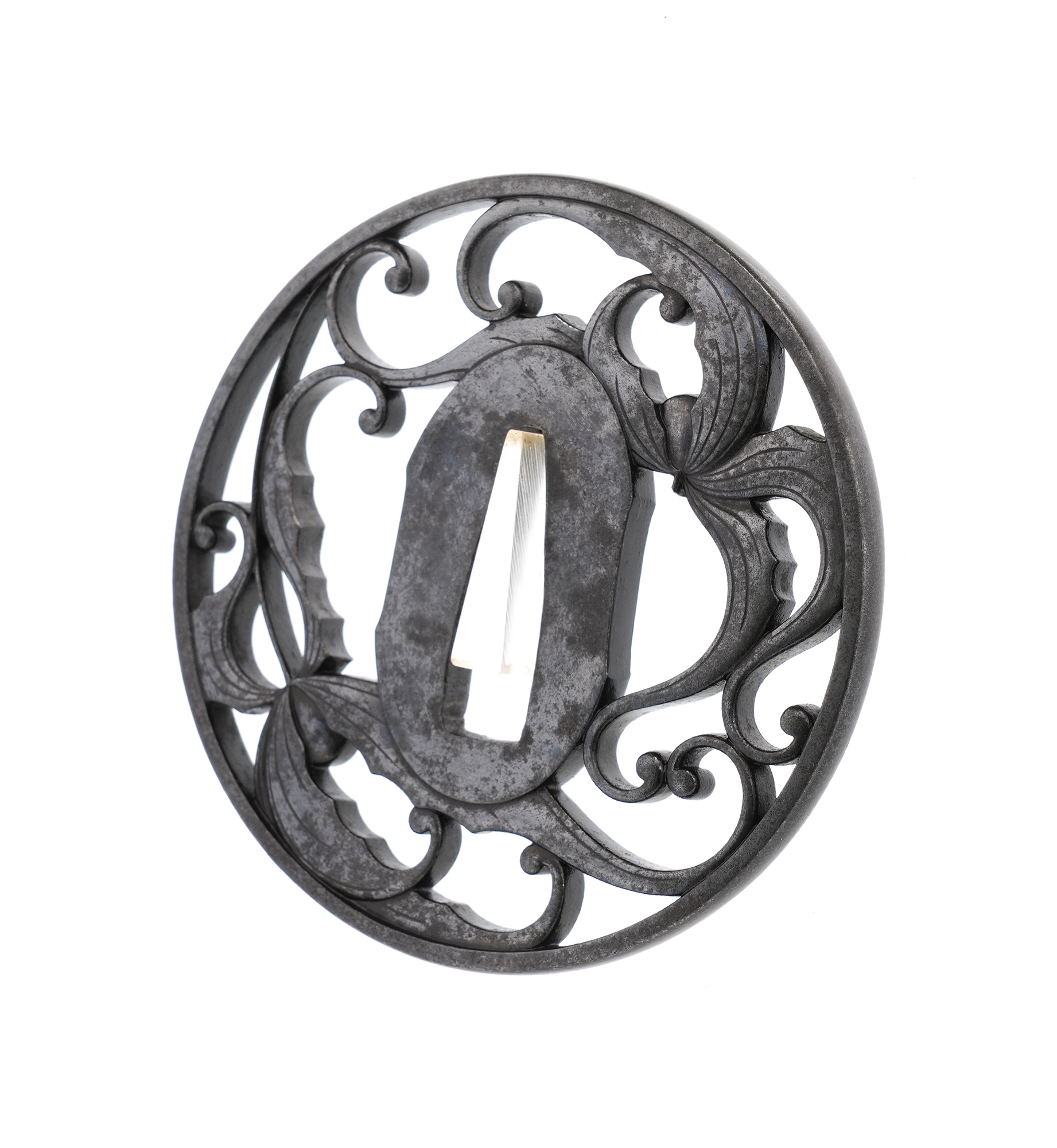
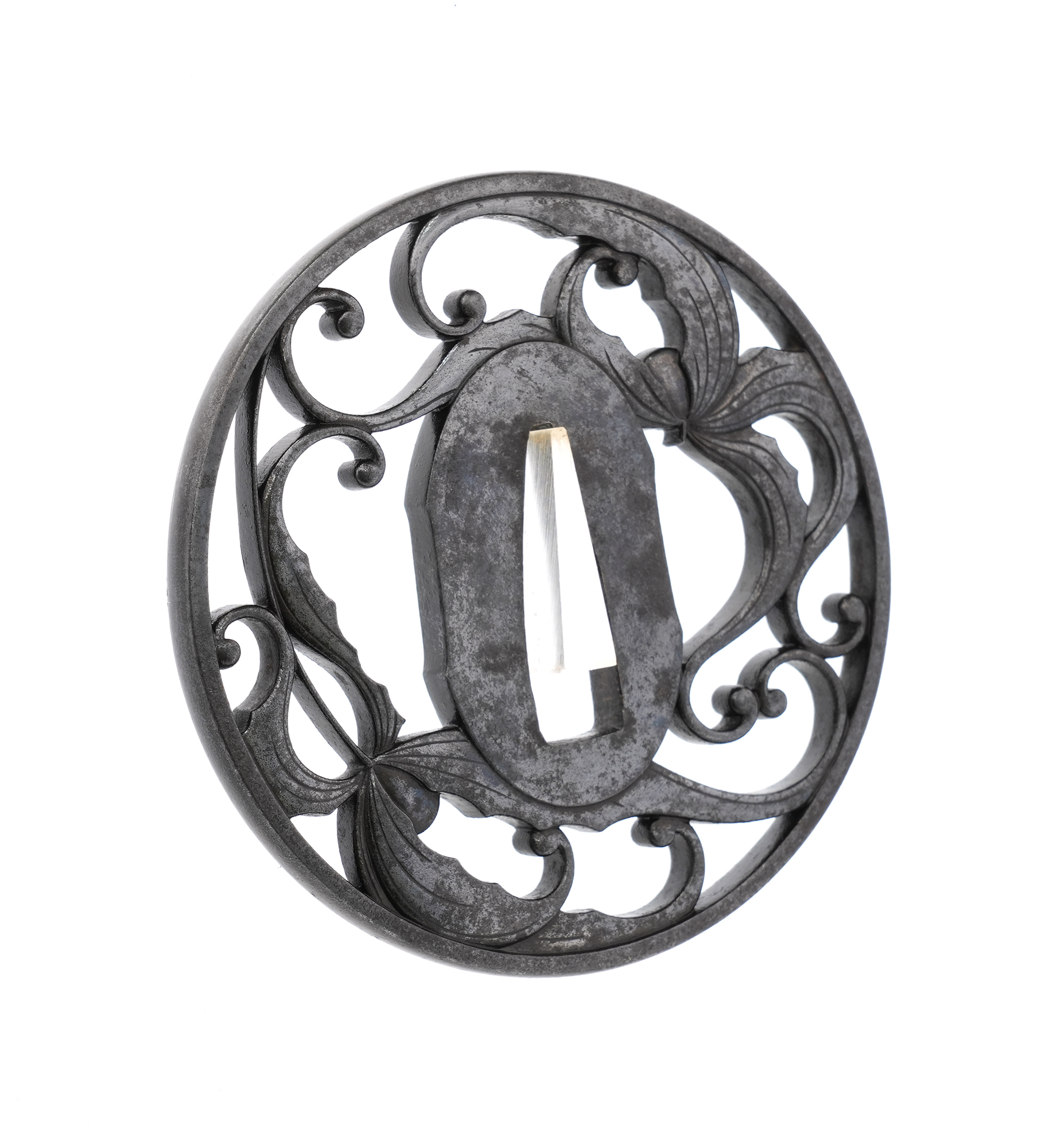
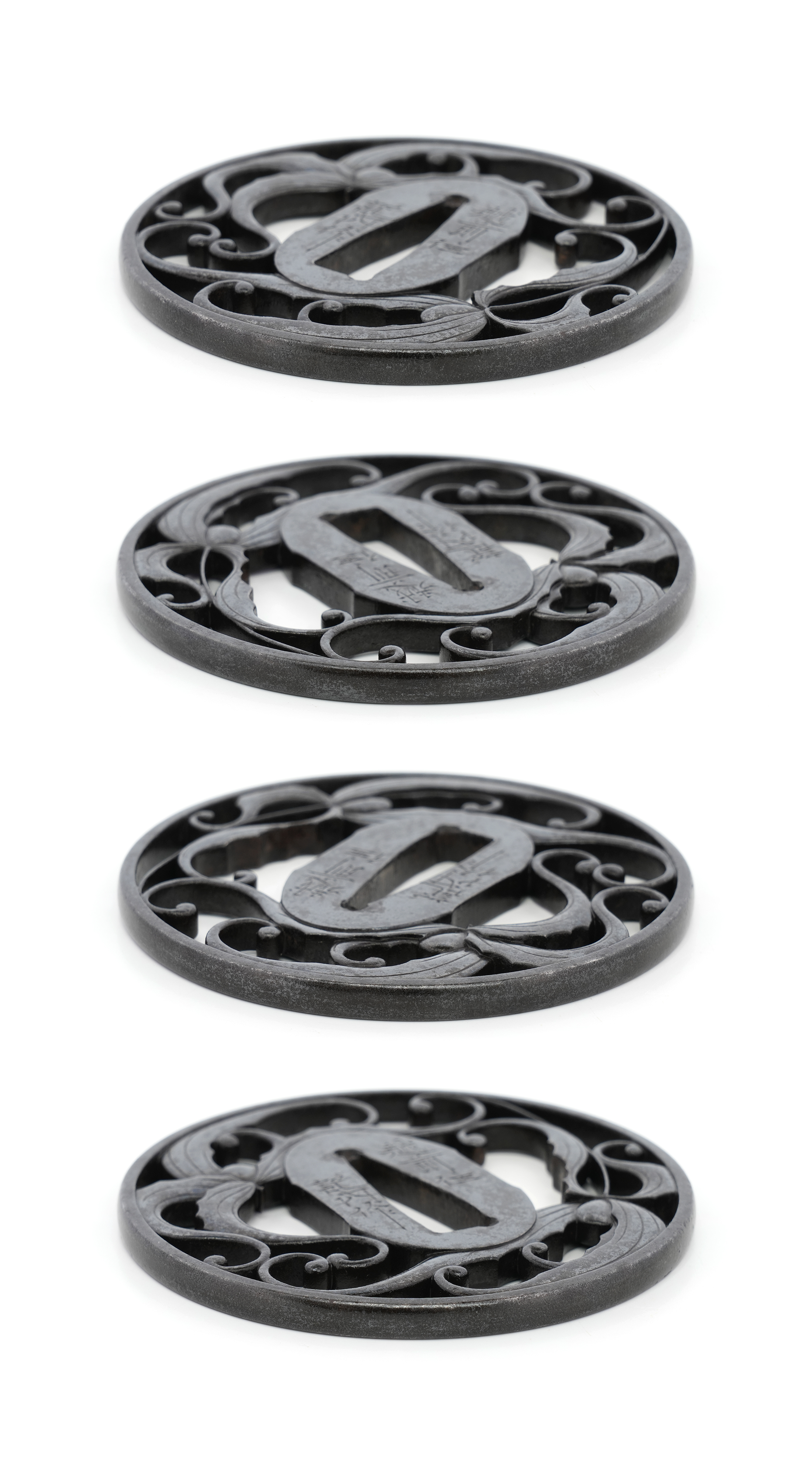
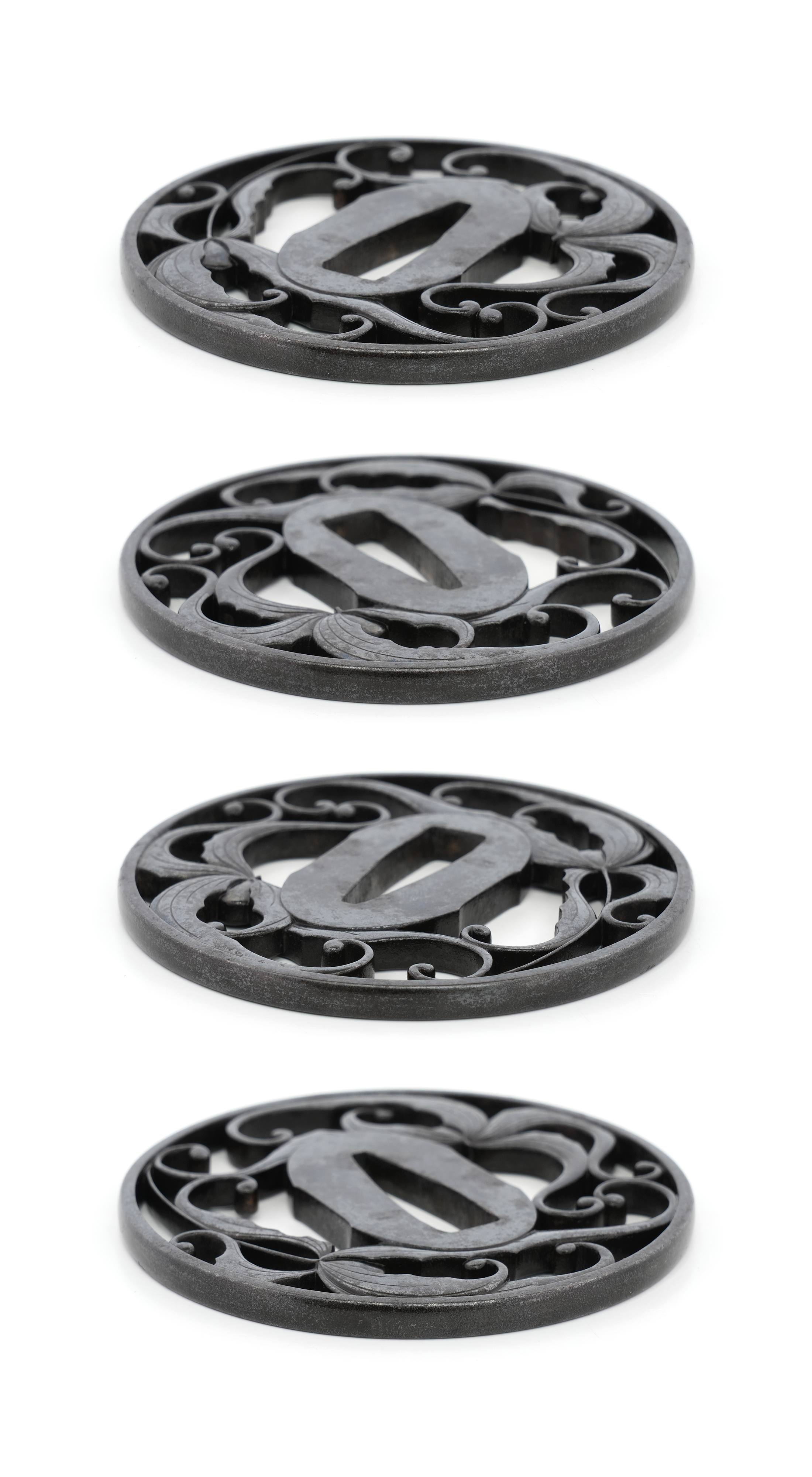
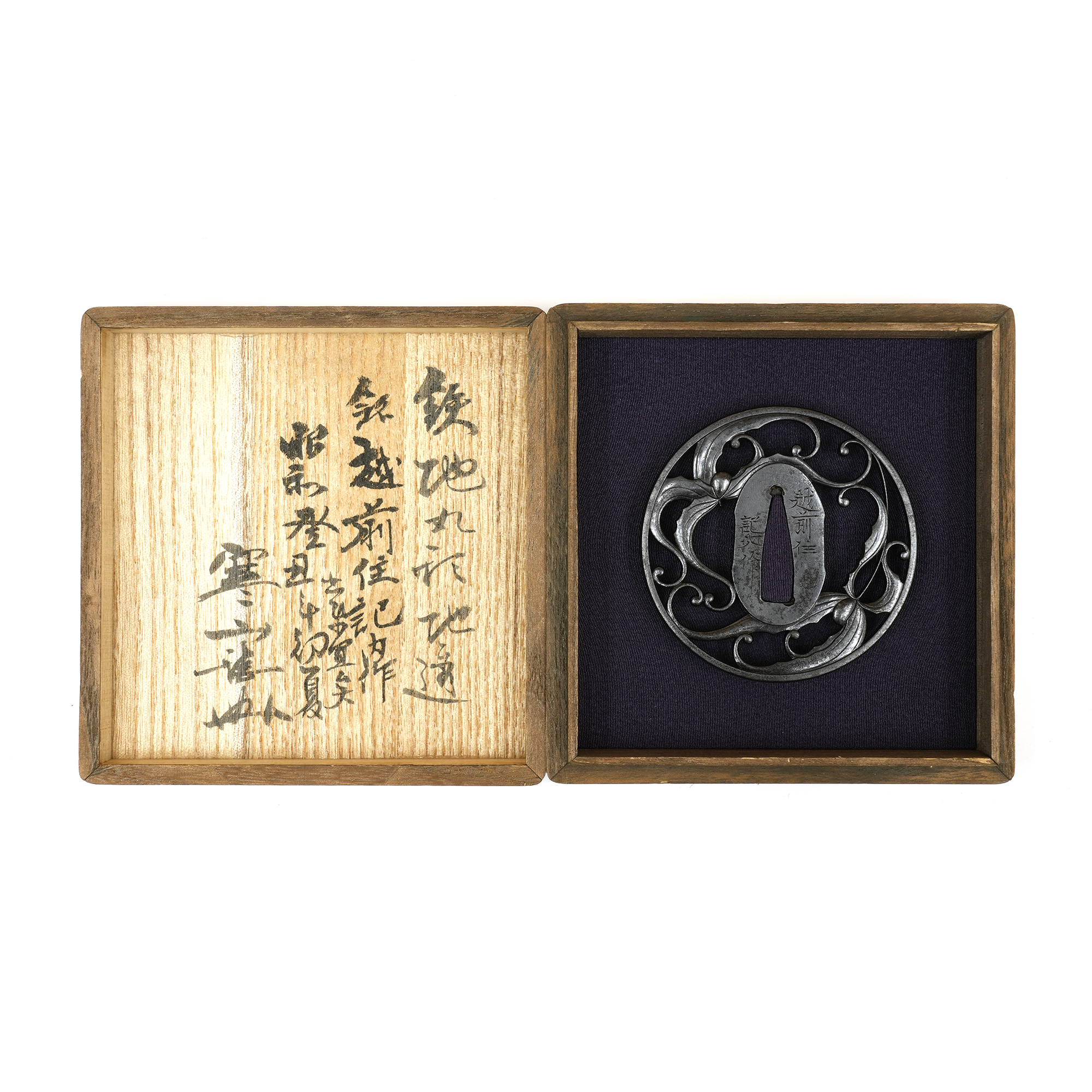
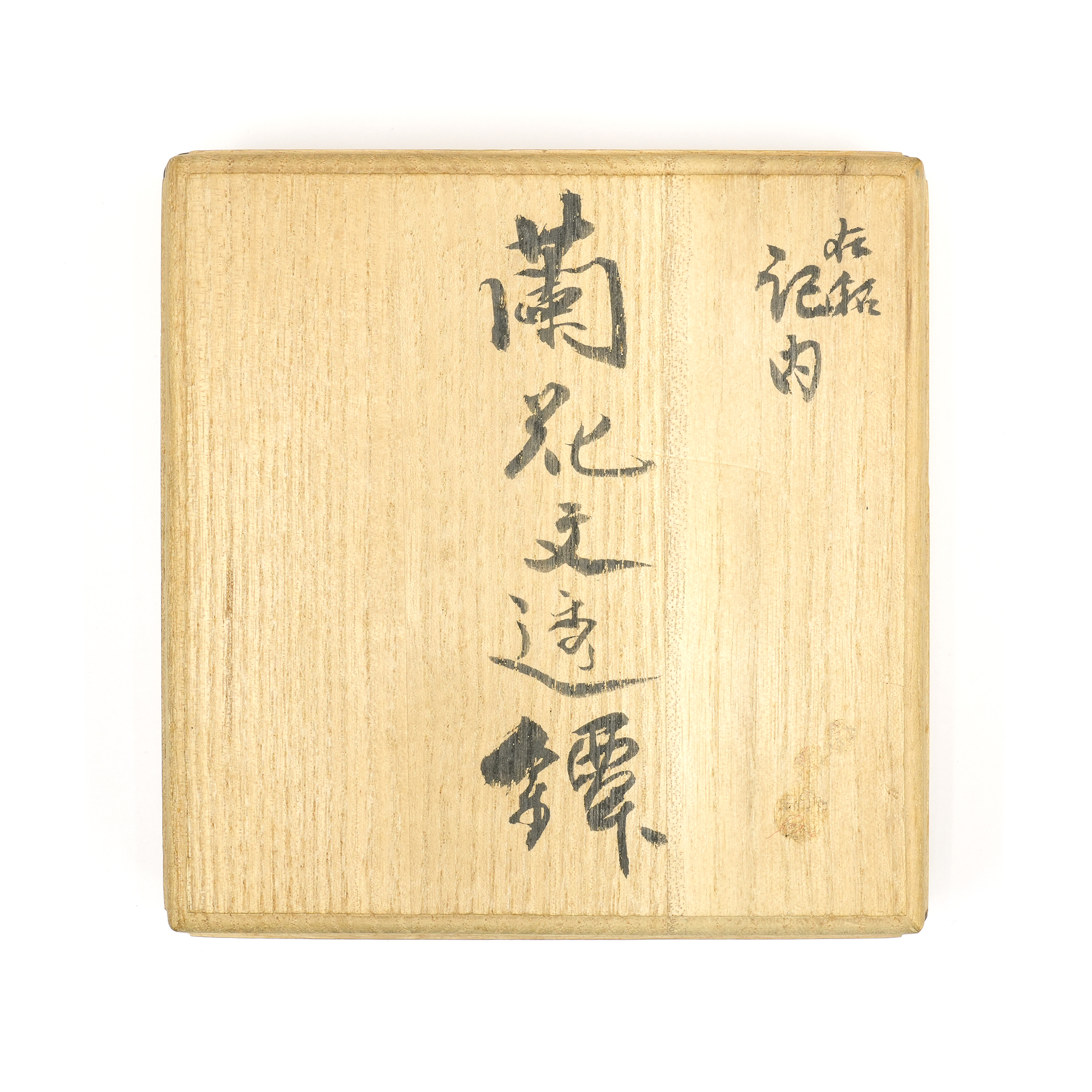
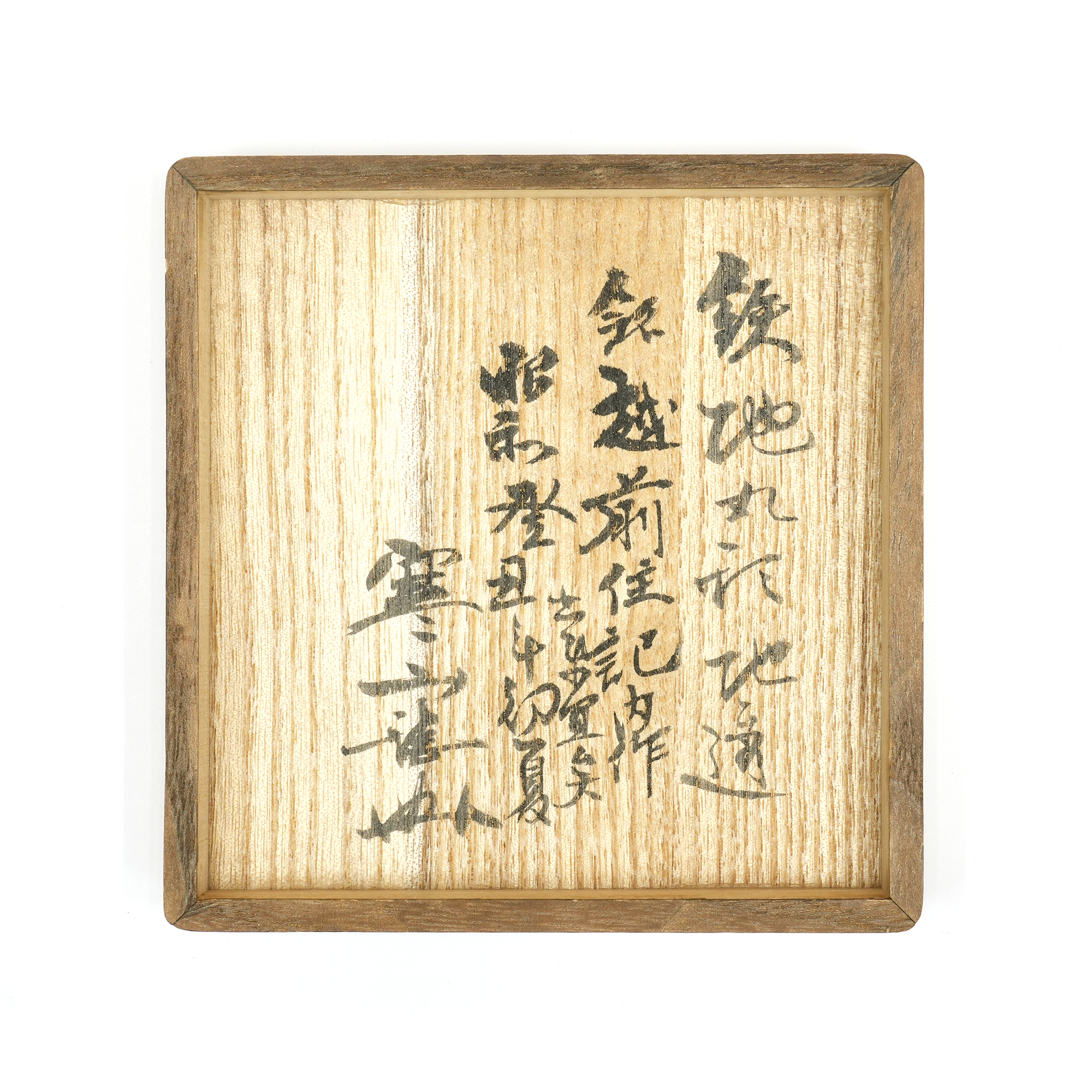
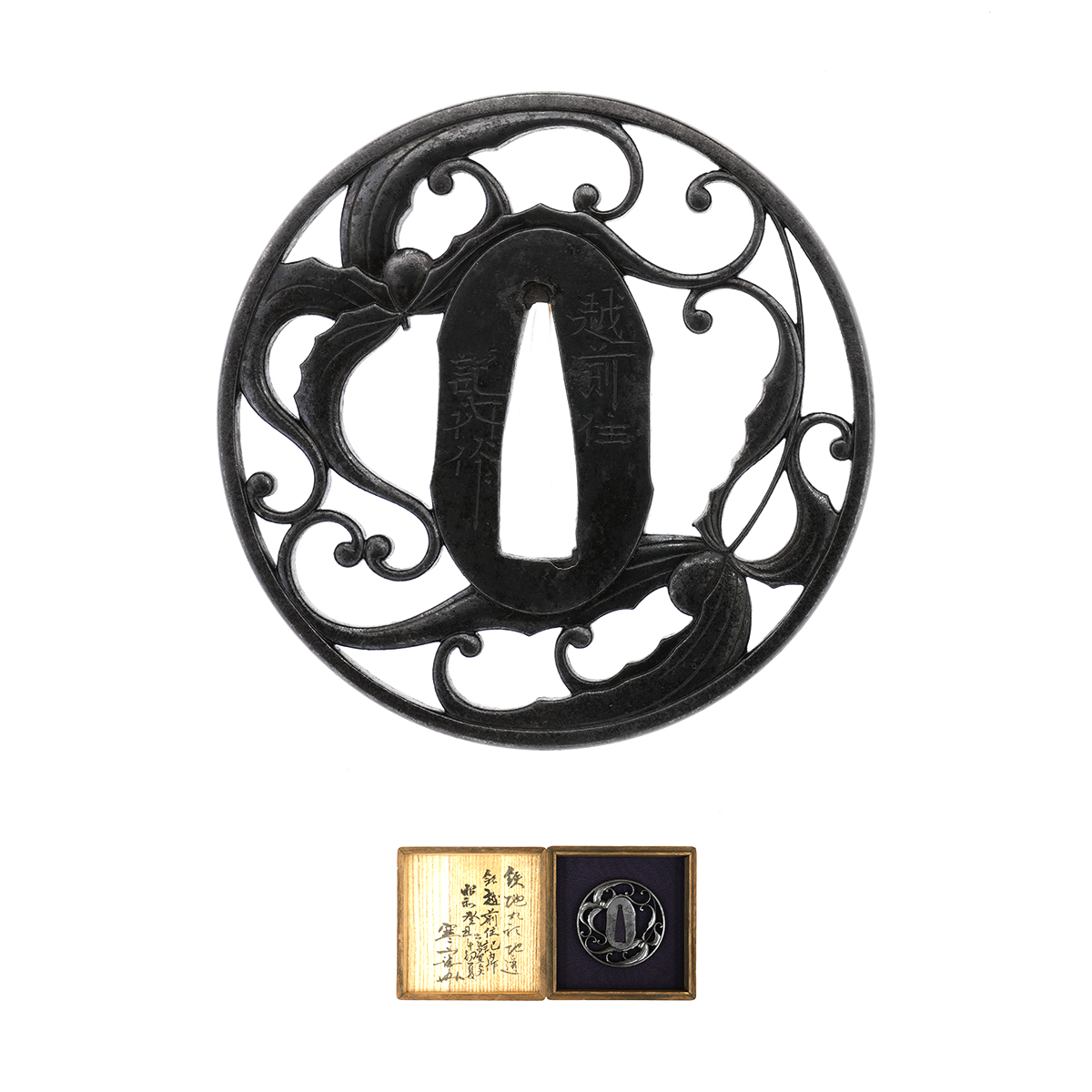
Kinai is a famous line of tsuba makers that continued in Fukui, Echizen Province, beginning in the early Edo period, and in later generations the Takahashi family succeeded to the name and served as the retained craftsmen for the Fukui domain. They are known for work that skillfully uses sukashi in iron to bring out the outlines of plants, and while examples featuring aoi leaves as the subject are often seen, a diverse range of designs has been passed down through the generations of works. This piece is mei "Echizen ju Kinai saku," and it is a piece that expansively develops a ran-ka (orchid flower) motif, which differs from the familiar aoi leaves, across the circular tsuba surface, a composition that will give a fresh impression even to those familiar with Kinai sukashi. When standing before the actual piece, the first thing that draws the heart is the beauty of the tetsu-aji; the ground, which possesses a deep, blackish colour, has a moist luster, and at a glance, it shows a smoothness and sheen that makes one think it is shakudo-ji. If you pass a white background through the large sukashi sections, the outlines of the petals, leaves, and thin vines stand out vividly, and if you match it with a dark background, the subtle light and shadow of the black iron surface and the undulations of the carving appear quietly, so you can enjoy different expressions depending on the place it is placed and the angle of the light. The orchid flowers that open to the left and right of the seppa-dai have petals that extend long from plump bases and curl inward at the tips like warabite, and by having even thinner curves circulate around them, a light movement is created inside the circular shape. The flowers and vines extend toward the mimi while drawing arcs in various places, and the modeling, which balances large and small negative spaces without relying on sharp straight lines, has a charm that makes one feel the softness of the plants and the strength of the iron at the same time, and the shape of the curling tips also carries a stylish atmosphere that is somewhat reminiscent of Western decorative patterns. The composition, which varies the thickness of the iron from the mimi to the petals, supporting the delicate sukashi while not breaking the pattern, is also a highlight; from the front, the design flows as if drawn with a single brushstroke, and from an angle, the nikudori of the petals and the depth of the carving stand out. If you follow the position of the orchid flowers and the circulation of the vines on the front and back, the same sukashi becomes a different scene as the viewpoint changes, and the more you view it while turning it in your hands, the more you can appreciate the beauty of the lines contained within the simple use of colour. Accompanied by a paulownia box with a hakogaki by Sato Kanzan, the ability to store the tsuba in the box for appreciation is also a charm unique to this piece. Among the many Kinai works with aoi-ha sukashi that one sees, the design that curls the tips of the orchid flowers in a warabite style and spreads elegant curves across the circular tsuba surface is particularly impressive, and above all, the tetsu-aji, which is so deep and clear in its blackness that it could be mistaken for shakudo-ji, greatly enhances the value of this piece. The calm black colour is well-matched from the mimi to the seppa-dai and the tips of the thinly extending vines, and because the natural luster of the iron quietly emerges when it receives light, it is a tsuba suitable for both collection and for mounting in a koshirae, where one can fully enjoy the dignity unique to well-forged old iron along with the clear lines of the sukashi.
Offered by Toushin
We couldn’t find current papers for this piece. Ask the dealer whether it has been, or can be, submitted to shinsa. — Hoshi

Machine translation of the shop's Japanese ·
Machine translation from the shop's Japanese · may contain errors ·
Echizen
28 pieces on the market now
We could not find an authenticity certificate on the seller’s listing. Japanese swords and fittings are normally papered by the NBTHK (or the NTHK). Without one, the attribution is the seller’s own assessment and has not been independently verified — treat it with caution and ask the dealer about certification before buying.
As a rule we do not accept returns, except when we have sent a different item from the one ordered or when there is a significant discrepancy between the description and the item. If you wish to return an item, please contact us within 3 days of its arrival and then send it back.
¥275,000