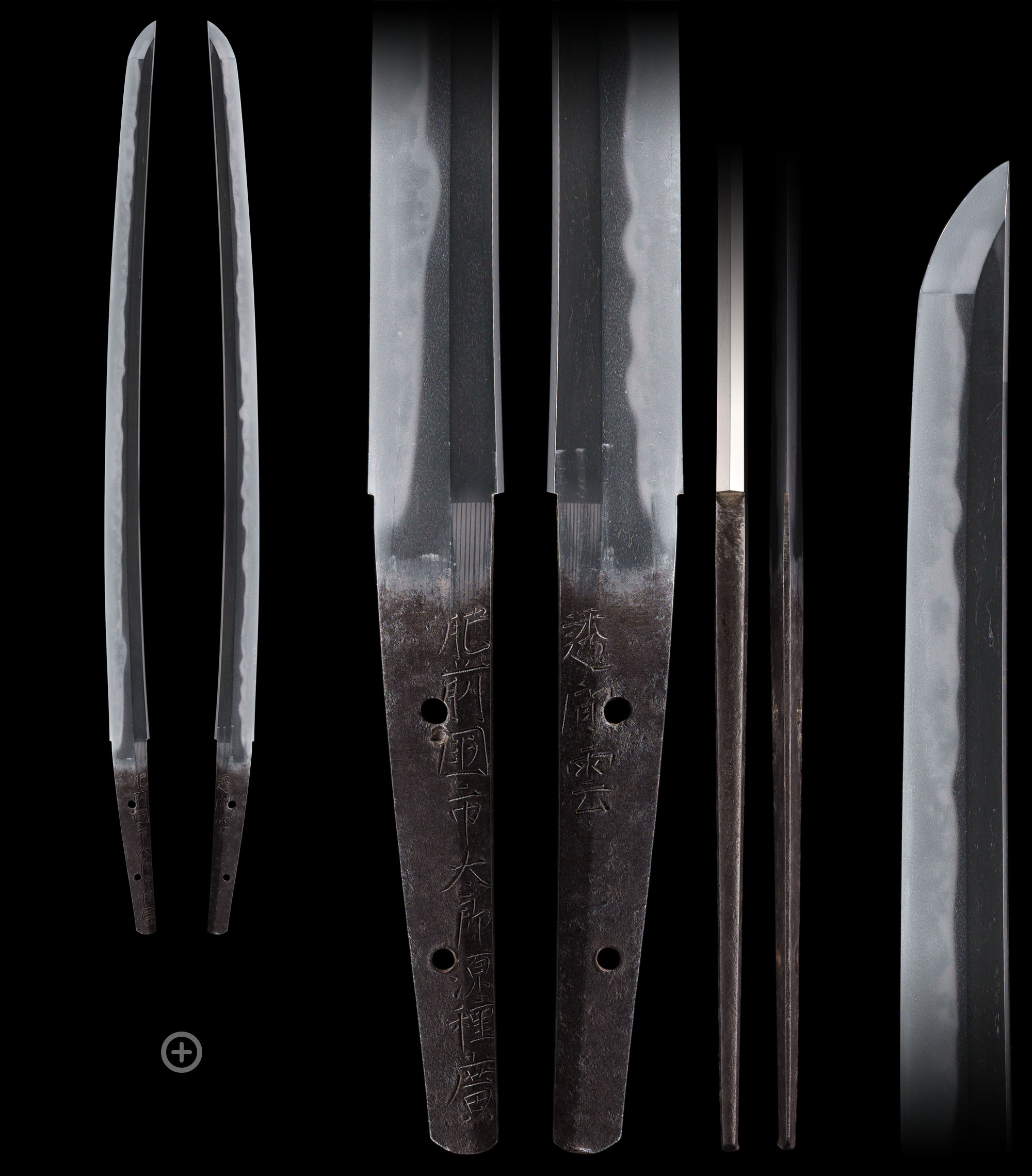
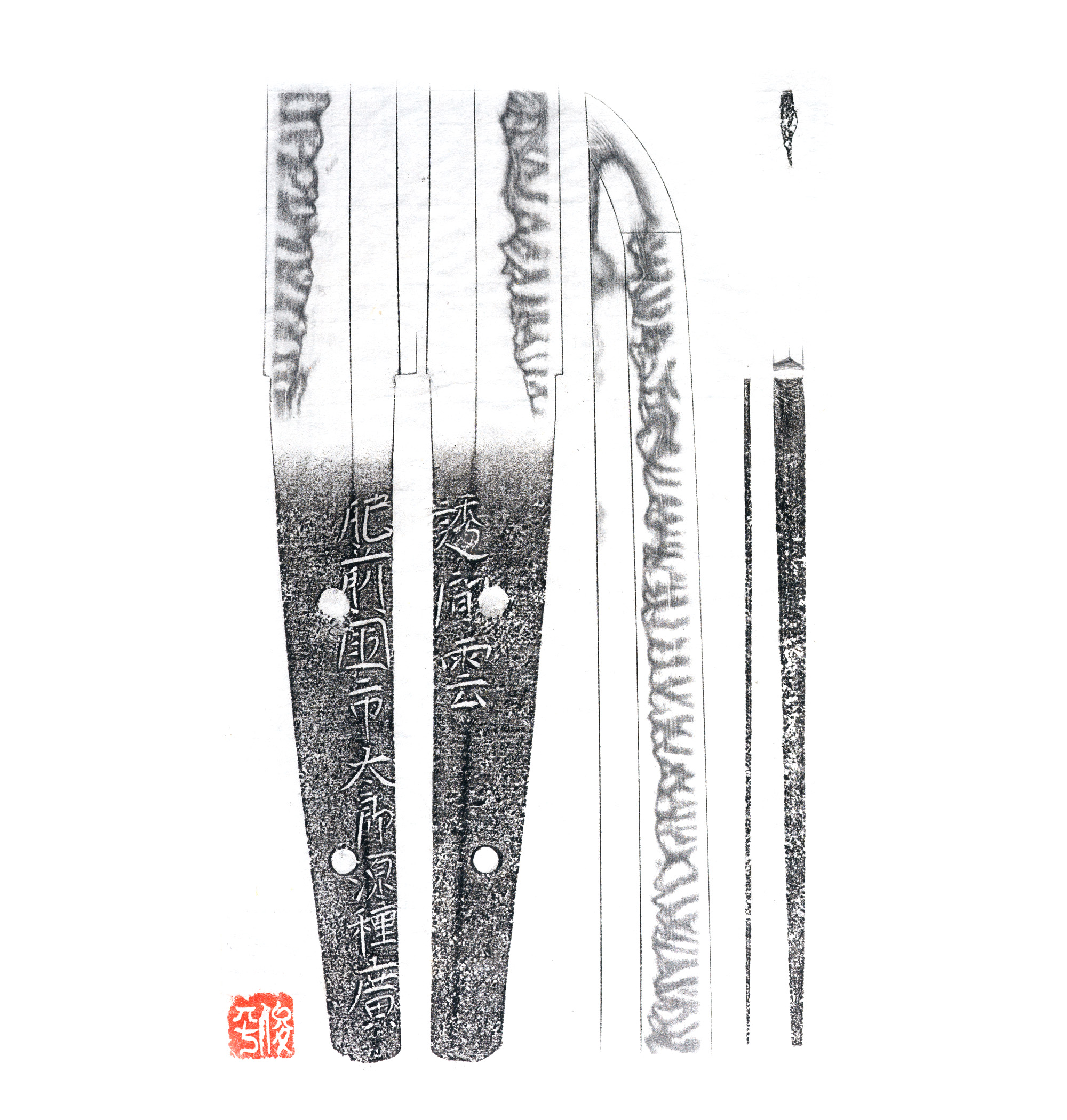
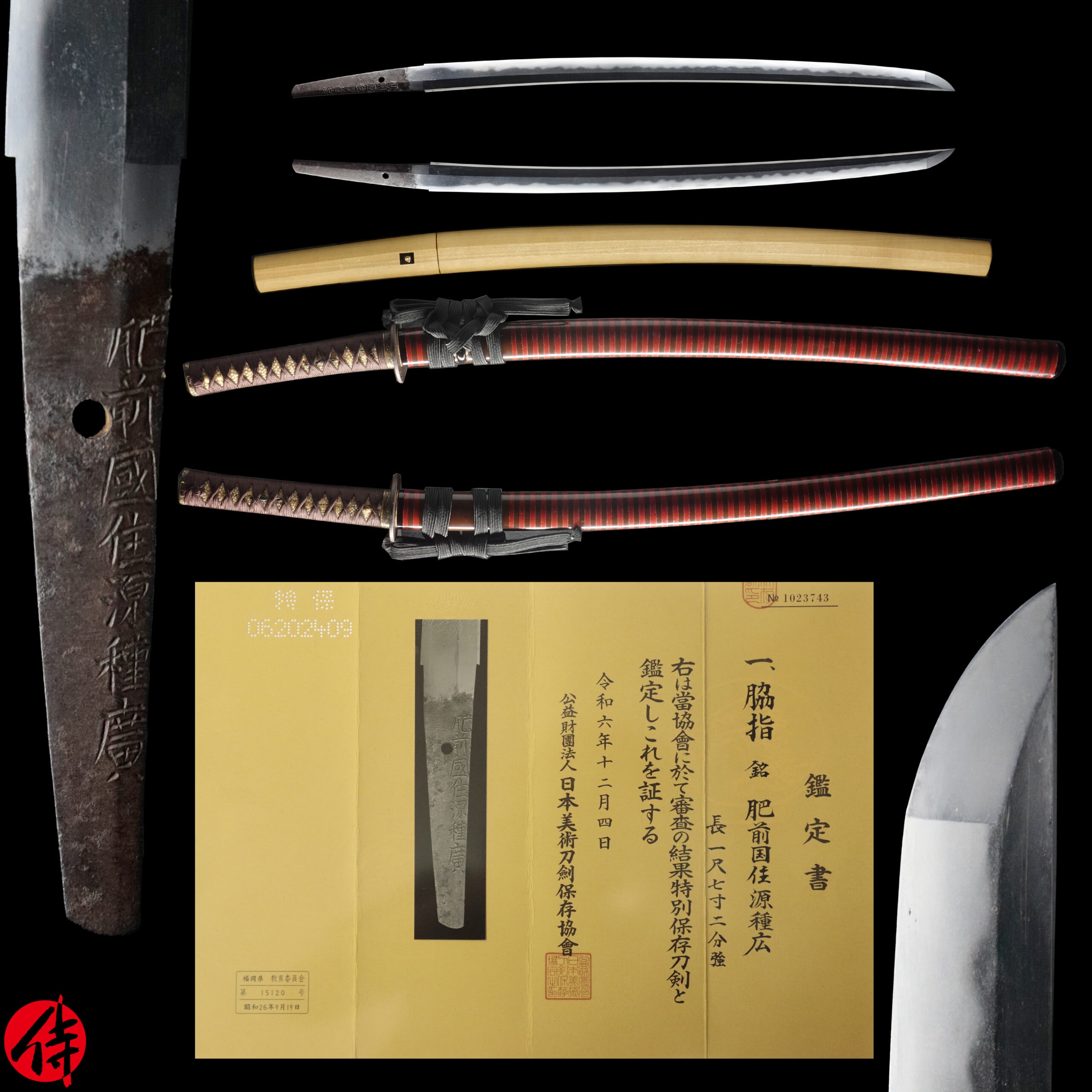
This is a wakizashi by Ichitaro Minamoto Tanehiro from the early Edo period in Hizen province. Tanehiro is known for his distinct style, separate from the mainstream Tadayoshi lineage, and this blade features a unique 'Sukima-gumo' (cloud gap) inscription on the ura-mei, signifying its excellent cutting ability. It comes with NBTHK Tokubetsu Hozon papers and is housed in a shirasaya.
mei · Kanei (1624-1644) · nagasa 54cm · sori 1cm


Hizen · around 1624-1644
1 piece on the market now
Where Tanehiro stands among comparable artisans: across all of nihontō, and within tradition, era, and period. The tiers (Foremost · Leading · Major · Notable) weigh official designations from the NBTHK and Japan's Agency for Cultural Affairs, together with historical honors of lasting repute such as the Sansaku and Meibutsu-chō.
Select a lens to see how it's measured.
A blade of top-grade workmanship and condition, formally judged to rank with a nationally recognized Important Art Object (Jūyō Bijutsuhin). Awarded only at the NBTHK’s competitive annual examination.
Of Japan’s roughly 2.5 million registered swords, only 12,307 (about 1 in 203) have ever attained Jūyō.
The NBTHK (Nihon Bijutsu Tōken Hozon Kyōkai, the Society for the Preservation of Japanese Art Swords) is a public-interest incorporated foundation founded in 1948 and supervised by Japan’s Agency for Cultural Affairs (Bunkachō); it is based at the Japanese Sword Museum in Tokyo. Its expert panels physically examine each submitted work (shinsa) and issue a certificate (kanteishō) ranking it by artistic and historical merit. NBTHK papers are the most widely recognized standard of authentication for Japanese swords and fittings.
NBTHK official siteReturns accepted within 7 days of arrival if item is unchanged from condition at time of sale; customer bears return shipping for personal-reason returns, company covers errors/shipping damage.
This is a wakizashi by Ichitaro Minamoto Tanehiro from the early Edo period in Hizen province. Tanehiro is known for his distinct style, separate from the mainstream Tadayoshi lineage, and this blade features a unique 'Sukima-gumo' (cloud gap) inscription on the ura-mei, signifying its excellent cutting ability. It comes with NBTHK Tokubetsu Hozon papers and is housed in a shirasaya.
mei · Kanei (1624-1644) · nagasa 54cm · sori 1cm


Hizen · around 1624-1644
1 piece on the market now
Where Tanehiro stands among comparable artisans: across all of nihontō, and within tradition, era, and period. The tiers (Foremost · Leading · Major · Notable) weigh official designations from the NBTHK and Japan's Agency for Cultural Affairs, together with historical honors of lasting repute such as the Sansaku and Meibutsu-chō.
Select a lens to see how it's measured.
A blade of top-grade workmanship and condition, formally judged to rank with a nationally recognized Important Art Object (Jūyō Bijutsuhin). Awarded only at the NBTHK’s competitive annual examination.
Of Japan’s roughly 2.5 million registered swords, only 12,307 (about 1 in 203) have ever attained Jūyō.
The NBTHK (Nihon Bijutsu Tōken Hozon Kyōkai, the Society for the Preservation of Japanese Art Swords) is a public-interest incorporated foundation founded in 1948 and supervised by Japan’s Agency for Cultural Affairs (Bunkachō); it is based at the Japanese Sword Museum in Tokyo. Its expert panels physically examine each submitted work (shinsa) and issue a certificate (kanteishō) ranking it by artistic and historical merit. NBTHK papers are the most widely recognized standard of authentication for Japanese swords and fittings.
NBTHK official siteReturns accepted within 7 days of arrival if item is unchanged from condition at time of sale; customer bears return shipping for personal-reason returns, company covers errors/shipping damage.