Edo was the sword’s age of connoisseurship: the Hon’ami appraisers, the shogunal register of famous blades of 1719, and a thriving literature turned the sword into an object of study even as it ceased to be drawn in war.
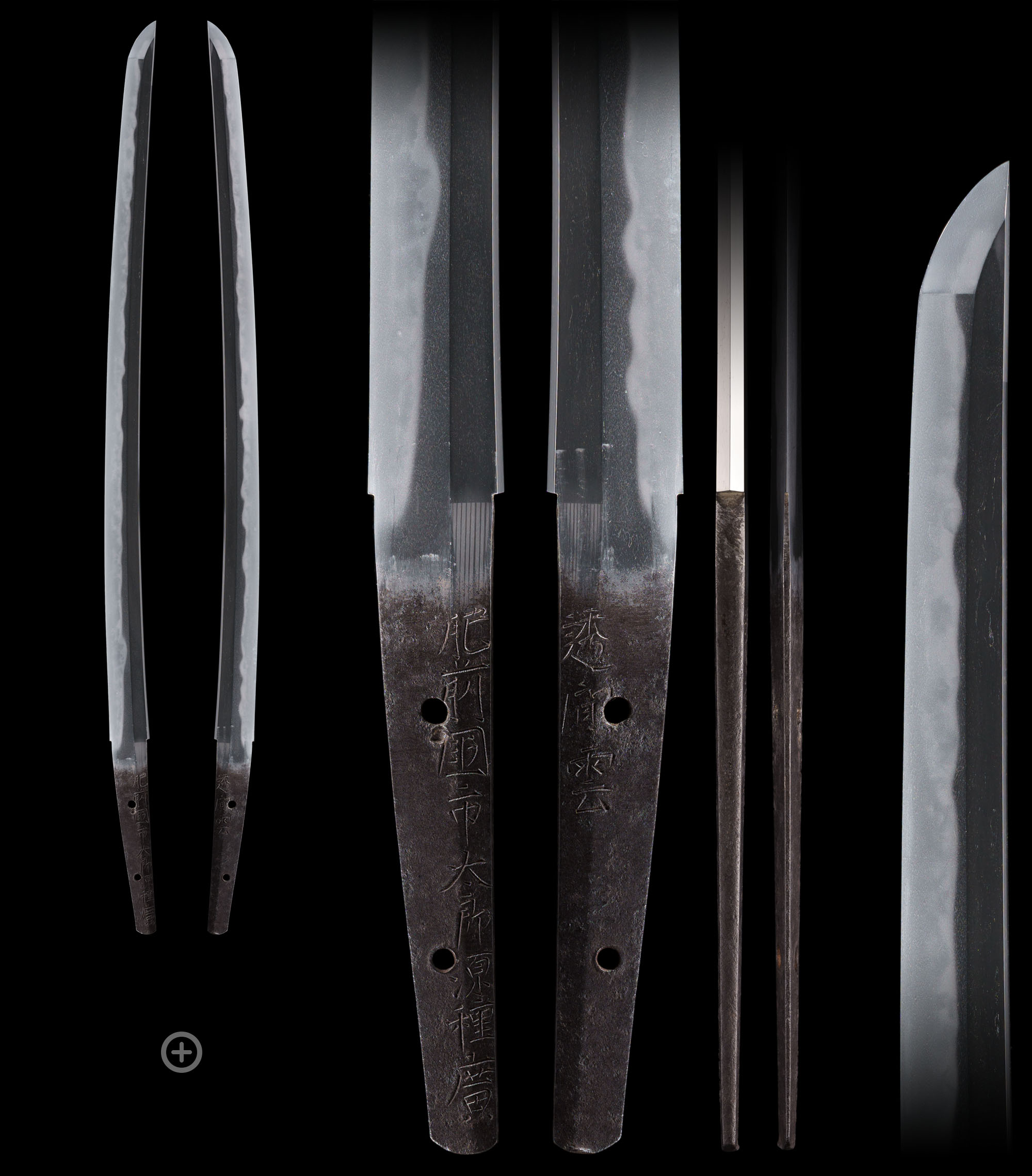
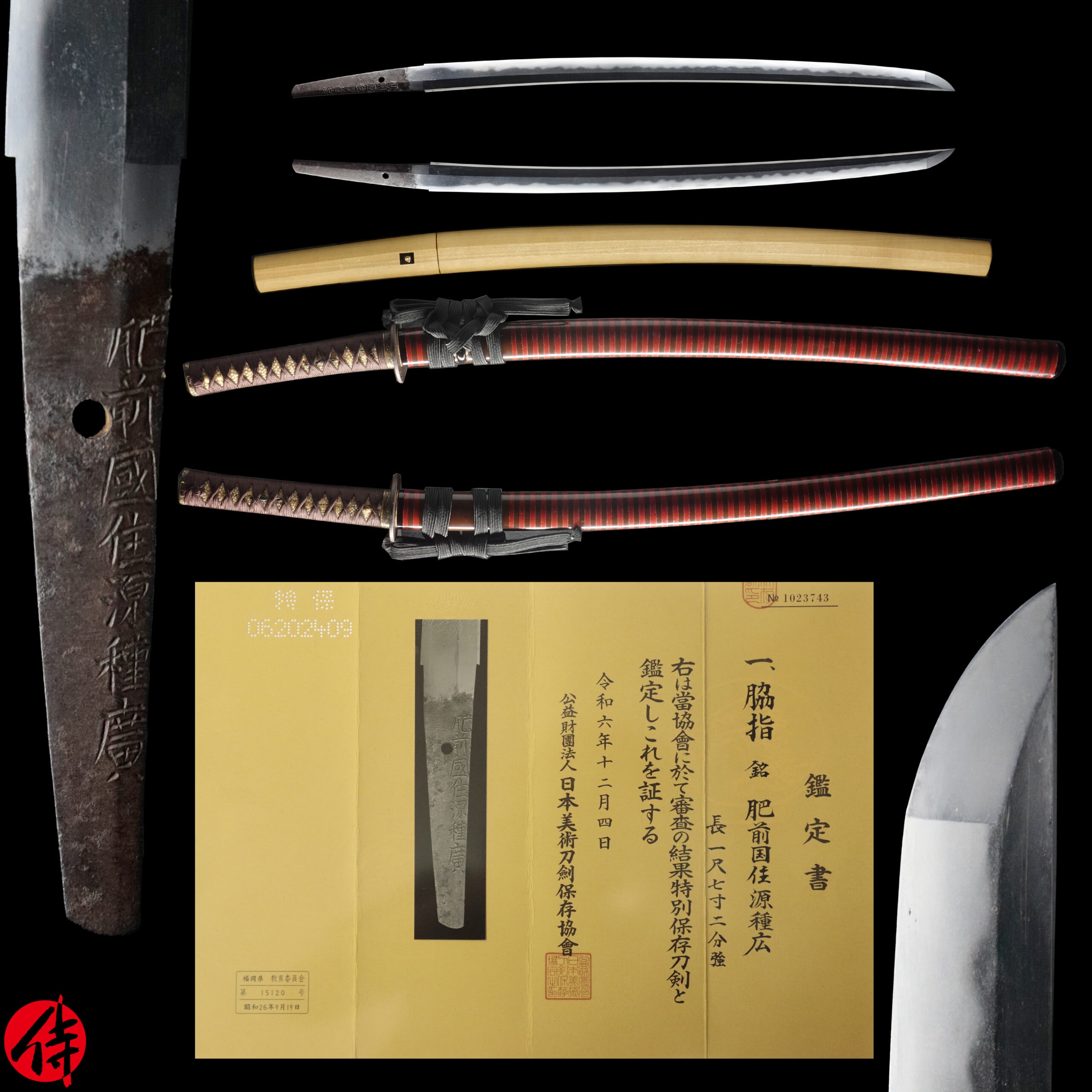
This is a wakizashi signed by Higo Daijo Minamoto Tanehiro, a smith from Hizen province active in the early Edo period (around Kanbun era). Tanehiro was part of the Ichita-kei group of smiths, known for their tightly forged jigane and bright, flamboyant hamon, similar to works by Hizen Masahiro and Yukihiro. His works are highly regarded and suggest a close relationship with the Tadayoshi school.
 NihontoWatch
mei · Kanei (1624-1644)
Hizen · around 1624-1644
1 piece on the market now
Where Tanehiro stands among comparable artisans: across all of nihontō, and within tradition, era, and period. The tiers (Foremost · Leading · Major · Notable) weigh official designations from the NBTHK and Japan's Agency for Cultural Affairs, together with historical honors of lasting repute such as the Sansaku and Meibutsu-chō.
Select a lens to see how it's measured.
The Edo period (1615 to 1868)
Edo was the sword’s age of connoisseurship: the Hon’ami appraisers, the shogunal register of famous blades of 1719, and a thriving literature turned the sword into an object of study even as it ceased to be drawn in war.
We could not find an authenticity certificate on the seller’s listing. Japanese swords and fittings are normally papered by the NBTHK (or the NTHK). Without one, the attribution is the seller’s own assessment and has not been independently verified — treat it with caution and ask the dealer about certification before buying.
If, due to our fault, the item differs significantly from its proper condition, the item may be returned. Cooling-off is within one week of the item's arrival.
This is a wakizashi signed by Higo Daijo Minamoto Tanehiro, a smith from Hizen province active in the early Edo period (around Kanbun era). Tanehiro was part of the Ichita-kei group of smiths, known for their tightly forged jigane and bright, flamboyant hamon, similar to works by Hizen Masahiro and Yukihiro. His works are highly regarded and suggest a close relationship with the Tadayoshi school.
NihontoWatchmei · Kanei (1624-1644)
Hizen · around 1624-1644
1 piece on the market now
Where Tanehiro stands among comparable artisans: across all of nihontō, and within tradition, era, and period. The tiers (Foremost · Leading · Major · Notable) weigh official designations from the NBTHK and Japan's Agency for Cultural Affairs, together with historical honors of lasting repute such as the Sansaku and Meibutsu-chō.
Select a lens to see how it's measured.
The Edo period (1615 to 1868)
Edo was the sword’s age of connoisseurship: the Hon’ami appraisers, the shogunal register of famous blades of 1719, and a thriving literature turned the sword into an object of study even as it ceased to be drawn in war.
We could not find an authenticity certificate on the seller’s listing. Japanese swords and fittings are normally papered by the NBTHK (or the NTHK). Without one, the attribution is the seller’s own assessment and has not been independently verified — treat it with caution and ask the dealer about certification before buying.
If, due to our fault, the item differs significantly from its proper condition, the item may be returned. Cooling-off is within one week of the item's arrival.