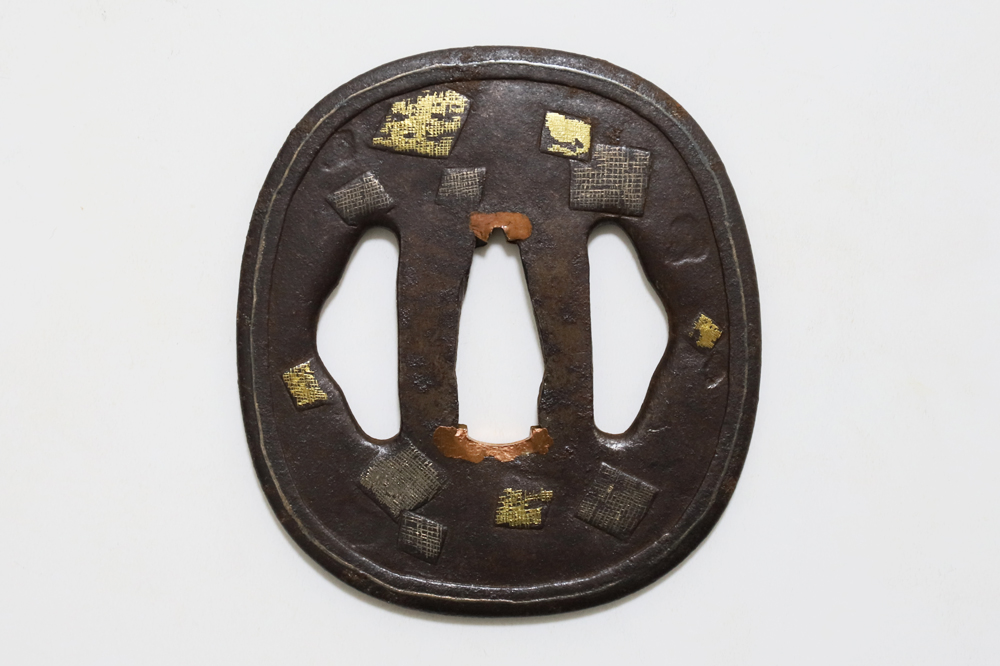
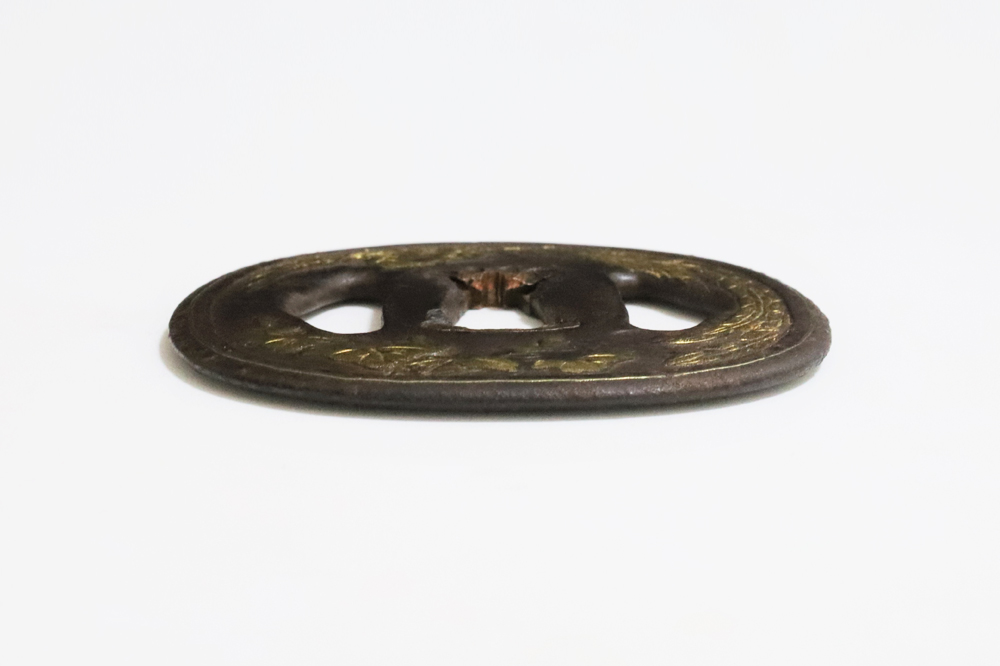
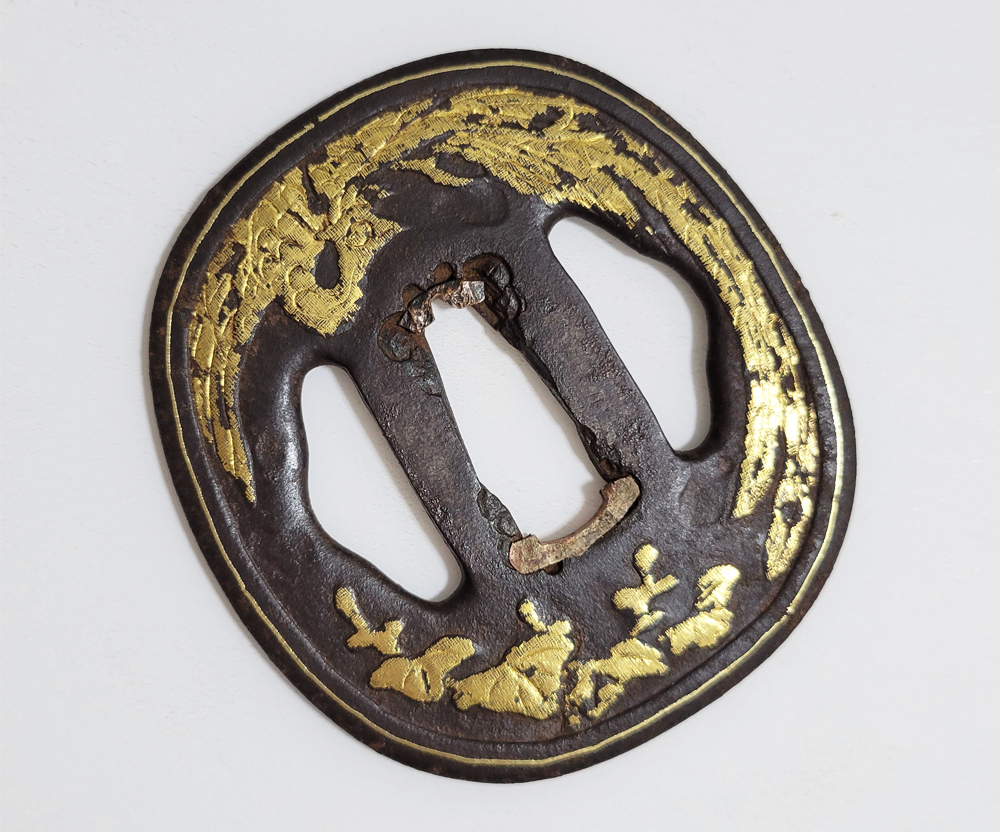
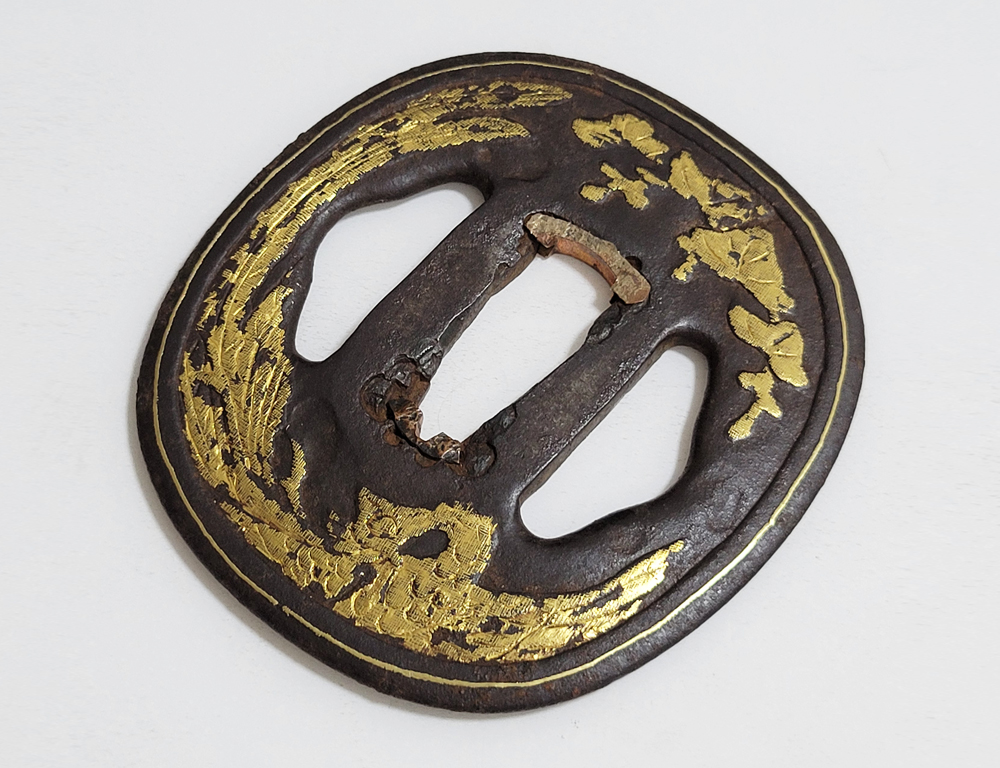
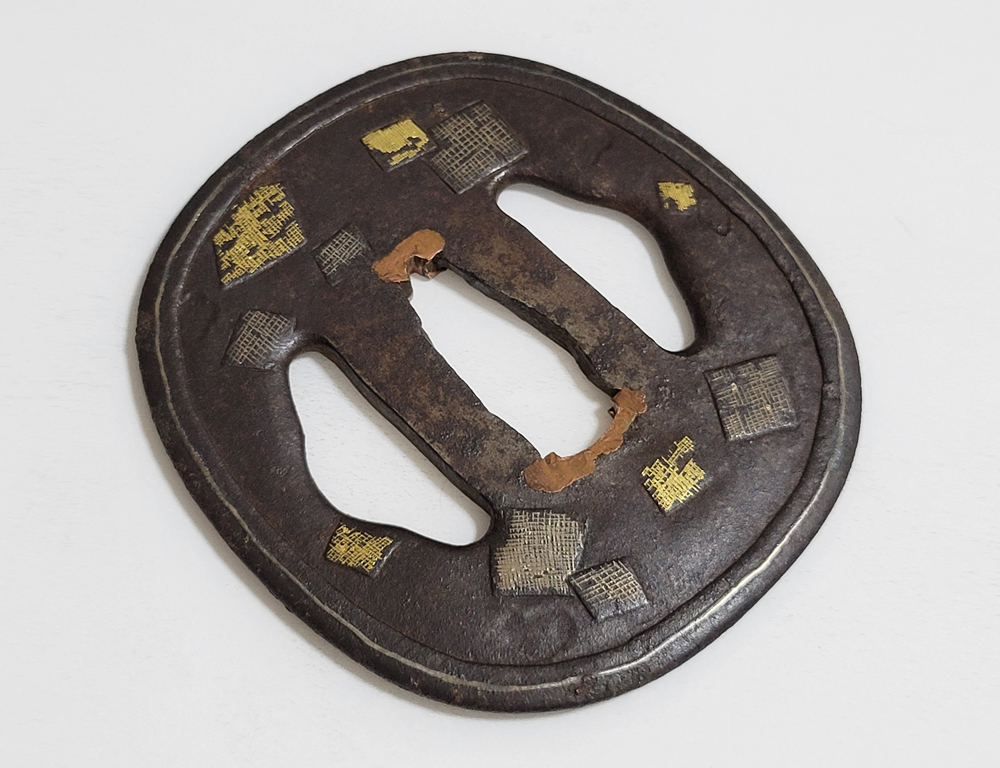
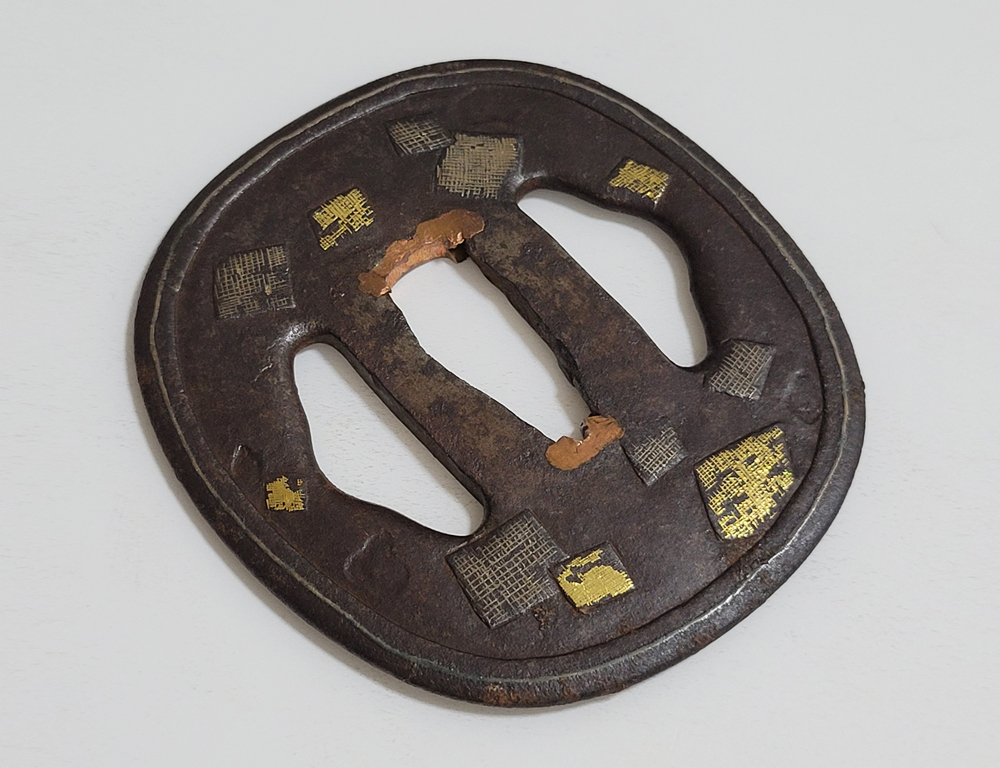
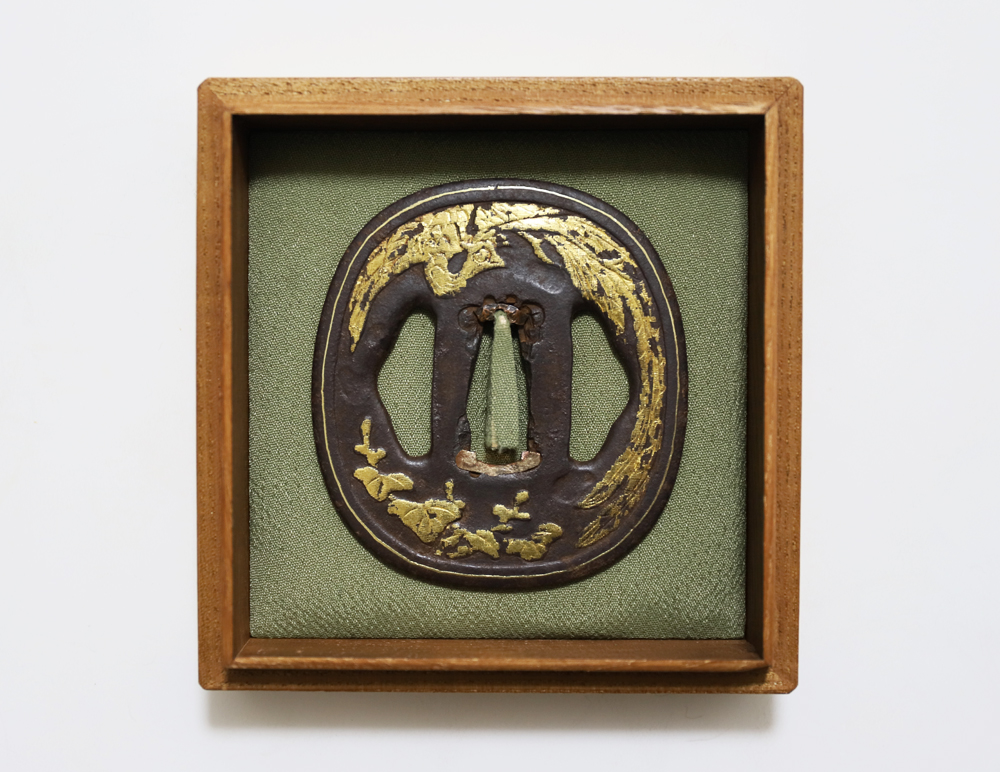
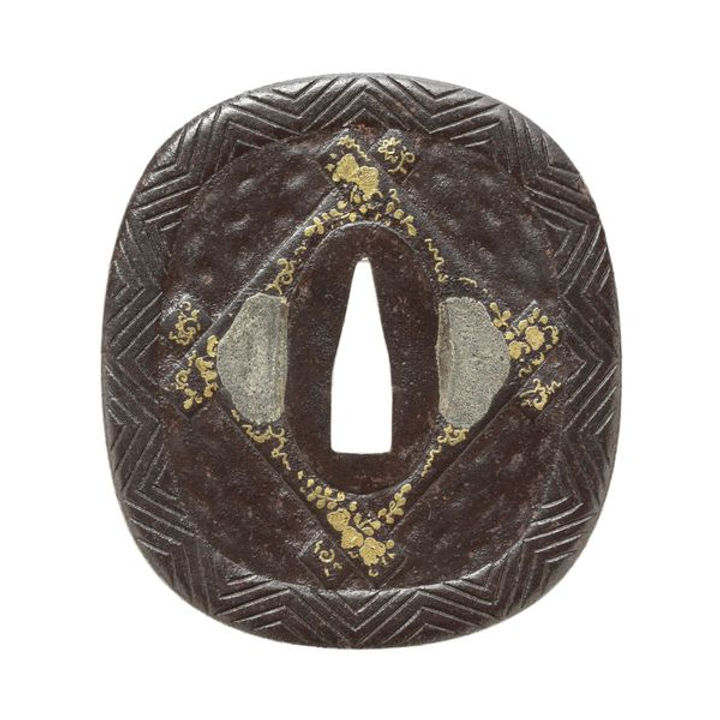
This is an Edo Higo tsuba featuring a paulownia and phoenix design. Edo Higo style was popularized in Edo by Kumagai Yoshiyuki, a retainer of the Hosokawa clan from Sendai, who studied Higo metalwork in Yotsuya during the late Edo period. It is characterized by gold and silver nunome-zogan (overlay inlay) and large hitsu-ana (cord holes) on both sides. It would be striking on a突兵拵 (Toppei Koshirae).
Certificate reading — 無銘(江戸肥後)
 NihontoWatch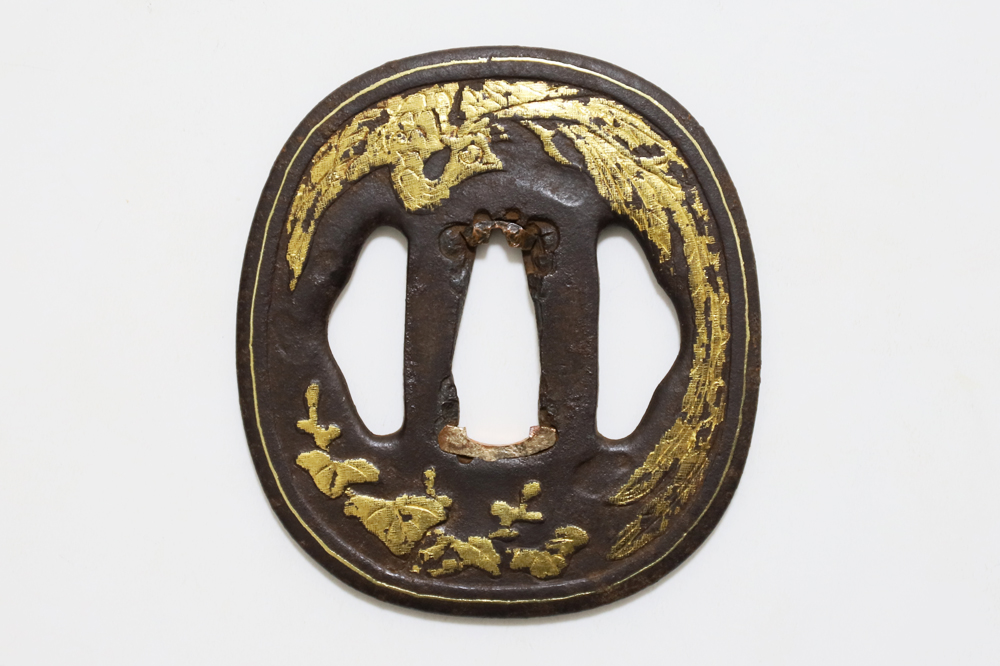
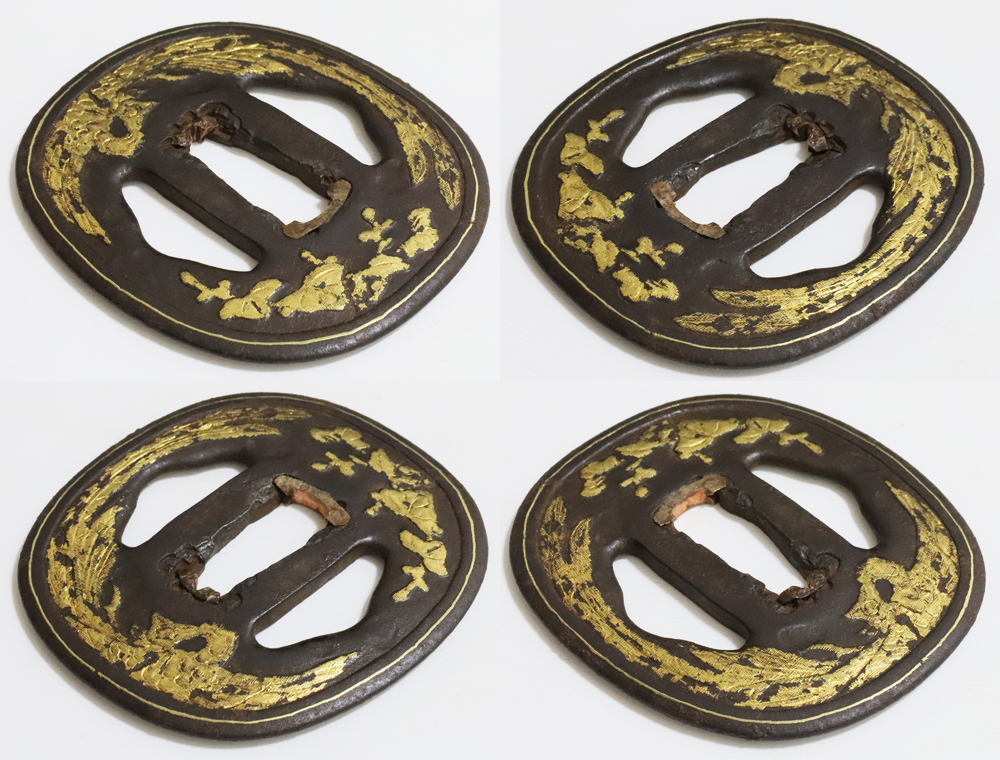
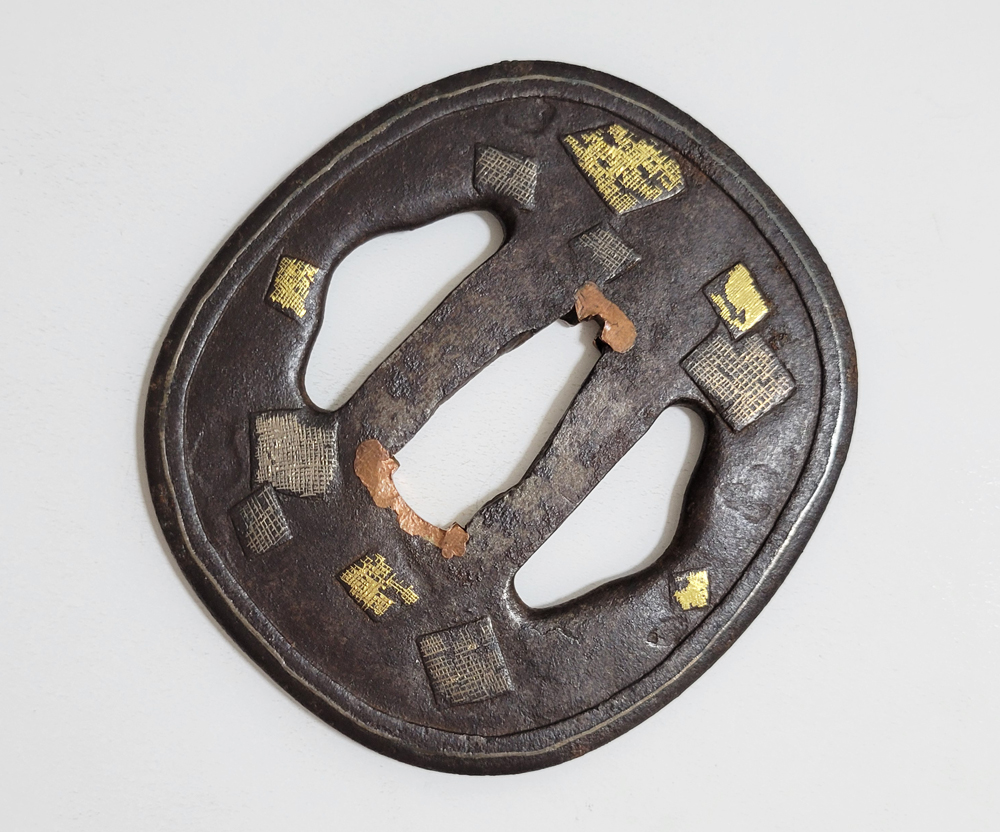
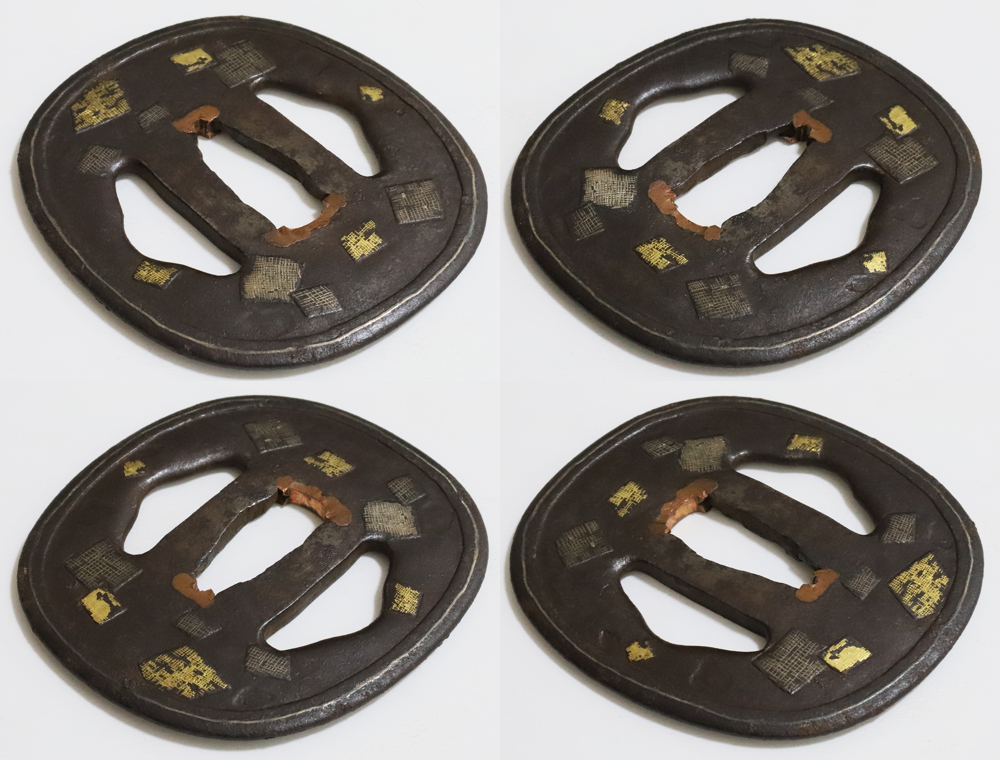
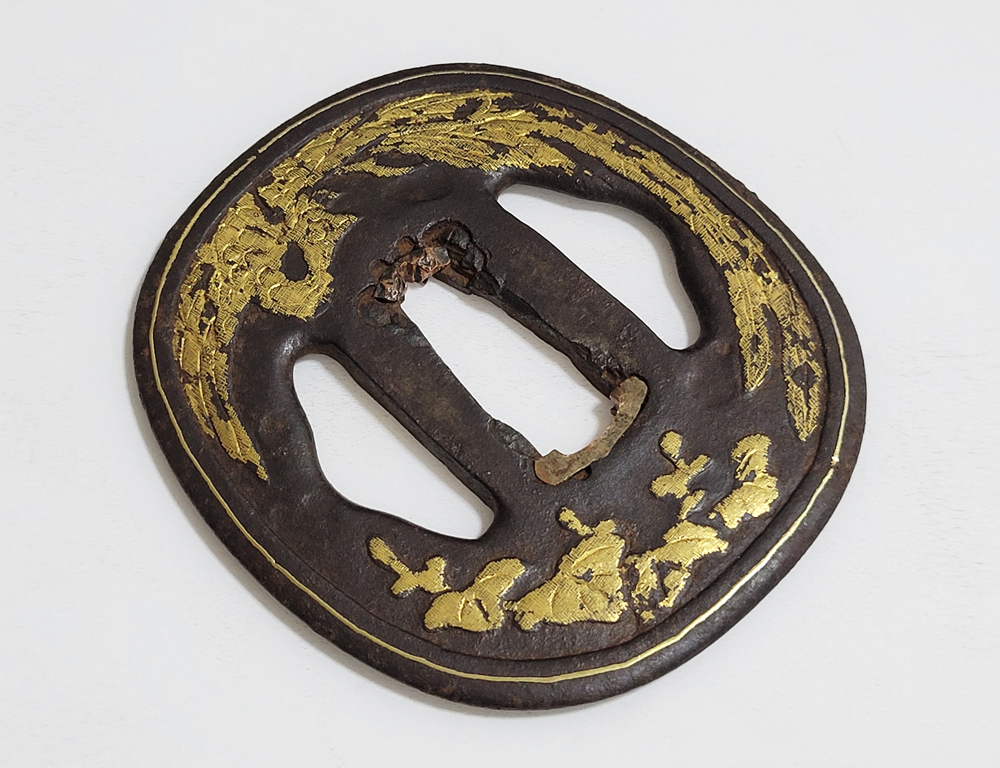
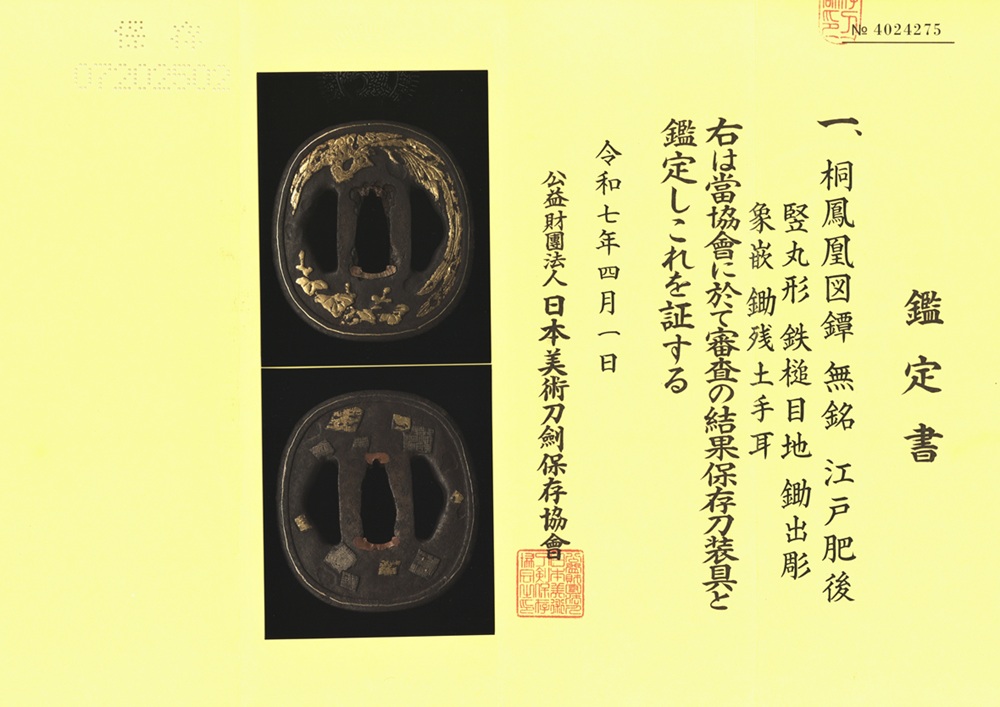
Certifies a genuine fitting worth preserving: a correct signature, or, if unsigned, an identifiable era and school, with recognized artistic and craft value.
The NBTHK (Nihon Bijutsu Tōken Hozon Kyōkai, the Society for the Preservation of Japanese Art Swords) is a public-interest incorporated foundation founded in 1948 and supervised by Japan’s Agency for Cultural Affairs (Bunkachō); it is based at the Japanese Sword Museum in Tokyo. Its expert panels physically examine each submitted work (shinsa) and issue a certificate (kanteishō) ranking it by artistic and historical merit. NBTHK papers are the most widely recognized standard of authentication for Japanese swords and fittings.
NBTHK official siteDomestic: items may be returned within 7 days in original condition for a full refund (buyer covers transport). Overseas orders: no-refunds, no-returns.
¥80,000


