The twentieth century nearly killed the craft twice: wartime distortion, then the occupation ban. The NBTHK’s founding in 1948 and licensed forging from 1953 rebuilt the sword as an art, crowned by Living National Treasures and the mukansa rank.
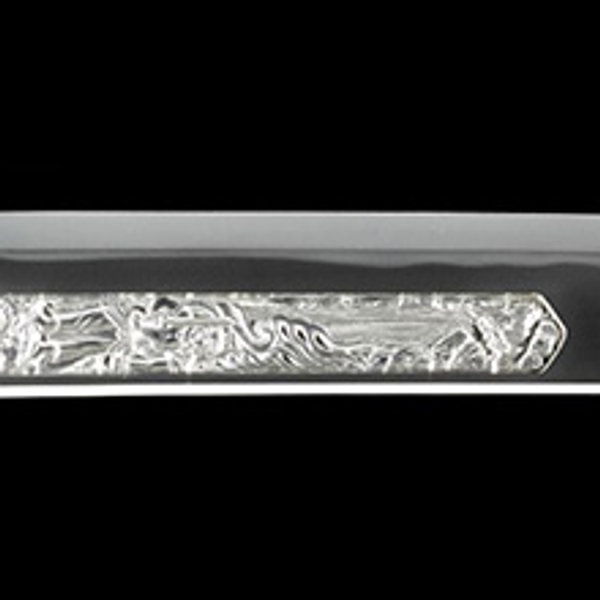
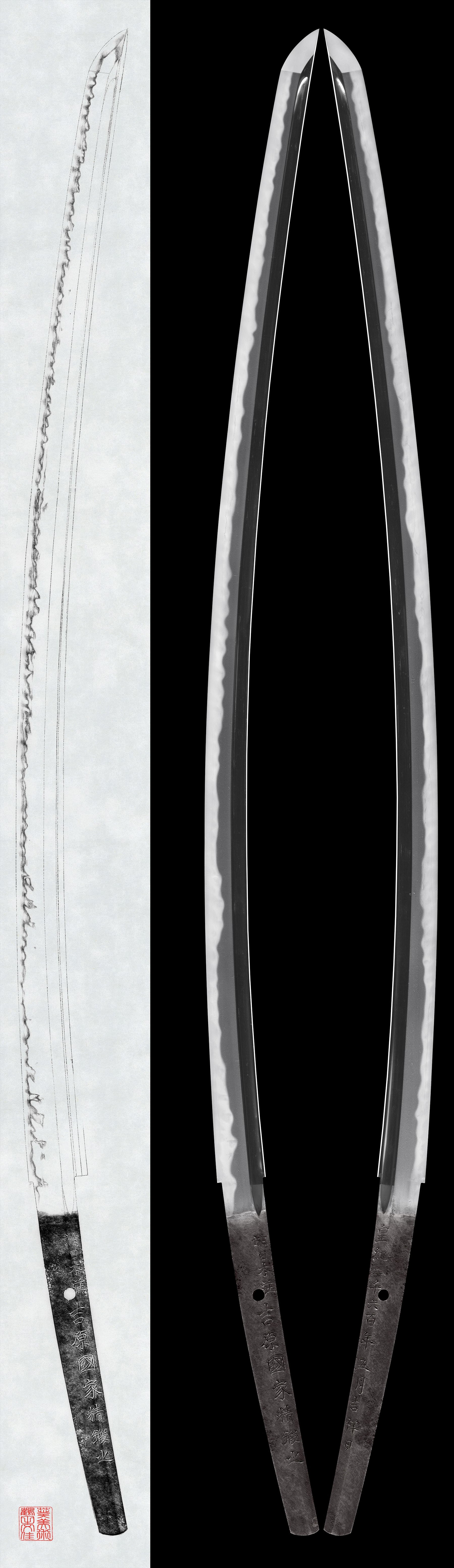
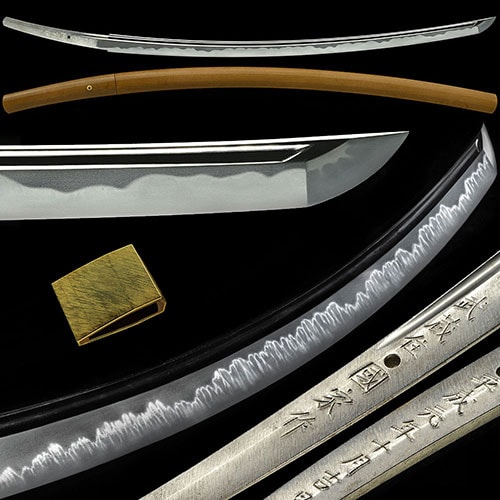
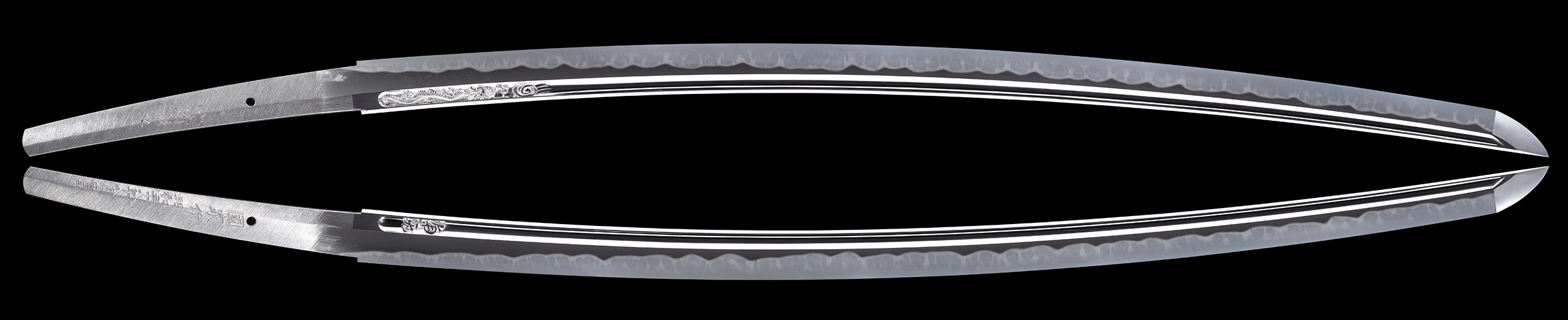
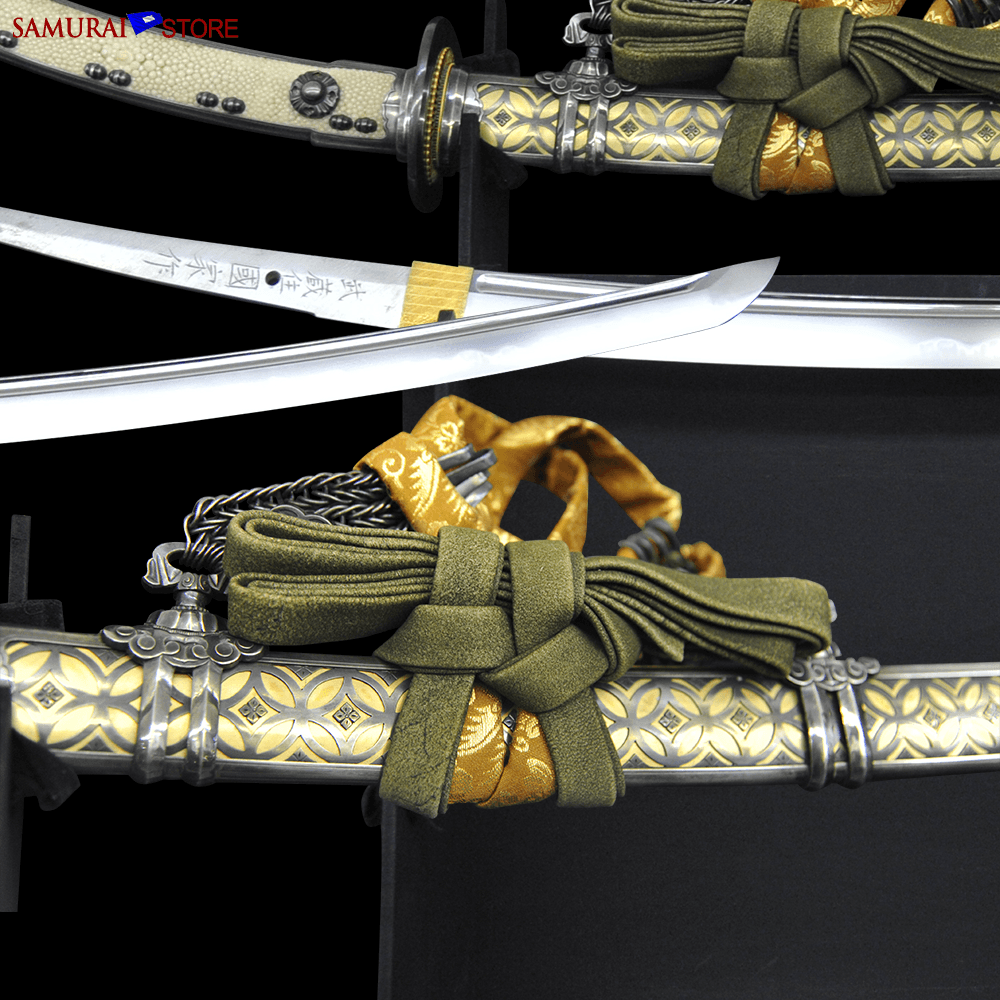
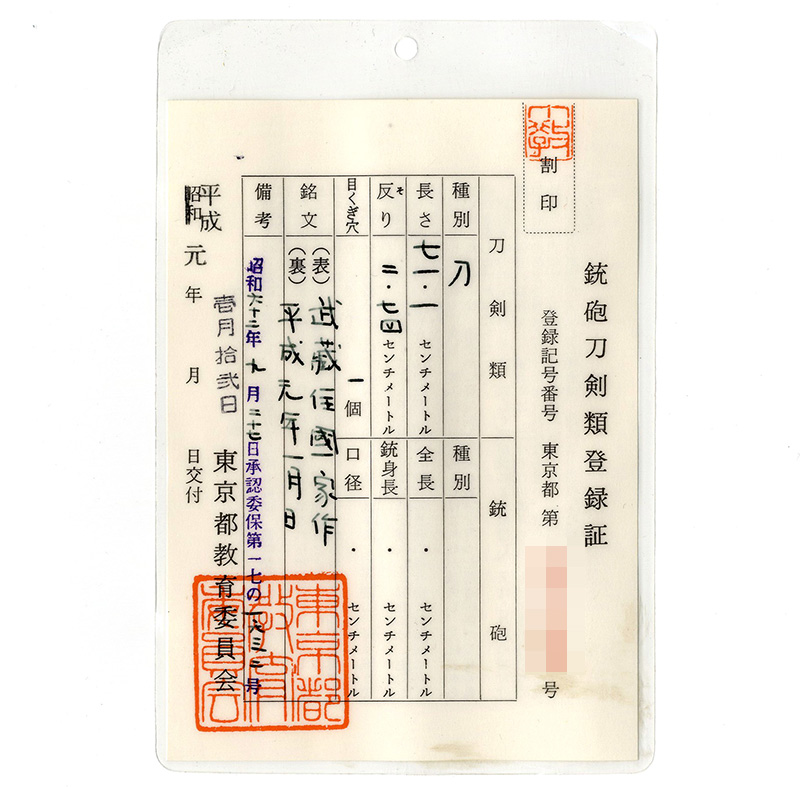
This katana is a work by Yoshihara Kuniie, the 3rd generation, also known as Yoshihara Shoji. He was designated a Mukansa swordsmith at the age of 37 and recognized as a holder of Tokyo Intangible Cultural Property. The blade features a nagasa of 71.1 cm and a sori of 2.74 cm, made in the Heisei era (1989).
 NihontoWatch
mei · Gendaito · nagasa 71.1cm · sori 2.74cm


Tokyo · around 1926-1989
5 pieces on the market now
Shōwa to the present: destruction and revival
The twentieth century nearly killed the craft twice: wartime distortion, then the occupation ban. The NBTHK’s founding in 1948 and licensed forging from 1953 rebuilt the sword as an art, crowned by Living National Treasures and the mukansa rank.
We could not find an authenticity certificate on the seller’s listing. Japanese swords and fittings are normally papered by the NBTHK (or the NTHK). Without one, the attribution is the seller’s own assessment and has not been independently verified — treat it with caution and ask the dealer about certification before buying.
Cooling-off (returns or exchanges) is accepted within 3 days of the item's arrival. Return shipping and refund transfer fees are the customer's responsibility. Fees other than the item price (transfer fees, credit card fees, etc.) cannot be refunded. Returns and refunds are not available for overseas destinations.