The twentieth century nearly killed the craft twice: wartime distortion, then the occupation ban. The NBTHK’s founding in 1948 and licensed forging from 1953 rebuilt the sword as an art, crowned by Living National Treasures and the mukansa rank.
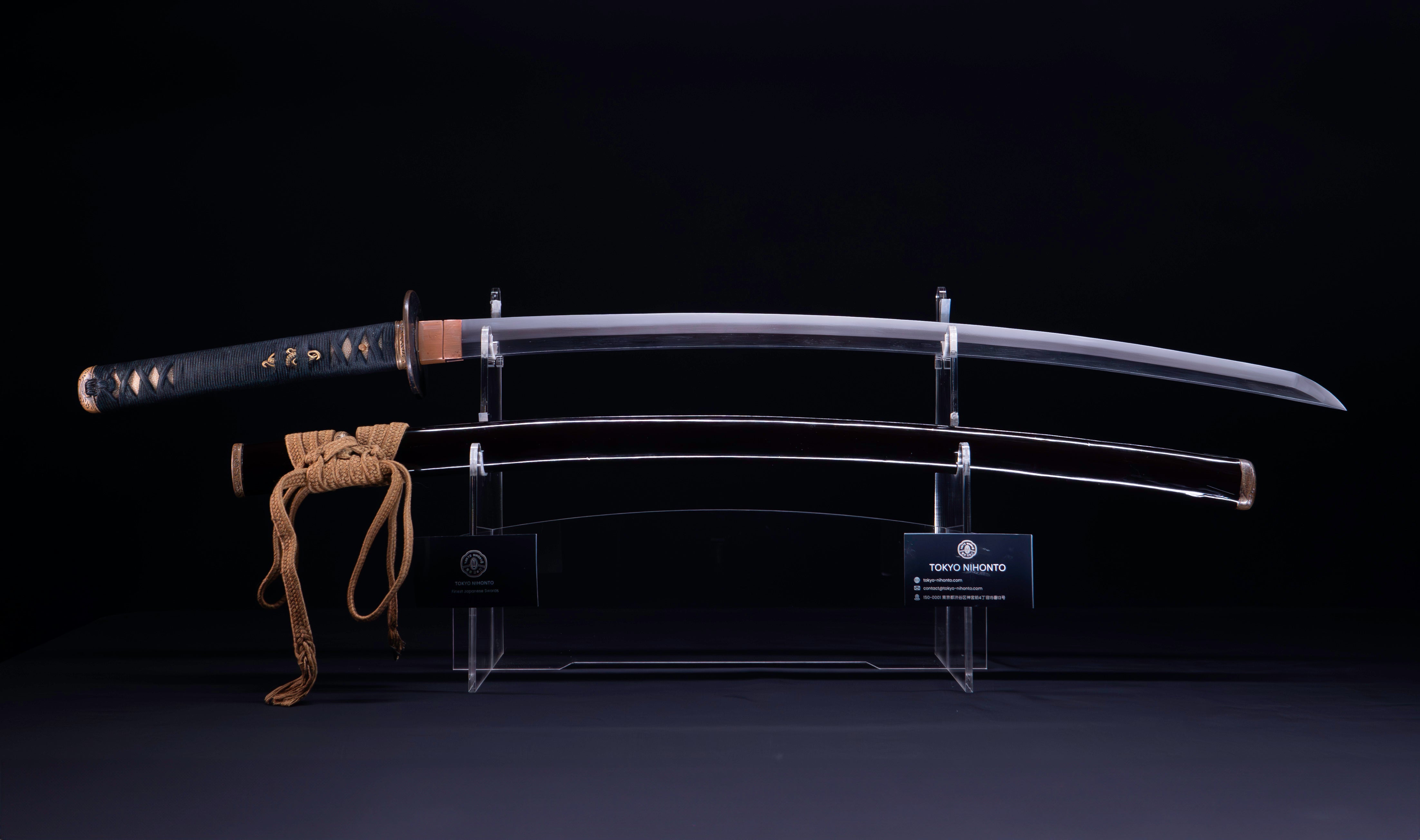
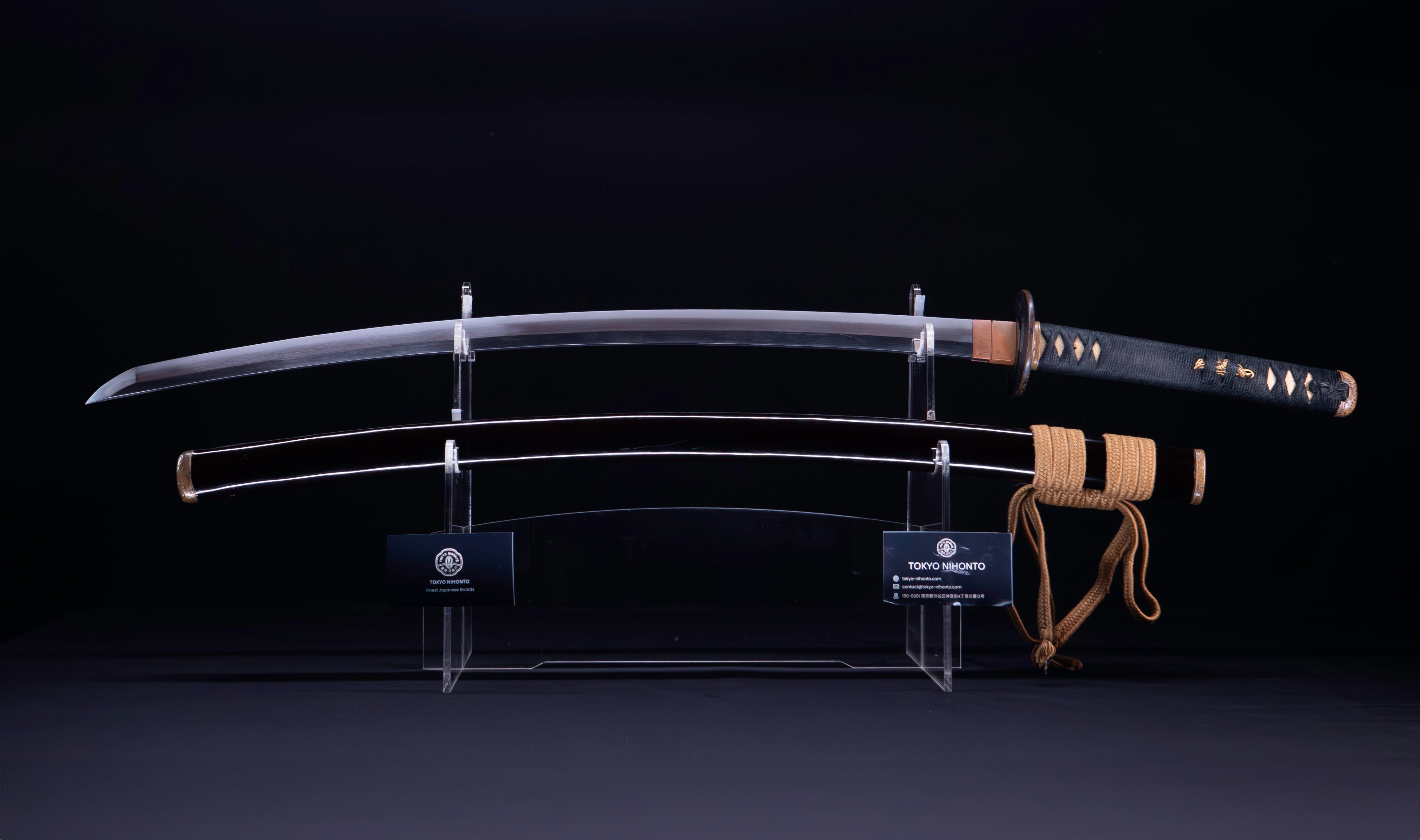
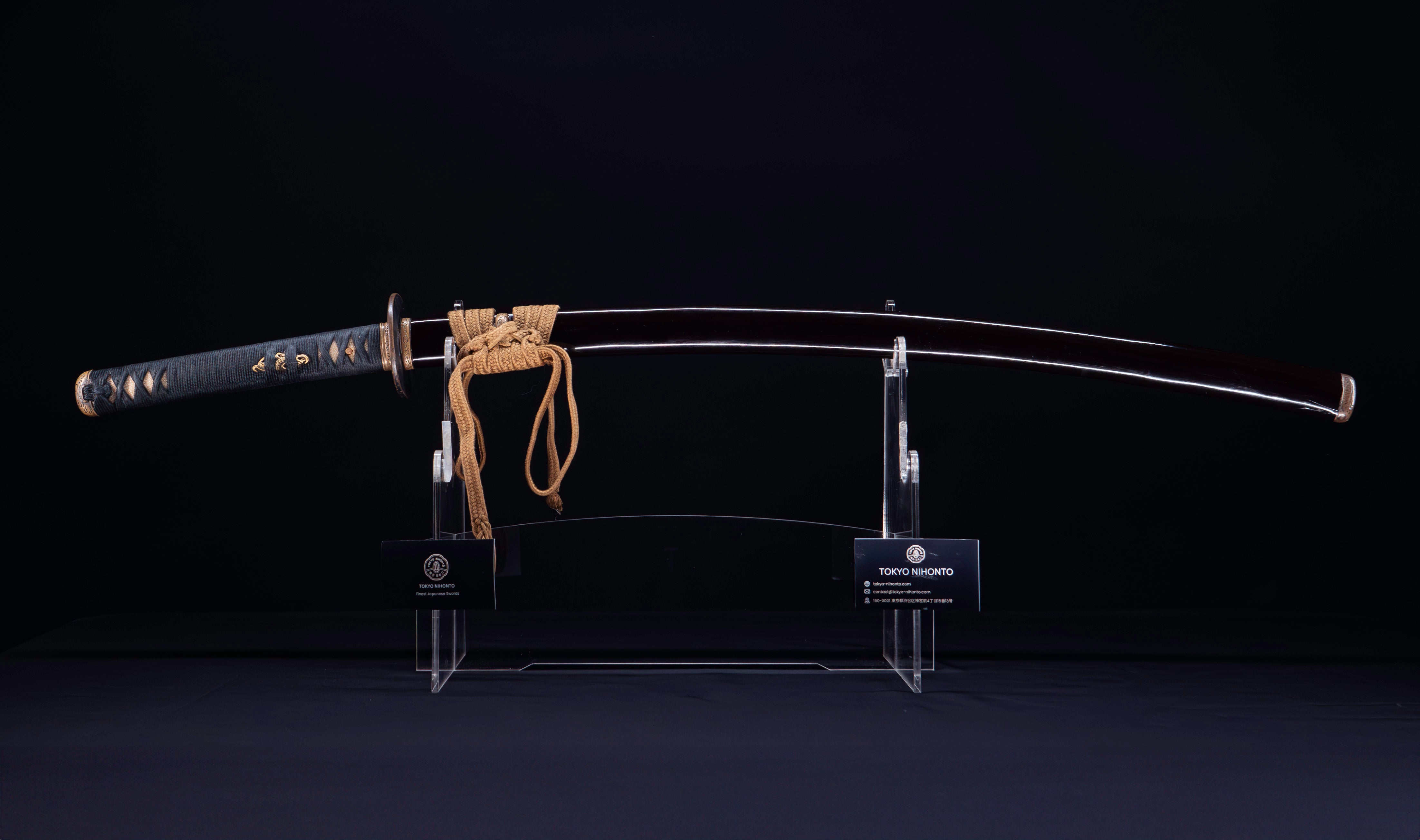
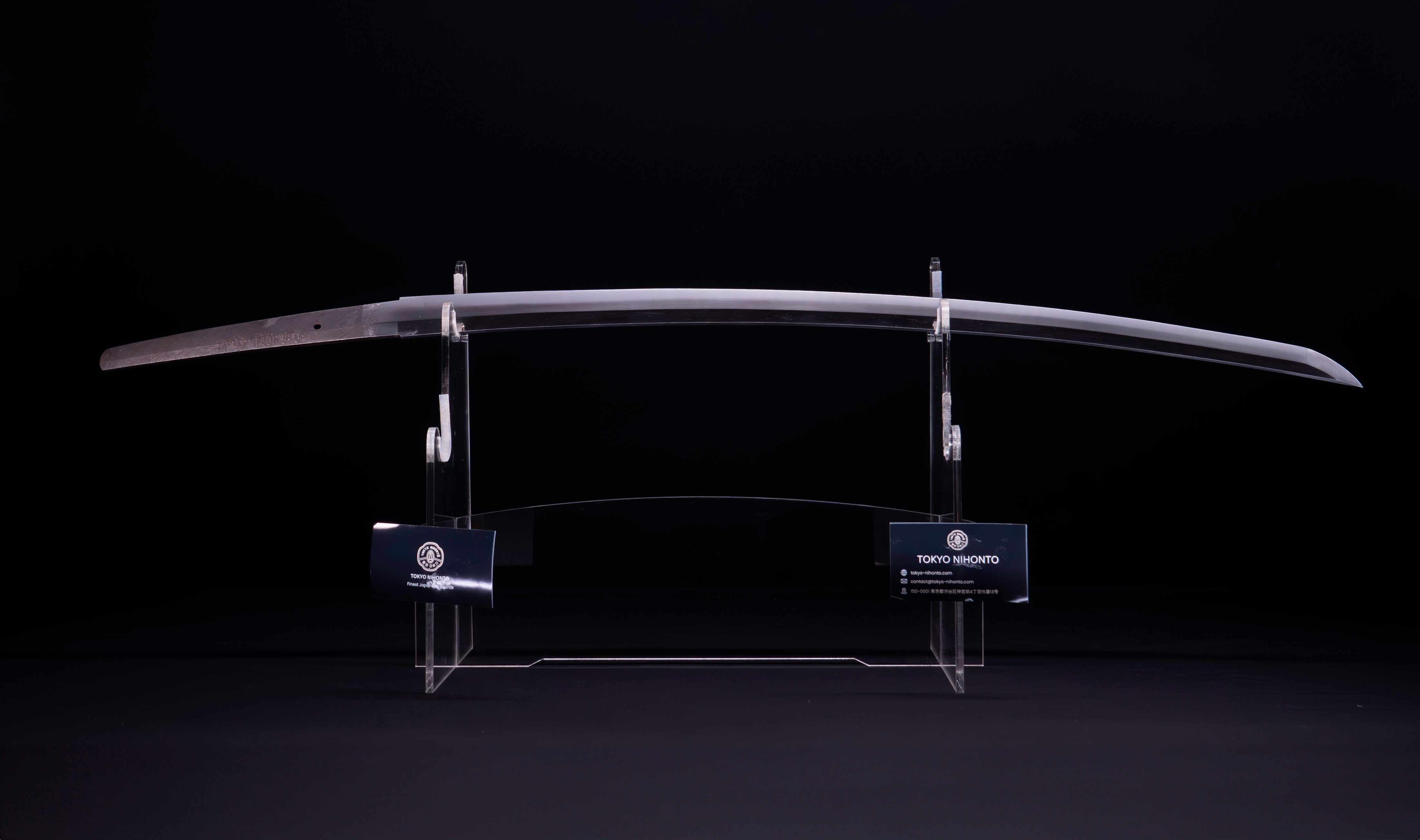
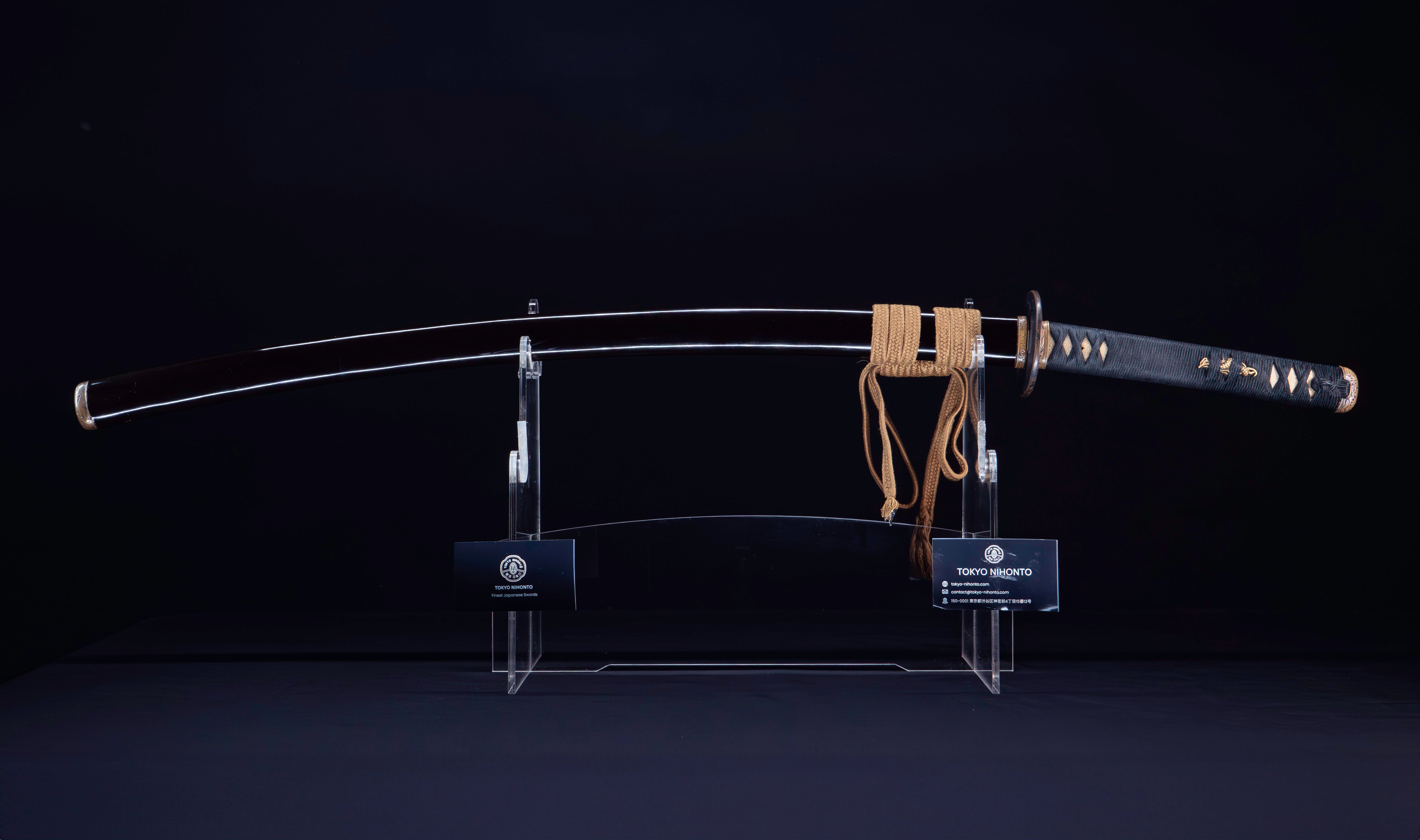
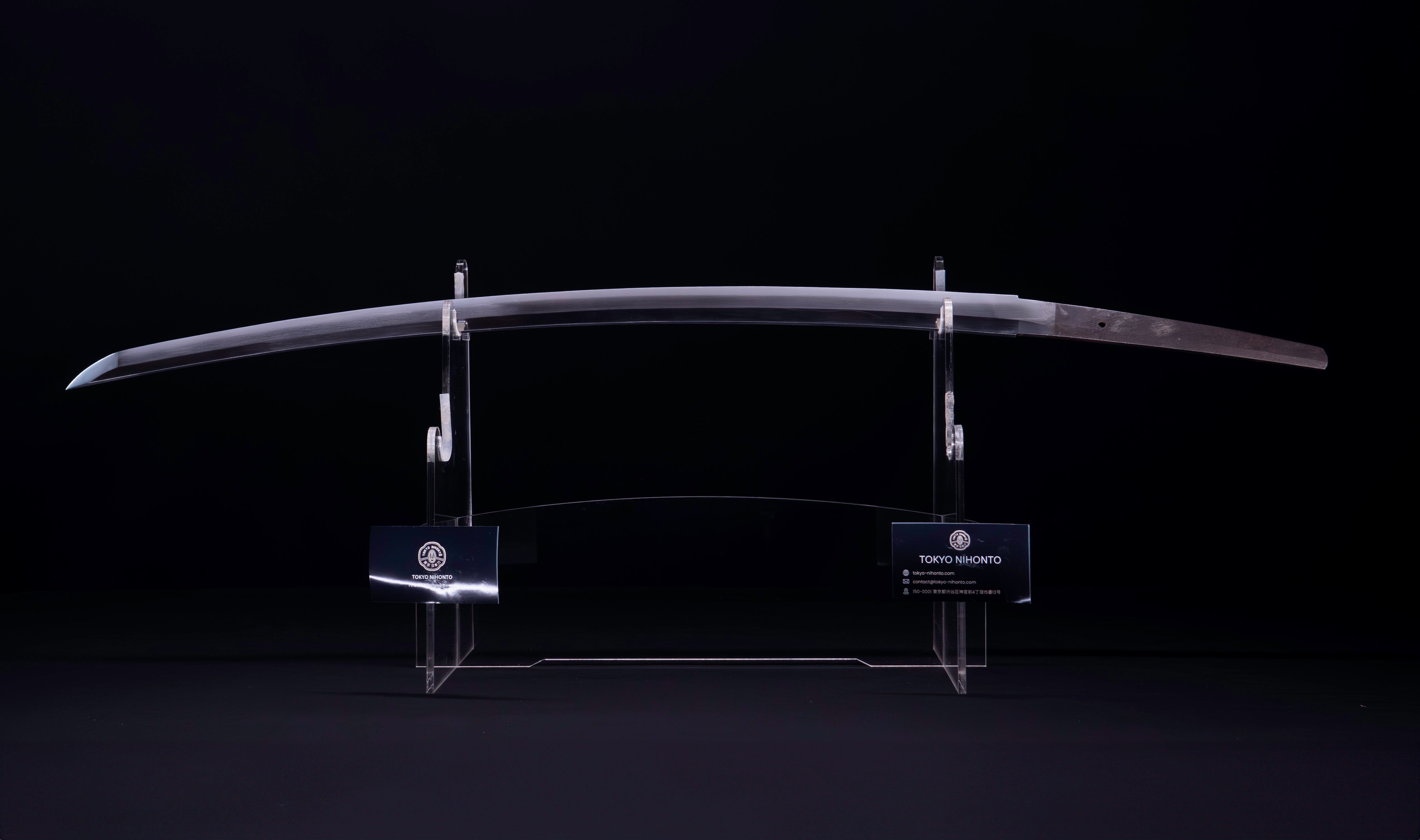
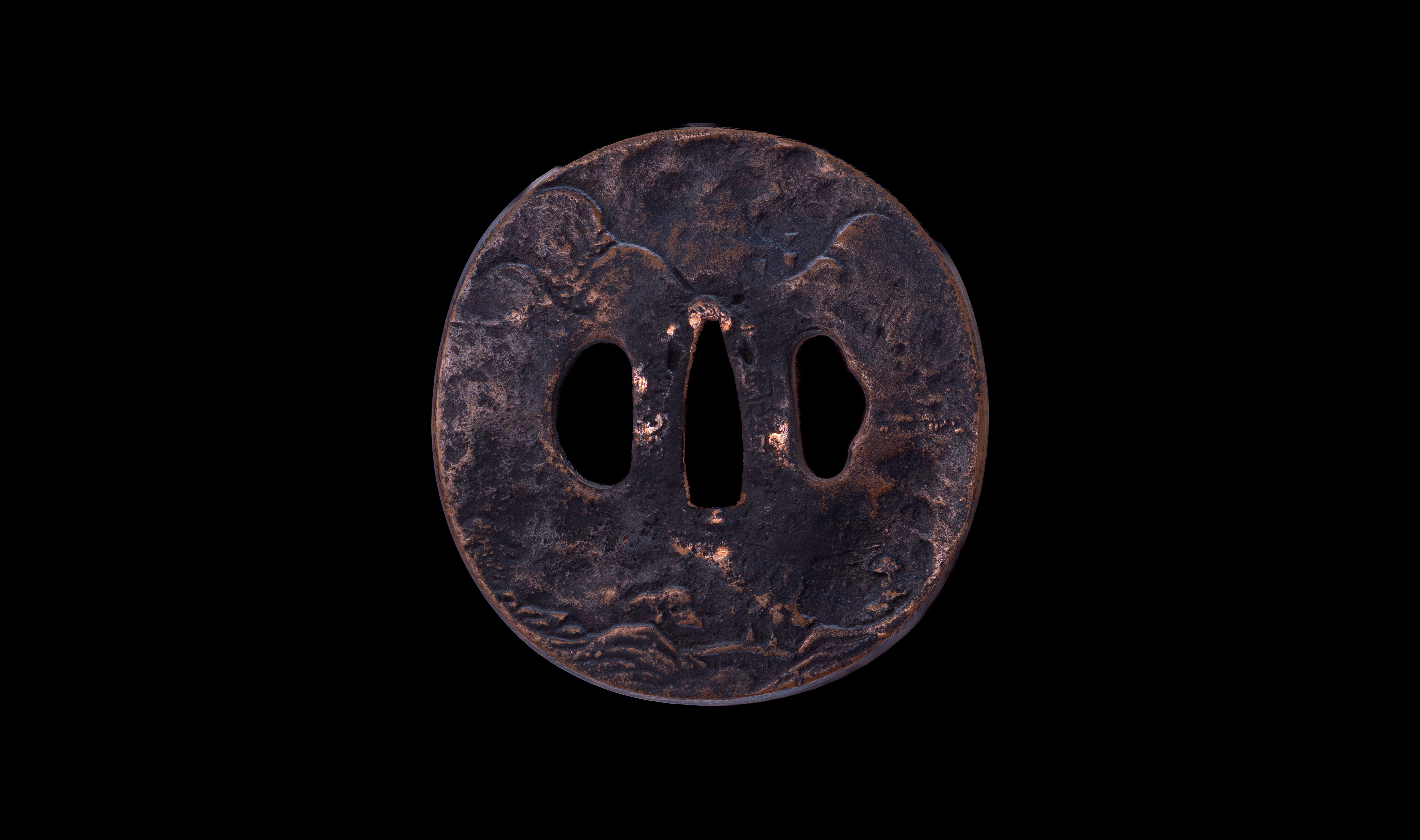
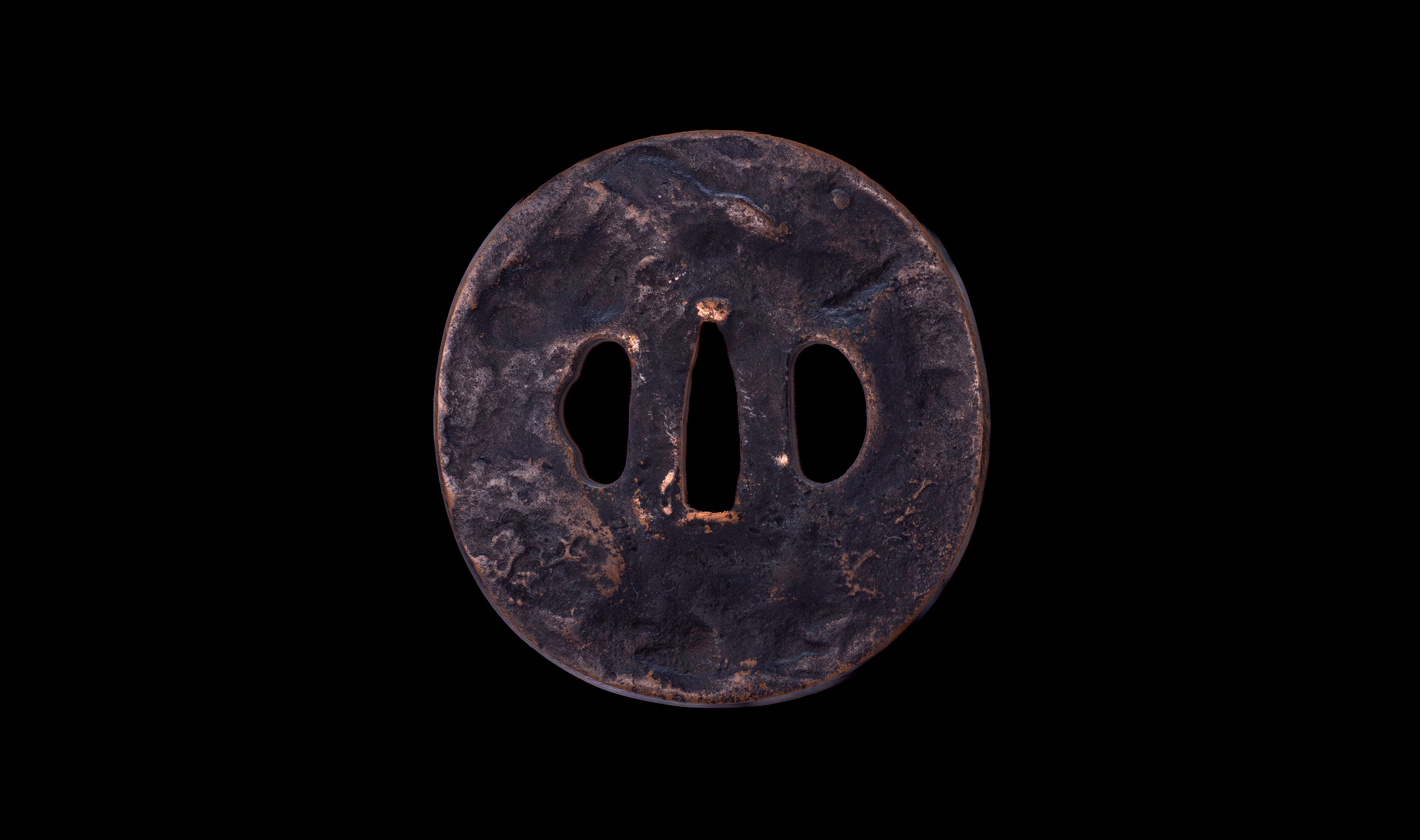
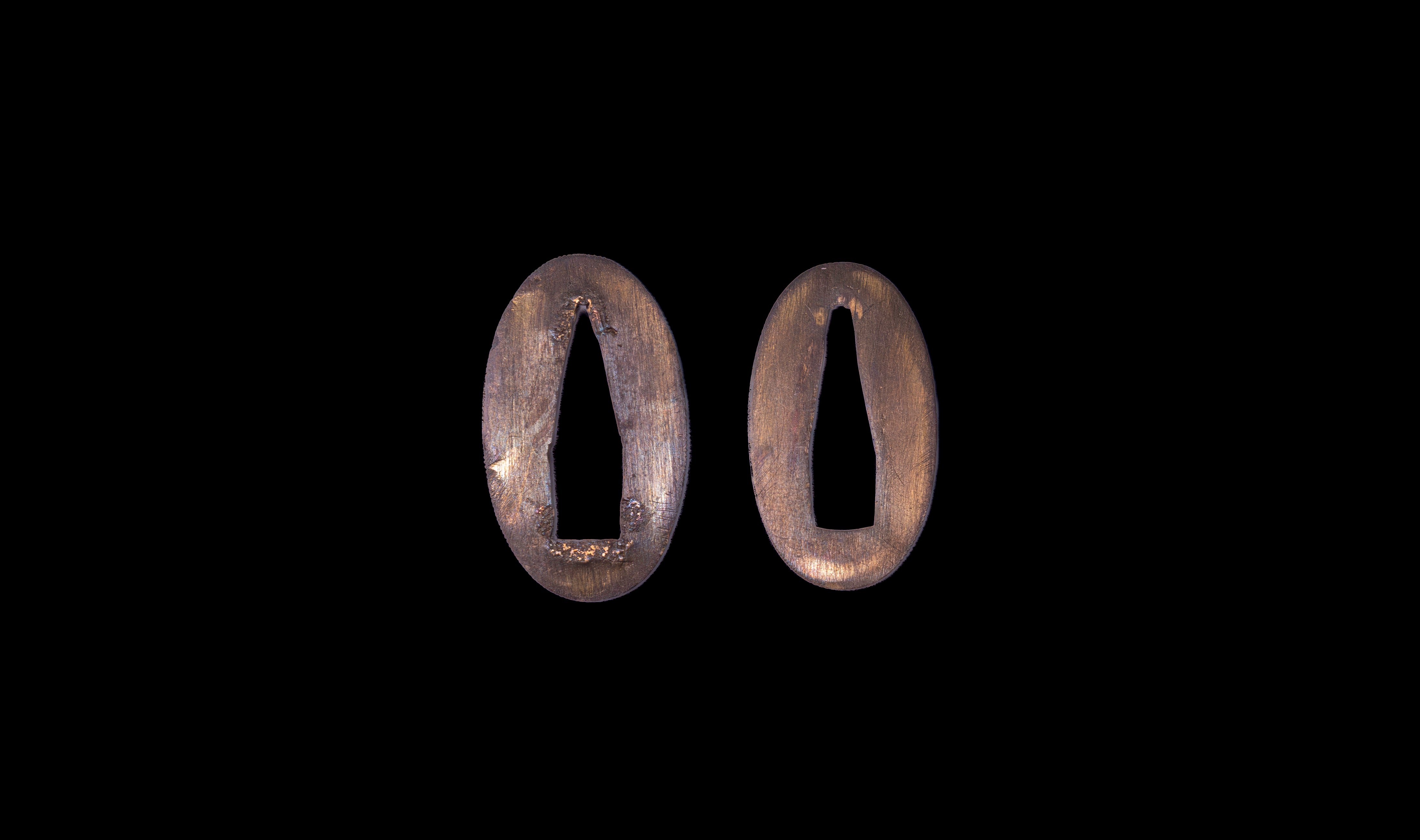
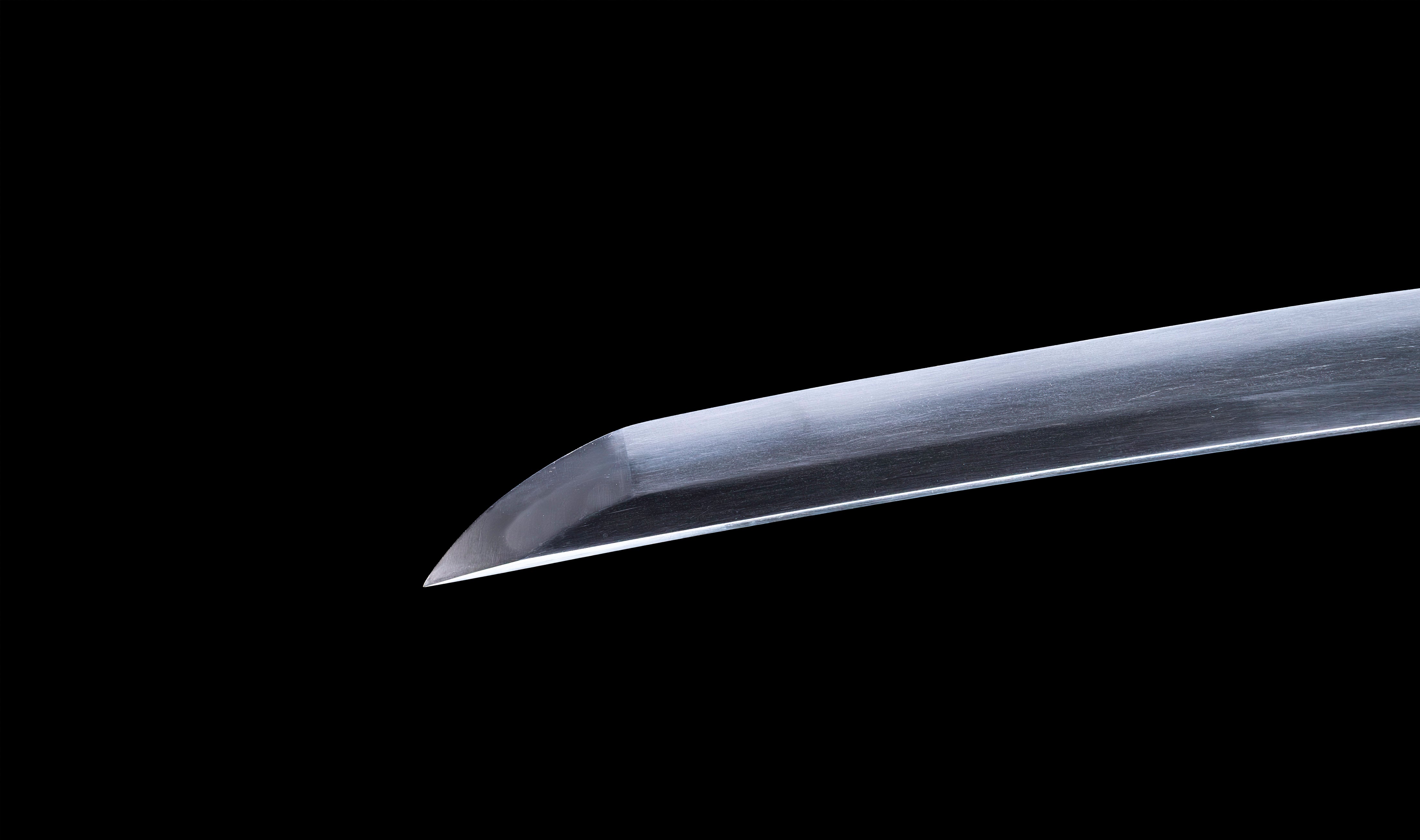
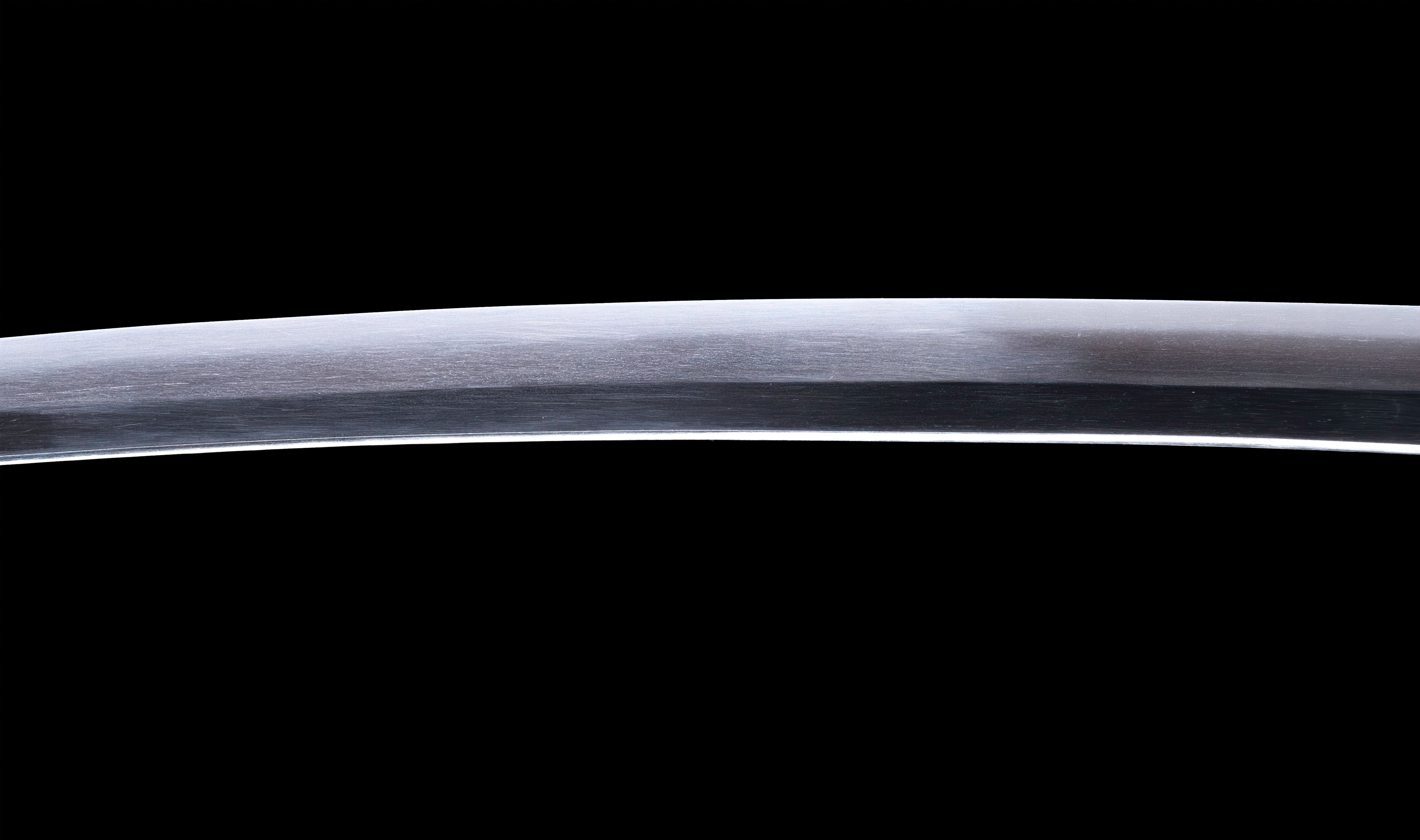
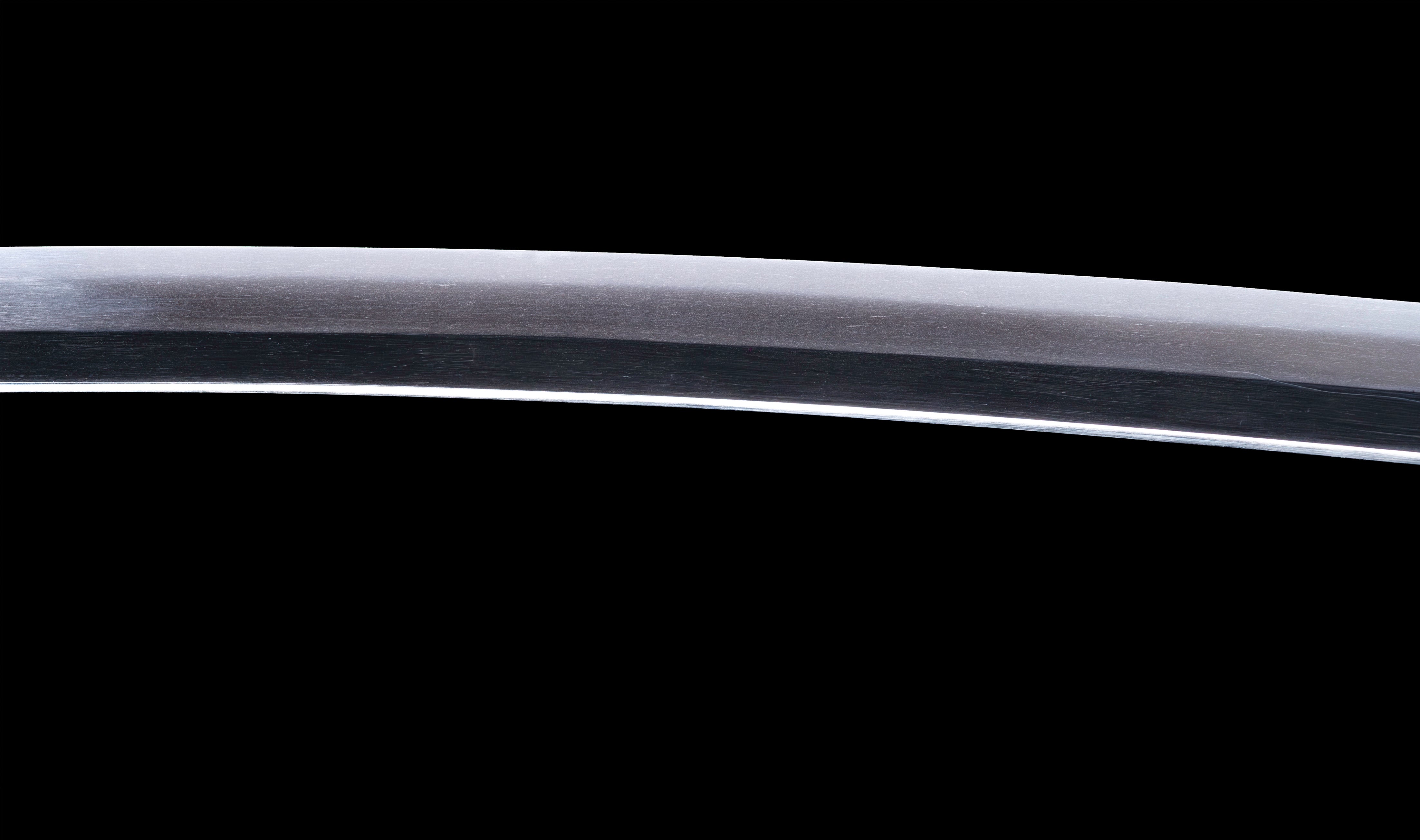
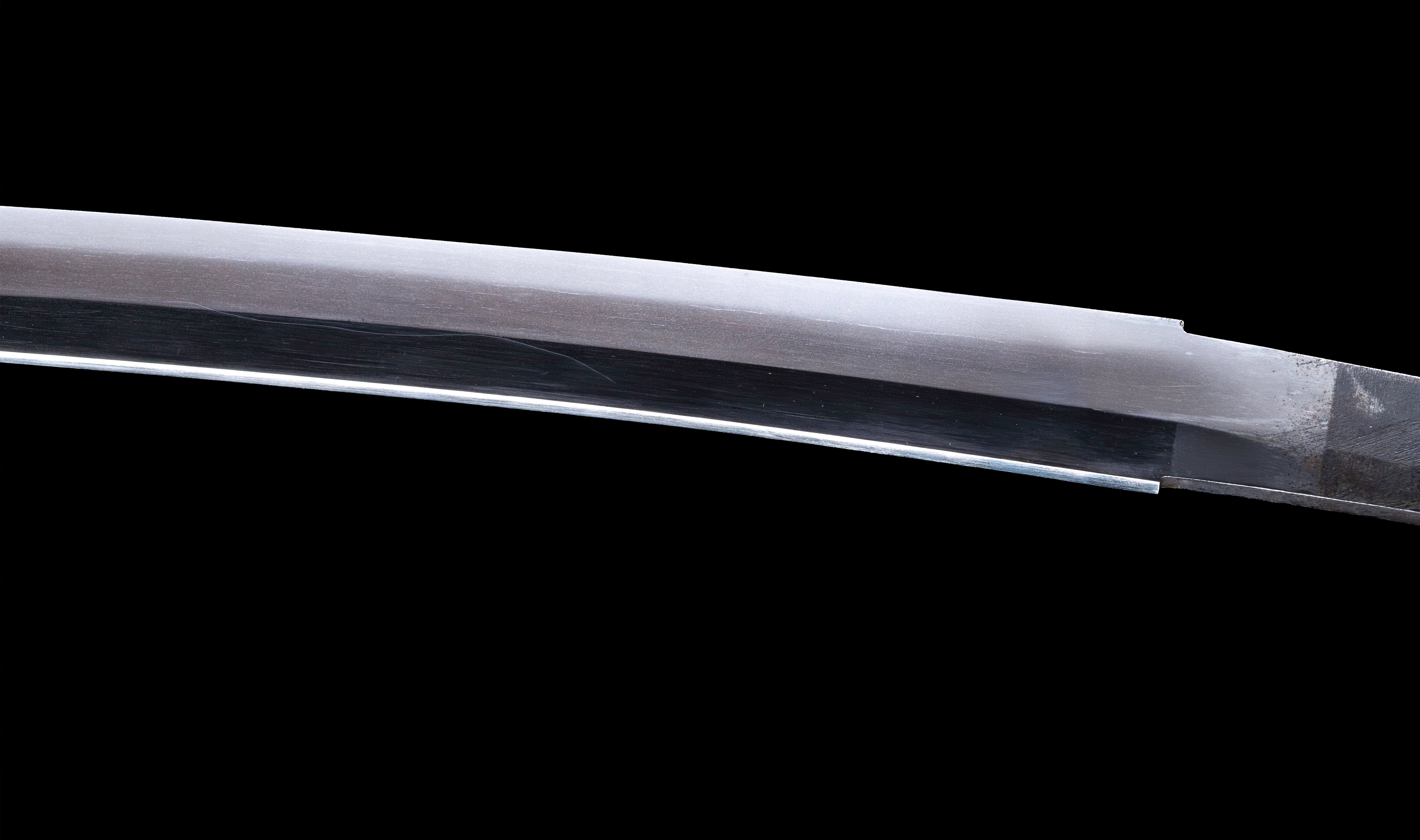
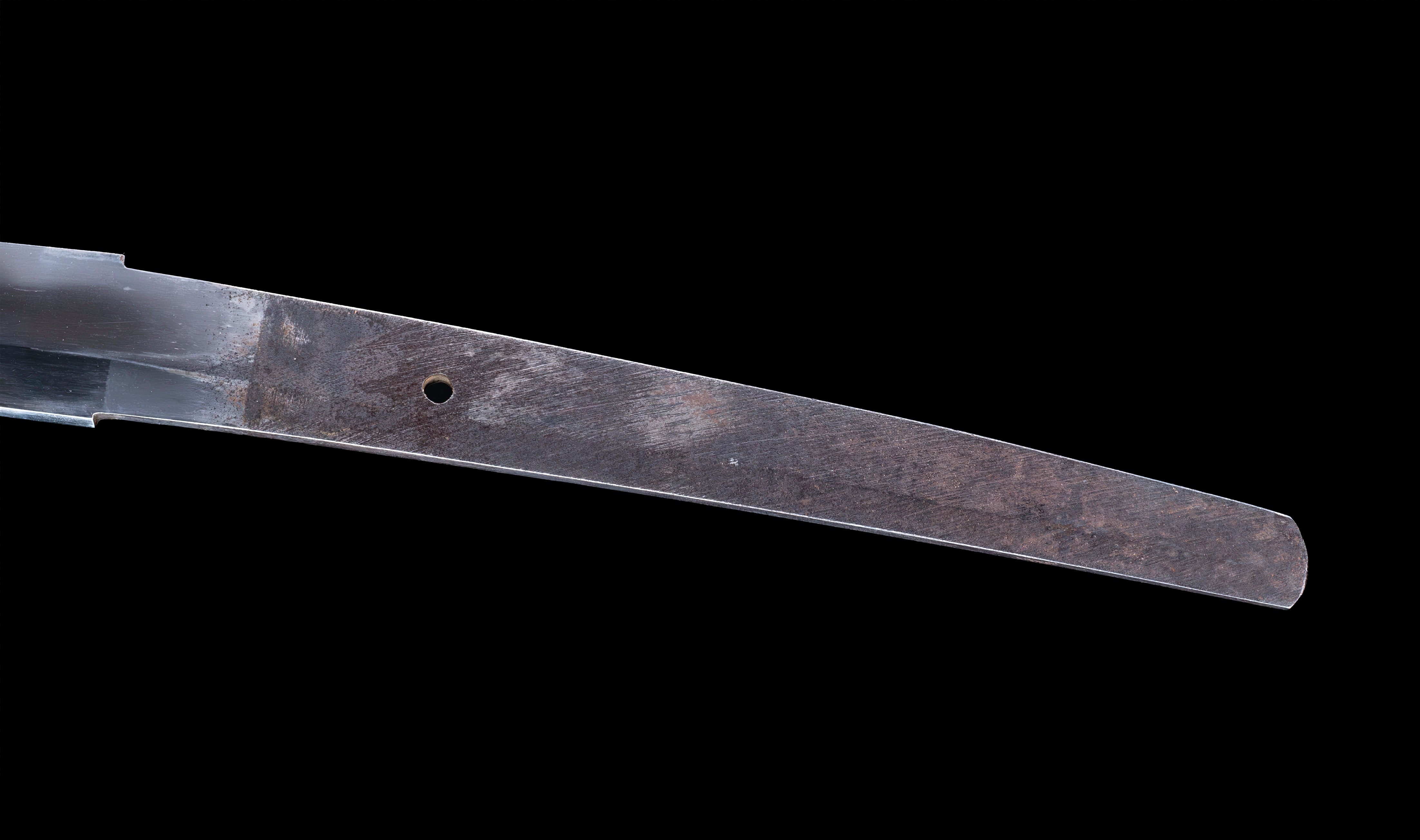
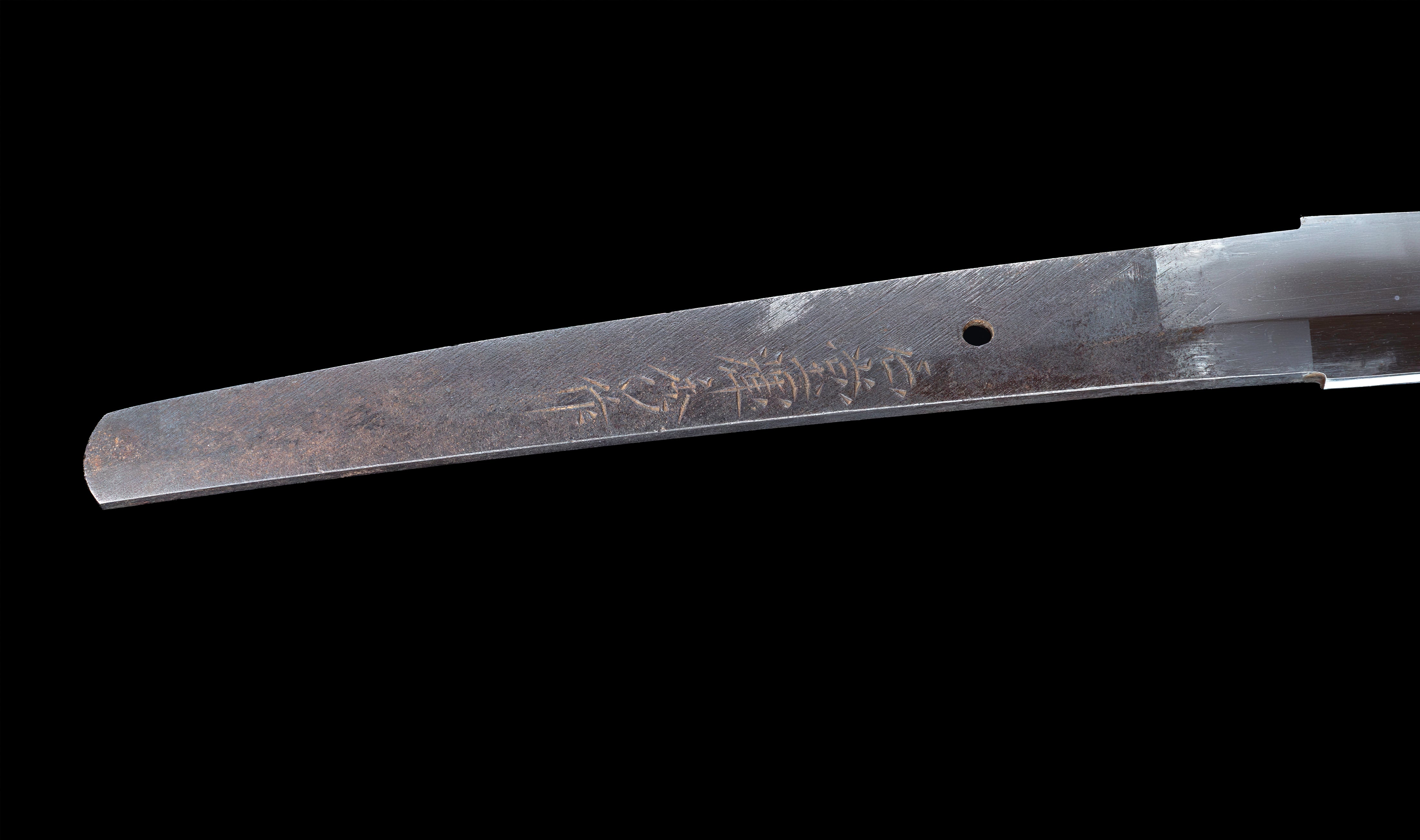
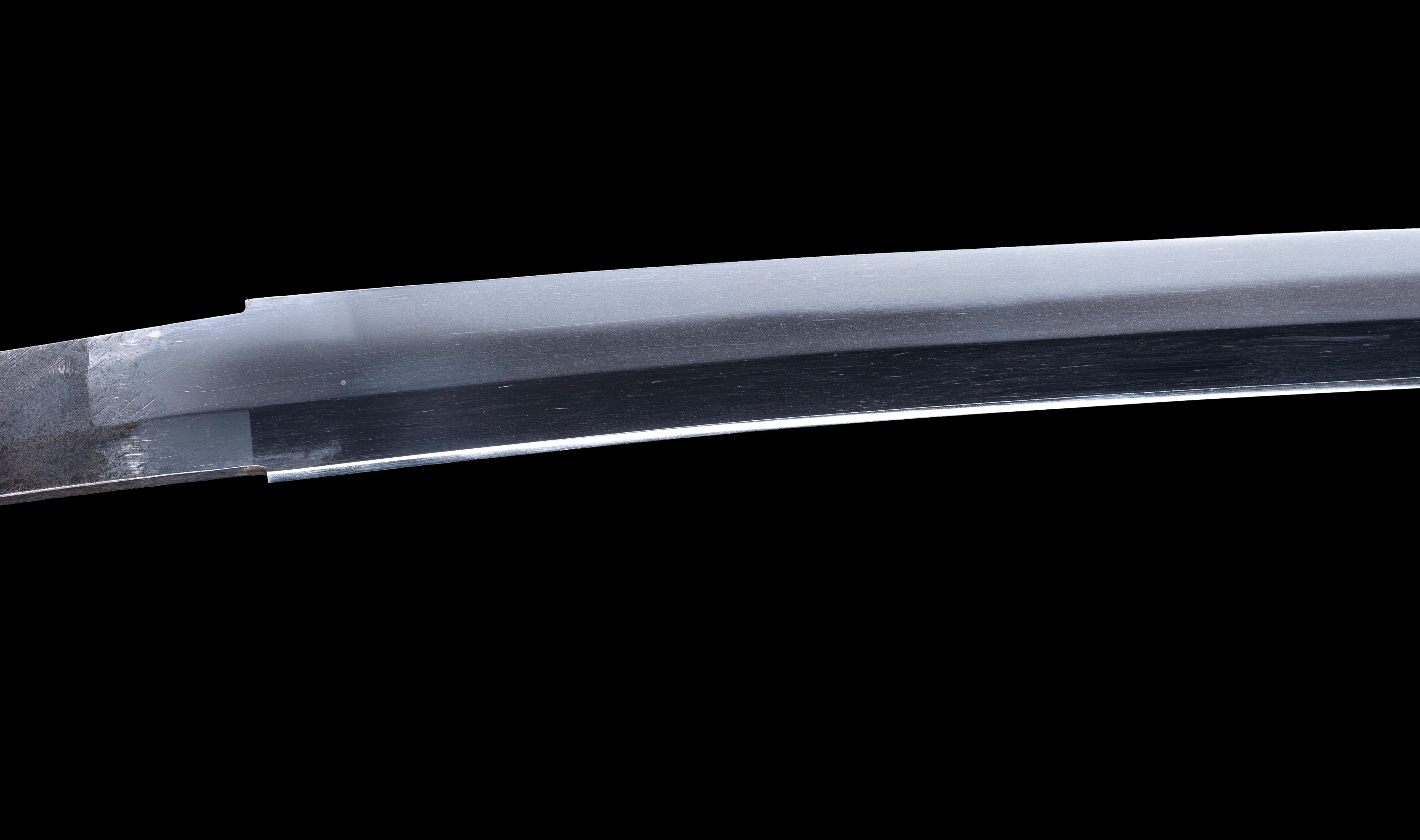
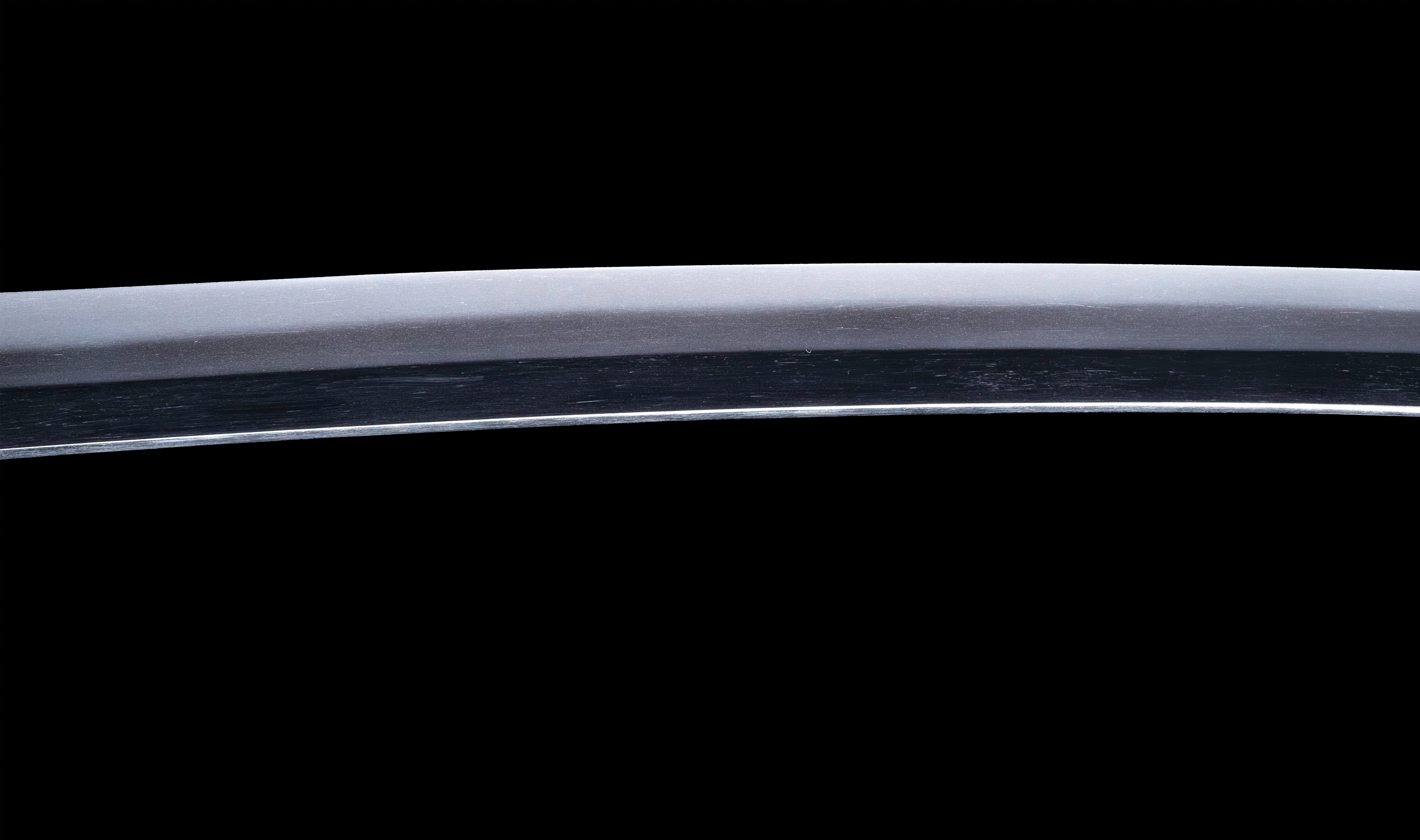
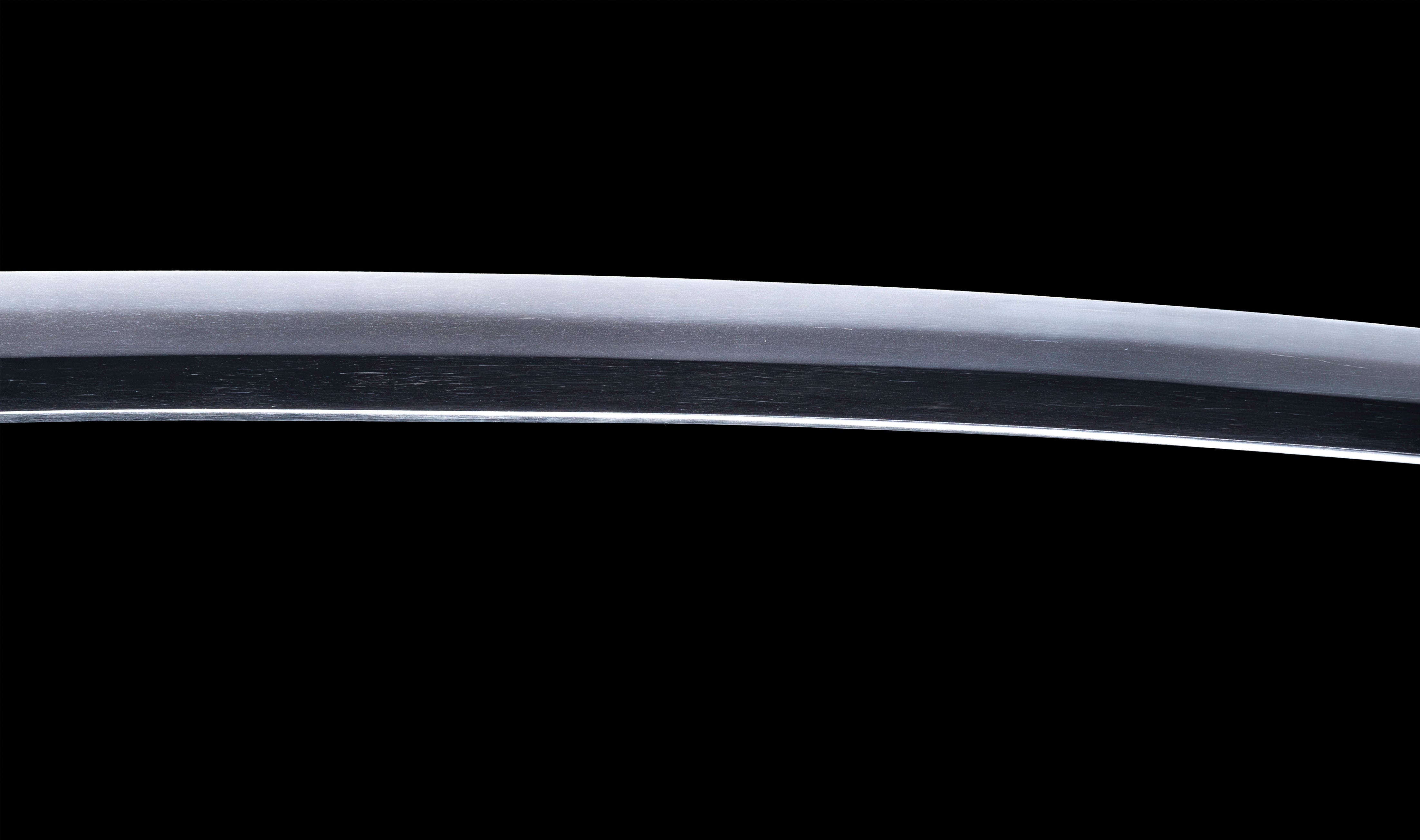
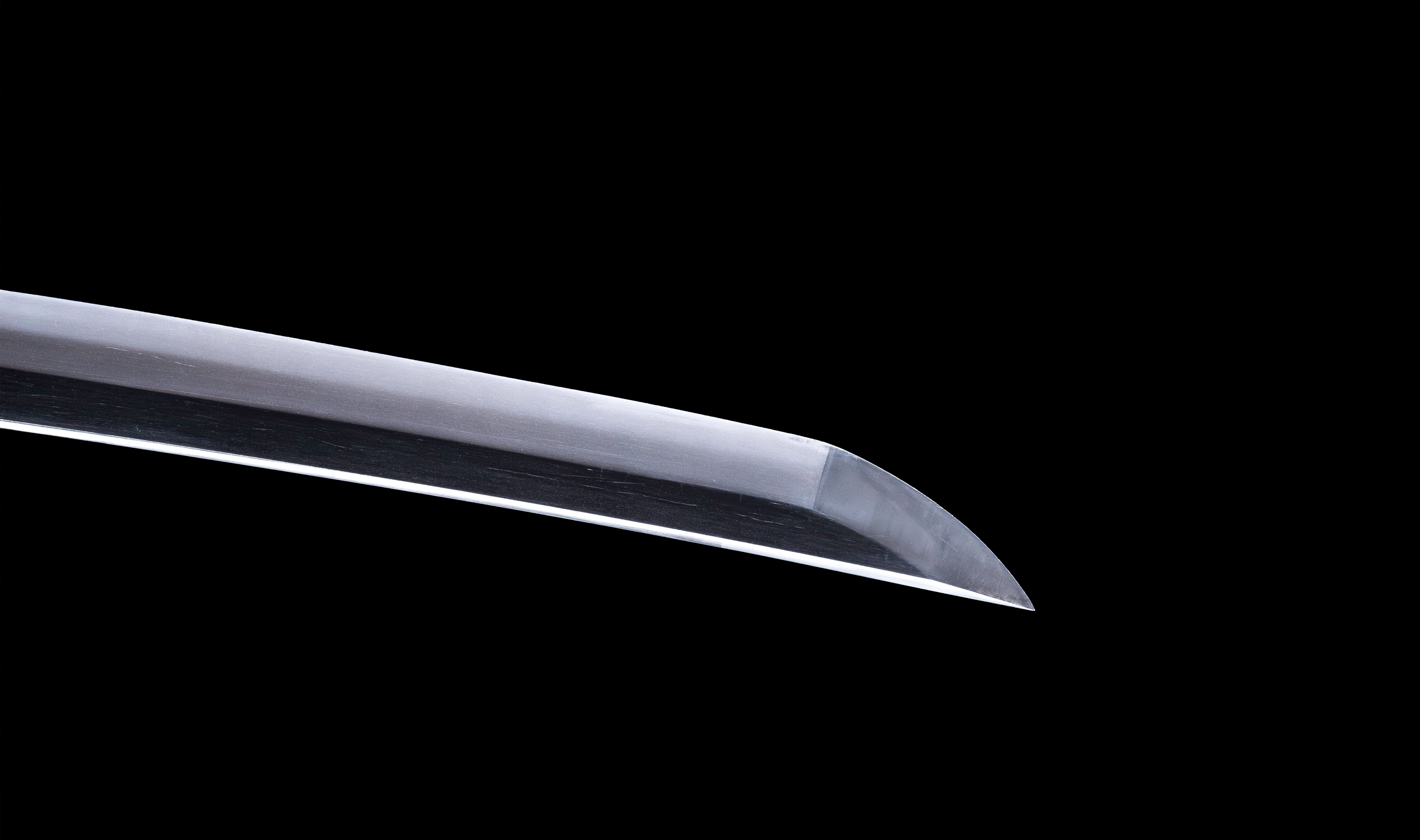
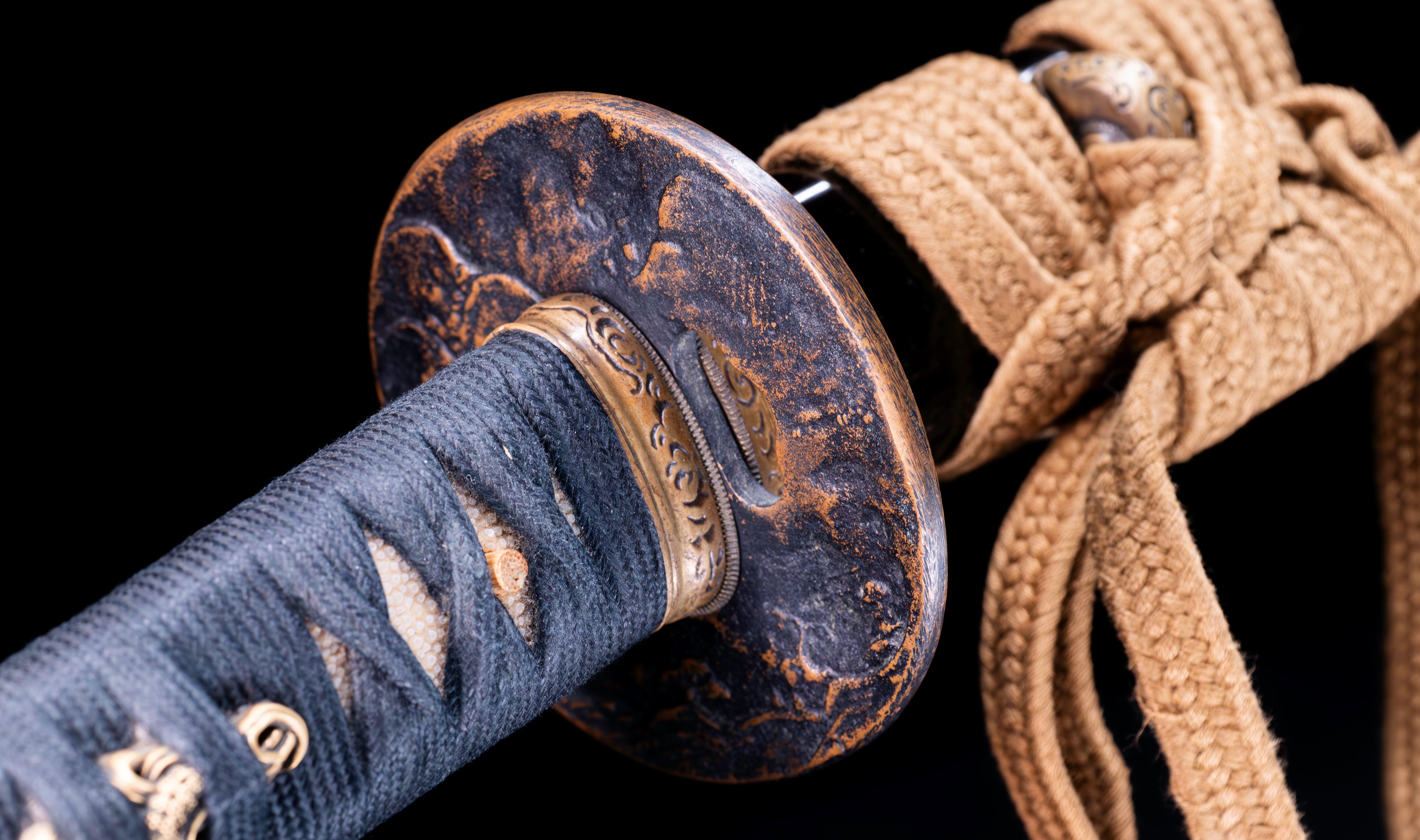
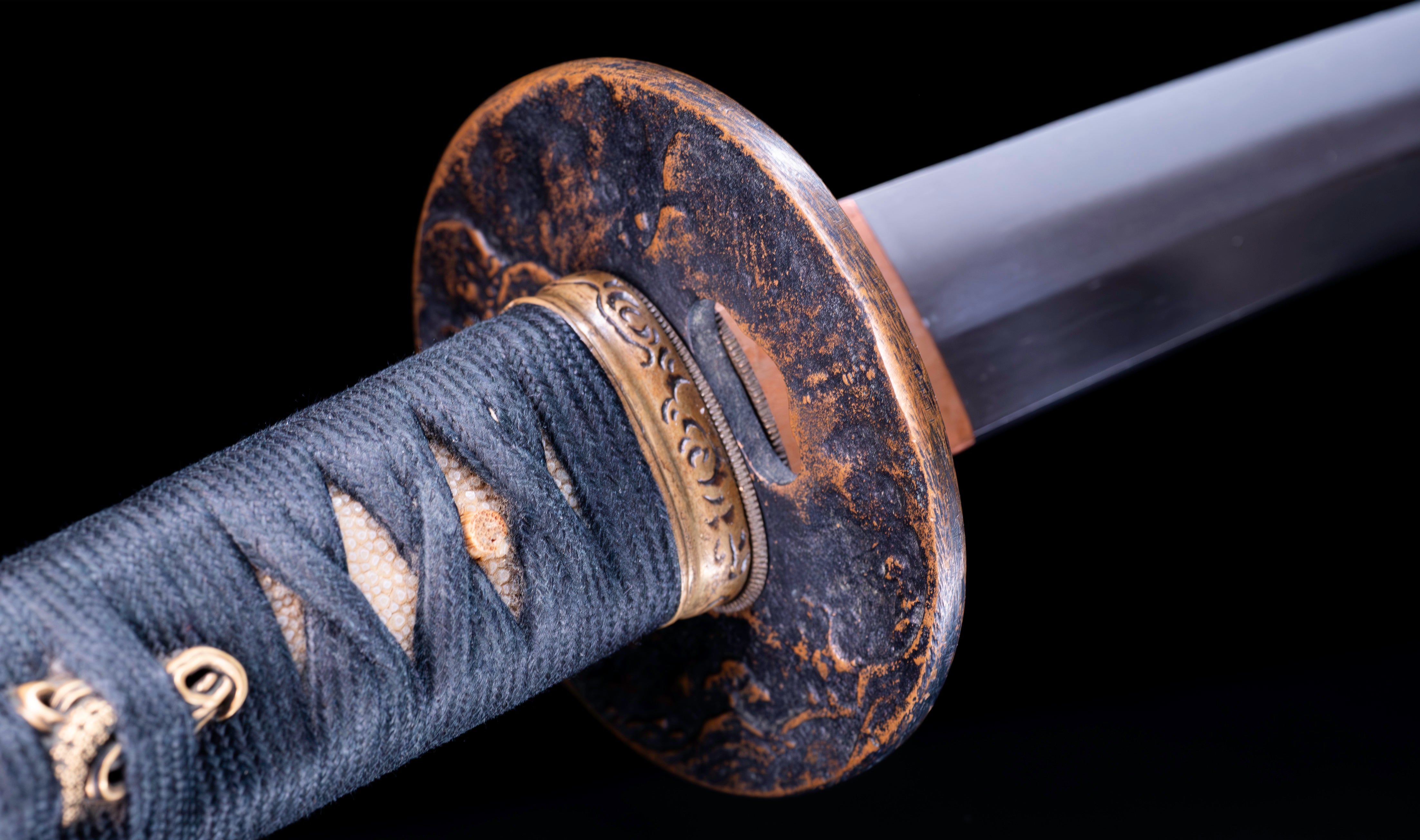
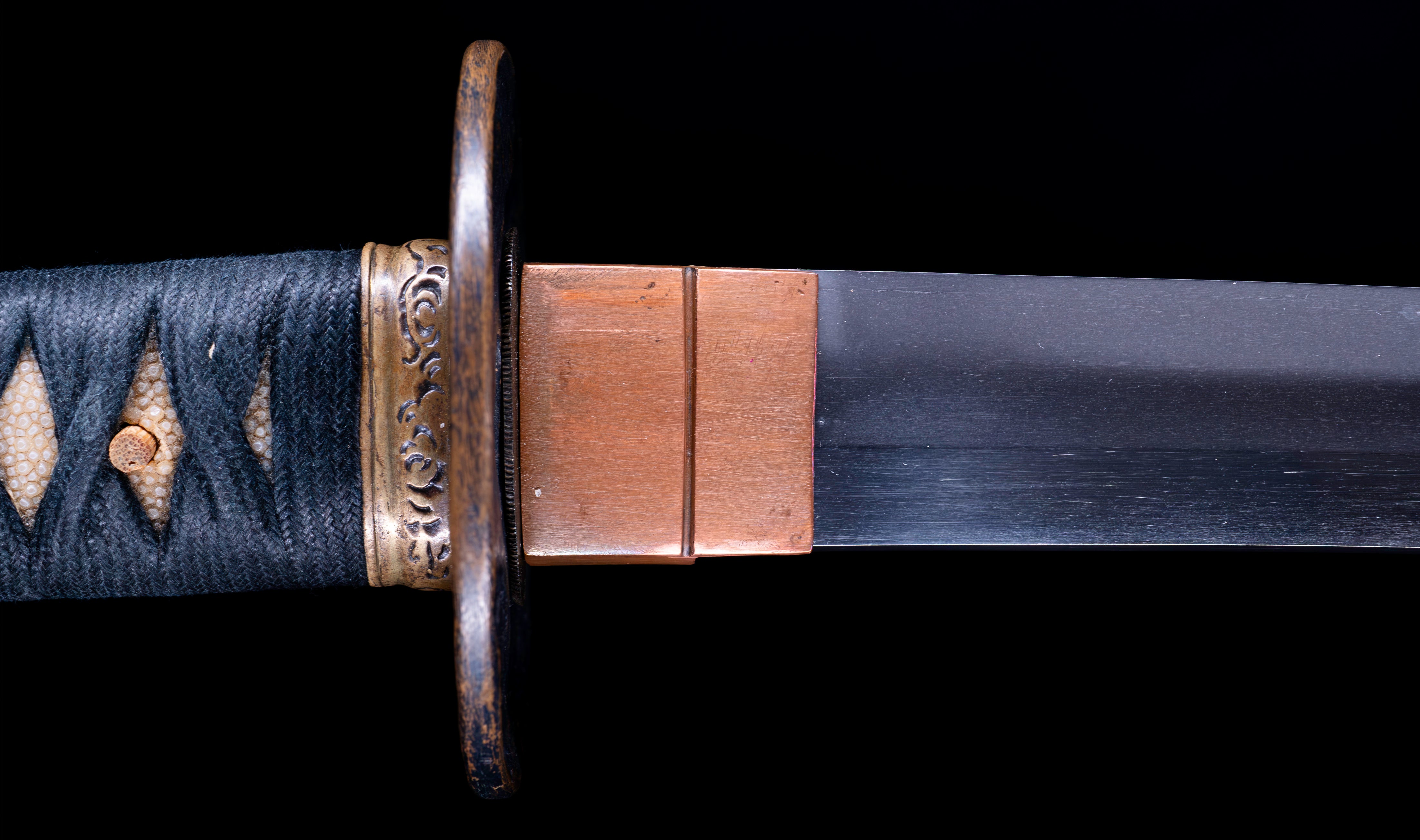
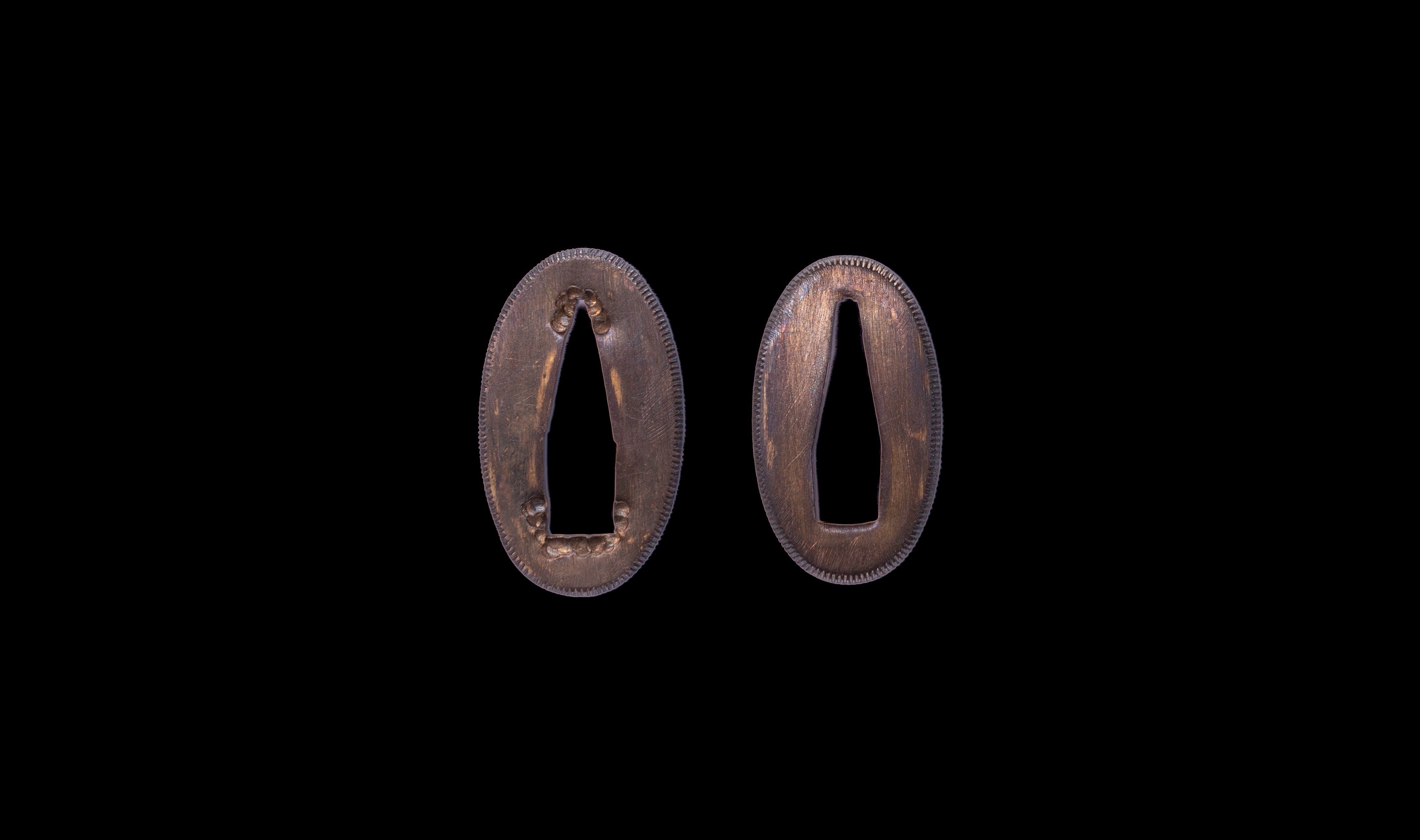
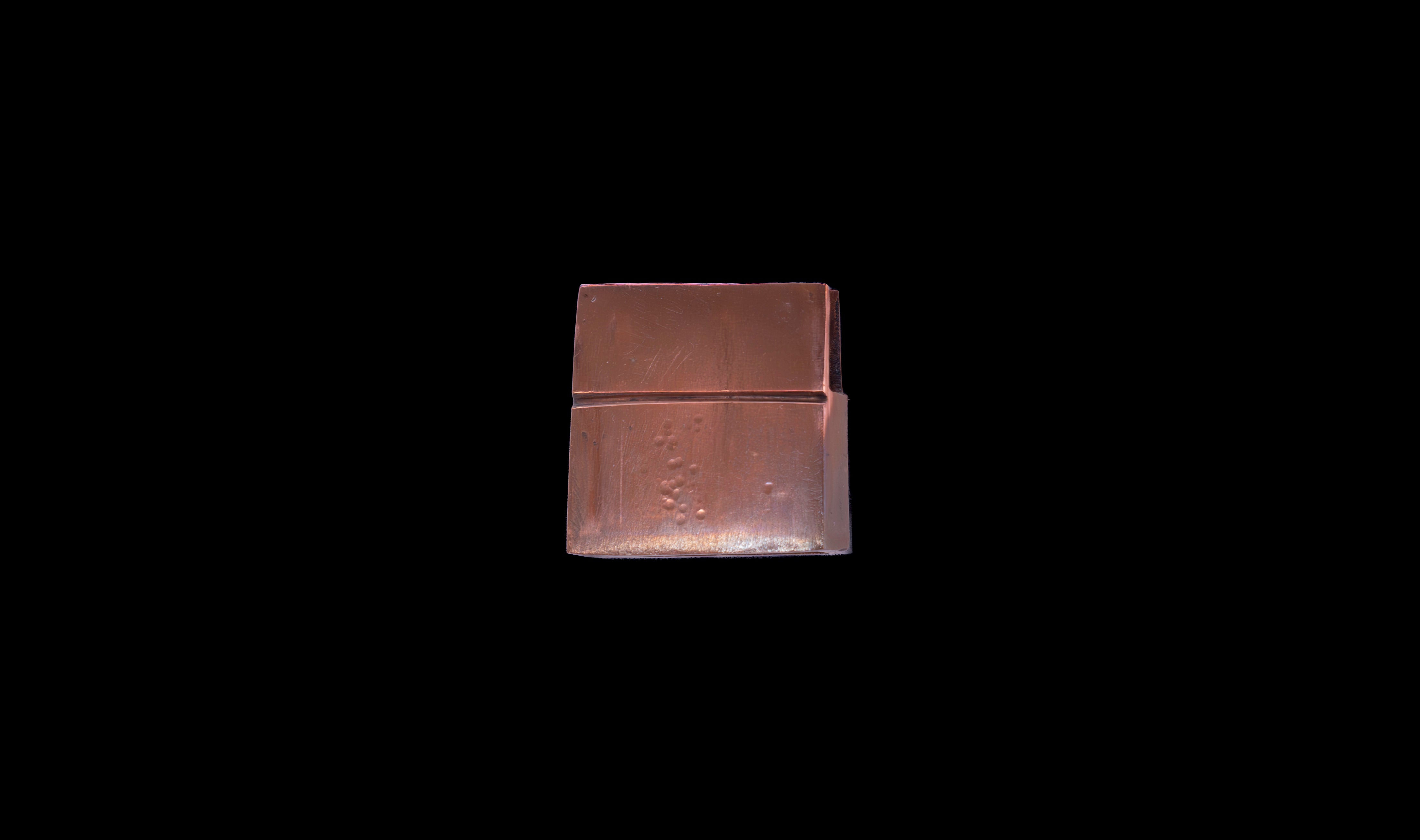
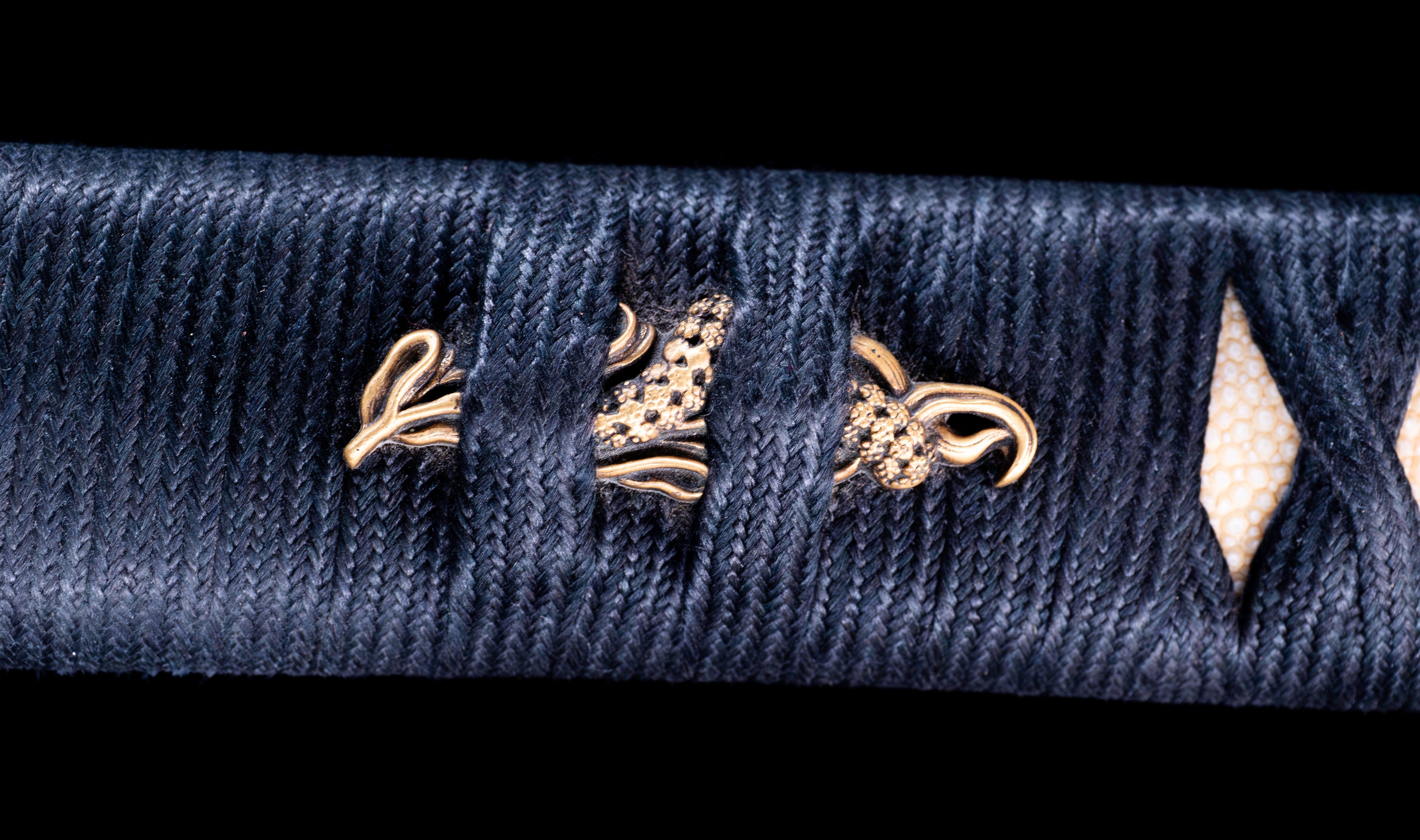
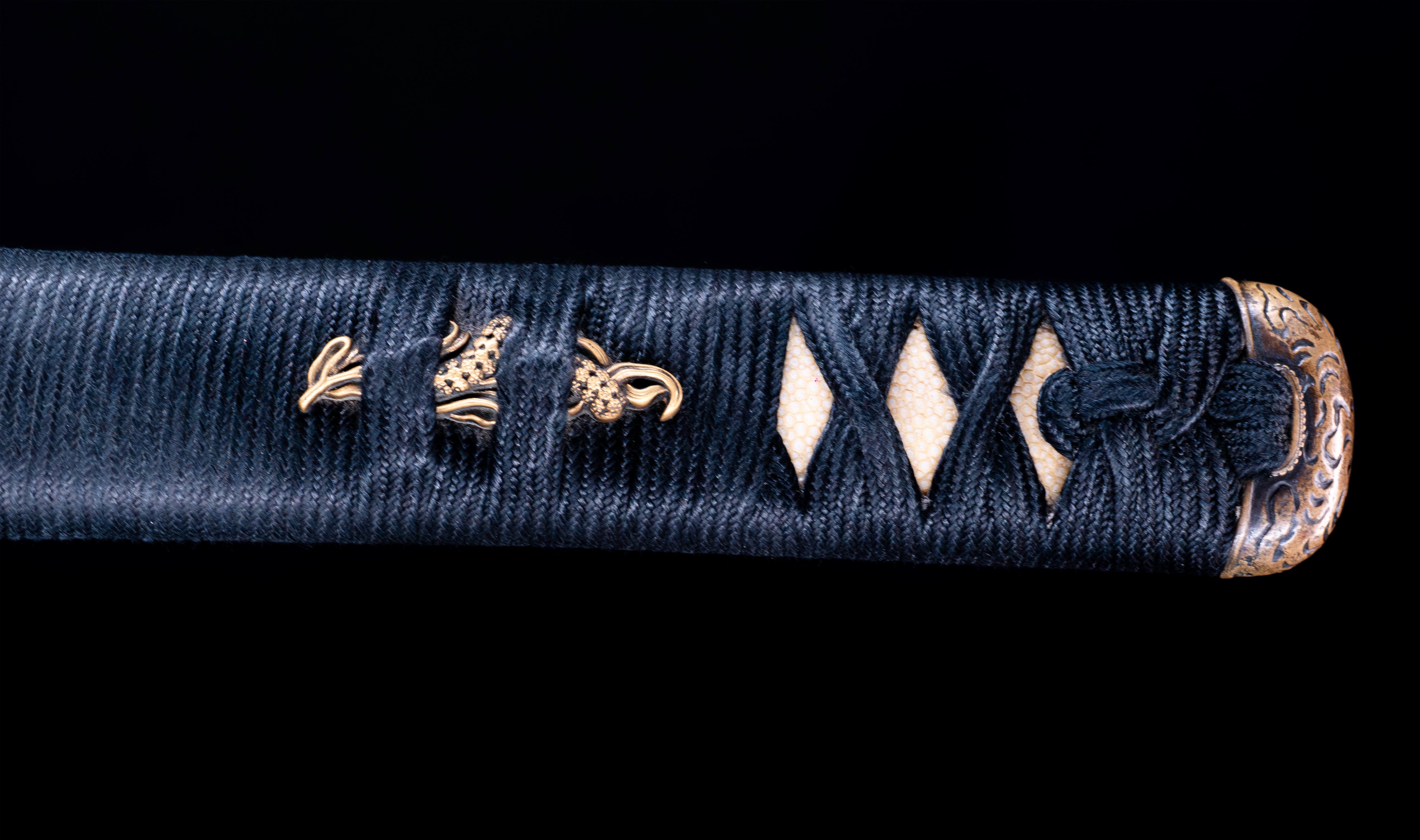
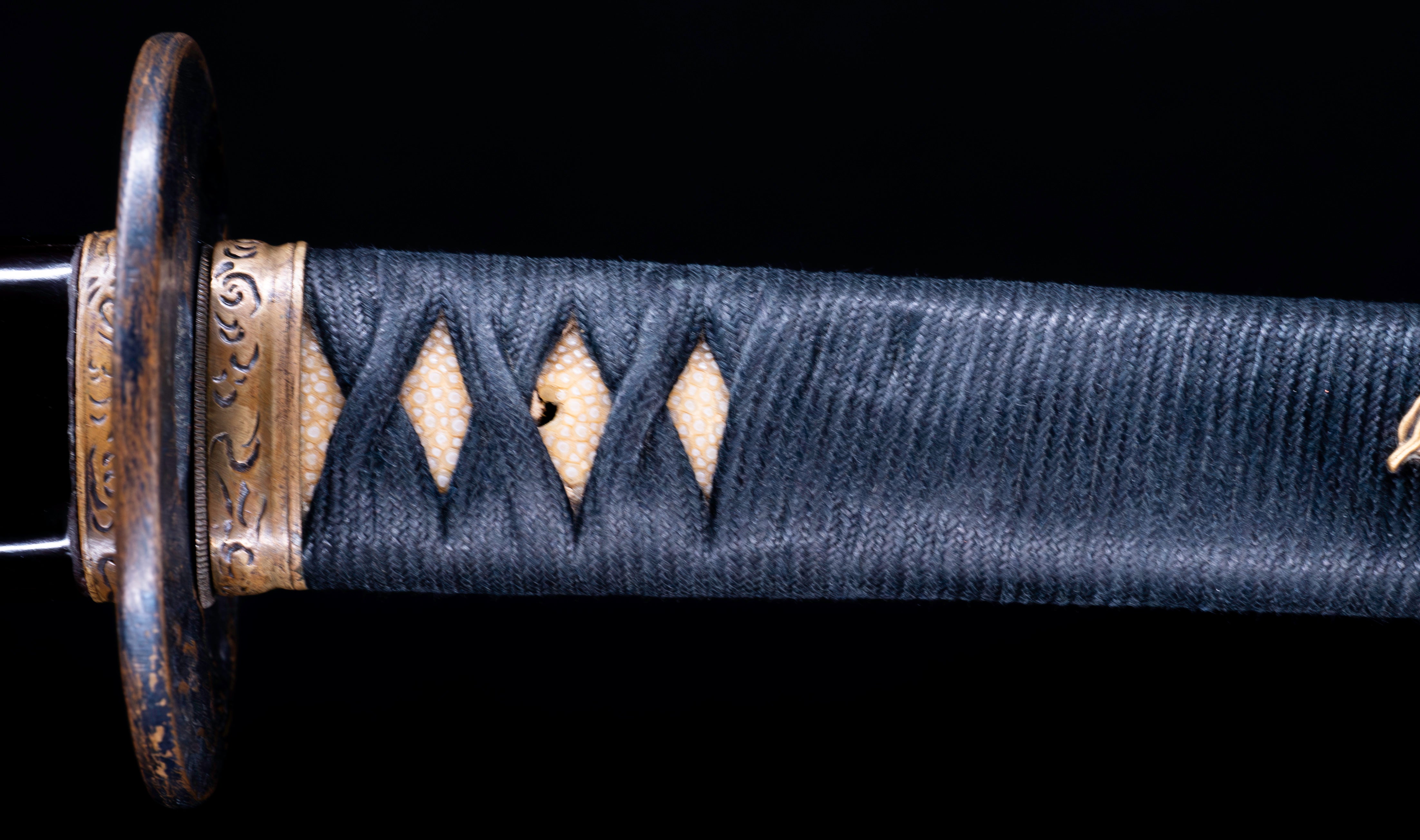
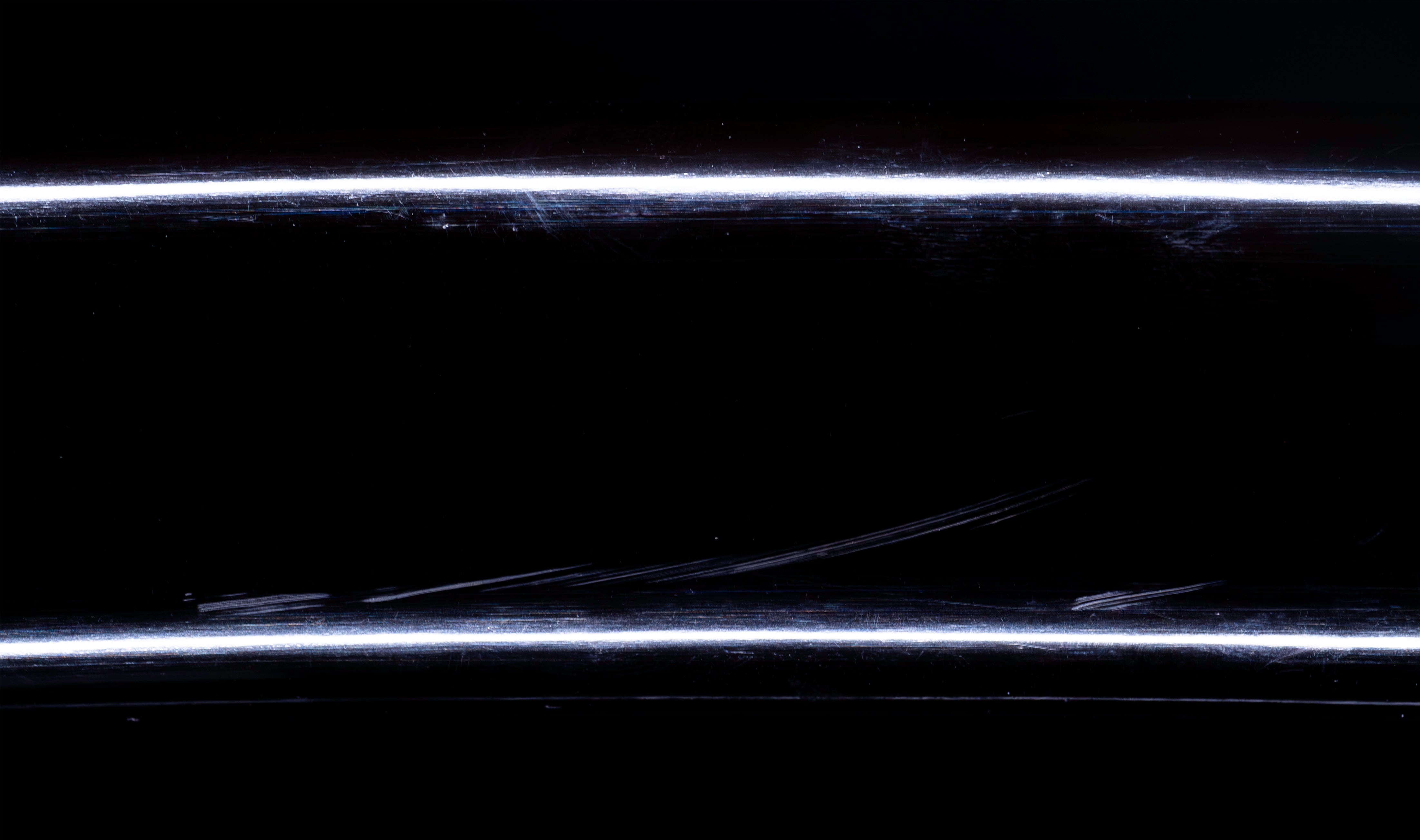
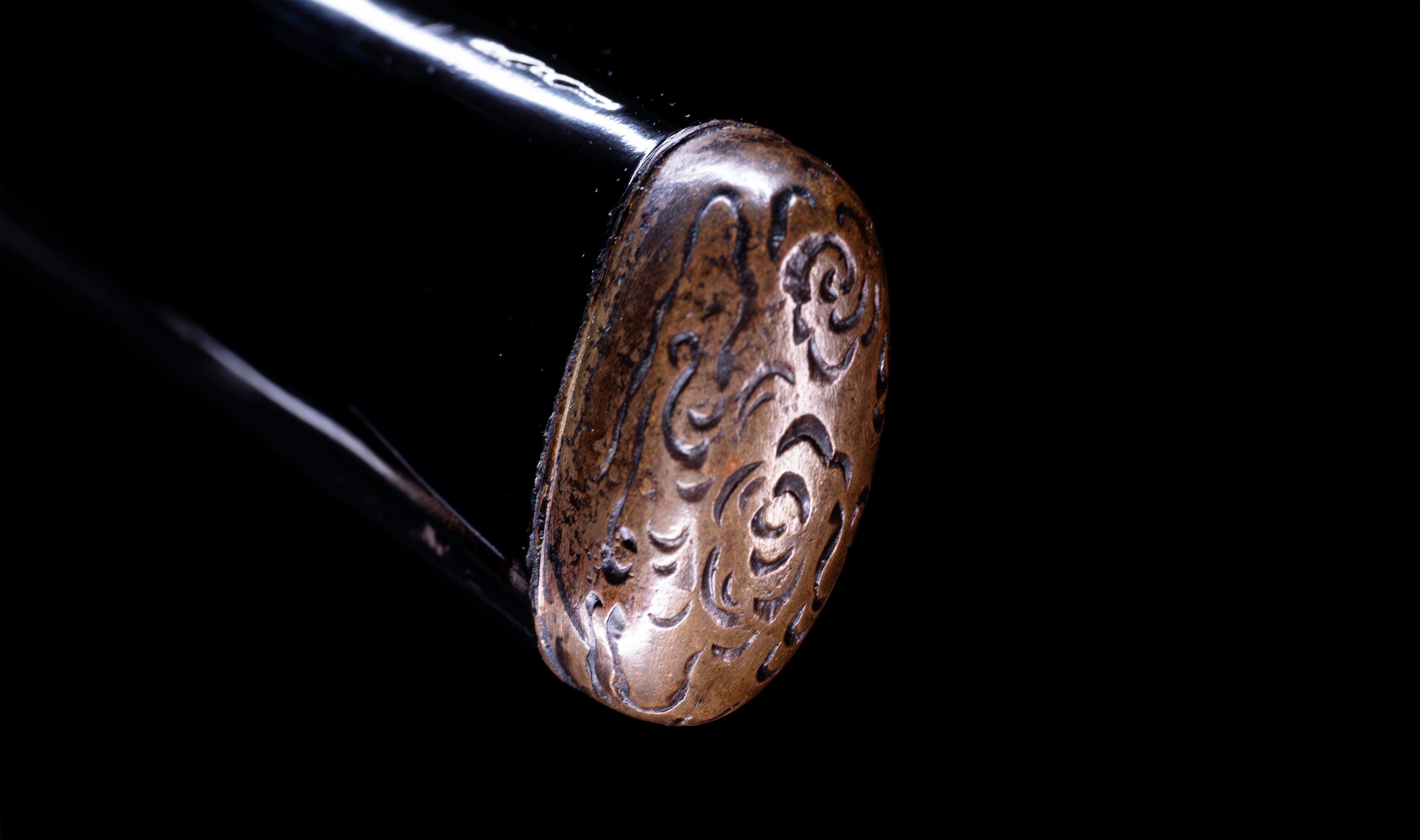
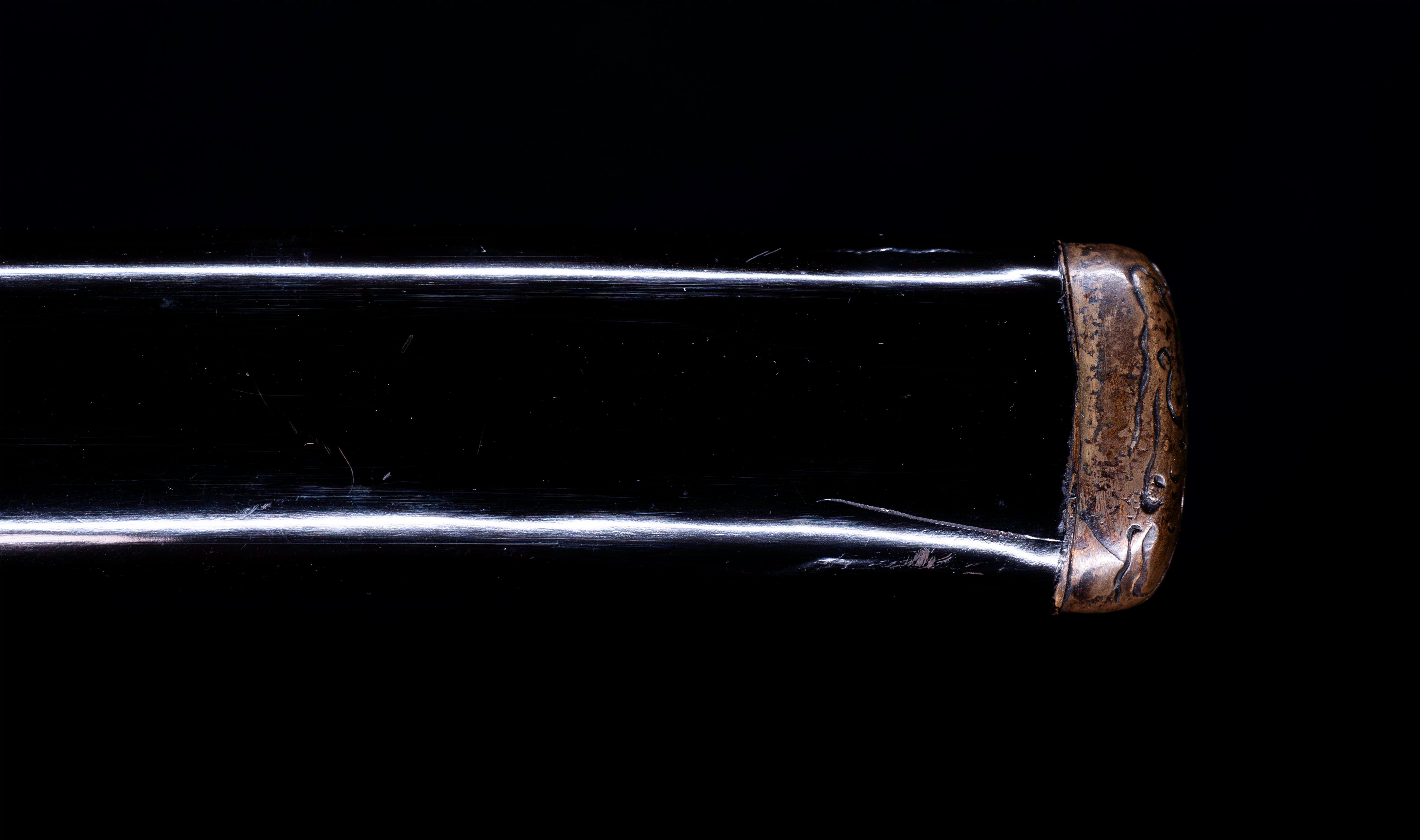
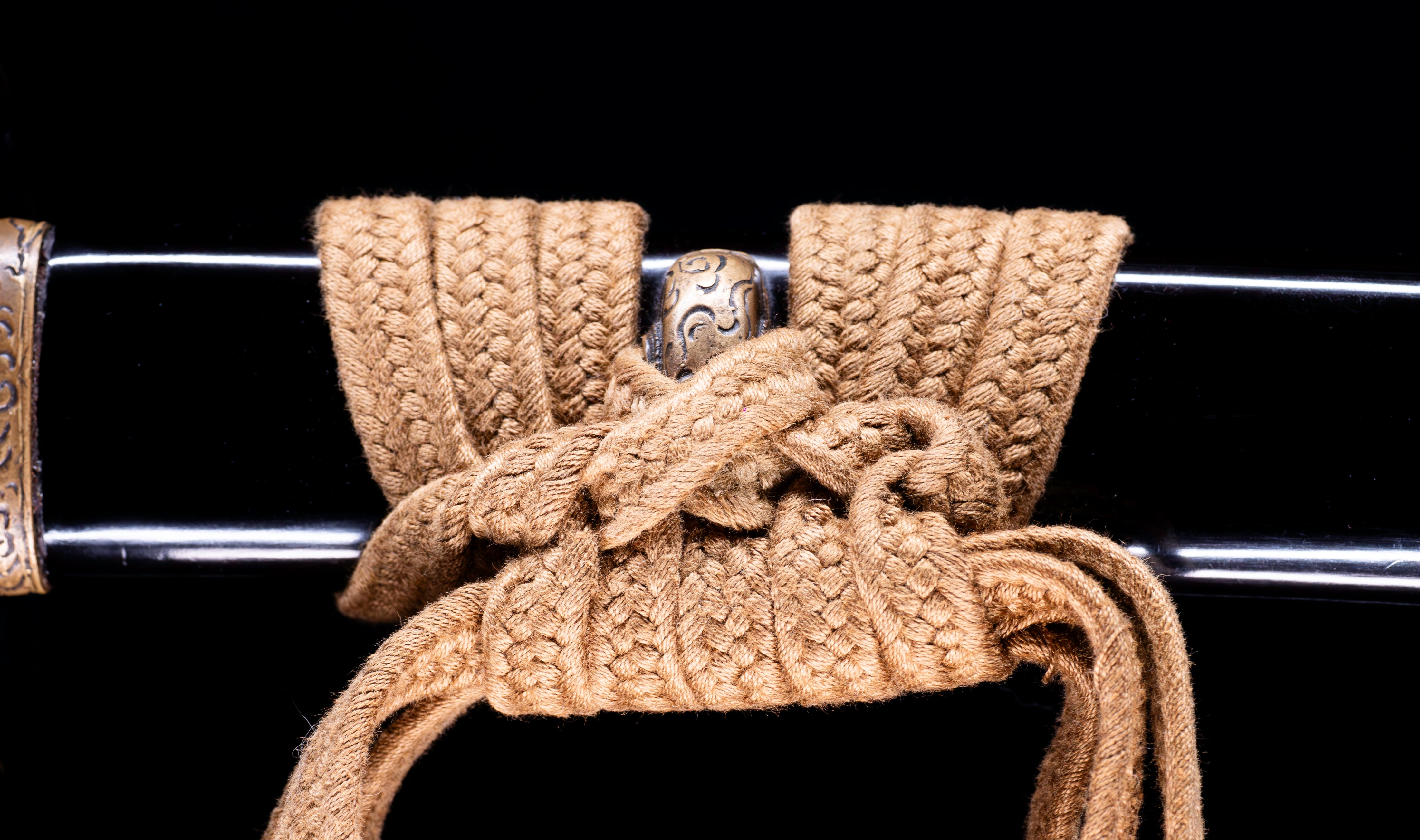
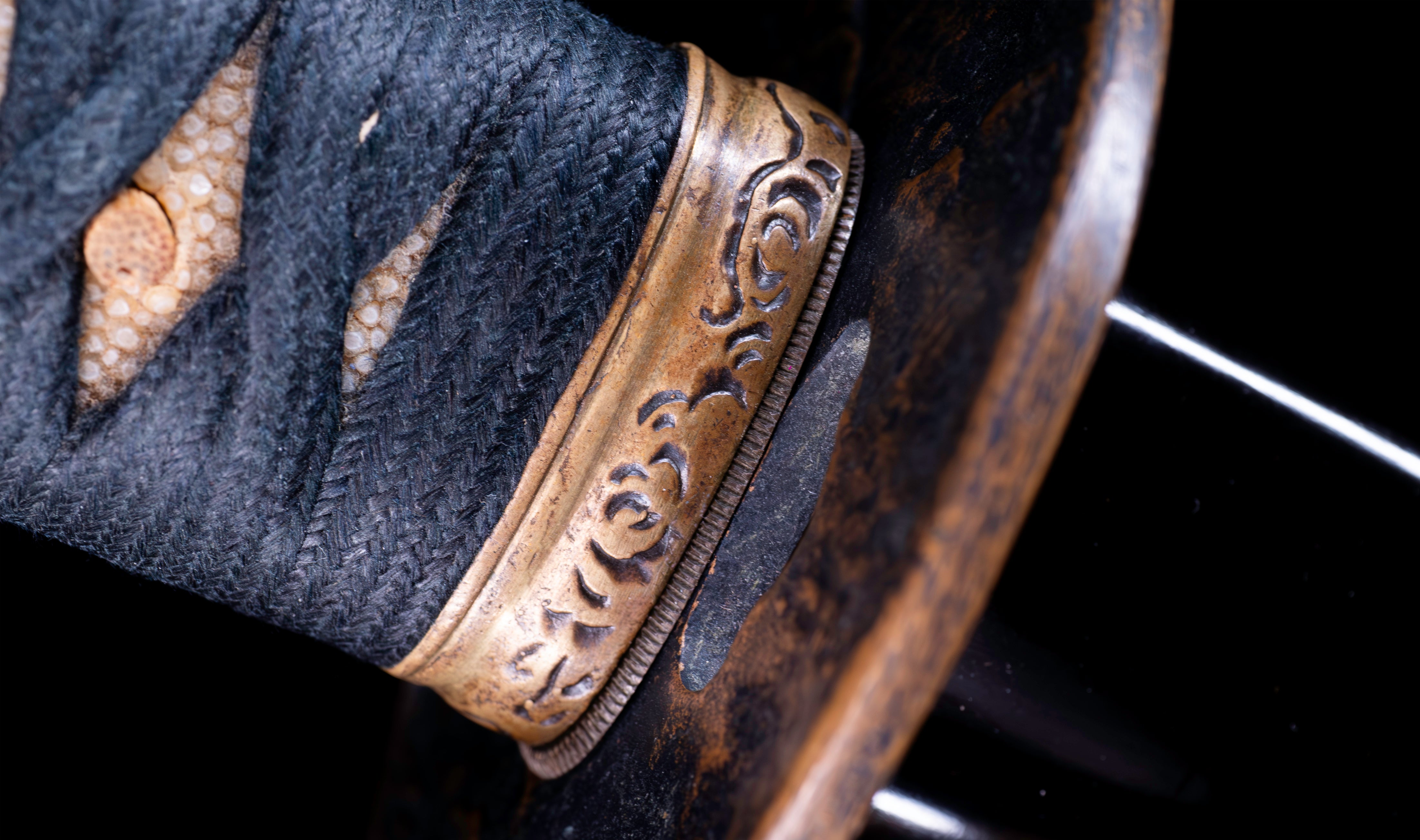
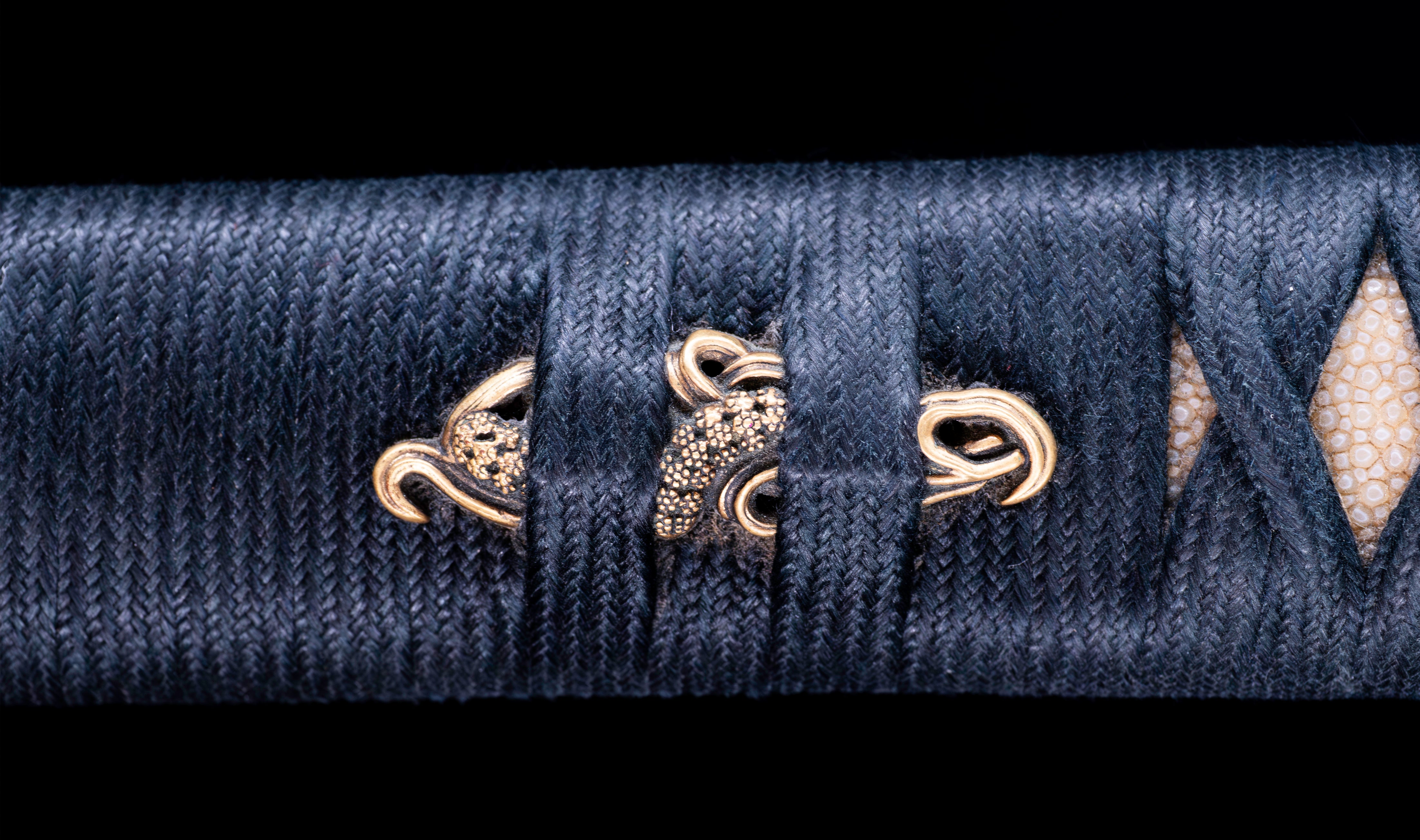
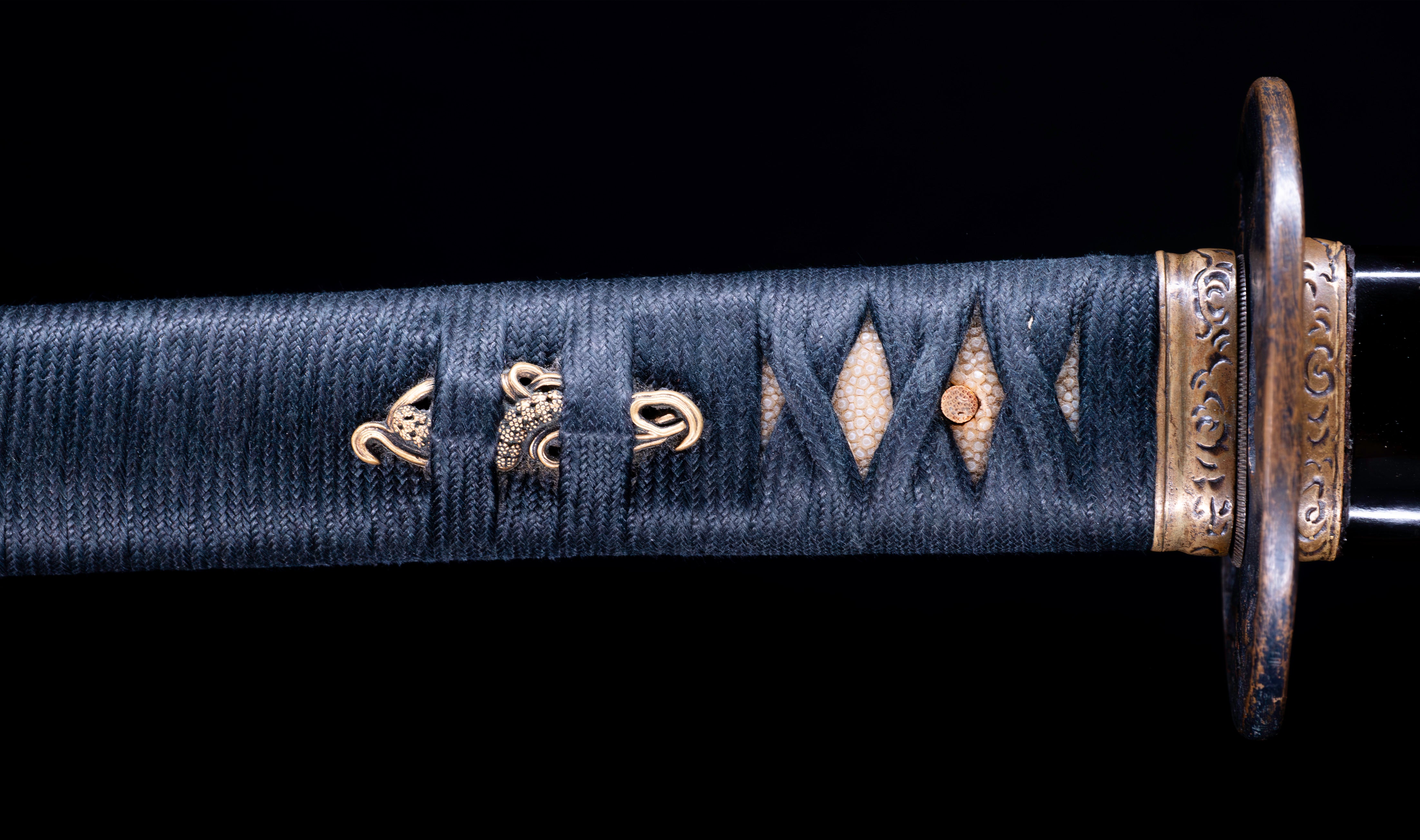
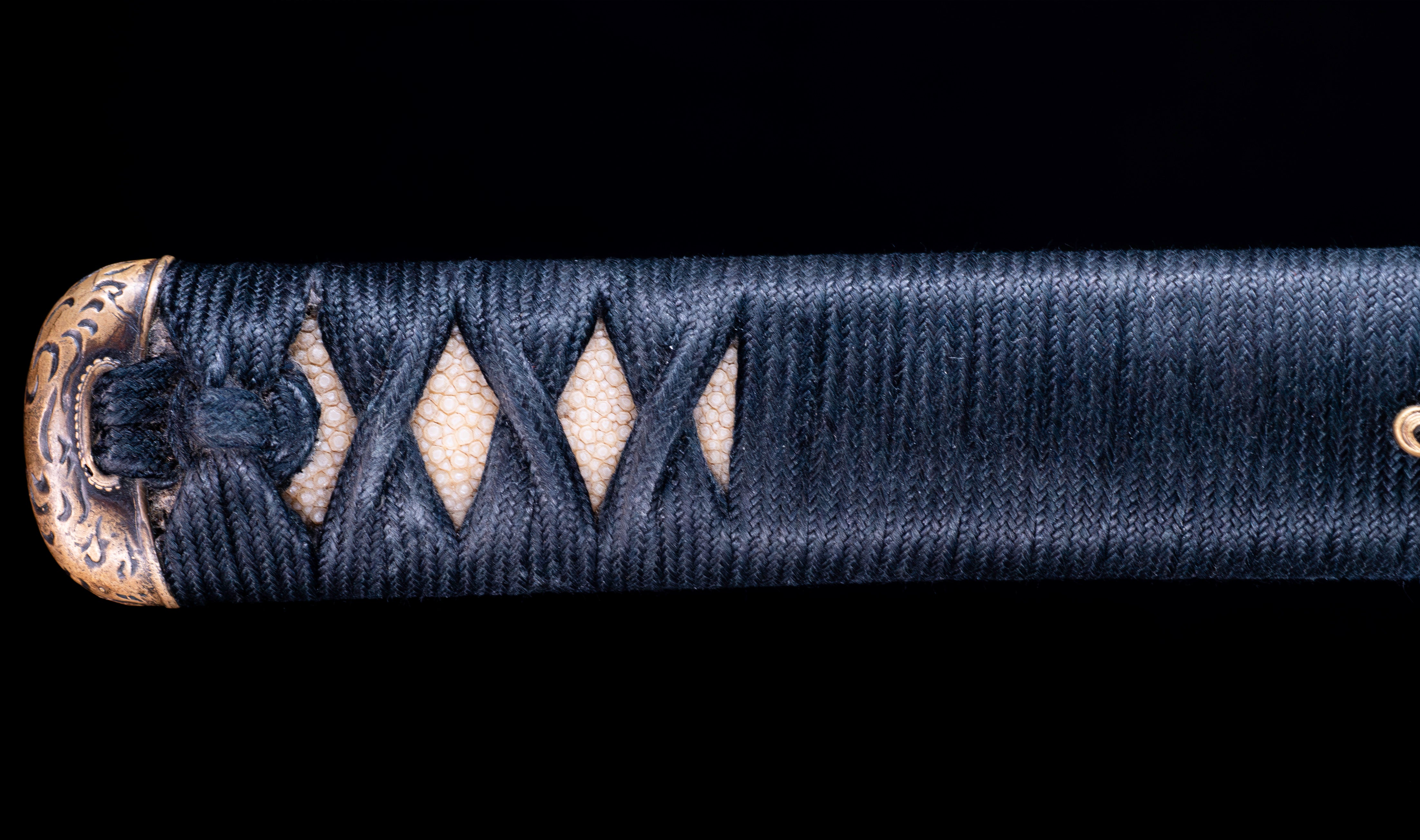
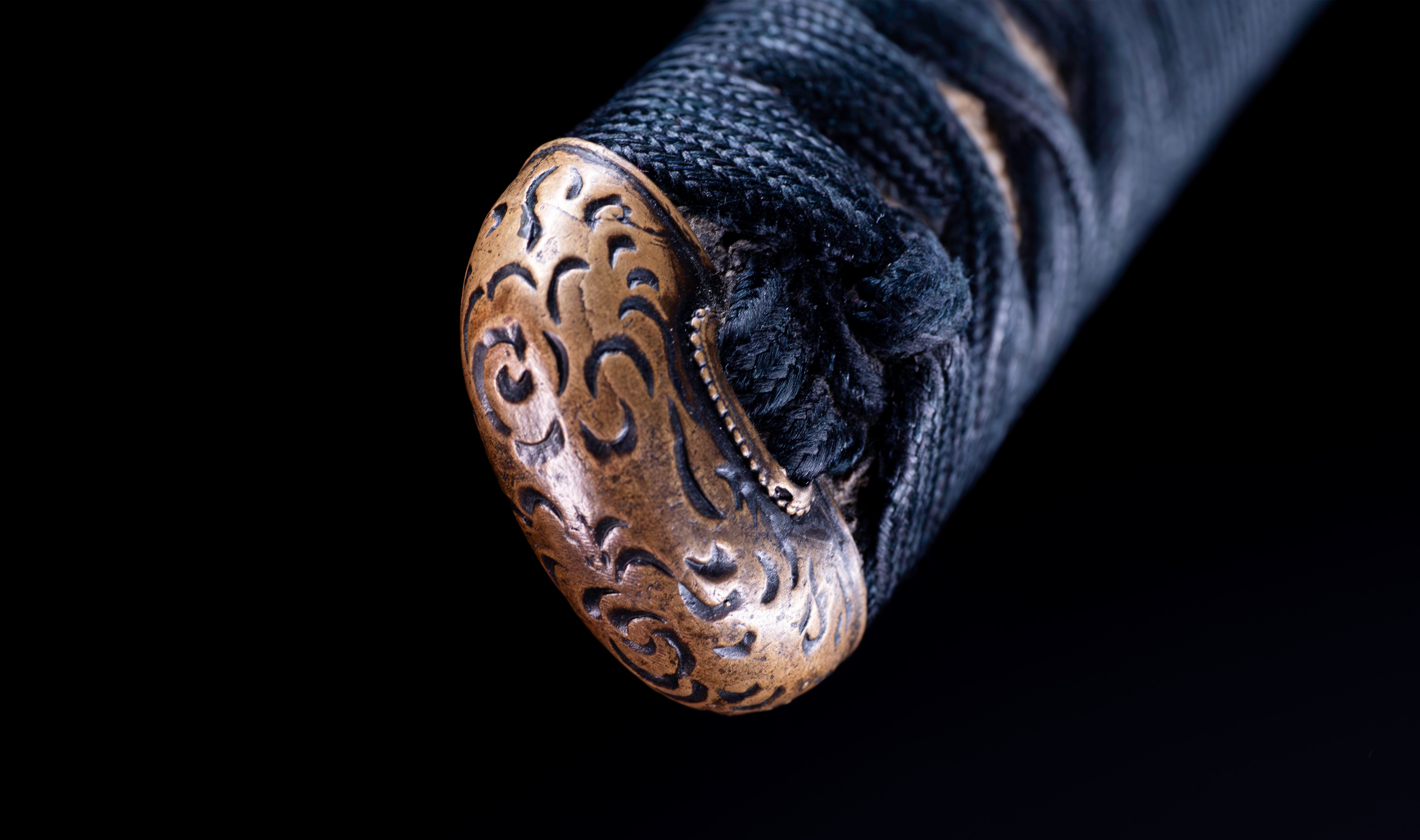
Signature (Mei): 石堂輝秀作 Ishidō Teruhide saku Swordsmith: Ishidō Teruhide (菊池清一, Kikuchi Seiichi) — 10th generation Ishidō family School / Tradition: Ishidō School — descendant of Musashi Daijō Koreichi and Ishidō Unju Koreichi Period: Shōwa era (昭和) — modern traditionally-forged nihonto Mounting: Koshirae — iron maru-gata tsuba with landscape relief, brass fuchi-kashira with karakusa engraving, navy ito tsuka-maki over samegawa, gilt brass menuki, gold silk sageo Blade Length (Nagasa): 67.4 cm Curvature (Sori): 2.6 cm Mekugi-ana: 1 Shape: Shinogi-zukuri, chu-kissaki Hamon: Notare-gunome, nie-deki, bright and active nioiguchi Boshi: Ko-maru with clean turnback, fukura kareru tendency Nakago: Signed omote: 石堂輝秀作 (Ishidō Teruhide saku), 1 mekugi-ana A katana signed Ishidō Teruhide saku ( 石堂輝秀作 ) — the personal work of Kikuchi Seiichi , 10th generation of the historic Ishidō family, forged during the Shōwa era by one of Japan's most lineage-rich smithing dynasties. At 67.4 cm nagasa with a commanding 2.6 cm sori in pronounced koshi-zori, the blade carries the assertive, grounded geometry of a sword built for practical purpose — forged during a period when Teruhide's skill was directly engaged in producing blades of the highest functional standard. The hamon is a vigorous notare-gunome — broad rolling waves of notare punctuated by rhythmic gunome peaks, the whole executed in a bright nie-deki that fills the nioiguchi with dense crystalline activity. This is a hamon that announces itself immediately and rewards sustained examination: the nie catches differently at every angle, the boundary line between hardened and unhardened steel alive with the micro-structure that only traditional differential hardening produces. The high-quality polish presents the hamon with full clarity, doing justice to the smith's command of the forge and the clay. The boshi closes in ko-maru with a slight fukura kareru tendency — a tightened tip profile that reflects deliberate technical control.
Offered by Tokyo Nihonto
This piece has sold
Get an email when a new Teruhide piece hits the market.


Tokyo · around 1926-1989
Shōwa to the present: destruction and revival
The twentieth century nearly killed the craft twice: wartime distortion, then the occupation ban. The NBTHK’s founding in 1948 and licensed forging from 1953 rebuilt the sword as an art, crowned by Living National Treasures and the mukansa rank.
Returns/exchanges only for manufactured defects or incorrect products; notify within 72 hours of delivery. Cancellation only within 2 hours of placing. Customer pays return shipping. Refund within 3 business days of package arrival.