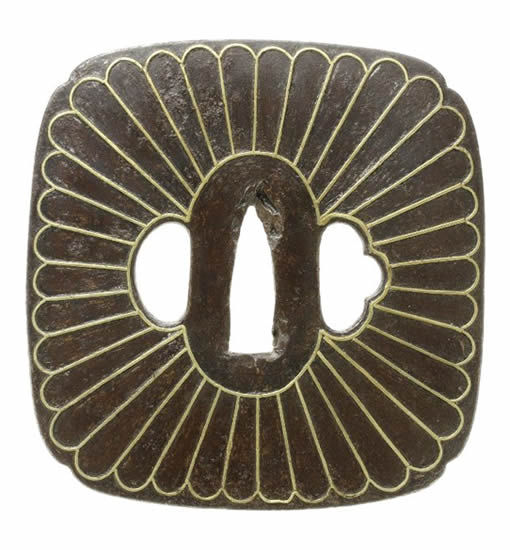
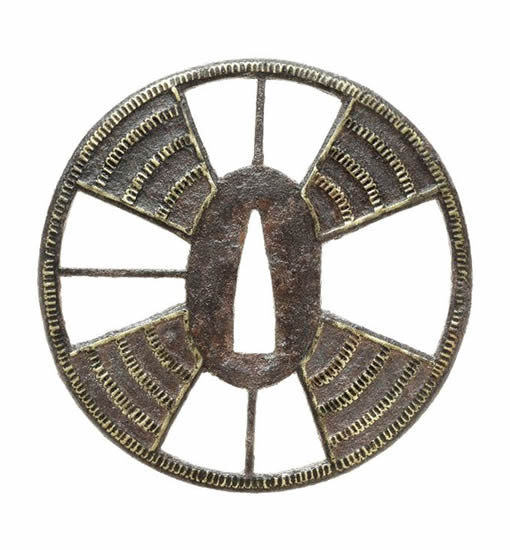
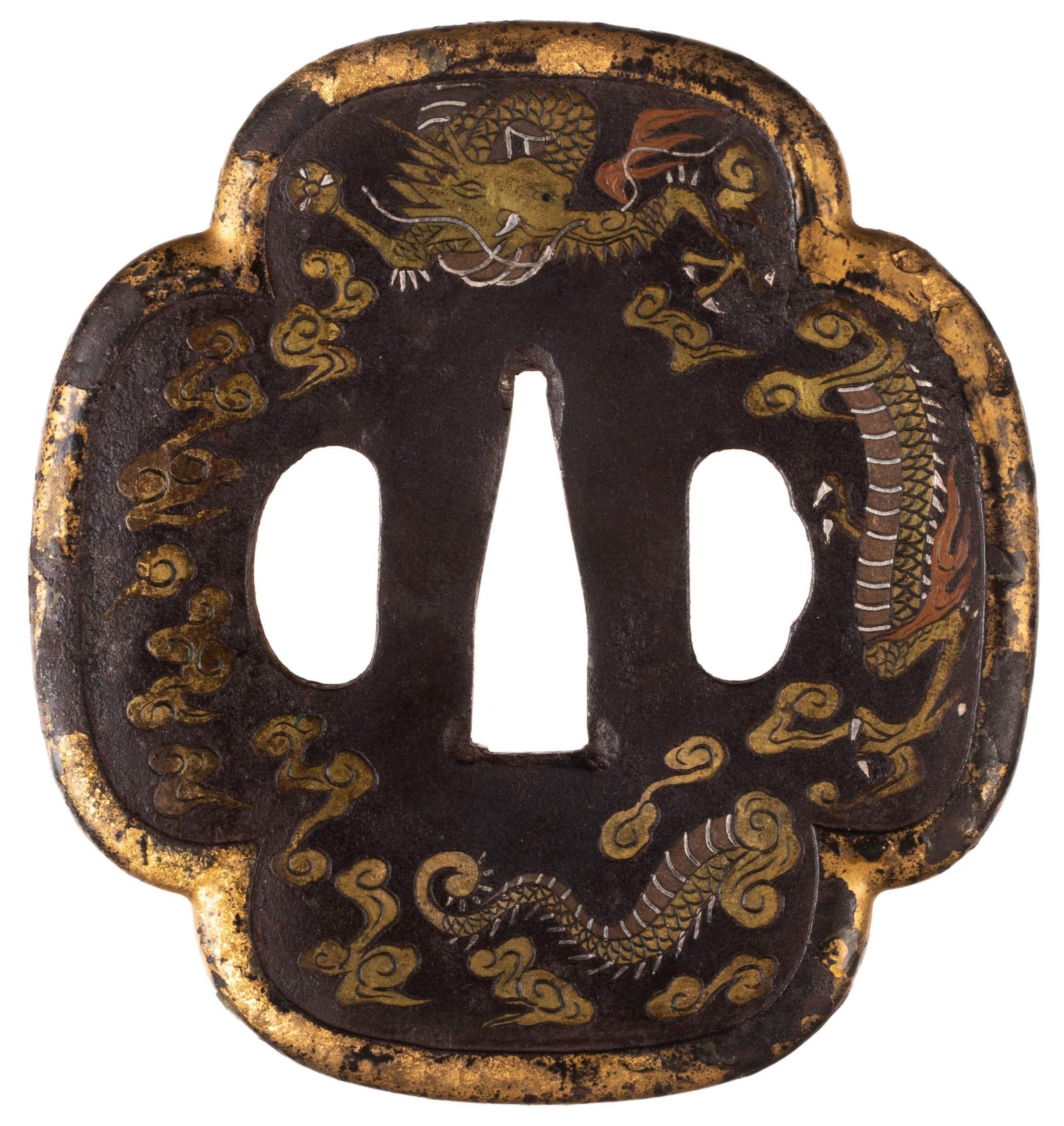
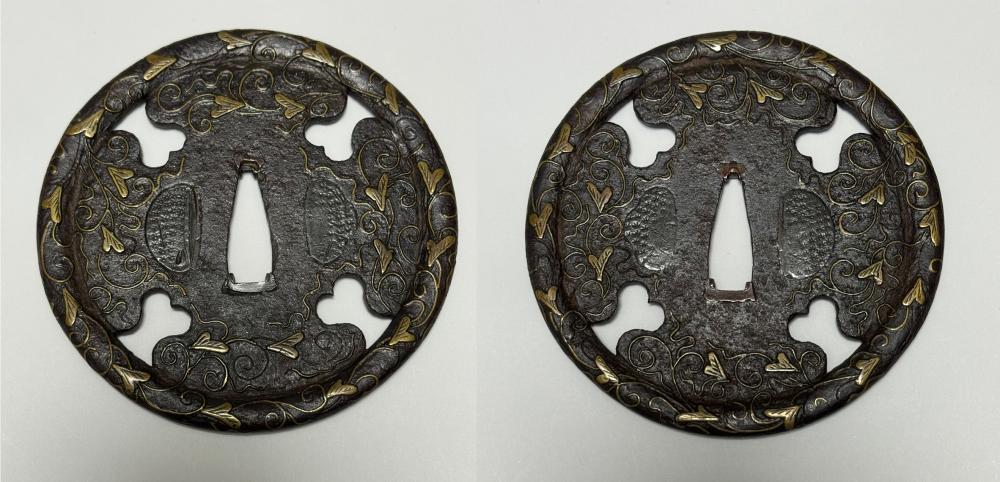
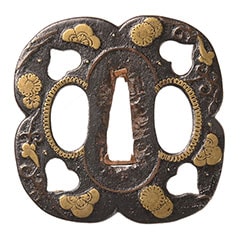
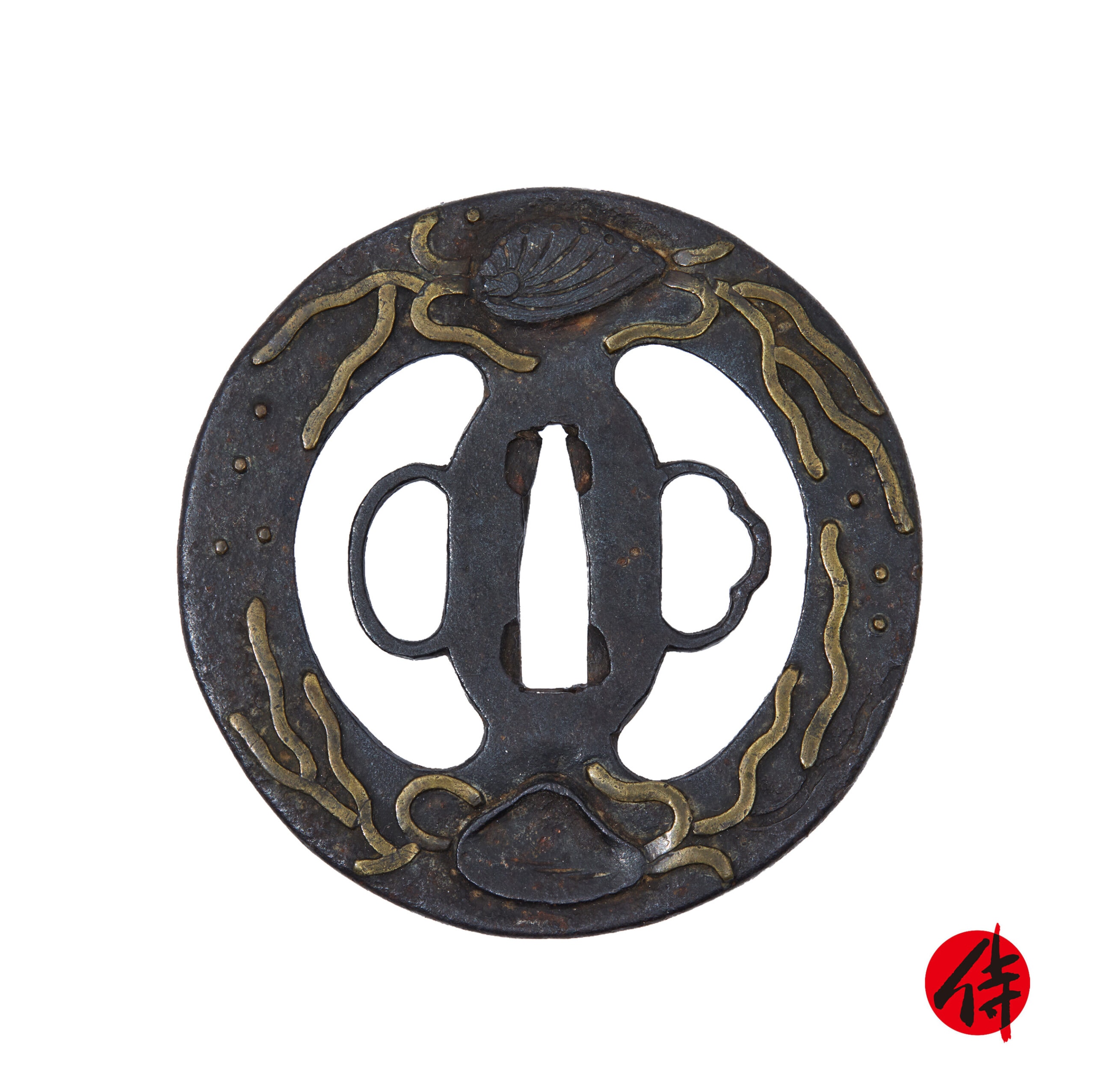
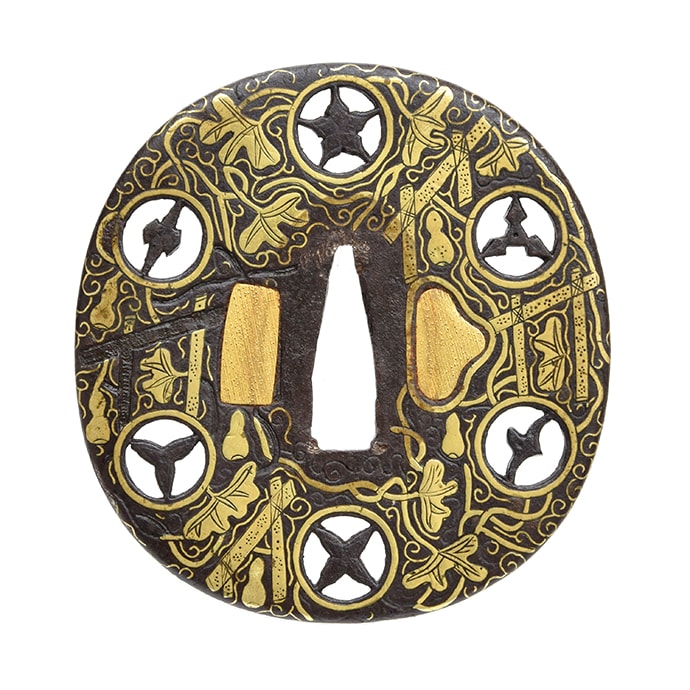
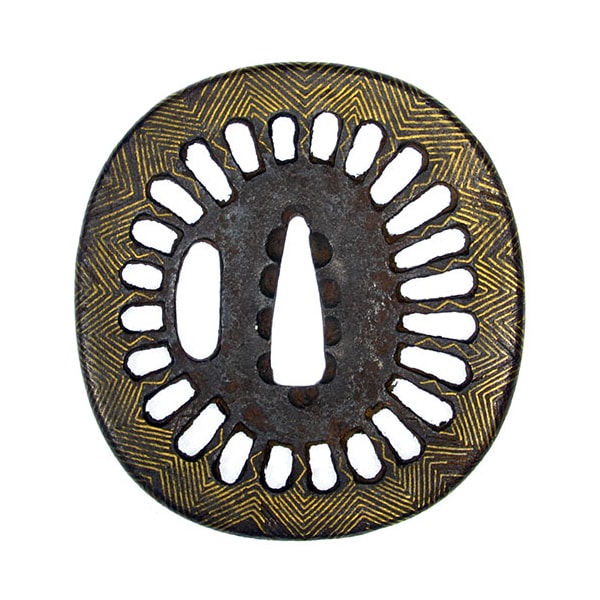
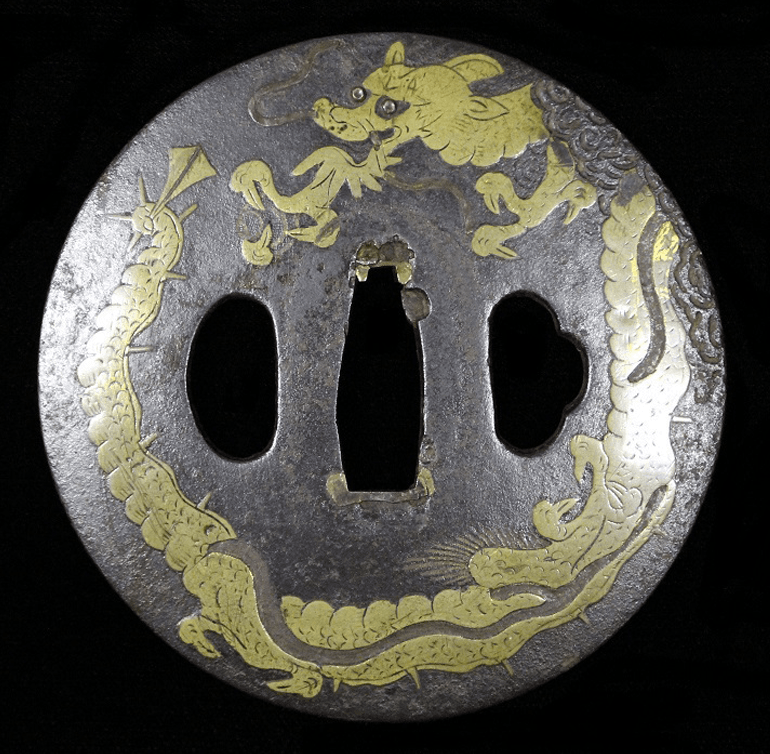
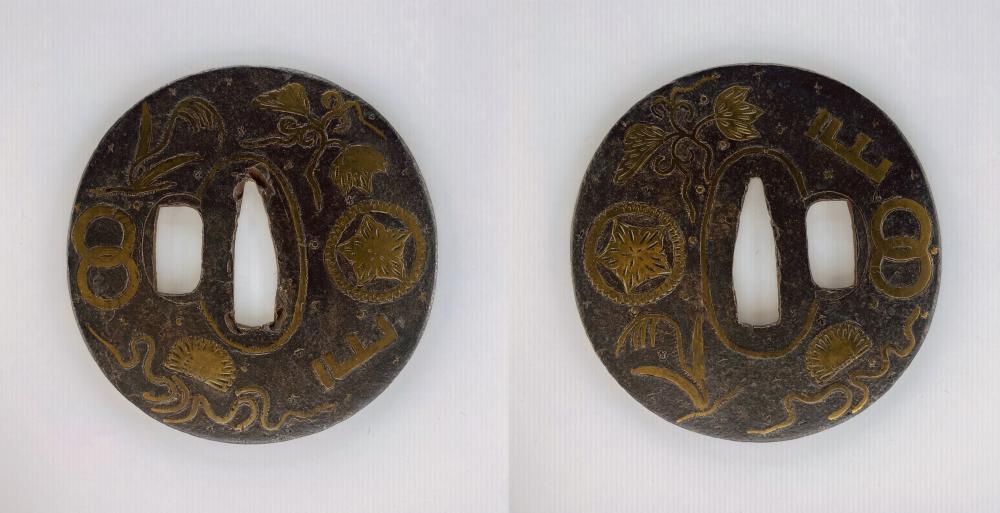
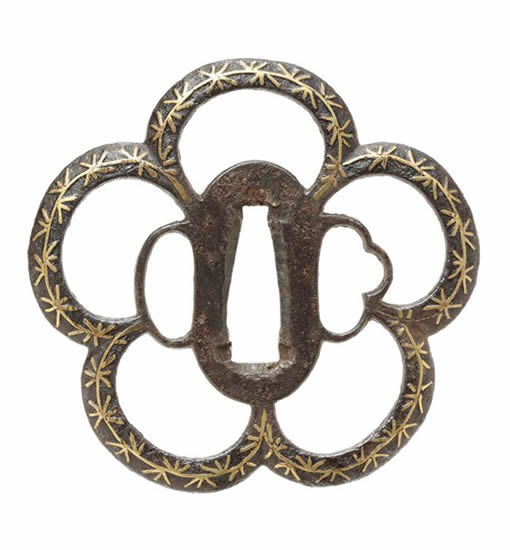
This is a tsuba with a plum blossom and algae design, made in the Momoyama period. It is unsigned and attributed to the Heianjo school. The tsuba is made of iron with brass inlay and comes with a kiri box and Hozon certificate.
 NihontoWatch
mumei · Heianjo · Momoyama
Heianjo-Zogan School
Momoyama
Yamashiro
Unsigned
Hozon (NBTHK)
Iron-tsuba
22 pieces on the market now
Heianjo zogan tsuba constitute a technique-defined regional tradition rooted in Yamashiro Province, centered on the capital city of Kyoto. The NBTHK setsumei consistently describe the tradition as one that "draws upon the lineage of Onin tsuba," though the relationship is understood as broadly contemporaneous rather than strictly sequential; the earliest Heianjo inlay works are, in terms of period, close to Onin tsuba. The tradition flourished from the closing years of the Muromachi period through the Momoyama era and into the early Edo period. Learn more →
| Smith | Era | Designated |
|---|---|---|
| Shigemitsu重光 | — | 0 |
| Hidesada英貞 | — | 0 |
| Tadatsugu忠次 | — | 0 |
| Yoshihisa吉久 | — | 0 |
| Yoshinaga吉長 | — | 0 |
Certifies a genuine fitting worth preserving: a correct signature, or, if unsigned, an identifiable era and school, with recognized artistic and craft value.
The NBTHK (Nihon Bijutsu Tōken Hozon Kyōkai, the Society for the Preservation of Japanese Art Swords) is a public-interest incorporated foundation founded in 1948 and supervised by Japan’s Agency for Cultural Affairs (Bunkachō); it is based at the Japanese Sword Museum in Tokyo. Its expert panels physically examine each submitted work (shinsa) and issue a certificate (kanteishō) ranking it by artistic and historical merit. NBTHK papers are the most widely recognized standard of authentication for Japanese swords and fittings.
NBTHK official siteIf, due to our fault, the item differs significantly from its proper condition, the item may be returned. Cooling-off is within one week of the item's arrival.
This is a tsuba with a plum blossom and algae design, made in the Momoyama period. It is unsigned and attributed to the Heianjo school. The tsuba is made of iron with brass inlay and comes with a kiri box and Hozon certificate.
NihontoWatchmumei · Heianjo · Momoyama
Heianjo-Zogan School
Momoyama
Yamashiro
Unsigned
Hozon (NBTHK)
Iron-tsuba
22 pieces on the market now
Heianjo zogan tsuba constitute a technique-defined regional tradition rooted in Yamashiro Province, centered on the capital city of Kyoto. The NBTHK setsumei consistently describe the tradition as one that "draws upon the lineage of Onin tsuba," though the relationship is understood as broadly contemporaneous rather than strictly sequential; the earliest Heianjo inlay works are, in terms of period, close to Onin tsuba. The tradition flourished from the closing years of the Muromachi period through the Momoyama era and into the early Edo period. Learn more →
| Smith | Era | Designated |
|---|---|---|
| Shigemitsu重光 | — | 0 |
| Hidesada英貞 | — | 0 |
| Tadatsugu忠次 | — | 0 |
| Yoshihisa吉久 | — | 0 |
| Yoshinaga吉長 | — | 0 |
Certifies a genuine fitting worth preserving: a correct signature, or, if unsigned, an identifiable era and school, with recognized artistic and craft value.
The NBTHK (Nihon Bijutsu Tōken Hozon Kyōkai, the Society for the Preservation of Japanese Art Swords) is a public-interest incorporated foundation founded in 1948 and supervised by Japan’s Agency for Cultural Affairs (Bunkachō); it is based at the Japanese Sword Museum in Tokyo. Its expert panels physically examine each submitted work (shinsa) and issue a certificate (kanteishō) ranking it by artistic and historical merit. NBTHK papers are the most widely recognized standard of authentication for Japanese swords and fittings.
NBTHK official siteIf, due to our fault, the item differs significantly from its proper condition, the item may be returned. Cooling-off is within one week of the item's arrival.