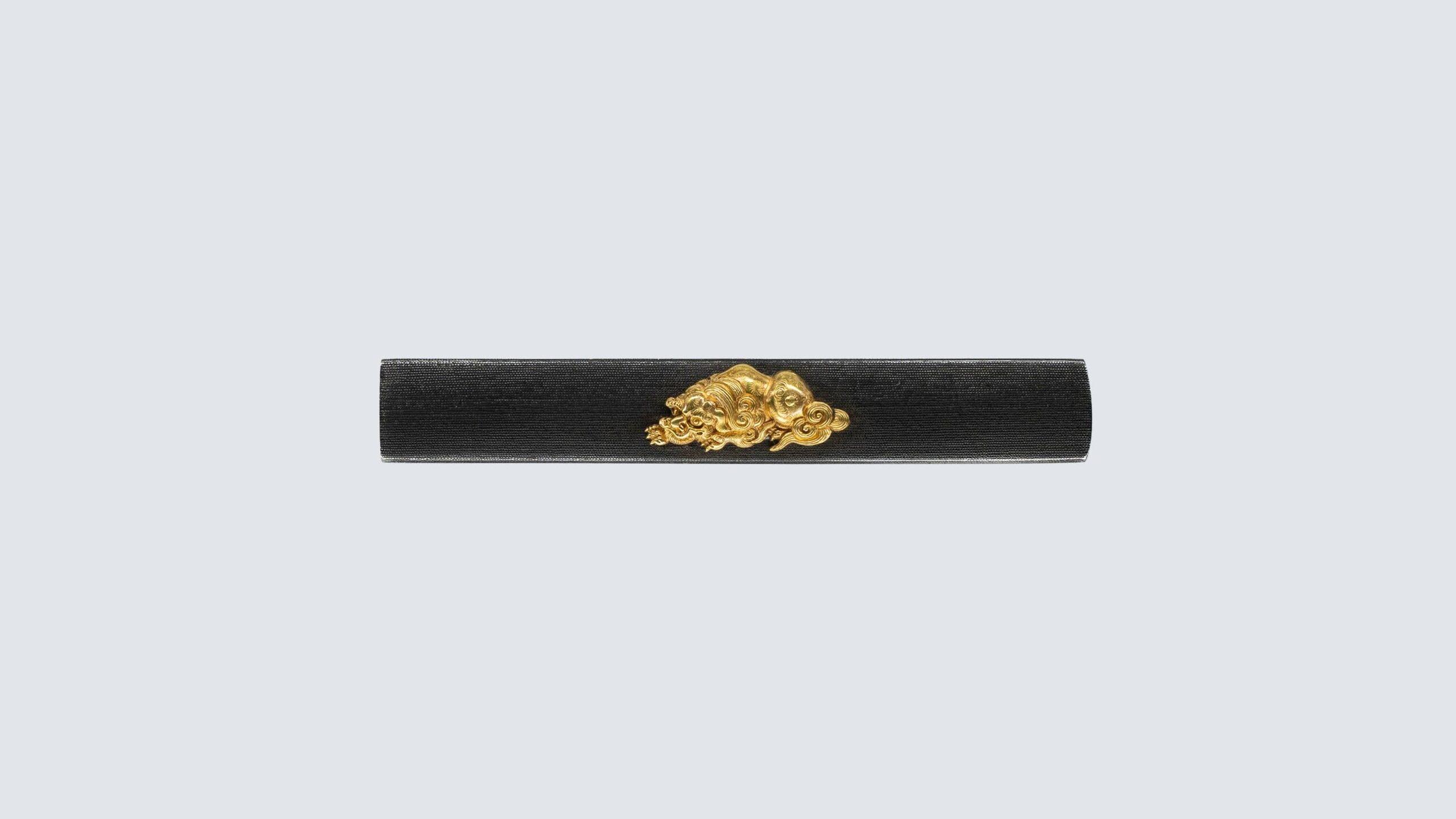
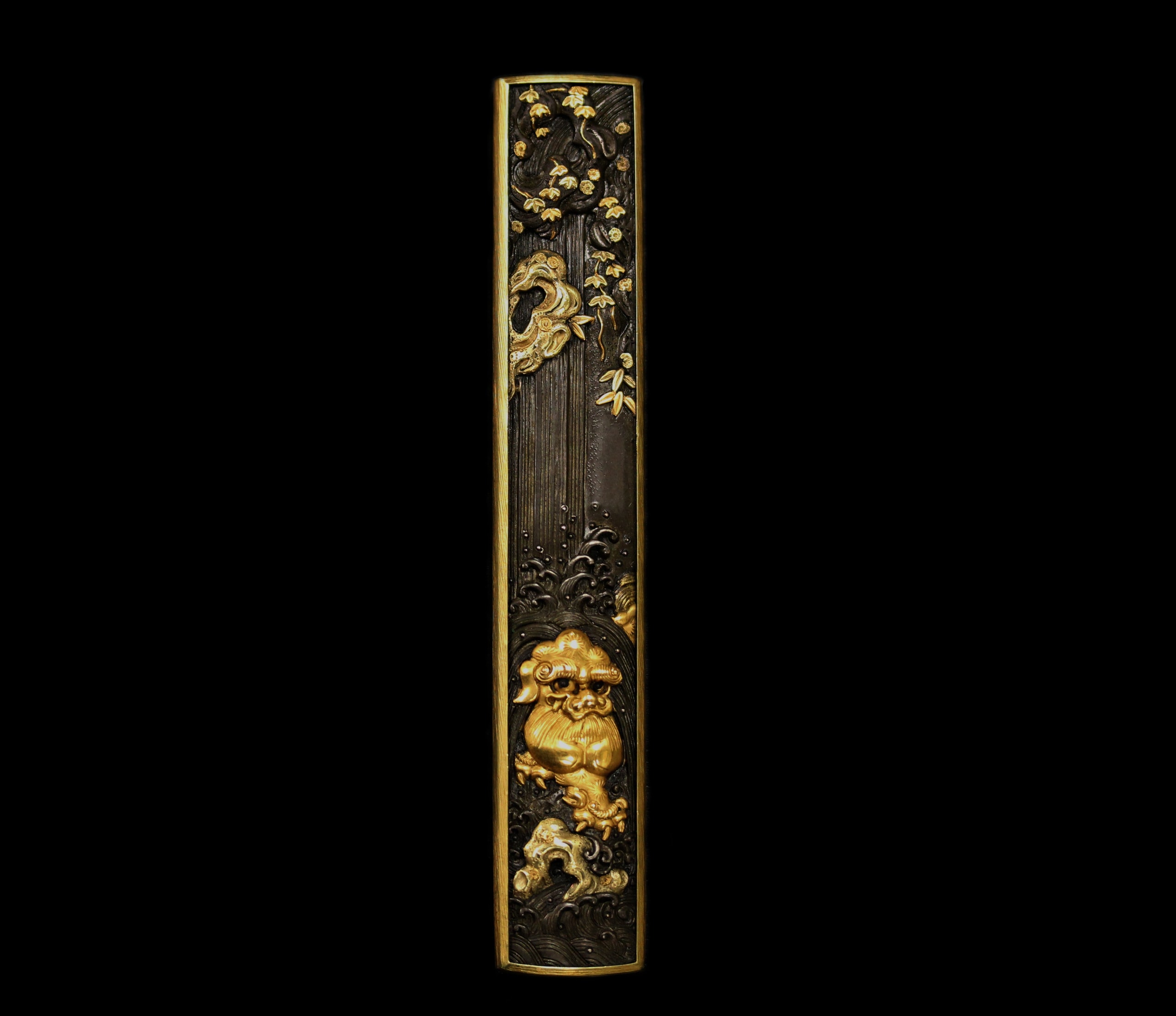
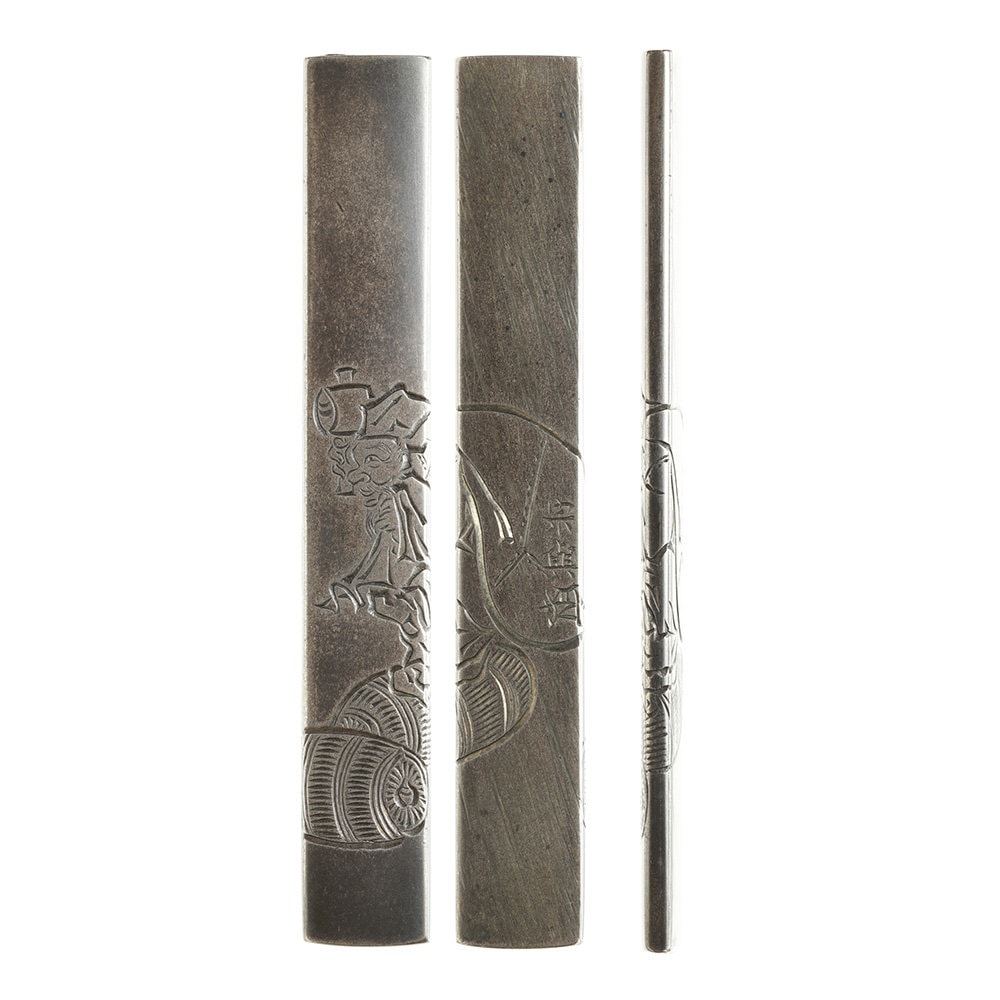
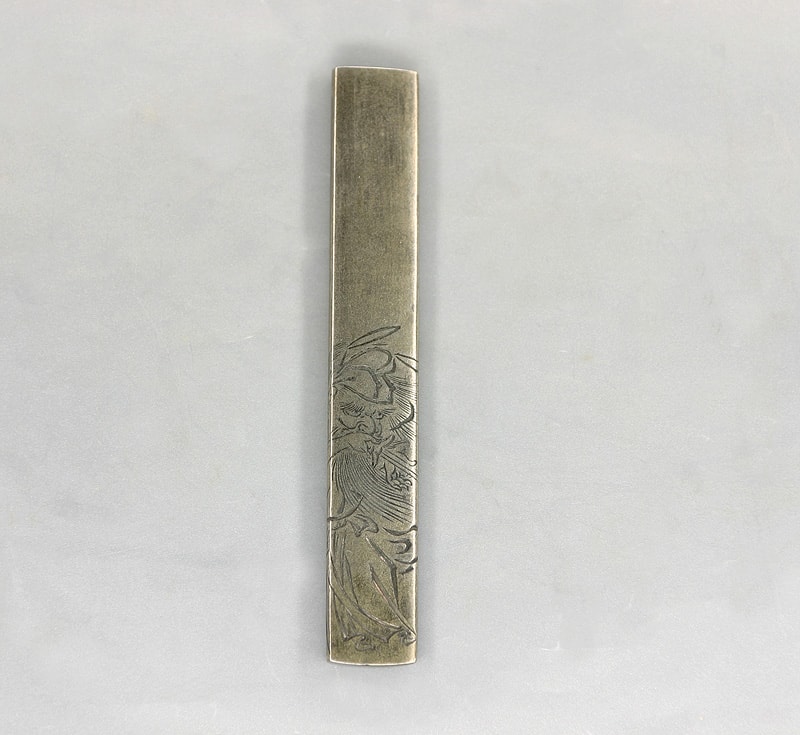
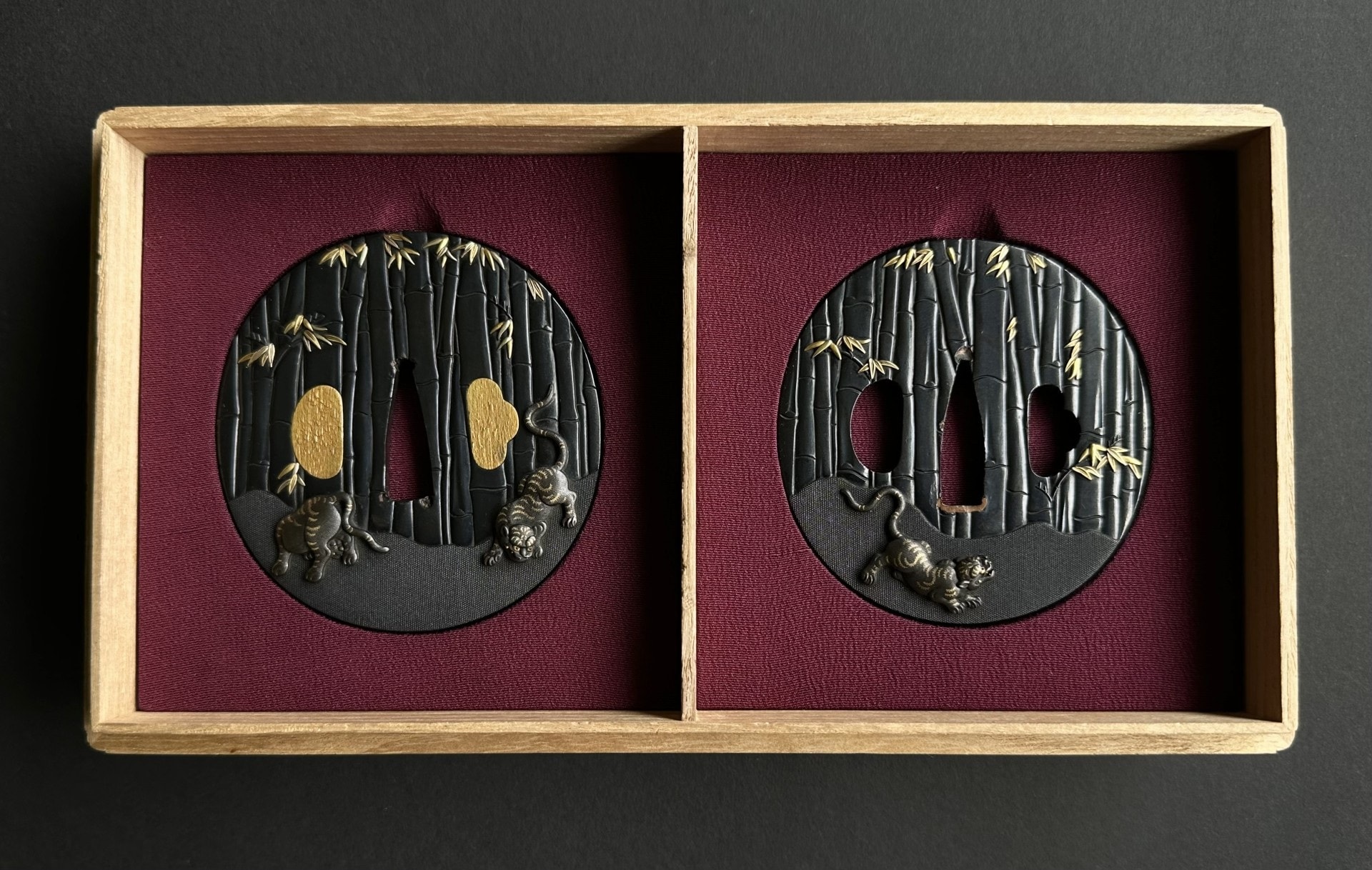
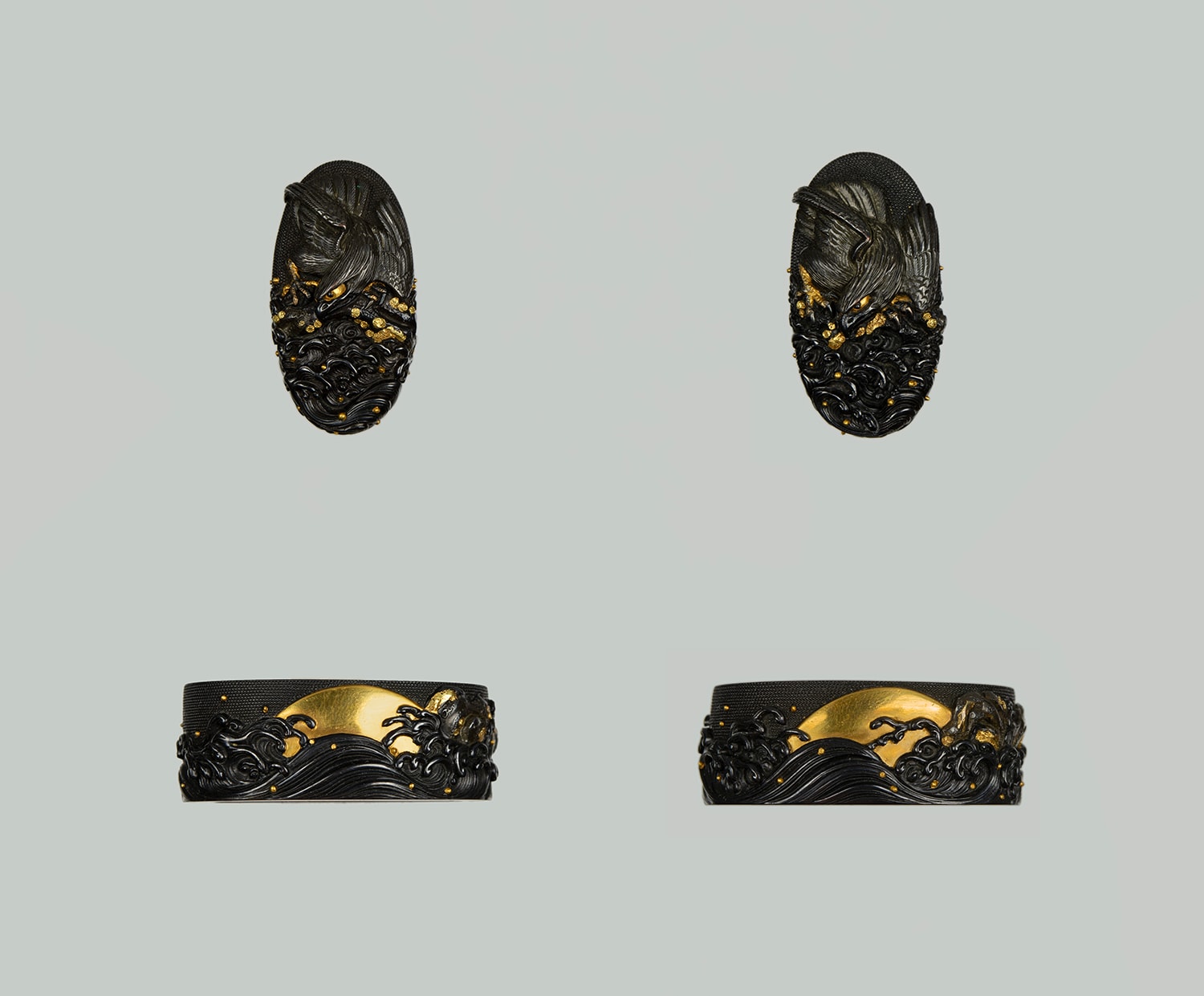
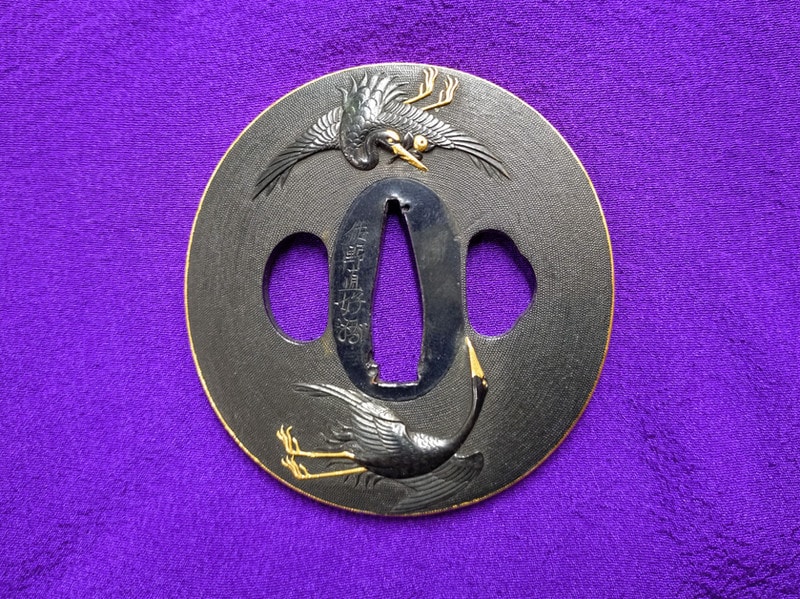
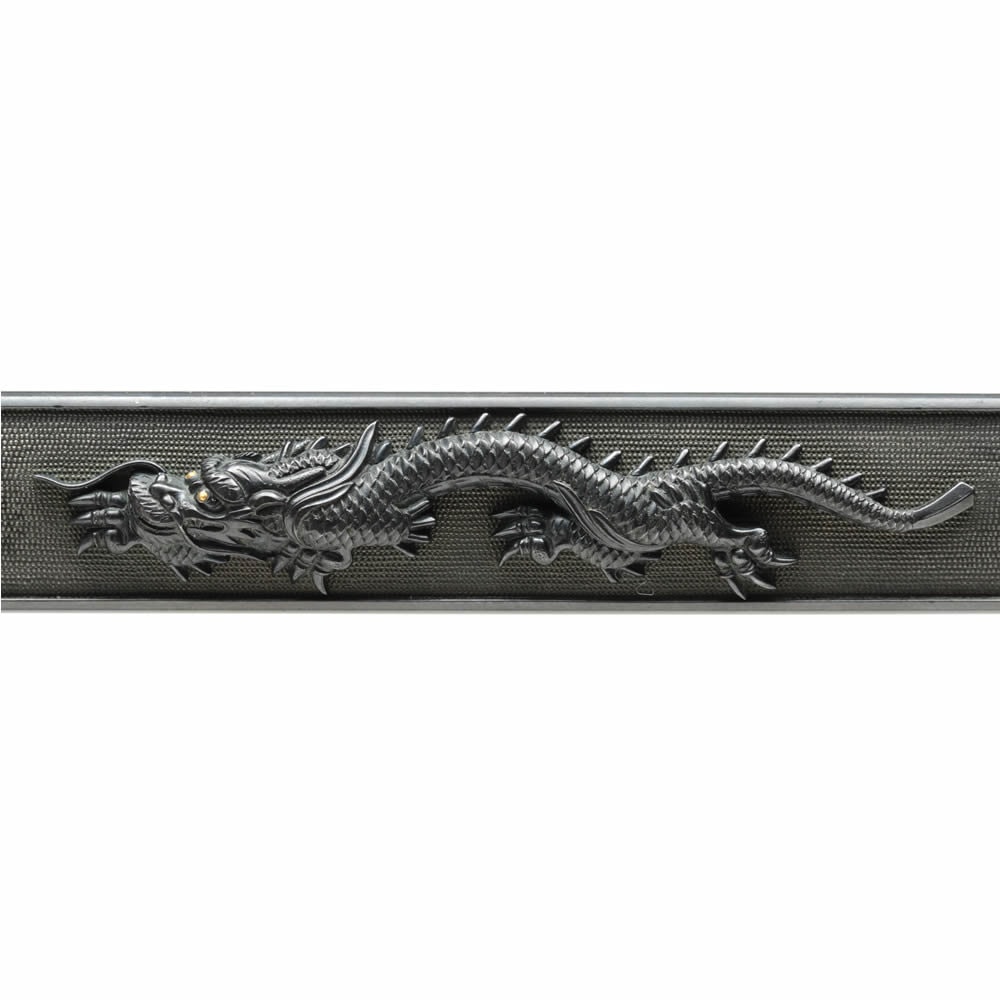
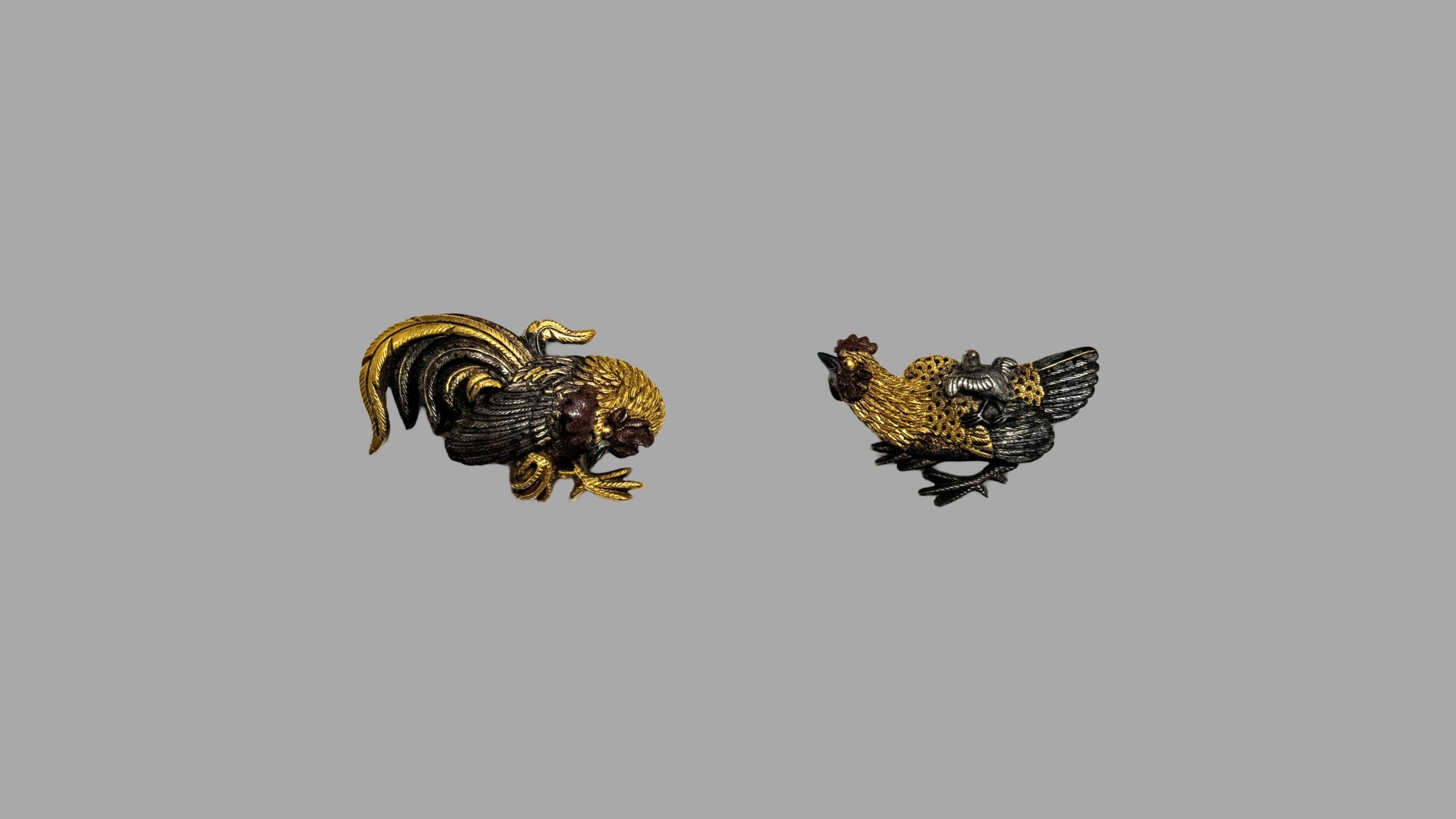
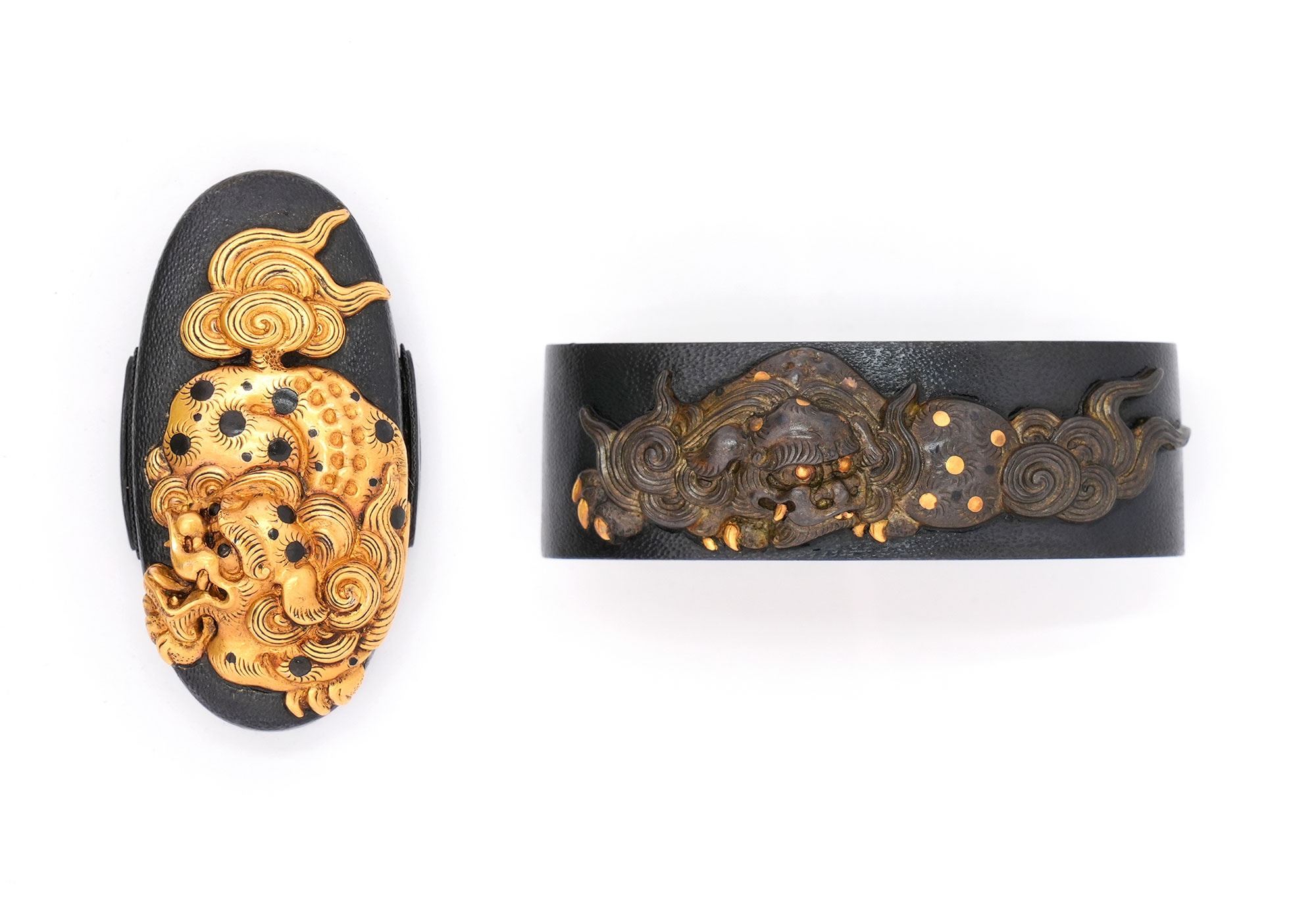
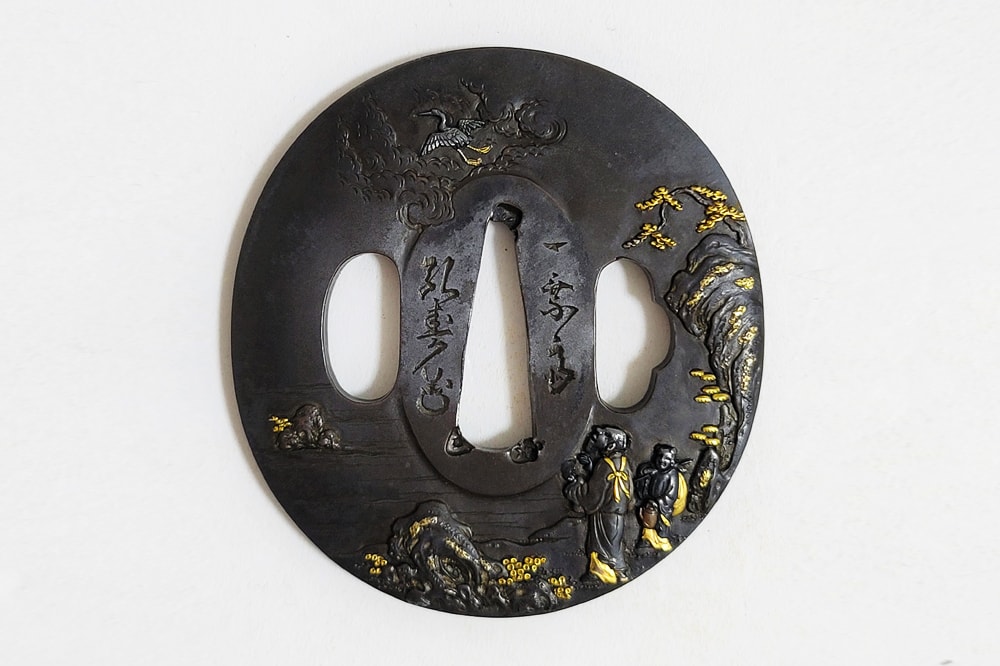
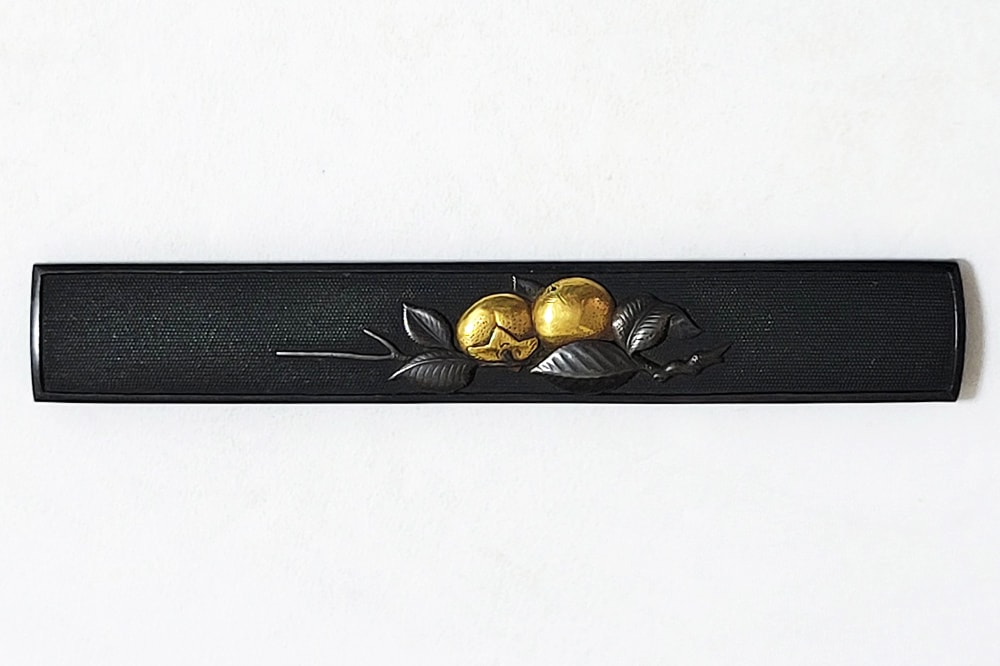
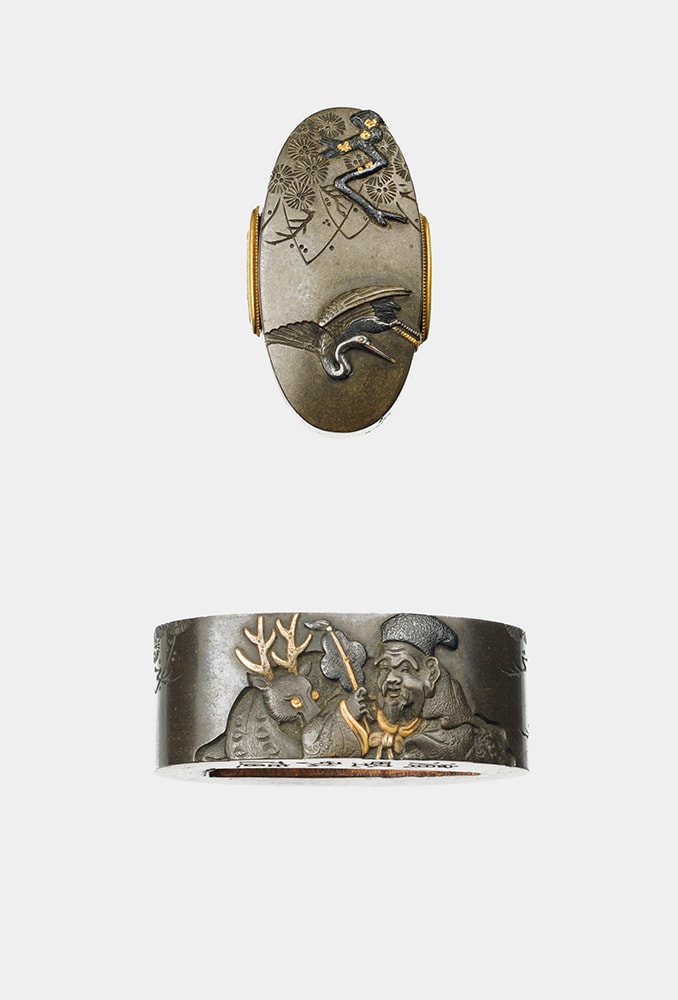
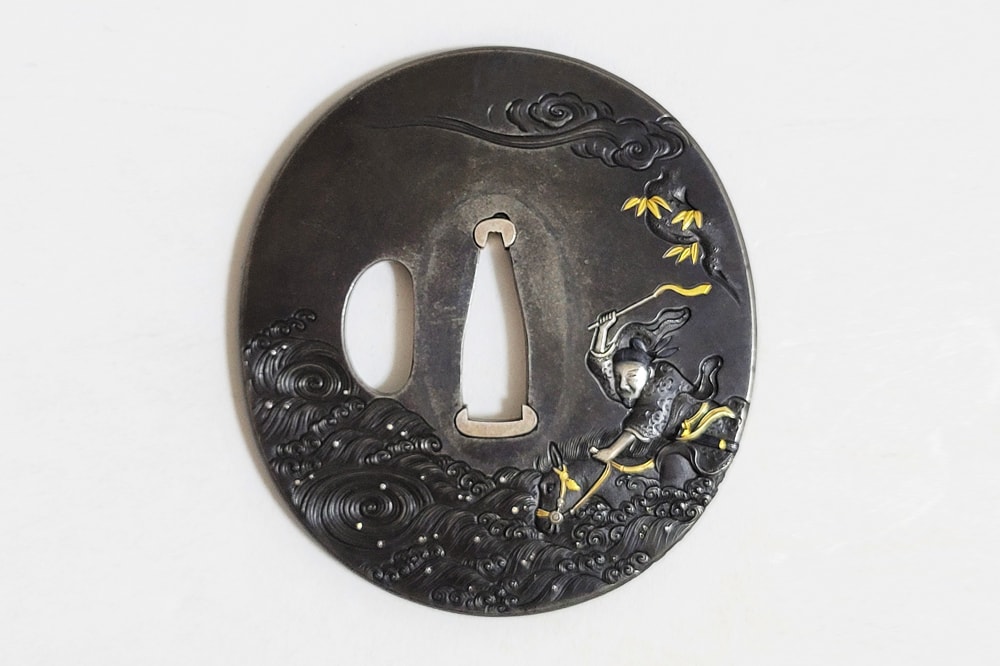
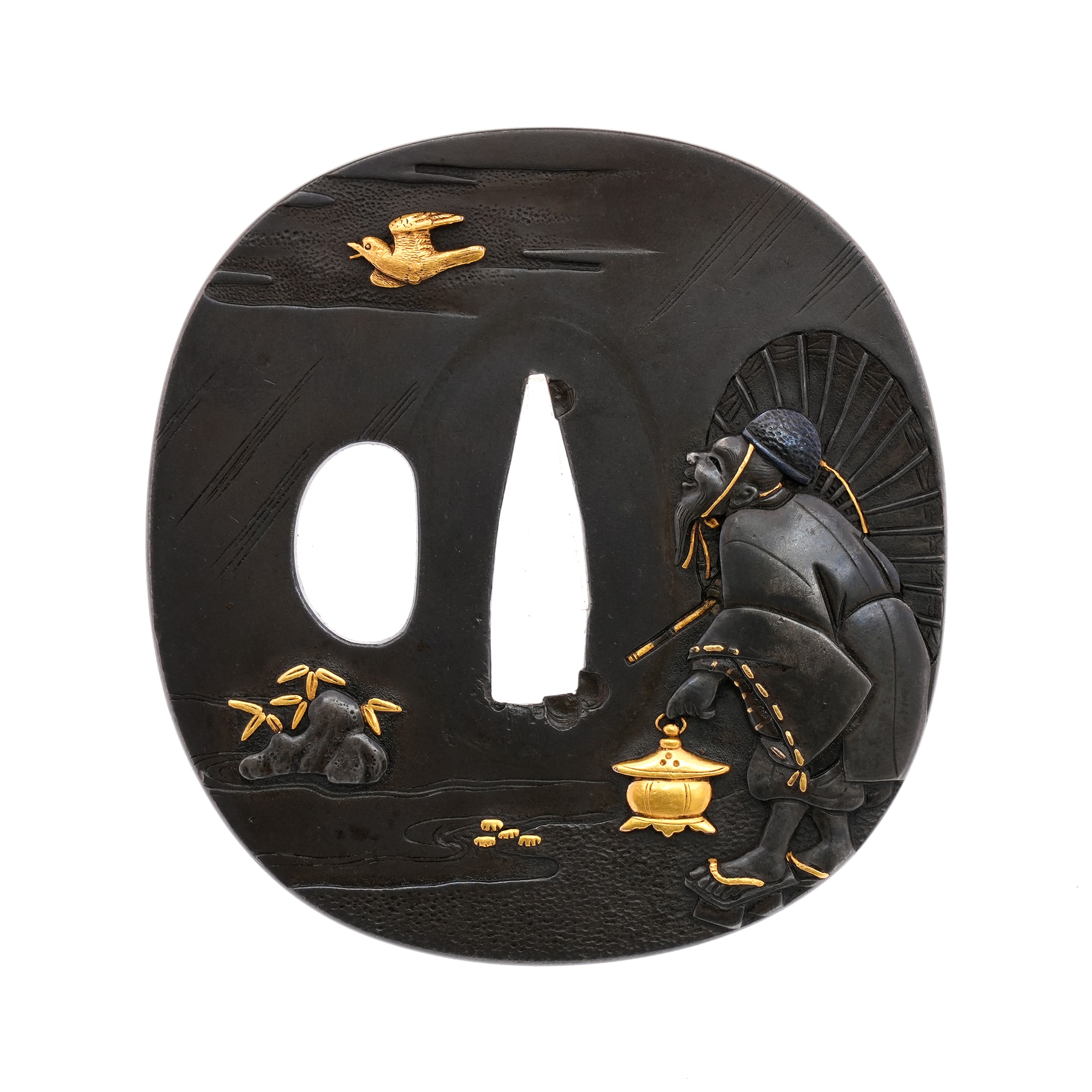
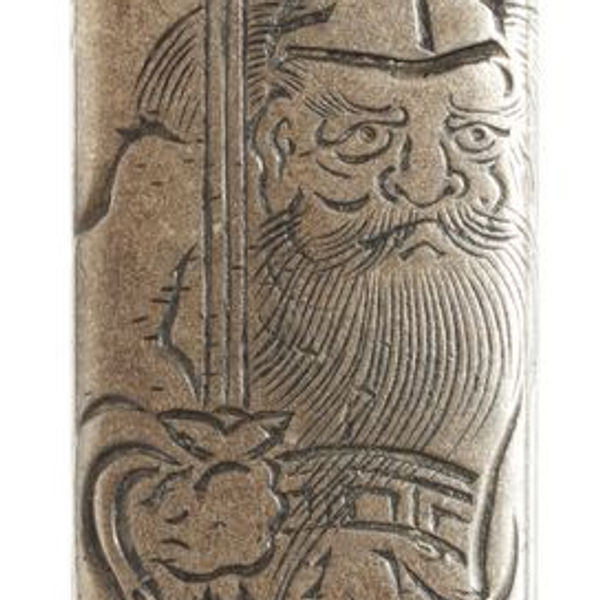
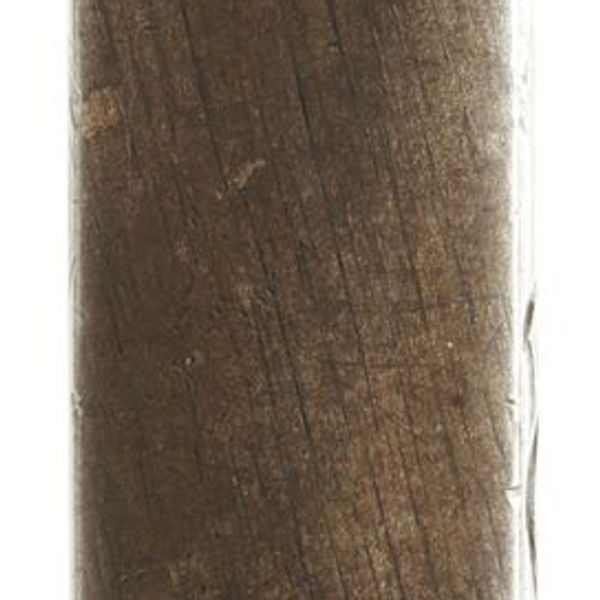
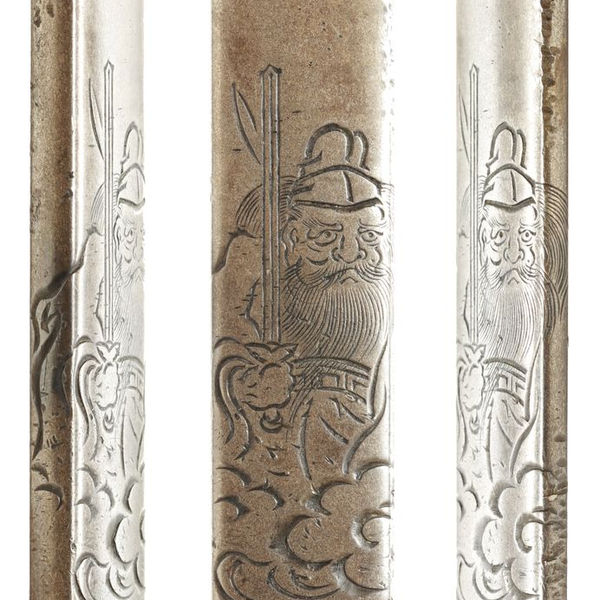
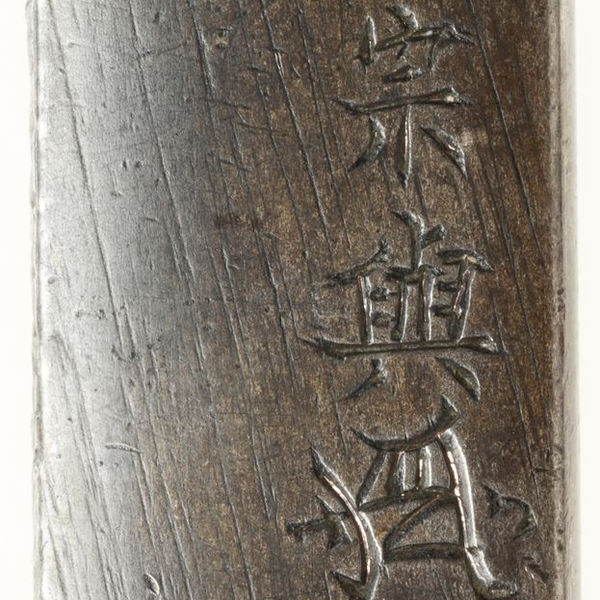
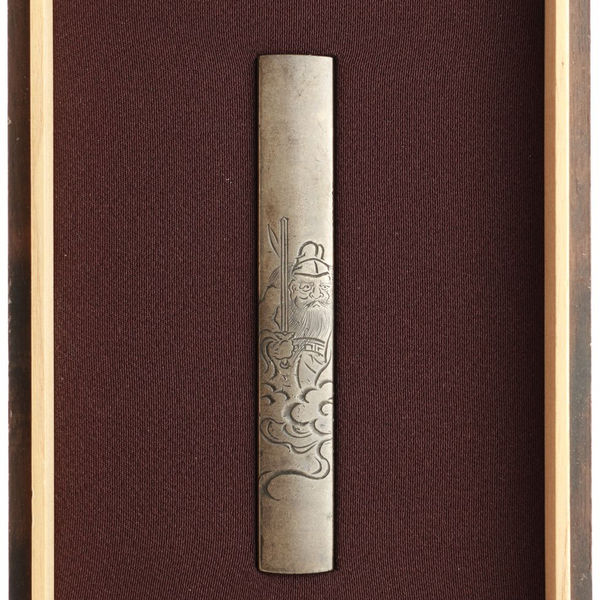
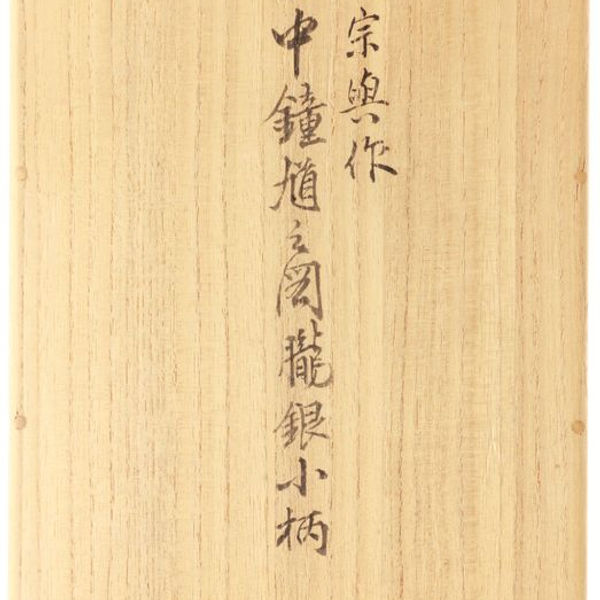
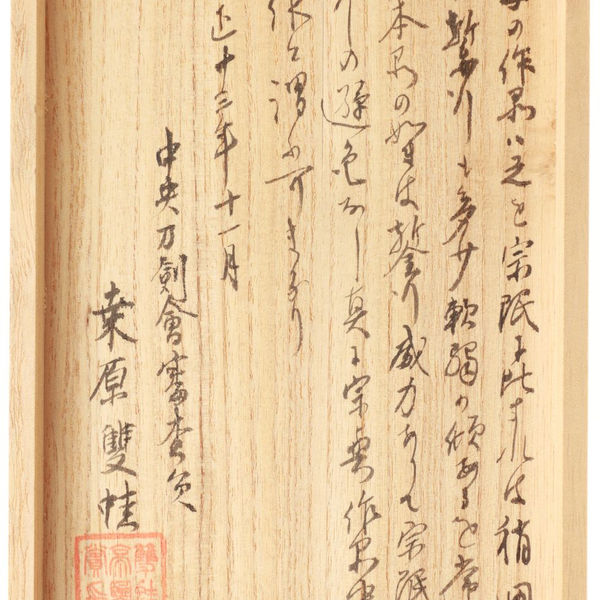
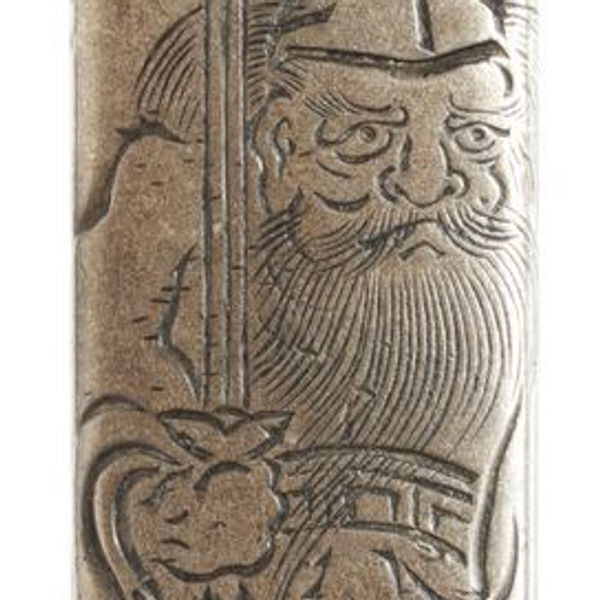
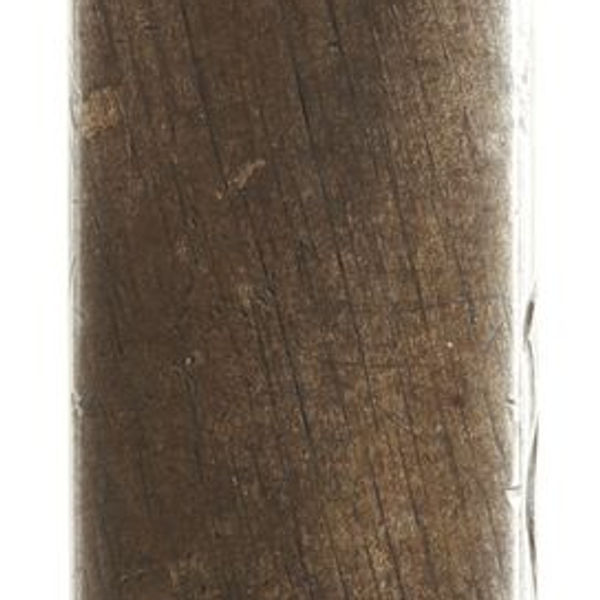
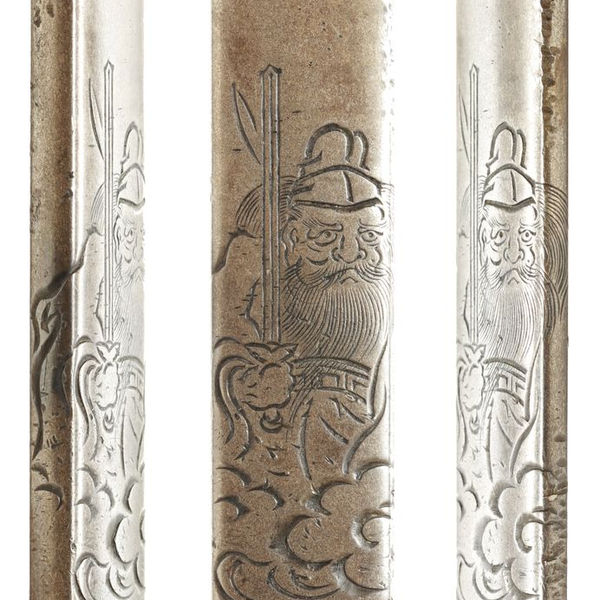
This kozuka features a 'Shoki in the Clouds' motif, signed by Soyo with his kao. Made during the Mid-Edo period in Kanda, Edo, Musashi province, it is crafted from shibuichi with katakiribori and kebori techniques. The piece is accompanied by a hakogaki by Kuwabara Yojiro, praising it as a masterpiece by Soyo, and is listed as Tokubetsu Hozon by the NBTHK.
 NihontoWatch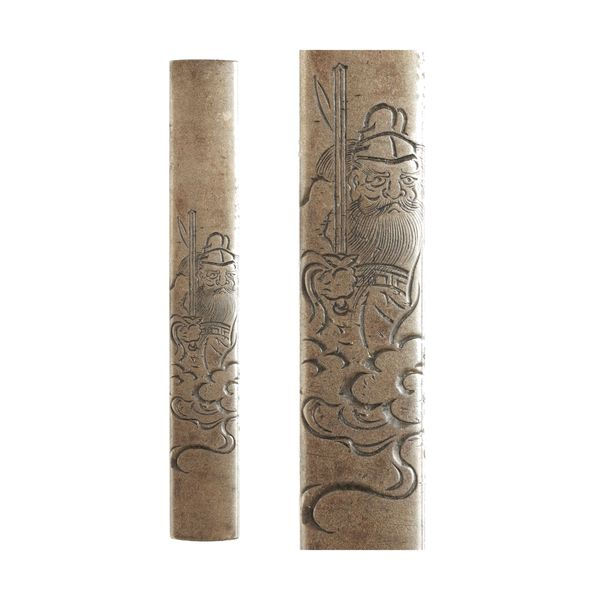
Yokoya Soyo
Edo
Musashi
Signed
Tokuho (NBTHK)
Machibori · Edo
3 pieces on the market now
Yokoya Soyo was born in Edo in Genroku 13 (1700), the second son of Yokoya Soju and younger brother of Eisei. Invited to become the adopted son of the celebrated Yokoya Somin, he succeeded to the family headship in Kyoho 18 (1733) at the age of thirty-four, following Somin's death, thereby preserving the distinguished Yokoya house name. In later years he took the art name Shokei. He should be distinguished from the first-generation Soyo (sometimes called "Sofu Soyo" or "Ko-Soyo"), who had studied under Goto Injo Mitsutomi, served as an official bakufu carver during the Kan'ei era, and founded the Yokoya lineage in Edo. The second-generation Soyo stands as the direct artistic heir of Somin and an outstanding presence among the many metalworkers who emerged in what came to be called machibori.
Soyo's oeuvre divides broadly into two modes. Many of his works are executed on polished shibuichi grounds using katakiribori — the single-edge "engraver's brush" carving that was a favored specialty inherited from Somin — in which he "demonstrates an excellent technique inherited from his master and adoptive father." By deftly alternating chisels of varying widths, he achieves compositions that combine bold, powerful katakiribori with delicate kebori linework. A smaller but no less distinguished body of work employs shakudo nanako-ji grounds with takabori, inlay, and iroe, producing "superb results that possess both the capability and the dignity expected of Somin's successor." His lions — the celebrated "Yokoya shishi" originating with Somin — are rendered with imposing presence and richly modeled high relief, while his horses display a naturalistic, sketch-from-nature quality. His signature is characteristically cut in vigorous kaisho script with kao.
The NBTHK setsumei repeatedly affirm Soyo's place as a master who "clearly surpassed the rest" among machibori metalworkers while faithfully continuing his teacher's manner. His takabori works are described as "extremely rare," lending special value to surviving examples; fully coordinated matching sets (mitsudogu) are rarer still and regarded as representative masterpieces. Whether working in the restrained monochrome palette of polished shakudo or introducing touches of color through kinhira-zogan rim accents and gold iroe, his pieces consistently display "a high level of skill inherited from Somin" alongside an individuality all his own — a capacity, as the NBTHK observes, for adding "the innovative freshness of machibori" to the traditional Yokoya atelier vocabulary.
Where Soyo stands among comparable artisans: across all of nihontō, and within tradition, era, and period. The tiers (Foremost · Leading · Major · Notable) weigh official designations from the NBTHK and Japan's Agency for Cultural Affairs, together with historical honors of lasting repute such as the Sansaku and Meibutsu-chō.
Select a lens to see how it's measured.
Machibori · Edo
105 pieces on the market now
The Yokoya school was the largest metalworking lineage of the Edo period, founded in the early seventeenth century when the first-generation Yokoya Soyo -- sometimes distinguished as "Sofu Soyo" or "Ko-Soyo" -- studied under Goto Injo Mitsutomi and established an independent atelier in Edo. The school's trajectory was decisively shaped by the third-generation master Somin (1670--1733), who trained in the hereditary iebori manner of the Goto house but, finding its convention-bound idiom unsatisfying, resigned his shogunal stipend and entered the sphere of independent work. There he "exercised his abilities to the fullest, achieved great success, and came to be called the founder of machibori" -- the town-carver tradition that would fundamentally reshape the world of Edo-period sword fittings. Somin cultivated a close friendship with the Kano-school-trained painter Hanabusa Iccho, from whom he received guidance regarding pictorial conceptions, and also studied with Kano Tan'yu, deepening his art through direct engagement with painters' designs. His adopted son and successor Soyo (1700--1734) faithfully continued the atelier's methods, while Soju (1651--1734), a disciple connected with both the first-generation Soyo and Somin, contributed rigorously unified daisho koshirae that exemplify the school's commitment to integrated, thematic ensembles. The Yokoya school's collective technical achievement divides broadly into two principal modes, both originated or perfected by Somin and transmitted through successive generations. The first is richly modeled takabori with polychrome metal inlay (iroe) in gold, silver, and shibuichi on shakudo nanako-ji grounds, where the carving displays an overwhelming abundance of modeled volume -- bold rises and falls in the flesh producing a forceful and crisply articulated manner that clearly reveals the school's Goto lineage and the thoroughness of its training. Soyo's works in this mode are described as possessing "both the capability and the dignity expected of Somin's successor," while Soju's takabori on shakudo nanako-ji achieves a dignified and well-ordered atmosphere across complete, unified fitting suites.
The second mode is katakiribori, a single-edge chisel technique that Somin originated, in which pronounced modulation and decisive strokes alternate depth and shallowness at will, producing modulations of speed and emphasis that recall ink painting. Soyo inherited this specialty with excellent technique, deftly alternating chisels of varying widths to combine bold katakiribori with delicate kebori linework. Among the school's most distinctive inventions are the celebrated "Yokoya lions" -- shishi rendered with such immediacy that one experiences the illusion that the lion might spring forth from the kozuka itself -- and Somin's innovative vertically oriented tatezu compositions depicting lions, tigers, horses, and other subjects from unconventional angles. The Yokoya school's enduring significance lies in its having opened a new artistic direction through freer, life-sketch-based realism that broke decisively with the formalized conventions of the Goto house while retaining that lineage's technical rigor. Somin's command of nanako-ji grounds in shakudo, polished shibuichi surfaces, and techniques such as sukidashi-bori, kebori, and yobori was comprehensive, and this breadth of technical vocabulary was transmitted intact to his successors. Soju's hereditary daisho mounting of the Uesugi family of Yonezawa Domain exemplifies the school's integrative vision -- every component sustaining a single coherent theme across the entire suite -- while Soyo's takabori works, described as "extremely rare," lend special value to surviving matched sets. Whether working in the restrained monochrome palette of polished shakudo or introducing touches of color through kinhira-zogan accents and gold iroe, the Yokoya masters consistently achieved what the NBTHK characterizes as a severity and awe-inspiring intensity that exerted a major influence on later generations of metalworkers, establishing the machibori tradition as the dominant creative current of Edo-period sword fittings. Learn more →
| Smith | Era | Designated |
|---|---|---|
| Somin宗珉 | — | 50 |
| Soyo宗與 | — | 13 |
| Soju宗壽 | — | 3 |
| Yasukiyo安精 | — | 0 |
| Yoshisada宜貞 | — | 0 |
A Hozon-certified fitting of notably superior craftsmanship and condition, often with signature or workmanship of high reference value.
The NBTHK (Nihon Bijutsu Tōken Hozon Kyōkai, the Society for the Preservation of Japanese Art Swords) is a public-interest incorporated foundation founded in 1948 and supervised by Japan’s Agency for Cultural Affairs (Bunkachō); it is based at the Japanese Sword Museum in Tokyo. Its expert panels physically examine each submitted work (shinsa) and issue a certificate (kanteishō) ranking it by artistic and historical merit. NBTHK papers are the most widely recognized standard of authentication for Japanese swords and fittings.
NBTHK official siteIf, due to our fault, the item differs significantly from its proper condition, the item may be returned. Cooling-off is within one week of the item's arrival.
This kozuka features a 'Shoki in the Clouds' motif, signed by Soyo with his kao. Made during the Mid-Edo period in Kanda, Edo, Musashi province, it is crafted from shibuichi with katakiribori and kebori techniques. The piece is accompanied by a hakogaki by Kuwabara Yojiro, praising it as a masterpiece by Soyo, and is listed as Tokubetsu Hozon by the NBTHK.
NihontoWatchYokoya Soyo
Edo
Musashi
Signed
Tokuho (NBTHK)
Machibori · Edo
3 pieces on the market now
Yokoya Soyo was born in Edo in Genroku 13 (1700), the second son of Yokoya Soju and younger brother of Eisei. Invited to become the adopted son of the celebrated Yokoya Somin, he succeeded to the family headship in Kyoho 18 (1733) at the age of thirty-four, following Somin's death, thereby preserving the distinguished Yokoya house name. In later years he took the art name Shokei. He should be distinguished from the first-generation Soyo (sometimes called "Sofu Soyo" or "Ko-Soyo"), who had studied under Goto Injo Mitsutomi, served as an official bakufu carver during the Kan'ei era, and founded the Yokoya lineage in Edo. The second-generation Soyo stands as the direct artistic heir of Somin and an outstanding presence among the many metalworkers who emerged in what came to be called machibori.
Soyo's oeuvre divides broadly into two modes. Many of his works are executed on polished shibuichi grounds using katakiribori — the single-edge "engraver's brush" carving that was a favored specialty inherited from Somin — in which he "demonstrates an excellent technique inherited from his master and adoptive father." By deftly alternating chisels of varying widths, he achieves compositions that combine bold, powerful katakiribori with delicate kebori linework. A smaller but no less distinguished body of work employs shakudo nanako-ji grounds with takabori, inlay, and iroe, producing "superb results that possess both the capability and the dignity expected of Somin's successor." His lions — the celebrated "Yokoya shishi" originating with Somin — are rendered with imposing presence and richly modeled high relief, while his horses display a naturalistic, sketch-from-nature quality. His signature is characteristically cut in vigorous kaisho script with kao.
The NBTHK setsumei repeatedly affirm Soyo's place as a master who "clearly surpassed the rest" among machibori metalworkers while faithfully continuing his teacher's manner. His takabori works are described as "extremely rare," lending special value to surviving examples; fully coordinated matching sets (mitsudogu) are rarer still and regarded as representative masterpieces. Whether working in the restrained monochrome palette of polished shakudo or introducing touches of color through kinhira-zogan rim accents and gold iroe, his pieces consistently display "a high level of skill inherited from Somin" alongside an individuality all his own — a capacity, as the NBTHK observes, for adding "the innovative freshness of machibori" to the traditional Yokoya atelier vocabulary.
Where Soyo stands among comparable artisans: across all of nihontō, and within tradition, era, and period. The tiers (Foremost · Leading · Major · Notable) weigh official designations from the NBTHK and Japan's Agency for Cultural Affairs, together with historical honors of lasting repute such as the Sansaku and Meibutsu-chō.
Select a lens to see how it's measured.
Machibori · Edo
105 pieces on the market now
The Yokoya school was the largest metalworking lineage of the Edo period, founded in the early seventeenth century when the first-generation Yokoya Soyo -- sometimes distinguished as "Sofu Soyo" or "Ko-Soyo" -- studied under Goto Injo Mitsutomi and established an independent atelier in Edo. The school's trajectory was decisively shaped by the third-generation master Somin (1670--1733), who trained in the hereditary iebori manner of the Goto house but, finding its convention-bound idiom unsatisfying, resigned his shogunal stipend and entered the sphere of independent work. There he "exercised his abilities to the fullest, achieved great success, and came to be called the founder of machibori" -- the town-carver tradition that would fundamentally reshape the world of Edo-period sword fittings. Somin cultivated a close friendship with the Kano-school-trained painter Hanabusa Iccho, from whom he received guidance regarding pictorial conceptions, and also studied with Kano Tan'yu, deepening his art through direct engagement with painters' designs. His adopted son and successor Soyo (1700--1734) faithfully continued the atelier's methods, while Soju (1651--1734), a disciple connected with both the first-generation Soyo and Somin, contributed rigorously unified daisho koshirae that exemplify the school's commitment to integrated, thematic ensembles. The Yokoya school's collective technical achievement divides broadly into two principal modes, both originated or perfected by Somin and transmitted through successive generations. The first is richly modeled takabori with polychrome metal inlay (iroe) in gold, silver, and shibuichi on shakudo nanako-ji grounds, where the carving displays an overwhelming abundance of modeled volume -- bold rises and falls in the flesh producing a forceful and crisply articulated manner that clearly reveals the school's Goto lineage and the thoroughness of its training. Soyo's works in this mode are described as possessing "both the capability and the dignity expected of Somin's successor," while Soju's takabori on shakudo nanako-ji achieves a dignified and well-ordered atmosphere across complete, unified fitting suites.
The second mode is katakiribori, a single-edge chisel technique that Somin originated, in which pronounced modulation and decisive strokes alternate depth and shallowness at will, producing modulations of speed and emphasis that recall ink painting. Soyo inherited this specialty with excellent technique, deftly alternating chisels of varying widths to combine bold katakiribori with delicate kebori linework. Among the school's most distinctive inventions are the celebrated "Yokoya lions" -- shishi rendered with such immediacy that one experiences the illusion that the lion might spring forth from the kozuka itself -- and Somin's innovative vertically oriented tatezu compositions depicting lions, tigers, horses, and other subjects from unconventional angles. The Yokoya school's enduring significance lies in its having opened a new artistic direction through freer, life-sketch-based realism that broke decisively with the formalized conventions of the Goto house while retaining that lineage's technical rigor. Somin's command of nanako-ji grounds in shakudo, polished shibuichi surfaces, and techniques such as sukidashi-bori, kebori, and yobori was comprehensive, and this breadth of technical vocabulary was transmitted intact to his successors. Soju's hereditary daisho mounting of the Uesugi family of Yonezawa Domain exemplifies the school's integrative vision -- every component sustaining a single coherent theme across the entire suite -- while Soyo's takabori works, described as "extremely rare," lend special value to surviving matched sets. Whether working in the restrained monochrome palette of polished shakudo or introducing touches of color through kinhira-zogan accents and gold iroe, the Yokoya masters consistently achieved what the NBTHK characterizes as a severity and awe-inspiring intensity that exerted a major influence on later generations of metalworkers, establishing the machibori tradition as the dominant creative current of Edo-period sword fittings. Learn more →
| Smith | Era | Designated |
|---|---|---|
| Somin宗珉 | — | 50 |
| Soyo宗與 | — | 13 |
| Soju宗壽 | — | 3 |
| Yasukiyo安精 | — | 0 |
| Yoshisada宜貞 | — | 0 |
A Hozon-certified fitting of notably superior craftsmanship and condition, often with signature or workmanship of high reference value.
The NBTHK (Nihon Bijutsu Tōken Hozon Kyōkai, the Society for the Preservation of Japanese Art Swords) is a public-interest incorporated foundation founded in 1948 and supervised by Japan’s Agency for Cultural Affairs (Bunkachō); it is based at the Japanese Sword Museum in Tokyo. Its expert panels physically examine each submitted work (shinsa) and issue a certificate (kanteishō) ranking it by artistic and historical merit. NBTHK papers are the most widely recognized standard of authentication for Japanese swords and fittings.
NBTHK official siteIf, due to our fault, the item differs significantly from its proper condition, the item may be returned. Cooling-off is within one week of the item's arrival.