Sold
HozonSold
流動的な地肌の名刀『同田貫』無類の切れ味を誇る豪壮刀保存刀剣鑑定書
SOLD
Tracked across 81 dealers worldwide · price history · sold archive
Era
Tensho (1573-1592)
Specifications
Motohaba
3 cm
Sakihaba
2.1 cm
About the maker
Dotanuki同田貫
2 Jūyō Tōken
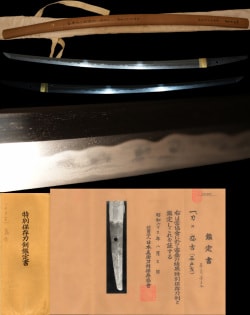
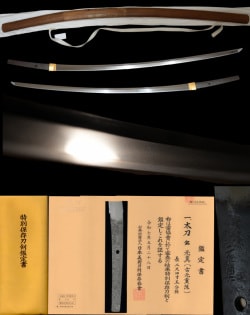
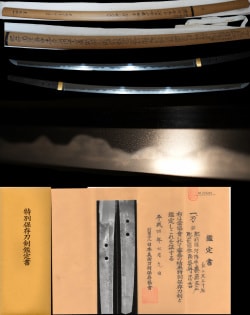
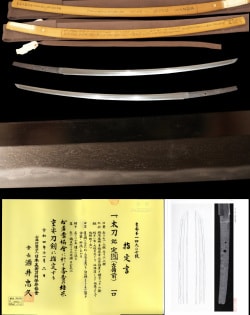
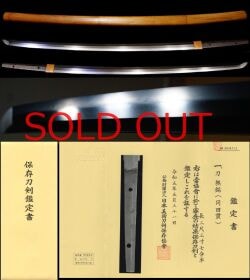
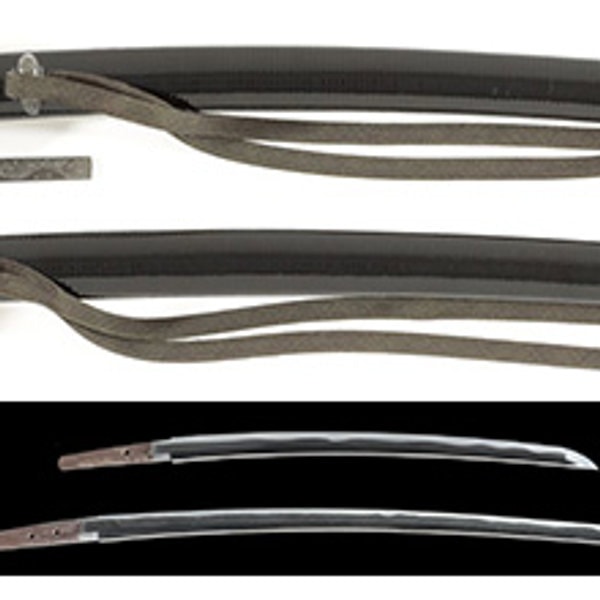
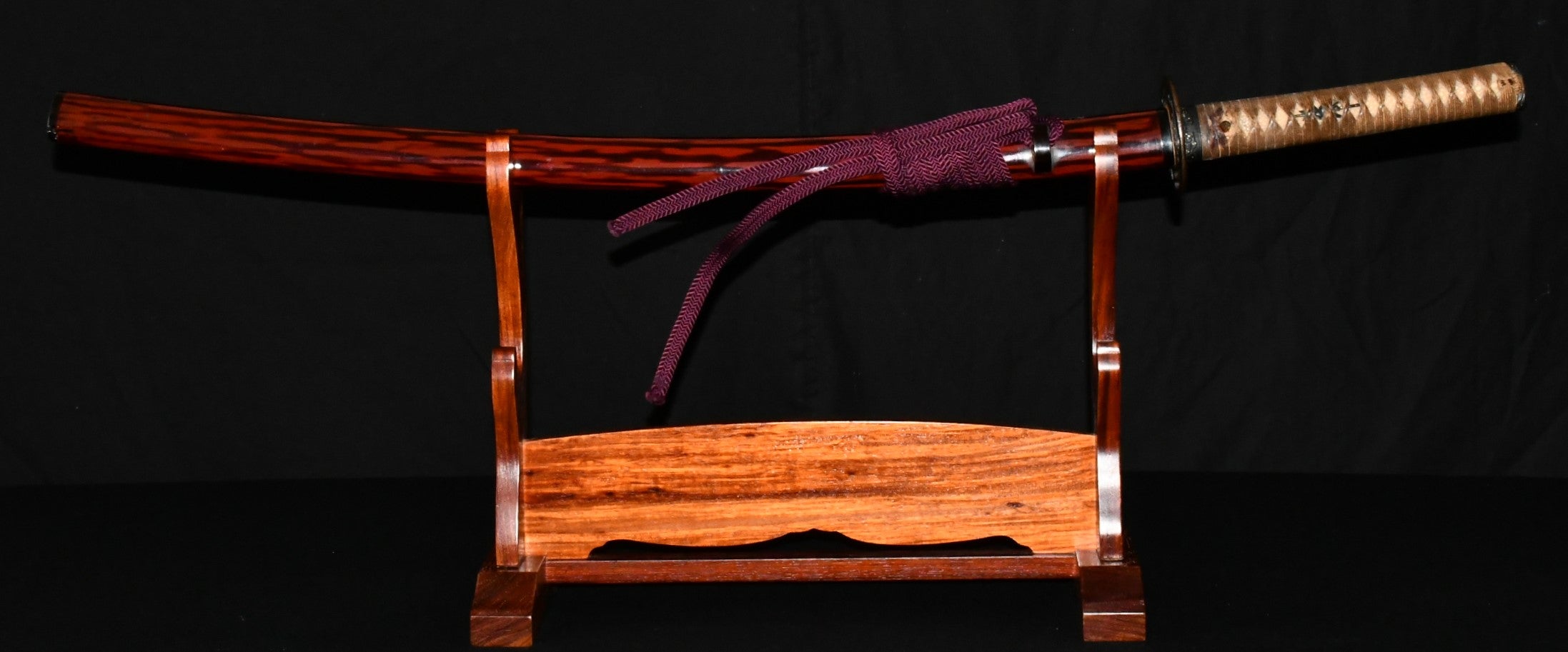
Inscription: "Suriage Mumei" Type: Katana Nagasa: 2 shaku 3 sun 7 bu Sori: A little over 3 bu Motohaba: 30 mm Motokasane: 8 mm Sakihaba: 21 mm Sakikasane: 5 mm Blade Weight: 842 grams (All measurements are approximate) The Dotanuki of the Tokyo Metropolitan Board of Education were swordsmiths in Higo Province, Kumamoto, and were descendants of the Kikuchi Enju smiths who moved from Kikuchi to Tamana at the end of the Koto period. In Tensho 16 (1588), when Kato Kiyomasa entered Higo and took control of the northern half of the province, he employed the Enju smiths and had them make swords for Kumamoto Castle. These were the Higo Dotanuki smiths, and they were known for "Dotanuki that doesn't break or bend," and they forged swords with excellent cutting ability and high practical value, reaching their peak in the turbulent Sengoku period. Representative smiths include Kiyokuni and Masakuni. This piece is very rare, with an elegant finish that combines the Yamato style in its tradition. The workmanship is reminiscent of a masterpiece by Kanenaga, with a thick kasane and a robust appearance. The jitetsu is itame with nagare hada mixed in, with abundant ji-nie. The hamon is gunome with kin-suji and nie mixed in, creating a gorgeous and sturdy appearance that is also attractive. It is an outstanding piece representing the smith and the school. I think there are very few "Dotanuki" as elegant as this. 0 yen (Tax included)
 NihontoWatchBETA
SOLD
Tracked across 81 dealers worldwide · price history · sold archive
Tensho (1573-1592)
3 cm
2.1 cm
Dotanuki同田貫
Inscription: "Suriage Mumei" Type: Katana Nagasa: 2 shaku 3 sun 7 bu Sori: A little over 3 bu Motohaba: 30 mm Motokasane: 8 mm Sakihaba: 21 mm Sakikasane: 5 mm Blade Weight: 842 grams (All measurements are approximate) The Dotanuki of the Tokyo Metropolitan Board of Education were swordsmiths in Higo Province, Kumamoto, and were descendants of the Kikuchi Enju smiths who moved from Kikuchi to Tamana at the end of the Koto period. In Tensho 16 (1588), when Kato Kiyomasa entered Higo and took control of the northern half of the province, he employed the Enju smiths and had them make swords for Kumamoto Castle. These were the Higo Dotanuki smiths, and they were known for "Dotanuki that doesn't break or bend," and they forged swords with excellent cutting ability and high practical value, reaching their peak in the turbulent Sengoku period. Representative smiths include Kiyokuni and Masakuni. This piece is very rare, with an elegant finish that combines the Yamato style in its tradition. The workmanship is reminiscent of a masterpiece by Kanenaga, with a thick kasane and a robust appearance. The jitetsu is itame with nagare hada mixed in, with abundant ji-nie. The hamon is gunome with kin-suji and nie mixed in, creating a gorgeous and sturdy appearance that is also attractive. It is an outstanding piece representing the smith and the school. I think there are very few "Dotanuki" as elegant as this. 0 yen (Tax included)
NihontoWatchBETASOLD
Tracked across 81 dealers worldwide · price history · sold archive
Tensho (1573-1592)
3 cm
2.1 cm
Dotanuki同田貫
![Katana [Higo Doutanuki Kouzukenosuke][N.B.T.H.K] Jyuyo token](/_next/image?url=https%3A%2F%2Fitbhfhyptogxcjbjfzwx.supabase.co%2Fstorage%2Fv1%2Fobject%2Fpublic%2Flisting-images%2Fworld-seiyudo%2FL31893%2F00.jpg&w=2560&q=90)