The twentieth century nearly killed the craft twice: wartime distortion, then the occupation ban. The NBTHK’s founding in 1948 and licensed forging from 1953 rebuilt the sword as an art, crowned by Living National Treasures and the mukansa rank.
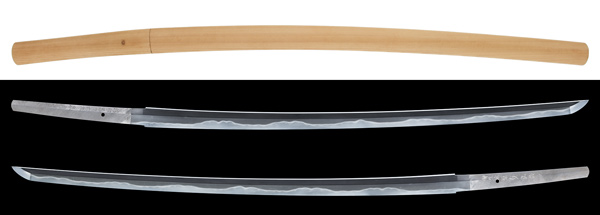
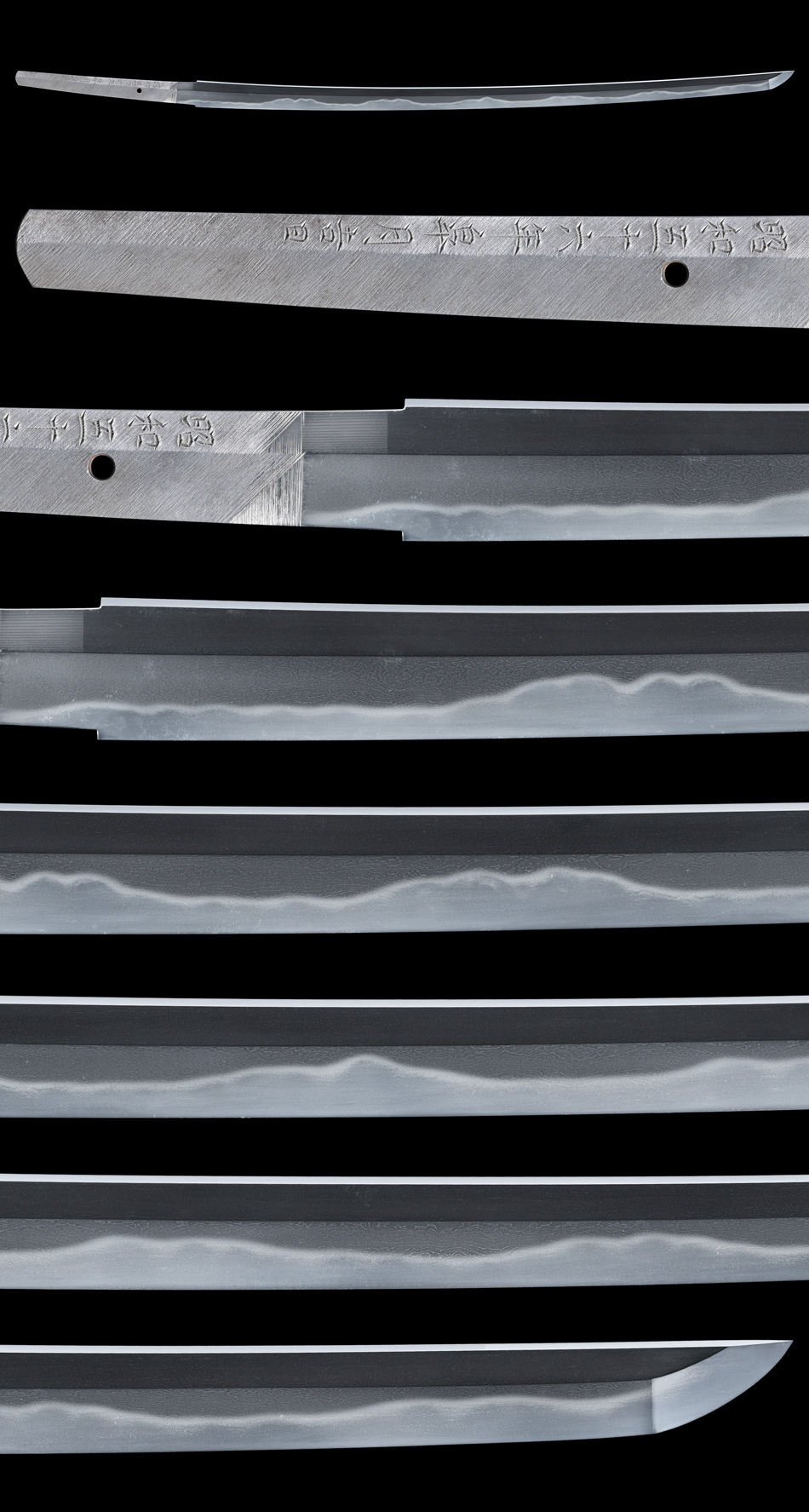
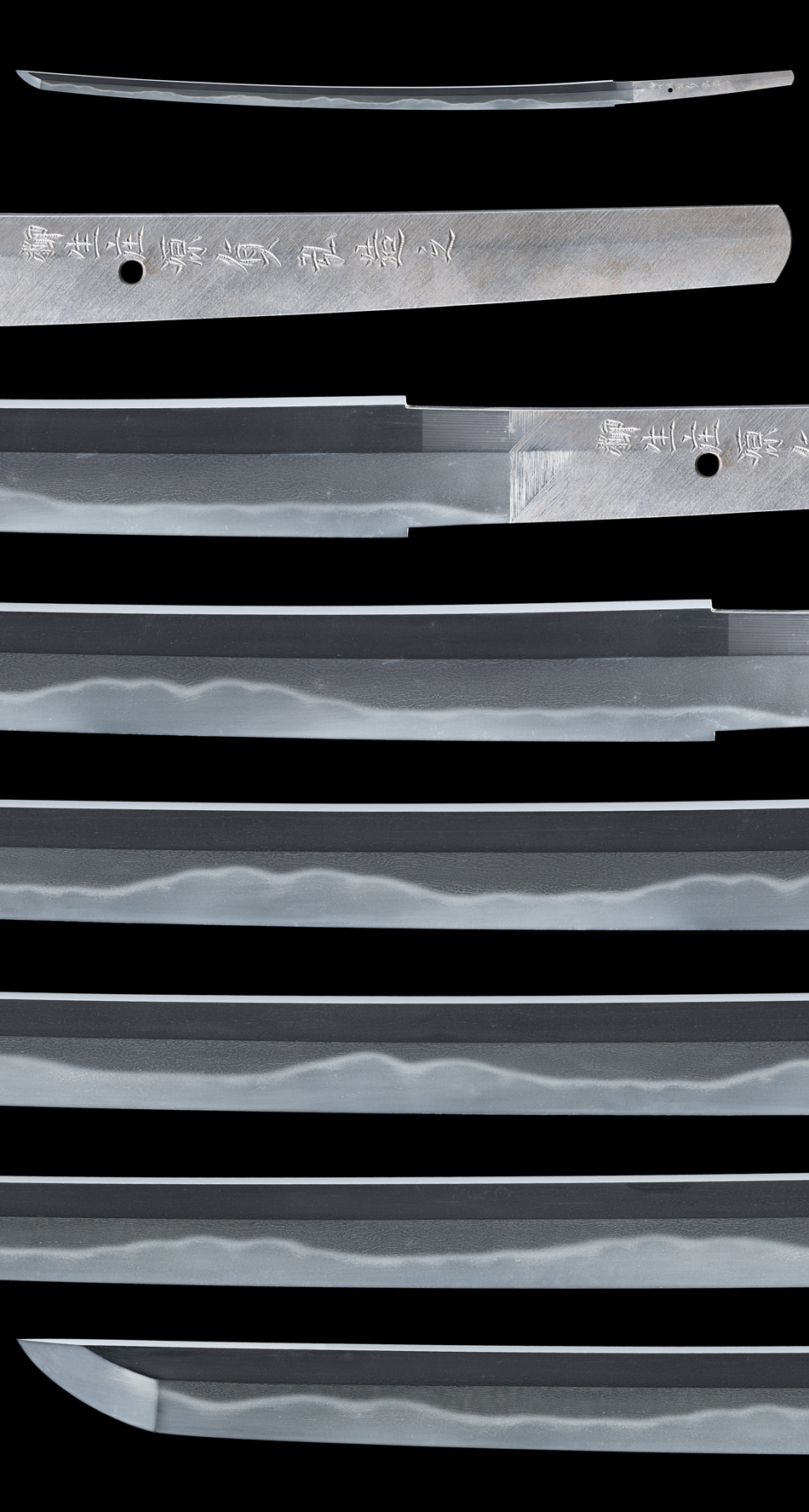
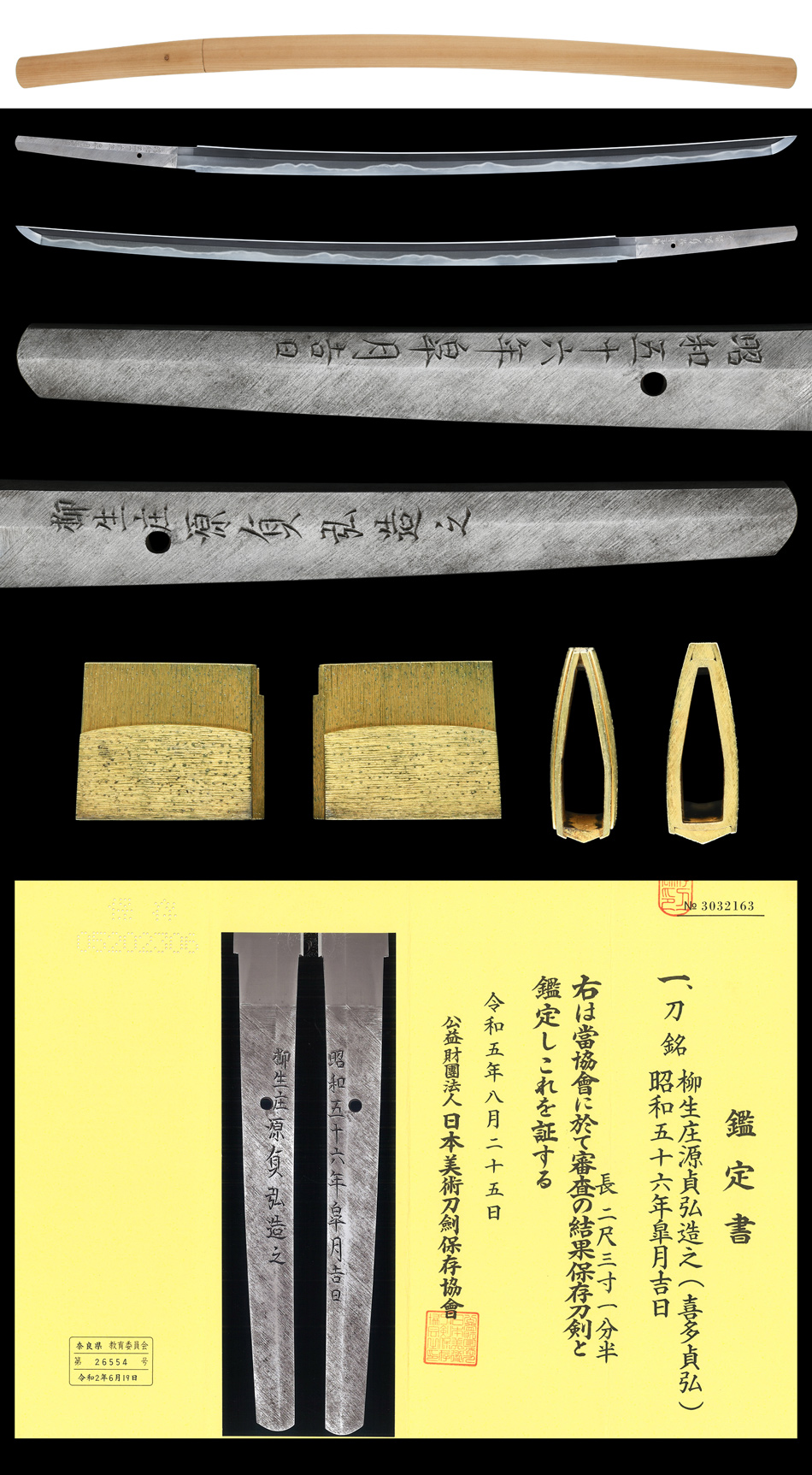
Kita Sadahiro, whose real name was Kita Hiroshi, was a disciple of Gassan Sadakatsu and was a fellow student of the later Living National Treasure Gassan Sadakazu. His forge was located near Horyuji in Ikaruga, Yamato, and he received numerous honors at new sword exhibitions, including the Mainichi Shimbun President's Award, and in his later years was designated an Important Intangible Cultural Property of Nara Prefecture. This swordsmith is very famous as a leading figure of the Soshu-den, and it is said that because of his high level of skill, many of his works have been mixed in with old works and used as material for forgeries. The taihai of this katana has a nagasa of 2 shaku 3 sun 1 bu 5 rin, with a difference between the motohaba and sakihaba, a jinjo kasane, moderate sori, and a sugata with a chu-kissaki. The jigane is a well-kneaded itame hada, with nagare-gokoro in places and mixed with mokume, resulting in a refined kitae where the overall hada is well-expressed. The hamon is gunome midare with gentle variations in height, covered in konie and appearing bright and clear. The boshi becomes ichimai-fu and returns. The nakago has kesho-yasuri and is carved with the toko mei and a nenki. Gassan Sadakatsu Mon Kita Sadahiro. The jigane shows a beautiful, clear hadame, and the yakiba is symmetrical on the omote and ura; we introduce this as a magnificent, deeply flavorful masterpiece by this smith. Nara Prefecture Important Intangible Cultural Property Holder. Shirasaya, gold-plated niju habaki, Hozon Token Kanteisho.
Offered by World Seiyudo
This piece has sold
Get an email when a new Sadahiro piece hits the market.


Machine translation from the shop's Japanese · may contain errors ·
Nara · around 1926-1989
1 piece on the market now
Shōwa to the present: destruction and revival
The twentieth century nearly killed the craft twice: wartime distortion, then the occupation ban. The NBTHK’s founding in 1948 and licensed forging from 1953 rebuilt the sword as an art, crowned by Living National Treasures and the mukansa rank.
Certifies a genuine blade worth preserving: a signature confirmed correct, or, if unsigned, an era, province, and school that the NBTHK can reliably identify.
The NBTHK (Nihon Bijutsu Tōken Hozon Kyōkai, the Society for the Preservation of Japanese Art Swords) is a public-interest incorporated foundation founded in 1948 and supervised by Japan’s Agency for Cultural Affairs (Bunkachō); it is based at the Japanese Sword Museum in Tokyo. Its expert panels physically examine each submitted work (shinsa) and issue a certificate (kanteishō) ranking it by artistic and historical merit. NBTHK papers are the most widely recognized standard of authentication for Japanese swords and fittings.
NBTHK official siteNo cooling-off period or returns; refund only if the purchased sword is proven fake, capped at purchase price (excludes commission sales, accessories, auction items).