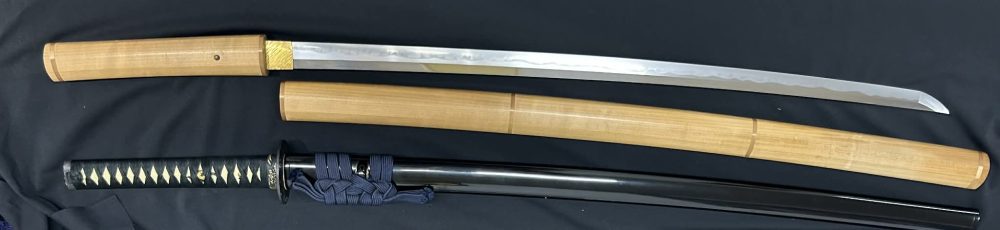
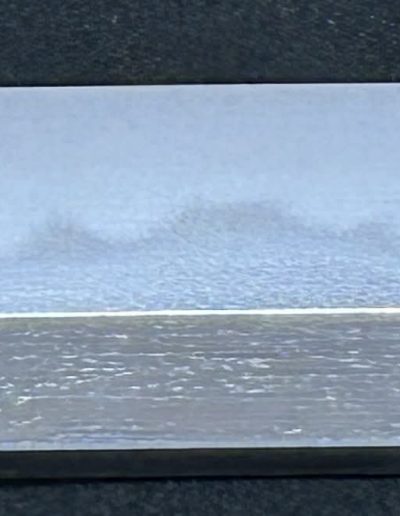
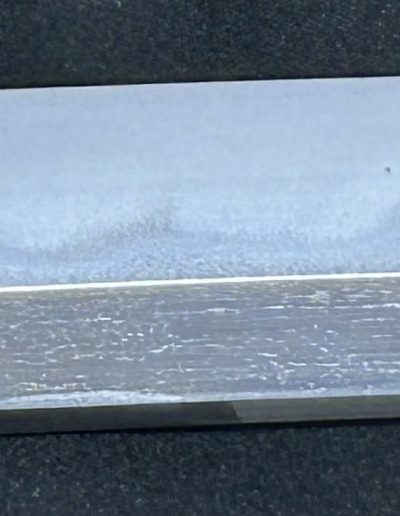
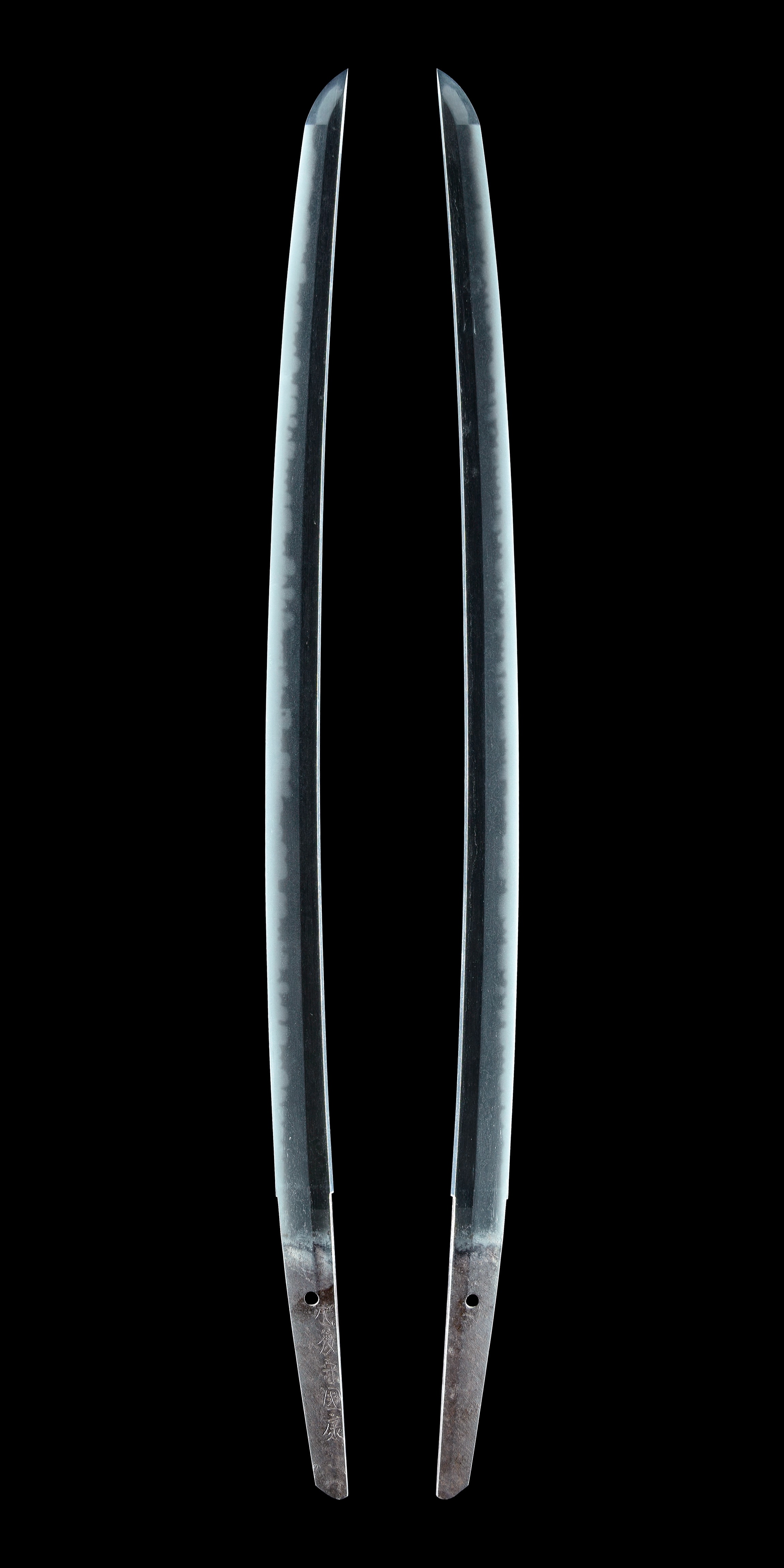
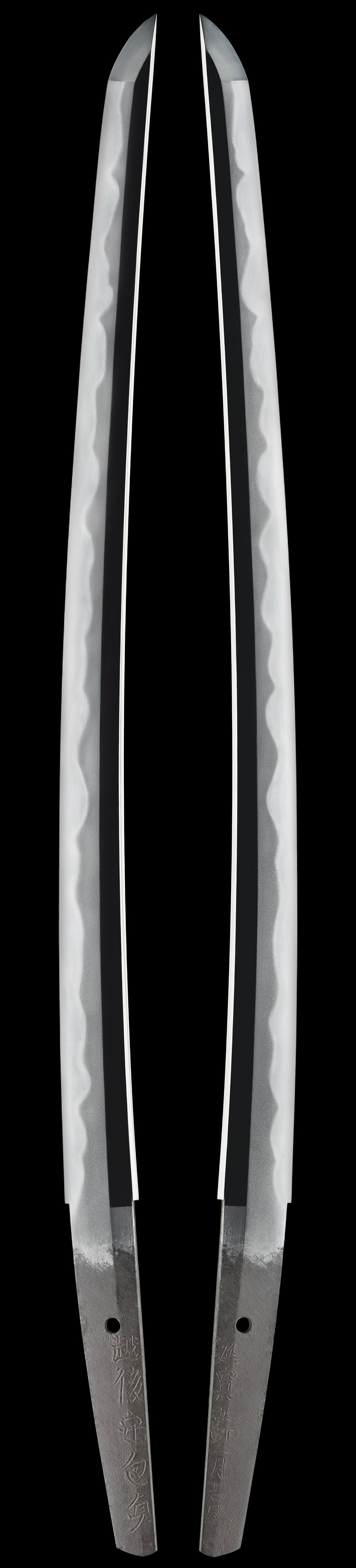
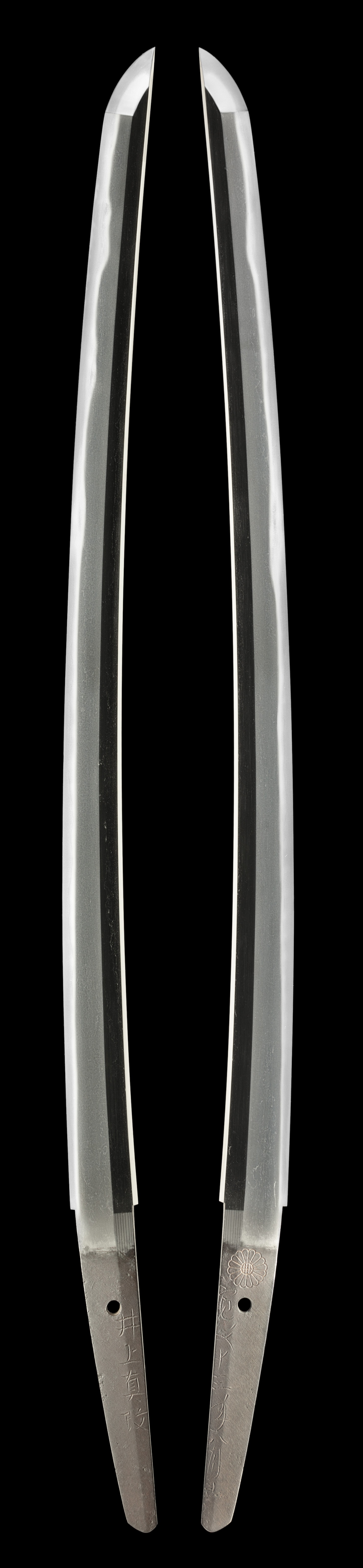
Higo no Kami Kuniyasu, commonly called Genzaemon, signed his blades with a five-character mei and was the third son of the first-generation Kawachi no Kami Kunisuke of Osaka, the younger brother of the second generation whom the published sources call Naka-Kawachi. He worked in Settsu during the Kanbun years of the early Edo period, in the choji wing of the Osaka Shinto school. That line descends through Kunisuke from the Ishido tradition, which had revived the koto Bizen choji in new-sword steel, and Kuniyasu carries the manner one remove from its second-generation peak. The published record places him in skill just below his elder brother, observing that comparatively few of his works reach Naka-Kawachi in the quality of both ji and ha, while granting that the best of them approach him closely. On one katana the judges go further, finding the work so fully his own that it is 「中河内と選ぶところがない」[[c:1]], a piece that may be chosen without distinction from Naka-Kawachi.
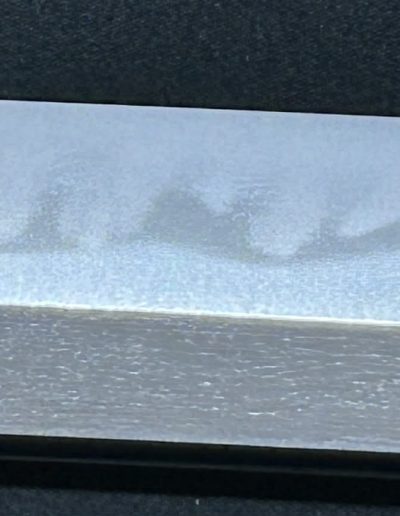
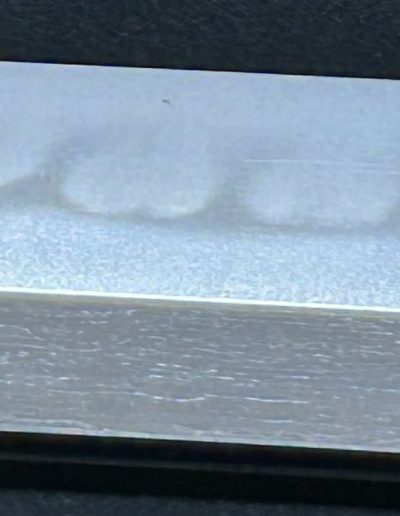
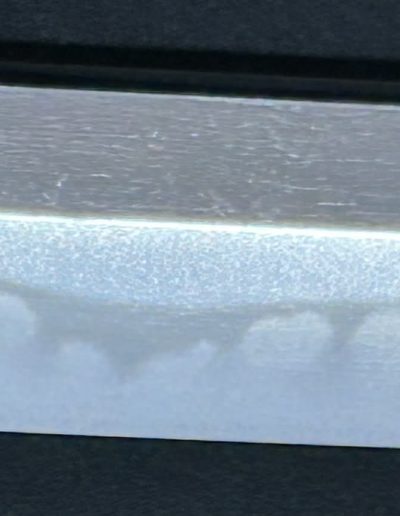
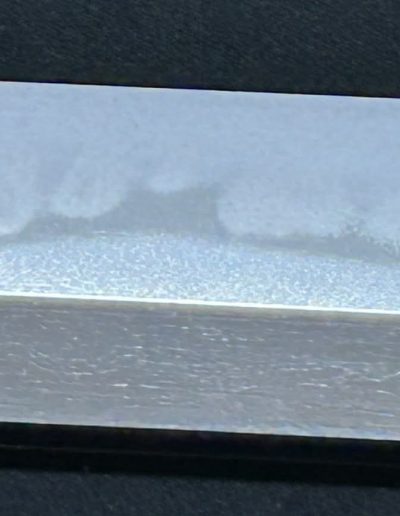
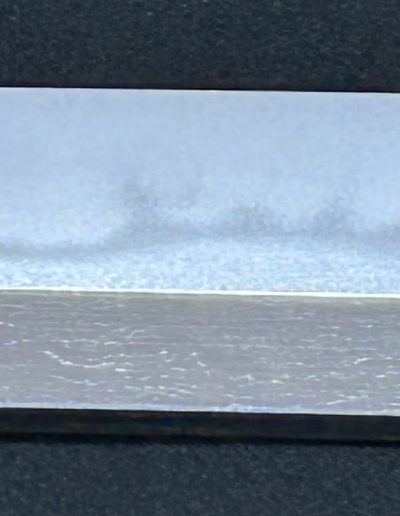
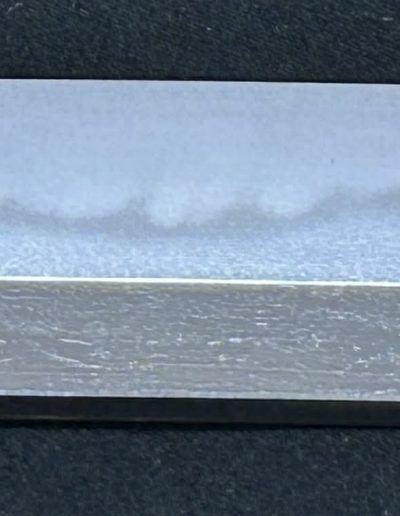
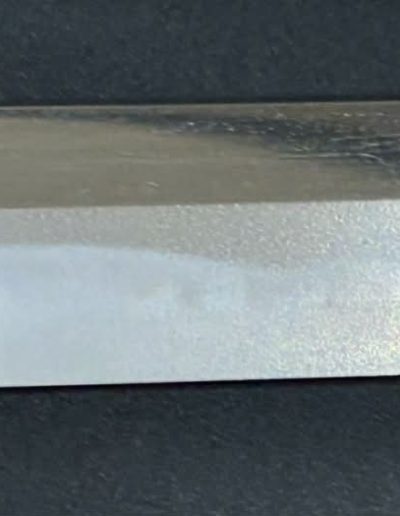
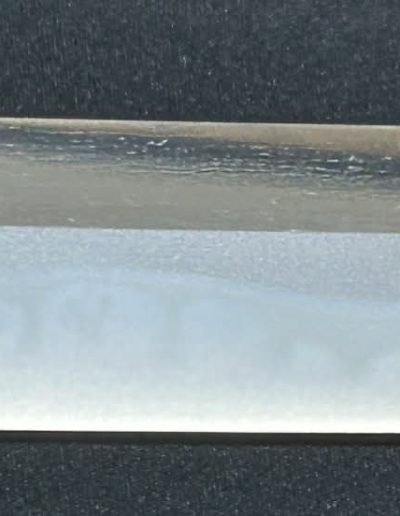
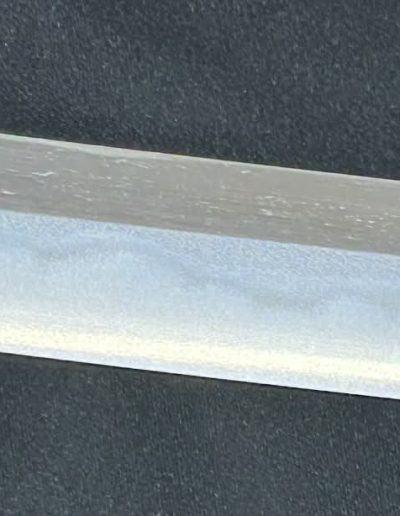
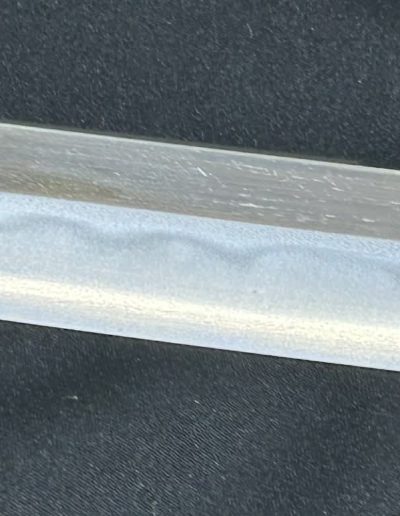
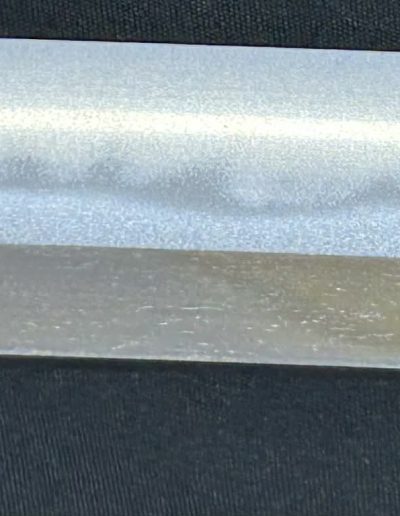
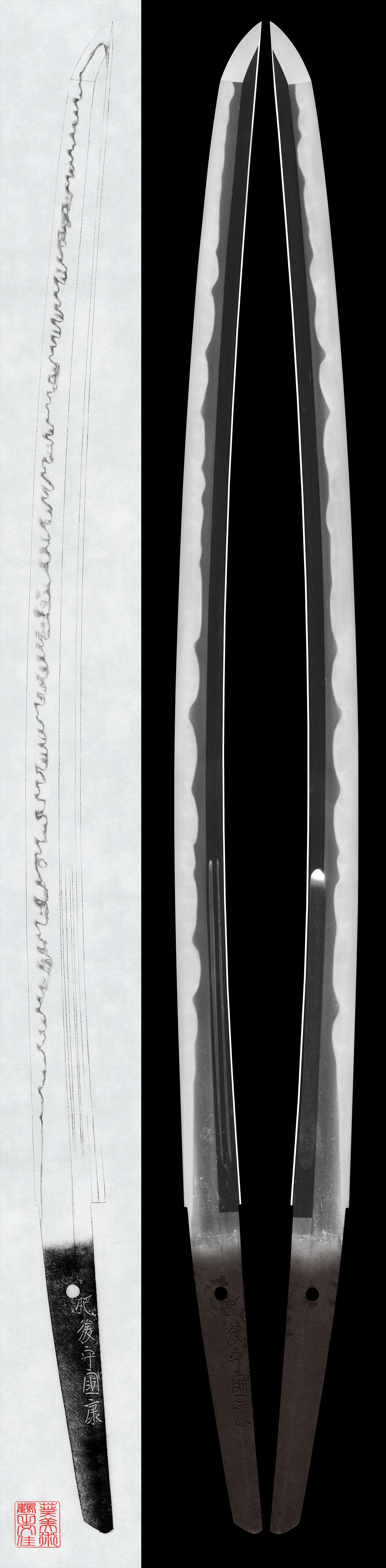
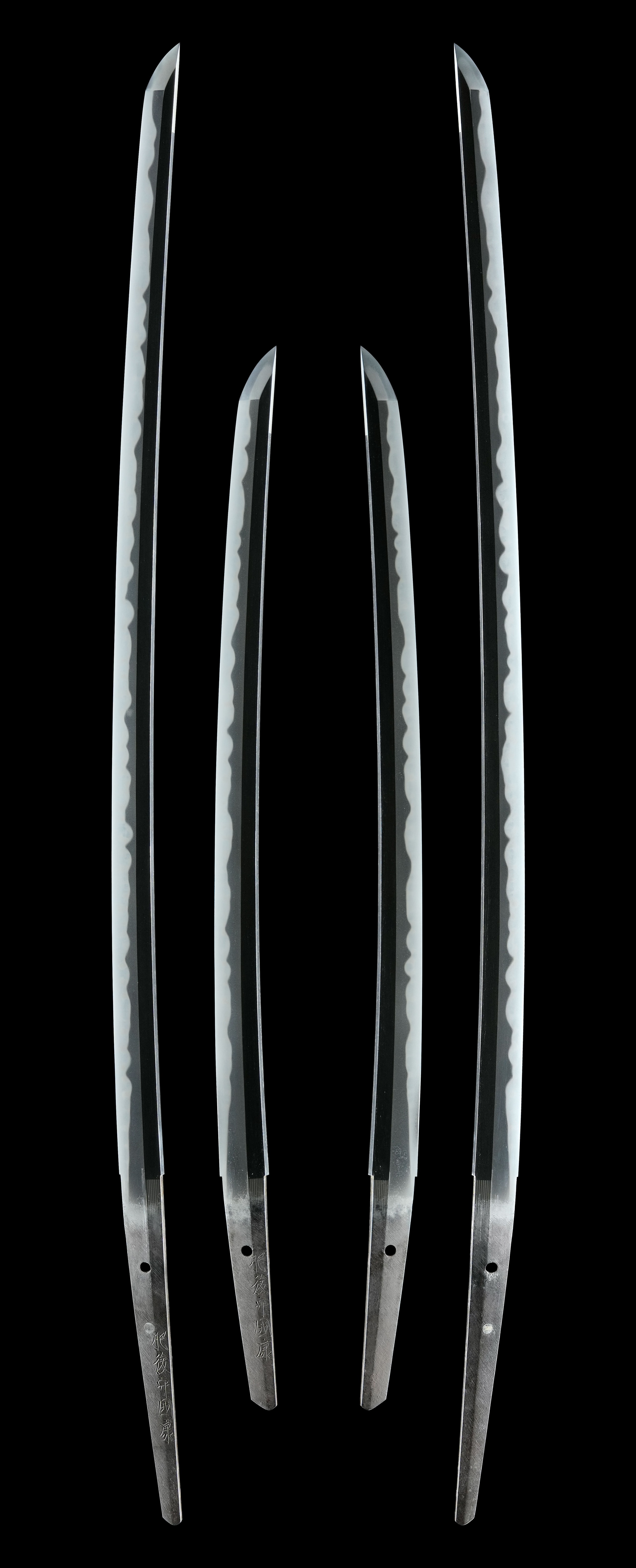
What marks his hand first is the choji-midare and the fist-headed clove set within it. Over a suguha yakidashi that opens the temper above the hamachi, the ha rises into a choji-midare mixed with gunome, and into the pattern Kuniyasu sets the kobushi-gata choji, the clenched-fist heads that the second-generation Kunisuke had made the ornament of the line. On more than half his designated blades the judges name this feature as the point that exhibits his characteristic work, and on his richest katana the midare crests align further into juka-choji and admit the large-tasselled o-busa-choji, the temper running tall with marked rises and falls. The straight yakidashi at the base is the quiet tell that separates this from the old Bizen choji it otherwise recalls, an Edo Osaka convention rather than a Kamakura habit. Ashi enter the ha well, yo are sometimes mixed in, ko-nie adhere, and through the pattern run kinsuji and sunagashi, the nioiguchi staying bright and clear.
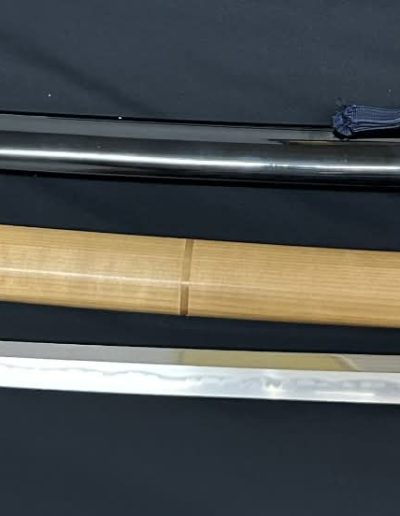
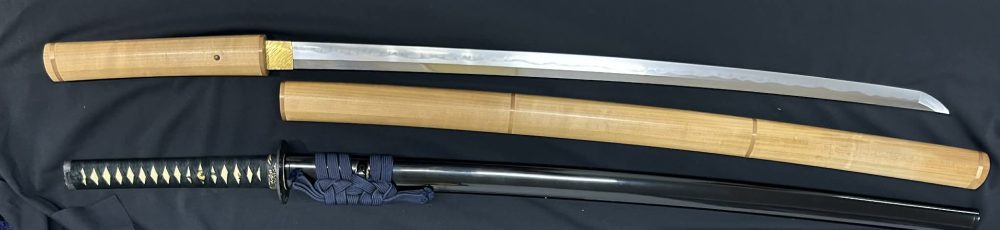
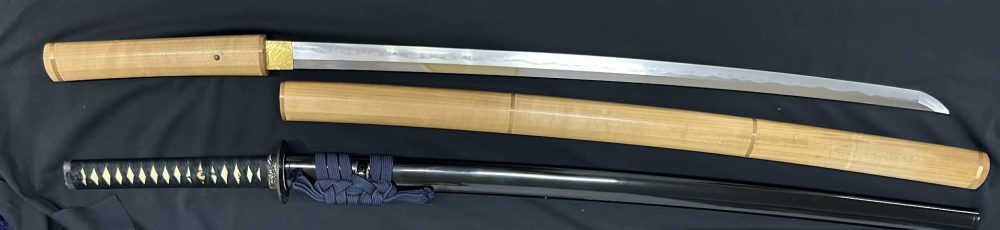
The jigane is a tight ko-itame, closely forged and laid with ji-nie, here and there opening into a patch of larger hada. On his finest work the ji-nie gathers fine and thick with delicate chikei, a forging the published sources call 「如何にも大阪新刀らしい」[[c:2]], thoroughly characteristic of Osaka shinto, beautiful and clear. The bohi and naginata-hi cut on one blade, and the double grooves on another, are the carving of a careful late hand. Over so animated an edge the boshi stays restrained, running straight and turning back in a small ko-maru rather than following the midare into the point, the calm finish the Osaka smiths favored. The sugata is the Kanbun-Shinto build, the mihaba slightly wide with little taper from base to tip, the kasane somewhat thick, the sori shallow and the chu-kissaki compact; one long katana extends past two shaku six sun in a dignified and well-balanced taihai whose thick kasane gives a real sense of weight in the hand.
The corpus the published record preserves is small and remarkably consistent: seven designated katana, all but one signed, all on ubu nakago carrying the five-character Higo no Kami Kuniyasu signature near the mune of the omote. There is no mumei or daimei problem to untangle and no dated survival to anchor a chronology, so the kantei rests entirely on the work, and the work is of one settled manner seen at two settings. At the everyday setting the choji-midare is regular and the kobushi-gata choji intermittent; at the best, on the late Reiwa-designated pieces, the temper broadens, the kobushi heads cluster and align, and the judges reach for their fullest praise. The phrase they apply to his most worked blade is exact: it is a 「拳形丁子乱れを焼いた典型作」[[c:3]], a quintessential example of his work in which the fist-shaped choji-midare is tempered above a yakidashi placed at the base.
Within the Kawachi-no-kami line Kuniyasu is the chief hand carrying the choji manner alongside and just beneath his brother. The resemblance the judges draw is to Naka-Kawachi, again and again, and it is a true one, grounded in the shared kobushi-gata choji, the dense ji-nie ko-itame and the bright nioiguchi the two brothers worked from the same workshop. His own blades are told within that closeness by degree rather than by a different feature: where his temper holds its rises and falls and avoids the rigidity into which the fist-shaped choji can stiffen, the result gains a natural texture and a depth of taste, and on one katana the published sources find his technical level revealed in 「殊更に拳形丁子を交えた華やかな丁子乱れに国康の技術の高さ」[[c:4]], the high skill shown in the gorgeous choji-midare with its fist-shaped heads. They call that blade a superior work that approaches Naka-Kawachi, 「中河内に迫る優品」[[c:5]].
In the connoisseurship he is a smith of the middle tiers rather than the summit, his record one of seven blades that have reached Juyo, none yet raised to Tokubetsu Juyo and none standing in the higher designations above it. None of the seven carries a recorded provenance or a named former owner, so his blades are encountered for the quality of their workmanship rather than for the houses they passed through. That makes him an accessible point of entry into the Osaka Shinto choji manner: a signed, sound Kanbun katana by Kuniyasu comes to the serious collector with some regularity, far more readily than the rare survivals of his father or the prized work of his brother Naka-Kawachi, and it offers the line's distinctive kobushi-gata choji on a blade that the judges themselves at their warmest set beside the second generation. The published sources give his common name as 「源左衛門」 and fix his place as the third son of the first Kawachi no Kami Kunisuke; the seven katana on record carry that lineage in steel, a careful and at moments brilliant hand working the brightest choji of the early Osaka school.