Edo was the sword’s age of connoisseurship: the Hon’ami appraisers, the shogunal register of famous blades of 1719, and a thriving literature turned the sword into an object of study even as it ceased to be drawn in war.
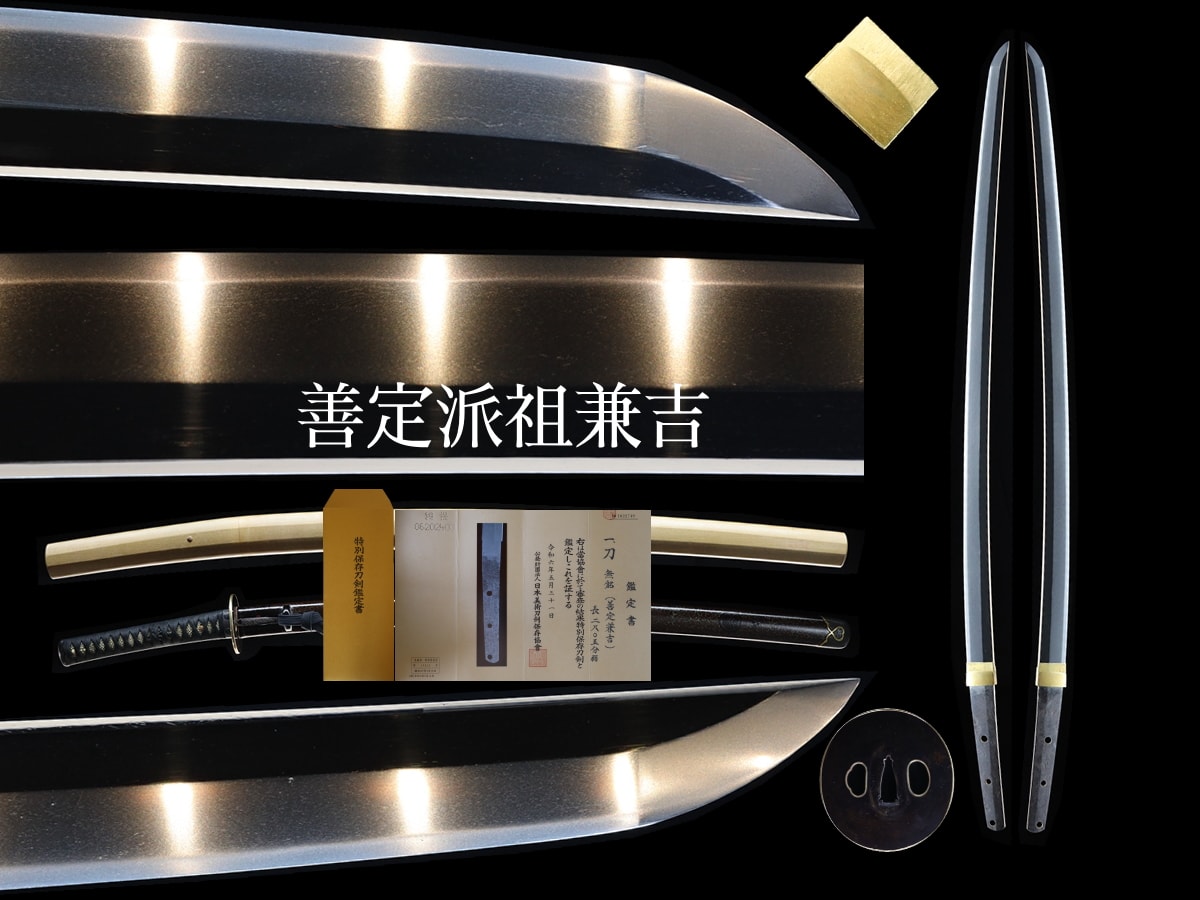
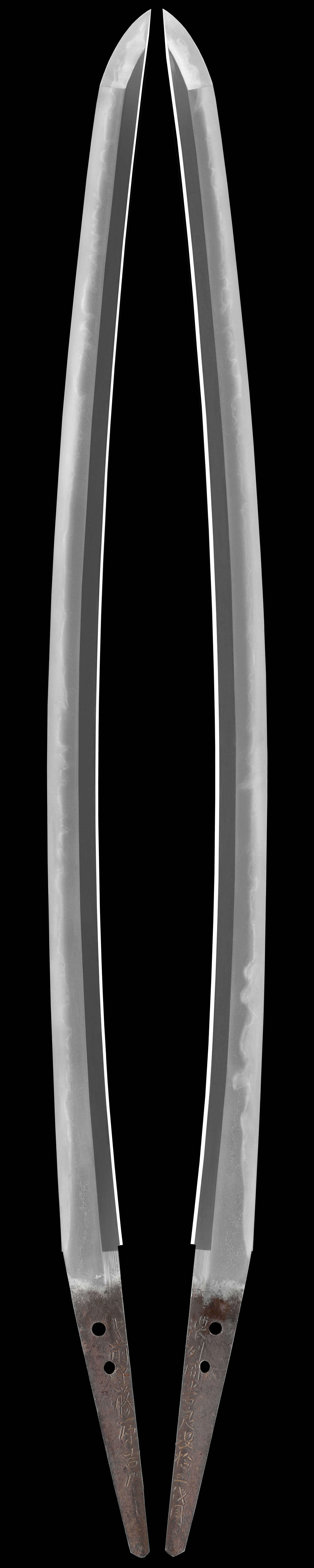
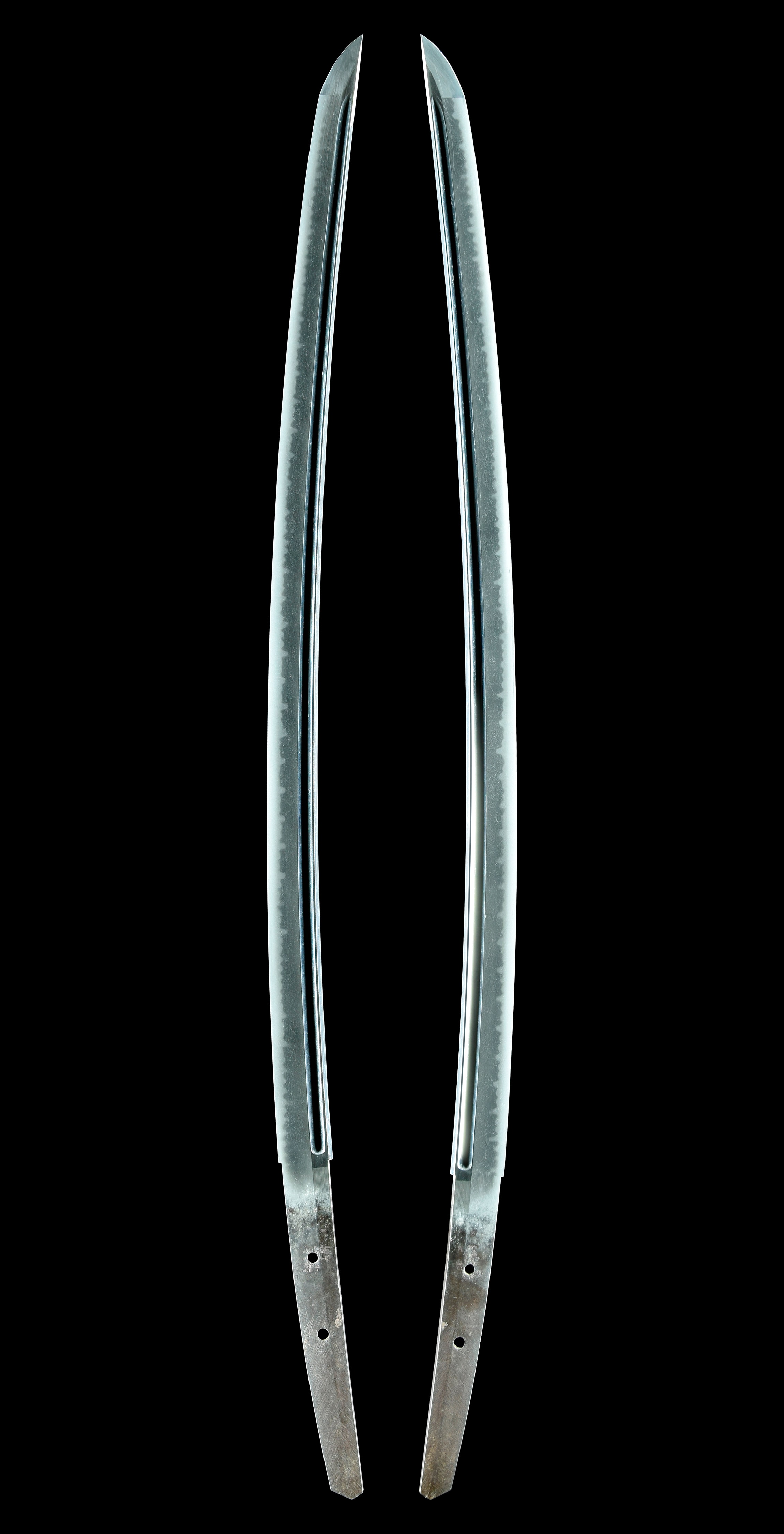
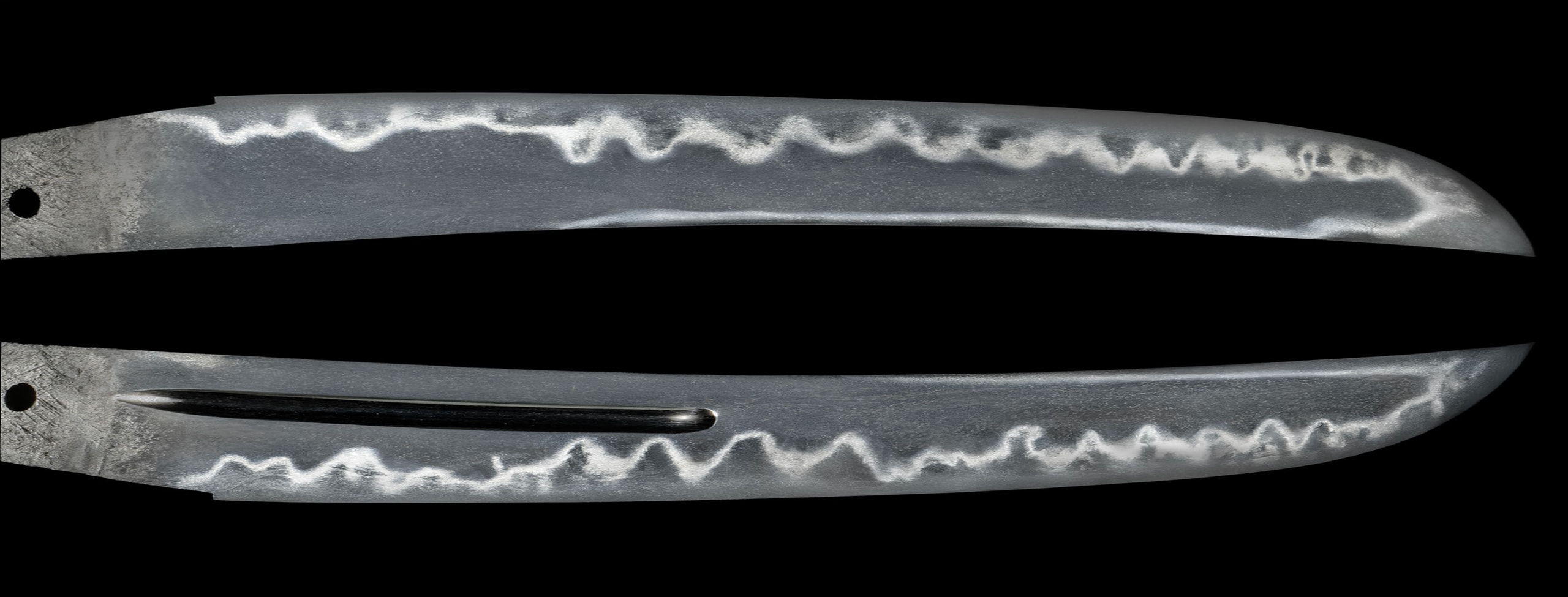
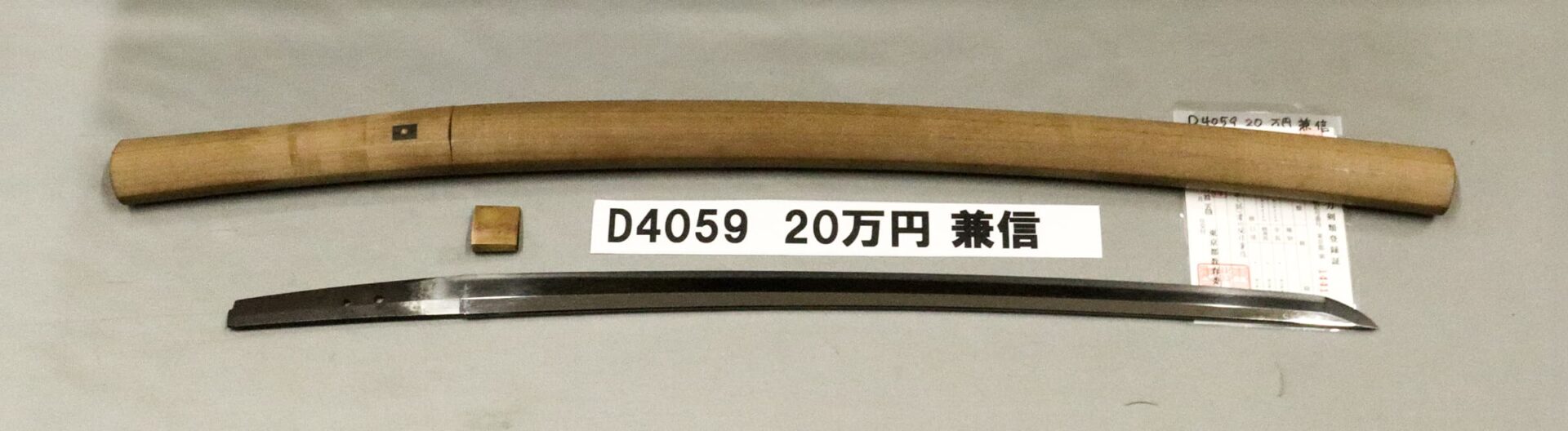
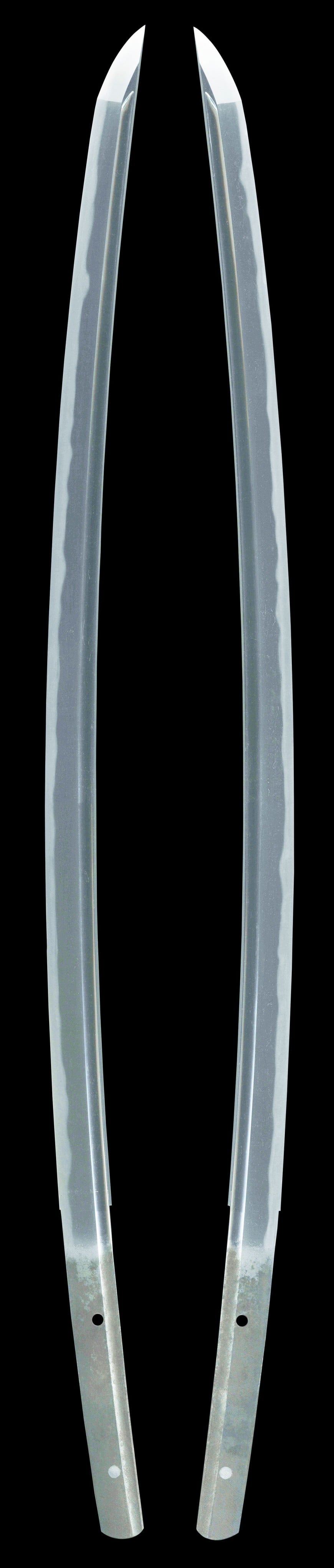
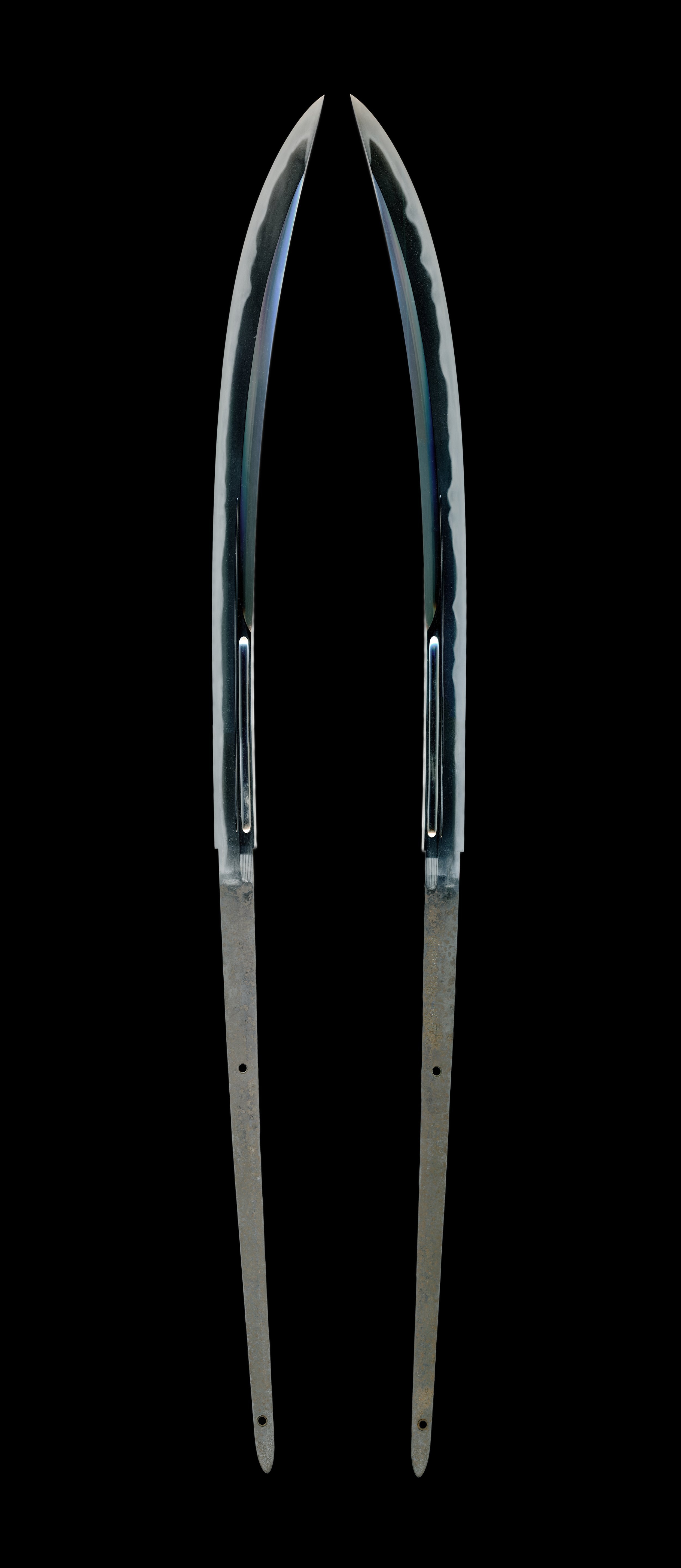
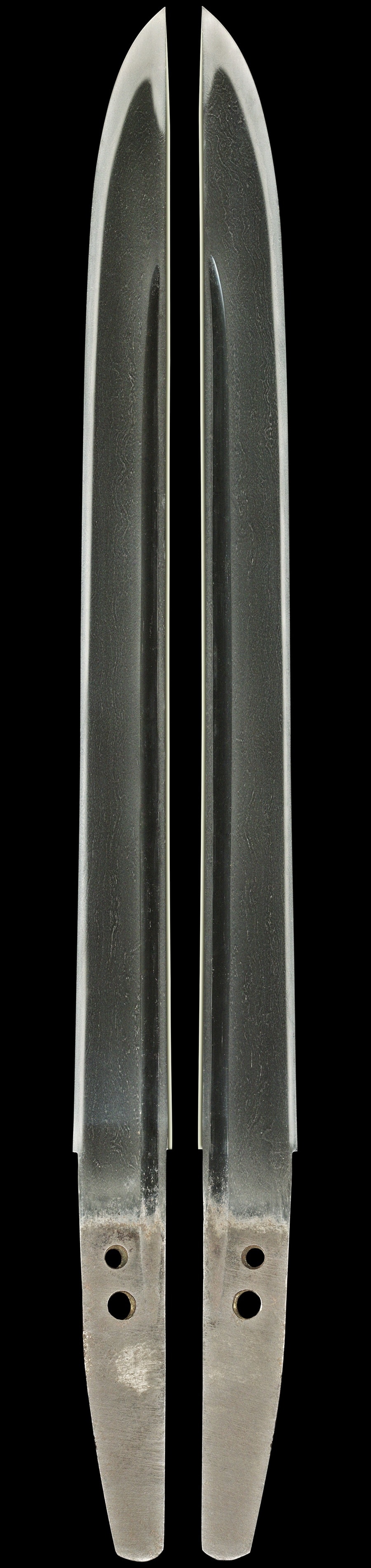
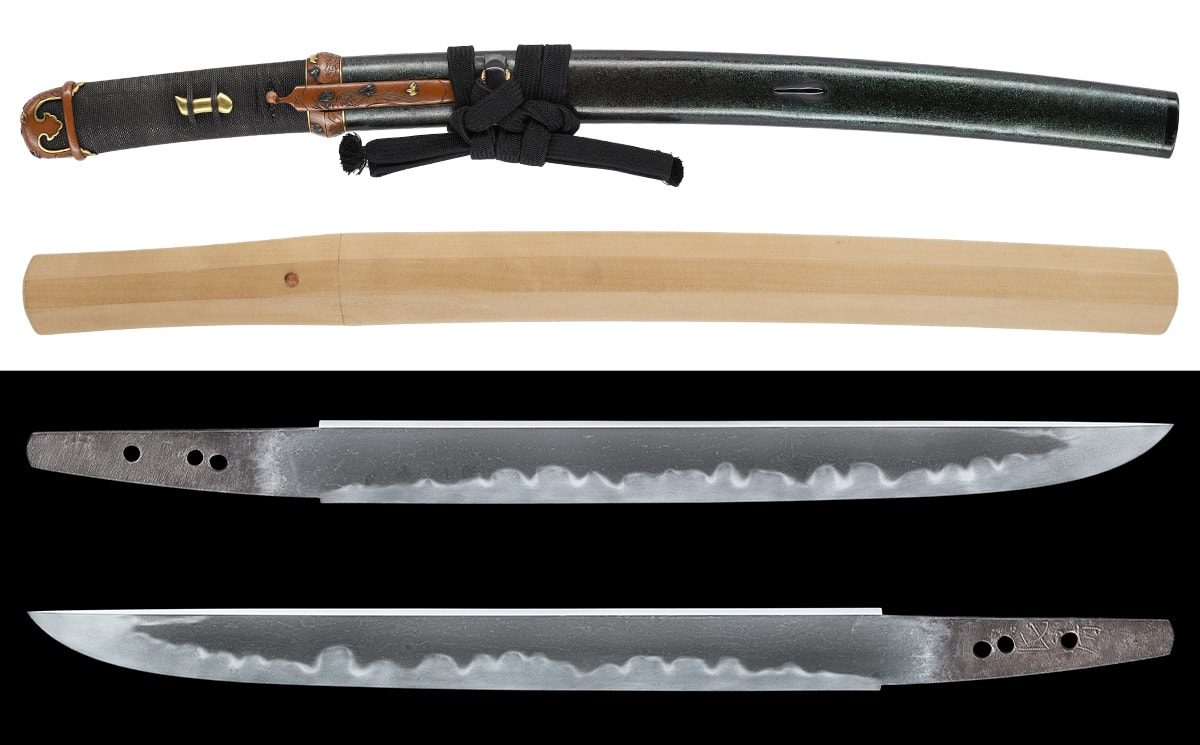
Meibun: "Seki Zenjo-ke Musashi no Kami Yoshikado" Shubetsu: Katana (With NBTHK Kanteisho) In this work, the jitetsu is a well-tightened itame-hada with ji-nie. The hamon is a nioi-fuku nie-deki beginning with a suguba yakidashi that transitions into o-gunome midare mixed with choji-ba and visible tobiyaki. Within the ha, there are fine hataraki such as ashi and yo, resulting in a magnificent finish that surpasses even the finest masterpieces. The sori and other dimensions match the "Hojo Family Heirloom Kuro-ishime-ji Amaryu-mon Nukunuri-saya Itomaki-tachi Koshirae" currently for sale; through various adjustments, it can be fitted perfectly. If purchased together, we will bear the costs of the fitting work. Yoshikado was the younger brother of Echizen no Kami Yoshikado. He was a student of Omura Kaboku and is the same person as Bokuden. His early mei was Echizen no Kami Yoshikado. A smith for the Mito Domain, originally from Mino, he was the 14th generation descendant of Zenjo Kaneyoshi and was named Kawamura Chobe. Employed by the Mito family, he became a student of Kaboku, and in the 5th year of Enpo, he was granted the name Bando Taro Shizumasa Nyudo Bokuden by Lord Mito Mitsukuni. He passed away in the 5th year of Jokyo. He has a reputation for sharpness and is ranked as wazamono. He signed with mei such as: Noshu Seki Zenjo-ke Musashi no Kami Yoshikado, Noshu Seki-ju Zenjo-ke Musashi no Kami Yoshikado, Musashi no Kami Yoshikado, Bando Taro Shizumasa Nyudo Bokuden, Bando Taro Shizumasa Nyudo Bokuden Saku no, Noshu Seki Zenjo-ke Kaneyoshi Zengon Saki no Musashi no Kami Yoshikado, Joshu Mito-ju Bando Taro Shizumasa Nyudo Bokuden, Seki Zenjo Kaneyoshi-ke Musashi no Kami Yoshikado, Noshu Seki Zenkichi-ke Musashi no Kami Yoshikado, Noshu Seki Zenryo-ke Echizen no Kami Yoshikado, etc. 0 Yen (Tax included)
 NihontoWatch
Shoho (1644-1648)
Mino-den · Musashi · around 1644-1648
Tōken Taikan top 49%
2 pieces on the market now
Mino-den · Mino
7 pieces on the market now
| Smith | Era | Designated |
|---|---|---|
| Kaneshige兼重 | 1429-1441 | 1 |
| Kaneyoshi兼吉 | 1390-1394 | 1 |
| Kaneshige兼重 | 1504-1521 | 0 |
| Kaneyoshi兼吉 | 1854-1860 | 0 |
| Chikanori近則 | 1818-1864 | 0 |
The Edo period (1615 to 1868)
Edo was the sword’s age of connoisseurship: the Hon’ami appraisers, the shogunal register of famous blades of 1719, and a thriving literature turned the sword into an object of study even as it ceased to be drawn in war.
A Hozon-certified blade judged to show notably superior workmanship and a better state of preservation. The bar is higher: re-tempered blades and most unsigned Muromachi/Edo works are excluded.
The NBTHK (Nihon Bijutsu Tōken Hozon Kyōkai, the Society for the Preservation of Japanese Art Swords) is a public-interest incorporated foundation founded in 1948 and supervised by Japan’s Agency for Cultural Affairs (Bunkachō); it is based at the Japanese Sword Museum in Tokyo. Its expert panels physically examine each submitted work (shinsa) and issue a certificate (kanteishō) ranking it by artistic and historical merit. NBTHK papers are the most widely recognized standard of authentication for Japanese swords and fittings.
NBTHK official sitePlease notify us of your intention to return, by email or fax, no later than the day after the item's arrival. Return shipping, insurance, and refund transfer fees are the customer's responsibility.
Meibun: "Seki Zenjo-ke Musashi no Kami Yoshikado" Shubetsu: Katana (With NBTHK Kanteisho) In this work, the jitetsu is a well-tightened itame-hada with ji-nie. The hamon is a nioi-fuku nie-deki beginning with a suguba yakidashi that transitions into o-gunome midare mixed with choji-ba and visible tobiyaki. Within the ha, there are fine hataraki such as ashi and yo, resulting in a magnificent finish that surpasses even the finest masterpieces. The sori and other dimensions match the "Hojo Family Heirloom Kuro-ishime-ji Amaryu-mon Nukunuri-saya Itomaki-tachi Koshirae" currently for sale; through various adjustments, it can be fitted perfectly. If purchased together, we will bear the costs of the fitting work. Yoshikado was the younger brother of Echizen no Kami Yoshikado. He was a student of Omura Kaboku and is the same person as Bokuden. His early mei was Echizen no Kami Yoshikado. A smith for the Mito Domain, originally from Mino, he was the 14th generation descendant of Zenjo Kaneyoshi and was named Kawamura Chobe. Employed by the Mito family, he became a student of Kaboku, and in the 5th year of Enpo, he was granted the name Bando Taro Shizumasa Nyudo Bokuden by Lord Mito Mitsukuni. He passed away in the 5th year of Jokyo. He has a reputation for sharpness and is ranked as wazamono. He signed with mei such as: Noshu Seki Zenjo-ke Musashi no Kami Yoshikado, Noshu Seki-ju Zenjo-ke Musashi no Kami Yoshikado, Musashi no Kami Yoshikado, Bando Taro Shizumasa Nyudo Bokuden, Bando Taro Shizumasa Nyudo Bokuden Saku no, Noshu Seki Zenjo-ke Kaneyoshi Zengon Saki no Musashi no Kami Yoshikado, Joshu Mito-ju Bando Taro Shizumasa Nyudo Bokuden, Seki Zenjo Kaneyoshi-ke Musashi no Kami Yoshikado, Noshu Seki Zenkichi-ke Musashi no Kami Yoshikado, Noshu Seki Zenryo-ke Echizen no Kami Yoshikado, etc. 0 Yen (Tax included)
NihontoWatchShoho (1644-1648)
Mino-den · Musashi · around 1644-1648
Tōken Taikan top 49%
2 pieces on the market now
Mino-den · Mino
7 pieces on the market now
| Smith | Era | Designated |
|---|---|---|
| Kaneshige兼重 | 1429-1441 | 1 |
| Kaneyoshi兼吉 | 1390-1394 | 1 |
| Kaneshige兼重 | 1504-1521 | 0 |
| Kaneyoshi兼吉 | 1854-1860 | 0 |
| Chikanori近則 | 1818-1864 | 0 |
The Edo period (1615 to 1868)
Edo was the sword’s age of connoisseurship: the Hon’ami appraisers, the shogunal register of famous blades of 1719, and a thriving literature turned the sword into an object of study even as it ceased to be drawn in war.
A Hozon-certified blade judged to show notably superior workmanship and a better state of preservation. The bar is higher: re-tempered blades and most unsigned Muromachi/Edo works are excluded.
The NBTHK (Nihon Bijutsu Tōken Hozon Kyōkai, the Society for the Preservation of Japanese Art Swords) is a public-interest incorporated foundation founded in 1948 and supervised by Japan’s Agency for Cultural Affairs (Bunkachō); it is based at the Japanese Sword Museum in Tokyo. Its expert panels physically examine each submitted work (shinsa) and issue a certificate (kanteishō) ranking it by artistic and historical merit. NBTHK papers are the most widely recognized standard of authentication for Japanese swords and fittings.
NBTHK official sitePlease notify us of your intention to return, by email or fax, no later than the day after the item's arrival. Return shipping, insurance, and refund transfer fees are the customer's responsibility.