Edo was the sword’s age of connoisseurship: the Hon’ami appraisers, the shogunal register of famous blades of 1719, and a thriving literature turned the sword into an object of study even as it ceased to be drawn in war.
A wakizashi made by Inoue Shinkai in August of the 13th year of the Kanbun era. Shinkai was a famous smith of the Shinto period. This wakizashi is a notable example of his work.
 NihontoWatch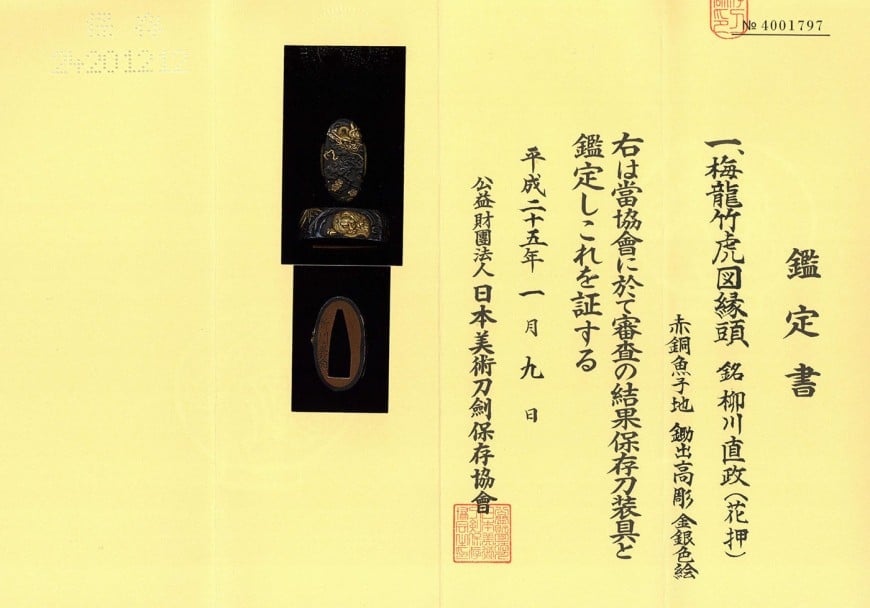
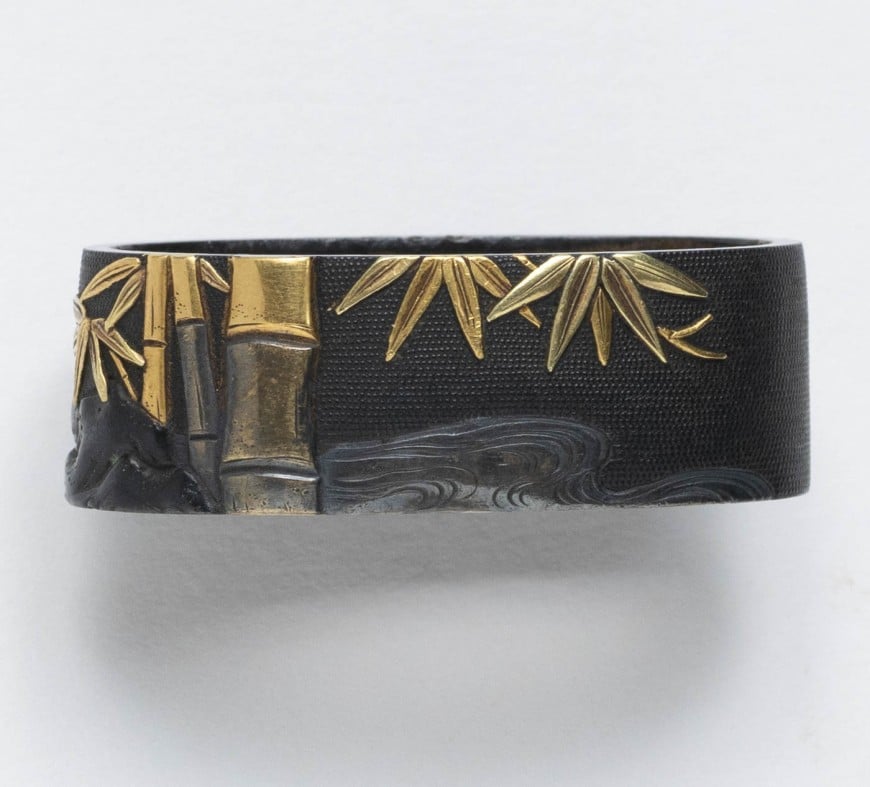
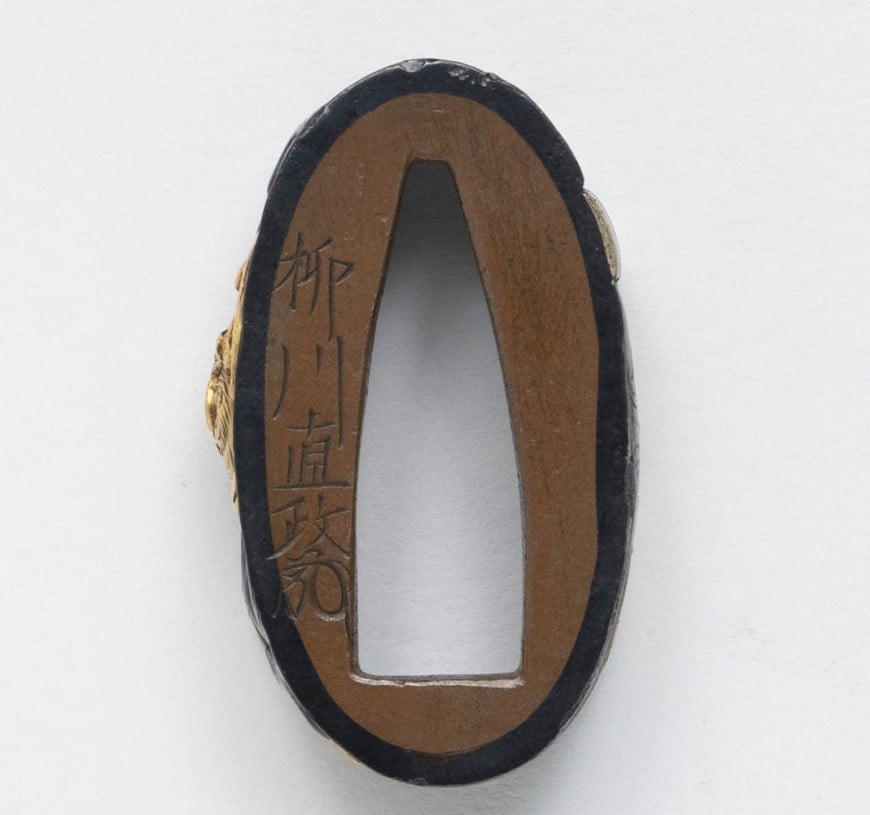
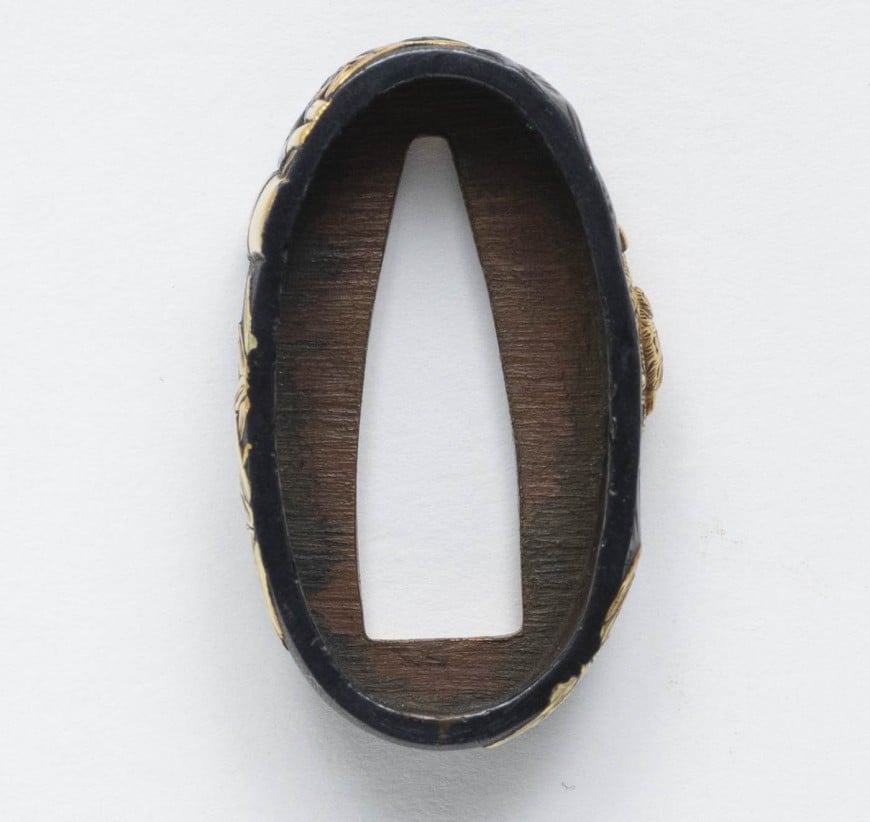
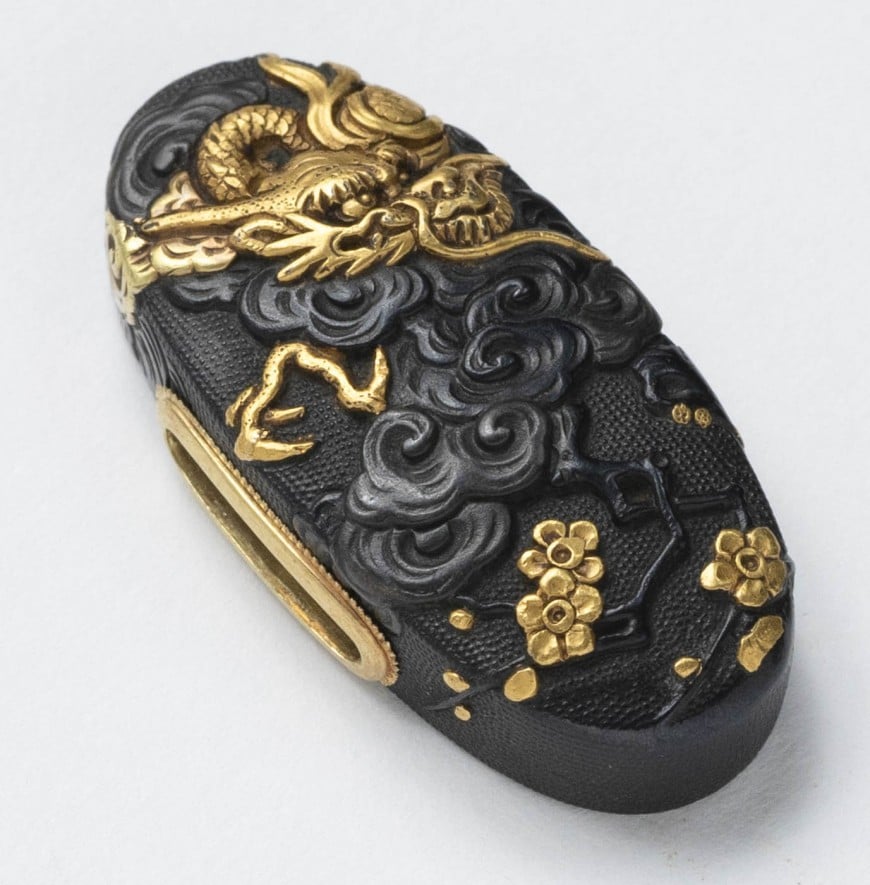
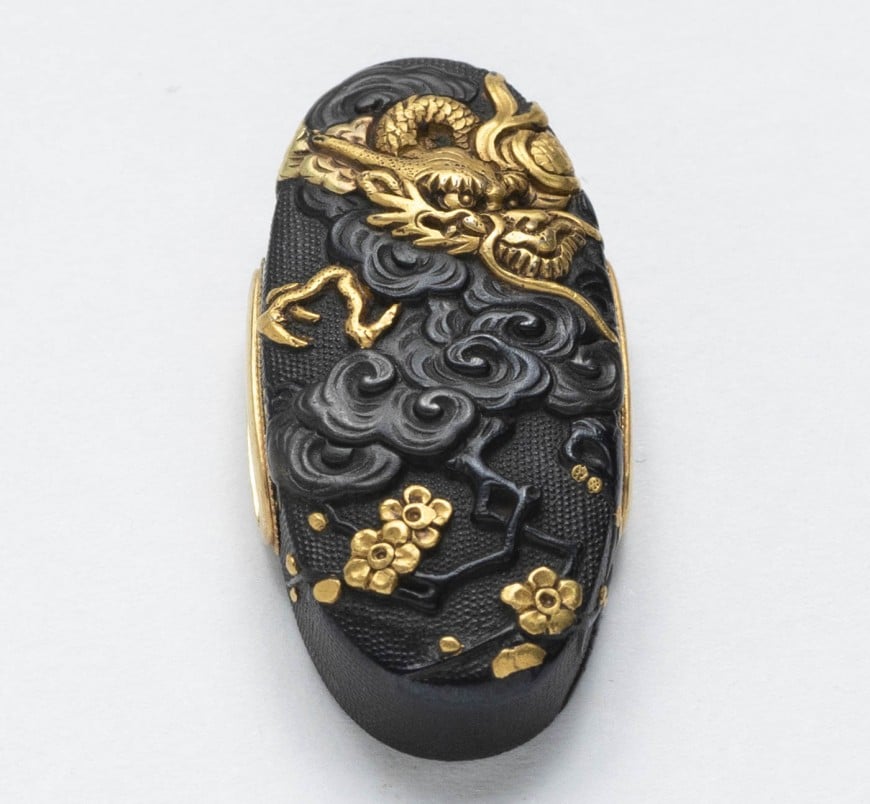
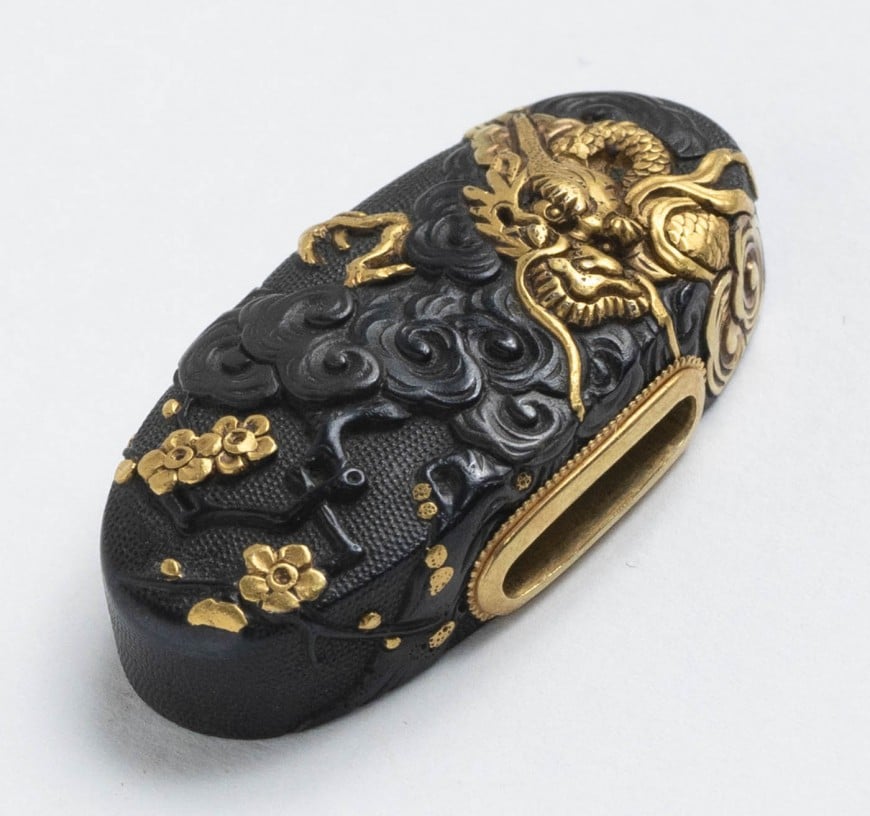
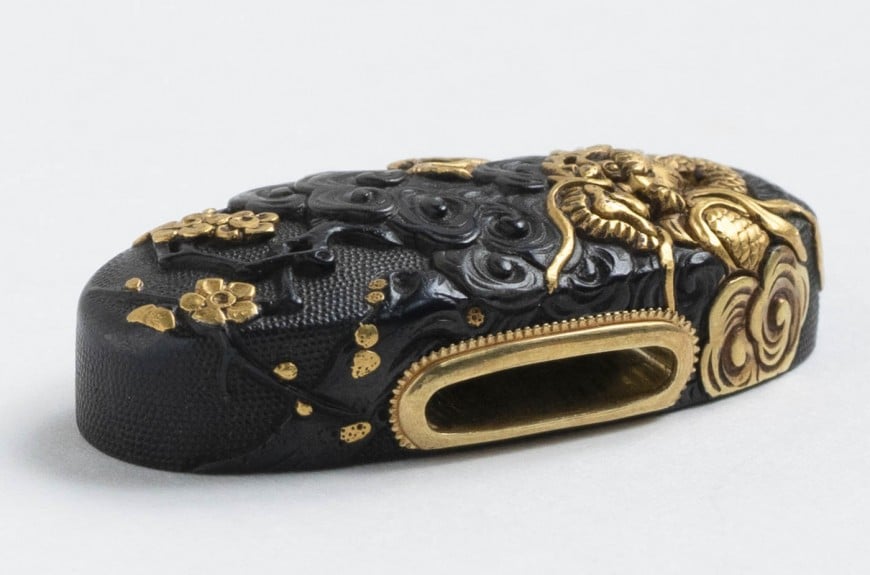
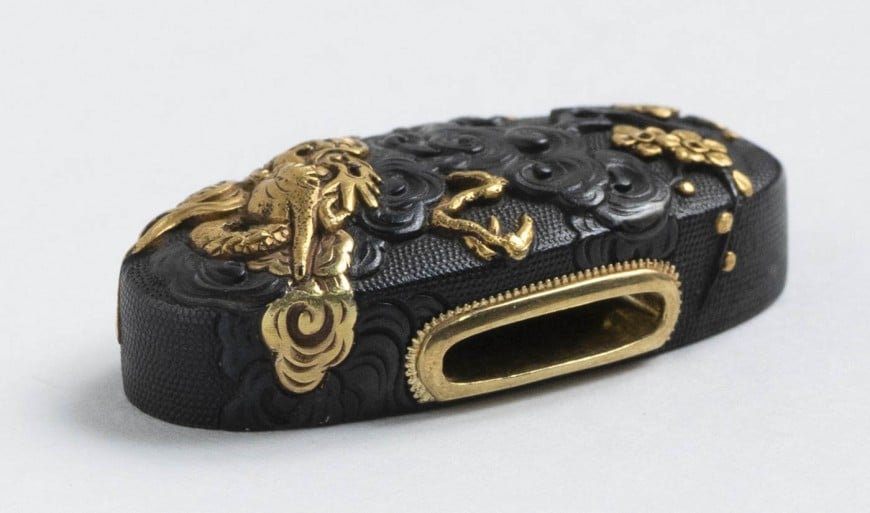
Machibori · Musashi
1 piece on the market now
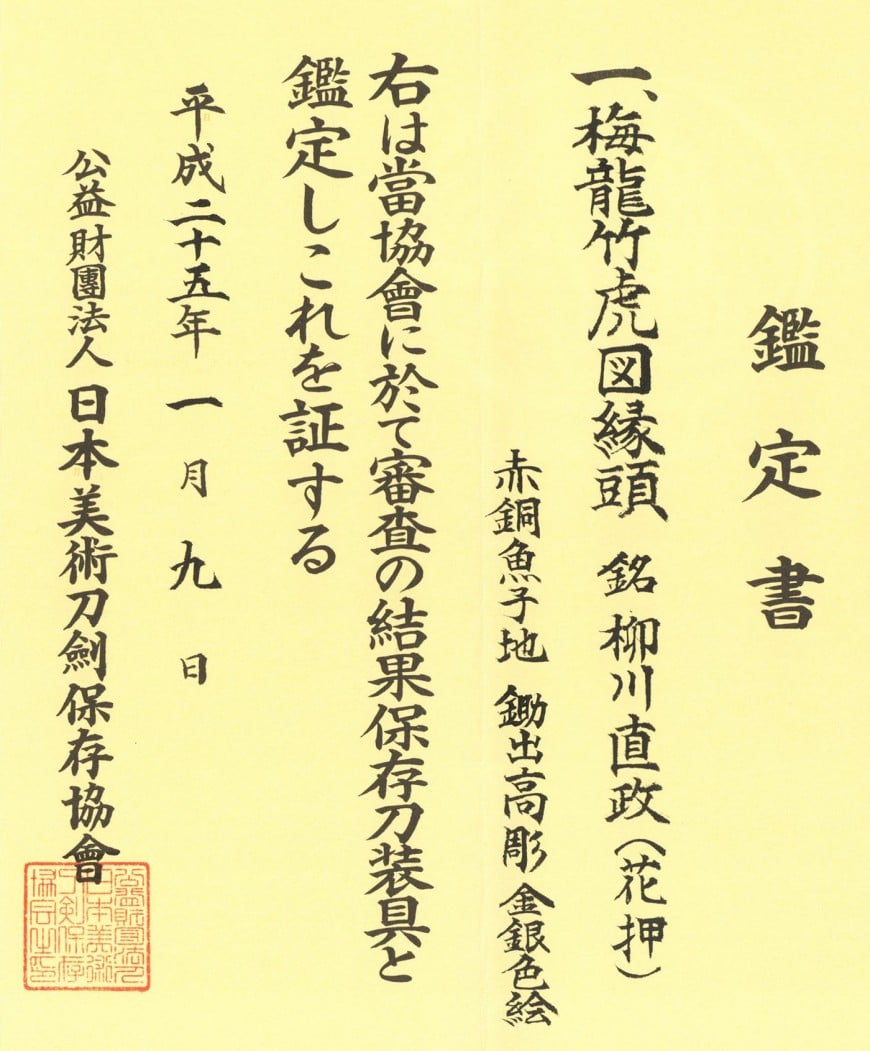
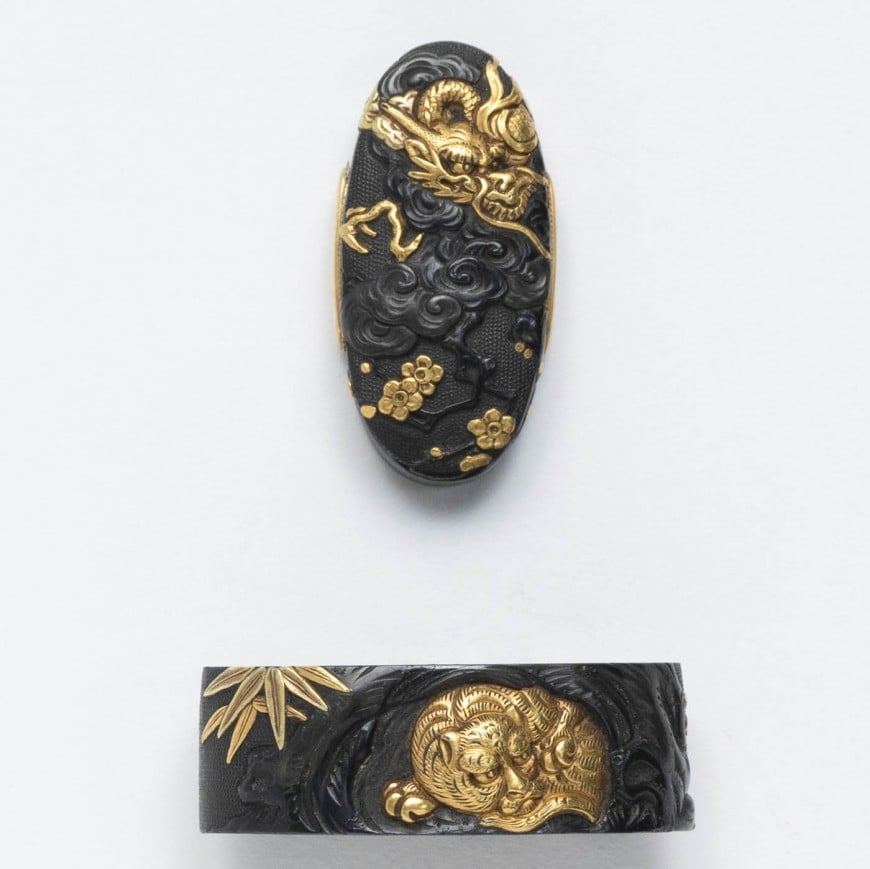
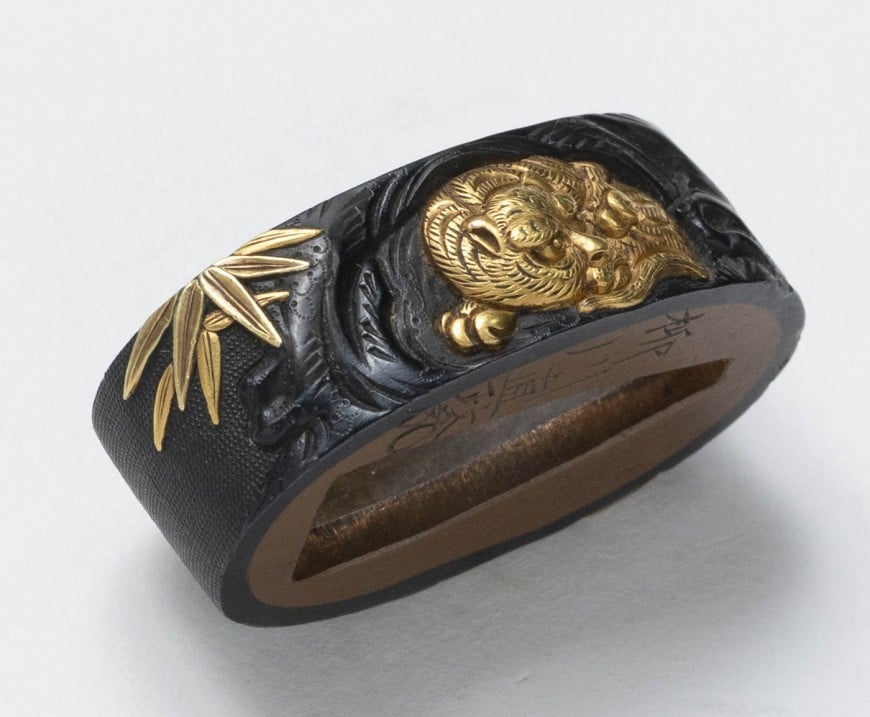
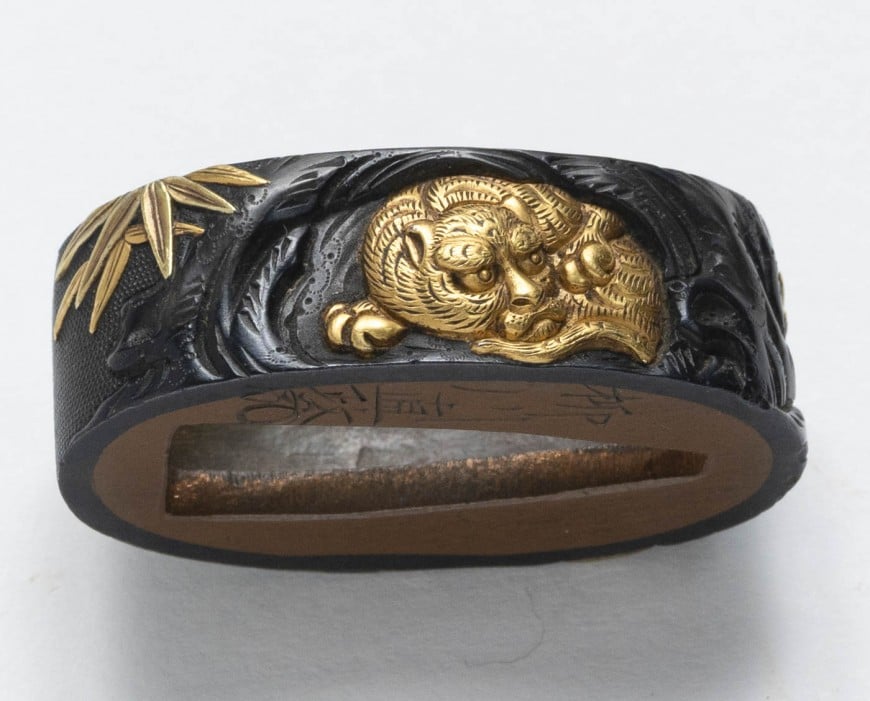
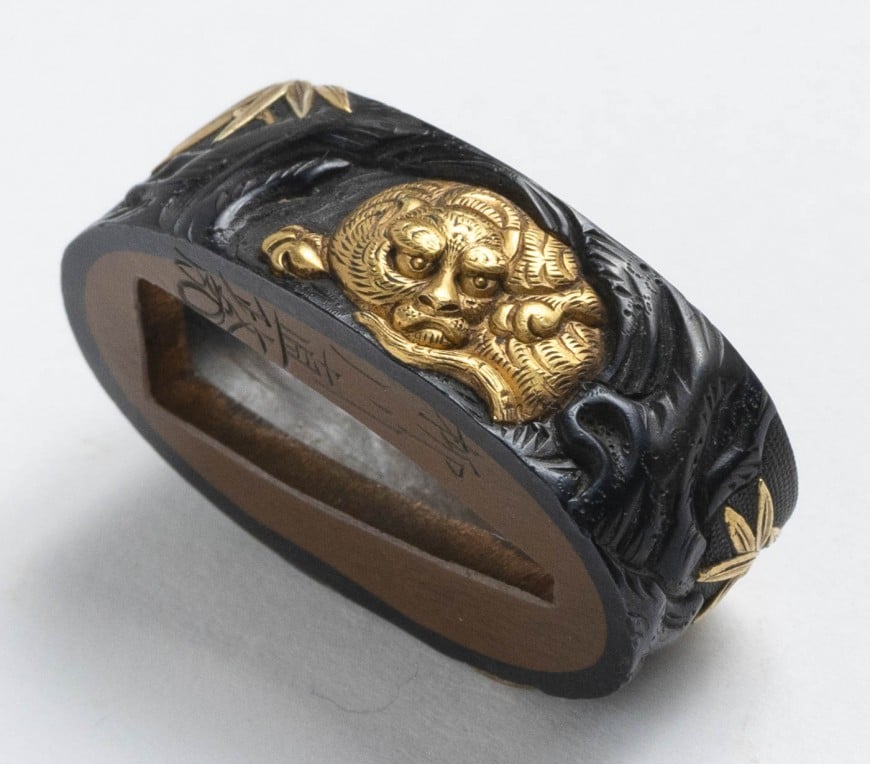
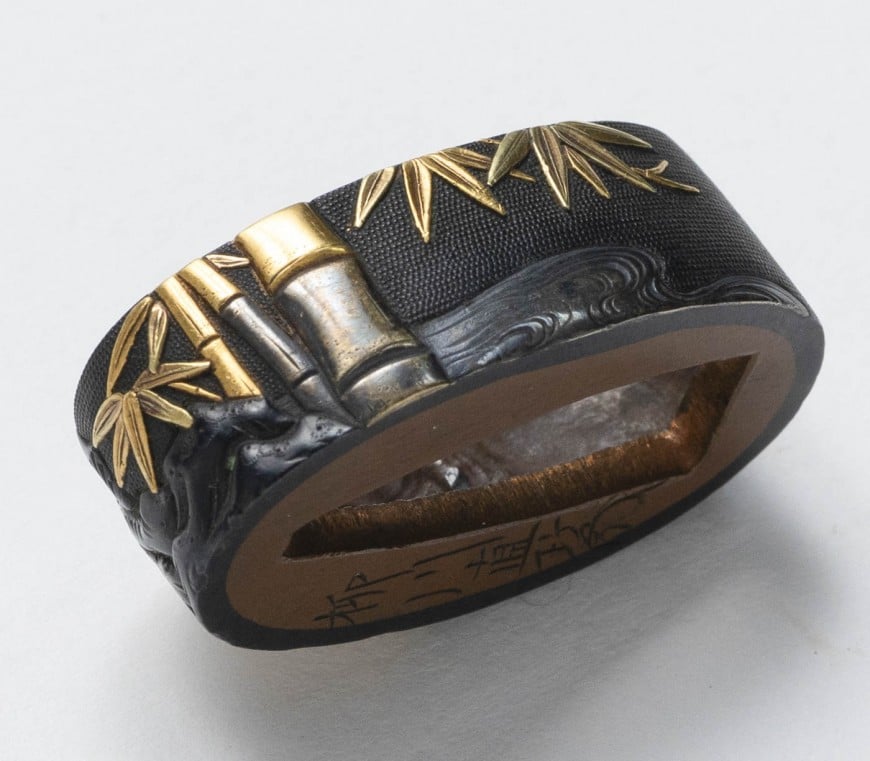
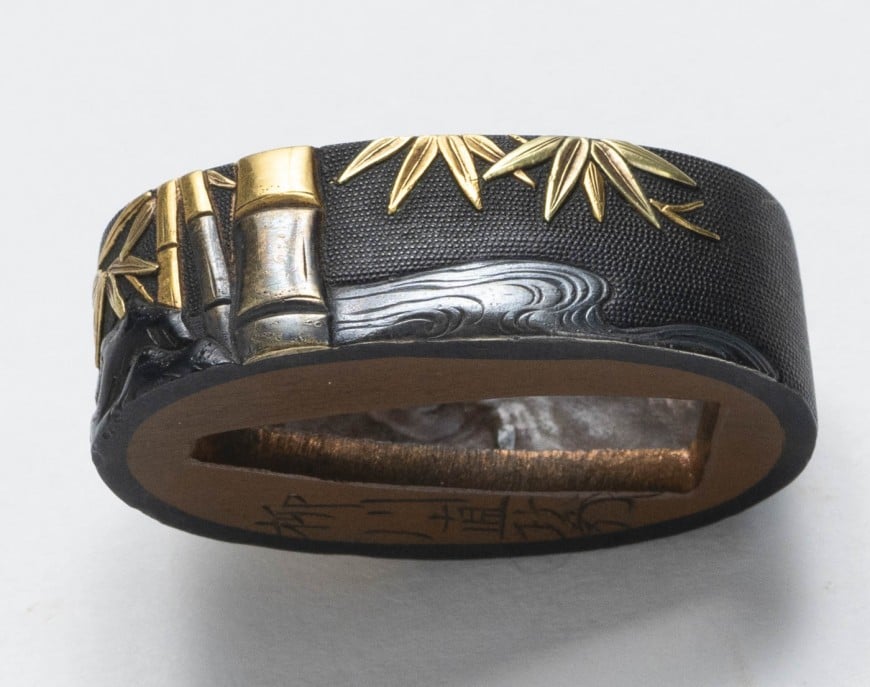
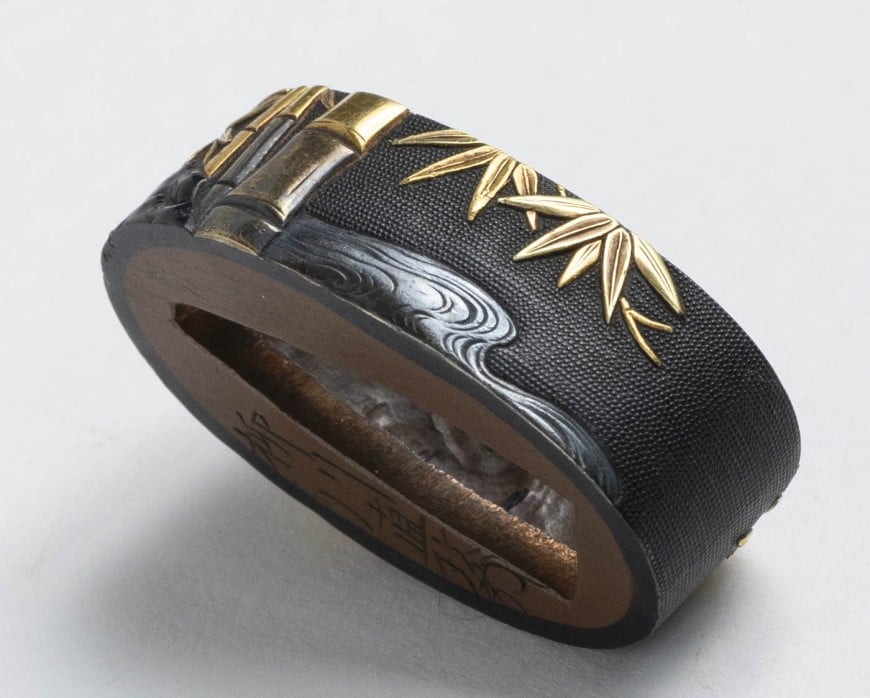
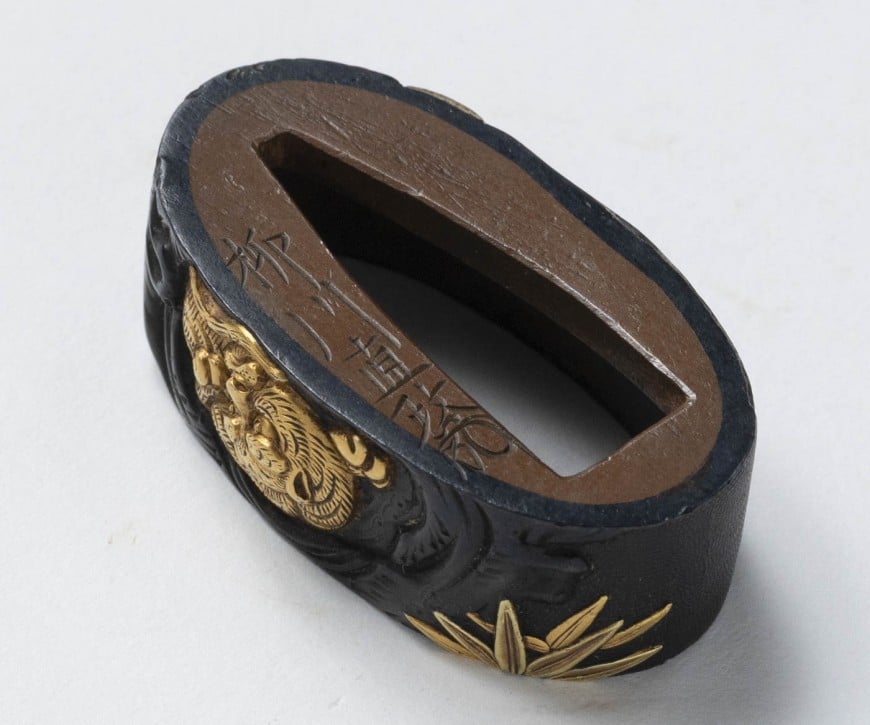
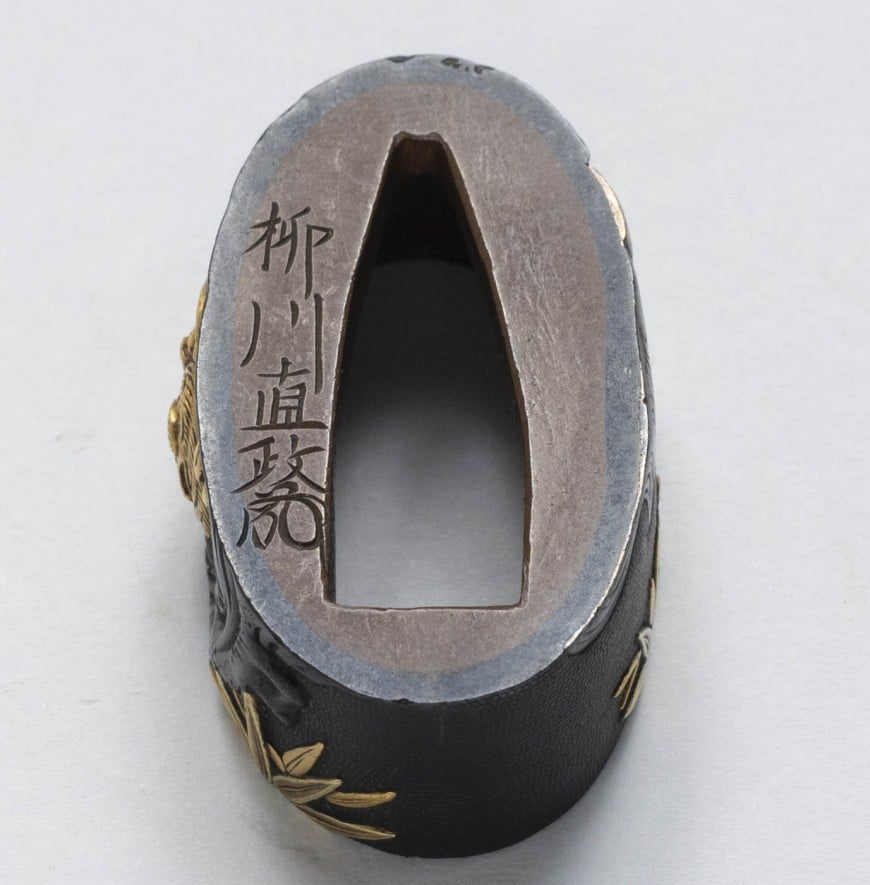
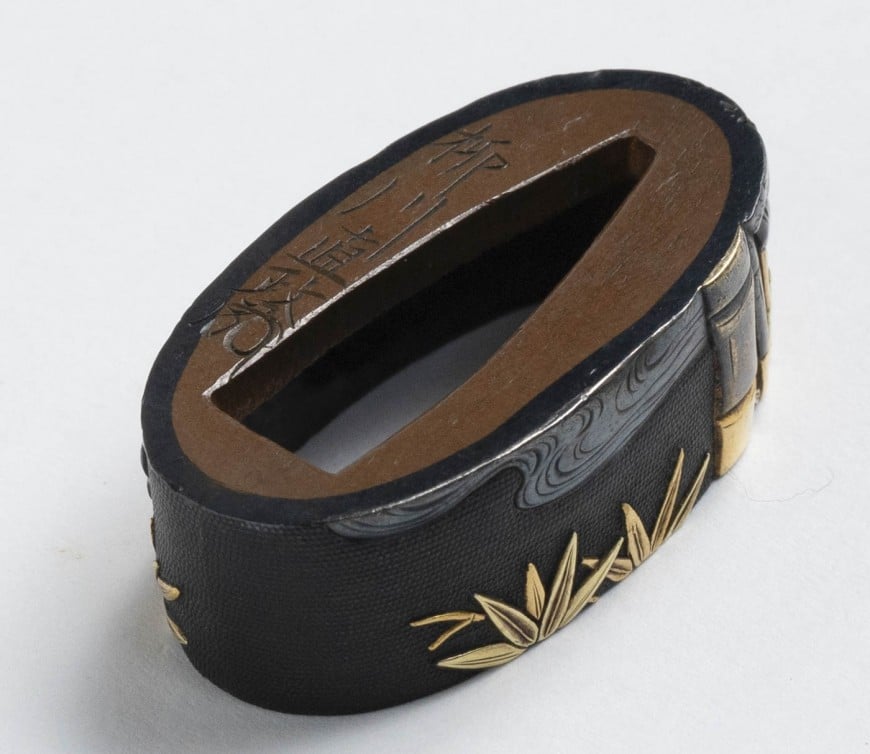
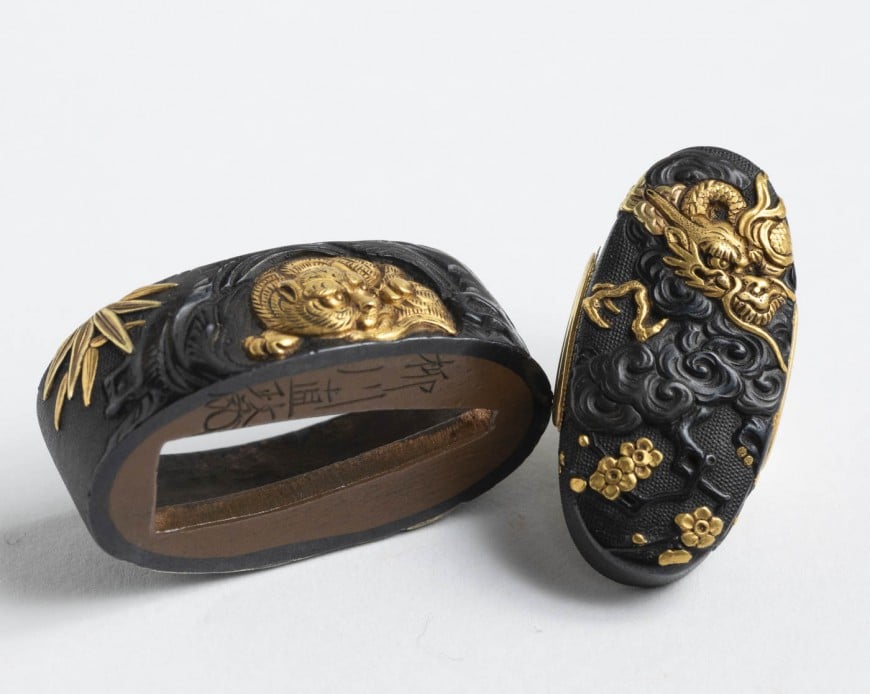
Yanagawa Naomasa was born in Edo in Genroku 5 (1692) and initially bore the common name Heijiro, later changed to Sanzaemon. He entered the workshop of Yokoya Somin and quickly distinguished himself as an outstanding talent within that circle. Through establishing his own following, Naomasa founded what became known as the Yanagawa school, a lineage that carried forward the Yokoya manner into the mid-Edo period and beyond. Beginning with his adopted heir, the second-generation Naomitsu, and the third-generation Naoharu, and with the emergence of figures such as Yanagawa Naokatsu and Kikuchi Jokatsu, the prosperity of the Yanagawa line was remarkable. Naomasa remained active until Horeki 7 (1757).
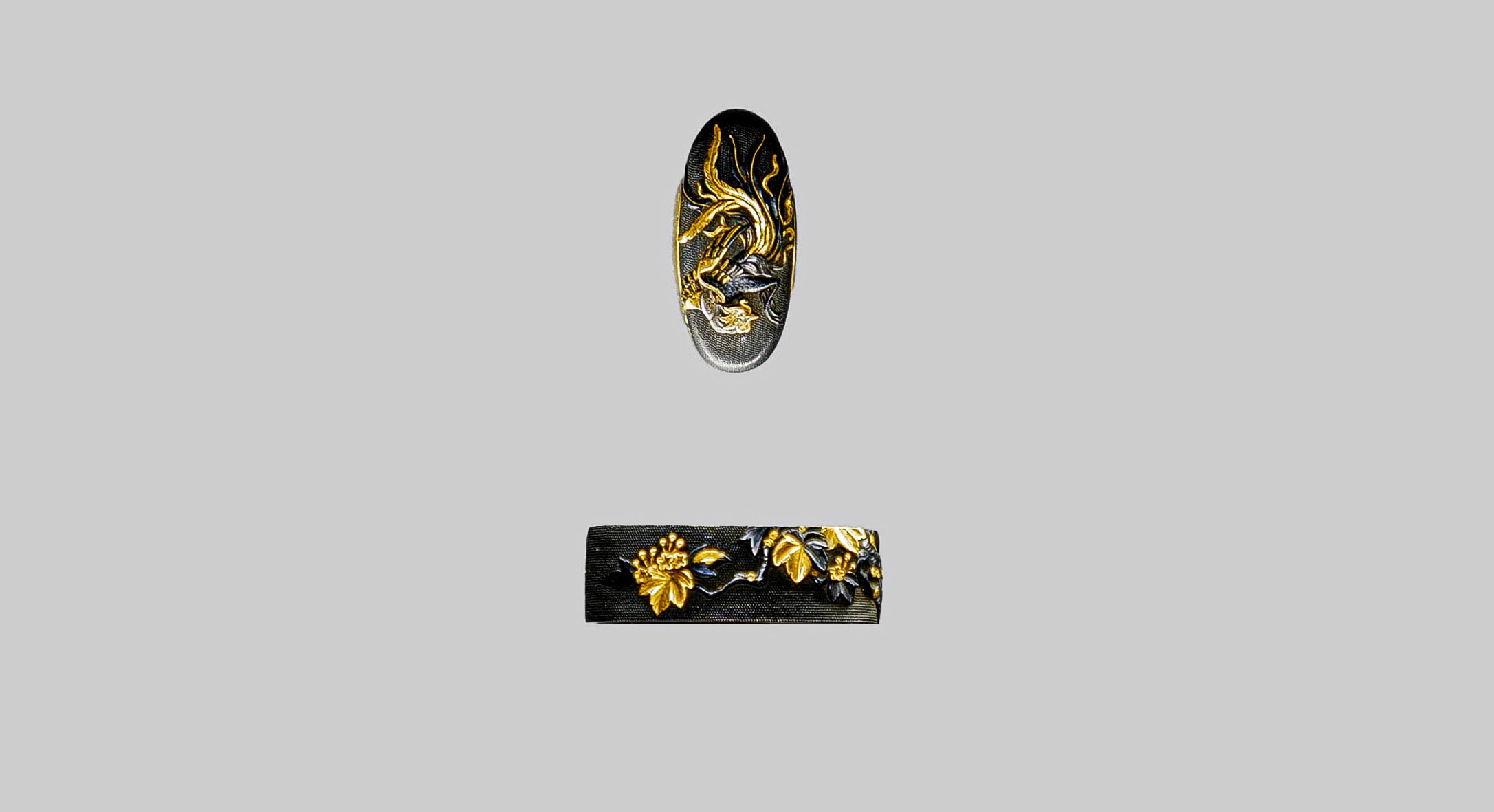
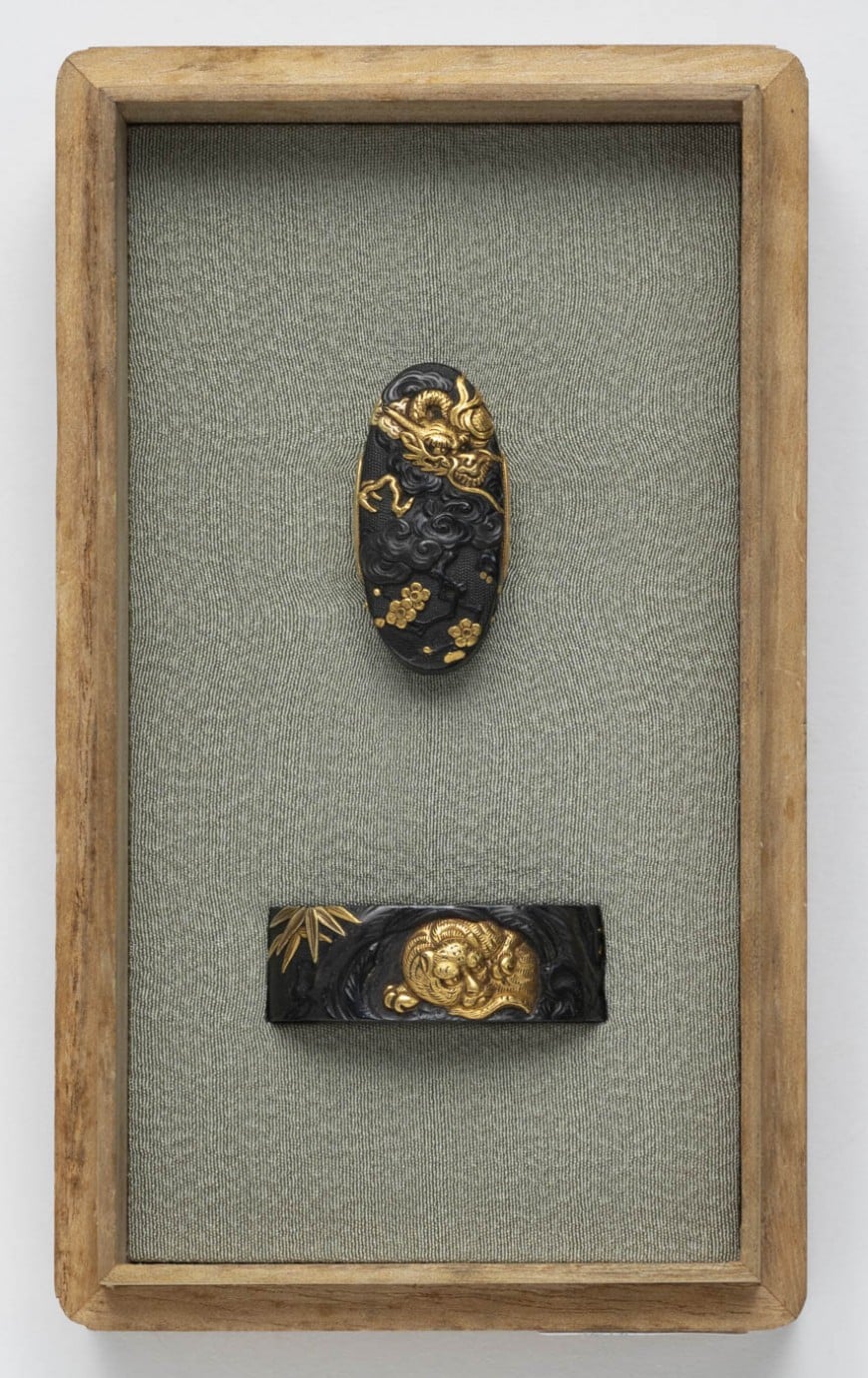
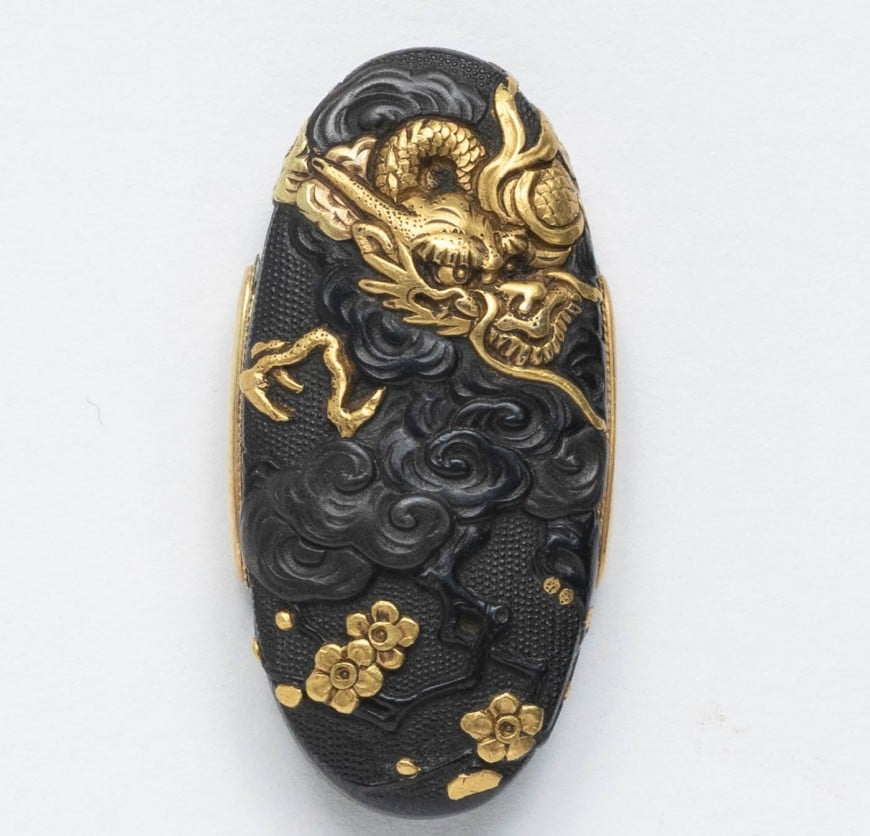
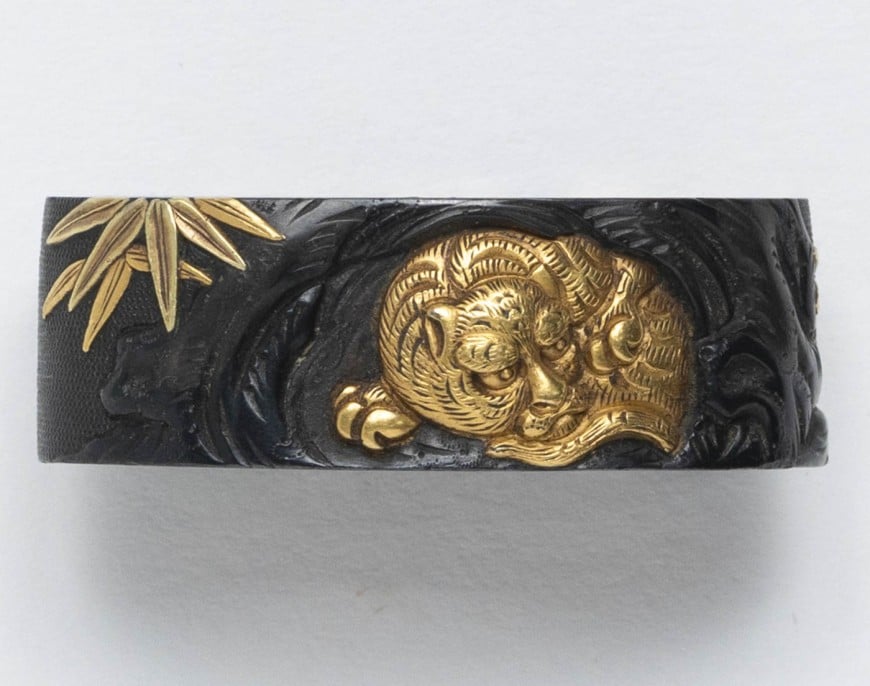
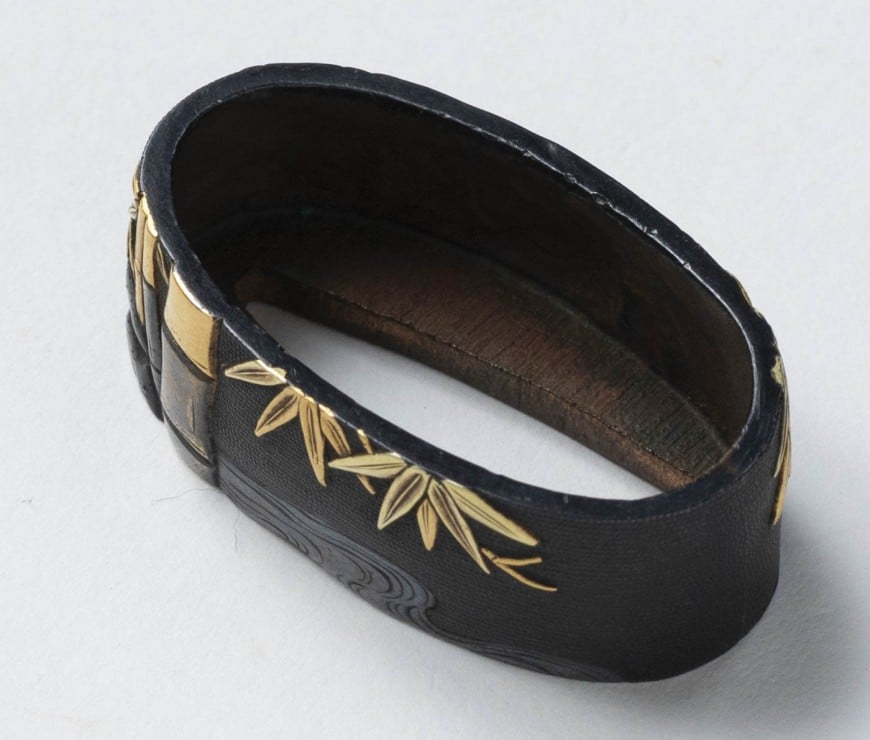
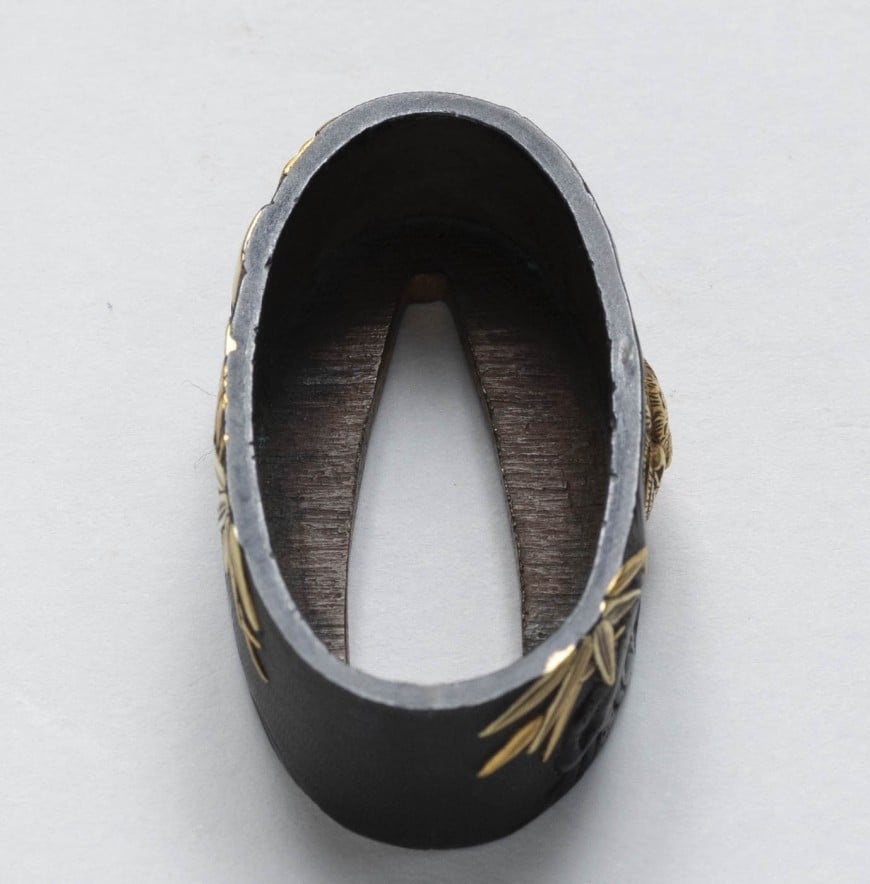
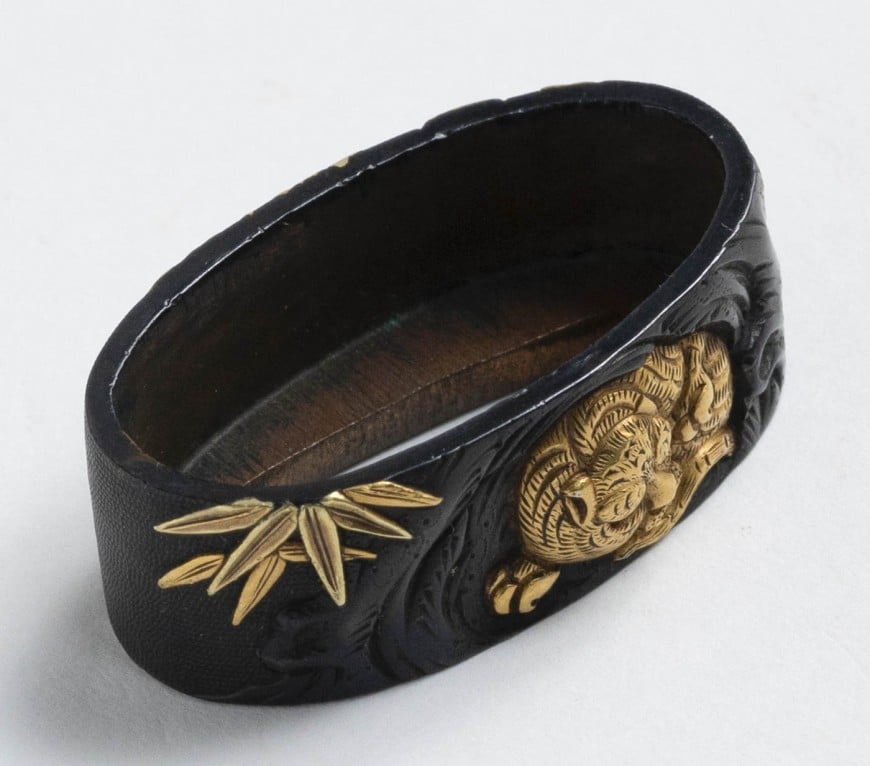
The Yanagawa school inherited and perpetuated the characteristic Yokoya-style methods: shakudo nanako-ji grounds worked in takabori with polychrome metalwork (iroe). Naomasa's works often call to mind his teacher and are characterized by a powerful and dignified presence[[c:3]]. His carving employs a thickly modeled takabori technique — what the NBTHK describes as richly modeled high-relief carving (koniku-bori)[[c:2]] — together with gold and silver iroe, achieving compositions that brim with martial spirit and authority. He is known to have worked after Somin's own compositions, and while the NBTHK notes that the placement of flesh (nikuoki) in such works occasionally lacks the force of the originals, Naomasa's distinctive carving manner brings these pieces close to their models.
Naomasa occupies a position of singular importance as the founder of one of the principal machibori lineages of the Edo period. The NBTHK consistently recognizes works in which "Naomasa's true merits are fully brought to the fore[[c:1]]" and praises pieces where "the Yanagawa-school manner is displayed without reservation." Signed works bearing the explicit inscription "disciple of Somin" are noted as being of particular value and importance. Surviving matched daisho sets from his hand are comparatively few, lending additional significance to such examples. As the artist who established the Yanagawa school and achieved renown in his own right, Naomasa's legacy resides in the enduring vitality of the tradition he founded.
Where Naomasa stands among comparable artisans: across all of nihontō, and within tradition, era, and period. The tiers (Foremost · Leading · Major · Notable) weigh official designations from the NBTHK and Japan's Agency for Cultural Affairs, together with historical honors of lasting repute such as the Sansaku and Meibutsu-chō.
Select a lens to see how it's measured.
Machibori · Edo
57 pieces on the market now
The Yanagawa (柳川) school ranks among the principal machibori ("town carving") lineages of Edo metalwork, arising in the mid-Edo period as a direct offshoot of the Yokoya house. Its founder, Yanagawa Naomasa (1692–1757), studied under Yoshioka Inaba-no-suke and under Yokoya Sōmin, and established himself in the Otamagaike district of Edo. The NBTHK setsumei consistently locate the school within this filiation, styling it "the Yanagawa branch within the Yokoya lineage" (横谷門下柳川派) and naming Naomasa as the family founder (家祖). Naomasa had no biological heirs and devoted himself to the training of disciples, and the successive heads of the house inherited the character nao (直). " The collective idiom of the school is the classic Yokoya-derived vocabulary of Edo kinkō work: grounds of shakudō (赤銅) dressed in nanako-ji (魚子地), high-relief carving (takabori) — frequently executed as applied motifs (suemon) — and polychrome inlay (zōgan iroe) in gold, silver, and shibuichi, deployed across kozuka, kōgai, fuchi-kashira, menuki, and tsuba. The school was likewise renowned for excellent katakiribori (single-cut carving), and its repertoire favored classical subjects: shishi (lions) with peonies, tigers, Chinese sages, and figural themes such as the Seven Lucky Gods.
Fidelity to the manner of Sōmin remained the school's touchstone across generations. " Equally characteristic is the school's mode of transmission, whereby pupils composed their art-names from characters granted by the Yanagawa masters. The measure of the Yanagawa school's significance lies as much in what it engendered as in its own production. Ishiguro Masatsune, a pupil of Katō Naotsune of the Yanagawa school, formed his name by combining masa (政) from Naomasa and tsune (常) from Naotsune; the setsumei record that he "moved beyond the manner of the Yanagawa school, devising innovative treatments particularly within bird-and-flower subjects," founding the Ishiguro lineage, which "continued to prosper through successive generations until the Meiji period" and produced the celebrated "twin peaks" Masayoshi and Masaaki. " Through these ramifying lines, the Yanagawa school served as the essential conduit by which the Yokoya manner of takabori iroe on shakudō nanako-ji grounds was disseminated across the late-Edo metalworking world. Learn more →
| Smith | Era | Designated |
|---|---|---|
| Haruaki春明 | — | 18 |
| Naoharu直春 | — | 7 |
| Naomasa直政 | — | 5 |
| Naomitsu直光 | — | 2 |
| Akinori/Meijo明乗 | — | 0 |
The Edo period (1615 to 1868)
Edo was the sword’s age of connoisseurship: the Hon’ami appraisers, the shogunal register of famous blades of 1719, and a thriving literature turned the sword into an object of study even as it ceased to be drawn in war.
We could not find an authenticity certificate on the seller’s listing. Japanese swords and fittings are normally papered by the NBTHK (or the NTHK). Without one, the attribution is the seller’s own assessment and has not been independently verified — treat it with caution and ask the dealer about certification before buying.
Returns accepted within 7 days for internet purchases.
A wakizashi made by Inoue Shinkai in August of the 13th year of the Kanbun era. Shinkai was a famous smith of the Shinto period. This wakizashi is a notable example of his work.
NihontoWatchMachibori · Musashi
1 piece on the market now
Yanagawa Naomasa was born in Edo in Genroku 5 (1692) and initially bore the common name Heijiro, later changed to Sanzaemon. He entered the workshop of Yokoya Somin and quickly distinguished himself as an outstanding talent within that circle. Through establishing his own following, Naomasa founded what became known as the Yanagawa school, a lineage that carried forward the Yokoya manner into the mid-Edo period and beyond. Beginning with his adopted heir, the second-generation Naomitsu, and the third-generation Naoharu, and with the emergence of figures such as Yanagawa Naokatsu and Kikuchi Jokatsu, the prosperity of the Yanagawa line was remarkable. Naomasa remained active until Horeki 7 (1757).
The Yanagawa school inherited and perpetuated the characteristic Yokoya-style methods: shakudo nanako-ji grounds worked in takabori with polychrome metalwork (iroe). Naomasa's works often call to mind his teacher and are characterized by a powerful and dignified presence[[c:3]]. His carving employs a thickly modeled takabori technique — what the NBTHK describes as richly modeled high-relief carving (koniku-bori)[[c:2]] — together with gold and silver iroe, achieving compositions that brim with martial spirit and authority. He is known to have worked after Somin's own compositions, and while the NBTHK notes that the placement of flesh (nikuoki) in such works occasionally lacks the force of the originals, Naomasa's distinctive carving manner brings these pieces close to their models.
Naomasa occupies a position of singular importance as the founder of one of the principal machibori lineages of the Edo period. The NBTHK consistently recognizes works in which "Naomasa's true merits are fully brought to the fore[[c:1]]" and praises pieces where "the Yanagawa-school manner is displayed without reservation." Signed works bearing the explicit inscription "disciple of Somin" are noted as being of particular value and importance. Surviving matched daisho sets from his hand are comparatively few, lending additional significance to such examples. As the artist who established the Yanagawa school and achieved renown in his own right, Naomasa's legacy resides in the enduring vitality of the tradition he founded.
Where Naomasa stands among comparable artisans: across all of nihontō, and within tradition, era, and period. The tiers (Foremost · Leading · Major · Notable) weigh official designations from the NBTHK and Japan's Agency for Cultural Affairs, together with historical honors of lasting repute such as the Sansaku and Meibutsu-chō.
Select a lens to see how it's measured.
Machibori · Edo
57 pieces on the market now
The Yanagawa (柳川) school ranks among the principal machibori ("town carving") lineages of Edo metalwork, arising in the mid-Edo period as a direct offshoot of the Yokoya house. Its founder, Yanagawa Naomasa (1692–1757), studied under Yoshioka Inaba-no-suke and under Yokoya Sōmin, and established himself in the Otamagaike district of Edo. The NBTHK setsumei consistently locate the school within this filiation, styling it "the Yanagawa branch within the Yokoya lineage" (横谷門下柳川派) and naming Naomasa as the family founder (家祖). Naomasa had no biological heirs and devoted himself to the training of disciples, and the successive heads of the house inherited the character nao (直). " The collective idiom of the school is the classic Yokoya-derived vocabulary of Edo kinkō work: grounds of shakudō (赤銅) dressed in nanako-ji (魚子地), high-relief carving (takabori) — frequently executed as applied motifs (suemon) — and polychrome inlay (zōgan iroe) in gold, silver, and shibuichi, deployed across kozuka, kōgai, fuchi-kashira, menuki, and tsuba. The school was likewise renowned for excellent katakiribori (single-cut carving), and its repertoire favored classical subjects: shishi (lions) with peonies, tigers, Chinese sages, and figural themes such as the Seven Lucky Gods.
Fidelity to the manner of Sōmin remained the school's touchstone across generations. " Equally characteristic is the school's mode of transmission, whereby pupils composed their art-names from characters granted by the Yanagawa masters. The measure of the Yanagawa school's significance lies as much in what it engendered as in its own production. Ishiguro Masatsune, a pupil of Katō Naotsune of the Yanagawa school, formed his name by combining masa (政) from Naomasa and tsune (常) from Naotsune; the setsumei record that he "moved beyond the manner of the Yanagawa school, devising innovative treatments particularly within bird-and-flower subjects," founding the Ishiguro lineage, which "continued to prosper through successive generations until the Meiji period" and produced the celebrated "twin peaks" Masayoshi and Masaaki. " Through these ramifying lines, the Yanagawa school served as the essential conduit by which the Yokoya manner of takabori iroe on shakudō nanako-ji grounds was disseminated across the late-Edo metalworking world. Learn more →
| Smith | Era | Designated |
|---|---|---|
| Haruaki春明 | — | 18 |
| Naoharu直春 | — | 7 |
| Naomasa直政 | — | 5 |
| Naomitsu直光 | — | 2 |
| Akinori/Meijo明乗 | — | 0 |
The Edo period (1615 to 1868)
Edo was the sword’s age of connoisseurship: the Hon’ami appraisers, the shogunal register of famous blades of 1719, and a thriving literature turned the sword into an object of study even as it ceased to be drawn in war.
We could not find an authenticity certificate on the seller’s listing. Japanese swords and fittings are normally papered by the NBTHK (or the NTHK). Without one, the attribution is the seller’s own assessment and has not been independently verified — treat it with caution and ask the dealer about certification before buying.
Returns accepted within 7 days for internet purchases.