 NihontoWatchNihontoWatch
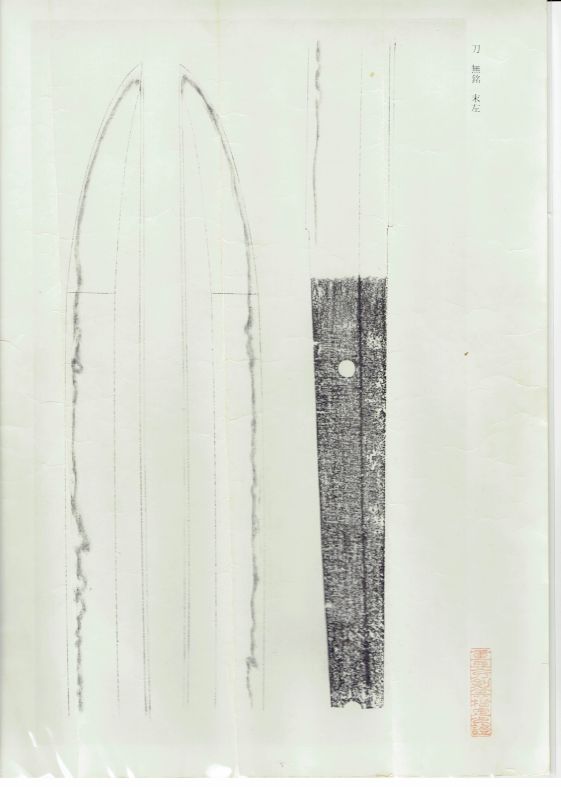
Jūyō-tōken at the 23rd jūyō shinsa held on July 1, 1975 katana, mumei: Sue-Sa (末左) Chiba Prefecture, Shimano Kunio (島野邦生) Measurements nagasa 71.5 cm, sori 1.5 cm, motohaba 3.1 cm, sakihaba 2.7 cm, kissaki-nagasa 8.8 cm, nakago-nagasa 18.3 cm, no nakago-sori Description Keijō: shinogi-zukuri, mitsu-mune, wide mihaba, thin kasane, ō-kissaki Kitae: itame that features ji-nie Hamon: ko-notare in ko-nie-deki that is mixed with gunome and a few yubashiri Bōshi: sugu with a ko-maru-kaeri and hakikake Nakago: ō-suriage, kirijiri, gently slanting katte-sagari yasurime, one mekugi-ana, mumei Explanation This is an ō-suriage mumei katana that can be attributed to Sue-Sa. The Chikuzen-based Samonji School flourished in the Nanbokuchō period and gave rise to many smiths, e.g., Yasuyoshi (安吉), Yukihiro (行弘), Kunihiro (国弘), Yoshisada (吉貞), Hiroyuki (弘行), and Hiroyasu (弘安). In terms of attributions, master Samonji is referred to as Ō-Sa (大左) and his students to as SueSa (末左). This katana has the typical wide mihaba, thin kasane, and ō-kissaki for its production time. The jiba shows the features which all Sa students have in common but which do not point towards the hand of an individual Sue-Sa smith Jūyō No. 5095 Certificate katana, mumei: Sue-Sa (末左) Nagasa 71.5 cm, sori 1.5 cm, Shinogi-zukuri, mitsu-mune, ō-kissaki; Kitae: itame; Hamon: ko-notare that is mixed with gunome and a few yubashiri; Bōshi: sugu with a ko-maru-kaeri and hakikake; Nakago: ō-suriage, kirijiri, gently slanting katte-sagari yasurime, one mekugi-ana According to the result of the shinsa committee of our society we judge this work as authentic and rank it as Jūyō-Tōken. July 1, 1975 [Juridical Foundation] Nihon Bijutsu Tōken Hozon Kyōkai, NBTHK [President] Honma Junji (本間順治) 第廿三回重要刀剣指定品 筑前國末左 大磨上無銘末左トハ大左一門ノ鍛冶ノ汎称也幅廣・重薄大鋒ノ雄勁ナル延文・貞治型ノ姿態ヲ 示シ地沸ヲ敷ク板目ノ地銕ニ鍛へ直調浅ク湾レ互乃目ヲ交ヘル刃文ヲ焼キ沸厚ク突キ上状ノ帽 子ヲ呈スナド個名ヲ俄カニ指摘シへナイマデモ一門ノ特色ヲ明示スル優品也 ⻑弐尺参寸六分弱 時在己亥皐月 探山識「花押」 Dai nijūsan-kai jūyō-tōken shitei-hin Chikuzen no Kuni Sue-Sa Ō-suriage mumei Sue-Sa to wa Ō-Sa no ichimon no kaji no hanshō nari haba hiroi, kasane usui ō-kissaki no yūkei naru Enbun-Jōji-kei no shitai o shimeshi ji-nie o ashiku itame no jigane ni kitae sugu-chō asaku notare gunome o majieru hamon o yaki nie atsuku tsukiage-jō no bōshi o tei-su nado komei o niwaka ni shiteki-shie nai made mo ichimon no tokushoku o meiji-suru yūhin nari. Nagasa ni-shaku san-sun roku-bu yowai Jizai tsuchinoto-i satsuki Tanzan shirusu + kaō Designated as a jūyō at the 23rd jūyō shinsa Sue-Sa from Chikuzen Province [This blade is] Ō-suriage mumei. Sue-Sa is an umbrella term for the students of master Ō-Sa. The blade has a wide mihaba, a think kasane, and an ō-kissaki and is thus of a powerful Enbun-Jōji-sugata. Its jigane is an itame that features ji-nie and the blade is hardened in a nie-laden suguha-based hamon that tends somewhat towards a gently undulating notare and that is mixed with gunome. The bōshi starts to turn back late and when we combine all this, we arrive at a masterwork that shows the features which all Ō-Sa students have in common but which do not point towards the hand of an individual Sue-Sa smith. Blade length ~ 71.5 cm Written by Tanzan [Tanobe Michihiro] in May of the year of the boar of this era (2019) + monogram
NihontoWatchOffered by Honto Nihonto
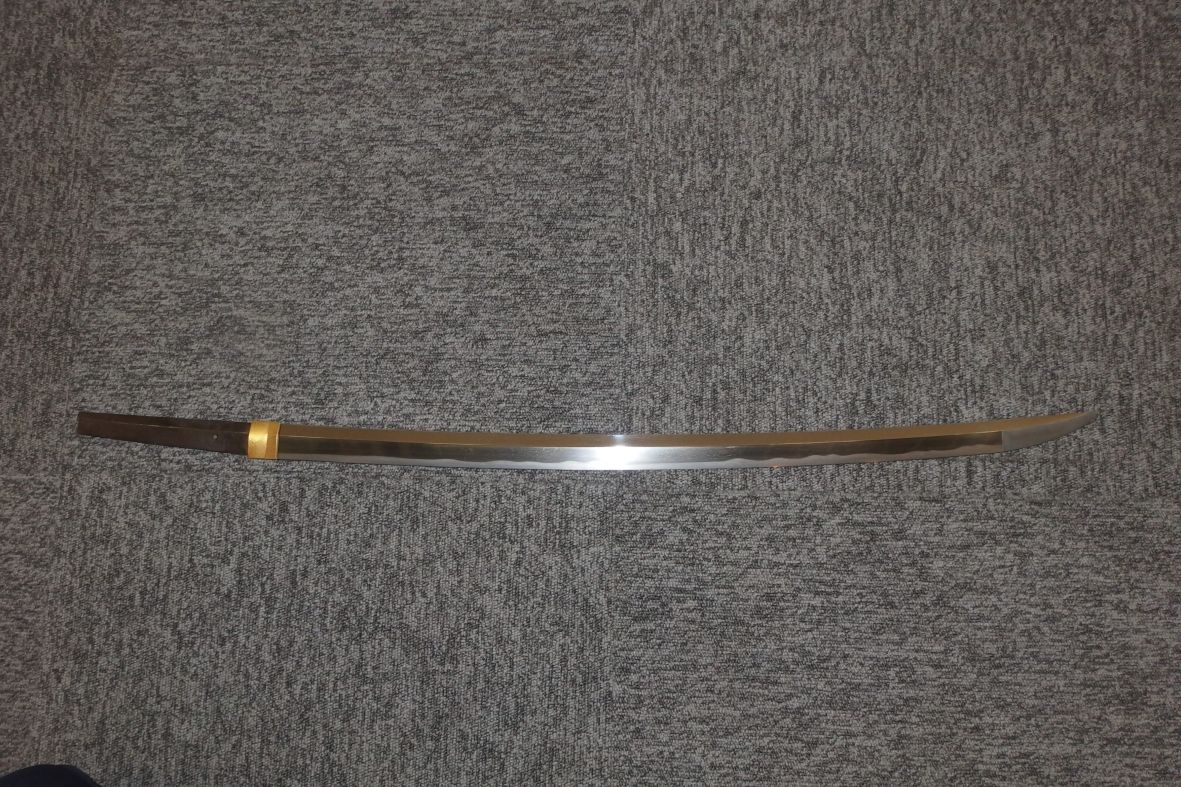
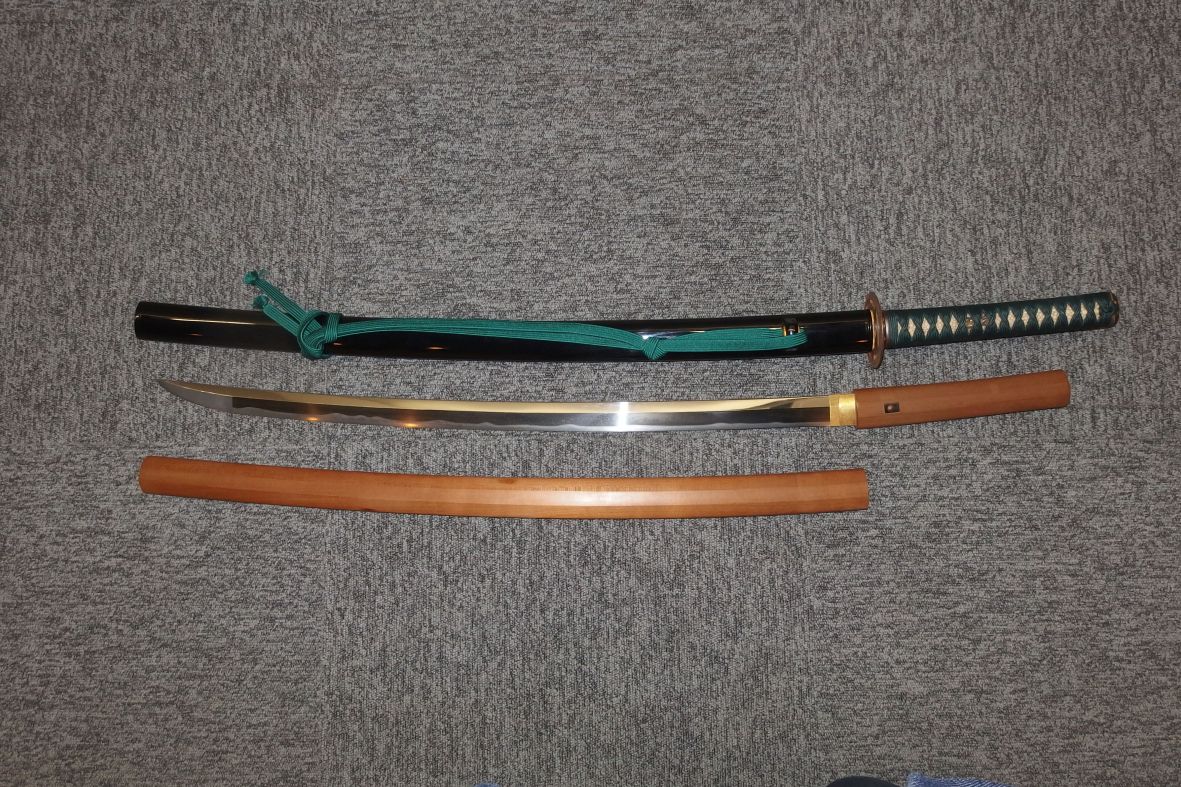
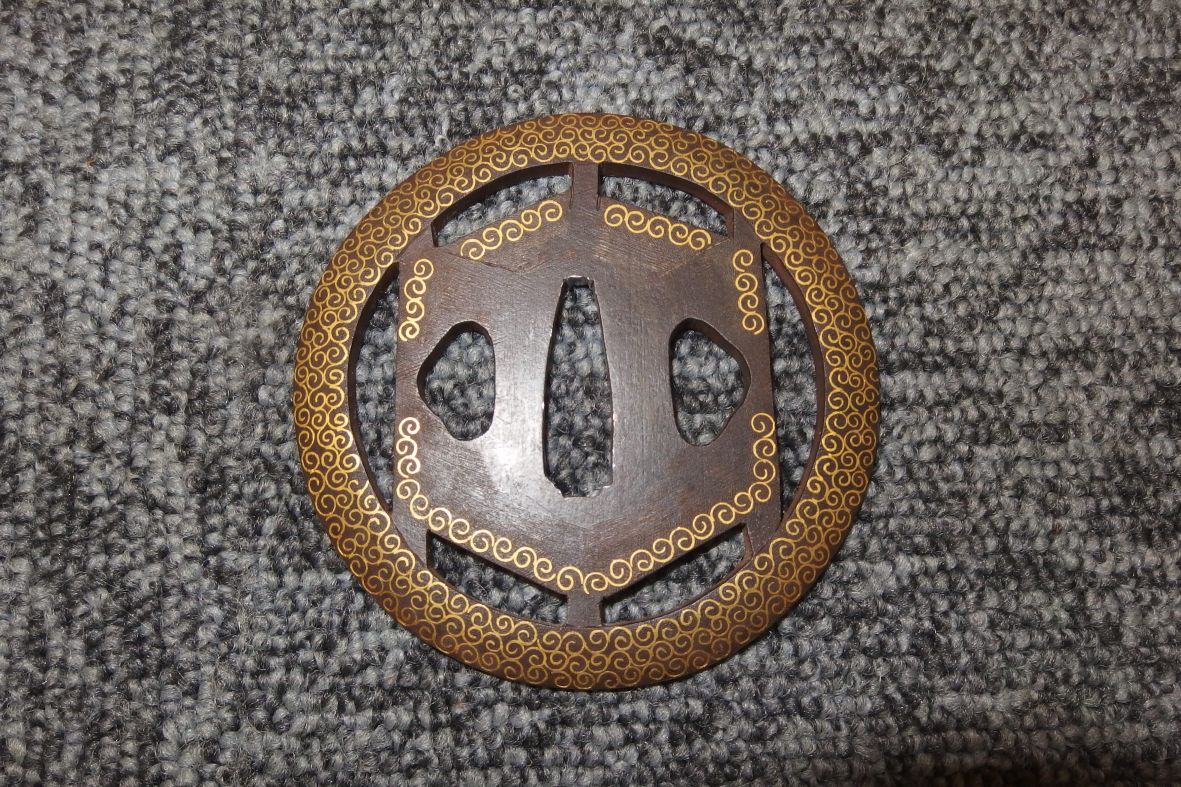
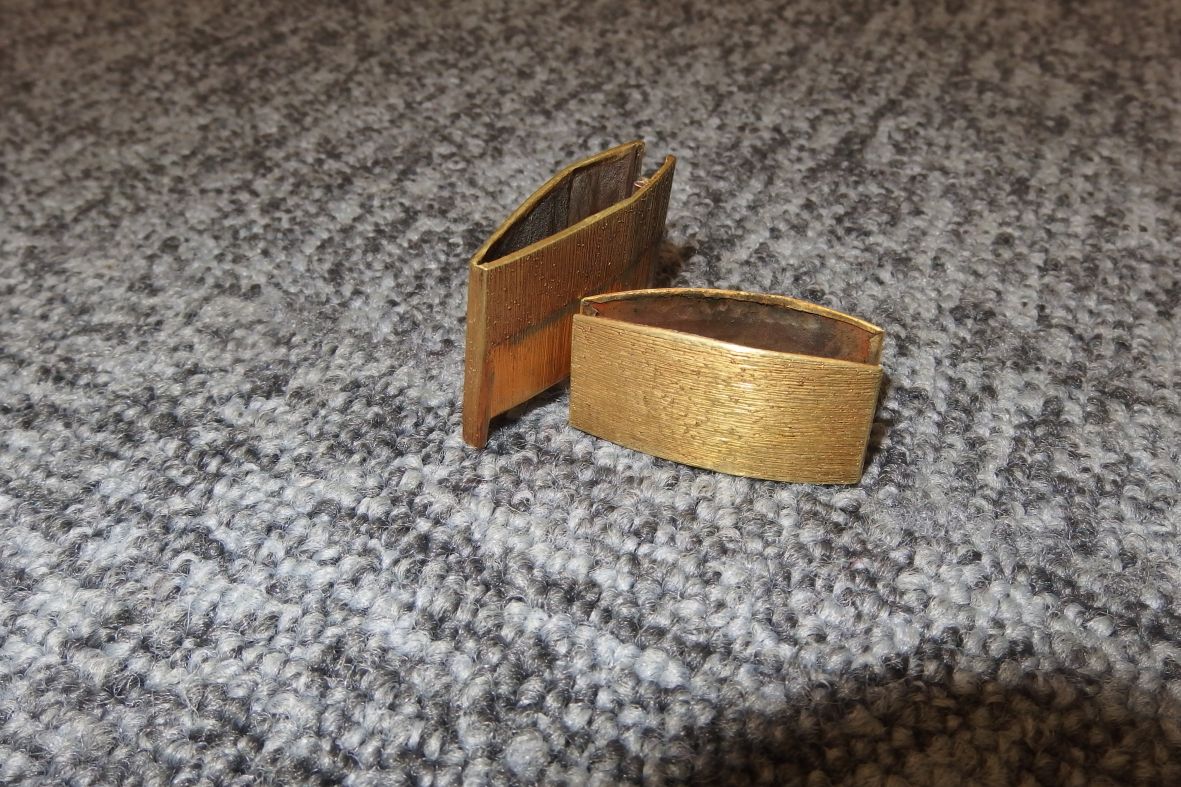
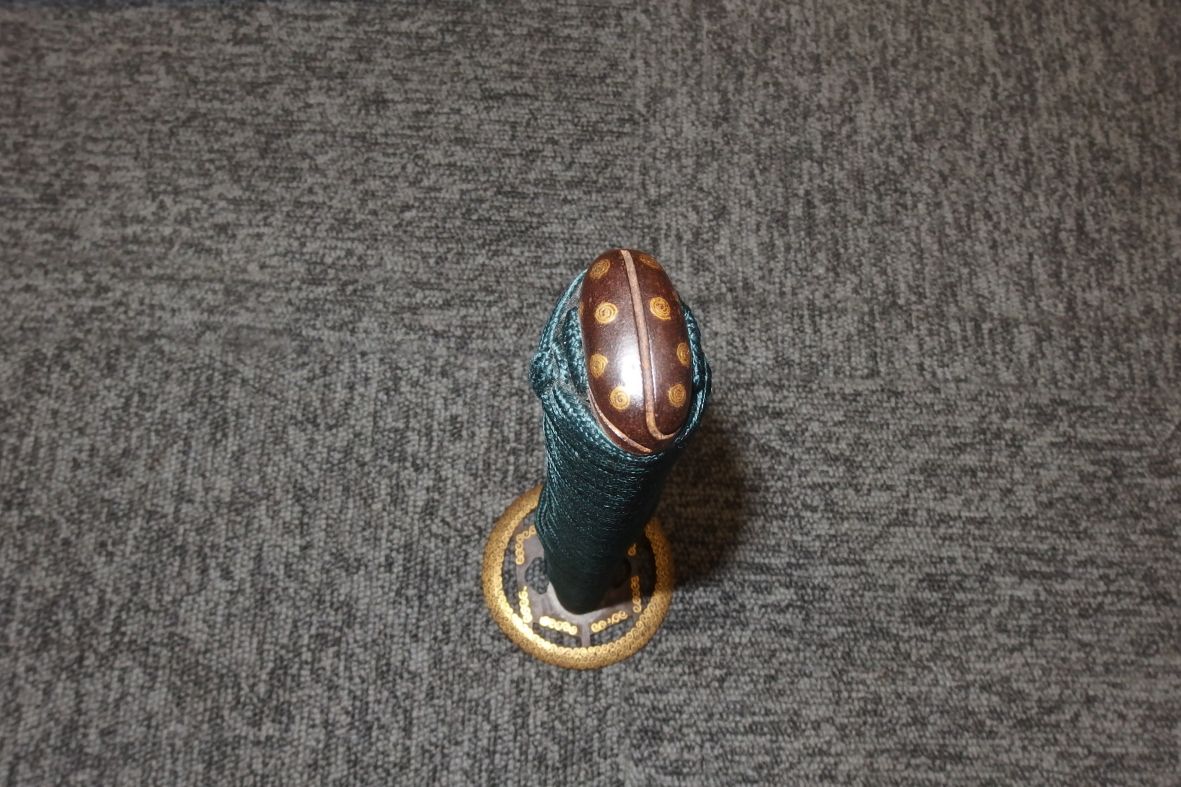
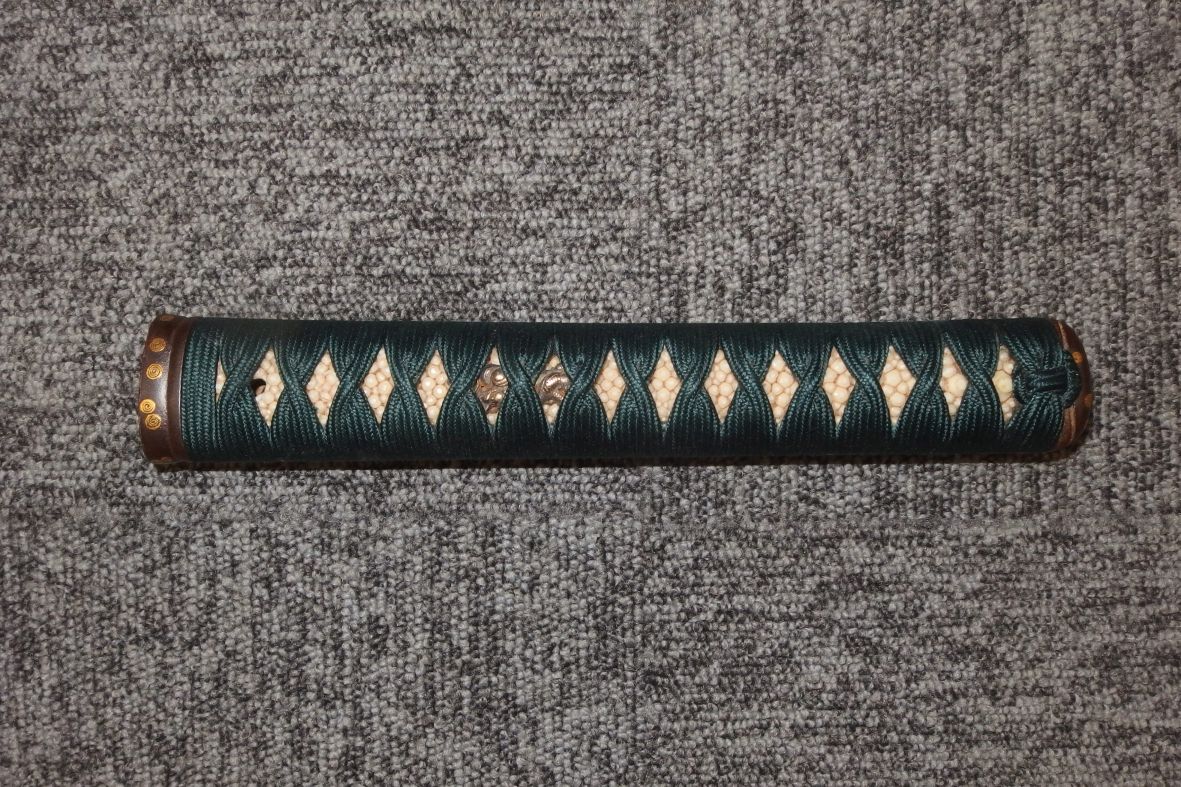
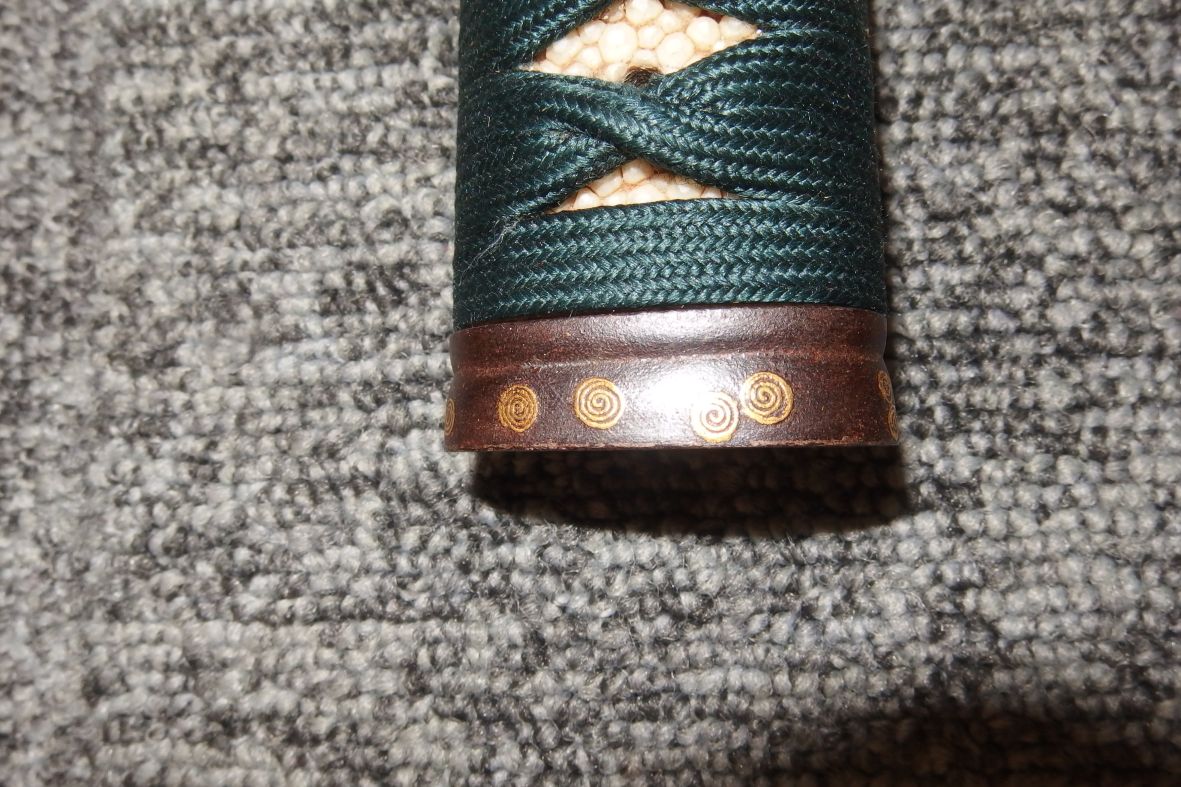
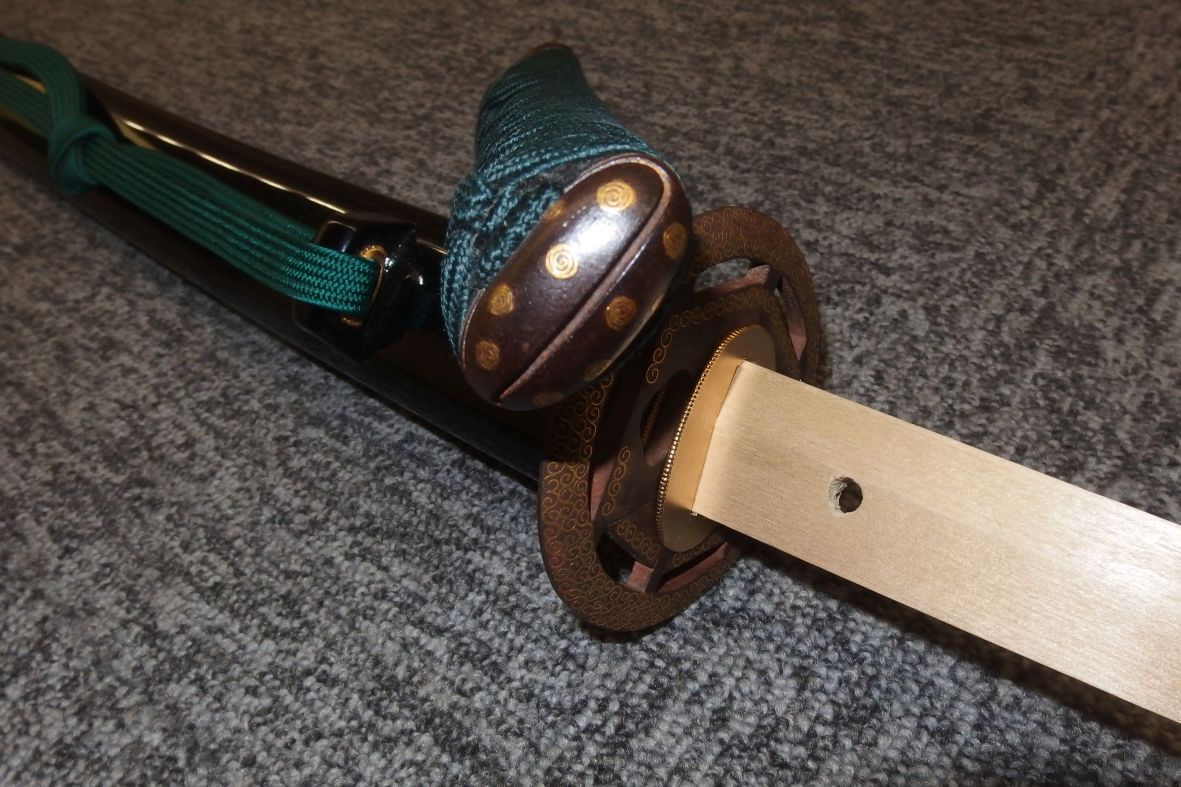
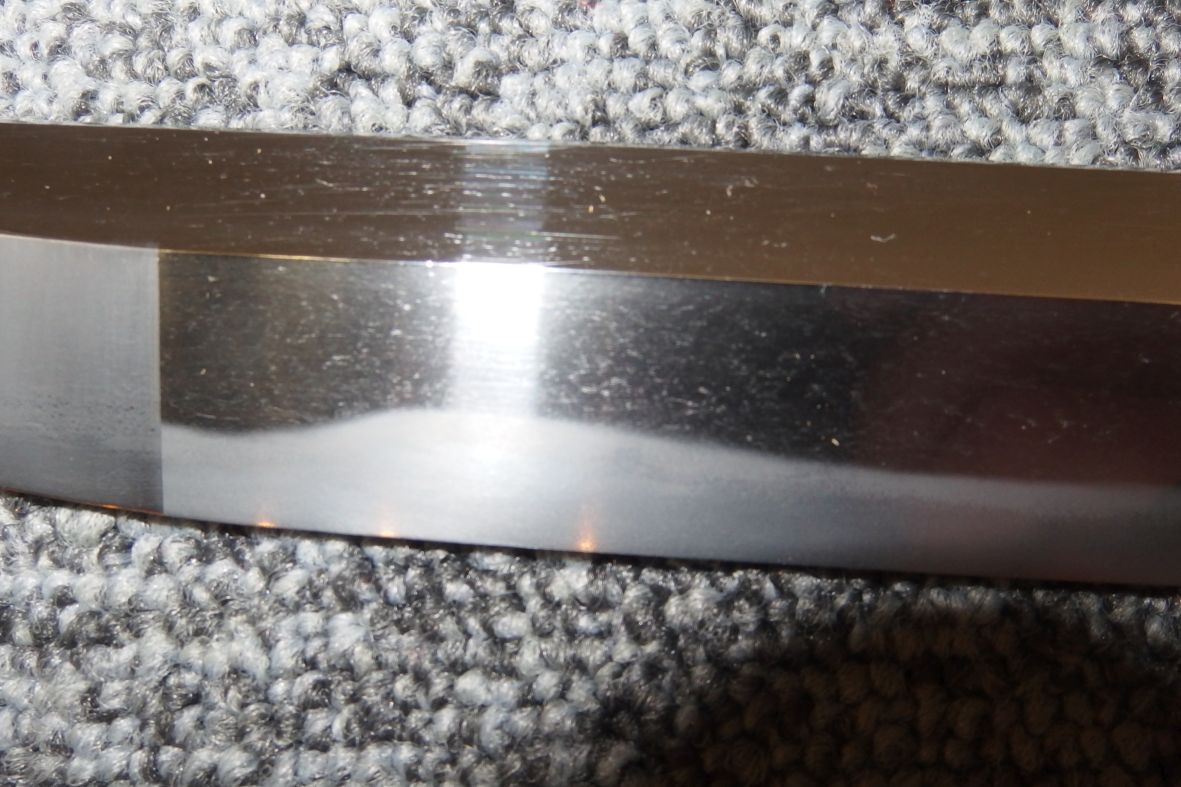
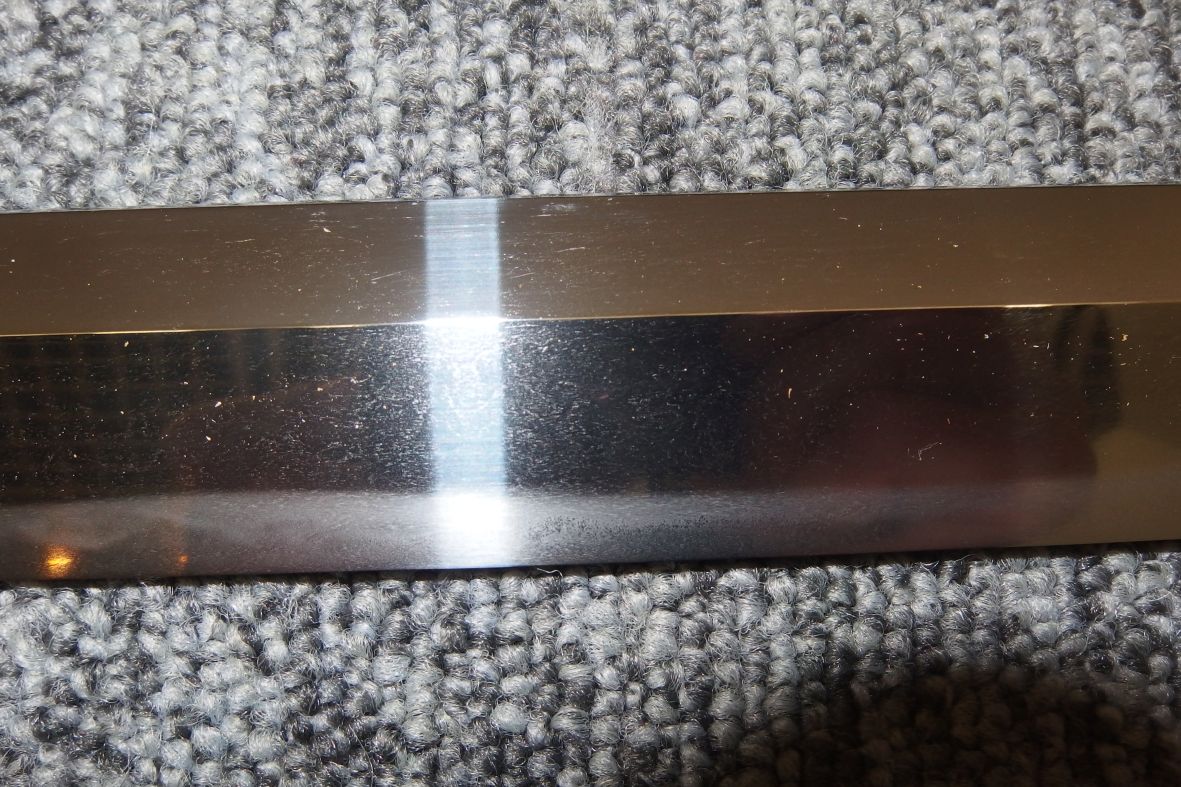
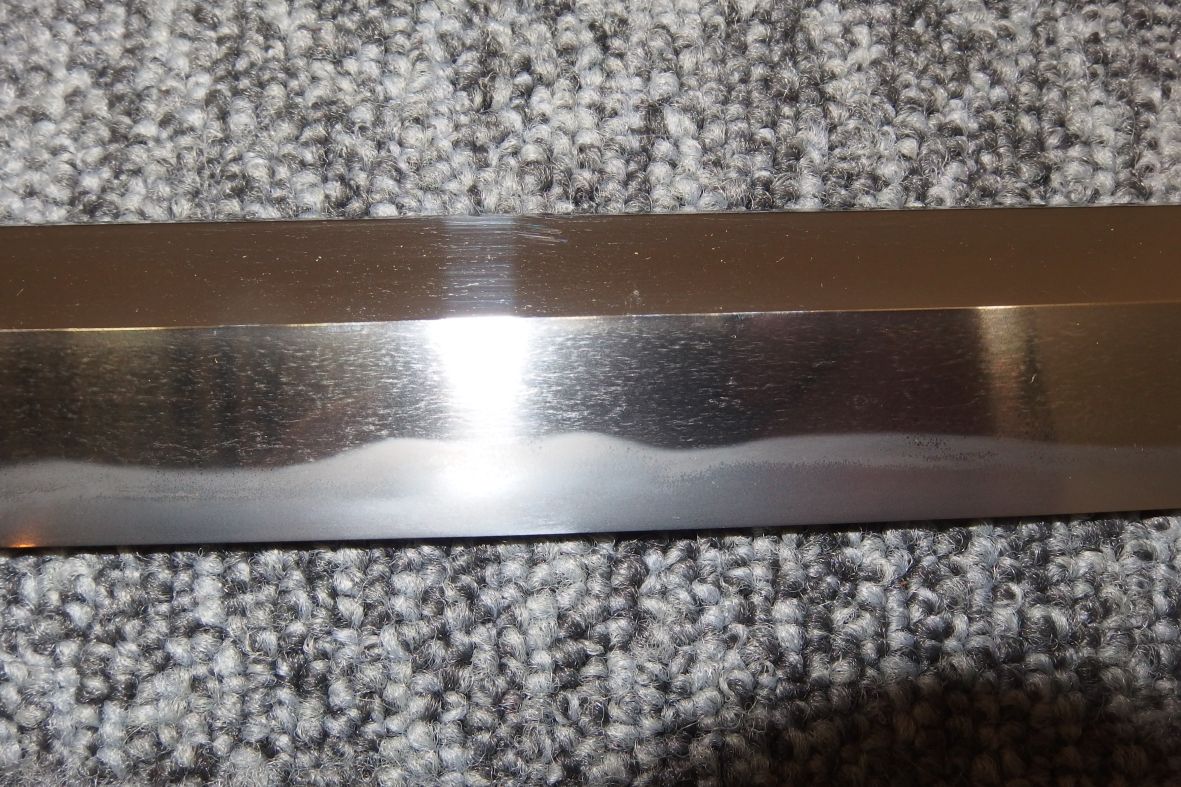
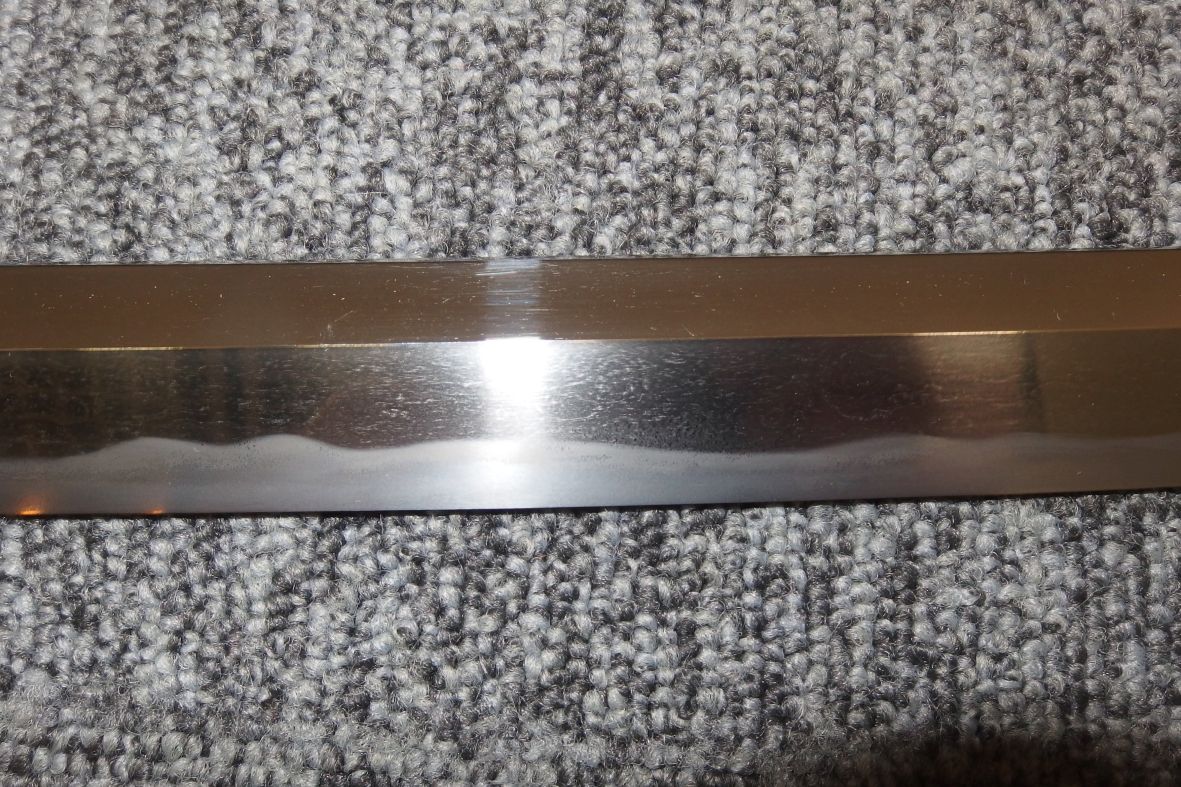
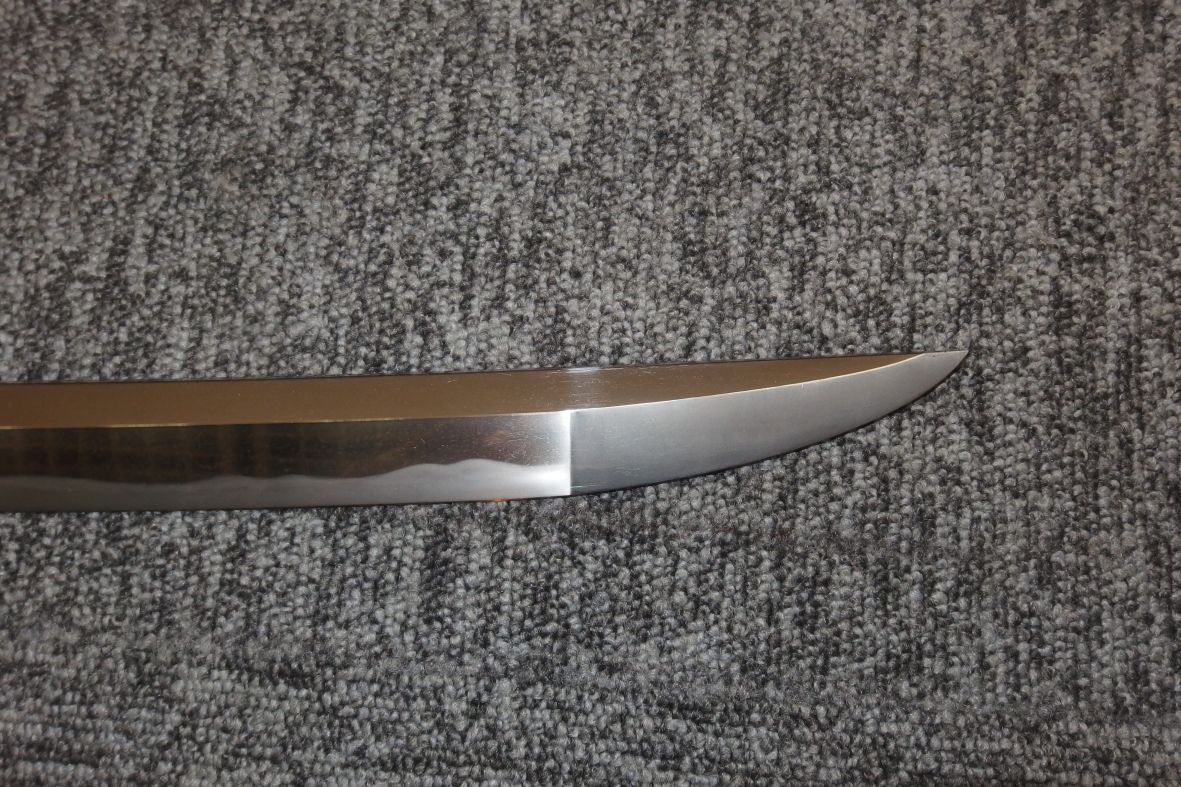
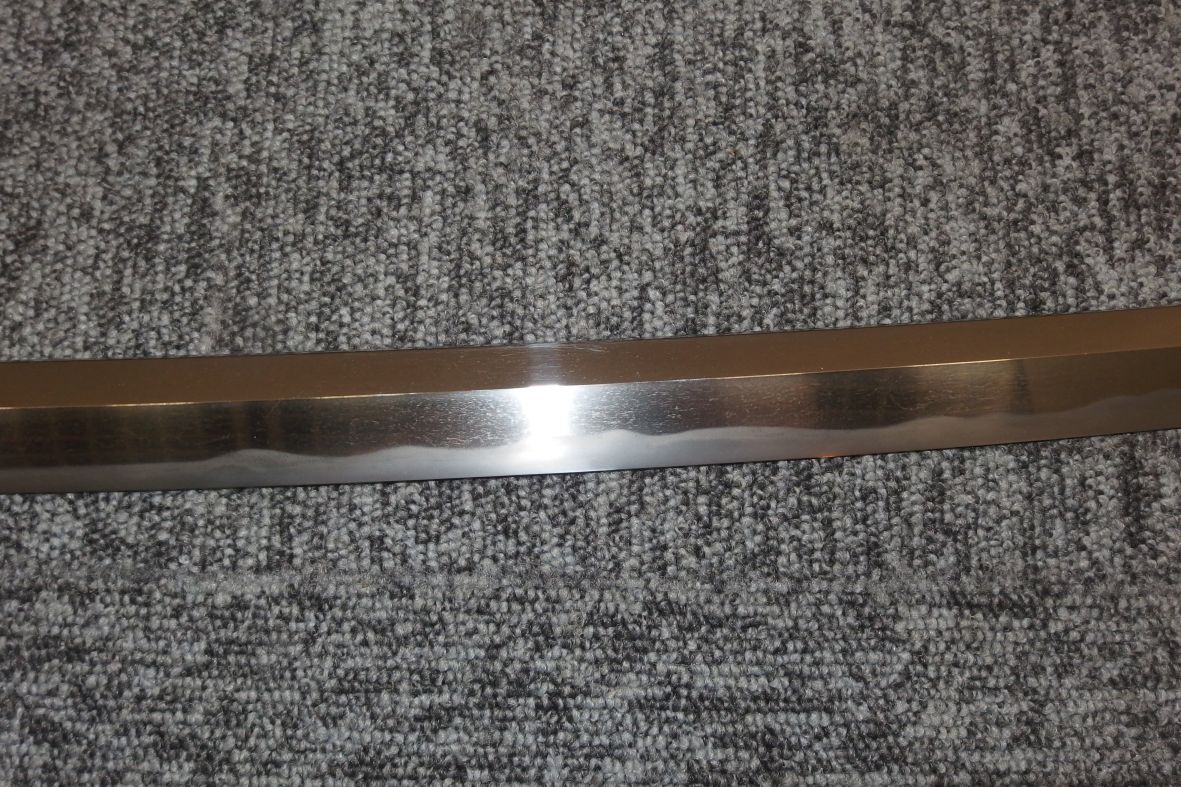
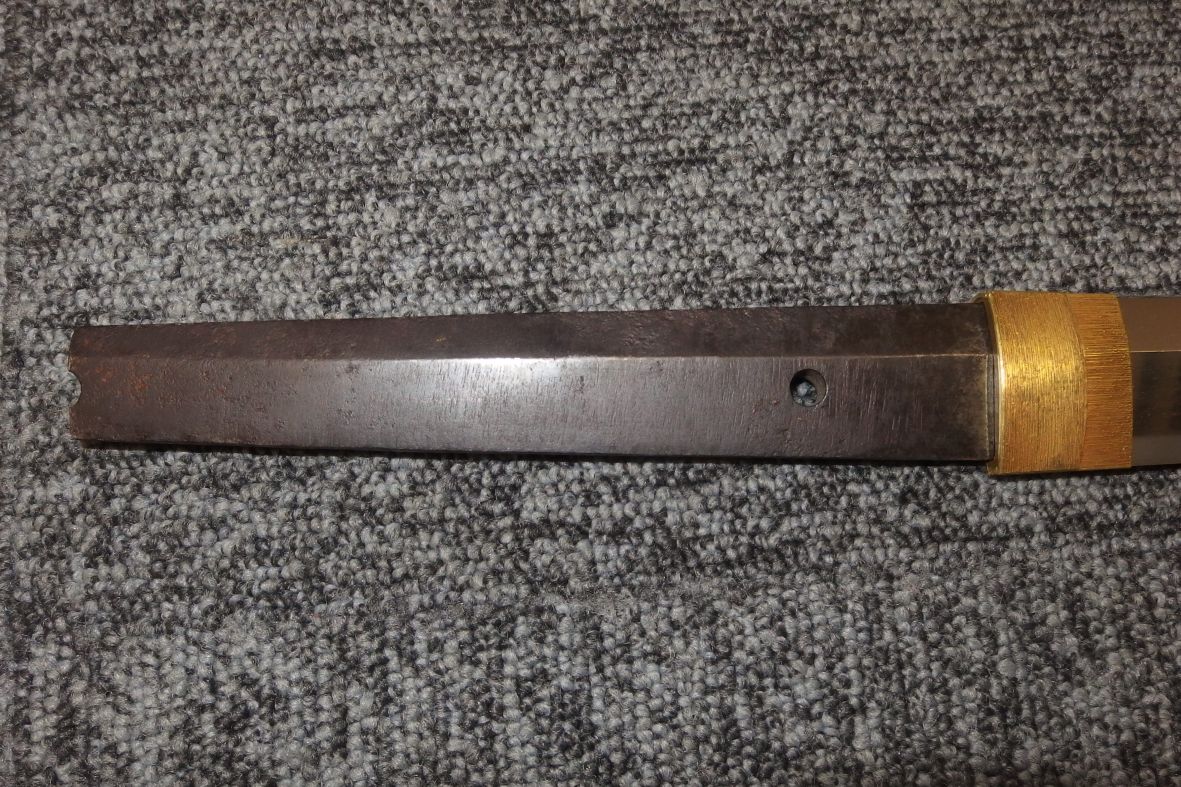
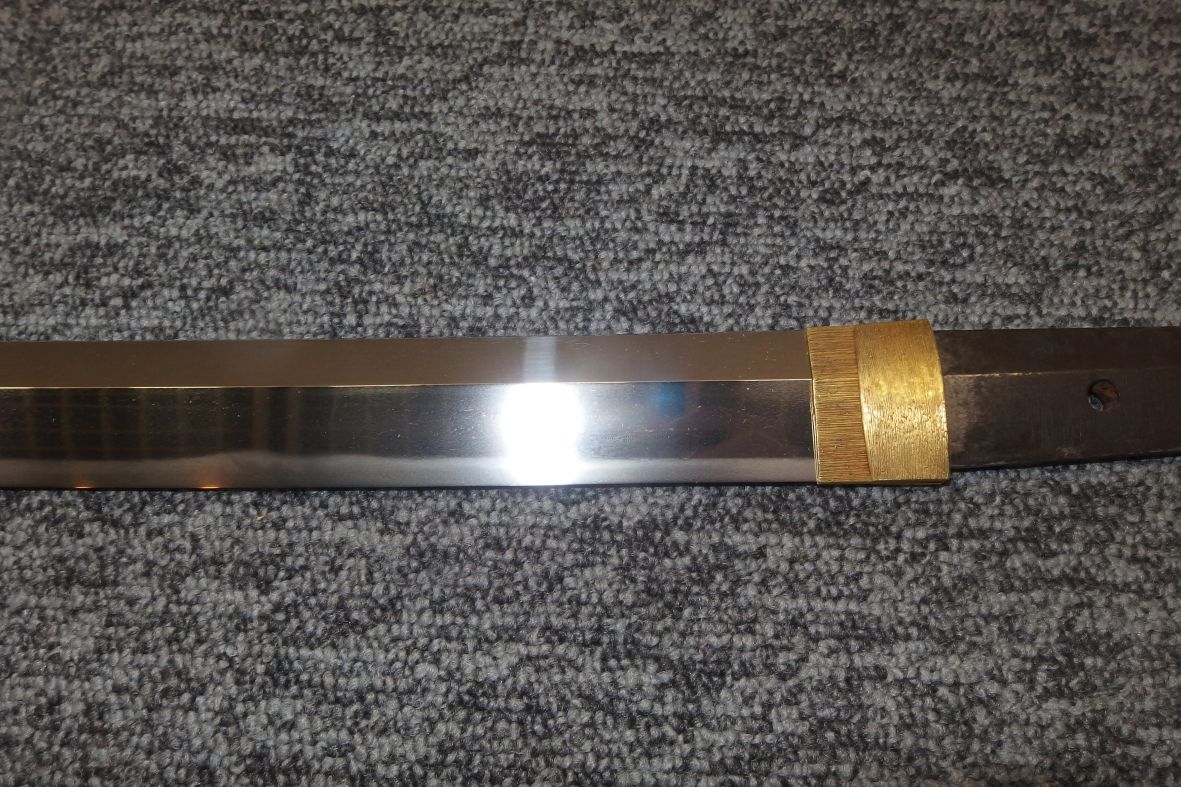
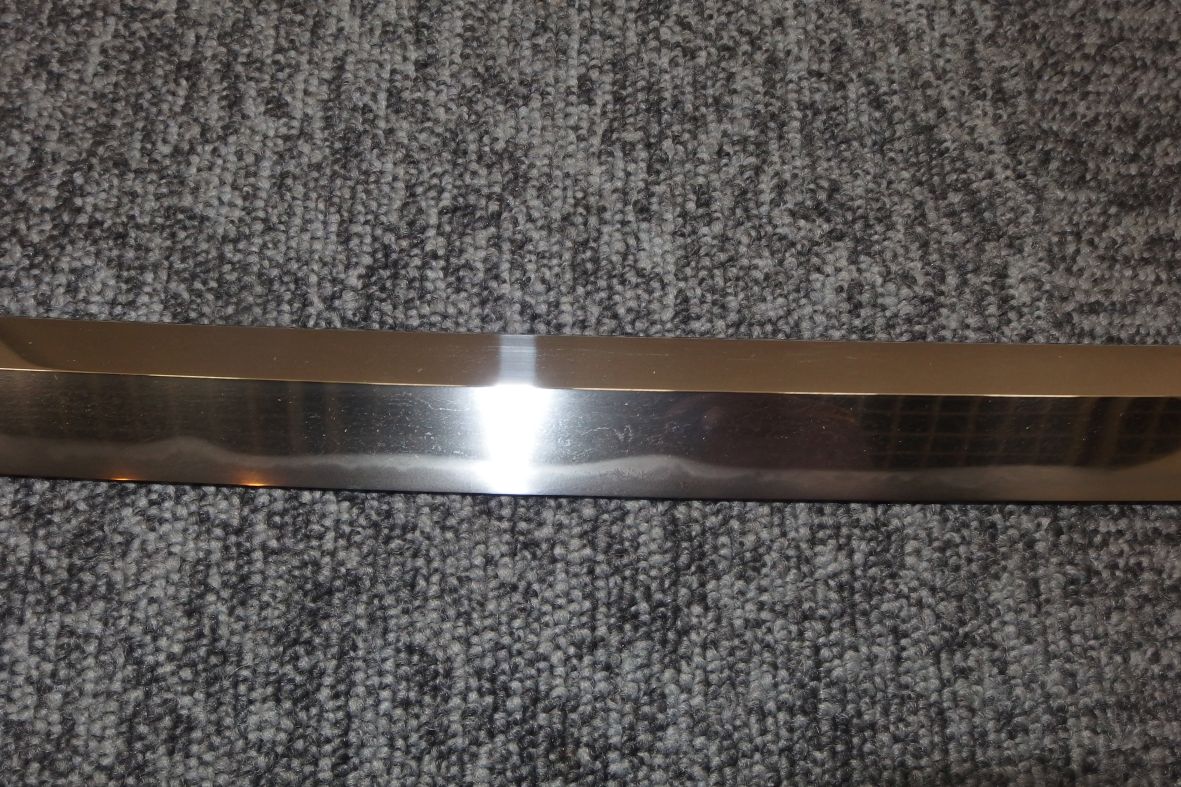
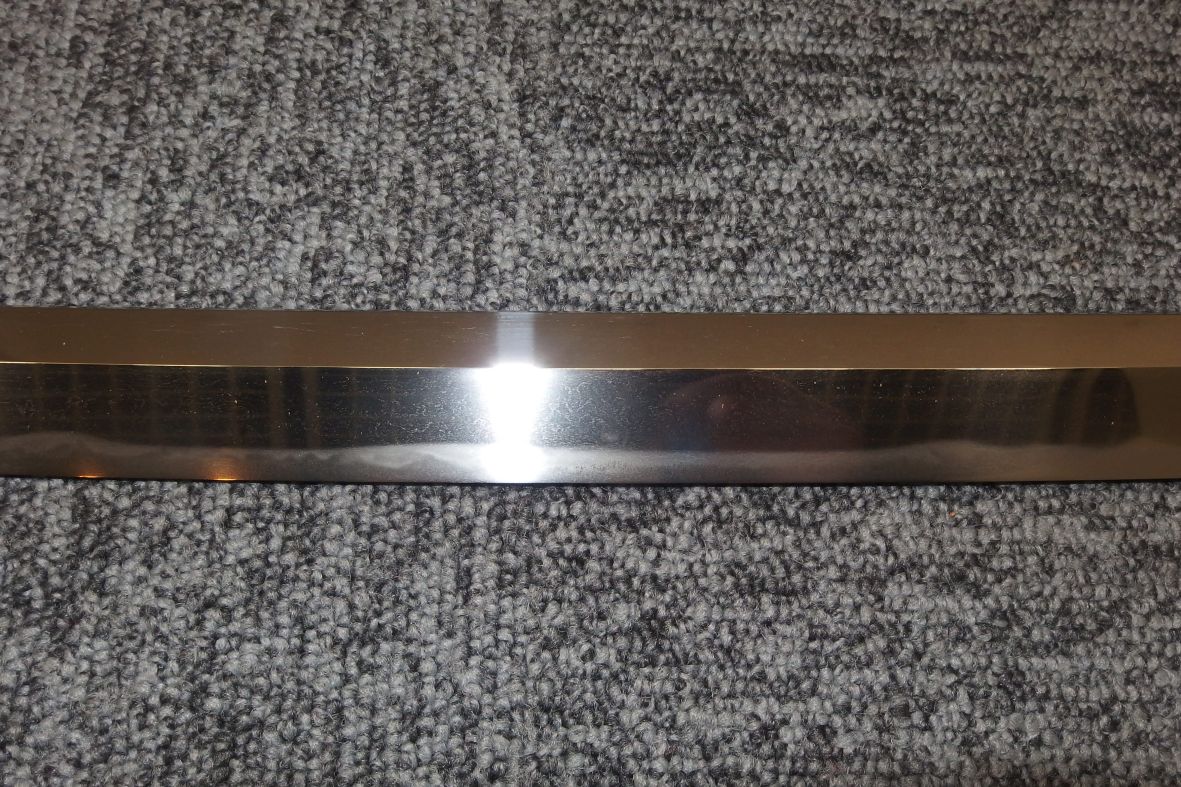
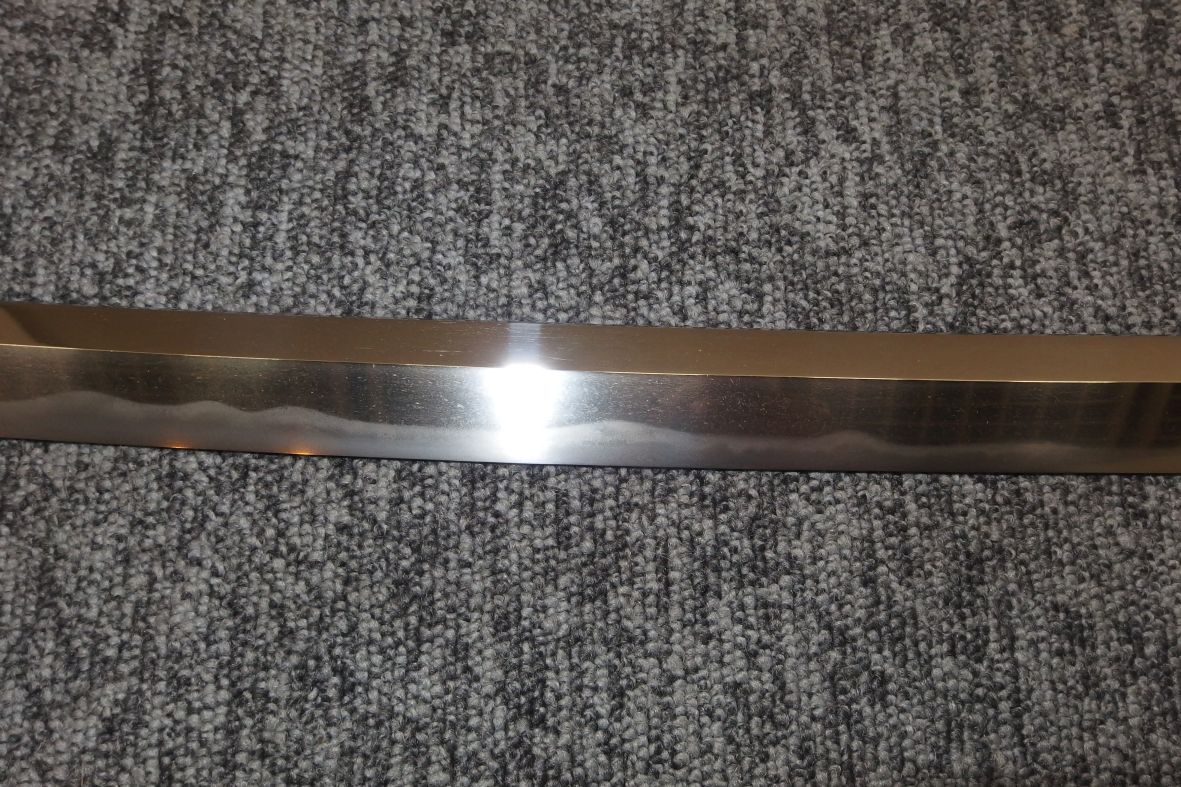
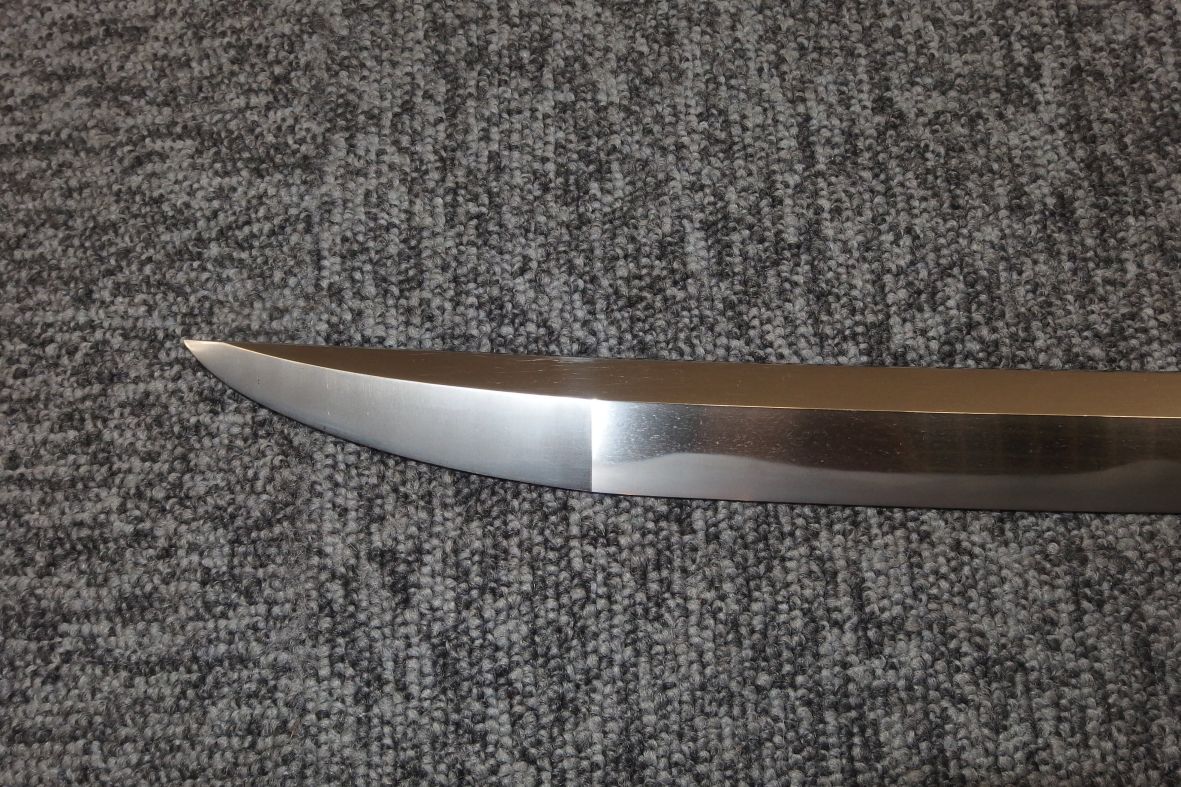
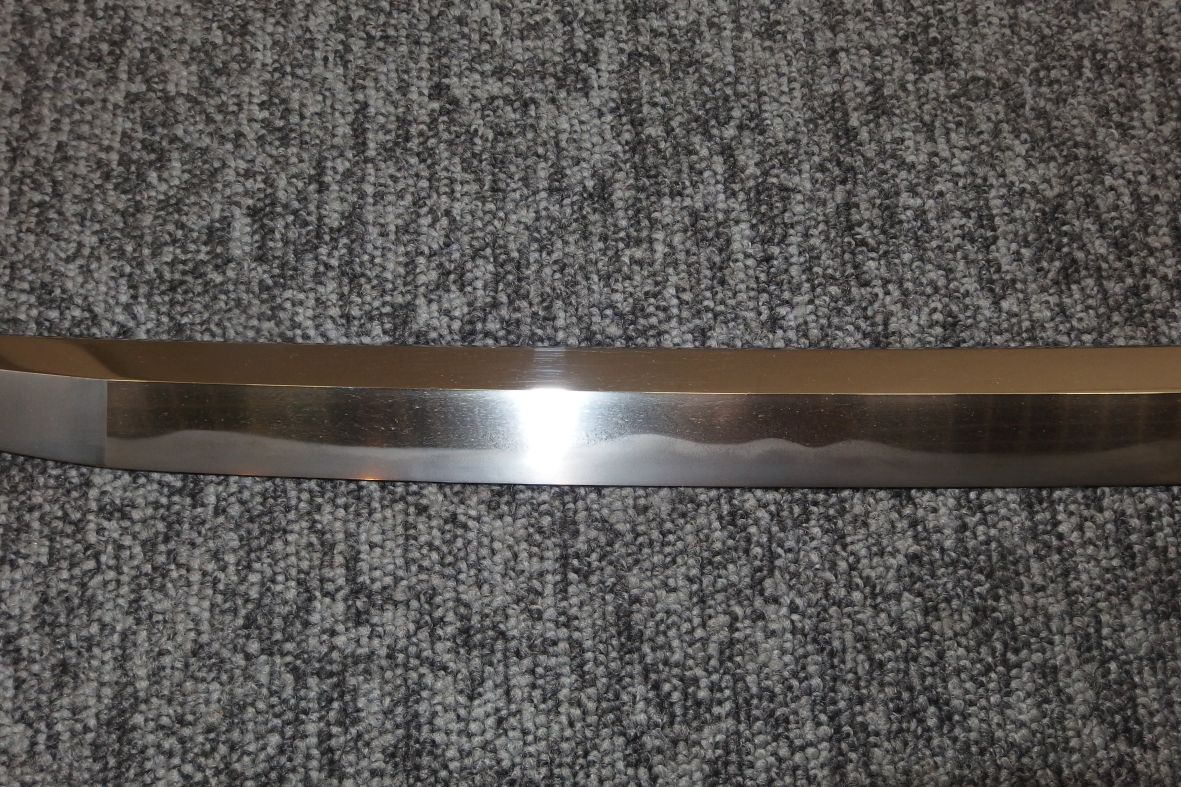
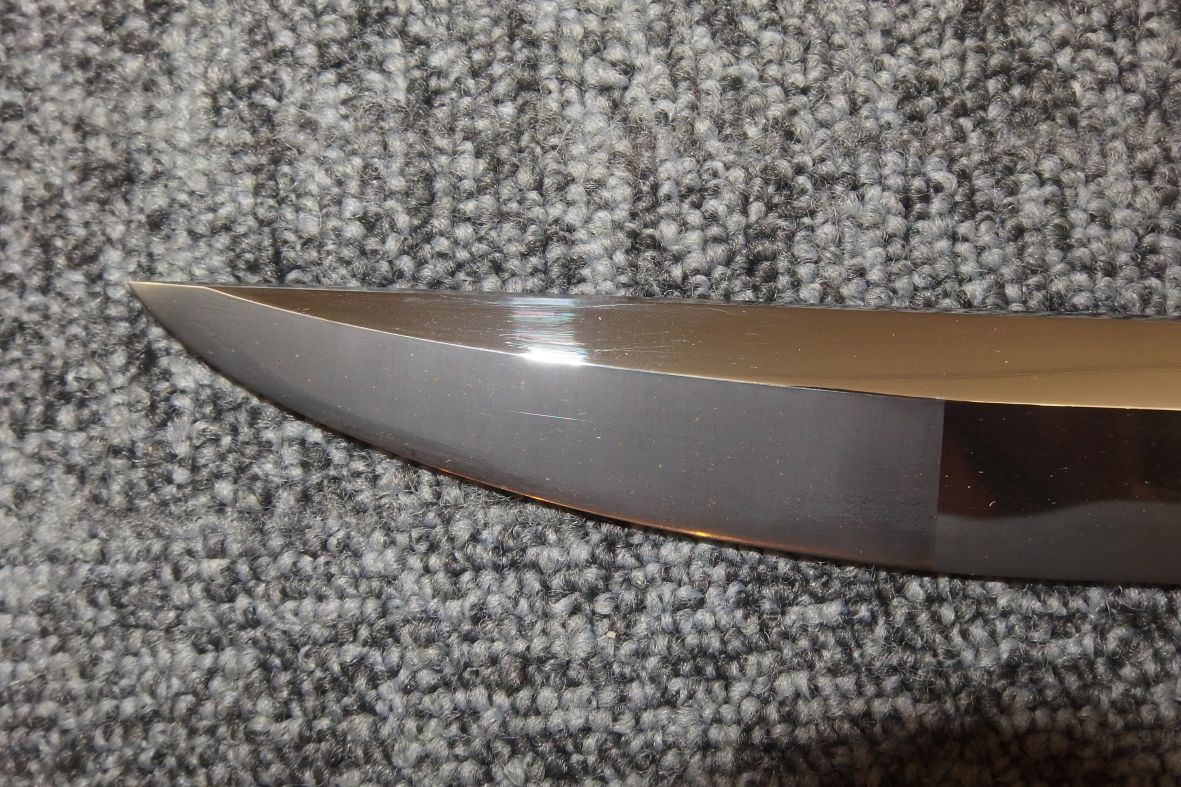
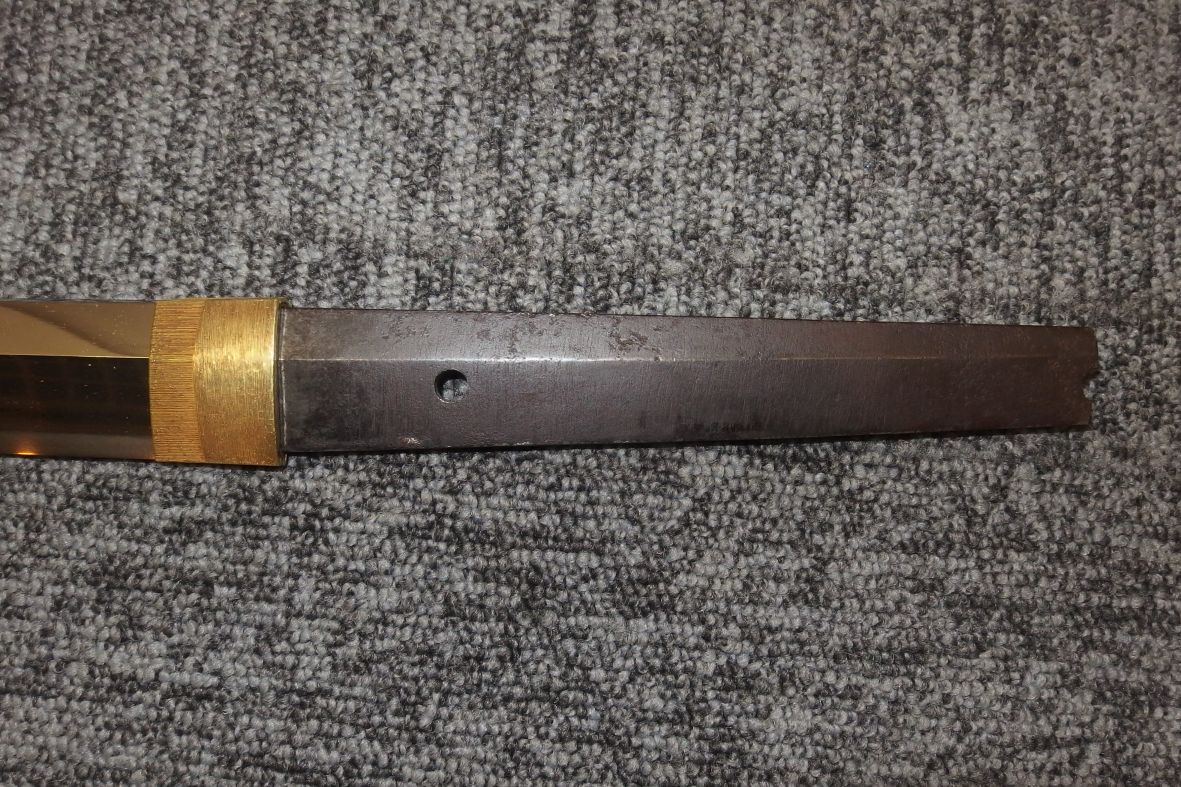
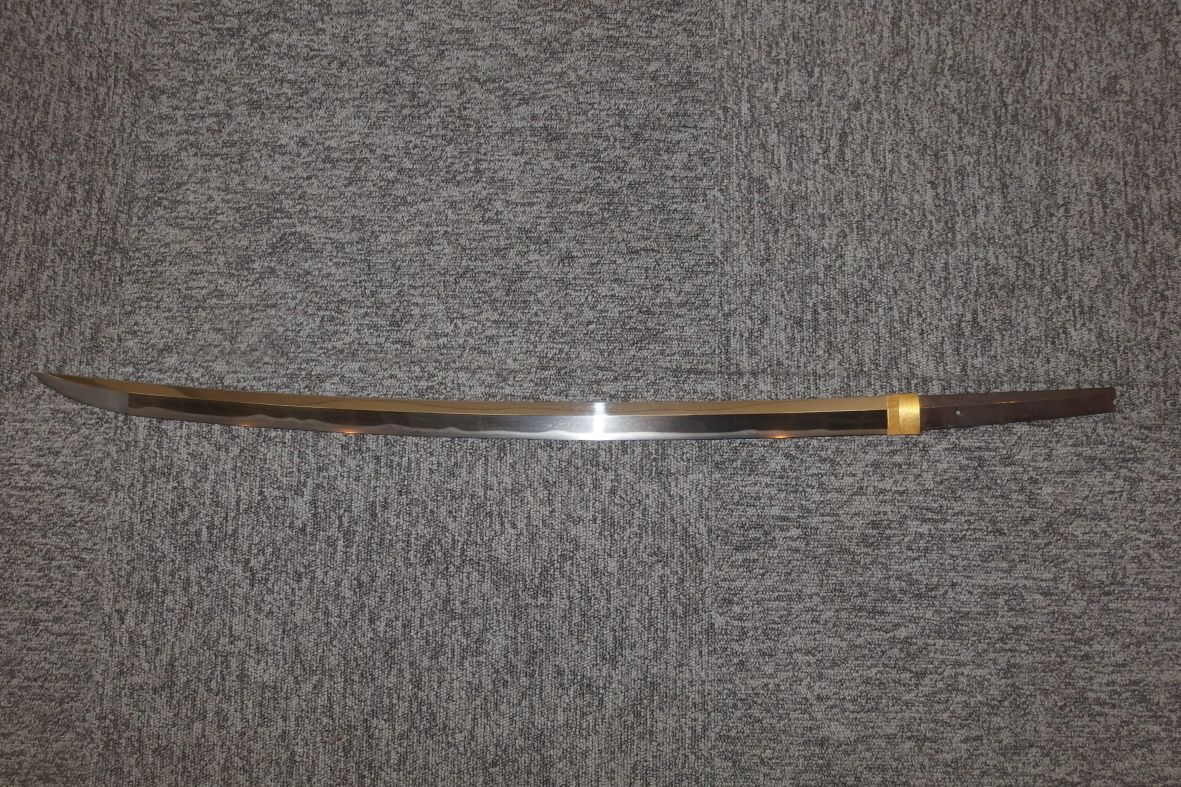
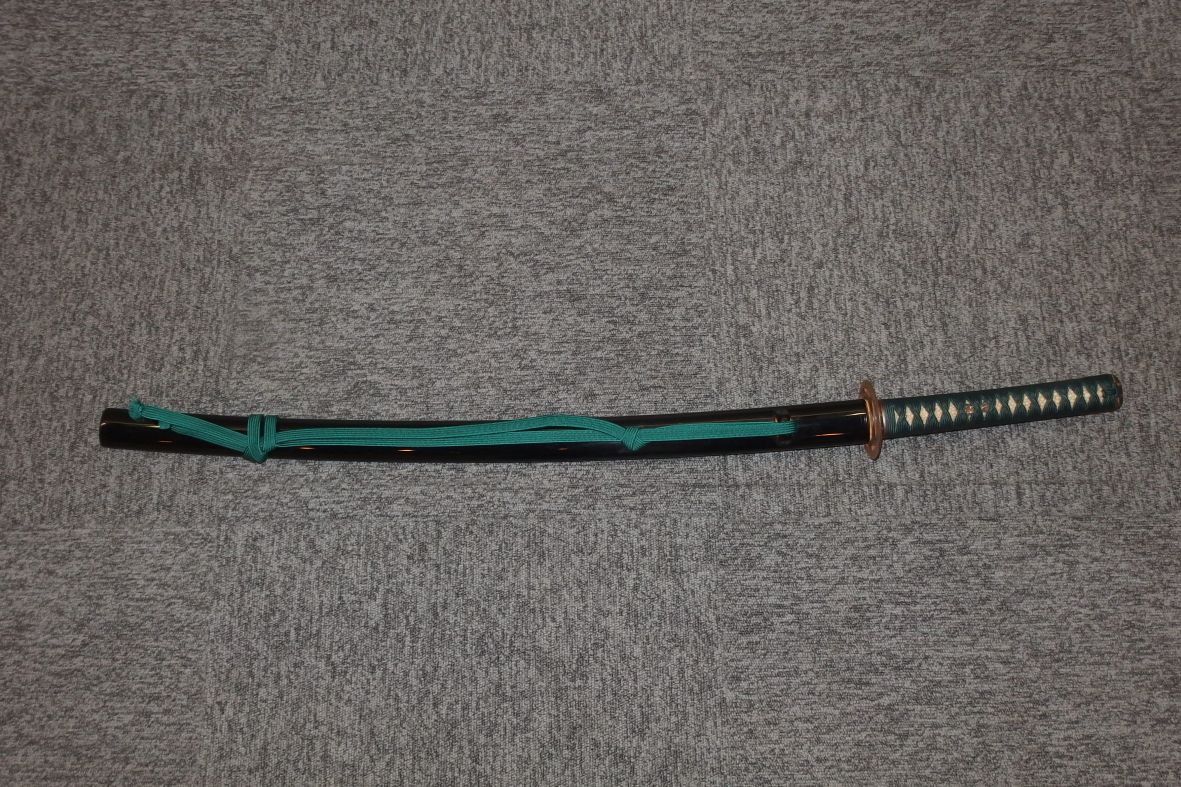
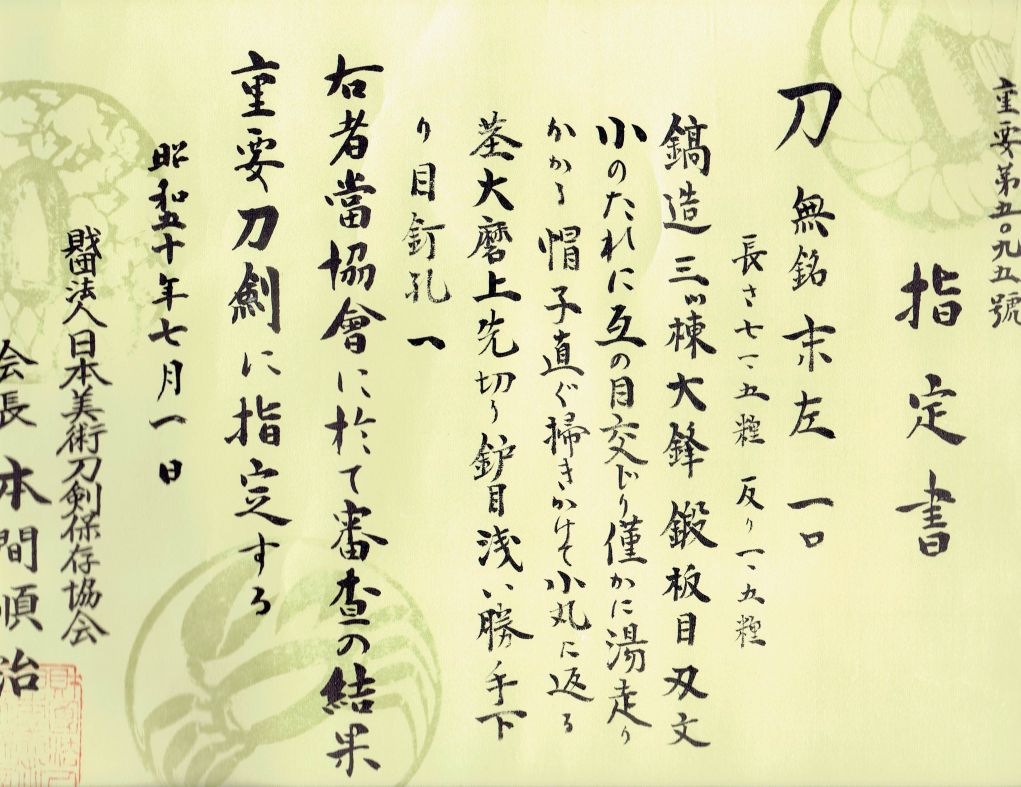
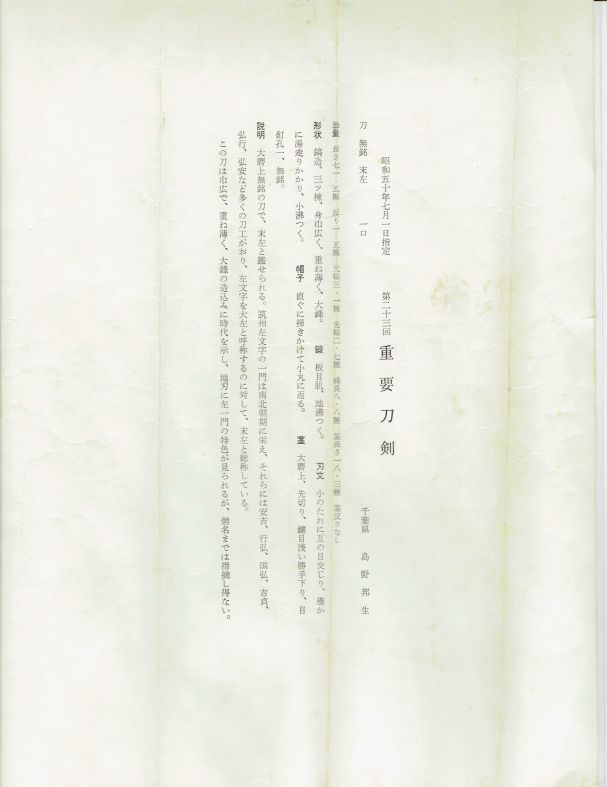
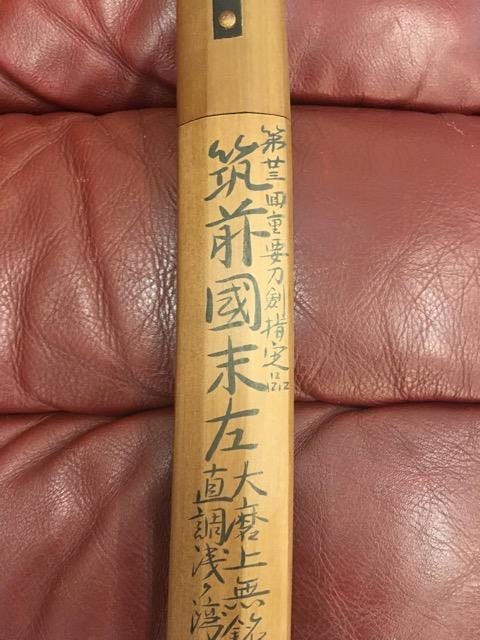
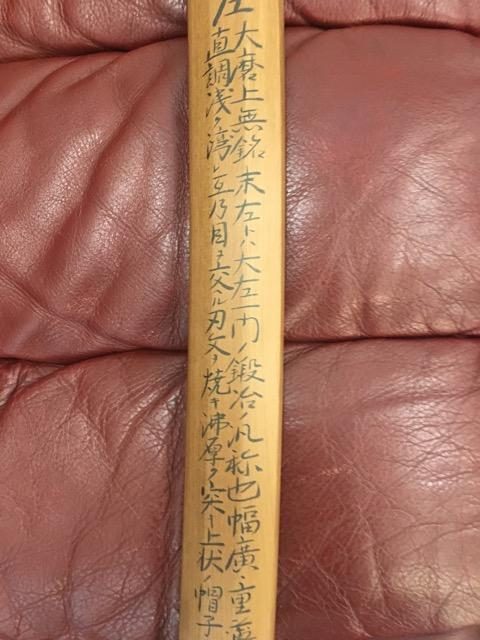
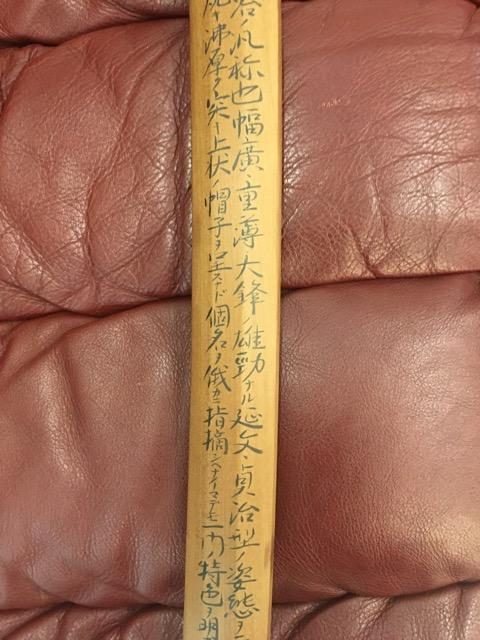
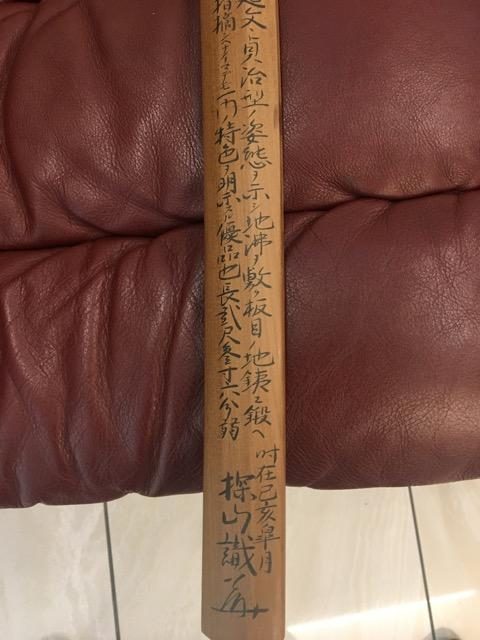
A blade of top-grade workmanship and condition, formally judged to rank with a nationally recognized Important Art Object (Jūyō Bijutsuhin). Awarded only at the NBTHK’s competitive annual examination.
Of Japan’s roughly 2.5 million registered swords, only 12,348 (about 1 in 202) have ever attained Jūyō.
The NBTHK (Nihon Bijutsu Tōken Hozon Kyōkai, the Society for the Preservation of Japanese Art Swords) is a public-interest incorporated foundation founded in 1948 and supervised by Japan’s Agency for Cultural Affairs (Bunkachō); it is based at the Japanese Sword Museum in Tokyo. Its expert panels physically examine each submitted work (shinsa) and issue a certificate (kanteishō) ranking it by artistic and historical merit. NBTHK papers are the most widely recognized standard of authentication for Japanese swords and fittings.
NBTHK official sitePrice on request