The curved, ridged tachi took its classic form in the Heian provinces while the court refined its culture in the capital. Its patrons were the military nobility whose feuds ended in the Genpei War, and whose blades became heirlooms almost at once.
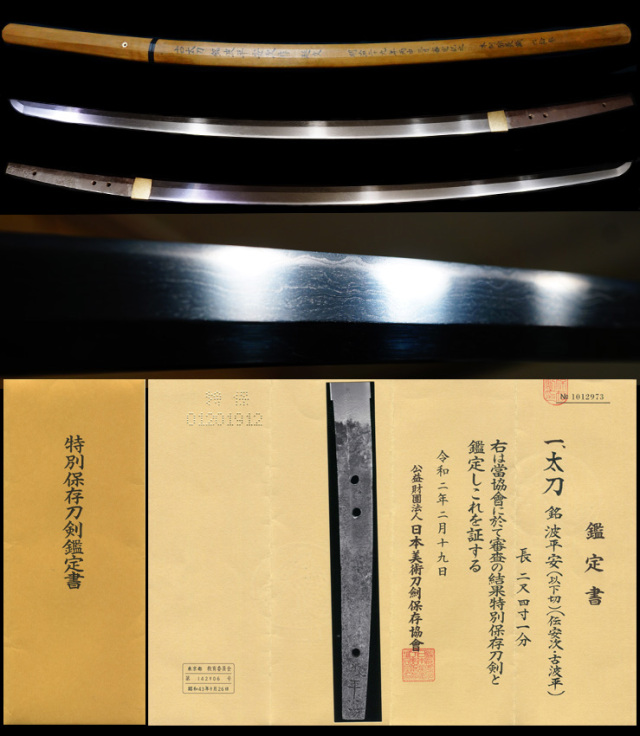
平安時代後期、正国が大和より薩摩国谷山郡波平の地に来住して波平派の祖となると伝えその子を行安といい、以後、その門流は新々刀期まで及びました。 希少な古波平の銘も残っており、協会からは平安時代から鎌倉時代として分類される古波平として極められております。 出来はいかにも上古刀の雰囲気ある素晴らしいもので、美しい反り姿で流動的な柾目を交えた見事な地肌で、古雅な作域が深みを帯びる名品であり、是非とも家宝にお加え下さい
Offered by Kusanagi
This piece has sold


As written by the shop
The Heian period (794 to 1185)
The curved, ridged tachi took its classic form in the Heian provinces while the court refined its culture in the capital. Its patrons were the military nobility whose feuds ended in the Genpei War, and whose blades became heirlooms almost at once.
A Hozon-certified blade judged to show notably superior workmanship and a better state of preservation. The bar is higher: re-tempered blades and most unsigned Muromachi/Edo works are excluded.
The NBTHK (Nihon Bijutsu Tōken Hozon Kyōkai, the Society for the Preservation of Japanese Art Swords) is a public-interest incorporated foundation founded in 1948 and supervised by Japan’s Agency for Cultural Affairs (Bunkachō); it is based at the Japanese Sword Museum in Tokyo. Its expert panels physically examine each submitted work (shinsa) and issue a certificate (kanteishō) ranking it by artistic and historical merit. NBTHK papers are the most widely recognized standard of authentication for Japanese swords and fittings.
NBTHK official sitePlease notify us of your intention to return, by email or fax, no later than the day after the item's arrival. Return shipping, insurance, and refund transfer fees are the customer's responsibility.