Edo was the sword’s age of connoisseurship: the Hon’ami appraisers, the shogunal register of famous blades of 1719, and a thriving literature turned the sword into an object of study even as it ceased to be drawn in war.
 NihontoWatchNihontoWatch
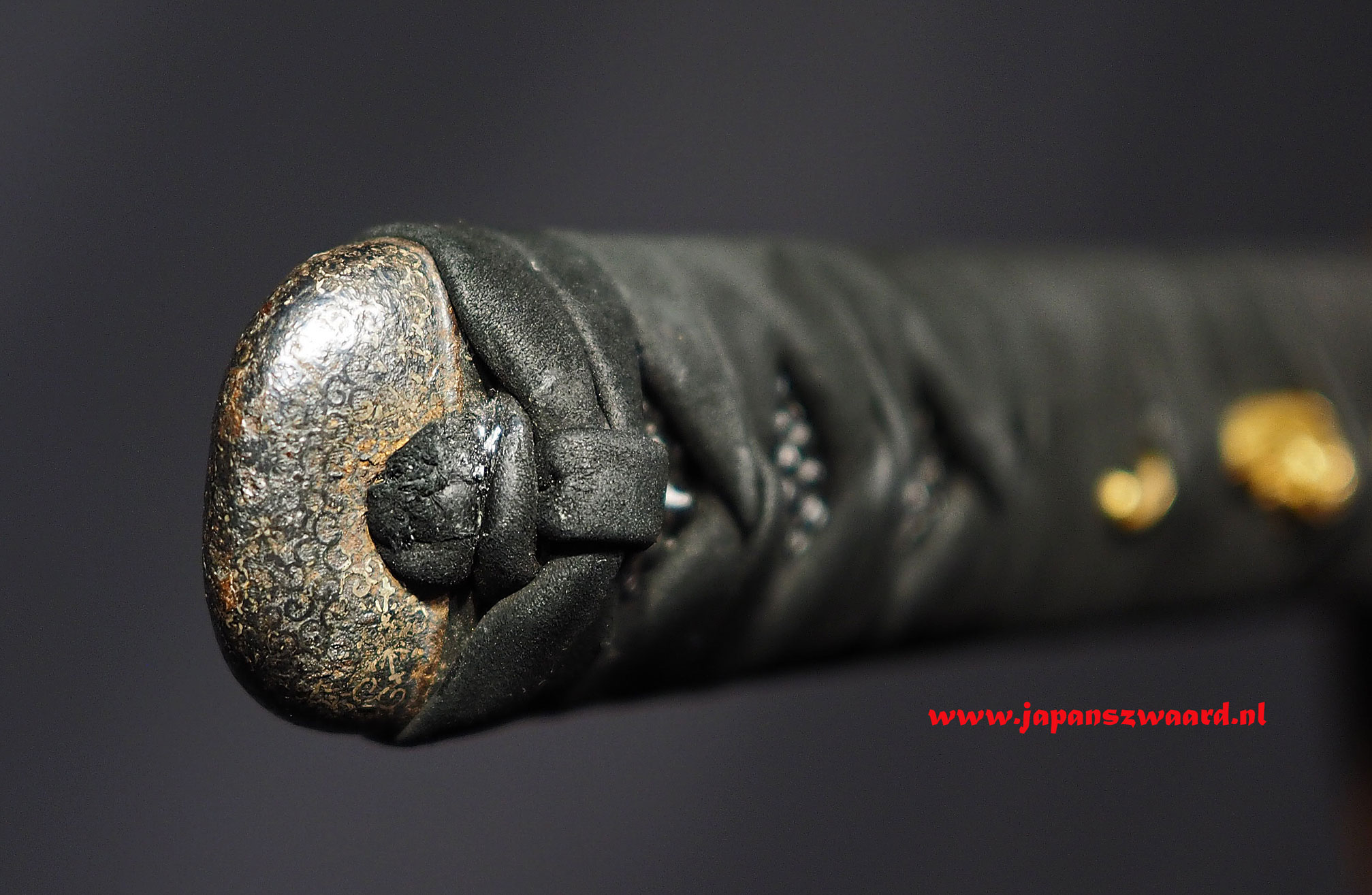
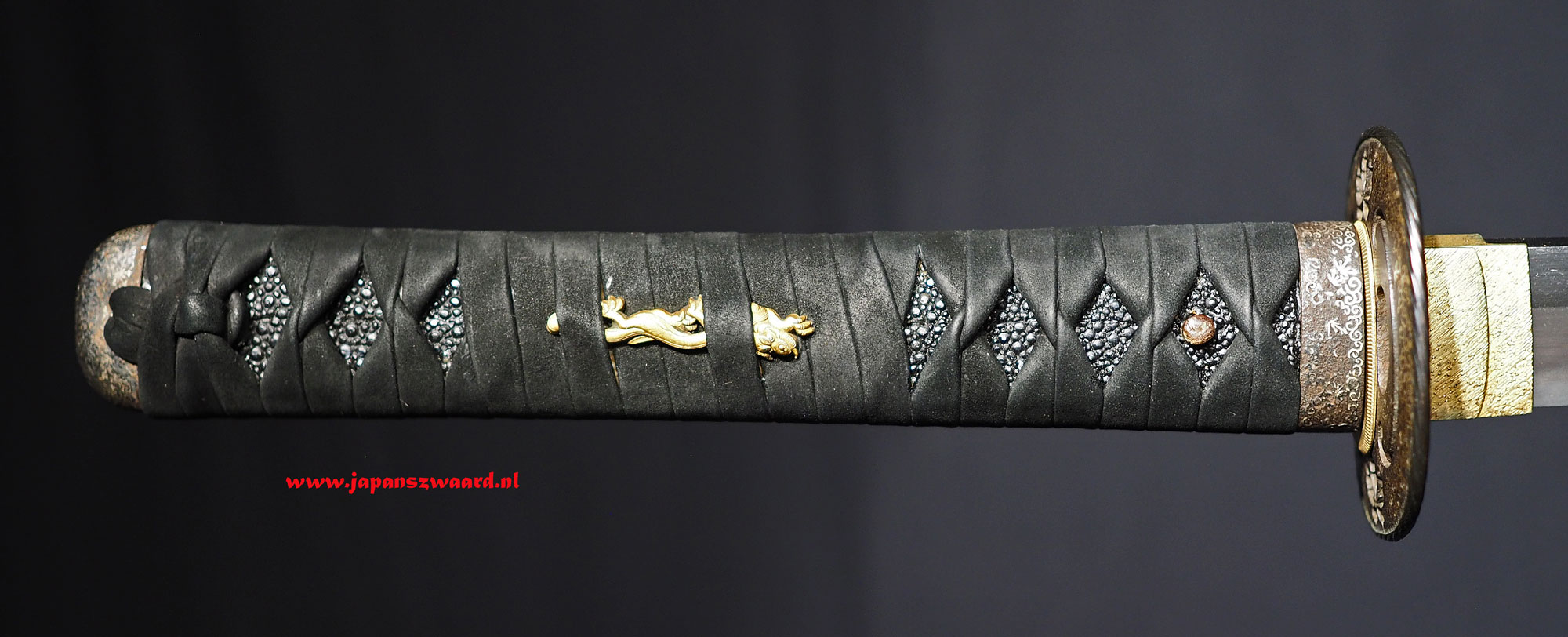
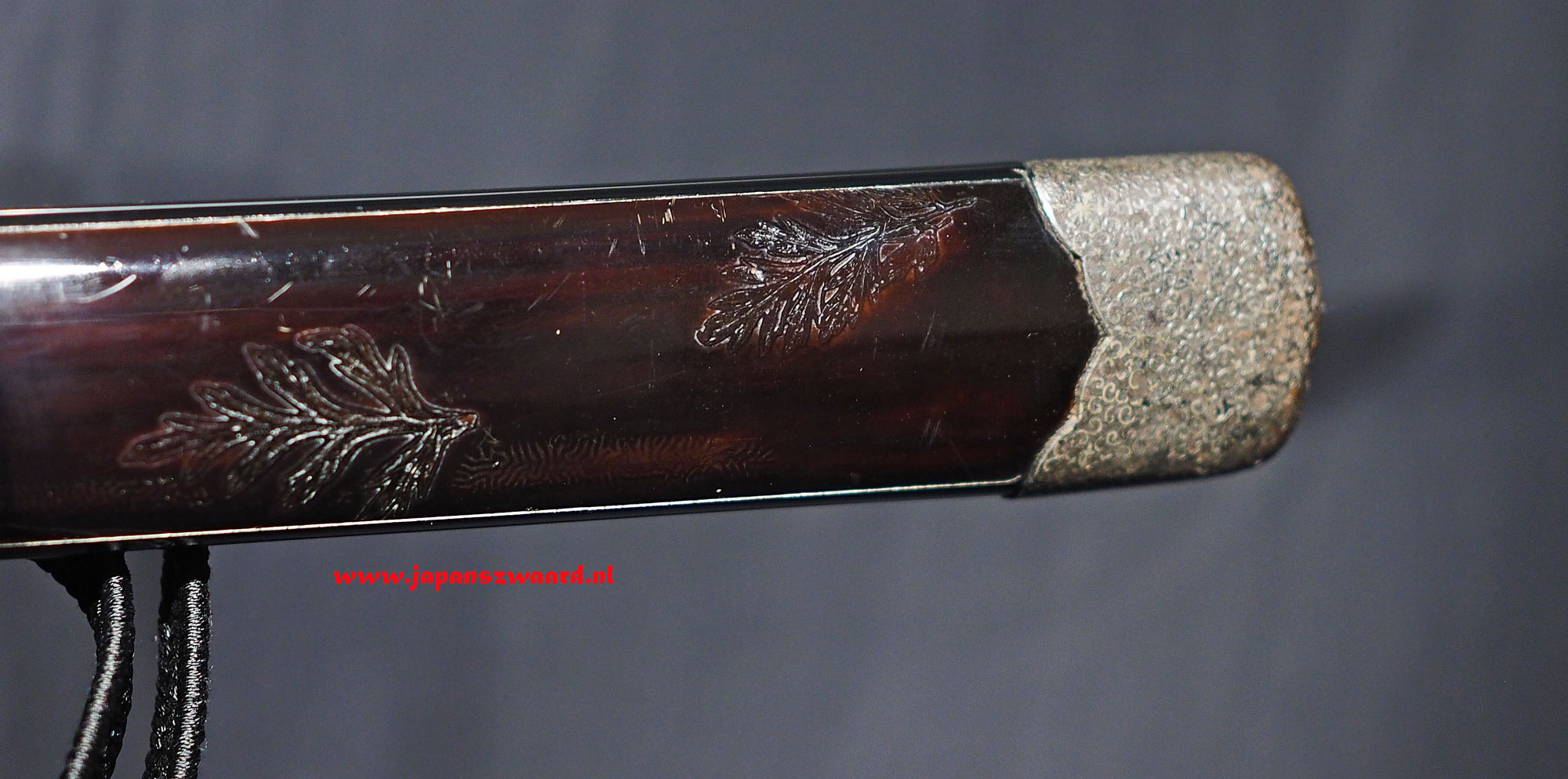
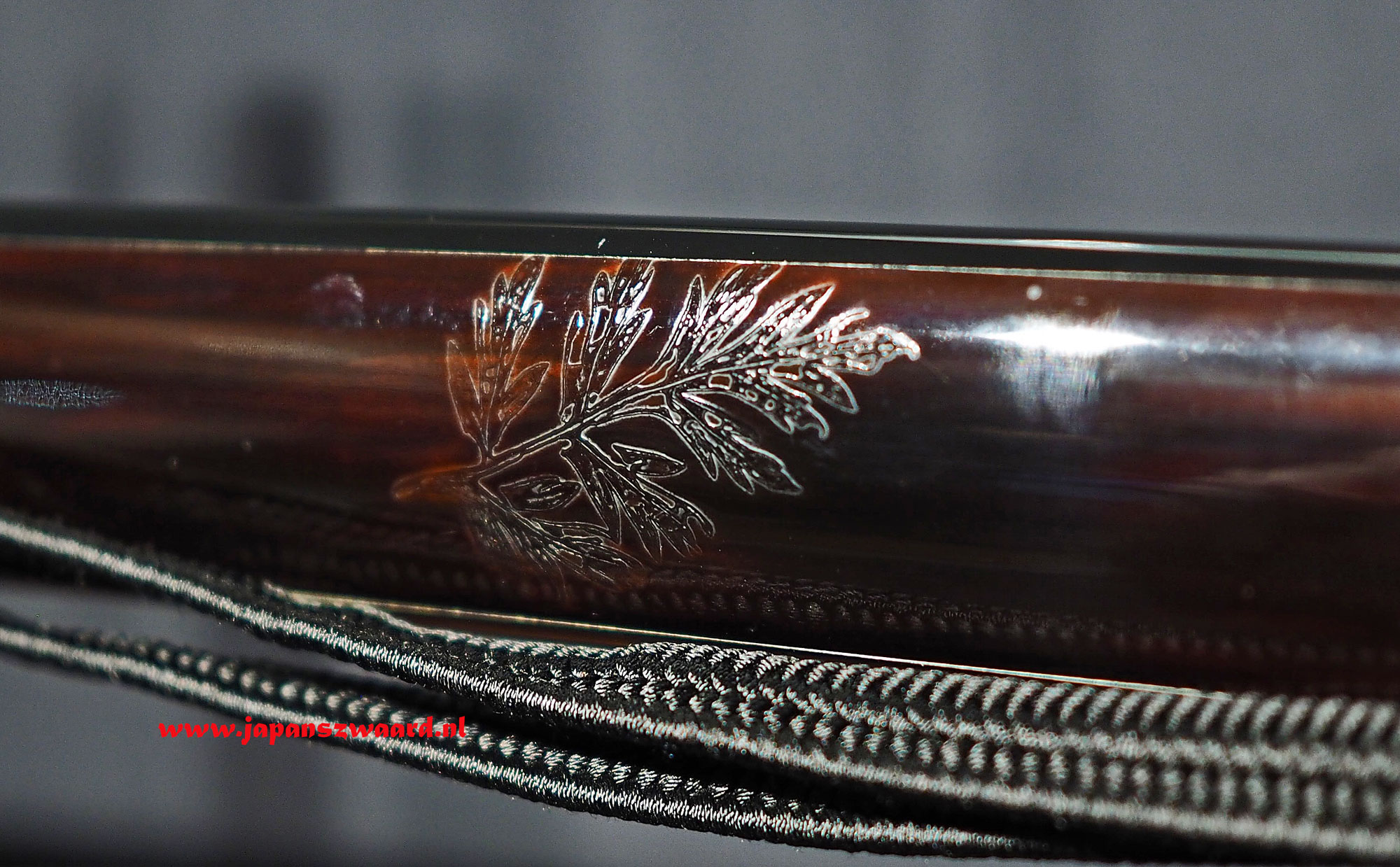
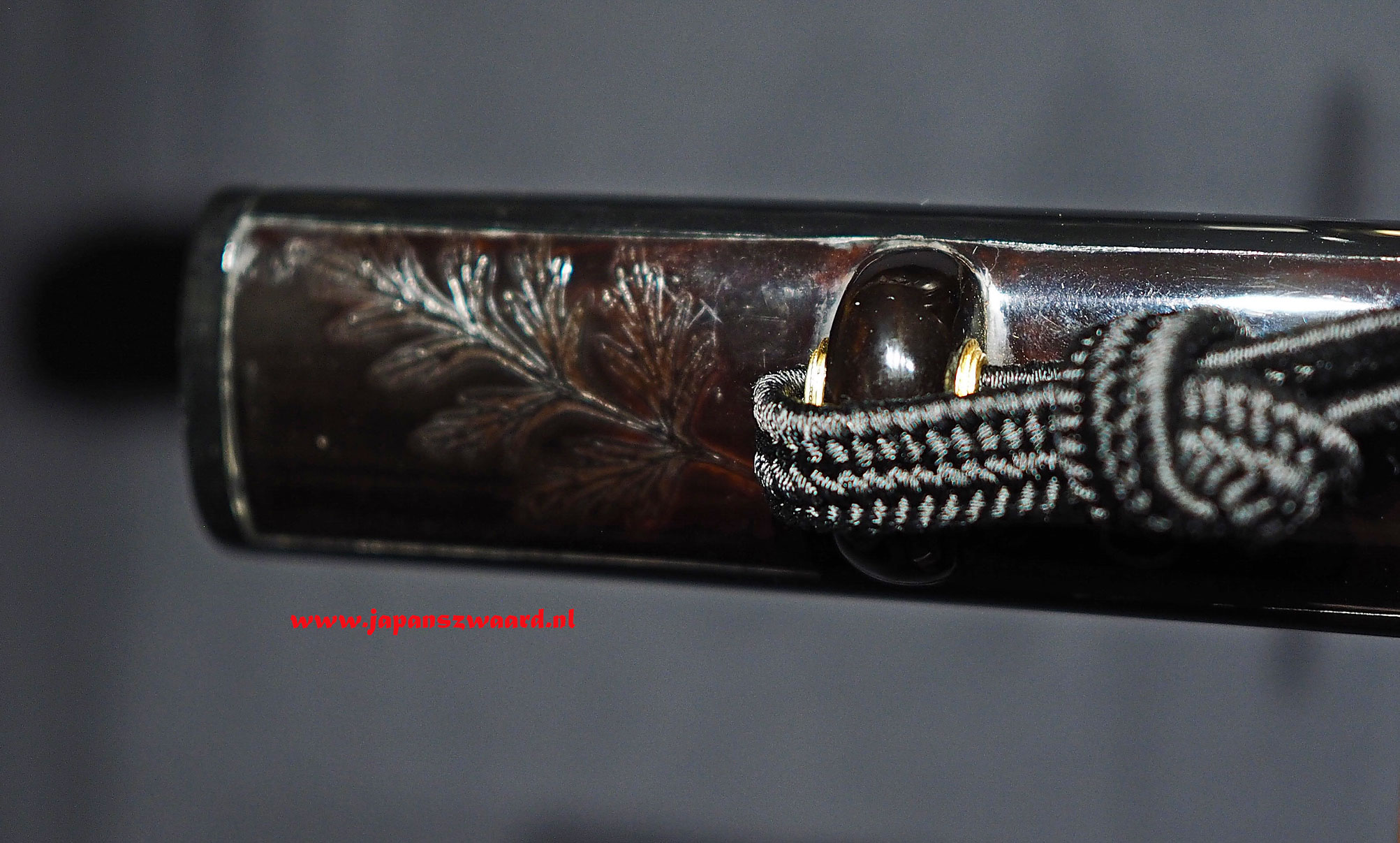
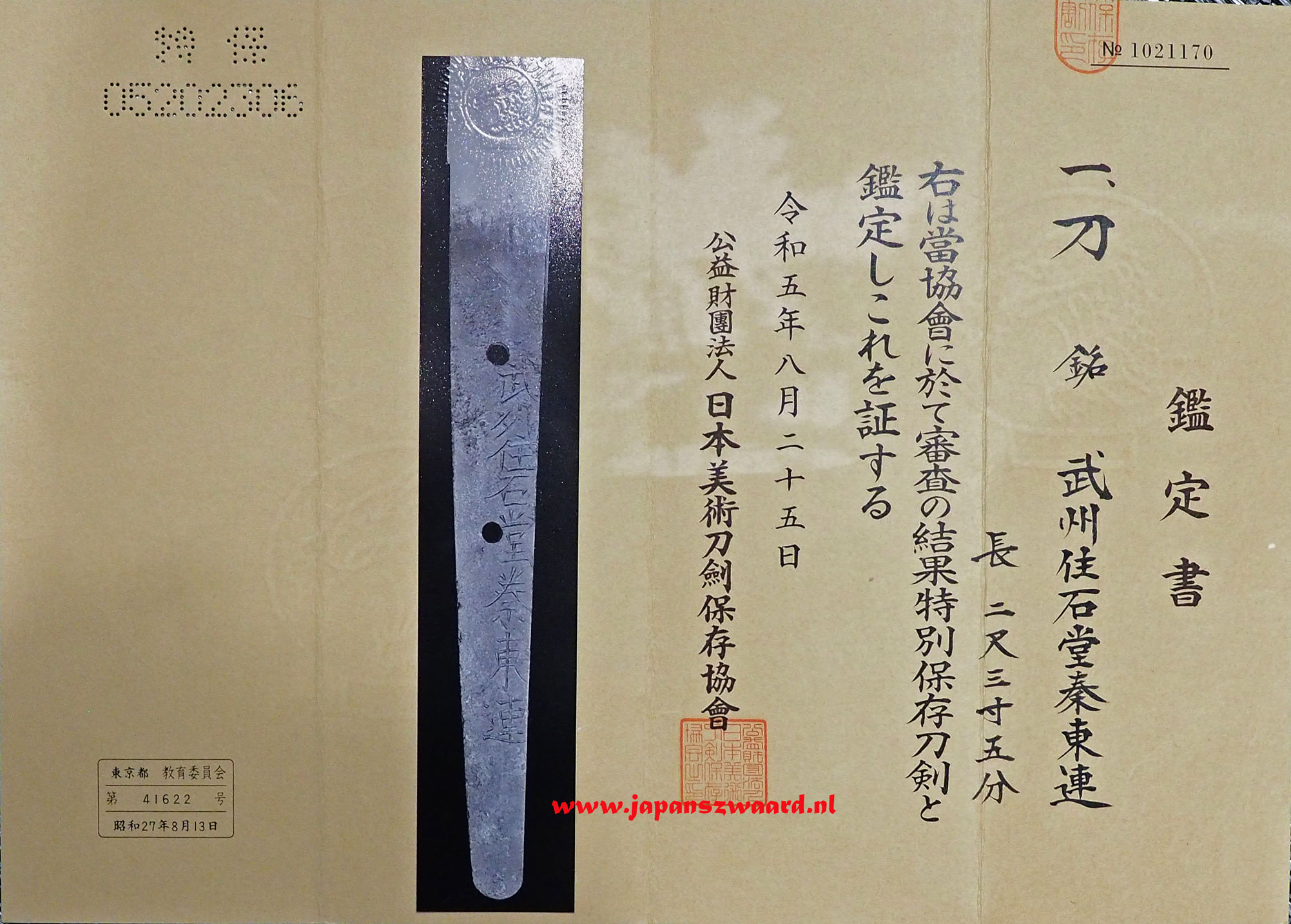
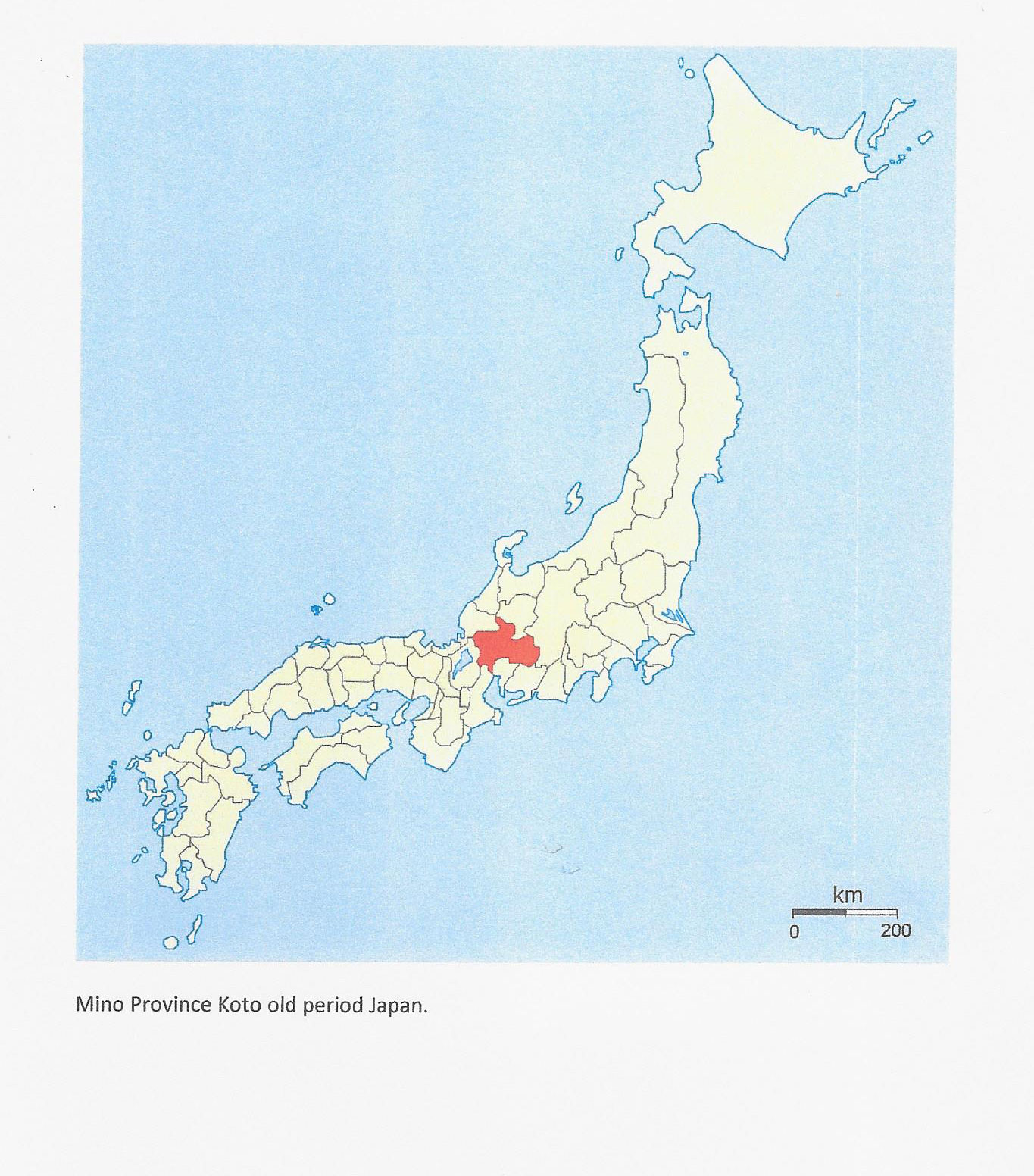
Dit is een authentiek Nihonto Japans Samurai zwaard. Een gesigneerde Kanbun Shinto periode Katana ( ca. 1660-1670 ) in een zeer goede polijsting met NBTHK TOKUBETSU HOZON certificaat. Gesigneerd ; Bushú ju Ishidó Hata MORIHISA, ( 1e Generatie ) uit de MUSASHI provincie met zeer fraaie Koshirae. Deze lange katana is elegant met een zeer levendige Hamon als een Osaka Shinto Hamon met veel activiteiten , Morihisa was werkzaam rond de Kanbun periode (1645-1670). De smid Morihisa kan worden ingedeeld tot de Chu-Jyosaku klasse ( boven gemiddeld ) en maakte Wazamono scherpe zwaarden. Toren Morihisa gebruikte ook de naam YAZAEMON en was werkzaam aan de Ishido school in Edo en kwam oorspronkelijk uit de provincie MINO. Op latere leeftijd werd hij monnik en veranderde zijn naam in TOREN. In de Hawley krijgt hij 15 punten ( MOR 67 ). Deze kling is zeer recht, wat met name door de Kanbun Shinto periode komt, door een nieuwe vechttechniek, waar men ook probeerde elkaar te steken, wat beter gaat met een rechte kling dan een kling met veel kromming. Deze kling is ca. 6cm Machiukuri , iets ingekort met 2 Mekugi-ana en heeft geen smeed fouten of beschadigingen. De katana heeft een active Gunome Midare / Choji Midare Hamon in Nioikuchi met Nie, de Jihada is een Ko-Itame met Jinie als van de Osaka Shinto Jigane. De Habaki is een 2 delige met een goud folie omwikkeld in hoogwaardige kwaliteit. De Koshirae is van zeer goede kwaliteit waarbij de Saya is zwart/donker bruin Uruchi lak gemaakt met diverse afdrukken van bladeren in de lak. De Tsuka is met een goede zwarte geruwde leder wikkeling en zwart geverfde Same/Roggehuid omwikkeld. De Fuchi & Kashira en Kojiri zijn van ijzer met zilver draad ingelegd, ook de Tsuba is uit ijzer met goud draad ingelegd en 2 Kiri-mons, denkelijk van de HIGO School, met Menuki als Draken uit Shakudo en verguld. Een bijzonder goed gesmede kling van Morihisa met een koshirae in super goede conditie.
NihontoWatchMorihisa守久
Offered by Japanszwaard

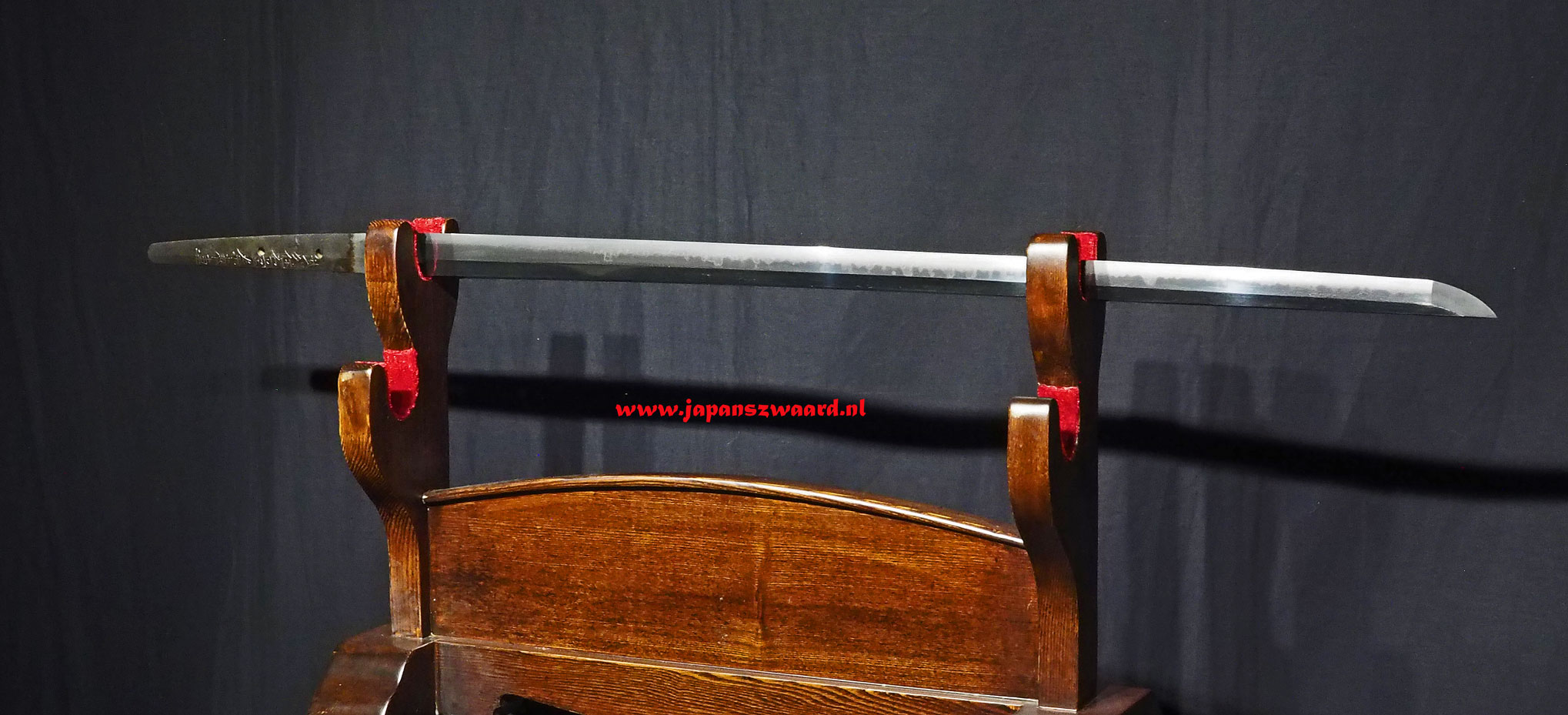
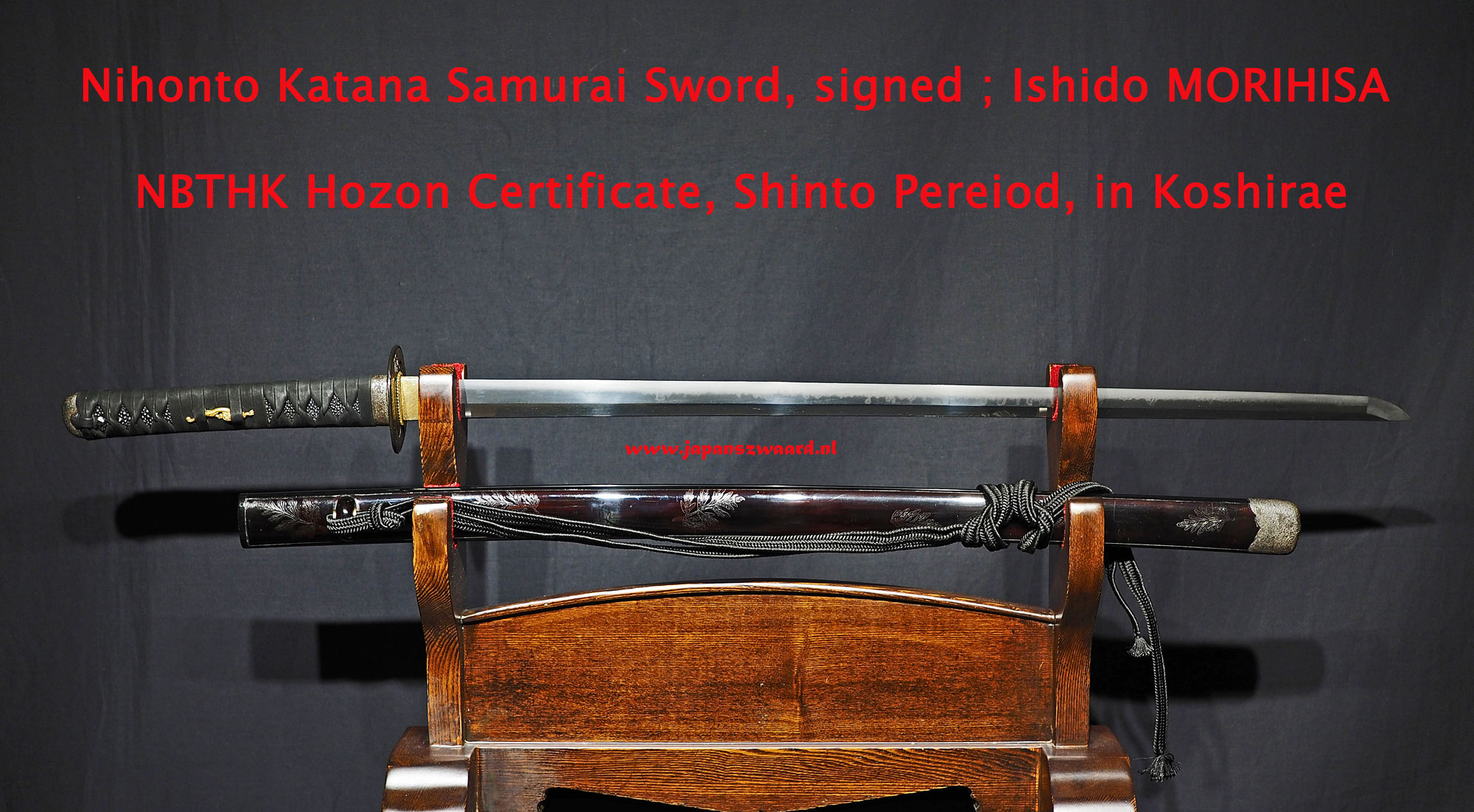
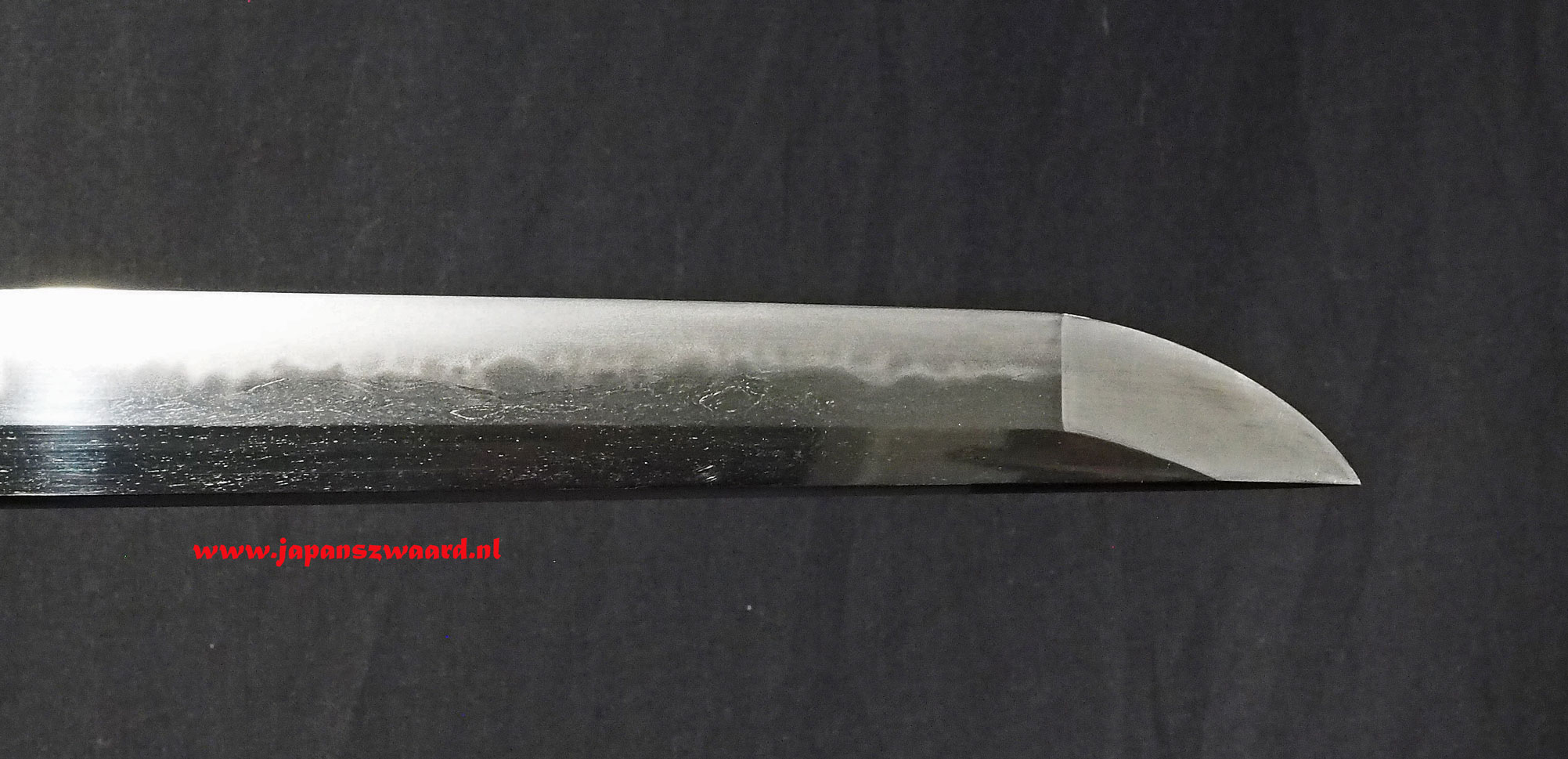
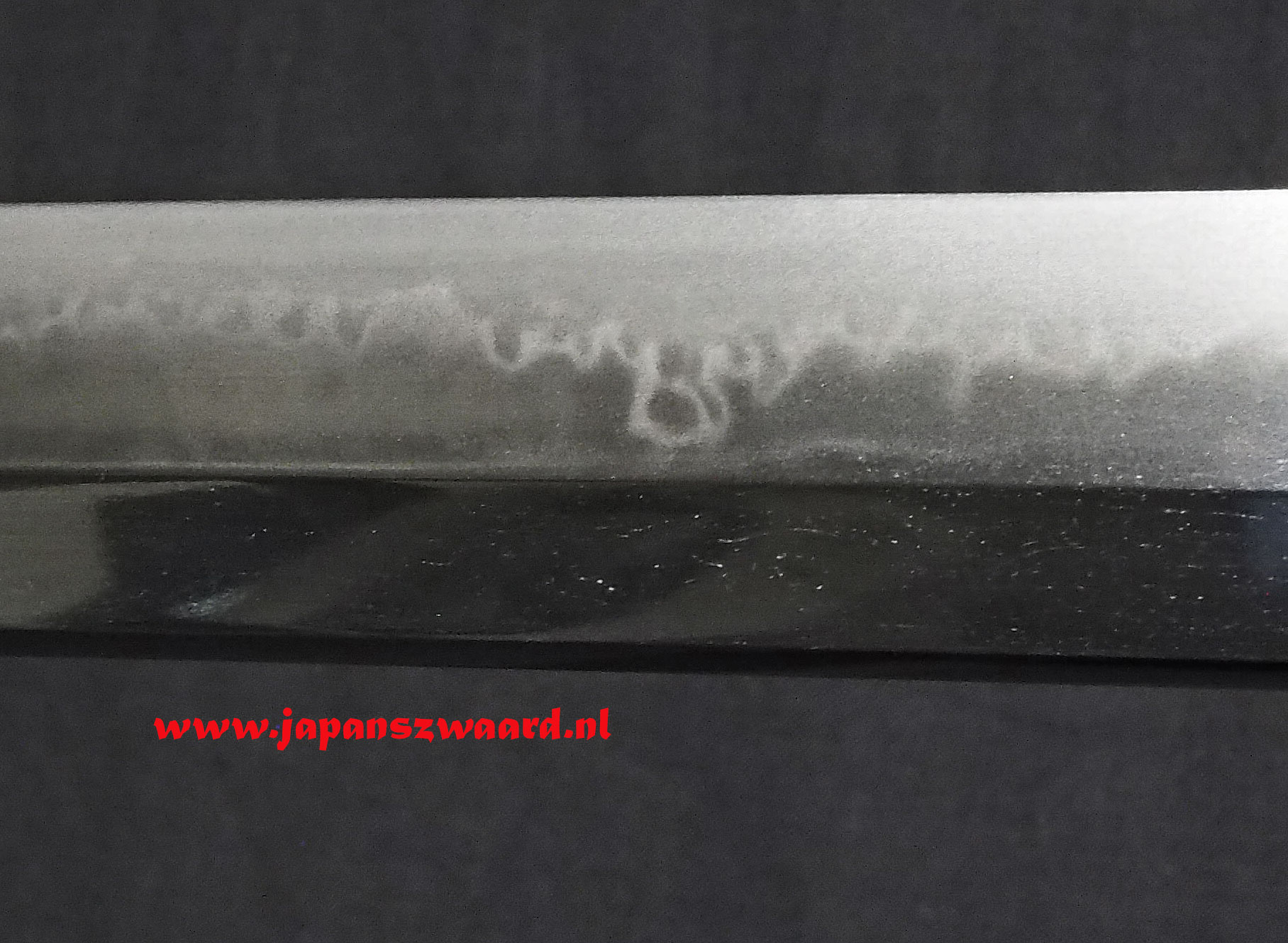
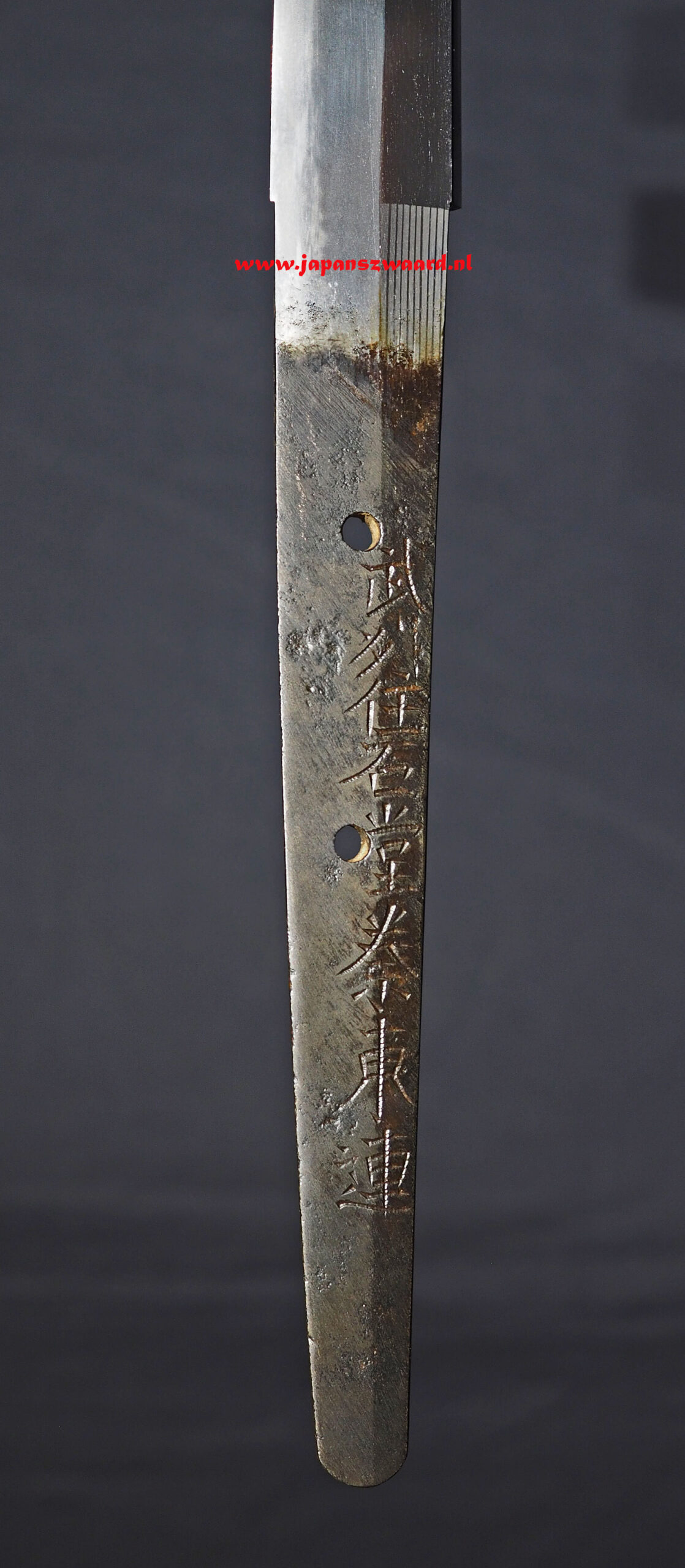
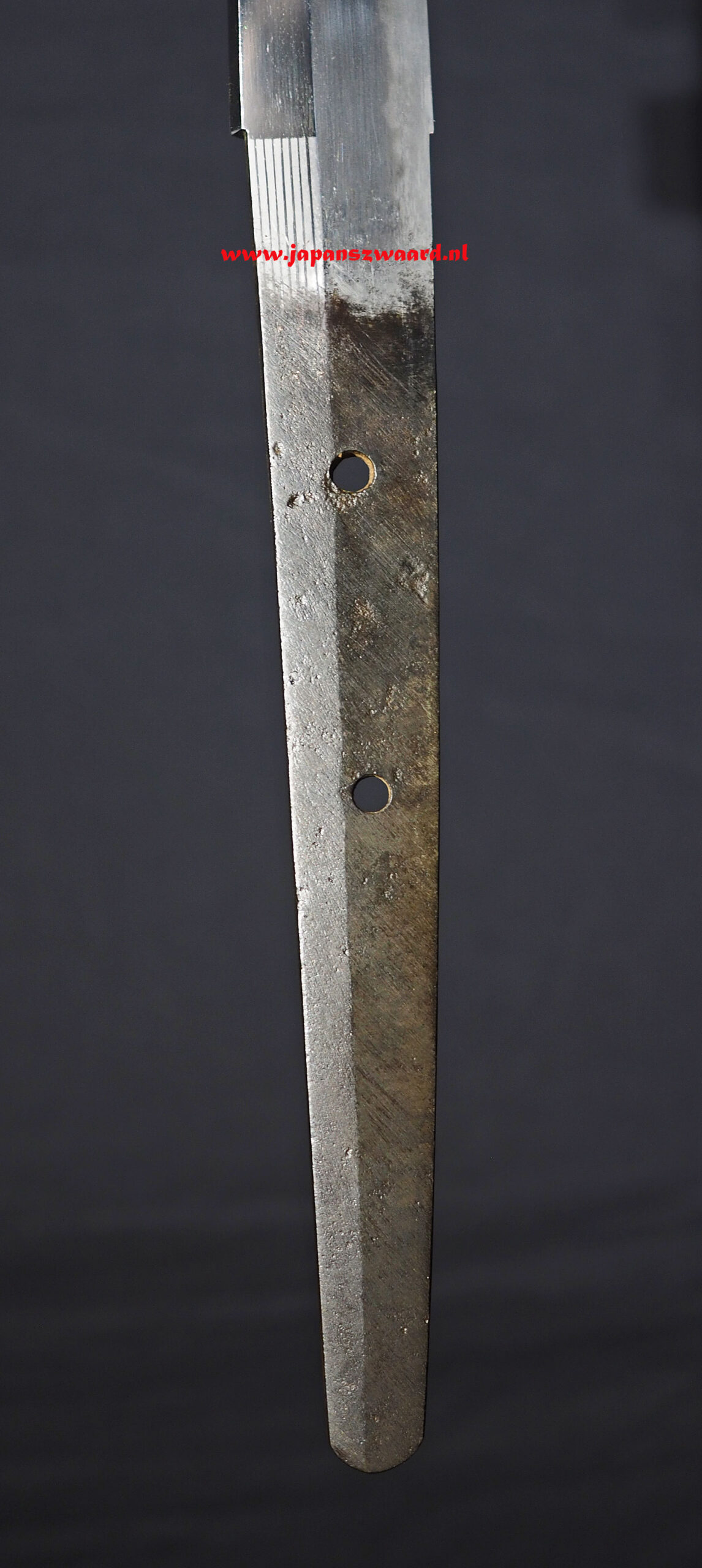
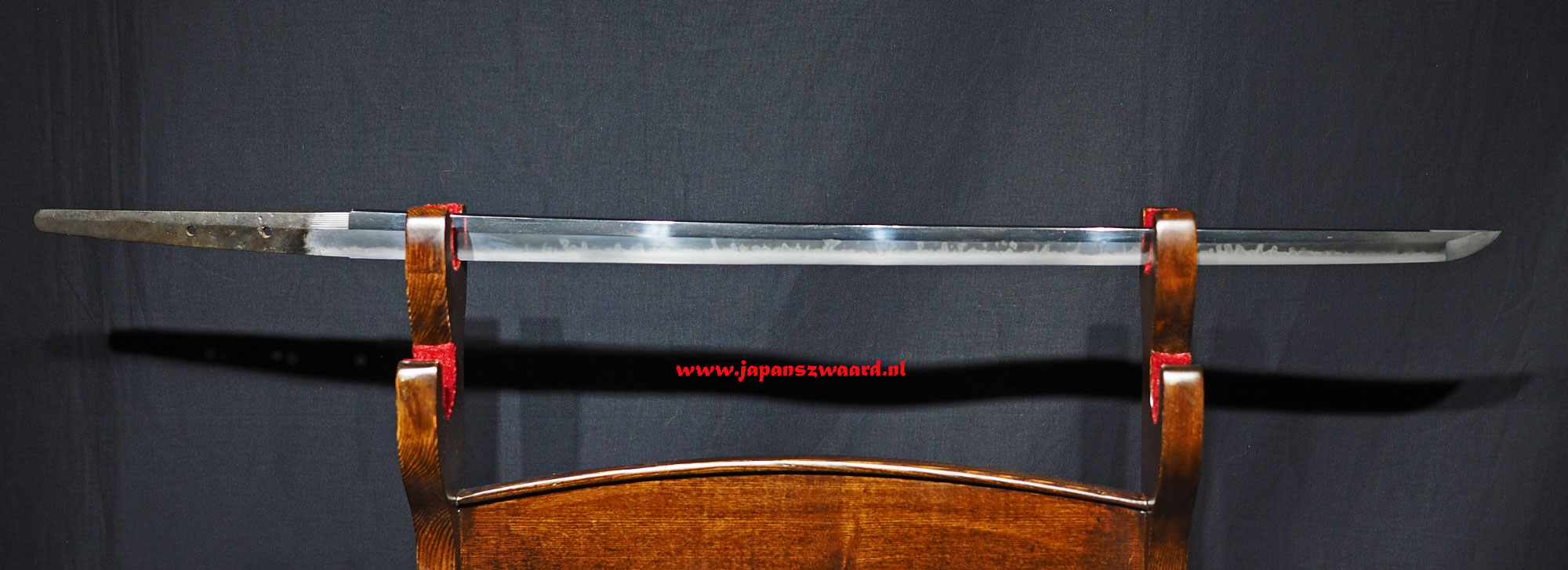
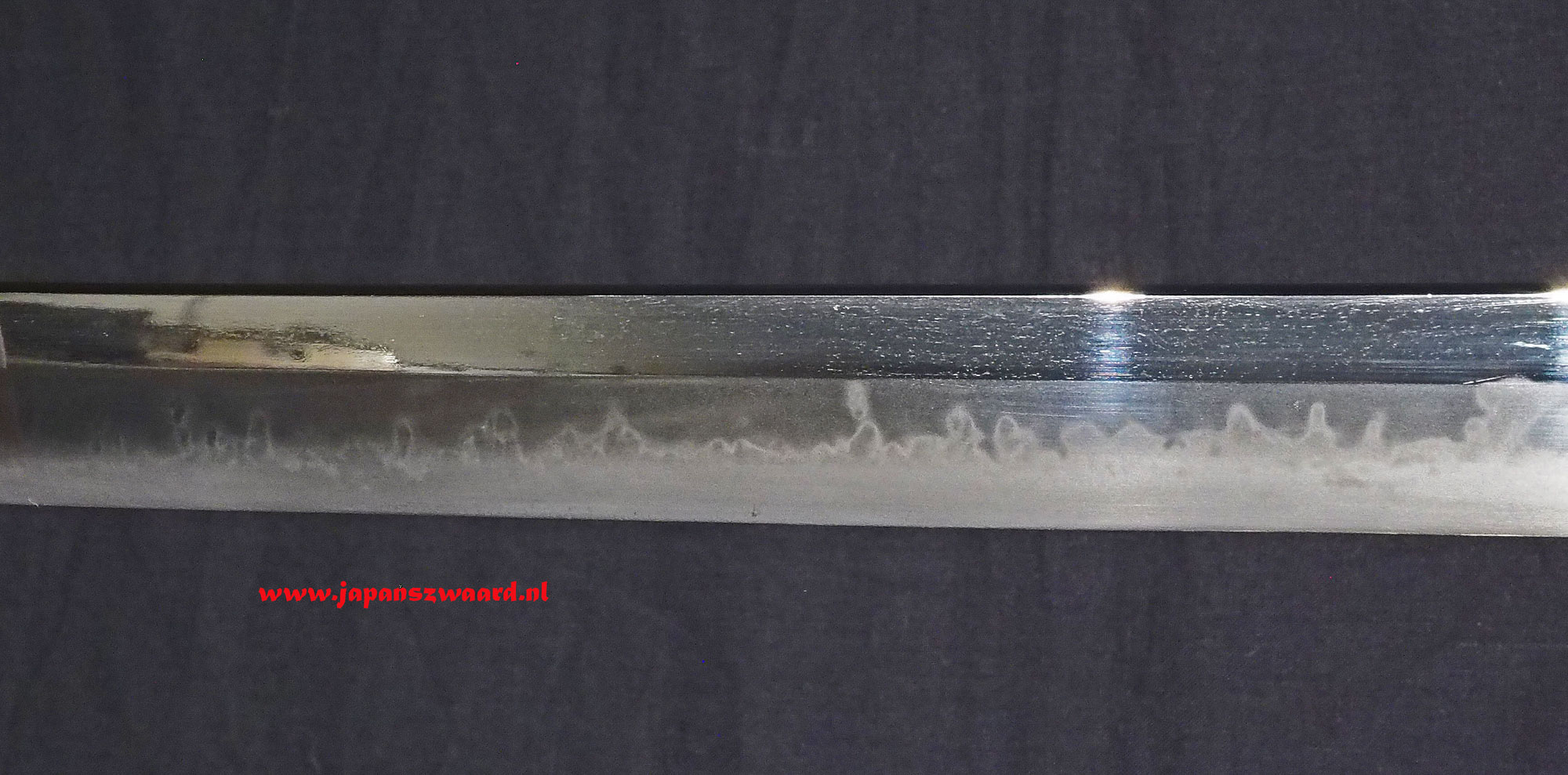
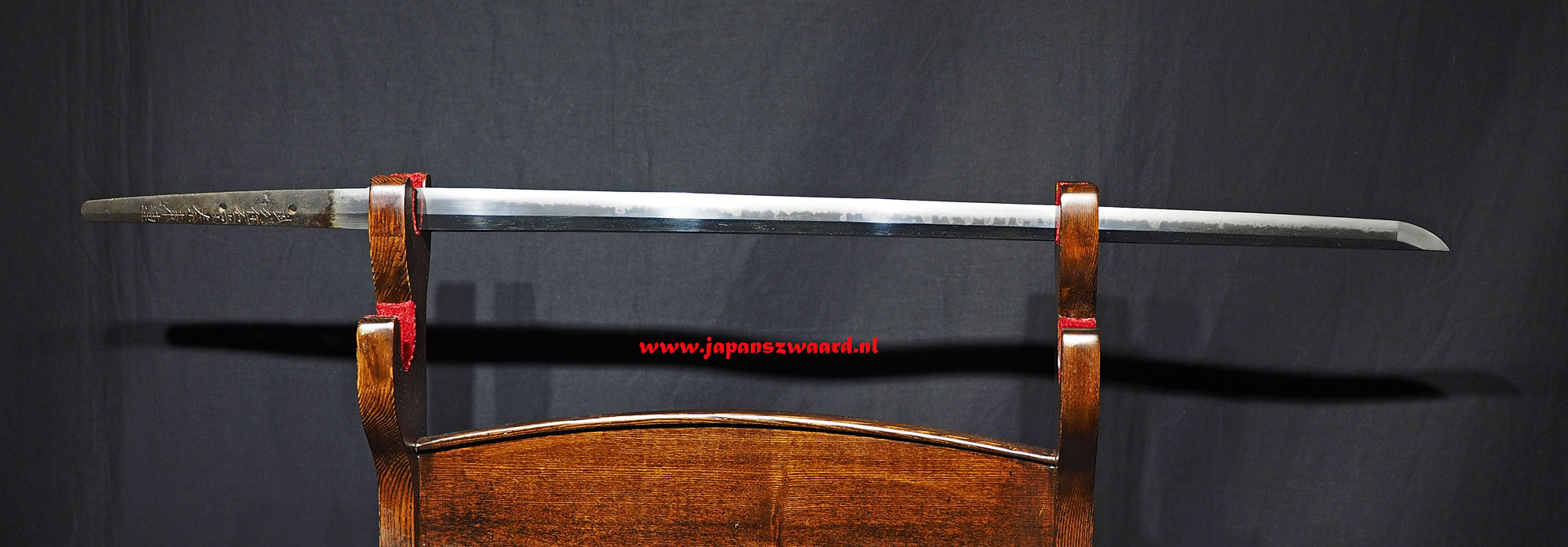
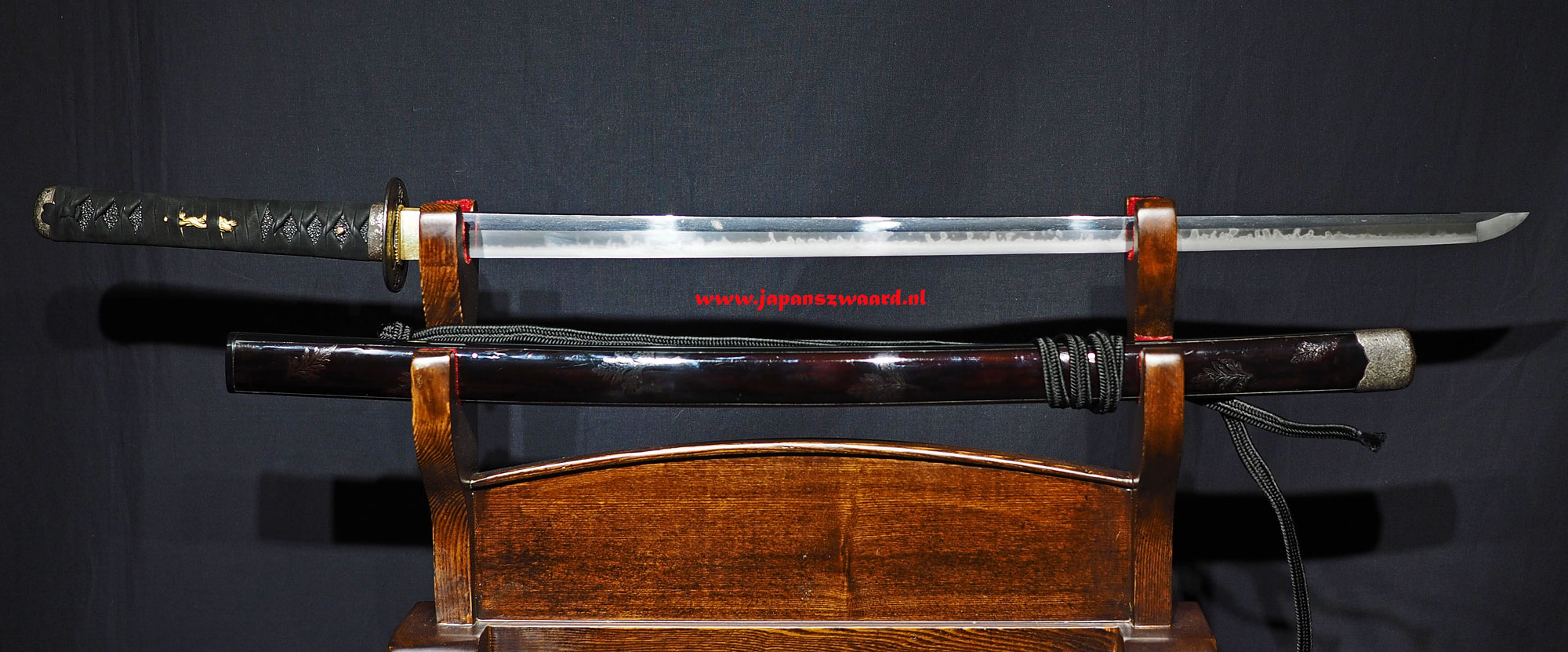
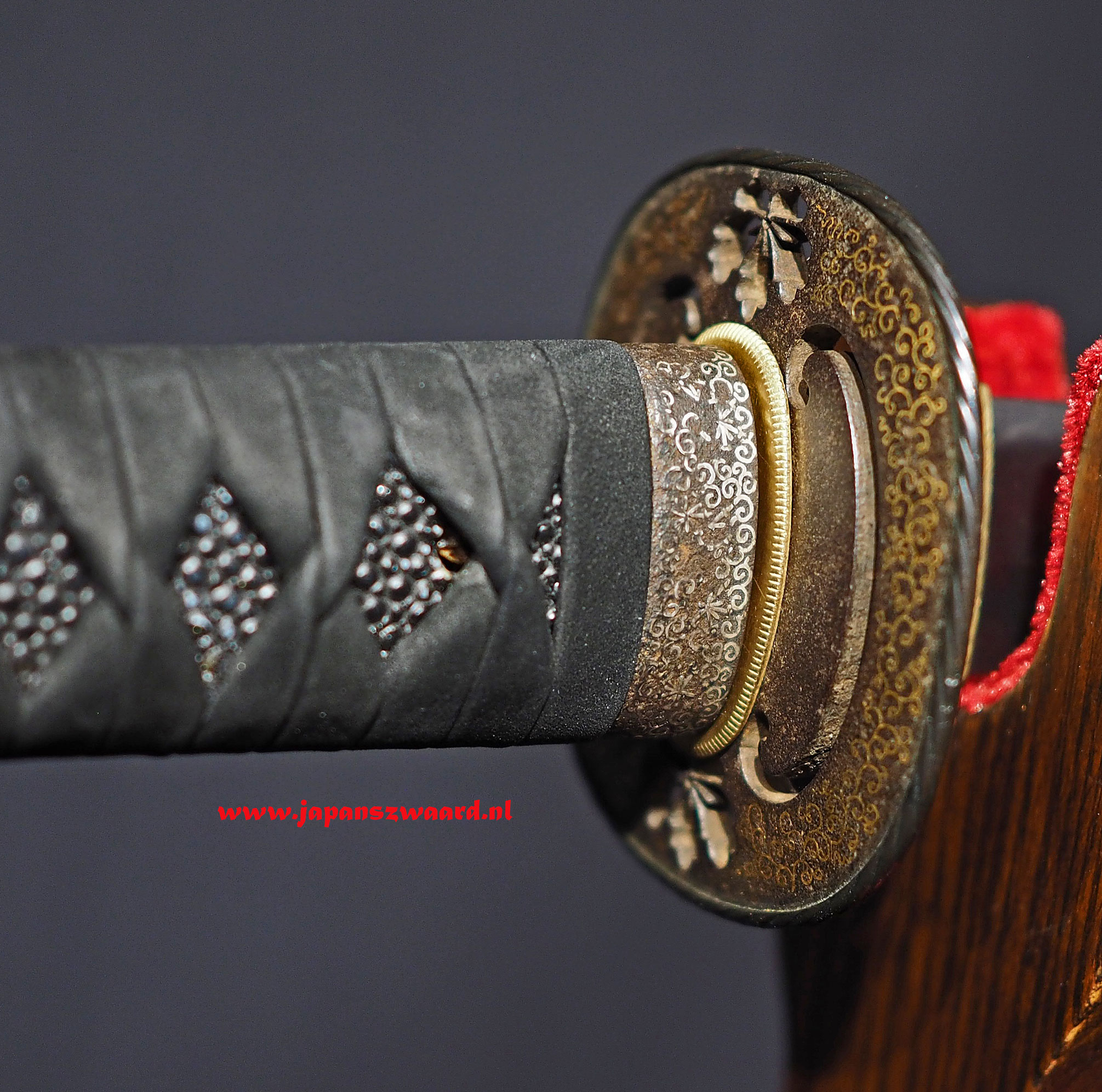
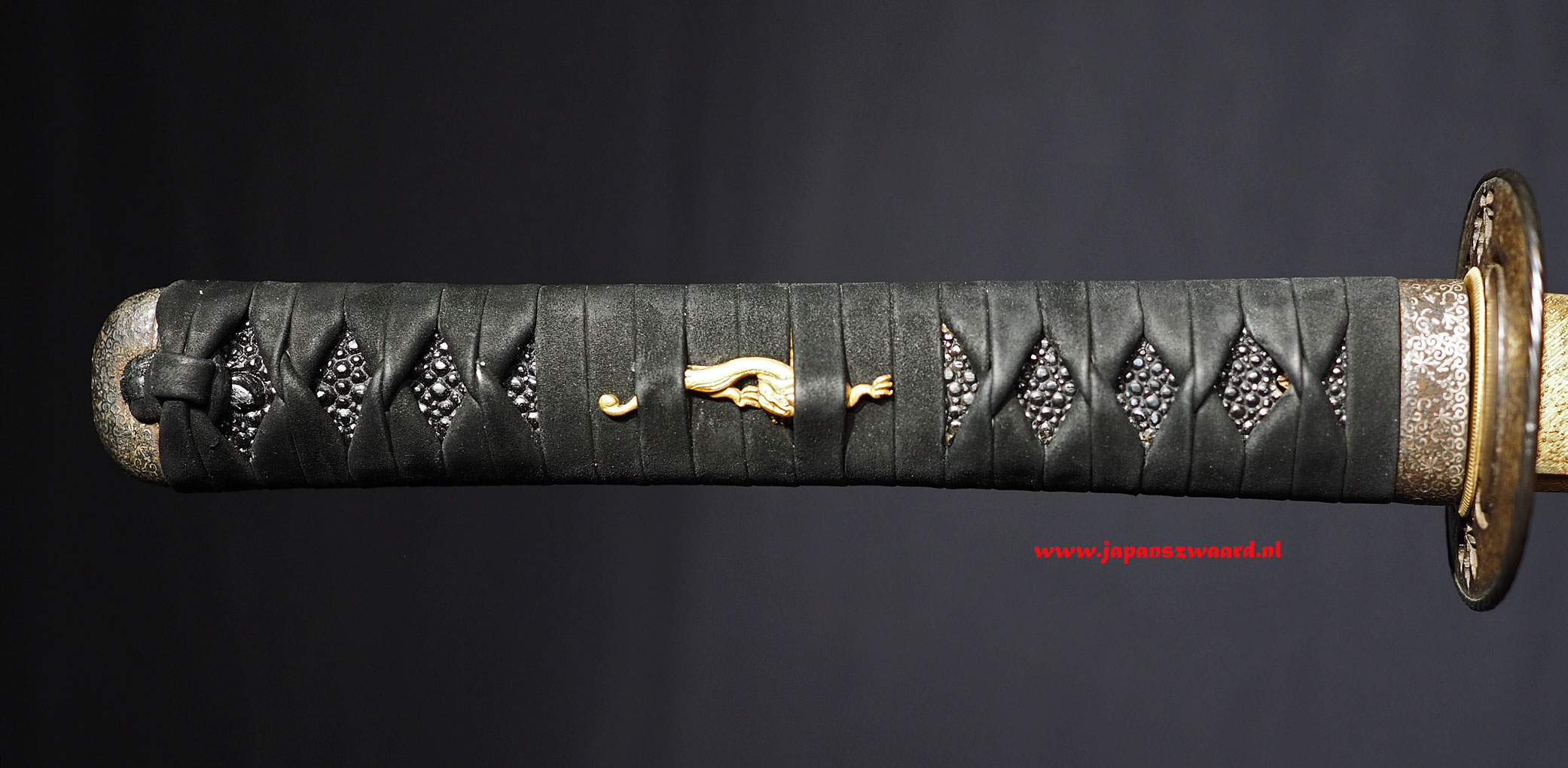
Musashi · around 1648-1652
Fujishiro Chu-jo saku · Tōken Taikan top 60%
1 piece on the market now
The Edo period (1615 to 1868)
Edo was the sword’s age of connoisseurship: the Hon’ami appraisers, the shogunal register of famous blades of 1719, and a thriving literature turned the sword into an object of study even as it ceased to be drawn in war.
A Hozon-certified blade judged to show notably superior workmanship and a better state of preservation. The bar is higher: re-tempered blades and most unsigned Muromachi/Edo works are excluded.
The NBTHK (Nihon Bijutsu Tōken Hozon Kyōkai, the Society for the Preservation of Japanese Art Swords) is a public-interest incorporated foundation founded in 1948 and supervised by Japan’s Agency for Cultural Affairs (Bunkachō); it is based at the Japanese Sword Museum in Tokyo. Its expert panels physically examine each submitted work (shinsa) and issue a certificate (kanteishō) ranking it by artistic and historical merit. NBTHK papers are the most widely recognized standard of authentication for Japanese swords and fittings.
NBTHK official siteSwords only: if a sword does not match the description, the buyer must report it by e-mail within 48 hours of receipt, after which the sale is final. Returns only after agreement, safely packed and in exactly the condition delivered; the refund is the purchase price minus shipping/transport and bank costs, and return shipping and its risk are for the buyer. Consignment items carry no guarantee and cannot be returned.
€9,800