 NihontoWatchNihontoWatch
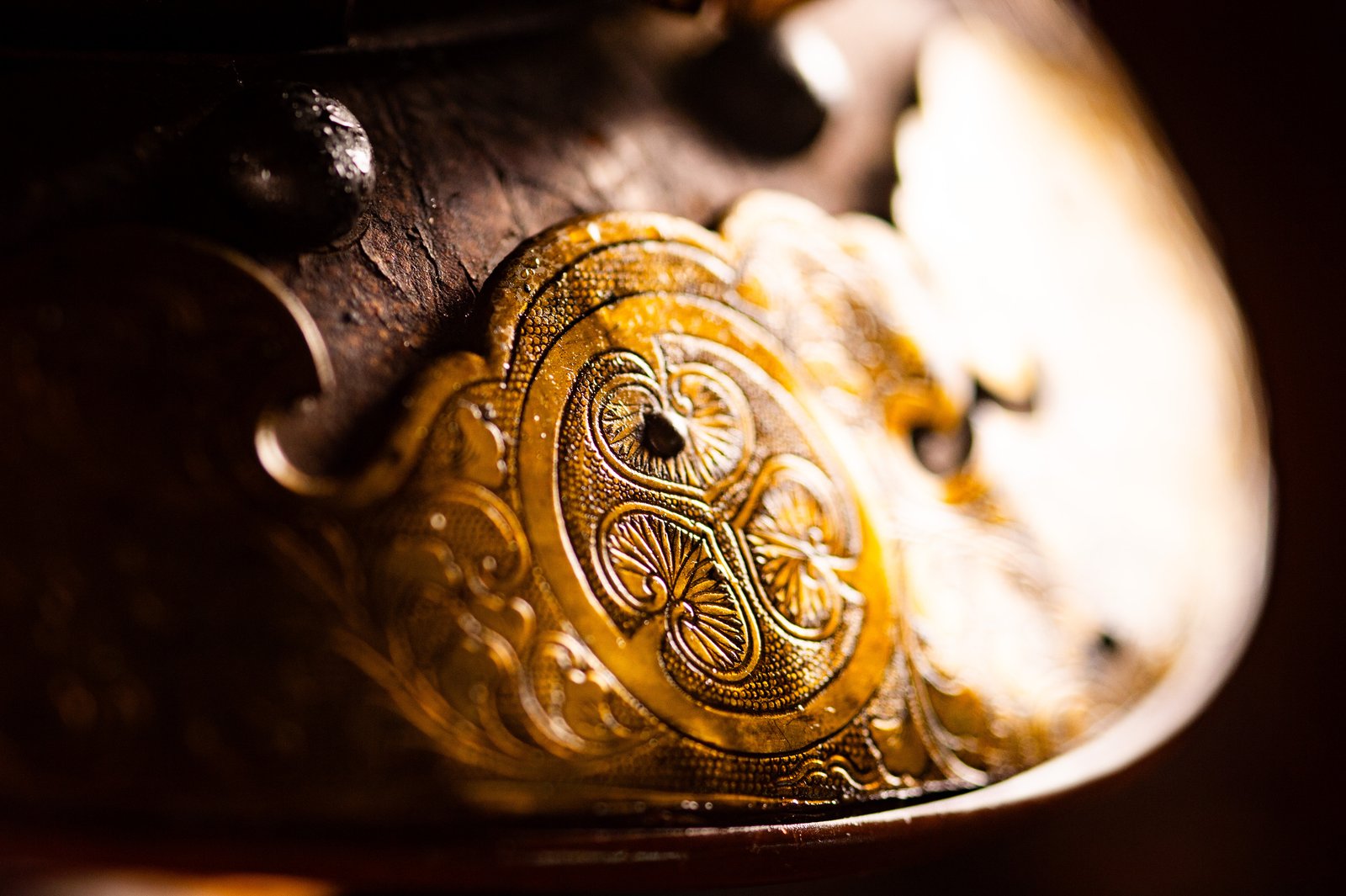
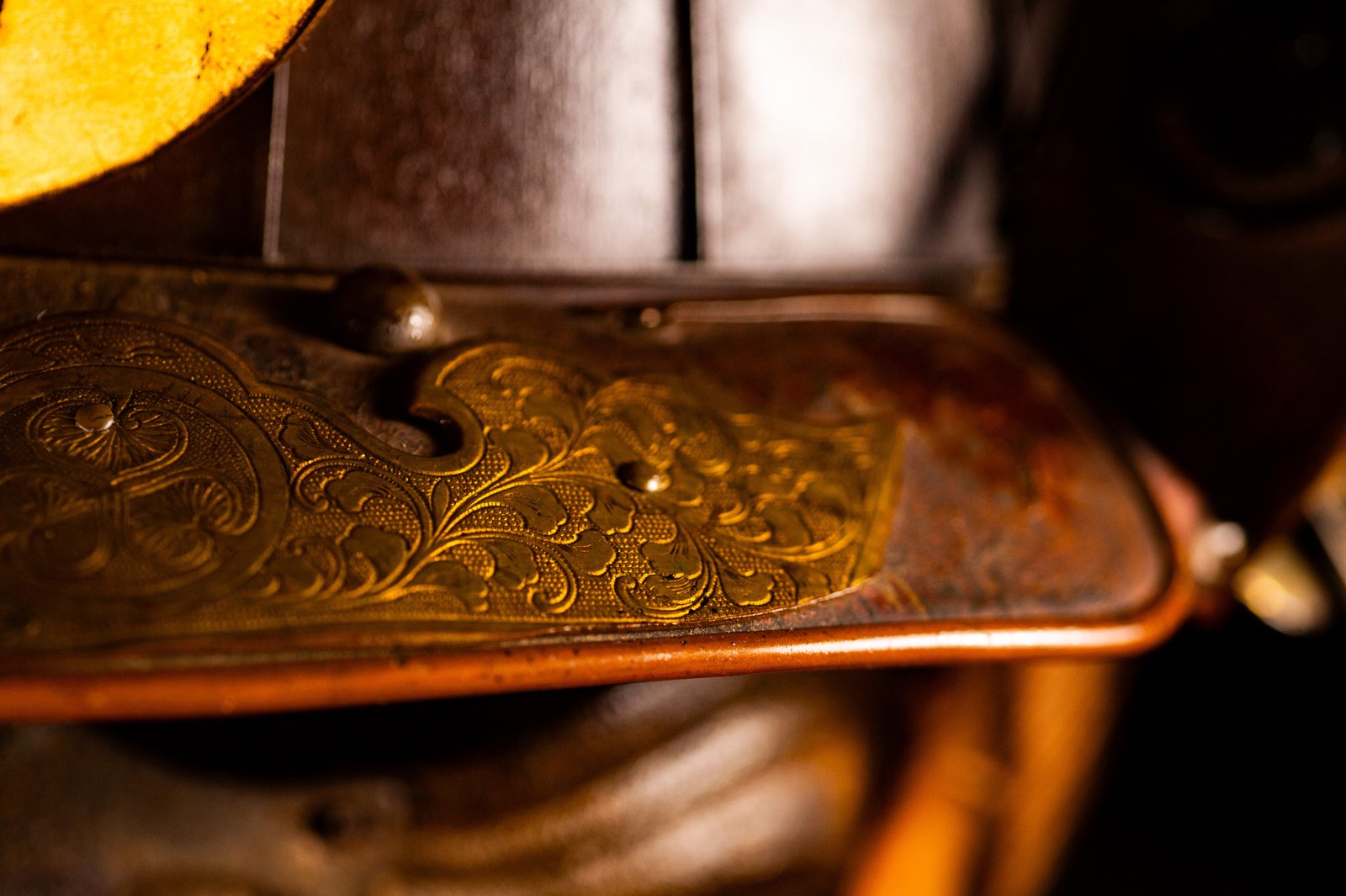
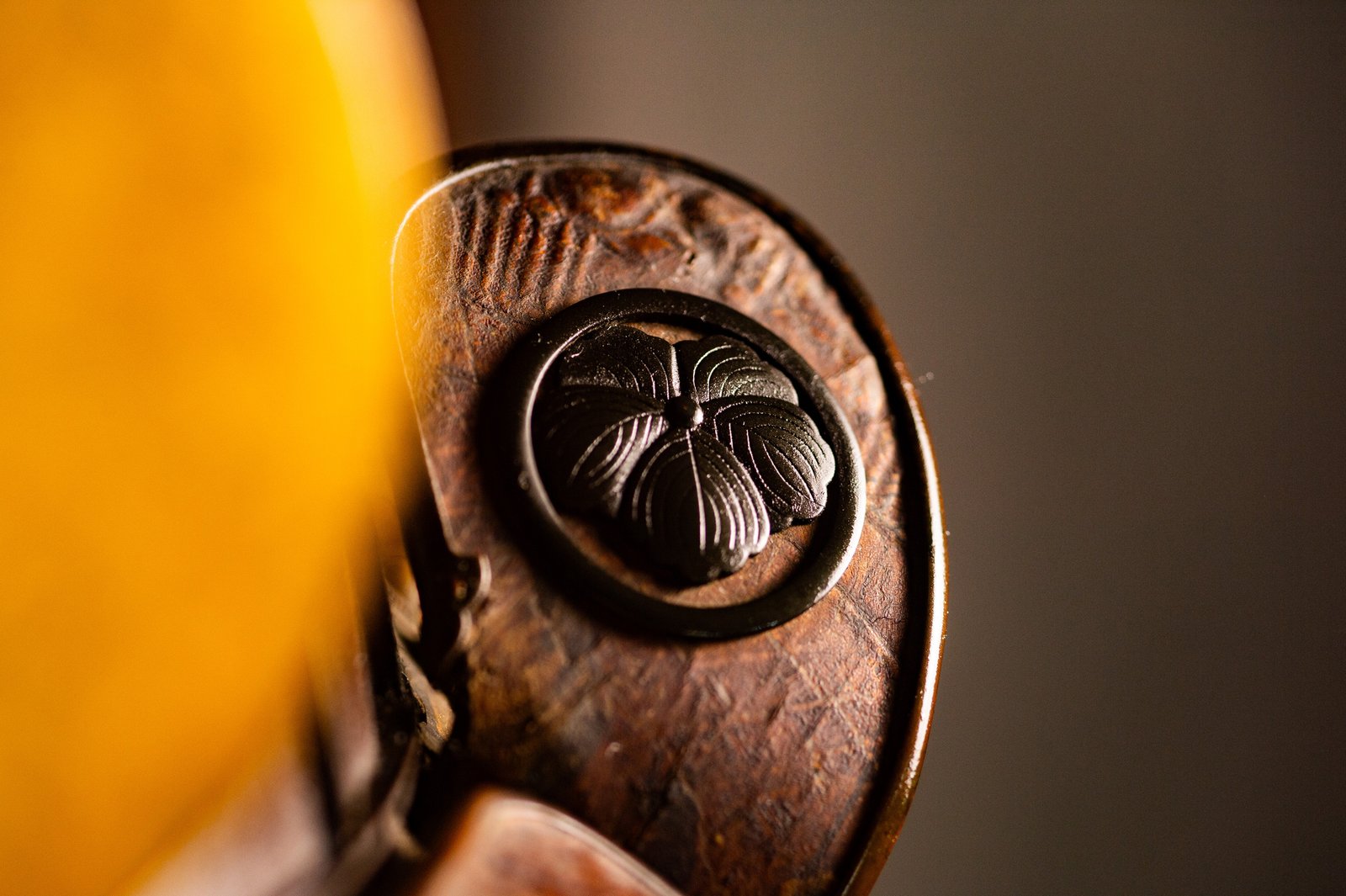
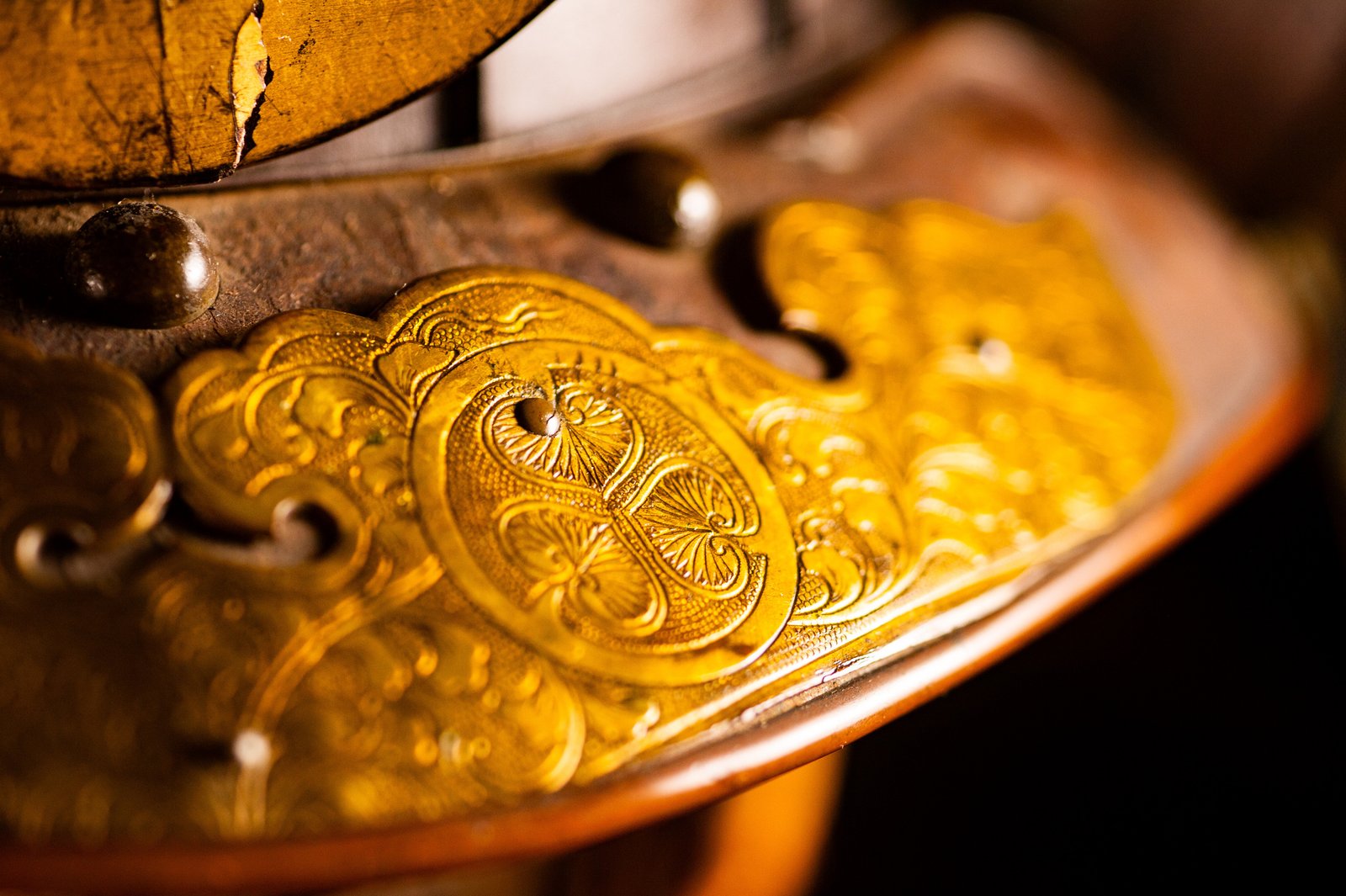
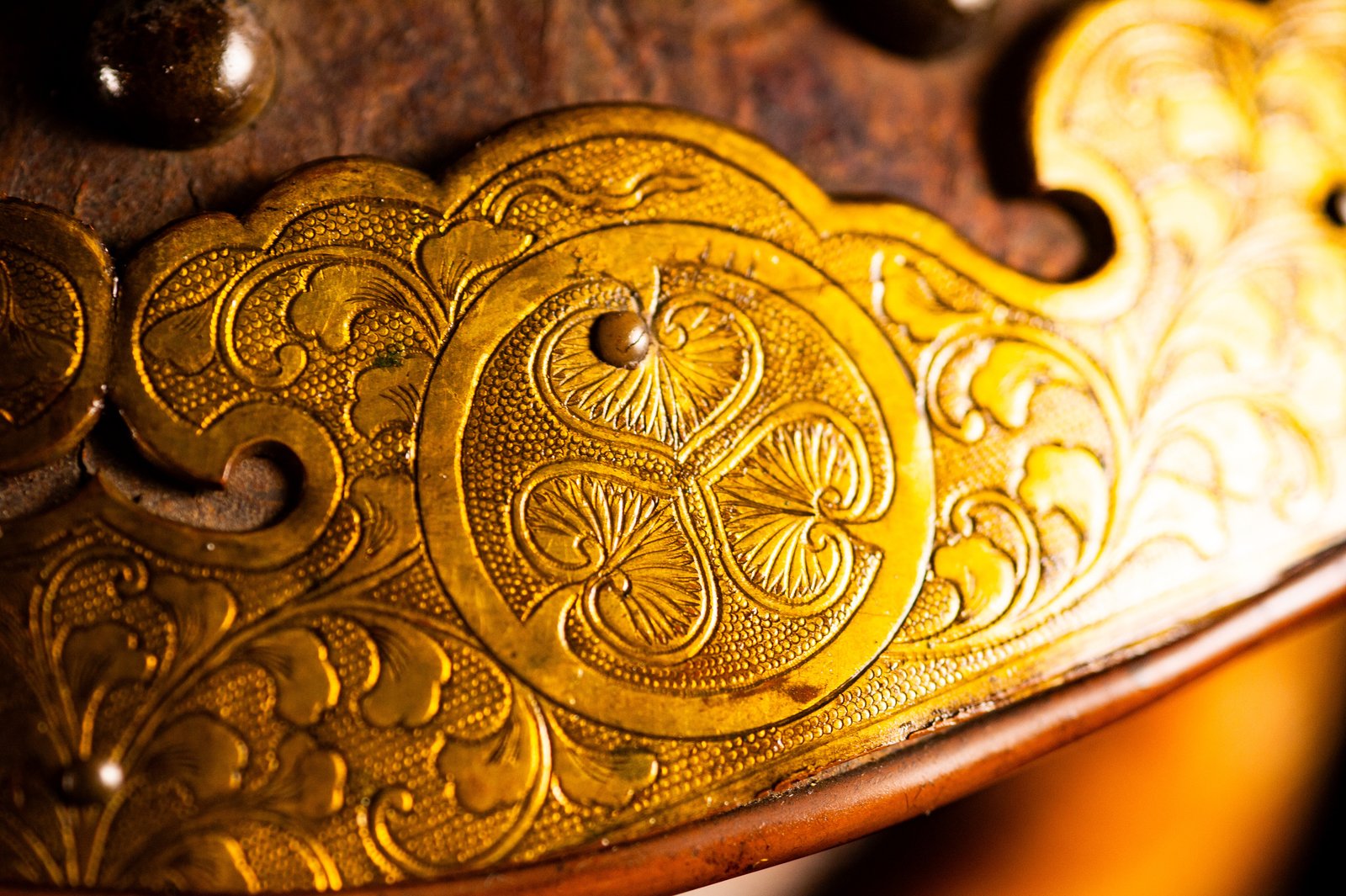
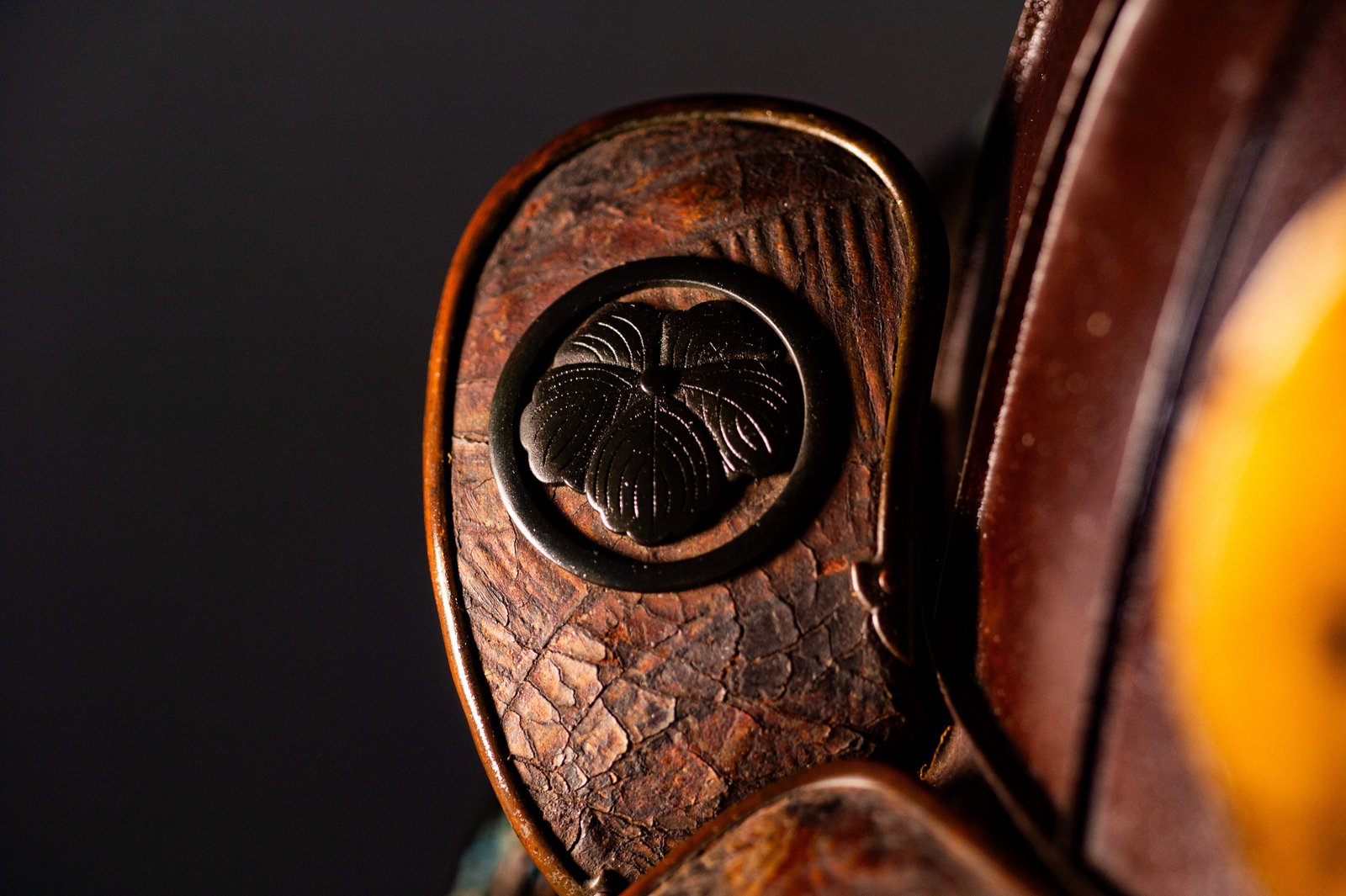
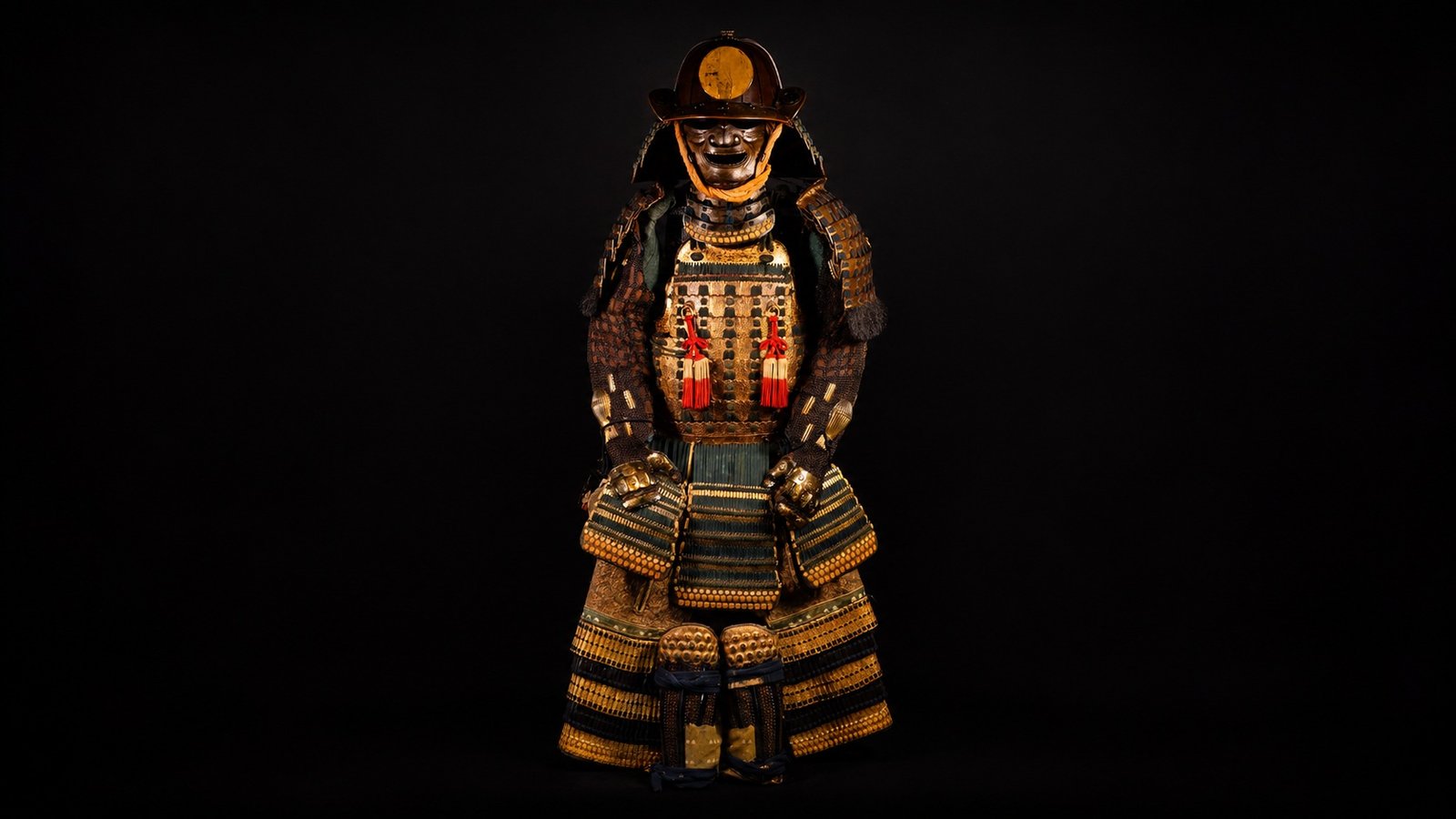
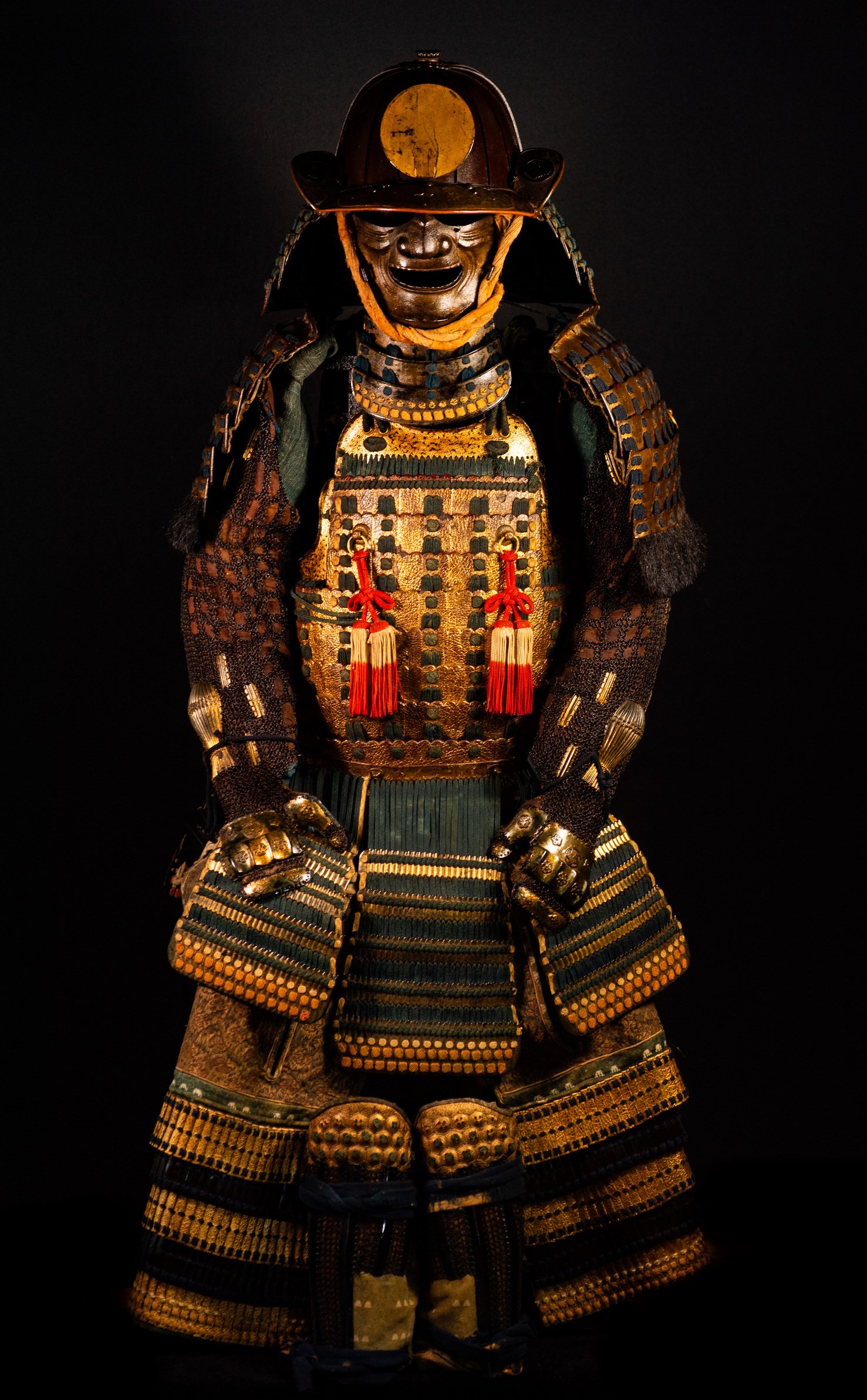
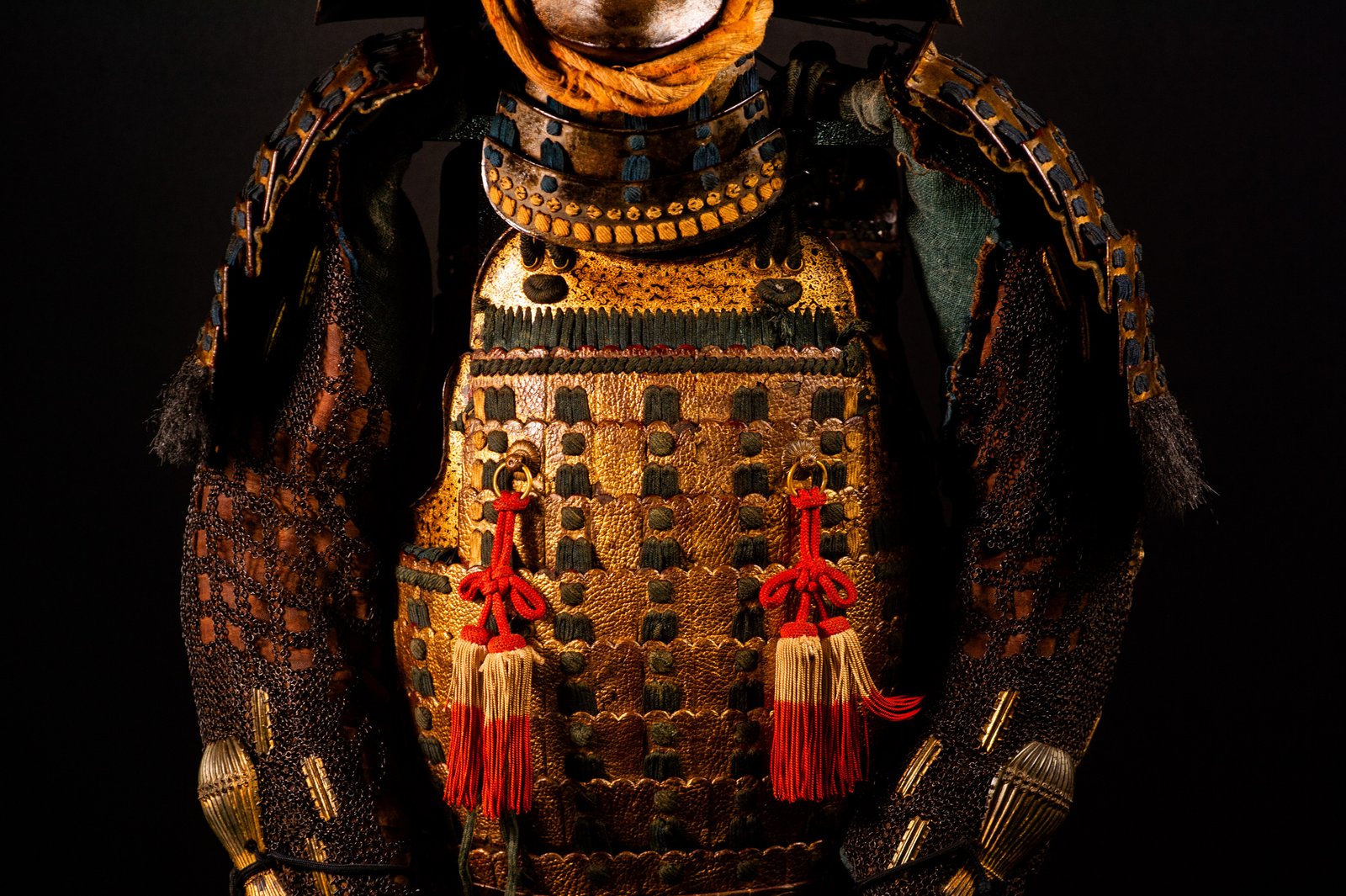
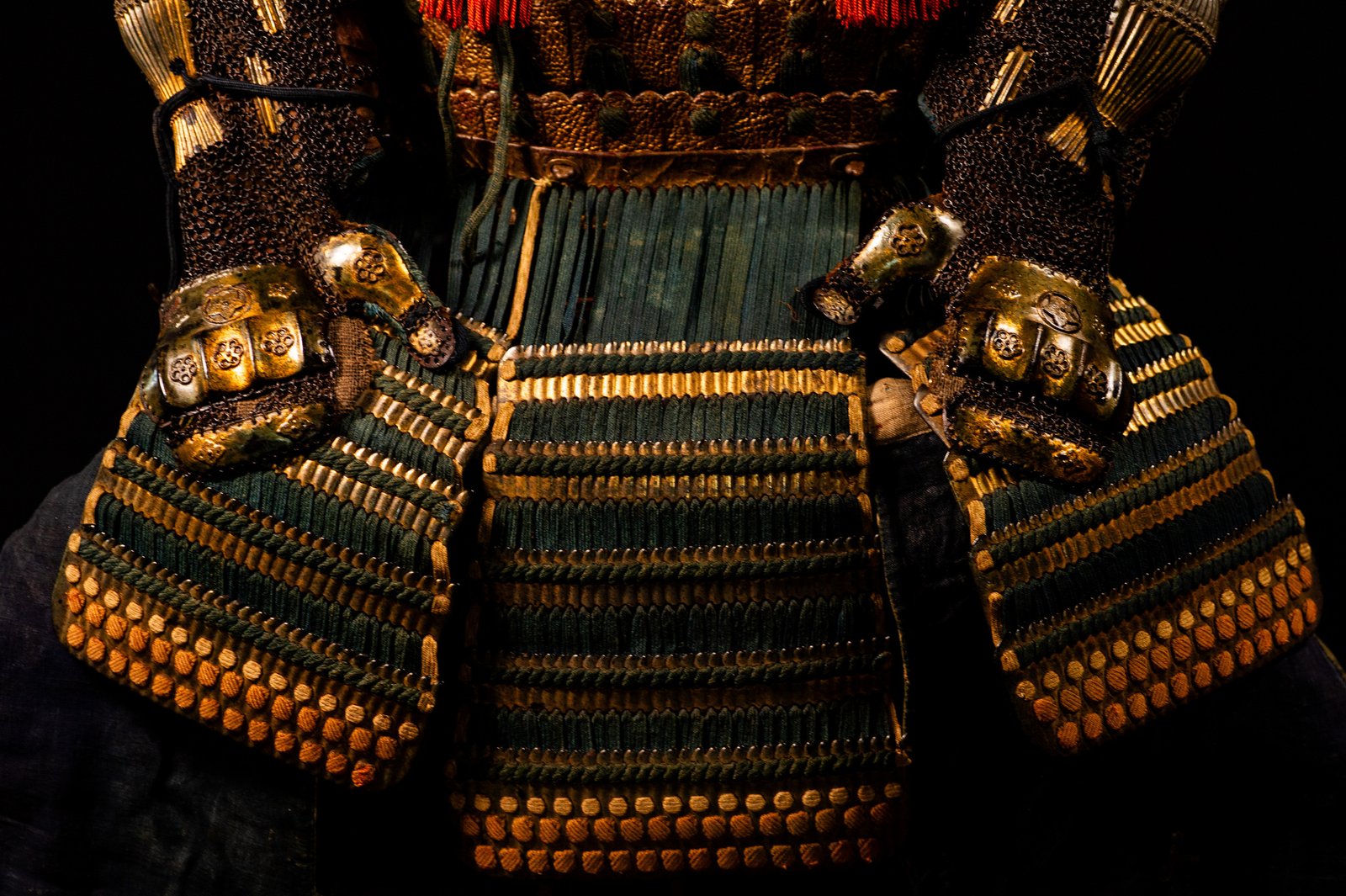
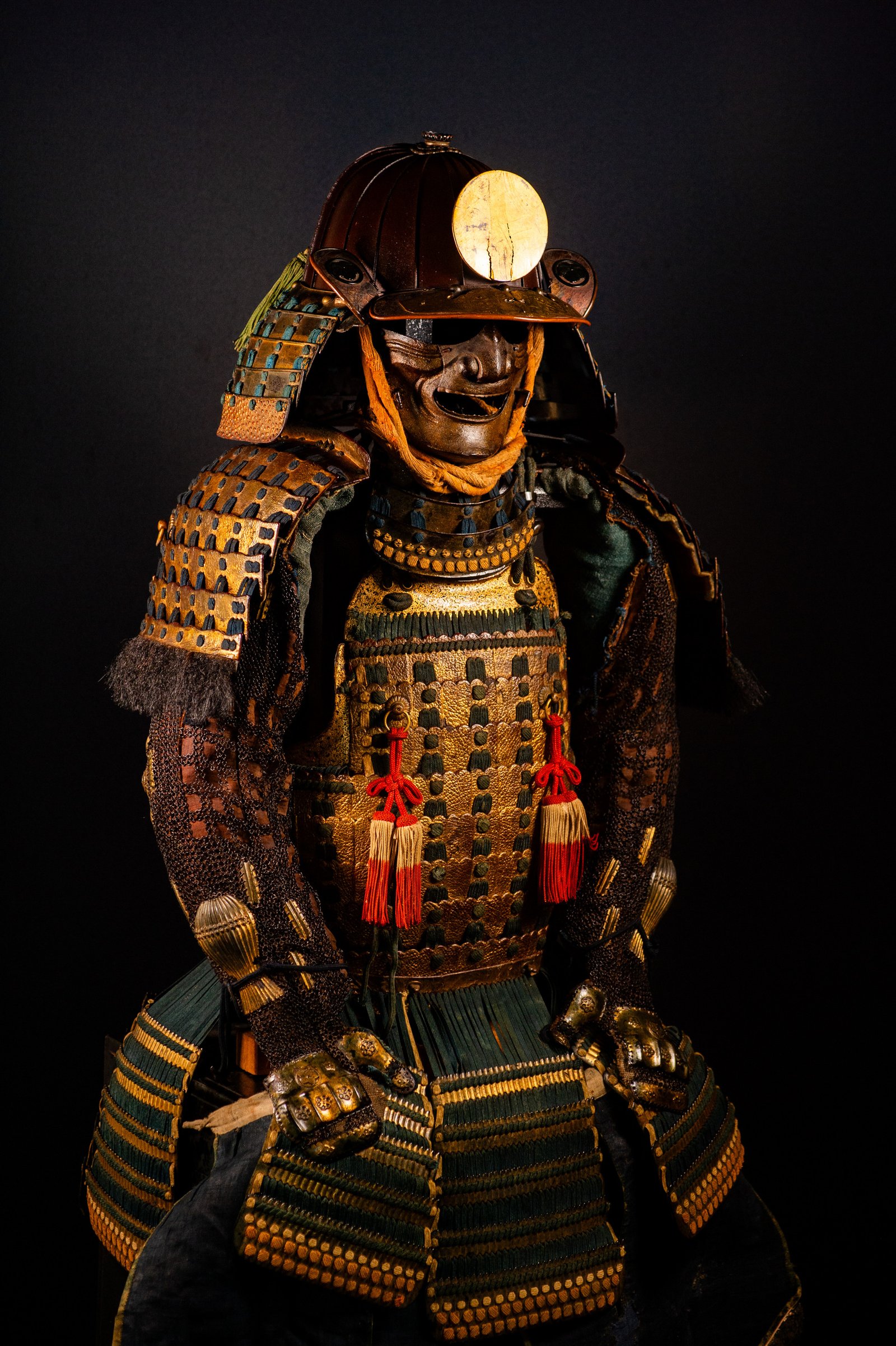
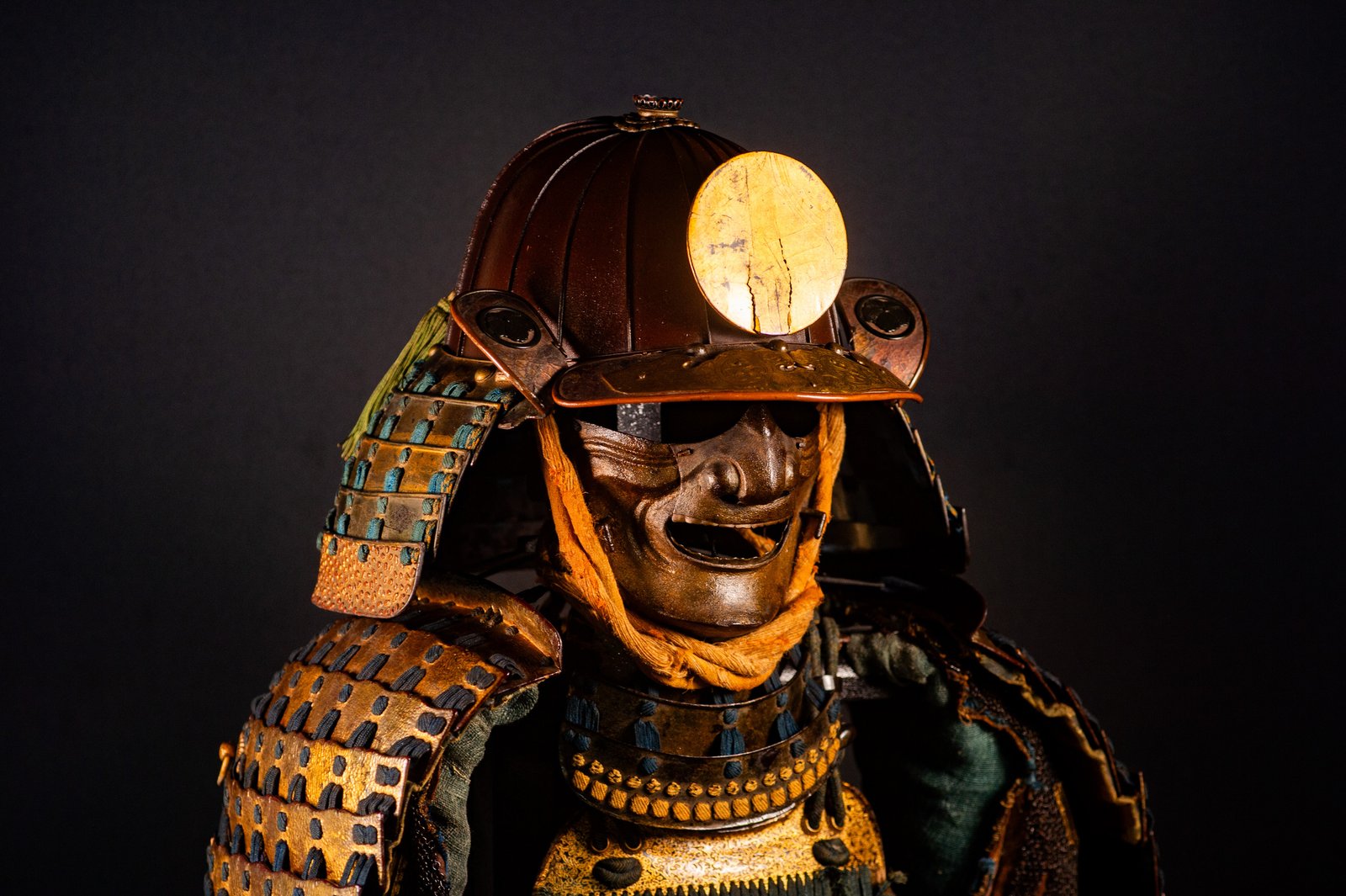
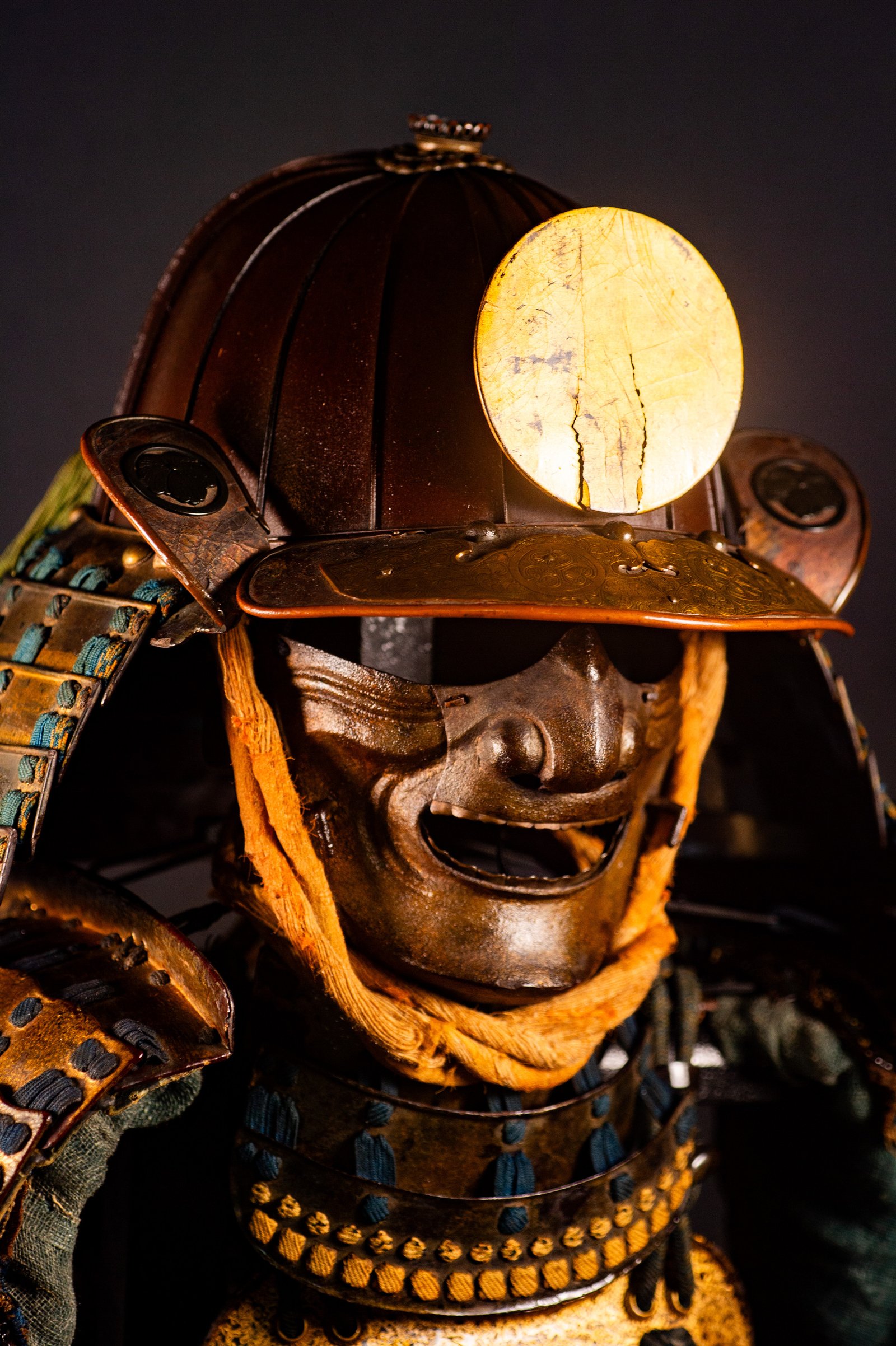
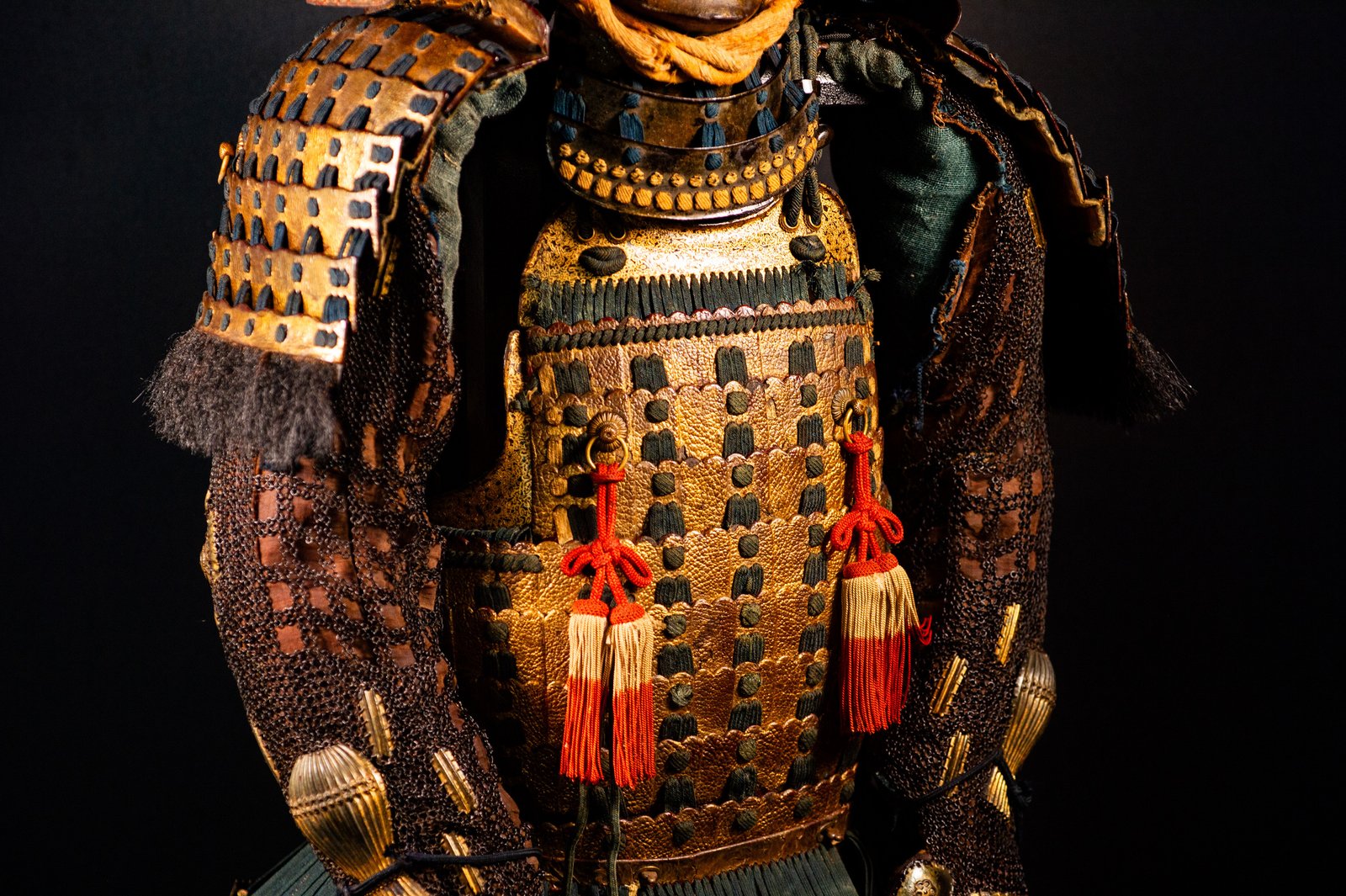
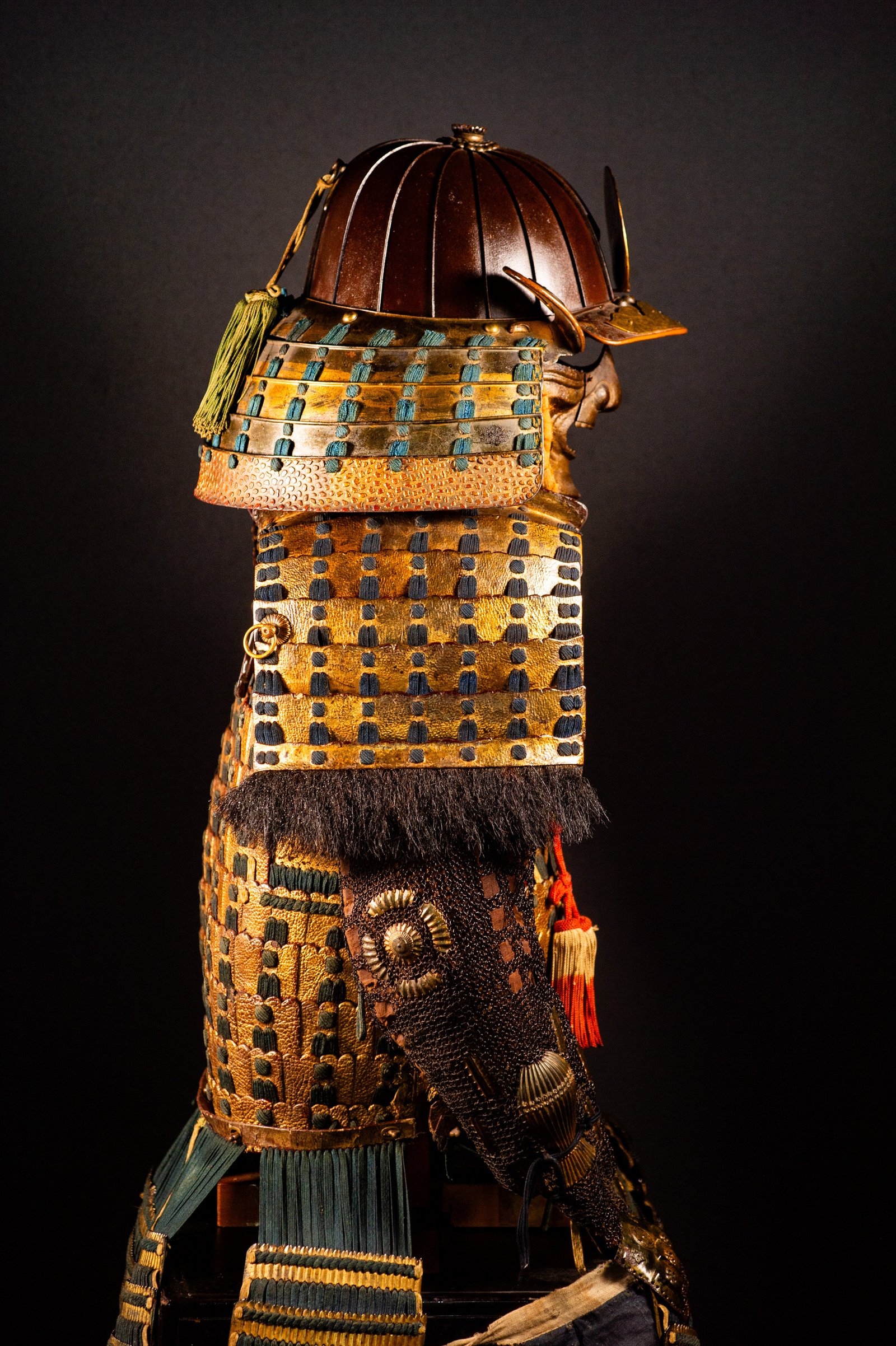
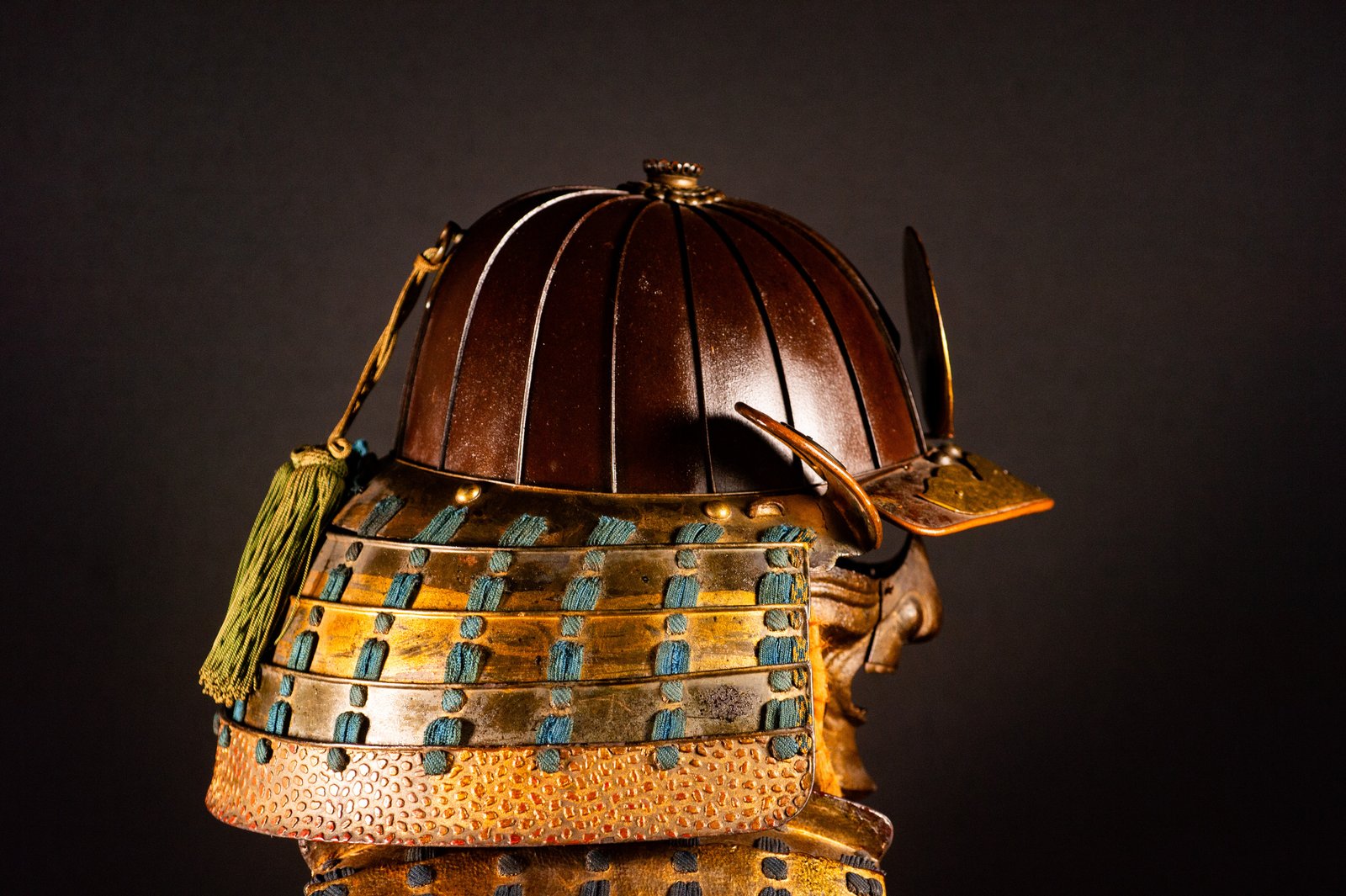
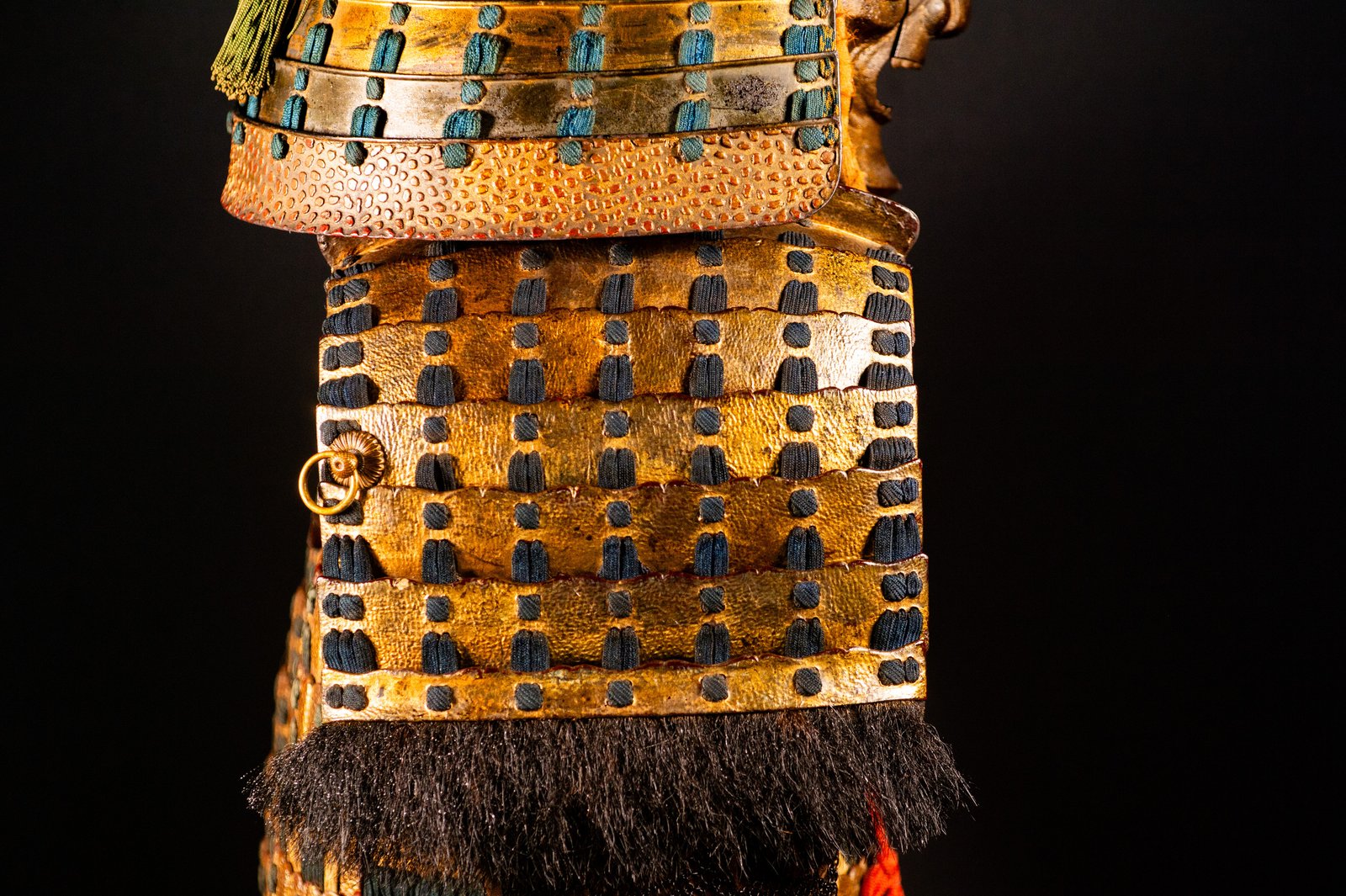
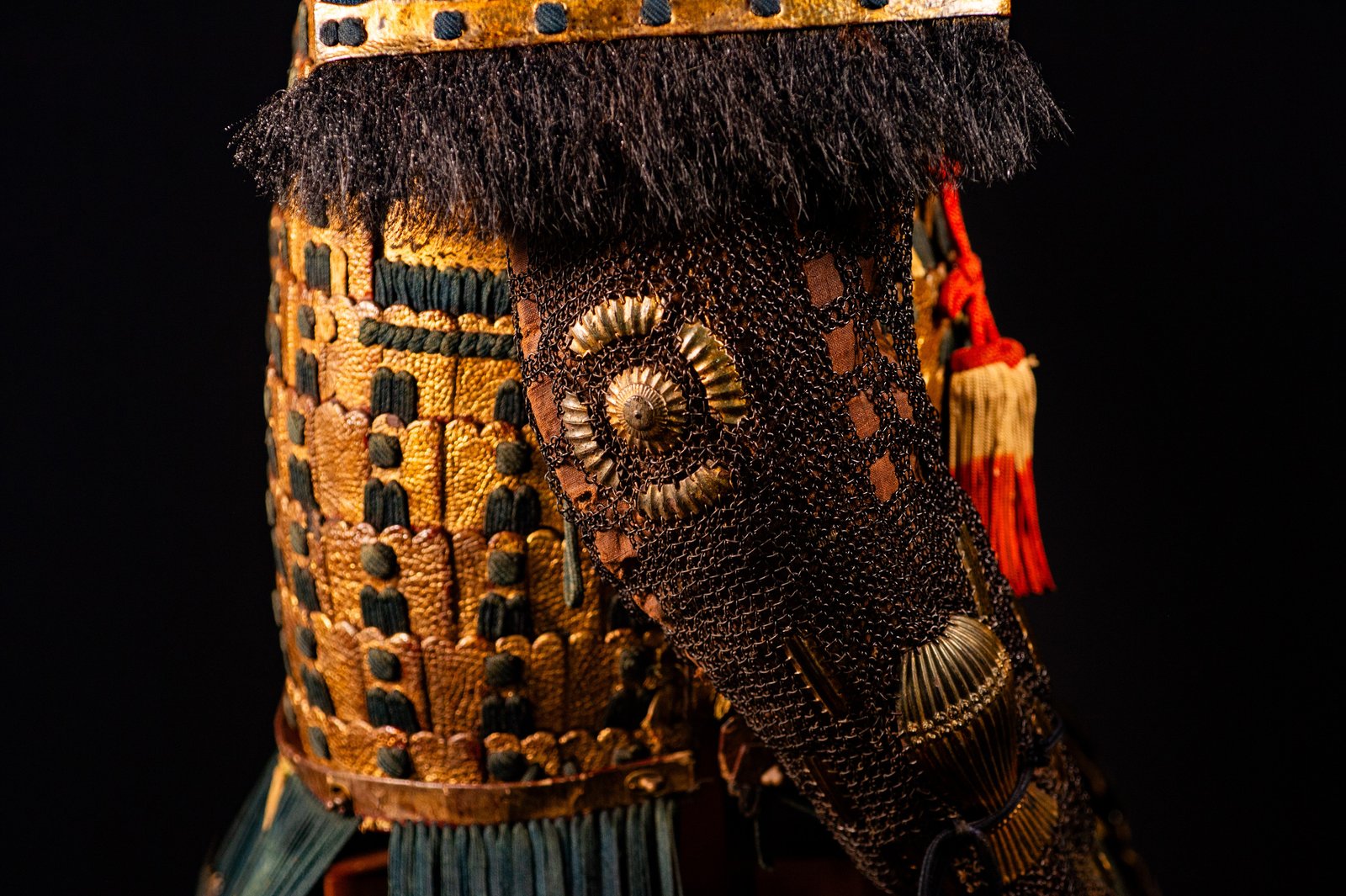
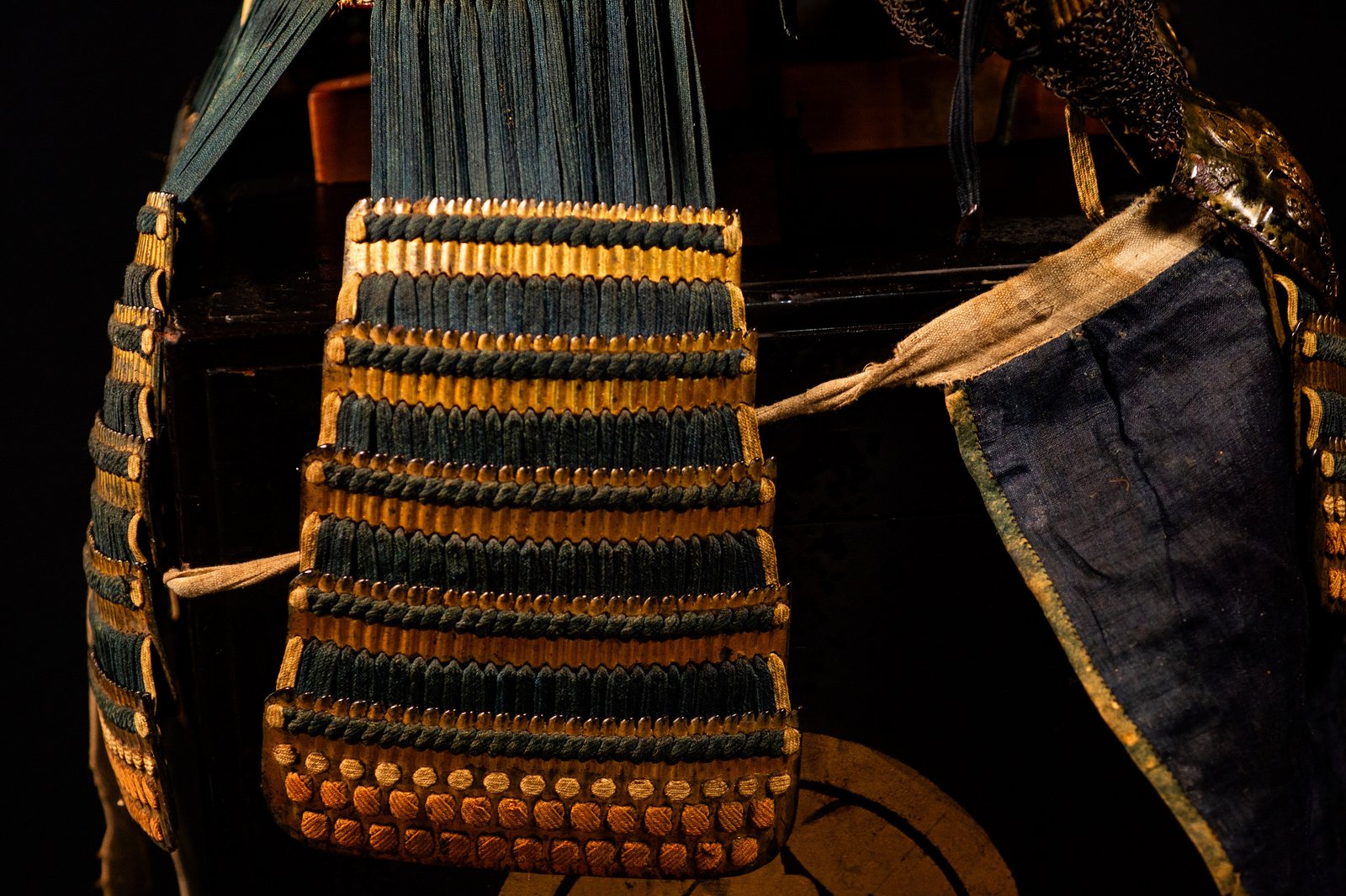
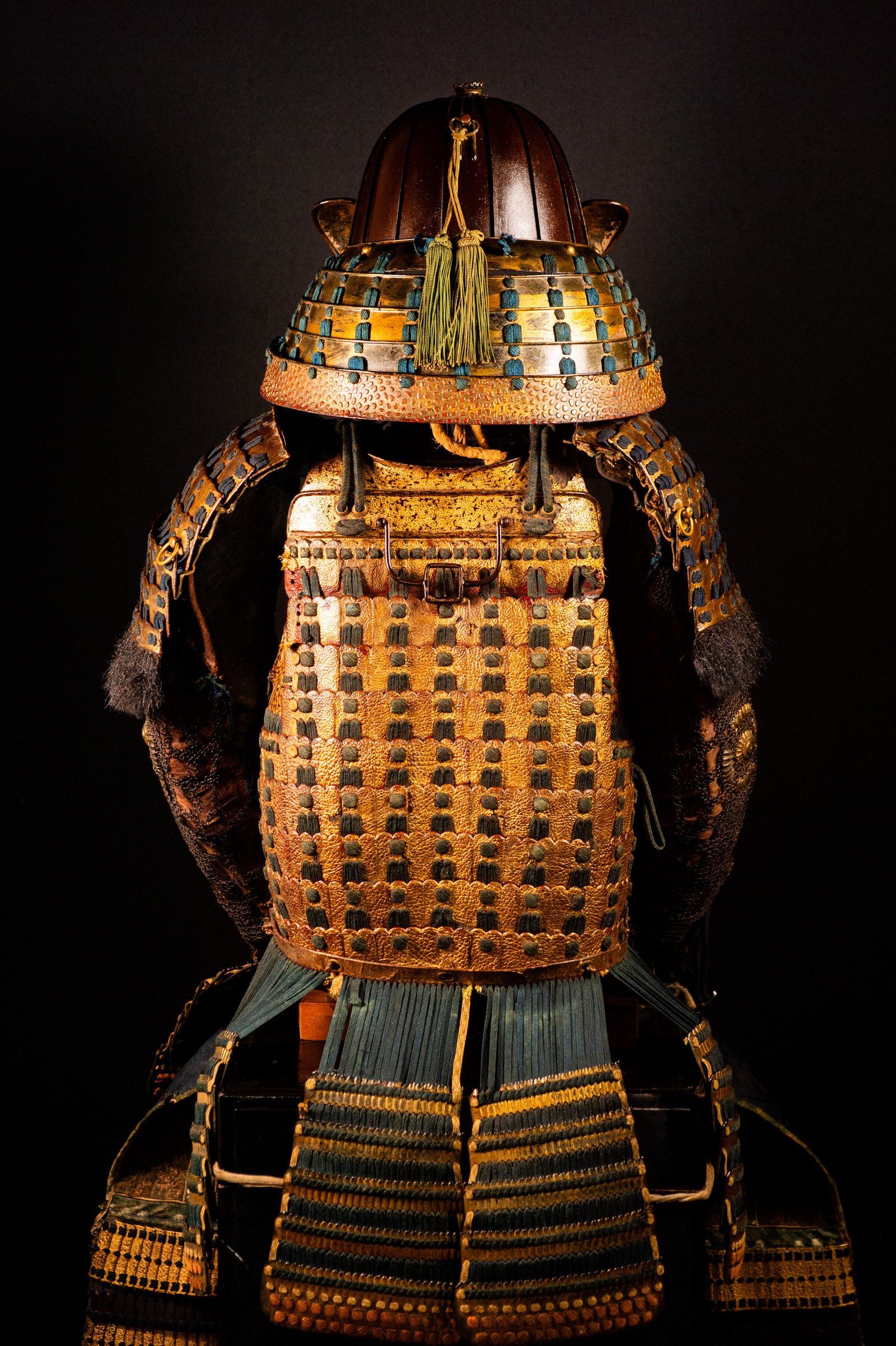
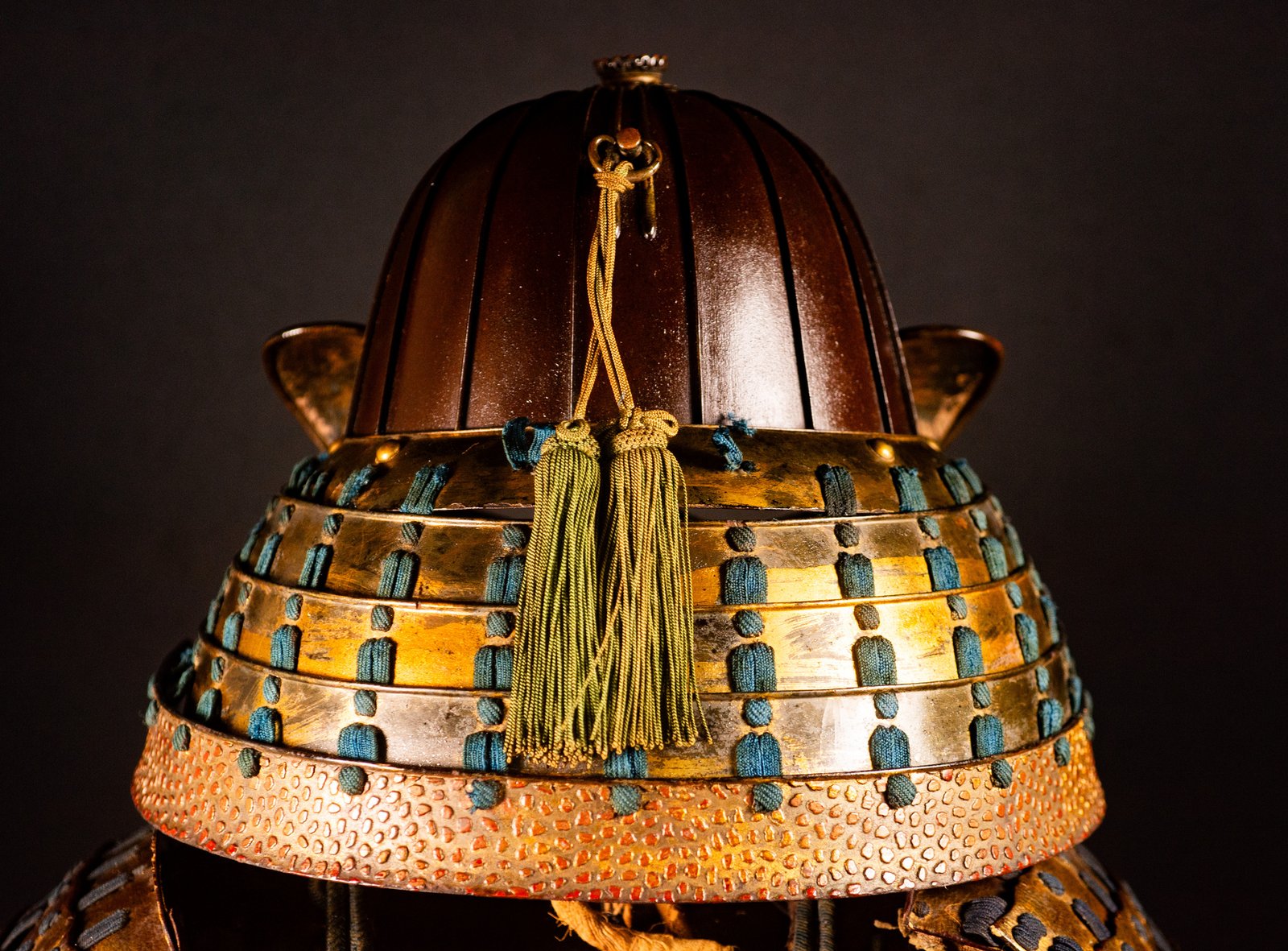
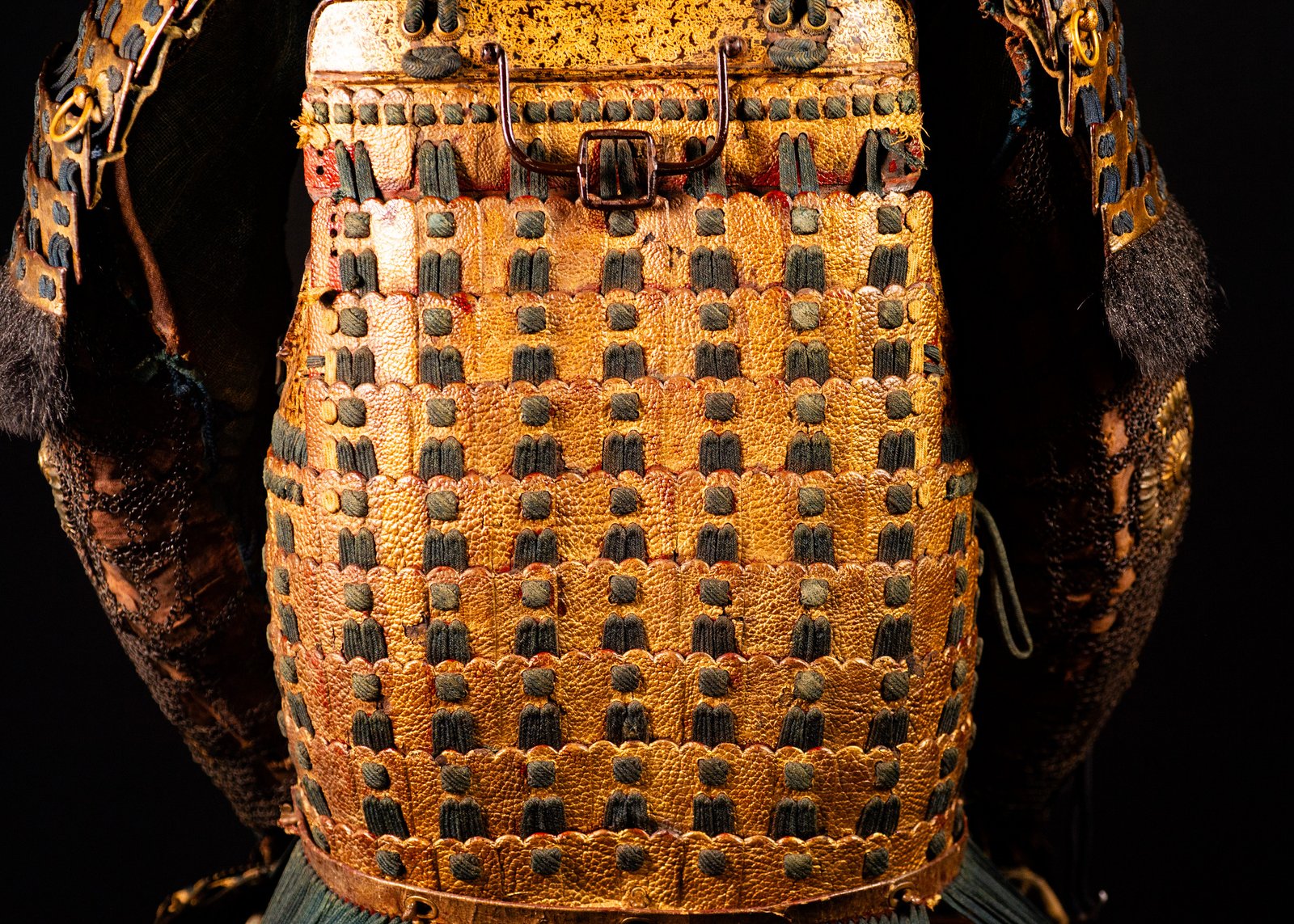
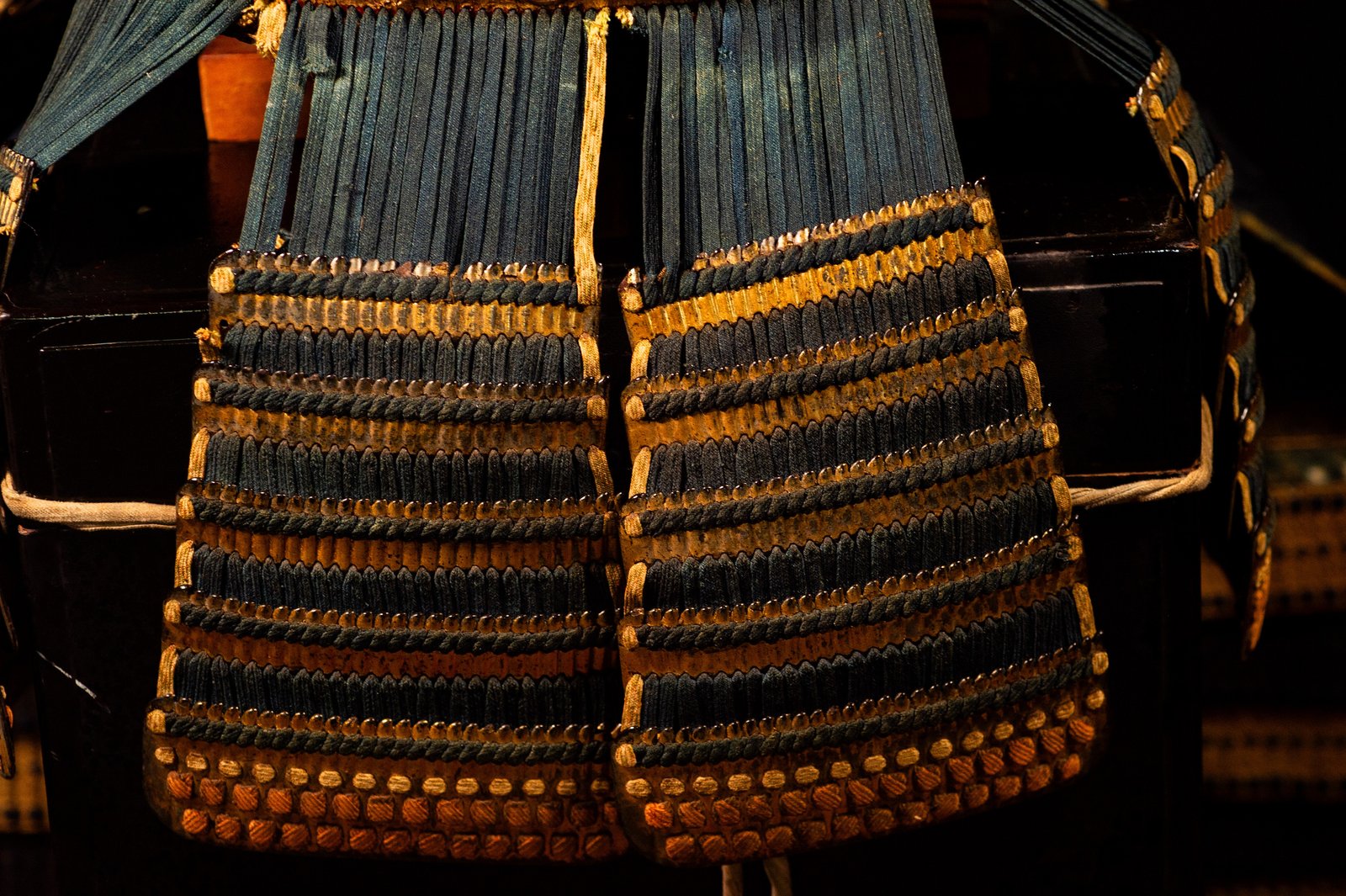
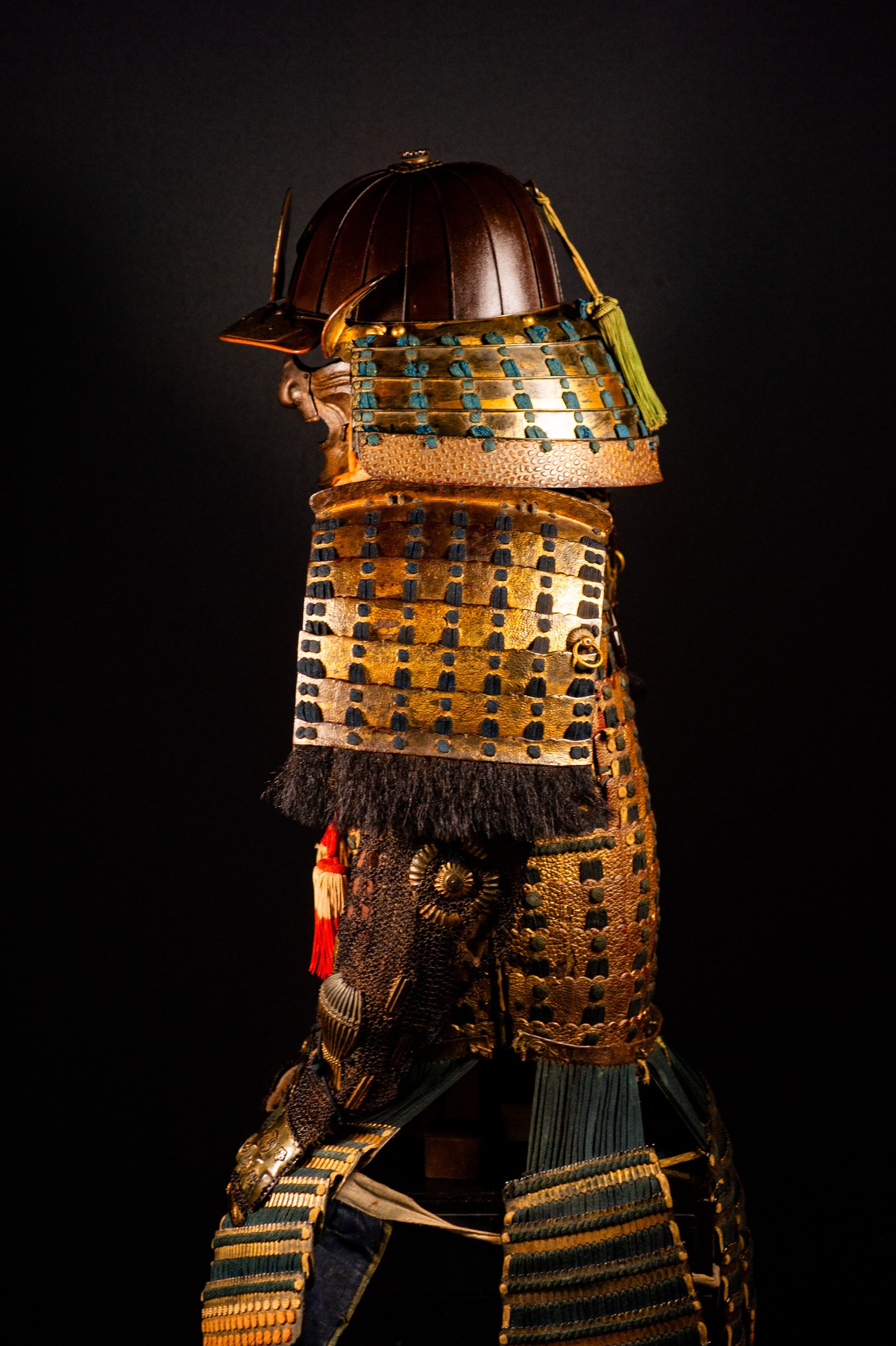
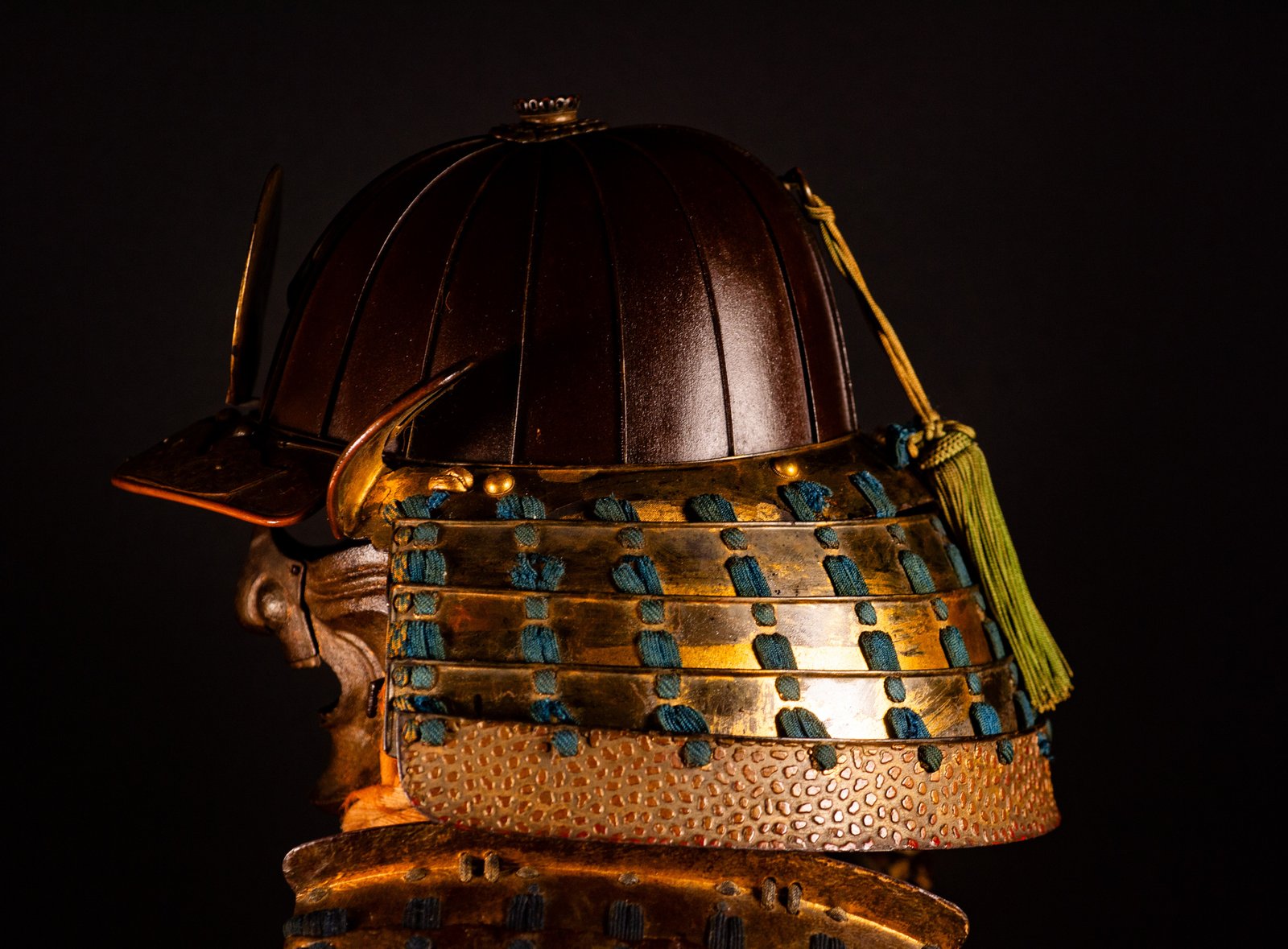
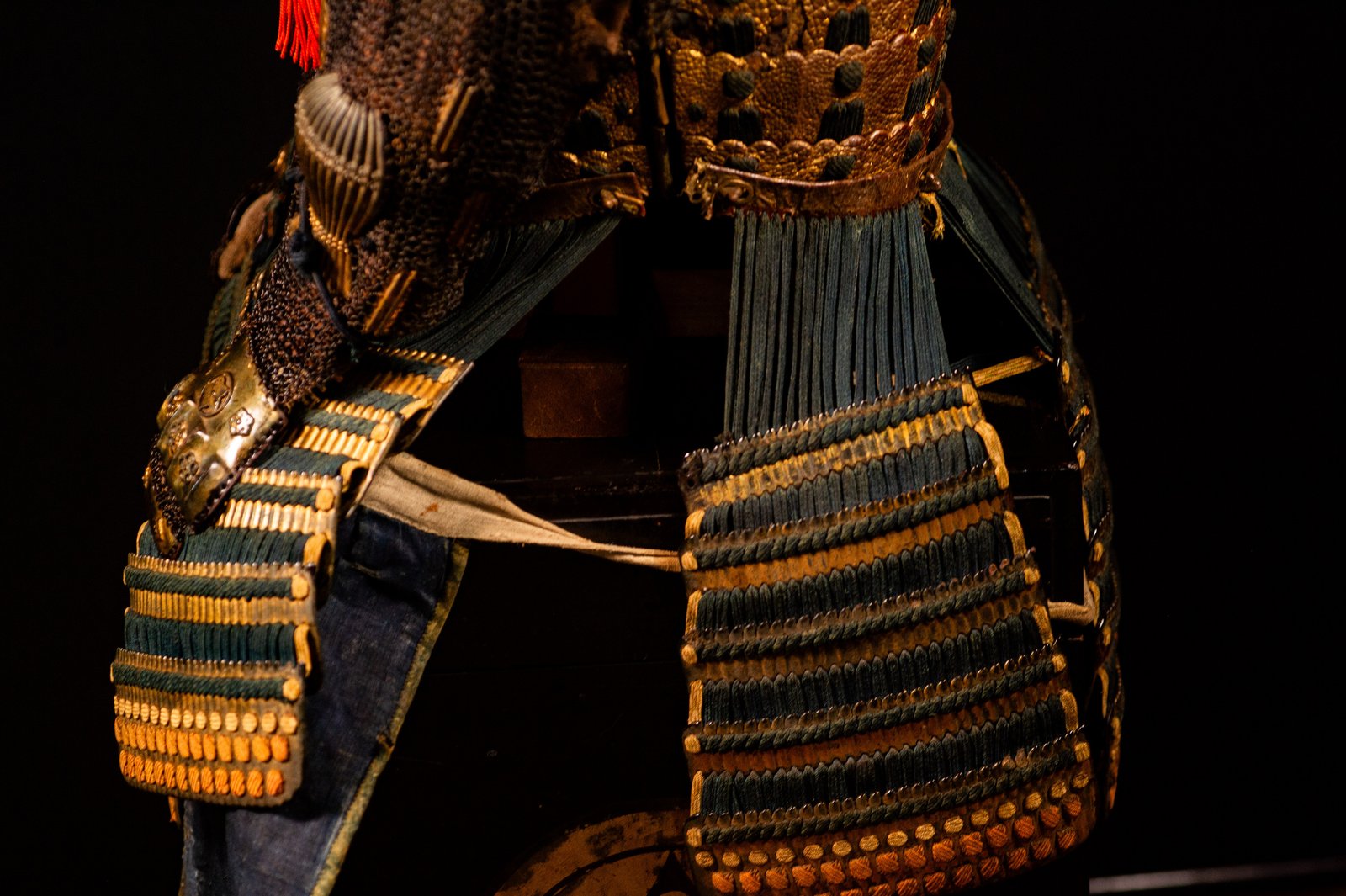
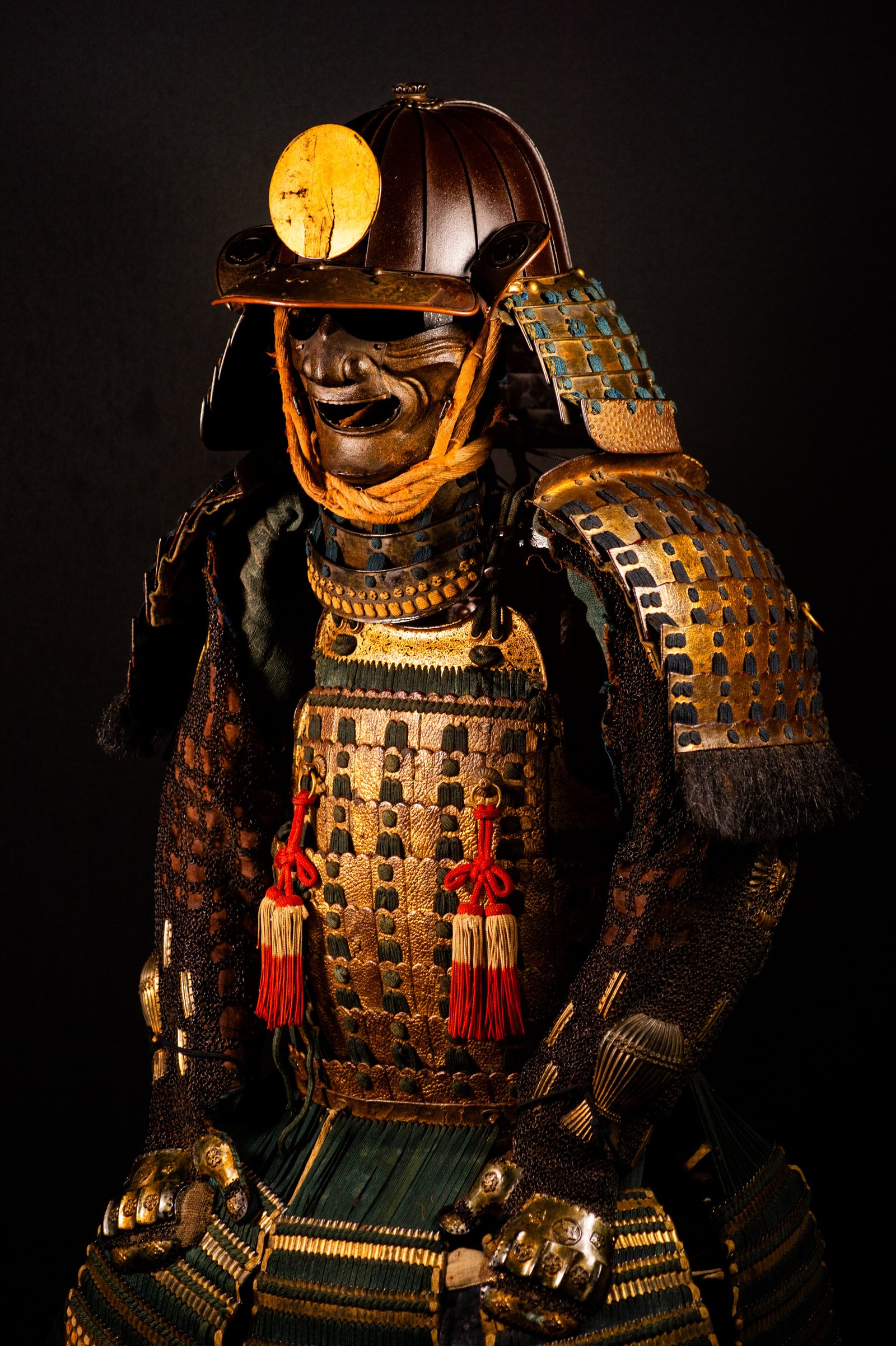
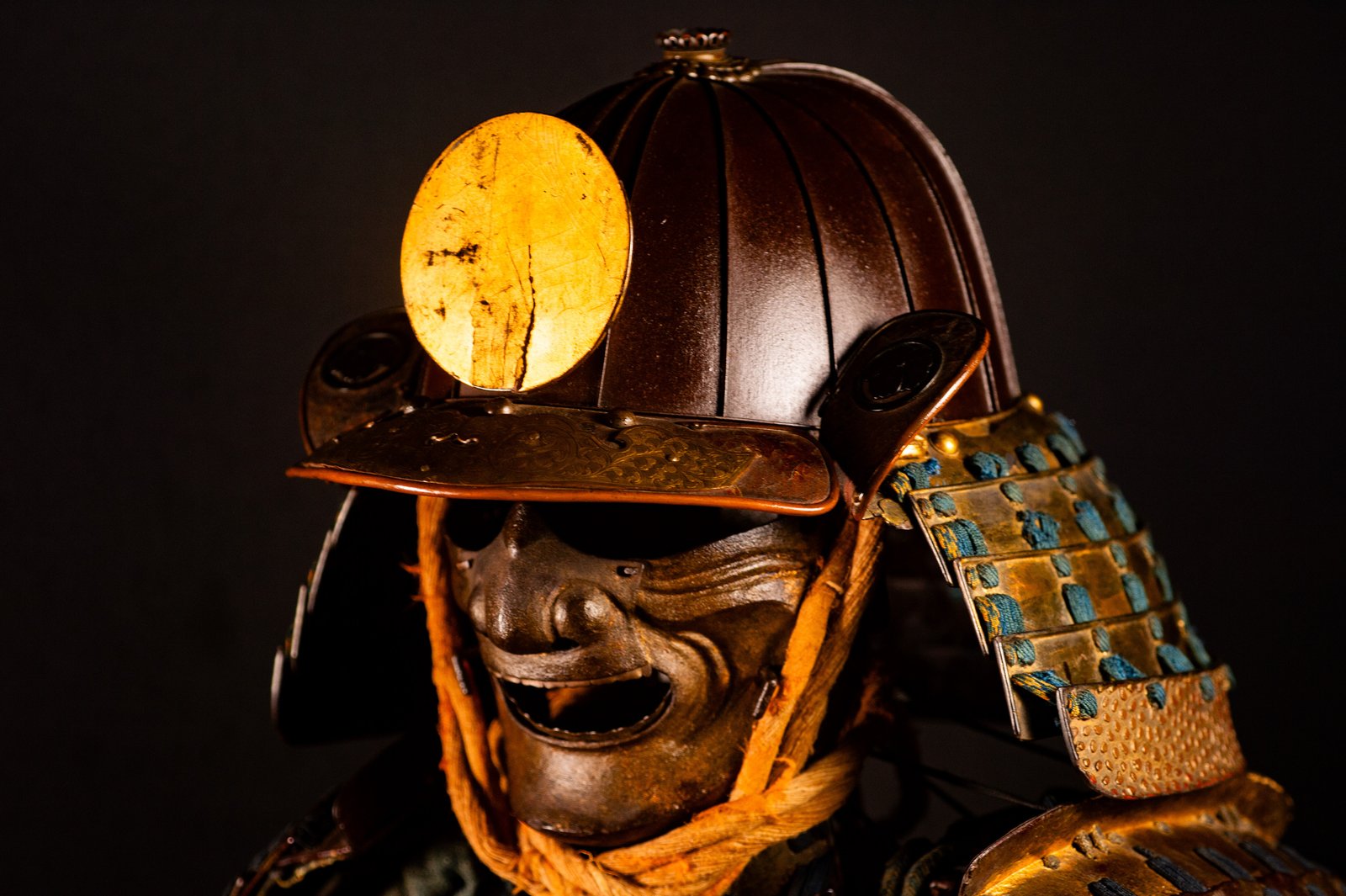
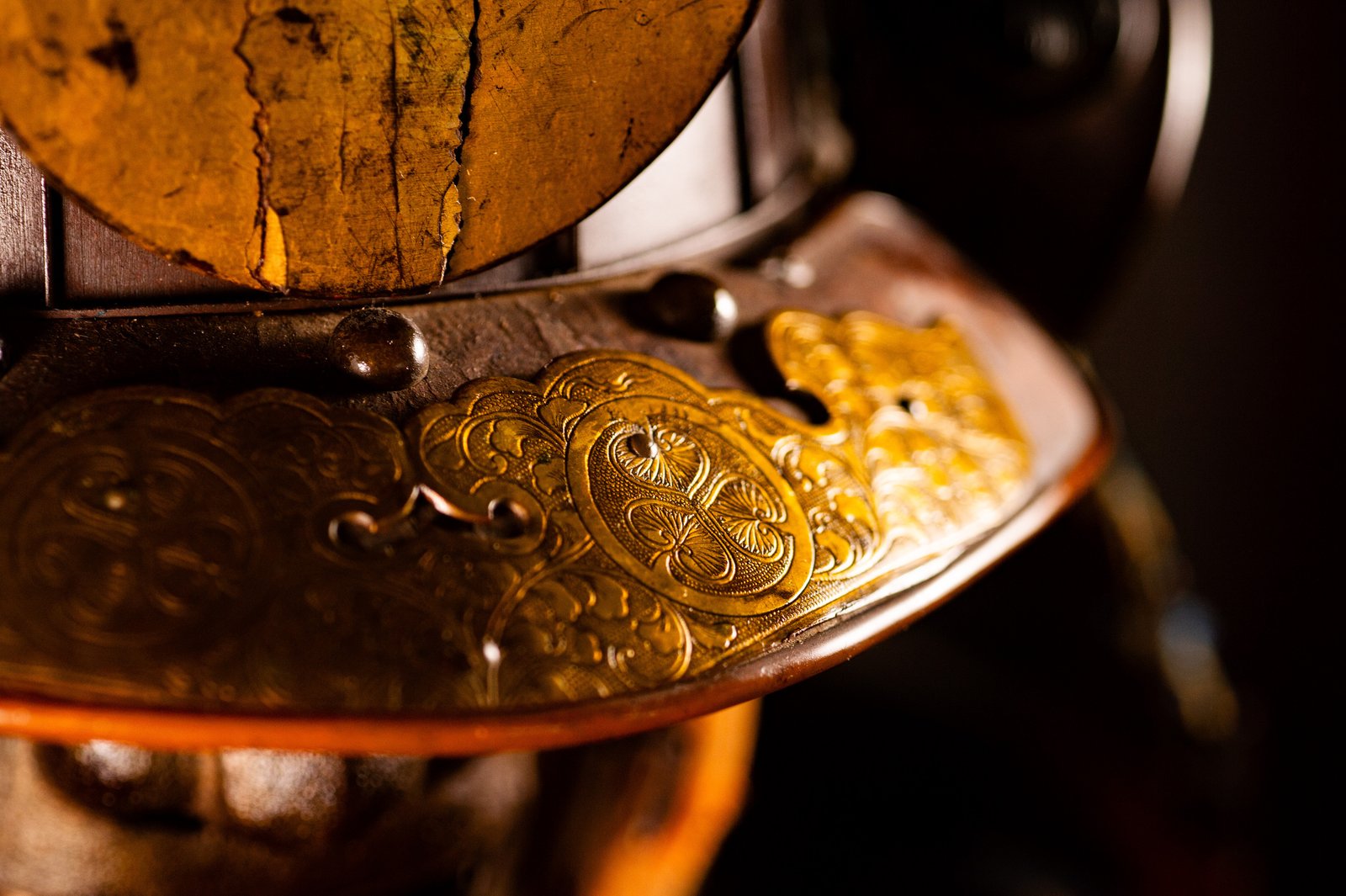
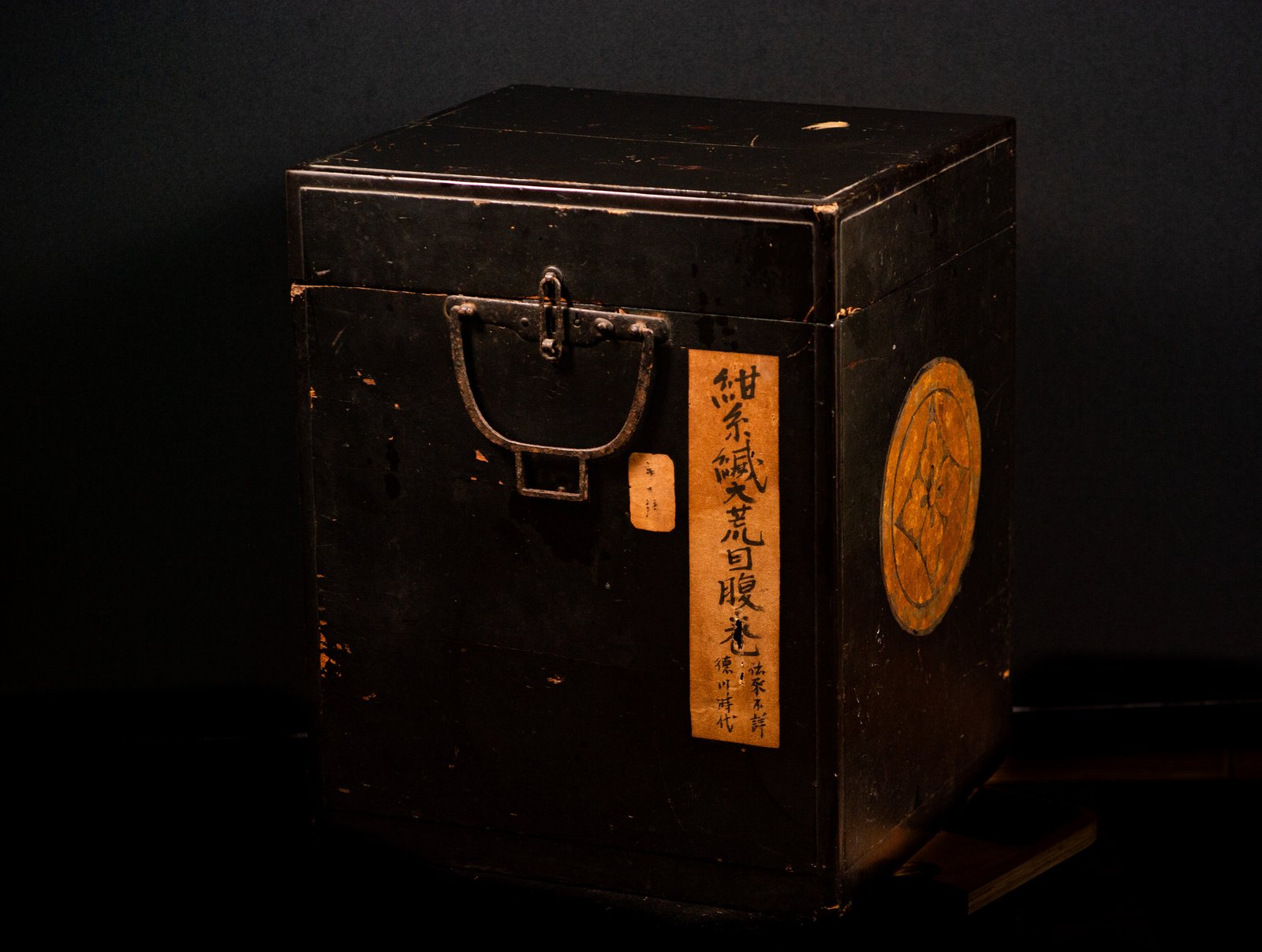
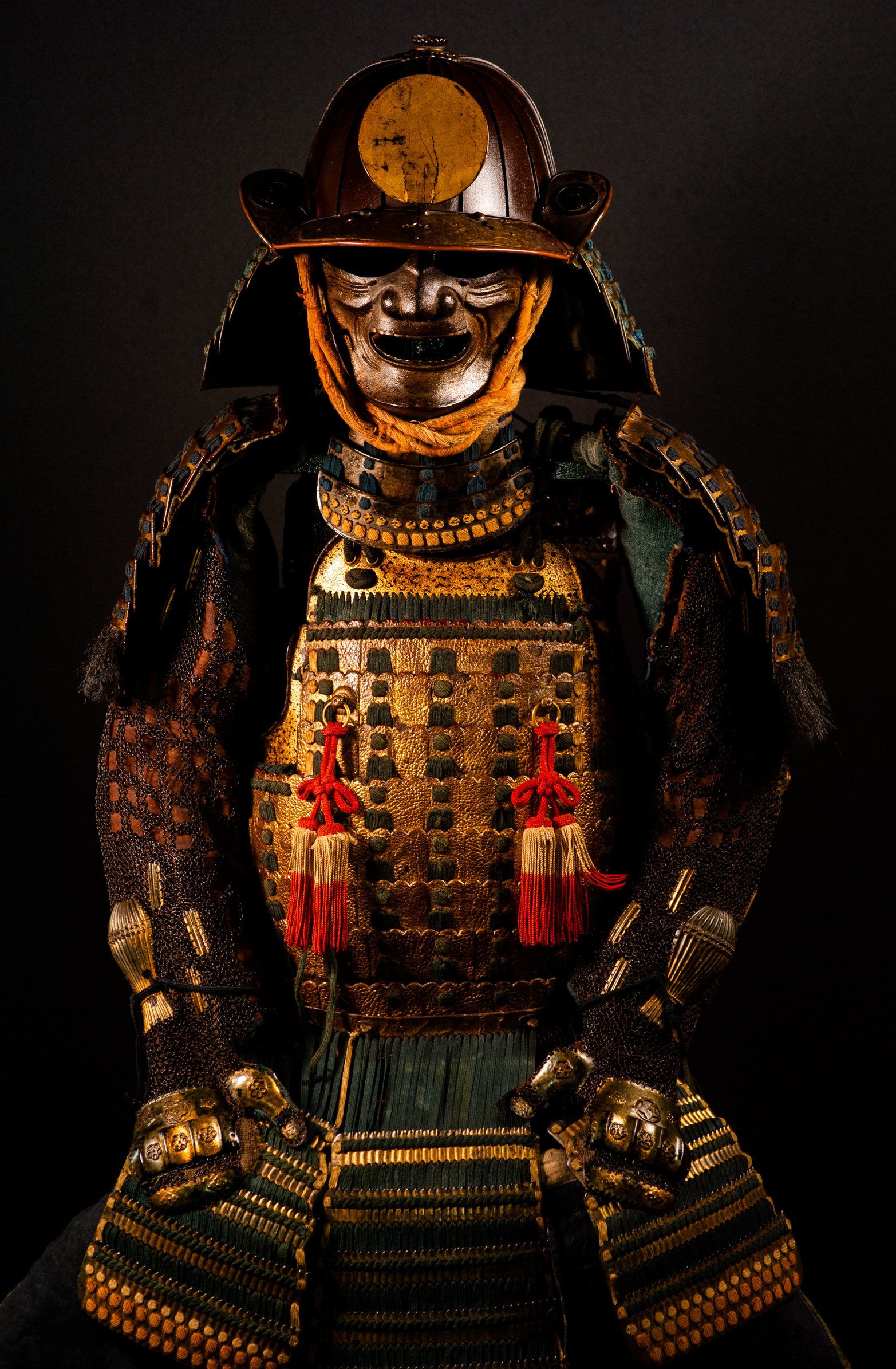
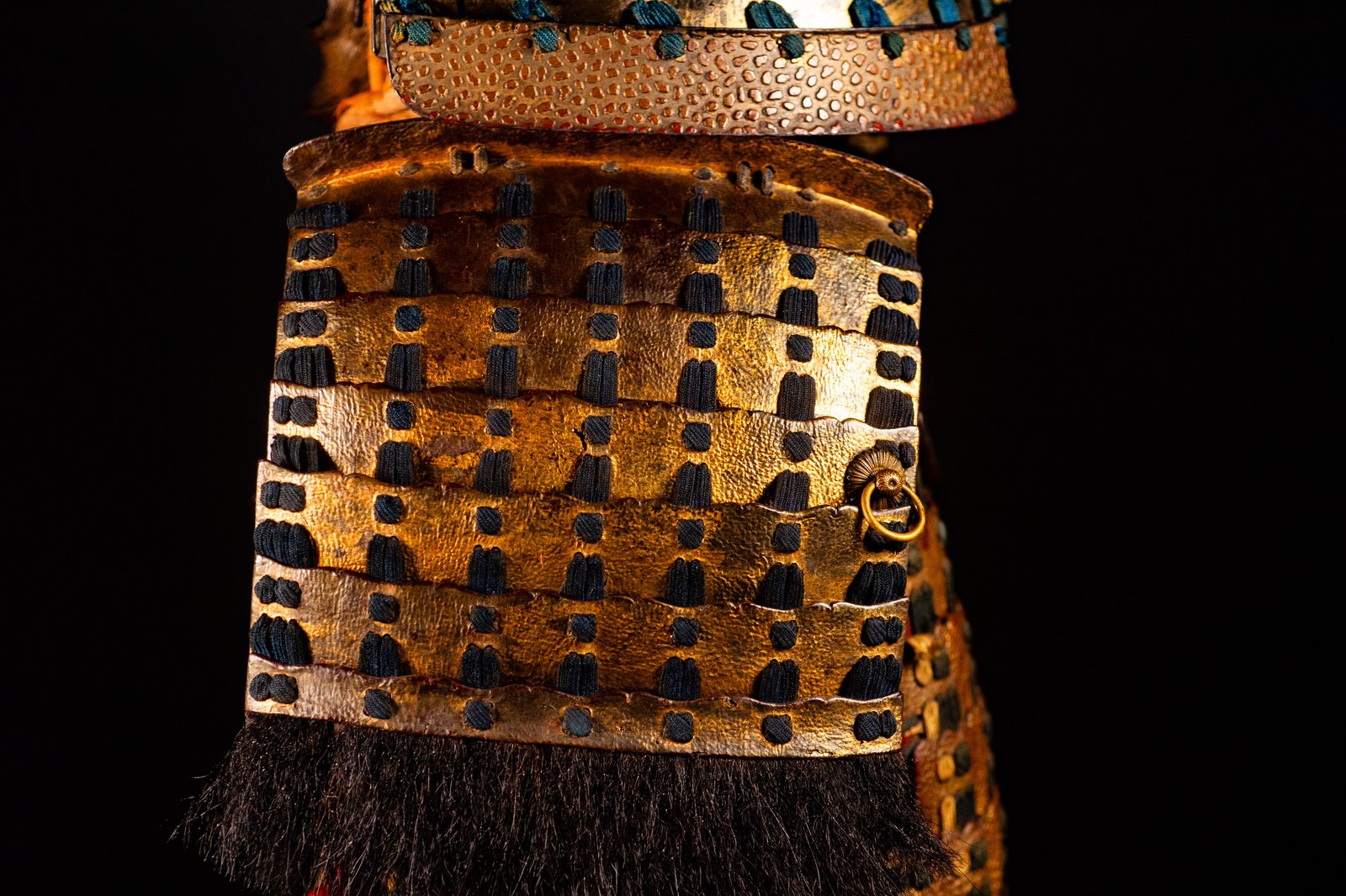
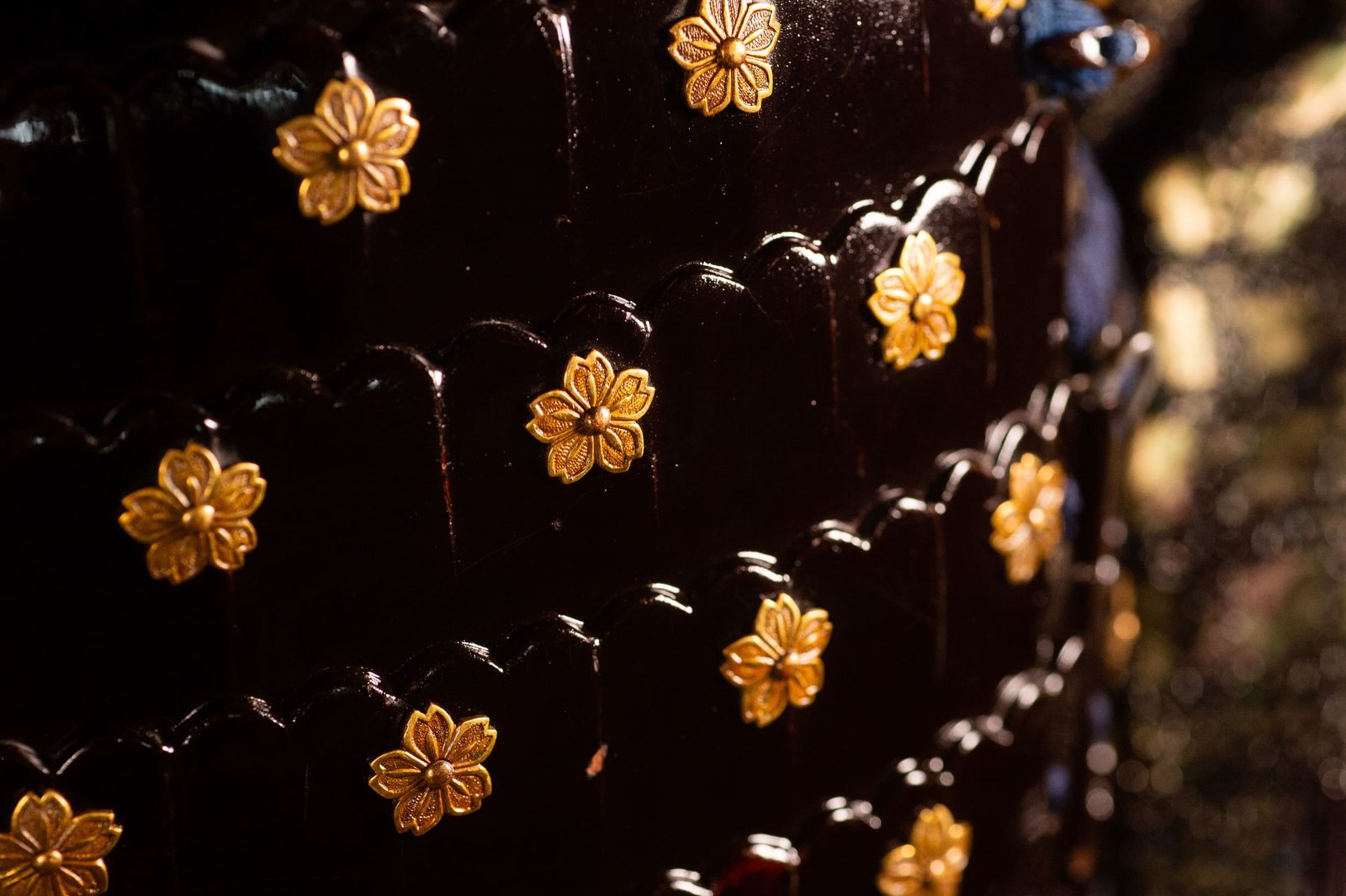
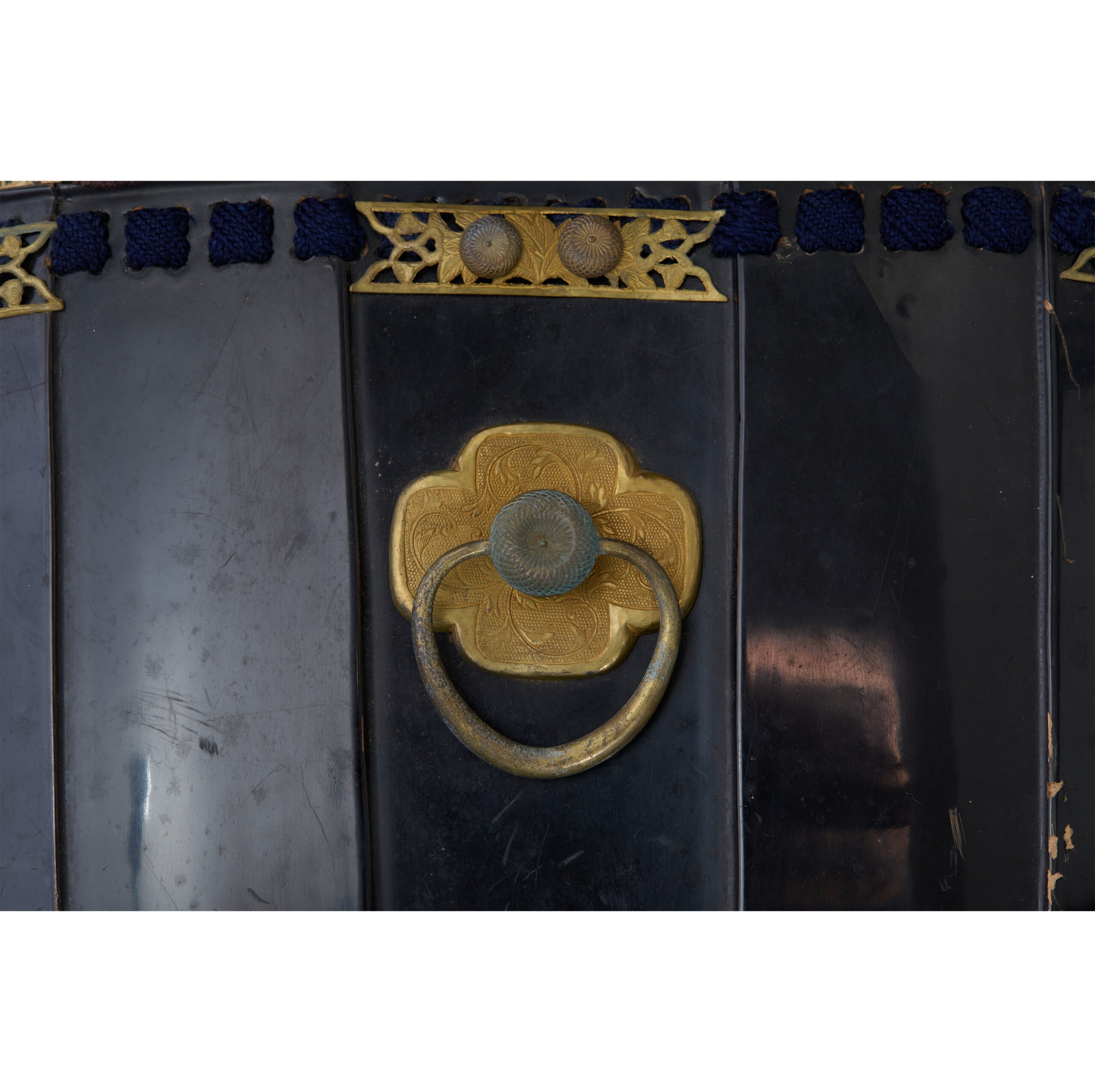
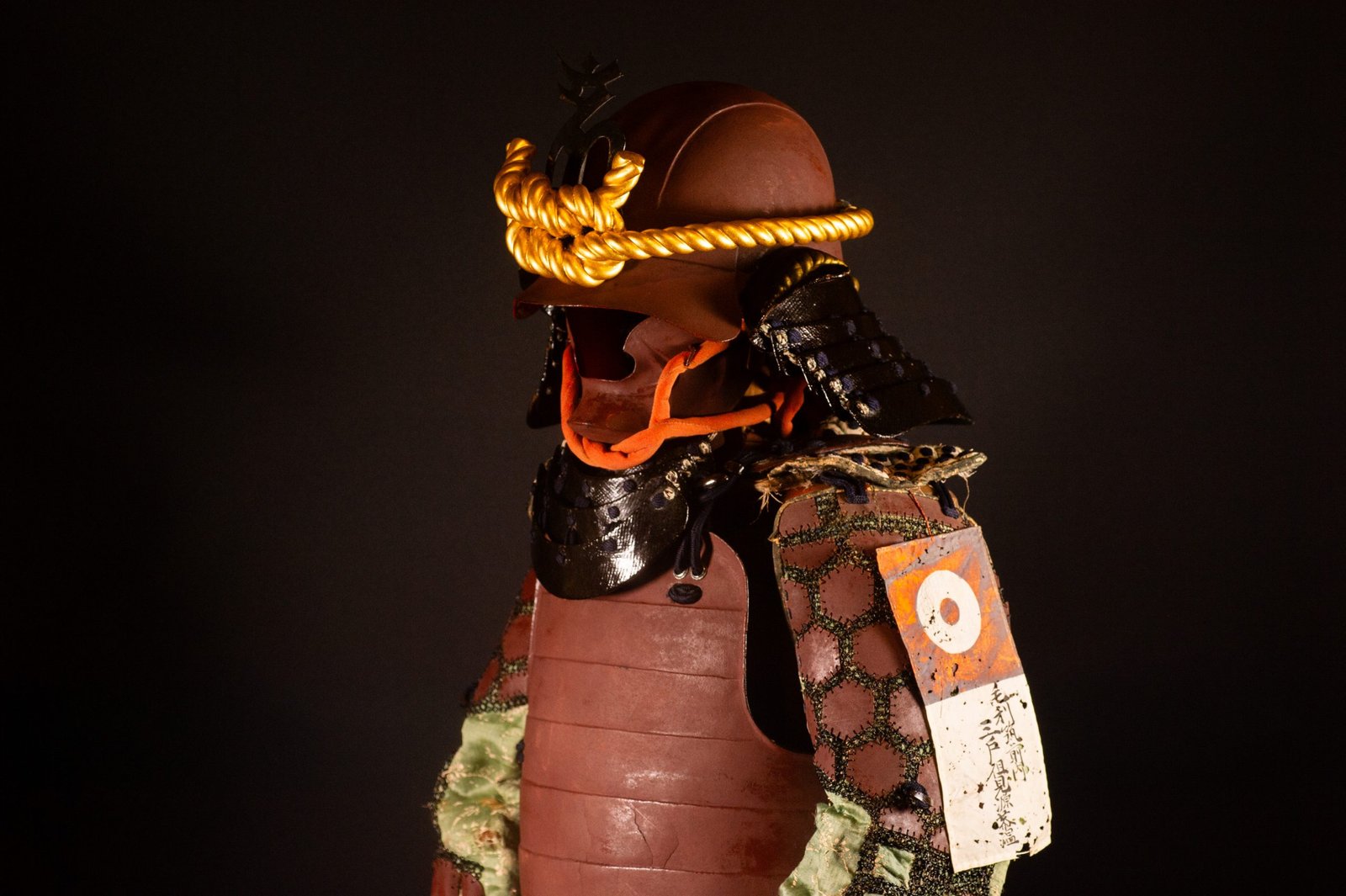
Edo Period · 18th Century · Complete Gusoku with Kabuto, Menpō, Sode, Kote, Haidate and Suneate · Lacquered Storage Chest with Old Paper Label A complete and visually commanding Japanese gusoku of dō-maru type, made in the Edo period (18th century) in the archaic ō-arame manner: large gilt scales laced in dark indigo silk (kon-ito odoshi). The kabuto carries a large gilt sun disc and a gilt peak engraved with the mitsuba-aoi (three-leaf hollyhock) crest, and the gusoku is completed by a grinning iron menpō, gilt sode, chain-mail kote, tiered kusazuri, haidate, hiza-yoroi and suneate. The overall effect is one of gold and deep blue-green: dark silk lacing running in rhythmic columns over a field of grained gilt scales, accented by two red and cream tassels at the chest, olive-green tassels at the back of the helmet and rows of orange and pale gold silk knots along the lower edges of the lames. The gusoku is accompanied by a lacquered wooden storage chest bearing an old paper label that names it kon-ito odoshi ō-arame haramaki (紺糸威大荒目腹巻), Tokugawa period. Classification and the Old Label The old label reads 紺糸威大荒目腹巻 – kon-ito odoshi ō-arame haramaki. Each element of the designation describes the armour: kon-ito odoshi, lacing in dark indigo silk; ō-arame, construction from large, coarse scales; and haramaki, the type name given on the label. The haramaki and the dō-maru are closely related wrap-around forms of body armour, and this complete gusoku is presented here as a dō-maru-type gusoku, with the designation on the old label recorded exactly as written. Ō-arame is an archaic way of building armour from broad lamellae, associated with the great armours of the Kamakura and Nanbokuchō periods. Edo-period armourers revived such forms for patrons who wanted armour that looked back to the warriors of the past. In this example the scales are finished in gold over a deeply grained surface, so that they catch the light like hammered metal. The dark lacing runs across them in regular columns, and the gold shifts from bright yellow to deep amber depending on the light. The Helmet (Kabuto) The bowl is built from numerous narrow plates joined by fine raised ribs, lacquered in a deep reddish-brown that varies subtly in tone across the surface. At the crown, a layered metal rosette forms the tehen kanamono. The principal decoration is the maedate: a large, flat, circular gilt disc mounted at the front of the bowl, evoking the sun. Its surface shows a fine network of craquelure, a few vertical cracks and small losses at the edge, natural signs of age in a gilt element of this kind. The Peak and the Mitsuba-Aoi Crest The mabizashi (peak) has a gilt-toned face engraved with scrolling karakusa on a finely punched ground, framed by a rolled copper rim and fitted with small studs and hooked mounts. At its centre is a roundel containing the mitsuba-aoi: three heart-shaped leaves, each with radiating veins, meeting at the centre of the circle. The mitsuba-aoi is the crest most famously associated with the Tokugawa shoguns and the Matsudaira branches of their family, and its use was strictly controlled in the Edo period. It is presented here as an iconographic feature of the gusoku; no specific owner is claimed. The Fukigaeshi and the Shikoro The broad, rounded fukigaeshi (turned-back wings) are faced in crackled leather and edged in copper. Each carries a dark metal roundel set with a crest. The shikoro (neck guard) flares outward in graduated gilt lames, laced in widely spaced (sugake) turquoise-blue silk. The lowest lame is lacquered red and finished with a raised, pebbled gold surface. From a ring (kasajirushi-no-kan) at the back of the helmet hangs a pair of olive-green silk tassels. The Face Guard (Menpō) and Throat Guard (Yodarekake) The iron menpō has a warm russet-brown patina, with a smoother, glossier finish on the chin and lower cheeks. It is modelled with deep curved wrinkles beneath the eyes, a prominent rounded nose and a broad open mouth in a fierce grin, the upper rim of the mouth serrated to suggest teeth. It is secured by a thick twisted orange cotton cord that wraps beneath the chin. The yodarekake (throat guard) is in two tiers. The upper tier is dark iron laced in indigo-blue silk. The lower, curved tier is finished with a row of orange and pale gold silk knots (hishinui). The Cuirass (Dō) The dō is built of rows of large gilt scales with a grained, pebbled surface and scalloped upper edges. The dark indigo lacing runs in widely spaced columns, appearing alternately as paired vertical tabs and as round knots from row to row. Across the top, a gold-ground chest plate (muna-ita) carries a dense, fine-lined decoration. Below it, a band of closely set vertical lacing and a twisted lacing cord lead into the scale rows. The lower edge is finished with a scalloped gilt band and a copper-toned rim with rivets. Two red silk agemaki bows hang from gilt rings with fluted rosette mounts on the chest, each carrying a double tassel in cream and red. The shoulder straps are formed of gilt lames laced in indigo, over a coarse blue-green cloth lining. At the back, the upper centre carries an iron hook-and-buckle fitting beneath a gold-patterned plate. The Shoulder Guards (Sode) The sode are large and rectangular, made of graduated gilt lames with a finely grained, hammered-looking surface, laced in dark indigo-blue in the same spaced columns as the cuirass. A gilt ring with a fluted rosette mount at the edge carries the tying cord, and the lower edge is finished with a deep fringe of coarse dark animal hair. The Sleeves (Kote) and Hand Guards (Tekkō) The kote are sleeves of fine iron chain mail (kusari) worked in a lattice pattern over brown silk textile, which shows through the open panels. Narrow gilt bars run along the forearm, a fluted gourd-shaped gilt plate protects the lower arm, and a cluster of fluted gilt rosettes sits on the upper arm. The tekkō are articulated gilt-metal hand covers with a mellow, worn patina, embossed with roundels and small blossoms. The Tassets (Kusazuri) The kusazuri hang in separate sections around the waist. In each section the upper part shows long, dense runs of dark blue-green lacing (kebiki odoshi). Below this, narrow gilt lames alternate with twisted lacing cords and bands of closely laced silk. The lowest rows end in tight bands of round silk knots in orange and pale gold. Thigh Guards (Haidate), Knee Guards (Hiza-yoroi) and Shin Guards (Suneate) The haidate hang from the waist beneath the kusazuri. Their upper part is faced in a golden-brown patterned textile with a scrolling floral design, finished at the lower edge with a blue-green border carrying small white motifs. Below, bands of gilt lames alternate with black-lacquered lames, laced in dark navy with cross-shaped and dotted knots; the lowest lames show the warm orange tone of aged gilding. The hiza-yoroi are knee guards of gilt-toned leather with a raised hexagonal (kikkō) pattern, each cell marked with a small green-grey knot. The suneate are made of dark lacquered splints alternating with panels of chain mail, bound at top and bottom with indigo cloth ties. A patch of pale yellow-beige textile with small white motifs covers the lower part. Lacing and Colour The palette is deliberately limited and coherent. The lacing of the cuirass and kusazuri is dark indigo that has mellowed to a deep blue-green. The sode and haidate are laced in darker navy, and the shikoro and yodarekake in a lighter turquoise-blue. Against the gold, the accents are few and well placed: the red and cream tassels at the chest, the olive-green tassels at the back of the helmet, the orange cord at the chin and the orange and pale gold knotwork along the lower edges. The Storage Chest The gusoku comes with its lacquered wooden storage chest (yoroi-bitsu), decorated with a gold crest. The chest retains an old paper label identifying the armour as kon-ito odoshi ō-arame haramaki, Tokugawa period. Condition The gusoku is complete and cohesive, in good condition for its age, with honest signs of wear that form part of its history. The gilt sun disc shows craquelure, fine cracks and small losses at the edge. The gilding of the scales and lames is gently rubbed at the high points, and the lower lames of the shikoro show areas of silvery tone and dark spotting. The blue-green cloth at the shoulders is frayed, with ragged edges in places, and the leather edges of the shoulder straps show some lifting and cracking. The silk lacing has faded and mellowed unevenly. The gilding of the tekkō has darkened to a soft brown-green patina, and the lacquer of the helmet bowl and the iron of the menpō show an even, attractive patina. The textile elements, including the haidate cloth, the shin-guard fabric and the cloth ties, are softened, worn and discoloured by age. Collector’s Value This gusoku brings together several qualities that make it a strong piece for display and collecting: a complete ensemble that includes not only helmet, mask, cuirass, sleeves and tassets but also haidate, knee guards and shin guards; a deliberately archaic ō-arame construction in gilt scales; and a disciplined palette of gold, indigo and blue-green with small, carefully placed accents of red, orange and olive. The mitsuba-aoi crest on the peak gives the helmet a distinctive iconographic identity, and the large gilt sun disc, the grinning menpō and the flared shikoro give the armour strong presence from the front, the side and the back. The old paper label and the lacquered storage chest add a further layer of history. The wear described above is that of a genuinely old gusoku, and it contributes to the warm, mellow appearance of the gold and silk. A complete and imposing Edo-period gusoku in the archaic ō-arame manner, this dō-maru-type armour combines large gilt scales, dark indigo lacing, a sun-disc kabuto with a mitsuba-aoi peak, a grinning iron menpō and a full set of lower-body protection, together with its lacquered chest and old label. Its condition is that of an honestly aged gusoku, and it will appeal to the collector who values completeness, a coherent colour scheme and strong visual presence.
Offered by Supein Nihonto
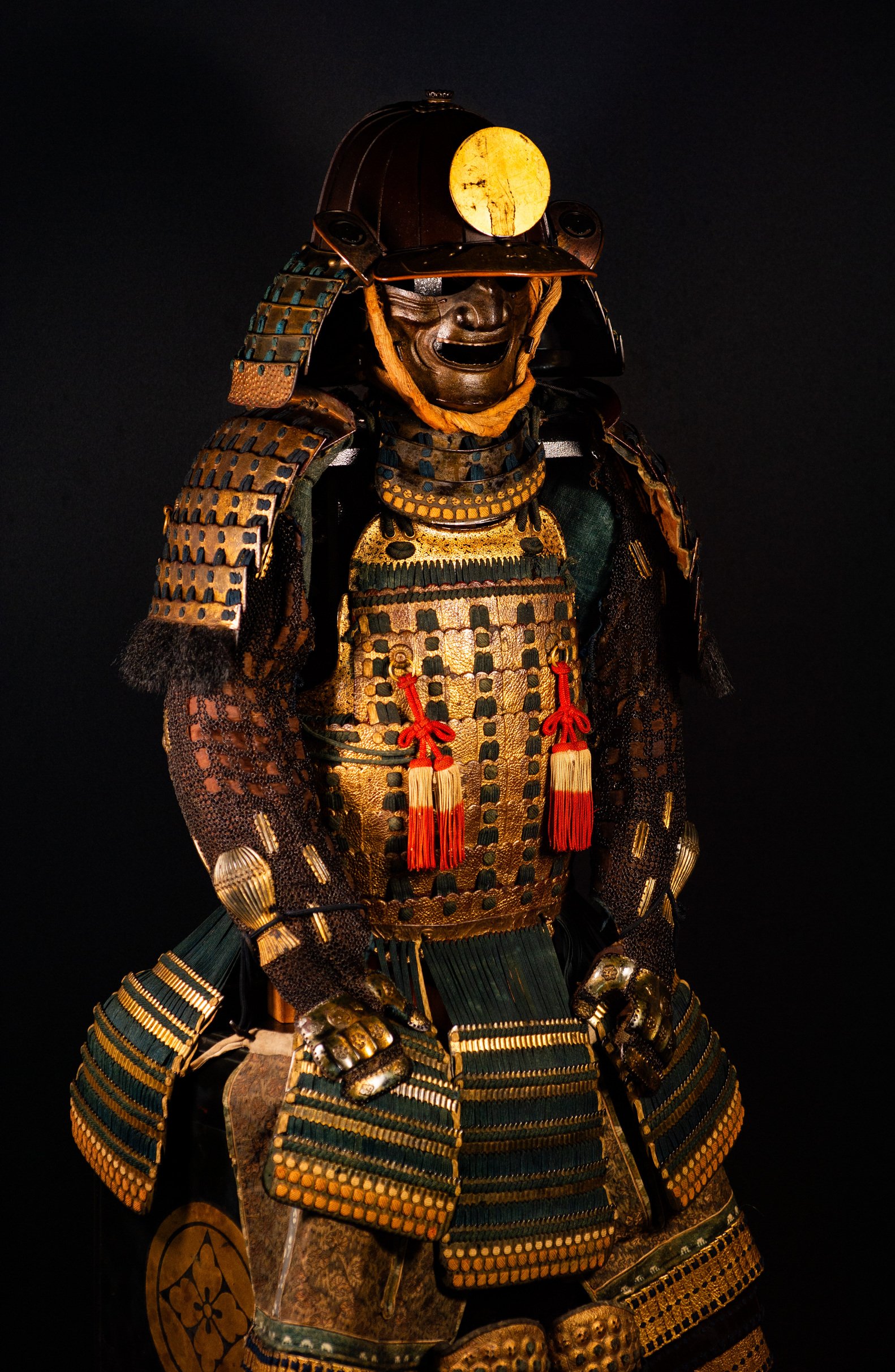
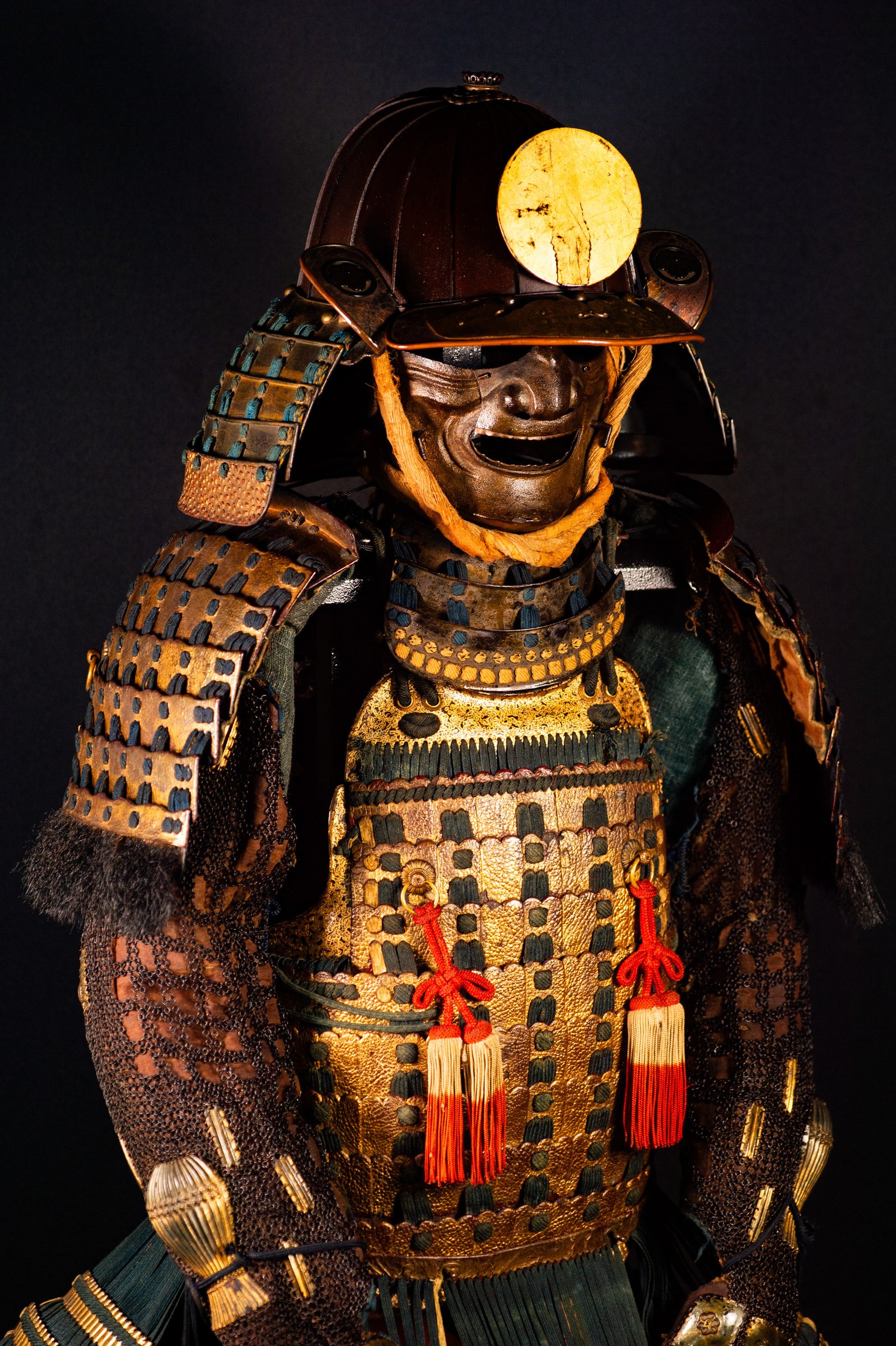
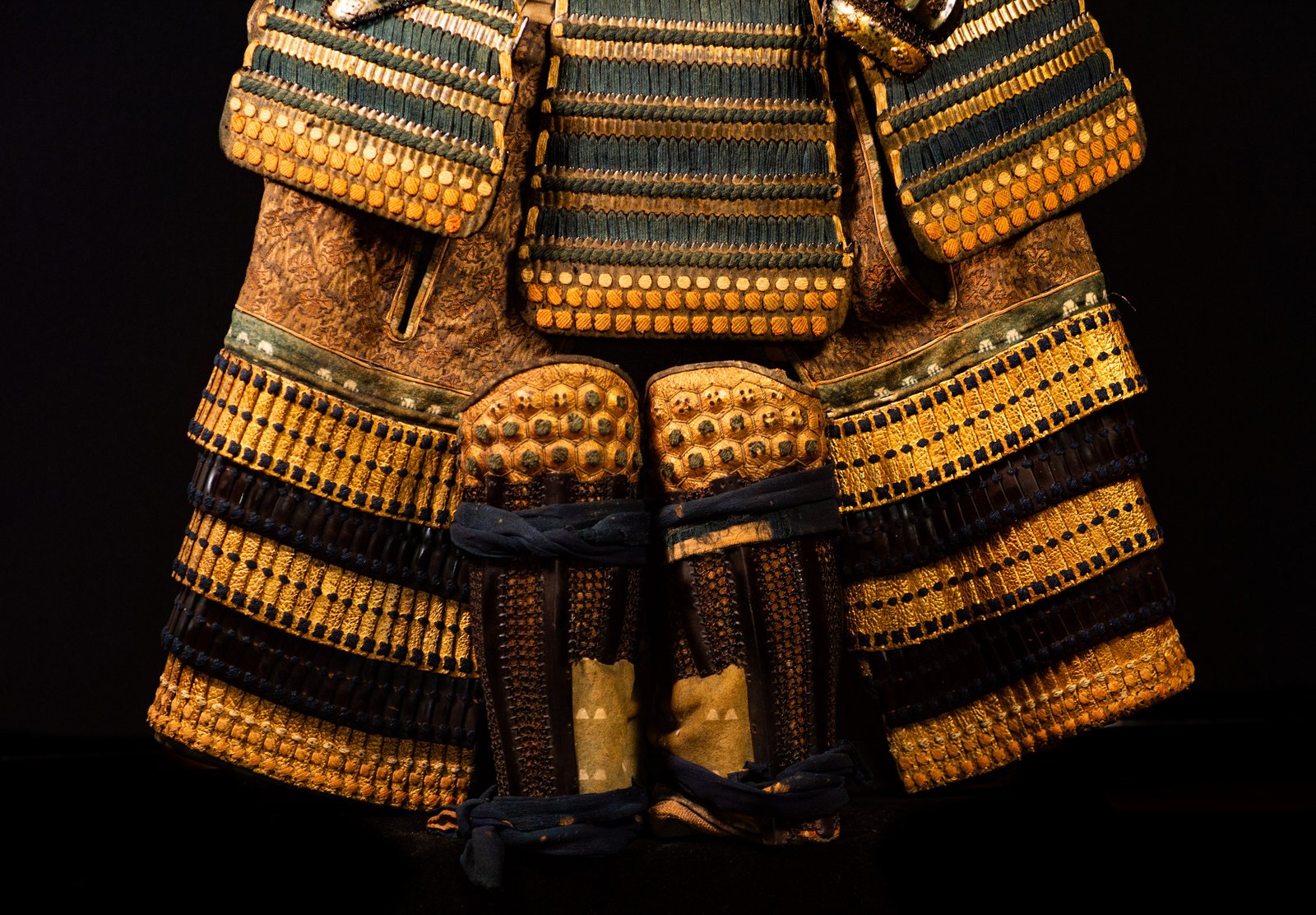
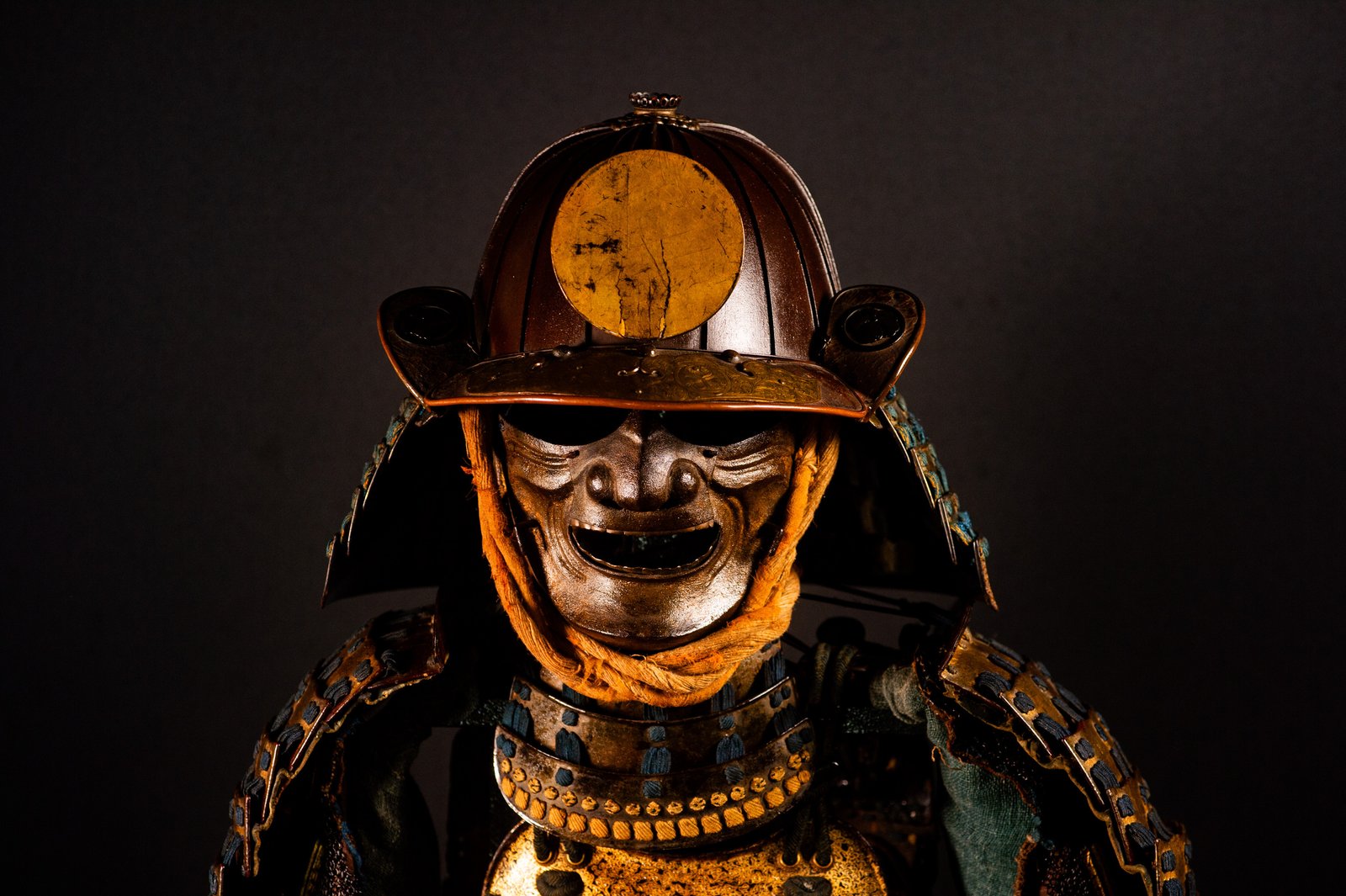
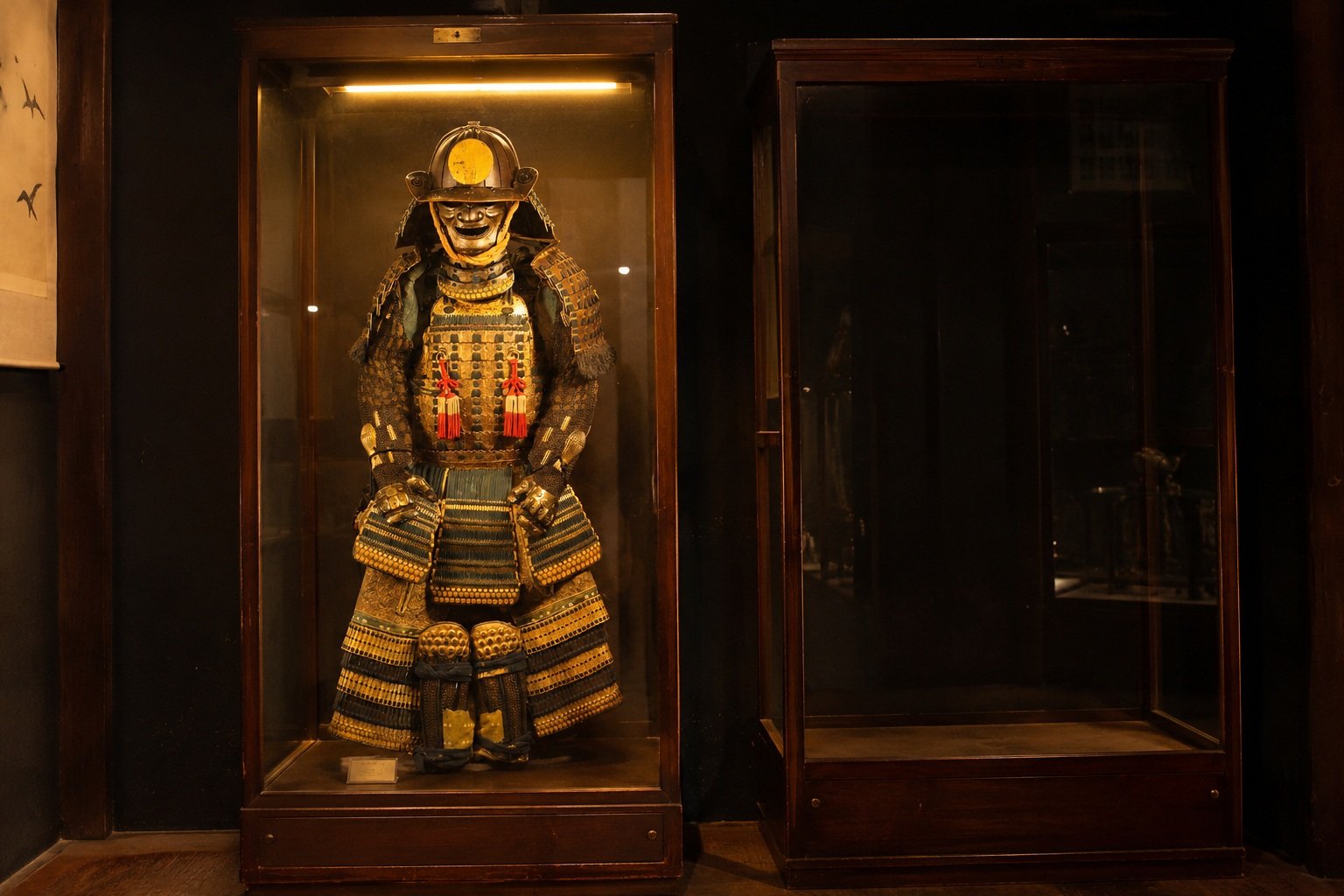
Dō-maru
Full gusoku (complete suit)
Unsigned
Sugake-odoshi · Kon (dark blue)
mitsuba-aoi
Edo
Tokugawa
Machine translation of the shop's Japanese ·
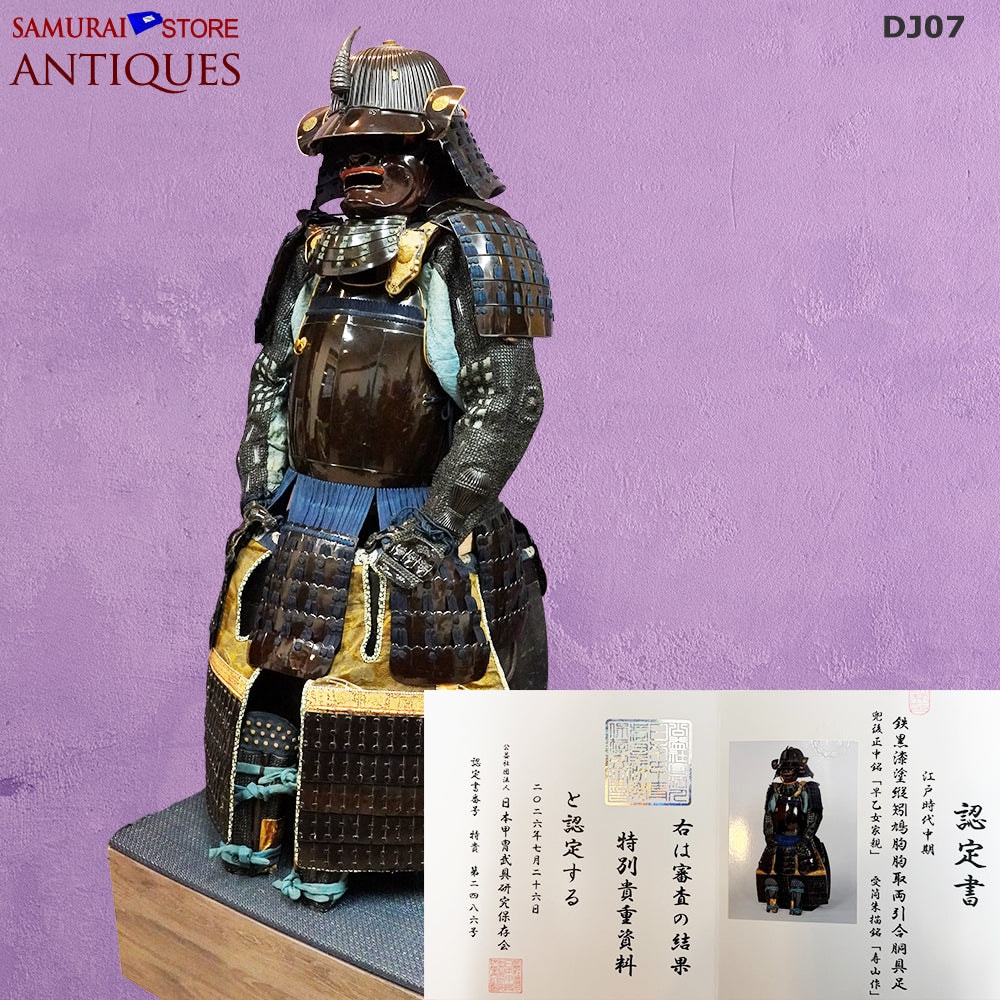
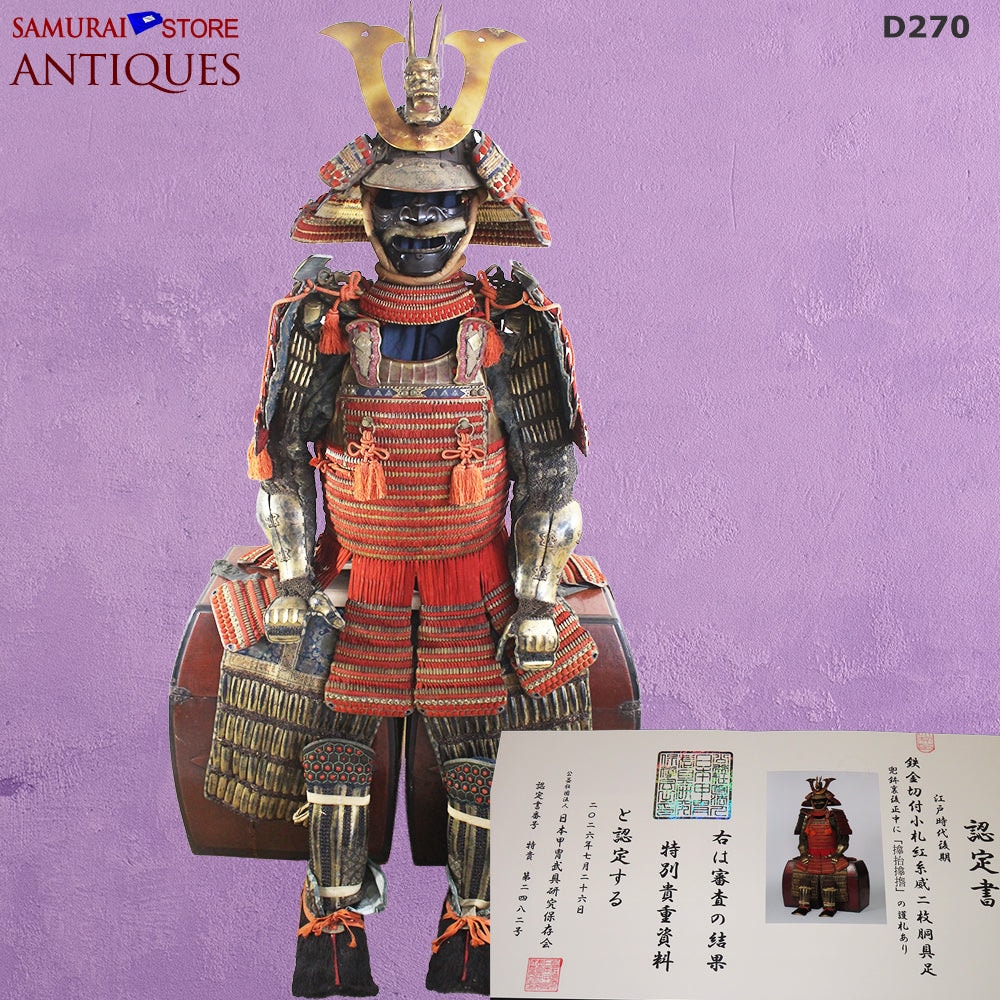
We could not find an authenticity certificate on the seller’s listing. Japanese armour is normally certified by the Nihon Katchū Bugu Kenkyū Hozon Kai (the armour society). Without one, the attribution is the seller’s own assessment and has not been independently verified — treat it with caution and ask the dealer about certification before buying.
14-day return if items arrive damaged or in unexpected condition; customer bears return shipping + insurance; items returned in original condition with all accessories; antique armour non-returnable; only regular priced items refundable; shipping costs non-refundable.


€9,900