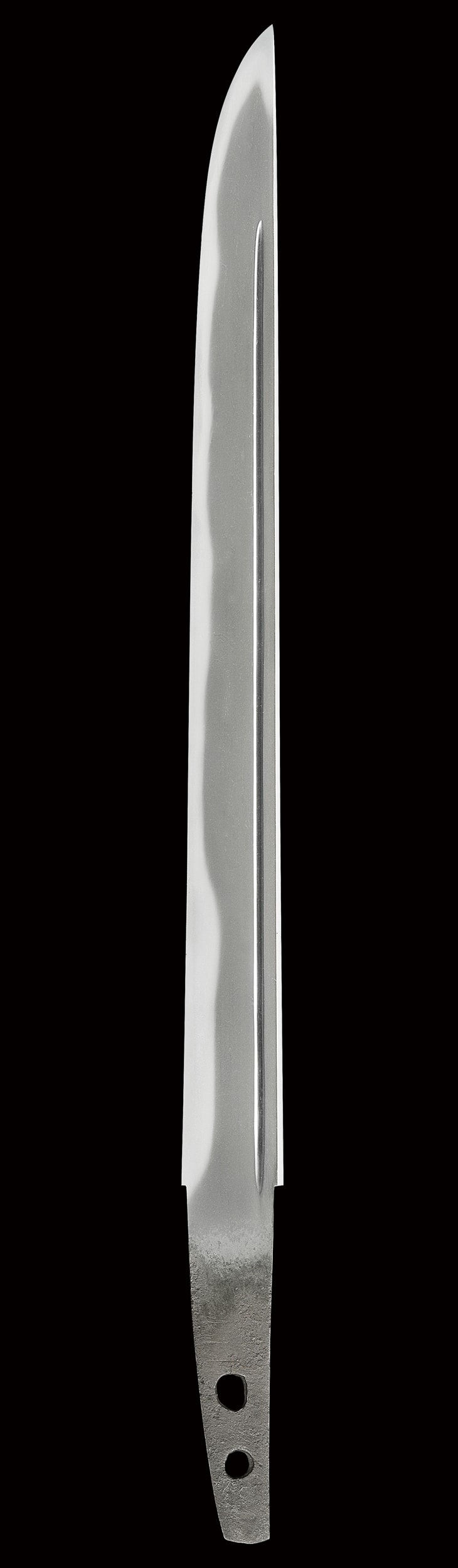
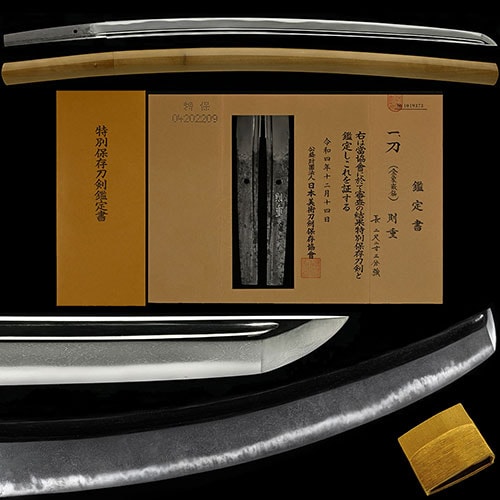
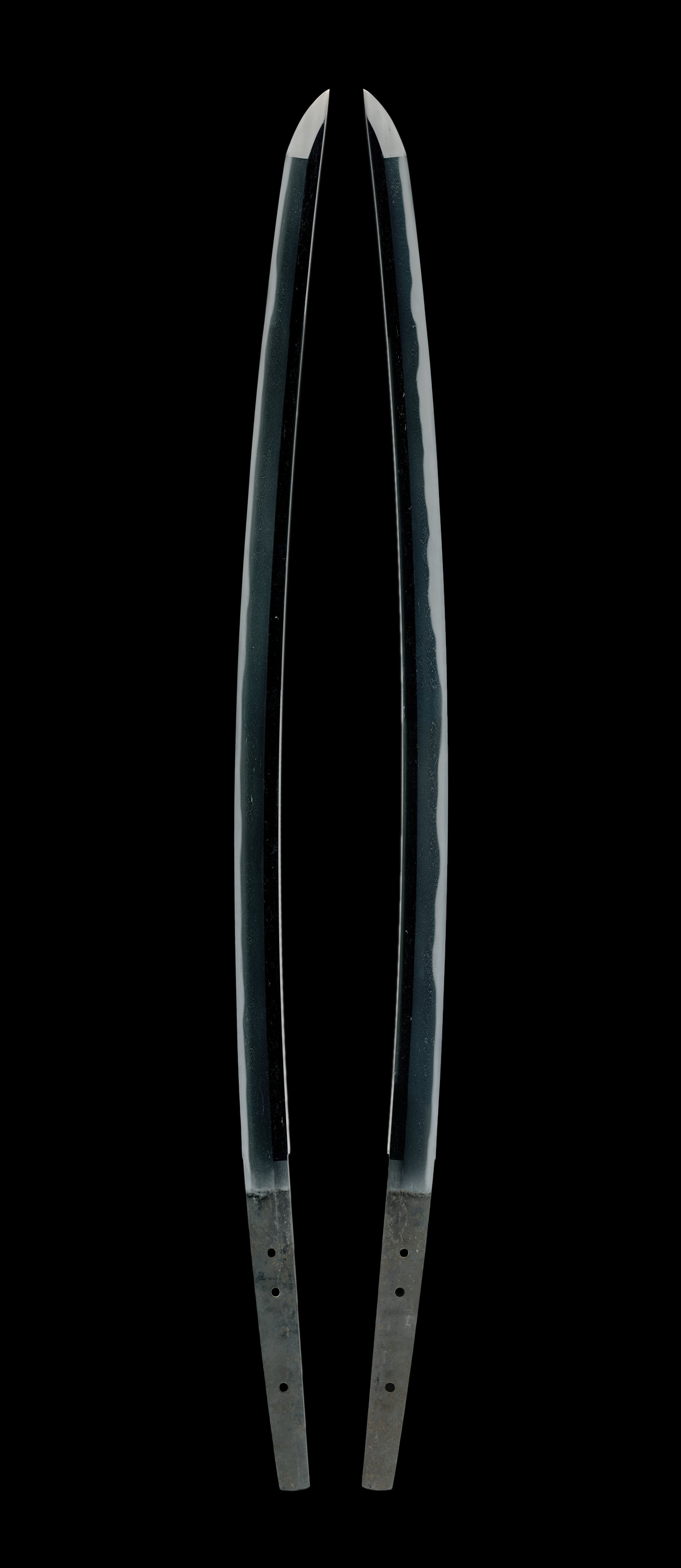
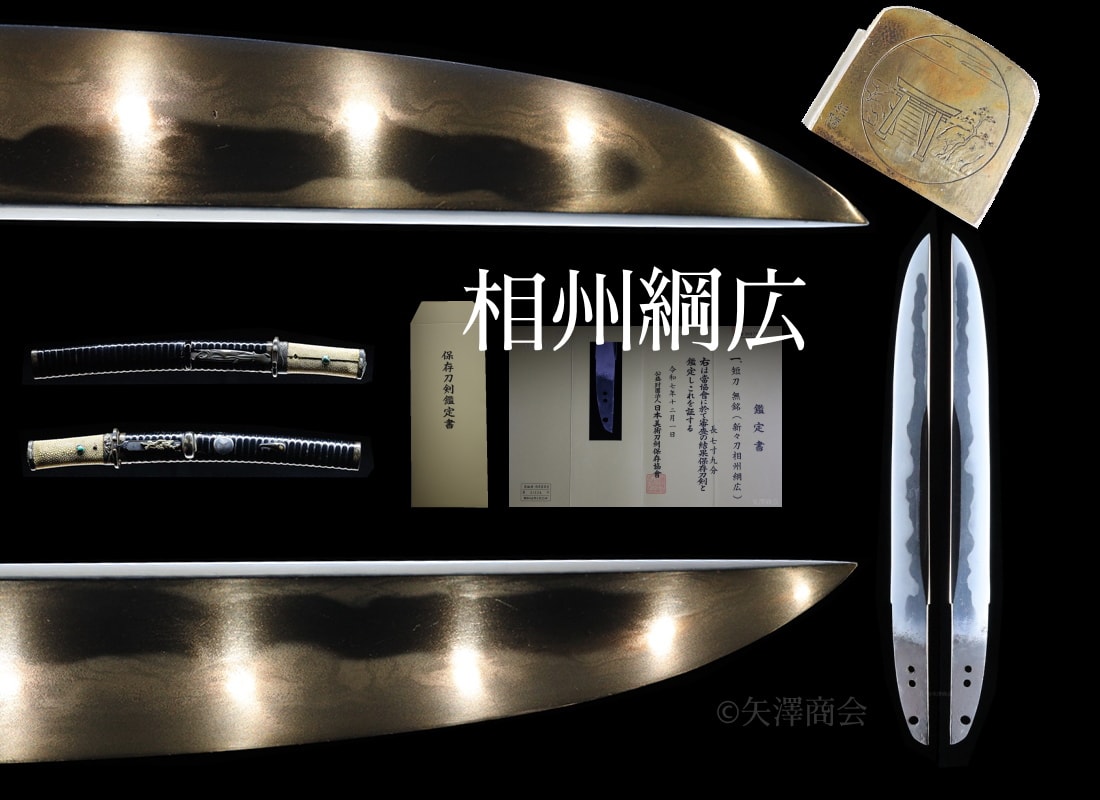
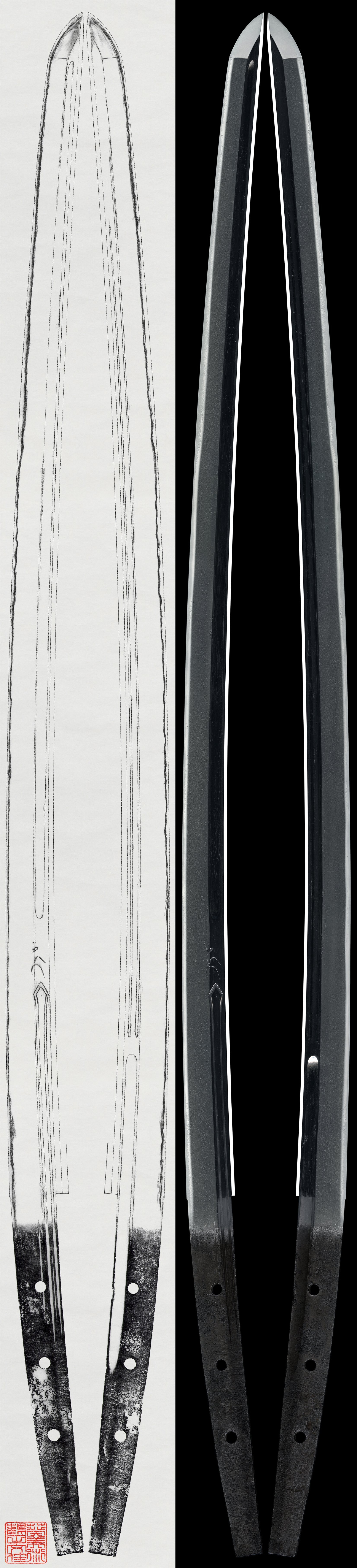
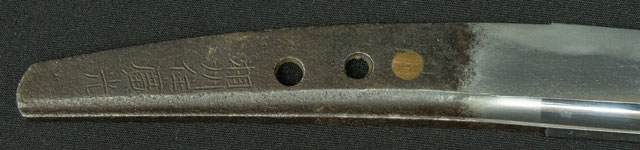
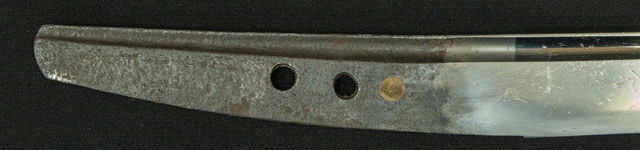
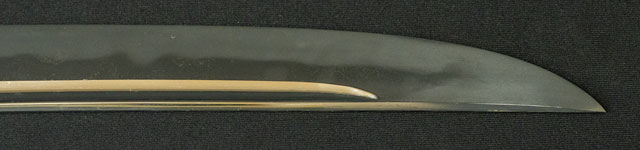
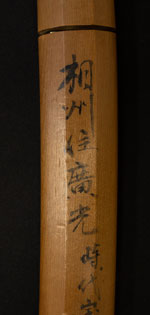
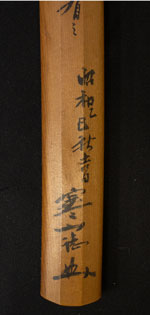
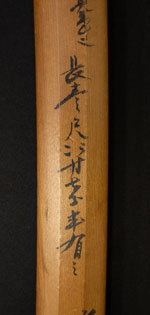
Hozonkai Wakizashi: Sousyu jyu Hiromitsu Item Number: 31-2477 Wakizashi SOUSYU JYU HIROMITSU Country/Era: Sousyu, Early Muromachi period, around Hotoku In Shirasaya, Hozonkai Nagasa: 44.7cm (1 shaku 4 sun 7 bu) Sori: 0.9cm (3 bu - rin) Motohaba: 3.0cm Sakihaba: 2.71cm Motojisane: 6.2mm Sakikasane: 4.4mm Toshin Weight: Naked blade: 400g Excluding saya: -g Nakago: Ubu Mekugi-ana: 3 Hamon: Midare-ba Price: 1,000,000 Yen (Tax included) The representative smiths of Sousyu-mono following Masamune are Akihiro and Hiromitsu. The first generation begins around the middle of the Nanbokucho period (1345). The third generation Hiromitsu begins around the Shocho era (Early Muromachi, 1428). The Japanese sword scholar Dr. Sato Kanzan places this around the Hotoku era (1449), so it is likely the third generation Hiromitsu. Jigane is ko-mokume-hada. Hamon is ko-nie deki with nie-zumi, sunagashi, and kinsen within the ha. The entire interior of the ha is filled with nie, and the workmanship is extremely good.
 NihontoWatch
mumei · Soshu · Koto · nagasa 44.7cm





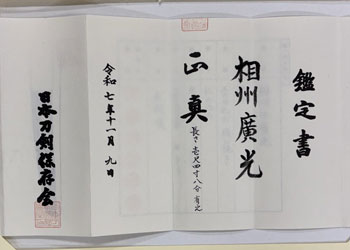
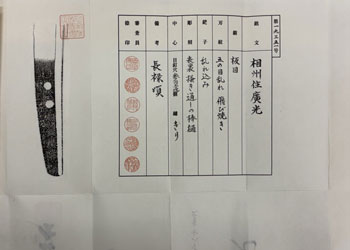
Certifies a genuine blade worth preserving: a signature confirmed correct, or, if unsigned, an era, province, and school that the NBTHK can reliably identify.
The NBTHK (Nihon Bijutsu Tōken Hozon Kyōkai, the Society for the Preservation of Japanese Art Swords) is a public-interest incorporated foundation founded in 1948 and supervised by Japan’s Agency for Cultural Affairs (Bunkachō); it is based at the Japanese Sword Museum in Tokyo. Its expert panels physically examine each submitted work (shinsa) and issue a certificate (kanteishō) ranking it by artistic and historical merit. NBTHK papers are the most widely recognized standard of authentication for Japanese swords and fittings.
NBTHK official sitePlease request cooling-off within 8 days of the item's arrival. Items that have been altered cannot be handled. Return shipping is the customer's responsibility. If the destination is overseas, returns and refunds are not available.
¥1,000,000